Admiral James ‘Ace’ Lyons (Ret). on the Iran Nuke Deal, The Daily Ledger via You Tube, August 27, 2015
Dividing the Arabs: America and Europe’s Double Game, The Gatestone Institute, Bassam Tawil, August 29, 2015
The United States is playing a double game in the Middle East: empowering Shiite Iran, while at the same time enabling Sunni ISIS to overthrow the moderate Arab regimes, as if to stop Iran.
The Americans are well aware that the Sunni Arab countries around Iran will now have to arm themselves to the teeth, thereby gutting the Nuclear Non-Proliferation Treaty (NPT).
America, despite its power and the image it projects of working against ISIS in Iraq, does not touch ISIS in its real headquarters, Syria, where ISIS actually could actually be hurt. So nothing really changes, and both Iran and ISIS continue to strengthen.
Even as the members the UN Security Council, eager do business with Iran, voted to allow Iran to build nuclear weapons, the Iranians continue to fund Hezbollah, Hamas and the Palestinian Islamic Jihad in the Gaza Strip — all Iranian proxies — in order to split the Arab ranks.
In other words, the hypocritical Obama administration, in backing the Iranians, keeps trying to sabotage the Arabs and provoke dissension.
The U.S. “divide-and-conquer” policy can also be seen in America’s ongoing support for Turkey and Qatar, both loyal to the Muslim Brotherhood. Turkey and Qatar, however, do nothing but foment incitement and support terrorist organizations. Both countries have totally abandoned the real existential interest of the Arab nation: its historic battle against Iran.
Qatar’s role is duplicitous. It plays host to U.S. military bases at the same time that it funds and supports ISIS, which is working against the West and against moderate Arab regimes.
The worst, however, is Turkey, which supports ISIS — the enemy of the West — despite Turkey being a member of NATO. Turkey also expends inordinate efforts at retaining its control of occupied Cyprus. Above all, its hypocrisy is scandalous. While it claims to care about the independence and human rights of the Palestinians, Turkey is really nothing but a radical Islamist country now denying independence and human rights to its own Kurdish citizens. At the same time, it supports Hamas and Iran in their effort to crush the unity of the Palestinian Authority (PA) and the PLO as the only legitimate representatives of the Palestinian people.
Turkey, like many other nations, including the countries that negotiated with Iran, is just waiting for the sanctions to be lifted from Iran, so that its dubious military and economic relations with the Mullahs will finally be acceptable.
Turkey and Qatar have also divided the Sunni Islamic camp and fragmented the Arab ranks. Both countries give the Palestinians political support, the deluded hope of “return,” and funding that is used for rebuilding Hamas’s military capabilities and kidnapping tunnels.
It is both folly and underhandedness for the United States to provide these countries with even a tattered umbrella of military aid.
Not only the U.S. but Europe, which supports Iran, would like to see Hamas — a terrorist offshoot of the Muslim Brotherhood — become stronger at the expense of the Palestinian people.
Europe would like to empower Hamas even further by handing it diplomatic and political support. There are rumors that the UN is planning to grant Hamas observer status in the General Assembly, as it did the Palestinian Authority.
We all know that the issue of Palestine could have been resolved long ago by establishing a demilitarized Palestinian state next to Israel, and giving the descendants of the original Palestinian refugees living in the Arab states full citizenship. But the manipulations employed by the Europeans and Americans deliberately perpetuate the Palestinian issue by using “good cop – bad cop” tactics. (Emphasis added. — DM)
Europe and the U.S. whitewash not only Hamas’s threats to Israel, but also, more importantly, its deadly subversion of Palestinian Authority. Both Europe and America totally disregard Hamas’s planned coup against PA leader Mahmoud Abbas last year, Hamas’s war crimes in the Gaza Strip, and the unspeakable treatment of its own people at home. Only one year ago, Hamas was murdering its own citizens extra-judicially, and ordering them to be cannon fodder for the benefit of international television crews.
Hamas, since then, has chosen to use its scant resources to rebuild its kidnapping tunnels and war capability, instead of to develop businesses and turn the Gaza Strip into a magnificent Arab Riviera, as Dubai has become. Hamas’s failure does not come from a lack of resources; it comes from a deliberate choice of how to use them.
Hamas and Palestinian Islamic Jihad are now operating against Egypt and Israel not only from the Gaza Strip, but from the Sinai Peninsula as well. Thus, in addition to allowing Iran to sail to nuclear weapons capability, President Obama encourages the Muslim Brotherhood and other Islamist terrorist organizations such as the Islamic State in the Sinai Peninsula with one hand, while with the other hand he claims to support Israel.
After all is said and done, if we Arabs had joined ranks — even temporarily and even with Israel — we could have long ago put a stop to Iran’s plans for expansion.
But because of our own shortsightedness, we waited too long and now the Iranians have established footholds in the Arabian Gulf and the Red Sea, and are increasing their control of Arab states such as Iraq, Syria, Lebanon and Yemen.
Iran is on its way in a few years to having nuclear weapons capability. The breakout time, according to President Obama, would effectively be “zero.” Iran could then make as many bombs as it would like, along with intercontinental ballistic missiles to delver them to the major cities of the “Great Satan,” the United States, directly from Iran, from South America, or — making identification and retaliation impossible — from submarines submerged off the U.S. coast.
The Iranians, in opposing American policy, which is a tissue of amateur plans and plots, are flexible and exploit Islam’s taqiyya [dissimulation] — religious approval to lie in the cause of Allah and to further Islam. However, they are not even bothering with that, they are telling the truth: “Death to America; Death to Israel.”
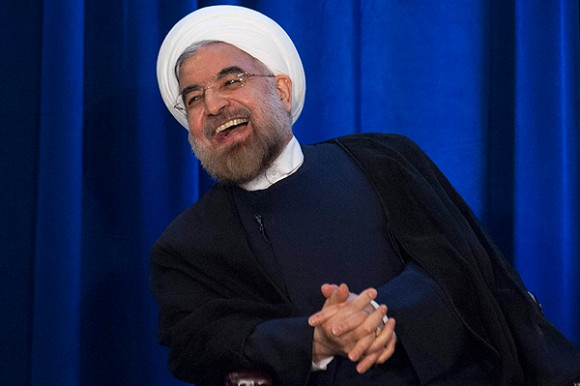
 U.S. President Barack Obama (left). Iranian President Hassan Rouhani (right).
By this point, near the end of the process of Sunni Muslim self-destruction, a large part of the Arabs’ energy has been wasted on internal wars and the misallocation of resources to the barren, useless confrontation with Israel, even while many Arab states secretly collaborate with the Zionists.
All that will be left for the Arabs will be to continue to argue among themselves and with the Israelis about the Palestinian issue. We should instead stop the distractions and the wounds we are inflicting upon ourselves, and put the Palestinian problem behind us by granting equal rights and citizenship to Palestinians residing in Arab countries, in order to shift our focus totally, if belatedly, to the real battle: The Islamic Republic of Iran.
Israel will Never be a Second Czechoslovakia, American Thinker, Shoula Romano Horing, August 29, 2015
(Obama loves Israel to death. Or tries.
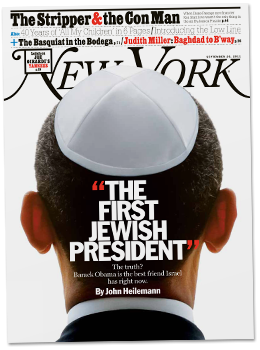
— DM)
Israel is not like the Czechoslovakia of 1938 and never will be. Israel is an independent military and nuclear power that intends to use its right of self-defense against Iran and its terrorist proxies whether “Emperor” Obama likes it or not, or tries to stop it.
Obama and his army of Democratic followers in the Congress, progressive groups, and the media repeatedly state their main argument in favor of the agreement, which is that Israel is the only country in the world opposing the Iran nuclear deal. First, It seems that President Obama and his supporters have not paid attention to a recent CNN poll taken on August 20 that found that 60 percent of Americans disapprove of how Obama is handling the Iran deal, and 56 percent believe that Congress should reject it.
Secondly, like any other self-respecting sovereign country, Israel is against any deal that threatens her own survival by an evil Jihadist Islamic state clearly intent on its annihilation, which is being imposed on her by world powers as a fait accompli.
It seems that Obama and his supporters are delusional, expecting that Israel will allow itself to become a second Czechoslovakia. They are outraged and shocked that Israel has not only refused to quietly accept this very bad deal but dares to fight the deal publicly, loudly, and proudly.
Like Czechoslovakia in 1938, Israel is a small democracy surrounded by hostile nations, and like Czechoslovakia, it was excluded from negotiations that led to a diplomatic deal that shapes its fate and threatens its survival. In 1938, the enlightened democracies in Europe decided to sacrifice Czechoslovakia for a comfortable, temporary solution. The Munich agreement was signed, when Britain and France believed that handing Czechoslovakia to Hitler was the only way to save the world from another war. It is regarded as the shameful culmination of the Allies refusal to confront Nazi aggression and gave Hitler what he wanted in exchange for his verbal promise of “peace in our time” as Neville Chamberlain called it.
In his biography of Franklin Delano Roosevelt, Champion of Freedom, Conrad Black recalls the scene when the poor Czechoslovakian delegates were brought into the room to be informed of their nation’s fate as set out in the Munich Agreement. “No Czech answer was requested. They were handed a fait accompli. The Czechs wept, and Hubert Masarik (Czech diplomat attending the Munich conference) said, prophetically and justly: ‘They don’t know what they are doing to us or to themselves.… These poor, good men were the final players in a macabre and shameful Gothic tragedy.”
The Jewish state has for 67 years been mourning its beloved soldiers who have courageously died defending it from the evil regimes that surround her. However, it will never weep over a deal imposed on it by a morally bankrupt world. Those days of passivity were over when the enormity of the Holocaust was revealed. The Jewish state has been fighting for itself on its own since its independence.
Obama’s threats of a military attack on Iran when violations of the deal occur are not taken seriously by anyone and are a source of laughter for the Iranian regime. Israel does not need the U.S. or any another party to save her but it does need for Obama and the world powers to move away from Israel’s path and let it do everything in its means to minimize the nuclear threat, and the more menacing conventional threat resulting from the hundreds of billions of dollars Iran and its terrorist proxies will get from the deal.
For the last two years, Obama has been trying to tie Israeli hands and prevent it from practicing its right to self-defense against Iran. Dan Raviv from CBS News reported in March 2014, that the Obama’s administration has asked Israel to stop killing key scientists in the Iranian nuclear program while Obama has been negotiating. In an August interview with the German magazine Der Spiegel, Israeli Defense Minister Moshe Yaalon implicitly warned that the assassinations could be renewed by saying;” I am not responsible for the lives of Iranian scientists.’
But much worse, in Article 10 of the deal, Obama and world powers have agreed that they will assist Iran in thwarting attempts to undermine its nuclear program. The agreement stipulates that they, with the Iranians, will foster “cooperation through training and workshops to strengthen Iran’s ability to protect against and respond to, nuclear security threats, including sabotage, as well as to enable effective and sustainable nuclear security and physical protection systems.”
Recent years have seen various mishaps befall the Iranian nuclear program, from powerful computer viruses to the death of the nuclear scientists, which world media outlets have often attributed to the Israeli intelligence agency, Mossad. According to an audio recording with former Defense Minister Ehud Barak leaked to an Israeli television channel on August 22, Israeli leaders planned to attack military targets in Iran in 2010, 2011, and 2012 but were held back due to the opinions of other government and military leaders.
It is quite disturbing that the U.S. as well as the U.K., Russia, China, France, and Germany will actively try to prevent covert actions against the Iranian nuclear program, as well as any potential military operation against Iran, making such options far more complicated and dangerous for a country like Israel. Congress should ask Obama whether he will order U.S. jets to shoot down Israeli jets intent on destroying an Iranian nuclear weapon facility.
The Congressional Democrats must not repeat the mistakes of the past and sacrifice the future for the present; The Democrats must not ignore Iranian aggression in the hopes of gaining an illusory peace. A vote for the deal is a vote for the beginning of the next war between Israel and Iran and its proxies. The Jewish people can never again remain passive in the face of genocidal enemies.
Iran Deal: A Potential Kiss Of Death For Liberalism In The Middle East’, MEMRI, August 27, 2015
In a July 19, 2015 article on Al-Ahram’s English-language website titled “Iran Deal: A Potential Kiss of Death for Liberalism in the Middle East,”[1]Egyptian blogger and political commentator Nervana Mahmoud criticized the claim made, inter alia, by U.S. President Barack Obama and others in his administration, that the nuclear deal with Iran will strengthen moderate elements in that country.[2] Rather than promote liberals, she writes, the deal will only vindicate Iran’s current theocratic leadership by ending Iran’s isolation. It will also, she stresses, send a message to other authoritarian regimes in the region that the U.S. is likely to overlook their crackdown on dissidents, while encouraging Islamist movements to emulate Iran by embracing extremism.
Ms. Mahmoud goes on to accuse the Obama administration of promoting “illiberalism” by defining as moderate “any group, entity, or state willing to show pragmatism and cooperation with the United States, regardless of that state’s intolerant actions on the ground.”
 Nervana Mahmoud (Image: Nervana1.org)
“For The Iranian Mullahs, The Nuclear Deal Is An Indirect Acknowledgment From The West That Their Anti-Modernity Model Is Viable And Successful”
“After 12 years of diplomatic proposals and 20 months of tough negotiations, theocratic Iran and world powers have reached a nuclear deal that, regardless of its potential advantages, is undoubtedly a victory for smart illiberalism and a potential kiss of death for the prospect of liberal, pluralistic democracies in the Middle East.
“Both illiberal Shi’a and Sunni Islamists and illiberal non-Islamist autocrats could receive an enormous boost from the deal.
“A few years ago, against all advice, I visited the Islamic Republic of Iran. To my surprise, I found a vibrant nation, with many liberal youth yearning for freedom and democracy. Those youth may now celebrate the lifting of sanctions and the end of isolation, but it is doubtful the nuclear deal will bridge the deep divide between them and their theocratic rulers.
“For the Iranian Mullahs, the nuclear deal is an indirect acknowledgment from the West that their anti-modernity model is viable and successful. U.S. President Barack Obama may be genuine in his hopes that Iran will abandon its ‘path of violence and rigid ideology’ following this ‘historic agreement,’ but his hopes may turn out to be no more than wishful thinking.
“The regime – now less isolated–has less incentive to couple its agreed abandonment of its nuclear program with an abandonment of what it sees as successful ideology than ever before.”Many commentators have pointed out that the deal could not have come at a worse time for the Arab world. With open sectarian tension in many Arab countries, a strong Islamic Iran will only inspire other political Islamic groups to try to match up to the Mullahs.
“Iran’s regional influence in Lebanon, Iraq, Syria, and Yemen will only prompt a counter-movement by forces that share an underlying belief in Islamism, but differ in its sectarian interpretation. Since 1979, Sunni Islamism has learned one important lesson from Iran: ‘Yes, we can’ -– a slogan the Islamists touted quietly, long before Obama uttered those words in 2008.
“Arab Islamists saw theocratic Iran as a perfect model for fulfilling their dream of ruling Muslim societies. The new nuclear deal will add two more lessons, and liberal democracy is not one of them– defiance and lobbying in Washington…
“Last Saturday, Ahrar Al-Sham, an Islamist Sunni insurgent group fighting in Syria, published an article in the Washington Post claiming to believe in ‘a moderate future for Syria.’ Charles Lister, a visiting fellow at Brookings, scrutinized their claim: ‘Ahrar Al-Sham has been one of the most consistent military allies of Al-Qaeda affiliate Jabhat Al-Nusra.’ The publication of the article in itself indicates how some people in the corridors of power in Washington are willing to buy Ahrar’s narrative.
“The implication for Syria could not be more serious. Syria will continue to be torn between two mutually exclusive Sunni versus Shi’a forces; many of them are radical, ruthless, and undemocratic. Somehow, the Obama administration seems to see no problem in embracing both…’However, tacitly embracing radical Shi’a militias’ fight against radical Sunni groups such as the Islamic State (ISIS), while pretending that other radicals such as Ahrar Al-Sham are moderate, does not seem to be a sound strategy.”
“It Is Dangerous For The U.S. To Empower Illiberalism In A Region That Suffers Mainly As A Consequence Of Its Illiberal Players”
“In Egypt, neither the removal of Hosni Mubarak nor the ousting of Muhammad Mursi has produced a liberal democracy. Moreover, a significant section of the Muslim Brotherhood, despite its antipathy to Shia Islamism, has started to view the Iranian model as the way forward to regain power.
“They wrongly attribute their failure to run the country during Morsi’s tenure to what they describe as their ‘reluctance to embrace revolutionary politics.’ The Mullahs’ violent ejection of their opponents in 1979 is seen as ‘a model.’ In addition, the Muslim Brotherhood and its supporters will continue to lobby in Washington, hoping that its projection of an Iranian–style defiance will convince the Obama Administration to exert pressure on the leadership in Cairo to change its posture toward the group.
“On the other hand, many among President Abdel Fattah El-Sisi’s supporters will use Iran as a pretext to justify more crackdown on opponents, and argue that world powers, which are willing to lift sanctions against the Iranian regime, despite 36 years of ruthless rule, have no moral ground on which to judge Egypt.
“In his speech in Cairo in 2009, President Obama advocated tolerance, respect for minorities, and religious freedom. He also said elections alone do not constitute a true democracy.
“Now, as Hisham Melhem, Bureau Chief of the Al Arabiya News Channel in Washington, has pointed out, ‘after almost six and a half years of trying to shape events in the Middle East, President Obama has very little to show for it except the nuclear deal with Iran.’ More alarmingly, the American president seems to have lowered the bar, and is now willing to accept a softer definition of moderation to include any group, entity, or state willing to show pragmatism and cooperation with the United States, regardless of that state’s intolerant actions on the ground.’
“There are intrinsic reasons behind the metastasizing sectarian and ethnic conflicts that followed the failed Arab awakening. It is unreasonable to expect the United States to ‘fix’ the region; however, it is dangerous for the U.S. to empower illiberalism in a region that suffers mainly as a consequence of its illiberal players. It would be a pity if President Obama went down in the history books as the man who fumbled with the West’s anti-illiberalism alarm button, and embraced the enemies of liberalism in the Middle East.”
_____________________
Use Our Senatorial Nuclear Option to Stop Iran’s Radioactive Nuclear Option, National Review – Morning Jolt, Jim Geraghty, August 28, 2015 (via e-mail).
A simple proposal: To stop Iran’s nukes, use our own nuclear option. Scrap the filibuster, pass a resolution declaring the Iran deal a treaty that requires Senate authorization, introduce the text of the Iran deal, and vote it down.
Remember, Democrats got rid of the filibuster for nominations in 2013, arguing that GOP obstructionism was interfering with the president’s constitutional authority to make judicial appointments. The Constitution requires Senatorial consent to treaties. The administration claims the Iran deal isn’t a treaty because they think it has “become physically impossible“ to pass a treaty in the Senate.
Do you think Iran will honor its side of the agreement? Probably not, right?
Even if they do, do you think Iran will attempt to build a nuke quickly when the deal expires? Certainly, right?
Do you think that if Iran gets a nuke, they will use it? Pretty darn likely, right?
So, congressional Republicans . . . what are you willing to do to prevent a mushroom cloud either in the Middle East or closer to home?
Poof goes the Big Enchilada, Israel Hayom, David M. Weinberg, August 28, 2015
Just in case there was any doubt as to what U.S. President Barack Obama is up to, Professor Andrew Bacevich of Boston University has laid it out for us in a series of recent articles.
Obama’s nuclear deal with Iran is meant to reboot and redirect the entire vector of American Middle East policy: to retreat from Pax Americana and allow Iran to take its rightful place as a major regional power.
For decades, two tenets have informed U.S. policy in the Middle East. The first is that U.S. interests there are best served by the position of unquestioned American pre-eminence. The second is that military might holds the key to maintaining that dominant position. (In this context, Israel has been an important U.S. regional ally).
This approach is what Bacevich calls the “Big Enchilada” — the America-as-top-dog approach that Obama is seeking to overturn.
Obama rejects this notion, since he essentially views America’s preponderance in world affairs as arrogant and sinful. He feels that American “bullying” has brought about disastrous results.
Most telling was Obama’s infamous lament in 2010 about America as “a dominant military superpower, whether we like it or not.” In other words, he really doesn’t like it at all. No statement could be more revealing of Obama’s disgust for American global leadership.
In the context of the current deal with Iran, Obama has been equally clear as to how he expects this play out. If successfully implemented, the agreement that slows Iran’s nuclear program will also end Iran’s isolation. This will allow Tehran, over time, to become a “legitimate” and “extremely successful regional power” and a “powerhouse in the region.” These are Obama’s own words.
All this leads, of course, to American retreat — blessed retreat from Obama’s perspective — from the projection of power in the region. Replacing America will be a revanchist, greatly emboldened, anti-Semitic and genocidal (toward Israel), Islamic Republic of Iran. Poof goes the Big Enchilada.
Obama has been mostly dismissive of Iran’s “bad behavior,” as he flippantly calls it. He says that he “hopes to have conversations” with Iranian leadership that might lead someday to their “abiding by international norms and rules”; that he “hopes and believes” that Iranian “moderates” will leverage their country’s reintegration into the global economy as an opportunity to drive kinder, gentler and less revolutionary foreign policies.
Whether Obama himself believes such nonsense is moot. The rub is that Obama doesn’t view American behavior in the region over past decades as any more moral or legitimate than Iran’s behavior. Consequently, the main thing for him is the humbling and retreat of America.
What happens after that? Well, that will be some other president’s problem, and Israel can lump it.
It is against the backdrop of such unfounded expectations and dangerous strategic vision that Prime Minister Netanyahu is leading the fight against the Joint Comprehensive Plan of Action with Iran, otherwise known as the nuclear agreement.
Netanyahu understands that the nuclear agreement isn’t just about Iran’s nuclear program. It’s about American detente with Iran and a perilous rejigging of America’s global strategic posture. As such, Netanyahu’s main goal is to prevent American retreat from the region, to thwart any intensification of American rapprochement with Iran and to avert the inevitable corollary of this: the further downgrading of U.S.-Israel ties.
To do so, the Iran deal must be kept strategically disputed and politically fragile. Even if (or when) Obama steamrolls over Congress, the deal must remain controversial and questionable. It needs to become politically toxic.
American and European companies must know that investing in Iran is still a risky business. Iran must know that it is under extraordinary scrutiny, and that American opponents of the deal will jump at every opportunity to scuttle it if red lines are crossed. Space must be cleared for the rescinding or cancellation of the accord in the face of Iranian “bad behavior.” Obama’s successor should be under pressure to vigorously oppose Iranian hegemony in the region and to act more forthrightly than Obama to block Tehran’s nuclear program.
In fact, a climate must be created that will encourage the next U.S. administration to backtrack from the deal, to reassert and reinvigorate America’s traditional foreign policy approach, and to revitalize the U.S.-Israel relationship.
This explains why Netanyahu has rebuffed all attempts by dozens of well-meaning mediators to scale down his opposition to the deal and cut a compensatory deal with Obama. Aside from the fact that Obama never rewards his “friends” and has little to offer Israel of meaningful counterweight to this terrible deal, Netanyahu understands that far more is at stake. It’s the big enchilada.
In this regard, it’s worth considering the status of Obama’s “comprehensive plan of action” with Iran. It is not a formal treaty between the U.S. and Iran; it is not even a signed agreement with the P5+1. Rather, it is a set of multilateral “understandings.” Such understandings can and should be considered short-lived.
The Iran “agreement” should be thought of as no more authoritative or binding for future U.S. administrations than, say, the “Bush letter” to Prime Minister Ariel Sharon, in which President George W. Bush suggested recognition of settlement blocks. Obama has tossed this letter right out the window.
The Iran “agreement” should be thought of as no more authoritative or binding for future U.S. or Israeli administrations than, say, the “Clinton parameters” for Israeli-Palestinian peace that were outlined during President Bill Clinton’s final days in office. Netanyahu is correct to have dismissed these parameters as no longer relevant.
The Iran “agreement” should be thought of as no more authoritative or binding for future U.S. administrations than, say, the apparently ridiculous, secretive “side agreements” on inspections which the International Atomic Energy Agency has reached with Iran, with or without Obama administration review.
Presidential promises, letters, memos, agreements and understandings — especially when declared or imposed unilaterally — are transient things. They are valid and binding only for as long as the principal holds political power. In Obama’s case, that is another 510 days, and no longer.
Then, hopefully, America can snap back to solid, assertive foreign policy principles, and claw back to a position of responsible leadership against truly dangerous actors in the Middle East.
He will arrive Sunday and will be “updated on strategic issues,” meaning Iran. By: Tzvi Ben-Gedalyahu Published: August 28th, 2015
Source: The Jewish Press » » Sen. Cotton to Visit Israel for More Ammunition against Iran Deal
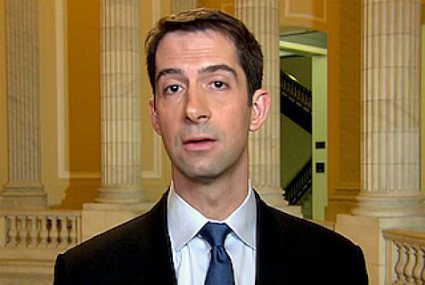
Arkansas Sen. Tom Cotton.
Sen. Tom Cotton, one of the loudest voices against the nuclear deal with Iran, will arrive in Israel on Sunday for a week-long visit that can be assumed is aimed at arming him with more ammunition to try to shoot down the nuclear Iran agreement in the Senate.
The Israel government announced:
U.S. Senator Tom Cotton (R-AR) will be visiting Israel from Sunday, August 30, to Saturday, September 5, 2015. During his trip to Israel, the Senator will be updated on strategic and diplomatic issues, as well as other major developments in the region.
Senator Cotton, in office as of January 2015, serves on the Armed Services, Intelligence, and Banking committees.
Updating him on “strategic and diplomatic issues” just before Congress returns from a summer recess with the Iran deal the number one item on the agenda means that Prime Minister Binyamin Netanyahu will send Sen. Cotton back with a suitcase full of arguments to try to win a veto-proof majority against the deal when it comes for a vote.
Sen. Cotton was behind the controversial letter that he and several senators sent to Iran to “inform” it that a nuclear deal would not be binding on the next president.
Earlier this month, he told Israeli reporters that the Obama administration has not made it clear to Iran that it could use force to prevent a nuclear-armed Iran. He then said that the U.S. Armed Forces could bomb Iran’s nuclear program “back to zero.”
Sen. Corker stated:
You can destroy facilities. I don’t think any military expert in the United States or elsewhere would say the U.S. military is not capable to setting Iran’s nuclear facilities back to day zero,
Can we eliminate it forever? No, because any advanced industrialized country can develop nuclear weapons in four to seven years, from zero. But we can set them back to day zero.
That is music to the ears of Prime Minister Netanyahu, and the timing of next week’s visit is not coincidental.
The Prime Minister and President Barack Obama are desperately campaigning against and for the deal, respectively.
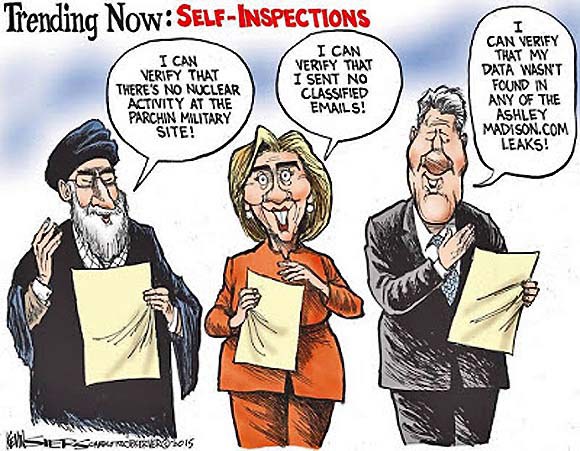
Media continue to report more evidence that the deal is full of holes and that Iran already is has taken moves to get around it, such as the report Thursday that it has built an addition to its Parchin nuclear facility.
However, party loyalty usually is paramount to intellectual honesty. New York Democratic Sen. Charles Schumer came out against the deal and promptly faced a campaign prevent him from becoming the next party leader in the Senate to succeed retiring Sen. Harry Reid, who backs the deal.
Even Tennessee Republican Sen. Bob Corker admits that Obama will win. He told The Tennessean:
Understand that at this moment it looks very unlikely that we’ll have a veto-proof majority to disapprove, but I know we’re going to have a bipartisan majority that will disapprove.
The Hill reported that President Obama lacks only five out of 15 undecided Democratic senators to prevent a veto-proof majority against the agreement.
Evidence mounts that soon-to-be flush Iran already spurring new attacks on Israel, Fox News, Paul Alster, August 27, 2015
HAIFA, Israel – An unsettling surge in terrorism by Iranian proxies has many Israelis convinced the release to Tehran of tens of billions of dollars in frozen funds is already putting the Jewish state in danger.
In recent days, rockets have rained down on Israel from Gaza in the south and the Golan Heights to the north, Israeli forces foiled a bomb plot at the tomb of biblical patriarch Joseph, and Gaza-based terrorist groups that also have a presence in the West Bank have openly appealed for aid on Iranian television. Israeli officials fear the terrorist activity is spiking as groups audition for funding from Tehran, which is set to receive the long-frozen funds as part of its deal to allow limited nuclear inspections. They say the international focus on Iran’s nuclear ambitions has left its more conventional methods of attacking regional adversaries unaddressed.
“The nuclear context is just one aspect of the negative Iranian activities in the region,” Emmanuel Nahshon, senior Israeli Foreign Ministry spokesman, told FoxNews.com. “We can see the demonstration of this on a daily basis in Syria, in Yemen, and in Iraq. We see it also when we see the [Iranian] support of Hezbollah and other groups who operate against Israel.”
Last month, National Security Adviser Susan Rice admitted that some of the money due to be released as part of the deal negotiated by the U.S. led P5+1 “would go to the Iranian military and could potentially be used for the kinds of bad behavior that we have seen in the region.”
Aside from the soon-to-be-released billions, Iran’s finances will also be strengthened by the easing of trade embargoes that have seen a horde of major international business – many from P5+1 countries – rushing to sign lucrative deals with the ayatollahs. Earlier this week, British Foreign Minister Philip Hammond scoffed at the fears of Israel and many Arab countries in the Middle East, saying the deal would “slowly rebuild their sense that Iran is not a threat to them.” Less than 24 hours later, the spokesman for Iran’s top parliament member said, “Our positions against [Israel] have not changed at all; Israel should be annihilated.”
If that remains Iran’s intention, terror groups Hezbollah, Hamas, and Palestinian Islamic Jihad are showing a renewed eagerness to continue as its proxies. Four rockets apparently fired by the PIJ from Syria into northern Israel last week – two into the Golan Heights and two more into the Upper Galilee – were the first such attacks since the start of Syria’s bloody civil war more than four years ago. Israel responded with targeted missile strikes, including one which hit a car killing “five or six PIJ terrorists.”
On Aug. 18, Iranian state TV broadcast images of a new, 2.5-mile tunnel leading from Gaza into Israel. Dug by the Fatah-linked terror group the Al Aqsa Martyrs Brigade, and seemingly competing with arch-rivals Hamas for a share of the imminently unfrozen Iranian funds, the terrorists made an unabashed appeal for more cash. In a segment translated by Palestinian Media Watch, the terror group’s representatives said, “This is why we are asking [for money]… especially [from] Iran, which is a known long-time supporter of the resistance and the Palestinian cause.”
On Tuesday, Israeli officials revealed that a joint Israeli internal security and military operation thwarted a potentially lethal bomb attack planned by the Islamic Jihad on visitors to Joseph’s Tomb in Shechem in the Palestinian-controlled West Bank, the resting place of the biblical figure revered by Jews, Christians and Muslims alike.
The pace of attacks, as well as the diversity of their perpetrators, has prompted speculation that terrorist groups are competing for Iranian funding, and trying to show they are capable of giving Tehran bang for its buck. The terrorist groups however operate on budgets that are tiny given the scale of Iran’s financing capability.
“The amount that Iran gives Hezbollah is not very much – around $200 million – not even 1 percent of Iran’s budget last year,” Meir Javedanfar, an Iranian-born Israeli expert on the region who writes at www.middleastanalyst.com, told FoxNews.com. “If you want to stop Iranian support of Hezbollah you would need to have inspectors on the ground in Syria and Lebanon, the most dangerous of places, checking Hezbollah’s arsenal, bank accounts, bases, and Syrian bases which Hezbollah uses. I don’t see any UN force, or anyone else volunteering to do that.”
The Iranian Nuclear Deal Viewed Through the Eyes of ISIS and Iran’s Children, Accuracy in Media, Lt. Colonel James G. Zumwalt, USMC (Ret.), August 27, 2015
(Assume for the sake of argument that the Islamic Republic is only half as evil as the Islamic State. That’s hardly a persuasive argument in favor of the “deal” with Iran. –DM)
As Congress votes next month on whether to support the nuclear agreement Team Obama has negotiated with Iran, two assessments are necessary.
One is content-oriented-looking to the four corners of the document to understand exactly what Iran is being allowed legally to do, as well as the impact it will have on our national security.
Fully understanding that, the other assessment is then to analyze Iranian intentions-looking outside the document to determine the likelihood of full compliance by the mullahs.
As Congress undertakes the first assessment, it seems, unfortunately, to pay less heed to the second. But, as the latter demands understanding what the mullahs’ ultimate goal is, in addition to their commitment to achieving it, it is most relevant.
Interestingly, to better understand the mullahs’ ultimate goal, we need only look to ISIS-a group in pursuit of a similar one.
Before we do so, however, consider the following hypothetical: based on what we know about the group today, would Congress even consider negotiating the same nuclear deal with ISIS that has been negotiated with Iran? We hope it would not. The very thought of any agreement paving the way for a nuclear-armed ISIS would be an interminable nightmare for the world community.
The blatant savagery of ISIS undermines its credibility as a candidate with whom to hold nuclear negotiations. A group whose sole creative contribution to society has been to develop increasingly horrific ways of executing victims (and proudly displaying them on video) does not make for a responsible nuclear negotiating partner.
We may have thought the burning alive of caged Jordanian pilot Mu’ath al-Kaseasbeh earlier this year represented the extreme of ISIS brutality. It did not.
We have seen other victims paraded out, hands tied behind their backs, forced to kneel in front of their ISIS captors who-unbeknownst to the captives had buried explosive devices where they were kneeling-move safely away before detonating them. The sight of flying body parts then met with cries of “Allahu Akbar” from among the ISIS savages.
We have seen videos of Arab Christians similarly being positioned and beheaded by ISIS captors.
We have reports of an ISIS leader who, by night, raped his 11-year-old slave girl and, by day, strapped her to the windshield of his vehicle to afford him concealment from snipers as he drives.
The savagery of ISIS knows no limits. Its soldiers, after executing a Muslim father, strapped an explosive device to the baby child he left behind, detonating it to demonstrate to trainees the weapon’s battlefield impact upon the human body.
ISIS justifies its savagery on a Quranic mandate to pursue Islam’s ultimate goal: a global Caliphate by which to rule all inhabitants under sharia-a system of laws stripping its own believers of human dignity and non-believers of their lives.
But it is interesting that the ultimate goal for Islam sought by ISIS is really no different than that sought by Iran’s mullahs.
The brutality of ISIS, the irrationality of its leadership, the darkness that strips it of any humanity, the avowed purpose of its very being-all of this is mirrored within the mindset of Iran’s mullahs. Iran’s mullahs are ISIS wolves in sheep’s clothing.
ISIS is driven by a virulent Islamic ideology, unprotected by state boundaries, seeking to impose sharia upon the world. Iran is driven by a virulent Islamic ideology, protected by state boundaries, seeking the very same global objective.
The two mindsets evolved from one Islamic tree, branching out into different sects following Muhammad’s death. While differences evolved in culture, political systems, eschatological beliefs concerning the “Twelfth” or “Hidden Imam,” the role economics plays, etc., what we should find disturbing is, regardless of which sectarian branch prevails, for us, the end result is the same. Whether a Sunni ISIS Caliphate or a Shiite Iranian one were to dominate, infidels would be forced either to convert to Islam or die-with death imposed by whatever means available.
It is the commitment to an Iranian Caliphate that should concern us more than the commitment of ISIS to one. The mullahs believe for theirs to evolve, global chaos needs to occur-with man a catalyst in triggering it. Thus, providing them with a path for a nuclear-armed Iran gives the mullahs the means to fulfill the prophecy of Islam to which they adhere.
The Western mind rationalizes Iran would never initiate a nuclear strike for fear of retaliation. But the concept of Mutual Assured Destruction (MAD) that prevented a Cold War from turning hot will have no impact upon Iran. Its mullahs see this life as but a means of ensuring their arrival in the next-a paradise of unlimited sexual desires with “recycled” virgins promised by Muhammad. Such is their reward for striving in this life to make the world an infidel-free one.
We see the evil of ISIS by the sins it commits. Why do we fail to see it in the deeds of Iran’s mullahs who mirror them? Perhaps it is because ISIS boasts about its inhumanity while the mullahs are less vocal about theirs.
To fully understand the mullahs’ commitment to their ultimate goal, we need view it through the most innocent of eyes.
The best insight into the soul of a nation’s leadership is examining how it treats its most treasured asset-its own children.
Peering into the soul of Iran’s leadership, one sees only darkness.
As Iran’s mullahs came to power in 1979, the violence against the Shah was soon redirected against their own people, claiming thousands of lives. Some were children who, lacking knowledge about sharia, were held accountable, nonetheless, for violating it and summarily executed. Sharia was to rule over all, even those of a tender age incapable of its comprehension.
For Supreme Leader Ayatollah Ruhollah Khomeini, the sacrifice of children in this life was deemed acceptable to ensure ascendancy to the next. As he proclaimed in December 1979, “Could anyone wish his child to be martyred to obtain a good house? This is not the issue. The issue is (achieving) another world”-i.e., martyrdom of a child is justified in furtherance of Islam.
The extreme to which Khomeini took this was documented during Tehran’s eight-year war with Iraq.
Seeking to reduce Iranian army losses suffered penetrating Iraqi positions heavily defended by minefields, Khomeini issued a call for children to march through these fields to clear a route of attack. Each child was presented a plastic key beforehand, which, Khomeini promised, unlocked the gates to paradise. An estimated 500,000 children were so sacrificed.
A child’s life today in Iran continues to hold little value-children are still executed for acts deemed criminal under sharia. Accordingly, Tehran fails to comply with the Convention on Rights of the Child-an international commitment it made to protect its own children.
The virulent ideology of both ISIS and Iran’s mullahs merge on the common ground they share in totally devaluing the life of a child, evidenced by their unconscionable willingness to use children as weapons of war-whether it be to clear minefields, to serve as suicide bombers, or to execute prisoners.
The mullahs’ willingness to sacrifice the lives of their children should not be lost on us. If they, in pursuit of their ultimate goal, are unwilling to honor international commitments protecting their own children, only a fool can expect them to honor the international commitments set forth in a nuclear agreement.
He, too, is a fool who accepts President Obama’s claim that the Iranian leadership’s cries of “Death to America” are simply made for domestic consumption, ignoring Iranian President Hassan Rouhani’s recent warning, “Saying death to America is easy; we need to express death with action.” If Congress approves Obama’s nuclear agreement with Iran, Rouhani’s wish to replace hopeful words for America’s death with action to achieve it will take a deadly step forward.
Next month’s vote on the Iranian nuclear deal will reveal to us just how many fools we have in Congress.




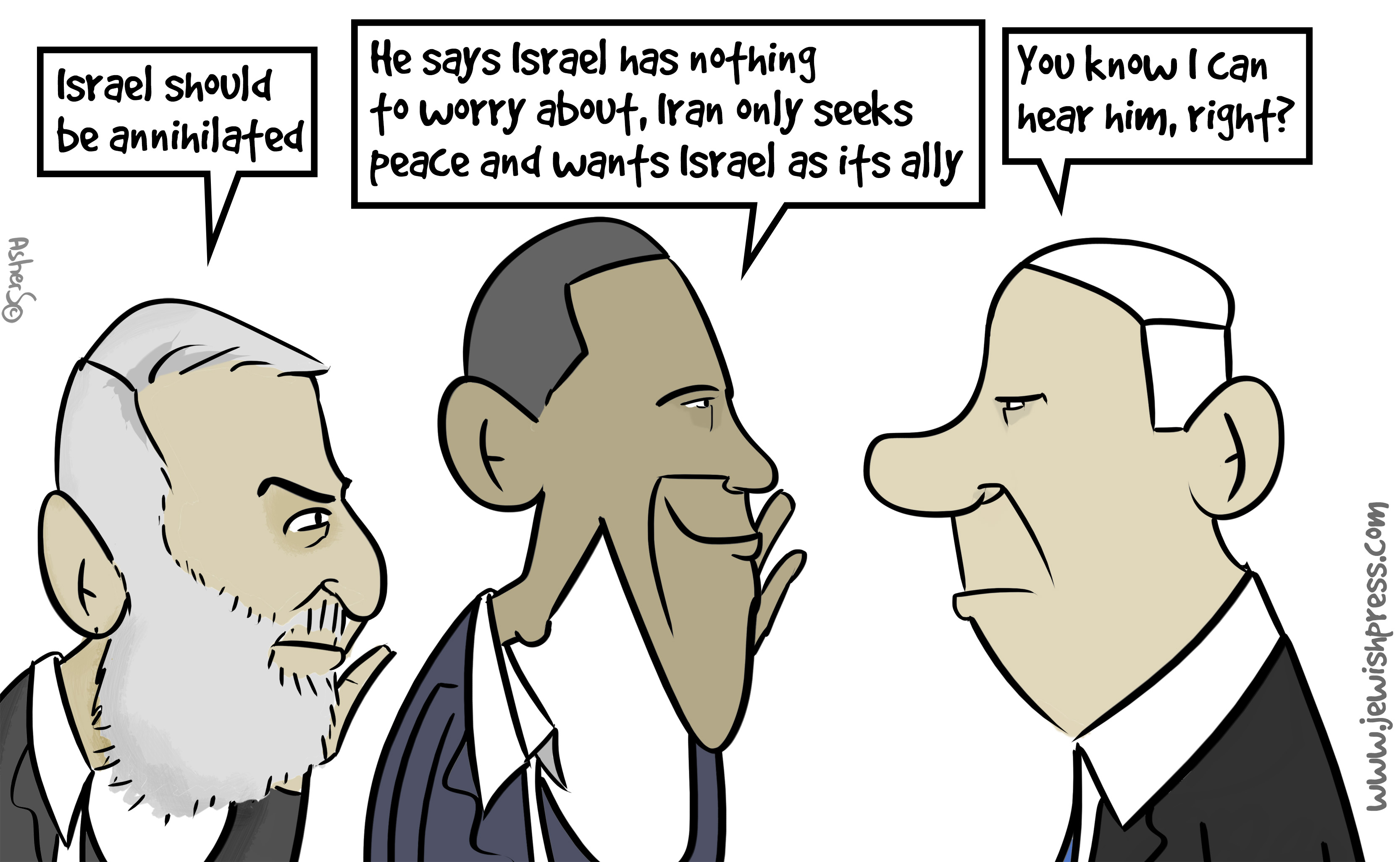
 WarSclerotic
Recent Comments