Posted tagged ‘Obama’

Obama, EU leaders agree to keep anti-Russian sanctions over Ukraine

November 18, 2016

Obama, EU leaders agree to keep anti-Russian sanctions over Ukraine

Published time: 18 Nov, 2016 12:27 Edited time: 18 Nov, 2016 13:10

Source: Obama, EU leaders agree to keep anti-Russian sanctions over Ukraine — RT News

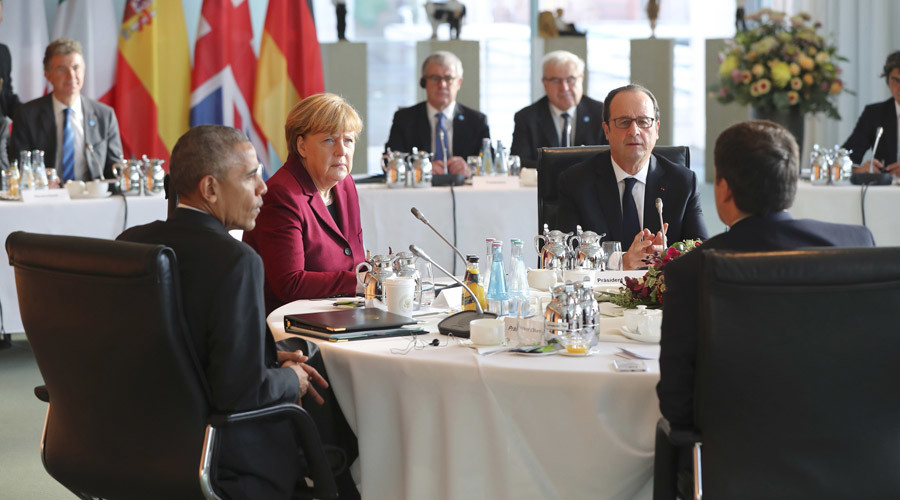
U.S. President Barack Obama, German Chancellor Angela Merkel, French President Francois Hollande and Italian Prime Minister Matteo Renzi meet at the chancellery in Berlin, Germany, November 18, 2016. © Kay Nietfeld / Reuters

US President Barack Obama and EU leaders have agreed to keep anti-Russian sanctions in place for a further year over the situation in Ukraine.

President Obama, who is on his final official visit to Europe, met with the leaders of Germany, France, Italy, Spain and the UK on Friday.

Among the main topics on the agenda were extending sanctions against Russia, cooperation within the framework of NATO, the rise of Islamic State (IS, formerly ISIS/ISIL) in Iraq and Syria, and possible new anti-Russian sanctions over Moscow’s actions in Syria.

The leaders agreed on the necessity of working collectively to move the transatlantic agenda forward, particularly on bringing stabilization to the Middle East and North Africa, as well as securing diplomatic resolution to the conflicts in Syria and eastern Ukraine,” the White House said in the statement.

READ MORE: Russian sanctions cost Italy €7bn and up to 200,000 jobs – Italian MP

“The leaders also affirmed the importance of continued cooperation through multilateral institutions, including NATO,” the White House added.

Sanctions won’t stop Russia from improving its dialogue and ties with other countries, Kremlin spokesman Dmitry Peskov said.

We [Russia] have never initiated sanctions. These [sanctions] don’t prevent us from building dialogue and continuing the dialogue on matters that are of interest to us, to Russia,” Peskov said.

Russian President Vladimir Putin and outgoing US President Obama are likely to talk informally on the sidelines of the Asia-Pacific summit in the Peruvian capital of Lima, Peskov said on Friday.

“The two administrations have not agreed on any separate meetings, but we can assume that President Putin and President Obama will cross paths on the sidelines of the forum and will talk,” Peskov said.

READ MORE: EU’s dialogue with Russia should be ‘correct and pragmatic’ – Italian FM

Also on Friday, NATO Secretary General Jens Stoltenberg gave a speech at an event hosted by the German Marshall Fund of the United States (GMF), where he said that Europe and the United States “are close economic and trade partners” and mentioned potential threats for the alliance.

“Russia, breaking international law. Turmoil in North Africa and the Middle East. The refugee and migration crisis. International terrorism. Hybrid warfare. And cyber-attacks,” said Stoltenberg, listing the perceived dangers.

Cartoons of the Day

November 15, 2016

H/t Power Line

bill-c-votes
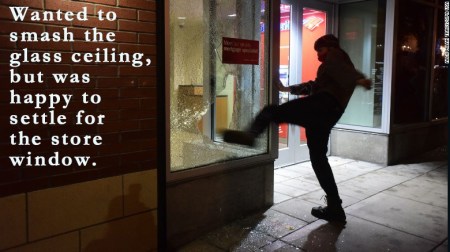
glass-ceiling
beatings
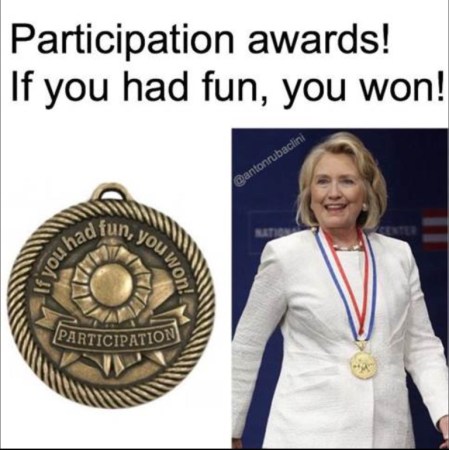
participation
canada-border-patrol


H/t Vermont Loon Watch

proper-job
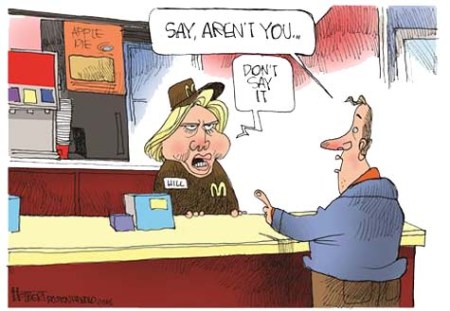
lost


H/t Freedom is Just Another Word

nukeaccess 

legacy-1


INTO THE FRAY:The elections are for President—not Pope

November 4, 2016

INTO THE FRAY:The elections are for President—not Pope, Israel National News, Dr. Martin Sherman, November 4, 2016

(The article seems principally directed to Never Trumpers. –DM)

The election next week of Clinton, who is firmly committed, indeed virtually compelled, to continue with Obama policies is more than likely to make that course irretrievable, and the US—much like several luckless EU countries—will be set on an inevitable downward spiral toward third-world status…from which a growing portion of its population hoped to extricate itself

Given the stakes, this seems almost inconceivable. Trump should be elected not because of what may occur if he is, but because of what will almost certainly occur if he is not. He should not be judged on what his incumbency might achieve, but what his incumbency must prevent.

So in weighing the grim alternatives, the US electorate would do well to bear in mind that these elections are for the Presidency not the Papacy.  They must choose who is best suited (or the least unsuited) to be President – not the Pope.
*********************

You knooow…C’mon Who do you think is out of touch?– Barack Obama, commenting derisively on Hillary Clinton, 2008

“Hillary Clinton, she’ll say anything and change nothing” – I am Barack Obama…and I approve this messageFrom a 2008 Obama election campaign ad.

The fate of the republic rests on your shoulders. The fate of the world is teetering and you…are going to have to make sure that we push it in the right direction.– Barack Obama, urging voters to support Hillary Clinton, November 3, 2016

It would, indeed, be in no way an exaggeration to describe next week’s US elections as perhaps the most significant in recent history, a  real “fork in the road” for the future of the over 200-hundred year Union.

Waning adherence to founding principles?

This Union proved to be a remarkable socio-political creation. Largely because of its founding values, as articulated in its founding documents and later amendment’s, it developed into the most influential, prosperous powerful country on the planet.

Indeed, in great measure, by holding fast to those values, it managed to maintain its position of primacy since the early decades of the last century.

But in the last decade this began to change perceptibly. Adherence to the underlying fundamentals–its Anglo-Saxon cultural roots and its Judeo-Christian (indeed Judeo-Protestant) ethical foundations—has begun to wane.  Identification with, and belief in, what made America, America began to erode and fray—and with it, the coherence of the identity that made it exceptional.

Clearly, it was not America’s natural resources and mineral wealth that generated its unparalleled success. After all, numerous other countries have been endowed by nature with vast riches but none of them were able to harness the enormous creativity and productive energy of their population on a similar scale/intensity as America did.

What set America apart was the manner in which it managed to mobilize its human resources and facilitate opportunity for talent, ingenuity and industry to flower.

There is no way to decouple this remarkable accomplishment from the original organizing principles set out for the nation at its founding. Similarly, there is no way to decouple these organizing principles from the civilizational foundations from which they were drawn.

Clearly then, as America of today diverges increasingly from identification with those principles and civilizational foundations, and the spirit that they were imbued with, it will increasingly jeopardize the key to its own exceptionalism—and the exceptional achievement that accompanied it.

Diversity is strength, but diffusion is weakness

Of course I can already hear the howls of outraged indignation that this kind of talk borders on bigotry, and reflects gross ignorance as to sources of American strength and success. They will, no doubt, point to the enormous contributions made by immigrants, who hailed from civilizational backgrounds far removed from any traces of Judeo-Protestant influence—from East Asia to Latin America.  They will of course recite the worn-out mantra that “diversity is strength” and underscore how Americans of Buddhist, Hindu, Catholic and other origins have all been part of the American success story.

This is all entirely true—and equally irrelevant to the point being made. For it was only in the environment created by the unique societal foundations of America, and the opportunities it afforded, that allowed the immigrants, drawn to its shores from other socio-cultural settings, to blossom.  After all, if this was not the case, why would they leave their countries of origin?

So, as long as these foundations remained the dominant determinant of societal realities in America, the country could continue to absorb productive forces from other societal backgrounds, without jeopardizing the sustainability of its past success.

This, however, is not the case when large bodies of immigrants flow into the country and wish to establish communities which retain—indeed, actively sustain—much of what they left behind in their countries of origin, and which, presumably, comprised much of the motivation for them to leave.

It is then that dynamic diversity begins its decline into dysfunctional diffusion.
Tolerance vs self-abnegation

To illustrate the point somewhat simplistically: It is one thing if a Mexican immigrant arrives in the US, integrates into American society and becomes a productive American. It is quite another, if waves of Mexican immigrants arrive in America and transform significant parts of it into Mexico.

Thus, when immigrants from diverse socio-ethnic backgrounds blend into the dominant culture, the result might well be a synergetic outcome beneficial to both.  But this is unlikely when largely discordant immigrant cultures begin to impose themselves on the dominant host culture, which begins to forego important parts of its identity for fear of “offending” new comers, who were attracted to it precisely because of what that dominant culture offered them.

Accordingly, while tolerance of diverse minorities is clearly enlightened self-interest, self-abnegation to accommodate discordant minority predilections is, no less clearly, a detrimental denial of self-worth.

What has all this to do with the upcoming elections on Tuesday?

Well, a great deal! Indeed, in many ways it lies at the heart of the decision for whom to cast one’s ballot. It not only separates out sharply between the two candidates’ declared platforms and campaign pronouncements, but more profoundly–-far more profoundly—it separates out between their prospective constituencies and the long-term vested interests of the respective political Establishments that support them.

Real “fork in the road”

Accordingly, one does not require advanced degrees in political science to grasp just how the relevant political landscape lies as the crucial ballot approaches.

It is beyond dispute that, because of the demographic composition of its support base, any Democratic Party candidate, Hillary Clinton included, will be exceedingly loath to curtail significant influxes of largely unregulated and un-vetted immigrants from the Mid-East, Latin America and elsewhere. For this reluctance will clearly find favor with many of her current constituents and prospective new ones – particularly in light of the astounding electoral practice in the US which requires no photo ID to allow one to choose who will have access to the nation’s nuclear codes—while such identification is obligatory for a myriad of other far less significant purposes.

By contrast, whether or not one lends credence to Donald Trump’s strident declarations on severe restrictions he plans to impose on immigration across the county’s southern border and from Muslim countries, it is clearly very much in his political interest to act along such lines—since this will deny his adversaries the potential expansion of their political base.

So those, then, are the real stakes in these elections – the real “fork in the road”: A choice between a candidate, whose vested political interests induce her to permit changes that will permanently alter the character and composition of America, or one whose political interests compel him to resist this.

The elections as “damage control”

In many ways—most of them, regrettable—these are elections that are significantly different from virtually all previous ones.

Indeed, there is unprecedented dissatisfaction with—even, disapproval of—both candidates.

Thus, Clinton is hardly an ideal candidate—even for Clinton supporters; and Trump far from an ideal candidate—even for Clinton opponents.

Accordingly, far more than a choice of whom to vote for, these elections will be dominantly a choice of whom not to vote for.  They will be far less a process that determines whom the voters want to ensconce in the White House, and far more about whom they want prevented from being ensconced in it.

Thus, rather than what they hope their preferred candidate can do for the country, their ballot will be determined by what they fear the other candidate will do to the country.

In this sense, these elections are largely an exercise in damage control.

Or at least that is what it should be: A choice, foisted on a largely dismayed electorate, to install the candidate least likely to be able to inflict irreparable damage on the Republic, until American democracy can somehow recover and offer the voter a more appealing selection of candidates in the future.

A relatively simple choice

In this respect, the choice ought to be relatively simple. For regardless of what one might believe as to what either candidate has in his/ her heart, it is clearly Trump who has a greater interest in keeping America American; while Clinton has a vested interest in endorsing the burgeoning inflow of immigrants, who, rather than embrace the founding values of America, are liable to exploit them to change the face of US society beyond recognition.

Indeed, one should be bear in mind that there is nothing “universal” about the noble values on which America was founded and evolved. Quite the opposite. After all, the spirit of liberty and tolerance they reflect are not the hallmarks of many—perhaps even most—of the countries around the globe.  So, unless these values are diligently preserved, they could well be mortally undermined.

It is difficult to think of anything that could undermine the values of a society more fundamentally than the massive influx of largely unregulated un-vetted newcomers, for whom those values are not only foreign, but often antithetical, to those of the countries of origin—something countries like Sweden and Germany have sadly discovered to their great detriment.

But that, of course, is precisely what should be expected if Clinton wins. It would require hefty doses of unbounded, and largely unfounded, optimism to expect any outcome other than increasingly severe erosion of societal values that have defined America in the past.

Specter of irretrievable change

But it is not only the structural bias of Clinton’s political interests that makes her potentially the more permanently damaging incumbent to the character of the American Republic, but also her ability to do so. For, as a seasoned politician, well-versed in the corridors of governmental power and machinations of the political Establishment, she has far greater capacity and reach to ensure that her ill-conceived and detrimental policies are implemented and durably entrenched, than the inexperienced maverick novice Trump. After all, he would undoubtedly require many months “learning the ropes”, before he manages to implement and entrench any allegedly injurious policies that perturb his detractors.

As I wrote in last week’s column, the 2009 Obama administration set a course for America substantially different from those set by his predecessors, and in important ways highly discordant with them. Obama’s 2012 reelection helped solidify the anomalous (the less charitable might say “perverse”) change in direction along which he took the nation.

The election next week of Clinton, who is firmly committed, indeed virtually compelled, to continue with Obama policies is more than likely to make that course irretrievable, and the US—much like several luckless EU countries—will be set on an inevitable downward spiral toward third-world status…from which a growing portion of its population hoped to extricate itself

Obama is right—but Obama is wrong

So President Obama was right when he declared at a North Carolina rally (November 3, 2016): “The fate of the republic rests on your [the voters] shoulders…The fate of the world is teetering…” For these elections will indeed have momentous consequences both for the US and across the world. He is, however entirely mistaken as to the direction in which he urges them “to make sure…we push it” (See introductory excerpt)

Sadly, however, despite the fact that these are likely to be the most consequential elections in modern history, it appears (if the conduct of the campaign is to be any guideline) that they may well be decided because of the most inconsequential reasons. For it seems, it will not be the strategic direction in which the country will be taken that will determine the outcome, but rumors and innuendo as to the  character defects of Trump and his alleged crude indiscretions with women.

Given the stakes, this seems almost inconceivable. Trump should be elected not because of what may occur if he is, but because of what will almost certainly occur if he is not. He should not be judged on what his incumbency might achieve, but what his incumbency must prevent.

So in weighing the grim alternatives, the US electorate would do well to bear in mind that these elections are for the Presidency not the Papacy.  They must choose who is best suited (or the least unsuited) to be President – not the Pope.
Ex-NATO Commander Calls for Non-Cyber Response to Russia

November 4, 2016

Ex-NATO Commander Calls for Non-Cyber Response to Russia’s Election Hacks Breedlove: ‘Null’ response from Obama admin will reward Russia for bad behavior.

BY:

November 3, 2016 4:26 pm

Source: Ex-NATO Commander Calls for Non-Cyber Response to Russia

Philip Breedlove / AP

NATO’s former top commander recommended the U.S. government respond to Russia’s attempts to influence the presidential election through non-cyber means, emphasizing that a “null” answer would merely reward Moscow’s bad behavior.

Gen. Philip Breedlove, former NATO supreme allied commander for Europe and head of the U.S. European Command, said that the United States should considering using a combination of its diplomatic, information, military, and economic tools to punish Russia for directing hacks into U.S. political institutions.

“I don’t believe that a null set is the answer. I believe that we cannot reward bad behavior with no answer,” Breedlove told an audience at the Atlantic Council, a Washington-based international relations think tank, on Thursday when asked to recommend an appropriate U.S. response to the election-related cyber attacks.

“I also believe—and this is discussed quite openly—we rely so much more on cyber than some of our competitors in the world that if we were to start a big fight in cyber, we stand to lose so much more,” Breedlove said. “I don’t think that necessarily is the answer. Again, what I think is that our nation has a broad series of tools—diplomatic, information, military, economic. That’s a crude approximation, but there’s a lot of tools to use and I think that we need to do that creatively, judiciously.”

The retired four-star Air Force general echoed warnings previously sounded by cyber security experts about the vulnerabilities of the United States in starting a “tit-for-tat” cyber conflict with Russia.

Last month, the U.S. intelligence community formally blamed the Russian government for directing cyber attacks on U.S. individuals and organizations, including the Democratic National Committee, in order to influence the presidential election, an accusation that Moscow has denied. The White House has promised to deliver a “proportional” response to Russia for orchestrating the hacks.

Breedlove’s own private emails were released by DC Leaks, a website that has been linked to Russian hackers, earlier this year. The DNC emails, as well as those from the personal email of Hillary Clinton campaign chair John Podesta, have been released by WikiLeaks, which has denied having connections to the Russian government.

Breedlove described Russia’s provocations in cyber space, including the attempted election interference, as an element of Moscow’s “hybrid” warfare or pursuits of conflict “below the threshold.” He criticized the United States for exhibiting “tolerance” for Moscow’s actions.

“What does our tolerance say? What does our action or inaction say as it relates to everything from cyber in an election to continually meddling in the borders in South Ossetia? Where are we setting the bar as it relates to this conflict below the lines or below the thresholds, and what, again, does inaction mean?” Breedlove asked.

The retired general recommended that the next U.S. administration consider using a more “balanced” combination of diplomatic, information, military, and economic tools to deal with Russian aggression, rather than the Obama administration’s current approach of using economic sanctions and pursuing diplomatic relations to turn a corner with Moscow.

Breedlove also said Russia has been emboldened in recent years and views its global influence more positively.

“What Russia wants first and foremost is to be seen as an equal and be treated as a world superpower in a multipolar context. And frankly, what is the view from Moscow right now? They are probably pretty happy,” Breedlove observed. “They see themselves at the center of most of the great power conflict that is going on. They see themselves even at the center of the discussion about the U.S. election. So, I would say that right now Russia feels better about themselves on the world’s stage than they did years before.”

Breedlove retired from his dual-hatted post in May after 39 years of military service. Since his departure, already tense relations between the United States and Moscow have worsened over developments in Syria and a breakdown in cooperation between the powers on nuclear energy. NATO’s decision to deploy four battalions to the Baltic States and Poland on its eastern flank over Russia’s continued intervention in Ukraine has also aggravated Moscow, which has begun deploying forces and military equipment westward.

Breedlove acknowledged the high tensions with Russia but spoke optimistically about the opportunity of the next administration to find a path toward productive dialogue and cooperation with Russia.

At the same time, he expressed concern over Moscow’s pursuit of “below the threshold” competition and its willingness to escalate conflict, as well as the reemergence of the nuclear issue. This week, a high-level Russian official indicated that Norway would become a nuclear target after giving the United States permission to station hundreds of Marines on its borders.

The former commander also highlighted the improvements in Russia’s military capabilities that have been exhibited over the course of Moscow’s interventions in Georgia, Ukraine, and Syria over the last eight years.

“In the western and central and southern military districts, Russia is able to amass force and capability very quickly,” Breedlove explained. “The Russian force is a learning and adaptive force. It did not do so well in the first incursion into Georgia. It got much better when it went into Crimea. It learned in Crimea and was even better when it went into Donbass, and then was even better at several of the things they needed to be good at when they went into Syria.”

“It’s not the 10-foot-tall Soviet Union, but clearly it is a capable force,” he added.

Cartoons of the Day

October 30, 2016

H/t Vermont Loon Watch

hill-sez-01


H/t Joop

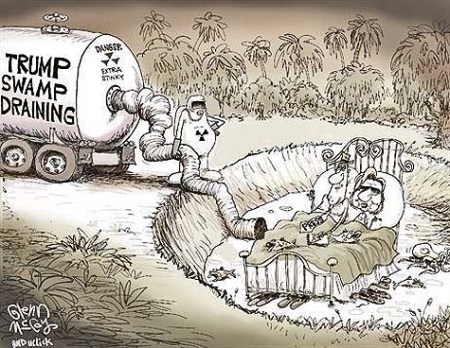
swamp


H/t Freedom is Just Another Word

tweet-dreams-are-made-of-these-1


vagina-1


Cartoons of the Day

October 28, 2016

H/t Vermont Loon Watch

pay-up1


thieves


H/t Joop

trump-accuser


H/t Townhall

clintonhaloween


H/t Vermont Loon Watch

room-service


via e-mail

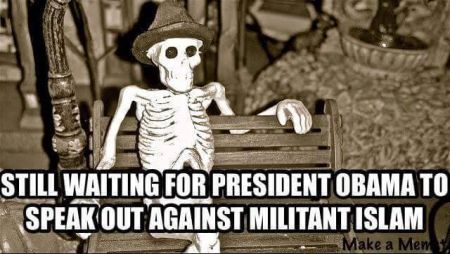
obamaislam


whpress


 GOP Pressures Obama to Cut US Ties to UNESCO Over Jerusalem

October 27, 2016

Republican senators are urging President Obama to suspend the US membership at UNESCO over the Jerusalem resolutions.

By: Hana Levi Julian

Published:October 27th, 2016

Source: The Jewish Press » » GOP Pressures Obama to Cut US Ties to UNESCO Over Jerusalem

Just a small detail ,since when is a group senators the GOP ?

President Barack Obama
Photo Credit: White House photo by Pete Souza

A group of U.S. Senators from the Republican party urged President Barack Obama in a letter on Wednesday to suspend ties with the United Nations Education, Science and Cultural Organization (UNESCO).

The senators are pressuring Obama to suspend American ties with the world body over the two resolutions it approved in the past 10 days, denying ancient historic Jewish ties with Jerusalem.

“At a time when the Middle East is in turmoil and historical heritage sites are being destroyed by groups such as ISIS, it is imperative that the U.S. stands with Israel, our closest ally and the sole democracy in the region.

“Recent UNESCO resolutions that deny Jewish and Christian ties to holy sites in Jerusalem not only reinforces the necessity of withholding American funding from this counterproductive UN organization, but also call into question future U.S. membership in UNESCO,” wrote the senators in their letter.

It was signed by Senators Marco Rubio, Johnny Isakson, Mark Kirk and David Perdue.

“Given that U.S. law already forbids American taxpayer money going to UNESCO, we urge your administration to join Israel in suspending ties to UNESCO.

“In 1984, the U.S. severed ties with UNESCO due to disparities between American foreign policy goals and UNESCO’s agenda.

“Because UNESCO continues to deviate from its founding mission and adopt one-sided, anti-Israel resolutions, it is time for the U.S. to stand with Israel, and suspend our ties with UNESCO.”

The second resolution, passed this week by the World Heritage Committee, was entitled “Old City of Jerusalem and its Walls. It was approved by a secret vote with only 10 member states casting their ballots in favor; eight abstained, two opposed and one was absent from the room. The Philippines and Tanzania reportedly were the two nations who opposed the measure; Jamaica was absent.

”The theater of the absurd continues,” said Israel’s Prime Minister Benjamin Netanyahu during a speech at the Interdisciplinary Center in Herzliya following the vote. “We will decide what to do and what further steps to take against this organization.” Israeli Ambassador to UNESCO, Carmel Shama Hacohen, was also recalled to Jerusalem “for consultations.”

Cartoons of the Day

October 22, 2016

H/t Power Line

pantsuit-fire-copy


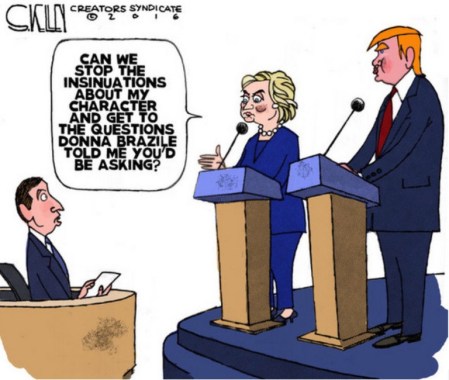
hillary-questions-copy


leaky-hillary-copy-1


wikitrump-copy


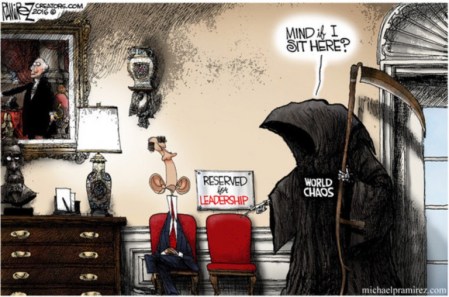
obama-chaos-copy


early-voting-copy


H/t Vermont Loon Watch

lack-of-acceptance-speech-1


What Should Americans Be Talking About?

October 17, 2016

What Should Americans Be Talking About? Gatestone Institute, Judith Bergman, October 17, 2016

Should Americans uphold the Judeo-Christian values, which have governed Western civilization until now? Or should they quietly allow the defeat of those values by a false liberalism — false, because it is anything but liberal — which will allow values, such as that of Islamic sharia religious law to settle over the United States? Will people willingly surrender their own culture in order to avoid becoming victims of intimidation?

Worse, these policies often come in the seemingly benign-sounding terms of “diversity”, “multiculturalism”, “peace”, “anti-racism”, and “human rights”; but are often used in an Orwellian way to mean their own opposites. “Diversity” means, “It is great to look different so long as you think the same way I do” and is also an acceptance of Islamic values. “Anti-racism” often means, in a racist way, anti-white or anti-Jew. “Human rights” now means a political agenda. “Peace” is used to mean the destruction of Israel. “Multiculturalism” means any culture except the Judeo-Christian one — regardless of whether that culture supports denigrating women, slavery, flogging, amputating limbs, murdering gays and the intolerance of all other religions and cultures. These inversions of language are having devastating consequences not only on university campuses, but also throughout the U.S. and abroad.

“The process of settlement is a ‘Civilization-Jihadist Process’ with all [that] the word means. The Ikhwan [Muslim Brotherhood] must understand that their work in America is a kind of grand jihad in eliminating and destroying the Western civilization from within and ‘sabotaging’ its miserable house by their hands and the hands of the believers…” — Muslim Brotherhood, 1991.

The question of whether to submit to these policies, as Europe is doing, or to uphold freedom, as Israel is doing, has arrived in the United States. The choice Americans make will immeasurably affect not just the US, but, despite sounding melodramatic, the future of Western civilization.

For the American voter, issues of immense urgency to the survival of the free world — such as individual freedom, dispassionate enquiry and freedom of speech and thought, which we dangerously have come to take for granted — are being derailed by crude language and behavior, when Americans need to be paying attention to serious threats to the United States, its allies and to the values of the West.

Internationally, these threats come from Iran, Russia, China, North Korea, and countless terrorist groups.

Domestically, they appear in the form of massive corruption — financial and otherwise — that is visibly hollowing out American institutions, such as the FBI (the failure to follow investigative procedure, followed by calls for FBI Director James Comey’s resignation); the Department of Justice (the “Fast and Furious” gun-walking scandal, and the Attorney General meeting with a former president whose wife is under investigation); the State Department (email leaks are still yielding up evidence of collusion between the Clinton Global Initiative and the State Department under Hillary Clinton); the IRS (targeting conservative non-profits, and raiding the businesses of private citizens, who disagree with policy); the Environmental Protection Agency’s attempt to acquire power over every puddle in America) and the Executive branch in the “I have a pen and I have a phone” president’s dealings with Iran.

There have also been attempts by outsiders to incite racial and religious anarchy. The entrepreneur George Soros, for example, donated $33 million to turn events in Ferguson, Missouri from a local protest into chaos.

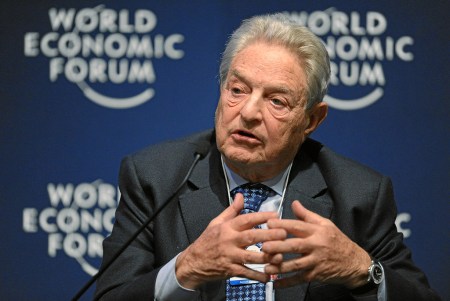
1952There have been attempts by outsiders to incite racial and religious anarchy. The entrepreneur George Soros, for example, donated $33 million to turn events in Ferguson, Missouri from a local protest into chaos. (Image source: World Economic Forum)

Instead of helping Americans to create a safer, more prosperous way of life, the Ferguson events destroyed a community, devastated small business owners, and eroded security, the rule of law, and any hope for a better future. Who benefits? Creating chaos embeds a political dependency: rather than helping people to climb out of poverty, it keeps them voting for politicians to “rescue” them.

Jews and Israel are also targeted — often, regrettably, by other Jews, who appear naïvely to hope that they will thereby “immunize” themselves from attacks on Jews. Recently, for example, an article accused the U.S. Republican presidential election campaign of “significantly enhancing the presence of antisemitism in the public arena.”

Seriously?

While “conservative” radicals, such as white supremacists do exist, they are not even close to overtaking the mainstream discourse. That space, rather, seems to have been filled in the last decades by self-described “liberals” who now seem to dominate it to such a degree that the Dean of Students at the University of Chicago, John Ellison, felt obliged to write a letter warning prospective applicants not to expect a “safe space.” “Conservative” radicals are not the ones hunting down Jews — “liberals” and Islamists are victimizing and shutting them out.

Ironically of course, the liberals have not yet figured out that the agendas of these two groups are incompatible (as in gender equality); perhaps they are trying to “immunize” themselves, too.

Public debate in the US, particularly in the next few weeks, really needs to be about choosing what policies would actually improve the lives of Americans. Should they uphold the Judeo-Christian values, which have governed Western civilization until now? Or should they quietly allow the defeat of those values by a false liberalism — false, because it is anything but liberal — which will allow values, such as that of Islamic sharia religious law to settle over the United States? Will people willingly surrender their own culture in order to avoid becoming victims of intimidation?

American university campuses, which should proudly be championing debate of all ideas, have instead been rife with antisemitism for years, mostly because a “thought police” obsessed with identity politics — another way of saying my race, religion, skin color or sexual proclivity is good, yours is not — has overtaken campuses and turned them into embittered war-zones. It is postmodern Stalinism.

Worse, these policies often come in the seemingly benign-sounding terms of “diversity”, “multiculturalism”, “peace”, “anti-racism”, and “human rights”; but are often used in an Orwellian way to mean their own opposites. “Diversity” means, “it is great to look different so long as you think the same way I do” and is also and acceptance of Islamic values. “Anti-racism” often means, in a racist way, anti-white or anti-Jew. “Human rights” now means a political agenda. “Peace” is used to mean the destruction of Israel. “Multiculturalism” means any culture except the Judeo-Christian one — regardless of whether that culture supports denigrating women, slavery, flogging, amputating limbs, murdering gays and the intolerance of all other religions and cultures. These inversions of language are having devastating consequences not only on university campuses, but also throughout the U.S. and abroad.

The glue that brings “liberals” and Islamists, such as the Muslim Students Association (MSA) in the US (a front[1] for the Muslim Brotherhood), together in a common cause is the goal of eradicating Israel — of course always only under the euphemisms of “helping Palestinians” and “Peace,” even though Jihadi camps for children were organized first by Palestinians.

A 1991 official document authored by the Muslim Brotherhood outlines its strategic goals for civilizational jihad in North America. It depicts the Muslim Brotherhood’s plans for civilization jihad in the United States stating:

“The process of settlement is a “Civilization-Jihadist Process” with all [that] the word means. The Ikhwan [Muslim Brotherhood] must understand that their work in America is a kind of grand jihad in eliminating and destroying the Western civilization from within and “sabotaging” its miserable house by their hands and the hands of the believers… [W]e must possess a mastery of the art of “coalitions”, the art of “absorption” and the principles of “cooperation.”

The question of whether to submit to these policies, as Europe is doing, or to uphold freedom, as Israel is doing, has arrived in the United States. The choice Americans make will immeasurably affect not just the US, but, despite sounding melodramatic, the future of Western civilization.

________________-

[1] In a 1991 official document authored by the Muslim Brotherhood, outlining its strategic goals for civilizational jihad in North America, the Muslim Students Association was mentioned as “one of our organizations and the organizations of our friends”, that is, a front group for the Muslim Brotherhood. The document was entered as evidence in the 2008 Holyland Terror Funding Trial.


Iranian warships deployed off Yemen coast after US bombs Houthi targets

October 13, 2016

Iranian warships deployed off Yemen coast after US bombs Houthi targets

report Published time: 13 Oct, 2016 13:32

Source: Iranian warships deployed off Yemen coast after US bombs Houthi targets – report — RT News

FILE PHOTO Iranian navy warship © Stringer / Reuters

Iran has deployed a fleet of warships to the Gulf of Aden, according to the Tasnim news agency. The deployment follows US cruise missile strikes on Yemeni positions thought to be under Houthi rebel control.

The Iranian Navy has sent the warships to international waters for a mission that includes entering the area off the southern coast of Yemen, Tasnim reported on Thursday. The area is among the world’s busiest maritime trade routes.

“Iran’s Alvand and Bushehr warships have been dispatched to the Gulf of Aden to protect trade vessels from piracy,” Tasnim reported earlier, as quoted by Reuters.

Read more

FILE PHOTO © Eric Garst

Saudi Arabia, which has fought a long war with Yemen’s Houthi rebels, accuses Iran of supporting the group – a charge denied by Tehran.

The US military carried out “limited self-defense strikes” in Yemen on Thursday, in retaliation for recent attacks on an American naval destroyer, USS Mason, which has been operating north of the Bab Al-Mandab Strait.

According to the Pentagon’s initial assessments, three “radar sites” in the Houthi rebel-controlled area of Yemen were destroyed in the attack.

The attack on coastal targets was carried out by Tomahawk cruise missiles launched from the destroyer USS Nitze, NPR reported.

The Houthis have denied carrying out the attack, however. A military source reportedly told Saba news agency – a media outlet run by the group – that the assault did not come from areas under its control.

More from RT.com