Posted tagged ‘Obama and Iran’

Iran breaches the nuclear deal

December 14, 2015

Iran breaches the nuclear deal, Front Page MagazineDr. Majid Rafizadeh, December 14, 2015

mr


Not long after signing the nuclear deal, the ruling clerics of the Islamist state of Iran have clearly breached the agreement and several of the United Nations Security Council Resolutions. What is the Obama administration’s response? He is turning a blind eye to this vital issue. The administration is ignoring these blatant violations and continuing with its efforts to lift sanctions on the Ayatollah’s regime.

The Joint Plan of Action Agreement (JCPOA), which was reached between the six world powers and Iran, clearly mentions “addressing UN Security Council (UNSC) resolutions” regarding the Islamic Republic. Specifically, the JCPOA (UNSCR 2231 Annex II, paragraph three) states that Iran should not undertake any ballistic missiles activity “until the date eight years after the JCPOA Adoption Day or until the date on which the IAEA submits a report confirming the Broader Conclusion, whichever is earlier.”

Despite agreeing to the nuclear deal, Iran has repeatedly test-fired long-range ballistic missiles and laser-guided surface-to-surface missiles. In fact, last week, the Islamic Republic tested a new ballistic missile capable of carrying multiple warheads. This is in direct breach of two UN Security Council resolutions and the JCPOA.

Iranian leaders make no attempt to hide this. Instead they are projecting their military power, and flaunting their breach of the agreement and the UNSC resolutions. When his country was unveiling a new missile, Fateh 313, the Iranian President Hassan Rouhani previously pointed out that “we will have a new ballistic missile test in the near future that will be a thorn in the eyes of our enemies.” An Iranian state news agency, Fars, also posted a video of Iran’s underground missile testing facility.

Iran’s ballistic capabilities are one of the most critical pillars of Iran’s Islamist and militaristic ideology. Besides managing Iran’s nuclear program and supporting its Islamist proxies, the third important program of Iran’s revolutionary Guard Corps (IRGC) is its ballistic missile program.

Iran possesses the largest ballistic missile program in the Middle East, even surpassing Israel.  No country, except Iran, has acquired long range ballistic missiles before obtaining nuclear weapons. This makes IRGC one of the most formidable military institutions in the region. Ballistic missiles can be used for offensive or defensive purposes, but sophisticated missiles are mainly developed as delivery vehicles for nuclear weapons.

Tehran’s ballistic missiles can hit any country in the Middle East. But Iranian leaders are not satisfied with this capability and are looking to expand.

Iran’s ballistic technology has normally grown due to Iran’s North Korea ties. But gradually, the Islamist clergy has relied on its domestic infrastructure and adapted new technology to expand its ballistic arsenal.

Iranian leaders have boasted about having an intercontinental ballistic missile, which can hit any place on the earth, even the United States, as it is capable of traveling over 9,000 miles.

Iran’s determination to have the most robust and largest ballistic missile arsenal in the region highlights Tehran’s ambitions for regional supremacy through militarization.

By emphasizing the need to fight the “enemies,” IRGC leaders have succeeded in rallying the Parliament (Majlis) and obtaining billions of the government’s revenue to spend on Iran’s ballistic and nuclear program. On the other hand, improving military capabilities has bolstered Islamists’ support for the hold-on-power approach of the IRGC and the Supreme Leader, Ayatollah Ali Khamenei.

Iran’s expanding program and frequent test-fires are also aimed at imposing fear throughout the region. This inevitably leads to further destabilization and militarization of the region. For example, the United Arab Emirates previously signed a $3.3 billion dollar deal to buy missiles from the US firm Raytheon, to further invest in its weapon program.

Not only did the nuclear deal not temper Iran’s foreign policy and regional hegemonic ambitions, IRGC leaders appear to be more emboldened to manifest their military power.

Despite the efforts of the international community since the 1980s, the Islamic Republic has managed to expand its missile program to be the largest in the region. Despite the United Nations Security Council resolution 1929 that states “Iran shall not undertake any activity related to ballistic missiles capable of delivering nuclear weapons, including launches using ballistic missile technology, and that States shall take all necessary measures to prevent the transfer of technology or technical assistance to Iran related to such activities,” Iran’s missile range has grown from 500 miles to over 2,000 miles.

Iran’s flagrant breaches of the nuclear agreement make it clear that the agreement has been violated. Unfortunately, these actions and Iran’s rapidly improving missile capabilities will not elicit any reaction from the Obama administration. In fact, these breaches of the JCPOA and UNSC resolutions are not going to change President Obama’s efforts to urge P5+1 to lift the ban on Iran’s ballistic program and remove sanctions by early next year.

The Obama administration is contributing to creating one of the largest threats to US national security in the region by ratcheting up IRGC’s military prowess and rallying more hard-line support behind IRGC in Iran.

Iran breaks the world executions record

November 17, 2015

Iran breaks the world executions record, Front Page MagazineDr. Majid Rafizadeh, November 17, 2015

Iranian executions

Is the Obama administration aware that it is trusting and dealing with a country that has just broken the world record in executions? Of course the President is aware of that, and it seems that he has decided to turn a blind eye to Iran’s increasing aggression and oppression inside and outside of its own country.

According to the recent and fifth report by the special United Nations investigator of human rights, human rights violations in Iran are rising even since the nuclear agreement was reached. Accordingly, execution rates have been increasing at “an exponential rate” in Iran. In 2014, 753 were executed and at least 694 people (including women and juveniles) were executed from January 2015 till mid-September. This is reported to be the highest rate of execution the Islamic Republic has had in 25 years.

If we take the ratio of the population into consideration, the Islamic Republic breaks the world record in number of executions per capita. As Ahmed Shaheed, the U.N. special rapporteur for human rights in Iran, pointed out, “The Islamic Republic of Iran continues to execute more individuals per capita than any other country in the world. Executions have been rising at an exponential rate since 2005 and peaked in 2014, at a shocking 753 executions[.]” According to the UN analyst, Iran is on track to execute more than 1000 people by the end of this year. Of course, these are only the official numbers being reported by the Iranian regime, the unreported number of executions by the government is likely much higher.

An execution may be ordered over many things, such as insulting the Supreme Leader, enmity toward Allah, and other non-violent offenses. According to the U.S. State Department’s  Human Rights report on Iran, “the law criminalizes dissent and applies the death penalty to offenses such as ….‘attempts against the security of the state,’ ‘outrage against high-ranking officials,’ ….(moharebeh), and ‘insults against the memory of Imam Khomeini and against the supreme leader of the Islamic Republic.’”

In addition, when it comes to journalists, social media activists, and women, political rights, discriminatory laws, as well as arbitrary detentions have been on the rise as well. According to the global gender gap index of the World Economic Forum, the Islamic Republic is ranked 137 out of 142, followed by Mali, Syria, Chad, Pakistan and Yemen.

In contrast to the report, a more liberal, softer and open image of the Islamic Republic has been repeatedly projected to the international community by Iranian President Hassan Rouhani, Mohammad Javad Zarif, the Western-educated foreign minister, and his technocratic team.

There was an assumption by liberals that several developments, including the improving ties between the West and Iran, the nuclear agreement, and the presidency of a moderate political figure would translate into improving civil liberties, social justice and removing restrictions on political critics in Iran. However, the real picture inside the country suggests a much different landscape. As Azita, an Iranian human rights activist and teacher from the ethnically Azeri-populated city of Tabriz said, “This is similar to, or even worse than, the period of Khatami where Basij, moral police, and IRGC increased suppression in order to tell the young people particularly that the laws will not changed.”

The State Department report clearly highlights the notion that the superficial illusion of a softer image projected by Iran belies the social, political, and economic reality inside the country.

This explains three phenomena. First, although President Rouhani promised that he will improve several critical issues such as civil liberties, social justice, freedom of expression, assembly, and press, and women’s rights, he decided to instead solely focus on the nuclear deal in order to get Iran out of the financial sanctions that restrained its growth.

Secondly, one can make the argument that President Rouhani has also decided not to cross the boundaries of Iran’s Revolutionary Guard Corps (IRGC) by cooperating with them and allowing them to have full control over domestic social and political policies, as well as foreign policy (Syria, Hezbollah, etc.).

Third, the hardliners are increasing their repressive tools and cracking-down on civil liberties in order to send a message to the Iranian young people and the West that the nuclear agreement does not mean Tehran is going to open up its political system and loosen Sharia law.

Iran’s Supreme Leader, Ayatollah Ali Khamanei, and his social base (the hardliners) are very concerned that Iranian youth might become a source of revolution. As a result they attempt to keep the country closed and they fear Western political and cultural influence on young people.

As Mr. Khamanei warned the senior cadre of the IRGC, “The main purpose of the enemies is for Iranians to give up on their revolutionary mentality…Enemy means global arrogance, the ultimate symbol of which is the United States….Economic and security breaches are definitely dangerous, and have dire consequences…But political and cultural intrusion by the enemy is a more serious danger that everyone should be vigilant about.”

Finally, the nuclear agreement seems to have overshadowed the human rights conditions inside Iran and the repressive Shiite Islamist laws. European countries and the Obama administration appear to have been turning a blind eye and have been becoming less critical of the Islamic Republic’s human rights record since the nuclear negotiation began and after the nuclear deal was signed.

It is time for the Obama administration to draw attention to the real face of the so-called moderate president of Iran who contradicts the truth by depicting himself and his country in a softer image to the world while simultaneously allowing executions and egregious, appalling and atrocious human rights abuses on his watch.

Democrats seek to undo political damage of the Iran Deal

November 12, 2015

Democrats seek to undo political damage of the Iran Deal, Legal Insurrection, November 12, 2015

The New White House Meme About Bibi: He Doesn’t Understand.

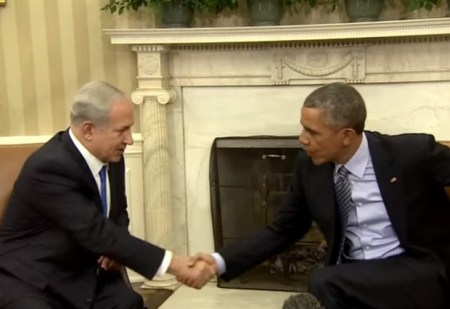
2015-11-12_090314_Netanyahu_Obama-620x426

[T]he nuclear deal has done tremendous political damage to the Democrats. And while much of the media is portraying Netanyahu’s D.C. visit as Netanyahu’s chance to mend fences, I think it’s been Obama’s.

Polling shows that despite the tensions between Obama and Netanyahu, which Jonathan Tobin correctly characterizes as being exacerbated by Obama, bipartisan support for Israel is strong and growing. Obama and Congressional Democrats are quite aware of this.

****************************

The New White House Meme About Bibi: He Doesn’t Understand.

In a look at the history of the tensions between President Barack Obama and Israeli Prime Minister Benjamin Netanyahu, The New York Times several days ago started with an interesting anecdote.

For President Obama, it was a day of celebration. He had just signed the most important domestic measure of his presidency, his health care program. So when Prime Minister Benjamin Netanyahu of Israel arrived at the White House for a hastily arranged visit, it was likely not the main thing on his mind.

To White House officials, it was a show of respect to make time for Mr. Netanyahu on that day back in March 2010. But Mr. Netanyahu did not see it that way. He felt squeezed in, not accorded the rituals of such a visit. No photographers were invited to record the moment. “That wasn’t a good way to treat me,” he complained to an American afterward.

The tortured relationship between Barack and Bibi, as they call each other, has been a story of crossed signals, misunderstandings, slights perceived and real. Burdened by mistrust, divided by ideology, the leaders of the United States and Israel talked past each other for years until the rupture over Mr. Obama’s push for a nuclear agreement with Iran led to the spectacle of Mr. Netanyahu denouncing the president’s efforts before a joint meeting of Congress.

It’s interesting because this is not at all how I remembered it. I remember that the lack of attention to the meeting was perceived as an intentional slight of Netanyahu. A quick check of the contemporaneous reporting confirmed this.

(Later when describing the meeting the article says that the situation was “made worse by exaggerated stories of shabby behavior in Israeli news media.” I don’t know that exaggerations were necessary.)

Reuters: In a sign of lingering tensions, the Obama administration withheld from Netanyahu some of the usual trappings of a White House visit. Press coverage of the Oval Office talks was barred, and the leaders made no public statements afterward.

Jackson Diehl of The Washington Post (who was, in fact, quoted by Prof. Jacobson at the time): Finally, Obama has added more poison to a U.S.-Israeli relationship that already was at its lowest point in two decades. Tuesday night the White House refused to allow non-official photographers record the president’s meeting with Netanyahu; no statement was issued afterward. Netanyahu is being treated as if he were an unsavory Third World dictator, needed for strategic reasons but conspicuously held at arms length. That is something the rest of the world will be quick to notice and respond to. Just like the Palestinians, European governments cannot be more friendly to an Israeli leader than the United States.

New York Magazine: It was an ominous signal when the White House didn’t provide photos or briefings after the much-anticipated meeting between President Obama and Israeli Prime Minister Benjamin Netanyahu earlier this week. After Joe Biden was blindsided by a surprise Israeli announcement of a new East Jerusalem housing project a couple of weeks earlier, the Obama administration was clearly sending a message of extreme displeasure.

BBC: But the White House had no immediate comment on their content. In a break with convention, reporters were not invited to witness the pair shake hands at the start of their discussions. It was a pointed contrast with the traditional public welcome for Israeli leaders at the White House, the BBC’s Steve Kingstone in Washington reports.

New York Time editorial a few days later: Mr. Obama was right to demand that Mr. Netanyahu repair the damage. Details of their deliberately low-key White House meeting (no photos, no press, not even a joint statement afterward) have not been revealed. We hope Israel is being pressed to at least temporarily halt building in East Jerusalem as a sign of good faith. Jerusalem’s future must be decided in negotiations.

In none of these accounts, was there any mention of the signing of Obamacare, (which did take place earlier that day.) The “low-key” approach to the meeting between the leaders was reported as a deliberate attempt by the administration to signal its displeasure with Netanyahu. I saw no indication that the administration tried to fight that impression at the time.

My best guess is that the New York Times reporters were simply writing the administration’s revisionist account of the events in 2010, without doing the necessary due diligence to ensure that the information they were given was accurate.

Still the article is mostly well-reported covering both sides. There are a few significant omissions (this and this, for example), but the article tries very hard to make the case that any tension between Obama and Netanyahu is the result not of malice, but of Netanyahu misunderstanding Obama. Perhaps the clearest expression of this came in a a description of meetings between Obama and American-Jewish leaders:

In those meetings, Mr. Obama expressed distress. “He bore his soul about how much he cares about Israel,” Mr. Foxman said. “It was painful, hurtful. ‘I care about Israel, I love Israel.”‘ Why did Mr. Netanyahu not understand?

So yes, I think we have a new meme, Obama is pro-Israel but misunderstood. The question is why the administration is so sensitive right now.

I have an idea.

First consider where the Democratic party is nearly one year before the next presidential election.

As Aleister noted recently, the Democrats have lost 12 governorship, 69 House seats, 14 Senate seats and over 900 local legislative seats in 7 years under Obama. While Obama’s personal popularity hovers just a little below 50%, this represents a widespread rebuke to his governance. Remember, his two signal achievements, Obamacare and the Iran nuclear deal were unpopular. As everyone sees increasing health insurance rates and the consequences of the nuclear deal are reported, voters will have reminders of schemes that were enabled by legislative manipulation lacking popular support.

The Sun-Sentinel reported on Saturday on the significance of the Obama-Netanyahu meeting:

The region is home to an estimated 500,000 Jewish residents — sizable enough to tip the results in the biggest swing state in the country. Florida awards 29 electoral votes, more than 10 percent of the total needed to win the presidency.

Changing the outcome “doesn’t require a majority shift,” said Steven Abrams, a county commissioner who was Palm Beach County chairman for Newt Gingrich’s unsuccessful 2012 presidential campaign. “The Jewish vote only needs to change by a percent or two or three in order to make a difference in the outcome of the state.” …

“I have three words: Iran nuclear deal,” Abrams said, referring to the Obama administration’s controversial effort to prevent Iran from developing a nuclear weapon. “It’s one of President Obama’s major initiatives. It’s not a small policy. And it’s a very prominent policy for Jewish voters and many Jewish Democrats and many more Jewish independents are not enthralled by it, and those are targeted voters.”

To be sure the Sun-Sentinel quoted several Democrats saying otherwise, but the nuclear deal according to polling throughout the summer is extremely unpopular.

A Quinnipiac poll in August found that voters in the crucial swing states Ohio, Pennsylvania and Florida opposed the deal by a ratio of greater than 2 to 1. And every time Iran arrests an American or stops cooperating with the terms of the nuclear deal, the deal will be in the news and everyone involved in making the deal will look worse. Even many of the senators who supported the deal and defied popular opinion to block a vote on the deal made persuasive cases about the dangers of the deal.

In terms of Jewish opinion, it’s fascinating that not a single Jewish federation backed the deal. Too many of them, for sure took no position, but none supported the deal. Aside from J-Street, not a single major Jewish organization backed the deal. (The question as to whether J-Street is primarily a Jewish organization is a different question.) Even the ADL, which is now headed by a former Obama staffer, Jonathan Greenblatt, opposed the deal. If nothing else, suggests a strong consensus in the organized Jewish community that the nuclear was a bad deal that endangers Israel.

This suggests that the nuclear deal has done tremendous political damage to the Democrats. And while much of the media is portraying Netanyahu’s D.C. visit as Netanyahu’s chance to mend fences, I think it’s been Obama’s.


So even if cynical in the extreme, the meme that Obama loves Israel but his love was misunderstood by Bibi makes perfect sense. It’s a way of tidying up the past and putting the best face on a contentious relationship.

It is also a pose one would expect the president to strike if he were trying to woo back Jewish voters who are concerned about the threats to Israel presented by the nuclear deal.

Although much of the media has portrayed Netanyahu’s trip to the United States as his bid to mend relations with the administration and more generally with Democrats, there is evidence that the opposite dynamic is in play.

In addition to Obama’s “misunderstood” meme, Jennifer Rubin observed that in the wake of the nuclear deal 16 Democratic senators – 14 of whom supported the deal – are “scrambling for cover” and urging Obama to extend and strengthen the “Memorandum of Understanding” governing the terms of American security assistance to Israel in the face of the Iranian threat. Democratic Whip, Rep. Steny Hoyer, who supported the nuclear deal, has released a letter calling on the United States and its partner to ensure that Iran is held accountable for any cheating.

Polling shows that despite the tensions between Obama and Netanyahu, which Jonathan Tobin correctly characterizes as being exacerbated by Obama, bipartisan support for Israel is strong and growing. Obama and Congressional Democrats are quite aware of this.

Cartoon of the day

November 11, 2015

H/t Hope n’ Change

slings-and-narrows-1

Iran attacks, cyber edition, Power Line

November 5, 2015

Iran attacks, cyber edition, Power LineScott Johnson, November 5, 2015

Jay Solomon reports in today’s Wall Street Journal: “U.S. Detects Flurry of Iranian Hacking” (accessible via Google here). The Israel Project’s Omri Ceren takes note and comments in an email message (with the usual footnotes!) that I thought readers would find of interest:

The WSJ revealed last night that there has been a “surge” in Iranian cyber attacks against U.S. officials, journalists, and activists who work on Iran. At least some of the attacks have been successful.

The attacks were launched using the laptop of American-Iranian businessman Siamak Namazi, who was arrested and imprisoned in mid-October. It appears the Revolutionary Guard Corps (IRGC) seized Namazi’s computer, made him log into Outlook or Gmail or whatever program he uses, and then sent malware-infected emails to people in his contact list, who then opened up those emails. The Journal had previously published hints of the story: last week the outlet reported “Iranian intelligence agents ransacked [Namazi’s] family home in Tehran and confiscated his computer, and have since been launching cyber attacks on some of his email contacts” [a]. Journalist Robin Wright subsequently revealed she and State Department officials were among those targeted from the confiscated computer [b]. This new Journal story reveals that the cyber-offensive is widespread and that “Obama administration personnel… have had their computer systems hacked.”

The full article…runs almost 1,500 words. Background on some of the angles:

U.S. politics (sanctions) — “Lawmakers have called for the White House to ramp up sanctions on the IRGC… ‘Iran’s threatening behavior will worsen if the administration does not work with Congress to enact stronger measures to push back, including… targeted pressure against Iran’s Revolutionary Guard,’ Sen. Mark Kirk… said Friday” — Lawmakers are talking about a policy menu that has three tiers of potential targets: (1) Just the IRGC personnel involved in Namazi’s arrest, e.g. by having the Treasury Dept. tag them as Specially Designated Nationals (SDNs) (2) the entire IRGC, e.g. by having the State Dept. designate the IRGC as a Foreign Terrorist Organization (FTO) [c] (3) Iran’s non-nuclear infrastructure (ballistic missile development, human rights violations, terror promotion, regional expansionism, etc), e.g. by supporting Congress in renewing the Iran Sanctions Act (ISA) of 1996.

Middle East geopolitics (U.S.-Iran entente) — “President Barack Obama and Secretary of State John Kerry have voiced hopes that the Iran nuclear agreement reached in July could spur greater cooperation between Washington and Tehran on regional issues… Iran for the first time took part in international talks aimed at ending the multisided war in Syria” — Foreign Policy revealed last night that Obama personally intervened with the Saudis to allow Iran to take part in those talks [d]. The Associated Press had already assessed over the summer that “coziness” between the Iranians and Obama administration officials was “the new normal” [e]. The Iranian cyber-offensive – plus the arrest of Namazi, plus Iran’s arrest last month of U.S. resident Nizar Zakka, plus the new joint Iranian-Russian military offensive in Syria, plus Iran’s recent launch of a ballistic missile in violation of UNSC resolution 1929, plus this week’s widespread Death to America celebrations throughout Iran [f] – risks making the administration look naive.

U.S. National security (cyber) — “The IRGC has used cyberwarfare against other Iranian-Americans and people tied to them detained in recent years… Computer experts have noted that by hacking a target’s contacts… the number of people associated with that target can grow exponentially” — The Iranians have been spear phishing US government targets for years. In May 2014 a computer security firm revealed the existence of a three year Iranian cyber-campaign – the “most elaborate social-engineering campaign” the researchers had ever seen – targeting U.S. military officials, Congressional staffers, diplomats, lobbyists, journalists, and so on [g]. Last spring the American Enterprise Institute published a report assessing that the then-impending nuclear deal would “dramatically increase the resources Iran can put toward expanding its cyber attack infrastructure” [h].

The WSJ story will get wrapped into the broader debate about the wisdom of the Joint Comprehensive Plan of Action (JCPOA). When the article went live last night Reuters took it to the White House for a response, and got a “no comment” on background [i]. As today rolls along, administration spokespeople will shift more explicitly to the usual line about Iranian aggression: they’ll say that of course they have concerns about Iranian behavior, but the nuclear deal was never premised on Iranian moderation, and they’ll add that they can still respond to Iran with options in theory. They’ll refuse to identify any specific pushback they intend to implement in practice.

That move has been a staple of administration messaging for months, but may not satisfy journalists or lawmakers in the aftermath of the Namazi arrest and cyber attacks. The policy menu outlined by the Kirk letter provides a range of options – SDNs, FTO, ISA – and should allow the White House to work with Congress on a calibrated pushback. At the bottom level it suggests sanctions against the specific IRGC officials in the specific intelligence unit who seized Namazi and used his laptop to hack American officials. Imposing sanctions at that individual level is quite literally the least the White House can do in response.

[a] http://www.wsj.com/articles/iranian-american-executive-arrested-in-iran-1446164677
[b] http://www.newyorker.com/news/news-desk/an-american-hostage-in-iran-again
[c] http://thehill.com/blogs/pundits-blog/defense/257399-time-to-designate-irans-revolutionary-guards-as-terror-group
[d] http://foreignpolicy.com/2015/11/04/syria-crisis-tests-newfound-detente-between-washington-and-tehran/
[e] http://bigstory.ap.org/article/dd9010d400be449d88076da5aa85b05e/once-unheard-us-iran-exchanges-becoming-new-normal
[f] http://bigstory.ap.org/urn:publicid:ap.org:a55c0f82739f4ee7902e1dd2fd1cb7c9
[g] http://www.defenseone.com/technology/2014/05/iranian-hackers-target-us-military-officials-elaborate-social-media-scam/85417/
[h] http://www.thedailybeast.com/articles/2015/04/16/report-iranian-hackers-eye-u-s-grid.html
[i] http://www.businessinsider.com/r-iranian-military-hackers-focus-on-us-administration-officials-wsj-2015-11

‘Media misleading by reporting that Iran implementing nuclear deal’

November 4, 2015

‘Media misleading by reporting that Iran implementing nuclear deal,’ Jerusalem PostAriel Ben Solomon, November 3, 2015

(The Emperor has no clothes is available here. — DM)

The mainstream media are misleading the world into believing that Iran has accepted and is implementing the Joint Comprehensive Plan of Action that was agreed upon on July 14, a prominent Middle East expert who served in military intelligence and was an adviser to two prime ministers told The Jerusalem Post Tuesday.

“The recent phenomenon in the Western media saying that Iran has accepted the nuclear deal when it has not, shows that it has completely coddled to the line in defending the Iran deal,” Yigal Carmon, president of the Washington-based Middle East Media Research Institute (MEMRI), told the Post.

“This is very dangerous,” he asserted.

In an article Carmon published on MEMRI’s website on Friday titled, “The emperor has no clothes,” he wrote: “With every passing day, Iran is more and more in violation of the JCPOA. But neither the Republicans nor the Democrats, nor the media, nor anyone else will acknowledge this, for the implications are too devastating.”

On Monday, Tehran’s atomic energy chief said during a visit to Tokyo: “We have already started to take our measures vis-a-vis the removal of the centrifuge machines – the extra centrifuge machines. We hope in two months time we are able to exhaust our commitment,” Ali Akbar Salehi told public broadcaster NHK.

In a separate development that appeared to confirm that Iran had begun implementing its side of the deal, 20 hardline conservative members of Iran’s parliament wrote to President Hassan Rouhani to complain about the deactivation of centrifuges at two enrichment plants at Natanz and Fordow.

“Unfortunately, in the last two days, some contractors entered Fordow and started dismantling centrifuges… they said they could finish the job in two weeks,” Fars cited the lawmakers, among those loath to accept the nuclear deal, as saying.

However, MEMRI showed a recent report from the Iranian press that directly refuted such claims.

Behrouz Kamalvandi, spokesman for Iran’s atomic energy agency, addressed the concerns of several Majlis representatives and, according to a report on Tuesday by ISNA, he said: “We are also taking care of this matter. We will promote work in a way that follows the leader’s principles and guidelines.”

“The leader’s emphasis on the steps to be taken after the possible military dimensions dossier is closed was centered on the Arak reactor and the replacement of the uranium stockpiles,” he said.

“We are carrying out the leader’s orders meticulously and currently working on receiving the necessary guarantees on this matter.

“Indeed, we have taken several steps to implement the JCPOA so that we have more time when we wish to carry out matters in effect, but no centrifuge has been dismantled, and we are currently taking preparatory steps,” Iran’s nuclear spokesman continued.

“Regarding an official document on the rebuilding of the Arak reactor, all member-states of the P5+1 Group signed the document except for one, and we are currently waiting for the opinion of this country, which should arrive today or tomorrow,” Kamalvandi said.

Commenting on this previously unmentioned report, Carmon said, “Lo and behold, the only place you will find this report alongside the other one is in The Jerusalem Post, which sticks with the principles of journalism and doesn’t hide the reality when it doesn’t fit its beliefs, whatever they would be.

“The JCPOA, as concluded and celebrated on July 14, was never approved by Iran,” he said.

“They will never violate Khamenei’s conditions,” since even Iran’s leaders have already said they would adhere to them.

Conditions set out by Iran Supreme Leader Ali Khamenei effectively give him the power to bypass the government and cancel the nuclear deal, Carmon and the head of MEMRI’s Iran desk, Ayelet Savyon, wrote in a report last month.

Khamenei published a letter of guidelines for President Hassan Rouhani, adding new conditions for Iran’s execution of the agreement.

“The set of conditions laid out by Khamenei creates a situation in which not only does the Iranian side refrain from approving the JCPOA but, with nearly every point, creates a separate obstacle such that executing the agreement is not possible,” they wrote.

Following the publication of the supreme leader’s letter, Majlis Speaker Ali Larijani and Rouhani fully accepted Khamenei’s stipulations, Savyon told the Post last month.

Some close to the leadership will declare progress to the press, explained Carmon, but in reality, according to their own nuclear official, “Not one centrifuge has been removed.”

For the Americans, the JCPOA has no time limitation for implementation.

“Implementation day will happen when it happens and when the IAEA reports that it happened,” Carmon added.

Asked about the International Atomic Energy Agency, the United Nations nuclear watchdog, which is due to issue a report by December 15 on whether Iran’s nuclear program ever had a military application, Carmon responded that the IAEA will not report about implementation if it does not occur.

Therefore, Carmon argued, this saga could take months, or even well beyond that, or it may not even happen at all.

Iran-US Talks Limited to Nuclear Issue: MPs

October 31, 2015

Iran-US Talks Limited to Nuclear Issue: MPs, Tasnim News Agency (Iranian), October 31, 2015

(Please see also, Russia Invites Iran to Join Talks on Syria, with US Approval. — DM)

Iranian guy(1)

TEHRAN (Tasnim) – A senior Iranian lawmaker dismissed claims about Iran’s bilateral talks with the US over the ongoing crisis in Syria, saying Tehran does not at all negotiate with Washington on any non-nuclear issue.

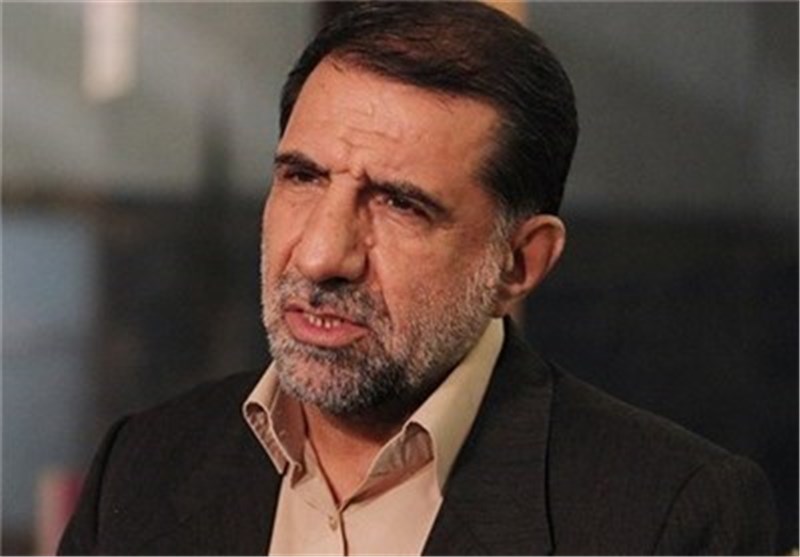
Esmaeil Kosari, the chairman of the Iranian parliament’s defense commission, rejected media speculations about Iran’s direct talks with the US over the Syrian crisis, saying the country would never negotiate with the US over any topic other than the nuclear issue.

The Iranian negotiating team does not at all hold any direct negotiations with the US outside the nuclear issue, he told the Tasnim News Agency.

Another Iranian lawmaker, Baqer Hosseini, who is a member of the parliament’s National Security and Foreign Policy Commission, also told Tasnim that the foreign ministry officials have no permission to have non-nuclear talks with the US, and that it should not happen.

Given the guidelines of the Supreme Leader of the Islamic Revolution Ayatollah Seyed Ali Khamenei, and considering the previous experiences with Americans, Iran is not supposed to hold talks with the US on any topic other than the nuclear issue, he added.

The remarks came after certain media alleged that Tehran and Washington have conferred on the issue of Syria in their Thursday bilateral talks, previously announced to be focused on the implementation of a recent nuclear deal between Iran and world powers known as Joint Comprehensive Plan of Action (JCPOA).

In a similar reaction to the claim, US State Department Spokesman John Kirby stressed that “the discussions with Iran over Syria and what’s going on in Syria took place inside the multilateral setting.

“The meetings bilaterally were primarily about JCPOA implementation,” he added.

Earlier on October 7, Ayatollah Khamenei categorically rejected the idea of talks between Tehran and Washington in areas other than the nuclear issue.

Negotiating with the US is forbidden because it would bear no fruits, but would do countless harms, Imam Khamenei stressed at the time.