Posted tagged ‘Nukes’

Obama’s Not-So-Ironclad Guarantee

May 15, 2015

Obama’s Not-So-Ironclad Guarantee, Commentary Magazine, May 15, 2015

Now that the nuclear deal makes an Iranian bomb only a matter of when rather than if, the Gulf nations were hoping for more than just a carefully worded expression of American indifference.

***********

This was supposed to be the week when President Obama put on a show of his desire to reaffirm America’s support for its Arab allies. Saudi Arabia and the other Gulf states have spent the last year in the unusual position of agreeing more with Israel than the United States, as Obama pushes for détente with Iran. Like the Israelis, the Arabs are pondering their future in a region dominated by an Iranian nuclear threshold state that appears to be the lynchpin of the president’s foreign policy legacy. So to demonstrate his good will, Obama invited these nations to a summit at which he would convince them they had nothing to fear. But with the U.S. putting nothing on the table of substance that would allay those concerns about the weak nuclear deal being negotiated with Iran, the Saudi king and other leaders snubbed the event, turning it into a fiasco even before it began. But it turned out King Salman didn’t miss much. Though Obama offered what he called an “ironclad guarantee’ of America’s support for the Arabs, it was phrased in the kind of ambiguous language that rendered it meaningless. The meeting and especially the statement epitomized an Obama administration foreign policy that puts a premium on appeasing foes and alienating friends.

The wording of the president’s “guarantee” is a marvel of lawyerly ambiguity that any connoisseur of diplomatic doubletalk must appreciate:

In the event of such aggression or the threat of such aggression, the United States stands ready to work with our GCC partners to determine urgently what action may be appropriate, using the means at our collective disposal, including the potential use of military force, for the defense of our GCC partners.

Let’s unpack this carefully so we’re clear about what the United States isn’t promising its Arab allies. As even Obama’s cheerleaders at the New York Times noted, this “carefully worded pledge that was far less robust than the mutual defense treaty the Gulf nations had sought.” In the event of aggression, the U.S. isn’t going to spring into action to defend them. Instead it will “work” with them to “determine” what they might do. That falls quite a bit short of a hard promise of collective action, let alone the drawing of a line in the sand across which the Iranians may not cross. In other words, if something bad happens, Obama will talk with the threatened parties but he won’t say what he will do in advance or if he will do anything at all. If that is an “ironclad guarantee,” I’d hate to see what a less binding promise might sound like.

To understate the matter, this is not the sort of pledge that will deter an Iran that is emboldened by its diplomatic victory in the negotiations that let them their nuclear infrastructure and continuing working toward a bomb. Iran’s push for regional hegemony has also been boosted by the triumph of their Syrian ally Bashar Assad with the help of Tehran’s Hezbollah terrorist auxiliaries. With the Iran-backed Houthi rebels threatening to take over Yemen and Iran also resuming its alliance with Hamas in Gaza, the axis of Iranian allies has Arab states understandably worried about their future. Now that the nuclear deal makes an Iranian bomb only a matter of when rather than if, the Gulf nations were hoping for more than just a carefully worded expression of American indifference.

That’s why the statement at the end of the summit made no mention of America’s chief worry about the Gulf states: the possibility that the Saudis will, either acting alone or in concert with their neighbors, seek to match Iran’s nuclear potential. As critics of the Iran deal foretold, far from saving the Middle East from an Iranian bomb, it has set off an arms race that has will make the world a fare more dangerous place.

This omission will likely make the Iranians even more reluctant to give in to U.S. demands about sanctions, Tehran’s military research and the disposition of its stockpile of enriched uranium in the final stages of the nuclear talks. A better guarantee for the Arabs might have convinced the Islamist state that the president really meant business about strengthening the deal. In its absence, they have no reason to think Obama won’t fold as he has at every other stage of the negotiations.

Under the circumstances, it’s little wonder that Bahrain’s King Hamad preferred to go to a horse show London rather than confer with Obama. Just as Israel has learned that the United States is more interested in a new Iran-centric policy than it backing its traditional allies, so, too, must the Arabs come to grips with a new reality in which their Iranian foe is no longer restrained by the United States.

Barack Obama: ‘Trust me. I’ve Got Your Back.’

May 14, 2015

Saudis to warn Obama they will match Iran’s nuke buildup
By TIMES OF ISRAEL STAFF AND AP May 14, 2015, 12:26 pm


(The nuclear race is on. While a nuclear exchange in the Mideast could be contained, the fallout will not. Weapons such as this in the hands of tyrants is not only dangerous, it’s suicidal as well. – LS)

Riyadh and other Gulf capitals reportedly will insist they will have ‘whatever the Iranians have,’ as Camp David summit gets underway.

Saudi Arabian officials are warning that they will seek to match Iran’s nuclear arsenal, a US newspaper reported Thursday, as US President Barack Obama and leaders from six Gulf nations — including Riyadh — convened outside Washington to work through tensions sparked by the US bid for a nuclear deal with Tehran, a pursuit that has put regional partners on edge.

Along with Saudi Arabia, smaller Arab countries also say they also plan to pursue a nuclear weapons program to offset Iran’s, portending a much-feared nuclear arms race in the Middle East, according to the New York Times.

“We can’t sit back and be nowhere as Iran is allowed to retain much of its capability and amass its research,” one Arab leader attending the Camp David summit told the New York Times.

The official, who was unnamed, said he and others will also make their case to Obama at the meeting Thursday.

Obama is seeking to reassure the Gulf leaders gathering at Camp David that US overtures to Iran will not come at the expense of commitments to their security. He is expected to offer them more military assistance, including increased joint exercises and coordination on ballistic missile systems.

Obama and the leaders from Saudi Arabia, Qatar, United Arab Emirates, Kuwait, Oman and Bahrain opened their talks with a private dinner Wednesday night at the White House. Just two heads of state are among those meeting Obama, with other nations sending lower-level but still influential representatives.

Arab and Israeli officials have lobbied against the deal, though Gulf states have kept their criticism more discreet. Yet leaders around the region have warned that Iranian nuclear development will lead them to also pursue nuclear programs of their own, a worrying idea in a part of the world already riven by violent conflicts.

“Whatever the Iranians have, we will have, too,” former Saudi intelligence head Prince Turki bin Faisal said last month at a special session of the Asan Plenum, a conference held by the South Korean-based Asan Institute for Policy Studies, according to the New York Times.

Faisal also warned that the Iranian nuclear deal “opens the door to nuclear proliferation, not closes it, as was the initial intention.”

When Thursday’s meetings at the presidential retreat in the Maryland mountains conclude, it’s unlikely Obama will have fully assuaged the Gulf’s deep-seated fear of Iranian meddling in the region.

“My guess is that the summit is going to leave everybody feeling a little bit unsatisfied,” said Jon Alterman, the Middle East director at the Center for Strategic and International Studies.

The most notable absence from the meeting is Saudi King Salman. On Sunday, Saudi Arabia announced that the king was skipping the summit, just two days after the White House said he was coming.

Crown Prince Mohammed bin Nayef and Deputy Crown Prince Mohammed bin Salman were representing Saudi Arabia instead. They held a separate meeting with Obama before the other leaders arrived.

The president made no mention of Saudi skepticism of the Iran talks as he opened the meeting, but acknowledged the region is in the midst of a “very challenging time.”

The White House and Saudi officials insist the king is not snubbing Obama. But Salman’s conspicuous absence comes amid indisputable signs of strain in the long relationship between the US and Saudi Arabia, driven not only by Obama’s Iran overtures, but also the rise of Islamic State militants and a lessening US dependency on Saudi oil.

“There have been disagreements under this administration and under the previous administration about certain policies and development in the Middle East, but I think on a set of core interests, we continue to have a common view about what we aim to achieve,” said Ben Rhodes, Obama’s deputy national security adviser.

The Gulf summit comes as the US and five other nations work to reach an agreement with Iran by the end of June to curb its nuclear ambitions in exchange for relief from international economic sanctions. The Gulf nations fear that an influx of cash will only facilitate what they see as Iran’s aggression.

The White House says a nuclear accord could clear the way for more productive discussions with Iran about its reputed terror links. The US has criticized Iran’s support for Hezbollah, as well as terror attacks carried out by Iran’s Quds Force.

In 2011, the Obama administration accused Iran of plotting to kill the Saudi ambassador to the United States in Washington.

The Saudis are also particularly concerned about the situation in Yemen, where Houthi rebels with ties with Iran have ousted the US- and Saudi-backed leader.

For more than a month, a Saudi-led coalition has tried to push back the Houthis with a relentless bombing campaign. On Tuesday, a five-day humanitarian ceasefire went into effect, though the pause in fighting was already at risk. A jet fighter from the Saudi coalition on Wednesday struck a military convoy belonging to Shiite rebels and their allies in southern Yemen.

Saudi officials cited the ceasefire as one of the reasons why King Salman needed to stay in Riyadh and not make the trip to the United States.

The Saudi king isn’t the only head of state sending a lower-level representative to the summit. The heads of the United Arab Emirates and Oman have had health problems and were not making the trip.

Bahrain’s royal court announced Wednesday that rather than travel to Washington, King Hamad bin Isa Al Khalifa would be attending a horse show and meeting with Queen Elizabeth II.

President Strangelove or, how I learned to stop worrying and love the bomb

May 14, 2015

President Strangelove or, how I learned to stop worrying and love the bomb, Jerusalem Post, David Turner, May 14,2015

Concerned about Soviet intentions in the region the Truman administration entered into the U. S.-Saudi Mutual Defense Assistance Agreement (MDA) in 1951. The Agreement provided the foundation for what would emerge as an American commitment to provide a defense umbrella for the region to protect American interests in the Middle East. American assurances to states in the region seemed intact until the GW Bush Administration invasion of Iraq. Trapped in a war it completely misjudged and soon realized it could not win the administration sought an accommodation with Iran to control Shi’ite militias battling the Americans.

The Bush policy of “accommodation” with Iran became the Obama policy of “appeasement” towards the Islamic Republic. Thus began a six-year-long quest to intended to encourage that country’s recalcitrant and hegemony ambitious leaders to abandon its nuclear weapons program. With the imminent 30 June deadline for signing an Agreement quickly approaching the president invited the Gulf Cooperation Council (GCC) states headed by Saudi Arabia to Camp David promising a mutual defense agreement assuring the Arab states of American protection in the event Iran proved a threat to the region. In addition to “assurances, the Saudis insisted on a signed and “formal alliance structure with the United States guaranteeingU.S. support against potential Iranian aggression.”

In advance of the conference the White House announced that President Obama would meet with the Saudi king the day beforeCamp David. But at the last minute, [d]ispleased with Washington’s dealings with Iran, with an emerging deal over its nuclear program and with US security proposals to Gulf Arab nations,” King Salman announced he would not meet with President Obama and would not attend the Camp Davidconference. In the end only two of six Gulf nations decided to attend with heads of state.

The king’s last-minute cancellation, his turn-down of a meeting with the leader of the Free World was described as “a calculated snub for the president’s policies on Iran and the Middle East.” It was revealed that Kerry, in his meeting with the Saudis the week earlier, told the king that Obama was not prepared to finalize according to the king’s timetable any agreement that might result at Camp David.

And then there was the fact that a mutual defense agreement with the Saudis, the 1951 MDA, already existed already assuring the Saudis protection under America’s nuclear umbrella. Mistrust of American intentions and assurances by America’s “allies” built up over the previous twelve years was palpable.

Bush and the Region

“Even before the inauguration [and, of course, the pretext of 9/11], Cheney asked outgoing Secretary of Defense William Cohen to provide Bush with a briefing focused on Iraq… [Bush appointee] Defense Secretary Rumsfeld saw, “September 11, 2001, as a potential “opportunity.””

Symptomatic of hubris resulting from power minus coherent policy President Bush ignored both Arab and Israeli warnings of Foreseen Consequences certain to follow should the administration follow through with its threat to invade Iraq.

“With his latest remarks, [Saudi, later king] Prince Abdullah joined the chorus of Arab complaints about the Bush administration’s talk of taking military action to oust Saddam Hussein and put an end to his programs to develop weapons of mass destruction. At virtually every stop in the Arab world, Mr. Cheney has been told that an American military strike would destabilize the region.”

And, according to Lawrence Wilkerson, a member of the State Department’s Policy Planning Staff, “[t]he Israelis were telling usIraq is not the enemy – Iran is the enemy.” Wilkerson said that the Israeli reaction to invading Iraq in early 2002 was, “If you are going to destabilize the balance of power, do it against the main enemy.”

Bush and the Bomb

Cut off the head of the snake,” the Saudi ambassador toWashington, Adel al-Jubeir, quotes the king as saying during a meeting with General David Petraeus in April 2008.

In a speech to the Knesset in 2008 to observe Israel’s 60thanniversary Bush told the Knesset, “America stands with you in firmly opposing Iran’s nuclear weapons ambitions. Permitting the world’s leading sponsor of terror to possess the world’s deadliest weapon would be an unforgivable betrayal of future generations.” Nowhere in his speech did Bush hint at his long held view that America was not prepared to enter another Middle East war, that there never was a military option with which to threaten Iran’s nuclear weapons program. No accident then that Bush chose war-averse Robert Gates as his defense secretary; and that Gates in turn chose war-averse Admiral “Mike” Mullen as head the Joint Chiefs of Staff. The dovish defense pair would for years be the president’s PR mouthpiece warning against even the threat of force to halt Iran’s nuclear program. The Gates/Mullen oft-repeated warning of “unforeseen consequences” became, over the years a common, almost mantra-like warning against any action against Iran.

No surprise then that the openly dovish, newly-elected President Obama invited Gates to remain on as his defense department head, “a show of bipartisan continuity in a time of war that will be the first time a Pentagon chief has been carried over from a president of a different party.”

Obama and the Region

By way of destabilizing the region Obama has not yet equaled the fallout of Bush’s invasion of Iraq. If Bush gifted Iraq to Iran, set the stage for the “Arab Spring,” Obama did not come in second for lack of trying. The new president followed Bush by targeting his own tyrant, Muamar Qadafi and transformingLibya, as did Bush in Iraq, a political wreck bordering on a failed state.  Libya today is ruled al-Queda, Islamic State and other terror organizations with two governments powerless to assert control. Bordering Egypt Libya today supplies both the Sinai Salafist insurgency and the terror enclave of Gaza with weapons. And as Bush ignored Israeli and Arab warnings regarding the impact of invading Iraq, Obama chose to those same Arab-Israeli warnings regarding his intention to depose America’s principal Arab ally, Hosni Mubarak of Egypt. In a single mindless move the U.S. followed up its Iraq disaster with Egypt. And followed the collapse of Egypt’s secular regime, insult to injury Obama endorsed as “democratic government” the same Muslim Brotherhood with a decades-long terror campaign against the government; the group behind the assassination of Anwar Sadat for having sought peace with Israel: the Muslim Brotherhood whose child, al-Quaeda, had flown airliners into New York’s World Trade Center! The list of Bush and Obama Administration policy failures seems to know no limits: Iraq redo, Bahrain,Yemen and the bloodbath of Syria. Lacking capacity to learn from ideology-based failures, it continually repeats its “unintended consequences.”

Obama and the Bomb

If Bush set the pattern for accommodation then the tactic at least had some “justification” as Iran’s IRGC was funding, arming and even leading the Shi’ite insurgency against Iraq’s American invaders. Not provoking Iran might have the result of limiting American casualties. But for Obama, recipient in advance of the Nobel Peace Prize for promising regarding “world peace”; for Obama to provide Iran, a state sponsor of Islamist terrorism a world forum to show up American weakness and enhance Iranian prestige; for Obama whose commitment on entering office was to promote nuclear non-proliferation: for Obama to provide Iran all the time necessary to achieve threshold nuclear armament status and, failing to contain Iran the consequence would be a nuclear arms race in the lands of the Arab Spring… Saudi Arabia,Turkey and Egypt are already moving to parity with Iran whileJordan and several Gulf states are at varying stages of planning.   

Obama, who promised nuclear non-proliferation, has turned out to be godfather to a nuclear arms race in the least stable, most militant region of the world!

Why the Snub? Saudis Know Obama’s Replaced Them With Iran

May 11, 2015

Why the Snub? Saudis Know Obama’s Replaced Them With Iran, Commentary Magazine, May 11, 2015

Will Obama get the message and change course? That’s even less likely than him embracing Netanyahu. An administration that came into office determined to create more daylight between itself and Israel has now embarked on a policy designed to alienate all of America’s traditional allies in order to appease a vicious Islamist foe. Anyone who thinks this will turn out well simply isn’t paying attention to the same events that have left the Saudis and other U.S. allies thinking they are more or less being left on their own.

**********************

If the Obama administration thought it’s half-hearted efforts to make up with Saudi Arabia and other Arab states outraged by its Iran policies, it’s got another thing coming. On Sunday, the Saudis told the White House that King Salman would not be attending meetings there or at Camp David this week. Later, Bahrain said its King Hamad would skip the same meeting. The snubs are as pointed as President Obama’s recent signals that he has no intention of meeting with Israeli Prime Minister Benjamin Netanyahu anytime soon. But while the president has little interest in patching things up with America’s sole democratic ally in the Middle East, he was quite interested in making nice with the Saudi monarch. But the Saudis and Bahrain, like the Israelis, are deeply concerned by the U.S. effort to create a new détente with Iran. It’s not just that Salman apparently has better things to do than to schmooze with Obama. The president may have thought he could essentially replace the Saudis with Iran as the lynchpin of a new Middle East strategic vision without paying a price. But the Saudis understandably want no part of this. The result will be a region made even more dangerous by the Arabs, as well as the Israelis, coming to the realization that they can’t rely on Washington.

The conceit of Obama’s strategy rests on more than a weak deal that he hopes will be enough to postpone the question of an Iranian bomb even as it essentially anoints Tehran as a threshold nuclear power. Rather it is predicated on the notion that once Iran is allowed to, in the president’s phrase, “get right with the world” and reintegrated into the global economy, it can be counted on to keep peace in a region from which Obama wants to withdraw.

That’s why the administration has tacitly allied itself with Iran in the struggle against ISIS in Iraq and, bowed to Tehran’s desire to leave its ally Bashar Assad in power in Syria even as they sought to restrain the Islamist regime’s Houthi friends in their effort to take over Yemen. But given Iran’s desire for regional hegemony, it’s reliance on terrorist allies like Hezbollah and Hamas as well as Assad’s criminal regime, the notion that it is a force for stability is as much a delusion as the idea that it is giving up its quest for nuclear weapons.

Just as important, the Obama foreign policy team was convinced that it could afford to ignore the Saudis’ concerns about their intended entente with Iran with as much impunity as it did those of Israel. As one expert quoted in the New York Times said, the Saudis have no alternative to the U.S. as a superpower ally. But it has not failed to escape their attention that “there’s a growing perception at the White House that the U.S. and Saudi Arabia are friends but not allies, while the U.S. and Iran are allies but not friends.”

Under the circumstances, the Saudis are now prepared to show the president the extent of their disdain. But it may not stop at that.

The Saudis, like the Israelis, know that America’s promises about both the nuclear deal and the future of the region are not worth much. The Iranians have been granted two paths to a bomb by the United States. One is by cheating via the easily evaded restrictions in the nuclear pact with little fear of sanctions being snapped back. The other is by patiently waiting for it to expire while continuing their nuclear research with little interference from a West that will be far more interested in trade than anything else.

That leaves the Saudis thinking they may need to procure their own nuclear option and to flex their muscles, as they have been doing in Yemen. It also sets up the region for what may be an ongoing series of confrontations between Iranian allies and the Saudis and their friends, a recipe for disaster.

Will Obama get the message and change course? That’s even less likely than him embracing Netanyahu. An administration that came into office determined to create more daylight between itself and Israel has now embarked on a policy designed to alienate all of America’s traditional allies in order to appease a vicious Islamist foe. Anyone who thinks this will turn out well simply isn’t paying attention to the same events that have left the Saudis and other U.S. allies thinking they are more or less being left on their own.

Iran and suspension of disbelief

May 8, 2015

Iran and suspension of disbelief, Israel Hayom, Yoram Ettinger, May 8, 2015

The term “suspension of disbelief” — coined in 1817 by the philosopher Samuel Taylor Coleridge — refers to a willingness to suspend one’s critical faculties and believe the unbelievable; sacrificing reality, common sense, doubt and complexity on the altar of a pretend reality, convenience and oversimplification; infusing a semblance of truth into an untrue narrative.

U.S. President Jimmy Carter’s policy toward Iran in 1977-1979 was characterized by suspension of disbelief: energizing the Ayatollah Ruhollah Khomeini while ignoring or underestimating his track record and his radical, supremacist and violent worldview. The betrayal of the Shah transformed Tehran from “the U.S. policeman in the Gulf” to the worst enemy of the U.S.

Currently, the suspension of disbelief undermines the U.S. posture of deterrence and vital U.S. national security and commercial interests. It was demonstrated by U.S. President Barack Obama, who — irrespective of Middle East reality — referred to the brutally intolerant, terror-driven, anti-U.S., anti-infidel, repressive, tumultuous Arab tsunami as the “Arab Spring.” He said it was “casting off the burdens of the past,” “a story of self-determination,” “a democratic upheaval,” “a peaceful opposition,” “rejection of political violence” and “a transition toward [multi-sectarian, multi-ethnic] democracy.”

Suspension of disbelief, coupled with the ayatollahs’ mastery of ‘taqiyya’ (Islam-sanctioned double-talk and deception), is what led U.S. Secretary of State John Kerry to assert on November 24, 2013 that “Iran’s Foreign Minister [Mohammad Javad] Zarif emphasized that they don’t intend to acquire nuclear weapons, and Iran’s supreme leader has indicated that there is a ‘fatwa’ [an authoritative religious ruling] which forbids them to do this.”

In an April 7, 2015 NPR interview, Obama made a reality-stretching assumption which underlines the Iran policy: “If in fact Iran is engaged in international business … then in many ways it makes it even harder for them to engage in behaviors that are contrary to international norms. … It is possible that if we sign this nuclear deal, we strengthen the hand of the more moderate forces in Iran.”

Rebutting Obama’s remarks, Amir Taheri, a leading authority on Iran, wrote: “Hope is not a sufficient basis for a strategy. … [The relatively moderate former President Akbar Hashemi] Rafsanjani has little chance of surviving a direct clash with [Supreme Leader Ayatollah Ali] Khamenei.

The Saudi frustration with U.S. policy on Iran — shared by all pro-U.S. Arab regimes — was expressed on April 25, 2015 by the opinion editor of the prestigious Saudi daily Asharq Al-Awsat, which echoes the position of the House of Saud: “While the U.S. considers the ayatollahs a legitimate partner to negotiation, Saudi Arabia and other Persian Gulf states are in a state of war with Iran, which is the main source of chaos in the region.” The editor-in-chief of the Saudi daily added: “Has the axis of evil collapsed to the extent that President Obama is courting one of its key members?! Isn’t this the same Tehran that has posed a clear and present danger to the Gulf states for the past 36 years?!”

• An agreement is not the goal, but a tool to achieve the real goal.

• Transforming an agreement to a goal undermines the real goal.

• Details of an agreement are less critical than the details of the ayatollahs’ 36-year track record of supremacist, apocalyptic and megalomaniacal violence, martyrdom, sponsorship of global Islamic terrorism, subversion of pro-U.S. Arab regimes, repression, anti-U.S. hate education- and policies, a systematic noncompliance with agreements and mastery of concealment.

• Such a track record warrants a “guilty until proven innocent” approach.

• Preconditioning an agreement upon a dramatic change in the conduct of the rogue, anti-U.S. ayatollahs would be “a poison pill” to a bad deal, but a vitamin to a good deal.

• A “bad deal” would nuclearize Iran; “no deal” would allow the U.S. to choose the ways and means to prevent Iran’s nuclearization.

• Nuclear capabilities would extend the life of the repressive, rogue ayatollah regime, precluding any hope for civil liberties or home-induced regime change.

• An agreement — not preconditioned upon the transformation of the ayatollahs — would compound their clear and present threat to vital U.S. interests.

• The transformation of the nature of the ayatollahs — as a precondition to an agreement — would prevent the nuclearization of the ayatollahs.

• Precluding the option of military pre-emption has strengthened and radicalized the rogue ayatollahs, and could lead to a nuclear war.

• Misrepresenting the option of military pre-emption as war defies reality, since it should be limited to surgical — no troops on the ground — air and naval bombings of critical parts of Iran’s nuclear infrastructure from U.S. bases in Bahrain, Qatar, Saudi Arabia, Oman and the Indian Ocean, or aircraft carriers.

• A U.S. military option forced Iran to end the 1980-1988 war against Iraq, convinced Libya to give away its nuclear infrastructure in 2003, and led Iran to suspend its nuclear development in 2003.

• “Ironclad” supervision and intelligence failed to detect the nuclearization of the USSR, China, Pakistan, India and North Korea.

• Unlike the USSR, which was deterred by Mutual Assured Destruction, the apocalyptic ayatollahs would be energized by MAD-driven martyrdom.

• The zeal to strike a deal has led to a U.S. retreat from six U.N. Security Council Resolutions, which aimed to prevent Iran’s nuclearization.

• A nuclear Iran, which celebrates “Death to America Day,” would devastate cardinal U.S. interests: toppling the oil-producing Arab regimes (impacting supply and price of oil) and other pro-U.S. Arab regimes; intensifying Islamic terrorism, globally and on the U.S. mainland; agitating Latin America; collaborating with North Korea; cooperating with Russia and destabilizing Africa and Asia.

• The track record of the ayatollahs on the one hand, and compliance with agreements on the other hand, constitute an oxymoron.

• Suspension of disbelief, in the case of Iran’s nuclearization, entails overlooking facts that highlight the implausibility of a viable agreement with the ayatollahs, thus damaging crucial U.S. interests and fueling a nuclear war.

Iran’s chutzpah

May 3, 2015

Iran’s chutzpah, Jerusalem Post editorial, May 2, 2015

Iran chutzpahIran. (photo credit:REUTERS)

Whenever we assume that Iran’s chutzpah can get no more egregious, Tehran’s powers-that be spare no effort to prove us wrong.

Their calculated ploy is transparent – since the Islamic Republic’s nuclear project is now the focus of global attention, its leaders have cynically decided to turn the tables on their critics. In the guise of holier-than-thou protectors of humanity, Iran last Monday demanded that everyone else in possession of nukes desist forthwith from upgrading them or from lengthening the shelf-life of these weapons.

Needless to say, the sanctimonious tit-for-tat was spitefully in-your-face.

Quite expectedly, Iranian Foreign Minister Mohammad Javad Zarif told participants at the Review Conference of the Parties to the Treaty on the Non-Proliferation of Nuclear Weapons in New York that it is Israel which poses the greatest menace to the Middle East and indeed to the entire world due to its alleged nuclear stockpiles.

The month long conference is held every five years and is attended by NPT signatory nations. Israel never signed the treaty and remains officially mum on whether it does or does not possess a nuclear arsenal.

Zarif brazenly branded Israel “the single violator of this international regime [the NPT]…,“ and said, “one of the most important issues in the NPT review process is to look into ways and means of bringing about the Israeli compliance with NPT.”

And if that message failed to hit home, Zarif also aimed his barbs at NATO, asserting that Iran and the other 117 non-aligned NPT signatories are “deeply concerned by military and security doctrines of the nuclear-weapon states as well as that of the North Atlantic Treaty Organization.”

Yet Israel, which Iran had time and again threatened to wipe off the map, was singled out for particular accusations of villainy. Iran shamelessly seized on a persistent Egyptian theme – an attempt to deprive Israel of whatever nuclear powers it is believed to possess and coerce Israel to sign the 1970 NPT.

In 2005, Egypt scuttled the NPT resolutions because they did not specifically target Israel’s purported nuclear weaponry. In 2010, Egypt, still under Hosni Mubarak, persuaded the US to address Israel’s nuclear capability in the final communiqué – making Israel the only state mentioned, unlike the openly nuclear Pakistan and India (which like Israel also had not signed the NPT).

Israel saw this as a sell-out by the Obama administration.

The conference said nothing about Iran but urged that Israel rid itself of nuclear arms and that it allow international inspectors to visit and monitor its installations.

What five years ago was considered as unprecedented hypocrisy by the NPT Conference has now magnified to truly grotesque proportions. If Iran was just an unnamed elephant in the room last time around, it has since grown emboldened enough to lay blame on others.

Presumably this is part and parcel of a scheme to deflect attention from Tehran’s nuclear ambitions while a deal that would allow it to develop atomic warheads is in the making.

On the face of it, Iran can claim moral equivalence. But this is a counterfeit claim. Iran and like-minded allies – to say nothing of the powers now negotiating a deal with the ayatollah regime – all know that Israel is as prudent a democracy as exists anywhere. If Israel actually has the bomb, then it has had it for more than 50 years – almost as long as the original “Atomic Club” members. In all that time no wrongful use was made.

Iran is the diametrical opposite to Israel – a regime professing extreme Islamist doomsday theology whose bywords are volatility and unpredictability. There’s no even handedness between a self-defending democracy and an expansionist, apocalyptic tyranny.

Moreover, it is outrageous to ignore the variety of WMD deployed in the internecine Arab massacres but speciously concentrate on the Middle East’s one beleaguered democracy. The implication is that democratic Israel can be pressured while autocratic Iran will get away with flagrant obstructionism. The good-guy will be disarmed while fanatic aggressors are armed to the teeth.

The danger is that bona fide democracies seem willing to play along with Iran and misdirect the frustration it foments by spotlighting Israel.

Andrew Klavan: Obama’s Nuclear Disaster

May 1, 2015

Andrew Klavan: Obama’s Nuclear Disaster, Truth Revolt, May 1, 2015


Column One: The Marshall Islands’ cautionary tale

May 1, 2015

Column One: The Marshall Islands’ cautionary tale, Jerusalem Post, Caroline Glick, April 30, 2015

Iranian navy shipIranian navy ship.. (photo credit:REUTERS)

There is a thread that runs between Obama’s policy toward Iran and his policy toward Israel.

On Tuesday, the Iranian Revolutionary Guard Corps forcibly commandeered the Maersk Tigris as navigated its way through the Straits of Hormuz. Iran controls the strategic waterway through which 40 percent of seaborne oil and a quarter of seaborne gas transits to global markets.

The Maersk Tigris is flagged to the Marshall Islands. The South Pacific archipelago gained its independence from the US in 1986 after signing a treaty conceding its right to self-defense in exchange for US protection. According to the treaty, the US has “full authority and responsibility for security and defense of the Marshall Islands.”

Given the US’s formal, binding obligation to the Marshall Islands, the Iranian seizure of the ship was in effect an act of war against America.

In comments to Bloomberg hours after the ship was seized, Junior Aini, chargé d’affairs at the Marshall Islands Embassy in Washington, indicated that his government’s only recourse is to rely on the US to free its ship.

Immediately after the incident began, the US Navy deployed a destroyer to the area. But that didn’t seem to make much of an impression on the Iranians. More significant than the naval movement was the fact that the Obama administration failed to condemn their unlawful action.

If the administration continues to stand by in the face of Iran’s aggression, the strategic implications will radiate far beyond the US’s bilateral ties with the Marshall Islands. If the US allows Iran to get away with unlawfully seizing a Marshall Islands flagged ship it is treaty bound to protect, it will reinforce the growing assessment of its Middle Eastern allies that its security guarantees are worthless.

As the Israel Project’s Omri Ceren put it in an email briefing to journalists, “the US would be using security assurances not to shield allies from Iran but to shield Iran from allies.”

But President Barack Obama apparently won’t allow a bit of Iranian naval piracy to rain on his parade. This week Obama indicated that he feels very good about where his policy on Iran now stands. And he has every reason to be satisfied.

With each day that passes, the chance diminishes that his nuclear deal with the mullahs will be scuppered.

On the one hand, the Iranians are signaling that they are willing to sign a deal with the Great Satan. And this makes sense. For them the deal has no downside.

First there’s the money. Last week the State Department indicated that it won’t rule out paying Iran a $50 billion “signing bonus.”

The $50b. would be an advance on Iranian funds that have been frozen in Western banks under the terms of the sanctions regime that would be lifted in the event a deal is concluded.

Iran can do a lot with $50b.

Iran is spending $3b. a month to finance its war in Syria. With $50b. in their pockets the ayatollahs can fight for another year and a half without selling a barrel of oil.

According to a report earlier this week on Channel 10, during Syrian Defense Minister General Fahd al-Freij’s visit to Tehran this week, he was instructed to enable Hezbollah to open a front against Israel on the Golan Heights. Iran’s “signing bonus” would pay for Iran’s new war against Israel.

As for their nuclear weapons program, even Obama admitted that when his deal expires in 10 years, Iran will have the capacity to build nuclear weapons at will.

Iran can get around the ideological issue of signing with its theological foe by focusing its hatred on the US Congress, something Foreign Minister Mohammad Javad Zarif did effortlessly at a press conference in New York on Wednesday.

At home as well, Obama no longer faces serious opposition to his Iran policy. The Iranian Nuclear Agreement Review Act, the bill now being debated on the Senate floor, ensures that Congress will have no ability to stand in the way of the deal. In contrast to the provisions of the US Constitution that require a two-third Senate majority to approve an international treaty, the Senate bill requires a two-third majority of senators to block the implementation of Obama’s nuclear deal with the greatest state sponsor of terrorism.

Obama has successfully bullied centrist Democrat senators into abandoning their concern for US national security and supporting his deal.

They in turn have convinced centrist Republicans – and AIPAC – to push forward the legislation and so turn Congress into partner in Obama’s nuclear gambit.

Attempts by Republican senators, including presidential candidate Sen. Ted Cruz, to attach amendments to the bill that would require Congress to either treat the deal as an international treaty, or at the very least require a simple majority to reject it, have been strenuously opposed not only by the Democrats, but by the Republican leadership as well.

Obama’s confidence that his deal will go through has freed him up to mark the next target of his foreign policy in what he recently referred to as the “fourth quarter” of his presidency: Israel.

According to a report in Foreign Policy, the administration is now seeking to delay anti-Israel resolutions at the UN Security Council – including a French draft resolution that would require Israel to surrender all of Judea and Samaria and northern, southern and eastern Jerusalem to the Palestinians – until after the deal with Iran is concluded at the end of June. According to the report, the administration doesn’t want to upset pro-Israel Democrats while it still needs them to approve the deal with Iran.

But Obama has no problem with marking the target.

And so, on Monday, Undersecretary of State for Political Affairs Wendy Sherman did just that.

In an address before Reform Jews, Sherman issued a direct threat against Israel.

In her words, “If the new Israeli government is seen to be stepping back from its commitment to a two-state solution, that will make our job in the international arena much tougher… it will be harder for us to prevent internationalizing the conflict.”

In an apparent attempt to soften the harsh impression Sherman’s statement made on the Israeli public, on Wednesday US Ambassador Dan Shapiro gave an interview to Army Radio.

Although his American-accented Hebrew is always a crowd pleaser, Shapiro’s statements were simply a more diplomatic restatement of Sherman’s threat.

As he put it, “We are entering a period without negotiations [between Israel and the Palestinians] and this leads us to two important challenges.

One – how do we make progress toward the two-states for two-peoples solution, and two – negotiations have always been critical to preventing the delegitimization of Israel.”

In other words, Shapiro signaled that the Obama administration expects Israel to make significant concessions to the Palestinians in return of nothing, in the absence of negotiations.

And if we fail to make such unreciprocated concessions, we will have no legitimacy and the US will have no choice but to act against Israel at the UN.

That is, by Shapiro’s and Sherman’s telling, Israel’s unwillingness to bow to Palestinian and US demands for concessions to the Palestinians is what has caused and what feeds the international campaign to delegitimize its right to exist.

For anyone who entertains the thought that Shapiro and Sherman are correct to blame Israel for the movement to delegitimize it, this week we received new proof of its falsity.

This week, the leaders of the Boycott, Divestment and Sanctions movement condemned Israel not for failing to make concessions to the Palestinians. This week they condemned the Jewish state for helping Nepal earthquake victims.

Ever since the Israeli humanitarian aid mission set off for Nepal earlier this week, leading figures in the BDS movement have been working overtime to attribute ill and even demonic intentions to their mission.

Kenneth Roth, the executive director of Human Rights Watch, tweeted on his Twitter account, “Easier to address a far-away humanitarian disaster than the nearby one of Israel’s making in Gaza. End the blockade!” Max Blumenthal, a Jewish anti-Semite who has risen to prominence in the BDS campaign, tweeted, “For a country responsible for so many man-made catastrophes, natural disasters can’t come often enough.”

Ali Abumiah, the editor of Electronic Intifada, intoned that Israel was racist to evacuate newborn infants born to surrogate mothers in Nepal and leave the surrogates behind. He also tweeted, “Propaganda operation goes into high gear to exploit Nepal earthquake to improve Israel’s blood-soaked image.”

These assaults, which attribute malign, exploitative designs to Israel’s humanitarian relief efforts, make clear that there is no connection between Israel’s actions and hostility toward Israel.

The purpose of the BDS movement is not to pressure Israel to make concessions to the Palestinians.

Its purpose is to delegitimize Israel’s right to exist and delegitimize support for Israel’s right to exist.

If Israel is evil for sending hundreds of soldiers and relief workers to Nepal to rescue earthquake victims, clearly Israel will be attacked as evil for making concessions to the Palestinians that the Palestinians and the Obama administration will insist are insufficient.

Shapiro’s claim that negotiations between Israel and the PLO, or Israeli unilateral concessions to the Palestinians, protect Israel from its Western detractors is totally unfounded.

There is a thread that runs between Obama’s policy toward Iran and his policy toward Israel.

That common threat is mendacity. Obama’s actual goals in both have little to do with his stated ones.

Obama claims that he wishes to prevent Iran from acquiring nuclear weapons. But as we see from his willingness to allow Iran to become a nuclear threshold state while running wild in the Straits of Hormuz, committing mass slaughter in Syria, building an empire that includes Iraq, Syria, Lebanon and Yemen, and threatening its Arab neighbors and Israel, the purpose of the administration’s negotiations with Iran is not to prevent Iran from becoming a nuclear power.

The purpose of the negotiations is to build an American-Iranian alliance on Iran’s terms.

So, too, Obama says his goal is to advance the cause of peace between Israel and the Palestinians.

But his pressure and hostility toward Israel does nothing to achieve this goal. The goal of a policy of acting with hostility toward Israel is not to promote peace. It is to distance the US from Israel and align America’s Israel policy with Europe’s preternaturally hostile treatment of the Jewish state.

Three days after a ship sailing under their flag was seized by Iran’s Revolutionary Guards, citizens of the Marshall Islands discovered that their decision to place their security in America’s hands is no longer the safe bet they thought it was 29 years ago.

Anyone who entertains the belief that Israel will gain diplomatic acceptance or even a respite from American pressure if it makes concessions to the Palestinians is similarly making a high risk gamble.

Raid on Iran

April 28, 2015

Raid on Iran, Jerusalem PostHarry Moskoff, April 28, 2015

The only question now is:  when could an attack on Iran be carried out? At this point, Israel can’t afford NOT to make a strike, as the policy of the current nuclear negotiations with Iran has changed from prevention, to containment.  Indeed, all have come to agree that if the military option isn’t utilized by either the US or Israel, a nuclear Iran is simply a fait accompli.

If a preventative strike on Iran’s nuclear facilities is going to happen, it must be both before the P5+1 negotiating deadline of June 30th, and before the Russian S-300 anti-aircraft missiles are delivered and setup on Iranian soil. Indeed, if and when that eventuality comes into play, Israel may be forced to destroy that weapons convoy on route to Iran. I’m pretty sure this threat has already been issued.

**********************

As a rule, I don’t usually get involved in war scenarios, but after seeing the Israeli Air Force (IAF) jets put on their brilliant display this week for Israel Independence Day, I was inspired.  I was thinking: what if they just continued flying southwest? There’s an important point that I want to make here.

Sooner rather than later, Israel will be forced to make that raid. You know the one. It’s the BIG one. It will make the 1981 precision strike on Iraqi’s Osirak reactor, otherwise known as Operation Raid on the Sun, look like a walk in the park. Back then (just like now), when some argued that the attack would alienate both the United States and Europe, Ariel Sharon allegedly quipped “If I have a choice of being popular and dead or unpopular and alive, I choose being alive and unpopular.” Prime Minister Begin ultimately agreed and the rest of the cabinet fell in behind him. The only question now is:  when could an attack on Iran be carried out? At this point, Israel can’t afford NOT to make a strike, as the policy of the current nuclear negotiations with Iran has changed from prevention, to containment.  Indeed, all have come to agree that if the military option isn’t utilized by either the US or Israel, a nuclear Iran is simply a fait accompli.

If a preventative strike on Iran’s nuclear facilities is going to happen, it must be both before the P5+1 negotiating deadline of June 30th, and before the Russian S-300 anti-aircraft missiles are delivered and setup on Iranian soil. Indeed, if and when that eventuality comes into play, Israel may be forced to destroy that weapons convoy on route to Iran. I’m pretty sure this threat has already been issued. Effectively, we’re looking at a window of opportunity of a little over 2 months to initiate an attack that could take many hours, if not days to carry out, with hundreds or even thousands of missile strikes per day.  Simply put, if there is no attack now, Israel must prepare for the day after – a new, grim reality in the Middle East.

However, here’s an interesting point. If the arms shipment isn’t destroyed, there may be another answer to the S-300. Israel’s Defense Ministry sent a Letter of Request to Congress in 2003 asking for authorization to purchase “up to” 75 brand new, top of the line jet fighters that have significant new counter-missile capabilities. In 2010, it signed a deal with the US-based Lockheed-Martin aeronautical company for 19 F-35As, with the first few aircraft set to arrive in late 2016. The total cost of that deal was $2.75 billion, a spokesman for Lockheed-Martin said, out of which $475 million was for non-recurrent costs for the incorporation of upgraded Israeli technology. It’s interesting to note that the approximate cost of the aircrafts was (a staggering) $120 million. Each! These are stealth fighters with highly advanced radar, which will see its targets before it is seen.  Armed with the intelligence of where the surface to air missile systems are located, the IAF will then take the necessary measures to first avoid the S-300 systems, then destroy them.  What other choice is there – finding the Ark of the Covenant and using that, as in biblical times? True, the planes are insanely expensive, but obviously quite necessary!

On April 15 at Yad Vashem, and echoing his recent, now-famous address to Congress, PM Netanyahu said: “Even if we are forced to stand alone against Iran, we will not fear…”  Well folks, I dare say that we have reached that point.  Everyone knows by now that where the negotiations are concerned, the US no longer considers use of force in the cards, and quite the contrary, President Obama has indicated that even sanctions have become negotiable. People here in Israel feel that the State Dept. may even act AGAINST Israel if it unilaterally attempts a pre-emptive attack.  Besides the obvious existential threat to Israel, one of the other problems is that Iran seeks to “dominate the region” (Netanyahu’s words), and impose a Khomeini-style revolution in the Middle East.  We now see clearly that they are doing just that in places like Yemen, Syria, Lebanon, and even here in Gaza. Whether Israel sees a right-wing government emerge in the coming weeks, or even a broad-based coalition with the Left, all agree at the end of the day that it’s just a matter of time before Iran breaches their side of an already bad deal, and action will need to be taken, whether backed by the US or not.

What most Israeli’s don’t realize is that once a breach in the agreement is discovered (publicly), there is simply no way the US will neutralize Iranian capabilities with a military strike.  Obama won’t do it, and the reason why he won’t do it is because he is not prepared to cast and label Iran as an Enemy of the State. To him, those days are over and it doesn’t lie in synch with his doctrine. In fact, the US President apparently vetoed a potential Israeli attack on Iran’s nuclear facilities back in 2012. Is it so hard to see why? Back door negotiations were going on even then between the US and Iran, as Hillary Clinton recently admitted herself.  It is crystal clear that the White House CAN forcibly bring the Iranian nuclear program to a halt, it simply chooses not to do so. Will this change after, let’s say – an Iranian nuclear test?  Perhaps, but unlikely.

As such, practically speaking, can Israel attack Iran with any real success? Is it worth it? The following are some salient points to consider.

We know that Saudi Arabia has already given tacit permission for Israel to use its airspace to reach the Iranian military targets because as a Sunni Muslim state, they are considered as ‘infidels’ to Iran, who are Shiite Muslims. In fact, they have more to worry about than Israel does, and as a result of the framework agreement that was signed in Vienna, they are demanding the same rights to nuclear capabilities that Iran is apparently going to get. Credible sources state that Pakistan is now prepared to ship a nuclear package to the Saudis. As for Iran, it already has the ballistic missile capability that could hit Saudi Arabia with a warhead at the push of a button. And they know it. So does Jordan.

The truth is that Israel has sufficient nuclear and conventional power to destroy the Islamic Republic in one day in the event of any war. In this case though, we’re talking about a surprise attack (more or less). As mentioned above, Israel is believed to have a fully prepared plan to launch a strike, which by necessity, would likely involve some 80 planes, and perhaps up to several hundred aircraft according to some military experts. In reality, this has been in the planning for over 10 years. Israel possesses the advanced midair refueling capabilities required for carrying out sorties over multiple Iranian targets situated between 1,500 and 2,000 km away from home. Possible targets could include uranium-enrichment sites at Natanz and Qom, the uranium-conversion plant at Isfahan, and a heavy water reactor in Arak suspected of being used to pursue a plutonium-based nuclear arms program, as well as additional facilities. The mission would require the use of powerful, penetrating warheads, otherwise known as bunker-buster bombs, as well as possible repeated strikes to ensure success. According to a Newsweek article from September of last year, the US Congress signed and transferred 55 such bombs to Israel. Further, the attack would likely be coordinated with the assistance of Israeli intelligence satellites that could provide real time detailed images from the battle arena, as well as Airborne Warning and Control (AWAC) aircraft. It could also involve the use of a fleet of giant Heron 2 drones, which are the size of 737 commercial airliners. The UAVs form the first line of defense against an expected Iranian counterstrike, involving the launch of long-range Shihab 3 missiles, or worse.   These drones can reportedly reach Iran and hover over missile launch sites. Israel’s Arrow missile defense shield would undoubtedly also come into play to intercept missiles heading into Israeli airspace.

In terms of other forms of weaponeering capabilities, Israel maintains (at least) two elite special forces units dedicated to assisting with air strikes, one dedicated to laser target designation (Sayeret Shaldag/Unit 5101) and one to real time bomb damage assessment (Unit 5707).  These units are extremely well-trained and could potentially be infiltrated to the target zone prior to attack.  While it would be both difficult and risky to deploy these units inside Iran, they would be very useful in aiding the strike package, particularly in bad weather.

Obviously, such a strike would touch off conflict with Iran’s proxy in southern Lebanon, Hezbollah, which is armed with thousands of rockets, as well as Hamas in Gaza, and possibly with Syria. The resulting chain of events could easily lead to a major regional war and long-term instability, so much so that some senior Israeli defense figures have reportedly been rejecting the idea of attacking Iran for years.  Assuming that a military strike is issued in the near future, Israel cannot hope to destroy Iran’s entire nuclear infrastructure, as facilities are distributed across the country and there are simply too many sites to plan to attack them all.  To have a reasonable chance of success, both in the mission and in the ultimate goal of rendering Iran’s nuclear program impotent, the target set must be narrowed to concentrate on the critical nodes in Iran’s nuclear infrastructure, which seems to be growing by the day!

The main focus of an imminent strike must be to target the Natanz facility first.  Natanz is by far both the most difficult and most important target to destroy.  The main enrichment facility apparently has two large (25,000-32,000 m2) halls located 8 to 23m underground and protected by multiple layers of concrete.  The combination of large size and target hardening mean that only a very robust strike could hope to destroy or at least render unusable the centrifuges within.  In order to ensure penetration of a target with these high levels of hardening, one technique is to use the bunker busters targeted on the same aimpoint but separated slightly in release time to ‘burrow’ into the target. What happens essentially, is that one bomb hits the crater made by the previous weapon, a technique contemplated by the U.S. Air Force in the first Gulf War.  This takes advantage of the extremely high accuracy of bombs in combination with a penetrating warhead.  The IAF appears to have purchased these with this technique in mind. In fact, Gen. Eitan Ben-Eliyahu, former commander of the IAF (and a participant in the Osirak strike), commented on this method of attacking hardened facilities in Jane’s Defense Weekly: “Even if one bomb would not suffice to penetrate, we could guide other bombs directly to the hole created by the previous ones and eventually destroy any target.”

Has the point been made yet? This is just the tip of the proverbial iceberg on Israel’s military capability, and there is no doubt that the IAF can pull off an attack and get the job done. And let’s not forget about our Dolphins (nuclear subs) in the Gulf.  The factor that complicates matters so much is that, unlike in 1981 where the mission was so secret that the pilots themselves only learned of their target the day before, the US government must be notified before an attack of this magnitude.

On that note, the Obama administration has been exerting great pressure in the back halls for some time now in order to convince (even by means of veiled threats to withhold their veto power in the UN), their Israeli counterparts to refrain from issuing an attack order on Iran.  The only problem is that if Israel chooses again to wait it out and not attack, the world is bound to lie in dread of a new, powerful Iranian nuclear regime – to shake under their threat, similar to the way the world was just 70 years ago regarding the appeasement of Germany. Saudi Arabia will then look to the US for advice, and to provide an umbrella defense mechanism. Needless to say, a third world war might just emerge (heaven forbid).  This scenario is actually already depicted in the Zohar, the Midrash and other traditional Jewish texts in reference to the future world war of ‘Gog and Magog.’  Let’s pray it doesn’t come to that! In our lifetimes, or our offspring.

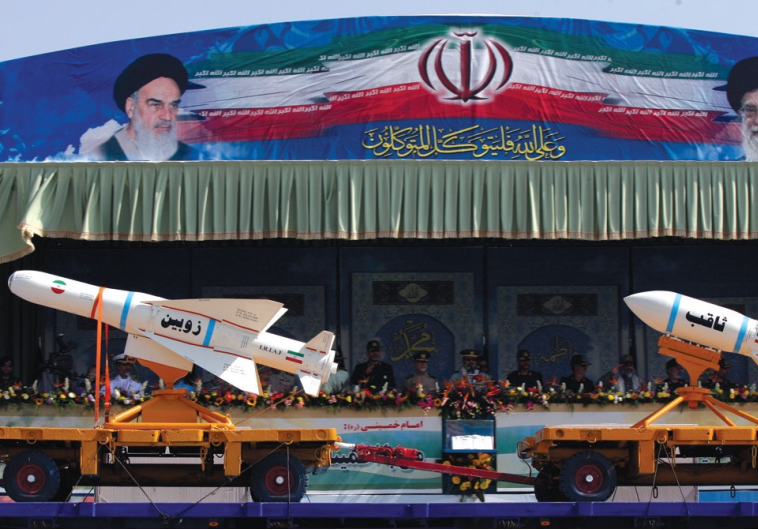
What bothers me the most right now though, is that even as the West is negotiating with a fanatical, expansionist Islamic regime in those posh Viennese boardrooms, the people on Tehran’s streets are chanting: “Death to the US; death to Israel” (in that order). The recent military parade echoed the same rhetoric.  HELLO…… isn’t someone paying attention over there? This is the reason why Israel shouldn’t just flex its military muscles for display to the Mullahs. It must attack. And it must attack now. This is precisely what the IDF was created for! Ben Gurion knew it. Menachem Begin knew it, and now Netanyahu knows it too. At this juncture in time, Iran cannot be trusted, and we know this to be an undeniable and unfortunately, well proven fact. Especially since, as of last week, the world discovered that Iran’s intent to destroy Israel is “non-negotiable.”  I believe that the citizens living in Israel (like myself) should, and will, accept the inevitable consequences that come with protecting our beautiful country.

A raid on Iran? My point here is:  The best defense is a good offense.

Hizballah terror attack on Golan stokes face-off between Israel and the Syrian-Hizballah alliance

April 27, 2015

Hizballah terror attack on Golan stokes face-off between Israel and the Syrian-Hizballah alliance, DEBKAfile, April 27, 2015

Israel over SyriaAlleged Israeli air strikes over Syria

Last week, the Obama administration managed to hold back the clash threatening to blow up opposite Yemen by the US, Saudi and Egyptian navies against an Iran convoy. Washington is likely to lean hard on Israel and Tehran to make sure that the current sparring does not run out of control and explode into a military showdown.

If this happened, Tehran would likely refuse to sign the nuclear deal which is nearing conclusion with the world powers led by the US.

*********************

According to Arab media, Israeli executed its third strike against Syrian and Hizballah targets in the Qalamoun area on the Syrian Lebanese border Sunday night, April 26 – shortly after Hizballah attempted to plant an explosive device near an Israeli Golan military post.

But then, Monday morning, anonymous Israeli sources improbably attributed this air strike to possible Syrian opposition action by the Al Qaeda’s Nusra Front.

Hizballah was meanwhile identified as responsible for the thwarted bomb attack on the Israeli Sheita military post guarding the northern Golan border with Syria. “Four terrorists placed an explosive on a fence near Majdel Shams. The air force thwarted the attack, killing all four,” a military spokesman said.
On the face of it, Israel’s purported third air strike over Syrian territory in five days, this time targeting the Wadi a-Sheikh and Al Abasiya regions of the Qalamoun mountains, was in retaliation for the thwarted Hizballah attack on the Golan.

However, DEBKAfile’s military sources give the exchange of blows a different slant: It is more likely to be the onset of a systematic Israeli campaign to wipe out Syrian-Hizballah military bases repositioned on the mountain range as depots and launching-pads for firing long-range missiles into Israel from Syrian territory.

A clue to this objective was offered Sunday night by Defense Minister Moshe Ya’alon in a firm statement that Israel would not permit Iran to arm Hizballah with advanced weapons. He did not explicitly admit to the air strikes of last Wednesday and Saturday,which were reported by Arab TV stations to have hit surface-to-surface missile depots on Qalamoun. But he nearly gave the game away. He accused Iran of trying to arm Hizballah with advanced weapons by every possible route. “We will not allow the delivery of sophisticated weapons to terrorist groups, Hizballah in particular… or allow Hizballah to establish a terror infrastructure on our borders with Israel,” the minister said, adding: “We know how to lay hands on anyone who threatens Israeli citizens, along our borders or even far from them.”

In a previous report, DEBKAfile disclosed that Syrian and Hizballah forces were on the point of conducting an offensive, under Iranian Revolutionary Guards officers, to flush Syrian rebels out of their last remaining pockets on the mountain slopes in order to clear the Syrian-Lebanese highway link for troop and arms convoys between the two countries.

We also reported that Hizballah had already relocated substantial military manpower and missile stocks from northern Lebanon to an enclave it now controlled on the Syrian Qalamoun mountains.

The anonymous sources’ attribution of Sunday night’s air strike to the Nusra Front sounded more like a lame cover story than a serious supposition. The Syrian opposition has never managed to use air power against the armies of Assad and Hizballah. Nusra did capture a few fighter-bombers from the enemy, but never acquired the technical infrastructure, ordnance or trained pilots to fly them.

This improbable theory would in any case contradict the warning message Israel was clearly addressing to Damascus and Hizballah that any violations of Israel’s red lines on their part would be met with action to knock over their military set-up on their shared border, section by section – even at the risk of a showdown with Iran in the Syrian arena.

Israel’s destruction of the Qalamoun war machine would have four far-reaching ramifications:

1. It would impair the Syrian army’s capabilities and strike at the heart of the Assad regime.

2. It would give a strong leg up to the Syrian opposition, especially Al Qaeda’s Nusra Front, which is emerging as the strongest and most effective paramilitary force in the Syrian opposition camp.

3. It would curtail the transformation of the Qalamoun Mts. into Hizballah’s most important forward base of attack against Israel.

It is hard to see Tehran standing by if the sparring escalates further and Israel continues to punch away at the Islamic Republic’s two most valuable strategic assets. Direct action by Iran would not be its style. Tehran would rather put the Syrian army and Hizballah up to stepping up its campaign of terror against Israel, possibly by expanding the arena across two borders into Lebanon and Israel itself.

Last week, the Obama administration managed to hold back the clash threatening to blow up opposite Yemen by the US, Saudi and Egyptian navies against an Iran convoy. Washington is likely to lean hard on Israel and Tehran to make sure that the current sparring does not run out of control and explode into a military showdown.

If this happened, Tehran would likely refuse to sign the nuclear deal which is nearing conclusion with the world powers led by the US.