Posted tagged ‘Middle East’

Qatar and Saudi Arabia ‘have ignited time bomb by funding global spread of radical Islam

November 19, 2015

Qatar and Saudi Arabia ‘have ignited time bomb by funding global spread of radical Islam’ General Jonathan Shaw, Britain’s former Assistant Chief of the Defence Staff, says Qatar and Saudi Arabia responsible for spread of radical Islam

10:23PM BST 04 Oct 2014

Source: Qatar and Saudi Arabia ‘have ignited time bomb by funding global spread of radical Islam’ – Telegraph

Read also : Turkey’s Erdoğan urges united Muslim front against terror

https://warsclerotic.wordpress.com/2015/11/19/turkeys-erdogan-urges-united-muslim-front-against-terror/

Gen Jonathan Shaw is a former commander of British forces in Basra

General Shaw told The Telegraph that Qatar and Saudi Arabia were primarily responsible for the rise of Wahhabi Salafism, the extremist Islam that inspires Isil terrorists Photo: EPA

Qatar and Saudi Arabia have ignited a “time bomb” by funding the global spread of radical Islam, according to a former commander of British forces in Iraq.

General Jonathan Shaw, who retired as Assistant Chief of the Defence Staff in 2012, told The Telegraph that Qatar and Saudi Arabia were primarily responsible for the rise of the extremist Islam that inspires Isil terrorists.

The two Gulf states have spent billions of dollars on promoting a militant and proselytising interpretation of their faith derived from Abdul Wahhab, an eighteenth century scholar, and based on the Salaf, or the original followers of the Prophet.

But the rulers of both countries are now more threatened by their creation than Britain or America, argued Gen Shaw. The Islamic State of Iraq and the Levant (Isil) has vowed to topple the Qatari and Saudi regimes, viewing both as corrupt outposts of decadence and sin.

So Qatar and Saudi Arabia have every reason to lead an ideological struggle against Isil, said Gen Shaw. On its own, he added, the West’s military offensive against the terrorist movement was likely to prove “futile”.

“This is a time bomb that, under the guise of education, Wahhabi Salafism is igniting under the world really. And it is funded by Saudi and Qatari money and that must stop,” said Gen Shaw. “And the question then is ‘does bombing people over there really tackle that?’ I don’t think so. I’d far rather see a much stronger handle on the ideological battle rather than the physical battle.”

Gen Shaw, 57, retired from the Army after a 31-year career that saw him lead a platoon of paratroopers in the Battle of Mount Longdon, the bloodiest clash of the Falklands War, and oversee Britain’s withdrawal from Basra in southern Iraq. As Assistant Chief of the Defence Staff, he specialised in counter-terrorism and security policy.

All this has made him acutely aware of the limitations of what force can achieve. He believes that Isil can only be defeated by political and ideological means. Western air strikes in Iraq and Syria will, in his view, achieve nothing except temporary tactical success.

When it comes to waging that ideological struggle, Qatar and Saudi Arabia are pivotal. “The root problem is that those two countries are the only two countries in the world where Wahhabi Salafism is the state religion – and Isil is a violent expression of Wahabist Salafism,” said Gen Shaw.

“The primary threat of Isil is not to us in the West: it’s to Saudi Arabia and also to the other Gulf states.”

Both Qatar and Saudi Arabia are playing small parts in the air campaign against Isil, contributing two and four jet fighters respectively. But Gen Shaw said they “should be in the forefront” and, above all, leading an ideological counter-revolution against Isil.

The British and American air campaign would not “stop the support of people in Qatar and Saudi Arabia for this kind of activity,” added Gen Shaw. “It’s missing the point. It might, if it works, solve the immediate tactical problem. It’s not addressing the fundamental problem of Wahhabi Salafism as a culture and a creed, which has got out of control and is still the ideological basis of Isil – and which will continue to exist even if we stop their advance in Iraq.”

Gen Shaw said the Government’s approach towards Isil was fundamentally mistaken. “People are still treating this as a military problem, which is in my view to misconceive the problem,” he added. “My systemic worry is that we’re repeating the mistakes that we made in Afghanistan and Iraq: putting the military far too up front and centre in our response to the threat without addressing the fundamental political question and the causes. The danger is that yet again we’re taking a symptomatic treatment not a causal one.”

Gen Shaw said that Isil’s main focus was on toppling the established regimes of the Middle East, not striking Western targets. He questioned whether Isil’s murder of two British and two American hostages was sufficient justification for the campaign.

“Isil made their big incursion into Iraq in June. The West did nothing, despite thousands of people being killed,” said Gen Shaw. “What’s changed in the last month? Beheadings on TV of Westerners. And that has led us to suddenly change our policy and suddenly launch air attacks.”

He believes that Isil might have murdered the hostages in order to provoke a military response from America and Britain which could then be portrayed as a Christian assault on Islam. “What possible advantage is there to Isil of bringing us into this campaign?” asked Gen Shaw. “Answer: to unite the Muslim world against the Christian world. We played into their hands. We’ve done what they wanted us to do.”

However, Gen Shaw’s analysis is open to question. Even if they had the will, the rulers of Saudi Arabia and Qatar may be incapable of leading an ideological struggle against Isil. King Abdullah of Saudi Arabia is 91 and only sporadically active. His chosen successor, Crown Prince Salman, is 78 and already believed to be declining into senility. The kingdom’s ossified leadership is likely to be paralysed for the foreseeable future.

Meanwhile in Qatar, the new Emir, Tamim bin Hamad al-Thani, is only 34 in a region that respects age. Whether this Harrow and Sandhurst-educated ruler has the personal authority to lead an ideological counter-revolution within Islam is doubtful.

Given that Saudi Arabia and Qatar almost certainly cannot do what Gen Shaw believes to be necessary, the West may have no option except to take military action against Isil with the aim of reducing, if not eliminating, the terrorist threat.

“I just have a horrible feeling that we’re making things worse. We’re entering into this in a way we just don’t understand,” said Gen Shaw. “I’m against the principle of us attacking without a clear political plan.”

Turkey’s Erdoğan urges united Muslim front against terror

November 19, 2015

Turkey’s Erdoğan urges united Muslim front against terror

ISTANBUL – Agence France-Presse

Source: Turkey’s Erdoğan urges united Muslim front against terror – POLITICS

He still dreams of a new ottoman empire !

DHA photo

DHA photo

Turkish President Recep Tayyip Erdoğan on Nov. 19 called for a united front by Muslim leaders to fight extremism after the Paris attacks, warning that otherwise jihadists will commit further atrocities.

Erdoğan warned that “calamities will happen again” if the rise of radical Islam is not halted in Europe, after the Paris attacks on Nov. 13 claimed by the Islamic State of Iraq and the Levant (ISIL) group which killed 129 people and suicide bombings in Ankara that left 103 dead in Oct. 10.

“We are at a crossroads in the fight against terrorism after the Paris attacks,” Erdoğan told a meeting of the Atlantic Council think-tank in Istanbul.

“I strongly condemn the terrorists, who believe in the same religion as me, and I am calling on all leaders of Muslim countries to put up a united front,” he said.

“If not, those who knocked on our door in Ankara, will knock on your door elsewhere, as they did in Paris.”
Erdoğan, a pious Muslim whose Justice and Development Party (AKP) spearheaded the rise of political Islam in Turkey, has long angrily dismissed suggestions that Ankara colluded with ISIL in the Syrian civil war.

Turkey has supported rebel groups throughout the over four years of conflict in Syria in the hope they can help oust President Bashar al-Assad from power.

But Erdoğan lashed out at any notion “that all Muslims are terrorists,” saying: “Bad people can be Muslims as well as Christians and Jews.”

“Those who demonise Islam by  looking at Daesh are making a big mistake,” he said, using the Arabic acronym for ISIL.

“Daesh has nothing to do with Islam.”

With momentum building after the Paris attacks in the long-stalled bid of the world powers to find a solution for Syria, Erdoğan made clear Turkey would not budge from its insistence that Assad must leave power.

He accused Assad of supporting ISIL — which is ostensibly fighting the Damascus regime — and buying oil from the group.

“You would be blind not see it.”

“The chief reason for the humanitarian crisis and the rise of terrorism in the region today is Assad… Assad is waging state terrorism,” said Erdoğan.

International efforts to find common ground on Syria have so far been thwarted by disputes with Russia, which has long insisted the Syrian people alone should decide the fate of Assad, a Kremlin ally.

Turkey, however, has argued there can be no solution in Syria unless Assad leaves power.

November/19/2015

President Erdoğan still pursuing no-fly zone in northern Syria

November 19, 2015

President Erdoğan still pursuing no-fly zone in northern Syria

ANKARA

Source: President Erdoğan still pursuing no-fly zone in northern Syria – MIDEAST

A U.S. Air Force F-15E Strike Eagle from the 48th Fighter Wing lands at Incirlik Air Base, Turkey, November 12, 2015. REUTERS Photo

A U.S. Air Force F-15E Strike Eagle from the 48th Fighter Wing lands at Incirlik Air Base, Turkey, November 12, 2015. REUTERS Photo

President Recep Tayyip Erdoğan has again voiced his desire to create a no-fly zone and establish a train-and-equip program for Syrian rebels while floating the idea of building settlements for Syrian refugees in line with their “national architectural style.”

“A no-fly zone, terror-free zone and train-and-equip [program] – steps are needed on these issues. Now our relevant departments are carrying out work. Timing is another issue, but the process is under control. This step will be taken, some areas have especially been earmarked,” Erdoğan said in an interview aired on ATV and A Haber channels late on Nov. 18.

New housing that is in harmony with local architecture should be built in the area where Syrian refugees are located, the president said.

A no-fly zone will protect them, while Syrian opposition forces will have the power to conduct a ground operation in the prospective area, he said.

The Islamic State of Iraq and the Levant (ISIL) poses a threat to Turkey, Erdoğan also said in reply to U.S. Secretary of State John Kerry, who suggested an operation with Turkey against the jihadist group.

“We’ll take a step with coalition forces,” he said.

Turkey has long pushed for a safe zone to protect civilians from Syrian airstrikes, but the administration of U.S. President Barack Obama has repeatedly rejected the idea as too difficult to implement.

November/19/2015

Hollande to tell Obama Europe can’t wait for US war of attrition with ISIS to succeed

November 19, 2015

Hollande to tell Obama Europe can’t wait for US war of attrition with ISIS to succeed

report Published time: 19 Nov, 2015 10:36

Source: Hollande to tell Obama Europe can’t wait for US war of attrition with ISIS to succeed – report — RT News

French President François Hollande is to call for the US to review its strategy in fighting terrorist group Islamic State, arguing that Europe cannot wait for America’s long war of attrition with the jihadists to work, the Guardian reports.

Hollande is to meet US President Barack Obama on Tuesday next week before going to Russia for a visit. The French leader intends to make Obama aware of the extent of damage done to Europe by the developing refugee crisis and the rising threat of terrorist attacks, a European diplomat told the British newspaper.

“The message that we want to send to the Americans is simply that the crisis is destabilizing Europe,”said the diplomat, who did not wish to be named. “The problem is that the attacks in Paris and the refugee crisis show that we don’t have time. There is an emergency.”

The source said that’s the reason why the French president will visit Washington on Tuesday before flying to Moscow.

According to the diplomat, Paris’ position is that the Europeans cannot afford to wait for years for the war of attrition that the US-led coalition is waging on Islamic State (IS, formerly ISIS/ISIL) in Iraq and Syria, to take effect. There is an impression in Europe that the US doesn’t fully comprehend the urgency of the issue because it doesn’t have to take the bulk of the refugees fleeting Middle East and pouring into Europe in the biggest movement of people since World War II.

Hollande earlier called on the US and Russia, both of which lead a separate effort to eradicate IS, to join forces. Moscow said a broad coalition was needed to defeat the terrorists, but Washington said it would only agree if Russia shared its goals in Syria.

READ MORE: Russian warplanes disrupt ISIS oil sales channels; destroy 500 terrorist oil trucks in Syria

The White House insists that the Syrian conflict can only be resolved if President Bashar Assad steps down.

“Bottom line is, I do not foresee a situation in which we can end the civil war in Syria while Assad remains in power,” Barack Obama told reporters in Manila on the sidelines of the annual Asia-Pacific Economic Cooperation (APEC) summit.

The Kremlin sees the Syrian government as the most viable force in the country that can provide ground troops to battle terrorist groups. Russia says Assad’s political future should be decided by the Syrian people, but the US insists he should not be part of a political settlement.

The Pentagon on its part wants to rely on “moderate rebel forces” and Kurdish militias to attack terrorists on the ground in Syria. So far the strategy wasn’t effective. Kurds fought IS militants when they attacked Kurd-controlled territories, but are reluctant to go on offensive. The empowerment of Kurdish forces in Iraq and Syria also puts the US-led coalition at odds with NATO member Turkey, which has been fighting Kurdish insurgency for decades.

As for the program to train and arm moderate rebels, it proved to be a failure with the Pentagon reporting in September just a handful of US-prepared soldiers actually fighting IS.

IS strategy has become one of the major campaign issues for the upcoming presidential election in the US. Republican candidates like Jeb Bush and Donald Trump have been criticizing the Obama administration for being too soft on terrorists.

Voices calling for the Obama administration to reconsider its ‘Assad must go’ mantra are coming from intelligence professionals as well.

“I think it’s now crystal clear to us that our strategy, our policy vis-à-vis ISIS is not working and it’s time to look at something else,” former CIA deputy director Michael Morell told CBS. “The question of whether President Assad needs to go or whether he is part of the solution – we must look at it again. Clearly he is part of the problem but he may also be part of the solution. An agreement, where he stays for a while and the Syrian army supported by the coalition takes on ISIS may be give us the best result.”

Obama Wants to Defeat America, Not ISIS

November 18, 2015

Obama Wants to Defeat America, Not ISIS His real enemy isn’t the Caliph of ISIS, but the ordinary American.

November 18, 2015

Daniel Greenfield

Source: Obama Wants to Defeat America, Not ISIS | Frontpage Mag

Daniel Greenfield, a Shillman Journalism Fellow at the Freedom Center, is a New York writer focusing on radical Islam.

Last year at a NATO summit, Obama explicitly disavowed the idea of containing ISIS. “You can’t contain an organization that is running roughshod through that much territory, causing that much havoc, displacing that many people, killing that many innocents, enslaving that many women,” he said.

Instead he argued, “The goal has to be to dismantle them.”

Just before the Paris massacre, Obama shifted back to containment. “From the start, our goal has been first to contain them, and we have contained them,” he said.

Pay no attention to what he said last year. There’s a new message now. Last year Obama was vowing to destroy ISIS. Now he had settled for containing them. And he couldn’t even manage that.

ISIS has expanded into Libya and Yemen. It struck deep into the heart of Europe as one of its refugee suicide bombers appeared to have targeted the President of France and the Foreign Minister of Germany. That’s the opposite of a terrorist organization that had been successfully contained.

Obama has been playing tactical word games over ISIS all along. He would “degrade and ultimately destroy” ISIS. Or perhaps dismantle the Islamic State. Or maybe just contain it.

Containment is closest to the truth. Obama has no plan for defeating ISIS. Nor is he planning to get one any time soon. There will be talk of multilateral coalitions. Drone strikes will take out key figures. And then when this impressive war theater has died down, ISIS will suddenly pull off another attack.

And everyone will be baffled at how the “defeated” terrorist group is still on the march.

The White House version of reality says that ISIS attacked Paris because it’s losing. Obama also claimed that Putin’s growing strength in Syria is a sign of weakness. Never mind that Putin has all but succeeded in getting countries that were determined to overthrow Assad to agree to let him stay.

Weakness is strength. Strength is weakness.

Obama’s failed wars occupy a space of unreality that most Americans associate with Baghdad Bob bellowing that there are no American soldiers in Iraq. (There are, according to the White House, still no American ground forces in Iraq. Only American forces in firefights on the ground in Iraq.)

There’s nothing new about any of this. Obama doesn’t win wars. He lies about them.

The botched campaign against ISIS is a replay of the disaster in Afghanistan complete with ridiculous rules of engagement, blatant administration lies and no plan for victory. But there can’t be a plan for victory because when Obama gets past the buzzwords, he begins talking about addressing root causes.

And you don’t win wars by addressing root causes. That’s just a euphemism for appeasement.

Addressing root causes means blaming Islamic terrorism on everything from colonialism to global warming. It doesn’t mean defeating it, but finding new ways to blame it on the West.

Obama and his political allies believe that crime can’t be fought with cops and wars can’t be won with soldiers. The only answer lies in addressing the root causes which, after all the prattling about climate change and colonialism, really come down to the Marxist explanation of inequality.

When reporters ask Obama how he plans to win the war, he smirks tiredly at them and launches into another condescending explanation about how the situation is far too complicated for anything as simple as bombs to work. Underneath that explanation is the belief that wars are unwinnable.

Obama knows that Americans won’t accept “war just doesn’t work” as an answer to Islamic terrorism. So he demonstrates to them that wars don’t work by fighting wars that are meant to fail.

In Afghanistan, he bled American soldiers as hard as possible with vicious rules of engagement that favored the Taliban to destroy support for a war that most of the country had formerly backed. By blowing the war, Obama was not only sabotaging the specific implementation of a policy he opposed, but the general idea behind it. His failed wars are meant to teach Americans that war doesn’t work.

The unspoken idea that informs his strategy is that American power is the root cause of the problems in the region. Destroying ISIS would solve nothing. Containing American power is the real answer.

Obama does not have a strategy for defeating ISIS. He has a strategy for defeating America.

Whatever rhetoric he tosses out, his actual strategy is to respond to public pressure by doing the least he can possibly do. He will carry out drone strikes, not because they’re effective, but because they inflict the fewest casualties on the enemy.

He may try to contain the enemy, not because he cares about ISIS, but because he wants to prevent Americans from “overreacting” and demanding harsher measures against the Islamic State. Instead of fighting to win wars, he seeks to deescalate them. If public pressure forces him to go beyond drones, he will authorize the fewest air strikes possible. If he is forced to send in ground troops, he will see to it that they have the least protection and the greatest vulnerability to ISIS attacks.

Just like in Afghanistan.

Obama would like ISIS to go away. Not because they engage in the ethnic cleansing, mass murder and mass rape of non-Muslims, but because they wake the sleeping giant of the United States.

And so his idea of war is fighting an informational conflict against Americans. When Muslim terrorists commit an atrocity to horrifying that public pressure forces him to respond, he lies to Americans. Each time his Baghdad Bob act is shattered by another Islamic terrorist attack, he piles on even more lies.

Any strategy that Obama offers against ISIS will consist of more of the same lies and word games. His apologists will now debate the meaning of “containment” and whether he succeeded in defining it so narrowly on his own terms that he can claim to have accomplished it. But it really doesn’t matter what his meaning of “containment” or “is” is. Failure by any other name smells just as terrible.

Obama responded to ISIS by denying it’s a threat. Once that stopped being a viable strategy, he began to stall for time. And he’s still stalling for time, not to beat ISIS, but to wait until ISIS falls out of the headlines. That has been his approach to all his scandals from ObamaCare to the IRS to the VA.

Lie like crazy and wait for people to forget about it and turn their attention to something else.

This is a containment strategy, but not for ISIS. It’s a containment strategy for America. Obama isn’t trying to bottle up ISIS except as a means of bottling up America. He doesn’t see the Caliph of the Islamic State as the real threat, but the average American who watches the latest beheading on the news and wonders why his government doesn’t do something about it. To the left it isn’t the Caliph of ISIS who starts the wars we ought to worry about, but Joe in Tennessee, Bill in California or Pete in Minnesota.

That is why Obama sounds bored when talking about beating ISIS, but heats up when the conversation turns to fighting Republicans. It’s why Hillary Clinton named Republicans, not ISIS, as her enemy.

The left is not interested in making war on ISIS. It is too busy making war on America.

D.C. refuses to arm persecuted Christians fighting ISIS

November 18, 2015

D.C. refuses to arm persecuted Christians fighting ISIS, Front Page MagazineRaymond Ibrahim, November 18, 2015

(Please see also, U.S. ‘discriminates’ against Christian refugees, accepts 96% Muslims, 3% Christians. — DM)

cm

In recent months, Mideast Christians have been forming militias to fight the Islamic State (IS) and other jihadi groups in both Iraq and Syria—even as the Obama administration, which arms the “opposition,” refuses to arm them.

In Iraq, some of the few remaining Assyrian Christians have formed militias under the name Dwekh Nawsha (literally meaning “self-sacrifice” in Christ’s native tongue of Aramaic).  Most of these fighters are from among those Christians displaced from the Ninevah Plain due to the atrocities committed by IS and are on the frontlines fighting the jihadis.

They were formed soon after the U.S.-supported Kurdish Peshmerga, who are leading the fight against IS in the region, retreated from many Christian villages without a fight last summer, declining to protect them from the IS advance which led to the usual atrocities.

According to the Christian Science Monitor, “Christians have taken up arms because they want to protect their own land, and many no longer trust the Kurds to do it for them.” Indeed, the Kurds, including the Peshmerga, have been known to abuse and even persecute Christians.  Like IS, Kurds are Sunni Muslims too.

“We will stay here, and Christians will protect Christians. Not Arabs or Kurds protecting us, but Christians,” said local commander Fouad Masaoud Gorgees.

In neighboring Syria, approximately 500 Syriac Christian fighters recently assembled and managed to prevent the Islamic State from entering the ancient Christian settlement of Sadad.  But on October 30, IS captured a town less than five miles away, leaving Sadad vulnerable to continued assaults.

Even the Patriarch of the Syriac Orthodox church, Ignatius Aphrem II, traveled to Sadad to boost the morale of Christian defenders.  Said Aphrem:

It was emotional but it was also very encouraging to see our young people determined to defend their land and stay in their homeland.  To see them ready to fight and to sacrifice for their land, I think that’s what’s very meaningful, that made me very proud of them.

There’s a reason why Christians are frantically trying to save Sadad from the clutches of IS.  As one Syriac Christian fighter put it, Sadad “is a symbolic place for us and we will not allow it to fall again.”

He is referring to the events of October 2013, when the U.S.-supported Free Syrian Army—widely touted as moderate but in fact working with al-Qaeda’s Al Nusra Front—captured the town.  They made a graphic video (with English subtitles) of those whom they killed, the “dogs of Assad”—“dog” being an ancient Islamic epithet for Christians—while shouting Islam’s victory-cry, “Allahu Akbar” (which John McCain equates to a Christian saying “thank God”) and praise for the Free Syrian Army.

During their one week occupation of Sadad, the moderate/radical coalition tortured, raped, and murdered 45 Christians; the bodies of six people from one family alone, ranging from ages 16 to 90, were found at the bottom of a well (an increasingly common fate for “subhuman” Christians).

At the time, Syriac Archbishop Selwanos Boutros called it Syria’s “largest massacre of Christians.”  Even so, this massacre was wholly ignored by the Obama administration and so-called mainstream media in an effort to maintain the narrative that the Free Syrian Army was “moderate.”

Concerning the Sadad massacres, the archbishop had asked in 2013:

We have shouted aid to the world but no one has listened to us. Where is the Christian conscience? Where is human consciousness? Where are my brothers?

As persecuted Mideast Christians have well learned since, most Western governments—the Obama administration at their head—could care less about their fate.  They care only about one thing:  overthrowing Assad—at any cost, including by directly or indirectly arming the Islamic terrorists that persecute Christians in horrific ways, including slaughtering those who refuse to renounce Christ for Muhammad.

Yet truly “moderate” Christian militias fighting the Islamic State are denied arms from Washington: “Lobbyists in D.C. are blocking weapons and equipment from reaching Dwekh Nawsha, the Christian militia force that has been fighting ISIS in Iraq’s Assyrian Nineveh plains.”

Retired Lt. Col. Sargis Sangari, an Iraq war veteran who served 20 years in the army, says: “As much as you’re giving money to all these individuals who are killing each other [the “moderate” terrorists, Kurds, etc.], why don’t you try to give it to the Assyrians?”….  Currently, their [Christians’] lack of resources prevents them from launching an offensive.”  U.S. funding, training, and equipment would allow these Christian militias to take the fight to IS, added Sangari.

Of course, all of this assumes that U.S. leadership actually wants the Islamic State and other “moderate” jihadis to be defeated in an offensive by anyone—a dubious assumption.

Still, persecuted Christian pleas have not totally fallen on deaf ears.  A few Western Christians, mostly Americans, have traveled to the Middle East to help the indigenous Christians fight the jihadis.

Seeing their governments, which possess the military capability to annihilate the Islamic State, do next to nothing—not even help arm Christians—against IS, these Western Christians have decided to take it on themselves to fight the good fight on behalf of the weak and oppressed.

Brett Felton, a former American soldier who once served in Iraq, now sees himself as a “soldier of Christ” and has returned to help train Dwekh Nawsha against IS.

According to the 28-year-old, “One man’s terrorist is another man’s freedom fighter. But here we’re actually fighting for the freedom of the people … to be able to live without persecution, to keep the church bells ringing.”

U.S. vet Jordan Matson, who has the words “Christ is Lord” inscribed in his vest, said: “I decided that if our government wasn’t going to do anything about it, I would… We’re getting shot at [by IS/jihadis] on pretty much a daily basis….  We don’t have the technology that the United States military has to push our enemies away.”

First the Christians of Iraq and then Syria implored the West for help against the Islamic persecutors that the United States unleashed by overthrowing secular strongman Saddam Hussein and now against Bashar Assad.

Brutally persecuted Christians were totally ignored by both government and media.

Then they implored the Obama administration to simply stop arming their persecutors.  When that too fell on deaf ears, vastly outnumbered and underequipped Christians gathered to fight the Islamic State head on, hoping the U.S., which showers the “opposition” with weapons, would help equip them against IS.

No such luck.  As a result, a few Western Christians who believe in religious freedom are risking their personal lives to help their Mideast brothers against the scourge of “ISIS.”

In light of all this, to still fail to understand which “side” U.S. leadership is on—they currently claim to be on the side of “democracy,” “freedom,” and “human rights”—is to be beyond naïve.

 ISIS Launches Cyber Jihad Fundraiser to Arm PA Arabs in Attacks on Israeli Jews

November 16, 2015

ISIS launches a cyber jihad fundraiser to arm Palestinian Authority terrorists in their efforts to kill Israeli Jews.

By: Hana Levi Julian

Published: November 16th, 2015

Source: The Jewish Press » » ISIS Launches Cyber Jihad Fundraiser to Arm PA Arabs in Attacks on Israeli Jews

The quoted address for the ISIS cyber jihad fundraiser to arm Palestinian Authority terrorists against Israeli Jews.

The quoted address for the ISIS cyber jihad fundraiser to arm Palestinian Authority terrorists against Israeli Jews.
Photo Credit: Twitter

The Da’esh (ISIS) terror organization has launched a cyber jihad fundraiser to arm Palestinian Authority terrorists in their efforts to attack Israel’s Jews.

The cyber campaign allows a donor to purchase a weapon for as little as $3,000 (a simple rocket-propelled grenade launcher) and donate it to the “cause” – killing Israeli Jews, that is.

Aimed at arming “mujahedeen of Beyt al-Maqdis” — a reference to Jerusalem and a metaphor for all of Israel – the Middle East Media Research Institute (MEMRI) reports the fundraiser started a few weeks ago on Twitter and Telegram.

“Al Aqsa Nafeer” (mobilization for jihad) is very busy online collecting money to buy weapons and equipment specifically for terrorists in Judea, Samaria and Gaza so they can kill Jews throughout Israel.

A statement released by the terror group said that so far the campaign has been “successful,” MEMRI reported.

Are you a small-time donor? Then you can participate in the jihad for the token sum of only $900, and donate a Katyusha rocket.

For $4,000, you can provide a Grad missile to the jihad – one with a range of 20 kilometers – and with a bigger investment ($10,000) your Grad missile can reach as far as 40 kilometers!

A sniper rifle can be donated for $6,000; a PK machine gun for $5,500. Maybe you are a big-time donor: in that case, donate an entire arsenal. The sky is the limit.

The campaign, which is “slickly produced” according to MEMRI, features various posters and a video, and is coordinated across most important social media platforms, including Skype, Gmail, Twitter and Telegram.

Instructions for the transfer of funds are provided in a shielded manner, probably after a discreet screening process.

Al-Baghdadi ordered attack on anti-ISIS coalition

November 16, 2015

Al-Baghdadi ordered attack on anti-ISIS coalition, Iraq warned France 1 day before Paris carnage

Published time: 16 Nov, 2015 13:24

Source: Al-Baghdadi ordered attack on anti-ISIS coalition, Iraq warned France 1 day before Paris carnage — RT News


Bullet impacts are seen in the window of a restaurant window the day after a series of deadly attacks in Paris , November 14, 2015. © Pascal Rossignol
A dispatch sent by Iraqi officials and obtained by AP shows that Baghdad warned members of the US-led coalition battling ISIS of imminent attacks by the group just one day before the Paris terror attacks killed 129 people and wounded 352 others.

Iraqi intelligence sent a dispatch saying that Islamic State (formerly ISIS/ISIL) leader Abu Bakr al-Baghdadi had ordered an attack on coalition countries fighting against the group in Iraq and Syria, as well as on Iran and Russia, through bombings or other attacks, according to the message.

“We have recovered information from our direct sources in the Islamic State terrorist organization about the orders issued by terrorist ‘Abu Bakr al-Baghdadi’ directing all members of the organization to implement an international attack that includes all coalition countries, in addition to Iran and the Russian Federation, through bombings or assassinations or hostage taking in the coming days. We do not have information on the date and place for implementing these terrorist operations at this time,” the dispatch read.

Speaking anonymously to AP, six senior Iraqi officials confirmed the information in the message, and four of those officials said they specifically warned France of a possible attack. Two officials told AP that France was warned beforehand of further details that the country’s authorities have not made public.

The officials said the Paris attacks appear to have been planned in Raqqa, Syria – ISIS’s de-facto capital – where the attackers planned specifically for the operation. After their training, the attackers traveled to France where they met with members of a sleeper cell who helped them carry out the deadly attacks. A total of 24 people were reportedly involved in the operation: 19 attackers and five others in charge of planning and logistics.

Iraqi Foreign Minister Ibrahim al-Jaafari also told journalists on Sunday that Iraqi intelligence agencies had obtained information that some countries, including France, the US, and Iran, would be targeted, and had shared intelligence with those countries.

But a French security official told AP that Paris receives such communication “all the time” and “every day.” He added that the head of French counterintelligence goes to bed every night asking, “Why not today?”

The French president’s office did not comment to the news agency.

Meanwhile, a senior US official said he was not aware of any threat information sent to Western governments that was specific enough to have protected against the Paris attacks. He said, however, that Western governments have expressed concern for months about ISIS-inspired attacks by militants who fought in Syria.

Baghdad has been sharing intelligence with coalition nations since they launched their airstrike campaign against ISIS last year. The US-led coalition is operating in Iraq and Syria, providing aerial support to allied ground forces in both countries, as well as arming and training Iraqi forces.

ISIS claimed responsibility Saturday for the Paris attacks, which included gun and bomb attacks on a stadium, a concert hall and cafes. Seven of the attackers blew themselves up, and French authorities have been searching for accomplices.

The assaults come 10 months after Islamic extremists attacked the offices of satirical newspaper Charlie Hebdo and a Jewish supermarket in Paris. France’s prime minister cited “failings” in intelligence at the time.

That Other Side of Russia’s Syria Campaign…

November 15, 2015

That Other Side of Russia’s Syria Campaign…, Independent Strategy and Intelligence Group, November 14, 2015

(Obama’s America isn’t “winning the war” against the (non-Islamic) Islamic State. If Putin’s Russia isn’t either, who will — France? — DM)

True to form, Vlad is increasing operations and the size of his military’s footprint in Syria while lowering the bar of what constitutes “success.” In a recent piece (“Russian-Backed Offensive in Syria Begins to Stall-What Now?”) we discussed how out of all the fronts in the multi-pronged offensive the pro-regime forces are engaged in, only Aleppo has seen any gains – although those gains have been mixed. The SAA and IRGC had to divert resources from the Hama and Idlib fronts just to sustain the Aleppo offensive and achieve the gains that they did – all while sustaining heavy casualties in the process. The diverting of personnel and resources grounded the remaining forces in Hama and Idlib to halt. In some cases they’ve actually lost ground in the two fronts. The only thing that has kept them from driven out of those areas completely is the fact that al-Nusra sent a lot of their fighters to Aleppo, meaning the opposition factions don’t have the manpower to seize the initiative. And so they wait.

Russian-Backed Offensive in Syria Begins to Stall-What Now?
http://isisstudygroup.com/?p=9219

Has Assad’s New Offensive Changed Syria’s Front Lines?
http://www.syriadeeply.org/articles/2015/11/8733/assads-offensive-changed-syrias-front-lines/

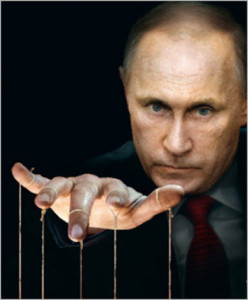
puppet-master-248x300The Puppet Master Source: Derek Bacon (Getty Images)

As of this writing the Russian military has 18 artillery pieces and 9 combat helicopters deployed west of Tadmur with a Spetsnaz unit also operating in the area. Initially these forces were focused on supporting the Assad regime’s multi-pronged offensive in the Northwest due to the major threat the opposition forces posed. Since mid to late-OCT Vlad has conducted airstrikes in Halab Province as part of the effort to disrupt the Islamic State’s (IS) push on the Aleppo supply line. Airstrikes have also been conducted on Raqqa City, Dayr az-Zawr and areas just outside of Damascus. That said, the Russian military is struggling to satisfy the fire support requests of pro-regime forces. The Russian military has 32 combat aircraft, 16 combat helicopters (with more than half in Tadmur) and a Brigade-sized element of artillery.

We’re not surprised that Vlad’s IO guys are trumpeting the recapture of a couple villages and a derelict airbase (Kweires) in Aleppo Province – especially since opposition forces operating in the Ghab Valley were blocking regime advances just a few days ago. Then there’s Jaysh al-Fatah seizing control of several villages in Hama Province. They’ve been poised to push deeper into the areas Northwest of Hama City as of 10 NOV. Regarding Kweires, the recapturing of the base has more symbolic than tactical value. Vlad is hoping the symbolic victory will galvanize the SAA (we’re not holding our breath).

Syrian Regime, Allies Boast of Breaking Aleppo Air Base Siege
http://www.wsj.com/articles/syrian-government-forces-allies-boast-of-breaking-aleppo-air-base-siege-1447265552

Vlad’s increased sense of urgency is understandable considering the current state of the SAA, not to mention the mounting losses of the Iranian military force in-country. Since OCT the IRGC has lost four senior officer to include their most senior official – BG Hossein Hamedani (Reference “Pro-Assad Forces Experience Setbacks Despite Russian Military Intervention”). Even Hezbollah has lost several senior commanders, such as Hassan al-Haj. GEN Suleimani deployed an additional 2,000 IRGC-Qods Force operators to Syria this past summer in response to combat losses. Our sources have informed us that even Ayatollah Khameini has been getting worried about the increase in casualties from the ongoing offensive, which was the driving force behind his decision to deploy additional conventional IRGC personnel (armor, artillery etc). Thing is Khameini is busy trying to keep the Iranian public from learning that things aren’t going as well as advertised. Vlad is already prepping his own domestic audience for a prolonged Russian mission in Syria.

Pro-Assad Forces Experience Setbacks Despite Russian Military Intervention
http://isisstudygroup.com/?p=8778

The Main Intelligence Directorate (GRU) is central to Vlad’s efforts to shape domestic and international opinion of the Syrian campaign – especially against the US. A great deal of the IO portion of this campaign involves messaging that highlights Russia’s humanitarian work (of course leaving out the part about indiscriminately targeting civilians) blames the US and its allies for the Syrian regional war and the rise of IS – even to the extent of claiming that Team Baghdadi is really an “American puppet” (FYI that messaging would work if the Obama administration wasn’t grossly incompetent). There’s actually been some inconsistencies with their messaging, because on one hand they’ll claim the US is “orchestrating” IS’ activities while running a parallel series of messaging highlighting American failures to combat the terror group – they may want to tighten up their shot group in that regards. Our in-country sources report the use of UAVs to distribute leaflets warning opposition fighters of their impending “annihilation” if they don’t flee the area. Another area GRU has been busy is employing the services of independent bloggers, sympathetic website admins and pro-Vlad organizations to distribute messaging. They’ve also been creating fake personas to convey IO themes and present counter-arguments to anything critical of Russia’s intervention, the Assad regime and Vlad himself. We’ve encountered a few of these personas on our Facebook and Twitter feed – they’re not hard to identify since they tried to bait us into divulging the identities of our sources (which isn’t going to happen).

In order to fully understand what’s going on, one must first understand Vlad himself. Our favorite KGB officer has gone his whole life trying to avoid the appearance of “weakness.” Also, his perception since the invasion of Crimea of being labeled a “pariah” by the West likely compels him to be aggressive on the international stage – especially when it comes to projecting power in the Middle East. His KGB service continues to drive his worldview. An example of this is time as a KGB officer in Dresden left a particular mark on his psyche as it was during the last days of the Soviet Union – which he refers to as “the most traumatic experience of his life.” So it should come as no surprise that he views himself as Russia’s lone “champion” that can stand up to defend against America. As such, he views Syria as an opportunity to replace US influence and more importantly, as a test of his reputation and Russia’s international prestige.

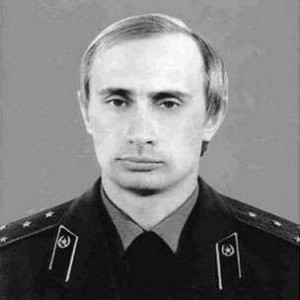
putin_Young-300x300A younger Vlad Source: PBS

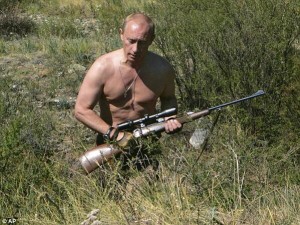
He has a constant need for recognition and validation, which is why popularity polls are so important to him and why his cult of personality was crafted. Ever wondered why he’s always posing in photos lifting weights, doing the topless horse-riding thing or shooting things? That’s why. Interestingly enough, Vlad was his parents’ only surviving child, and was considered small, weak and sickly. Before that, his parents went through a great deal of hardships during the Siege of Leningrad during WWII. In other words, nothing came easy for him – which we respect. Still, he grew up being regarded as “special” – which resulted in the special snowflake growing up thinking that he was “superior” to everybody else (this is the one thing he has in common with President Obama). As for Vlad’s childhood, he grew up in a rat-infested one-room apartment. It certainly wasn’t the privileged childhood of traveling to exotic locales that his American counterpart got to enjoy. Since he was small, fights occurred regularly – which led to his current interest in martial arts. As for his signature unemotional facial expressions, those are a product of a well-cultivated effort to project strength and guard against unwelcome emotional responses, such as sadness or fear. Acts that he views are intended to undermine or humiliate him will result in his escalating a situation in response. He will only “back off” on his own terms – such as feeling a negative response might come from the public, for instance. For instance, his response to the 2011-2012 Moscow protests is a reflection of his sensitivity to internal dissent. His actions since that time – increased public outreach and propaganda efforts – are geared towards reinforcing the narrative he made of himself as being “indispensable.” The current fight against IS (and the West) is a big part of that plan.

putin_gun-300x225He sure doesn’t seem to like wearing shirts, now does he? Source: Associated Press

The architect of Vlad’s Middle East strategy is GRU Chief Igor Sergun, who was added to the EU’s sanctions list last year in response to his involvement of Russia’s Ukraine campaign. Specifically, he’s a member of Vlad’s “circle of trust” who holds the distinction of being one of the few people involved in the decision-making process leading up to the Crimea invasion receiving the “green light.” More recently, Sergun became a major advocate for Russia to increase its presence in the Middle East. He was the point-man involved in the negotiations that led to the establishment of the joint-intelligence coordination centers in Iraq and Syria (Check out “Russia Providing Lethal Aid to Syria, Iran and Establishment of Intel Centers in Iraq” and “Russia Poised to Increase Military Presence in Middle East in Response to Islamic State’s Strength” for additional info). Of note is that Sergun sees bilateral ties as a means of learning about Western intentions and countering them. The US is just “gaga” over this guy’s smile, but the turn is that he’s the leading figure behind the current IO campaign against the US. This guy has a plethora of experience, having joined the GRU in 1984. From 1989-1992 he served undercover under the guise of being a “military attache” in Stockholm and Tirana in 1997. As a side note, we hear that Sergun loves gardening to unwind and has a nice little dacha near Moscow (we’re working to obtain pics).

Russia’s Military Chief and deputy PM added to EU’s sanctions list
http://www.ft.com/intl/cms/s/0/4a3ff1cc-cf71-11e3-bec6-00144feabdc0.html#axzz3rZBrt6dm

Ukrainian Rebel Commander Identified As Russian GRU Military Intelligence Colonel

Ukrainian Rebel Commander Identified As Russian GRU Military Intelligence Colonel

Russia Providing Lethal Aid to Syria, Iran and Establishment of Intel Centers in Iraq
http://isisstudygroup.com/?p=8532

Russia Poised to Increase Military Presence in Middle East in Response to Islamic State’s Strength
http://isisstudygroup.com/?p=8416

igor-sergun-300x273Igor Sergun: Likes to channel his “Inner-Martha Stewart” for relaxation. Source: The ISIS Study Group

The guy Sergun hand-picked to oversee intel and IO operations in Syria is COL Pavel Vladimirovich Petrunin. His duties involve the coordinating of intel-sharing with the SAA, IRGC and other pro-regime elements, such as Hezbollah. One of the things he’s been heavily involved with is overseeing the creation of IO messaging that emphasizes Russian/Syrian “successes” no matter how minor. According to our sources, he’s also been engaged in stream-lining offensive cyber-warfare operations with the Syrian Electronic Army in the targeting of opposition social media accounts and web sites – even targeting American and allied computer systems. One of the more interesting things we’ve learned is that he was the one who recommended spinning fratricide/civilian collateral damage incidents (which are a common occurrence on the Syrian front) as “IS attacks” as a means of masking SAA ineptitude. Just as important is the direct intel support that his subordinates provide to the Spetsnaz operators conducting CT-operations in the country against opposition leadership.

Apparent Russian raids kill 11 in Syria’s Idlib: monitor
http://news.yahoo.com/10-dead-syria-regime-raids-held-town-monitor-143407847.html

This fight isn’t going to end anytime soon and because of that, the GRU’s IO campaign is going to increase in importance. Keep in mind that Vlad feels that he’s “Russia” itself, and therefore views his failure as “Russia’s failure.” As we’ve stated previously, Vlad is now at the point where he has to escalate the Russian military mission in Syria so as to continue to project that image of “strength.” This becomes even more important after the Sinai Plane Bombing and Paris attacks. That said, the current situation on the ground in Syria and Vlad’s sensitivities to internal dissent presents several exploitable opportunities for the US to launch an IO campaign of its own – whether they’ll have the testicular fortitude to actually do it is another thing altogether…

Other Related Articles:

Russia Supports New Syrian Offensive and Begins Prepping For Russian Ground OPs
http://isisstudygroup.com/?p=8669

Amplifying Details on the Sinai Plane Bombing and the Egypt-Libya Nexus
http://isisstudygroup.com/?p=9230

Sinai Plane Crash Update
http://isisstudygroup.com/?p=9184

Islamic State Claims to Have Shot-Down Russian Plane in Sinai – But Did They?
http://isisstudygroup.com/?p=9157

US to cut 40,000 troops despite Russian and Chinese Belligerence and Rapidly Expanding Islamic State
http://isisstudygroup.com/?p=7563

EU: US-Russia cooperation crucial to defeating ISIS in Syria

November 15, 2015

EU: US-Russia cooperation crucial to defeating ISIS in Syria

Source: EU: US-Russia cooperation crucial to defeating ISIS in Syria – International – Jerusalem Post

BELEK, Turkey – The United States and Russia must cooperate in fighting Islamic State in Syria, the president of the European Council said on Sunday, stressing Russia should focus its military actions there on the radical Islamists and not the Syrian opposition.

At a news conference on the sidelines of a summit of world leaders in the Turkish coastal province of Antalya, Donald Tusk said that Russian bombing of President Bashar al-Assad’s opponents was only increasing the wave of refugees to Europe.

“It should be our common aim to coordinate our actions against Daesh and for sure the cooperation between the United States and Russia is a crucial one,” Tusk said, referring to the Arabic acronym for Islamic State.

“But we need not only more cooperation, but also more good will, especially from Russian action on the ground in Syria. It must be focussed more on Islamic State and not – because we cannot accept it – against the moderate Syrian opposition,” Tusk said.

Europe is facing an inflow of 1 million refugees from the Middle East and Africa this year alone as a result of the Syrian conflict, which pits the forces of Islamic State, Assad and the Syrian opposition against each other.

Russia joined the conflict a month and a half ago with air strikes in Syria, but has been targeting mainly areas controlled by forces opposed to its long-term ally Assad, rather than by Islamic State.

“We have no doubt that from actions against the Syrian opposition the only result will be a new wave of refugees and we have started seeing that, in fact it has started,” Tusk said.

“This is why the cooperation between Russia and other countries, especially the United States, is so important also in this context of the refugee crisis,” he said.

Russia, the United States and powers from Europe and the Middle East outlined a plan on Saturday for a political process in Syria leading to elections within two years, a day after gunmen and suicide bombers from Islamic State went on a rampage through Paris, killing 129 people.

Tusk said that after attacks in Paris, the G20 had to step up efforts to cut off financing to terrorists.

“Terror networks cannot plan or operate without the money that moves through the financial systems of many countries. Only if we fully cooperate on exchange of information about suspicious transactions, will we be able to stop this threat effectively,” Tusk said.