Posted tagged ‘Islamic supremacy’

McMaster breaks with Trump on “radical Islamic terrorism,” claims terrorists are “un-Islamic”

February 26, 2017

The adviser, Lt. Gen. H. R. McMaster, told the staff of the National Security Council on Thursday, in his first “all hands” staff meeting, that the label “radical Islamic terrorism” was not helpful because terrorists are “un-Islamic.”

By – on February 25, 2017

Source: McMaster breaks with Trump on “radical Islamic terrorism,” claims terrorists are “un-Islamic” – Geller Report


This is a throwback to the politically correct lies and half-truths that deformed our response to the Islamic jihad threat during the Obama years. President Trump had vowed to correct this. Now he has appointed a national security adviser who is just as willfully ignorant as Obama and his team. This has to be sorted out, and quickly.

“H.R. McMaster Breaks With Administration on Views of Islam,” by Mark Landler and Eric Schmitt, New York Times, February 24, 2017:

WASHINGTON — President Trump’s newly appointed national security adviser has told his staff that Muslims who commit terrorist acts are perverting their religion, rejecting a key ideological view of other senior Trump advisers and signaling a potentially more moderate approach to the Islamic world.

The adviser, Lt. Gen. H. R. McMaster, told the staff of the National Security Council on Thursday, in his first “all hands” staff meeting, that the label “radical Islamic terrorism” was not helpful because terrorists are “un-Islamic,” according to people who were in the meeting.

That is a repudiation of the language regularly used by both the president and General McMaster’s predecessor, Michael T. Flynn, who resigned last week after admitting that he had misled Vice President Mike Pence and other officials about a phone call with a Russian diplomat.

It is also a sign that General McMaster, a veteran of the Iraq war known for his sense of history and independent streak, might move the council away from the ideologically charged views of Mr. Flynn, who was also a three-star Army general before retiring.

Wearing his Army uniform, General McMaster spoke to a group that has been rattled and deeply demoralized after weeks of upheaval, following a haphazard transition from the Obama administration and amid the questions about links to Russia, which swiftly engulfed Mr. Flynn.

General McMaster, several officials said, has been vocal about his views on dealing with Islamic militancy, including with Mr. Trump, who on Monday described him as “a man of tremendous talent, tremendous experience.” General McMaster got the job after Mr. Trump’s first choice, Robert S. Harward, a retired Navy vice admiral, turned it down.

Within a day of his appointment on Monday, General McMaster was popping into offices to introduce himself to the council’s professional staff members. The staff members, many of them holdovers from the Obama administration, felt viewed with suspicion by Mr. Trump’s team and shut out of the policy-making process, according to current and former officials.

In his language, General McMaster is closer to the positions of former Presidents Barack Obama and George W. Bush. Both took pains to separate acts of terrorism from Islamic teaching, in part because they argued that the United States needed the help of Muslim allies to hunt down terrorists.

“This is very much a repudiation of his new boss’s lexicon and worldview,” said William McCants, a senior fellow at the Brookings Institution and the author of “The ISIS Apocalypse.”

“McMaster, like Obama, is someone who was in positions of leadership and thought the United States should not play into the jihadist propaganda that this is a religious war,” Mr. McCants said.

“There is a deep hunger for McMaster’s view in the interagency,” he added, referring to the process by which the State Department, Pentagon and other agencies funnel recommendations through the National Security Council. “The fact that he has made himself the champion of this view makes people realize they have an advocate to express dissenting opinions.”

But Mr. McCants and others cautioned that General McMaster’s views would not necessarily be the final word in a White House where Mr. Trump and several of his top advisers view Islam in deeply xenophobic terms. Some aides, including the president’s chief strategist, Stephen K. Bannon, have warned of a looming existential clash between Islam and the Judeo-Christian world….

Would You Want Your Vaccine Produced by Supporters of Jihad?

February 25, 2017

Would You Want Your Vaccine Produced by Supporters of Jihad?

by Judith Bergman

February 25, 2017 at 5:00 am

Source: Would You Want Your Vaccine Produced by Supporters of Jihad?

  • “Selling the crucial manufacture of vaccines to an ideologically hostile country, which might – for whatever reason – suddenly decide to shut down production, does not sound like a good idea… Those who say that the Saudis are merely interested in profit, just like everybody else, should know better”. — Rachel Ehrenfeld, expert on financing terrorism
  • Virtually all political parties supported the Danish government’s sale of its vaccine manufacturing facility to the Saudi conglomerate.
  • After the publication of the Danish Mohammad cartoons in 2006, Saudis boycotted Danish goods. Do Danish politicians really have such short memories?
  • Vaccines are not an easy commodity to come by. It takes minimum six months for an order of vaccines to be delivered, but, according to the World Health Organization, delivery can also easily take up to two years.
  • How much trust are Danish consumers supposed to have in a Saudi owned conglomerate, which employs jihadists such as Usmani and donates heavily to jihadist organizations such as the Muslim Brotherhood, who want to bring about a caliphate? The potential for political exploitation is too evident to reject.

Would you want your vaccines produced by a Saudi company that supports jihad? Danes, it seems, may have no choice.

Denmark recently sold its state-owned vaccine manufacturing facility to a conglomerate owned by the Aljomaih Group, a Saudi family dynasty[1] led by Sheikh AbdulAziz Hamad Aljomaih. The sheikh is also the largest single stockholder and chairman of Arcapita Bank, (formerly First Islamic Investment Bank) headquartered in Bahrain. As an Islamic bank, it has a so-called Sharia Supervisory Board comprised of Islamic scholars, who ensure that the bank’s activities comply with sharia (Islamic law).

Former Islamic judge and leading Islamic scholar Taqi Usmani, who sits on the bank’s Sharia Board, in his book, “Islam and Modernism”, writes ruminations such as: “Aggressive Jihad is lawful even today… Its justification cannot be veiled…”

Usami had also, after Danish newspapers reprinted the Mohammad cartoons in 2008, co-signed an appeal to the Organization of the Islamic Conference (OIC), urging it to boycott Denmark:

“If the Danish government does not declare the [publication of] shameful and blasphemous cartoons as a criminal act, the OIC [should] appeal to all Islamic nations for a trade boycott of that bigoted country”.

Equally noteworthy is that the spiritual leader of the Muslim Brotherhood, Yussuf al-Qaradawi, used to sit on Arcapita’s sharia board, until he eventually resigned. Qaradawi, already in 1995, told a Muslim Arab Youth Association convention in Toledo, Ohio, “We will conquer Europe, we will conquer America!” According to Qaradawi, sharia law should be introduced gradually, over a five-year period in a new country. Presumably, this gradually-introduced sharia legal system would include the end of free speech under “blasphemy laws”, the denigration and oppression of women, such as women worth half as much as men in court, polygamy, the persecution of Jews (Qaradawi advocates killing all of them), beating wives as a way of “disciplining” them and so on. Only after this transition phase, sharia laws such as killing apostates and homosexuals, as well as chopping off hands for theft, would be introduced.

Given Qaradawi’s former prominence in Arcapita, it hardly comes as a surprise that the bank has given financial support to the Muslim Brotherhood in Bahrain, known there as the Al Islah Society. According to a leaked report by former US Ambassador to Bahrain, Ambassador William T. Monroe:

“Arcapita reported giving a total $591,000 in 2003 and $583,000 in 2002 to a variety of charitable organizations… the Islamic Education Society (Al Tarbiya Al Islamiya – Sunni Salafi) and the Al Islah Society (Sunni Muslim Brotherhood) are the largest beneficiaries of Arcapita’s charitable giving… We are aware of concerns linking Arcapita advisors and staff to questionable organizations.”

In August 2016, the Danish government announced that it “…rejects any organization representing antidemocratic and radicalized environments” and considers the Muslim Brotherhood to be “deeply problematic” and something they “strongly reject”.

Clearly not strongly enough.

“Selling the crucial manufacture of vaccines to an ideologically hostile country, which might — for whatever reason — suddenly decide to shut down production, does not sound like a good idea. Those who say that the Saudis are merely interested in profit, just like everybody else, should know better”, Rachel Ehrenfeld, an expert on the financing of terrorism, told Ekstra Bladet.

Denmark’s Statens Serum Institut (State Serum Institute). Image source: Wikimedia Commons/Froztbyte.

Virtually all political parties supported the Danish government’s sale of its vaccine manufacturing facility to the Saudi conglomerate. This is strange, given the recent history of Danish-Saudi relations.

After the publication of the Danish Mohammad cartoons in 2006, Saudis boycotted Danish goods. Saudi Arabia’s religious leader, Grand Mufti Sheikh Abdul Aziz al-Sheik, demanded that the Danish government hold Jyllands-Posten, the newspaper that printed the Mohammad cartoons, to account and force the newspaper to give an apology: “The government should give [the newspaper] a fine as a deterrence. This is the least that Muslims should demand”, he said.

Do Danish politicians really have such short memories?

Vaccines are not an easy commodity to come by. It takes minimum of six months for an order of vaccines to be delivered, but, according to the World Health Organization, delivery can also easily take up to two years. Astonishingly, the Danish state has given the Aljomaih group an incredible start by promising to buy all its children’s vaccines from the sheikh for the first 30 months. Only after that will Danish authorities be able to buy their children’s vaccines elsewhere. The Danish government has also promised the Aljomaih group not to create new Danish state vaccine production for the first three years.

Should consumers not be able to trust a producer of something as critical as vaccines? How much trust are Danish consumers supposed to have in a Saudi owned conglomerate, which employs jihadists such as Usmani, which donates heavily to jihadist organizations such as the Muslim Brotherhood, which in turn wants to bring about a caliphate? The potential for political exploitation is too evident to reject. Ekstra Bladet ran a poll on its website asking whether Danes were in favor or against the sale: 95% were against it.

Even more remarkable is that the government claims not to have known about the connection between the Muslim Brotherhood and Aljomaih; all the information is easily accessible on the internet.

Health Minister Ellen Trane Nørby has defended the sale: “We did not have several buyers to choose from. We have the buyer we have and it has saved 600 Danish jobs, which would otherwise have been lost”.

Is she saying that the safety of Danish citizens is worth 600 jobs?

The sale of the Danish vaccine production facility to the Saudi conglomerate captures perfectly everything that is wrong with European politicians today: their apparent gullibility, their carelessness and their desire to sell out to places such as Saudi Arabia, seemingly without giving much thought to the long-term consequences.

Judith Bergman is a writer, columnist, lawyer and political analyst.


[1] The Group has been active in healthcare through its investment arm AJ Pharma Holding, and it is its Malaysian subsidiary, AJ Biologics, which will take over the vaccine production in the Danish facility in Copenhagen with its 100-year-old history and approximately 500 Danish employees. The deal was a steal for the Aljomaih group, which acquired the vaccine production company for what is believed to be a tenth of its actual value, a mere 15 million DKK.

Welcome to Sweden, Eldorado for Migrants!

February 18, 2017

Welcome to Sweden, Eldorado for Migrants! Gatestone InstituteNima Gholam Ali Pour, February 18, 2017

(The following video is quite pertinent:

— DM)

From the perspective of a poor migrant, the cash Sweden gives to all who come seems a lot of money, without working a single day to get it. This makes Sweden a paradise for the migrants of the world who do not want to work. The Swedish taxpayer pays for this party.

Recently, the city of Malmö bought 268 apartments, so newly arrived migrants would have a roof over their head. But at the same time, Swedish citizens in Malmö have to wait more than three years in line to rent an apartment.

While Swedish taxpayers are forced to fund all these benefits for migrants, the migrants do not have to adapt to the Swedish way of living.

In 2015, the proportion of rapes where the police actually found the suspect was 14%. In 86% of the rapes, the rapist got away.

It needs to become clear that the responsibility for becoming integrated into Swedish society rests entirely on the newly-arrived migrants. Migrants who do not receive a residence permit must go home or somewhere else.

In 2016, Sweden received 28,939 asylum seekers. Sweden is a predominantly Christian country in northern Europe, and yet most asylum seekers to Sweden came from three Muslim countries in the Middle East: Syria (5,459), Afghanistan (2,969) and Iraq (2,758). Why is it that people from these three Muslim countries choose to cross Europe to come to Sweden? What is it that Sweden offers that attracts people from the other side of the world?

It is not the major metropolises in Sweden that attract these people. 56% of Sweden’s land area is covered by forest. Besides the Swedish capital Stockholm, there is no Swedish city with more than 1 million inhabitants. Sweden’s average annual temperature is around 3°C (37.4°F), so it is not the weather that attracts tens of thousands of people from Muslim countries to Sweden.

What Sweden provides is economic and social benefits for all who come. Sweden is a country where the state pays newly-arrived migrants to encourage them to enter the community and seek jobs. If you receive a residence permit as a refugee, quota refugee or person with “subsidiary protection,” you get up to $35 (308 SEK) a day, five days a week, if you participate in a so-called “establishment plan.” So, the newly arrived migrant does not even have to work to get this money; the only thing he or she needs to do is to accept the help that the Public Employment Service provides. The newly-arrived migrant receives an “establishment allowance” (etableringsersättning) during his first two years in Sweden. After two years, the migrant is still entitled to all the benefits of the Swedish welfare state.

The migrants who receive this kind of establishment allowance can also get a supplementary establishment allowance (etableringstillägg) if they have children. They will get $91 a month (800 SEK) for each child under the age of 11, and $170 (1500 SEK) for each child who has reached the age of 11. A newly-arrived immigrant can get this supplementary establishment allowance for three children at most. If a newly-arrived immigrant has more than three children, then only the three oldest children count. The newly arrived immigrant can receive a maximum of $509 dollars (4500 SEK) a month through this supplementary establishment allowance.

So, if somebody lives in poverty in an Arab country and has several children, there is every reason to try to get a residence permit in Sweden. From the perspective of a poor migrant, that seems a lot of money to cash in, and one does not have to work a single day to get it. This makes Sweden a paradise for the migrants of the world who do not want to work. The Swedish taxpayer pays for this party.

If you accept the help of the Public Employment Service and start looking for a job, as a newly arrived migrant, you will also get help to pay the rent. If a newly arrived migrant has a rent of $396 (3500 SEK), the state pays $192 (1700 SEK). This is called the housing allowance (bostadsersättning).

It is not, however, only newly-arrived migrants with residence permits that receive economic and social benefits. Migrants who do not have residence permits also receive economic and social benefits. Since July 2013, immigrant children who live illegally in Sweden have the right to go to school.

In addition, also since July 2013, illegal immigrants have the right to state-funded health care, dental care, contraception counseling, and maternity care, as well as care in case of abortion. The illegal immigrant is also entitled to transportation to and from health care facilities, and also an interpreter. All children, in fact, who are living illegally in Sweden are offered the same health care and dental care, and under the same conditions, as children who are Swedish citizens.

The strange thing is that illegal immigrants pay lower fees for their medical and dental care than Swedish citizens pay. This is something that has upset many Swedish senior citizens, as 355,000 Swedish senior citizens live below the European Union’s poverty line. It is not certain that these senior citizens can afford dental care at all, while at the same time, illegal immigrants receive dental care by paying a fee of $6 (50 SEK). In Malmö, Sweden’s third largest city, the children of illegal immigrants receive full income support, and illegal migrants who have children have their entire rent paid by the municipality.

Since January 1, 2016, Sweden also has a law that offers children free medication. This law also applies to children seeking asylum in Sweden and children in Sweden illegally.

Children who come to Sweden and receive a residence permit further have the right to a “survivor pension” (efterlevandepension) if their parents have died. If the parents have never worked or lived in Sweden, the child will receive $167 (1477 SEK) per month, or $335 (2954 SEK) per month, if both parents are deceased. This is paid by the Swedish Pension Agency (Pensionsmyndigheten).

These are just some of the economic and social benefits that both legal and illegal migrants receive as soon as they set foot on Swedish soil.

So, if you live in an African country and want your child to go to school, Sweden will provide free education for your children, whether you have permission to stay in Sweden or not. If you are sick and cannot afford to go to the hospital, Sweden will provide free health care, whether you have the right to be in Sweden or not.

Recently, the city of Malmö bought 268 apartments with the taxpayers’ money, so newly arrived migrants would have a roof over their heads. But at the same time, Swedish citizens have to wait more than three years in line to rent an apartment in Malmö. The reason that people from Syria, Afghanistan and Iraq cross the entire European continent to come to Sweden is because Swedish politicians have given them every reason to come. From the day that a newly arrived migrant enters Sweden, the authorities at all levels of government throw money at him, with access to free health care and education. Why shouldn’t he come? Sweden’s current policies offer a free ticket to a better life for all poor migrants who come to Sweden, and the Swedish taxpayer foots the bill.

While migrants get all these benefits, there are not many obligations. Sweden is a multicultural society. This means that many of the migrants do not feel any loyalty to the Swedish culture, but retain their own culture within Swedish society. While Swedish taxpayers are forced to fund all these benefits for illegal and legal migrants, the migrants do not have to adapt to Swedish way of living. Instead, the Swedes not only have to pay for the migrants, but also seem required to adapt to them.

2309Screenshot from a government-sanctioned video propagating “new Swedes will claim their space, bringing their culture, language and habits, and it’s time to see this as a positive force” and “old [native] Swedes have to integrate as well” in this new reality.

Meanwhile, Sweden has a critical shortage of police officers, which means that it is easy to commit crimes and get away with them. If one would, against all expectations, get caught, the punishment in Sweden is not harsh. If someone is convicted of rape, he would be incarcerated from two to six years. In 2015, the proportion of rapes where the police actually found the suspect was 14%. This means that in 86% of the rapes, the rapist got away. The police could simply not do their job because lack of resources and poor leadership.

Many might say that it is racist to associate migrants with sexual crimes. The Swedish police published a report in June 2016 which gave a status report of sexual abuse. In the report, one can read the following quote:

“In cases where the crimes were carried out by offenders in a larger group in public places and in public swimming pools the perpetrators have been mainly youngsters who have applied for or have recently received asylum in Sweden.”

Although Sweden has a more restrictive immigration policy than the liberal migration policy it had before the migration crisis began, Sweden continues to have a welfare and integration policy towards newly arrived immigrants that functions as a magnet and draws less-educated immigrants to Sweden. Those who come to Sweden seem to be seeking a country that provides many entitlements but not many obligations. People seeking success go to the UK, Canada or the United States, while it often appears as if people who want to break the rules choose to come to Sweden.

As long as Sweden gives migrants all these benefits and demands so little back, Sweden will be the ideal country for the world’s opportunists and freeloaders. The benefits of immigration, such as a well-educated workforce, economic growth and increased entrepreneurship, will not contribute to Sweden, because through its welfare and integration policies Sweden is attracting migrants who are either unwilling or unable to make an effort.

According to Eurostat figures from 2015, the unemployment rate among foreign nationals in Sweden was 20.1 percent, while Swedish citizens had an unemployment rate of 5.7 percent. Only three other countries in the European Union — France, Spain and Greece — had a higher unemployment rates among their foreign nationals than Sweden.

Among foreign nationals who were citizens of a non-EU country, Sweden had an unemployment rate of 29.3 percent. Only two other countries in the European Union — Spain and Greece — had a higher figure than Sweden. If you look at the unemployment rate among Sweden’s own citizens, Sweden has EU’s second-lowest unemployment rate.

Many would say that this might indicate that there is discrimination in the Swedish labor market. A major investigation (Långtidsutredningen 2015) by the Swedish Ministry of Finance, published in 2015, made the assessment that the Swedish labor market mainly rewards individuals’ skills, and as a whole does not seem to be characterized by ethnic discrimination. The investigation also made the assessment that in many instances, persons who are born outside Sweden and have higher education from their countries of birth, need further education in Sweden to become established in the Swedish labor market.

The problem therefore is not discrimination; it is that migrants who come to Sweden lack the proper education to enter the Swedish labor market.

A restrictive immigration policy is not enough for Sweden. As long as Sweden has all these benefits for illegal immigrants and newly-arrived migrants, the most opportunistic and sometimes the most unmotivated migrants will make every effort to come.

Migrants who stay in Sweden even though they do not have permits should not be rewarded. Migrants should not get paid because they are accepting support from the government to find jobs. These kinds of benefits need to be phased out and eventually eliminated.

It needs to become clear that the responsibility for becoming integrated into the Swedish society rests entirely on the newly arrived migrants. Migrants who do not receive a residence permit should go home or somewhere else. If this does not happen, it could lead to a crisis for the Swedish welfare state and the social rights of the Swedish people. Many Swedes would say that this welfare crisis has already begun.

Trump Administration Intel – White Hats Confer With Reform Agents Within Political Islam…

February 14, 2017

To understand the activity within any intelligence action any observer must do two things: #1 You must stay elevated. If you try to get into the weeds you will be lost because your insight will be …

Source: Trump Administration Intel – White Hats Confer With Reform Agents Within Political Islam… | The Last Refuge


To understand the activity within any intelligence action any observer must do two things:

  • #1 You must stay elevated. If you try to get into the weeds you will be lost because your insight will be lacking specificity briefs.
  • #2 You must always reflect upon the recent historic context of the engagement you are observing. Including, most importantly, the engagements of the parties therein.

The recent example of Central Intelligence Agency (CIA) Director Mike Pompeo traveling to Saudi Arabia last weekend, at the request of President Donald Trump, to personally present Crown Prince Mohammed Bin Nayef with an award named after former CIA director George Tenet, is an example of the need for this approach.

pompeo-and-crown-prince

If you want to understand what’s going on, you must understand the recent relationship of the parties.  It begins with understanding modern political Islam.

Within “political Islam” there are various factions. However, again with the intent to remain elevated, let us just approach two larger congregations as: “Authentic supporters” and “Reform Agents”.

sisi and abdullah iitrump-el-sisi

The modern extremist elements fall under the category of “Authentic Supporters” or Salafists (politically, The Muslim Brotherhood).   The “Reform Agents” are represented by people like Egypt’s Abdel Fattah al-Sisi and Jordan’s King Abdullah III.

Within “Political Islam” these two elements (Authentic -vs- Reform) are fighting for the heart, soul, intellect and -in larger measures- the future of Islam in a modern world.

All the various Muslim factions fall along a continuum of authenticity to the principles of Islam. The more authentic the expression, the more violent and confrontational the group. The more moderate the expression, the reformers, the less violent… etc.

Over the course of the past decade each political side has surged and/or retreated during the larger struggle for the heart of those who adhere to the Muslim faith. The so-called “Arab Spring” was a surge of the Authentic group, and was empowered/emboldened by the foreign policy activity of exterior nations. In particular, the ideological sympathy of former President Barack Obama.

In the face of the growth of the various Authentic expressions, the Reform elements were in a retreating position attempting to contain the internal damage being carried out by the extremist groups. Reformers and more moderate voices were simply trying to hold on to the construct of a civil society amid the growing crisis created by emotional demands of extremists requiring adherence to Sharia, the authentic political law of Islam.

On January 19th 2015, three days before Saudi King Abdullah bin Abdulaziz died from a lung infection, Egypt’s President Fattah al-Sisi was urgently summoned to met with him.

It was only a few weeks earlier (New Years Day 2015) when al-Sisi delivered an impassioned speech to a scholarly audience in Al-Azhar University in Cairo comprised of Islam’s most important religious leaders.

As the most notable and visible reformer (<- important link) President Fattah al-Sisi made the case for “a religious revolution in Islam that would displace violent jihad from the center of Muslim discourse“:

“The corpus of texts and ideas that we have made sacred over the years, to the point that departing from them has become almost impossible, is antagonizing the entire world. You cannot feel it if you remain trapped within this mindset. You must step outside yourselves and reflect on it from a more enlightened perspective.” –LINK

el-sisi in SaudiPresident al-Sisi’s visit to Saudi Arabia to visit with King Abdullah bin Abdulaziz was a meeting specifically requested by an aging 90-year-old Saudi King to recognize Sisi for his courage and leadership.

King Abdulaziz was intent on honoring his friend.

Saudi Arabia had been coping with the same internal conflict as all other Muslim nations who were caught between the internal struggle.

President Sisi left Saudi Arabia with the full support of King Abdullah bin Abdulaziz, and upon his death a few days later the new Saudi King Salman; who  honored Sisi in a similar fashion as did his brother.

With the support of Saudi Arabia, the demands of al-Sisi to remove the extremism of the Muslim Brotherhood gained traction. The Gulf States finally, and collectively, pressured Qatar to stop aiding/financing extremism.

Under pressure Qatar conceded and expelled The Brotherhood along with the five leading voices of leadership within the Muslim Brotherhood. Recep Erdogan gave them refuge in Turkey.

This was the origin of the turning tide, when the Reform Agents began to stabilize and reassert their politics and internal domestic economies – the underlying wedge issue used by The Brotherhood to stir turmoil.

Unstable Yemen is to Saudi Arabia -> as unstable Libya is to Egypt -> as unstable Syria is to Jordan… and so it goes.

Each unstable nation being stirred by the extremist voices of various agents operating under the umbrella of the destabilizing politics expressed by The Muslim Brotherhood.

Remove the destabilizing agents and the Reformers believe they will be able to stop the extremists. This is the longer-term objective of those within the fight inside political Islam.

Now look again at the nations of Trump’s visa restrictions and you’ll note the presence of the destabilizing agents: Libya, Syria, Yemen, Iraq, Iran [and Sudan, Somalia].

This is the necessary backdrop to understand events as they unfold and relate to President Donald Trump and his own foreign policy objectives and engagements.

It is not accidental that newly appointed CIA Director Mike Pompeo traveled to meet with Saudi Arabia’s crown prince Muhammad bin Nayef, after a phone call between Saudi King Salman and President Trump took place.

trump-phone-banner

Director Pompeo’s visit was to recognize the efforts of Saudi Arabia in the larger fight against Islamic extremism/terrorism.  However, based on internal consumption, Pompeo could not be seen publicly in this regard with King Salman himself.  The visible face of Saudi Reform is the crown prince.

  • Jan 20th – President Trump takes office.
  • Jan 26th – President Trump has a phone call with King Salman
  • Jan 26th – On the same day, State Dept. Nominee Rex Tillerson visits State Dept. HQ and the media report on the resignation of many existing State Department personnel.
  • Feb 1st – Secretary Rex Tillerson is confirmed by the Senate.
  • Feb 2nd – The three Muslim Awan brothers are terminated amid accusations they accessed congressional intelligence committee computers without permission.
  • Feb 8th – FOX reports administration considering labeling The Muslim Brotherhood as an official terrorist organization.
  • Feb 11th – CIA Director Pompeo travels to Saudi Arabia to deliver thanks.

By all appearances it seems the Trump administration was given a head’s up of sorts as to specific [Muslim Brotherhood] agents within the U.S. State Department. And also with key Democrat staffers, in highly sensitive intelligence positions, amid Congress.

Additionally:

To wit, Egyptian media announce that Fattah el-Sisi will be traveling to Washington DC to meet with President Trump:

[…]  Informed sources said that the presidency is currently coordinating with the US to arrange a visit next month. The sources referred to the visit as the first official one for an Egyptian president to Washington since 2009, as the last visit since then was paid by former President Hosni Mubarak.

Meanwhile, Israeli PM Benjamin Netanyahu will leave Washington next Monday going back to Tel Aviv. Israeli TV reported on Sunday that Netanyahu is planning to form the ‘Israeli-Saudi-Egyptian’ axis.  (read more)

It is ironic, but not coincidental, that no official Egyptian delegation has visited the United States since President Obama traveled to Cairo and started “The Islamist Spring” which led to the uprising of the Muslim Brotherhood extremism in Egypt.

dawn-of-the-muslim-brotherhood

Irony, because now the Trump administration is facing the internal extremist purging of the Muslim Brotherhood embeds remaining within the U.S. government leftover from President Obama’s aftermath…. and now, President Fattah el-Sisi, the destroyer of the Muslim Brotherhood in Egypt comes to officially visit President Trump in Washington.

I hope everyone can clearly see what’s going on in the bigger picture.

After eight years of Obama’s intense political embedding of extremist sympathy in every aspect of governance, and culture – President Trump is now tasked with removing it, all of it; and finding allies amid those who have already mounted the same effort.

sisi-and-trump

It is also important to remember the political enterprise of The Muslim Brotherhood not only employs congressional staffers, but also has key connections to elected officials within both parties.   Representative Adam Kinzinger and John McCain are two of the more obvious sympathizers on the right side of the UniParty.

Again, reference the seven states of turmoil/concern and you’ll notice a pattern:

Senator John McCain and Senator John Kerry in Cairo, Egypt – 2011

John McCain and John Kerry in Cairo on Sunday - Egypt Stock Exchange

What came next?…  The installation of the Muslim Brotherhood:

Morsi Kerry

Senator John McCain and Ambassador Christopher Stephens, Benghazi Libya 2012

Western Media / Libyan Propaganda (Disturbing Video Refutes State Dept)

What came next?…. The rise of the Libyan Muslim Brotherhood

Western Media / Libyan Propaganda (Disturbing Video Refutes State Dept)

Senator John McCain travels to Syria in 2013

John McCain ISIS

What came next?  Yup, you guessed it – Muslim Brotherhood (via ISIS)

Isis soldiers in Syria

Al Qaeda Chief: Use of Female Guard Denies Him Justice, Violates Muslim Rights

February 3, 2017

Al Qaeda Chief: Use of Female Guard Denies Him Justice, Violates Muslim Rights, Judicial Watch, February 2, 2017

An Al Qaeda leader and close associate of 9/11 mastermind Khalid Sheikh Mohammed (KSM) accused the U.S. government of denying him justice because a female guard escorted him to a recent court hearing in violation of his Islamic religious beliefs. His name is Abd al Hadi al Iraqi, one of 17 high-value prisoners at the U.S. military compound in Guantanamo Bay, Cuba and he’s being tried for running Al Qaeda’s army in Afghanistan, ordering attacks against American and coalition forces and civilians.

Judicial Watch was present at Hadi’s proceedings and has covered almost all the Military Commission hearings since KSM’s arraignment in 2008. The Department of Defense (DOD) approved Judicial Watch to monitor the terrorist trials as a Non-Governmental Organization (NGO) and Judicial Watch attorneys, investigators and reporters have witnessed a deep commitment to justice by military and civilian lawyers involved in the proceedings. Trials and hearings are held in a specially constructed, top security courtroom at the Naval Station in southeastern Cuba. Judicial Watch has also covered every proceeding conducted by President Obama’s special Guantanamo Periodic Review Board (PRB) via live broadcasts at the Pentagon. Comprised of senior officials from the departments of Defense, Homeland Security, Justice and State, the board reviews whether continued detention of certain individuals remains necessary to protect against significant threat to the security of the United States.

The charges against Hadi, an Iraqi national in his 50s, extend more than ten pages and outline his relationship with Osama bin Laden and plans to execute Al Qaeda’s objectives of “killing Americans and other civilians.” He is also charged with killing a U.S. solider, injuring and killing numerous German soldiers and planning a number of other attacks. In 2002, Hadi and KSM plotted to assassinate Pakistani President Pervez Musharraf, according to his DOD charging document. At the same time, KSM gave Hadi $100,000 for Al Qaeda operations and Hadi ordered numerous attacks against coalition forces in Afghanistan as well as civilians working for the United Nations. Hadi was captured in Gaziantep, Turkey while traveling from Afghanistan to Iraq in October 2006, the military file states.

During a recent arraignment in Gitmo, Hadi refused to be transferred to the courtroom by a group of guards that included a female because being touched by a strange woman violates his religious beliefs. His attorneys asked the military judge to replace the female guard with a man, but the judge refused. No criminal justice system in the world allows the defendant to decide the rules of the court. Furthermore, sidelining a woman at the request of the defendant goes against any moves the military has made to treat men and women equally. Hadi was eventually brought into the courtroom against his will, shackled into a wheelchair with straps that resembled a seatbelt on an airplane. He waved his arms, requesting permission to address the court and the military judge allowed it. Hadi rambled on about his religious rights and said that when a female guard tries to escort him he will not be able to meet with his lawyers and won’t come to court. “So I don’t know how we can achieve justice here,” he told the judge. A Middle Eastern news report on Hadi’s arraignment points out that the Islamic State is notorious for raping helpless Kurdish women and no extremist organization, including Al Qaeda, complains that it violates Islamic rules.

In 2015 Hadi’s attorneys filed a request for religious accommodation with the Office of Military Commissions in an effort to dictate the compound’s guard schedule. The document says Hadi is a “devout Muslim” and it’s a violation of his Islamic faith to have physical contact with females that aren’t his wife or close relatives. “Islam is two things—worship and rules,” the document states. “Both come from God as revealed to the Prophet.” The document proceeds to reveal that Hadi has been forcibly extracted three times because of his religious beliefs and that he will continue to resist when a female guard is assigned to him. “If female guards must have physical contact with me to bring me to meetings with my attorneys or to court, my faith requires me to refuse those movements, and I will continue to refuse them…”

The Latest Applicant to be “The Muslim Voice”

January 31, 2017

The Latest Applicant to be “The Muslim Voice”

by Denis MacEoinJanuary 31, 2017 at 4:30 am

Source: The Latest Applicant to be “The Muslim Voice”

  • Secularism may be accepted in a Christian society but it can never enjoy a general acceptance in an Islamic society.” — Yusuf al-Qaradawi.
  • The acceptance of a legislation formulated by humans means a preference of the humans’ limited knowledge and experiences to the divine guidance: “Say! Do you know better than Allah?” (2:140)…. For this reason, the call for secularism among Muslims is atheism and a rejection of Islam. Its acceptance as a basis for rule in place of Shari’ah is downright riddah [apostasy]….” — Yusuf al-Qaradawi.
  • We Muslims believe that Allah is the sole Creator and Sustainer of the Worlds…. If they do not [observe His injunctions and to judge according to them], then they commit kufr [unbelief], aggression, and transgression.” — Yusuf al-Qaradawi.
  • There have never been any effective democracies in the Islamic world.
  • The idea that human beings can replace God as legislators is obnoxious to classical Islamic thought and to modern Islamist convictions. Men and women do not choose how to live: God has been there first.
  • Several of the ECFR’s own pronouncements indicate an unwillingness to compromise with European norms.
  • “The Shari’ah is for all times to come, equally valid under all circumstances. The Muslim insistence on the immutability of the Shari’ah is highly puzzling to many people, but any other view would be inconsistent with its basic concept.” — Yusuf al-Qaradawi.

The European Council for Fatwa and Research (ECFR) plays an important role in the Fiqh al-‘Aqalliyyat (“Jurisprudence for Minorities”) world. It is now based in Dublin, having been founded in London in 1999 by the Federation of Islamic Organizations in Europe. Apart from issuing fatwas (principally those of leading Muslim Brotherhood ideologue, Shaykh Yusuf al-Qaradawi), it aims to supervise the education in Europe of local imams, to bring together Muslim scholars living in Europe, to resolve issues that arise on the continent (and UK) while operating with strict respect for shari’a law (which implies there should be no compromise), and to establish itself as an approved authority wherever Muslims live as minorities. This latter aim would suggest that the ECFR might one day possess an authority that would override that of local and national shari’a councils, and its members would expect to be the first and perhaps only voice to which parliaments and parliamentary bodies would lend an ear in their deliberations on how to treat their Muslim minority communities.

Despite the claim of the ECFR and other bodies involved in guidance for Muslims living outside Islamic jurisdiction to work towards a modus vivendi with Western governments, laws and cultural norms, the members of the ECFR nevertheless tend to approach this challenge in a way that can make the rapprochement problematic. Two matters engage much of their attention, namely secularism and democracy. Al-Qaradawi has spoken and written clearly on these. In one of his books, he separates Christian and Muslim beliefs:

Secularism may be accepted in a Christian society but it can never enjoy a general acceptance in an Islamic society. Christianity is devoid of a shari’ah or a comprehensive system of life to which its adherents should be committed. The New Testament itself divides life into two parts: one for God, or religion, the other for Caesar, or the state: “Render unto Caesar things which belong to Caesar, and render unto God things which belong to God” (Matthew 22:21). As such, a Christian could accept secularism without any qualms of conscience….

The acceptance of a legislation formulated by humans means a preference of the humans’ limited knowledge and experiences to the divine guidance: “Say! Do you know better than Allah?” (2:140)…. For this reason, the call for secularism among Muslims is atheism and a rejection of Islam. Its acceptance as a basis for rule in place of Shari’ah is downright riddah [apostasy]…. This concept is totally different from that of Muslims. We Muslims believe that Allah is the sole Creator and Sustainer of the Worlds. One Who “…takes account of every single thing” (72:28); that He is omnipotent and omniscient; that His mercy and bounties encompasses everyone and suffice for all. In that capacity, Allah revealed His divine guidance to humanity, made certain things permissible and others prohibited, commanded people observe His injunctions and to judge according to them. If they do not do so, then they commit kufr [unbelief], aggression, and transgression.” [1]

Al-Qaradawi considers himself to be a moderate, but that is not always obvious from the positions he takes. He originally rejected democracy, but later advanced the proposition that liberal democracy functions in majority Islamic countries as an alternative to dictatorship and tyranny. The problem with this should be obvious. There have never been any effective democracies in the Islamic world. Democracies require a secular approach that involves the separation of church and state even where religion is given an important role to play.

The idea that human beings can replace God as legislators is obnoxious to classical Islamic thought and to modern Islamist convictions. Men and women do not choose how to live: God has been there first. He has sent down his laws through the Qur’an, the utterances of the Prophet, or the deliberations of the law schools. Since shari’a is all-embracing, only the most emboldened reformers dare to limit it to devotional or personal issues, to go so far as to make observance of its rulings a matter for individual choice, or even to relegate the bulk of it to history.

Yusuf al-Qaradawi (Image source: MEMRI video screenshot)

Several of the ECFR’s own pronouncements indicate an unwillingness to compromise with European norms. One fatwa issued by al-Qaradawi tackles the question of challenges to the applicability of shari’a, in answer to which he says, among other things:

The Shari’ah is for all times to come, equally valid under all circumstances. The Muslim insistence on the immutability of the Shari’ah is highly puzzling to many people, but any other view would be inconsistent with its basic concept. Those who advise bringing it into line with current thinking recognize this difficulty. Hence they recommend to Muslims that the legal provisions in the Qur’an and the concept of the Prophet as law-giver and ruler should be “downgraded”.

But, as the manifestation of Allah’s infinite mercy, knowledge and wisdom, the Shari’ah cannot be amended to conform to changing human values and standards, rather, it is the absolute norm to which all human values and conduct must conform; it is the frame to which they must be referred; it is the scale on which they must be weighed.

The ECFR is not the only body determined to insist on the immutability and absolutism of shari’a law. According to Soeren Kern:

“the Union of French Islamic Organizations (UOIF), a large Muslim umbrella group linked to the Muslim Brotherhood, has issued fatwas that encourage French Muslims to reject all authority (namely, secular) that does not have a basis in Sharia law.”

References to several other European Islamic bodies may be found in the remainder of Kern’s article.

Dr. Denis MacEoin is the author of Sharia Law or One Law for All as well as many academic books, reports, and hundreds of academic and popular articles about Islam in many dimensions. He is a Distinguished Senior Fellow at the Gatestone Institute.


[1] For a wide discussion of this issue, see Gabriele Marranci (ed.), Muslim Societies and the Challenge of Secularization: An Interdisciplinary Approach, New York, 2010, 2012

Smoking Out Islamists via Extreme Vetting

January 31, 2017

Smoking Out Islamists via Extreme Vetting, Middle East Forum, Daniel Pipes, January 28, 2017(?)

(Please see also, A Muslim Reformer Speaks Out About His Battle Against Islamism And PC. — DM)

On January 27, President Donald Trump signed an executive order to implement his proposed “extreme vetting” of those applying for entry visas into the United States. This article by Middle East Forum President Daniel Pipes, who has written extensively on the practicality and enforceability of screening for Islamists, is an advance release from the forthcoming Spring 2017 issue of Middle East Quarterly.

3570Smoking Them Out (1906), Charles M. Russell.

Donald Trump issued an executive order on Jan. 27 establishing radically new procedures to deal with foreigners who apply to enter the United States.

Building on his earlier notion of “extreme vetting,” the order explains that

to protect Americans, the United States must ensure that those admitted to this country do not bear hostile attitudes toward it and its founding principles. The United States cannot, and should not, admit those who do not support the Constitution, or those who would place violent ideologies over American law. In addition, the United States should not admit those who engage in acts of bigotry or hatred (including “honor” killings, other forms of violence against women, or the persecution of those who practice religions different from their own) or those who would oppress Americans of any race, gender, or sexual orientation.

This passage raises several questions of translating extreme vetting in practice: How does one distinguish foreigners who “do not bear hostile attitudes toward it and its founding principles” from those who do? How do government officials figure out “those who would place violent ideologies over American law”? More specifically, given that the new procedures almost exclusively concern the fear of allowing more Islamists into the country, how does one identify them?

I shall argue these are doable tasks and the executive order provides the basis to achieve them. At the same time, they are expensive and time-consuming, demanding great skill. Keeping out Islamists can be done, but not easily.

The Challenge

By Islamists (as opposed to moderate Muslims), I mean those approximately 10-15 percent of Muslims who seek to apply Islamic law (the Shari’a) in its entirety. They want to implement a medieval code that calls (among much else) for restricting women, subjugating non-Muslims, violent jihad, and establishing a caliphate to rule the world.

For many non-Muslims, the rise of Islamism over the past forty years has made Islam synonymous with extremism, turmoil, aggression, and violence. But Islamists, not all Muslims, are the problem; they, not all Muslims, must urgently be excluded from the United States and other Western countries. Not just that, but anti-Islamist Muslims are the key to ending the Islamist surge, as they alone can offer a humane and modern alternative to Islamist obscurantism.

Identifying Islamists is no easy matter, however, as no simple litmus test exists. Clothing can be misleading, as some women wearing hijabs are anti-Islamists, while practicing Muslims can be Zionists; nor does one’s occupation indicate much, as some high-tech engineers are violent Islamists. Likewise, beards, teetotalism, five-times-a-day prayers, and polygyny do not tell about a Muslim’s political outlook. To make matters more confusing, Islamists often dissimulate and pretend to be moderates, while some believers change their views over time.
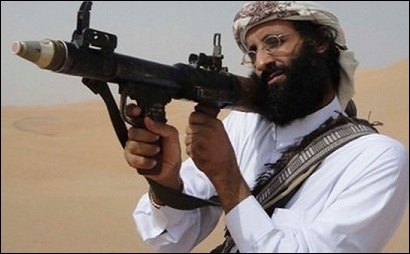
3567In 2001, the Pentagon invited Anwar al-Awlaki to lunch. In 2011, it killed him by a drone strike.

Finally, shades of gray further confuse the issue. As noted by Robert Satloff of The Washington Institute, a 2007 book from the Gallup press, Who Speaks for Islam? What a Billion Muslims Really Think, based on a poll of over 50,000 Muslims in 10 countries, found that 7 percent of Muslims deem the 9/11 attacks “completely justified,” 13.5 percent consider the attacks completely or “largely justified,” and 36.6 percent consider the attacks completely, largely, or “somewhat justified.” Which of these groups does one define as Islamist and which not?

Faced with these intellectual challenges, American bureaucrats are unsurprisingly incompetent, as I demonstrate in a long blog titled “The U.S. Government’s Poor Record on Islamists.” Islamists have fooled the White House, the departments of Defense, Justice, State, and Treasury, the Congress, many law enforcement agencies and a plethora of municipalities. A few examples:

  • The Pentagon in 2001 invited Anwar al-Awlaki, the American Islamist it later executed with a drone-launched missile, to lunch.
  • In 2002, FBI spokesman Bill Carter described the American Muslim Council (AMC) as “the most mainstream Muslim group in the United States” – just two years before the bureau arrested the AMC’s founder and head, Abdurahman Alamoudi, on terrorism-related charges. Alamoudi has now served about half his 23-year prison sentence.
  • George W. Bush appointed stealth Islamist Khaled Abou El Fadl in 2003 to, of all things, the United States Commission on International Religious Freedom.
  • The White House included staff in 2015 from the Council on American-Islamic Relations (CAIR) in its consultations, despite CAIR’s initial funding by a designated terrorist group, the frequent arrest or deportation of its employees on terrorism charges, a history of deception, and the goal of one of its leaders to make Islam the only accepted religion in America.

Fake-moderates have fooled even me, despite all the attention I devote to this topic. In 2000, I praised a book by Tariq Ramadan; four years later, I argued for his exclusion from the United States. In 2003, I condemned a Republican operative named Kamal Nawash; two years later, I endorsed him. Did they evolve or did my understanding of them change? More than a decade later, I am still unsure.

Uniform Screening Standards

Returning to immigration, this state of confusion points to the need for learning much more about would-be visitors and immigrants. Fortunately, Trump’s executive order, “Protecting the Nation from Foreign Terrorist Entry into the United States,” signed on Jan. 27, 2017, requires just this. It calls for “Uniform Screening Standards” with the goal of preventing individuals from entering the United States “on a fraudulent basis with the intent to cause harm, or who are at risk of causing harm subsequent to their admission.” The order requires that the uniform screening standard and procedure include such elements as (bolding is mine):

  1. In-person interviews;
  2. A database of identity documents proffered by applicants to ensure that duplicate documents are not used by multiple applicants;
  3. Amended application forms that include questions aimed at identifying fraudulent answers and malicious intent;
  4. A mechanism to ensure that the applicant is who the applicant claims to be;
  5. A process to evaluate the applicant’s likelihood of becoming a positively contributing member of society and the applicant’s ability to make contributions to the national interest; and
  6. A mechanism to assess whether or not the applicant has the intent to commit criminal or terrorist acts after entering the United States.

Elements 1, 3, 5, and 6 permit and demand the procedure outlined in the following analysis. It contains two main components, in-depth research and intensive interviews.

Research

When a person applies for a security clearance, the background checks should involve finding out about his family, friends, associations, employment, memberships, and activities. Agents must probe these for questionable statements, relationships, and actions, as well as anomalies and gaps. When they find something dubious, they must look further into it, always with an eye for trouble. Is access to government secrets more important than access to the country? The immigration process should start with an inquiry into the prospective immigrant and, just as with security clearances, the border services should look for problems.

3572Most everyone with strong views at some point vents them on social media.

Also, as with security clearance, this process should have a political dimension: Does the person in question have an outlook consistent with that of the Constitution? Not long ago, only public figures such as intellectuals, activists, and religious figures put their views on the record; but now, thanks to the Internet and its open invitation to everyone to comment in writing or on video in a permanent, public manner, and especially to social media (Facebook, Twitter, etc.), most everyone with strong views at some point vents them. Such data provides valuably unfiltered views on many critical topics, such as Islam, non-Muslims, women, and violence as a tactic. (Exploiting this resource may seem self-evident but U.S. immigration authorities do not do so, thereby imposing a self-restraint roughly equivalent to the Belgian police choosing not to conduct raids between 9 p.m. and 5 a.m.)

In the case of virulent, overt, outspoken jihadis, this research usually suffices to provide evidence to exclude them. Even some non-violent Islamists proudly announce their immoderation. But many Islamists adopt a milder and subtler tone, their goal being to appear moderate so they can enter the country and then impose Shari’a through lawful means. As suggested by some of the examples above, such as Abou El Fadl or CAIR, research often proves inadequate in these instances because cautious Islamists hide their goals and glibly dissimulate. Which brings us to entrance interviews.

Entrance Interviews

Assuming that lawful Islamists routinely hide their true views, an interview is needed before letting them enter the country. Of course, it is voluntary, for no one is forced to apply for immigration, but it also must be very thorough. It should be:

Recorded: With the explicit permission of the person being questioned (“You understand and accept that this interview is being recorded, right?”), the exchange should be visibly videotaped so the proceedings are unambiguously on the record. This makes available the interviewee’s words, tone, speech patterns, facial expressions, and body language for further study. Form as well as substance matters: does the interviewee smile, fidget, blink, make eye contact, repeat, sweat, tremble, tire, need frequent toilet breaks, or otherwise express himself in non-verbal ways?

Polygraph: Even if a lie detector machine does not, in fact, provide useful information, attaching the interviewee to it might induce greater truth-telling.

Under oath: Knowing that falsehoods will be punished, possibly with jail time, is a strong inducement to come clean.

Public: If the candidate knows that his answers to abstract questions (as opposed to personal ones about his life) will be made public, this reduces the chances of deception. For example, asked about belief for the full application of Islamic laws, an Islamist will be less likely to answer falsely in the negative if he knows that his reply will be available for others to watch.

3568Look for inconsistency by asking the same thing in different ways. An example: “May a woman show her face in public?” and “Is a male guardian responsible for making sure his women-folk don’t leave the house with faces uncovered?

Multiple: No single question can evince a reply that establishes an Islamist disposition; effective interviewing requires a battery of queries on many topics, from homosexuality to the caliphate. The answers need to be assessed in their totality.

Specific: Vague inquiries along the lines of “Is Islam a religion of peace?”, “Do you condemn terrorism?” “How do you respond to the murder of innocents,” depend too much on one’s definition of words such as peace, terrorism, and innocents to help determine a person’s outlook, and so should be avoided. Instead, questions must be focused and exact: “May Muslims convert out of Islam, whether to join another faith or to become atheists?” “Does a Muslim have the right to renounce Islam?”

Variety in phrasing: For the questions to ferret out the truth means looking for divergence and inconsistency by asking the same question with different words and variant emphases. A sampling: “May a woman show her face in public?” “What punishment do you favor for females who reveal their faces to men not related to them by family?” “Is it the responsibility of the male guardian to make sure his women-folk do not leave the house with faces uncovered?” “Should the government insist on women covering their faces?” “Is society better ordered when women cover their faces?” Any one of the questions can be asked in different ways and expanded with follows-up about the respondent’s line of reasoning or depth of feeling.

Repeated: Questions should be asked again and again over a period of weeks, months, and even longer. This is crucial: lies being much more difficult to remember than truths, the chances of a respondent changing his answers increases with both the volume of questions asked and the time lapse between questionings. Once inconsistencies occur, the questioner can zero in and explore their nature, extent, and import.

The Questions

Guidelines in place, what specific questions might extract useful information?
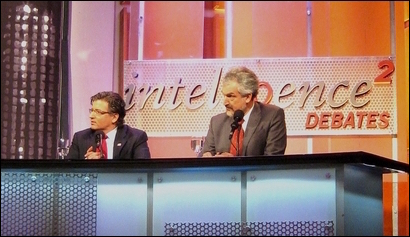
3574Zuhdi Jasser (L) with the author as teammates at a 2012 Intelligence Squared debate in New York City.

The following questions, offered as suggestions to build on, are those of this author but also derive from a number of analysts devoting years of thinking to the topic. Naser Khader, the-then Danish parliamentarian of Syrian Muslim origins, offered an early set of questions in 2002. A year later, this author published a list covering seven subject areas.

Others followed, including the liberal Egyptian Muslim Tarek Heggy, the liberal American Muslims Tashbih Sayyed and Zuhdi Jasser, the ex-Muslim who goes by “Sam Solomon,” a RAND Corporation group, and the analyst Robert Spencer. Of special interest are the queries posed by the German state of Baden-Württemberg dated September 2005 because it is an official document (intended for citizenship, not immigration, but with similar purposes).

Islamic doctrine:

1. May Muslims reinterpret the Koran in light of changes in modern times?

2. May Muslims convert out of Islam, either to join another faith or to be without religion?

3. May banks charge reasonable interest (say 3 percent over inflation) on money?

4. Is taqiya (dissimulation in the name of Islam) legitimate?

Islamic pluralism:

5. May Muslims pick and choose which Islamic regulations to abide by (e.g., drink alcohol but avoid pork)?

6. Is takfir (declaring a Muslim to be an infidel) acceptable?

7. [Asked of Sunnis only:] Are Sufis, Ibadis, and Shi’ites Muslims?

8. Are Muslims who disagree with your practice of Islam infidels (kuffar)?

The state and Islam:

9. What do you think of disestablishing religion, that is, separating mosque and state?

10. When Islamic customs conflict with secular laws (e.g., covering the face for female drivers’ license pictures), which gets priority?

11. Should the state compel prayer?

12. Should the state ban food consumption during Ramadan and penalize transgressors?

13. Should the state punish Muslims who eat pork, drink alcohol, and gamble?

14. Should the state punish adultery?

15. How about homosexuality?

16. Do you favor a mutawwa’ (religious police) as exist in Saudi Arabia?

17. Should the state enforce the criminal punishments of the Shari’a?

18. Should the state be lenient when someone is killed for the sake of family honor?

19. Should governments forbid Muslims from leaving Islam?

Marriage and divorce:

20. Does a husband have the right to hit his wife if she is disobedient?

21. Is it a good idea for men to shut their wives and daughters at home?

22. Do parents have the right to determine whom their children marry?

23. How would you react if a daughter married a non-Muslim man?

24. Is polygyny acceptable?

25. Should a husband have to get a first wife’s approval to marry a second wife? A third? A fourth?

26. Should a wife have equal rights with her husband to initiate a divorce?

27. In the case of divorce, does a wife have rights to child custody?

Female rights:

28. Should Muslim women have equal rights with men (for example, in inheritance shares or court testimony)?

29. Does a woman have the right to dress as she pleases, including showing her hair, arms and legs, so long as her genitalia and breasts are covered?

30. May Muslim women come and go or travel as they please?

31. Do Muslim women have a right to work outside the home or must the wali approve of this??

32. May Muslim women marry non-Muslim men?

33. Should males and females be separated in schools, at work, and socially?

34. Should certain professions be reserved for men or women only? If so, which ones?

35. Do you accept women occupying high governmental offices?

36. In an emergency, would you let yourself be treated by or operated on by a doctor of the opposite gender?

Sexual activity:

37. Does a husband have the right to force his wife to have sex?

38. Is female circumcision part of the Islamic religion?

39. Is stoning a justified punishment for adultery?

40. Do members of a family have the right to kill a woman if they believe she has dishonored them?

41. How would you respond to a child of yours who declares him- or herself a homosexual?

Schools:

42. Should your child learn the history of non-Muslims?

43. Should students be taught that Shari’a is a personal code or that governmental law must be based on it?

44. May your daughter take part in the sports activities, especially swimming lessons, offered by her school?

45. Would you permit your child to take part in school trips, including overnight ones?

46. What would you do if a daughter insisted on going to university?

Criticism of Muslims:

3575Denying the Islamic nature of ISIS reveals much about a Muslim.

47. Did Islam spread only through peaceful means?

48. Do you accept the legitimacy of scholarly inquiry into the origins of Islam, even if it casts doubt on the received history?

49. Do you accept that Muslims were responsible for the 9/11 attacks?

50. Is the Islamic State/ISIS/ISIL/Daesh Islamic in nature?

Fighting Islamism:

51. Do you accept enhanced security measures to fight Islamism, even if this might mean extra scrutiny of yourself (for example, at airline security)?

52. When institutions credibly accused of funding jihad are shut down, is this a symptom of anti-Muslim bias?

53. Should Muslims living in the West cooperate with law enforcement?

54. Should they join the military?

55. Is the “war on terror” a war on Islam?

Non-Muslims (in general):
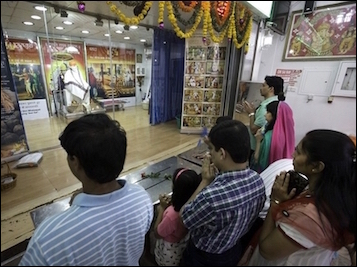
3573Praying at the Hindu Temple in Dubai, founded 1958.

56. Do all humans, regardless of gender, ethnicity, sexual orientation or religious beliefs, deserve equal rights?

57. Should non-Muslims enjoy completely equal civil rights with Muslims?

58. Do you accept the validity of other monotheistic religions?

59. Of polytheistic religions (such as Hinduism)?

60. Are Muslims superior to non-Muslims?

61. Should non-Muslims be subject to Islamic law?

62. Do Muslims have anything to learn from non-Muslims?

63. Can non-Muslims go to paradise?

64. Do you welcome non-Muslims to your house and go to their residences?

Non-Muslims (in Dar al-Islam):

65. May Muslims compel “Peoples of the Book” (i.e., Jews and Christians) to pay extra taxes?

66. May other monotheists build and operate institutions of their faith in Muslim-majority countries?

67. How about polytheists?

68. Should the Saudi government maintain the historic ban on non-Muslims in Mecca and Medina?

69. Should it allow churches to be built for Christian expatriates?

70. Should it stop requiring that all its subjects be Muslim?

Non-Muslims (in Dar al-Harb):

71. Should Muslims fight Jews and Christians until these “feel themselves subdued” (Koran 9:29).

72. Is the enslavement of non-Muslims acceptable?

73. Is it acceptable to arrest individuals who curse the prophet of Islam or burn the Koran?

74. If the state does not act against such deeds, may individual Muslims act?

75. Can one live a fully Muslim life in a country with a mostly non-Muslim government?

76. Should a Muslim accept a legitimate majority non-Muslim government and its laws or work to make Islam supreme?

77. Can a majority non-Muslim government unreservedly win your allegiance?

78. Should Muslims who burn churches or vandalize synagogues be punished?

79. Do you support jihad to spread Islam?

Violence:

80. Do you endorse corporal punishments (mutilation, dismemberment, crucifixion) of criminals?

81. Is beheading an acceptable form of punishment?

82. Is jihad, meaning warfare to expand Muslim rule, acceptable in today’s world?

83. What does it mean when Muslims yell “Allahu Akbar” as they attack?

84. Do you condemn violent organizations such as Boko Haram, Hamas, Hezbollah, Islamic Jihad, the Islamic State, Al-Qaeda, Shabaab, and the Taliban?

Western countries:

85. Are non-Islamic institutions immoral and decadent or can they be moral and virtuous?

86. Do you agree with studies that show non-Muslim countries such as New Zealand to be better living up to the ideals of Islam than Muslim-majority countries?

87. Is Western-style freedom an accomplishment or a form of moral corruption? Why?

88. Do you accept that Western countries are majority-Christian or do you seek to transform them into majority-Muslim countries?

89. Do you accept living in Western countries that are secular or do you seek to have Islamic law rule them?

90. What do you think of Shari’a-police patrolling Muslim-majority neighborhoods in Western countries to enforce Islamic morals?

91. Would you like to see the U.S. Constitution (or its equivalents in other countries) replaced by the Koran?

This interview:

92. In an immigration interview like this, if deceiving the questioner helps Islam, would lying be justified?

93. Why should I trust that you have answered these questions truthfully?

Observations about the Interviews

Beyond helping to decide whom to allow into the country, these questions can also help in other contexts as well, for example in police interrogations or interviews for sensitive employment positions. (The list of Islamists who have penetrated Western security services is a long and painful one.)
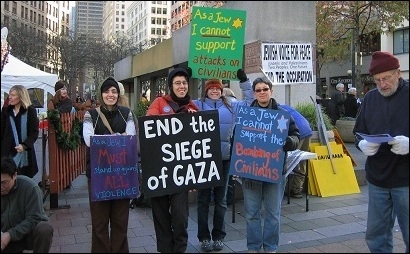
3569Islamists are hardly the only ones who condemn Israel. Here Jewish Voice for Peace activists protest.

Note the absence of questions about highly charged current issues. That is because Islamist views overlap with non-Islamist outlooks; plenty of non-Islamists agree with Islamists on these topics. Although Leil Leibowitz in contrast sees Israel as “moderate Islam’s real litmus test,” Islamists are hardly the only ones who demand Israel’s elimination and accept Hamas and Hezbollah as legitimate political actors – or believe the Bush administration carried out the 9/11 attacks or hate the United States. Why introduce these ambiguous issues when so many Islam-specific questions (e.g., “Is the enslavement of non-Muslim acceptable?”) have the virtue of far greater clarity?

The interviewing protocol outlined above is extensive, asking many specific questions over a substantial period using different formulations, probing for truth and inconsistencies. It is not quick, easy, or cheap, but requires case officers knowledgeable about the persons being interviewed, the societies they come from, and the Islamic religion; they are somewhat like a police questioner who knows both the accused person and the crime. This is not a casual process. There are no shortcuts.

Criticisms

This procedure raises two criticisms: it is less reliable than Trump’s no-Muslim policy and it is too burdensome for governments to undertake. Both are readily disposed of.

Less reliable: The no-Muslim policy sounds simple to implement but figuring out who is Muslim is a problem in itself (are Ahmadis Muslims?). Further, with such a policy in place, what will stop Muslims from pretending to renounce their religion or to convert to another religion, notably Christianity? These actions would require the same in-depth research and intensive interviews as described above. If anything, because a convert can hide behind his ignorance of his alleged new religion, distinguishing a real convert to Christianity from a fake one is even more difficult than differentiating an Islamist from a moderate Muslim.

Too burdensome: True, the procedure is expensive, slow, and requires skilled practitioners. But this also has the benefit of slowing a process that many, myself included, consider out of control, with too many immigrants entering the country too quickly. Immigrants numbered 5 percent of the population in 1965, 14 percent in 2015, and are projected to make up 18 percent in 2065. This is far too large a number to assimilate into the values of the United States, especially when so many come from outside the West; the above mechanism offers a way to slow it down.

As for those who argue that this sort of inquiry and screening for visa purposes is unlawful; prior legislation for naturalization, for example, required that an applicant be “attached to the principles of the Constitution” and it was repeatedly found to be legal.

Finally, today’s moderate Muslim could become tomorrow’s raging Islamist; or his infant daughter might two decades later become a jihadi. While any immigrant can turn hostile, such changes happen far more often among born Muslims. There is no way to guarantee this from happening but extensive research and interrogations reduce the odds.

Conclusion

Truly to protect the country from Islamists requires a major commitment of talent, resources, and time. But, properly handled, these questions offer a mechanism to separate enemy from friend among Muslims. They also have the benefit of slowing down immigration. Even before Trump became president, if one is to believe CAIR, the U.S. Customs and Border Protection Agency (CBP) asked questions along the lines of those advocated here (What do you think of the USA? What are your views about jihad? See the appendix for a full listing). With Trump’s endorsement, let us hope this effective “no-Islamists” policy is on its way to becoming systematic.


Appendix

On January 18, 2017, just hours before Donald Trump became president of the United States, the Florida office of the Council on American-Islamic Relations (CAIR) filed ten complaints with the Customs and Border Protection Agency (CBP) for questioning Muslim citizens about their religious and political views. Among the questions allegedly asked were:

1. Are you a devout Muslim?

2. Are you Sunni or Shia?

3. What school of thought do you follow?

4. Which Muslim scholars do you follow?

5. What current Muslim scholars do you listen to?

6. Do you pray five times a day?

7. Why do you have a prayer mat in your luggage?

8. Why do you have a Qur’an in your luggage?

9. Have you visited Saudi Arabia?

10. Will you every visit Saudi or Israel?

11. What do you know about the Tableeghi-Jamat?

12. What do you think of the USA?

13. What are your views about Jihad?

14. What mosque do you attend?

15. Do any individuals in your mosque have any extreme/radical views?

16. Does your Imam express extremist views?

17. What are the views of other imams or other community members that give the Friday sermon at your mosque?

18. Do they have extremist views?

19. Have you ever delivered the Friday Prayer? What did you discuss with your community?

20. What are your views regarding [various terrorist organizations]?

21. What social media accounts do you use?

22. What is your Facebook account username?

23. What is your Twitter account username?

24. What is your Instagram account username?

25. What are the names and telephone numbers of parents, relatives, friends?

CAIR also claims a Canadian Muslim was asked by CBP the following questions and then denied entry:

1. Are you Sunni or Shia?

2. Do you think we should allow someone like you to enter our country?

3. How often do you pray?

4. Why did you shave your beard?

5. Which school of thought do you follow?

6. What do you think of America’s foreign policy towards the Muslim world?

7. What do you think of killing non-Muslims?

8. What do you think of [various terrorist groups]?

Finally, CAIR indicates that those questioned “were held between 2 to 8 hours by CBP.”

“Islam Strengthening in Europe with the Blessing of the Church”

January 29, 2017

“Islam Strengthening in Europe with the Blessing of the Church”, Gatestone InstituteGiulio Meotti, January 29, 2017

These politicians, bishops and cardinals might convince Pope Francis not to abandon Europe, the cradle of Christianity and Western civilization, to a looming dark fate. Michel Onfray wrote at the end of his book: “Judeo-Christianity ruled for two millennia. An honorable period for a civilization. The boat now sinks: we can only sink with elegance”. It is urgent now to prevent that.

There are now many Catholic commentators who are questioning the Church’s blindness about the danger Europe is facing.

“Islam has every chance massively to strengthen its presence in Europe with the blessing of the Church…. the Church is not only leading Europe to an impasse, it is also shooting itself in the foot.” — Laurent Dandrieu, cultural editor of the French magazine Valeurs Actuelles.

“It is clear that Muslims have an ultimate goal: conquering the world…Islam, through the sharia, their law…allows violence against the infidels, such as Christians….And what is the most important achievement? Rome.” — Cardinal Raymond Burke, interview, Il Giornale.

“[T]hey are not refugees, this is an invasion, they come here with cries of ‘Allahu Akbar’, they want to take over.” — Laszlo Kiss Rigo, head of the Catholic Hungarian southern community.

François Fillon published a book entitled, Vanquishing Islamic Totalitarianism, and he rose in the polls by vowing to control Islam and immigration: “We’ve got to reduce immigration to its strict minimum,” Fillon said. “Our country is not a sum of communities, it is an identity!”

Everyone in Italy and the rest of Europe will “soon be Muslim” because of our “stupidity”, warned Monsignor Carlo Liberati, Archbishop Emeritus of Pompei. Liberati claimed that, thanks to the huge number of Muslim migrants alongside the increasing secularism of native Europeans, Islam will soon become the main religion of Europe. “All of this moral and religious decadence favours Islam”, Archbishop Liberati explained.

Décadence is also the title of a new book by the French philosopher Michel Onfray, in which he suggests that the Judeo-Christian era may have come to an end. He compares the West and Islam: “We have nihilism, they have fervor; we are exhausted, they have a great health; we have the past for us; they have the future for them”.

Archbishop Liberati belongs to a growing branch of Catholic leaders who refuse to see the future belonging to Islam in Europe. They speak in open opposition to Pope Francis, who does not seem too impressed by the collapse of Christianity due to falling birth rates, accompanied by religious apathy and its replacement by Islam.

2248Monsignor Carlo Liberati, Archbishop Emeritus of Pompei (left) belongs to a growing branch of Catholic leaders who refuse to see the future belonging to Islam in Europe, and who speak in open opposition to Pope Francis (right).

Pope Francis’s official vision is personified by Bishop Nunzio Galantino, who was appointed by the Pontiff as the Secretary General of Italy’s Bishops. Last December, Galantino gave an interview in which he dismissed any religious motivation behind jihadist attacks and claimed that, instead, “money” is what is behind them.

There are now many Catholic commentators who are questioning the Church’s blindness about the danger Europe is facing. One is the cultural editor of the French magazine Valeurs Actuelles, Laurent Dandrieu, who writes:

“Islam has every chance massively to strengthen its presence in Europe with the blessing of the Church. The Church is watching the establishment of millions of Muslims in Europe… and Muslim worship in our continent as an inescapable manifestation of religious freedom. But the civilizational question is simply never asked …. By breaking away from the Europe’s indigenous peoples and their legitimate concerns, the Church is not only leading Europe to an impasse, it is also shooting itself in the foot”.

Dandrieu lists Pope Francis’ gestures and speeches in favor of Islam and migrants:

“On October 1, 2014, the Pope received Eritrean survivors of a shipwreck off Lampedusa; on 8 February 2015, he made a surprise visit to a refugee camp in Ponte Mammolo, northeast of Rome; on April 18, he used the first official visit of the new Italian president, Sergio Mattarella, to demand ‘a much larger commitment’ for migrants; on 6 September 2015, at the conclusion of the Angelus in St Peter’s Square, he called for ‘every parish, religious community, monastery and sanctuary in Europe to host a family’ of refugees; on March 24, 2016, he chose to celebrate the Holy Thursday in a structure housing 900 refugees, and to wash the feet to twelve asylum seekers; on May 28, he received children whose parents died in a boat that sank, filled with migrants; during the general audience of June 22, Francis went down to the crowd to bring back fifteen refugees”.

But as Liberati’s case demonstrates, resistance to Pope Francis’ vision of Europe is growing inside the Catholic Church.

“It is clear that Muslims have an ultimate goal: conquering the world”, Cardinal Raymond Burke said.

“Islam, through the sharia, their law, wants to rule the world and allows violence against the infidels, like Christians. But we find it hard to recognize this reality and to respond by defending the Christian faith (…) I have heard several times an Islamic idea: ‘what we failed to do with the weapons in the past we are doing today with the birth rate and immigration’. The population is changing. If this keeps up, in countries such as Italy, the majority will be Muslim (…) Islam realizes itself in the conquest. And what is the most important achievement? Rome”.

The first to denounce this dramatic trend was Italy’s most important missionary, Father Piero Gheddo, who said that, due to falling fertility and Muslim fervor, “Islam would sooner rather than later conquer the majority in Europe”. These concerns do not belong only to the Conservative wing of the Catholic Church.

Cardinal Christoph Schönborn, Archbishop of Vienna and a candidate tipped to be the next Pope, is very close to Pope Francis, and is a centrist. Last September, on the anniversary of the Siege of Vienna, when Turkey’s Ottoman troops nearly conquered Europe, Schönborn delivered a dramatic appeal to save Europe’s Christian roots. “Many Muslims want and say that ‘Europe is finished'”, Cardinal Schönborn said, before accusing Europe of “forgetting its Christian identity”. He then denounced the possibility of “an Islamic conquest of Europe“.

After a Tunisian, who arrived among a flood of migrants into Germany, murdered 12 people at a Christmas market in Berlin, the Catholic archbishop of the German capital, Heiner Koch, another “moderate” Catholic leader appointed by Pope Francis, also sounded a warning: “Perhaps we focused too much on the radiant image of humanity, on the good. Now in the last year, or perhaps also in recent years, we have seen: No, there is also evil”.

The head of the Czech Roman Catholic Church, Miloslav Vlk, also warned about the threat of Islamization. “Muslims in Europe have many more children than Christian families; that is why demographers have been trying to come up with a time when Europe will become Muslim”, Cardinal Vlk claimed. He also blamed Europe itself for the Islamic takeover:

“Europe will pay dearly for having left its spiritual foundations; this is the last period that will not continue for decades when it may still have a chance to do something about it. Unless the Christians wake up, life may be Islamised and Christianity will not have the strength to imprint its character on the life of people, not to say society”.

Cardinal Dominik Duka, Archbishop of Prague and Primate of Bohemia, has also questioned Pope Francis’ “welcoming culture”.

Among the Eastern Catholic bishops there are many voices raising concerns about Europe’s demographic and religious revolution. One belongs to the leader of the Catholics in Lebanon, who paid an extremely high price for the Islamization of their own country, including murder and exile, and now see the danger coming to Europe itself. “I have heard many times from Muslims that their goal is to conquer Europe with two weapons: faith and the birth rate”, Cardinal Bechara Rai said.

Another voice belongs to the French-born Bishop Paul Desfarges, who heads the diocese of Constantine in Algeria: “It’s no surprise that Islam has taken on such importance”, Desfarges said. “It’s an issue that concerns Europe”. Sydney Cardinal George Pell then urged “a discussion of the consequences of the Islamic presence in the Western world”. Pell was echoed by Laszlo Kiss Rigo, the head of the Catholic Hungarian southern community, who said that “they are not refugees, this is an invasion, they come here with cries of ‘Allahu Akbar’, they want to take over”.

On the political level, there is another a tendency, that of strong Catholic leaders who challenge Pope Francis on the Islamic question and immigration. The most important is the French presidential candidate François Fillon, one of the first politicians who “doesn’t hide the fact that he’s Catholic“. Fillon published a book entitled, Vanquishing Islamic Totalitarianism, and he rose in the polls by vowing to control Islam and immigration: “We’ve got to reduce immigration to its strict minimum,” Fillon said. “Our country is not a sum of communities, it is an identity!”

These politicians, bishops and cardinals might convince Pope Francis not to abandon Europe, the cradle of Christianity and Western civilization, to a looming dark fate. Michel Onfray wrote at the end of his book: “Judeo-Christianity ruled for two millennia. An honorable period for a civilization. The boat now sinks: we can only sink with elegance”. It is urgent now to prevent that.

Most Countries Targeted By Trump Have Discriminatory Visa Policies

January 29, 2017

Most Of The Muslim Countries Trump Targeted Have Discriminatory Visa Policies

Ryan Pickrell

6:15 PM 01/28/2017

Source: Most Countries Targeted By Trump Have Discriminatory Visa Policies | The Daily Caller

At least six out of the seven countries targeted by President Donald Trump’s latest executive order have visa policies that discriminate against Israel.

Trump signed an executive order Friday temporarily prohibiting citizens from seven majority Muslim countries — specifically Syria, Iran, Iraq, Libya, Somalia, Sudan, and Yemen — from entering the U.S.

Of that group, Iran, Syria, Libya, Yemen, and Sudan all refuse entry to foreign travelers holding passports or travel documents indicating that they have been to or are affiliated in some way with Israel.

Israeli nationals are not permitted to transit through Iraq, IranLibya, Yemen, Syria, or Sudan, even in situations where the traveler does not intend to leave the aircraft.

In Syria, individuals suspected of having affiliations with Israel have been detained for questioning.

These discriminatory visa policies are religiously motivated. Some have arrived at similar conclusions about Trump’s latest executive order, declaring the move a “Muslim ban,” but the order only restricts entry for travelers from a few predominantly-Muslim countries, not all of them.

For instance, the new policies do not apply to citizens of Indonesia, which has the world’s largest Muslim population.

The primary focus of Trump’s policies is combating Islamic terrorism.

“We want to ensure that we are not admitting into our countries the very threats that our soldiers are fighting overseas,” Trump said Friday. He stressed that his latest order is designed to “keep radical Islamic terrorists out of the United States of America” and “to protect the American people.”

The order aims to eliminate threats to the American populace. Temporarily restricting travel from certain terror-prone countries gives the administration time to establish an improved screening process, what Trump refers to as “extreme vetting.”

The order states that “the United States must be vigilant during the visa-issuance process to ensure that those approved for admission do not intend to harm Americans and that they have no ties to terrorism.”

Follow Ryan on Twitter

The Left & Islam: Unholy Alliance

January 28, 2017
Published on Jan 24, 2017

The common goal: destroying western civilization.