Posted tagged ‘Islam’

Turkish army shells Kurds ‘refusing to retreat’ near Jarablus

August 26, 2016

Turkish army shells Kurds ‘refusing to retreat’ near Jarablus – state media Published time: 26 Aug, 2016 01:57

Source: Turkish army shells Kurds ‘refusing to retreat’ near Jarablus – state media — RT News

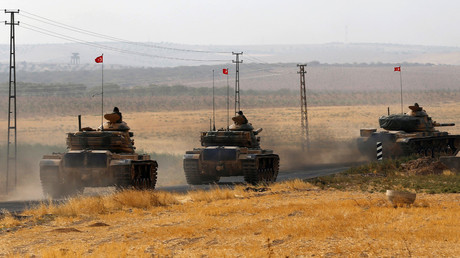
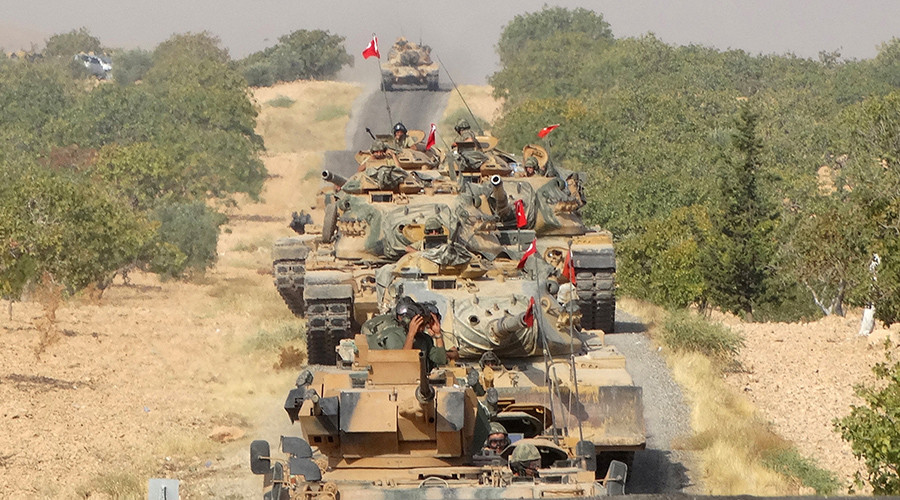
Turkish army tanks make their way towards the Syrian border town of Jarablus, Syria August 24, 2016. © Revolutionary Forces of Syria Media Office / Reuters

Turkish military have targeted US-backed Kurdish YPG militia with artillery fire south of the Syrian border town of Jarablus on Thursday, Anadolu state agency reported, citing a security source. The units allegedly refused to withdraw from the area despite warnings.

The group of YPG fighters were attacked with howitzers at about 6pm local time after they were spotted by Turkish intelligence advancing to Jarablus from the north of Manbij, the report said. Earlier, Washington assured Ankara that the US-backed Kurdish formations have been pulling out forces from the area to the east of the Euphrates River as demanded by Turkey.

READ MORE:Women burn burqas, men cut beards: Manbij celebrates liberation from ISIS (VIDEO, PHOTOS) 

“Kerry [US State Secretary John Kerry] emphasized that the PYD/YPG forces have been withdrawing to the east of the Euphrates,” a Turkish security source was quoted by Hürriyet Daily News as saying following a telephone conversation between the US top diplomat and Turkey’s foreign minister Mevlut Cavusoglu on Thursday morning.

While on a visit to Ankara on August 24, US Vice President Joe Biden pledged to withdraw the support of American forces to Kurdish fighters battling terrorists in Syria if they did not comply with Turkey’s request to remain east of the river.

READ MORE:Turkey shells ISIS & Kurdish positions in Syria

“They cannot, will not and under no circumstances get American support if they do not keep that commitment. Period,” Biden said at a joint news conference with Turkish PM Binali Yildirim.

Read more

Turkish army tanks drive towards to the border in Karkamis on the Turkish-Syrian border in the southeastern Gaziantep province, Turkey, August 25, 2016. © Umit Bektas

Turkey has been conducting Operation Euphrates Shield since Wednesday after its troops entered the borderline territory in the north of Syria with the focus on retaking Jarablus from the Islamic State (IS, ISIS/ISIL) terrorists, which has been occupying it since July 2013. Justifying the incursion, which had not been authorized by the Syrian government, Turkey’s President Recep Tayyip Erdogan said it is aimed at stopping frequent cross-border attacks and repelling “terror groups which constantly threaten our country like Daesh [Arabic derogatory name for IS] and the PYD [the Democratic Union Party of Syria]”.

READ MORE:‘Blatant violation of sovereignty’: Damascus condemns Turkish operation in Jarablus

Meanwhile, Damascus slammed the offensive as “a blatant violation of sovereignty.”

The shelling follows a statement by YPG command saying that Kurdish militia under its control had left Manbij and returned to its bases, turning over the control over the city to the Manbij Military Council, according to Al-Masdar News.

On Wednesday, the YPG denounced the Turkish military offensive in Syria as “a hostile intervention,” refusing to cave in to pressure coming from Turkey.

“We won’t listen to the demands of Turkey or powers outside of Turkey. Turkey cannot impose its own agenda, its own interests on us. Our forces are there. We will not withdraw from west of the Euphrates,” YPG spokesman Redur Xelil said, as cited by Rudaw.

“Its main goal, more than ISIS, is the Kurds,” he pointed out.

Read more

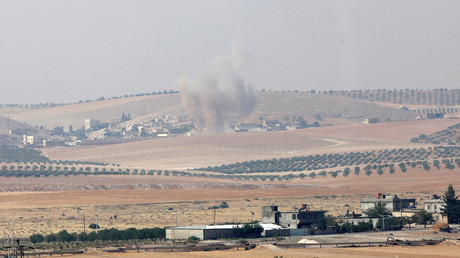
Smoke rises from the Syrian border town of Jarablus as it is pictured from the Turkish town of Karkamis, in the southeastern Gaziantep province, Turkey, August 24, 2016. © Stringer

At the moment, at least 20 Turkish tanks are taking part in operation inside Syria with more armored vehicles are expected to join the effort in the coming days as the Syrian rebels supported by Turkish forces are “cleansing” the city from jihadists.

The former IS stronghold of Manbij was freed by Kurdish-led SDF from jihadists just two weeks ago after months of intense fighting.

The Kurdish People’s Protection Units (YPG) are the armed wing of the Kurdish Democratic Union Party (PYD), close to the Kurdistan Workers’ Party, which Ankara considers a terrorist organization. Turkey has been leading a military campaign against PKK insurgency in the country’s south-eastern Kurdish-populated regions, which has been criticized by rights groups for its brutality. Numerous reports have also suggested that Ankara bombed Kurdish targets inside Syria while allegedly sparing Islamist militants that the YPG have been in bitter battle with.

What’s the Plan for Winning the War?

August 25, 2016

What’s the Plan for Winning the War?, Counter Jihad, August 25, 2016

Who is even thinking about how to win the war?  Will the legacy of the Obama administration be a shattered NATO, a Turkey drawn into Russia’s orbit, an Iranian hegemony over the northern Middle East, and a resurgent Russia?  It certainly looks to be shaping up that way.  Russia is playing chess while the US is playing whack-a-mole.  The absence of a coherent governing strategy is glaring.

**********************

Michael Ledeen makes a clever observation:

Everyone’s talking about “ransom,” but it’s virtually impossible to find anyone who’s trying to figure out how to win the world war we’re facing.  The two keystones of the enemy alliance are Iran and Russia, and the Obama administration, as always, has no will to resist their sorties, whether the Russians’ menacing moves against Ukraine, or the Iranians’ moves against us.

The moves are on the chessboard, sometimes kinetic and sometimes psychological warfare.  Like a chess game, we are in the early stages in which maneuver establishes the array of forces that will govern the rest of the game.  Russia’s deployment of air and naval forces to Syria stole a march on the Obama administration.  Its swaying of Turkey, which last year was downing Russian aircraft, is stealing another.  Its deployment of bombers and advanced strike aircraft to Iran is another.  That last appears to be in a state of renegotiation, as Ledeen notes, but that too is probably for show.  The Iranians have too much to gain in terms of security for their nuclear program, at least until they’ve had time to build their own air force.

Iran is making strategic moves as well.  Ledeen notes the “Shi’ite Freedom Army,” a kind of Iranian Foreign Legion that intends to field five divisions of between twenty and twenty-five thousand men each.  Overall command will belong to Quds Force commander Qassem Suliemani, currently a major figure in the assault on Mosul, having recovered from his injury in Syria commanding Iranian-backed militia in the war there.  The fact of his freedom of movement is itself a Russian-Iranian demonstration that they will not be governed by international law:  Suliemani is under international travel bans for his assassination plot against world diplomats, but was received in Moscow and now travels freely throughout the northern Middle East.

Turkey, meanwhile, has been effectively cut off by Iran’s and Russia’s success in the opening game of this global chess match.  As late as the Ottoman Empire, the Turks looked south through Iran and Iraq to power bases as far away as Arabia.  Now the Ayatollahs are going to control a crescent of territory from Afghanistan’s borders to the Levant, leaving the Turks locked out.  One might have expected the Turks to respond by doubling their sense of connection to Europe and NATO.  Instead, the purge following the alleged coup attempt is cementing an Islamist control that leaves the Turks looking toward a world from which they are largely separated by the power of this new Russian-Iranian alliance.  The Turks seem to be drifting toward joining that alliance because being a part of that alliance will preserve their ties to the Islamic world.

For now, the Obama administration seems blind to the fact that these moves are closing off America’s position in the Middle East.  This is not a new policy.  Eli Lake reports that the Obama administration told the CIA to sever its ties to Iranian opposition groups in order to avoid giving aid to the Green revolution.  Their negotiation of last year’s disastrous “Iran deal” has led to Iran testing new ballistic missiles and receiving major arms shipments from Russia.  Yet while all these moves keep being made around them, the Obama administration proceeds as if this were still just an attempt to crush the Islamic State (ISIS).  The commander of the XVIIIth Airborne Corps has been given a task that amounts to helping the Iranians win.  Our incoherent policy has left us on both sides in Syria.  Our only real ally in the conflict, the Kurds, stand abandoned by America.

Who is even thinking about how to win the war?  Will the legacy of the Obama administration be a shattered NATO, a Turkey drawn into Russia’s orbit, an Iranian hegemony over the northern Middle East, and a resurgent Russia?  It certainly looks to be shaping up that way.  Russia is playing chess while the US is playing whack-a-mole.  The absence of a coherent governing strategy is glaring.

State capitulates to hunger striking terrorist’s demands

August 25, 2016

State capitulates to hunger striking terrorist’s demands Bilal Kayed, who is hospitalized at Barzilai Hospital after hunger strike, reaches agreement with the Israeli authorities on his release.

Arutz Sheva, 25/08/16 00:15

Source: State capitulates to hunger striking terrorist’s demands – Defense/Security – News –

Terrorist Bilal Kayed, who was in administrative detention and is hospitalized at the Barzilai Hospital after hunger striking, has reached an agreement with Israeli authorities according to which he will be released from administrative detention and will stop his 70-day hunger strike.

Kayed’s lawyers reached an agreement with the state that his administrative detention will not be renewed after six months unless new information emerges which supports his staying in jail.

The agreement will be brought before the High Court on Thursday as part of the petition presented by the terrorist against his administrative detention.

Kayed, 35, a resident of Asira a-Samilia, a village north of Shechem, was arrested during the intifada in 2002 when he was a member of the armed unit of the Democratic front. He was charged with a number of security crimes including attacks and attempted attacks and was sentenced to 14.5 years of jail.

In June the terrorist completed his prison time but was transferred to administrative detention for a half a year and consequently he started a hunger strike.

Dr. Jasser discusses the U.S. refugee policies on the Mike Siegel Show 08.24.2016

August 24, 2016

Dr. Jasser discusses the U.S. refugee policies on the Mike Siegel Show 08.24.2016, AIFDtv

(The discussion is wide-ranging, covering more topics than indicated by the title.–DM)


Dr. Ahmed al-Tayeb: Meet the World’s ‘Most Influential Muslim’

August 24, 2016

Dr. Ahmed al-Tayeb: Meet the World’s ‘Most Influential Muslim’, Front Page MagazineRaymond Ibrahim, August 24, 2016

(Please see also, Muslim cleric from terror sponsor Iran praises Pope for saying Islam is peaceful — DM)
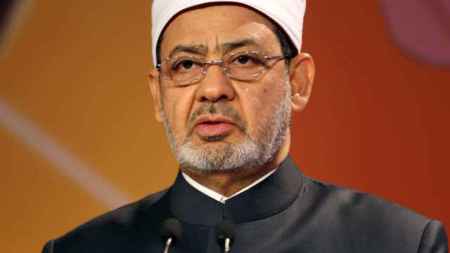
shykh-lzhr-dktwr-hmd-ltyb

There’s nothing like knowing Arabic—that is, being privy to the Muslim world’s internal conversations on a daily basis—to disabuse oneself of the supposed differences between so-called “moderate” and “radical” Muslims.

Consider the case of Egypt’s Dr. Ahmed al-Tayeb.  Hardly one to be dismissed as a fanatic who is ignorant of the true tenets of Islam, Tayeb’s credentials and career are impressive: he holds a Ph. D in Islamic philosophy from the Paris-Sorbonne University; formerly served as Grand Imam of Egypt, meaning he was the supreme interpreter of Islamic law; and since 2003 has been president of Al-Azhar University, considered the world’s leading institution of Islamic learning.   A 2013 survey named Tayeb the “most influential Muslim in the world.”

He is also regularly described by Western media and academia as a “moderate.”  Georgetown University presents him as “a strong proponent of interfaith dialogue.”  According to The National, “He is considered to be one of the most moderate and enlightened Sunni clerics in Egypt.”  In February 2015, the Wall Street Journal praised him for making “one of the most sweeping calls yet for educational reform in the Muslim world to combat the escalation of extremist violence.”

Most recently he was invited to the Vatican and warmly embraced by Pope Francis.  Al Azhar had angrily cut off all ties with the Vatican five years earlier when, in the words of U.S. News, former Pope Benedict “had demanded greater protection for Christians in Egypt after a New Year’s bombing on a Coptic Christian church in Alexandria killed 21 people.  Since then, Islamic attacks on Christians in the region have only increased.”

Pope Francis referenced his meeting with Tayeb as proof that Muslims are peaceful: “I had a long conversation with the imam, the Grand Imam of the Al-Azhar University, and I know how they think.  They [Muslims] seek peace, encounter.”

How does one reconcile Tayeb’s benevolent image in the West with his reality in Egypt?

For instance, all throughout the month of Ramadan last June, Tayeb appeared on Egyptian TV explaining all things Islamic—often in ways that do not suggest that Islam seeks “peace, encounter.”

During one episode, he reaffirmed a phrase that is almost exclusively associated with radicals: in Arabic, al-din wa’l-dawla, meaning “the religion and the polity”—a phrase that holds Islam to be both a religion and a body of rules governing society and state.

He did so in the context of discussing the efforts of Dr. Ali Abdel Raziq, a true reformer and former professor at Al Azhar who wrote a popular but controversial book in 1925, one year after the abolition of the Ottoman caliphate.  Titled, in translation, Islam and the Roots of Governance, Raziq argued against the idea of resurrecting the caliphate, saying that Islam is a personal religion that should no longer be mixed with politics or governance.

Raziq was vehemently criticized by many clerics and even fired from Al Azhar.  Concluded Tayeb, with assent:

Al Azhar’s position was to reject his position, saying he forfeited his credentials and his creed.  A great many ulema—in and out of Egypt and in Al Azhar—rejected his work and its claim, that Islam is a religion but not a polity.  Instead, they reaffirmed that Islam is both a religion and a polity [literally, al-din wa’l-dawla].

The problem with the idea that Islam must govern the whole of society should be obvious: Sharia, or Islamic law, which is what every Muslim including Tayeb refer to when they say that Islam is a polity, is fundamentally at odds with modern notions of human rights and, due to its supremacist and “anti-infidel” aspects, the source of conflict between Muslims and non-Muslims the world over.

That this is the case was made clear during another of Tayeb’s recent episodes.  On the question of apostasy in Islam—whether a Muslim has the right to abandon Islam for another or no religion—the “radical” position is well known: unrepentant apostates are to be punished with death.

Yet Tayeb made the same pronouncement.  During another Ramadan episode he said that “Contemporary apostasy presents itself in the guise of crimes, assaults, and grand treason, so we deal with it now as a crime that must be opposed and punished.”

While his main point was that those who do not follow Islam are prone to being criminals, he especially emphasized those who exhibit their apostasy as being a “great danger to Islamic society. And that’s because his apostasy is a result of his hatred for Islam and a reflection of his opposition to it. In my opinion, this is grand treason.”

Tayeb added what all Muslims know: “Those learned in Islamic law [al-fuqaha] and the imams of the four schools of jurisprudence consider apostasy a crime and agree that the apostate must either renounce his apostasy or else be killed.”  He even cited a hadith, or tradition, of Islam’s prophet Muhammad calling for the execution of Muslims who quit Islam.

Meanwhile, when speaking to Western and non-Muslim audiences, as he did during his recent European tour, Tayeb tells them what they want to hear.  Recently speaking before an international forum he asserted that “The Quran states that there is no compulsion in religion,” and that “attempts to force people into a religion are against the will of God.”  Similarly, when meeting with the Italian Senate’s Foreign Policy Commission Pier Ferdinando Casini and his accompanying delegation, Tayeb “asserted that Islam is the religion of peace, cooperation and mercy….  Islam believes in freedom of expression and human rights, and recognizes the rights of all human beings.”

While such open hypocrisy—also known as taqiyya—may go unnoticed in the West, in Egypt, human rights groups often call him out.  The Cairo Institute for Human Rights recently issued a statement accusing Al Azhar of having two faces: one directed at the West and which preaches freedom and tolerance, and one directed to Muslims and which sounds not unlike ISIS:

In March 2016 before the German parliament, Sheikh al-Tayeb made unequivocally clear that religious freedom is guaranteed by the Koran, while in Cairo he makes the exact opposite claims….  Combating terrorism and radical religious ideologies will not be accomplished by directing at the West and its international institutions religious dialogues that are open, support international peace and respect freedoms and rights, while internally promoting ideas that contribute to the dissemination of violent extremism through the media and educational curricula of Al Azhar and the mosques.

At any rate, if Tayeb holds such draconian views on apostasy from Islam—that is, when he’s speaking in Arabic to fellow Muslims—what is his position concerning the Islamic State?  Last December, Tayeb was asked why Al Azhar refuses to issue a formal statement denouncing the genocidal terrorist organization as lapsing into a state of kufr, that is, of becoming un-Islamic, or “infidel.” Tayeb responded:

Al Azhar cannot accuse any [Muslim] of being a kafir [infidel], as long as he believes in Allah and the Last Day—even if he commits every atrocity….  I cannot denounce ISIS as un-Islamic, but I can say that they cause corruption on earth.

As critics, such as Egyptian talk show host Ibrahim Eissa pointed out, however, “It’s amazing.  Al Azhar insists ISIS are Muslims and refuses to denounce them.  Yet Al Azhar never ceases to shoot out statements accusing novelists, writers, thinkers—anyone who says anything that contradicts their views—of lapsing into a state of infidelity.  But not when it comes to ISIS!”

This should not be surprising considering that many insiders accuse Al Azhar of teaching and legitimizing the atrocities that ISIS commits.  Sheikh Muhammad Abdullah Nasr, a scholar of Islamic law and Al Azhar graduate once exposed his alma mater in a televised interview:

It [Al Azhar] can’t [condemn the Islamic State as un-Islamic].  The Islamic State is a byproduct of Al Azhar’s programs.  So can Al Azhar denounce itself as un-Islamic?  Al Azhar says there must be a caliphate and that it is an obligation for the Muslim world [to establish it].  Al Azhar teaches the law of apostasy and killing the apostate.  Al Azhar is hostile towards religious minorities, and teaches things like not building churches, etc.  Al Azhar upholds the institution of jizya.  Al Azhar teaches stoning people.  So can Al Azhar denounce itself as un-Islamic?

Similarly, while discussing how the Islamic State burns some of its victims alive—most notoriously, a Jordanian pilot—Egyptian journalist Yusuf al-Husayni remarked on his satellite program that “The Islamic State is only doing what Al Azhar teaches.  He went on to quote from textbooks used in Al Azhar that permit burning people—more specifically, “infidels”—alive.

Meanwhile, Tayeb—the face of and brain behind Al Azhar—holds that Europe “must support all moderate Islamic institutions that adopt the Al-Azhar curriculum,” which “is the most eligible one for educating the youth.”  He said this during “a tour [in Germany and France] to facilitate dialogue between the East and the West.”

As for the ongoing persecution of Egypt’s most visible non-Muslim minorities, the Coptic Christians, Tayeb is renowned for turning a blind eye.  Despite the well-documented “severe persecution” Christians experience in Egypt; despite the fact that Muslim mobs attack Christians almost “every two to three days” now—recent examples include the burning of churches and Christian homes, the coldblooded murder of a Coptic man defending his grandchild from Muslim bullies, and the stripping, beating, and parading in the nude of a 70-year-old Christian woman—Tayeb recently told Coptic Christian Pope Tawadros that “Egypt represents the ultimate and highest example of national unity” between Muslims and Christians.

Although he vociferously denounces the displacement of non-Egyptian Muslims in Buddhist Myanmar, he doesn’t have a single word for the persecution and displacement of the Copts, that is, his own Egyptian countrymen.  Instead heproclaims that “the Copts have been living in Egypt for over 14 centuries in safety, and there is no need for all this artificial concern over them,” adding that “true terrorism was created by the West.”

Indeed, far from speaking up on behalf of Egypt’s Christian minorities, he has confirmed that they are “infidels”—that same label he refused to describe ISIS with.   While he did so in a technical manner—correctly saying that, as rejecters of Muhammad’s prophecy, Christians are infidels [kafir]—he also knows that labeling them as such validates all the animosity they feel and experience in Egypt, since the mortal enemy of the Muslim is the infidel.

This is consistent with the fact that Al Azhar encourages enmity for non-Muslims, specifically Coptic Christians, and even incites for their murder.  As Egyptian political commentator Dr. Khalid al-Montaser once marveled:

Is it possible at this sensitive time — when murderous terrorists rest on [Islamic] texts and understandings of takfir [accusing Muslims of apostasy], murder, slaughter, and beheading — that Al Azhar magazine is offering free of charge a book whose latter half and every page — indeed every few lines — ends with “whoever disbelieves [non-Muslims] strike off his head”?

The prestigious Islamic university—which co-hosted U.S. President Obama’s 2009 “A New Beginning” speech—has even issued a free booklet dedicated to proving that Christianity is a “failed religion.”

One can go on and on.   Tayeb once explained with assent why Islamic law permits a Muslim man to marry a Christian woman, but forbids a Muslim woman from marrying a Christian man: since women by nature are subordinate to men, it’s fine if the woman is an infidel, as her superior Muslim husband will keep her in check; but if the woman is a Muslim, it is not right that she be under the authority of an infidel.  Similarly, Western liberals may be especially distraught to learn thatTayeb once boasted, “You will never one day find a Muslim society that permits sexual freedom, homosexuality, etc., etc., as rights.  Muslim societies see these as sicknesses that need to be resisted and opposed.”

To recap, while secular Western talking heads that don’t know the first thing about Islam continue squealing about how it is being “misunderstood,” here is arguably the Muslim world’s leading authority confirming many of the cardinal points held by ISIS: he believes that Islam is not just a religion to be practiced privately but rather is a totalitarian system designed to govern the whole of society through the implementation of its human rights abusing Sharia; he supports one of the most inhumane laws, punishment of the Muslim who wishes to leave Islam; he downplays the plight of Egypt’s persecuted Christians, that is, when he’s not inciting against them by classifying them as “infidels”—the worst category in Islam’s lexicon—even as he refuses to denounce the genocidal Islamic State likewise.

Yet this well credentialed and respected scholar of Islam is considered a “moderate” by Western universities and media, from Georgetown University to the Wall Street Journal.  He is someone whom Pope Francis trusts, embraces, and quotes to reassure the West of Islam’s peacefulness.

In all fairness of course, Tayeb is neither a “moderate” nor a “radical.”  He’s merely a Muslim trying to be true to Islam.   Put differently, he’s merely a messenger.

Critics would be advised to take it up with the Message itself.
U.S. Urges Americans: Leave Gaza ‘As Soon As Possible’

August 24, 2016

U.S. Urges Americans: Leave Hamas-Controlled Gaza ‘As Soon As Possible’

by Breitbart Jerusalem

24 Aug 2016

Source: U.S. Urges Americans: Leave Gaza ‘As Soon As Possible’

David Silverman/Getty

WASHINGTON (AFP) – The United States reiterated its recommendation that Americans in Gaza leave the territory controlled by Hamas, which Washington calls a terrorist group, “as soon as possible.”

The warning came after the Israeli army said it bombed dozens of targets in Gaza from Sunday to Monday, in response to rocket fire from the strip. Palestinian medical officials said four people were wounded.

Washington regularly updates warning notices to Americans traveling to and living in countries around the world.

In the case of Gaza, the State Department warned against “all travel” to the territory and “urges those present to depart as soon as possible when border crossings are open.”

It had issued a similar warning in December 2015.

Since January, 14 rockets fired from Gaza have hit Israeli territory, the military said.

The border area has remained tense since the July-August 2014 war between Israel and Gaza militants that killed more than 2,200 Palestinians and 73 people on the Israeli side.

“Gaza is under the control of Hamas, a foreign terrorist organization. The security environment within Gaza and on its borders is dangerous and volatile,” the State Department said in its warning Tuesday.

As for Israel and the West Bank, a wave of violence there since October 2015 has left Americans dead and wounded, the department said.

However, “there is no indication that US citizens were specifically targeted based on nationality.”

The violence has eased in recent weeks, but an AFP count shows 220 Palestinians and 34 Israelis killed since October 1, 2015 in the Palestinian territories, Jerusalem and Israel.

Most of the Palestinians killed were attackers or suspected attackers. A number were killed in clashes with the Israeli army.


Turkish tanks roll into Syria to confront Islamic State

August 24, 2016

Turkish tanks roll into Syria to confront Islamic State President Erdogan says operation aims to uproot jihadist group and Syrian Kurdish rebels, ‘put an end’ to border problems

By AP and AFP August 24, 2016, 12:23 pm

Source: Turkish tanks roll into Syria to confront Islamic State | The Times of Israel

A Turkish army tank drives toward Syria in the Turkish border city of Karkamis, in the southern region of Gaziantep, August 24, 2016. (AFP/BULENT KILIC)

ANKARA, Turkey — Turkey’s military launched an operation before dawn Wednesday to clear a Syrian border town of its Islamic State militants, and the country’s state-run news agency said Turkish tanks had crossed into Syria as part of the offensive.

In its report, the Anadolu Agency, which cited unnamed military officals, did not say how many tanks entered Syria. The private NTV television said as many as 20 tanks had crossed into Syria and that clashes were taking place at the border. Earlier in the day, NTV said that a small number of Turkish special forces had crossed into Syria as part of the operation.

NTV television said it was an “intruder mission” to carry out “pinpoint operations” against IS as part of the operation to clear the town of Jarablus of the extremists.

President Recep Tayyip Erdogan said the Turkish operation inside Syrian territory was aimed not just against jihadists but also Kurdish militia and should permanently put an end to problems on the border.

“From 4:00 am (0100 GMT) our forces began an operation against the Daesh (IS) and PYD (Kurdish Democratic Union Party) terror groups,” Erdogan said in a speech in Ankara, adding the move was aimed at “putting an end” to problems on the border.

As he spoke, Turkey’s state-run Anadolu news agency reported that pro-Ankara Free Syrian Army (FSA) rebels had already penetrated three kilometers (two miles) inside Syria toward the IS-held town of Jarabulus.

The office of Turkish Prime Minister Binali Yildirim said the operation, carried out by Turkish and US-backed coalition forces, began at 4 a.m. (0100 GMT), with Turkish artillery launching intense cross-border fire on the town of Jarablus, followed by Turkish warplanes bombing IS targets in the town, Anadolu said.

Smoke billows following air strikes by a Turkish Army jet fighter on the Syrian Turkish border village of Jarabulus during fighting against Islamic S State group targets, August 24, 2016 . (AFP/BULENT KILIC)

Smoke billows following air strikes by a Turkish Army jet fighter on the Syrian Turkish border village of Jarabulus during fighting against Islamic S State group targets, August 24, 2016 . (AFP/BULENT KILIC)

Just a few hours after the operation started, Vice President Joe Biden landed in Ankara for talks that include developments in Syria.

The visit comes at a difficult time for ties between the two NATO allies. Turkey is demanding that Washington quickly extradite a US-based cleric blamed for orchestrating last month’s failed coup. The United States is asking for evidence against the cleric and asking that Turkey allow the extradition process to take its course.

In Syria, Turkey is concerned about the growing power of US-backed Syrian Kurdish forces, who it says are linked to Kurdish groups waging an insurgency in southeastern Turkey. Wednesday’s operation puts Turkey on track for a confrontation with the Kurdish fighters in Syria.

Biden is scheduled to meet with Erdogan and Prime Minister Binali Yildirim.

The operation in Jarablus is meant to safeguard Turkey’s own security, according to Turkish Interior Minister Efkan Ala, who said Ankara “cannot sit and watch.”

“It is Turkey’s legal right, it is within its authority” to take action, the minister said, adding that Wednesday’s operation aimed to support the moderate Syrian opposition and was being carried out in coordination with the US-led coalition forces.

A Turkish army tank and an armored vehicle are stationed near the border with Syria, in Karkamis, Turkey, August. 23, 2016. (IHA via AP)

A Turkish army tank and an armored vehicle are stationed near the border with Syria, in Karkamis, Turkey, August. 23, 2016. (IHA via AP)

Turkey’s Hurriyet newspaper quoted Turkish sources as saying Turkish howitzers and rocket launchers had fired 224 rounds at 63 targets within an hour and 45 minutes, and that the Turkish air raids started just after 6 a.m.

The London-based Syrian Observatory for Human Rights also said Turkish ground troops had entered Syria. The activist group, which tracks the war through a network of local residents and fighters, said Turkish tanks and anti-mine vehicles crossed into Syria and were heading to Jarablus on Wednesday morning.

The Turkish government said the border area had been declared a “special security zone,” and asked journalists not to try to access it, citing safety concerns and threats posed by IS.

The assault followed Turkish Foreign Minister Mevlet Cavusoglu’s pledge on Tuesday of “every kind” of support for operations against IS along a 100-kilometer (62-mile) stretch of Syrian frontier. He said Turkey would support twin operations stretching from the Syrian town of Afrin in the northwest, which is already controlled by Kurdish forces, to Jarablus, in the central north, which is held by the Islamic State group.

Turkish army tank driving towards Syria in the Turkish-Syrian border city of Karkamis, in the southern region of Gaziantep, August 24, 2016. (AFP/BULENT KILIC)

Turkish army tank driving towards Syria in the Turkish-Syrian border city of Karkamis, in the southern region of Gaziantep, August 24, 2016. (AFP/BULENT KILIC)

Jarablus, which lies on the western bank of the Euphrates River where it crosses from Turkey into Syria, is one of the last important IS-held towns standing between Kurdish-controlled areas in northern Syria.

Located 20 miles (33 kilometers) from the town of Manbij, which was liberated from IS by Kurdish-led forces earlier this month, taking control of Jarablus and the IS-held town of al-Bab to the south would be a significant step toward linking up border areas under Kurdish control east and west of the Euphrates River.

In recent days Turkey has increased security measures on its border with Syria, deploying tanks and armored personnel carriers. On Tuesday, residents of the Turkish town of Karkamis, across the border from Jarablus, were told to evacuate after three mortars believed to be fired by IS militants landed there, Turkey’s Dogan news agency said.

Turkey has vowed to fight IS militants at home and to “cleanse” the group from its borders after a weekend suicide bombing at a Kurdish wedding in southern Turkey killed at least 54 people, many of them children. Turkish officials have blamed IS for the attack.

Ankara is also concerned about the growing power of US-backed Syrian Kurdish forces, who it says are linked to Kurdish groups waging an insurgency in southeastern Turkey.

A Turkish army tank and an armored vehicle are stationed near the border with Syria, in Karkamis, Turkey, Tuesday, Aug. 23, 2016. (IHA via AP)

A Turkish army tank and an armored vehicle are stationed near the border with Syria, in Karkamis, Turkey, Tuesday, Aug. 23, 2016. (IHA via AP)

The Kurdish-led group known as the Syria Democratic Forces, or SDF, recaptured Manbij from IS earlier this month, triggering concerns in Ankara that Kurdish forces would seize the entire border strip with Turkey. The US says it has embedded some 300 special forces with the SDF, and British special forces have also been spotted advising the group.

The Kurds’ outsized role in the Syrian civil war is a source of concern for the Syrian government as well. Fierce clashes erupted between the two sides over control of the northeastern province of Hasakeh last week, and Syrian warplanes bombed Kurdish positions for the first time, prompting the US to scramble its jets to protect American troops in the area.

The Syrian government and the Kurds agreed on a ceasefire Tuesday, six days after the clashes erupted. The Kurdish Hawar News Agency said government forces agreed to withdraw from Hasakeh as part of the truce.

Syrian state media did not mention any withdrawal, saying only that the two sides had agreed to evacuate the wounded and exchange detainees. Government and Kurdish forces have shared control of Hasakeh since the early years of the Syrian war.

Israel targeted ‘key Hamas strategic assets’ in Sunday’s barrage

August 23, 2016

Israel targeted ‘key Hamas strategic assets’ in Sunday’s barrage IDF takes advantage of rocket fire from Gaza to take out terrorist infrastructure; Liberman: ‘We won’t allow them to rearm’

By Judah Ari Gross

August 23, 2016, 4:12 pm

Source: Israel targeted ‘key Hamas strategic assets’ in Sunday’s barrage | The Times of Israel

Palestinian militants of the Islamic Jihad movement arrive to inspect a crater on August 22, 2016 in Beit Lahia in the northern Gaza Strip, following an Israeli airstrike the day before that targeted Hamas positions in the Gaza Strip in response to a rocket fired from the Palestinian enclave hits the Israeli city of Sderot. AFP / Mahmud Hams

In Sunday night’s bombardment, the Israel Defense Forces struck “key Hamas strategic assets” in the northern Gaza Strip, military sources said Tuesday, shedding more light on the harsher-than-expected response to a rocket attack from the coastal enclave.

After a projectile from Gaza landed in the southern Israeli town of Sderot on Sunday, the IDF retaliated with what has become the routine response of a limited strike, hitting two Hamas installations in the northern Gaza Strip, the army said.

Hours later, the IDF conducted another, considerably larger barrage, carrying out approximately 50 strikes against Hamas infrastructure in the Gaza Strip, using both tanks and aircraft.

These targets were not directly related to the rocket launch, nor were they only an attempt at creating a deterrent effect. Rather, the IDF took advantage of the opportunity presented by the attack to take out Hamas strategic assets.

An Israeli police sapper carries part of a rocket fired by Palestinian militants in the Gaza Strip from the yard of a house in the city of Sderot, southern Israel, Sunday, August 21, 2016. AP /Tsafrir Abayov.

An Israeli police sapper carries part of a rocket fired by Palestinian militants in the Gaza Strip from the yard of a house in the city of Sderot, southern Israel, Sunday, August 21, 2016. AP /Tsafrir Abayov.

With few exceptions, the army’s policy toward Hamas in Gaza has been only to retaliate, not to initiate, an officer in the IDF’s Southern Command told The Times of Israel in November.

Though the IDF often has extensive intelligence on the terrorist group’s dealings in the Gaza Strip, “we don’t respond to everything, because we don’t want to escalate the situation,” the officer said.

When a rocket is fired into Israel, however, that dynamic changes and the IDF has a certain legitimacy in targeting terrorist infrastructure in the coastal enclave, as occurred on Sunday night.

A Palestinian man loads stones on a cart next to a crater in Beit Lahia in the northern Gaza Strip on August 22, 2016, following an Israeli airstrike the night before that targeted Hamas positions in response to a rocket fired from the Palestinian enclave that hit the Israeli city of Sderot. (Mahmud Hams/AFP)

A Palestinian man loads stones on a cart next to a crater in Beit Lahia in the northern Gaza Strip on August 22, 2016, following an Israeli airstrike the night before that targeted Hamas positions in response to a rocket fired from the Palestinian enclave that hit the Israeli city of Sderot. (Mahmud Hams/AFP)

It was immediately noted that Israel’s bombardment on Sunday was larger than most retaliatory strikes.

“There were approximately 50 airstrikes within two hours,” a senior military official told The Times of Israel. “But there is no intention to escalate the situation further.”

Hamas quickly claimed the response was an attempt by Israel to change the status quo in Gaza — and Israel agreed.

“You can’t expect the State of Israel to allow [Hamas] to rearm itself, to steal money from the residents of Gaza. They are levying taxes and not constructing buildings, but tunnels,” Defense Minister Avigdor Liberman said on Tuesday morning at an army base in the Galilee.

Palestinian security sources in Gaza said several targets in the northern Strip were struck by Israeli fire, and that a reservoir in Beit Hanoun was damaged. Israel also hit a base belonging to Hamas’s military wing, the Izz ad-Din al-Qassam Brigades, in nearby Beit Lahiya, witnesses said. Palestinian health and security sources said between two and five people were lightly wounded by Israel’s retaliatory fire.

Hamas officials have decried the Israeli bombardment, but have not indicated that they intend to respond immediately.

Hamas, Palestinian Authority Target Journalists Ahead of Election

August 23, 2016

Hamas, Palestinian Authority Target Journalists Ahead of Election

by Khaled Abu Toameh

August 23, 2016 at 5:00 am

Source: Hamas, Palestinian Authority Target Journalists Ahead of Election

  • Both of the journalists who were arrested made the mistake of reporting on the suffering of Palestinians living under Hamas rule. These are not the kind of stories that Hamas wishes to see ahead of the local and municipal elections. Rather, Hamas wants to see printed lies of prosperity.
  • It is a puzzle why foreign journalists choose not to report about the campaign of intimidation facing their Palestinian colleagues.
  • One might wonder if the human rights groups neglect these abuses because of their continued obsession with destroying Israel.

Palestinian journalists are at the top of the Palestinian Authority (PA) and Hamas hit-list in the crackdown occurring alongside preparations for the Palestinian local and municipal elections, scheduled for October 8.

The crackdown is part of an ongoing campaign by the two rival parties to silence critics in the West Bank and Gaza Strip. Neither Hamas nor the PA tolerates a free and independent media — especially on the eve of a crucial election that could have far-reaching political implications in the Palestinian arena.

A Hamas victory in the upcoming elections would be catastrophic for President Mahmoud Abbas and his Palestinian Authority. Such an electoral outcome would be tantamount to a vote of no-confidence in their policies and performance.

Hamas, for its part, is investing a huge amount of resources in the election campaign, in hopes that the results would further boost its standing among Palestinians. Hamas fears that a defeat would undermine its power in the Gaza Strip and pave the way for its collapse.

As the election campaign heats up, it is clear that Hamas and the PA agree on one thing: intensifying their repressive measures against Palestinian journalists.

This media crackdown is essentially ignored by international human rights organizations. Why? One reason is that when Israel is not involved, assaults on freedom of the media and expression do not interest them.

Some Western journalists and human rights advocates also treat these cases as “internal Palestinian issues” that are of no relevance to international public opinion. A story about a Palestinian journalist who is arrested by Israel is news. A Palestinian journalist incarcerated or threatened by the Palestinian Authority or Hamas is not.

Take, for example, the case of Ahmed Said, a journalist from the Gaza Strip. Last week, he was arrested by Hamas security forces, who also confiscated his personal computer. Said has a radio show on the Sawt Al Sha’ab (Voice of the People) radio station, where Palestinians call in to voice their grievances and talk openly about the problems they are facing under Hamas rule in the Gaza Strip.

Before he was arrested, Said had phoned the spokesman of the Hamas police force, Ayman Al Batnihi, to discuss the recent rise in cases of homicide in the Gaza Strip. According to the journalist, the furious spokesman threatened him: “You are causing us a lot of problems and inciting people. I know how to deal with people. You need to be hanged.”

Said is no stranger to this sort of encounter. Last year, he was summoned for investigation for “incitement” against the Gaza City Municipality. The move came after Said used his talk show to talk about the case of street vendor Mohamed Abu Assi, who tried to commit suicide by ingesting poison after Gaza City Municipality inspectors banned him from selling corn at the beach.

Earlier, Hamas arrested another Palestinian journalist, this time for no clear reasons. Mahmoud Abu Awwad, who works for the Palestinian daily Al-Quds, was arrested from his home in the Shati refugee camp on July 25. He too had his personal computer and cellular phone seized.

Ahmed Said (left) and Mahmoud Abu Awwad (right) are two journalists living in the Gaza Strip who were recently arrested by Hamas security forces. Both journalists made the mistake of reporting on the suffering of Palestinians living under Hamas rule.

Abu Awwad’s family have since been banned from seeing him in prison. Their son, they were told by Hamas, is being held for “security reasons.” Abu Awwad, who has been working for Al-Quds for the past three years, had been reporting mostly about the hardships facing Palestinians in the Gaza Strip. In addition, he was also reporting for the Saudi London-based pan-Arab daily, Asharq Al Awsat.

“Hamas is trying to spread lies to distort the image of my son and justify his arrest,” Abu Awwad’s father told Al-Quds. “He was arrested because he was critical of the situation in the Gaza Strip and the Hamas government.”

Said and Abu Awwad have something in common. Both journalists made the mistake of reporting on the suffering of Palestinians living under Hamas rule. These are not the kind of stories that Hamas wishes to see ahead of the local and municipal elections. Rather, Hamas wants to see printed lies of prosperity.

In the context of its election campaign, Hamas has released a video featuring new houses and neighborhoods, as well as green and clean parks and smiling children. Entitled, “Thank You Hamas,” the video seeks to persuade Palestinian voters that life under Hamas is the best thing that could ever happen to them. And that is why they need to help Hamas extend its control from the Gaza Strip to the West Bank through the local and municipal elections. Journalists such as Said and Abu Awwad are spoiling the effect with their inconvenient truths.

Hamas, however, is the proverbial pot calling the kettle black. In the face of its own massive journalistic repression, Hamas dares to criticize the Palestinian Authority for taking similar measures in the West Bank.

Like Hamas, the PA leadership has always been intolerant towards Palestinian (and sometimes non-Palestinian) journalists who dare not toe the party line. Hardly a week passes without hearing about another Palestinian journalist who has been arrested or summoned for investigation by the Palestinian Authority.

In recent weeks, the crackdown on journalists in the West Bank seems to have increased in light of the upcoming elections. The PA too wants to remove from the scene any journalist who might harm its loyalists’ chances of winning the local and municipal vote. In this regard, journalists are easy prey.

One of the recent victims is Mohamed Abu Khabisah, who reports on economic issues for the Turkish news agency, Anadolu. Palestinian security officers who raided his home shortly after midnight in Al Bireh, near Ramallah, seized his personal computer and documents before taking him into custody. His wife, Hana, said she too was briefly questioned about her husband’s source of income and the nature of his work. Palestinian sources say he was apparently arrested for reporting about financial corruption in the Palestinian Authority’s official news agency, Wafa.

Abu Khabisah was the sixth journalist to be arrested by the PA since the decision to hold local and municipal elections was taken two months ago. The other four are Yehya Saleh, Raghid Tabisah Ibrahim Al Abed, Mohamed Abu Jheisheh and Ziad Abu Arrah. In another recent incident, Palestinian security officers raided the home of journalist Musab Kafisheh and seized his personal computer, but did not take him into custody.

It is anxiety that is driving Hamas and the Palestinian Authority in their crackdown on Palestinian journalists. The “security reasons” they tout as an excuse for their repression is a foil for their sense of instability: the less politically secure they feel, the more they strip Palestinian journalists of their ability to report how things really stand in the Gaza Strip and the West Bank.

So far, so good, from the point of view of Hamas and the PA. Palestinian reporters have been duly deterred. But they are far from the only ones affected.

Foreign journalists rely almost entirely on Palestinian “fixers” and producers for information about what is happening under the Palestinian Authority and Hamas. Now, local Palestinians will think ten times before they provide their foreign employers with information. Still, it is a puzzle as to why foreign journalists choose not to report about the campaign of intimidation facing their Palestinian colleagues.

One might wonder if the human rights groups neglect these abuses because of their continued obsession with destroying Israel.

WATCH: Dozens of illegal guns seized in West Bank crackdown

August 23, 2016

Dozens of illegal guns seized in West Bank crackdown IDF, police, Shin Bet conduct raids in Bethlehem, Hebron as part of ongoing campaign against illicit weapons

By Judah Ari Gross

August 23, 2016, 1:53 pm

Source: WATCH: Dozens of illegal guns seized in West Bank crackdown | The Times of Israel


In the largest operation of the year, Israeli security forces seized dozens of weapons, confiscated equipment and made arrests in Hebron and Bethlehem early Tuesday morning as part of an ongoing effort to crack down on illegal guns in the West Bank, an IDF official said.

In total, seven illegal gun workshops were raided and 22 pieces of gunsmithing machinery — drill presses and metal lathes — were seized, along with “approximately 50 weapons,” including handguns, shotguns, hunting rifles and Carlo-style submachine guns, a cheap and simple automatic weapon loosely based off the design of the Carl Gustav submachine gun, the official said.

 Security forces also recovered ammunition and dozens of gun pieces — grips, barrels, stocks, etc. — that would have been used to create more weapons, the official added.

Two of the alleged manufacturers were arrested in the raids. The suspects do not appear to be connected to any terrorist groups, but were more likely driven by financial motives, the army source said.

“It seems to be a combination of market demand and the ability to manufacture,” he said.

The IDF, along with the police and Shin Bet security service, seizes machinery believed to have been used to create illegal weapons in Bethlehem and Hebron on August 23, 2016, as part of a large crackdown effort on illicit guns in the West Bank. (IDF Spokesperson's Unit)

The IDF, along with the police and Shin Bet security service, seizes machinery believed to have been used to create illegal weapons in Bethlehem and Hebron on August 23, 2016, as part of a large crackdown effort on illicit guns in the West Bank. (IDF Spokesperson’s Unit)

Though the tools necessary to create Carlo-style submachine guns are “dual purpose” and can be found in almost any machine shop in the world, the factories raided early Tuesday morning appeared to be “specifically designed for the manufacturing of weapons,” the IDF official said.

More arrests are expected to come, as Shin Bet and Israel Police investigators will now begin interrogating the two suspects in order to locate the manufacturing and distribution network, the official said.

Dozens of illegal weapons seized by Israeli security forces in Bethlehem and Hebron on August 23, 2016, as part of a large crackdown effort on illicit guns in the West Bank. (IDF Spokesperson's Unit)

Dozens of illegal weapons seized by Israeli security forces in Bethlehem and Hebron on August 23, 2016, as part of a large crackdown effort on illicit guns in the West Bank. (IDF Spokesperson’s Unit)

The joint operation was conducted between 1 a.m. and 5:30 a.m. by five battalions from the Israel Defense Forces — the elite Duvdevan unit, the Nahal Brigade’s 50th Battalion, soldiers from an artillery battery and two reservist battalions — along with representatives from the Israel Police and Shin Bet security service, according to spokespeople for the organizations.

IDF soldiers break into a workshop  believed to have been used to create illegal weapons in Bethlehem and Hebron on August 23, 2016, as part of a large crackdown effort on illicit guns in the West Bank. (IDF Spokesperson's Unit)

IDF soldiers break into a workshop believed to have been used to create illegal weapons in Bethlehem and Hebron on August 23, 2016, as part of a large crackdown effort on illicit guns in the West Bank. (IDF Spokesperson’s Unit)

The raids in Bethlehem and Hebron were the culmination of months of gathering “signal intelligence, human intelligence and visual intelligence,” an IDF official said.

There was no immediate indication that any of the guns sold by the two alleged manufacturers were specifically sold for use in terror attacks. These types of guns can be used for any number of reasons, including terrorist attacks, self-defense and criminal activity, the IDF official said.

However, a weapon purchased for self-defense can still end up being used in a terror attack, the official added.

“Someone who has one of these weapons at home [for self-defense] might hide it in a closet. And when his son gets carried away by incitement, he goes and takes this weapon to carry out attacks,” the officer said.

IDF soldiers, along with the police and Shin Bet security service, seize dozens of illegal weapons in Bethlehem and Hebron on August 23, 2016, as part of a large crackdown effort on illicit guns in the West Bank. (IDF Spokesperson's Unit)

IDF soldiers, along with the police and Shin Bet security service, seize dozens of illegal weapons in Bethlehem and Hebron on August 23, 2016, as part of a large crackdown effort on illicit guns in the West Bank. (IDF Spokesperson’s Unit)

This year over 30 shooting attacks have been carried out with illegally produced weapons. In response, the IDF and other security agencies have been cracking down on illegally produced weapons in recent months, arresting more than 140 people suspected of being involved in the creation or distribution of illicit arms, police said.

Over 300 illegal guns and nearly 50 pieces of manufacturing equipment have also been confiscated in raids across the West Bank in recent months, according to police.

The ongoing crackdown has already had an effect on the market, driving up the price of guns Col. Roman Gofman told the Associated Press last month. For example, a crude Carlo-style submachine gun cost around $500 a few months ago, whereas now it can cost upward of $2,500, he said.