Posted tagged ‘Iraq’

Victory Against ISIS in Tikrit Will Embolden Iran

April 2, 2015

Victory Against ISIS in Tikrit Will Embolden Iran, Front Page Magazine, April 2, 2015

370x270xtikrit-450x328.png.pagespeed.ic.9xBCkeIFLH

The downside to playing on the same team as the Iranian regime, even in just this one military campaign against ISIS, is that we are helping to enable a far more dangerous power than ISIS to extend its hegemonic dominance throughout the entire region.

****************

Iraq’s defense minister Khalid al-Obeidi is claiming victory over ISIS forces in the city of Tikrit, which ISIS had captured last summer as its forces advanced across large swaths of territory in northern and western Iraq. “We have the pleasure, with all our pride, to announce the good news of a magnificent victory,” Obeidi said. The Pentagon and a spokesman for the U.S.-led coalition were a bit more cautious, noting some residual ISIS resistance. However, they too reported that significant progress had been made in wresting control of Saddam Hussein’s birthplace from ISIS’s grip.

The next strategic military objective in pushing ISIS back from the territories it controls in Iraq is to re-take Iraq’s second largest city, Mosul.

Iran supplied significant military support to the Shiite militia forces, who were a major part of the Iraqi counter-offensive on the ground. At the same time, U.S. air strikes seemed to have helped in supporting the Iraqi ground forces’ advance into Tikrit. The precise extent of any behind-the-scenes direct or indirect coordination between the U.S. and Iran is unknown at the present time. However, according to DebkaFile {March 26, 2015), “In the last two weeks of the Tikrit operation, liaison between the US and Iranian military in Iraq was routed through the office of the Iraqi Prime Minister in Baghdad.”

There is little question that without the Iranian-backed Shiite militia and substantial military support on the ground from Iran, ISIS would most likely still be in control of Tikrit today. U.S. airstrikes may have been necessary to soften ISIS’s resistance, but only ground troops with Iran’s support could dislodge them.

The downside to playing on the same team as the Iranian regime, even in just this one military campaign against ISIS, is that we are helping to enable a far more dangerous power than ISIS to extend its hegemonic dominance throughout the entire region.

As General David Petraeus, who certainly knows something about Iraq, told the Washington Post recently:

In fact, I would argue that the foremost threat to Iraq’s long-term stability and the broader regional equilibrium is not the Islamic State; rather, it is Shiite militias, many backed by — and some guided by — Iran… Longer term, Iranian-backed Shia militia could emerge as the preeminent power in the country, one that is outside the control of the government and instead answerable to Tehran.

Without downplaying ISIS’s horrific acts, its rapid-fire successes in Syria and Iraq (even with the setback in Tikrit), and its growing allegiances in Libya, Nigeria and areas further away from its home base including Afghanistan, the fact is that ISIS’s ambitions far exceed its current means for achieving them.  ISIS is proficient in using social media for recruitment, propaganda and intimidation purposes, but that can only take ISIS so far.

Iran, by contrast, has built up its military capabilities to the point that it can back up its aggressive threats in the region. And that’s even without the nuclear arms capability that President Obama seems to be willing to risk allowing Iran to achieve in order to secure his legacy with a deal.

As a result, America’s traditional Sunni allies in the region such as Saudi Arabia and other Persian Gulf states are doubting whether they can continue to count on the United States for support. And they are taking matters into their own hands, including a decision to form a multinational Arab military force to respond to Iranian aggression and other perceived threats.

As explained by Gamal Abdel Gawad Soltan, a political scientist at the American University in Cairo and quoted by the New York Times: “The U.S. is much less trusted as an ally, as an insurance policy towards the security threats facing the governments in the region, and so those governments decide to act on their own.”

These governments know their neighborhood well and see Iran as a much graver threat to regional peace and security than ISIS. Iran’s military and financial support of the Shiite Houthi rebels in taking control of major parts of Yemen was the last straw. Saudi Arabia on its own initiative decided to launch an air campaign against Houthi positions in Yemen and has not ruled out a ground attack along with the military forces of other Arab countries.

In response to the air and sea blockade of Yemen that Saudi Arabia is imposing on Yemen, Iran’s supreme leader Ayatollah Ali Khamenei decided to dispatch “two naval task forces to sail to the Red Sea,” according to DebkaFile (March 31, 2015). “The naval task forces are being sent to draw a sea shield around the Houthi forces to defend them against Saudi-Egyptian assaults. This maneuver was orchestrated by the Al Qods Brigades chief Gen. Qassem Soleimani,” DebkaFile reported.

Soleimani certainly gets around. Earlier this month he popped up in Iraq to lead the Shiite militias in their fight against ISIS. Now the man who fought on the same side as us against ISIS in Iraq is apparently coordinating Iran’s fight to hold onto the Houthis’ gains in Yemen where they forced the American and Saudi Arabian-backed president to flee.

Soleimani is “the puppet master controlling numerous Iranian surrogates in various countries,” said Jim Phillips, Middle East analyst for the Heritage Foundation. “His organization is drenched in American blood,” Phillips added. “It’s infused with an anti-American philosophy and a cooperation with him or his followers would not be on a sustainable basis. The U.S. would regret it.”

The Obama administration is now scrambling to catch up with Iran’s multi-pronged offensives, some of which are under Soleimani’s coordination. Thus, President Obama decided to support the Sunni Gulf coalition and Egypt against Iranian-backed action by the Shiite Houthi rebels to take control of Yemen.

However, the Obama administration’s reactive tactics in dealing with the crisis in Yemen are too little too late. Saudi Arabia is reportedly looking to Pakistan for help in acquiring its own nuclear arms to counter the Saudis’ well-founded suspicions that any deal negotiated by the Obama administration with Iran will not prevent Iran from becoming a nuclear armed power. And while Obama finally lifted the arms freeze he imposed against Egypt two years ago, clearing the way for the delivery of F-16 aircraft, Harpoon missiles and tanks, he also decided to end Egypt’s ability to finance purchases of American arms by drawing credits in advance based on future aid Egypt expects to receive starting in the 2018 fiscal year. Obama also wants to reduce Egypt’s flexibility in what it can purchase with the future military aid. Thus, the Egyptian government can be expected to continue on its course to find other sources for military aid and weapons including Russia, because of doubts that the U.S. will remain a reliable supplier.

The Obama administration has been willing to sacrifice the confidence of its Arab allies, not to mention the United States’ historically close alliance with Israel, in a vain effort to lure the Iranian regime into acting as a responsible party in the Middle East that can help stabilize this volatile region. Instead, Obama should listen to the expert on Iraq, General Petraeus, whose surge victory Obama undermined completely with his precipitous withdrawal of all U.S. troops from Iraq in 2011:

The current Iranian regime is not our ally in the Middle East. It is ultimately part of the problem, not the solution. The more the Iranians are seen to be dominating the region, the more it is going to inflame Sunni radicalism and fuel the rise of groups like the Islamic State…Iranian power in the Middle East is thus a double problem. It is foremost problematic because it is deeply hostile to us and our friends. But it is also dangerous because, the more it is felt, the more it sets off reactions that are also harmful to our interests — Sunni radicalism and, if we aren’t careful, the prospect of nuclear proliferation as well.

We can rejoice in the pushback of ISIS out of Tikrit. Perhaps it is a sign of more victories over ISIS to come. However, we should not delude ourselves into thinking that we have more in common with the Iranian regime in combatting ISIS in Iraq or Syria than the Iranian regime ultimately has in common with ISIS. They may be bitter enemies in the struggle over which set of fanatical jihadists should get to rule the global Islamic ummah or caliphate they both fantasize about. However, both fervently believe in the fundamental ideological goal of universal Islamic supremacy. And both are willing to sacrifice the lives of millions of people to reach that goal, no matter how long it takes them. The difference is that a nuclear-armed Iran would be much more capable of carrying out its jihadists’ apocalyptic vision than ISIS and in a much shorter period of time.

Humor? Obama abducted by aliens

April 1, 2015

Obama abducted by aliens, Dan Miller’s Blog, April 1, 2015

(The views expressed in this article are not necessarily mine or those of Warsclerotic or its other editors. — DM)

Today, April fool’s day first, Obama was abducted by aliens from Venus who were concerned about His warlike stance toward the peaceful Islamic Republic of Iran.

Venus

Organizing for Action logo 1

Mars is the god of war, Venus is the goddess of peace. Aliens from Mars had been slightly disturbed that Obama’s efforts to give Iran nuclear weapons might fail, but had seen that her status as a nuclear power was inevitable and hence did nothing. Aliens from Venus were equally pleased with the prospects of Iranian nuclear weapons but were very concerned that Obama, by failing adequately to praise Iranian attempts to extend its hegemony over the entire Middle East and beyond, had retarded those praiseworthy efforts on behalf of true Islamic peace. Hence, they secretly abducted Him this morning as He deplaned from Air Force One following an off-the-books trip to His spiritual birth place in Manchuria.

Since Obama’s abduction and remedial training required only a few minutes He was not missed, even by His dear soul mate, Valerie Jarrett. Ms. Jarrett was, therefore, pleasantly surprised when Obama called a press conference in the Rose Garden to make an announcement, following a splendid rendition of Hail to the Chief:


Fellow world citizens, I have finally awakened from my slumbers to realize that Iran is the only country in the world capable of bringing true peace through submission in accord with the word of Allah, may His Holy name be forever praised by all. Israel claims to desire peace, but only through war. Saudi Arabia, Egypt, Jordan and other misbegotten specs of excrement on the face of our dear planet — now in peril of imminent death due to climate change to which their vile oil has contributed massively — have dared even to challenge Iran’s peaceful pursuits of peace throughout the Middle East in Iraq, Syria, Yemen and elsewhere.

Henceforth, it will be My supreme duty as your Commander in Chief to promote and otherwise to assist Iran in her glorious efforts for peace. I know in my heart that that’s the principal reason that you, My people, elected Me as your very own Supreme Leader. Accordingly, I pledge that My efforts will be unstintingly directed to the end that you desire.

May Allah bless Iran, Damn America, Israel and all other enemies of true peace, and give a blessed day to you all, inshallah.

Iran’s leaders, due to their extensive relations with the aliens who had abducted Obama, were not at all surprised but pretended that they were. Supreme Leader Khamenei personally accepted Supreme Leader Obama’s gracious words by saying that Obama had finally managed to tame the Great Satan and promised to do everything within his power to help, inshallah. He also commented favorably on Secretary Kerry’s use of “inshallah” in rebutting suggestions by defeatists that the P5+1 negotiations would collapse without giving Iran nuclear weapons.

Kerry34

Even those who had previously viewed Obama as weak and indecisive will now be forced to see Him as He truly is, a towering beacon of strength and light to a world beset with tribulation, turmoil and darkness.  His legacy as the Greatest Peace Maker, Ever, is assured, inshallah.

Smoking pot is lots better than making war!

Smoke ganja. War is for sissies!

Let’s hope it’s just April Fool’s Day nonsense.

Why Allying With Iran Helps ISIS

March 31, 2015

Why Allying With Iran Helps ISIS, Front Page Magazine, Daniel Greenfield, March 31, 2015

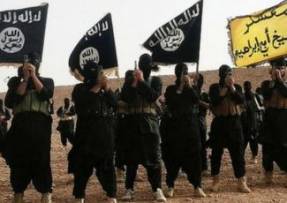
287x203xIslamic_State_IS_insurgents_Anbar_Province_Iraq1.jpg.pagespeed.ic.-peTL_37oH

The Jihad is a machine for generating atrocities.

A new horror is deployed. Then it becomes routine. The horror of one decade, such as suicide bombing, has to be made dirtier and uglier by using women and children, by targeting houses of worship and families, and then finally superseded by the horror of another decade, mass beheadings.

Terrorism is a shock tactic. It only works if you’re horrified by it. If you get bored of ISIS beheading its victims, it will bring out child beheaders. It will set men on fire. Then it will have children set men on fire.

Like an acrobat juggling at a telethon, it’s always looking for ways to top its last trick.

In a crowded market, each Jihadist group has to be ambitious about its atrocities. No matter what horrifying thing an Islamic group did last year or last decade, another group will find a way to top it.

The old group will become the lesser evil. The new group will become the greater evil.

“If Hitler invaded Hell,” Churchill said of the Nazi invasion of the USSR, “I would at least make a favourable reference to the Devil in the House of Commons.”

There are a lot of favorable references to the Jihadist devil in Foggy Bottom where the terrible terror groups of yesteryear turn out to be misunderstood moderates who can help us fight this year’s devil. Obama’s Countering Violent Extremism program is tweeting Al Qaeda criticisms of ISIS. Iran and its Hezbollah terrorists no longer show up on the list of terror threats. Instead they’re our new allies.

When Western governments embrace the “lesser evil” doctrine, they ally with terrorists who are not fundamentally any different than the terrorists they are fighting. When ISIS broke through into the media, multiple stories emphasized that it was more extreme than Al Qaeda (despite having once identified as Al Qaeda.) But is a terrorist group that flies planes full of civilians into buildings full of civilians more moderate than a sister group that chops off heads on television? Is ISIS’s sex slavery more extreme than Iran’s practice of raping girls sentenced to death so that they don’t die as virgins?

The distinction between one evil and another is insignificant compared to their overall evil. The search for the lesser evil is really a search for ways to exonerate evil.

The Jihad creates endless greater evils. Today’s greater evil is tomorrow’s lesser evil. If another Jihadist group rises out of Syria that commits worse atrocities than ISIS, will we start thinking of the Islamic State’s rapists and headchoppers as moderates? The behavior of our diplomats suggests that we will.

Experts used the rise of ISIS to urge us to build ties with everyone from Hamas to Hezbollah to the Taliban to head off ISIS in their territories. The new president of Afghanistan is proposing apologies to the Taliban while defining ISIS as beyond the pale. Obama has chosen to turn over Iraq and Syria to Iran and its terrorist groups to fight ISIS.

If the process continues, then the United States will end up allying with terrorist groups to fight ISIS. And all this will accomplish is to make ISIS stronger while morally corrupting and discrediting our own fight against Islamic terrorism.

And if ISIS loses, there will always be a Super-ISIS that will be even worse.

We had few options in WW2, but ISIS is not the Wermacht. We don’t need to frantically scramble to ally with anyone against it; especially when the distinctions between it and our newfound allies are vague.

The Syrian opposition, that we armed and almost fought a war for, consists of Jihadists, many of them allied with Al Qaeda. But the Syrian government which we are now allied with, turned the Iraq War into a nightmare by funneling the suicide bombers across the border that ISIS used to kill American soldiers.

ISIS may be officially at war with the Syrian government, but it’s also selling oil to it, and there have been accusations that there is a secret understanding between Assad and ISIS.

How unlikely is that? Almost as unlikely as a Hitler-Stalin pact.

The Communists and the Nazis were tactically intertwined, despite their official ideological enmities, because they shared many of the same enemies (moderate governments, the rest of Europe) and many of the same goals (seizing territory, radicalizing populations, shattering the European order).

Iran and Sunni terrorist groups, including Al Qaeda, cooperate based on similar premises. That was why Al Qaeda could pick up terror tips from Iranian terror groups to prep for September 11. Both Sunni and Shiite Islamic revolutionaries want to topple governments, conquer territory and radicalize populations. Despite their mutual enmity, they share bigger enemies, like America, and bigger goals, destroying the current map of the Middle East and remaking it along completely different lines.

The collapse of the Iraqi military that led to ISIS marching on Baghdad was caused by its Shiite officer corps inserted into place by a sectarian Shiite government. That government was not interested in maintaining the American fantasy of a multicultural democratic Iraq. It wanted to crush the Sunnis and Kurds through a partnership with Iran. The collapse of the Iraqi military endangered its survival, but fulfilled its overall goal of driving recruitment to Shiite militias in Iraq trained and commanded by Iran.

Obama’s avoidance of Iraqi entanglements and panic at the ISIS juggernaut led him to a deal with Iran. The deal effectively gives control of Iraq to its Shiite proxies. The sheiks of the Sunni Awakening were ignored when they came to Washington. The Kurds have trouble getting weapons. Instead they’re going to the Shiite militias. By using ISIS to create a crisis, Iraq’s Shiite leaders forced a US deal with Iran.

ISIS has killed a lot of Shiites, but for Iran taking over Iraq is a small price to pay for losing the pesky ‘not really Shiite’ Alawites of Syria. And it hasn’t actually lost them yet.

Iran’s ideal situation would be an ISIS Caliphate spread across parts of Syria and Iraq that would destabilize the Sunni sphere. Like the Hitler-Stalin pact, such an arrangement could end with the ISIS Hitler stabbing the Iranian Stalin in the back, but ISIS does not actually need to defeat Assad. It is not a nationalist group and doesn’t believe in nations. Its focus is on ruling Sunni territories.

Sunni nations have far more to worry about from ISIS than Iran does. Its advance challenges the bonds that hold their nations together. Its goal is the destruction of the Sunni countries and kingdoms.

That is also Iran’s goal.

Both the USSR and Nazi Germany described Poland as an illegitimate child of Versailles. Iran and the Sunni Islamists likewise view the countries of the Middle East as illegitimate children of Sykes-Picot with Israel standing in for Poland as the infuriating “foreign-created” entity ruled by a “subject” people.

ISIS and Iran want to tear down those old borders and replace them with different allegiances. The USSR and the Nazis elevated ideology and race over the nation state. Iran and ISIS elevate the Islamic religion over the nation state. It’s an appeal that can destroy the Sunni nations that block Iran’s path to power.

The trouble with the “lesser evil” doctrine is that the lesser evil is often allied with the greater evil. Hitler used Stalin to cut off any hope of support for Eastern Europe. Stalin then used Hitler to conquer Eastern Europe. While huge numbers of Russians died, Stalin got what he wanted. And that’s all he cared about.

Shiites are dying, but Iran is getting what it wants from ISIS.

Before we start saying favorable things about the devil, we might want to think about the hell we’re getting into.

Why ‘Operation: Decisive Storm’ is Iran’s worst nightmare

March 29, 2015

Why ‘Operation: Decisive Storm’ is Iran’s worst nightmare, Al ArabiyaMajid Rafizadeh, March 28, 2015

(Al Arabiya is Saudi owned. — DM)

[B]y the U.S. being so concentrated on a nuclear deal and President Obama being so focused on leaving behind a historic legacy regarding a nuclear deal with Iran, the unintended consequences of such an inefficient foreign policy are being ignored and overshadowed. Although the U.S. has military bases in the region, it has evidently chosen to ignore Iran’s military expansion.

********************

Often, scholars and politicians have made the argument that regional powers in the Middle East are opposed to a nuclear deal between Iran and the six world powers due to the nuclear technicalities of the deal or restoring relationships between Tehran and the U.S. Nevertheless, this premise fails to shed light on the underlying concerns, nuances and intricacies of such a nuclear deal as well as Iran’s multi-front role in the region.

The underlying regional concerns are not primarily linked to the potential reaching of a final nuclear deal with the Islamic Republic or easing of ties between the West and Tehran. At the end of the day, regional powers would welcome and be satisfied with a nuclear deal that can ratchet down regional tension, eliminate the possibility of the Islamic Republic to become a nuclear state, and prevent a nuclear arms race.

But what is most worrying is the expanding empire of the Islamic Republic across the Arab world from Beirut to Baghdad, and from Sanaa to Damascus, as the nuclear talks reach the final stages and as no political will exists among the world powers to cease Iran’s military expansion.

Establishing another proxy in Yemen

Iran’s Quds forces have long being linked to the Houthis. The Islamic Republic continues to fund and provide military support to the Houthis (by smuggling weapons such as AK-47s, surface-to-air missiles as well as rocket-propelled grenades) in order to establish another proxy in the Arab world.

Iran’s long-term strategic and geopolitical objectives in Yemen are clear. The Islamic Republic’s attempt to have a robust foothold near the border of Saudi Arabia, as well as in the Gulf Peninsula, will tip the balance of power in favor of Tehran.

By empowering the Houthis, Tehran would ensure that Saudi Arabia is experiencing grave national security concerns, the possibility of conflict spill-over, and internal instability. In addition, by influencing Yemeni politics through the Houthis, Iranian leaders can pressure Saudi Arabia to accept Iran’s political, strategic and economic dominance in Iraq, Syria, and Lebanon as well.

The latest advancement of the Houthis supported the interests of the Islamic Republic until recently. There was a need for robust action against Iran’s hegemonic ambitions. Nevertheless, the West was resistant to act.

From geopolitical, strategic and humanitarian perspective, the robust military action, Operation Decisive Storm, is a calculated and intelligent move to send a strong signal to the Islamic Republic that its interference in another Arab state will not be overlooked. In other words, Arab states do not have to wait for the West to act against Iran’s covert activities and support for Shiite loyalist-militias in the region.

The tightening grip over another Arab capital

As the nuclear talks between Britain, China, France, Russia and the United States – the five permanent members of the Security Council – plus Germany (P5+1) and the Islamic Republic appear to show progress towards a final agreement to curb Iran’s nuclear ambitions, the world powers (specifically the United States) have chosen to turn a blind eye on Iran’s military expansion in the Arab states, and particularly in Yemen.

Iran’s long term strategic and geopolitical agenda should not be overlooked. Iranian leaders’ hegemonic ambition is to consolidate and strengthen its grip on the Arab states, and to have control over Arab capitals from Beirut to Baghdad and from Sanaa to Damascus.

The Islamic Republic’s ambitions to expand its empire during the nuclear talks and regional insecurities are carried out through several platforms. Central figures, such as Quds Force commander General Qassem Soleimani, hardliners such as Ali Reza Zakani, Tehran’s representative in the Iranian parliament and a close figure to the Iranian supreme Leader Ayatollah Ali Khamenei, and the Supreme Leader himself, play a crucial role in fulfilling Iran’s regional hegemonic ambitions.

Iranian leaders are not even concerned about repercussions from boasting about their grip over Arab capitals. Zakani recently bragged about having control over Arab capitals, “Three Arab capitals have today ended up in the hands of Iran and belong to the Islamic Iranian revolution”. He added that Sanaa will soon be under the grip on the Islamic Republic as well. According to him, most of Yemen’s territories will soon be under the power of the Shiite group, the Houthis, supported by the Islamic Republic.

The second platform that the Islamic Republic utilizes is sponsoring, financing, equipping, training and advising loyalist and heterodox Shiite groups across the region. The number of these militia groups is on the rise and they operate as a pawn to serve the geopolitical, strategic, economic, ideological and national interests of the ruling clerics.

America’s lack of political willingness to act

As the Islamic Republic creates such Shiite groups across the region to “protect” Arab capitals, Tehran centralizes its power across the region. In addition, after the creation of new Shiite groups, the elimination of these proxies will not be a simple task, for they will be ingrained in the socio-political and socio-economic fabric of the society.

In addition, these loyalist militia groups are game changers in the region, tipping the balance of power further in favor of the Islamic Republic and its regional hegemonic ambitions.

The expansion of Iran’s military and loyalist-militia groups in the region transcends Tehran’s political ambitions. The ideological tenet of this expansion and of Tehran’s overall growing regional empire (under the banner of Popular Mobilization Forces: an umbrella institution of Shiite armed groups) are crucial facets to analyze.

More fundamentally, as the final nuclear deal approaches, and as Tehran witnesses the weakness of Washington and other powers when deciding to overlook Iran’s militaristic and imperialistic activities in the region, Tehran has become more emboldened and vocal when it comes to its military expansion.

Iranian leaders boast about their role in Arab states projecting Tehran as a savior for the Arab world. As Zakani stated, according to Iran’s Rasa new agency “had Hajj Qassem Soleimani not intervened in Iraq, Baghdad would have fallen, and the same applies to Syria; without the will of Iran, Syria would have fallen”.

Nevertheless, by the U.S. being so concentrated on a nuclear deal and President Obama being so focused on leaving behind a historic legacy regarding a nuclear deal with Iran, the unintended consequences of such an inefficient foreign policy are being ignored and overshadowed. Although the U.S. has military bases in the region, it has evidently chosen to ignore Iran’s military expansion.

The concerns of regional countries about the nuclear deal is not solely linked to the nuclear technicalities of the deal or Iran-West rapprochement, but are primarily related to Iran’s growing empire as well as the consequences of such a nuclear deal leading Tehran to apply more assertive and expansionist foreign policy in the region.

Regional robust actions such as Operation Decisive Storm are sometimes required in order to set limits to Iran’s hegemonic, imperialistic objectives, and interference in other Arab states’ affairs, as well as in order to prevent the destabilizing effects emanating from the growing militia rebels sponsored by the Islamic Republic.

The U.S. Is Providing Air Cover for Ethnic Cleansing in Iraq

March 29, 2015

The U.S. Is Providing Air Cover for Ethnic Cleansing in Iraq, Foreign Policy MagazineMichael Weiss, Michael Pregent, March 28, 2015

(Don’t worry! Be Happy! Obama is in charge so everything will come up roses for sure.

Just ask Obama, the all-wise, all-knowing. He will set it right, as soon as Iran uses the nukes she deserves. — DM)

464763530_iraq2michaelweiss

American warplanes have begun bombing the Islamic State-held Iraqi city of Tikrit in order to bail out the embattled, stalled ground campaign launched by Baghdad and Tehran two weeks ago. This operation, billed as “revenge” for the Islamic State (IS) massacre of 1,700 Shiite soldiers at Camp Speicher last June, was launched without any consultation with Washington and was meant to be over by now, three weeks after much triumphalism by the Iraqi government about how swiftly the terrorist redoubt in Saddam Hussein’s hometown was going to be retaken.

U.S. officials have variously estimated that either 23,000 or 30,000 “pro-government” forces were marshaled for the job, of which only slender minority were actual Iraqi soldiers. The rest consisted of a consortium of Shiite militia groups operating under the banner of Hashd al-Shaabi, or the Population Mobilization Units (PMU), which was assembled in answer to afatwah issued by Iraq’s revered Shiite cleric Ayatollah Ali Sistani in June 2014 following ISIS’s blitzkrieg through northern Iraq. To give you a sense of the force disparity, the PMUs are said to command 120,000 fighters, whereas the Iraqi Army has only got 48,000 troops.

Against this impressive array of paramilitaries, a mere 400 to 1,000 IS fighters have managed to hold their ground in Tikrit, driving major combat operations to a halt. This is because the Islamic State is resorting to exactly the kinds of lethal insurgency tactics which al Qaeda in Iraq (its earlier incarnation) used against the more professional and better-equipped U.S. forces. BuzzFeed’s Mike Giglio has ably documented the extent to which IS has relied upon improvised explosive devices, and just how sophisticated these have been. Even skilled explosive ordnance disposal teams — many guided by Iranian specialists — are being ripped apart by what one termed the “hidden enemy” in Tikrit.

Because IS controls hundreds of square miles of terrain in Iraq, it has an unknown number of bomb manufacturing plants, and because it knows the terrain so well, it’s been able to booby-trap houses and roads. Even Shiite prayer beads left lying on the ground are thought to be rigged to explosives. One Kurdish official told Giglio that the Kurdish Peshmerga fighters alone have “defused or detonated more than 6,000 IEDs along their 650-mile front with ISIS since the war began in August.”

The toll this has taken on the militias is extraordinary. Cemetery workers in Najaf told the Washington Post that as many as 60 corpses are arriving per day. Former Defense Intelligence Agency officer Derek Harvey tweeted last week that an Iraqi Shiite source told him the number of militia war dead from the Tikrit offensive so far may be as high as 6,000. So the militias’ triumphalism, much of it no doubt manufactured by Iran’s propaganda machine, proved to be misplaced. Jeffrey White, another former DIA analyst now at the Washington Institute for Near East Policy, notes “there’s a failure of will on the part of the militias and government forces. They just didn’t have the sufficient desire and determination to take the fight forward given the casualties they’ve been sustaining.”

So now, the same Iraqi government which earlier dismissed the need for U.S. airpower had to put in an eleventh-hour request for it, lest an easy victory descend into embarrassing folly. But the past few months ought to have shown that even indirectly relying on Iranian agents to conduct a credible ground war against Sunni extremists was always a lousy idea for three reasons: those agents hate the United States and have threatened to attack its interest in Iraq; they’re guilty of IS-style atrocities themselves; and they’re lousy at fighting an entrenched jihadist insurgency.

Chairman of the Joint Chiefs Martin Dempsey told Congress on March 3: “What we are watching carefully is whether the militias — they call themselves the popular mobilization forces — whether when they recapture lost territory, whether they engage in acts of retribution and ethnic cleansing.” He needn’t watch any longer. They are engaging in exactly that.

The crimes of war

On March 10, the United Nations Office of the High Commissioner for Human Rights (OHCHR) released a comprehensive study of human rights violations committed by both IS and pro-Iraqi forces. The Islamic State, OHCHR concluded, has likely committed genocide against the Yazidis, a ethno-religious minority in Iraq, in a catalogue of war crimes and crimes against humanity that include gang-rape and sexual slavery. But OHCHR’s language is equally unambiguous in condemning the other side on the battlefield: “Throughout the summer of 2014,” the report noted, “[PMUs], other volunteers and [Shiite] militia moved from their southern heartlands towards [Islamic State]-controlled areas in central and northern Iraq. While their military campaign against the group gained ground, the militias seem to operate with total impunity, leaving a trail of death and destruction in their wake.” [Italics added.]

Sunni villages in Amerli and Suleiman Bek, in the Salah ad-Din province, have been looted or destroyed by militiamen operating on the specious assumption that all inhabitants once ruled by IS must be IS sympathizers or collaborators. Human Rights Watch has also lately discovered that the “liberation” of Amerli last October — another PMU/Iranian-led endeavor, only this one abetted by U.S. airstrikes in the early stages — was characterized by wide-scale abuses including the looting and burning of homes and business of Sunni residents of villages surrounding Amerli. The apparent aim was ethnic cleansing. Human Rights Watch concluded, from witness accounts, that “building destruction in at least 47 predominantly Sunni villages was methodical and driven by revenge and intended to alter the demographic composition of Iraq’s traditionally diverse provinces of Salah al-Din and Kirkuk.”

Sunnis weren’t the only demographic subjected to collective punishment. A 21-year-old Shiite Turkmen from the Yengija village was “burned with cigarettes and tied to a ceiling fan” by militants of Saraya Tala’a al-Khorasani, another Iran-backed militia. He told Human Rights Watch: “They kept saying, ‘You are ISIS,’ and I kept denying it. They were beating me randomly on my face, head, shoulders using water pipes and the butts of their weapons…. They went to have lunch and then came back and beat us for an hour and half. Later that night they asked me if I was Shia or Sunni. I told them I was Shia Turkoman and they ordered me to prove it by praying the Shia way…. They kept me for nine days.”

This account tracks with a mountain of social media-propagated video and photographic evidence showing that Iraq’s Shiite militias are behaving rather like the Islamic State — beheading and torturing people they assail as quislings, and then exhibiting these atrocities as a means of recruitment. More worrying, a six-month investigation by ABC News has found that U.S.-trained Iraqi Security Force personnel are also guilty of anti-Sunni pogroms, with officers from Iraq’s Special Forces shown in one video accusing an unarmed teenaged boy of being a shooter (a charge the boy denies) before opening fire on him.

Looking the other way

The Obama administration’s counterterrorism-driven policy for the Middle East, and a quietly pursued diplomatic reconciliation with Iran, has resulted in America’s diminishment of grave war crimes committed by Iran’s clients and proxies, and the problem is hardly just confined to Iraq. In Syria, for instance, the National Defense Force, a conglomerate of militias trained and equipped by Iran’s Revolutionary Guards Corps-Quds Force (IRGC) — a U.S.-designated terrorist entity — has been accused by the Syrian Network for Human Rights and the Euro-Mid Observer for Human Rights, of “[burning] at least 81 people to death, including 46 civilians; 18 children, 7 women, and 35 of the armed opposition fighters,” along with other pro-Assad forces. The State Department has offered condolences to Iran’s President Hasan Rouhani on the death of his mother; to date, it has not said a word about the immolation of these Syrians at the hands of a Quds Force-built guerrilla army.

All of which raises the question: Does the United States have a “common interest,” as Secretary of State John Kerry phrased it, with a regime in Tehran whose proxies are currently burning people alive in their houses, playing soccer with severed human heads, and ethnically cleansing and razing whole villages to the ground?

It really ought to surprise no one in the U.S. government that what amounts to an Iranian occupation of the Levant and Mesopotamia would lead to an increase in jihadist bloodletting. Dempsey has less of an excuse than most. A four-star general, he formerly commanded the First Armored Division in Baghdad, which in 2004 was the unit redirected, as it was about to go home, to fight the Shiite militias who had taken over Karbala and other southern cities, so he would have seen the precursor to the PMUs in action. Yet somehow managed to brief legislators that the Islamic Republic’s role in Iraq might yet prove “positive” — provided, that is, it didn’t lead to an uptick in sectarianism. This is like arguing that death wouldn’t be so bad if it didn’t result in being dead. It did not take much, however, for the scales to fall from Dempsey’s eyes. He took a helicopter tour of Baghdad last week and noticedthe “plethora of flags, only one of which happens to be the Iraqi flag,” The rest, he told reporters to evident dismay, belonged to Shiite militias. (He might have also added that posters of Ayatollah Ruhollah Khomeini and Ayatollah Ali Khamenei are now omnipresent in the Iraqi capital where ones of Saddam Hussein used to be.)

Everyone from Gen. David Petraeus to Kurdish intelligence chief Masrour Barzani is acknowledging the obvious: that Shiite militias pose more of a long-term threat to the stability of Iraq than does the Islamic State. Even Ayatollah Sistani has made noises lately about the rampant abuses committed by the “volunteers” he assembled through a religious edict.

While it is true that most Iraqis do not wish to live in a state of vassalage to Iran, it also true that most of the “units” in the PMUs are well-known subsidiaries of the Quds Force. “The indoctrination they’ve been getting is anti-American, Khomeinist ideology,” said Phillip Smyth, an expert on Shiite militias and author of a comprehensive survey of them put out by the Washington Institute for Near East Policy. “Sectarianism has been promoted whether we like it or not.”

According to Chris Harmer, a former U.S. Naval officer and now an analyst at the Institute for the Study of War, there really is no dressing up who the supposed “good guys” in Iraq now are. “They killed hundreds of Americans during the war,” Harmer said. “These are not ‘affiliated’ organizations — they are same guys, the same organizations. And can you find me anybody stupid enough to say that what Iran wants is a stable, unified, secular, non-sectarian Iraq?”

The enemies of our enemy are our enemy

Indeed, quite apart from having American blood on their hands and American interests furthest from their mind, Shiite militias — following Tehran’s favorite playbook — have also taken to conspiratorially blaming the United States for inventing and militarily supporting the Islamic State, while decrying any American anti-IS involvement in Iraq. Take, for instance, the Badr Corps, headed by Hadi al-Amiri, the commander of Hashd al-Shaabi, and a man infamous for “using a power drill to pierce the skulls of his adversaries,” or so the State Department found in a 2009 cable to Washington, which also alleged that al-Amiri “may have personally ordered attacks on up to 2,000 Sunnis.” (Despite this grim record, al-Amiri was invited to the Obama White House in 2011 when he was Iraq’s transportation minister.)

Lately al-Amiri taken to both boasting that Stuart Jones, the current U.S. ambassador to Iraq, personally offered him close air support, whilereprehending those Iraqis who “kiss the hands of the Americans and get nothing in return.” But when it comes to Tehran, he’s full of praise for the “unconditional” support his country has received. Now al-Amiri has found a more modest tongue. He told the Guardian’s Martin Chulov on March 26: “We did not ask for [U.S. airstrikes on Tikrit] and we have no direct contact with the Americans. From what I understand, Prime Minister Haidar al-Abadi made the request. However, we respect his decision.”

Kataeb Hezbollah may be the only Iraqi Shiite militia in Iraq to be designated a terrorist entity by the United States, but that hasn’t stopped it from driving around in Abrams tanks, Humvees, armored personnel carriers, MRAPs, and toting M4 and M16 rifles — all the accidental largesse of Uncle Sam, which has sent $1 billion in military equipment to Baghdad, but has no oversight as to which actors, foreign or domestic, ultimately receive what. An abundance of U.S. weapons hasn’t dissuaded Kataeb Hezbollah from openly inciting violence against the American-led coalition to destroy the Islamic State.

“Recently we had them accusing the United States of supplying [IS] via helicopters,” said Smyth. “Kataeb Hezbollah then came out with a bullshit article claiming that they shot down a British cargo plane carrying arms to [IS]. They also said they were going to move antiaircraft missile batteries in Anbar and north of Baghdad to counter U.S. airdrops to [IS]. Whenever they sense too much of a U.S. influence in Iraq, they start to threaten American soldiers.” Kataeb Hezbollah, it bears mentioning, is headed by Abu Mahdi al-Muhandis, an Iranian spy who is widely believed to have planned the bombings of both the U.S. and French embassies in Kuwait in the 1980s. There’s even a photograph of him holding up a Kuwaiti newspaper fingering him for this act of international terrorism. Kataeb Hezbollah has also been caught on video playing bongos with severed human heads.

Another prominent Shiite militia is Asaib Ahl al-Haq, or the League of the Righteous, which in 2007 set an ambush which killed 5 U.S. servicemen in Karbala. It, too, now also happily motors around Iraq in U.S. armored vehicles, some of them thought to have been stolen from the U.S. consulate in Basra. One unnamed U.S. official told Al Jazeera that Asaib was most recently responsible for burning down homes in Albu Ajil, a village near Tikrit in retaliation for massacres carried out by the Islamic State. It has also been implicated in the abduction and murder of Sheik Qassem Sweidan al-Janabi, one of the Sunni tribal leaders who worked cheek-by-jowl with U.S. forces in fighting al Qaeda in Iraq during the so-called Awakening period.

Remarkably, the demagogic Shiite cleric Muqtada al-Sadr, once the bane of U.S. forces in Baghdad, condemned al-Janabi’s murder — in language more severe than anything contrived by the U.S. State Department’s Marie Harf or Jennifer Psaki. “Did not I tell you that Iraq will suffer from the brazen militias?” al-Sadr was quoted as saying. “Did I tell you that the army must handle the reins?” Al-Sadr demanded that Shiite head-loppers be punished and actually backed up his rhetoric with action, suspending the participation of his own al-Salam Brigades and al-Yaom ak-Mawood military in ongoing operations. (He unsuspended these militias a week ago to help with the battle in Tikrit, but so far, because of the frozen nature of the ground campaign, none of the Sadrists have seen any real action.)

Assad’s friends in Iraq want to kill Americans

The Basij-ization of Iraq of was both inevitable, given the defunct and corrupted state of the U.S.-trained military, and Iran’s outsize influence in Baghdad even before ISIS conquered a third of the country. “When the Iraqi Army was destroyed last July, this was a gift to Iran to build up these militias,” Gen. Najim Jibouri, the former mayor and police chief of Tal Afar, a crucial Iraqi border town now held by the Islamic State, said in a recent interview. “A few days ago, Khaled al-Obaidi, Iraq’s minister of defense, went to Tikrit, but the militias wouldn’t allow him to enter. He had to stay in Samarra.”

All of which makes risible U.S. officials’ continued emphasis that there is no direct American coordination with Iran or its proxies. Gen. James Terry, the U.S. commander of the coalition, claims that the “ongoing Iraqi and coalition air strikes are setting the conditions for offensive action to be conducted by Iraqi forces currently surrounding Tikrit. Iraqi security forces supported by the coalition will continue to gain territory.”

One of the authors personally witnessed in Baghdad how the IRGC targets make their way into the U.S. targeting queue. Shiite militia commanders pass Quds Force-selected targets to Badr-affiliated Iraqi Security Force commanders on the ground (many of whom are, in fact, agents of the militias), who then pass them on as legitimate targets to Iraq’s Defense Ministry representatives in the Joint Operations Centers where U.S. advisors then put those targets into a queue for aerial sorties. This is the pattern of target development that U.S. forces tried to stop during the American occupation of Iraq — when there was actually a military strategy for countering Iranian influence in the country.

But this nefarious chain of putting intelligence into action — and making the United States do the dirty work — has been resurrected. Soleimani knows it, al-Muhandis knows it, al-Amiri and his Badr agents in the Iraq Security Forces know it — so, too, should the Pentagon, whatever claims to the contrary it puts out. Iranian intelligence operatives are now America’s eyes on the ground.

What does this mean for Tikrit? The Islamic State will no doubt be flushed from the city or bombed to death eventually, but it will be a tactical loss for IS, not a strategic one. They’ll still have Mosul and most of Anbar province. The Institute for the Study of War’s Chris Harmer notes that this will have a direct bearing on bigger fights ahead. “These militiamen will say, ‘This is how badly we got beat up in Tikrit, who wants to volunteer to storm that castle in Mosul?’”

Even if Iran’s proxies do end up massing on Mosul, they’ll remain the ultimate occupying force in post-Islamic State Tikrit. The Washington Post’s Loveday Morris tweeted on March 26 that Kataeb Hezbollah and Asaib Ahl al-Haq have now “suspended” their operations in the city, no doubt out of a desire to not appear to be coordinating with the hated United States. But once the Pentagon declares victory, the militias will no doubt try to hijack it and move right in to serve as the occupying force in Tikrit.

Despite reports on Thursday that three Shiite militias were “withdrawing” from operations in objection to U.S. airstrikes, now the news has come that they’ve called off their boycott, largely owing to another edict by Ayatollah Sistani. Even an alleged accidental hit by U.S. warplanes on Asaib Ahl al-Haq barely raised that militia’s pique, according to the New York Times. A Badr Corps representative also told the newspaper, “We haven’t retreated from our positions near Tikrit.” Still, others have indicated that they’re not going to let a good turn go unpunished and intend to strike at American soldiers in Iraq.

Akram al-Kabi, the leader of the Al Nujabaa Brigade, which has also fought with the Assad regime in Syria, has said: “We are staying in Tikrit, we are not leaving and we are going to target the American led coalition in Tikrit and their creation, ISIS.” Today, one of al-Kabi’s spokesmen reiterated thatthreat. Al-Kabi was once a deputy in Asaib Ahl al-Haq and was associatedwith that militia’s attacks against U.S. and British troops in 2008-2011, including an incident in which British contractors were abducted from the Iraqi Finance Ministry and later murdered. CENTCOM commander Gen. Lloyd Austin’s nevertheless briefed the Senate on Thursday with a straight face that “[c]urrently, there are no [Shiite] militia and as reported by the Iraqis today, no [PMU] in that area as well.” This is either propaganda or sheer ignorance about what is transpiring in Austin’s theatre of operations. The Guardian’s Chulov, who just returned from Tikrit, confirmed to one of the authors, in fact, that both al-Amiri and al-Muhandis were indeed in the center of the city on March 26.

Recrimination and resentment by these militias is no light matter. According to Politico, U.S. military planners are now worried that any decision to engage or isolate the Assad regime in Syria will encourage Iran or its cut-outs to attack the some 3,000 U.S. military trainers currently stationed in Iraq. It’s hard to tell where genuine concern bleeds into further excuse-making on the part of an Obama administration that has shown no intention of engaging or isolating the Assad regime, which is responsible for the vast majority of war dead and war crimes in Syria. Regardless, the result is the same: Washington is now behaving as if it needs Tehran’s permission to pursue its own anti-IS strategy, if it can even be called that.

You call this a plan?

“What strategy?” asks Chris Harmer. “We have only consequentially intervened in one part in Syria — Kobani. What’s the plan for countering [the Islamic State] there? Training 5,000 Syrian rebels per year. That is laughable when you consider the 200,000 dead from four years of attritional warfare, the four million refugees, and slow-motion destruction of the country. Five thousand doesn’t even get you into the ballgame. You have to have a significant portion of the population on your side. Moderate Syrians should be on our side. They’re saying the Americans are unreliable, they’re not on our side. This is why the moderate opposition has collapsed and the beneficiaries of that collapse have been al Qaeda, the Islamic State and Assad.”

The loss of confidence in the United States by moderate Sunnis in Syria is mirrored in Iraq. New polling data has confirmed that most Mosulawis, for instance, welcomed IS back into Iraq’s second city not out of ideological sympathy for the terror group, but out of deep-seated political grievances with the Iraqi government. Yet the Obama administration is doing next to nothing to redress these grievances. The Anbar tribal leader Sheikh Ahmed Abu Risha, whose charismatic brother was notoriously gunned down by al Qaeda just days after meeting with President George W. Bush in Baghdad in 2007, simply could not get a meeting with any significant official in White House during a 10-day tour of Washington last February. Vice President Joe Biden was good enough to drop in on a lesser confab, mainly to smile and pat them on the head and tell them to work constructively with the new government of Prime Minister Haider al-Abadi.

“Many of the people in Mosul will stand with [the Islamic State] if Shiite militias invade,” said Gen. Najim Jibouri. “Eighty percent of the population is does not like [IS], but if the militias are involved — 80 percent will stand very strong with [IS]. I told the Americans before, the image now is not like it was in 2003. Now the Sunni people want American forces. They will throw the flowers on them now, because the battle now is not between them and the United States and [IS], it’s between the Sunnis and Iran.” Yet far too many Sunnis still see the United States as aligned with Iran against them, Jibouri said.

Whether or not a nuclear agreement with Iran gets signed in Lausanne this weekend, whether or not Obama inaugurates a perestroika with Tehran as a result, the unshakable truth is that most of Iraq looks in the long term to remain a satrapy of the mullahs. This will only lead to further sectarian violence and civil war. “I met with almost two dozen national leaders in Iraq last week,” Ali Khedery, the longest consecutively serving U.S. diplomat in the Green Zone, told us. “I heard from Sunni, Shiite, Kurdish officials and virtually all of them told me that the real prime minster of the country is Qasem Soleimani and his deputy is Abu Mahdi al-Muhandis.”

US continues to insist airstrikes support Iraqi forces, not Shiite militias

March 26, 2015

US continues to insist airstrikes support Iraqi forces, not Shiite militias, Long War Journal, Bill Roggio, March 26, 2015

(Perhaps it’s just Obama’s unrequited love for Iran and his need to get any nuke deal that Iran will give him. — DM)

US government officials and top military commanders are so eager to destroy the Islamic State that they are crawling into bed with the flip side of the jihadist coin: the fanatical Shiite militias backed by Iran that are terrorist organizations and ultimate destabilizers of Iraq in their own right.

*****************

Combined Joint Task Force-Operation Inherent Resolve (CJTF-OIR), the US-led Coalition that is launching airstrikes against the Islamic State in Iraq and Syria, announced that it conducted 17 strikes against Islamic State fighters entrenched in Tikrit. US commanders continue to insist that they are supporting Iraqi security forces, and not the Iranian-backed Shiite militias who make up more than two-thirds of the fighting force in the Tikrit offensive.

The 17 airstrikes targeted “an ISIL [Islamic State] building, two ISIL bridges, three ISIL checkpoints, two ISIL staging areas, two ISIL berms, an ISIL roadblock and an ISIL controlled command and control facility,” according to a press release. The US military continues to refer to Islamic State as ISIL, the outdated acronym for the Islamic State of Iraq and the Levant (Syria).

The airstrikes launched “in support of Iraqi Security Forces in Tikrit commenced last night after a request from the Government of Iraq,” CJTF-OIR stated. The 17 targets hit in the last 24 hours were “approved by the Iraqi Ministry of Defense.”

US military officials have previously said that support for the Tikrit offensive was being withheld because of the massive presence of the Iranian-backed militias and Iranian military units and advisers.

Despite this previous acknowledgment, Lieutenant General James Terry, the commander of CJTF-OIR, skips over the presence of Shiite militias in the Tikrit operation [emphasis mine] in the latest statement.

“The ongoing Iraqi and Coalition air strikes are setting the conditions for offensive action to be conducted by Iraqi forces currently surrounding Tikrit,” said Lt. Gen. James Terry. “Iraqi Security Forcessupported by the Coalition will continue to gain territory from Daesh [a vaguely pejorative Arabic acronym for the Islamic State].” [Emphasis in original — DM]

Pretending that US airpower isn’t supporting the Iranian-backed Shiite militias obviously doesn’t make it so.

US military officials’ denials that they are serving as the air force for Iranian-backed Shiite militias that are responsible for killing hundreds of American soldiers before US forces withdrew from Iraq in December 2011 becomes even more perplexing once you understand that many of the top leaders of these militias have been designated by the US as terrorists. And one of these militias (Hezbollah Brigades) is listed as a Foreign Terrorist Organization. [See LWJ report, US begins airstrikes against Islamic State in Tikrit, supports Shiite militias.]

US government officials and top military commanders are so eager to destroy the Islamic State that they are crawling into bed with the flip side of the jihadist coin: the fanatical Shiite militias backed by Iran that are terrorist organizations and ultimate destabilizers of Iraq in their own right.

Gulf states, abandoned against Iran

March 26, 2015

Gulf states, abandoned against Iran, Israel Hayom, Dr. Reuven Berko, March 26, 2015

(At least the Gulf States are awakening. That’s a good start. — DM)

The West’s weakness and apathy toward Iran and the perilous predicament it has created in Yemen again prove the flimsy nature of those security and defense treaties. This lesson justifies Israel’s approach, which is based on the ability to defend itself on its own. In the meantime, following the Houthi takeover, Saudi Arabia has decided to deploy a massive military force along the border with Yemen. The first shot is in the chamber and the finger is already on the trigger.

**********************

Shiite Iran’s increasing involvement in Iraq, Syria and Lebanon, while exploiting the Shiite elements of the population in those target countries, is causing a great deal of concern among leaders of Arab Gulf states. The trauma of Iran’s attempt to topple the regime in Bahrain, where most of the population is Shiite, under the claim that Bahrain is Iran’s 14th province, is still fresh in their minds. The Iranian goal of using Bahrain as a bridgehead from which to spread across the Arabian Peninsula is still in play, despite Iran’s first effort being blocked in March 2011, when some 1,000 Saudi troops and 500 policemen from the United Arab Emirates entered Bahrain to save its regime.

Ever since Saddam Hussein’s sudden invasion of Kuwait, the Gulf states — Saudi Arabia, Oman, Kuwait, Qatar, Bahrain and the UAE — realized the need for a type of “Al Jazeera defense force” to pose a strategic deterrent against Iranian machinations on the peninsula. Their effort has not been a success. Through its latest intervention, via the mobilization of Shiite Houthi tribesmen to capture key targets in Yemen, including the primary port cities and airports in the south of the country leading to control of the Gulf of Aden, Iran is clearly reiterating its ambition of acquiring the straits of Hormuz and Bab el-Mandeb, which will allow Iran to paralyze the Red Sea and Persian Gulf waterways.

Arab stagnation combined with the West turning a blind eye to this Iranian aggression, alongside the willingness of Western powers to sign a deal allowing Iran to acquire a nuclear bomb, is causing sleepless nights among those Arab leaders who are again pushing the need to upgrade the capabilities of the “Al Jazeera defense force.”

Considering the lack of trust in the West and Yemen’s expected fall to the Houthis, the leaders of the Arab Gulf states are again working, feverishly, to build the military capability to curb Iran. As early as December 2009, with the goal of protecting the integrity of Arab territories situated in the Arabian Peninsula, the Arab League decided to establish a massive, unified, heavily funded, rapid-reaction military force comprising hundreds of thousands of troops and naval capabilities, capable of posing a deterrent and striking a decisive blow on the battlefield. Morocco and Jordan were also added to this coalition, as strategic depth, but the initiative ultimately failed to gain traction.

The recent gathering of these partner states in Riyadh gave birth to a multitude of agreements, including support and aid to Egypt, which is considered the strongest true military force in the Sunni Arab Middle East. Additionally, Saudi Arabia has lobbied for Pakistani support in the aftermath of Yemen’s inevitable fall, or worse, when Iran completes its nuclearization with American consent.

As the West falls victim to the fraud peddled by Mohammad Javad Zarif, Iran’s foreign minister, the Arabs (and Israel) have no illusions about Iran’s true intentions. Even as the Bahrain crisis was unfolding, the threats issued by many of Iran’s highest-ranking defense establishment officials — whether in the regime, the military or the Shura (parliament) — reflected the hostile nature of Iran’s foreign policy, and removed any doubt in the minds of neighboring Arab leaders.

Many of the Gulf states with signed security and defense pacts with the West, namely the United States, are currently feeling abandoned. Ever since the events in Bahrain, and to a greater degree following the recent developments in Yemen, the realization is growing in the Gulf that Iran’s aggressive goals and ambitions regarding the Arabian Peninsula have not changed and that they must take care of themselves.

The Arabs have recently come to the realization that not only will they not receive aid from the West in their hour of need, but that the West is forging a deal with Iran at their expense — a deal that will pose the greatest threat to their security. The situation that has been created provides an opportunity for Israel, even if clandestinely, to play a part in the geostrategic plans being formulated by states in the region, and which could help lead to an agreeable deal on the Palestinian issue — which is rather secondary in the current pan-Arab context.

The West’s weakness and apathy toward Iran and the perilous predicament it has created in Yemen again prove the flimsy nature of those security and defense treaties. This lesson justifies Israel’s approach, which is based on the ability to defend itself on its own. In the meantime, following the Houthi takeover, Saudi Arabia has decided to deploy a massive military force along the border with Yemen. The first shot is in the chamber and the finger is already on the trigger.

The Kobani Precedent

March 25, 2015

The Kobani Precedent, [Bary] Rubin Center, March 25, 2015

(Whose side are “we” on in Iraq? Not the Kurds. Why not? Do “we” prefer an Iranian theocracy with nukes?– DM)

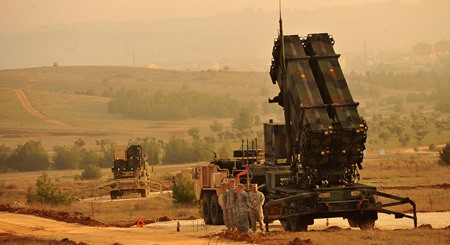
???????????????????U.S. Service members stand by a Patriot missile battery in Gaziantep, Turkey, Feb. 4, 2013, during a visit from U.S. Deputy Secretary of Defense Ashton B. Carter, not shown. U.S. and NATO Patriot missile batteries and personnel deployed to Turkey in support of NATO’s commitment to defending Turkey’s security during a period of regional instability. (DoD photo by Glenn Fawcett)

Unlike in Syria . . . in Iraq the US relates to the official government, mistakenly, as an ally.  This is leading to a potentially disastrous situation  whereby US air power is currently partnering with Iran-supported Shia militias against the Islamic State.

The most powerful of these militias have a presence in the government of Iraq. But they do not act under the orders of the elected Baghdad government, but rather in coordination with their sponsors in the Qods Force of the Iranian Revolutionary Guards Corps.

The Kurds, because of the existence among them of a secular, pro-western nationalist politics with real popular appeal, have unsurprisingly emerged as the only reliable partner.    On both the Shia and the Sunni sides, the strongest and prevailing forces are anti-western.

This reality is denied both by advocates for rapprochement with Iran, and by wishful-thinking supporters of the Syrian rebellion.  But it remains so.

*****************

Recently,  I attempted to undertake a reporting trip into the Kurdish Kobani enclave in northern Syria.  It would not have been my first visit, neither to Syria nor to Kobani.  For the first time, however, I found myself unable to enter.  Instead, I spent a frustrating but, as it turns out, instructive four days waiting in the border town of Suruc in south-east Turkey before running out of time and going home.

The episode was instructive because of what it indicated regarding the extent to which Kurdish control in the enclaves established in mid 2012 is now a fact acknowledged by all neighboring players, including the enemies of the Kurds.  This in itself has larger lessons regarding US and western policy in Syria and Iraq.

But I am getting ahead of myself.  First, let me complete the account of the episode on the border.    My intention had been to enter Kobani ‘illegally’ with the help of the Kurdish YPG and local smugglers.  This sounds more exciting than it is.    I have entered Syria in a similar way half a dozen times over the last two years, to the extent that it has become a not very pleasant but mundane procedure. This time, however, something was different.  I was placed in a local center with a number of other westerners waiting to make the trip. Then, it seemed, we were forgotten.

The westerners themselves were  an interesting bunch, whose varied presence was an indication of the curious pattern by which the Syrian Kurdish cause has entered public awareness in the west.

There was a group of European radical leftists, mainly Italians, who had come after being inspired by stories of the ‘Rojava revolution.’  A little noted element of the control by the Syrian franchise of the PKK of de facto sovereign areas of Syria has been the interest that this has generated in the circles of the western radical left.  These circles are ever on the lookout for something which allows their politics to encounter reality, in a way that does not bring immediate and obvious disaster.  As of now, ‘Rojava,’ given the leftist credentials of the PKK, is playing this role.  So the Europeans in question  wanted to ‘contribute’ to what they called the ‘revolution.’

Unfortunately, their preferred mode of support was leading to a situation of complete mutual bewilderment between themselves and the local Kurds.   Offered military training by their hosts, the radical leftists demurred.  They would not hold a gun for Rojava before they had seen it and been persuaded that it did indeed represent the peoples’ revolution that they hoped for.

Instead, they had a plan for the rebuilding of Kobani along sustainable and environmentally friendly lines, using natural materials  In addition, the health crisis and shortage of medicines in the devastated enclave led the radicals to believe that this might offer an appropriate context for popularizing various items of alternative and naturopathic medicine about which they themselves were enthusiastic.  (I’m not making any of this up).

All this had elicited the predictable reaction from the Kurds, who were trying to manage a humanitarian disaster and a determined attempt by murderous jihadis to destroy  them.  ‘Perhaps you could do the military training first and then we could talk about the other stuff?’ suggested Fawzia, the nice and helpful representative of the PYD who was responsible for us.  This led to further impassioned and theatrical responses from the Italians.

Apart from this crowd, there was a seasoned Chilean war reporter who looked on the leftists with impatience.  He was looking to get down to the frontlines south of Kobani, where the YPG was trying to cut the road from Raqqa to Aleppo at an important point close to the Euphrates.

Also, there was a polite and friendly lone American, a Baptist Christian, who had come to volunteer his services to the YPG.  That was us.

But as the days passed, it became clear that none of us appeared to be getting anywhere near Kobani any time soon.

The reasons given for the delay were plentiful, and unconvincing.  ‘It is the weather,’ Fawzia would say vaguely, ‘too much mud.’  But the presence of mud on the border in February was hardly a new development, so this couldn’t be the reason.

Finally, frustrated at the lack of information, I called a PKK friend based in Europe and asked for his help in finding out why we weren’t  moving.  He got back to me a little later.  ‘It seems the Turkish army is all over the border, more than usual. That’s the reason,’ he told me.

This was more plausible, if disappointing.  After four days on the border, I was out of time and set off back for Gaziantep and then home.  The Italians went to Diyarbakir to take part in a demonstration.  The Chilean and the American volunteer stayed and waited.

When I got back to Jerusalem, all rapidly became clear.  News reports were coming in about a large operation conducted by the Turkish army through Kobani and into Syria.  The operation involved the evacuation of the Turkish garrison at the tomb of Suleiman Shah, south of the enclave.  The American volunteer sent me a picture of the Turkish tanks on tank transporters driving though Suruc at the conclusion of the operation.

This operation was astonishing on a number of levels.

Despite stern Turkish denials, it could only have been carried out on the basis of full cooperation between the Turkish armed forces and the Kurdish fighters of the YPG in Kobani.  Obviously, any unauthorized entry of Turkish troops into the Kurdish canton would have meant an armed battle.

During the fight for Kobani last year, the Turkish government was very clearly quite content for the enclave to fall.  The Turkish army waited on the border, as the prospect of a generalized slaughter of the Kurds in Kobani came close to realization.

But of course, the slaughter didn’t happen.  In the end, the partnering of US air power with the competent and determined forces of the YPG on the ground delivered the first real defeat to the forces of the Islamic State in Syria.

This effective partnering has continued, and has now become the main military element in northern Syria in the battle against IS.

The combination of the YPG and the USAF is now nudging up to a second strategic achievement against the jihadis – namely, the cutting of the road from Tel Hamis to the town of al-Houl on the Iraqi border.   This road forms one of the main transport arteries linking the Islamic State’s conquests in Iraq to its heartland in the Syrian province of Raqqa.  If the links are cut, the prospect opens for the splitting of the Islamic State into a series of dis-connected enclaves.

The YPG-US partnership is particularly noteworthy, given that the YPG is neither more nor less than the Syrian representative of the PKK.  The latter, meanwhile, is a veteran presence on the US and EU lists of terror organizations.  Despite a faltering peace process, the PKK remains in conflict with Turkey, a member of NATO.

But the reality of the Kurdish-US alliance in northern Syria has clearly now been accepted by the Turks as an unarguable fait accompli, to the extent that they are now evidently willing to work together with the armed Syrian Kurds, where their interests require it.

It is an astonishing turnabout in the fortunes of the Kurds of Syria, who before 2011 constituted one of the region’s most brutally oppressed, and most forgotten minority populations.

This raises the question as to why this reversal of fortune has taken place.

Why is the YPG the chosen partner of the Americans in northern Syria, just as the Kurdish Pesh Merga further east is one of the preferred partners on the ground in Iraq?

The answer to this is clear, but not encouraging.  It is because in both countries, the only reliable, pro-western and militarily effective element on the ground is that of the Kurds.

Consider:  in northern Syria, other than the forces of the Islamic State, there are three other elements of real military and political import.  These are the forces of the Assad regime, the al-Qaeda affiliated Jabhat al-Nusra and the YPG.

In addition, there are a bewildering variety of disparate rebel battalions, with loyalties ranging from Salafi Islamism to Muslim Brotherhood style Islamism, to non-political opposition to the Assad regime.  Some of these groups operate independently.  Others are gathered in local alliances such as the Aleppo based Jabhat al-Shamiya (Levant Front), or the Syria-wide Islamic Front, which unites Salafi factions.

Despite the reported existence of a US staffed military operations room in Turkey, the latter two movements are either too weak, or too politically suspect (because of their Islamist nature), to form a potential partner for the US in northern Syria.

Nusra is for obvious reasons not a potential partner for the US in the fight against the Islamic State.  And the US continues to hold to its stated  goal that Bashar Assad should step down.  So the prospect of an overt alliance between the regime and the US against the Islamic State is not on the cards (despite the de facto American alliance with Assad’s  Iran-supported Shia Islamist allies in Iraq).

This leaves the Kurds, and only the Kurds, to work with.  And the un-stated alliance is sufficiently tight for it to begin to have effects also on Turkish-Kurdish relations in Syria, as seen in the Suleiman Shah operation.

But what are the broader implications of this absence of any other coherent partner on the ground?

The stark clarity of the northern Syria situation is replicated in all essentials in Iraq, though a more determined attempt by the US to deny this reality is under way in that country.

In Iraq, there is a clear and stated enemy of the US (the Islamic State), a clear and stated Kurdish ally of the west (the Kurdish Regional Government and its Pesh Merga) and an Iran-supported government which controls the capital and part of the territory of the country.

Unlike in Syria, however, in Iraq the US relates to the official government, mistakenly, as an ally.  This is leading to a potentially disastrous situation  whereby US air power is currently partnering with Iran-supported Shia militias against the Islamic State.

The most powerful of these militias have a presence in the government of Iraq. But they do not act under the orders of the elected Baghdad government, but rather in coordination with their sponsors in the Qods Force of the Iranian Revolutionary Guards Corps.

It is possible that the current partnering with Shia Islamist forces in Iraq is the result of a general US attempt now under way to achieve a historic rapprochement with Iran, as suggested by Michael Doran in a recent essay.  Or it may be that this reality has emerged as a result of poor analysis of the realities of the Levant and Iraq, resulting in a confused and flailing policy.  But either way, the result is an astonishing mess.

In northern Syria, the obvious absence of any partners other than the Kurds has produced a momentary tactical clarity.  But as the larger example of Iraq shows, this clarity is buried in a much larger strategic confusion.

This confusion, at root, derives from a failure to grasp what is taking place in Syria and in Iraq.

In both countries, the removal or weakening of powerful dictatorships has resulted in the emergence of conflict based on older, sub-state ethnic and sectarian identities.  The strength and persistence of these identities is testimony to the profound failure of the states of Syria and Iraq to develop anything resembling a sustainable national identity.  In both Syria and Iraq, the resultant conflict is essentially three-sided.  Sunni Arabs, Shia/Alawi Arabs and Kurds are fighting over the ruins of the state.

Because of the lamentable nature of Arab politics at the present time, the form that both Arab sides are taking is that of political Islam.   On the Shia side, the powerful Iranian structures dedicated to the creation and sponsorship of proxy movements are closely engaged with the clients in both countries (and in neighboring Lebanon.)

On the Sunni Arab side, a bewildering tangle of support from different regional and western states to various militias has emerged.  But two main formations may be discerned. These are the Islamic State, which has no overt state sponsor, and Jabhat al-Nusra, which has close links to Qatar.

In southern Syria, a western attempt to maintain armed forces linked to conservative and western-aligned Arab states (Jordan, Saudi Arabia) has proved somewhat more successful because of the close physical proximity of Jordan and the differing tribal and clan structures in this area when compared with the north.  Even here, however, Nusra is a powerful presence, and Islamic State itself recently appeared in the south Damascus area.

The Kurds, because of the existence among them of a secular, pro-western nationalist politics with real popular appeal, have unsurprisingly emerged as the only reliable partner.    On both the Shia and the Sunni sides, the strongest and prevailing forces are anti-western.

This reality is denied  both by advocates for rapprochement with Iran, and by wishful-thinking supporters of the Syrian rebellion.  But it remains so.  What are its implications for western policy?

Firstly, if the goal is to degrade the Islamic State, reduce it, split it, impoverish it, this can probably be achieved through the alliance of US air power and Kurdish ground forces.  But if the desire, genuinely, is to destroy the Islamic State, this can only be achieved through the employment of western boots on the ground.  This is the choice which is presented by reality.

Secondly, the desire to avoid this choice is leading to the disastrous partnering with Iraqi Shia forces loyal to Iran.  The winner from all this will be, unsurprisingly,  Iran. Neither Teheran nor its Shia militias are the moral superiors to Islamic State. The partnering with them is absurd both from a political and an ethical point of view.

Thirdly, the determination to maintain the territorial integrity of ‘Syria’ and ‘Iraq’ is one of the midwives of the current confusion.  Were it to be acknowledged that Humpty cannot be put back together again, it would then be possible to accurately ascertain which local players the west can partner with, and which it can not.

As of now, the determination to consider these areas as coherent states is leading to absurdities including the failure by the US to directly arm the pro-US Pesh Merga because the pro-Iranians in Baghdad object to this, the failure to revive relations with and directly supply Iraqi Sunni tribal elements in IS controlled areas for the same reason,  and the insistence on relating to all forces ostensibly acting on behalf of Baghdad as legitimate.

Ultimately, the mess in the former Syria and Iraq derives from a very western form of wishful thinking that is common to various sides of the debate in the west.  This is the refusal to accept that political Islam, of both Shia and Sunni varieties, has an unparalleled power of political mobilization among Arab populations in the Middle East at the present time, and that political Islam is a genuinely anti-western force, with genuinely murderous intentions.

For as long as that stark reality is denied, western policy will resemble our Italian leftist friends on the border, baffled and bewildered as they go about proposing ideas and notions utterly alien to and irrelevant to the local situation.

The reality of this situation means that the available partners for the west are minority nationalist projects  such as that of the Kurds (or the Jews,) and traditional, non-ideological conservative elites – such as the Egyptian military, the Hashemite monarchs, and in a more partial and problematic way, the Gulf monarchs.  Attempts to move beyond this limited but considerable array of potential allies will result in the strengthening of destructive, anti-western Islamist forces in the region, of either Sunni or Shia coloration.

As for the Syrian Kurds, they deserve their partnership with US air power, and the greater security it is bringing them.

The American Baptist volunteer, to conclude the story, made it across the border and is now training with the YPG.  He, at least, has a clear sense of who is who in the Middle East.  Hopefully, this sense will eventually percolate up to the policymaking community too.

Iran gathers power in Iraq as US further sidelined

March 18, 2015

Iran gathers power in Iraq as US further sidelined, Al-MonitorMohammed A. Salih, March 17, 2015

(The Iraqi – Iranian effort to retake Tikrit has been “stalled” for several days. — DM)

SULAIMANIYAH, Iraq — While the United States has invested trillions of dollars and thousands of lives since 2003 to bring Iraq into its orbit, today it is Iran that appears to have achieved that goal, albeit with far less costs in terms of money and lives, observers and analysts of Iraqi affairs agree.

There appears to be no better demonstration of Iran’s success in having firmly established its hegemony across Iraq than in the current operation to retake the Sunni-dominated province of Salahuddin in central Iraq. The operation to push out Islamic State (IS) militants from Tikrit and its surrounding areas in Salahuddin is being carried out by a ragtag force of Shiite Popular Mobilization Units (PMUs), the Iraqi army and some local Sunni tribes.

The largest military campaign so far against IS, the Salahuddin operation has been noted for the heavy involvement of Iranian military advisers and the conspicuous absence of the US military. While the United States has in the past aided similar operations by the Iraqi military and PMUs in areas such as Amerli and Baiji, no US warplanes are now dropping bombs in Salahuddin.

“The Iranians have checkmated the Americans, and I think the Americans now understand this,” Hayder al-Khoei, an Iraq expert at the London-based Chatham House, told Al-Monitor. “What’s interesting about the Salahuddin operation is that the Iraqis and the Iranians are proving to Americans: We don’t need your airstrikes.”

When IS swept large parts of northern and central Iraq in June, the jihadist group appeared unstoppable. During a forum last week in Sulaimaniyah, a city in Iraqi Kurdistan, Brett McGurk, US deputy assistant secretary of state for Iraq and Iran, admitted that a few days after IS’ onslaught in mid-June, his government’s assessment was that Baghdad might fall within 72 hours.

“Iran proved, despite its difficult economic conditions, that it is prepared … and stood by us in any way it could to defend our country and our Islam and common beliefs, and by that I don’t mean the Shiite sect but the genuine human values that govern in this region,” said Hussein al-Shahristani, Iraq’s minister of higher education and a powerful Shiite politician, during the forum. “Iraqis will not forget this favor.”

Iraqi leaders say Iran has provided around $10 billion worth of weaponry to their forces. Iranian military advisers have also not been shy to advertise their role in the battle to retake the key city of Tikrit, the hometown of their former No. 1 enemy, former leader Saddam Hussein.

Gen. Qasem Soleimani, head of the Iran’s Islamic Revolutionary Guard Corps’s (IRGC) elite Quds Force, has made no secret of his pivotal role on the front lines of Salahuddin. He is said to have been deeply involved in planning and executing the current battle.

Many of the major Shiite armed groups such as the Badr Brigades, Asaib Ahl al-Haq and Kataib Hezbollah are known to have been founded, trained and funded by the IRGC. It’s these forces that play the critical role in pushing back IS jihadists, according to media reports.

US military officials have expressed their concerns over Iran’s strong role in Salahuddin, fearing this could further alienate Sunni Arabs and Washington’s efforts to get them onboard to fight against IS. Amid all this, many observers are asking whether the United States was even invited to join the Salahuddin campaign.

“The Iranians and their Iraqi proxies wanted to demonstrate their power and that they can fight in any battlefield, whether it is in the … mixed sectarian areas or in Sunni-only areas such as the Tigris River Valley [in Salahuddin],” Michael Knights, a fellow at the Washington Institute for Near East Policy specialized in the military affairs of Iraq and Iran, told Al-Monitor.

The US absence in the Salahuddin theater comes despite Washington’s attempts to coordinate the “liberation” of Sunni areas from IS. A date was even announced by Pentagon officials for an operation to retake Mosul from IS. But by conducting the Salahuddin operation, Shiite paramilitary groups and their Iranian backers sent a message of their own.

“[Iran and Shiite forces] are the most significant partners to the Iraqi state. They planned this operation to ensure they would get [to Tikrit] first, before the Americans,” Knights added. “It’s a big propaganda victory for the PMUs.”

Knights said that the operation was initially planned without Iraqi Prime Minister Haider al-Abadi’s involvement. Official Iraqi army units were added only later, when Abadi got wind of the planning for the operation. Around 20,000 Shiite forces and 3,000 Iraqi soldiers are taking part in the Salahuddin assault, according to top US Gen. Martin Dempsey.

If the operation succeeds, most of the credit will go to PMU leaders such as Hadi al-Ameri and Abu Mahdi al-Muhandis and Quds Force Cmdr. Soleimani, Knights said.

The emergence of IS appears to have further consolidated Iranian clout in Iraq, as Iran’s generals and sponsored militias have taken the lead in fighting off IS in areas the jihadist group seized from the Iraqi army last summer.

Even though many believe much of the US arms assistance for Iraq ends up in the hands of the pro-Iranian Shiite paramilitary groups, these forces make little secret of their disdain for the United States, often peddling conspiracies that the United States and other countries deliver military aid to IS.

While Iran has jockeyed for influence in Iraq since 2003, the withdrawal of US troops from Iraq in late 2011 paved the way for a stronger Iranian role in Iraq. The Syrian crisis next door brought Tehran and Baghdad even closer together as both sides shared an interest in saving President Bashar al-Assad’s regime and preventing the rise of a Sunni-dominated order there.

Now, as Iraq continues to slide even further into Iran’s hemisphere of influence, many in Washington are questioning US arms deliveries to Baghdad. Concerns about military aid to Iraq have been amplified due to gross human rights violations committed by Shiite PMUs and Iraqi troops.

Kenneth Pollack, an expert on Middle East politics and military affairs with the Washington-based Brookings Institution, believes the United States should continue a strong relationship with Baghdad.

“I think the Americans drawing back will be the worst thing to do. That will drive the government in Baghdad even more deeply into the arms of the Iranians,” Pollack told Al-Monitor. “If Iraq is going to move to a place where Iran has less influence, it’s going to take a long time.”


Grand Gas Project Signifies Futility of Anti-Iran Sanctions: President

March 17, 2015

Grand Gas Project Signifies Futility of Anti-Iran Sanctions: President, Tasnim News Agency (Iranian), March 17, 2015

(Iran claims to have done quite well with sanctions, or what sanctions remained after November of 2013, despite all the money it has been spending in Iraq and Syria, not to mention terrorism elsewhere. Why, then, the demand that all sanctions be removed instanter? Will Kerry ask? Not likely.– DM)

139312261516169584940403

TEHRAN (Tasnim) – Iranian President Hassan Rouhani described the inauguration of the 12th development phase of the massive offshore South Pars gas field as a testimony to the ineffectiveness of the Western sanctions against Iran.

“The inauguration of the 12th phase illustrates that sanctions, pressures, and illegal and inhumane measures cannot push the (Iranian) nation back,” President Rouhani said in a Tuesday ceremony in the southern province of Bushehr for the official coming into service of the giant gas field’s 12th phase.The president explained that Iran’s gas production now exceeds 100 million cubic meters, stressing that such a great job has been accomplished while the country has been slapped with the cruel sanctions.Iran has also experienced economic growth and inflation reduction with the sanctions being in place, Rouhani added.

According to Oil Minister Bijan Namdar Zanganeh, the 12th phase, which has been totally designed and developed by the local experts, has cost more than $7.5 billion.

The 12th phase can produce 80 million cubic meters of gas and 120,000 barrels of gas condensates on a daily basis, bringing the country $17.5 million in revenue every day.

Zanganeh has also hailed the new phase as a helpful source of revenue while Iran is hit by “cruel economic sanctions” and the global oil price decline has diminished the country’s financial resources.

The 12th phase extends over an area of approximately 205 square kilometers along Iran-Qatar joint border. Located at a distance of 105 kilometers from the coast, the 12th phase alone contains about 5 percent of the whole gas reserves in the South Pars filed.

South Pars is part of a wider gas field that is shared with Qatar. The larger field covers an area of 9,700 square kilometers, 3,700 square kilometers of which are in Iran’s territorial waters (South Pars) in the Persian Gulf.