Posted tagged ‘Iranian proxies’

Israel’s Revenge Is That “We Are Still Here”

June 7, 2015

Israel’s Revenge Is That “We Are Still Here” The Legal Insurrection, June 7, 2015

My wife and I are back, after an intense two weeks in Israel.

From the Lebanese to Gaza borders, from the Mediterranean Sea to Judea and Samaria, from the cool evenings of Jerusalem to the heat of the Negev Desert, from an apartment in the Jewish Quarter of the Old City of Jerusalem to Bedouin villages in the north and south, from university campuses to military bases, from faculty to students, from Jews to Muslims … I can’t say we saw it all, but we saw a lot.

I’ve documented most of our big events in daily posts, with the exception of our emotional meetings with the families of Edward Joffe and Leon Kanner, students killed in the 1969 Supersol supermarket bombing by Rasmea Odeh; that post is coming, but I still have new photos, documents and information I have to work through.

Here are my 5 Big Takeaways from the trip:

1. Our Revenge Is That “We Are Still Here”

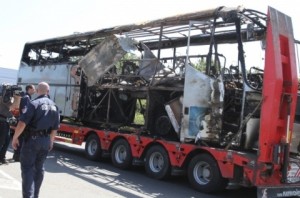
Near the start of our trip, we visited Moshav Avivim straddling the Lebanese border, where we met Shimon Biton, a survivor of the 1970 bazooka attack on a school bus by the Popular Front for the Liberation of Palestine.

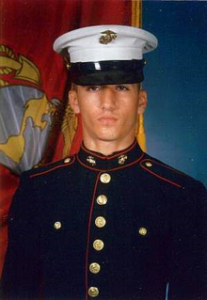
Biton, who was six and one-half years old, lost his father in the attack, and himself was shot point blank range by the terrorists when they realized he survived the bazooka attack.  Ten days before we met Biton, he was reunited for the first time in 45 years with the nurse who helped save him.  (Featured Image)

When we asked whether he ever wanted revenge, Biton told us that the revenge was that “we are still here and building for another 70 families.”

Moshav-Aviviv-Shimon-Biton-e1432683043370[Shimon Biton, Moshav Avivim, Israel]

When we related that story to numerous people we met along the rest of the trip, heads vigorously shook up and down.  It struck a chord, since almost every Israeli has a relative or friend impacted by terror.

Despite several decades of terrorism, particularly intense during the Second Intifada, and a world campaign against it, the People of Israel are still there.

The will to resist is underestimated.  Israel has a longer-term view, and a history.  It will not give in to boycotts, or Obama, or outside pressure that puts its security at risk.

2. “I don’t like Bibi, BUT….”

For whatever the reason, most of the people with whom we interacted self-identified as center-left or left.

There was no shortage of criticism of Israeli Prime Minister Benjamin Netanyahu: He’s egotistical, he doesn’t keep his tough promises, he is only interested in his own political survival, he’s a liar, his pre-election comment about Arab voting was shameful, and so on.

Yet with only a couple of exceptions, the negative comments always were followed with a big BUT.
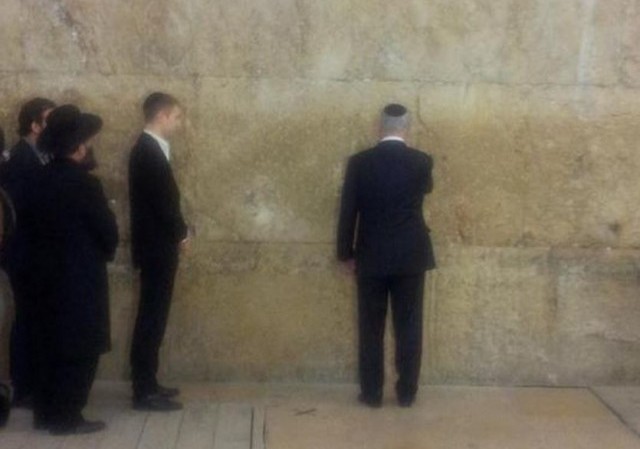
Benjamin-Netanyahu-at-Western-Wall-post-election-2015-e1426681806959[Israeli Prime Minister Benjamin Netanyahu at Western Wall after 2015 election victory.]

But he is the only Israeli politician who has the stature to handle the world pressure; but I don’t envy the position he is in with so many forces against us; but [opposition leader Yitzhak “Bougie” Herzog] Bougie is weak and no one will fear him; and so on.

These opinions pretty much were reflected in polling and the election results — Many people may not like Netanyahu, but he is the only Israeli politician capable of standing up for Israel in a hostile world.

3. I don’t like Obama, no BUTs about it

Polling in Israel shows Obama is hugely unpopular.  Our anecdotal interactions with Israelis confirmed that polling.

I  can’t recall anyone, from left to right, who had anything nice to say about Obama.  The most consistent theme was that Obama is naive and weak, and that naivitee and weakness had resulted in disaster in the Arab world as it encouraged the most aggressive Islamist elements.

They see Syria falling apart with al-Qaeda or ISIS groups likely to control large parts of the country; or if not, then Iran in control. There are no good outcomes for Israel’s Golan Heights border. Along the Lebanese border there is Hezbollah, and in Gaza Hamas and increasingly even more radical Salafist-ISIS groups.

Against this background of being surrounded by a sea of increasing threats resulting from Obama administration policy, not a single person thought the Iran nuclear deal made any sense, or trusted the Obama administration on it.

In other words, Israelis live in the real world, not the world of Obama’s delusional hope.  And they don’t appreciate Obama taking risks with their lives.

4. Are we really that popular in the United States?

The anti-Israel Boycott, Divestment and Sanctions movement was a frequent topic of conversation, almost always brought up by us as part of describing the type of coverage at Legal Insurrection.  This coincided with what I consider an irrational panic the past two weeks in the Israeli press and political discourse about BDS (more on that in a later post.)

I tried to explain that there is a complete disconnect between the BDS movement in the U.S. and the vast majority of Americans.  Gallup and Pew polling shows Israel at or near historical highs in terms of Israel’s favorability both abolutely and relative to favorability of Palestinians.  The gap between those who pick Israel over Palestinians when the question forces a choice, also is historically high.

Virtually every Israeli we met was shocked that Israel is actually so popular in the United States.  Even Israelis who have extensive American contacts and visit the U.S.

That’s not all so surprising.  Both the U.S. and Israeli media focus on the negative, though for different reasons.  The U.S. media long has had in implicit anti-Israel bias, compounded by the rise of left-leaning new media, while the Israeli media competes for readers with a “sky is falling” outlook.

(added) Israel’s enormous popularity among Americans is a strategic asset.  That strategic asset needs to be used more effectively to minimize the damage from the narrow but influential slices of the American population — radical faculty, some students, and mainstream journalists — who have explicit or implicit anti-Israel biases. The American people as a whole are the “Israeli Lobby.”

5. The Next War is Only a Matter of Time

While we were in Jerusalem, Israel underwent a national defense drill, including sirens warningof incoming rockets.

Our tour along the Gaza border, particularly near Sderot, also reflected preparation for the next round of rocket fire through reinforcing key civilian infrastructures, such as schools.
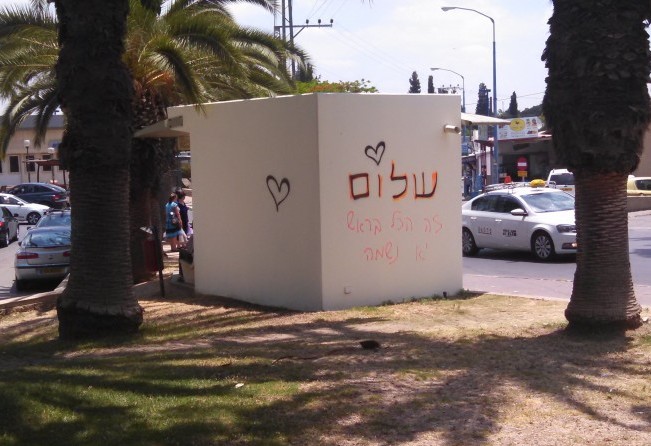
Sderot-Israel-bomb-shelter-street-e1433110130989[Sderot, Israel, street bomb shelter with “Shalom” grafitti]

There was a pervasive feeling that the calm cannot last.  And sure enough, while we were there and just after we left, rockets were fired from Gaza to Israel by Salafists suffering from a Hamas crackdown, and groups competing with Hamas for control.

That’s the logic of the region in which Israel lives: Radical groups retaliate against each other by firing rockets at … Israel.

The next war is coming.  Every Israeli knows it. It’s only a matter of time.

*  *  *  *  *

Those are my big takeaways.  I hope you enjoyed the coverage.

We will be back in Israel, hopefully next year.

Two major Mid East escalations: Yemeni rebels fire Scuds at Saudi air base. ISIS warns Syrian rebels

June 6, 2015

Two major Mid East escalations: Yemeni rebels fire Scuds at Saudi air base. ISIS warns Syrian rebels, DEBKAfile, June 6, 2015

us_patriot_missiles_saudi_arabia_6.6.15US Patriots stationed in Saudi Arabia

Saudi military sources reported Saturday, June 6, that Patriot air defense batteries had intercepted Scud missiles fired by Yemen Houthi rebels against the kingdom’s largest air base at Khamis al-Mushait in the south west. It is from there that Saudi jets take off to strike the Yemeni rebels. DEBKAfile’s military sources report that the Patriot anti-missile systems, which were activated for the first time, were manned by American teams. This was the first direct US military intervention on the Saudi side of the Yemen conflict.

It was also the first time that Houthi rebels or their allies had fired Scud missile into the oil kingdom. Our sources add that the launch was supervised by Hizballah officers. They were transferred by Tehran to Yemen to ratchet up the conflict – although US, Saudi, Yemeni government and Houthi representatives meeting secretly in Muscat Friday agreed to attend a peace conference in Geneva this month.

Nonetheless, through Friday night and Saturday morning, Houthi forces and allied military units kept on battering at Saudi army and National Guard defense lines, in an effort to break through and seize territory in the kingdom’s southern provinces. The insurgents were evidently grabbing for strategic assets to strengthen their hand at the peace conference.

Iran’s supreme leader Ayatollah Ali Khamenei is also juggling his chips on the deteriorating Syrian warfront. In the coming hours, he is widely expected to announce the activation of the mutual defense pact signed between Iran and Syria in 2006, under which each signatory is committed to send military troops if necessary to defend its partner.

Thursday, June 4, Khamenei fired sharp verbal arrows at the Obama administration: “The United States tolerates extremist groups in Syria and Iraq and even helps them in secret,” he charged.

Our military sources add that although various Mid East publications, especially in Lebanon, are reporting that Iran has already sent units in numbers ranging from 7.000 to 15,000 troops to Syria, none have so far landed, except for the Shiite militias brought over at an earlier stage of the Syrian conflict. The expected Khamenei announcement may change this situation.

ISIS was not waiting. Saturday morning, the group issued a warning to the Syrian rebel forces fighting in the south – the Deraa sector of southern Syria near the meeting point of the Jordanian and Israeli borders and the Quneitra sector opposite the Israeli Golan. They were ordered to break off contact with the US Central Command Forward Jordan-CF-J which is located north of Amman, and the IDF operations command center in northern Israel. Any Syrian rebels remaining in contact with the two command centers would be treated as infidels and liable to the extreme penalty of beheading, the group warned.

The impression of ominous events brewing in the regime was rounded off Friday night by an unusual announcement by the Israeli army spokesman that Iron Dome anti-missile batteries had been deployed around towns and other locations in the south, although no reference was made to any fresh rocket attacks expected from the Gaza Strip. DEBKAfile adds: The first batteries were arrayed Thursday night, June 4, at vulnerable points in southern Israel – from the southernmost Port of Eilat on the Gulf of Aqaba to the western Port of Ashdod on the Mediterranean.

Iran Will Walk

June 5, 2015

Iran Will Walk, The Gatestone InstituteLawrence A. Franklin, June 5, 2015

(What if the article is otherwise correct but Obama agrees to a “deal” anyway? — DM)

  • The Islamic Revolutionary Guard Corps (IRGC), the Praetorian Guard of Iran’s regime, controls most of the economy, as well as the black-market, alternative economy. The IRGC therefore actually benefits from sanctions; it is private firms, such as those involved in international commerce, that suffer. Why would IRGC operatives want to see the playing field made more level by private investment, transparency and a competitive economy?
  • Sanctions never hurt the regime’s ruling class; lifting them only helped the regime solidify its power over its people.
  • The objective of these two demands [an immediate lifting of all sanctions and no, or severely limited, inspections] is either to have them accepted, or to render it untenable for the Obama administration to offer Congress any deal that could be accepted – thereby shifting blame for the collapse of the talks to the U.S.
  • The U.S should also be on guard against the mullahs’ belief that the Obama administration is weak both politically and its aversion to using force. The mullahs might find great pleasure in humiliating Obama, as they did President Jimmy Carter, by dragging out hostage crisis negotiations by running out the clock until his term was over. They clearly believe that the Obama administration, simply to say it got “a deal,” is ready to sign anything.

From Washington to Riyadh, not to mention Jerusalem, statesmen are gritting their teeth at the possibility of a U.S.-Iran nuclear deal that seems overly generous to the theocratic-terror state of the Islamic Republic.

1008Representatives of the P5+1 countries pose with Iranian Foreign Minister Javad Zarif after nuclear negotiations in Lausanne, Switzerland on April 2, 2015. (Image source: U.S. State Department)

Most intelligence analysts and journalists assume that because Iran’s leadership endorsed the negotiations and has been the beneficiary of several key concessions by the P5+1 (the five permanent members of the UN Security Council, plus Germany), that an agreement is imminent. Forecasters have been predicting what the likely consequences of such a deal would be: negative.

But what if the Iranians walk?

Sanctions never hurt the regime’s ruling class; lifting them only helped the regime to solidify its power over its people.

A nuclear deal combined with an improvement in the commercial and business relations with the West would be inimical to IRGC interests.

The Islamic Revolutionary Guard Corps (IRGC), the Praetorian Guard of the regime, controls most of the economy as well as the black-market, alternative economy. IRGC-controlled conglomerates operate outside the law and reap huge profits through their control of the black market. The IRGC therefore actually benefits by sanctions; it is the private firms, such as those involved in international commerce, that suffer.

Furthermore, IRCG naval vessels, and private ships under their control, have been engaging in sanctions-breaking deliveries of imports across Persian Gulf waters to Dubai. The IRGC then sells the products at a profit by filtering them through the many foundations they control in Iran.

The most recent example of IRGC’s skirting of sanctions involved the illegal acquisition of aircraft through front-organizations with offices in both Europe and the Arabian Peninsula. Mahan Air, an IRGC front, was able to purchase 15 used commercial aircraft for $300 million. Another front, al-Naser Air, was about to purchase two more aircraft, this time from a U.S. owner. Israeli intelligence, however, passed details of the planned sale to the U.S. government, and on May 21, the deal was scuttled by the Office of Export Enforcement of the Department of Commerce.

Why would IRGC operatives want to see the playing field made more level by private investment, transparency and a competitive economy?

Moreover, if a nuclear deal indicated improved relations with the United States, Iranian hardliners, whether clerical revolutionaries or intelligence operatives, might fear seeing their ideological legitimacy erode. The Iranian regime’s only remaining fig leaf of legitimacy is its anti-American animus, with its accompanying pledge to “protect” Iran’s interests against the U.S.-Israel-Sunni “alliance.”

Improved relations with Washington might raise false hopes among Iran’s citizens that the regime may ultimately improve its woeful record on human rights. There remains only a thin patina of clerical control over Iranian society; if the hoped-for social and political reforms were not implemented, the result could produce a destabilizing political environment, harmful to the interests of the regime.

Another fallacy embraced by many “inside-the-beltway” analysts is that, as the Supreme Leader Ayatollah Khamenei endorsed the negotiations, a legitimate deal is now probable.

The once all-powerful Office of the Supreme Leader no longer calls all the shots. The current Iranian regime resembles a military junta or a security state as much as a theocracy. While the reach of Ayatollah Khamenei, through his network of representatives, still penetrates all dimensions of Iranian society, he does not have the final decision on key security matters. The regime’s strategic assets, for instance, such as its ballistic missile programs, are firmly under the control of the IRGC. Decisions related to Iran’s expansionist presence in the region are made by IRGC Quds Force Commander Qasem Soleimani. The role of Khamenei’s representative to the IRGC resembles more that of a handler than of an action officer.

The principal task for the regime is to find a way to back out of the negotiations while avoiding the blame. Iran’s efforts at disengagement may already have been underway for the past few weeks; the pace of decoupling from the talks seems to be accelerating. Iran has been increasing its demands apparently in the hope that they will either be accepted, or else rejected like the “poison pills” they are — such as inspectors no longer being allowed on its military sites.[1]

Another way to make the talks no longer palatable for the Obama administration was to create a hostile incident with the United States in the Persian Gulf, as it has tried to do by aggressively tailing American warships. Iranian ships affiliated with the IRGC Navy also seized a commercial ship, the Maersk Tigris, in the Strait of Hormuz, and temporarily detained both vessel and crew. Then, on May 14, IRGC boats fired several shots across the bow of a Singapore flagged vessel, but it escaped unharmed.

By this type of reckless comportment, the IRGC Navy appears intent on producing a clash with American naval vessels in the Gulf waters. Western negotiators have only to recall the presidency of Mohammad Khatami, when the IRGC and Iran’s Ministry of Intelligence and Security operated independently after they felt that the reformers had gone too far, thus threatening hard-liner control of the regime. The IRGC may have decided that Rouhani along with his American-educated Foreign Minister Zarif have reached a similar tipping point. This independent IRGC initiative is being executed even though a deal would release Iranian monetary assets that would in turn boost the sagging economy.[2]

Iran’s combative posture in Gulf waters against international shipping is also a direct challenge to international maritime law, which guarantees freedom of navigation through the world’s shipping lanes such as the Strait of Hormuz. A key principle of U.S. foreign policy is to enforce this freedom of navigation, if it is challenged by any foreign power, as one also hopes the U.S. will do in the South China Sea.

Iranian military and political spokesmen have also raised the temperature of their anti-American and anti-Israeli rhetoric of late. Leading members of the regime, including its Supreme Leader, Ali Khamenei, keep repeating, “Death to America” as well as its theological “obligation” to destroy Israel. While the Obama administration has alleged that these threats are just for “internal consumption,” an old Persian saying goes: “They spit in his eye and he calls it rain.”

Mojtaba Zolnour, Ayatollah Khamenei’s Deputy Representative to the IRGC, stated that the Islamic Republic of Iran, “has the divine permission to destroy Israel.” This media assault on Israel was designed to widen the divergence between the Obama administration and the Israeli government regarding the efficacy of the framework of a nuclear agreement negotiated so far.

Additionally, various Iranian principals have drawn “lines in the sand” designed to cause the Americans to disengage from the talks, such as the assertion that Iran will never accept inspection of its declared military sites. Another is Tehran’s repeated statement that it will not accept a gradual lifting of sanctions. Iranian leaders have insisted on immediate and irreversible lifting of all sanctions immediately after a nuclear deal is signed. The objective of these two demands is either to have them accepted, or to render it untenable for the Obama administration to offer Congress any deal that could be accepted — thereby shifting the blame for the collapse of the talks to the U.S.

Regime hard-line representatives to the majlis [Iranian Parliament] have already been mobilizing members to denounce the talks as detrimental to Iran’s national sovereignty. Eighty majlismembers signed a petition on May 12, calling upon the regime to suspend the nuclear talks until Washington halts its rhetorical threats against Iran. Hardliners in the majlis and elsewhere within the regime’s bureaucracy will likely continue to lobby against any deal.

Western analysts should be looking for the Iranian regime’s hard-line media outlets to increase domestic commentary condemning alleged U.S. deception in the negotiations as a reason to abandon the talks.

The death knell for the nuclear negotiations could come from newspapers such as Kayhan, a pro-regime newspaper run by Hossein Shariatmadari, and often characterized as a Khamenei mouthpiece.

The regime’s Friday-prayer Imams in key Iranian cities might also start opposing the talks. The themes of their noonday khutbahs [sermons] are likely to appeal to Iranian people’s patriotism, and suggest that it is more important for Iran to endure continued sanctions rather than submit to intrusive monitoring that offends Iran’s sovereignty.

Finally, hardliners who oppose any possibility of Iran’s improved relations with the U.S. may launch personal attacks on Iran’s negotiators to the nuclear talks, and, in an effort to discredit them, challenge their loyalty to the Iranian revolution. Their point of attack on Foreign Minister Mohammad Javad Zarif’s loyalty might be his alleged obsequious behavior to Secretary of State John Kerry. Zarif, on account of his many years of residency and education in the United States, can be depicted as an Americanized Iranian.

The United States should also be on guard against the mullahs’ belief that the Obama administration is weak — both politically and in its reluctance to use force. The mullahs might find great pleasure in humiliating Obama as they did President Jimmy Carter, when they dragged out hostage crisis negotiations by running out the clock until his term was over. They clearly believe that the Obama administration, simply to say it got “a deal,” is ready to sign anything.


[1]Iran’s powerful Guard rejects inspection of military sites” by Ali Akhbar Dareini, Associated Press, 19 April 2015. Deputy Chief of the IRGC General Hossein Salami is quoted and several more statements by IRGC officials since have repeated the same prohibitive statements regarding Iran’s military sites.

[2]U.S. to Award Iran $11.9 Billion Through End of Nuke Talks,” Washington Free Beacon, 21 January 2015. In the first of many subsequent denunciations, Senator Mark Clark of Illinois attacked the Obama administration’s plan to free Iran’s frozen assets if nuclear deal is reached.

The Kurd-Shia War Behind the War on ISIS

June 5, 2015

The Kurd-Shia War Behind the War on ISIS, The Daily BeastMat Wolf, June 5, 2015

1433495718557.cachedAhmed Jadallah/Reuters

“We could see outright civil war,” Farhan Siddiqi, a research fellow on international politics and national security at the Middle East Research Institute (MERI), tells The Daily Beast. Siddiqi says he believes the Kurds and the Shia central government would face domestic and international pressure to avoid such a conflict, but if cooler heads failed a hypothetical conflict could escalate into something even worst than the current ISIS war.

********************

In a dusty town near the Iranian border, the terror group was defeated, but the victors are at each other’s throats.

JALAWLA, Iraq — Behind Iraq’s front lines against the so-called Islamic State, Kurdish and Shia factions already are drawing a blueprint for what could be the region’s next major conflict.

In the city of Jalawla in Iraq’s Diyala province, near the Iranian border approximately 80 miles east of Baghdad, Kurdish forces have given the boot to the Shia militia they previously allied with to take the city from ISIS in a bloody November battle. Last month, the commanding Kurdish Peshmerga general in Jalawla threatened to start shooting if the Shia refused to leave the city immediately.

“This area is ours now, and that’s not changing,” Brig. Gen. Mahmoud Sangawi told The Daily Beast. He added that Jalawla, an abandoned city that previously had 83,000 people and was 80 percent Sunni Arab in 2003, would soon have a Kurdish mayor. Sangawi bragged that henceforth the city would also be called by its new Kurdish moniker, “Golala.”

Not so fast, say the Shia militias. They were recruited in the name of a fatwa from Iraqi Grand Ayatollah Ali al-Sistani in June 2014, following the Iraqi army’s humiliating loss of Mosul, Iraq’s second largest city, virtually without a fight. Many are trained and advised by Iranians, and they have been the spearhead of Baghdad’s efforts to recover lost territory in the name of the national government.

The Kurds, meanwhile, have fought hard to protect, consolidate and indeed expand areas they consider “their” territory.

“They [the Kurds] need to recognize this region is Iraq,” says Ali Khorasani, the commander of the Hashd al-Shaabi militias that Sangawi’s Peshmerga expelled from Jalawla. Hashd al-Shaabi is the Arabic term for Popular Mobilization Units, the name preferred by the volunteer Shia militias.

Khorasani said the Kurds “are strong, and they’re very organized, and our relationship was good, but now our relationship has problems.” And that appears to be an understatement. When asked if Kurdish moves in the region might lead to another war, Khorasani replied tersely: “Maybe.”

For now, Khorasani’s unit has been dispersed to the south of Jalawla around a town called Sadiya. It’s only a five-minute drive from Jalawla, but Kurdish forces are limiting access to Sadiya and prevented us from going there. Khorasani spoke to The Daily Beast by phone.

The ISIS blitz of northern and central Iraq one year ago sent the on-paper highly trained and well-equipped Iraqi army scrambling, and led to the sacking of controversial Shia Prime Minister Nouri al-Maliki. He was widely criticized for his sectarian policies that alienated the country’s Sunni Arabs, who are now the main support base for ISIS.

The Iraqi army’s retreat also opened the door for Kurdish forces to seize large swaths of territory abandoned by government forces.

Now, the central government’s inability to deal decisively with ISIS in Anbar province and its loss of the Anbar provincial capital Ramadi has seen the Kurds acting even more brazenly in anticipation of an independence push. Iraqi Kurdistan President Masoud Barzani has promised a long-awaited Kurdish independence referendum.

“Certainly an independent Kurdistan is coming,” Barzani said on a visit to Washington D.C. on May 6. “It will take place when the security situation is better and when the fight against ISIS is over.”

“We could see outright civil war,” Farhan Siddiqi, a research fellow on international politics and national security at the Middle East Research Institute (MERI), tells The Daily Beast. Siddiqi says he believes the Kurds and the Shia central government would face domestic and international pressure to avoid such a conflict, but if cooler heads failed a hypothetical conflict could escalate into something even worst than the current ISIS war.

Since the summer of 2014, the Kurds have increased their territory by 40 percent, most notably around the oil-rich city of Kirkuk, often called the “Kurdish Jerusalem.” Today Kirkuk has a Kurdish population of around 50 percent combined with large groups of Arabs and Turkmens. The city and its outlying territories were frequent targets of “Arabization” by the Saddam Hussein regime, a policy meant to shift the ethnic balance of power there as he waged a genocidal war against the rebellious Kurds. Now they want the city back, but Arab families who have lived there for decades have no place to go.

Areas like Jalawla are a different matter. It is closer to Baghdad than to the Iraqi Kurdish capital Erbil. It, too, was the target of waves of Arabization, but it has been a majority Arab city for decades. By Sangawi’s own admission the population was less than 10 percent Kurdish in 2003.

“The Baath regime had a process of oppressing the Kurdish people. They had to change their names to Arab names or leave the city,” Sangawi says. “When filling out forms they had to register as Arab. In 1970, 32 percent of this city was Kurdish. The city was only 8 percent Kurdish at the time of the American invasion in 2003. The Arabs tried to rob the Kurds of their land.”

Today, Jalawla has been completely abandoned by its civilian inhabitants, many of whom supported ISIS, according to Sangawi. Feral dogs dart in front of Peshmerga convoys and Kurdish graffiti proclaims the city part of Kurdistan. The immediate surrounding area of the town—dusty flat fields speckled with palm groves—clashes with the green, mountainous terrain often associated with Kurdistan, and syncs up more with stereotypically Arab lands.

Parts of Jalawla, especially the former ISIS command center on high ground overlooking the city, have been reduced to rubble. However, a spring bloom of un-manicured pink desert roses has overrun the walls and sidewalks, offsetting the many bullet holes and craters that otherwise dot the settlement.

“One-hundred and ten Peshmerga died in the fighting. When ISIS came in here they left many IEDs and explosives on the roads,” says Sangawi.

But the November fighting wasn’t the area’s first battle, and likely not its last. The Kurdish-Arab rift in the city goes back over a millennium.

Golala, Jalawla’s Kurdish name, means the “land of flowers.” Its Arabic title’s etymology is more grisly. In 637 AD, Arab Muslim forces during the early Islamic conquest of the Middle East won a decisive battle here against a Zoroastrian Persian force. A popular tale in the region holds the Arabs named the location Jalawla from an Arabic verb meaning to cover or to fill, as so many Zoroastrian corpses filled the landscape.

Sangawi knows this tale, and says he considers the Zoroastrians the Kurds’ forebears before Arabs took their territory—a perfect and historically convenient parable for Kurdish claims on the region.

Dark haired with a round face, thick droopy mustache and rosy cheeks, the 63-year-old Sangawi at first comes across as a friendly grandfatherly type, albeit one who travels with an entourage equipped with RPGs and machine guns. And most grandfathers don’t blithely threaten former heads of state.

“We’ve killed lots of people, a lot of them like Maliki,” he says of the former Iraqi prime minister, who said in a TV interview last month that anyone wishing to break up Iraq would create a “river of blood.”

“Maliki can eat shit,” Sangawi chuckles.

Sangawi’s been with the Peshmerga since the 1970s and has jumped around the Kurds’ various political parties, at one point even becoming a Marxist before joining up with the Patriotic Union of Kurdistan (PUK), the party of former Iraqi President Jalal Talabani.

Compared to Sangawi’s stance of bold antagonism, Khorasani is more conciliatory. The 45-year-old says he was in the legal profession before volunteering for the militia, and he makes a point of saying how the liberation of Jalawla was a joint effort. Even before then, he adds, the Kurds and Shia Arabs could find common cause.

“This is Iraq. We used to be united. They opposed the former regime and so did we,” he laments. “We were one.”

But Sangawi counters: “We were both against Saddam Hussein. We fought together. However, when the Shias came to power they treated us the same as Saddam Hussein, that’s why we don’t have a good relationship now.”

Siddiqi, at the Middle East Research Institute, says that the new Baghdad government under Prime Minister Haider al-Abadi has shown a willingness to negotiate and be more accommodating to Iraq’s minorities, but the country’s age-old tensions still run deep.

“Saddam Hussein is gone, but his authoritarianism still survives along all levels of Iraqi society,” Siddiqi says. “It remains to be seen if the government becoming more accommodating will reduce calls for independence.”

If a conflict were to occur, he adds, the Hashd al-Shaabi would be at the forefront of any government pushback against the Kurds. “The central government could easily call on the Shia militias it’s currently using against ISIS, using religious pretexts and slogans to drive them forward,” he says.

The central Iraqi government has already come under fire for its use of the militias, whose religious zealotry exacerbates sectarian tensions in Iraq. The government’s operation to retake the Sunni-majority Ramadi was originally named “At Your Service, Hussein,” in honor of a major Shia historical and religious figure. Human Rights Watch has also raised concerns that the Hashd al-Shaabi have committed serious human rights abuses while ostensibly fighting ISIS.

Siddiqi says the international community, including the central government’s main ally, Iran, would be wary of seeing another war in the region. “Iran wants peace, it does not want Iraq to become another Syria or another Yemen,” he says, adding that although opposed on many issues, the U.S. and Iran have tacit tactical cooperation in Iraq these days, and neither would support a Shia-Kurd conflict.

If a fight did occur, Siddiqi says he believes world powers would do their best to take a “hands-off” approach to avoid further escalation. If Kurdish independence were to succeed, he continues, it would only be accomplished via an agreement with Baghdad, not another war.

But far from Tehran and the beltway, on the dusty plains of disputed Jalawla, Sangawi says he’s ready for that war, drawing little distinction between Shia Hashd al-Shaabi and Sunni ISIS, and viewing them both as his people’s ancient enemies.

“The Shia militias believe if they kill ISIS they’re going to heaven, and ISIS believes if they kill the Shia people they are going to go to heaven,” Sangawi declares. “They fight over religion, not for land.”

“For me, if they attack me I will attack them, because this is my land. If they come to this land, of course I will fight them.”

Iranian Rev Guards ready to intervene in Syria to save Assad. Soleimani: Expect major events in Syria

June 3, 2015

Iranian Rev Guards ready to intervene in Syria to save Assad. Soleimani: Expect major events in Syria, DEBKAfile, June 3, 2015

elite_forces_Revolutionary_GuardIranian Revolutionary Guards elite forces

Tehran is believed to be preparing to dispatch a substantial Revolutionary Guards (IRGC) special operations unit to Syria to tackle the separate rebel and ISIS advances closing in on the Assad regime, Western and Arab intelligence sources report. They say the Syrian army is already setting aside an area in northern Syria for the Iranian troops to take up position.

If this happens, DEBKAfile’s military sources note that it would be the Revolutionary Guards first direct intervention in the nearly five-year Syrian war. Up until now, Tehran has carefully avoided putting Iranian boots on the ground in both Syria and Iraq. The only place where Iranian forces are directly engaged in battle is at Iraq’s main refinery town of Baiji, where small infantry and artillery units have been trying – without success thus far – to dislodge ISIS forces from the refinery complex.

In the other Syrian and Iraqi war arenas – and elsewhere – Tehran follows the practice of using local Shiite militias as surrogates to fight its wars, providing them with training and arms. The Guards have also brought Shiite militias over from Pakistan and Afghanistan.

That Tehran is about to change course to save Bashar Assad was indicated in a surprise statement Tuesday, June 2 by Gen. Qassem Soleimani, supreme commander of Iranian forces fighting outside the country. After urgent consultations in Damascus with President Assad and his military chiefs, the Iranian general said enigmatically that “major developments” are to be expected in Syria “in the next few days.” Another source quotes him more fully as saying: “In the next few days, the world will be pleasantly surprised [by the arrangements] we [the IRGC] working with Syrian military commanders are currently preparing.”

DEBKAfile, which Sunday, May 31, exclusively disclosed Soleimani’s post-haste arrival in Damascus, now reports from its military sources that Hizballah military chiefs were summoned to Damascus to attend those consultations. On his way to the Syrian capital, those sources also reveal that the Iranian general stopped over at the Anbar warfront in western Iraq near the Syrian border.

The IRGC expeditionary force, according to Gulf sources, will have to initial objectives to recover Jisr al-Shughour in northwestern Syria and Palmyra. The first has been taken over by Syrian rebels of the Army of Conquest, a band of Sunni militias sponsored by the United States, Saudi Arabia, Turkey and Qatar; the second was captured by the Islamic State last month.

The recovery of the two cities and their return to Syrian government control would deflect the immediate threats posed by opposition and Islamist forces to the highways from Homs to Damascus and the Mediterranean port of Latakia. This, in turn, would relieve the Assad regime of much of the military pressure threatening its survival.

Iran Implicated in Foiled Hezbollah Attacks on Europe

June 2, 2015

Iran Implicated in Foiled Hezbollah Attacks on Europe, The Clarion ProjectRYAN MAURO, June 2, 2015

Iran-Basij-IP_3Iranian Basij volunteer militia members (Photo: © Reuters)

If this is the behavior of the Iranian regime when it has every incentive to temporarily play nice, then what will it do when it breaks free of sanctions and uses trade deals to disarm the U.S. of its economic leverage?

********************

The arrest of a Hezbollah terrorist in Cyprus is believed to have foiled attacks in Europe, probably against Israeli or Jewish targets. The plots show that Iran is as committed to international terrorism as ever and is not the least bit dissuaded by the prospect of a lucrative nuclear deal.

The terrorist came to Cyprus last month and had nearly two tons of ammonium nitrate—a substance commonly used for making bombs—in his basement. That’s about the amount that was used to carry out the Oklahoma City bombing in 1995 that took down a federal building and killed 168 people.

It is suspected that he was planning on attacking Israelis, and there is evidence linking the operative to Hezbollah leader Hassan Nasrallah. It is also believed that the operative belonged to a network planning on using Cyprus as a “port of export” for additional terrorist plots in Europe.

The National Council of Resistance in Iran, an opposition group, says that a Cyprus newspaper reported that he was trained in Iran by the Revolutionary Guards Corps.

In 2012, a Hezbollah terrorist was arrested and later found guilty of planning attacks on Israeli tourists in Cyprus. His possession of a Swedish passport enabled him to conduct surveillance on targets in Europe. It was discovered that he was tracking flights from Israel to Cyprus, researching bus routes used by Israeli tourists and assessing a hospital parking lot. He also traveled to France and the Netherlands for Hezbollah.

The foiled plot helps make an important point about the nature of the Iranian regime. If there was any time for the regime to resist its impulses to engage in international terrorism, it is now.

An Iranian-sponsored plot could unravel the nuclear deal that could strengthen its “Islamic Revolution,” bolster the regime and allow it to dramatically increase its sponsorship of terrorism. And yet, even under these conditions, the Iranian regime can’t help but orchestrate terror plots in Europe with the objective of killing hundreds of innocents.

If this is the behavior of the Iranian regime when it has every incentive to temporarily play nice, then what will it do when it breaks free of sanctions and uses trade deals to disarm the U.S. of its economic leverage?

Iran Short Film Series – 3. Believe Them!

June 2, 2015

Iran Short Film Series – 3. Believe Them! Clarion Project, via You Tube, June 1, 2015

(But to believe what Iranian leaders say, repeatedly, would be Islamophobic. Or something. — DM)


Iranian Regime Gives Green Light to Qods Force, Proxies to Initiate Plans Against US and its Allies

June 1, 2015

Iranian Regime Gives Green Light to Qods Force, Proxies to Initiate Plans Against US and its Allies, ISIS Study Group, June 1, 2015

In Yesterday’s article titled “Arabian Pensinsula Violence Escalates After Second IS Bombing in Saudi Arabia,” we stated that our sources in the region have been reporting back that movement appears to be underway towards targeting westerners – mainly Americans. Specifically, we’ve been informed that the Qods Force may have directed Hezbollah, Kitaib Hezbollah (KH) and the Houthis to begin making plans for conducting William Buckley-style abductions Americans in Iraq, Saudi Arabia and Yemen. Furthermore, reporting from various media outlets have already begun covering the Americans taken hostage by the Houthis and a Hezbollah plot disrupted in Cyprus. None of these are a “coincidence.” Its all by design and timed with the nuclear weapons negotiations. Why do this if the Obama administration is prepared to give them everything without having to sacrifice anything on their end? It all comes down to the fact that the Iranian regime views the US government is weak – and they will be able to be much more “assertive” by escalating their belligerence. Thus far the Obama administration has done nothing to prove otherwise.

Arabian Pensinsula Violence Escalates After Second IS Bombing in Saudi Arabia
http://isisstudygroup.com/?p=6853

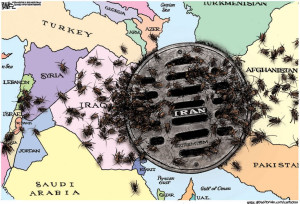
iran_roaches-300x204

The Middle East roach infestation has originated from Iran – so who will turn on the light to make them scatter?
Source: http://www.ibdeditorials.com/cartoons

We’ve been warning about the Qods Force working to expand their influence in Yemen and model the Houthis after Lebanese Hezbollah. In “Iranian Regime Consolidates Yemeni Gains, Begins Work on Forming Houthi Intel Proxy” we laid out how such work has already been underway. Furthermore, a consistent theme we’ve been touching on in our Arabian Peninsula reporting has been how intelligence collection against US State Department (DoS) personnel and American citizens in the country had dramatically increased with the influx of Hezbollah and Iranian military personnel into the country – so none of this is “new,” although the Obama administration would like to make you think it is, and that the Qods Force doesn’t exercise any control over the Houthis. The inconvenient truth is that they do, and the man calling the shots in the country is Qods Force External Operations Division (Department 400) BG Aboldreza Shahlai.

Iranian Regime Consolidates Yemeni Gains, Begins Work on Forming Houthi Intel Proxy
http://isisstudygroup.com/?p=5580

Check out the following links for additional info on the Qods Force/Houthi/Hezbollah targeting of Americans in Yemen and the greater Arabian Peninsula:

GCC SOF Teams Alerted For Deployment, AQAP Gains Strength and Iran Preps For Attacks Against Saudi Arabia
http://isisstudygroup.com/?p=6056

Saudis Begin Yemen Military OPs as the IRGC-Qods Force Prepares For Round 2
http://isisstudygroup.com/?p=5845

Poised to Fill Yemen’s Power Vacuum – Iran Tightens Grip on the Peninsula
http://isisstudygroup.com/?p=4517

IRGC-Qods Force: The Arabian Peninsula Campaign and President Obama’s Failed Foreign Policy
http://isisstudygroup.com/?p=4478

Yemen’s Houthi Rebels: The Hand of Iran?
http://isisstudygroup.com/?p=1992

AQAP vs. Shia Proxy Fighting Intensifies in Yemen
http://isisstudygroup.com/?p=2972

Shia Proxy Threat to US ISIS Strategy in Saudi Arabia
http://isisstudygroup.com/?p=1837

Regarding BG Aboldreza Shahlai, we first introduced him to our readers in our 04 APR 15 article titled, “AQAP and Qods Force Make Their Moves in Yemen as Saudis Struggle to Maintain Coalition.” At the time our sources inside the country had came across information on the presence of a senior Qods Force External Operations Division official had set up shop in the Sadah-area and tasked with overseeing overall operations in the country. We followed this up with an article a month later (“Failed State: Saudi Coaltion Increases Ground Presence as Iran Begins Targeting the Kingdom, US”) revealing his identity. Most westerners have never heard of the guy, but Iranian expats opposed to the regime know all about him. Shahlai was the architect of the Qods Force’s lethal aid program to Shia proxy forces in Iraq during OIF and was also one of the primary planners for the 2007 attack on the Karbala Provincial Joint Coordination Center (PJCC) that killed five US Servicemen. Known as “Suleimani’s Fist,” he holds considerable influence in the Qods Force commander’s inner-circle for advocating “outside the box” solutions to problems – most of which call for directly targeting America and Israel abroad. He was also the mastermind of the plot to assassinate the Saudi Ambassador to the US in New York City that involved his contacts within the Mexican drug cartel known as Los Zetas. His family member Mansur Arbabsiar was the lead-facilitator for the operation. Perhaps more important is Shahlai’s close ties to Abdul Malik al-Houthi and establishment of alternate weapons smuggling routes coming from Africa.

Failed State: Saudi Coaltion Increases Ground Presence as Iran Begins Targeting the Kingdom, US
http://isisstudygroup.com/?p=6410

AQAP and Qods Force Make Their Moves in Yemen as Saudis Struggle to Maintain Coalition
http://isisstudygroup.com/?p=6078

African Nations to Send 7,500 to Combat Boko Haram – Why is Iran so Interested?
http://isisstudygroup.com/?p=4530

qais-300x287

Asaib al-Haq leader Qais al-Khazali worked closely with BG Shahlai during OIF and was a participant in the 2007 attack on the PJCC – he’s now on the front-lines fighting the Islamic State (IS) in Northern Iraq
Source: voanews.com

BG Shahlai’s Yemen assignment is a good indicator that the Iranian regime intends to carry out a campaign targeting American, Israeli and to lesser extent Saudi nationals. With this and Shahlai’s relationship with the Houthis in mind, nobody should be in the least bit surprised that four of our fellow Americans are being held hostage in Yemen. The Houthis have already proven to be very efficient proxies for the Iranians inside Yemen. That said, we will likely see them conducting more operations increasing in complexity and scale within the next 6-9 months across the border into Saudi Arabia itself. They’re already conducting rocket attacks against Saudi border towns and outposts.

Houthi rebels in Yemen are holding multiple Americans prisoner
http://www.washingtonpost.com/world/national-security/houthi-rebels-in-yemen-are-holding-multiple-americans-prisoner/2015/05/29/ac349cc8-0618-11e5-8bda-c7b4e9a8f7ac_story.html

‘Several’ Americans held in Yemen: State Dept
http://news.yahoo.com/several-americans-held-yemen-state-dept-150827072.html

abdul-malik-al-houthi_3-300x169

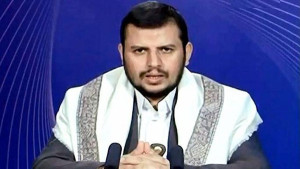
Abdul Malik al-Houthi: Close personal friend to BG Shahlai
Source: al-Arabiya

Its the same situation in Iraq, where we’ve heard from our Baghdad-based contacts reports of an attack being planned by Kataib Hezbollah (KH) targeting the US Embassy. Again, this should surprise no one with the high concentration of Qods Force personnel and proxy forces present inside the country and the capital in particular. We’ve also heard that KH has sympathizers within the Iraqi Security Force (ISF) ranks who are being tapped to assist in the attack. There’s also a considerable anti-air threat in and around BIAP these days coming from both IS and KH fighters. Fortunately, the American forces on the ground are already well aware of this – whether DoS or the Obama administration actually takes the threat serious is another matter entirely.

ISOF Commandos’ Admiration of Their IRGC-Qods Force Embeds
http://isisstudygroup.com/?p=122

The IRGC-Qods Force
http://isisstudygroup.com/?p=101

ISOF-and-ramazan-300x279

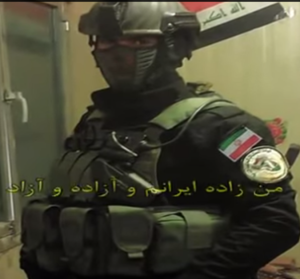
ISOF troopers don’t even try to hide their support of the IRGC-Qods Force Ramazan Corps anymore – a huge red flag for any US military personnel being deployed to Iraq these days
Source: The ISIS Study Group

KH_manpads-300x212

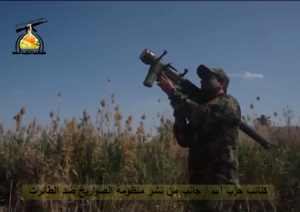
Now why would KH need MANPADs since IS has no Air Force? Perhaps the Qods Force supplied them to KH in order to target someone else?
Source: The ISIS Study Group

Unfortunately these operations aren’t limited to just the Middle East. Security forces in Cyprus recently arrested a man reportedly involved in a line of Hezbollah operations targeting Israeli interests in Europe. When the Cypriot police arrested him, they also confiscated close to two tons of “suspicious materials” in his basement. Although no additional details on the materials has been made public as of this writing, our source informed us that the materials are for producing explosives (ammonium nitrate was the he saw mentioned). The guy they detained was born in Lebanon but had a Canadian passport, which tends to fit the profile of the kind of personnel Hezbollah’s special operations wing and the Qods Force prefers to recruit into their ranks.

Cyprus police foil planned Hezbollah attacks against Israeli targets in Europe
http://www.haaretz.com/news/diplomacy-defense/1.658716?utm_source=dlvr.it&utm_medium=twitter

Cyprus arrest of Hezbollah man ‘uncovered large-scale Iranian terror plot across Europe’
http://www.jpost.com/Arab-Israeli-Conflict/Cyprus-arrest-of-Hezbollah-man-uncovered-large-scale-Iranian-terror-plot-across-Europe-404531

Crime scene

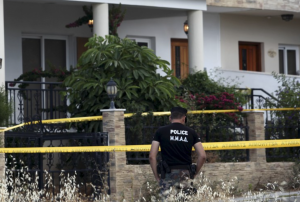
Scene of the crime
Source: Reuters

Qods Force and Hezbollah operations have spiked considerably since 2009 with attacks being executed in places like Bulgaria, India and Thailand along with the disrupted plot that was planned for New York City mentioned earlier. Of these, the NYC and Burgas, Bulgaria plots had the direct involvement of BG Shahlai. The telltale signs are how both plots called for using some of his preferred methods of using third parties to do the dirty work and targeting westerners in areas not known for Iranian activity. In fact, the attack in Burgas also involved a Lebanese Arab in possession of Canadian travel documents. The bombings in New Delhi and Bangkok utilized personnel from the IRGC-Qods Force Department 5000 – which is the equivalent to the US Army’s 1st Special Forces Group in that both units are geographically aligned to the Asia/Pacific region.

Bulgaria Has New Evidence on Hezbollah – Report
http://www.novinite.com/view_news.php?id=151420

Bulgaria names Hezbollah suspects behind bombing of Israeli bus in Burgas
http://www.jpost.com/International/Bulgaria-names-2-suspects-in-Burgas-bus-bombing-321017

Bulgaria says clear signs Hezbollah behind Burgas bombing
http://www.reuters.com/article/2013/07/18/us-bulgaria-hezbollah-idUSBRE96H0XI20130718

Hezbollah Is Blamed for Attack on Israeli Tourists in Bulgaria

Thai Police Widen Search for Iranians
http://www.wsj.com/articles/SB10001424052970204059804577227012899036768

Israel’s Iran warning as police hunt fourth Bangkok bomber with help from prostitute
http://www.telegraph.co.uk/news/worldnews/asia/thailand/9088238/Israels-Iran-warning-as-police-hunt-fourth-Bangkok-bomber-with-help-from-prostitute.html

India names Iranian suspects in Israeli car bombing
http://www.cnn.com/2012/03/15/world/meast/india-iran-israeli-car-bombing/index.html

burgas-bombing-300x198

The 2012 Bombing in Burgas, Bulgaria
Source: Reuters

Bibi Netanyahu was absolutely right to visit America and appear before Congress to air his concerns about the Iranian threat. The events that have occurred over the last few months have added strength to his concerns. Unfortunately, the Obama administration has been downplaying the Iranian threat and the American mainstream media let them get away with it by not holding their feet to the same fire that they did to the Bush administration. Sure, a few American media outlets have finally begun asking some national security questions of substance, but far too many seem to be concerned with covering Bruce Jenner’s hormone therapy and President Obama’s March Madness brackets than they are about things that will have a profound impact on our way of life a lot sooner than people think.

The American media needs to start asking the Obama administration, “why are we seeing such a surge in external operations by the IRGC-Qods Force and their proxies if the current engagement strategy with the Iranian regime is “working,” as they claim?” Indeed members of our staff have worked the Iranian problem-set for some time, but it doesn’t require a whole lot in the way of burning calories to connect the dots between this surge in external operations and the ongoing negotiations over Iran’s nuclear weapons program. Had the media truly cared to search for the truth instead of protect an administration they’ve compromised their journalistic integrity for, they would’ve already put out several articles and investigative specials on the subject. If they want to save face and salvage what’s left of their credibility, then we recommend they do some digging on the current threat to the US Embassy in Baghdad coming from KH and their ISF supporters based in the Green Zone. We can assure you that DoS is fully aware of the threat coming from Shia militias that are now being painted to the American people as “the good guys.”

They should also start peppering John Kirby and Marie Harf about the recent counter-terror raid in Cyprus and hammer them about whether the administration ever thought about demanding that the Iranian regime release our citizens in Yemen and US Marine veteran Amir Hekmati during these nuclear weapon talks. We assess that the Qods Force and their proxies are going to continue escalating their actions against our people and our allies for as long as they think they can get away with it. Don’t buy into the Administration’s talk that the regime can’t “control” the Qods Force, because if they say that they’re either lying, extremely ignorant or both. How so? The IRGC as a whole is made up only the most loyal followers of Ayatollah Khameini’s militant ideology. The IRGC-Qods Force are the “most loyal” of those serving in the IRGC – with GEN Suleimani answering only to Khameini. More importantly, the Shia proxy forces won’t take action against the US and its allies unless given authorization to do so by their Qods Force handlers. Make no mistake, this is only the beginning. There will be more attacks coming down the pipe from these guys. Our current national security strategy and foreign policy has set our country on a collision course – is anybody truly paying attention? More importantly, is this administration willing to sacrifice American lives for the appearance of obtaining “peace” with an Iranian regime that has no interest in pursuing normal relations? Something to think about.

hekmati-207x300

Amir Hekmati: Prisoner of Iran
Source: The ISIS Study Group

If you want to know what the Iranian regime is all about, then check out our Inside Iran’s Middle East series:

Inside Iran’s Middle East: the Kurdish Insurgency
http://isisstudygroup.com/?p=4068

Inside Iran’s Middle East: the Southeast Insurgency
http://isisstudygroup.com/?p=2689

Inside Iran’s Middle East: the Charm Offensive
http://isisstudygroup.com/?p=2676

Inside Iran’s Middle East: the “Reformers”
http://isisstudygroup.com/?p=2635

Inside Iran’s Middle East: the Nuclear Weapons Program
http://isisstudygroup.com/?p=2640

Other Related Articles:

Mr. Netanyahu Goes to Washington
http://isisstudygroup.com/?p=5316

Today’s Middle East: The Burning Fuse of the 21st Century’s “Great Game”
http://isisstudygroup.com/?p=6193

The Persian Hustle: How Iran Dupes Clueless US State Dept in Nuke Talks and Moves to Dominate the Middle East
http://isisstudygroup.com/?p=5978

How the North Korean Regime Affects the Middle East
http://isisstudygroup.com/?p=3038

Yemen isn’t on Verge of Civil War, It Already is – And Saudi Arabia Will Get Involved
http://isisstudygroup.com/?p=5810

What Yemen’s Coming Apart at the Seams Means to Arabian Peninsula
http://isisstudygroup.com/?p=5737

The Hezbollah Presence In Iraq
http://isisstudygroup.com/?p=358

Behind the Lines: Hezbollah – Born in Lebanon, dying in Syria?

May 30, 2015

Behind the Lines: Hezbollah – Born in Lebanon, dying in Syria? Jerusalem PostJonathan Spyer, May 30, 2015

(Please see also, Iran weighs turning Hizballah’s anti-Israel missiles against ISIS to save Damascus and Baghdad. — – DM)

Hezbolla1Hassan Nasrallah talks to his Lebanese and Yemeni supporters via a giant screen during a speech against US-Saudi aggression in Yemen, in Beirut’s southern suburbs on April 17.. (photo credit:REUTERS)

With the minority communities that formed the core of Assad’s support no longer willing or able to supply him with the required manpower, the burden looks set to fall yet further onto the shoulders of Assad’s Lebanese friends.

What this is likely to mean for Hezbollah is that it will be called on to deploy further and deeper into Syria than has previously been the case.

The Israeli assessment is that with its hands full in Syria, Hezbollah will be unlikely to seek renewed confrontation with Israel.

**********************

The latest reports from the Qalamoun mountain range in western Syria suggest that Hezbollah is pushing back the jihadis of Jabhat al-Nusra and Islamic State.

The movement claims to have taken 300 square kilometers from the Sunni rebels.

The broader picture for the Shi’ite Islamists that dominate Lebanon, however, is less rosy.

The Iran-led alliance of which Hezbollah is a part is better-organized and more effectively commanded than its Sunni rivals. The coalition’s ability to marshal its resources in a centralized and effective way is what has enabled it to preserve the Assad regime in Syria until now.

When President Bashar Assad was in trouble in late 2012, an increased Hezbollah mobilization into Syria and the creation by Iran of new, paramilitary formations for the regime recruited from minority communities was enough to turn the tide of war back against the rebels by mid-2013.

Now, however, the numerical advantage of the Sunnis in Syria is once more reversing the direction of the war.

With the minority communities that formed the core of Assad’s support no longer willing or able to supply him with the required manpower, the burden looks set to fall yet further onto the shoulders of Assad’s Lebanese friends.

What this is likely to mean for Hezbollah is that it will be called on to deploy further and deeper into Syria than has previously been the case.

In the past, its involvement was largely confined to areas of particular importance to the movement itself. Hezbollah fought to keep the rebels away from the Lebanese border, and to secure the highways between the western coastal areas and Damascus.

The movement’s conquest of the border town of Qusair in June 2013, for example, formed a pivotal moment in the recovery of the regime’s fortunes at that time.

But now, Hezbollah cannot assume that other pro-regime elements will hold back the rebels in areas beyond the Syria-Lebanese frontier.

This means that the limited achievement in Qalamoun will prove Pyrrhic, unless the regime’s interest can be protected further afield.

Hezbollah looks set to be drawn further and deeper into the Syrian quagmire.

Movement Secretary-General Hassan Nasrallah acknowledged this prospect in his speech last Sunday, marking 15 years since Israel’s withdrawal from southern Lebanon.

In the talk, Nasrallah broadened the definition of Hezbollah’s engagement in Syria.

Once, the involvement was expressed in limited sectarian terms (the need to protect the tomb of Sayyida Zeinab in Damascus from desecration).

This justification then gave way to the claimed need to cross the border precisely so as to seal war-torn Syria off from Lebanon and keep the Sunni takfiris (Muslims who accuse other Muslims of apostasy) at bay.

On Sunday, Nasrallah struck an altogether more ambitious tone. Hezbollah, he said, was fighting alongside its “Syrian brothers, alongside the army and the people and the popular resistance in Damascus and Aleppo and Deir al-Zor and Qusair and Hasakeh and Idlib. We are present today in many places, and we will be present in all the places in Syria that this battle requires.”

The list of locations includes areas in Syria’s remote north and east, many hundreds of kilometers from Lebanon (Hasakeh, Deir al-Zor), alongside regions previously seen as locations for the group’s involvement.

Nasrallah painted the threat of Islamic State in apocalyptic terms, describing the danger represented by the group as one “unprecedented in history, which targets humanity itself.”

This language fairly clearly appears to be preparing the ground for a larger and deeper deployment of Hezbollah fighters into Syria. Such a deployment will inevitably come at a cost to the movement; only the starkest and most urgent threats of the kind Nasrallah is now invoking could be used to justify it to Hezbollah’s own public.

The problem from Hezbollah’s point of view is that it too does not have inexhaustible sources of manpower.

The movement has lost, according to regional media reports, around 1,000 fighters in Syria since the beginning of its deployment there. At any given time, around 5,000 Hezbollah men are inside the country, with a fairly rapid rotation of manpower. Meanwhile, Hezbollah’s entire force is thought to number around 20,000 fighters.

Faced with a task of strategic magnitude and ever-growing dimensions in Syria, there are indications the movement is being forced to cast its net wider in its search for manpower.

A recent report by Myra Abdullah on the Now Lebanon website (associated with anti-Hezbollah elements in Lebanon) depicted the party offering financial inducements to youths from impoverished areas in the Lebanese Bekaa, in return for their signing up to fight for Hezbollah in Syria.

Now Lebanon quoted sums ranging from $500 to $2,000 as being offered to these young men in return for their enlistment.

Earlier this month, Hezbollah media eulogized a 15-yearold youth, Mashhur Shams al-Din, who was reported as having died while performing his “jihadi duties” (the term usually used when the movement’s men are killed in Syria).

All this suggests that Hezbollah understands a formidable task lies before it, and that it is preparing its resources and public opinion for the performance of this task.

As this takes place, Hezbollah seems keen to remind its supporters and the Lebanese public of the laurels it once wore in the days when it fought Israel.

The pro-Hezbollah newspaper As-Safir recently gained exclusive access to elements of the extensive infrastructure the movement has constructed south of the Litani River since 2006. The movement’s Al-Manar TV station ran an (apparently doctored) piece of footage this week purporting to show Hezbollah supporters filming a Merkava tank at Mount Dov. Nasrallah, in his speech, also sought to invoke the Israeli enemy, declaring Islamic State was “as evil” as Israel.

The Israeli assessment is that with its hands full in Syria, Hezbollah will be unlikely to seek renewed confrontation with Israel.

It is worth noting, nevertheless, that a series of public statements in recent weeks from former and serving Israeli security officials have delivered a similar message regarding the scope and depth of the Israeli response, should a new war between Hezbollah and Israel erupt.

Israel Air Force commander Maj.-Gen. Amir Eshel, former IAF and Military Intelligence head Maj.-Gen. (res.) Amos Yadlin, former national security adviser Maj.-Gen. (res.) Giora Eiland and other officials speaking off the record expressed themselves similarly in this regard.

Hezbollah plainly has little choice regarding its deepening involvement in Syria, Nasrallah’s exhortations notwithstanding.

The organization is part of a formidable, if now somewhat overstretched regional alliance, led by Iran.

This alliance regards the preservation of the Assad regime’s rule over at least part of Syria as a matter of primary strategic importance.

Hezbollah and the Shi’ites it is now recruiting are tools toward this end. It would be quite mistaken to underestimate the efficacy of the movement; it is gearing up for a mighty task, which it intends to achieve. Certainly, many more Hezbollah men will lose their lives before the fighting in Syria ends, however it eventually does end.

Given the stated ambitions of the movement regarding Israel and the Jews, it is fair to say this fact will be causing few cries of anguish south of the border.

Iran weighs turning Hizballah’s anti-Israel missiles against ISIS to save Damascus and Baghdad

May 30, 2015

Iran weighs turning Hizballah’s anti-Israel missiles against ISIS to save Damascus and Baghdad, DEBKAfile, May 30, 2015

(But only about 1,000 of the claimed 80,000.– DM)

Hezbollahs_missile_5.15A Hizballah missile

Hizballah’s General Secretary Hassan Nasrallah frequently brags that his 80,000 missiles can reach any point in Israel. He may have to compromise on this. His masters in Tehran are casting about urgently for ways to save the Assad regime in Damascus and halt the Islamic State’s’ inexorable advance on Baghdad and the Shiite shrine city of Karbala. According to DEBKAfile’s Gulf sources, Iran is eyeing the re-allocation of the roughly 1,000 long-range rockets in Hizballah’s store for warding off these calamities.

Some would be fired from their pads in Lebanon, exposing that country to retaliation, after Beirut rebuffed Hizballah’s demand for the Lebanese army to join in the fight for Assad.

Iran has not so far approved the plan. But if it does go through, Iranian spy drones operating over the war zones would feed with targeting data on ISIS and rebel positions and movements to the Hizballah rocket crews manning the mobile batteries of Fajr-5s – range 400-600 km; Zelzal-2s – range 500 km; Fateh-110s -range 800 km; and Shaheen 2s – 800-900 km.

Discussions in Tehran on this option took on new urgency Thursday, May 28, when White House spokesman Josh Earnest declared that the United States “would not be responsible for securing the security situation in Iraq. Our strategy is to support the Iraqi security forces… back them on the battlefield with coalition military air power as they take the fight to ISIS in their own country,” he said.

Tehran took this as confirmation that the US was quitting the war on the Islamic State in Iraq although the Obama administration’s decision was coupled with a free hand for the Baghdad government to do whatever it must to deal with the peril, including calling on external forces for assistance in defending the country.

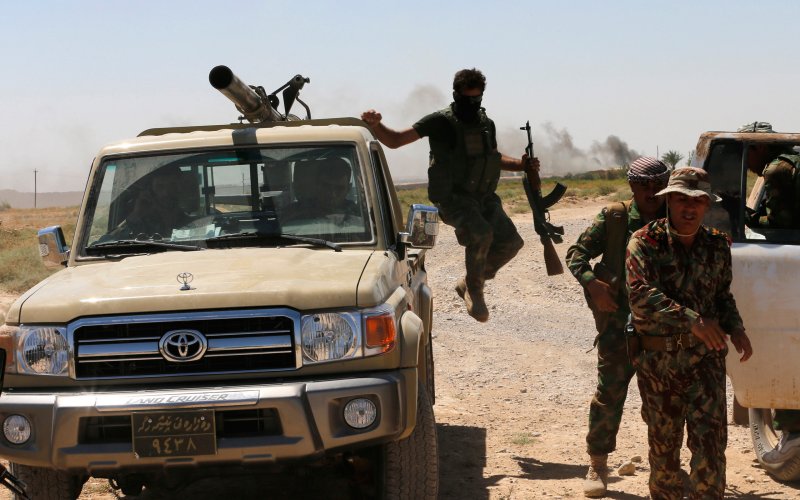
In the Iraqi arena, Iran has thrown into the fray surrogate Shiite militias grouped under “The Popular Mobilization Committee.” It is led by Abu Mahdi al-Muhandis, who turns out to be an Iranian, not an Iraqi, and working under cover as the deputy of the Al Qods Brigades Commander Gen. Qassem Soleimani.

This grouping is too shady for President Barack Obama to accept as worthy of US air support. Therefore, the entire anti-ISIS campaign has been dumped in Iran’s lap. Loath to expose its own air force planes to the danger of being shot down over Iraq, Iran is looking at the option of filling the gap with heavy missiles.

In the Syrian arena, Tehran is under extreme pressure:

1. The Assad regime can’t last much longer under fierce battering from the rebel Nusra Front, freshly armed and funded with massive assistance from Saudi Arabia, Qatar and Turkey. To disguise this group’s affiliation with al Qaeda, the Saudis have set up a new outfit called “The Muslim Army of Conquest.” In a few days it was joined by 3,000 Nusra adherents.

2.  The Syrian army has lost heart under this assault and many of its units are fleeing the battlefield rather than fighting, with the result that Bashar Assad is losing one piece of territory after another in all his war sectors. Soon, he will be left without enough troops for defending Damascus.

3.  Although Hizballah’s leaders proclaim their determination to fight for Assad in every part of Syria, the fact is that the Shiite group is too stretched to support a wide-ranging conflict in Syria and defend its own home base in Lebanon at one and the same time.

4. Tehran is also considering rushing through a defense pact with Damascus to enable Assad to call on Iranian troops to come over and rescue him.

5. Saudi Arabia has singled out leaders of top Hizballah leaders for sanctions. This week, Riyadh impounded the assets and accounts of Khalil Harb and Muhammad Qabalan in Gulf banks. This act was taken in Tehran as a major provocation.

The names don’t mean much outside a small circle in the region. However, Harb is Hizballah’s supreme chief of staff whose military standing is comparable to that of the Iranian Revolutionary Guards commander Gen. Ali Jaafary, while Qabalan is the organization’s senior intelligence and operations officer and responsible for orchestrating Hizballah’s terrorist hits outside Lebanon.

The Iranians are not about to let this affront go by without payback, which could come in the form of missile attacks by Hizballah on Saudi-backed groups in Syria.