Posted tagged ‘Iran military’

Dispatch from Iraq: the Stealth Iranian Takeover Becomes Clear

August 1, 2015

Dispatch from Iraq: the Stealth Iranian Takeover Becomes Clear, PJ Media via Middle East Forum, Jonathan Spyer, July 31, 2015

1484A Shi’a militia billboard in Baghdad

Close observation of the militias, their activities, and their links to Tehran is invaluable in understanding what is likely to happen in the Middle East following the conclusion of the nuclear agreement between the P5 + 1 powers and Tehran.

The genius of the Iranian method is that it is not possible to locate a precise point where the Iranian influence ends and the “government” begins. Everything is entwined. This pro-Iranian military and political activity depends at ground level on the successful employment and manipulation of religious fervor. This is what makes the Hashed fighters able to stand against the rival jihadis of ISIS.

The deal itself proves that Iran can continue to push down this road while paying only a minor price, so why change? Expect further manifestations of the Tehran formula in the Middle East in the period ahead.

****************

In late June, I traveled to Iraq with the purpose of investigating the role being played by the Iranian-supported Shia militias in that country.

Close observation of the militias, their activities, and their links to Tehran is invaluable in understanding what is likely to happen in the Middle East following the conclusion of the nuclear agreement between the P5 + 1 powers and Tehran.

An Iranian stealth takeover of Iraq is currently under way. Tehran’s actions in Iraq lay bare the nature of Iranian regional strategy. They show that Iran has no peers at present in the promotion of a very 21st century way of war, which combines the recruitment and manipulation of sectarian loyalties; the establishment and patient sponsoring of political and paramilitary front groups; and the engagement of these groups in irregular and clandestine warfare, all in tune with an Iran-led agenda.

With the conclusion of the nuclear deal, and thanks to the cash about to flow into Iranian coffers, the stage is now set for an exponential increase in the scale and effect of these activities across the region.

So what is going on in Iraq, and what may be learned from it?

Power in Baghdad today is effectively held by a gathering of Shia militias known as the Hashed al-Shaabi (Popular Mobilization). This initiative brings together tens of armed groups, including some very small and newly formed ones. However, its main components ought to be familiar to Americans who remember the Iraqi Shia insurgency against the U.S. in the middle of the last decade. They are: the Badr Organization, the Asaib Ahl al-Haq, the Kataeb Hizballah, and the Sarayat al-Salam (which is the new name for the Mahdi Army of Muqtada al-Sadr).

All of these are militias of long-standing. All of them are openly pro-Iranian in nature. All of them have their own well-documented links to the Iranian government and to the Revolutionary Guards Corps.
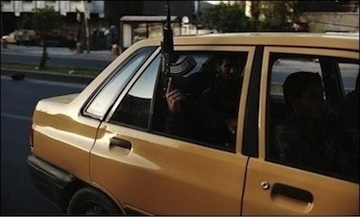
1559Shia militiamen are becoming a fixture of daily life in the Iraqi capital.

The Hashed al-Shaabi was founded on June 15, 2014, following a fatwa by venerated Iraqi Shia cleric Ali al-Sistani a day earlier. Sistani called for a limited jihad at a time when the forces of ISIS were juggernauting toward Baghdad. The militias came together, under the auspices of Quds Force kingpin Qassem Suleimani and his Iraqi right-hand man Abu Mahdi al-Muhandis.

Because of the parlous performance of the Iraqi Army, the Shia militias have become in effect the sole force standing between ISIS and the Iraqi capital.

Therein lies the source of their strength. Political power grows, as another master strategist of irregular warfare taught, from the barrel of a gun. In the case of Iraq, no instrument exists in the hands of the elected government to oppose the will of the militias. The militias, meanwhile, in their political iteration, are also part of the government.

In the course of my visit, I travelled deep into Anbar Province with fighters of the Kataeb Hizballah, reaching just eight miles from Ramadi City. I also went to Baiji, the key front to the capital’s north, accompanying fighters from the Badr Corps.

1469Asaib Ahl al-Haq fighters operating in Baiji in June

In all areas, I observed close cooperation between the militias, the army, and the federal police. The latter are essentially under the control of the militias. Mohammed Ghabban, of Badr, is the interior minister. The Interior Ministry controls the police. Badr’s leader, Hadi al-Ameri, serves as the transport minister.

In theory, the Hashd al-Shaabi committee answers to Iraqi Prime Minister Haider al Abadi. In practice, no one views the committee as playing anything other than a liaison role. The real decision-making structure for the militias’ alliance goes through Abu Mahdi al Muhandis and Hadi al-Ameri, to Qassem Suleimani, and directly on to Supreme Leader Ali Khamenei.

No one in Iraq imagines that any of these men are taking orders from Abadi, who has no armed force of his own, whose political party (Dawa) remains dominated by former Prime Minister Nouri al-Maliki and his associates, and whose government is dependent on the military protection of the Shia militias and their political support. When I interviewed al-Muhandis in Baiji, he was quite open regarding the source of the militias’ strength: “We rely on capacity and capabilities provided by the Islamic Republic of Iran.”

1482Iraqi militia leader Abu Mahdi al-Muhandis (right) with Iranian Quds Force commander Qassem Suleimani

The genius of the Iranian method is that it is not possible to locate a precise point where the Iranian influence ends and the “government” begins. Everything is entwined. This pro-Iranian military and political activity depends at ground level on the successful employment and manipulation of religious fervor. This is what makes the Hashed fighters able to stand against the rival jihadis of ISIS. Says Major General Juma’a Enad, operational commander in Salah al-Din Province: “The Hashed strong point is the spiritual side, the jihad fatwa. Like ISIS.”

So this is Tehran’s formula. The possession of a powerful state body (the IRGC’s Quds Force) whose sole raison d’etre is the creation and sponsorship of local political-military organizations to serve the Iranian interest. The existence of a population in a given country available for indoctrination and mobilization. The creation of proxy bodies and the subsequent shepherding of them to both political and military influence, with each element complementing the other. And finally, the reaping of the benefit of all this in terms of power and influence.

This formula has at the present time brought Iran domination of Lebanon and large parts of Syria, Iraq, and Yemen. Current events in Iraq form a perfect study of the application of this method, and the results it can bring. Is Iran likely to change this winning formula as a result of the sudden provision of increased monies resulting from the nuclear deal? This is certainly the hope of the authors of the agreement. It is hard to see on what it is based.

The deal itself proves that Iran can continue to push down this road while paying only a minor price, so why change? Expect further manifestations of the Tehran formula in the Middle East in the period ahead.

Iran’s Expendable President Rouhani

July 31, 2015

Iran’s Expendable President Rouhani, World Affairs JournalAli Alfoneh, July 30, 2015

7.30.15.alfoneh_0

In Washington the agreement is being sold in part as an effort to bolster the president against more hardline forces. The opposite, however, may well play out. By achieving a nuclear deal with Iran, Washington may have invested the entirety of its agreement and relations with Iran on an expendable politician.

**********************

While Iranian President Hassan Rouhani and Foreign Minister Mohammad-Javad Zarif celebrate their recent nuclear negotiating triumph, neither they nor their Washington-based fans should pop the Zamzam cola just yet. Back in Tehran, Rouhani and Zarif are encountering increasing resistance. With the Joint Comprehensive Plan of Action (JCPOA) in hand, Supreme Leader Ali Khamenei no longer needs the duo and is likely to cease shielding them from domestic criticism as he has in their first two years in office. Worse, fearing their popularity, Khamenei may encourage the Islamic Revolutionary Guards to launch a political attack against the president and his allies.

Rouhani is perhaps in a better position to defend himself than his “pragmatic” forerunners. Today, team Rouhani is not a one-man operation that emerged from nowhere but the product of the large “technocratic” and clerical network built by his mentor, former president Ali Akbar Hashemi-Rafsanjani.

Rouhani intends to mobilize the public for his cause. After all, he has come close to delivering his single major campaign pledge — solving the crisis over Iran’s nuclear program and eliminating the international sanctions regime. Seeing some economic promise, the average voter may vote Rouhani’s allies into parliament and the Assembly of Experts in February 2016, and eventually re-elect Rouhani in presidential elections the following year.

That scenario, however, would seem optimistic. In the past, Rafsanjani and Rouhani seldom reciprocated the loyalty of their protégés, and nor can they expect their former allies’ support in troubled times. The two mullahs did not lift a finger to save their friends when opponents, which sometimes included Khamenei, began to attack Rafsanjani’s too-powerful network during his presidency in the 1990s. When Gholamhossein Karbaschi, a reformist mayor of Tehran and a Rafsanjani ally, was targeted by a politically-motivated judiciary in 1998, Rafsanjani and Rouhani (then-secretary of the Supreme National Security Council) remained silent. If Khamenei unleashes the Guards against the president, Rouhani’s network of friends is vastly smaller and weaker than was Rafsanjani’s a decade earlier and, thus, would likely scatter in difficult times.

It is also near certain that Rouhani will be incapable of capitalizing on the sanctions relief to liberalize Iran’s economy and improve living standards for the average Iranian. To date, Rouhani has already repeatedly tried, and failed, to push the Guards (upper or lower case. I’m not sure?) out of the economy. Their intransigence probably received the tacit support of Khamenei, who can’t afford to lose his praetorians’ support. After all, it was the guards who brutally suppressed the pro-democracy Green Movement in 2009. The money from sanctions relief remains more likely to find its way to the companies owned by the IRGC and the semi-public foundations controlled by Khamenei than to state coffers, and the ordinary citizen.

At the street level, the nuclear deal remains immensely popular. But the Islamic Republic isn’t a democracy, and Khamenei has feared competition from the Rouhani-Rafsanjani camp. He has before successfully curtailed the political power of Rafsanjani, once the major domo of revolutionary mullahs, and occasionally tormented his children to remind the cleric of his place. The Supreme Leader will likely ensure that the Guardian Council, which approves candidates for public office, disqualifies candidates favored by the president and his allies. The purging of candidates will be intended to keep Rouhani’s supporters home, and allow anti-Rouhani forces to score huge electoral triumphs, thus checking the popular power of the executive branch.

Simultaneously, ever more belligerent statements by Khamenei and the hardline elite of the IRGC are gradually drowning out Rouhani and Zarif’s charm offensive towards the United States.

The cumulative impact of these efforts could be disastrous for Rouhani and his team.

In Washington the agreement is being sold in part as an effort to bolster the president against more hardline forces. The opposite, however, may well play out. By achieving a nuclear deal with Iran, Washington may have invested the entirety of its agreement and relations with Iran on an expendable politician.

Iran orders from China 150 J-10 fighter jets that incorporate Israeli technology

July 30, 2015

Iran orders from China 150 J-10 fighter jets that incorporate Israeli technology, DEBKAfile, July 30, 2015

J-10Chinese Chengdu J-10 for Iranian air force

The scale of Iran’s multibillion acquisitions from China and Russia – 550 warplanes in all so far – indicates that Tehran’s top spending priority upon receipt of the funds released by the removal of sanctions, is to be a spanking new air force.

**********************

Iran is about to conclude a transaction with China for the purchase of the Chengdu J-10 multirole jet fighter, known in the West as the Vigorous Dragon, according to an exclusive report from DEBKAfile’s military and intelligence sources. Beijing has agreed to sell Tehran 150 of these sophisticated jets.

While the Chinese J-10 is comparable to the US F-16, our sources report that it is virtually a replica of the Lavi, the super-fighter developed by Israel’s aerospace industry in the second half of the 80s. Israel sold China the technology, after Washington insisted on Its discontinuing the Lavi’s production. The US also objected to the sale of the Lavi’s avionics, claiming that it contained some American components.

The Chinese plane comes in two versions – the multirole single-seat J-10A and the two-seat J-10B, which serves for training, ground assaults and electronic warfare.

Iran has additionally weighing the purchase in Moscow of 250 highly-advanced Sukhoi-Su-30MK1 twinjet multirole air superiority fighters, known in the West as Flanker-H.

On Wednesday, July 29, an Indian Air Force Su-30MK1 took part for the first time in a British air maneuver, Rainbow, where it dueled with the European Typhoon fighter.

The sophisticated Flanker has been found to have a major shortcoming. To carry eight tons of ordnance, it must use both of its AL-31FP engines, and the transition from one to two – and the reverse – often causes engine failure.

The Indian Air Force has reported three such malfunctions in a month, as well another shortcoming: The time needed for making the aircraft serviceable is too long. As a result, only half of the Indian fleet can be airborne at one time.

In a confrontation, the Iranian Air Force may find that, because of these drawbacks, the Chinese Su-30MK1 is outmatched by its American and European counterparts in the service of the Israeli, Saudi and UAE air forces.

On July 22, DEBKAfile revealed that Moscow and Tehran had concluded a giant transaction for the acquisition of a fleet of 100 IL78 MK1 (Midas) in-flight refueling planes for extending the range of its warplanes up to 7,300 km and able to refuel 6-8 planes at once.

DEBKAfile: The scale of Iran’s multibillion acquisitions from China and Russia – 550 warplanes in all so far – indicates that Tehran’s top spending priority upon receipt of the funds released by the removal of sanctions, is to be a spanking new air force.

Iran becomes more aggressive after Obama’s ‘historic’ nuclear deal

July 22, 2015

Iran becomes more aggressive after Obama’s ‘historic’ nuclear deal, American ThinkerAmir Basiri, July 22, 2015

The lack of interest of the U.S. and the UN in addressing this issue sends a bad signal to Tehran, one that implies the international community has let its guard down and Iran is free to increase its transgression at its leisure.  In particular, the U.S. government is both morally and legally responsible to take action in this regard and prevent another disaster from coming to pass.  But on the broader scale, the idleness of the Obama can have dire implications on its own efforts to rein in Iran’s nuclear and terrorist venturing.

**********************

The massive giveaways to Iran in the nuclear deal it struck with the P5+1 on July 14 were premised on the false assumption that concessions would render Tehran more docile.  U.S. President Barack Obama has spoken on several accounts on how economic regrowth would convince the Iranian regime to shift away from its nuclear and regional ambition and to become a more constructive actor in the region and across the globe.  But there are already indications that the mullahs ruling Iran are becoming bolder in their regional venturing and meddling in neighboring countries, with the first signs appearing in Iraq.

According to the National Council of Resistance of Iran, simultaneous with the declaration of the Joint Comprehensive Plan of Action (JCPoA) in Vienna, elements of the Iranian regime in the Iraqi government ratcheted up repressive measures against Camp Liberty, an obsolete U.S. military compound in the adjacency of the Baghdad International Airport which houses thousands of Iranian refugees.

The residents of the camp, members of the Iranian opposition group People’s Mojahedin Organization of Iran (PMOI/MeK), have been living under harsh, prison-like conditions by the orders of Faleh al-Fayyadh, National Security Advisor to the Iraqi Prime Minister, a holdover from the cabinet of former Prime Minister Nouri al-Maliki, a staunch ally of the Iranian regime.

While temperatures in Iraq are soaring at around 50 degrees Celsius (122 deg. Fahrenheit), Iraqi security forces are preventing the entrance of vital necessities into the camp, including food, fuel, medical, and logistical supplies.  Given the camp’s worn infrastructure and lack of facilities for storage, the blockade is threatening to trigger a humanitarian crisis in the camp as life in the camp will soon come to a halt.  It is noteworthy that the forces ostensibly in charge of the camp’s protection are deeply affiliated with the Iranian regime and are responsible for a number of attacks and massacres against the residents.

In 2013, similar measures undertaken by Iraqi forces eventually culminated into the mass-slaughter of 52 of the camp’s residents, an operation carried out by special forces under the strict orders and control of the Iraqi Prime Ministry Office and in coordination with the Iranian embassy in Baghdad.  There is grave concern that a similar atrocity will occur if quick action is not taken to prevent further violation of the rights of the residents.

The residents of Camp Liberty have been recognized as “persons of concern” by the UNHCR, the UN refugee agency, and designated as “protected persons” under the Fourth Geneva Convention by U.S. forces after the 2003 invasion of Iraq.  Yet the U.S. embassy in Baghdad and the UN (which happen to be the only bodies that have direct access to the camp aside from the Iraqi government) are effectively sitting out the disaster while it develops and while Iran-backed forces tighten the noose around the camp.

The intensification of persecution of Camp Liberty takes place in the backdrop of increased Iranian influence in Iraq as Tehran moves to strengthen its proxy militia units and expand its influence over Iraqi soil and politics, an endeavor that has driven a wedge through the sectarian divide plaguing the country and has effectively deadlocked the U.S.-led effort to roll back the advances of the Islamic State, an extremist group that has rampaged through Iraq and Syria in the past year.  Regrettably, the Obama administration is taking the issue lightly and is giving tacit approval to Iranian meddling in Iraq.

The MeK was the first party to sound the alarm on Iran’s covert nuclear program in 2002 — the focus of a standoff between Tehran and the international community which has lasted to this day — and has since been the source pertinent information regarding secret aspects of Iran’s nuclear and regional ambitions.  The plots being carried out against the group are a worrying sign of Tehran might be trying to neutralize the opposition in order to pave its way for cheating on the nuclear accord without fear of being exposed.

The lack of interest of the U.S. and the UN in addressing this issue sends a bad signal to Tehran, one that implies the international community has let its guard down and Iran is free to increase its transgression at its leisure.  In particular, the U.S. government is both morally and legally responsible to take action in this regard and prevent another disaster from coming to pass.  But on the broader scale, the idleness of the Obama can have dire implications on its own efforts to rein in Iran’s nuclear and terrorist venturing.


Iran buys 100 Russian refueling aircraft for its air force to reach any point in the Mid East

July 22, 2015

Iran buys 100 Russian refueling aircraft for its air force to reach any point in the Mid East, DEBKAfile, July 22, 2015

IL78_MKI-IRAN_B_7.2015Russian IL78 MKI tanker aircraft sold to Iran

The Secretary of State can expect some really hard questions during his trip on exactly how the Vienna accord makes the region safer, when Iran’s first act after signing is to arm itself with a fleet of Russian in-flight fuel tankers to expand and strengthen its range and power for aerial aggression.

*********************

In defiance of the international arms embargo, Iran last week placed an order with Moscow for a huge fleet of 100 Russian IL78 MKI tanker aircraft (NATO: Midas) for refueling its air force in mid-flight, thereby extending its range to 7,300 km. This is reported exclusively by DEBKAfile from its military and intelligence sources. The transaction runs contrary to the terms of the nuclear accord the six world powers and Iran signed in Vienna earlier this month.

These tanker planes can simultaneously refuel six to eight warplanes. Their acquisition brings Israel, 1.200km away – as well the rest of the Middle East – within easy range of Iranian aerial bombardment. It also puts Iran’s air force ahead of Israel’s in terms of the quantity and range of its refueling capacity.

Whereas opponents of the Vienna deal have warned that Tehran will spend the billions of dollars released by sanctions relief as a bonanza for fueling its campaigns of terror in the region, it turns out that Iran’s first post-accord purchase is a heavy investment in the rearmament and upgrade of its armed forces’ aggressive capabilities.

The Israeli air force is familiar with the Russian airborne tanker from its use by the Indian air force with which Israel has close ties of cooperation. Its military engineers have also upgraded the Russian fuel tankers in service with the Uzbekistan air force.

Tuesday, July 21, DEBKAfile uncovered some of the tactics and escape clauses Iran has had built into its nuclear accord with the world powers for circumventing its provisions and commitments. The purchase of Russian refueling craft is a concrete example of this kind of evasion. Because the accord confirms the arms embargo in force until 2020, both Moscow and Tehran can maintain that the Russian aircraft industry will not be able to produce 100 new planes before the five years are up, and so the transaction is not a violation.

The huge Iranian-Russian military transaction therefore stands as the first palpable test of the Vienna accord, depending on whether US President Barack Obama or his Secretary of State John Kerry decides to make an issue of it. If they just let it go, it will set a precedent for the arms embargo clause of the nuclear accord to start unraveling.

Also Tuesday, Kerry gave an interview to the Al Arabia TV to prepare the way for his mission to the Gulf region on Aug. 3, which is to ease its rulers’ extreme unease over the ramifications of the nuclear accord. He asserted strongly to the interviewer: “I am not going to go through in great detail all the ways in which this agreement, in fact, makes the Gulf States and the region safer.”

The Secretary of State can expect some really hard questions during his trip on exactly how the Vienna accord makes the region safer, when Iran’s first act after signing is to arm itself with a fleet of Russian in-flight fuel tankers to expand and strengthen its range and power for aerial aggression.

Islam, Imam Obama, Sir John of Kerry and a great deal for Iran | Part II

July 20, 2015

(The views expressed in this post are mine, and do not necessarily reflect those of Warsclerotic or its other editors. — DM)
Oh what a tangled web we weave, when first we practice to deceive.

Dealing from the Bottom

The current “deal” is based on a long-standing scam

Part I of this series, published on July 14, 2015, pointed out what should be a glaring consistency in the “Joint Comprehensive Plan of Action,” first made available on that date, and the November 24, 2013 Joint Plan of Actionneither provides for any “anytime -anywhere” inspections of Iran’s nuclear weaponization or missile sites. That consistency has been little remarked upon elsewhere.

Secretary Kerry now acknowledges that he never sought such inspections.

Leaving aside the twenty-four day lag between an IAEA request to inspect suspect facilities — which Kerry says is just fine — he claims that we now have a “unique ability” to get the U.N. Security Council to force inspections and reinstate sanctions. However, any effort to do so would almost certainly be vetoed by one or more Security Council members. The permanent members are China, France, Russia, the United Kingdom, and the United States — five of the members of P5+1 which approved the “deal.”

On July 16th, US Under Secretary of State Wendy Sherman said,

“I think this is one of those circumstances where we have all been rhetorical from time to time,” Sherman said in a conference call with Israeli diplomatic reporters. “That phrase, anytime, anywhere, is something that became popular rhetoric, but I think people understood that if the IAEA felt it had to have access, and had a justification for that access, that it would be guaranteed, and that is what happened.” [Emphasis added.]

Kerry also claimed that the massive financial boost for Iran resulting from the lifting of sanctions will not enhance Iran’s support for terrorism.

Speaking to the BBC after the nuclear agreement between Iran and six world powers was reached, Kerry said that the more than $100 billion that Iran is set to receive “is going to make all the difference in the world is just – it’s not true.”

Acknowledging Iran is an international player in wreaking terror across the globe, Kerry said, “What Iran has done for years with Hezbollah does not depend on money.” He similarly stated Iran’s support of the Houthi rebels against the government in Yemen has not “depended on money.” [Emphasis added.]

. . . .

In its most recent report, the State Department wrote, “Iran has provided hundreds of millions of dollars in support of Lebanese Hezbollah in Lebanon and has trained thousands of its fighters at camps in Iran.”

In 2010 alone, State reported “Iran provides roughly $100-$200 million per year in funding to support Hezbollah.”

Secretary Kerry is almost certainly wrong, on that as on other aspects of the “deal.”.

Here’s Megan Kelly’s wrap up.


Iran may reject the “deal.”

There are at least glimmers of hope that Iran may reject the “deal,” unanimously endorsed by the UN Security council today.

A UN Security Council resolution endorsing Iran’s nuclear deal that passed on Monday is unacceptable, the country’s Islamic Revolutionary Guards Corps commander Mohammed Ali Jafari was quoted as saying by the semi-official Tasnim News Agency.

“Some parts of the draft have clearly crossed the Islamic republic’s red lines, especially in Iran’s military capabilities. We will never accept it,” he was quoted as saying shortly before the resolution was passed in New York. [Emphasis added.]

The Iranian Parliament also has problems with the “deal.”

On Saturday, the Fars News Agency reported that the Majlis threatened to reject the agreement’s provision on ballistic missiles, which call for an international embargo on missile technology to be extended for eight years–a significant, last-minute concession by the U.S.

Iran wants unrestricted ballsitic missile development and access to conventional arms dealers abroad.

“The parliament will reject any limitations on the country’s access to conventional weapons, specially ballistic missiles,” said Tehran MP Seyed Mehdi Hashemi.

. . . .

In addition, the nuclear deal says that the Majlis will ratify the Additional Protocol (AP) to the Non-Proliferation Treaty–but it does not say when.

The AP is the key to long-term monitoring of Iranian nuclear research and development by the International Atomic Energy Agency (IAEA). Without approval of the AP, Iran may hide key information about its nuclear activity, and may accelerate advanced centrifuge research immediately when the nuclear deal expires, among other hazards. (Even then, its commitments under the AP will be somewhat voluntary.) [Emphasis added.]

. . . .

[W]hile the interim agreement of Nov. 2013 provided that Iran would ratify the AP within one year, there is no such deadline in the final Iran deal. The AP is merely to be applied “provisionally,” while the Majlis decides whether to accept it or not.

Meanwhile, if the Obama administration has its way, the U.S. Congress will have no opportunity to amend the deal–and will have to accept the lifting of international sanctions regardless of whether legislators accept or reject the agreement. [Emphasis added.]

Iranian leadership’s opposition to the “deal” appears to have come from Iran’s Supreme leader and the Iranian Parliament has the authority to reject the “deal.”

As expected, Ayatollah Ali Khamenei’s reaction to the nuclear deal was utterly different from that of President Hassan Rouhani. Right after the agreement was announced on July 14, Rouhani appeared on state television and praised the outcome. Yet when he and other officials visited Khamenei’s home a few hours later, the Supreme Leader did not say anything about the deal apart from a few lines thanking the negotiators. This reticence signaled to hardliners that they should increase their attacks on the agreement. [Emphasis added.]

America’s Supreme Leader, on the other hand, has been pushing vigorously to force the U.S. Congress to approve it, with no way to change it.


The “deal,” and Obama’s foreign policy in general, are rooted in His affinity for Islam

Obama may or may not be a Muslim. However, He thinks very highly of Islam and deems it the “religion of peace.” It would be ironic were Obama’s Iran “deal” to be rejected by Iran.

As observed in a Jerusalem Post article, with the thrust of which I agree, His affinity for Islam is at the root of His “deal.”

Obama is the first US president who genuinely conceives of Islam as not inherently opposed to American values or interests.

. . . .

It is through this Islamo-philic prism that the Obama administration’s attitude to, and execution of, its foreign policy must be evaluated – including its otherwise incomprehensible capitulation this week on Iran’s nuclear program. [Emphasis added.]

. . . .

The inspection mechanism provided for in the nascent deal make a mockery of Obama’s contention (July 14): “… this deal is not built on trust; it is built on verification,” and, “Because of this deal, inspectors will also be able to access any suspicious location… [They] will have access where necessary, when necessary.”

One can hardly imagine a more grossly misleading representation of the deal – so much so that it is difficult not to find it strongly reminiscent of the Muslim tactic of taqiya (the religiously sanctioned deception of non-Muslims). [Emphasis added.]

Indeed, immediately following the announcement of the agreement, Ben Rhodes, Obama’s deputy national security adviser, made a stunning admission to CNN’s Erin Burnett. Starkly contradicting the president’s contention of “access where necessary, when necessary,” Rhodes conceded, “We never sought in this negotiation the capacity for so-called anytime, anywhere,” which is diametrically opposed to the impression he conveyed in April this year when queried on this issue. [Emphasis added.]

In His capacity as America’s Imam in Chief, Obama has consistently claimed that the “religion of peace” has nothing to do with the Islamic State or with Islamic terrorism (of which he claims there is none) — such as the recent murder of four members of the U.S. Marines and one member of the U.S. Navy — committed in the name of Allah. The Daily Beast has posted some of the terrorist’s writings. They include these statements:

“I would imagine that any sane person would devote their time to mastering the information on the study guide and stay patient with their studies, only giving time for the other things around to keep themselves focused on passing the exam,” Abdulazeez wrote. “They would do this because they know and have been told that they will be rewarded with pleasures that they have never seen.”

This life is that test, he wrote, “designed to separate the inhabitants of Paradise from the inhabitants of Hellfire.”

. . . .

“We ask Allah to make us follow their path,” Abdulazeez wrote. “To give us a complete understanding of the message of Islam, and the strength the live by this knowledge, and to know what role we need to play to establish Islam in the world.” [Emphasis added.]

Obama apparently considers the Islamic Republic of Iran to be Islamic — and therefore peaceful — despite its widespread support for its terrorist proxies. That may explain the credence He gives to Supreme Leader Khamenei’s alleged fatwa preventing Iran from obtaining nukes. Obama and Khamenei have frequently referred to it in support of that proposition, although no text been produced. According to a Washington Post article dated November 27, 2013,

Oddly, the Iranian Web site does not provide the text of the original fatwa — and then mostly cites Western news reports as evidence that Khamenei has reiterated it on several occasions. The fatwa does not appear to be written, but in the Shiite tradition equal weight is given to oral and written opinions.

. . . .

Just about every Alfred Hitchcock thriller had what he called a “MacGuffin” — a plot device that gets the action going but is unimportant to the overall story. The Iranian fatwa thus appears to be a diplomatic MacGuffin — something that gives the Americans a reason to begin to trust the Iranians and the Iranians a reason to make a deal. No one knows how this story will end, but just as in the movies, the fatwa likely will not be critical to the outcome. [Emphasis added.]

Even if one believes the fatwa exists — and will not later be reversed — it clearly appears to have evolved over time. U.S. officials should be careful about saying the fatwa prohibits the development of nuclear weapons, as that is not especially clear anymore. The administration’s statements at this point do not quite rise to the level of  earning Pinocchios, but we will keep an eye on this issue. [Emphasis added.]

An April 6, 2015 article at the Middle East Media Research Institute provides additional information.

In March of this year Obama presented a Nowruz message to the people of Iran citing Khamenei’s alleged fatwa. Here’s a video from the White House.

Here are a few interesting excerpts:

“Our negotiations have made progress, but gaps remain,” he said. “And there are people, in both our countries and beyond, who oppose a diplomatic resolution. My message to you—the people of Iran—is that, together, we have to speak up for the future we seek. [Emphasis added.]

“As I have said many times before, I believe that our countries should be able to resolve this issue peacefully, with diplomacy,” Obama said. “Iran’s Supreme Leader Ayatollah Khamenei has issued a fatwa against the development of nuclear weapons, and President Rouhani has said that Iran would never develop a nuclear weapon. [Emphasis added.]

Isn’t that special! Why, in light of the alleged fatwa, does Iranian television broadcast simulations of nuclear attacks on Israel?

A short animated film being aired across Iran, shows the nuclear destruction of Israel and opens with the word ‘Holocaust’ appearing on the screen, underneath which a Star of David is shown, Israel’s Channel 2 reported on Tuesday.

Khamenei’s Death to America rants are considered an excellent reason to have a “deal.”

Similarly, the Reverend Jeremiah Wright was fond of saying “God Damn America.”

Obama apparently understood Khamenei’s words, but perhaps He didn’t understand Jeremiah’s words.


Conclusions

Elected on a platform of Hope and Change, Obama has brought us many changes; very few, if any, of those changes provide a basis for hope, at least until He has left office. Some will be difficult, if not impossible, even then to ameliorate. During His remaining time in office, He will continue to do His worst to eliminate any vestigial hope we may have. The “deal” with Iran is only one of the many changes for the worse that He has wrought.

Iranian official: ‘We will take 1,000 Americans hostage’ if US comsiders military action

July 13, 2015

Iranian official: ‘We will take 1,000 Americans hostage’ if US comsiders military action, BreitbartAdelle Nazarian, July 13, 2015

(“Iran won’t back down from acquiring nuclear missiles.” But Khamenei claims that Iran has no desire for nuclear weapons. Who is kidding whom? — DM)

Mohesen-Rezaei-gettyATTA KENARE/AFP/Getty Images

Rezaei then went on to suggest that Iran will not back down from acquiring nuclear missiles.

*************

Iran’s secretary of the Expediency Discernment Council and recently-returned head of the Iranian Revolutionary Guards Corps (IRGC) Mohesen Rezaei says Iran is prepared to take 1,000 Americans hostages and demand millions of dollars in ransom for each of them if the United States even considers waging war against Iran.

In an interview with Iran’s State TV IRIB on Saturday, Rezaei made this solemn vow:

I am promising you, I promise the people of Iran, that as a soldier of Iran and a revolutionary militant, if America even thinks about taking military action against Iran, they can rest assured that in the first week we will take 1,000 Americans hostage and demand millions of dollars in ransom for each of their releases. That will likely help solve our economic issues as well. We are warning them in advance so that they can get this thought out of their minds.

Rezaei then went on to suggest that Iran will not back down from acquiring nuclear missiles. “If tomorrow Israel decides to attack Iran, shouldn’t Iran be able to respond to them [with nukes]?”

Pulling no punches in the interview, Rezaei referred to President Barack Obama as “weak” and said Iran blames him for causing the mess it is in, noting that it is time for President Obama to fix it. He also referred to John Kerry as an “orphaned child” (yateem in Farsi) who returns to the negotiating table with “sorry expressions” each time he receives a call from Washington, pleading for changes to what was previously discussed.

He said, “Of course it was Obama who caused the situation in Iran because even George W. Bush, as strong as his stances were, did not dare to impose last year’s sanction on Iran” during the course of his presidency. Rezaei was referring to the oil sanctions imposed by Congress in 2012, which was actually introduced and pushed by Republicans and passed as a bipartisan bill with the help of a handful of Democrats. In reality, Obama was against imposing oil sanctions on Iran, but a veto-proof majority tied his hands. Nonetheless, he appears to be receiving both the credit and criticism for the move.

Back in Tehran… Khamenei adds red lines, Rouhani tries to resign, Jaafari hints at “fait accompli” soon

July 12, 2015

Back in Tehran… Khamenei adds red lines, Rouhani tries to resign, Jaafari hints at “fait accompli” soon, DEBKAfile, July 12, 2015

(To the extent accurate, this is a fascinating account of what happened on June 29th, when Rouhani returned to Tehran for “consultation.” — DM)

ROUHANI-JAFARIPresident Rouhani vs Ali Jaafari

Iran’s top leaders remain ambivalent about whether or not to sign the comprehensive nuclear accord with the six world powers in Vienna as 22 agonizing months of negotiation falter on the brink. The all-powerful supreme leader Ayatollah Ali Khamenei’s latest comment was far from helpful. Saturday, July 11, he said publicly: “The US is the true embodiment of global arrogance,” the fight against which “could not be interrupted” even after the completion of the nuclear talks. He also boasted that the Islamic Republic had “managed to charm the world” by sticking with those negotiations.

DEBKAfile’s Iranian sources report that Khamenei’s remarks reflect the struggle between the pro- and anti-nuclear deal factions at the highest level of the Iranian leadership. For now, President Barack Obama’s odds of less than 50 percent on a final accord may well describe the balance in Tehran.

On June 29, President Hassan Rouhani was planning to resign when he asked the supreme leader to receive him first. He was upset by Foreign Minister Mohamed Zavad Zarif’s recall from Vienna to Tehran for a tough briefing. Zarif had warned the president that the talks were doomed unless Iran gave some slack. The foreign minister said that the six foreign ministers were preparing to leave Vienna in protest against Iran’s intransigence.

Rouhani when he met Khamenei warned him that Iran was about to miss the main diplomatic train to its main destination: the lifting of sanctions to save the economy from certain ruin.

The supreme ruler was unconvinced: He referred the president to the conditions for a deal he had laid down on June 23 and refused to budge: Sanctions must be removed upon the signing of the final accord; international atomic agency inspectors were banned at military facilities, along with interviews with nuclear scientists; and the powers must endorse Iran’s right to continue nuclear research and build advanced centrifuges for uranium enrichment.

Rouhani hotly stressed that those conditions had become a hindrance to the deal going through and insisted that sanctions relief was imperative for hauling the economy out of crisis.

Khamenei disputed him on that point too. He retorted that the revolutionary republic had survived the eight-year Iranian-Iraqi war (1979-187) with far fewer resources and assets than it commanded at present.

For back-up, the supreme ruler asked two hardliners to join his ding-dong with the president: Defense Minister Hosseim Dehqan and Revolutionary Guards chief Mohammad Ali Jaafari.

Both told Rouhani in the stiffest terms that Tehran must not on any account bow to international pressure for giving up its nuclear program or the development of ballistic missiles.

In a broad hint to President Rouhani to pipe down, Khamenei reminisced about his long-gone predecessor Hassan Bani-Sadr (president in 1980-1981) who was not only forced out of office but had to flee Iran, and the former prime minister and presidential candidate Mir Hossein Moussavi, who has lived under house arrest for six years since leading an opposition campaign.

The supreme leader then set out his thesis that the danger of Iran coming under attack had declined to zero, since Europe was in deep economic crisis (mainly because of Greece) and because the US president had never been less inclined to go to war than he is today.

Jaaafri added his two cents by commenting that after a succession of fiascos, Obama would go to any lengths to reach a nuclear deal with Iran as the crowning achievement of his presidency.  The Revolutionary Guards chief then added obliquely: “Before long we will present the West with a fait accompli.”

He refused to elaborate on this when questioned by the president, but it was taken as a reference to some nuclear event.

Rouhani left the meeting empty-handed, but his letter of resignation stayed in his pocket.

The next day, when Zarif landed in Vienna to take his seat once more at the negotiating table, he learned about a new directive Khamenei had sent the president, ordering him to expand ballistic missile development and add another five percent to its budget – another burden on Iran’s empty coffers.

Khamenei’s office made sure this directive reached the public domain. Zarif too was armed with another impediment to a deal. Khamenei instructed him to add a fresh condition: The annulment of the sanctions imposed against Iran’s missile development and arms purchases.

The Iran scam worsens — Part III, Human rights and support for terrorism

June 22, 2015

The Iran scam worsens — Part  III, Human rights and support for terrorism, Dan Miller’s Blog, June 22, 2015

(The views expressed in this post are mine and do not necessarily reflect those of Warsclerotic or its other editors. — DM)

It is likely that the P5+1 nuke “deal” with Iran will be approved soon. Military and other nuke sites which Iran has not “disclosed” will not be inspected. Nor will Iran’s nuke ties with North Korea — which P5+1 member China seems to be helping, Iran’s massive support for terrorism and abysmal human rights record be considered because they are also deemed unnecessary for “deal” approval. Sanctions against Iran are moribund and will not be revived regardless of whether there is a “deal.” However, a bronze bust of Obama may soon be displayed prominently in Supreme Leader Khamenei’s office and one of Khamenei may soon be displayed proudly in Dear Leader Obama’s office.

Iran fenced in

Iranian support for terrorism

According to the U.S. State Department, The Islamic Republic of Iran continued its sponsorship of terrorism during 2014. The linked article observes,

Iran has increased its efforts to finance and carry out terrorist activities across the world and remains a top nuclear proliferation threat, according to a new State Department assessment. [Emphasis added.]

Iran is funding and arming leading terrorist groups in the Middle East and elsewhere, according to the State Department’s 2014 Country Reports on Terrorism, which thoroughly documents how Tehran continues to act as a leading sponsor terror groups that pose a direct threat to the United States.

The report comes as Western powers work to finalize a nuclear deal with Iran ahead of a self-imposed June 30 deadline, though it is unclear whether the new findings will come up in negotiations.

It seems clear that the new findings will not be considered.

Among many other terrorist organizations, Iran supports the Taliban.

Afghan and Western officials say Tehran has quietly increased its supply of weapons, ammunition and funding to the Taliban, and is now recruiting and training their fighters, posing a new threat to Afghanistan’s fragile security.

Iran’s strategy in backing the Taliban is twofold, these officials say: countering U.S. influence in the region and providing a counterweight to Islamic State’s move into the Taliban’s territory in Afghanistan. [Emphasis added.]

According to James Clapper, the U.S. Director of National Intelligence, the intelligence community considers Iran to be the “foremost state sponsor of terrorism.”

The assessment came after criticism from the Senate that the information was omitted in a global threat assessment submitted to Congress [in February of this year.] Initially, Iran and Hezbollah were not included as terror threats in the intelligence community’s report to the Senate in February. [Emphasis added.]

Might the Obama administration have been trying to ignore Iran’s continuing support for terrorist activities because of its fixation on getting a “deal” with Iran in the ongoing P5+1 “negotiations?” Probably, but that was then. Now, it is apparently not a problem to report on Iran’s terrorist activities because they are deemed unworthy of consideration by the P5+1 negotiators. It’s terrible, but so what?

Iran is the world’s biggest sponsor of terrorism. Its tentacles have a hold on Syria, Lebanon, Iraq, Afghanistan, Yemen and the Gaza Strip. Its terrorist operations know no border and its proxies partake in mass killings and war crimes. But as it has been demonstrated time and time again, the West appears unperturbed by all that. It views Iran as a potentially constructive state actor, which, as long as it gets its way, could serve to stabilize the region. [Emphasis added.]

Iran could, of course, “stabilize” the region with its own military and its terror proxies in much the same way that Hitler tried to “stabilize” Europe — by gaining military control and forcing his ideology on subjugated residents. At first, there was some resistance but that was shown to be useless as Britain under Chamberlain gave Hitler Czechoslovakia. Eventually, Britain and later her ally, the United States, became sufficiently upset to intervene militarily.

As noted in an article at Asia Times on Line, the “free world” is unwilling to confront Iranian hegemony:

For differing reasons, the powers of the world have elected to legitimize Iran’s dominant position, hoping to delay but not deter its eventual acquisition of nuclear weapons. Except for Israel and the Sunni Arab states, the world has no desire to confront Iran. Short of an American military strike, which is unthinkable for this administration, there may be little that Washington can do to influence the course of events. Its influence has fallen catastrophically in consequence of a chain of policy.

. . . .

President Obama is not British prime minister Neville Chamberlain selling out to Hitler at Munich in 1938: rather, he is Lord Halifax, that is, Halifax if he had been prime minister in 1938. Unlike the unfortunate Chamberlain, who hoped to buy time for Britain to build warplanes, Halifax liked Hitler, as Obama and his camarilla admire Iran. [Emphasis added.]

The bountiful windfall soon to be given to Iran if the P5+1 “deal” is approved, via a “signing bonus” and other Sanctions relief, will help Iran’s terror sponsorship.

[S]hould the “treaty” with Iran be consummated, this sponsor of global terrorism will receive at least $100 billion in sanctions relief. Not only will this money be used for Assad, but it will bankroll Hezbollah and Hamas with a new generation of rockets and weapons.

For Tehran, money buys weapons, and weapons buy power and influence. President Obama is counting on an accommodative Iran that receives foreign assistance. But is there any reason to embrace this hypothesis? And even if someone does, at what point can the International Atomic Energy Agency (IAEA), or any other relevant body, determine the turnabout in Iran’s nuclear program? How do we know when a genuine peace has arrived? [Emphasis added.]

Iranian leaders have made it clear that dreams of a Persian kingdom dance like sugar plums in their imagination. For that to happen, the money pump cannot run dry. There is a need to support their Houthi surrogates in Yemen; resupply Hamas rockets that were destroyed in the last war with Israel; continue to add to the Hezbollah war machine that is poised to attack Israel; and keep Assad afloat, the mechanism by which control of Lebanon is retained. [Emphasis added.]

Iran’s abysmal human rights record is getting worse

Executions in Iran

According to Iranian Human Rights,

[T]he Iranian regime has executed a prisoner every two hours this month.

“So far in 2015, more than 560 have been executed, and we are just in the first half of the year… What we are witnessing today is not so much different from what ISIS is doing. The difference is that the Iranian authorities do it in a more controlled manner, and represent a country which is a full member of the international community with good diplomatic relations with the West.” — Mahmood Amiry-Moghaddam, spokesman for Iran Human Rights. [Emphasis added.]

Now the West, with the possibility of a nuclear deal, stands to increase Iran’s diplomatic standing.

According to officials of the Islamic Republic of Iran,

Iran has “the best human rights record” in the Muslim world;[11] that it is not obliged to follow “the West’s interpretation” of human rights;[12] and that the Islamic Republic is a victim of “biased propaganda of enemies” which is “part of a greater plan against the world of Islam“.[13] According to Iranian officials, those who human rights activists say are peaceful political activists being denied due process rights are actually guilty of offenses against the national security of the country,[14] and those protesters claiming Ahmadinejad stole the 2009 election are actually part of a foreign-backed plot to topple Iran’s leaders.[15] [Emphasis added.]

Conclusions

Iran’s abysmal and already worsening records of human rights violations and support for terrorism will likely get even worse as it gets (or gets to keep) the bomb, along with a reward of massive further sanctions relief. None of that is deemed worthy of consideration by the P5+1 “negotiators,” lest Iran decline to sign a deal or lest its feelings be hurt — as they would be were IAEA inspections of “undisclosed” sites be demanded or if any Iranian demands were not met.

Iran and North Korea share not only nuclear weaponization technology; they also share a common contempt for human rights. Yet the North Korea – Iran nuclear nexus (denied by Iran) appears to be of no concern to the P5+1 “negotiators.”

Obama long ago “opened his heart” to the Muslim world.

“To the Muslim world, we seek a new way forward based on mutual interest and mutual respect,” Obama declared in his first inaugural address. The underlying assumption was that America’s previous relations with Muslims were characterized by dissention and contempt. More significant, though, was the president’s use of the term “Muslim world,” a rough translation of the Arabic ummah. A concept developed by classical Islam, ummah refers to a community of believers that transcends borders, cultures, and nationalities. Obama not only believed that such a community existed but that he could address and accommodate it.

The novelty of this approach was surpassed only by Obama’s claim that he, personally, represented the bridge between this Muslim world and the West.

ALL of My policies are the best ever

ALL of My policies are the best ever

Obama does deserve some credit: His foreign policies are the most foreign in U.S. history to the security of the United States and of what’s left of the free world. Much the same is true of His domestic policies.

UN: US, other nations strangely silent on Iranian sanctions violations

June 10, 2015

UN: US, other nations strangely silent on Iranian sanctions violations, Hot Air, Ed Morrissey, June 10, 2015

(Please see also, US finds peeling back the Iran sanctions onion no easy task.– DM)

It’s not that they’re likely to cheat. Even the Obama administration admits that much, but their answer has been that the deal will have strict requirements for verification. That’s the problem. If the Obama administration won’t call out cheating that actually takes place now, why would anyone trust that they’ll call out violations that take place after a deal is cut — when those violations will make Obama and other world leaders look like saps?

**********************

How tough will the Obama administration be on Iran when it comes to holding them to the terms of a deal on nuclear development? If the track record on reporting sanctions violations gives any indication, we’re all in big trouble. Sanctions violations have become so brazen that even the United Nations wonders why other countries are not reporting Iran. They even have pictures showing the head of the Quds force flouting a travel ban to meet up with Tehran’s proxies, Bloomberg reports:

“The current situation with reporting could reflect a general reduction of procurement activities by the Iranian side or a political decision by some member states to refrain from reporting to avoid a possible negative impact on ongoing negotiations” between Iran and six world powers, said a panel of experts for the UN committee on Iran sanctions in its latest report, dated June 1 and made public Tuesday.

While the panel found that Iran “implemented its commitments” under an interim framework easing economic sanctions in return for curbs on its nuclear activities, the report raised questions about whether countries, including the U.S. and its European allies, have looked the other way on some sanctions violations.

No country reported that General Qassem Suleimani, commander of the elite Quds force of the Islamic Revolutionary Guard Corps, violated a UN-mandated travel ban despite “a number of media reports with photographs and videos” showing him in Iraq, Syria and Lebanon, “reportedly organizing and training militia and regular forces in those countries.” The report included examples of such photos.

The Quds force operates the proxies by which Iran invests in terrorism in the region. Thats why the UN placed a travel ban on Suleimani as part of the overall sanctions on Iran, a sanction that applied directly to their support for international terrorism. Nor is that the only blatant violation cited by the UN; Iran has also established a “nuclear procurement network” linked to UN-blacklisted firms, a violation that the UK did report.

In short, the UN report establishes that Iran intends on continuing its nuclear-weapons program and expanding its proxy terror operations. Why are other nations remaining silent about this? It seems as though Barack Obama isn’t alone in desiring his Neville Chamberlain moment.  Small wonder that Israel has declined to quietly play the role of Czechoslovakia in this replay of Munich:

The report provides fresh ammunition for critics, including Israeli Prime Minister Benjamin Netanyahu and members of both parties in the U.S. Congress who say that President Barack Obama and America’s allies are too eager for a deal with Iran. The Islamic Republic, they say, is likely to cheat on any nuclear accord reached in negotiations that face a self-imposed June 30 deadline.

It’s not that they’re likely to cheat. Even the Obama administration admits that much, but their answer has been that the deal will have strict requirements for verification. That’s the problem. If the Obama administration won’t call out cheating that actually takes place now, why would anyone trust that they’ll call out violations that take place after a deal is cut — when those violations will make Obama and other world leaders look like saps?

Even if the Iranians don’t build a nuclear weapon, the lifting of sanctions will keep Suleimani et al busy enough spending the windfall of cash Iran will receive on expanded terror operations. Joint Chiefs chair Gen. Martin Dempsey told Israelis on his recent visit to expect that outcome, but they’ll just have to prepare for it:

U.S. General Martin Dempsey, on a visit to Israel, said he shared a core Israeli fear that sanctions relief for Iran following a nuclear agreement would allow Tehran to give more money to its military and its guerrilla proxies.

“My assessment is that I share their concern. If the deal is reached and results in sanctions relief … it’s my expectation that it’s not all going to flow into their economy,” he said.

“I think that they will invest in their surrogates. I think they will invest in additional military capability,” Dempsey, the chairman of the Joint Chiefs of Staff, told a small group of reporters in Jerusalem.

But Dempsey said the long-term prospects were “far better” with an Iran that was not a nuclear weapons power.

Sure, but that assumes that sanctions relief precludes nuclearization. That would only happen if the West provides dire consequences for violations of the deal. Given the track record, it looks much more likely that Iran will get both the cash and the nuclear weapons, prospects that are far worse than what we had a year ago, both in the near- and long-term.