Posted tagged ‘Iran – Middle East’

Reflections on Trump’s First State Visit to the Middle East

May 19, 2017

Reflections on Trump’s First State Visit to the Middle East, The National InterestAhmed Charai, May 19, 2017

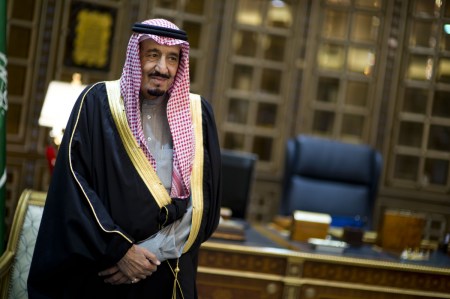
King Salman of Saudi Arabia in 2013. Flickr/Secretary of Defense

The Trump administration, working alongside its Arab allies, should promote moderate or quietist forms of Islam, and not remain neutral on religious matters. This means working with Islamic leaders, many of whom are state-funded imams, to challenge jihad on a religious basis and offer a form of faith shorn of violence.

These strategic insights come together in Morocco, where King Mohammed VI has used his religious role as commander of the faithful to inspire religious leaders to combat jihadism and urge tolerance and peace.

******************************

President Trump is visiting the Middle East. He will travel to Saudi Arabia and Israel, then visit the Vatican. Given the sequence of the first two, some observers speculated that he will attempt to revive the Israeli-Palestinian peace process, perhaps within a broader, regional framework. But different potential outcomes for Arab-Israeli relations, short of a peace settlement, may also be in the offing.

Both Saudi Arabia and Israel have proven themselves to be invaluable partners to the United States in the struggle against ISIS. An American-brokered framework whereby direct cooperation between the two is formalized—rather than a reliance on the United States as an intermediary—may create a framework to broaden the cooperation. Heightened partnership to counter the shared threat of Iran would be an obvious next step. The Trump administration’s new strategy is the creation of a regional alliance, focused on the Gulf countries but also including countries such as Egypt, Jordan and Morocco. A multilateral approach in which Israel plays a more direct and visible role in the coalition would signify a breakthrough. It would bolster confidence among Arab publics that broader cooperation and conflict resolution are warranted.

Donald Trump made the eradication of the Islamic State a priority during his campaign. He has been criticized for his more muscular strategy, as well as the desire to augment intelligence, economic and communications measures to put the screw to the organization.

It seems possible that the president is making a clean break with the Obama administration’s policy of disengagement from the Middle East. For Trump, the rubric of a “war on terrorism” seems to be appealing. Arabs appreciate the fact that, unlikely his predecessor, Trump appears to be recognizing the Shia extremist terror threat as represented by Iran and its proxy militias alongside the widely recognized Sunni jihadist threat.

In the view of this administration, this alliance should function like NATO, as an alliance (perhaps supported by the West) with multiple objectives. The eradication of Islamic State is the main objective, but the containment of Iranian influence in the region is also on the menu.

The use of a massively powerful bomb against the Islamic State in Afghanistan provided a mighty demonstration of strength, but may also have been intended to send a message about the president’s commitment to confront his adversaries with some of the most powerful tools in his arsenal.

But of course, matters are not so simple.

At the geostrategic level, Russia and the pro-Iranian Shia arc cannot be ignored politically. The alliance between the two poses layers of complexity, whereby American and Russian accounts in the Baltic states and vis à vis NATO may be dragged into the diplomatic mix. Moscow cannot be excluded from the equation in any prospective political resolution in Syria. As for Iran, Russia wields heavy influence on its government and its security sector. Trump faces a Twister-like game of challenges in navigating the array of alliances, rivalries and hostilities among the players. Yet his aspiration to eradicate the Islamic State and block Iranian expansion in the region depends on his effective management of these quandaries.

Nor do Trump’s aspirations allow for neglect of the broader counterterrorism challenge beyond military action, intelligence work and even diplomacy. He must wage an ideological war, and challenge extremist strands within Arab and Islamic societies that guarantee the perpetuation of conflict—whatever the outcomes on the battlefield—unless they are addressed.

The Trump administration, working alongside its Arab allies, should promote moderate or quietist forms of Islam, and not remain neutral on religious matters. This means working with Islamic leaders, many of whom are state-funded imams, to challenge jihad on a religious basis and offer a form of faith shorn of violence.

These strategic insights come together in Morocco, where King Mohammed VI has used his religious role as commander of the faithful to inspire religious leaders to combat jihadism and urge tolerance and peace.

King Mohammed VI has demonstrated his commitment to deeper cooperation with neighboring countries by embarking on several state visits and signing an unprecedented number of economic-partnership conventions. He has also expressed support for joint efforts to combat radicalization, and officials from Cote d’Ivoire, Niger, Tunisia, and Guinea have indicated a willingness to train their imams in Morocco.

If Trump is looking for a healthy example of Muslim leaders bringing peace through Islam, Morocco is a good place to start.
How to Secure and Stabilize the Middle East

May 14, 2017

How to Secure and Stabilize the Middle East, Clarion ProjectShahriar Kia, May 14, 2017

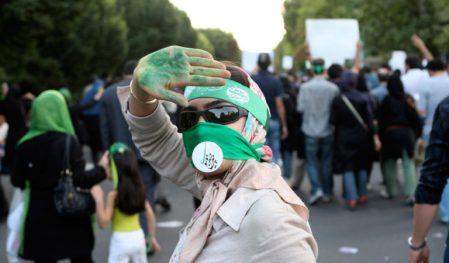
An Iranian protester during the Green Revolution (Photo: Reuters)

The opinions below are those of the author and do not necessarily reflect those of Clarion Project.

In contrast to other countries that lack a opposition that can be trusted, Iran enjoys an internationally-recognized alternative based on democratic values acknowledged across the globe.

The National Council of Resistance of Iran (NCRI) and its pivotal member, the People’s Mojahedin Organization of Iran (PMOI/MEK), is the largest and most organized opposition in the face of the Iranian regime. The NCRI enjoys widespread support inside Iran and throughout the world, with the ability to organize an uprising against the regime in Tehran. Senior Iranian regime officials have acknowledged the time and again that the main threat compromising Iran’s entire regime apparatus is none other than the PMOI/MEK. To this end, they have focused their entire efforts on physically obliterating this Iranian opposition group.

In 2009, when the Iranian people took to the streets and demanded fundamental change, their efforts went unsupported due to Obama’s appeasement policy that sought to sign the nuclear deal with Tehran at all costs. This was an opportunity that enjoyed the potential of significantly decreasing existing Middle East crises. Today, the regime in Tehran is facing crises far more dangerous than 2009.

The correct Iran policy is supporting regime change by the Iranian people and their organized and legitimate resistance. By adopting such a stance, the international community can begin to confront Iran’s notorious influence in the region and its nuclear ambitions in order to spread security in a non-nuclear Middle East free of terrorism.

***************************

U.S. Secretary of State Rex Tillerson announced at a press conference on April 19 that the White House is evaluating its policy on Iran. This policy overview will not merely cover the Iran nuclear deal, but will be a comprehensive look at all Iran-related issues.

At a press conference, Tillerson formalized Iran’s provocative and destructive measures in different fields.

“Iran is the world’s leading state sponsor of terrorism and is responsible for intensifying multiple conflicts and undermining U.S. interests in countries such as Syria, Yemen, Iraq, and Lebanon, and continuing to support attacks against Israel … An unchecked Iran has the potential to travel the same path as North Korea, and take the world along with it … Iran’s provocative actions threaten the United States, the region, and the world …” he said.

“Iran continues to have one of the world’s worst human rights records,” Tillerson added.

Defense Secretary James Mattis adopted a similar approach on April 22 at the Center for Strategic and International Studies, saying, “But we’re talking about the Mideast at an inflection point. And I would just point out right now that among the many challenges the Mideast faces, I think Iran is actually foremost … The Iranian regime, in my mind, is the single most enduring threat to stability and peace in the Middle East.”

Iran’s meddling has neutralized all efforts to resolve the region’s crises, said Bahrain Interior Minister Rashed bin Abdullah at a Gulf Cooperation Council (GCC) session, adding the region faces threats that demand cooperation to confront. He emphasized the need for unity in Gulf positions regarding strategic matters.

What is the right Iran policy?

Supporters of the Iran appeasement approach believe the correct policy is to engage the mullahs’ regime and continue dialogue. They justify this approach for two reasons: first, to contain Iran’s nuclear ambitions and second, to attempt to establish change from within by supporting so-called “moderates” inside the regime apparatus.

This is the policy pursued during the Obama years without any political or strategic reservation, and also that of previous administrations throughout the past few decades.

However, rapprochement with Tehran not only failed to contain the mullahs’ ambitions and terrorism; in fact, it further encouraged the regime and plunged the entire Middle East into insecurity and instability.

The Wall Street Journal wrote in a recent piece, “President Donald Trump’s hard-line view on Iran was at odds with State Department diplomats.”

Yet, the solution placed forward by Obama and the State Department’s experienced diplomats resulted in Iran escalating its flagrant human rights violations and expanding its devious influence throughout the Middle East.

Others believe the right Iran policy is a military solution and the U.S. must launch airstrikes targeting Iran’s nuclear sites. Although this can deliver significant blows to Iran’s ambitions and disrupt the mullahs’ efforts to obtain nuclear weapons, the consequences on regional security and stability are controversial, placing the U.S. and its allies in yet another Middle East war.

What is the durable solution? Can we avoid war while bringing an end to the spread of extremism and terrorism across the globe?

Iran is the leading state sponsor of terrorism in today’s world. Since the appeasement policy adopted by previous U.S. administrations has been fruitless in containing Iran and actually led to the current dangerous circumstances, the only viable long-term solution is to adopt a firm policy that hinges on regime change.

In contrast to other countries that lack a opposition that can be trusted, Iran enjoys an internationally-recognized alternative based on democratic values acknowledged across the globe.

The National Council of Resistance of Iran (NCRI) and its pivotal member, the People’s Mojahedin Organization of Iran (PMOI/MEK), is the largest and most organized opposition in the face of the Iranian regime. The NCRI enjoys widespread support inside Iran and throughout the world, with the ability to organize an uprising against the regime in Tehran. Senior Iranian regime officials have acknowledged the time and again that the main threat compromising Iran’s entire regime apparatus is none other than the PMOI/MEK. To this end, they have focused their entire efforts on physically obliterating this Iranian opposition group.

Following a visit paid by Senator John McCain to Albania and his meeting with Iranian opposition leader Maryam Rajavi, an analysis posted on April 27 in Iran Dideban, a state-sponsored outlet, made vivid the regime’s concern that the Revolutionary Guards (IRGC) failed to quell and destroy the PMOI/MEK.

“The IRGC’s involvement in Syria led to serious neglect. This inattention has surfaced, resulting in this group [MEK] gaining a more open hand to play a role in on-the-ground developments … It is worth noting this group has significant experience in organizing campaigns and can pose a potential security threat for the country. The use of social domestic networks inside the country and influencing grayscale correspondents are among the efforts of this group. This has launched a wave of disappointment among forces loyal to the establishment and state.”

In 2009, when the Iranian people took to the streets and demanded fundamental change, their efforts went unsupported due to Obama’s appeasement policy that sought to sign the nuclear deal with Tehran at all costs. This was an opportunity that enjoyed the potential of significantly decreasing existing Middle East crises. Today, the regime in Tehran is facing crises far more dangerous than 2009.

The correct Iran policy is supporting regime change by the Iranian people and their organized and legitimate resistance. By adopting such a stance, the international community can begin to confront Iran’s notorious influence in the region and its nuclear ambitions in order to spread security in a non-nuclear Middle East free of terrorism.

Iran: Destabilizing the Middle East Through Proxy Allies

May 11, 2017

Iran: Destabilizing the Middle East Through Proxy Allies, Clarion ProjectAmir Basiri, May 11, 2017

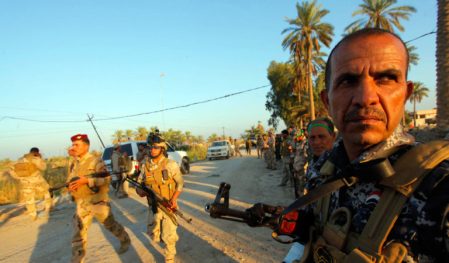
An Iranian Shiite militia in Iraq (Photo: Reuters)

It is a known fact throughout the region that the Islamic Republic of Iran founded the Lebanese Hezbollah as an offspring to expand its influence in the Middle East and gain a foothold on the shores of the Mediterranean.

U.S. National Security Advisor Lt. General H.R. McMaster recently accused Tehran of imposing the “Hezbollah model” to gain influence over various Middle East states, destabilizing the region through the process.

Such a blueprint includes targeting vulnerable governments across the region through a variety of plots while, at the same time, backing armed militia groups stationed in those countries. Hezbollah has already managed to consolidate its influence over the government of Lebanon after Michel Aoun, a Hezbollah ally, took control over the country’s presidency last year.

It has also become quite obvious that the United States, despite the highly flawed nuclear deal which supposedly aimed to curb Iran’s nuclear program, enjoys the leverage of pressuring Iran through the use of comprehensive sanctions. Tehran will likely not forget this obvious factor and knows the Trump administration can kick-start new sanctions whnever it deems necessary.

The new administration has already slapped the Iranian regime with two series of sanctions in the past three months and more can be expected.

The reference made by Trump’s national security adviser to “militias and other illegal armed groups” backed by Iran refers to the vast variety of Shiite militias in Iraq under the Baghdad-backed umbrella of the Popular Mobilization Units (PMU). These groups have their parallel in Yemen with the Houthis, who are focusing their efforts on ousting the Western-backed government.

British researchers discovered evidence indicating without a doubt how Tehran is deeply involved in keeping a “weapons pipeline” up and running for Houthis.

At the same time, Tehran continues to harass the Saudis from their southern border and threaten international shipping lines passing through the strategic Bab el Mandab waterway connecting the Red Sea to the Gulf of Aden.

This goes in line with a conglomerate of Shiite foot-soldiers Iran has rallied from Afghanistan, Pakistan and other countries for the bloodbath raging on in Syria after six long years.

Iran has abetted the barbaric tactics of the Bashar Assad regime in Syria, further demonstrating its ill intentions across the region. The PMU and Hezbollah have boosted Tehran’s efforts and role in keeping Assad in power. They have all been accused of having played atrocious roles in unspeakable war crimes, with the Khan Shaykhoun chemical attack by Assad in Idlib Province of northern Syria acting as yet another stark reminder of this reality.

Iran’s destabilizing role in nations across the Arab and Islamic worlds has been on the rise significantly with news reports seen in recent months.

The Iraqi Parliament legitimized the PMU last November through the adoption of a law aimed at maintaining this entity’s command structure and hierarchy. Iraqi Sunnis, alongside all minorities in the country including Christians, Yazidi and others, are now left extremely concerned, knowing how this measure can actually legalize the brutal retaliation measures conducted by the Shiite militias.

While Iran’s “medddling” has become obvious to the international community, officially Tehran has continued to deny its role of fueling these Middle East conflicts.

In March, Iranian Foreign Ministry spokesman Bahram Ghasemi denied “any intervention in the internal affairs of Arab countries.” The irony lies in the fact that despite such remarks, Alireza Zakani, known to be a close confidante of Iranian Supreme Leader Ali Khamenei, is also known to have boasted in remarks dating back to November 2014 of Iran controlling four Arab capitals following the Houthis’ capture of the Yemeni capital. The list included Baghdad, Beirut and Damascus.

Following eight years of the Obama administration’s disastrous Iran engagement policy, it is high time to make it crystal clear to Iran that such a trend will no longer be tolerated and must come to an end.

The Real War in ‘Syria’ and the Strategy for Long-Term Victory

April 7, 2017

The Real War in ‘Syria’ and the Strategy for Long-Term Victory, PJ MediaMichael Ledeen, April 6, 2017

(Iran is ripe for regime change and the sooner the better. Please see also, Iran’s Elections: A Breaking Crisis? and All 15 Arab Summit resolutions blast Iran.– DM)

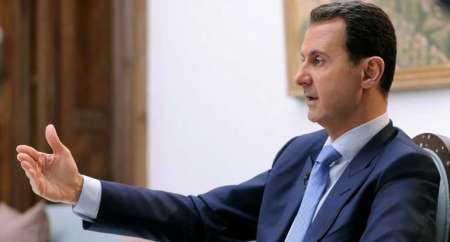
Syria’s President Bashar al-Assad (Reuters, RTX34BQA)

Punishing Assad would be satisfying, but we’ve got a big war to win. It’s smarter and more effective to go after the regime in Tehran. Not militarily, but rather supporting the tens of millions of Iranians who detest the Khamenei regime. Call it political warfare, or subversion, or democratic revolution. It worked against the Soviet Empire, and there are good reasons to believe it would work in Iran as well. Most Iranians, suffering under the failed regime, want a freely chosen government that will address their problems instead of dispatching their husbands and sons sent to the battlefield.

Regime change in Iran would be devastating to Assad and Putin, and its positive effects would be felt in North Africa and our own hemisphere, striking at the Revolutionary Guards and Hezbollah in Latin America. And it would remind the tyrants that America’s greatest weapon is political. We are the most revolutionary country in the world, and we should act like it.

****************************

Of course I loathe Assad. And of course I despise the Obamans for that phony red line and the subsequent retreat-and-bogus-Russian-deal. But just carrying out vengeance against Assad isn’t good enough. It fails to address the central problem of our time: the global anti-American alliance.

There is no Syria any more, and the enemy forces on the Middle Eastern battlefield come from various jihadi groups, and three regimes: Moscow, Tehran, and Damascus. We have to defeat them all, and other members of the enemy alliance, including Cuba and North Korea. Nikki Haley has it right: “The truth is that Assad, Russia and Iran have no interest in peace.”

Indeed, they are waging war, and the principal force driving that war is not Assad, but Iranian Supreme Leader Ali Khamenei. Khamenei’s killers have been alongside Assad’s from the very beginning, as the survival of the Syrian dictator is crucial to Iranian ambitions and quite likely also the survival of the Islamic Republic itself. Listen to Defense Secretary James Mattis a few days ago (from Reuters):

Asked about comments Mattis made in 2012 that the three primary threats the United States faced were “Iran, Iran, Iran,” Mattis told reporters that Iran’s behavior had not changed in the years since.

“At the time when I spoke about Iran I was a commander of US central command and that (Iran) was the primary exporter of terrorism, frankly, it was the primary state sponsor of terrorism and it continues that kind of behavior today,” Mattis said.

True, and Mattis’ characteristically strong language points the way to the best American action in the region, namely bringing down the Tehran regime. Lashing out at Assad isn’t nearly good enough. After all, what strategic objective would we accomplish by smashing, even removing, Assad? The Iranian and Russian fighters would still be there, as would the Islamist forces. The demands on our military would dramatically expand. We do not want to occupy a significant land mass in what used to be called Syria, nor do we seem to have sorted out what we want to do with the Turks and the Kurds.

Punishing Assad would be satisfying, but we’ve got a big war to win. It’s smarter and more effective to go after the regime in Tehran. Not militarily, but rather supporting the tens of millions of Iranians who detest the Khamenei regime. Call it political warfare, or subversion, or democratic revolution. It worked against the Soviet Empire, and there are good reasons to believe it would work in Iran as well. Most Iranians, suffering under the failed regime, want a freely chosen government that will address their problems instead of dispatching their husbands and sons sent to the battlefield.

Regime change in Iran would be devastating to Assad and Putin, and its positive effects would be felt in North Africa and our own hemisphere, striking at the Revolutionary Guards and Hezbollah in Latin America. And it would remind the tyrants that America’s greatest weapon is political. We are the most revolutionary country in the world, and we should act like it.

Forging a new approach to Iran

March 6, 2017

Forging a new approach to Iran, Washington Times, Shahram Ahmadi Nasab Emran, March 5, 2017

iranianoctopusIllustration on the continuing threat of Iran by Alexander Hunter/The Washington Times

By identifying the gross overreach by the Iranian regime and promising a swift, punitive response, the White House’s stance marked the end of a longstanding American policy of naive appeasement. In so doing, the Trump administration has rightly recognized the true source of instability and existential threat the region faces. Now, instead of issuing broad statements, it must act on a smart strategy for dismantling the key pillars of Iran’s international terror network and stunting the regime’s emboldened overreach.

***********************

Even as the Trump administration seeks to designate the Revolutionary Guard as a Foreign Terrorist Organization, Iran continues its blatant defiance of international norms. Promising “roaring missiles” if threatened, Tehran has test fired several ballistic weapons capable of delivering nuclear material in just the past month. A fundamentally weak regime with dated military capabilities, Iran is attempting to call the United States’ bluff, perhaps to gain leverage in any subsequent re-evaluations of the nuclear deal Tehran struck with the Obama administration. Several blistering statements from the White House backed by a round of sanctions presage the administration’s muscular new approach. But if it hopes to secure the region, it must systematically target the core destabilizing activities of the regime.

In a steady stream of denunciations, the White House pledged tougher U.S. action if the mullahs continue to violate international norms through illicit missile tests, making clear that the Obama era of appeasement is over. “Instead of being thankful to the United States for these agreements, Iran is now feeling emboldened,” an official White House statement read. “We are officially putting Iran on notice.” While many Iranian officials dismissed President Trump’s tough talk on the nuclear deal as empty campaign rhetoric, the president’s appointment of fellow anti-regime hardliner Gen. James Mattis demonstrates his intention to deliver.

Perhaps more importantly, the White House has also challenged the regime’s extended proxy offensives against U.S. allies and friends in the neighborhood. Such actions “underscore what should have been clear to the international community all along about Iran’s destabilizing behavior across the Middle East,” the White House statement continued. Contrary to President Obama’s Middle East policy of abandoning friends and allies and trying to make friends with the adversaries, the Trump administration will fully support its friends. Specifically, this stance challenges Iran’s practice of hiding behind Hezbollah and Houthis militants as it funds and trains them.

Holding a vastly dated arsenal of weapons, Iran is no match for U.S. firepower, leaving only backchannel mercenaries to promote regional dominance. The White House acknowledged this dynamic, specifically characterizing the affront against Saudi forces as being “conducted by Iran-supported Houthi militants.” This link was never recognized by the Obama administration. Such oversight left Iran free to grow and strengthen its hand in these groups, which terrorize the region and undermine our partners. If the Trump administration will craft a strategy for stunting Iran’s proxy network, particularly by cutting funding and armament flows, the region would be far safer and more stable.

Noting Mr. Trump’s concerns about the nuclear deal being “weak and ineffective”, the Trump administration addressed a third key issue in the U.S.-Iranian relationship. Rapidly losing money and influence, the nuclear deal allowed the regime to avoid military confrontation over its development program for which it was grossly unprepared. And despite the intention of weakening the regime and strengthening the Iranian people, rushed U.S. concessions granted the regime an eleventh-hour trickle of lifeblood, both financially and symbolically. By rolling sanctions back, destabilizing behavior was ostensibly met with an influx of funds. As such, the deal signaled that military action against Iran was highly improbable, thus essentially greenlighting the illicit activity that effected warnings and sanctions from the White House over the past month. And despite official remarks by Iranian officials denouncing these statements as naive and weak, the regime would be in dire straits if America turns off the faucet opened by the nuclear deal.

Finally, the administration’s condemnation for Iran’s broader support for terrorism demonstrated clear perspective on the direct threat it poses to international security. In addition to supporting Hezbollah, Iran is currently involved in a life-and-death battle in Syria that includes continuous weapon and militant transfer from Iran to Syria. President Bashar Assad’s downfall in Syria would destroy the linchpin of Iran’s terror apparatus.

Further, any sustainable resolution calls for the withdrawal of all foreign forces from Syria, culling both activity in the country and a pipeline to Hezbollah via the porous borders between Syria and Libya. As Iran finds itself backed into a corner by its regional export of terror, Mr. Trump and his team have many cards to play.

By identifying the gross overreach by the Iranian regime and promising a swift, punitive response, the White House’s stance marked the end of a longstanding American policy of naive appeasement. In so doing, the Trump administration has rightly recognized the true source of instability and existential threat the region faces. Now, instead of issuing broad statements, it must act on a smart strategy for dismantling the key pillars of Iran’s international terror network and stunting the regime’s emboldened overreach.

Ahead of Netanyahu-Trump talks, Abbas woos Iran

February 13, 2017

Ahead of Netanyahu-Trump talks, Abbas woos Iran, DEBKAfile, February 13, 2017

He is warning Trump that the US embassy’s relocation to Jerusalem and the strengthening of US-Israeli ties would be countered by a parallel enhancement of Palestinian relations with Tehran. The message to Vladmir Putin is that, even though he is fully engaged in Syria, he can’t afford to abandon the Palestinians; Abdel-Fatteh El- Sisi, the Gulf rulers and Jordan’s monarch are put on notice that if they have a problem with rising Iranian influence in Baghdad, they had better be prepared to find Tehran’s imprint in Ramallah too.

**********************************

EXCLUSIVE: Palestinian leader Mahmoud Abbas (Abu Mazen) has pivoted towards Iran in a move to pre-empt a possibly impending US embassy move from Tel Aviv to Jerusalem, and the friendly talks scheduled to take place in Washington Wednesday, Feb. 15, between President Donald Trump and Prime Minister Binyamin Netanyahu.

This is revealed by DEBKAfile’s exclusive intelligence sources.

Our sources report that the Abbas has opened a direct channel of communications between Ramallah and Tehran as a permanent fixture. Fatah Central Committee member Jibril Rajoub is in charge of the Palestinian end of the relationship and will lead the first official Palestinian delegation to Tehran.

For some months now, he has served as Abbas’s senior spokesman and the Palestinian Authority’s “foreign minister.” In the third week of January, Rajoub declared: “In our opinion moving the embassy to Jerusalem is a declaration of war on the Muslims.”

Two weeks ago, Palestinian and Iranian delegations met secretly for the first time in a European country. Two more encounters followed and dealt with such urgent matters as the fate of Palestinians stranded on Syria’s battlefronts and in former refugee camps. They also discussed the Palestinian refugees living in Lebanon and their problematic relations with Iran’s Shiite surrogate, Hizballah.

At their third meeting, the Iranian delegates asked where the Palestinian Authority in Ramallah stood vis-a-vis a political resolution of the Syrian conflict. They decided to talk about this some more at the next Iranian-Palestinian meeting on a date this month and a location yet to be arranged.

As part of his pivot towards Tehran, Abbas made sure to send the Palestinian Authority’s warm congratulations to Iran’s rulers on the anniversary of their Islamic revolution: He asked God “to bring more stability and prosperity to Iran and its brotherly people as they celebrate this occasion, and more progress and advancement the brotherly relations between our peoples.”

Abu Mazen’s pro-Iranian shift is intended as a signal to five parties, DEBKAfile’s intelligence sources report: President Trump, the Presidents of Russian and Egypt, the rulers of the Gulf Emirates and King Abdullah of Jordan.

He is warning Trump that the US embassy’s relocation to Jerusalem and the strengthening of US-Israeli ties would be countered by a parallel enhancement of Palestinian relations with Tehran. The message to Vladmir Putin is that, even though he is fully engaged in Syria, he can’t afford to abandon the Palestinians; Abdel-Fatteh El- Sisi, the Gulf rulers and Jordan’s monarch are put on notice that if they have a problem with rising Iranian influence in Baghdad, they had better be prepared to find Tehran’s imprint in Ramallah too.

Iran tests ballistic missile in defiance of UN resolution, US officials say

January 30, 2017

Iran tests ballistic missile in defiance of UN resolution, US officials say, Fox News, January 30, 2017

President Trump on Sunday spoke with King Salman of Saudi Arabia, a conversation in which the two “agreed on the importance of rigorously enforcing the Joint Comprehensive Plan of Action with Iran and of addressing Iran’s destabilizing regional activities,” the White House said in a statement.

A ballistic missile launch could potentially fall under “destabilizing regional activities.”

The launch also comes a day before Jordan’s King Abdullah arrived in Washington for meetings with Vice President Pence and Defense Secretary Mattis.

*****************************

Iran conducted a ballistic missile test in yet another apparent violation of a United Nations resolution, U.S. officials told Fox News on Monday.

The launch occurred at a well-known test site outside Semnan, about 140 miles east of Tehran, on Sunday.

The Khorramshahr medium-range ballistic missile flew 600 miles before exploding, in a failed test of a reentry vehicle, officials said. Iran defense minister Brigadier Gen. Hossein Dehqan said in September that Iran would start production of the missile.

U.N. resolution 2231 — put in place days after the Iran nuclear deal was signed — calls on the Islamic Republic not to conduct such tests. However, this is at least Iran’s second such test since July. The resolution bars Iran from conducting ballistic missile tests for eight years and went into effect July 20, 2015.

Iran is “called upon not to undertake any activity related to ballistic missiles designed to be capable of delivering nuclear weapons, including launches using such ballistic missile technology,” according to the text of the resolution.

The landmark nuclear deal between Iran and world powers, however, does not include provisions preventing Iran from conducting ballistic missile tests, and Iran claims the tests are legitimate because they are not designed to carry a nuclear warhead.

President Trump on Sunday spoke with King Salman of Saudi Arabia, a conversation in which the two “agreed on the importance of rigorously enforcing the Joint Comprehensive Plan of Action with Iran and of addressing Iran’s destabilizing regional activities,” the White House said in a statement.

A ballistic missile launch could potentially fall under “destabilizing regional activities.”

The launch also comes a day before Jordan’s King Abdullah arrived in Washington for meetings with Vice President Pence and Defense Secretary Mattis.

Get to Know Iran’s Terrorist ‘Ambassador’ to Iraq

January 25, 2017

Get to Know Iran’s Terrorist ‘Ambassador’ to Iraq, Clarion Project, Shahriar Kia, January 25, 2017

(Please see also The Islamic Revolutionary Guard Corps (IRGC) Has Become More Influential and Powerful. — DM)

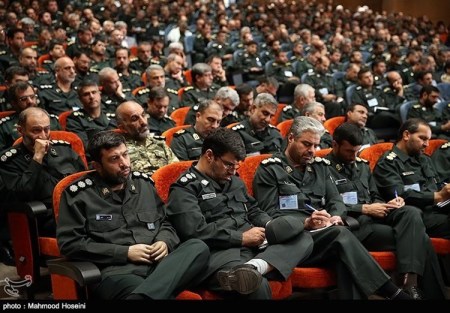
iran-revolutionary-guards-atta-kenare-afp-getty-with-ira-masjed-640-320iIranian Revolutionary Guards. (Photo: © ATTA KENARE/AFP/Getty Images). Inset: Brigadier General Iraj Masjedi (Photo: Twitter)

In contrast to international political norms, Iran’s embassy in Iraq is not under foreign ministry authority. The IRGC enjoys complete hegemony over this diplomatic post.

Iran’s new ambassador appointment in Iraq provides a clear insight into the terrorist nature of the mullahs’ intentions, and Tehran’s specific objectives of continuing a policy of lethal meddling in Iraq — while using the country as a springboard for further intervention in Syria and beyond.

This is a challenge the new U.S. administration and Congress should meet with a firm policy calling to end Iran’s destructive role in the Middle East.

************************************

Iran’s new ambassador to Iraq is part of a terrorist network, an advisor of the notorious Revolutionary Guards (IRGC) Quds Force. Brigadier General Iraj Masjedi replaces Hassan Danaii Far, himself a senior IRGC member.

“The Iranian embassy in Baghdad is considered a strategic post outside the country and the ambassador is a highly important figure,” notes the state-run Asre Iran daily.

Masjedi is often quoted by Iran’s media as a senior advisor to the terrorist Quds Force commander Qassem Suleimani, also sanctioned by the West and under a travel ban.

According to the Saudi news site Al Arabiya, “The Revolutionary Guards considers the Iranian embassy in Baghdad of strategic importance within the states that are subject to Iranian influence.

“Since the fall of the former Iraqi regime in 2003, all the ambassadors of Iran to Iraq were members of the Revolutionary Guards.”

In contrast to international political norms, Iran’s embassy in Iraq is not under foreign ministry authority. The IRGC enjoys complete hegemony over this diplomatic post.

Far’s specific mission in Iraq was literally to purge all members of the Iranian opposition, the People’s Mojahedin Organization of Iran (PMOI/MEK), through attacks launched by the Quds Force and affiliated Iraqi proxy groups. The MEK was able to resettle all its members to Europe (which is a different discussion).

Masjedi has a dark record of playing a major role in suppressing the Iraqi people and specifically leading genocidal attacks targeting locals of Diyala Province, a melting pot bordering Iran where Sunnis, Shiites, Kurds and others used to live in peace prior to Iran’s covert occupation of Iraq from 2003 onward.

The highly-respected, Saudi-founded pan-Arab news outlet Asharq Al-Awsat writes, “…commanders of the Quds Force who supervise the Shi’ite militia leadership in Iraq are Brigadier Generals Mohammed Shahlaei, Mojtaba Abtahi, Iraj Masjedi and Ahmad Forouzandeh, who are all directly supervised by the Quds Forces Commander Qasem Soleimani.”

Masjedi is a loathed figure in Iraq for his efforts to completely restructure the province’s social fabric. He is known for his remarks justifying Iran’s military presence in Iraq.

“The enemy charged towards Iraqi cities and reached Samara and Karbala, and near Iran’s borders in Diyala. And you expect us to remain silent?” he said.

“We must strategically deepen our struggle,” Masjedi explained on January 31t, 2015, shedding light into the dangerous mentality of an individual now appointed as Iran’s top diplomat in Iraq.

This statement is significant when taken together with the fact that Iran remains designated as the leading state sponsor of terrorism and has taken advantage of the Obama administration’s failed policy of delivering Mesopotamia on a silver platter to Tehran’s mullahs.

The IRGC has stationed around 7,000 armed Quds Force-affiliated elements in various cities across Iraq.

Masjedi strongly agrees with senior Iranian officials who underscore the necessity for Iran to support Syrian dictator Bashar Assad and send troops and Shiite militias to the Levant.

“War in that region [i.e., Syria] is in ways providing security for [Iran],” he said.

The people of Aleppo and Diyala have no doubts about the active role that Iran, the IRGC and the Quds Force are playing in the region.

Masjedi is also known for his comments regarding the battle for the city of Fallujah, a former Islamic State stronghold west of Baghdad, emphasizing, “The involvement of the Iranian Revolutionary Guards in the battle of Fallujah was in order to preserve Iran’s status as a Shiite center in the world. We are defending Iran and its borders.”

“The next step of the Islamic Revolutionary Guard Corps was been the formation of the massive Basij [mobilization] force that is faithful and a friend of Islamic Iran, such as the Iraqi Hashd al Shabi [PMF], which has been established as a powerful army with our organizing and our experience in the Sacred Defense [Iran-Iraq War],” Masjedi said according to a Long War Journal report.

“Many of the militias that are part of the PMF remain hostile to the United States, and some have threatened to attack U.S. interests in the region. One of the more influential militias within the PMF, Hezbollah Brigades, is listed as a Foreign Terrorist Organization. Several influential PMF leaders, including the operational leader of the PMF, are listed by the U.S. as global terrorists,” the LWJ report adds.

Iran’s new ambassador appointment in Iraq provides a clear insight into the terrorist nature of the mullahs’ intentions, and Tehran’s specific objectives of continuing a policy of lethal meddling in Iraq — while using the country as a springboard for further intervention in Syria and beyond.

This is a challenge the new U.S. administration and Congress should meet with a firm policy calling to end Iran’s destructive role in the Middle East.

“The regime in Tehran is the source of the crisis in the region and killings in Syria; it has played the greatest role in the expansion and continuation of ISIS. Peace and tranquility in the region can only be achieved by evicting this regime from the region,”said Iranian opposition leader Maryam Rajavi, President of the National Council of Resistance of Iran (NCRI).

The Islamic Revolutionary Guard Corps (IRGC) Has Become More Influential and Powerful

January 25, 2017

The Islamic Revolutionary Guard Corps (IRGC) Has Become More Influential and Powerful, Iran News Update, January 24, 2017

(Please see also, What Is Iran’s Policy-Making Mechanism? — DM)

10611

The IRGC has successfully suppressed domestic opposition. Examples  include supporters and leaders of the Green Movement, and religious and ethnic minorities such as Kurds, Sunnis and Arabs. As well, other political factions, such as the moderates, have come to the conclusion that they need the blessing of the IRGC in order to survive politically.

The reintegration of Tehran into the global financial system is deepening, and more countries are committing themselves to trade with Iran and investment in its markets.The IRGC and the office of the supreme leader are the main beneficiaries of the increased revenues, which have been diverted into upgrading the IRGC’s military capabilities.  Iran’s lawmakers voted to increase the military budget despite the high unemployment rate.

Regional stability was an obstacle for the IRGC’s objective of expanding its influence beyond Iran’s borders. Rafizadeh writes, “In fact, it was through domestic conflicts that the IRGC expanded its stranglehold by penetrating other countries such as Lebanon and Iraq, and gave birth to several critical Shia proxies. In the long term, these proxies increase Iran’s political and ideological influence.”  He adds, “The more tensions and conflicts there are, the more the militaristic role of the IRGC increases in the region in order to achieve its regional ambitions. This has led to a vicious series of heightened conflicts.”

Once the child that Iran’s Islamic revolution gave birth to, the IRGC is now becoming the father of the Islamic republic. This can only be reversed if global powers or a coalition of regional nations stand against the IRGC’s increasing influence in the region.

*************************************

Majid Rafizadeh, Iran¬ian-American political scientist, Harvard University scholar and president of the International American Council, writes in an article for The National on January 23, 2017 about the Islamic Revolutionary Guard Corps, who were given birth to during Iran’s 1979 revolution.

Ayatollah Ali Khamenei, after becoming the country’s second supreme leader in 1989, gave considerable power to the IRGC, while sidelining other powerful clerics.

Although the IRGC still had obstacles preventing it from expanding its influence, recent developments suggest that those barriers are being lifted, allowing Iran’s military to be the key decision-maker in Iran’s policy-making.

Many people, who once had considerable amount of political weight and influence, which counterbalanced the IRGC’s increasing power, do not play a crucial role any more. The late Ali Akbar Rafsanjani, who was one of the founding fathers of the Islamic republic was sidelined by Khamenei towards the end of his life, still enjoyed a considerable amount of political legitimacy in creating challenges for the IRGC and others. However, Rafsanjani died this month.

Rafsanjani had significant power as a member of the Assembly of Experts, which is given the power to supervise, elect or remove the supreme leader. After his death, the IRGC is now much stronger, suggesting that the next supreme leader will be under the IRGC’s influence. If the IRGC controls the next supreme leader, it rules Iran’s political establishment unequivocally.

While the nuclear agreement remains in place, the Iranian government’s global legitimacy expands, leading to less scrutiny from the international community on how the IRGC treats domestic opposition.

The IRGC has successfully suppressed domestic opposition. Examples  include supporters and leaders of the Green Movement, and religious and ethnic minorities such as Kurds, Sunnis and Arabs. As well, other political factions, such as the moderates, have come to the conclusion that they need the blessing of the IRGC in order to survive politically.

The reintegration of Tehran into the global financial system is deepening, and more countries are committing themselves to trade with Iran and investment in its markets.The IRGC and the office of the supreme leader are the main beneficiaries of the increased revenues, which have been diverted into upgrading the IRGC’s military capabilities.  Iran’s lawmakers voted to increase the military budget despite the high unemployment rate.

Reuters reported, “Iranian lawmakers approved plans to expand military spending to 5 per cent of the budget, including developing the country’s long-range missile programme which US president-elect Donald Trump has pledged to halt. The vote is a boost to Iran’s military establishment – the regular army, the elite IRGC and the defence ministry.”

Regional stability was an obstacle for the IRGC’s objective of expanding its influence beyond Iran’s borders. Rafizadeh writes, “In fact, it was through domestic conflicts that the IRGC expanded its stranglehold by penetrating other countries such as Lebanon and Iraq, and gave birth to several critical Shia proxies. In the long term, these proxies increase Iran’s political and ideological influence.”  He adds, “The more tensions and conflicts there are, the more the militaristic role of the IRGC increases in the region in order to achieve its regional ambitions. This has led to a vicious series of heightened conflicts.”

The IRGC, more than ever before, is capable of exploiting the rise of Sunni extremist groups such as the ISIL, not only to justify its military presence in the region, but also to increase its global legitimacy by arguing that it is fighting extremism. Without a specific agenda for fighting ISIL, western powers have allowed a certain amount of leeway to the IRGC.  Additionally, some global and regional powers have been reluctant to address counterbalancing the increasing role of the IRGC across the region for economic or geopolitical reasons.

Although founded as a theocracy, Iran is becoming more of a military state as the IRGC pursues its regional ambitions. According to Rafizadeh, “We are more likely to witness the increasing influence and domination of the IRGC domestically and regionally as several major obstacles against Iran’s military have been lifted.”

Once the child that Iran’s Islamic revolution gave birth to, the IRGC is now becoming the father of the Islamic republic. This can only be reversed if global powers or a coalition of regional nations stand against the IRGC’s increasing influence in the region.

Obama’s Enabling of Palestinian Terror

January 11, 2017

Obama’s Enabling of Palestinian Terror, Front Page MagazineJoseph Puder, January 11, 2017

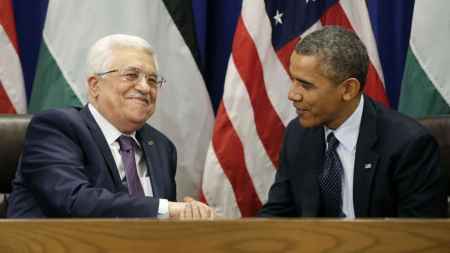
abbasobama

When we consider last month’s United Nations Security Council resolution (UNSC) 2334 that passed with deliberate U.S. abstention and later, justified in a speech by U.S. Secretary of State John Kerry, it makes the adage below come to mind. The Midrash (commentary on part of the Hebrew Scriptures) tells us, “He who becomes compassionate to the cruel will ultimately become cruel to the compassionate.”  Maimonides wrote in The Guide of the Perplexed that “the wicked and calculating person who killed intentionally and was sentenced to death – if he seeks sanctuary among us, we must not provide him with asylum, and not have mercy upon him, because compassion toward the wicked is cruelty to all beings.

In supporting the Palestinian regime that seeks the destruction of the Jewish State as its ultimate goal, the Obama administration is being compassionate toward the wrong party.  The Obama administration is knowingly and deliberately supporting the creation of another unstable Arab authoritarian regime that has failed its people.  Mahmoud Abbas, like Arafat before him, albeit more subtle, seeks the same goal: undermining the Jewish state, and replacing it with an undemocratic Palestinian state.  Abbas wouldn’t return to the negotiating table unless he is heavily bribed, and like Arafat, at the crucial moment when all reasonable concessions had been made, he walked out.

At their September 16, 2008 meeting in Jerusalem, Israeli Prime Minister Olmert agreed to forgo sovereignty over the Temple Mount in Jerusalem, Judaism’s holiest site, and proposed that in the framework of the peace agreement, the area containing the religious sites in Jerusalem would be managed by a special committee consisting of representatives from five nations: Saudi Arabia, Jordan, Palestinians, the U.S. and Israel.  The advisors and Fatah officials heard that Olmert laid out for Abbas not only the details of the agreement but also a large map upon which he outlined the borders of the future Palestinian state.  Abbas, like Arafat in July, 2000, walked out.

Considering Palestinian terrorism incited by Hamas and the Palestinian Authority against Jewish civilians and soldiers alike, it becomes clear that the Obama administration has shown compassion toward Palestinian aspirations and contempt for Jews aspiring to settle in their ancestral regions of Judea and Samaria.  The Administration would be quite content on a “judenrein” West Bank.   In fact, the U.S. and its European allies support the PA with huge grants, portions of which goes to pay salaries to Palestinian terrorists with blood on their hands and their families.  They have likewise funded Palestinian-Arab construction projects, built illegally throughout the West Bank and Jerusalem.

The Obama administration has also shown compassion for the Iranian regime by ending the economic sanctions against the radical Islamic Iranian regime, which hangs gays and lesbians as well as juveniles.  Amnesty International reported on January 26, 2016, that “Iran remains the leading executioner of juvenile offenders.”  The New York Post reported on August 3, 2016 that “The Obama administration quietly shipped $400 million stacked on wooden pallets in an unmarked plane to Iran in January – just as Tehran was releasing four Americans who had been detained there.”  This was done to appease the Islamic Republic, which is the leading state sponsor of terror around the world, and that has taken Americans in Iran as hostages.

U.S. Mideast mediator Dennis Ross pointed out that the Obama administration was so enamored with the so-called “moderate” Iranian President Rouhani, that it “showed readiness to accept an industrial-scale Iranian nuclear program and not to roll it back.”  The Obama administration was willing to bend its principles in order to foster a relationship and perhaps an alliance of sorts (against the Islamic State in Iraq) with the Ayatollahs regime that promised “to wipe Israel off the map.”

In the summer of 2009, the Iranian people voted for freedom and against the choices of the theocratic regime that oppressed them. They demonstrated in the millions with signs that read “Obama, are you with them or with us.”  Obama did not respond. He proved to have little compassion for the oppressed.

In Syria, the Shiite-Iranian Revolutionary Guards and their supported Iraqi-Shiite militias, as well as the Lebanese-Shiite terrorist group Hezbollah, are murdering hundreds of thousands of innocent Syrian Sunni Muslims, Christians, and others civilians with impunity.  They are bolstering the dictatorship of the Alawi (offshoot of Shiite Islam) minority ruler Bashar Assad.  The Russians have also joined in the killing of Syrian civilians in the name of combatting so-called “terrorists.”

The Palestinians of Hamas and the PA raise their children on hate and expound on the destruction of the Jewish state in schools, mosques, in the media, and in their policy directives.  The Palestinian intolerance towards Jews and Christians is deeply embedded, but due to political correctness, it has never been sufficiently reported in the western media, or by western governments.  Under the Palestinian regime, Christian Arabs have been victims of frequent human rights abuse by Muslims. There are many examples of intimidation, beatings, land theft, firebombing of churches and other Christian institutions, denial of employment, economic boycotts, torture, kidnapping, forced marriage, sexual harassment, and extortion. Palestinian Authority (PA) officials are directly responsible for many of the human rights violations. Muslims who have converted to Christianity are in the greatest danger. They are often left defenseless against cruelty by Muslim fundamentalists. Some have been murdered.

There is a clear dichotomy in determining who the compassionate side is, and who is the cruel. It comes together perfectly clear in the Syrian civil war arena.  Thousands of Palestinians are fighting on behalf of the Syrian dictator, and help in slaughtering the Syrian people who are fighting for their freedom.  The Palestinian radical group, the Popular Front for the Liberation of Palestine-General Command (PFLP-GC) led by Ahmed Jibril, provided the Assad war machine with intelligence and ground support, when he laid siege to the Palestinian populated Yarmouk refugee camp.  The PFLP-GC, once a member of the Palestinian Liberation Organization (PLO) joined the Assad troops in killing fellow Palestinians.

Conversely, Israel has opened its hospital gates to wounded Syrians, both civilians and soldiers.  Prime Minister Netanyahu announced last month “We are prepared to take in wounded women and children, and also men if they are not combatants. Bring them to Israel, we will take care of them in our hospitals as we have done with thousands of Syrian civilians. We are looking into ways of doing this. It is being explored as we speak.”  Netanyahu added, “The suffering is great, and the one initiative we took is to help – as I said – thousands of Syrians who are sometimes mutilated beyond belief. We help them. I offered to do more today. I don’t know if we can resolve [the crisis in] Syria, but we can help mitigate some of the suffering. That is the best that Israel can do.”

Being compassionate toward the Palestinian’s aspirations to destroy the Jewish state in stages by forming a terrorist supporting state, the Obama administration is being cruel toward the Jewish state, which seeks to defend its people from the ongoing Palestinian terror.