Posted tagged ‘Iran and terror’

Which Nation is (Still) the Number One Sponsor of Terrorism?

October 3, 2016

Which Nation is (Still) the Number One Sponsor of Terrorism? Gatestone InstitutePeter Huessy, October 3, 2016

The June State Department report also lists 58 “Foreign Terrorist Organizations,” of which over a dozen are allied with Iran. One Iranian Al Qaeda agent was specifically sanctioned by the US Treasury for distributing cash to the same al-Nusra Front the Iranian Foreign Minister complains is a terrorist organization.

Even more chilling has been Iran’s joint missile and technology cooperation with North Korea, making the potential use of weapons of mass destruction against the US a growing possibility.

On September 14, the Iranian Foreign Minister wrote in the New York Times that, “coordinated action at the United Nations to cut off the funding for ideologies of hate and extremism” is needed along with “a willingness from the international community to investigate the channels that supply the cash and the arms” to terrorists. He concluded with an appeal to “join hands with the rest of the community of nations to eliminate the scourge of terrorism and violence that threatens us all.”

Given that in 2015 alone there were some 11,774 terrorist attacks in 92 countries, killing 28,300 people, one can agree that such action is needed. The irony, of course, is that the US Department of State released its annual report in June on state sponsors of terrorism, and Iran was the gold medalist for the world’s number one terrorist nation — an honor it has held since 1984. Only two other countries were listed as state sponsors of terror: Syria and Sudan.

Having Iran’s Foreign Minister call for an end to terrorism is like having Bonnie and Clyde call for law and order.

The report makes clear, along with other available evidence, that much of the terrorism in the world is Iran’s handiwork — especially the terrorism directed at America.

The report emphasized that Iran “remained the foremost state sponsor of terrorism in 2015, providing a range of support, including financial, training, and equipment, to [terror] groups around the world.” Iran provided arms and cash to terrorist groups and to nearly 30 Shia terrorist militias in Lebanon, Syria, Iraq and Afghanistan, especially Hezbollah, as well as Hamas, Palestinian Islamic Jihad, Houthi rebels in Yemen, and Shia militias in Bahrain.

On September 13, 2015, the US Central Command officially reported that Iran is specifically responsible for killing at least 500 American soldiers through the use of Improvised Explosive Devices (IEDs) in Iraq and Afghanistan.

And the current defense minister in Iran, appointed by President Rouhani, orchestrated the bombing of the Marine barracks in Lebanon in 1983 that killed 241 American soldiers.

Overall, the State Department report lists 13 “terrorist safe havens” around the world where “terrorists are able to organize, plan, raise funds, communicate, recruit, train, transit and operate.” These safe havens include remote areas in Southeast Asia, the Middle East and South America, virtually all of which have seen terrorist related activity by Iran and its IRGC. In just the Americas, this includes, says the Clarion Project, intelligence and terrorist networks in Argentina, Brazil, Uruguay, Chile, Columbia, Guyana, Trinidad and Tobago, and Suriname.

The State Department report also lists 58 “Foreign Terrorist Organizations,” of which over a dozen are allied with Iran. One Iranian al-Qaeda agent was specifically sanctioned by the US Treasury for distributing cash to the same al-Nusra Front the Iranian Foreign Minister complains is a terrorist organization.

1323-2The current defense minister in Iran, appointed by President Hassan Rouhani (left), orchestrated the bombing of the Marine barracks in Lebanon in 1983 that killed 241 American soldiers. Foreign Minister Javad Zarif (right) complains the al-Nusra Front is a terrorist organization, even as an Iranian al-Qaeda agent was specifically sanctioned by the US Treasury for distributing cash to the organization.

Iran has evidently harbored senior Al Qaeda operatives since 9/11, including facilitating the flow of fighters and funds to al-Qaeda through Iran — a kind of jihadi pipeline. In the mid-1990s, reported the Clarion Project, Iran negotiated an agreement with Osama Bin Laden to allow al-Qaeda terrorists to freely transit Iran.

And, of course, Tehran’s senior leadership financed and facilitated, along with Hezbollah, the training of the 9/11 hijackers that killed nearly three thousand people in New York, Washington and Pennsylvania. According to a December 2011 decision by Judge George B. Daniels “Iran and Hezbollah materially and directly supported Al Qaeda in the September 11, 2001 attacks.”

But 9/11 was not Iran’s first terror attack against the United States. The Iranian government also financed the attack on the Pan Am flight that blew up over Scotland in December 1988, and was also responsible for the 1996 terror attacks against Americans at Khobar Towers in Saudi Arabia, the 1998 bombings of the American embassies in Kenya and Tanzania and the 1983 bombings of our Marine barracks and embassy in Lebanon.

A number of American courts, upon hearing the evidence of Iranian government support for terrorism, found Iran guilty of terrorist attacks against the United States and its citizens, culminating in at least $56 billion in damages, which included being found guilty complicity in the 9/11 attacks.

Even more chilling has been Iran’s joint missile and technology cooperation with North Korea, making the potential use of weapons of mass destruction against the US a growing possibility.

If any UN action is taken to stop terrorism, it should start with shutting down the number one source of state-sponsored terrorism in the world — the Islamic Republic of Iran.
Obama Turns Blind Eye to Iranian Offenses in UN Speech

September 27, 2016

Obama Turns Blind Eye to Iranian Offenses in UN Speech, Clarion Project, Jennifer Breedon, September 27, 2016

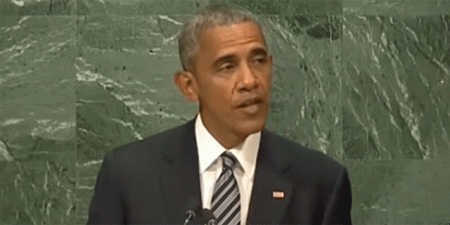
obama-un-address-2016-hpU.S. President Barack Obama addresses the UN General Assembly on Sept. 20, 2016. (Photo: video screenshot)

The Iranian leader rightfully fears a future administration that may not be willing to tolerate a total disregard for international law or human rights, given that even President Obama’s positive nod to Iran at the UN was met with the label of “continued animosity.” 

****************************

In 2015, President Obama stated that Iran’s “support for terrorism” and “its use of proxies to destabilize parts of the Middle East” was problematic, despite the Joint Comprehensive Plan of Action (the nuclear deal) that had been reached by that time that allowed Iran access to millions of previously frozen funds.

Yet, bafflingly, just five minutes after mentioning terror proxies in his 2016 UN address last week, President Obama seemed to turn a blind eye to Iran’s ongoing offenses by saying, “When Iran agrees to accept constraints on its nuclear program, that enhances global security and enhances Iran’s ability to work with other nations.”

Today, Iran is poised to move funds to its global terror proxies more easily due to the infusion of cash created by the unfreezing of their assets.  Even John Kerry admitted in 2015 that some of the money going back to Iran through sanctions relief would undoubtedly go to fund terrorism.

So, we all know it is happening and yet nothing is being done to stop them or to even state this obvious fact aloud before the very body that is designed to protect against such international violations.

The UN Convention that prohibits terrorism financing explicitly outlines the illegality of any government that commits such an offense when it

“directly or indirectly, unlawfully and willfully, provides or collects funds with the intention that they should be used or in the knowledge that they are to be used, in full or in part, in order to carry out . . . act(s) intended to cause death or serious bodily injury to a civilian, or to any other person not taking an active part in the hostilities in a situation of armed conflict, when the purpose of such act, by its nature or context, is to intimidate a population, or to compel a government or an international organization to do or to abstain from doing any act” (Article 2(1)).  

Iran is guilty in spades of all of this.

Additionally, the Iranian government remains the U.S. State Department’s top proxy war and terror sponsor. Previous reports from the U.S. State Department note that Iran remains “unwilling to bring to justice senior al-Qaeda (AQ) members [and has] previously allowed AQ facilitators to operate a core facilitation pipeline through Iran.”

The State Department has also highlighted Iran’s provision of “hundreds of millions of dollars in support of H[e]zballah in Lebanon and has trained thousands of its fighters . . . in direct support of the Assad regime in Syria” as well as terrorist groups in Palestine (Hamas), Yemen (Houthis) and “throughout the Middle East.”

President Obama’s appeals to the oppressive government of Iran have clearly fallen on deaf ears.  In a one-on-one with MSNBC’s Chuck Todd merely 24 hours after Obama’s UN speech, Iranian President Rouhani stated, “If the future administration of the United States wishes to continue animosity, it will receive the appropriate response.”

The Iranian leader rightfully fears a future administration that may not be willing to tolerate a total disregard for international law or human rights, given that even President Obama’s positive nod to Iran at the UN was met with the label of “continued animosity.”

No amount of vocal, material or financial appeasement can ease relations with the State Department’s leading state sponsor of terrorism.  Despite repeated efforts by President Obama, it will not get better until the Iranian regime abandons its practice of funding terrorism, inciting proxy wars throughout the Middle East, and oppressing their own people by using their resources to build and test weapons before providing the infrastructure needed to create a stable economy and free society for their people.

While Iranian civilians and citizens were in dire economic straits with very little government reprieve or resource allocation to ease their conditions prior to the Nuclear Deal sanctions relief, the Iranian regime was spending over $6 billion per year to support the Assad regime in Syria in its efforts to ensure a Shiite majority in the region.

The Iranian regime must be held accountable for its non-adherence to international law and its desire to finance terror globally in places like Yemen, Iraq, Lebanon, and Syria.

It must be held responsible for using funds to bankroll violence and oppression instead of providing basic necessities and freedoms for its own people.  As Obama said at the UN this year, Iran must “listen to voices of young people everywhere who call out for freedom, and dignity, and the opportunity to control their own lives.”

Rouhani made it clear that, despite all of the steps we’ve taken, including acknowledging them positively at the UN General Assembly, nothing the U.S. has done has thawed our relationship with Iran or helped to improve the security of people living in the areas ruled by Iran or its terror proxies.

Our leaders must continue to speak out against Iran’s human rights violations and the financing of terror if we ever hope to see change and remain a positive beacon of democracy and freedom.


FBI: 7,700 Terrorist Encounters in USA Last Year

September 26, 2016

FBI: 7,700 Terrorist Encounters in USA Last Year, Counter Jihad, September 26, 2016

us-mexico-border

Breitbart news has received a collection of leaked documents from the Federal Bureau of Investigation that show a massive number of terrorist encounters, especially in border states.  The documents are not classified, though they are marked sensitive.  7,712 terrorist encounters occurred from July 20, 2015 and the same date a year later — last year, in short.

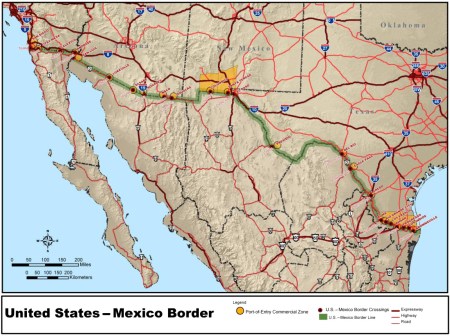
Some of the documents pertain to the entire U.S., while others focus specifically on the state of Arizona.  The states with the highest encounters are all border states. Texas, California, and Arizona–all states with a shared border with Mexico–rank high in encounters…. Most significantly, the map shows that many of the encounters occurred near the border outside of ports-of-entry, indicating that persons were attempting to sneak into the U.S.

Page Six shows a pie chart indicating that the majority of encounters in Arizona were with Islamic known or suspected terrorists, both Sunni and Shi’a.

That last is surprising, as one would expect drug cartels to make up the majority of such encounters.  The leak comes at a time when the FBI’s crime reporting shows an increase in violent crime across the country.

The Shiite terrorist organization Hezbollah has developed connections with the Latin American drug cartels because of its prominent role in heroin.  Iran’s Revolutionary Guards Corps (IRGC) controls the opium trade from the poppy fields in Afghanistan to the Levant, and they provide a great deal of opium to Hezbollah.  Hezbollah has a refining capacity in Lebanon that allows them to provide a substantial part of the world’s heroin.  They trade heroin to the Latin American drug cartels for other illegal money-making opportunities, forged documents, and access to the Americas.  Hezbollah’s operations produce between ten and twenty million dollars in revenue for its American operations, which are based out of a large Lebanese immigrant community in what is called the “Tri-border region,” an area between Paraguay, Brazil, and Argentina.

In addition to its money-making ventures, Hezbollah provides the cartels with military training.  As one of the world’s foremost guerrilla organizations, Hezbollah finds that its military trainers are sought after commodities.  They are able to parley those connections in order to perform operations in Mexico.  Their ability to infiltrate the United States, in order to conduct terrorist violence in service to Iran, is highlighted by these leaked FBI documents.

The role of Sunni groups is less fully understood, but it was a concern for the intelligence section of the United States military’s Southern Commandaccording to another set of leaks earlier this year.

Sunni extremists are infiltrating the United States with the help of alien smugglers in South America and are crossing U.S. borders with ease, according to a U.S. South Command intelligence report.  The Command’s J-2 intelligence directorate reported recently in internal channels that “special interest aliens” are working with a known alien smuggling network in Latin America to reach the United States….  Army Col. Lisa A. Garcia, a Southcom spokeswoman, did not address the intelligence report directly but said Sunni terrorist infiltration is a security concern.

“Networks that specialize in smuggling individuals from regions of terrorist concern, mainly from the Afghanistan-Pakistan region, the Middle East, and East Africa, are indeed a concern for Southcom and other interagency security partners who support our country’s national security,” Garcia told theWashington Free Beacon….  “In 2015, we saw a total of 331,000 migrants enter the southwestern border between the U.S. and Mexico, of that we estimate more than 30,000 of those were from countries of terrorist concern,” she said….

[T]he Southcom intelligence report revealed that the threat of Islamist terror infiltration is no longer theoretical. “This makes the case for Trump’s wall,” said one American security official of the Southcom report. “These guys are doing whatever they want to get in the country.”

Here at CounterJihad, we reported on Southern Command’s commander, Admiral Kurt Tidd, and his testimony before Congress on the threat.  Tidd reported that a number of terrorists were transiting the region who had gone to Syria and fought for the Islamic State (ISIS) and other radical groups.  Their ability to return to Latin America was smooth, given that they actually had legal travel documents.

Whether they can then pass into the United States is an open question.  The leaked FBI documents only talk about actual law enforcement encounters with people on terrorist lists.  How many are infiltrating without encountering law enforcement?

In Contrast To Rohani Allegations In UNGA, Senior Iranian Officials Confirm U.S. Has Met Its Obligations Under JCPOA

September 24, 2016

In Contrast To Rohani Allegations In UNGA, Senior Iranian Officials Confirm U.S. Has Met Its Obligations Under JCPOA, MEMRI,  Y. Carmon and A. Savyon* September 23, 2016

Introduction

In his September 22, 2016 speech at the UN General Assembly, Iranian President Hassan Rohani accused that the U.S. is not meeting its obligations towards Iran under the JCPOA. He said: “The lack of compliance with the deal on the part of the United States in the past several months represents a flawed approach that should be rectified forthwith… Any failure on the part of the United States in implementing it (the deal) would constitute an international wrongful act and would be objected to by the international community.”[1] 

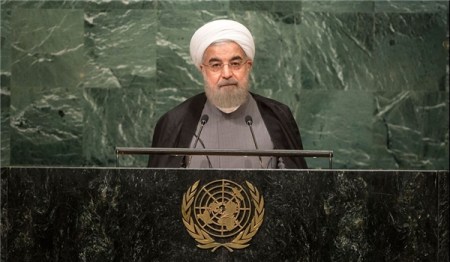
30061Rohani at the UNGA (Image: Farsnews.com, September 22, 2016)

Rohani’s statements, which are part of an Iranian attempt in recent weeks to create a false impression that the U.S. has not met its obligations towards Iran, are in stark contradiction to statements made by senior members of the Iranian negotiation team who explicitly admitted that the U.S. has in fact met its obligations under the JCPOA (see below).

This Iranian measure is a response to the refusal of Western banks to conduct transactions with Iran in dollars, despite the lifting of the nuclear sanctions in January 2016, because the initial sanctions imposed on Iran by Congress for human rights violations and for terrorism are still in force. As will be recalled, Iran refuses to negotiate with the West on issues of terrorism, on the grounds that these issues are internal sovereign matters.

Below is a MEMRI report on this issue published on August 15, 2016.

As the first year of the JCPOA is marked, and in light of Western banks’ rejection of Iranian transactions in dollars, Iranian Supreme Leader Ali Khamenei and his supporters in the West have launched a campaign to pressure the U.S. to lift the initial sanctions imposed on Iran by Congress for human rights violations and for terrorism. Their aim is to have these sanctions lifted without negotiations and without giving anything in return.

As will be recalled, Iran from the outset restricted the framework of the negotiations to the nuclear issue, and refused to allow them to include other issues such as human rights, terrorism, or missiles, which it considers internal sovereign matters. Therefore, the initial American sanctions concerning these areas remain in force.

A demand for lifting of all the sanctions, including the initial ones, was made by Supreme Leader Ali Khamenei in the months after the JCPOA was achieved in July 2015.[2] Perhaps Tehran thought that with the lifting of the nuclear sanctions, the entire sanctions regime would collapse, including those concerning human rights, terrorism, and missiles. But this did not happen. The U.S. Treasury Department is following the letter and the spirit of U.S. law, and is warning banks worldwide that the initial sanctions remain in force.[3]

In light of this situation, Iran and the supporters of its regime in the West are now working to create a false impression that the U.S. has not met its obligations towards Iran. They claim that, in order to fulfill its commitments towards Iran in the JCPOA, the U.S. is obligated to revoke or circumvent the initial sanctions imposed on Iran by Congress, which currently prevent banks from dealing freely with Iran.  For example, Tyler Cullis, member of the Iranian lobby in the U.S., the National Iranian American Council (NIAC), stated in a recent policy paper that “the United States is committed to ensuring that neither U.S. law nor policy is standing in the way of non-U.S. banks resuming correspondent banking relations with their Iranian counterparts… If U.S. laws or policies are interfering with Iran realizing the full benefit of the lifting of sanctions on Iran’s financial institutions, then the U.S. is required to take steps to ensure that those laws or policies no longer are running such interference. To do so could require additional changes to U.S. laws or policies governing the issue.”[4]

Iranian Deputy Foreign Minister and negotiating team member Majid Takhtravanchi also demanded that the U.S. take explicit steps to remove any obstacles currently preventing banks from dealing with Iran. He said on June 27, 2016,: “Two [contradictory] messages are coming out of Washington: The State Department says that there is no problem carrying out banking and financial transactions with Iran, while the OFAC says the opposite… We want the OFAC… to guarantee that there is no problem for the banks that are cooperating with Iran…”[5]

It should be mentioned that the Iranian implication that the U.S. has not met its obligations towards Iran stands in contradiction to explicit statements made recently by Iranian officials, mainly negotiation team members from Iran’s pragmatic camp, who confirmed that the U.S. had upheld its part of the JCPOA. Deputy Foreign Minister and senior negotiating team member ‘Abbas Araghchi said on a television special marking the first anniversary of the JCPOA: “Both sides have met their obligations under the JCPOA… In order to benefit from the JCPOA… we must carry out several steps because there are restrictions that are not connected to the JCPOA… The other side has implemented its obligations, and if it had not, that would have been a violation of the JCPOA, and we would have handled it in the Joint Committee…

“The JCPOA was meant to remove the obstacles of the sanctions from Iran’s economic path. [Indeed], these obstacles have been removed, but there are other obstacles, such as the initial sanctions by America, FATF [Financial Action Task Force on Money Laundering], and laws connected to money-laundering, which require time [to take care of].

“From the outset, [the other side] was not meant to lift the sanctions that are not connected to the nuclear issue; that is written even in the [2013] Geneva Joint Plan of Action [about the lifting of] ‘sanctions related to the nuclear [issue], because we were negotiating about the nuclear issue [alone]…

“The sanctions on the dollar and the use of the financial apparatus of America belong to the initial sanctions imposed long ago because of issues that are not nuclear-related… We raised the matter in the negotiations, but the Americans did not agree to lift these sanctions… and demanded additional concessions [from us] in matters that were part of our red lines…

“The Americans are serious about maintaining their initial sanctions; this is the essence of America. Iran is Iran and America is America, and as long as we do not negotiate on bilateral relations [with the U.S.], these sanctions will remain in force. The American Treasury Department tells [the banks worldwide] that these sanctions are in force, and has warned them not to get in trouble because of them. These sanctions are not related to the JCPOA.”[6]

Deputy Foreign Minister and negotiating team member Hamid Ba’idinejad said at a press conference marking the first anniversary of the JCPOA: “Up to this very moment, the members of the [Iranian] negotiating team believe that the JCPOA has not been violated [by the U.S.], and still believe that it is possible to solve the problems [concerning transactions in dollars] with discussions, recommendations, and talks… From the outset, the task set out [for the Iranian negotiating team] was to resolve the nuclear issue [alone]. So far, the Islamic Republic has made no decision to negotiate with America on [the other] issues in dispute…

“Our regime never expected us to achieve the lifting of the sanctions for human rights [in the framework] of the nuclear talks.”[7]

Expediency Council head Ali Akbar Hashemi Rafsanjani said: “America is telling [the banks worldwide] that it has not lifted the [initial] sanctions because this problem is related to human rights, terrorism, Palestine, and Lebanon. These [issues] too we could have solved.”[8]

However, after Khamenei warned, on August 1, 2016, that the U.S. had violated its commitments, the negotiating team heads fell into line with him, and began to state that the U.S. had indeed violated its obligations and to demand further changes in U.S. policies and laws.

A U.S. capitulation to these Iranian demands would be a blow to the authority of Congress, which imposed the initial sanctions, and to the separation of powers in the U.S. Moreover, it would constitute U.S. support for Iran’s ideological camp – Khamenei, Iran’s Islamic Revolutionary Guard Corps (IRGC), the Basij, and the ayatollahs connected to them – and not to the pragmatic camp, and would also stand in contradiction to President Obama’s commitment that the JCPOA deals only with the nuclear issue.


* Y. Carmon is President of MEMRI; A. Savyon is the director of MEMRI’s Iran Media Project


Endnotes:


[1] Farsnews.com, September 22, 2016.

[2] See MEMRI Special Dispatch No. 6151, Khamenei Declares That He Will Not Honor The Agreement If Sanctions Are Merely Suspended And Not Lifted, September 4, 2015.

[3] See MEMRI Inquiry and Analysis No. 1249, Post-JCPOA, The IRGC Is The Factor Stopping Iran From Integration Into The Western Economy, May 20, 2016.

[4] Niacouncil.org, August 2016.

[5] Tabnak (Iran), July 27, 2016.

[6] Fars (Iran), July 11, 2016.

[7] Fars (Iran), July 13, 2016.

[8] Fars (Iran), August 10, 2016.

Obama Admin Seeks Pathway for Future ‘Ransom Payments’ to Iran

September 22, 2016

Obama Admin Seeks Pathway for Future ‘Ransom Payments’ to Iran, Washington Free Beacon, September 21, 2016

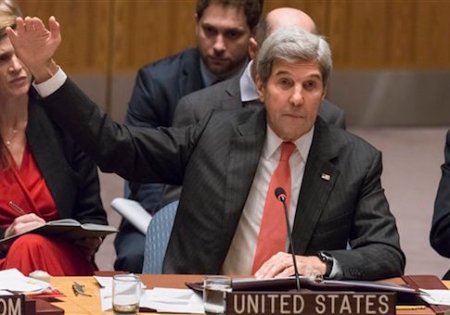
US Secretary of State John Kerry addresses the United Nations Security Council during an open, high-level debate regarding the ongoing Syrian crisis, at UN Headquarters in New York, NY, USA on September 21, 2016. The meeting, presided over by New Zealand's Prime Minister John Key, comes amid growing hostility between the United States and Russia over allegations of military operations conducted in the region. (Photo by Albin Lohr-Jones) *** Please Use Credit from Credit Field ***

US Secretary of State John Kerry addresses the United Nations Security Council during an open, high-level debate regarding the ongoing Syrian crisis, at UN Headquarters in New York, NY, USA on September 21, 2016. (Credit Field)

The Obama administration is pushing a pathway to ensure it can continue sending Iran cash payments amid mounting accusations it laundered some $1.7 billion to the Islamic Republic as part of a “ransom payment” to free U.S. hostages earlier this year, according to statements by the White House and sources familiar with the matter.

The White House late Wednesday promised to veto new legislation—first disclosed by theWashington Free Beacon—that would bar the administration from making “future ransom payments to Iran,” prompting outrage from key members of Congress who have been investigating how U.S. officials delivered nearly $2 billion in cash to Iranian officials.

The administration’s veto threat comes as top lawmakers on a range of investigatory committees launch efforts to uncover details about the cash exchange still being hidden by the Obama administration.

Congressional sources who spoke to the Free Beacon raised questions as to why the Obama administration would threaten to veto the bill, given its insistence that the cash payments to Iran were not part of a ransom.

“President Obama’s veto threat on our ransom legislation puts the lives of U.S. citizens around the world at risk,” Rep. Mike Pompeo (R., Kan.), a member of the House Intelligence Committee who helped spearhead the ransom legislation, told the Free Beacon.

“Instead of admitting wrongdoing, this administration is sticking to talking points. But selective noun use cannot explain away criminality, nor does it excuse eight months of lying to the American people,” Pompeo said. “It is unprecedented and reckless for the U.S. to be doling out billions to the Islamic Republic of Iran—under wraps and in cash—which is why our bill is necessary.”

Sen. Marco Rubio (R., Fla.), a lead sponsor of the legislation to ban future payments to Iran, told theFree Beacon that he would continue to push the legislation, despite threats by the administration.

“This effort by the President to defend his ransom payments to Iran at all costs amounts to doubling down on ‎a policy that has made Americans less safe,” Rubio told the Free Beacon. “Democrats may be swayed by this threat, but I will continue to fight to prevent the U.S. government from sending taxpayer dollars to the world’s foremost state sponsor of terrorism.”

Sen. Mark Kirk (R., Ill.) told the Free Beacon Wednesday evening that the Obama administration is betraying U.S. victims of Iranian terrorism, who are owed billions under federal court rulings.

“Under U.S. court judgments, Iran owes $55.6 billion to American victims of Iranian terrorism,” Kirk told the Free Beacon. “The Administration should stop finding ways to send more cash to Iran, and start working to bring a measure of justice to American families whose loved ones were killed or injured due to Iran-backed terrorists.”

One source familiar with the matter said Iran prefers cash because it can more easily be used to fund terrorism.

“There is no credible reason for the administration to oppose this bill. We already know, contrary to what the president initially said, that the administration can in fact wire money to Iran,” the source said. “So why do we need the option to pay in cash? Simple. This money can fund terrorism, and there’s nothing we can do to know of stop it.”

The Obama administration maintains the legislation is “ill-advised” and would “undermine U.S. obligations” to Iran.

The bill is “an ill-advised attempt to respond to a problem—so-called ‘ransom’ payments to Iran—that does not exist, in a way that would undermine U.S. obligations and ultimately benefit Iran at the expense of the United States,” the White House said in a statement.

The administration said it plans to award Iran further payments, which would not be possible under the ransom legislation.

“This bill, while styled as prohibiting future purported ‘ransom payments,’ instead bars virtually any payment from the U.S. government to Iran, including those permitted or even required by law,” the administration said.

The $1.7 billion cash payment was given to Iran as part of an effort to resolve decades-old legal disputes, many of which are still outstanding. The administration said further payments could be made to Iran in order to settle these disputes.

“Specifically, this bill would effectively prevent the United States from paying out awards rendered by the Tribunal and, thus, risk putting the United States in violation of our obligations under the Algiers Accords—an agreement concluded by President Carter, endorsed by President Reagan and honored by every President since that time,” according to the White House.

Questions remain about why the administration chose to pay Iran in cash installments routed through the New York Federal Reserve and several European banks.

Lawmakers such as Pompeo and Sen. Ted Cruz (R., Texas) have described the administration’s process as tantamount to a money laundering scheme.

UPDATE 8:40 P.M.: This piece was updated to include comments from Sens. Marco Rubio (R., Fla.) and Mark Kirk (R., Ill.).

Obama Admin: Iran Was Only Paid $1.7 Billion in Cash After Hostages Released

September 8, 2016

Obama Admin: Iran Was Only Paid $1.7 Billion in Cash After Hostages Released, Washington Free Beacon, Adam Kredo, September 8, 2016

Assan Rouhani, The President of Iran during the United Nations General Assembly at the United Nations General Assembly Hall on September 25, 2015 in New York City. Photo by Dennis Van Tine/Sipa USA

Hassan Rouhani. Photo by Dennis Van Tine/Sipa USA

Senior Obama administration officials, under the threat of a subpoena, were forced to appear on Capitol Hill on Thursday to explain why lawmakers and the American public were kept in the dark about a $1.7 billion cash payment to Iran that has been widely viewed as a ransom to free imprisoned U.S. hostages.

Four senior administration officials declined to provide in-depth explanations of how U.S. funds were transferred to Iran, but said that at least $1.3 billion was withdrawn from a U.S. taxpayer fund and sent to Iran only after it released the hostages.

The payments to Iran were made in hard currency after the United States delivered the funds to European banks. The money was converted into hard currency and bank notes before being transferred to an official from the Central Bank of Iran for transport to Tehran, according to the officials.

Administration officials confirmed that the $1.7 billion payment only went through once the United States was able to secure the release of several U.S. hostages being held in Iran—though the officials would not say this amounted to a ransom.

The Obama administration also could not guarantee lawmakers that the money would not be spent by Iran to fund terror operations.

These disclosures appear to confirm key details about the payment that the administration had either denied or declined to elaborate on for months.

Details are only becoming public now following several news reports and leaks from Congress about the source of the payment, which has been shrouded in mystery since January, when it was first announced.

“This committee requested records … more than a month ago and to date the self-proclaimed most transparent administration in our history has failed to provide any, not one document to this committee,” said Rep. Sean Duffy (R., Wis.), a member of the House Financial Services Committee, during the hearing.

“The witnesses today only agreed under threat of subpoena” to appear before Congress, Duffy said.

The testimony by these administration officials is likely to fuel claims that the payment amounted to a ransom, following the admission that the administration only went through with the cash delivery after it was able to confirm that the U.S. hostages had left Iran.

“You can’t tell me that you guaranteed our prisoners would have been released had your money not been sent,” Duffy said to Christopher Backemeyer, a deputy assistant secretary for Iranian affairs at the State Department.

Backemeyer also could not provide a guarantee that the money would not be spent by Iran on terrorist operations.

“I can’t speak to every dollar that’s going to go in or out of Iran,” he said.

“There is a risk you have taken in providing $1.7 billion to the leading state sponsor of terrorism in the world,” Duffy said.

European officials handed off the first payment of $400 million in cash to Iran on Jan. 17, only after Iran agreed to release the U.S. hostages following an evening of negotiations that included Secretary of State John Kerry, officials said.

After converting the U.S. funds to European bank notes and cash, the money was given to an “official from the Central Bank of Iran for transfer to Tehran,” according to Paul Ahern, assistant general counsel for enforcement and intelligence at the Treasury Department. “The funds were under U.S. government control until their disbursement.”

The remaining $1.3 billion was withdrawn from a U.S. taxpayer fund operated by the Treasury Department and sent to Europe. Once there, the money was converted into foreign currency and transferred to a representative of Iran’s central bank on Jan. 22 and Feb. 5.

Information about the payment and the circumstances surrounding it remains a mystery.

The administration officials  made the decision to pay Iran in cash, even though other options existed.

“Iran had to have it in cash,” Ahren said. “Iran was very aware of the difficulties it would face in accessing and using the funds if they were in any other form than cash, even after the lifting of sanctions.”

A cash delivery “was the most reliable way that they received the funds in a timely manner and it was the manner preferred by the relative foreign banks,” Ahren said.

“For them,” Backemeyer added, “the critical need was they [Iran] got immediate access.”

The administration officials would not provide in-depth details, citing diplomatic sensitivities.

“My guess is, if any private citizen had done what this administration did, they’d be indicted on money laundering and the administration calls in diplomacy,” said Rep. Jeb Hensarling (R., Texas), who questioned why the deal was hidden from the public

“Why did the administration go to such great lengths to hide it from the American people?” Hensarling asked. “Why did I have to threaten subpoenas to get the administration to show up in the first place?”

The State Department’s Backemeyer explained that some details could only be divulged in a classified setting.

“There will be limitations to what I and my colleagues can say in an open setting,” he explained. “There are a number of litigations and diplomatic sensitivities that could jeopardize U.S. interests if we were to go into too much detail.”

When asked why the United states agreed to pay $1.3 billion in interest to Iran from a taxpayer fund, a State Department official bristled.

“The details of why we settled for this amount are litigation sensitive,” said Lisa Grosh, a legal adviser in the State Department’s office of international claims and investment disputes. “Iran’s lawyers would try to use my words or maybe even your words against us to help their position at the [claims] tribunal. I believe this settlement was the best thing for the United States.”

Muslim cleric from terror sponsor Iran praises Pope for saying Islam is peaceful

August 24, 2016

Muslim cleric from terror sponsor Iran praises Pope for saying Islam is peaceful, Jihad Watch,

He is thanking the Pope for furthering what he must know are false statements that keep people ignorant and complacent about the jihad threat. He is, in effect, thanking the Pope for being a tool of the global jihad.

*****************

“Grand Ayatollah Makarem Shirazi of Qom wrote in a letter to the Pope: ‘I am really delighted to have heard your comments during your last trip to Poland in which you stated “Islam is not equal to terrorism” and further dismissed the association of violence and harshness with any and all divinely-sent religions.’”

Grand Ayatollah Makarem Shirazi of Qom must know better. He must know that the Qur’an and Sunnah teach warfare against unbelievers, as I demonstrate here and in many other places. He is thanking the Pope for furthering what he must know are false statements that keep people ignorant and complacent about the jihad threat. He is, in effect, thanking the Pope for being a tool of the global jihad.

grand anat

“Top Muslim cleric praises Pope Francis for saying it is wrong to identify Islam with violence,” by Carey Lodge, Christian Today, August 23, 2016:

A top Iranian religious leader has praised Pope Francis for saying it is wrong to identify Islam with violence.

Grand Ayatollah Makarem Shirazi of Qom wrote in a letter to the Pope: “I am really delighted to have heard your comments during your last trip to Poland in which you stated ‘Islam is not equal to terrorism’ and further dismissed the association of violence and harshness with any and all divinely-sent religions.

“Your wise and logical stance regarding Islam in disassociating the religion from the inhumane actions and atrocities of the Takfiri groups such as Daesh is truly admirable.”

Pope Francis told reporters on his plane back from Poland last month: “I think it is not right to identity Islam with violence. This is not right and this is not true.”

He was speaking following the murder of Father Jacques Hamel, an 85-year-old Catholic priest in Rouen, France, in an attack that was claimed by Islamic State.

“I think that in nearly all religions there is a always a small fundamentalist group,” the Pope said. “I don’t like to talk about Islamic violence because every day when I look at the papers I see violence here in Italy – someone killing his girlfriend, someone killing his mother-in-law. These are baptised Catholics.

“If I speak of Islamic violence, I have to speak of Catholic violence. Not all Muslims are violent.”

In his letter, Shirazi said that “such barbaric acts have nothing to do with divinely-sent religions and their various schools of thought. Rather, they originate from the inferior materialistic objectives of some corrupt superpowers who seek nothing but to obtain more illegitimate wealth.”…

Iran Expanding Terror Network in Latin America

August 23, 2016

Iran Expanding Terror Network in Latin America, Washington Free Beacon, August 23, 2016

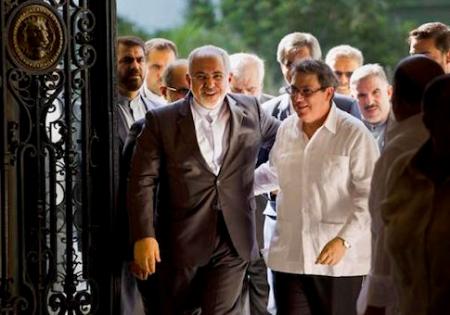
Iranian Foreign Minister Mohammad Javad Zarif, left, is welcomed by Cuban Foreign Minister Bruno Rodriguez, in Havana, Cuba, Monday, Aug. 22, 2016. Iran’s foreign minister begun a Latin American tour in Cuba, declaring Iran and Cuba united by their histories of resisting what he called U.S. atrocities. Zarif also plans to visit Nicaragua, Ecuador, Chile, Bolivia and Venezuela. (AP Photo/Ramon Espinosa)

Iranian Foreign Minister Mohammad Javad Zarif, left, is welcomed by Cuban Foreign Minister Bruno Rodriguez, in Havana, Cuba, Monday, Aug. 22, 2016.  (AP Photo/Ramon Espinosa)

Iran is solidifying its foothold in Latin America, sparking concerns among U.S. officials that the Islamic Republic will enlist these regional allies in its push to launch terror attacks on U.S. soil, according to conversations with congressional sources.

Iranian Foreign Minister Javad Zarif has been on a diplomatic tour through key Latin American countries known for hostility towards the United States, including Cuba, Venezuela, and a host of other countries believed to be providing shelter to Iranian terrorist proxies such as Hezbollah.

As Iranian-ally Russia boosts its spy operation in the region, sources have raised concerns about the rogue nations working together to foster anti-U.S. unrest.

Zarif’s trip through the region has raised red flags among some senior congressional sources familiar with the region. For example, Zarif took aim at the United States and touted the regime’s desire to align with anti-American countries during his stay in Cuba.

One senior congressional source who works on the issue said to the Washington Free Beacon that Iran is seeking to recruit “potential terrorists who want to cause the U.S. harm.”

Increased ties between Iran and these Latin American nations are setting the stage for terrorists to penetrate close to U.S. soil with little detection.

These individuals “can travel easily to Venezuela, and once there, they can get to Nicaragua or Cuba without passports or visas, which poses a national security risk for our nation,” the source explained.

Iran has also reopened its embassy in Chile, a move that has only added fuel to speculation among U.S. officials that the Islamic Republic is making moves to position its global terror network on America’s doorstep.

“The threat to U.S. national security interests and our allies should be setting off alarm bells,” Rep. Ileana Ros-Lehtinen (R., Fla.), chair of the House Subcommittee on the Middle East and North Africa, said in a statement about Zarif’s Latin American tour.

“The Obama administration has failed to prevent Russia and China from expanding in our Hemisphere, and now Iran is once again stepping up its efforts to gain a greater presence to carry out its nefarious activities,” Ros-Lehtinen said. “I urge the White House to stop downplaying the Iranian threat and take immediate action to prevent the world’s leading state sponsor of terrorism from establishing a regional safe haven in the Americas.”

Asked to comment on Zarif’s trip and the potential repercussions on Monday, a State Department official said to the Free Beacon that the administration had no comment.

Ros-Lehtinen said the high-profile trip by Zarif should serve as a warning.

“The timing of Zarif’s trip is significant as Iran could use many of these rogue regimes to circumvent remaining sanctions, undermine U.S. interests, and expand the drug trafficking network that helps finance its illicit activities,” she said. “Tehran’s classic playbook is to use cultural centers, new embassies or consulates, or cooperative agreements on various areas to act as façades aimed at expanding Iran’s radical extremist network.”

The renewed concerns about Iran’s footprint in Latin America comes nearly two years after the State Department said Tehran’s influence in the region was “waning.”

“The timing of Zarif’s trip speaks volumes,” said the senior congressional aide who would discuss the issue only on background. It “is worrisome that as we just celebrated the 22nd year of the horrific terrorist attack against the AMIA Jewish community center in Argentina, Iran can now have personnel nearby in a new embassy in Chile.”

“Just recently, a Hezbollah member was picked up in Brazil, an explosive device was found near the Israeli embassy in Uruguay, and Hezbollah members are reportedly traveling on Venezuelan passports,” the source added. “It was not too long ago that Venezuela offered flights to Iran and Syria, and as of last week, Hezbollah cells were found in the West Bank where Venezuela lifted its visa requirements for Palestinians.”

Zarif slammed the United States on Monday during a speech in Havana.

“Iran and Cuba could prove to the U.S. that it cannot proceed with its policies through exerting pressure on other countries,” Zarif said, according to Iran’s state-controlled media.

“Now the time is ripe for realizing our common goals together and implement the resistance economy in Iran and materialize [Cuban dictator Fidel] Castro’s goals of reconstruction of the Cuban economy,” Zarif added.

Zarif went on to note that Iran “has age-old and strong relations with the American continent and the Latin American countries.”

Zarif is reported to have brought along at least 60 Iranian officials and executives working in the country’s state-controlled economic sector.

Behnam Ben Taleblu, senior Iran analyst at the Foundation for Defense of Democracies, told the Free Beacon that Iran has boosted efforts to engage Latin America in the wake of last summer’s nuclear agreement.

“Iran’s Foreign Minister Mohammad-Javad Zarif is aggressively continuing Iran’s diplomatic outreach, a policy which began early in the Rouhani administration and was kicked into high gear in the aftermath of the JCPOA—last summer’s nuclear deal,” he said. “Zarif’s sojourn into the Western hemisphere follows on the heels of his May visit to the region. Zarif’s trip symbolically commences in Havana, Cuba, where the Iranian foreign minister harped on themes of steadfastness and resistance to American legal and economic pressure.”

The Iranian leader’s goal is to “build on this experience to help promote an anti-American and anti-capitalist world order,” he added. “What’s most clear however, is that in addition to seeking to solidify the anti-American political orientation of these states, Iran aims to capitalize on the increasingly detached stigma of doing business with it in the aftermath of the nuclear accord. Therefore, we can expect to see trade deals or memorandums of understanding inked. In short, Iran will be looking to deepen to its footprint in Latin America.”

Not Satire | Commander Says Emergence of Takfiris Part of West’s Plot against Islam

August 6, 2016

Commander Says Emergence of Takfiris Part of West’s Plot against Islam, Tasnim News Agency, August 6, 2016

Gen Tafkir

The terrorist groups, which claim to be Islamic but whose actions are anything but, have been committing heinous crimes not only against non-Muslims, but mostly against Muslims in the region.

*********************

TEHRAN (Tasnim) – Lieutenant Commander of the Islamic Revolution Guards Corps (IRGC) Brigadier General Hossein Salami said certain Western countries are behind a plot to prevent the spread of Islam in the West by giving rise to Takfiri terrorist groups.

After the victory of the Islamic Revolution in 1979, Islam began to spread quickly in the West, Brigadier General Salami said in a speech in the western province of Lorestan on Saturday.

He added that nearly 50,000 Britons embraced Islam every year and the number of mosques in Europe rose “from a handful to thousands” during the early years after the revolution.

“The emergence of Takfiris was the West’s scenario to destroy Islam’s attractions, create hatred and stop spread of the religion in the West,” the commander said.

He further deplored the terrorist acts of Takfiri groups committed in the name of Islam, saying that Islam is a completely humane school of thought and regards killing one innocent human being as “killing the entire humanity”.

In recent years, the Middle East region has been plagued with Takfiri terrorist groups like Daesh (also known as ISIS or ISIL), which are believed to have been created and supported by the West and some regional Arab countries.

The terrorist groups, which claim to be Islamic but whose actions are anything but, have been committing heinous crimes not only against non-Muslims, but mostly against Muslims in the region.

Connecting the Nuclear Dots

August 5, 2016

Connecting the Nuclear Dots, Gatestone InstitutePeter Huessy, August 5, 2016

♦ Iran seeks to do us grave harm, potentially with ballistic missiles and nuclear weapons. The threat warnings are clear and we have strong evidence — Iran has attacked us repeatedly over the past 30 years.

♦ Instead of heeding the nuclear missile “dots” that are emerging all around us, we are busy promoting trade with Iran, downplaying its violations of the nuclear deal, simply ignoring its ballistic missile developments and dismissing the growing evidence of its terrorist past.

After the attacks on September 11, 2001, Congress, the Bush administration, and terrorist experts complained that the country had simply not “connected the dots” provided by prior terrorist threats.

The 9/11 Commission also concluded that the attacks “should not have come as a surprise,” as “Islamist extremists had given plenty of warning that they meant to kill Americans indiscriminately and in large numbers.”

The Commission then listed 10 Islamic terror plots against the US prior to 9/11:

“In February 1993, a group led by Ramzi Yousef tried to bring down the World Trade Center with a truck bomb.

“Plans by Omar Abdel Rahman and others to blow up the Holland and Lincoln tunnels and other New York City landmarks …

“In October 1993, Somali tribesmen shot down US helicopters, killing 18 and wounding 73…

“In early 1995, police in Manila uncovered a plot by Ramzi Yousef to blow up a dozen U.S. airliners while they were flying over the Pacific.

“In November 1995, a car bomb exploded outside the office of the US program manager for the Saudi National Guard in Riyadh, killing five Americans and two others.

“In June 1996, a truck bomb demolished the Khobar Towers apartment complex in Dhahran, Saudi Arabia, killing 19 US servicemen and wounding hundreds.

“In August 1998, al Qaeda, carried out near-simultaneous truck bomb attacks on the US embassies in Nairobi, Kenya, and Dar es Salaam, Tanzania. The attacks killed 224 people, including 12 Americans, and wounded thousands more.

“In December 1999, Jordanian police foiled a plot to bomb hotels and other sites frequented by American tourists…

“…US Customs agent arrested Ahmed Ressam at the US-Canadian border as he was smuggling in explosives intended for an attack on Los Angeles International Airport.

“In October 2000, an al Qaeda team in Aden, Yemen, used a motorboat filled with explosives to blow a hole in the side of a destroyer, the USS Cole, almost sinking the vessel and killing 17 American sailors.”

Despite the overwhelming indications that an attack like 9/11 was around the corner, as former Secretary of State Condoleezza Rice told the country in her April 2004 testimony to the 9/11 Commission, “The terrorists were at war with us, but we were not yet at war with them. For more than 20 years, the terrorist threat gathered, and America’s response across several administrations of both parties was insufficient.”

Are we now better equipped to “connect the terrorist-threats by dots” than we were prior to 9/11? Certainly we are not still echoing the testimony of Richard Clarke when he told the Emerging Threats Subcommittee in the summer of 2000 that the administration “had not yet” determined how to spend homeland security funds even some eight years after the first World Trade Center bombing of February 1993.

Unfortunately, not only are we not connecting the terrorist dots, we are actively downplaying their significance. Nowhere else is this more apparent than in the virtually complete failure, on the part of the US, to hold Iran responsible for the terror attacks that have killed and maimed thousands of Americans since 1979. This failure is all the more disturbing after the numerous court decisions that have found Iran accountable for nearly $60 billion in damages owed to the victims and survivors of these attacks, including the 9/11 attacks.

The outstanding news analyst and author Melanie Phillips wrote nearly a year ago that Iran had been “…perpetrating acts of war against Western interests for more than three decades — including playing a key role in the 9/11 attacks on America.” Phillips noted that a Revolutionary Guard-Iranian Intelligence (MOIS) task force

“designed contingency plans for unconventional warfare against the US… aimed at breaking the American economy, crippling or disheartening the US, and disrupting the American social, military and political order — all without the risk of a head-to-head confrontation which Iran knew it would lose.”

She explained that the court testimony from former Iranian agents illustrates that Iran “…devised a scheme to crash hijacked Boeing 747s into the World Trade Center, the White House and the Pentagon. … The plan’s code name was ‘Shaitan dar Atash’ (‘Satan in flames’).” Further, the court evidence revealed that Iran obtained “a Boeing 757-767-777 flight simulator which it hid at a secret site where the 9/11 terrorists were trained.”

In December 2011, Judge George B. Daniels found that Iran, with the participation of its Supreme Leader Ayatollah Ali Khamenei, was directly and heavily involved in the 9/11 atrocities. Khamenei instructed intelligence operatives that while expanding collaboration between Hezbollah and al-Qaeda, they must restrict communications to existing contacts with al-Qaeda’s second-in-command Ayman al Zawahiri and Imad Mughniyeh — Hezbollah’s then terrorism chief and agent of Iran.

1081Iran’s Supreme Leader, Ayatollah Ali Khamenei (center), is shown meeting in May 2014 with Iran’s military chief of staff and the commanders of the Islamic Revolutionary Guards Corps. (Image source: IRNA)

While the 9/11 Commission found solid evidence Iran aided the 9/11 hijackers in their travels from Iran, the “Extensive cooperation in major global terrorist activities,” between Iran, Hezbollah and Al Qaeda, including the 1996 bombing of the Khobar Towers housing complex in Saudi Arabia and the 1998 East Africa US embassy bombings, escaped the 9/11 Commission’s detailed attention. Notably, as long ago as in 2000, a US Defense Intelligence Agency analyst was alerting the government to a web of connections between al-Qaeda, the Iranian intelligence agencies controlled by Khamenei, and other terrorist groups.

Many press reports and analysts, cognizant of Iran’s terrorist history and aware that Iran has been designated by the US Department of State as the world’s premier state sponsor of terror, choose to believe the 2015 Iranian nuclear deal should not be derailed over concern of Iran’s possible future terrorist plans. Especially when it is often assumed these plans are aimed primarily at Israel and groups in Syria, Iraq and Lebanon, and thus not of real concern to the United States.

Is the nuclear deal with Iran thus a good trade? We get to slow Iran’s pursuit of nuclear weapons, but any serious sanctions or military effort to stop Iran’s terror agenda are off the table. Let’s connect the new nuclear-related Iran dots.

First, the world’s expert on Iran ballistic missiles, Uzi Rubin, revealed on July 15 that Iran has five new missile capabilities: they can strike the middle of Europe, including Berlin; they can target with GPS accuracy military facilities in Saudi Arabia; they can launch missiles from underground secret tunnels and caves without warning; they have missiles that are ready to fire 24/7; and they have developed other accurate missiles whose mission is to strike targets throughout Gulf region.

Second, the Associated Press revealed that a side agreement under the Joint Comprehensive Plan of Action (JCPOA) nuclear “deal” actually allows Iran to break out of the agreement in year 11, not 15, at which point Iran will not even be six months away from having sufficient nuclear fuel to arm a nuclear warhead, and Iran will be able to install nuclear centrifuges five times more efficient than the ones they have today.

Third, according to German intelligence reports, Iran has, a few dozen times since the July 2015 nuclear agreement, sought to purchase nuclear ballistic missile technology, a violation of previous UN resolutions.

As Americans wonder who will be behind the next terrorist attacks on our country — “lone wolf” terrorists inspired by social media from Islamist groups; organized cells of ISIS, Al Qaeda, Islamic Jihad, Hezbollah; states such as Iran and Syria; or a combination of all three — we would do well to be reminded of the long-term use of terrorism by the former Soviet Union as one of their trademark elements of “statecraft.”

Iran’s pursuit of nuclear weapons has not been stopped and at best has been delayed. Add to that Iran’s enhanced ballistic missile capability, its growing partnership with North Korea and its history of terrorist attacks on the United States, and connecting the dots reveals a stark reality — nuclear terrorism by missile may be on its way.

During the spring and summer of 2001, US intelligence agencies received a stream of warnings that Al Qaeda was determined to strike. The specific information pointed to threats from overseas. The Bush administration began developing a strategy in early 2001 to eliminate Al Qaeda in three years. The 9/11 attacks happened “too soon.”

Iran seeks to do us grave harm, potentially with ballistic missiles and nuclear weapons. The threat warnings are clear and we have strong evidence — Iran has attacked us repeatedly over the past 30 years

But instead of heeding the nuclear missile “dots” that are emerging all around us, we are busy promoting trade with Iran, downplaying its violations of the nuclear deal, simply ignoring its ballistic missile developments and dismissing the growing evidence of its terrorist past.

In short, we are not connecting these dots; we are erasing them.