Posted tagged ‘Ideology’

Obama to Pentagon: We can’t defeat ISIS w/guns

July 7, 2015

Obama to Pentagon: We can’t defeat ISIS w/guns, Front Page Magazine, Daniel Greenfield, July 6, 2015

jihadi-john_3051871b

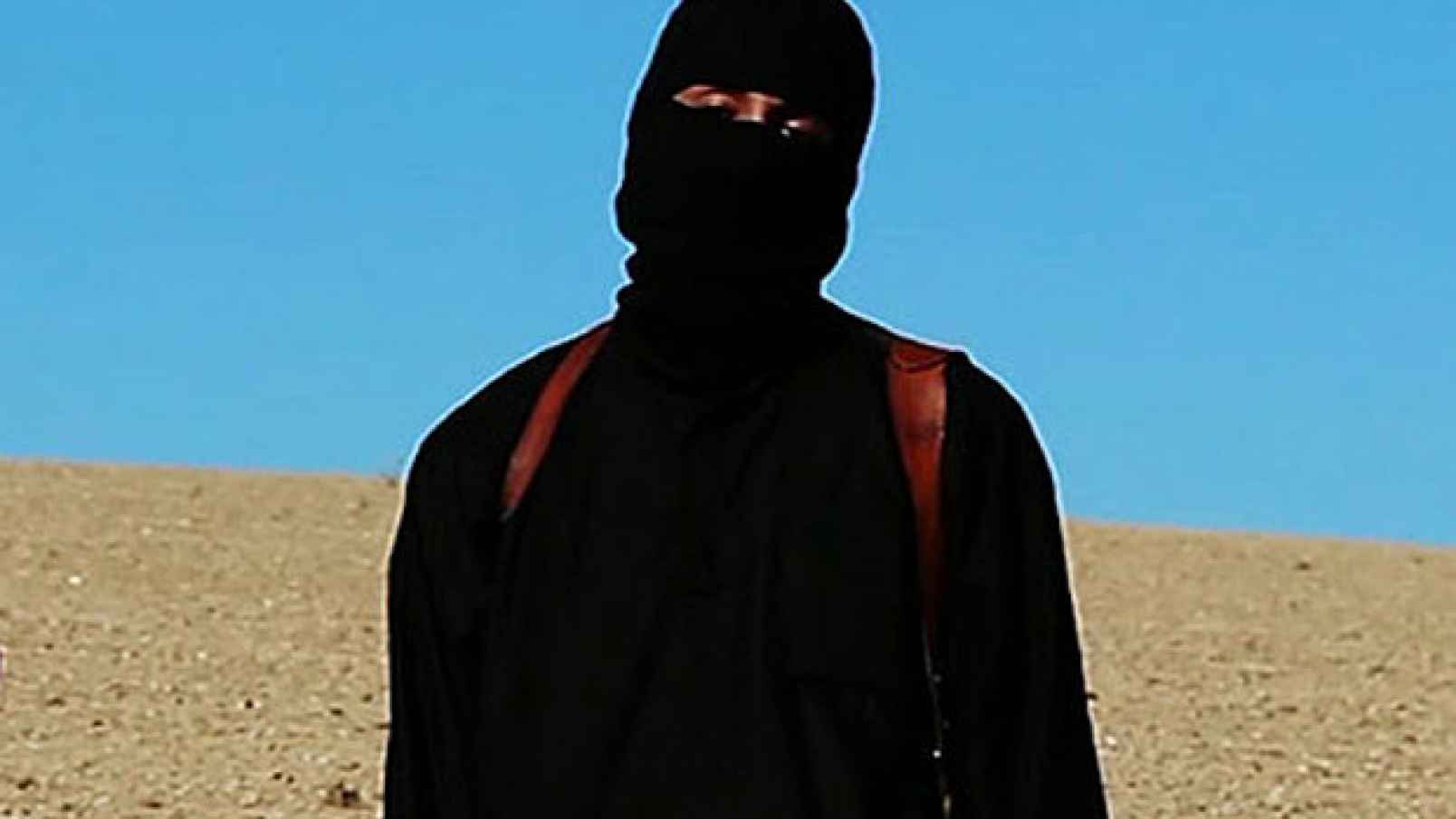
How can we possibly stop this man with a mere gun?

The Failure-in-Chief would like to remind all the people at the Pentagon that what they’re doing is hopeless because guns don’t work. Guns are bad. We all know the idea that it takes a good guy with a gun to stop a bad guy with a gun is crazy NRA propaganda.

We can’t win wars with guns either. Remember how we tried and failed to defeat the Nazis with guns, and the war didn’t stop until we appeased them? No war in history has ever been won with guns. Why should this one be any different.

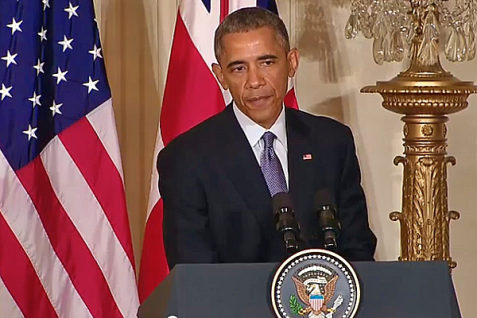
On Monday afternoon, President Obama spoke at the Pentagon about the Islamic State, or ISIS, a terrorist organization in Syria and Iraq.

Obama stressed all elements of American power were going toward fighting the organization. “Altogether, ISIL has lost over a quarter of the populated areas it had seized in Iraq,” the President said, using an alternative name for the terrorist group. “ISIL’s strategic weaknesses are real.”

Obama said the terrorist organization is doing their best to recruit from “Muslim communities around the world.”

“In order for us to defeat terrorist groups like ISIL and al-Qaeda, we must discredit their ideology. This broader challenge of countering violent extremism,” Obama said. “Ideologies are not defeated with guns, they are defeated by better ideas. We will never be at war with Islam,” Obama added, stressing that ISIS distorts Islam.

To summarize, we’re defeating ISIS, it has strategic weaknesses, but we can’t possibly defeat it with icky guns. Instead we must make more hashtags. Foreign Policy really suggested that gay marriage can defeat ISIS. That’s a plan alright.

How much territory has ISIS lost due to hashtags? Not so much as an inch. ISIS is winning the war of ideas among Muslims. That doesn’t mean that it can’t be defeated militarily.

When the USSR cut a deal with Hitler, their useful idiots in America began claiming that Nazism was an “ism” and couldn’t be defeated by force. Then when their German boyfriend stabbed Uncle Joe in the back, they began shrilly demanding the use of force. And once America won the war, they spent the rest of the time claiming that Uncle Joe Stalin really won the war.

Nazism couldn’t be defeated with guns back when the Germans were massacring Jews and helping the USSR carve up its own piece of Eastern Europe. But when the Huns showed up in the homeland of Socialism, suddenly they discovered that guns worked really well on Nazis.

Somehow, I suspect that if ISIS were pounding targets that Obama really cared about and beheading people he cared about, suddenly all those bombing raids would involve actually striking ISIS no matter where they are and without worrying about the collateral damage.

All those many branches of the Federal government have their own SWAT teams because clearly liberals believe that enemies of the EPA or the FDA can be defeated with guns. They just don’t believe that ideologies like ISIS, which after all don’t really want a Caliphate, but are upset about our foreign policy, can be defeated with guns.

And that says it all.

When Palestinians Die in Jail

July 6, 2015

When Palestinians Die in Jail, The Gatestone InstituteKhaled Abu Toameh, July 6, 2015

  • Like the mainstream media in the West, the UN chooses to look the other way when Palestinians torture or kill fellow Palestinians.
  • The Palestinian Authority and Hamas claim that the three men committed suicide.
  • When three detainees die in less than a week, this should sound an alarm. But pro-Palestinian groups and human rights activists do not care about the human rights of Palestinians if Israel cannot be held responsible. Their obsession with Israel has made them blind to the plight of Palestinians living under the Palestinian Authority.

Three Palestinian men were found dead in their jail cells in the West Bank and Gaza Strip this past week.

But their stories did not attract the attention of the international media or human rights organizations in the U.S. and Europe. Nor was their case brought to the attention of the United Nations or the International Criminal Court (ICC).

By contrast, the case of 17-year-old Mohamed Kasba, who was shot dead north of Jerusalem by an Israeli army officer as he attacked the officer’s car with stones, received widespread coverage in the Western media.

The UN even rushed to condemn the killing of Kasba, and called for an “immediate end” to violence and for everyone to keep calm. “This reaffirms the need for a political process aiming to establish two states living beside each other safely and peacefully,” said UN Special Coordinator for the Middle East Peace Process, Nickolay Maldenov.

The UN official, needless to say, made no reference to the deaths that occurred in the Palestinian Authority (PA) and Hamas jails. He did not even see a need to express concern over the deaths or call for an investigation. Like the mainstream media in the West, the UN chooses to look the other way when Palestinians torture or kill fellow Palestinians.

The reason the case of the three detainees will not interest anyone in the international community is because the men did not die in an Israeli jail. Instead, the three men died while being held in Palestinian-controlled jails.

Had the three men died in Israeli detention, their names would have most likely appeared on the front pages of most leading Western newspapers. The families of the three men would have also been busy talking to Western journalists about Israeli “atrocities” and “human rights violations.”

But no respected Western journalist is going to visit any of the families of the three detainees: they did not die in an Israeli jail.

The same week that the three Palestinian men were found dead in jail, the UN Human Rights Council decided to adopt a resolution condemning Israel over the UN report into last year’s Operation Protective Edge in the Gaza Strip. Again, the UN Human Rights Council chose to ignore human rights violations by Hamas and the Palestinian Authority, who deny detainees basic rights and proper medical treatment.

Two of them died in PA security installations in Bethlehem, while the third was found dead in a Hamas-controlled jail in the Gaza Strip.

The two detainees who were found dead in their jail cells in Bethlehem are Shadi Mohamed Obeidallah and Hazem Yassin Udwan. The man who died in the Gaza Strip jail was identified as Khaled Hammad al-Balbisi.

The Palestinian Authority and Hamas claim that the three men committed suicide.

In the case of Obeidallah, the Palestinian Authority police said he hanged himself with a piece of cloth inside the jail restrooms. He was taken into custody on suspicion of committing a murder three years ago.

The second man, Udwan, died a few days later in another Bethlehem police facility. According to police officials, he too committed suicide.

The detainee in the Gaza Strip, al-Balbisi, was being held by Hamas authorities for allegedly assaulting his wife.

But al-Balbisi, 43, apparently did not commit suicide. He was very ill when he was arrested by the Hamas security forces, and did not receive proper medical care while in detention.

The Palestinian Center for Human Rights (PCHR), a Gaza-based non-profit group dedicated to protecting human rights, promoting the rule of law and upholding democratic principles in the Palestinian territories, called for an investigation into the circumstances surrounding the deaths of the detainees.

“PCHR stresses that the Palestinian Authority is responsible for the lives of prisoners and detainees under its control and is thus responsible for treating them with dignity, including offering them medical care,” the group said in a statement.

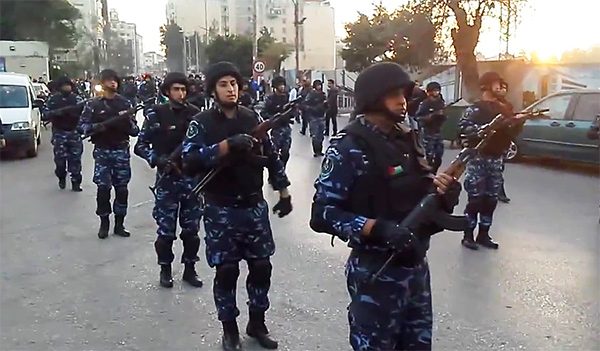
1143The Palestinian Authority police on parade, January 2015.

When three detainees die in less than a week in Palestinian detention, this should sound an alarm bell, especially among so-called pro-Palestinian groups and human rights activists in different parts of the world.

But these folks, like the UN and mainstream media, do not care about the human rights of the Palestinians if Israel cannot be held responsible. Their obsession with Israel has made them blind to the plight of Palestinians living under the Palestinian Authority and Hamas, as well as to the horrific crimes committed every day by Muslim terrorists in the Middle East and elsewhere.

The story of the three men who died in Palestinian jails is yet another example of the double standards that the international community and media employ when it comes to the Israeli-Palestinian conflict

The U.S. Must Help Egyptian President Sisi

July 6, 2015

The U.S. Must Help Egyptian President Sisi, American ThinkerMichael Curtis, July 6, 2015

(Not much chance of that. General al-Sisi supported the large masses of Egyptians who wanted then President Morsi deposed. He was later elected President of Egypt. Morsi and his Muslim Brotherhood — which uses terrorism to gain and keep power — is an Obama favorite. Besides, al-Sisi’s efforts to reform Islam run counter to Obama’s delusion that Islam, as it is and has long been, is a wonderful religion of peace. — DM)

The silence was truly deafening. Not a sound from Archbishop Desmond Tutu or Alice Walker or the eager boycotters of Israel or the United Nations Human Rights Council about the brutal massacre of more than 70, perhaps 100, Egyptian soldiers and civilians by Islamist terrorists in the northern Sinai peninsula.

Since Israel, after the 1979 Egyptian-Israeli peace treaty, withdrew all its forces and all settlements — including Yamit — by 1982, the Sinai peninsula has been plagued by terrorist attacks, especially against tourists, by kidnappings, and by violence. After the 2011 Egyptian revolution and consequent uprisings, a major terrorist group emerged and became even more belligerent after the coup that deposed President Mohammed Morsi on July 3, 2013. This was Ansar Bayt al-Maqdis (ABM) that has claimed responsibility for numerous attacks against both Israeli interests and Egyptian personnel.

These assaults included an attack in July 2012 against a Sinai pipeline, a rocket strike in August 2012 on Eilat in south Israel, suicide bombings in el Tor in southern Sinai in May 2014, downing an Egyptian military helicopter in a missile attack, car bombings and hand grenades in Cairo, assassinations and attempted assassinations of Egyptian officials, beheading of four individuals in October 2014, an attack on a security checkpoint, and the June 29, 2015 murder in Cairo of Hisham Barakat, the Egyptian Prosecutor General, who in only two years in office had detained hundreds of members of the Muslim Brotherhood. He was the most senior Egyptian government official murdered.

In November 2014, ABM declared its allegiance to the Islamic State of Iraq and Syria (IS) and accepted the new self-appointed Caliph. It appears to have several hundred trained operatives and collaborators. There are different opinions about the actions of the Sinai Bedouin population, especially that of the largest of the 10 major tribes, the Tarabin tribe in northern Sinai, a tribe that is notorious for drug dealing, weapons smuggling, and human trafficking in prostitutes and African labor workers. Tarabin is said to have called for unification of all the tribes against the terrorists, but rumors of clashes appear to be untrue, and some even allege collaboration with the terrorists. What is true is that local Bedouin tribesmen, alleging discrimination by the state against them, have launched attacks against government forces in Sinai.

Over the last two years ABM, now regarding itself as a dedicated affiliate of IS, has tried to undermine the rule of Egyptian President Abdel Fattah al-Sisi. It has attacked Egyptian army posts, and security centers, and also the UN Multilateral Force in northern Sinai, that oversees the terms of the peace treaty between Egypt and Israel, and tried as well to infiltrate Israeli territory.

There had already been terrorist attacks on October 2014 and January 2015 when more than 30 were killed on each occasion in northeast Sinai. The most dramatic deed of ABM, which now seems to have changed its name to Province of Sinai, (POS) was the series of simultaneous coordinated attacks on July 1, 2015 on fifteen army centers of security forces and checkpoints in northern Sinai. The attacks, including three suicide bombers, killed at least 70 soldiers and civilians.

Evidently POS, imitating its mentor IS that has taken and now rules cities in Iraq and Syria, wanted to take over the city of Sheikh Zuweid, close to Israel, and cut off Rafah from al-Arish.

The danger to all of the democratic countries is immediate for a number of reasons. The first is that the success of the terrorists in their daring ambushes, control of the roads, taking police officers hostage, and planting mines in the streets, indicates not only their disciplined activity but also the influence of IS operatives directly and indirectly through training. IS in Iraq and Syria has operated in just this aggressive and disciplined fashion. All authorities responsible for security in the United States should be conscious of and take account of this highly organized success and of the threat of future similar attacks in the U.S. itself.

The second reason is that Hamas in Gaza is providing support to POS with weapons and logistical support, and even with Hamas terrorists taking part in operations. These have come from Hamas commanders in the Izz ad-Din al-Qassam Brigades that have been prominent for anti-Israeli attacks, including suicide bombings against civilians inside Israel. One particular active commander is Wael Faraj, who has smuggled wounded fighters from Sinai into Gaza.

A third problem is the obvious attempt to undermine and aim at the overthrow of President Sisi, a voice of sanity in the Muslim world. He has courageously criticized the extremists of his religion. In his remarkable speech at al-Azhar University in Cairo on January 22, 2015, he said that fellow Muslims needed to change the religious discourse and remove from it things that have led to violence and extremism. The Muslim religion, he said to imams, is in need of religious reform.

Since he assumed power on June 8, 2014, Sisi has attempted to stem the tide of terrorism by reinforcing the Sinai, restricting traffic, imposing curfews in the area, and demolishing homes of suspected terrorists in Rafah. He sought to create a buffer zone along the border with Gaza, and to destroy the tunnels built by Hamas. But clearly Sisi needs help to survive. It is imperative for the U.S. together with Israel to provide that help to the overwhelmed Egyptian army and intelligence services.

Israel is acutely aware of the danger. POS captured armored vehicles on July 1, 2015 that it can now use to penetrate the border fence between Sinai and Israel. That fence is unlikely to deter a trained terrorist group that now has combat experience. Israel responded by closing roads and two border crossings as a precautionary measure. But all the democratic countries, especially the United States, and also the United Nations because of its Multilateral Force, are now aware that the Islamist terror is at their doors as well as at the outskirts of Israel, and should act accordingly.


Leftist and Islamic Policymakers Outlaw the Truth

July 4, 2015

Leftist and Islamic Policymakers Outlaw the Truth, American ThinkerSonia Bailley, July 4, 2015

No need to worry, the recent Ramadan triple slaughter fest in Tunisia, France and Kuwait has nothing to do with Islam.  There is no linkage between Islam and terrorism, and the word Islamic need not be used to describe the terrorists because their murderous and barbaric ideology has nothing to do with Islam.  Islam is, after all, a religion of peace that is being hijacked, perverted and distorted by only a small percentage of savage extremists.  

Welcome to the false narrative that Western leaders, mainstream media outlets, and academic elites are enforcing on civil society to help shape the public’s perception of Islam so that it is always presented in a positive light.  Any form of expression that reflects badly on Islam is in violation of Islamic law, which forbids any criticism of Islam, even what that criticism expresses the truth.  Stories that are reported according to this narrative need not have anything to do with factual accuracy or truth.  Both the 2009 Fort Hood massacre in Texas and the beheading in Vaughan Foods in Oklahoma last September were reported as workplace violence and not Islamic terrorism.

With the aid of leftist and Islamic policymakers shaping the course of international relations and security policies, that false narrative is finding its way into international policy to destroy the West’s hard-won, cherished core values.  Realities and facts that might tarnish Islam’s name are deemed hate speech and becoming lost through censorship. The 57-state Organization for Security and Co-operation in Europe (OSCE), which is the world’s largest security-oriented intergovernmental organization that happens to be rooted in communism, and the 57-state Organization of the Islamic Cooperation (OIC), which is the most influential and largest Muslim organization in the world pushing to criminalize any criticism of Islam, are two such policymakers who are influencing world leaders and the news media.

Most Western world leaders are bleating the same empty platitudes about the recent Ramadan terrorist attacks in Tunisia, France and Kuwait, carefully avoiding the word “Islam.”  UK Prime Minister David Cameron explained to the media that Islam is a religion of peace, and that the terrorists who “do these things…do it in the name of a twisted and perverted ideology.” When asked if it’s right to say that the recent Ramadan attacks have nothing to do with Islam, UK Home Secretary Theresa May responded to BBC’s Andrew Marr in the positive, “that it has nothing to do with Islam. Islam is a peaceful religion,” and that the terror attacks are “about a perversion of Islam.”

Instead of issuing travel warnings not to vacation in Islamic countries especially during Ramadan, the Islamic “sacred” month of feasting — a month rife with bloodshed and battle since Islam’s inception, when armed raids on Meccan trade caravans and bloody battles were waged by Mohammed and his followers (including the 1973 Yom Kippur War on the 10th of Ramadan), not to mention the ISIS Ramadan message that jihad is 10 times more obligatory during Ramadan, and that those who die will be rewarded by Allah ten times more than during the rest of the year — Western leaders like Cameron continue to nourish the official politically correct narrative of Islam being a religion of peace not linked to terrorism.

The twisted and perverted ideology to which both Cameron and May refer, pervades pages and pages of the Koran and other Islamic doctrine, inspiring jihadists and religious Muslims to “do these things,” including operating child sex slave grooming gangs throughout Europe, especially in the UK, to rape, pimp, torture and sometimes kill non-Muslim underage schoolgirls.  The Koran itself contains over 100 verses  promoting violence against non-Muslims who, to this very day, remain victims of the verse.

What lies at the heart of Islam is an antipathy towards non-Muslims, as well as a deeply-entrenched duty and commandment from Allah to wage Jihad and eventually subjugate non-Muslims worldwide to Islamic rule in the name of Allah.  Massive street prayer is one form of subjugation conducted only to intimidate and Islamize Western society, to remind non-Muslims who’s really in control. Similarly, forcing non-Muslims in their own countries, in the UK for example, to eat halal slaughtered meat — an utterly inhumane and barbaric Islamic practice, not to mention a multi-billion dollar industry controlled by Muslim Brotherhood organizations that fund jihad worldwide — when only a mere 5% of the UK population is Muslim, and when the Koran specifically exempts its followers from eating halal if it’s not available, is another way to subjugate non-Muslims.

People are becoming sitting duck targets for Islamic terrorists in Western countries and abroad because of the little-known but powerful world policymakers like the OSCE and OIC who influence world leaders to kowtow to Islamic interests.  Western leaders fail to convey an accurate picture and understanding of what is really going on in the world because it might reflect badly on Islam, and they don’t want to appear “Islamophobic” for fear of more terrorist attacks.  By failing to report the truth, they are denying citizens the opportunity to take appropriate action that could save their lives when faced with something that could be considered a threat, such as a beach vacation in an Islamic country over Ramadan.

The dead European tourists in Tunisia might still be here today had there been an undistorted flow of information to warn them that warfare and killing in the name of Islam are encouraged during the month of Ramadan.  Furthermore, people might choose to avoid Islamic countries at all times if they were aware that these countries rely upon the most non-liberal draconian and barbaric Islamic or sharia-based corporal punishments imaginable.

The anti-blasphemy narrative pushed by the highly influential but little-known OIC, ehich speaks on behalf of over 1.5 billion Muslims worldwide, not only silences any expression considered to be offensive and insulting to Islam, but punishes the offenders, as Mohammed did to his dissenters and insulters.  They were either condemned to hell or killed.  Because Muslims consider Mohammed as the ideal model for mankind to follow, many Islamic countries such as Pakistan, Saudi Arabia and Iran, have also made blasphemy subject to the death penalty with their anti-blasphemy laws.

It is this anti-blasphemy law that the OIC is striving to legally enforce on the world in order to curtail speech and expression when it comes to Islam — not so much for religious compliance as for the global subjugation of non-Muslims to Islam.  Since 2005, the OIC has been pushing relentlessly for a UN blasphemy resolution (Resolution 16/18 passed in 2011) to silence so-called Islamophobia — a term deliberately coined and marketed in the 1990s by the International Institute of Islamic Thought, one of the thousands of Muslim Brotherhood front groups worldwide, to drive public discourse and policy.  However, the OIC’s top priority is to globally criminalize any criticism of Islam, and is working with the Muslim Brotherhood to accomplish this. Ten years later, in 2015, telling the truth about Islam has become a crime in some European countries.

The highly influential yet little-known OSCE that is rooted in communism, is supposed to protect and promote civil liberties.  Instead, it is negotiating them away by capitulating to the OIC narrative of the Muslim Brotherhood, whose stated goal from the 1990s is to destroy Western civilization from within.  Its goal of global domination is to be accomplished not through violence, at least not yet, but rather through the slow infiltration of Western government, military, judicial and academic institutions.

So far, there has been practically no opposition from  any Western administration in power, only cooperation from world leaders, government officials, and leftist policymakers.  In fact, the cooperation from Western leaders with OSCE and OIC policymakers has been so great, that the U.S. co-sponsored Resolution 16/18 with Pakistan, and helped usher it through in 2011, despite this resolution being a direct assault on the First Amendment of the U.S. Constitution.

At an OSCE May session in Vienna (on how the media can help prevent violent radicalization that leads to terrorism), OSCE panelist Leila Ghandi, producer and TV show host on the most popular Moroccan TV channel (2MTV) that is over 60% government-owned, maintained that the truth or facts about “a community” can sometimes constitute hate speech when those facts are offensive and therefore should not be said.  The panelist’s words echo those of the new OIC Secretary General, Iyad Amin Madani, who tweeted earlier this year following the Charlie Hebdo terrorist attack in Paris, that “freedom of speech must not become a hate speech and must not offend others.”  In other words, truth about Islam is designated as hate speech.

Furthermore, OSCE panelist Victor Khroul, correspondent for Rossiya Segodnya, a Russian state-owned international news agency, questions why the mainstream media throughout the world still refer to the “self-proclaimed self-established state in the Middle East” as the Islamic State. His words echo those of Madani, who proclaimed last year that the Islamic State has no connection with Islam.  Khroul claims it’s a mistake for these people to be called Muslim and their state Islamic, which only “confuses the audience with this correlation with Islam.”  He maintains that it’s still possible “to find other words to describe this so-called state and its activity,” discounting the facts that Islamic State is what ISIS named itself and its state, and that ISIS clearly credits its motivation to Islam and its acts to Allah. The name Islamic State does not have to be rectified because it accurately reflects reality, defines the organization in question, and is therefore a correct term that would sit well in the world of Confucius and his doctrine on rectifying names.

Major Stephen Coughlin, an attorney, former U.S. Army intelligence officer, and the Pentagon’s leading expert on Islamic law and jihad (until he was dismissed in 2008 for linking Islam with terrorism with his Red Pill Briefings), stresses the urgency of defining the enemy as he defines himself:  “you cannot target what you will not define…if I can’t use the concepts of Jihad that Al-Qaeda say they rely on, then I can’t understand what they are going to do.”

Author of Catastrophic Failure: Blindfolding America in the Face of Jihad, Coughlin attended the OSCE May session and responded to the OSCE jargon as follows:

“Once you decide that facts on the ground as they present themselves, can be considered hate speech, this is no longer about truth…you are subordinating facts that the public has a right to know when they formulate their decisions, and replacing them with narratives to keep them from coming to the understanding of events that can be articulated and verified.  That can never be considered hate speech. We’re not talking about speech at all. We’re talking about brazen disinformation.”

Rather than disseminate vital information to the public that can save lives, Western world leaders are betraying their citizens by submitting to the OSCE and OIC narrative of outlawing any criticism of Islam and rendering truth illegal.  Reassuring citizens that Islam is a religion of peace merely renders them incapacitated from exercising sound judgment, crippling their ability to make the right decision in the face of potential harm.

While global institutions and national security policies are being shaped, and compromised, by highly influential but ill-known world organizations such as the OSCE and OIC, it’s critical that citizens get to know who those policymakers really are, and become more engaged in public affairs and the political process in order to arrest the Islamization process of the West…before it’s too late to reverse.
 

Designating Foreign Terrorist Organizations and Immigration Enforcement

July 2, 2015

Designating Foreign Terrorist Organizations and Immigration Enforcement, Center for Immigration StudiesDan Cadman, July 2, 2015

During . . . (2009-2014 . . .  half of a decade), ICE agents have removed exactly three aliens. Three. And yet the FBI director, the director of national intelligence, and others tell us that the nation is peppered with Islamic State supporters, not to mention the plethora of other terrorist groups one can choose to affiliate with.

*****************

The Government Accountability Office (GAO) has just issued a public report on the process used to designate foreign terrorist organizations (FTOs) under the Immigration and Nationality Act (INA), which assigns lead responsibility to the Secretary of State. It is called “Combating Terrorism: Foreign Terrorist Organization Designation Process and U.S. Agency Enforcement Actions”.

GAO initially prepared and distributed the report to the Department of State (DOS) and other government parties in April, but withheld it publicly until material that DOS identified as “sensitive but unclassified” (SBU) was redacted from the public version just released.

Even with the SBU redactions, one finds some interesting and suggestive factoids buried in the report in typically dry bureaucratic language.

Among them is that, under the designation process developed by DOS, various agencies participating in the targeting and review can put “holds” on designation. Section 219 of the INA, which outlines the legal basis for designation of FTOs contains no such proviso.

The reasons described for placing “holds” are just a wee bit fuzzy and this arouses my suspicious nature because, in addition to the other government agencies one would expect to participate (such as the Central Intelligence Agency, National Security Agency, Justice and Homeland Security Departments, etc.), one finds mentioned the DOS regional bureaus (see note 16 in the report). These are the folks that look out for the political angles of inter-governmental relationships between the United States and other countries. Could it be that bilateral politics are involved in FTO designation? One fears so, because it is suggestive that, although various other statistics are scattered throughout the GAO report, the number of holds and who placed them is nowhere to be found. Could this be the “sensitive” data that DOS didn’t want revealed to the public? If so, under which secretaries of State did such regional bureaus exercise this extra-statutory ability? And how many such holds have been placed, and for how long?

Another interesting factoid is that between 2009 and 2014 Customs and Border Protection inspectors denied entry to over 1,000 alien applicants for admission based on terrorism grounds, including membership in or affiliation with designated FTOs. We can reasonably assume that some portion of these aliens were applying for admission under the visa waiver program (VWP) and that a significant number were granted multiple entry visas by DOS consular officers before the terrorist connection was known, but that their visas were not revoked by DOS after the connection was made.

Then there is the abysmally low number of aliens taken into custody within the United States on terrorism-related removal grounds, presumably by Immigration and Customs Enforcement. During the same date range used to calculate CBP figures, (2009-2014 — half of a decade), ICE agents have removed exactly three aliens. Three. And yet the FBI director, the director of national intelligence, and others tell us that the nation is peppered with Islamic State supporters, not to mention the plethora of other terrorist groups one can choose to affiliate with.

The shockingly low number comports with remarks I made in a prior posting when I commented that since the formation of the Department of Homeland Security (DHS), whose mission is obviously to protect the homeland, we Americans — and most particularly the leaders in this administration — seem to have forgotten the important lesson about the nexus between safe communities and using the deportation laws to remove foreign threats.

Two other noteworthy items that merit their own examinations in full, but not here: that waivers have been granted to individuals with terrorist connections, apparently both to enter the United States, and to gain various immigration benefits administered by one of DHS’s subordinate agencies; and that of the 69 FTOs designated since 1997 when the law authorizing designation took effect, 10 (nearly 15 percent of total designations) have been removed from the list by the Secretary of State.

How not to write about Iran

July 2, 2015

How not to write about Iran, The New York Times, Ishaan Tharoor, July 2, 2015

(The NY Times article is a good example of how not to write about Iran. History is important, but Iran’s more recent activities are even more important. That ancient Persia and its Islamic successors engaged in and supported terrorism is important, but that the Islamic Republic of Iran still does is more important. Please see also, Rouhani Threatens Nuclear Breakout. — DM)

In the Western imagination, Iran has long been a kind of bogeyman. It’s the land of hostage crises and headscarves. It was part of the Axis of Evil (whatever that was). Its leaders grouse about defeating Israel, an American ally. Its mullahs, say Iran’s critics, plot terror and continental hegemony.

Supporters of the ongoing talks in Vienna, where Iranian diplomats and their international counterparts are wrangling over a final agreement on Tehran’s nuclear program, are in part hoping to change this overwhelming narrative.

Rapprochement between Iran and the U.S., they argue, would signal a new era for U.S. relations in the Middle East — and, at the very least, put to rest fears of yet another American military escalation in the region.

But whether that changes the actual Western discourse around Iran is another matter. Every society or culture gets stereotyped in some way by others — but Iran, even before the rise of the Islamic Republic in 1979, has been a very conspicuous victim.

That’s in part a consequence of its history. As the inheritor of Persia’s ancient empires, Iran has been the Other — the enemy of the nominal “West” — since classical times and the famous wars with Greek city-states. In the 18th century, some European writers and thinkers popularized the image of a “decadent” and “despotic” Persia as an allegorical device to critique their own societies. A century later, as Europe’s empires gained in power, the Orientalist cliches hardened and served to bolster the West’s own sense of racial and moral superiority.

Even in the present day, many of the old tropes have been trotted out during the nuclear talks. While giving testimony to Congress in 2013, Wendy Sherman, a senior State Department official and lead negotiator with Iran, counseled caution when dealing with the Iranian regime because “deception is in their DNA.” The remarks, which infuriated Tehran, gestured at much older Western perceptions of Iranians as “wily” swindlers who cannot be trusted.

Sherman was hardly alone in conjuring up this stereotype: Those opposed to her efforts have also done the same. An editorial in the Wall Street Journal last year warned against “haggling in a Mideast bazaar” and embarking on a “Persian nuclear carpet ride.” This April, Michael Oren, Israel’s former U.S. ambassador, went on a cringe-worthy ramble about the crafty tricks of Persian rug salesmen.

“The Iranians are not just expert carpet merchants,” Oren wrote, stretching the ungainly metaphor to its frayed, tasseled edges. “They also deal in terror and endangering American allies.”

Other more nuanced assessments fall into similar traps, too. Earlier this week, James Stavridis, a retired U.S. admiral, top NATO official and the dean of the Fletcher School of Law and Diplomacy, painted a picture of the Iranian regime with the broadest brush he could possibly find.

“Tehran’s geopolitical strategy,” he wrote, “is taken directly from the playbooks of the first three Persian empires, which stretched over a thousand years.”

To no great surprise, this view of Iran as a mysterious realm, beholden to its past (and its vast store of carpets), irks some observers.

“Iran is an ancient civilization with a rich culture that definitely has roots in its old history,” Iranian-American journalist Negar Mortazavi tells WorldViews. “But to stereotype modern Iran and Iranians based on what happened thousands of years ago is wrong.”

Mortazavi argues that you would never see such simplistic, overreaching appraisals of American allies: “Do we view today’s Europe through the affairs of the Vikings? No. Do we look at Saudi Arabia through the lens of its old Islamic Empire when it was taking over the world? No.”

Arash Karami, the Iran editor of the Middle East news site Al-Monitor, dismisses the idea “that Iran has imperial ambitions in the Middle East simply because of its history.” He adds that “most Iranians only have a vague understanding” of the long-gone Achaemenid dynasty or the medieval Safavids.

The stereotypes in play seem to support the contention of some hawks that Iran is not a normal, rational state actor. Critics of the Islamic Republic may see nothing wrong with that, but these sorts of characterizations were being made well before the 1979 Islamic Revolution and the collapse of U.S.-Iran ties.

In a write-up published in January 1952, Time magazine named Iran’s democratically-elected Prime Minister Mohammed Mossadegh  as “Man of the Year.” The recognition was not particularly flattering. It sneeringly described Iran as “a mountainous land between Baghdad and the Sea of Caviar.” And it went on to attack both Mossadegh’s plan to nationalize Iran’s oil — at the expense of British and American energy interests — and the leader’s character.

Time actually called the Iranian politician “a strange old wizard.”

A year later, the Ivy League buddies of Time’s editors in the C.I.A. helped engineer a coup that ousted Mossadegh, scrapped Iran’s fledgling democracy, and re-installed the country’s monarchy as an American client. Memory of that event still informs the political conversation within Iran, but is rarely recognized in the West.

“In American media, it seems that either those wily Persians are calculating ‘chess masters’ outwitting the well-meaning Westerner,” says Karami, “or they’re bumbling idiots” who resent how “the West rules the Middle East.”

To be sure, there are many negative things that should be said about Iran’s political status quo — where a repressive theocratic government curbs dissent, jails journalists and actively supports armed proxies elsewhere in the Middle East. But you don’t need to start quoting Xenophon or Morier to get there.

“If you’re writing about a country of more than 77 million people,” says Kia Marakechi, news editor at Vanity Fair, “and the metaphors or signifiers you draw on come more from ‘Aladdin’ than a serious understanding of that nation’s politics and culture, you should probably hand the assignment to someone else.”

Rouhani Threatens Nuclear Breakout

July 2, 2015

Rouhani Threatens Nuclear Breakout, Commentary Magazine, July 2, 2015

Obama, Kerry, and negotiator Wendy Sherman have effectively become Iran’s lawyers. In doing so, they have applied the logic of “it depends on what the meaning of ‘is’ is” to U.S. national security. All one has to do, however, is look at the thinly veiled threats and logical somersaults of Iran’s top leaders . . . to understand just what a capability Tehran is after.

***********************

Where brinkmanship is in the blood of Iranian negotiators, careerism and obsession about legacy appears to be in the blood of their American counterparts. By playing good cop, bad cop with Ayatollah Ali Khamenei, by quibbling over every understanding previously reached, and by increasingly threatening to walk away, the Iranians appear to be wringing the Americans dry. Obama and Kerry have voided their own red lines, and prepare to normalize an Iranian path to a bomb whenever the Iranian government makes a decision to pursue that option.

Iranian President Hassan Rouhani is part and parcel of Iran’s brinkmanship. According to the Islamic Republic News Agency in Persian, he declared: “…If they do not fulfill their commitments, the government will be ready to immediately reverse the path in a more severe way than they can ever dream of.”

If Iran’s program has always been peaceful—as repeated Iranian officials have maintained—then reverting to Iran’s previous behavior would mean what exactly?  Threats from Rouhani, the supposed moderate, should get the attention of Congress.

Increasingly, Iran is tripping upon its own internal inconsistencies. First, there was Supreme Leader Ali Khamenei’s (as yet unseen) sacrosanct nuclear fatwa that forbids nuclear weaponry and yet the Iranian leadership refuses to come clean on past nuclear work for fear it would show nuclear weaponry work. There has also been Iran’s insistence that it seeks a completely indigenous program, yet it doesn’t possess enough natural uranium to fuel an expanded civilian energy program. Now, Rouhani has more or less threatened to build a nuclear bomb, the same threat made previously by Ali Akbar Hashemi Rafsanjani and a number of clerical associates of Khamenei himself. On May 29, 2005, for example, Hojjat ol-Islam Gholam Reza Hasani, the Supreme Leader’s representative in the Iranian province of West Azerbaijan, declared possession of nuclear weapons to be one of Iran’s top goals. “An atom bomb …must be produced as well,” he said.

Obama, Kerry, and negotiator Wendy Sherman have effectively become Iran’s lawyers. In doing so, they have applied the logic of “it depends on what the meaning of ‘is’ is” to U.S. national security. All one has to do, however, is look at the thinly veiled threats and logical somersaults of Iran’s top leaders, however, to understand just what a capability Tehran is after.

Pulling down the slaver flags of Islam and Africa

July 2, 2015

Pulling down the slaver flags of Islam and Africa, Front Page Magazine, Daniel Greenfield, July 2, 2015

flag_of_muslim_league_1

In our incredibly tolerant culture, it has become politically incorrect to watch the General Lee jump a fence or a barn, but paying tribute to the culture that sent the slaves here and that still practices slavery is the culturally sensitive thing to do.

*********************

The return of the Confederacy was averted in the summer of 2015 when major retailers frantically scoured through their vast offerings to purge any images of a car from the Dukes of Hazzard. If not for their quick thinking, armies of men in gray might have come marching down the streets of New York and San Francisco to stop off for an Iced Mocha Frappucino ™ at a local Starbucks before restoring slavery.

History will little note nor long remember the tired wage slaves making $7.25 an hour while checking Amazon and eBay databases for tin models of an orange car with a Confederate flag on top. During this courageous defense of the homeland from the scourge of a mildly politically incorrect 80s show, Hillary Clinton committed her own unpardonable racist hate crime by saying, “All lives matter”.

The politically correct term is, “Black lives matter.”

Even while our own Boss Hoggs in DC and SF are locking up the Duke boys as a symbol of racism, they are loudly arguing that black lives matter, all lives don’t. The proportion that the weight of a life should be measured by race is the sort of idea that we might have associated with slavery. Today it’s an idea that we associate with racial tolerance as we heal our nation’s racial wounds one race riot at a time.

Romanticizing the South means a whipping from our cultural elite. Instead of romanticizing the culture that bought slaves, they romanticize the Middle Eastern and African cultures that sold them the slaves.

When Obama condemned Christianity for the Crusades, only a thousand years too late, in attendance was the Foreign Minister of Sudan; a country that practices slavery and genocide. Obama could have taken time out from his rigorous denunciation of the Middle Ages to speak truth to the emissary of a Muslim Brotherhood regime whose leader is wanted by the International Criminal Court for crimes against humanity. But our moral liberals spend too much time romanticizing actual slaver cultures.

It’s a lot easier for Obama to get in his million dollar Cadillac with its 5-inch thick bulletproof windows, a ride Boss Hogg could only envy, and chase down a couple of good ole boys than it is to condemn a culture that committed genocide in our own time, not in 1099, and that keeps slaves today, not in 1815.

Even while the Duke boys were being chased through Georgia, Obama appeared at an Iftar dinner; an event at which Muslims emulate Mohammed, who had more slaves than Robert E. Lee. There are no slaves in Arlington House today, but in the heartlands of Islam, from Saudi mansions to ISIS dungeons, there are still slaves, laboring, beaten, bought, sold, raped and disposed of in Mohammed’s name.

Slavery does not exist under the Confederate flag eagerly being pulled down. It does exist under the black and green flags of Islam rising over mosques in Iraq, Saudi Arabia and America today.

In our incredibly tolerant culture, it has become politically incorrect to watch the General Lee jump a fence or a barn, but paying tribute to the culture that sent the slaves here and that still practices slavery is the culturally sensitive thing to do. In 2015, slavery is no longer freedom, but it certainly is tolerance.

And it’s not just about Islam.

If romanticizing Dixie is wrong, so is romanticizing those ancient African cultures so beloved by amateur anthropologists and professional sociologists with more plastic tribal jewelry than sense. Slavery was an indigenous African and Middle Eastern practice. Not to mention an indigenous practice in America among indigenous cultures.

If justice demands that we pull down the Confederate flag everywhere, even from the top of the orange car sailing through the air in the freeze frame of an old television show, then what possible justification is there for all the faux Aztec knickknacks? Even the worst Southern plantation owners didn’t tear out the hearts of their slaves on top of pyramids. The romanticization of Aztec brutality plays a crucial role in the mythology of Mexican nationalist groups like La Raza promoting the Reconquista of America today.

Black nationalists romanticize the slave-holding civilization of Egypt despite the fact that the narrative of the liberation of the Hebrew slaves from bondage played a crucial role in the end of slavery in America. The endless stories about the “Amazons” of the African kingdom of Dahomey neatly fit into the leftist myth of a peaceful matriarchal Africa disrupted by European colonialism, but Dahomey ran on slavery.

The “Amazons” helped capture slaves for the Atlantic slave trade. White and black liberals are romanticizing the very culture that captured and sold their forefathers into slavery. “In Dahomey,” the first major mainstream black musical was about African-Americans moving to Dahomey. By then the French had taken over old Dahomey and together with the British had put an end to the slave trade.

The French dismantled the “Amazons” and freed many of Dahomey’s slaves only for the idiot descendants of both groups to romanticize the noble last stand of Dahomey fighting for the right to export black slaves to Cuba and condemn the European liberators who put a stop to that atrocity.

If we crack down on romanticizing Dixie, how can we possibly justify romanticizing Dahomey or the Aztecs or Mohammed? If slavery and racism are wrong, then they are wrong across the board.

Even by the miserably racist standard under which all lives don’t matter, only black lives matter, Dahomey and Mohammed had bought, sold and killed enough black lives to be frowned upon.

If we go back far enough in time, most cultures kept slaves. The Romans and Greeks certainly did. That’s why the meaningful standard is not whether a culture ever had slaves, but whether it has slaves today. If we are going to eradicate the symbols of every culture that ever traded in slaves, there will be few cultural symbols that will escape unscathed. But the academics who insist on cultural relativism in 19th century Africa, reject it in 19th century South Carolina thereby revealing their own racism.

And so instead of fighting actual modern day slavery in Africa and the Middle East, social justice warriors are swarming to invade Hazzard County.

As Ben Carson pointed out, we will not get rid of racism by banning the Confederate flag. Even when it is used at its worst, by the likes of Dylann Storm Roof, it is a symptom, not the problem. Roof was not radicalized by the dead Confederacy, but by the racial tensions kicked off by the Trayvon Martin case.

The same racial tensions that led to the murder of two police officers by a #BlackLivesMatter protester in New York City led to the massacre of nine black congregants in a church in Charleston. This surge of violence has its roots in racist activism by Obama and his supporters seeking power and political gain, but feeding racial tensions for political purposes eventually risks leading to actual violence.

The Confederate flag is a matter of history. The racial tensions stirred up by Obama have actually gotten people killed. Slavery is not making a comeback and Robert E. Lee will not come riding into San Francisco any time soon. The Civil War ended long ago. The country would be a better place if modern racists who believe that some lives, whether black or white, matter more than others would stop trying to start one.

Obama Won’t Enforce Anti-BDS Provision Language in Trade Bill he just Signed

July 1, 2015

Obama Won’t Enforce Anti-BDS Provision Language in Trade Bill he just Signed, The Jewish PressLori Lowenthal Marcus, July 1, 2015

(To enforce the anti-BDS provisions of the legislation Obama just signed would be Islamophobic. Or something. — DM)

Obama (1)U.S. President Barack Obama Photo Credit: WhiteHouse.Gov screen capture

This week the United States officially put on notice its trade partners that it will not countenance boycotts or other economic warfare against Israel.

After signing the relevant trade legislation into law, however, the White House signaled to all its trade partners that they are still free to boycott goods made in the disputed territories, despite the clear language of the legislation the president signed.

This week the Trade Promotion Authority bill was passed by Congress and signed into law by President Barack Obama.

The TPA is primarily focused on international trade between the U.S. and Europe. It also included a section which addresses trade between the U.S. and Israel.

That part of the legislation, the U.S.-Israel Trade and Commercial Enhancement Act, bans boycotts and other means of economic warfare against Israel or the “Israeli-controlled territories.” This amendment, introduced by Rep. Peter Roskam (R-Ill-6) with bi-partisan co-sponsorship, was unanimously adopted into the PTA in April.

The passage of the TPA, including the anti-BDS section, should sound a death knell for the BDS (Boycott of, Divestment from and Sanctions against Israel) Movement. It should.

However, as pro-Israel Americans and Israelis learned only a few weeks ago in the Jerusalem passport case (Zivotofsky v. Kerry), there are certain spheres of international decision making over which the president has exclusive, or at least primary and controlling, control. Obama claims that international trade is one of those areas, even though Article 1, Section 8, clause 3, expressly gives Congress the power to regulate foreign commerce.

So even though the TPA is intended to act as a strong deterrent to European and other countries to pass and enforce boycotts of Israeli products, the White House has already signaled that it will not extend its protection to any goods produced in the disputed territories.

The anti boycott of Israel language in the TPA is: “actions by states, nonmember states of the United Nations, international organizations or affiliated agencies of international organizations that are politically motivated and are intended to penalize or otherwise limit commercial relations specifically with Israel or persons doing business in Israel or in Israeli-controlled territories.” [emphasis added.]

In a statement which Matt Lee of the Associated Press attributed to State Dept. spokesperson John Kirby, the administration made clear that despite signing the TPA, the position of the White House remains, as it has been, that the U.S. opposes boycotts of the State of Israel, but it also opposes the presence of Jews in the disputed territories of Judea and Samaria and the Golan Heights.

In the statement the administration argues that by “conflating Israel and ‘Israeli-controlled territories’ a provision of the Trade Promotion Authority legislation runs counter to longstanding U.S. policy towards the occupied territories, including with regard to settlement activity,” and says that every U.S. administration has opposed “settlement activity.”

It goes on to point out that the “U.S. government has never defended or supported Israeli settlements and activity associated with them and, by extension, does not pursue policies or activities that would legitimize them.”

The U.S. administration announced that it will not jeopardize the holy grail of the two-state solution by enforcing the U.S. law as written and which its leader signed. In the statement it claims that “both parties have long recognized that settlement activity and efforts to change facts on the ground undermine the goal of a two-state solution to the conflict and only make it harder to negotiate a sustainable and equitable peace deal in good faith.” It is on this basis, ostensibly to promote a peaceful solution to the Arab-Israeli conflict, that this administration

Professor Eugene Kontorovich of the Northwestern University School of Law analyzes several other provisions of the U.S-Israel trade aspect of the TPA which have been largely overlooked. In particular, Kontorovich points out, U.S. courts cannot recognize or enforce the judgment of any foreign court “that doing business in or being based in the West Bank or Golan Heights violates international law or particular European rules.”

Palestinians: Why Salam Fayyad Lacks Popular Support

July 1, 2015

Palestinians: Why Salam Fayyad Lacks Popular Support, The Gatestone InstituteKhaled Abu Toameh, June 30, 2015

  • It is no secret that several senior Palestinian officials see themselves as potential successors to Abbas. Like his predecessor, Yasser Arafat, Abbas has stubbornly refused to share power with anyone. And like Arafat, he continues to run the Palestinian Authority as if it were his private fiefdom.
  • In Palestinian culture, it is more important if one graduates from an Israeli prison than from the University of Texas in Austin. A Palestinian who carries out an attack on Israel has more credentials among his people than one who studied at Harvard or Oxford universities.
  • It took Salam Fayyad too long to realize that no matter how many good things he does for his people, in the end he will be judged on the basis of his contribution to the fight against Israel, and not how much humanitarian and financial aid he provides.

In a surprise move, the Palestinian Authority (PA) has frozen the bank account of a non-profit organization headed by former Prime Minister Salam Fayyad.

The decision is seen in the context of PA President Mahmoud Abbas’s effort to undermine and discredit Fayyad. Abbas believes that Fayyad, who resigned in 2013, is seeking to replace or succeed him as president.

Following his resignation, the US-educated Fayyad established a Ramallah-based group called Future For Palestine. According to Fayyad, the group’s mission is to “enhance the resilience of Palestinian citizens in their homeland, especially in marginalized and severely impacted areas, by providing the basic development requirements.”

Abbas and the Palestinian Authority leadership did not like the idea from the beginning. Ever since Future For Palestine was established in August 2013, they have been working toward undermining the group and its founder, Fayyad.

The PA leadership is convinced that Fayyad is using the group to advance his own political goals and establish bases of power in the West Bank and Gaza Strip.

During the military confrontation between Israel and Hamas last year, Fayyad’s group launched acampaign to aid the residents of the Gaza Strip. The campaign included the purchase of tens of thousands of bottles of mineral water that were supposed to be dispatched to the Gaza Strip. The Palestinian Authority thwarted the campaign.

To justify the crackdown on Fayyad back then, the PA said that the former prime minister was part of a “conspiracy” to overthrow the Abbas regime. Some reports even suggested that Abbas had ordered his security forces to detain Fayyad for interrogation, but backtracked after threats from the US and several European governments.

Later, Abbas sent security officers to raid the offices of Future For Palestine and conduct a thorough search of its files. Some of Fayyad’s top aides were taken into custody and questioned about the sources of the group’s funding.

Last week, the campaign against Fayyad reached its peak when the Palestinian Authority announced that it has seized the assets of Future For Palestine, and accused the former prime minister of “money laundering.”

PA officials claimed that Fayyad’s group had received $10 million from the United Arab Emirates, a Gulf country that supports Abbas’s political enemy, ousted Fatah leader Mohamed Dahlan. The officials accused Dahlan and Fayyad of working together to topple the Abbas regime. Dahlan fled the West Bank several years ago after falling out with Abbas, who accused him of attempting to stage a coup against the Palestinian Authority leadership.

1135Former Palestinian Authority Prime Minister Salam Fayyad, pictured on January 25, 2013 at the World Economic Forum in Davos, Switzerland. (Image source: World Economic Forum)

Fayyad said this week that he is planning to take legal measures to cancel the decision to freeze his group’s assets. Denying the charge of “money laundering,” Fayyad added that Future For Palestine was operating within the framework of the law and did not commit any offense.

The decision to freeze the bank account of Future For Palestine came in the wake of increased talk about a behind-the-scenes power struggle to succeed the 80-year-old Abbas. The name of Fayyad has repeatedly surfaced as a potential successor to Abbas — a suggestion that has clearly enraged the Palestinian leader and his senior officials in Ramallah.

It is no secret that several senior Palestinian officials see themselves as potential successors to Abbas. These include, besides Dahlan, the chief of the PA’s General Intelligence Security Force in the West Bank, Majed Faraj, Palestinian Football Association Chairman Jibril Rajoub and Chief PLO negotiator Saeb Erekat.

Abbas believes that he has thus far succeeded in sidelining and discrediting at least two candidates: Fayyad and Dahlan. The charges made by Abbas against the two men are designed to depict them as agents of foreign countries who are plotting against him and the entire Palestinian people.

Like his predecessor, Yasser Arafat, Abbas has stubbornly refused to share power with anyone. And like Arafat, he continues to run the Palestinian Authority as if it were his private fiefdom.

Fayyad’s chances of succeeding Abbas are, anyway, very slim, if not non-existent. Fayyad is an independent figure who does not belong to Fatah, Hamas or any other political group. When he ran in the January 2006 parliamentary election at the head of the Third Way list, his group received two seats out of 132.

The reason most Palestinians did not vote for Fayyad is because he had not played any role in the “revolution” against Israel. In this culture, it is more important if one graduates from an Israeli prison than from the University of Texas in Austin. Fayyad did not participate in any armed attack on Jews and never supported the armed struggle against Israel. Nor did he send his son to throw stones or firebombs at Israelis. That is the real reason why people like Fayyad lack popular support.

If and when Abbas steps down, the only candidate who has a good chance of replacing him is one who was part of the “revolution.” A Palestinian who carries out an attack on Israel has more credentials among his people than one who studied at Harvard or Oxford universities. It took Salam Fayyad too long to realize that no matter how many good things he does for his people, in the end he will be judged on the basis of his contribution to the fight against Israel, and not how much humanitarian and financial aid he provides.