Germany’s Migrant Rape Crisis Spirals out of Control, Gatestone Institute, Soeren Kern, August 9, 2016
♦ Germany’s migrant rape crisis has now spread to cities and towns in all 16 of Germany’s federal states. Germany now finds itself in a vicious circle: most of the perpetrators are never found, and the few who are frequently receive lenient sentences. Only one in 10 rapes in Germany is reported and just 8% of rape trials result in convictions, according to Minister of Justice Heiko Maas.
♦ Up to 90% of the sex crimes committed in Germany in 2014 do not appear in the official statistics, according to André Schulz, the head of the Association of Criminal Police.
♦ “There are strict instructions from the top not to report offenses committed by refugees. It is extraordinary that certain offenders are deliberately NOT being reported about and the information is being classified as confidential.” — High-ranking police official in Frankfurt, quoted in Bild.
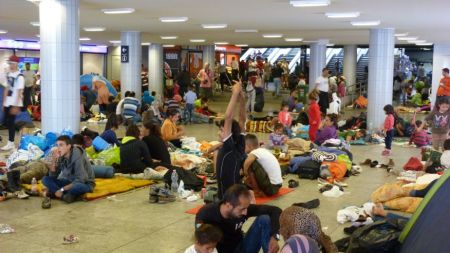
Sexual violence in Germany has reached epidemic proportions since Chancellor Angela Merkel allowed into the country more than one million mostly male migrants from Africa, Asia and the Middle East.
Gatestone Institute first reported Germany’s migrant rape crisis in September 2015, when Merkel opened up the German border to tens of thousands of migrants stranded in Hungary. A follow-up report was published in March 2016, in the aftermath of mass attacks against German women by mobs of migrants in Cologne, Hamburg and other German cities.
Germany’s migrant rape crisis has now spread to cities and towns in all 16 of Germany’s federal states. Germany is effectively under siege; public spaces are becoming increasingly perilous. Police have warned about a potential breakdown of public order this summer, when young male migrants are likely to see women lightly dressed.
During the month of July 2016, hundreds of German women and children were sexually assaulted by migrants (see Appendix below). The youngest victim was nine; the oldest, 79. Attacks occurred at beaches, bike trails, cemeteries, discotheques, grocery stores, music festivals, parking garages, playgrounds, schools, shopping malls, taxis, public transportation (buses, trams, intercity express trains and subways), public parks, public squares, public swimming pools and public restrooms. Predators are lurking everywhere; safety nowhere.
Dozens of women and children have been assaulted by migrants at summer festivals and public swimming pools — staples of ordinary German life.
 Sexual violence in Germany has reached epidemic proportions since Chancellor Angela Merkel allowed into the country more than one million mostly male migrants from Africa, Asia and the Middle East. The government has been facing a rising voter backlash to the open-door migration policy, including public protests (left). In some areas, authorities have distributed cartoon guides, to “educate” migrants that sexual assault is not acceptable (right)
In July, at least 24 women were sexually assaulted at the Breminale music festival in Bremen. Women were also assaulted at outdoor festivals in Aschheim, Balve, Gerolzhofen, Grenzach-Wyhlen Heide, Loßburg, Lütjenburg, Meschede, Poing, Reutlingen, Sinsheim, Wolfhagenand Wolfratshausen.
In July, women and children were also sexually assaulted at public swimming pools in Babenhausen, Dachau, Delbrück, Hamm, Hilchenbach, Kirchheim, Lörrach, Marklohe,Mönchengladbach, Mörfelden-Walldorf, Oberursel, Remagen, Rinteln, Schwetzingen andStuttgart-Vaihingen.
Most of the crimes were downplayed by German authorities, apparently to avoid fueling anti-immigration sentiments. Almost invariably, the crimes are said to be isolated incidents (Einzelfälle), not part of a nationwide problem. Information about sexual assaults can usually be found only in local police reports. Rapes are sometimes treated as local interest stories and covered by local or regional newspapers. Only the most spectacular incidents of rape and sexual assault make it into the national press.
Three rape cases did make it into Germany’s national media in July:
- On July 24, a 40-year-old migrant from Eritrea raped a 79-year-old woman in a cemetery inIbbenbüren. The woman, who lives in a local nursing home, was visiting the grave of her late sister at 6AM when the attack occurred. The migrant, who has been living as a refugee in Germany since 2013, was arrested at the scene. He is unlikely to be deported, however, because Eritrea is considered a conflict zone.
- On July 14, it emerged that one of the women raped by Muslim sex mobs in Cologne on New Year’s Eve became pregnant. She failed to report the attack to police because she felt ashamed.
- On July 3, a 24-year-old woman raped by three migrants in Mannheim in January admitted that she lied about the identity of the rapists. Selin Gören, a Turkish-German woman, initially said that her attackers were German nationals, when in fact they were Muslim migrants.
In an interview with Der Spiegel, Gören, the spokeswoman of Germany’s left-wing youth movement, Solid, said she lied because she was afraid of fueling racism against migrants. She also posted a letter on Facebook to a fictional refugee:
“I am really sorry that your sexist and line-crossing treatment of me could help fuel aggressive racism. I am going to scream… I will not stand by and watch, and it can happen that racists and concerned citizens name you as the problem. You are not the problem. You are usually a wonderful human being who deserves as much as any other to be safe and free.”
German police and media have faithfully mirrored Gören’s efforts to protect migrant rapists. German police reports usually refer to migrant criminals with politically correct euphemisms such as “southerners” (Südländer), men with “dark skin” (dunkelhäutig, dunklere Gesichtsfarbe, dunklem Hauttyp) or a combination of the two: “southern skin color” (südländische Hautfarbe).
Germany now finds itself in a vicious circle: most of the perpetrators are never found, and the few who are frequently receive lenient sentences. Most will never be deported. Only one in 10 rapes in Germany is reported and just 8% of rape trials result in convictions, according to Minister of Justice Heiko Maas.
On July 7, the German parliament approved changes to the criminal code that expand the definition of rape and make it easier to deport migrants who commit sex crimes. Under the bill, also known as the “No Means No” (“Nein heißt Nein“) law, any form of non-consensual sex will now be punishable as a crime. Previously, only cases in which victims could show that they physically resisted their attackers were punishable under German law.
The reforms, which are designed to make it easier for victims of sexual assault to file criminal complaints, are unlikely to end Germany’s migrant rape epidemic. This is because Germany’s politically correct justice system is notoriously lenient when it comes to prosecuting, sentencing and deporting foreign offenders.
At the same time, reliable statistics on sex crimes committed by migrants are notoriously elusive. German authorities have repeatedly been accused of underreporting the true scale of the crime problem in the country. For example, up to 90% of the sex crimes committed in Germany in 2014 do not appear in the official statistics, according to André Schulz, the head of the Association of Criminal Police (Bund Deutscher Kriminalbeamter, BDK).
On February 25, the newspaper, Die Welt, reported that authorities in the German state of Hesse were suppressing information about migrant-related crimes, ostensibly due to a “lack of public interest.”
On January 24, Die Welt reported that the suppression of data about migrant criminality is a “Germany-wide phenomenon.” According to Rainer Wendt, the head of the German police union (Deutschen Polizeigewerkschaft, DPolG), “Every police officer knows he has to meet a particular political expectation. It is better to keep quiet [about migrant crime] because you cannot go wrong.”
On January 22, the newsmagazine, Focus, reported that the Federal Anti-Discrimination Agency (Antidiskriminierungsstelle des Bundes, ADS) put pressure on police in North Rhine-Westphalia (NRW) to remove a reference to “North African criminal groups” in a press release. According toFocus, the ADS wrote: “There is a danger that people from these countries are placed under a general suspicion. We encourage you to delete the reference to the North African origin from the press release.” NRW Police later removed the offending words because “it could not be excluded that our formulation in the press release could be misunderstood as a discriminatory statement.” The original article by Focus has since been removed from the magazine’s webpage.
On January 8, the newspaper, Bild, published an article titled, “Are the Police Being Prohibited from Telling the Truth?” The paper quoted a high-ranking police official in Frankfurt, who said:
“There are strict instructions from the top not to report offenses committed by refugees. Only direct requests from media representatives regarding specific crimes should be answered. … It is extraordinary that certain offenders are deliberately NOT being reported about and the information is being classified as confidential (nicht pressefrei).”
Meanwhile, Boris Palmer, the “progressive” mayor of Tübingen, thinks he has found a solution to the problem of migrants who are raping German women and children in public swimming pools. He wants migrants to become swimming pool superintendents. In a Facebook post, Palmer wrote: “Our municipality has embraced a great prevention and integration measure. We have a Syrian lifeguard who can make known in Arabic and with authority what behavior is allowed and what is not.”
Palmer’s first hire is a 24-year-old Syrian named Aiham Shalghin. In an interview with Schwäbisches Tagblatt, Shalghin portrayed migrants as the victims of their circumstances: “Many male refugees have never before swum with women. In Syria, most public swimming pools are separated by gender. Men do not want to see women in swimming attire.”
Appendix
Sexual Assaults and Rapes by Migrants in Germany, July 2016.
Gatestone Institute first reported Germany’s migrant rape epidemic in September 2015, and again in March 2016. The problem has now spread to cities and towns in all 16 of Germany’s federal states. Following are a few cases from July 2016:
July 1. A 25-year-old migrant from Pakistan sexually assaulted a 15-year-old girl in a public square in Perleberg. A “southern guy” (südländischer Typ) sexually assaulted a young woman in Nürnberg. A “dark-skinned” man (dunkelhäutig) groped a 15-year-old girl in Magdeburg. A 34-year-old migrant exposed himself to passersby in Oldenburg. A man speaking “broken German”sexually assaulted a 20-year-old woman in Ibbenbüren.
July 1. Police were searching for a “southern looking man” (südländisch aussehende Mann) who assaulted a 73-year-old man walking his dog in Sindelfingen. The migrant came up behind the elderly man, grabbed his crotch and demanded to have sex with him. The elderly man tried to get away by getting into his parked car, but the migrant jumped into the passenger seat and again demanded sex. The migrant ran away when a passerby walking her three dogs approached the parked car. Meanwhile, a 32-year-old migrant from Afghanistan photographed two girls, ages 12 and 14, who were swimming in the Iller River in Illertissen. As they got out of the water, the man offered to pay them for sex.
July 2. A 24-year-old migrant from Albania sexually assaulted several women on a suburban train in Hamburg. A 20-year-old “Black African” man (Mann aus Schwarzafrika) attempted to rape a 27-year-old woman in a women’s restroom in Freiburg.
July 3. A “dark-skinned” (dunkler Teint) man sexually assaulted a 44-year-old woman inKressbronn. A “southerner” (Südländer) attempted to rape a 21-year-old woman in Meppen. A man with a “southeastern European appearance” (südosteuropäischem Aussehen) sexually assaulted a 19-year-old woman in Kühlungsborn. A man with a “southeastern European appearance” exposed himself to a 40-year-old woman at a train station in Mannheim-Lindenhof.
July 4. A “southerner probably of Turkish origin” (Südländer, vermutlich türkischer Abstammung) sexually assaulted a woman in Nordhorn. Police believe the perpetrator sexually assaulted another woman in the same area in late June. A 16-year-old migrant from Afghanistan exposed himself to a mother and her child in a park in Chemnitz. The man was arrested and released. A “dark-skinned” (dunklen Teint) man groped a woman in Düsseldorf. A 28-year-old Iranian sexually harassed an 18-year-old woman in Sundern.
July 5. A 27-year-old migrant from Pakistan groped a 33-year-old woman in Chemnitz. The woman, an off-duty police officer, reportedly gave the man a “painful integration course” by kicking him in the groin. After questioning by police, he was released. A “Black African” (Schwarzafrikaner) attempted to rape a 37-year-old female jogger in Dortmund.
July 6. Two migrants from Afghanistan were formally charged with sexually assaulting a 14-year-old boy at a public swimming pool in Delbrück. A 22-year-old asylum seeker from Afghanistan sexually assaulted two girls, ages 14 and 15, in Ravensburg. An “Arab-looking man” (arabisch aussehenden Mann) sexually assaulted a 20-year-old woman in Heilbronn. Two migrants attempted to rape a 25-year-old woman in downtown Mainz.
July 7. Two “dark-skinned” (dunkle Hautfarbe) men attempted to rape a woman in Friedrichshafen. A 20-year-old migrant from Pakistan was arrested for assaulting several women in Kirchheim. After questioning, he was released.
July 8. Two teenage migrants from North Africa sexually assaulted a woman at the central train station in Krefeld. They were arrested, questioned and released.
July 9. A 29-year-old migrant from Iraq raped a woman at a discotheque in Kiel. A 16-year-old migrant from Afghanistan sexually assaulted a 14-year-old girl at a music festival in Reutlingen. A 28-year-old migrant from Afghanistan sexually assaulted a woman at a festival in Lütjenburg. A migrant from Afghanistan sexually assaulted several women at a festival in Wolfratshausen. Two migrants from North Africa sexually assaulted two women at the central train station inDuisburg. A “southern looking” (südländisches Aussehen) man sexually assaulted a 14-year-old girl at the central bus station in Calw. A “dark-skinned” (dunklere Hautfarbe) man molested a 19-year-old woman at an outdoor festival in Poing. A “southern looking” (südländisches Aussehen) man exposed himself to a 16-year-old boy in Xanten. Three “dark-skinned” (dunklem Teint) menassaulted a 40-year-old woman in Böblingen.
July 10. A 19-year-old asylum seeker from Pakistan sexually assaulted a 16-year-old girl at a public swimming pool in Mörfelden-Walldorf. He was arrested and released. A 17-year-old migrant sexually assaulted an 11-year-old girl at a public swimming pool in Hamm. A “southerner” or “African” (südländisch, afrikanisch) man sexually assaulted a 24-year-old woman at a public swimming pool in Babenhausen. A 27-year-old migrant from Afghanistan sexually assaulted two 13-year-old girls at a public swimming pool in Rinteln. Two males aged 16 and 21sexually assaulted a 13-year-old girl at a public swimming pool in Stuttgart-Vaihingen. A “dark-skinned” (dunklen Teint) man sexually assaulted a 37-year-old woman at a public swimming pool in Dachau.
July 10. Two migrants from Iran sexually assaulted three women in downtown Munich. A 28-year-old Syrian asylum seeker exposed himself to a 48-year-old woman in Schweinfurt. A group of migrants from North Africa harassed several women in downtown Flensburg. When a passerby stepped in to help the women, the migrants used an electroshock weapon to incapacitate him. Two “foreigners” sexually assaulted to women in downtown Chemnitz. The attack led to a street fight between non-Germans and Germans, several of whom were injured. Police arrested a 19-year-old migrant from Libya for assaulting one of the women. After questioning, he was set free. A Turkish taxi driver attempted to rape an intoxicated 26-year-old female passenger in Heidelberg. A man “presumably of foreign origin” (vermutlich ausländischer Herkunft) groped a young girl in Hammelburg.
July 11. A “Black African” (Schwarzafrikaner) raped a 21-year-old woman who was jogging in a public park in Chemnitz. A “southern looking” (südländischen Teint) attempted to rape a woman in Falkensee. A “southern looking” (südländischen Teint) man exposed himself to a 52-year-old woman on a bike trail in Kleinmachnow. A “dark-skinned” (dunkelhäutig) man groped a 78-year-old woman in Kempten.
July 12. A 16-year-old migrant from Afghanistan sexually assaulted two women on a bicycle path in Kelheim. A “southern guy” (Südländischer Typ) exposed himself to a 56-year-old woman inStolberg. A 23-year-old migrant from Tunisia and a 30-year-old migrant from Kazakhstan assaulted several women in Olsberg. A “southern looking” (südländisches Aussehen) manattempted to rape a woman in Göttingen.
July 13. A 35-year-old man with a “southern phenotype” (südländischen Phänotyps) attempted to rape a 43-year-old woman in Mücheln. The woman escaped her attacker after she pepper-sprayed him in the face. A “southern looking” (südländisches Aussehen) man groped a 15-year-old girl in Meschede. A “dark-skinned” man exposed himself to a nine-year-old girl in Stuttgart. The girl was trying to cross the street when the man drove up in a car and asked her for directions. When she approached the car, she noticed that the man was not wearing pants and was fondling himself. A “foreigner” (Ausländer) sexually assaulted a woman at a bus stop inMarburg.
July 14. A 36-year-old migrant from Tunisia was charged with raping a 61-year-old woman inFreiberg. Police believe the man is responsible for at least three other sexual assaults in the town. A 27-year-old migrant sexually assaulted a 37-year-old woman at an outdoor festival inWolfhagen. At the same festival, a 25-year-old migrant from Algeria sexually assaulted a 34-year-old woman, and a 19-year-old migrant sexually harassed several women. A “dark-skinned” (dunkelhäutig) man assaulted two 18-year-old women in Friedrichsdorf. A 17-year-old unaccompanied minor migrant (unbegleitete minderjährige Flüchtlinge) assaulted several girls between the ages of 13 and 15 at a train station in Bensheim.
July 15. At least 24 women were sexually assaulted at a music festival in Bremen. The attacks were similar to the taharrush attacks in Cologne on New Year’s Eve. Police have found only five perpetrators, all of whom are migrants from Afghanistan. Harald Lührs, the lead investigator for sex crimes in Bremen said: “We have never experienced such massive attacks in Bremen. That groups of men surround women in order to grope them, this has never happened here in this magnitude. This is a new problem that the police have to deal with.”
July 15. A 22-year-old asylum seeker from Pakistan sexually assaulted a 19-year-old woman inMeppen. A migrant sexually harassed a 17-year-old girl on public transport in Ludwigsburg. A 36-year-old migrant from Syria groped two women at a supermarket in Rottenburg. A “dark-skinned” (dunkler Haut) man sexually assaulted a 28-year-old woman in Würzburg. A migrant sexually harassed four girls, ages 10 and 11, on a train in the Black Forest.
July 16. Five women were sexually assaulted at an outdoor festival in Sinsheim. A “Black African” raped a 21-year-old woman at a festival in Aschheim. Two North Africans attempted to rape two 18-year-old women at the central train station in Trier. A 25-year-old migrant from Afghanistan sexually assaulted a 30-year-old woman in Übersee. A 17-year-old migrant from Afghanistan sexually assaulted a 21-year-old woman in Meppen. Police say the migrant sexually assaulted four other women in Meppen in recent weeks. A “dark-skinned” (dunkle Hautfarbe) man exposed himself to a 37-year-old woman in Paderborn. A group of “foreigners” sexually assaulted a 27-year-old woman in Jena. A 36-year-old migrant from Afghanistan assaulted a young woman in Eichstätt.
July 17. Two “Arab-looking” man sexually assaulted a 20-year-old woman in front of the Basilica of Constantine in Trier. A 25-year-old migrant from Iraq repeatedly groped a 25-year-old woman at a discotheque in Landau. When a stranger intervened to protect the woman, the Iraqi went into a rage. The woman ended up with a broken nose. A “dark-skinned” (dunkle Haut) manattempted to rape a 45-year-old woman on a bicycle path in Rüsselsheim. A 38-year-old migrant exposed himself to two women in a parking lot in Würzburg. Three migrants groped a 15-year-old girl on a bus in Rostock. A 36-year-old migrant sexually assaulted a 34-year-old woman at an outdoor festival in Wolfhagen.
July 18. Three migrants sexually assaulted a 25-year-old woman as she was walking to work in downtown Saarlouis. A “dark-skinned” man (dunkelhäutigen Mann) sexually assaulted a 15-year-old girl in Grassau. Two “dark-skinned” men (dunkelhäutigen Männern) sexually assaulted two girls, ages 14 and 15, at the central train station in Gießen. A 25-year-old asylum seeker from Syria sexually assaulted a 16-year-old girl in Güsten. A 17-year-old migrant from Afghanistan sexually assaulted a 13-year-old girl at a public swimming pool in Hamm. An 18-year-old migrant from Afghanistan sexually assaulted two girls, ages 13 and 16, at a public swimming pool in Oberursel. An 18-year-old migrant from Afghanistan sexually assaulted two children, ages 10 and 12, at a public swimming pool in Remagen. A “southern guy” (südländischer Typ) attempted to rape a 16-year-old girl in Delitzsch. A “southerner” (südländisch) sexually assaulted a 48-year-old woman who was walking her dog in Darmstadt.
July 19. Five migrants from Afghanistan and Eritrea sexually assaulted two women at a festival in Gerolzhofen. Two 17-year-old asylum seekers sexually assaulted two girls, ages 11 and 13, inTriptis. A “dark-skinned” (dunkler Hauttyp) man exposed himself to a 17-year-old girl inWeinheim. Police published a composite photograph of a “person from Syria or Lebanon” who sexually assaulted a woman in downtown Dortmund. Three migrants assaulted three women in downtown Oldenburg. When one of the women demanded that the migrants leave them alone, a 23-year-old Algerian punched her in the face. The three men were arrested and then released.
July 20. A group of men with “Arab roots” (arabischstämmig) sexually assaulted five girls, aged 10 to 14, at a public swimming pool in Kirchheim. The men, all between the ages of 20 and 30, groped the girls and tore off the tops and bottoms of their swimming suits. Mayor Angelika Matt-Heidecker, who said she was “horrified” by the assaults, revealed that she had given the migrants permanent pool passes, free of charge. Local citizens are required to pay €90 ($100) for the same pass.
July 20. A “dark skinned” man (dunkelhäutigen Mann) raped a 49-year-old woman in Oldenburg. A man “presumably originating from abroad” (mutmaßlich aus dem Ausland stammende Mann) attempted to assault a 17-year-old girl on a bus in Bietigheim-Bissingen. Police say a search for the perpetrator has been “unsuccessful.” Three migrants from Afghanistan sexually assaulted at least eight women at a public swimming pool in Mönchengladbach. A 52-year-old migrant from Afghanistan sexually assaulted a 12-year-old girl at a public swimming pool in Marklohe. A group of “Black Africans” (Schwarzafrikaner) sexually assaulted several women at a public swimming pool in Lörrach.
July 20. A 31-year-old asylum seeker from Syria was arrested for sexually assaulting a 17-year-old girl in Regensburg. Four “southern looking” (südländischem Aussehen) men assaulted a woman in Varel. A “Pakistani-looking” man sexually assaulted a 23-year-old woman at a grocery store in Lüneburg. A 34-year-old migrant from Iran sexually assaulted a 20-year-old woman on the subway in Munich. A 44-year-old migrant from Sudan sexually assaulted three children between the ages of 13 and 17 at a youth center in Aurich.
July 21. An Arab migrant (arabischen Raum stammende Mann) sexually assaulted an 11-year-old girl at a public swimming pool in Hilchenbach. Two “foreigners with dark skin” (Ausländer mit dunkler Hautfarbe) assaulted a 14-year-old girl in Wolgast. A “dark-skinned” (dunkelhäutig) man exposed himself to two 18-year-old women in Kempten. A 26-year-old migrant from Iraq exposed himself to a 64-year-old woman at the central train station in Dresden. Two “southern looking” (südländischen Aussehen) men sexually assaulted an 18-year-old woman on a train in Bestwig. . When her boyfriend intervened, the migrants attacked him. The altercation turned into fisticuffs in which windows on the train were shattered. After the train stopped, the migrants fled. They remain at large.
July 22. A 52-year-old migrant from Afghanistan sexually assaulted a 12-year-old girl at a public swimming pool in Marklohe. A 40-year-old asylum seeker was arrested for sexually assaulting a girl at a public swimming pool in Grenzach-Wyhlen. A 23-year-old migrant from North Africa raped a 26-year-old woman in Mannheim. The woman was seriously injured in the attack. The man was charged with attempted murder.
July 23. An unidentified migrant raped a 15-year-old girl at the central train station in Krefeld. While on a train from Duisburg, the girl noticed that a group of six migrants were staring at her. After arriving at her stop, she entered a public restroom. Upon exiting, one of the migrants grabbed her and raped her while the others stood by and watched. A passerby intervened to rescue the girl. The perpetrators escaped.
July 23. An 18-year-old migrant from Nigeria raped a 28-year-old woman in Kassel. A man with a “dark complexion” (dunkler Teint) sexually assaulted a 19-year-old woman in Recklinghausen. A “dark-skinned man” (dunkelhäutigen Mann) sexually assaulted a woman in Braunschweig. A group of “southerners” sexually assaulted at least four women at a festival in Meschede.
July 23. A group of migrants accosted a 40-year-old woman in front of the city hall in Kerpen. As she tried to run away, the mob followed her shouting, “We will f**k you, Lady.” After the woman wrote about her experience on Facebook, someone staked out the area in front of city hall and found that many female passersby were also being accosted. As it turns out, groups of migrant youth gather in front of the city hall because of a free wireless internet signal. City officials said they would install free internet access at a nearby refugee shelter in hopes that the migrants will no longer gather in front of the city hall.
July 24. A 40-year-old migrant from Eritrea raped a 79-year-old woman in a cemetery inIbbenbüren. The woman, who lives in a local nursing home, was visiting the grave of her late sister at 6AM when the attack occurred. The migrant, who has been living as a refugee in Germany since 2013, was arrested at the scene.
July 24. A group of between five and seven migrants from Albania sexually assaulted two teenagers at a beach in Travemünde. The men encircled the girls, aged 15 and 16, in order to separate them from the rest of their friends. One of the men then dragged the 16-year-old into the water and tried to remove the bottom of her bikini. All of the men managed to evade police.
July 24. Five “Black Africans” (Schwarzafrika stammenden Männern) sexually assaulted an 18-year-old woman at a festival in Loßburg. A “Black African” (Schwarzafrikaner) assaulted a woman at the train station in Maulburg. Two “dark skinned” (dunkler Hautfarbe) sexually assaulted at least three women at a festival in Balve.
July 24. A 23-year-old migrant from Afghanistan sexually assaulted a 16-year-old girl at a public swimming pool in Schwetzingen. The man denied assaulting the girl and the police let him go. A 24-year-old migrant groped a woman at a bar in Mainz. He was arrested after he began throwing bottles at cars parked outside the premises. A “dark skinned” (dunkelhäutig) man exposed himself to a 22-year-old woman in Mönchengladbach-Wickrath. A “dark skinned man” (dunkelhäutigen Mann) exposed himself to two women on a street in downtown Erlenbach.
July 25. Police released a composite sketch of a “southerner” who attempted to rape a woman inSchwarzenbek. Five “southern-looking” (südländischem Erscheinungsbild) men exposed themselves to women and children at a lake in Potsdam.
July 26. A 13-year-old Syrian and a 15-year-old Iraqi groped a 19-year-old woman at a water park in Wismar. Two migrants from Eritrea sexually assaulted a 45-year-old woman in downtownGera.
July 27. Four boys between the ages of 11 and 13 sexually assaulted a 12-year-old girl inKönigsbach-Stein. The boys, all of whom are children of Syrian and Iraqi asylum seekers, pinned the girl against the wall of a building and forced her to perform sexual acts on them. According to police, the boys are too young to be held criminally responsible for their behavior. Therefore, social workers have been instructed to help the boys “understand the wrongfulness of their actions” by means of “intensive conversations” about “values and the local understanding of gender roles.”
July 27. A man speaking “broken German” (gebrochenes Deutsch) sexually assaulted a 36-year-old woman on an intercity express train in Karlsruhe. He repeatedly groped the woman and demanded that she perform sexual acts on him. After the train arrived in Karlsruhe, the woman called police, but the perpetrator escaped before they arrived.
July 27. A 19-year-old migrant attempted to rape a 24-year-old volunteer at a refugee shelter inRöhrmoos. A “dark-skinned” (dunklen Teint) man sexually assaulted a 24-year-old woman inErfurt. Police released a composite sketch of a “southern-looking man” (südländischen Aussehens) who exposed himself to women on public transportation in Cologne.
July 28. A group of four migrants from Morocco harassed female passersby at the central train station in Düsseldorf. Police intervened and the migrants attacked the officers. The migrants all have lengthy criminal records. One with an outstanding deportation order was detained. The three migrants demanded that the police to release their compatriot: “You come out! We will crush you! We will slash you!”
July 29. A 29-year-old migrant from North Africa was charged with attempting to rape and murder a 26-year-old woman in Mannheim. A 40-year-old migrant (ausländischer Mann) assaulted two women in Cloppenburg. A 27-year-old migrant from Iraq groped a 17-year-old girl at the Alexanderplatz in Berlin.
July 30. Six Syrian migrants spiked the drinks of two women at a music festival in Heide. The women fell ill with symptoms of dizziness and were taken to a local hospital. The migrants escaped before police arrived. An 18-year-old “asylum seeker” from Morocco sexually assaulted a 22-year-old woman in Hamburg. He was arrested and then released. Although the Moroccan’s asylum request has been denied, he has not been deported. Instead, he has become a career criminal, with a long rap sheet, including assault and robbery charges.
July 30. A 40-year-old asylum seeker sexually assaulted an 11-year-old boy at a supermarket in the village of Ering. The perpetrator was arrested at the scene of the crime and released. Three migrants from Iraq were arrested for sexually assaulting several women at a train station in Berlin-Friedrichshain.
July 31. Four asylum seekers from Pakistan raped a 17-year-old girl in Wetzlar. The men plied the girl with alcohol until she became drunk and then took turns raping her. Five North Africans assaulted a 26-year-old woman in Rheine.












 anneinpt
 artaxes
 danmillerinpanama
 davidking1530
 Peter Hofman
 Joseph Wouk
 Peter
Peter Louisiana Steve
 WarSclerotic
Recent Comments