Posted tagged ‘Erdogan’

State Sponsor of Islamic Terrorism: “Terrorism will Never have a Religion”

April 6, 2016

State Sponsor of Islamic Terrorism: “Terrorism will Never have a Religion” Front Page Magazine, Daniel Greenfield, April 6, 2016

(But he’s a cool guy. Please see Germany Moves To Remove Anti-Erdogan Poem And Merkel Calls Turkey To Apologize

— DM)


Islamic terrorism

Islamic Terrorism has no religion. We all know that. And it’s good to hear a state sponsor of Islamic terrorism reaffirm that right here.

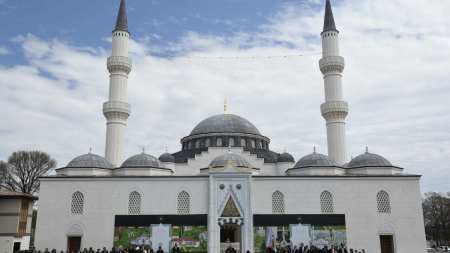
Hailing the beauty of its location near the capital Washington, Turkish President Recep Tayyip Erdogan officially inaugurated the Diyanet Center of America.

“Unfortunately, we are going through a rough time all around the world. Intolerance towards Muslims is on the rise not only here in the United States but also around the globe,” said Erdogan, who is accused of increasingly autocratic rule.

Also Erdogan threatened to ethnically cleanse Armenians, massacred Kurds and has prisons filled with political prisoners. But all his victims are probably guilty of Islamophobia.

The complex, the only one in the United States to feature two minarets, echoes the golden age of 16th century Ottoman architecture, with its central dome, half domes and cupolas in the style of Istanbul’s Suleymaniye Mosque.

Also it echoes the Islamist poem that sent Erdogan to jail originally, before he took over the country. “The mosques are our barracks, the domes our helmets, the minarets our bayonets and the faithful our soldiers.”

Good thing we let him set up his barracks and bayonets here. When even Cuba denied him permission.

“Terrorism will never have a religion, will never have a nation, will never have a nationality, nor will it ever have a root or ethnicity,” Erdogan said.

Obviously. Just ask Hamas, which Erdogan backs. Not to mention the various Syrian Jihadists whom he also backs. These Islamic terrorists have no religion.

P.S. This all makes sense if you define terrorism as non-Muslims defending themselves against Jihadists.

Germany Moves To Remove Anti-Erdogan Poem And Merkel Calls Turkey To Apologize

April 5, 2016

Germany Moves To Remove Anti-Erdogan Poem And Merkel Calls Turkey To Apologize, Jonathan Turley’s Blog, Jonathan Turley, April 5, 2016

220px-recep_tayyip_erdogan
220px-angela_merkel_2008

The enabling of an authoritarian like Erdogan is a new low for the Western nations. Not only is Erdogan destroying free speech and the free media in Turkey, but he has now found a way to enlist Western governments like Germany to embrace the same anti-free speech principles.

********************

We recently discussed how Turkish President Recep Tayyip Erdogan has turned his suppression of critics to other countries and was demanding action from governments against his critics. At the time, I was relieved to report that Germany had held the line on free speech. My relief of premature. German ZDF public television said Monday it had deleted a poem recited by presenter Jan Böhmermann from last Thursday’s edition of “Neo Magazin Royal” after pressure from the German government. Böhmermann’s poem, containing numerous sexual innuendos, accuses Erdogan of repressing minorities, including Kurds and Christians. German government spokesman Steffen Seibert said Chancellor Angela Merkel in a telephone call on Sunday evening with Turkish Prime Minister Ahmet Davutoglu had agreed that Böhmermann had recited a “deliberately abusive text.” Merkel has done precisely what civil libertarians feared: feeding Erdogan’s desire to suppress speech and affirming that he can indeed silence critics abroad.

What is truly maddening is that the spokesman insisted that none of this takes away from the “high value” the German government placed on freedoms of the press and public opinion. Unbelievable. Merkel silences Germans to appease a rising dictator while insisting that she remains committed otherwise to free speech.

Böhmermann mocked Merkel and said “Limits, at last. I think we have spectacularly shown, jointly with ZDF, where the limits of satire lie by us in Germany. At last!”

Merkel is not the only one who should be condemned in this matter. ZDF Program director Norbert Himmler insisted that there were limits to irony and satire.

“In this case, they were clearly exceeded . . . As a result, in consultation with Jan Böhmermann, we have decided to take the passage out of the broadcast. That relates to the video in the Mediathek, clips on YouTube, and re-runs.”

As we discussed, Erdogan flew into a rage over a satirical song entitled “Erdowie, Erdowo, Erdogan,” that ridiculed Erdogan’s alleged extravagance and a crackdown on civil liberties. Here is the video:

The video is a parody of a 1980s song by the German pop star Nena, “Irgendwie, Irgendwo, Irgendwann,” (“Anyway, Anywhere, Anytime”) which is changed to “Erdowie, Erdowo, Erdogan.” The facts that it reports however are not satirical but actual. The video details Erdogan crackdown on democracy and basic freedoms as well as his infamous intolerance for any criticism. Merkel has now added fuel to the meglomania of Erdogan in saying that certain criticism will not be tolerated in Germany. That is likely far more than the Turks ever dreamed of . . . to have a major Western nation embrace censorship.

We have previously discussed the alarming rollback on free speech rights in the West, particularly in France (here and here and here and here and here and here) and England (here and here and here and here and here and here and here and here and here and here). Much of this trend is tied to the expansion of hate speech and non-discrimination laws. We have seen comedians targeted with such court orders under this expanding and worrisome trend. (here and here). In Germany, Merkel government has crackdown on anti-immigration speech as the government expands its list of permitted and prohibited speech.

The enabling of an authoritarian like Erdogan is a new low for the Western nations. Not only is Erdogan destroying free speech and the free media in Turkey, but he has now found a way to enlist Western governments like Germany to embrace the same anti-free speech principles.

Horowitz: Turkish Islamic Leader Inaugurates Largest Mosque Complex in U.S.

April 4, 2016

Horowitz: Turkish Islamic Leader Inaugurates Largest Mosque Complex in U.S., Conservative Review, Daniel Horowitz, April 4, 2016

(At least Obama was displeased with Erdogan and did not attend. — DM)

Diyanet Center of America

Imagine FDR inviting Benito Mussolini to come to the United States in Middle of World War II to dedicate a massive Italian cultural center?  Or how about inviting the Japanese emperor to the groundbreaking of a new Shinto shrine that was bankrolled by his country?  Well, the reality of Turkey’s Islamist leader, Recep Tayyip Erdogan, speaking at the opening of a massive Islamic center that he funded in a small Maryland town – while we are at war with Islamic fascism – dwarfs these historical hypotheticals in terms of absurdity and outrage.

In May 2013, Erdogan visited the site of the future Mosque in Lanham, Maryland along with Obama administration officials.  After $110 million from the Turkish government, this massive Islamic center is now open and is the largest Islamic facility in the United States.  The Turkish Islamic-fascist leader spoke there on Saturday to inaugurate the behemoth complex.  During the feisty speech, Erdogan lectured Americans about tolerance towards Muslims, yet failed to acknowledge how he shuts down churches in his home country and fuels anti-Semitism.

While I haven’t seen any information on those who attended this ceremony, the head of the Islamic Circle of North America (ICNA) was present at the 2013 groundbreaking.  ICNA is an Islamic supremacist group that follows the teachings of Maulana Mawdudi and the Jamaat Al-Islami of Pakistan.  Maulana has said that Jews will be exterminated in the end of days.  The mother of Syed Farook, who lived with her son for months while he was making bombs in San Bernardino, was a member of ICNA.  Syed’s wife, Tafsheen Malik, was radicalized in Pakistan by the network of Sharia-schools that followed those teachings as well.

Also in attendance in 2013 was Imam Mohamed Magid, the former head of the Islamic Society of North America (ISNA).  ISNA is a Muslim Brotherhood offshoot that was designated as an unindicted co-conspirator in the Holy Land Foundation terror trial by the 5th Circuit Court of Appeals.  Even though Magid’s father is the Grand Mufti of Sudan responsible for the Christian genocide, he was appointed by Obama in 2011 to serve on the Department of Homeland Security’s (DHS) Countering Violent Extremism Working Group.  No, you aren’t missing anything.  There are Islamists who have been designated as Hamas agents that are given advisory positions in DHS, FBI, and the National Security Council.

Indeed, the Turkey/Muslim Brotherhood axis has come full circle right outside of our nation’s capital in a residential neighborhood.

Ever since the 9/11 attacks, and particularly over the past year, our political leaders have been pulling their hair out and wringing their hands in pursuit of a solution to combating Islamic terror.  We’ve spent 15 years refereeing Islamic civil wars overseas at a great fiscal and human cost to our nation.  Yet, at the same time we have brought the enemy to our shores through suicidal immigration policies and have allowed the Muslim Brotherhood and Islamic foreign governments to represent the entire Muslim community in America.  We are at war with Islamic extremism, yet our political leaders have openly invited the Islamic extremists to come here and radicalize American Muslims.

Erdogan has been playing a double game of supporting ISIS for the past few years.  And of course, he is one of the biggest supporters of Hamas in the Middle East.  Then again, the Muslim Brotherhood is Hamas, yet they are in our government and control most of the mosques in this country.

Harking back to our original historical hypothetical analogy of allowing Mussolini or the Japanese emperor to inaugurate a cultural center during World War II, the reality we face today is much worse.  For the most part, Japanese-Americans and Italian Americans were completely assimilated and patriotic at the time.  What was going on in Japan and Italy had nothing to do with an entrenched religious ideology that spanned the globe and united all Japanese and Italians across the world to commit genocide or at least subvert their host countries.  That is not the case today with Sharia-adherent Muslims living in the West and radicalized by terror groups and foreign entities with which we are at war.

That we would allow the Erdogan regime—which has become the Islamist leader of the Sunni jihad world the same way Iran leads the Shia Jihad—to fund and control a $110 million Islamic center right near our capitol while we are at war with this very ideology and these very individual Islamic extremists not only defies logic, it defies the innate desire for self-preservation.


Netanyahu’s dilemma: Détente with Turkey or recognition of Syrian Kurds

April 4, 2016

Netanyahu’s dilemma: Détente with Turkey or recognition of Syrian Kurds, DEBKAfile, April 4, 2016

obama_erdogan_best_friends_2012They were once good friends

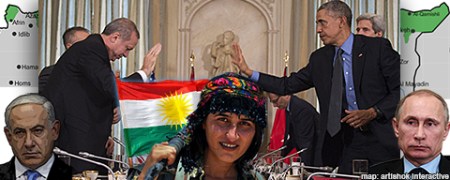
Last Friday, April 1, President Reccep Tayyip Erdogan had his first encounter with a group of American Jewish leaders, at his request. The full details of its contents were hard to sort out because the Turkish translator censored his master’s words with a heavy hand to make them more acceptable to his audience. But Erdogan’s bottom line, DEBKAfile’s New York sources report, was a request for help in explaining to the Obama administration in Washington and the Netanyahu government in Jerusalem why they must on no account extend support to the Syrian Kurdish PYD and its YPG militia or recognize their bid for a separate state in northern Syria.

The Turkish president did not spell out his response to this step, but indicated that a Turkish invasion to confront the Kurdish separatists was under serious consideration in Ankara. His meaning was clear: He would go to war against the Kurds, even if this meant flying in the face of President Barack Obama’s expectation that Turkey would fight the Islamic State.

Relations between the Turkish and US presidents have slipped back another notch in the last two weeks. When he visited Washington for the nuclear summit, Erdogan was pointedly not invited to the White House and his request for a tete a tete with Obama was ruled out. The US president even refused to join Erdogan in ceremonially honoring a new mosque built outside Washington with Turkish government funding.

At odds between them is not just the Kurdish question, but Erdogan’s furious opposition to Obama’s collaboration with Russian President Vladimir Putin on the Syrian conflict, and the two presidents’ tacit accord to leave Bashar Assad in power indefinitely until a handover becomes manageable.

On Feb. 7, on his return for a Latin American tour, the Turkish president warned Obama that he must choose between Ankara and the Kurds, whom he called “terrorists.” By last week, the US president’s choice was clear. It was the Kurds.

ObamaErdogan480_Koteret

When Erdogan arrived home from Washington last week, he discovered that the roughly four million Syrian Kurds dwelling in three enclaves touching on the Turkish border had taken important steps to advance their goal for self-rule: They were drafting a plan for establishing a “Federal Democratic System” in their three enclaves – Hassakeh-Jazeera, Kobani and Afrin – and had announced the amalgamation of their respective militias under the heading the “Syrian Democratic Forces”.

Cold-shouldered in Washington as well as Moscow (since Turkish jets shot down a Russian fighter last November), Erdogan found himself let down by the Jewish leaders whom he tried to woo. They refused to support him or his policy on the Kurdish question for three reasons:

1. Ankara had for years consistently promoted the radical Palestinian Hamas organization. To this, Erdogan replied by denying he had backed Hamas  only acted to improve the lives of the Gaza population. And, anyway, he said he had reacyed understandings with Israel on this issue..

2. His hostility towards Egyptian President Abdel-Fatteh El-Sisi. Erdogan’s response to this was a diatribe slamming the Egyptian ruler.

3. No clear reply had been forthcoming from Jerusalem by that time on Israel’s relations with Turkey or its policy towards the Kurds, despite the Turkish leader’s positive presentation of  mended fences.

The current state of the relationship is laid out by DEBKAfile’s sources:

Prime Minister Binyamin Netanyahu is caught on the horns of multiple dilemmas: While reluctant to respond to Ankara’s suit for warm relations with a leader who is shunned by Obama and Putin alike, Turkey is nonetheless offering to be Israel’s best client for its offshore gas.

Israel’s friendship with the Kurdish people goes back many years. The rise of an independent or autonomous state in Syria and its potential link-up with the semiautonomous Kurdish region of Iraq would create an important new state of 40 million people in the heart of the Middle East.

Israel has no wish to make enemies of its longstanding friends by disowning them in favor of Turkey.

Already, Israel’s evolving ties with the Syrian Kurds have given Israel’s strategic position in Syria a new positive spin, upgrading it versus the Assad regime in Damascus and its Hizballah and Iranian allies, who are avowed enemies of the Jewish state. Those ties offer Israel its first foothold in northern Syria.

And finally, Erdogan is not the only opponent of Kurdish separatism; so too are important Sunni Muslim nations like Saudi Arabia and Egypt. By promoting the Kurds, Israel risks jeopardizing its rapidly developing ties with those governments.

Journalism in Turkey: Newsroom vs. Courtroom

March 31, 2016

Journalism in Turkey: Newsroom vs. Courtroom, Gatestone InstituteBurak Bekdil, March 31, 2016

(Please see also, Turkey to Host UN’S First Global Humanitarian Summit. — DM)

♦ According to a report by the Turkish Journalists Association, 500 journalists were fired in Turkey in 2015; 70 others were subjected to physical violence. Thirty journalists remain in prison, mostly on charges of “terrorism.” There are also many journalists among the 1,845 Turks who have been investigated or prosecuted for insulting President Recep Tayyip Erdogan since he was elected in August 2014.

♦ After the secular daily newspaper Cumhuriyet published evidence of arms deliveries by the Turkish intelligence services to Islamist groups in Syria, President Erdogan himself filed a criminal complaint against Cumhuriyet’seditor-in-chief, Can Dundar, and the Ankara bureau chief, Erdem Gul.

♦ At a March 25 hearing, the Istanbul court ruled for the whole trial to be held in secret.

♦ “We came here today to defend journalism…We said we would defend the people’s right to access information. We defended that and we were arrested.” — Can Dundar, editor-in-chief of Cumhuriyet.

♦ The trial clearly exhibits how Erdogan’s authoritarian rule diverges from Western democratic culture.

“Turkey is where many journalists may have to spend more time at their attorneys’ offices or in courtrooms than in the newsrooms, where they should be,” a Western diplomat joked bitterly. “Don’t quote me on that. I don’t want to be declared persona non grata,” he added with a smile.

He was right. According to a report by the Turkish Journalists Association, 500 journalists were fired in Turkey in 2015; 70 others were subjected to physical violence. Thirty journalists remain in prison, mostly on charges of “terrorism.”

Needless to say, the unfortunate journalists are invariably known to be critical of Erdogan. There are also many journalists among the 1,845 Turks who have been investigated or prosecuted for insulting President Recep Tayyip Erdogan since he was elected in August 2014.

One of them is Sedat Ergin, editor-in-chief of Turkey’s most influential newspaper, Hurriyet. On March 25 Ergin had to appear before a penal court on charges of insulting Erdogan, with the prosecution demanding up to four years in jail for him. The veteran journalist says he is devastated to have been taken to court for the first time in his 41 years as a journalist on such an accusation. After his trial Ergin told reporters: “… in the year 2016 courthouse corridors and the hearing rooms have become the habitats of journalists in Turkey. Freedom of the press in Turkey in 2016 is now confined to court corridors.”

On that same day, two more journalists were in a courtroom, but they are not as lucky as Ergin in terms of the prison sentences demanded by the prosecution.

In May 2015, the secular daily newspaper Cumhuriyet published on its front page video and photographic evidence of arms deliveries by the Turkish intelligence services to Islamist groups in Syria. A month later, President Erdogan himself filed a criminal complaint against Cumhuriyet’seditor-in-chief, the prominent journalist, Can Dundar, and the newspaper’s Ankara bureau chief, Erdem Gul. In a public speech, Erdogan said: “He who ran this story will pay heavily for it.”

Dundar and Gul were arrested and remained behind bars for over 90 days, until Turkey’s Constitutional Court ruled that their detention violated their rights. They were released, but must now stand trial on charges of espionage, as well as aiding a terrorist organization that aims to topple Erdogan’s government. The case is a serious threat to the two journalists’ liberty, especially when Erdogan’s “weight” in the courtroom remains easily felt, if not seen.

1535Can Dundar (right), editor-in-chief of Turkey’s Cumhuriyet newspaper, and Erdem Gul (left), Cumhuriyet’s Ankara bureau chief, were arrested after the paper published evidence of arms deliveries by the Turkish intelligence services to Islamist groups in Syria. They remained behind bars for over 90 days, until Turkey’s Constitutional Court ruled that their detention violated their rights.

At the March 25 hearing, the Istanbul court ruled for the whole trial to be held in secret. A group of opposition MPs protested the decision and refused to leave the courtroom. The court decided to file a criminal complaint against them for “obstructing justice.”

“We came here today to defend journalism. We gathered here before and said the same thing. We said we would defend the people’s right to access information. We defended that and we were arrested,” Dundar said.

It seems that Erdogan has no intention of leaving the journalists alone. The trial also clearly exhibits how his authoritarian rule diverges from Western democratic culture. On March 25, a group of Western consuls-general in Istanbul attended the journalists’ trial in a show of solidarity. The diplomats included Leigh Turner, the British Consul-General, who shared images from outside the court and messages of support for the journalists on Twitter. Now Erdogan thinks he has new enemies.

The day after the court hearing, Erdogan spoke:

“The situation of those who attended this hearing is very important. The consuls-general in Istanbul come to the courthouse. Who are you, what are you doing there? This is not your country, this is Turkey … Diplomats can operate within the boundaries of missions. Elsewhere is subject to permission.”

Now is that a new jurisprudence in diplomacy — that foreign diplomats in Turkey should be confined to their mission buildings and not observe most important political trials without permission from the Turkish government? In addition to the court’s blackout on the Dundar-Gul case, Erdogan now wants political confinement for the journalists.

By pursuing life sentences so aggressively for the journalists, Erdogan is in fact trying to achieve another political goal: He is giving messages at many wavelengths to any other investigative journalist who may in the future publish another embarrassing report on his administration.

Not really peaceful and free times for Turkish journalism.

Secrets and Lies: Turkey’s Covert Relationship With ISIS

March 29, 2016

Secrets and Lies: Turkey’s Covert Relationship With ISIS, Clarion Project, Meira Svirsky, March 29, 2016

Islamic-State-5-IPWith the aid of Turkish officials, Islamic State fighters’ have been able to travel through Turkey to reach Syria (Photo: Video screenshot)

A hot warning received by intelligence officials revealed that the Islamic State (ISIS/ISIL) is planning an “imminent attack” on Jewish children in Turkey. Officials believe the most likely target is in the Beyoglu district of Istanbul, where a Jewish school is attached to a synagogue and community center.

The information was obtained after Turkey arrested six ISIS operatives in the southern city of Gaziantep last week.

“This is a more than credible threat. This is an active plot,” a Turkey source said.

Less than 10 days ago, a suicide bomber stalked Israeli tourists in Istanbul before blowing himself up near them, killing five people (four of them Israelis) and wounding many more.

“The so-called Islamic State is believed to be behind both sets of attacks and the organization continues in determined efforts to perpetrate further attacks in Turkey and elsewhere,” reported Sky News, quoting from an intelligence report seen by the news outlet.

In addition to the six arrested, another three ISIS operatives were arrested last week. Turkey, it seems is scrambling to protect itself from attacks the terror group has threatened to execute all across Europe.

After the Brussels attacks, Turkish President RecepTayyip Erdogan shocked the world by saying that Turkey had captured one of the perpetrators of the massacre last June and send him back to his country.  Erdogan specifically said that Ibrahim El Bakraoui, one of the suicide bombers in the Brussels airport, was detained in Turkey and sent back to Belgium with a warning (that was ignored) that he was a militant.

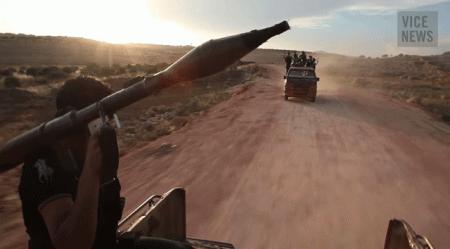
Yet, new documents obtained by Kurdish YPG fighters (People’s Protection Units) and the Syrian Democratic Forces (SDF) who are fighting together, refute the claim made by Erdogan that Turkey is preventing ISIS and Al-Nusra (Al Qaeda’s official affiliate in Syria) from travelling through Turkey to reach Syria.

The documents seized from Islamic State headquarters in seven locations, including Kobane, show that ISIS fighters from all over the world – and particularly from Kazakhstan, Indonesia, and Tajikistan  — were given passage through Turkey to Syria.

The Firat News Agency (ANF), a Kurdish outlet whose websites have been repeatedly blocked in Turkey by Turkish courts, reports that the hundreds of documents show that since 2013, ISIS fighters have used the Istanbul and Adana airports and have received permits from the Turkish government to reside in Turkey until they cross over to Syria.

The documents also include bus tickets, electronic Turkish visas, residency permits, and documents with stamps from Turkish immigration officials.

Chillingly, the documents show that chemical and explosive materials was transferred from Turkey to Syria. One such document was signed by the manager of Istanbul’s Police Foreigners’ Department Erkan Aydoga. Manuals in Turkish as to how to use these materials were also given to the jihadis.

A sample of the documents can be viewed here.

Turkey, as has been previously reported, is playing a dangerous and duplicitous game with the West. As Clarion Project has wrote, Turkey’s arms transfers to al-Qaeda-linked Islamist jihadis in Syria have been long-documented, yet largely ignored by the Western media. A major raid by the U.S. on an Islamic State safe house in Syria in the summer of 2015 gleaned large amounts of intelligence undeniably linking Turkey to the Islamic State.

Similarly, the fact the Turkey has been the top financial sponsor of Hamas since 2012, with Erdogan arranging for the transfer of $250-300 million to this U.S.-designated terrorist group annually, is another oft-ignored inconvenience. Similarly, the West has brilliantly avoided confronting Turkey on its abysmal human rights record.

Using air-tight documentation, Nafeez Ahmed, editor of InsurgeIntelligence, writes about the many reasons the West has chosen to look the other way while Turkey facilitates oil sales for the Islamic State, which guarantees its strength and viability.

“There are many explanations,” writes Ahmed, “but one perhaps stands out: the West’s abject dependence on terror-toting Muslim regimes, largely to maintain access to Middle East, Mediterranean and Central Asian oil and gas resources.”

Since 2013, the Turkish government has been building a $100 million mega-mosque in Lanham, Maryland, taking Turkey’s“outreach” in America out of the realm of the subtle. This week in America, U.S. President Barack Obama will join Erdogan at the opening of the mosque, the largest in the U.S.

The show, it seems, must go on.

Pakistan on the Mediterranean

March 28, 2016

Pakistan on the Mediterranean, Washington Free Beacon, March 28, 2016

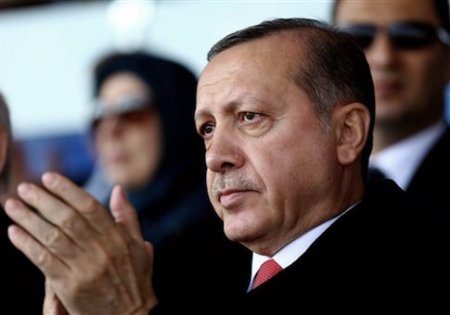
Turkish President Recep Tayyip Erdogan listens during a ceremony to commemorate the 101st anniversary of the Battle of Gallipoli in Canakkale, Turkey, Friday, March 18, 2016. Turkish President Recep Tayyip Erdogan on Friday warned Europe that it, too, could fall victim to attacks by Kurdish militants following a terror attack in Ankara that killed 37 people. (Kayhan Ozer, Presidential Press Service, Pool via AP)

Turkish President Recep Tayyip Erdogan listens during a ceremony to commemorate the 101st anniversary of the Battle of Gallipoli in Canakkale, Turkey, Friday, March 18, 2016. Turkish President Recep Tayyip Erdogan on Friday warned Europe that it, too, could fall victim to attacks by Kurdish militants following a terror attack in Ankara that killed 37 people. (Kayhan Ozer, Presidential Press Service, Pool via AP)

President Obama will welcome Erdoğan to Washington this week for a strategy meeting about countering the ISIS.

**********************

On March 18, European and Turkish diplomats signed off on a comprehensive deal on migrants pouring from Syria, Iraq, and elsewhere in the Middle East through Turkey and into the European Union. Under the terms of the deal, for every illegal migrant the E.U. returns to Turkey, Turkey would send one refugee for resettlement in Europe. Additionally, Turkey and Europe agreed to re-open discussions concerning the Muslim country’s efforts to join the E.U., and Europe agreed to allow Turks visa-free travel throughout the Schengen zone.

Two days after the deal was announced, a Turk who had joined the Islamic State blew himself up among tourists on Istanbul’s Istiklal Street, one of the city’s major shopping and tourism districts. Two days after that, ISIS suicide bombers killed dozens in two separate attacks in Brussels. ISIS called what occurred in Belgium “a drop in the sea” compared with what the terrorists have in store for “nations of disbelief.”

Turkey and its president, Recep Tayyip Erdoğan, have used the growing threat to argue that the West must better conform its policies to Turkey’s desires. In the wake of the Brussels attacks, Prime Minister Ahmet Davutoğlu chided Europe. “Europe has no partner other than Turkey to provide its regional security,” he declared, adding a subtle threat: “They should see this reality and act accordingly.” Meanwhile President Obama will welcome Erdoğan to Washington this week for a strategy meeting about countering the ISIS.

The reality Davutoğlu deliberately ignores, however, is his own country’s role in allowing ISIS to develop and metastasize. The Turkish government is adept at pulling the wool over Western officials’ eyes. Erdoğan pays lip service in meetings with European and American officials to the importance of both democracy and the Turkish partnership with the West, for example, declaring, “Secularism is the protector of all beliefs and religions.” He speaks differently to his Turkish audience. As mayor of Istanbul, he described himself as “the imam of Istanbul” and declared, “Thank God almighty, I am a servant of Shari‘a.” He is famous for his quip, “Democracy is like a streetcar. When you come to your stop, you get off.” In recent years, he has declared his goal to be to “raise a religious generation.”

This “religious generation” is flowing into the cauldron of Syria and Iraq. More than 30,000 foreign fighters from as many as 100 countries now fight with the Islamic State. The bulk of these soldiers—perhaps 90 percent—crossed into the Islamic State from Turkey. Turkish visa policy contributes to the problem. A direct correlation can be drawn between foreign fighters serving ISIS and those nationalities from which Turkish authorities require no visa or provide waivers: Several thousand more Moroccans and Tunisians, who need no visas to transit Turkey, fight with ISIS in Syria and Iraq than Algerians and Libyans, who do. If Erdoğan simply required visas in advance for those under the age of 40 coming from countries like Morocco, Tunisia, Lebanon, and Jordan—or, for that matter, from Russia, the United Kingdom, and Australia—the flood of recruits into the Islamic State would slow to a trickle.

ISIS terrorists regularly traverse the Turkish border, not only for medical care but also for rest and relaxation. Some merchants in Istanbul openly sell ISIS propaganda and promise that proceeds from their sale will benefit the group’s fight in Syria and Iraq. Smugglers peddling contraband oil to fund ISIS rely on Turkey to bring the oil to market, paying off local and perhaps even national officials of the AKP, Turkey’s governing party, along the way.

Turkey has done more than lend passive support to Islamist radicals. In his 13 years in power, Erdoğan has transformed Turkey from a Western-leaning democracy into Pakistan-on-the-Mediterranean. There was, for example,the leak of documents from the Millî İstihbarat Teşkilatı (MİT), Turkey’s intelligence service, showing Turkish support of the Nusra Front, an al Qaeda affiliate operating in Syria. And, rather than give medals to the Turkish soldiers who intercepted truckloads of weaponry destined for Syrian radicals, Erdoğan ordered their arrest.

Likewise, when Turkish journalists exposed—with photographic evidence—the transfer of munitions and other supplies from the Turkish border to ISIS, Erdoğan’s response was not to applaud the media but to seize the newspaper and arrest its editors and many of its reporters.

There is also evidence that, as Kurds fighting ISIS in Kobani in 2014 began to turn the tide against the radical group, Erdoğan and Turkish intelligence officials allowed ISIS fighters to pass through Turkey and attack Kobani from across the border, a flank the town’s largely Kurdish residents assumed was secure.

From the beginning, Erdoğan has looked at the Syrian refugee crisis not as a humanitarian tragedy but an arrow in his quiver. Inside Turkey, he has offered Sunni refugees Turkish citizenship if they settle in Turkish provinces currently dominated by the Shi‘ite offshoot Alevi sect. And, whereas the world condemns ISIS “genocide” against the Yezidi, the Yezidi who sheltered in Turkey were then victimized, again, by local AKP-run municipalities who refused to provide services offered to Sunni refugees.

Allowing Turkey to choose which refugees to send to Europe and promising to eliminate visa restrictions for Turks only rewards Erdoğan for his behavior and gives him additional leverage in his dealings with the West. Nor is this the type of policy Erdoğan’s neighbors would support. Earlier this year, King Abdullah II of Jordan told Congress, “The fact that terrorists are going to Europe is part of Turkish policy and Turkey keeps on getting a slap on the hand, but they are let off the hook.” He added that, “radicalization was being manufactured in Turkey.”

Abdullah’s message fell on deaf in ears in Washington, Brussels, Paris, and Berlin. It is Erdoğan who has the initiative as he pursues the Islamicization of Turkey and neo-Ottoman imperialism. He has built a Pakistan on the Mediterranean: an incubator of terror that markets itself as the only available partner of the West, with tragic results.

Jordan’s king accuses Turkey of sending terrorists to Europe

March 26, 2016

Jordan’s king accuses Turkey of sending terrorists to Europe #Abdullah’sWar Abdullah tells US politicians that radicals are being ‘manufactured in Turkey… as part of Turkish policy’

Last update:
Saturday 26 March 2016 9:20 UTC

Source: Jordan’s king accuses Turkey of sending terrorists to Europe | Middle East Eye

Jordan’s king, Abdullah, and the Turkish president, Recep Tayyip Erdogan (AFP)

King Abdullah of Jordan accused Turkey of exporting terrorists to Europe at a top level meeting with senior US politicians in January, the MEE can reveal.

The king said Europe’s biggest refugee crisis was not an accident, and neither was the presence of terrorists among them: “The fact that terrorists are going to Europe is part of Turkish policy and Turkey keeps on getting a slap on the hand, but they are let off the hook.”

Asked by one of the congressmen present whether the Islamic State group was exporting oil to Turkey, Abdullah replied: ”Absolutely.”

Abdullah made his remarks during a wide-ranging debriefing to Congress on 11 January, the day a meeting with the US president, Barack Obama, was cancelled.

The White House was forced to deny that Obama snubbed one of America’s closest allies in the Middle East, attributing the cancellation to “scheduling conflicts,” although Obama and Abdullah met briefly at Andrews Air Force Base a day later.

Present at the meeting in Congress were the chairmen and members of the Senate Intelligence, Foreign Relations and Armed Services committees, including Senators John McCain and Bob Corker, and Senators Mitch McConnell and Harry Reid, the Senate Majority and Minority leaders respectively.

According to a detailed account of the meeting seen by MEE, the king went on to explain what he thought was the motivation of Turkey’s president, Recep Tayyip Erdogan.

Abdullah said that Erdogan believed in a “radical Islamic solution to the region”.

He repeated: “Turkey sought a religious solution to Syria, while we are looking at moderate elements in the south and Jordan pushed for a third option that would not allow a religious option.”

The king presented Turkey as part of a strategic challenge to the world.

“We keep being forced to tackle tactical problems against ISIL [the Islamic State group] but not the strategic issue. We forget the issue [of] the Turks who are not with us on this strategically.”

He claimed that Turkey had not only supported religious groups in Syria, and was letting foreign fighters in, but had also been helping Islamist militias in Libya and Somalia.

Abdullah claimed that “radicalisation was being manufactured in Turkey” and asked the US senators why the Turks were training the Somali army.

The king invited the US politicians present to ask the presidents of Kosovo and Albania about the Turks.

Abdullah said that both countries were begging Europe to include them, before Erdogan did.

Abdullah was supported in his remarks by his foreign minister, Nasser Judeh, who said that the Albanian president (Bujar Nishani) was a Catholic married to a Muslim, and that that was a model which should be protected in a Muslim majority country.

Judeh said that when the Russian bombing campaign prevented Turkey from establishing safe zones in northern Syria to stop refugees from coming to Turkey, “Turkey unleashed the refugees onto Europe”.

Both Judeh and Abdullah bridled at the $3bn deal offered by Europe to Turkey, noting that Turkey had only 2m Syrian refugees out of a population of 70m, whereas Jordan was facing “a bigger problem proportionally”.

Jordan and Turkey are officially allies. The Turkish prime minister, Ahmed Davutoglu, cancelled an official visit to Jordan after the latest bomb attack in Turkey, which on 13 March killed 34 people in Ankara.

The Kurdish Freedom Falcons (TAK), an offshoot of the PKK, or Kurdistan Workers’ Party, claimed responsibility for the bombing.

The postponed visit is due to take place this weekend and Davutoglu will be mindful that Abdullah told senators that Turkey was using the Kurds as an “excuse” for its policies in Syria.

Galip Dalay, research director at Al Sharq Forum and senior associate fellow on Turkey and Kurdish Affairs at Al Jazeera Center for Studies, said it was wrong to portray Turkey as having a strategic goal of establishing an Islamist government in Syria.

He said: “Turkey did its best in the first eight months of the Syrian crisis to find a political solution to the crisis, which would have included [Syrian President] Bashar Assad. Back then, Turkey was criticised in the region and the West for being too soft on the Assad regime and being too optimistic about the possibility of reform. When it became clear, after eight months of arduous attempts, that Assad had no intention of initiating a political and democratic process to meet the demands of the protestors, Turkey threw its weight behind the opposition.”

Dalay said that the claim Turkey was buying oil from the Islamic State group was a Russian fabrication concocted by Moscow after Turkey shot down the Russian fighter. “Turkey is not the only one saying there is no evidence to support this claim. The United States said it too.”

The Turkish government would not comment officially on Abdullah’s reported remarks on 11 January. But a senior Turkish source accused the king of becoming “the spokesman for Bashar al-Assad”.

He said the portrait emerging from these remarks was not one of a king speaking but of a “Western journalist with a fuzzy state of mind and little familiarity with the region”.

He said: “Turkey is definitely carrying out an intense struggle against Daesh [a reference to the Islamic State group]. Bombings take place in Turkey, not in Jordan. When this is the case, groundless accusations by King Abdullah are totally unacceptable.

“Moreover, his tackling of the Daesh issue with such unfounded information also raises the question about whether Jordan could play a meaningful role in the fight against Daesh.”

He said the king’s claims that IS was selling oil to Turkey were not only absurd but showed that Abdullah did not have the slightest idea about what was going on in Syria.

“The king’s statements and accusations against Turkey are not the first. Unfortunately, all of his allegations are the same as the slanders frequently expressed by the Assad regime.

“It would be to Jordan’s and the region’s interest if Jordan, as a friend of Turkey, were to work for a strategic cooperation with a strategic power like Turkey, instead of acting like the spokesperson of Assad.”
Turkey’s Erdogan Goes Full-Dictator: Designates Journalists And Teachers As “Terrorists”; Arrests Lawyers

March 17, 2016

Turkey’s Erdogan Goes Full-Dictator: Designates Journalists And Teachers As “Terrorists”; Arrests Lawyers TSubmitted

by Tyler Durden on 03/17/2016 02:00 -0400

Source: Turkey’s Erdogan Goes Full-Dictator: Designates Journalists And Teachers As “Terrorists”; Arrests Lawyers | Zero Hedge

“It is not only the person who pulls the trigger, but those who made that possible who should be defined as terrorists, regardless of their title,” Turkish President Tayyip Recep Erdogan said on Monday, in an attempt to convince parliament to include journalists, politicians, academics, and activists under the country’s anti-extremism laws.

Erdogan’s comments came a day after the latest in a string of suicide bombings ripped through Ankara, killing 34 and wounding more than 100 in Kizilay. Since then, Turkey has arrested nearly 50 people with “suspected ties” to the PKK against which Erdogan is waging a highly personal crusade.

Apparently, the President doesn’t think parliament is moving fast enough on his “request” to expand the definition of “terrorist” because in a speech on Wednesday, he effectively instructed lawmakers to get moving before also urging parliament to deal with “the issue of immunities.”

Erdogan desperately wants to prosecute HDP members who he says are guilty of “inciting terrorism.” “We must swiftly finalize the issue of immunities,” he said. “Parliament must take steps on this issue swiftly,” he added, as if the first statement was in some way unclear.

(Erdogan gets it, why don’t you?)

But frankly, we’re not even sure why he bothers parliament with these things. Erdogan is going to do whatever Erdogan wants to do. We’re talking about a man who arrested two of the country’s preeminent journalists and had the nerve to charge them with “deliberately aiding a terrorist organization” when what they were in fact doing was exposing Erdogan for… wait for it… deliberately aiding a terrorist organization.

And if that’s not absurd enough for you, there are countless other examples including an incident which saw a medical doctor put on trial for posting a picture of the President next to a picture of a fictional creature from a Tolkein novel on social media.

Turks are in fact so scared of their “leader” that just last month, a Turkish truck driver literally sued his own wife for cursing at Erdogan when he spoke on television. “I warned her,” the man later said.

True to form, Erdogan didn’t wait on parliament to expand the definition of “terrorist” before he went ahead and arrested three academics for “terrorist propaganda” after they made the mistake of publicly asking the government to stop the siege on Cizre and other cities in the predominantly Kurdish southeast.

“More than 2,000 academics signed a petition in January criticizing military action in the southeast, including round-the-clock curfews aimed at rooting out PKK militants who have barricaded themselves in residential areas in southeastern cities,” Reuters notes. “The petition outraged President Erdogan, who said the academics would pay a price for their ‘treachery’“.

A few days ago, a group of lawyers made the mistake of holding a press conference to defend the academics who signed the aforementioned petition. On Tuesday, Erdogan arrested the lawyers too.

Finally, when a British citizen who teaches at Bilgi University showed up at the courthouse to support the lawyers, he was also arrested. His crime, in his own words: “I am accused because I had several invitations to Kurdish new year (celebrations on March 21) published by the HDP – the third-largest party in the Turkish parliament – in my bag.”

So there you go. Lessons learned all around we suppose.

Better still, the President says he plans to start campaigning in April for his long-planned push to expand the powers of the presidency (because clearly he’s not powerful enough). Erdogan will look to rewrite the constitution (literally) in order that it might, in Bloomberg’s words, “feature a strengthened presidency while retaining a key role for the parliament.”

Yes, “a key role for parliament,” where the third largest party is about to have their immunity stripped away so that Erdogan can prosecute the whole lot of them for being terrorists.

Erdogan, Bloomberg goes on to write, “has devoted much energy to expanding the executive role of what’s traditionally been a largely ceremonial post, arguing that strong leadership will help extend a record of economic growth [but] only holds 317 seats in the 550-member parliament, short of the 330 votes needed to take a new charter to a public vote.”

Trust us. He’ll get it to a referendum. Votes or no votes. And then he’ll rig the referendum.

Clearly, Nihat Ali Ozcan at the Economic Policy Research Foundation in Ankara (who spoke to Bloomberg) doesn’t get it: “The PKK is engaged in a direct confrontation with Erdogan with the aim of preventing him from turning his office into an executive presidency. However, Erdogan may benefit from a growing nationalist backlash in his campaign for a presidential system, as long as he maintains his crackdown on the PKK.”

Gee, do you think so?

That’s been the entire gambit since last June’s elections. Erdogan lost ground to the pro-Kurdish HDP and so, he used the war on ISIS as an excuse to deliberately restart the conflict with the PKK in order to convince the public that it needs his protection lest the entire country should descend into chaos. Three months and a whole lot of lost lives later, AKP performed better in a November redo election that Erdogan – gun to his head – was “forced” to call when the coalition building process was sabotaged fell apart in August.

We have no doubt that Erdogan will succeed one way or another in his bid to rewrite the constitution. Even if it kills him. Or wait. No. Even if it kills you.

Turkey warplanes hit Kurdish PKK camps in northern Iraq

March 14, 2016

Turkey warplanes hit Kurdish PKK camps in northern Iraq – Turkish army

Published time: 14 Mar, 2016 08:16 Edited time: 14 Mar, 2016 09:27

Source: Turkey warplanes hit Kurdish PKK camps in northern Iraq – Turkish army — RT News

© Murad Sezer
Turkish warplanes bombed camps belonging to the Kurdistan Workers’ Party (PKK) in the north of Iraq early on Monday, Turkey’s army has confirmed. The strikes come less than 24 hours after a car bomb in Ankara killed at least 37 people.

A total of 11 fighter jets were involved in the bombardment of the PKK positions. Eighteen targets were hit, including ammunition depots and shelters, the Turkish military said in a statement, as cited by Reuters.

Turkey believes the PKK is a terrorist organization and Ankara has blamed the Kurdish separatist group for a number of recent terrorist attacks in the country, including Sunday’s car bomb at a transport hub in the Turkish capital, which killed at least 37 people and injured dozens more.

Turkish security officials claimed on Monday that a woman who joined the PKK in 2013 was one of the two suspects behind the car bombing in Ankara, according to Reuters. They said that the woman was born in 1992 and was from the eastern Turkish city of Kars.

Read more

Turkish F-16 fighter jets. © Fatih Saribas

Speaking after the attack, Turkish President Recep Tayyip Erdogan said he would bring terrorism “to its knees,” and that the Turkish state would “never give up using its right of self-defense.”

“All of our security forces, with its soldiers, police and village guards, have been conducting a determined struggle against terror organizations at the cost of their lives,” Erdogan said in a written statement, as cited by the Hurriyet Daily News. “These attacks, which threaten our country’s integrity and our nation’s unity and solidarity, do not weaken our resolve in fighting terrorism but bolster our determination,” he added.

The Turkish Air Force bombed at least five PKK targets in Iraq on March 9, with Ankara claiming 67 militants were killed.

On December 9, 10 Turkish F-16 fighter jets targeted Kurdish positions in northern Iraq, with the Turkish military saying that its targets were “destroyed in an aerial campaign.

These strikes came days after Turkey had deployed about 150 troops and 25 tanks to a base in Iraq’s Nineveh province, without bothering to get permission from Baghdad. Ankara argued that its soldiers were sent to northern Iraq after a threat from Islamic State (IS, formerly ISIS/ISIL) to Turkish military instructors training anti-terrorist forces in the area.

Erdogan had rejected a request from Baghdad to withdraw the troops, claiming that the Turkish military is present in Iraq “as instructors.”

A two-year truce to a decades-long conflict between Ankara and the Kurds was shattered in July. Turkey has launched a security crackdown in the predominantly Kurdish south east of Turkey, while also striking Kurdish positions in Iraq and Syria.

On Monday, Turkey announced it would implement a new 24-hour curfew in the south-eastern town of Sirnak to try and carry out operations against Kurdish militants.

Speaking to RT, Ertugrul Kurkcu, Honorary President of the Peoples’ Democratic Party (HDP), said that Ankara’s crackdown was failing to distinguish between the militants and the general civilian population who support Kurdish rights.

“This is a crackdown not on the PKK, but on the civilian population and Kurds who have been supporting our party, who have been supporting Kurds’ rights,” he said.

“And they were targeted during this crackdown. The government’s figures are incorrect… According to our figures, until this day, 652 civilians have lost their lives during the curfew in the cities of Cizre, Silopi, Sirnak and Nusaybin. And of these, 97 are children and 94 are women.”