Posted tagged ‘Drones’

Humor | Obama issues ‘farewell’ Presidential drone strikes

January 5, 2017

Obama issues ‘farewell’ Presidential drone strikes, Duffel Blog, January 5, 2017

obamadronesonPHOTO CREDIT: WHITE HOUSE

In a fulfillment of his campaign promise, Obama added that the strikes would be perfectly constitutional, for reasons which were immediately classified by the Central Intelligence Agency.

**************************

WASHINGTON, D.C. — With less than 20 days left in office, a nostalgic and misty-eyed President Barack Obama today put his signature on his administration’s last batch of “farewell” drone strikes.

“When we’ve been told that we don’t have enough intelligence, there will be heavy civilian casualties, we’ll severely destabilize our allies, or we’ll wind up killing Americans without a trial, all I can say, is ‘Yes we did!’ and ‘Yes we can!’” Obama told a small group of CIA employees who were on hand to witness the event.

CIA Director John Brennan joked, “Uncle Sam has his own naughty list, and if you’re on it you get more than a lump of coal in your stocking,” as the President added to uproarious laughter, “Try one hundred pounds of Hellfire and a Happy New Year.”

Brennan has already dubbed the upcoming strike package — set to be carried out in Iraq, Afghanistan, Pakistan, Syria, Yemen, and Somalia — Operation REAPER HARVEST, though CIA employees still in the holiday spirit have nicknamed it “Operation Slay Ride.”

Likely farewell targets include ISIS leader Abu Bakr al-Baghdadi, Al Qaeda chief Ayman al-Zawahiri, Syrian dictator Bashar al-Assad, Russian President Vladimir Putin, U.S. whistleblower Edward Snowden, and the entire incoming Trump administration.

Obama has also debated carrying out strikes on former frenemies like Afghan President Hamid Karzai and a few “signature strikes” against individuals displaying suspicious behavior, such as being a military-age male or living in Yemen.

However, the vast majority of targets will be unnamed insurgents, as well as their immediate family, friends, and anyone who happens to be standing within a few meters of their house.

While Obama was outwardly enthusiastic, he was also quite nostalgic.

“It seems like just yesterday I was ordering my very first drone strike,” he told reporters. “We were so young and naive: we actually stayed up all night debating whether there was a senior Taliban commander present, then after we launched the attack it turned out there were no enemy present and we had just killed nine civilians. Whoops!”

While the Obama Administration has been notoriously tight-lipped on details of the planned strikes, senior officials privately admitted that the roughly 20 strikes the president authorized today would bring the administration’s eight-year total of drone strikes to around 21.

In a fulfillment of his campaign promise, Obama added that the strikes would be perfectly constitutional, for reasons which were immediately classified by the Central Intelligence Agency.

See Also: Reaper Drone Found Not Guilty in Death of American Teenager


Ralph Peters Blasts Clinton over Emails: Petraeus Stole a Candy Bar, Clinton Stole Fort Knox

June 11, 2016

Ralph Peters Blasts Clinton over Emails: Petraeus Stole a Candy Bar, Clinton Stole Fort Knox, Washington Free Beacon via YouTube, June 10, 2016

Terrorist Organizations Attempt to Smuggle Drones into Gaza,

May 30, 2016

Terrorist Organizations Attempt to Smuggle Drones into Gaza, Israel DefenseAmi Rojkes Dombe, May 30, 2016

Drones for GazaPhoto: The Israeli Crossing Points Authority in the Minisrty of Defense

Dozens of smuggling attempts by mail were foiled in recent weeks at the Erez Crossing, on the Israel-Gaza barrier. The pressure exerted by a joint task force, comprised of the Israel Security Agency (ISA), the Coordinator of Government Activities in the Territories (COGAT), Customs, Israeli police and the Israeli Crossing Points Authority in the Minisrty of Defense, compels terrorist organizations to devise original smuggling methods. It seems that they are taking advantage of the postal services that Israel allows into the Gaza Strip.

In recent weeks, the Israeli Crossing Points Authority at the Erez Crossing, together with the Israel Security Agency, thwarted dozens of attempts to smuggle weapons and combat support equipment via mail. Some of the seized postal packages included drones, which were dismantled and sent to Gaza in parts.

Just this morning (Monday), 10 drone motors in postal packages were seized at the Erez crossing. The authorities also seized rifle sights, Gyro means of enhancing accuracy, magnifying ranges and increasing signal strength for the use of cell phones in areas without reception, transceiver to transmit a video signal at a frequency of 5.8GHz, which is not approved for use in the Palestinian Authority nor in Israel. The equipment was confiscated and an investigation was launched to locate those involved in stealing the weapons and combat support equipment and attempting to smuggle them into Gaza.


Home-drone terrorism

January 7, 2016

Home-drone terrorism, The Hill, Ben Lerner, January 6, 2016

Non-state actors are already either deploying drones in the field or are drawing concern from security experts about their potential to do so.  Both Hezbollah and Hamas have sent (for now) non-weaponized, rudimentary drones of limited capability into Middle Eastern skies, including one Hezbollah drone that made it 140 miles into Israel. 

**********************

In the aftermath of the horrific terrorist attack that took the lives of fourteen victims in San Bernardino, California last month, a raft of information has been coming out regarding the identities and histories of the perpetrators, and also the arsenal they had amassed to carry out their plans.

Amidst all the reporting, it would be easy to miss a significant item that authorities found among the weaponry, as reported by Fox News:

“…Another source said investigators discovered a dozen pipe bombs in the house, as well as small explosives strapped to remote-controlled cars – a signature of terrorist groups including Al Qaeda, according to counter-terrorism experts.” [Emphasis added — DM]

Why remote-controlled cars?  Well, it turns out that as much as jihadist terrorists may value their own deaths in the course of their attacks, they also favor using any weapon that maximizes the number of casualties, and the fear that entails, whether they themselves are killed in the process or not.  Hence the high utility of and interest in improvised explosive devices (IEDs), which can be built cheaply and detonated from afar, allowing operators to evade detection and therefore minimize interdiction.  Add an ability to move the explosive to a specific location by remote, and you have a low-tech but lethal precision-guided weapon.

Those advantages of the remote IED – precision, evasion, cost-effectiveness – have prompted authorities increasingly to worry that terrorists will turn next to another device to help them carry out attacks: drones.

Drones have the potential to function essentially as the aerial version of the remote-controlled car bombs found in that San Bernardino apartment.  They could be rigged to carry small explosives and sent to a target as a precision-guided weapon, or could be deployed without an explosive and just flown, deliberately, into a jet engine.   And even if the user in question opts not to use the drone itself as a weapon, it can still operate overhead with a camera and provide what the military calls intelligence-surveillance-reconnaissance (ISR) to support an attack on the ground, for example by providing intelligence on additional targets or possible escape routes for the attackers.

Non-state actors are already either deploying drones in the field or are drawing concern from security experts about their potential to do so.  Both Hezbollah and Hamas have sent (for now) non-weaponized, rudimentary drones of limited capability into Middle Eastern skies, including one Hezbollah drone that made it 140 miles into Israel.  Drug cartels are already attempting to use drones for smuggling narcotics, and some in law enforcement have speculated that cartels will find value in drones for surveillance purposes.  The New York Police Department has been worried for some time about the potential for terrorist attacks on New York City using drones.

Given the threat posed by drones in the hands of terrorists or criminals, there is an urgent need to grapple with how to secure American skies in effective, sensible ways.  Broadly speaking, policymakers should proceed on this front bearing two things in mind:

Deploy counter-drone technologies to protect U.S. airspace.  Addressing the terrorist/criminal drone threat will require the deployment of counter-drone technology, sooner rather than later, that can be used to safely disable and bring down drones in non-military environments.  The military has been working on fielding counter-drone technologies for some time – the Navy has already made significant advances with deployment of directed energy technology to counter threats from Iranian drones and other weapons in the Persian Gulf, and recent reporting indicates that the Army’s Rapid Equipping Force (REF) and Asymmetric Warfare Group (AWG) have been collaborating extensively to identify workable counter-drone options as well.  While the homeland security side of the federal government appears to be catching upon this front, the question remains as to whether effective technology will be ready in time for use against this kind of bad-actor drone in the skies over American cities and infrastructure – particularly when, unlike their military counterparts, those responsible for homeland security are more constrained to avoid counter-drone measures that involve blowing one up in mid-air over lower Manhattan or knocking out electronic communications in downtown Washington, D.C.

Recognize the limitations of traceability and “geo-fencing.”  In recent months, there have been numerous unauthorized drone flights in U.S. airspace – near airports, near commercial aircraft, over sporting events, and in some cases, in the path of wildfire relief efforts – the preponderance of which appear to have been the result of reckless or careless drone use, rather than a malicious intent to cause harm.  These kinds of incursions have prompted the Department of Transportation to announce that it will require those who use drones to register them with the department by February of 2016.  It is thought that having operators register their drones will give law enforcement an opportunity to trace drones back to their operators in certain circumstances for deterrence and accountability purposes, though there is room to debate whether this is unnecessarily burdensome for your average law-abiding user, and whether a more effective way to create deterrence and accountability would be through tracing manufacturer serial numbers, via the retailer, back to the point of sale.

Of course, having the ability to trace a drone back to its owner only matters after a drone has already flown into restricted airspace – it won’t prevent incursions from taking place.  That reality has prompted drone companies to explore the option of manufacturer-installed “geo-fencing” technology that pre-programs a drone to render it incapable of flying into restricted airspace.

Policymakers should recognize that while traceability mechanisms and geo-fencing could be important public safety tools to better manage increasingly crowded airspace and mitigate irresponsible or reckless drone use, they will not solve the problem of malevolent drone use.  Terrorists and criminals won’t register themselves under any system, or make themselves otherwise vulnerable to having ownership traced back to them, and a determined terrorist or criminal will be all the more inclined to disable geo-fencing features, and perhaps all the more capable of doing so.

The best drones are already doing much good in American skies for law enforcement, homeland security, and a variety of industries putting them to innovative use.  As is the case with all beneficial technologies, however, bad actors will find ways to use a drone’s otherwise positive qualities to cause harm.  Dealing with that threat will entail understanding which counter-drone technologies can be usefully applied to preventing terrorist/criminal acts, and which ones are less likely to get that particular job done, other potential benefits notwithstanding.

Satire | Drones In Syria ‘Serving Strictly In An Advisory Role’

November 2, 2015

Drones In Syria ‘Serving Strictly In An Advisory Role,’ Duffel Blog, November 2, 2015

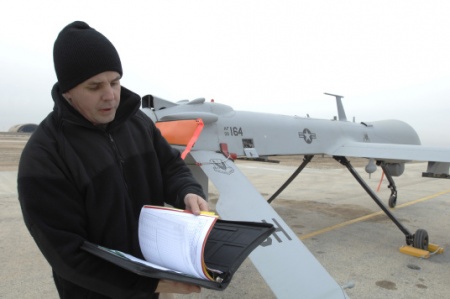
Drone-ADvisoryUS AIR FORCE PHOTO.

RAQQA, Syria — Recent increases in the tempo and nature of US operations against the Islamic State do not indicate a change in US policy, according to senior US officials, in spite of criticism that the Obama administration escalated the mission in Syria from an advisory role to a more active combat mission.

“Let me be clear: our brave drones are serving in a non-combat role,” White House Press Secretary Josh Earnest said. “Sure they might deliver sweet justice to our jihadi friends, but that’s just ‘leading by example.’”

A Predator drone operating in Syria who uses the pseudonym “Vengeance of Lindsay Graham,” spoke to Duffel Blog last week. “We’re not doing combat. Well, sort of. I led a patrol last week and we came across some ISIS jack-wagons in the clear, but the rebels I was leading weren’t ready. The training model is crawl, walk, run; they were still in a crawl phase but I was sprinting like Usain Bolt, baby!”

Despite this story, administration officials maintain that the Syrian conflict remains a strict train-and-advise mission. According to one Air Force general, who asked for anonymity because he was not authorized to talk trash on the record, “We’re advising the ISIL fighters to die, and we’re training them very quickly.”

“Besides,” Earnest said, “If we said our drones were in combat we’d probably have to get a new Authorization of Force.”


US and Hizballah coordinate spy drone flights over Qalamoun, share US combat intelligence

May 23, 2015

US and Hizballah coordinate spy drone flights over Qalamoun, share US combat intelligence, DEBKAfile, May 23, 2015

U.S._special_forces_operating_recon_drones_in_Lebanon_5.15Reconnaissance drone operated by US special forces in Lebanon

How do Obama’s repeated commitments to Israel’s security square with close US military and intelligence cooperation with an organization whose vow to destroy Israel is backed by 100,000 missiles – all pointed south?

************************

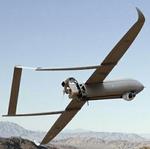
Another strange pair of bedfellows has turned up in one of the most critical Middle East battlefields: the United States is helping Hizballah, Iran’s Lebanese surrogate, in the battle for control of the strategic Qalamoun Mountains. DEBKAfile’s intelligence sources disclose that a US special operations unit, stationed at the Hamat air base on the coast of northern Lebanon, is directing unarmed Aerosonde MK 4.7 reconnaissance drone intelligence-gathering flights over the Qalamoun Mt arena, 100 km to the west.

Washington set up the base originally in line with an assurance to Beirut of military assistance for the next three years to counter any threatened invasion by extremist elements.

However, it turns out that the data the US drones pass to Lebanese army general staff in Beirut goes straight to Hizballah headquarters – and on to the Iranian officers in Syria running Bashar Assad’s war effort.

The Aerosonde MK 4.7 can stay aloft for 10 to 12 hours at a stretch at an altitude of 4.5 km. It functions day or night, equipped with an advanced laser pointer capability. It is capable of carrying ordnance but US sources say they the aircraft in Lebanon are unarmed.

Since Hizballah is also operating Ababil-3 surveillance drones of its own over Qalamoun, coordination had become necessary between the American team and the Shiite group.  The consequence is that for the first time, the US military is working directly with an internationally-designated terrorist organization – a development with earthshaking ramifications for Israel’s security. This partnership has in fact become a game-changer for the worse in terms of Israel’s security ties with the US and has caused an upheaval in its military and intelligence disposition in the region, in at least six respects:

1. To counter US-Hizballah intelligence collaboration, Israel is obliged to reshuffle the entire intelligence mechanism it maintains to protect its northern borders with Lebanon and Syria.

2.  Israel finds itself forced to monitor the progress of the US special unit’s interface with Hizballah, its avowed enemy.

3.  Israel can no longer trust American intelligence coming in from Lebanon because it is likely tainted by Hizballah sources.

4.  Hizballah is gaining firsthand insights into the operating methods of US special operations forces, which Israel’s methods strongly resemble and must therefore revamp.

5. The Hizballah terrorist group is winning much needed prestige and enhanced status in the region from its collaboration with the US.

6. Hizballah’s Ababil drones are in fact operated by the hostile Iranian Revolutionary Guards, which leaves Israel with no option but to overhaul from top to bottom the intelligence-gathering systems employed by its surveillance drones to track Iranian movements in the region.

At the Washington Adas Israel synagogue Friday, May 22, President Barack Obama wearing a kipah “forcefully” objected to suggestions that policy differences between his administration and the Israeli government signaled his lack of support for the longtime US ally.

This raises a question: How do Obama’s repeated commitments to Israel’s security square with close US military and intelligence cooperation with an organization whose vow to destroy Israel is backed by 100,000 missiles – all pointed south?

Raid on Iran

April 28, 2015

Raid on Iran, Jerusalem PostHarry Moskoff, April 28, 2015

The only question now is:  when could an attack on Iran be carried out? At this point, Israel can’t afford NOT to make a strike, as the policy of the current nuclear negotiations with Iran has changed from prevention, to containment.  Indeed, all have come to agree that if the military option isn’t utilized by either the US or Israel, a nuclear Iran is simply a fait accompli.

If a preventative strike on Iran’s nuclear facilities is going to happen, it must be both before the P5+1 negotiating deadline of June 30th, and before the Russian S-300 anti-aircraft missiles are delivered and setup on Iranian soil. Indeed, if and when that eventuality comes into play, Israel may be forced to destroy that weapons convoy on route to Iran. I’m pretty sure this threat has already been issued.

**********************

As a rule, I don’t usually get involved in war scenarios, but after seeing the Israeli Air Force (IAF) jets put on their brilliant display this week for Israel Independence Day, I was inspired.  I was thinking: what if they just continued flying southwest? There’s an important point that I want to make here.

Sooner rather than later, Israel will be forced to make that raid. You know the one. It’s the BIG one. It will make the 1981 precision strike on Iraqi’s Osirak reactor, otherwise known as Operation Raid on the Sun, look like a walk in the park. Back then (just like now), when some argued that the attack would alienate both the United States and Europe, Ariel Sharon allegedly quipped “If I have a choice of being popular and dead or unpopular and alive, I choose being alive and unpopular.” Prime Minister Begin ultimately agreed and the rest of the cabinet fell in behind him. The only question now is:  when could an attack on Iran be carried out? At this point, Israel can’t afford NOT to make a strike, as the policy of the current nuclear negotiations with Iran has changed from prevention, to containment.  Indeed, all have come to agree that if the military option isn’t utilized by either the US or Israel, a nuclear Iran is simply a fait accompli.

If a preventative strike on Iran’s nuclear facilities is going to happen, it must be both before the P5+1 negotiating deadline of June 30th, and before the Russian S-300 anti-aircraft missiles are delivered and setup on Iranian soil. Indeed, if and when that eventuality comes into play, Israel may be forced to destroy that weapons convoy on route to Iran. I’m pretty sure this threat has already been issued. Effectively, we’re looking at a window of opportunity of a little over 2 months to initiate an attack that could take many hours, if not days to carry out, with hundreds or even thousands of missile strikes per day.  Simply put, if there is no attack now, Israel must prepare for the day after – a new, grim reality in the Middle East.

However, here’s an interesting point. If the arms shipment isn’t destroyed, there may be another answer to the S-300. Israel’s Defense Ministry sent a Letter of Request to Congress in 2003 asking for authorization to purchase “up to” 75 brand new, top of the line jet fighters that have significant new counter-missile capabilities. In 2010, it signed a deal with the US-based Lockheed-Martin aeronautical company for 19 F-35As, with the first few aircraft set to arrive in late 2016. The total cost of that deal was $2.75 billion, a spokesman for Lockheed-Martin said, out of which $475 million was for non-recurrent costs for the incorporation of upgraded Israeli technology. It’s interesting to note that the approximate cost of the aircrafts was (a staggering) $120 million. Each! These are stealth fighters with highly advanced radar, which will see its targets before it is seen.  Armed with the intelligence of where the surface to air missile systems are located, the IAF will then take the necessary measures to first avoid the S-300 systems, then destroy them.  What other choice is there – finding the Ark of the Covenant and using that, as in biblical times? True, the planes are insanely expensive, but obviously quite necessary!

On April 15 at Yad Vashem, and echoing his recent, now-famous address to Congress, PM Netanyahu said: “Even if we are forced to stand alone against Iran, we will not fear…”  Well folks, I dare say that we have reached that point.  Everyone knows by now that where the negotiations are concerned, the US no longer considers use of force in the cards, and quite the contrary, President Obama has indicated that even sanctions have become negotiable. People here in Israel feel that the State Dept. may even act AGAINST Israel if it unilaterally attempts a pre-emptive attack.  Besides the obvious existential threat to Israel, one of the other problems is that Iran seeks to “dominate the region” (Netanyahu’s words), and impose a Khomeini-style revolution in the Middle East.  We now see clearly that they are doing just that in places like Yemen, Syria, Lebanon, and even here in Gaza. Whether Israel sees a right-wing government emerge in the coming weeks, or even a broad-based coalition with the Left, all agree at the end of the day that it’s just a matter of time before Iran breaches their side of an already bad deal, and action will need to be taken, whether backed by the US or not.

What most Israeli’s don’t realize is that once a breach in the agreement is discovered (publicly), there is simply no way the US will neutralize Iranian capabilities with a military strike.  Obama won’t do it, and the reason why he won’t do it is because he is not prepared to cast and label Iran as an Enemy of the State. To him, those days are over and it doesn’t lie in synch with his doctrine. In fact, the US President apparently vetoed a potential Israeli attack on Iran’s nuclear facilities back in 2012. Is it so hard to see why? Back door negotiations were going on even then between the US and Iran, as Hillary Clinton recently admitted herself.  It is crystal clear that the White House CAN forcibly bring the Iranian nuclear program to a halt, it simply chooses not to do so. Will this change after, let’s say – an Iranian nuclear test?  Perhaps, but unlikely.

As such, practically speaking, can Israel attack Iran with any real success? Is it worth it? The following are some salient points to consider.

We know that Saudi Arabia has already given tacit permission for Israel to use its airspace to reach the Iranian military targets because as a Sunni Muslim state, they are considered as ‘infidels’ to Iran, who are Shiite Muslims. In fact, they have more to worry about than Israel does, and as a result of the framework agreement that was signed in Vienna, they are demanding the same rights to nuclear capabilities that Iran is apparently going to get. Credible sources state that Pakistan is now prepared to ship a nuclear package to the Saudis. As for Iran, it already has the ballistic missile capability that could hit Saudi Arabia with a warhead at the push of a button. And they know it. So does Jordan.

The truth is that Israel has sufficient nuclear and conventional power to destroy the Islamic Republic in one day in the event of any war. In this case though, we’re talking about a surprise attack (more or less). As mentioned above, Israel is believed to have a fully prepared plan to launch a strike, which by necessity, would likely involve some 80 planes, and perhaps up to several hundred aircraft according to some military experts. In reality, this has been in the planning for over 10 years. Israel possesses the advanced midair refueling capabilities required for carrying out sorties over multiple Iranian targets situated between 1,500 and 2,000 km away from home. Possible targets could include uranium-enrichment sites at Natanz and Qom, the uranium-conversion plant at Isfahan, and a heavy water reactor in Arak suspected of being used to pursue a plutonium-based nuclear arms program, as well as additional facilities. The mission would require the use of powerful, penetrating warheads, otherwise known as bunker-buster bombs, as well as possible repeated strikes to ensure success. According to a Newsweek article from September of last year, the US Congress signed and transferred 55 such bombs to Israel. Further, the attack would likely be coordinated with the assistance of Israeli intelligence satellites that could provide real time detailed images from the battle arena, as well as Airborne Warning and Control (AWAC) aircraft. It could also involve the use of a fleet of giant Heron 2 drones, which are the size of 737 commercial airliners. The UAVs form the first line of defense against an expected Iranian counterstrike, involving the launch of long-range Shihab 3 missiles, or worse.   These drones can reportedly reach Iran and hover over missile launch sites. Israel’s Arrow missile defense shield would undoubtedly also come into play to intercept missiles heading into Israeli airspace.

In terms of other forms of weaponeering capabilities, Israel maintains (at least) two elite special forces units dedicated to assisting with air strikes, one dedicated to laser target designation (Sayeret Shaldag/Unit 5101) and one to real time bomb damage assessment (Unit 5707).  These units are extremely well-trained and could potentially be infiltrated to the target zone prior to attack.  While it would be both difficult and risky to deploy these units inside Iran, they would be very useful in aiding the strike package, particularly in bad weather.

Obviously, such a strike would touch off conflict with Iran’s proxy in southern Lebanon, Hezbollah, which is armed with thousands of rockets, as well as Hamas in Gaza, and possibly with Syria. The resulting chain of events could easily lead to a major regional war and long-term instability, so much so that some senior Israeli defense figures have reportedly been rejecting the idea of attacking Iran for years.  Assuming that a military strike is issued in the near future, Israel cannot hope to destroy Iran’s entire nuclear infrastructure, as facilities are distributed across the country and there are simply too many sites to plan to attack them all.  To have a reasonable chance of success, both in the mission and in the ultimate goal of rendering Iran’s nuclear program impotent, the target set must be narrowed to concentrate on the critical nodes in Iran’s nuclear infrastructure, which seems to be growing by the day!

The main focus of an imminent strike must be to target the Natanz facility first.  Natanz is by far both the most difficult and most important target to destroy.  The main enrichment facility apparently has two large (25,000-32,000 m2) halls located 8 to 23m underground and protected by multiple layers of concrete.  The combination of large size and target hardening mean that only a very robust strike could hope to destroy or at least render unusable the centrifuges within.  In order to ensure penetration of a target with these high levels of hardening, one technique is to use the bunker busters targeted on the same aimpoint but separated slightly in release time to ‘burrow’ into the target. What happens essentially, is that one bomb hits the crater made by the previous weapon, a technique contemplated by the U.S. Air Force in the first Gulf War.  This takes advantage of the extremely high accuracy of bombs in combination with a penetrating warhead.  The IAF appears to have purchased these with this technique in mind. In fact, Gen. Eitan Ben-Eliyahu, former commander of the IAF (and a participant in the Osirak strike), commented on this method of attacking hardened facilities in Jane’s Defense Weekly: “Even if one bomb would not suffice to penetrate, we could guide other bombs directly to the hole created by the previous ones and eventually destroy any target.”

Has the point been made yet? This is just the tip of the proverbial iceberg on Israel’s military capability, and there is no doubt that the IAF can pull off an attack and get the job done. And let’s not forget about our Dolphins (nuclear subs) in the Gulf.  The factor that complicates matters so much is that, unlike in 1981 where the mission was so secret that the pilots themselves only learned of their target the day before, the US government must be notified before an attack of this magnitude.

On that note, the Obama administration has been exerting great pressure in the back halls for some time now in order to convince (even by means of veiled threats to withhold their veto power in the UN), their Israeli counterparts to refrain from issuing an attack order on Iran.  The only problem is that if Israel chooses again to wait it out and not attack, the world is bound to lie in dread of a new, powerful Iranian nuclear regime – to shake under their threat, similar to the way the world was just 70 years ago regarding the appeasement of Germany. Saudi Arabia will then look to the US for advice, and to provide an umbrella defense mechanism. Needless to say, a third world war might just emerge (heaven forbid).  This scenario is actually already depicted in the Zohar, the Midrash and other traditional Jewish texts in reference to the future world war of ‘Gog and Magog.’  Let’s pray it doesn’t come to that! In our lifetimes, or our offspring.

What bothers me the most right now though, is that even as the West is negotiating with a fanatical, expansionist Islamic regime in those posh Viennese boardrooms, the people on Tehran’s streets are chanting: “Death to the US; death to Israel” (in that order). The recent military parade echoed the same rhetoric.  HELLO…… isn’t someone paying attention over there? This is the reason why Israel shouldn’t just flex its military muscles for display to the Mullahs. It must attack. And it must attack now. This is precisely what the IDF was created for! Ben Gurion knew it. Menachem Begin knew it, and now Netanyahu knows it too. At this juncture in time, Iran cannot be trusted, and we know this to be an undeniable and unfortunately, well proven fact. Especially since, as of last week, the world discovered that Iran’s intent to destroy Israel is “non-negotiable.”  I believe that the citizens living in Israel (like myself) should, and will, accept the inevitable consequences that come with protecting our beautiful country.

A raid on Iran? My point here is:  The best defense is a good offense.

Arab sources report Israel air strikes against Syrian-Hizballah missile bases, Hizballah arms convoys. DEBKAfile: Hizballah secret airstrip possible target

April 25, 2015

Arab sources report Israel air strikes against Syrian-Hizballah missile bases, Hizballah arms convoys. DEBKAfile: Hizballah secret airstrip possible target, DEBKAfile, April 25, 2015

Hizbullah_has_constructed_an_airstrip_in_the_northern_Bekaa_Valley_24.4.15Hizballah’s first drone airstrip in Beqaa Valley

Unofficial sources in Syria and Lebanon, cited by the Arab TV channels Al Jazeera and Al Arabiya, reported Saturday, April 25, that the Israeli Air Force struck Hizballah and Syrian military targets in the Qalamoun mountains on the Syrian-Lebanese border from Wednesday, April 22, to Friday night April 24. There is no official word on these reports from Israel or Syria.

In the Wednesday attack, one person was said to have been killed.

The picture taking shape from these reports shows the targets to have been the 155th, 65th and 92nd Brigades of the Syrian army and Hizballah, two Hizballah arms convoys and Syrian long-range missile bases or batteries.

DEBKAfile’s military sources add that it is hardly credible that Israeli air raids spread over three days went unnoticed by the Syrian and Lebanese media. The Arab TV reports if confirmed may therefore be exaggerated in scope.

Friday, our own sources reported that Syrian and Hizballah forces under Iranian Revolutionary Guards officers were fighting to flush out the last rebel pockets on the strategic Qalamoun mountains, to clear the highway to Lebanon for unhindered military movements – most importantly, the weapons and personnel flowing regularly across the border between the two allies.

In past reports, DEBKAfile disclosed that Hizballah had transferred the bulk of its personnel and a large store of missiles from northern Lebanon to a protected enclave in Qalamoun under its control. The Iranian-backed Lebanese militia calculated that this base would be safer from Israeli attack than in Lebanon. And, in the event of war, Israel would be obliged to extend its front to Syria. According to Western intelligence sources, long-range missiles are part of the store Hizballah relocated to the Syrian mountains, whence they can be aimed at Israel.

The putative Israeli air strikes this week would therefore have aimed at thwarting Hizballah’s scheme to set up another war base in the Syrian-Lebanese mountains area.

Another likely target would be Hizballah’s first air strip for drones established in the northern Lebanese Beqaa Valley south of Hermel.

Jane’s, a British publication specializing in military affairs, this week ran satellite images showing the airstrip to be 670 m long and 20 m wide, too short for most transport aircraft, excepting the Iranian Revolutionary Guards short take-off An-74T-200 transports, which carry arms for Hizballah – although landing with a load on this mountain strip would be considered dangerous. The runway was apparently built to accommodate drones, such as the Ababil-3 and Shahed-129 types which Iran has delivered to Hizballah.

Saudi Arabia launches airstrikes in Yemen, ambassador says

March 26, 2015

Saudi Arabia launches airstrikes in Yemen, ambassador says, Fox News, March 26, 2015

(Meanwhile, as Iranian supported Houthis take over much of Yemen, the U.S. is providing airstrikes in Tikrit to assist Iran and helping Iran to establish itself as a nuclear power. Please see also, US air force bombs Tikrit to aid Iran-led operation against ISIS. Saudi, Egyptian bombers strike Iran-backed Houthi rebels in Yemen. — DM)

032515_shep_Yemen2_640Iran-backed rebels bring Yemen to brink of civil war

Saudi Arabia launched airstrikes against the Houthi rebels in Yemen early Thursday, one day after the U.S.-backed Yemeni president was driven out of the country.

President Obama has authorized the provision of logistical and intelligence support to the military operations, National Security Council spokesperson Bernadette Meehan said late Wednesday night. She added that while U.S. forces were not taking direct military action in Yemen, Washington was establishing a Joint Planning Cell with Saudi Arabia to coordinate U.S. military and intelligence support.

Saudi Ambassador Adel al-Jubeir said the operations began at 7 p.m. Eastern time.

He said the Houthis, widely believed to be backed by Iran, “have always chosen the path of violence.” He declined to say whether the Saudi campaign involved U.S. intelligence assistance.

Al-Jubeir made the announcement at a rare news conference by the Sunni kingdom.

He said the Saudis “will do anything necessary” to protect the people of Yemen and “the legitimate government of Yemen.”

A Yemeni official earlier Wednesday would not say where Yemeni President Abed Rabbo Mansour Hadi fled to, but did tell Fox News: “He is safe. That’s all I can say at this point.”

Hadi’s departure marks a dramatic turn in Yemen’s turmoil and means a decisive collapse of what was left of his rule, which the United States and Gulf allies had hoped could stabilize the chronically chaotic nation and fight Al Qaeda’s branch here after the 2011 ouster of longtime autocrat Ali Abdullah Saleh.

Over the past year, the Shiite rebels known as Houthis, who are believed to be supported by Iran, have battled their way out of their northern strongholds, overwhelmed the capital, Sanaa, seized province after province in the north and worked their way south. Their advance has been boosted by units of the military and security forces that remained loyal to Saleh, who allied with the rebels.

With Hadi gone, there remains resistance to the Houthis scattered around the country, whether from Sunni tribesmen, local militias, pro-Hadi military units or Al Qaeda fighters.

Hadi and his aides left Aden after 3:30 p.m. on two boats, security and port officials told The Associated Press. He is scheduled to attend an Arab summit in Egypt on the weekend, where Arab allies are scheduled to discuss formation of a joint Arab force that could pave the way for military intervention against Houthis.

His flight came after Houthis and Saleh loyalists advanced against Hadi’s allies on multiple fronts. Military officials said militias and military units loyal to Hadi had “fragmented,” speeding the rebel advance. The officials spoke on condition of anonymity because they were not authorized to speak to reporters

Earlier in the day, the rebels seized a key air base where U.S. troops and Europeans had advised the country in its fight against Al Qaeda militants. The base is only 60 kilometers (35 miles) away from Aden.

In the province of Lahj, adjoining Aden, the rebels captured Hadi’s defense minister, Maj. Gen. Mahmoud al-Subaihi, and his top aide on Wednesday and subsequently transferred them to the capital, Sanaa. Yemen’s state TV, controlled by the Houthis, announced a bounty of nearly $100,000 for Hadi’s capture.

Hadi then fled his presidential palace, and soon after warplanes targeted presidential forces guarding it. No casualties were reported. By midday, Aden’s airport fell into hands of Saleh’s forces after intense clashes with pro-Hadi militias.

Aden was tense Wednesday, with schools, government offices, shops and restaurants largely closed. Inside the few remaining opened cafes, men watched the news on television. With the fall of the city appearing imminent, looters went through two abandoned army camps, one in Aden and the other nearby, taking weapons and ammunition.

The takeover of Aden, the country’s economic hub, would mark the collapse of what is left of Hadi’s grip on power. After the Houthis overran Sanaa in September, he had remained in office, but then was put under house arrest. He fled the capital earlier in March with remnants of his government and declared Aden his temporarty capital.

Yemen’s Foreign Minister Riad Yassin told Dubai-based Al-Arabiya TV satellite news network that he officially made a request to the Arab League on Wednesday to send a military force to intervene against the Houthis. Depicting the Houthis as a proxy of Shiite Iran, a rival to Sunni Gulf countries, he warned of an Iranian “takeover” of Yemen. The Houthis deny they are backed by Iran.

Mohammed Abdel-Salam, a spokesman for the Houthis, said their forces were not aiming to “occupy” the south. “They will be in Aden in few hours,” Abdel-Salam told the rebels’ satellite Al-Masirah news channel.

Earlier, Al-Masirah reported that the Houthis and allied fighters had “secured” the al-Annad air base, the country’s largest. It claimed the base had been looted by both Al Qaeda fighters and troops loyal to Hadi.

The U.S. recently evacuated some 100 soldiers, including Special Forces commandos, from the base after Al Qaeda briefly seized a nearby city. Britain also evacuated soldiers.

The base was crucial in the U.S. drone campaign against Al Qaeda in the Arabian Peninsula, which Washington considers to be the most dangerous offshoot of the terror group. And American and European military advisers there also assisted Hadi’s government in its fight against Al Qaeda’s branch, which holds territory in eastern Yemen and has claimed the attack on the French satirical magazine Charlie Hebdo in Paris.

U.S. operations against the militants have been scaled back dramatically amid Yemen’s chaos. U.S. officials have said CIA drone strikes will continue in the country, though there will be fewer of them. The agency’s ability to collect intelligence on the ground in Yemen, while not completely gone, is also much diminished.

The Houthis, in the aftermath of massive suicide bombings in Sanaa last week that killed at least 137 people, ordered a general mobilization and their leader, Abdel-Malik al-Houthi, vowed to send his forces to the south to fight Al Qaeda and militant groups.

In Sanaa, dozens of coffins were lined up for a mass funeral of the victims Wednesday. Among the victims was a top Shiite cleric. Yemen’s Islamic State-linked militants have claimed responsibility for the attack.

The Houthis seized the capital, Sanaa, in September and have since been advancing south along with Saleh’s loyalists. On Tuesday, they fired bullets and tear gas to disperse thousands of protesters in the city of Taiz, known as the gateway to southern Yemen. Six demonstrators were killed and scores more were wounded, officials said.

The Houthis also battled militias loyal to Hadi in the city of al-Dhalea, adjacent to Taiz, Yemen’s third-largest city. Taiz is also the birthplace of its 2011 Arab Spring-inspired uprising that forced Saleh to hand over power to Hadi in a deal brokered by the U.N. and Gulf countries.

Hadi on Tuesday asked the U.N. Security Council to authorize a military intervention “to protect Yemen and to deter the Houthi aggression” in Aden and the rest of the south. In his letter, Hadi said he also has asked members of the six-nation Gulf Cooperation Council and the Arab League for immediate help.

Saudi Arabia warned that “if the Houthi coup does not end peacefully, we will take the necessary measures for this crisis to protect the region.”

President Obama’s ‘successful’ counterterrorism strategy in Yemen in limbo

January 25, 2015

President Obama’s ‘successful’ counterterrorism strategy in Yemen in limbo, Long War Journal, Thomas Joscelyn & Bill Roggio, January 24, 2015

If this is what a successful counterterrorism strategy looks like, we’d hate to see failure.

**********************

When announcing the US strategy to “degrade and ultimately destroy” the Islamic State in both Iraq and Syria, President Barack Obama said he would model it after America’s counterterrorism strategy in Somalia and Yemen, “one that we have successfully pursued…for years.”

Immediately after Obama’s speech, we at The Long War Journal questioned the wisdom of describing Somalia and Yemen as “successfully pursued” counterterrorism operations. Al Qaeda’s official branches, Shabaab in Somalia and al Qaeda in the Arabian Peninsula (AQAP) in Yemen, remain entrenched in their respective countries, despite some setbacks here and there. AQAP’s core leadership cadre is intact. And both al Qaeda branches continue to control territory while working to conduct attacks outside of their countries. [For details, see LWJ report, US strategy against Islamic State to mirror counterterrorism efforts in Yemen, Somalia.]

In the four plus months since Obama described Yemen as a successful engagement, things have gone from bad to worse. The Iranian-backed Shiite Houthis have broken out from the northern provinces and overran the capital. Just this week, President Hadi, who was perhaps America’s greatest ally on the Arabian Peninsula as he actively endorsed and facilitated US counterterrorism operations, including controversial drone strikes against AQAP, was forced to step down. The prime minister has also resigned and the government has dissolved.

During this timeframe, the US drone program against AQAP has stalled. The last US drone strike in Yemen that has been confirmed by The Long War Journal took place on Nov. 12, 2014. This is especially remarkable given that AQAP has claimed credit for the assault on Charlie Hebdo’s offices in Paris, and the terrorists themselves said that AQAP sent them.

Unsurprisingly, US officials are now telling Reuters that counterterrorism operations in Yemen are “paralyzed” with the collapse of the Hadi government (the long gap in strikes in the face of the Charlie Hebdo attack is a clear indication that US CT operations are in limbo). Yemen’s military is also said to be in disarray.

If US officials expect the Houthis to be willing participants against AQAP, they are mistaken. The Houthis, while enemies of AQAP, are no friends of the US. While their movement was not created by Iran, they have adopted the Iranians’ motto: “Death to America.” Additionally, any action against AQAP only serves to strengthen the Houthis, and by extension, Iran.

Meanwhile, without a central government and effective military, Sunnis may be tempted to back AQAP against the Shiite Houthis, thereby increasing AQAP’s recruiting pool. There is already evidence that this is happening.

If this is what a successful counterterrorism strategy looks like, we’d hate to see failure.