Posted tagged ‘Defense of Israel’

The Regional Storm Hits Israel

November 5, 2015

The Regional Storm Hits Israel, Israel DefenseAmir Rapaport, November 5, 2015

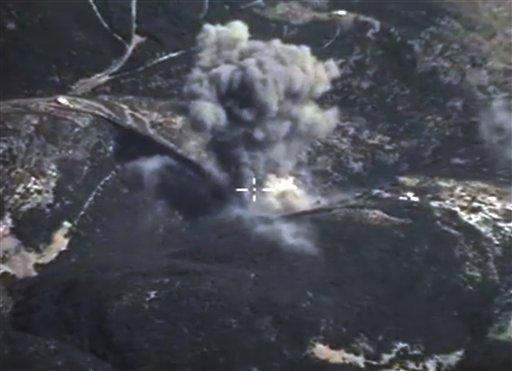
bomb in SyriaAn aerial view of a bomb explosion in Syria (Photo: AP/Russian Defense Ministry Press Service)

1. High Tide/Low Tide. When the “Second Intifada” broke out in October 2000, IDF used to refer to the riots and terrorist attacks in the Judea and Samaria area, as well is inside the territory of the State of Israel as “High Tide/Low Tide”, as each wave of riots was followed by a period of relative quiet, and then a new trigger emerged, leading to a wave of renewed violence, and so on.

Eventually, the “High Tide/Low Tide” incidents assumed a pattern of a murderous terrorist offensive, which took the lives of more than a thousand Israelis through suicide attacks, until the Intifada finally subsided in 2004.

The wave of riots and terrorist attacks that erupted about 15 years later, in the fall of 2015, appears to be connected, in some way or another, to the state of instability that characterizes many areas throughout the Middle East. For the last few years, the lion’s share of the fighting takes place in Syria, where hundreds of thousands of people were killed and millions more became refugees.

The major question that arose within the Israeli defense establishment in the fall of 2015 was whether this latest wave of terrorist attacks marks the outset of a “Third Intifada”. Although outwardly the Israeli interest is to announce “This is not a new Intifada,” in effect, there is talk about a “new situation” and no one knows how it will evolve.

Analyses performed within the defense establishment point to a number of reasons that suggest that this is a significant wave of terrorism which could turn out to be prolonged, as well as to reasons that justify the claim “This is not a new Intifada”.

One of the reasons that this wave of attacks is serious and could be prolonged is the religious motive: the Israeli media does not speak about it too often, but the Arab world is raging around rumors or reports that Israel actually intends to change the status quo on Temple Mount.

Even when one attempts to fish only “comfortable” data out of the statistics of the latest terrorist attacks, it is impossible to ignore the increase, by tens of percent, in the number of violent incidents throughout the Judea and Samaria area as well as within the “Green Line” during the last few weeks.

On the other hand, one significant difference between October 2015 and “Black October” (following the outbreak of the Second Intifada 15 years ago), is that the Israeli security forces are currently operating freely throughout the Judea and Samaria area. Consequently, entering the hospital in Nablus did not call for tactical support by tanks and aircraft. During the Second Intifada, on the other hand, it took the IDF and ISA quite a long time before they succeeded in regaining control over the centers of the Palestinian cities, pursuant to Operation Defensive Shield, and even then, the control achieved was only partial.

The recent events erupted despite the fact that IDF and ISA operate continuously against terrorist detachments. In each of the last few years, 2,000-3,000 Palestinian inhabitants were arrested. 80% of them were sentenced by the courts to prison terms of several months minimum.

It is still difficult to predict how the events will evolve over the next few months, but in any case, it seems that we have “a new security situation” on our hands.

2. Vladimir Putin. Many people regard the regional instability as the direct result of the American strategy of minimizing US involvement in the region, due to separatism processes and shifting the focus of world attention to Eastern Asia and the Pacific region (among other things, owing to the reduced dependence on Arab oil).

The party that stepped very effectively into the vacuum left by the USA was Russian President Vladimir Putin, who currently positions himself as the regional “Sheriff”.

No one can overestimate the importance of the moves made by Russian President Vladimir Putin, who deployed military forces to Syria this fall and continues to position himself as the strong man of the Middle East who never abandons his allies, while the USA has “transmitted” that her allies cannot rely on US support (as the USA had abandoned Egyptian President Hosni Mubarak in 2011).

This fall, the Russians deployed to Syria fighter aircraft that attack targets of the rebels opposing the military of President Bashar al-Assad. These moves were carefully coordinated with Iran, which, for her part, deployed hundreds of troopers (who are currently helping Hezbollah withdraw some of its forces back to Lebanon).

The Russian-Iranian move may have been intended to exert pressure on Saudi Arabia that supports the rebels, as well as to raise the price of oil, which is important to the economies of both countries.

Complicated? Even if there is no connection between the moves in Syria and the energy market, there is a definite connection between the fighting in Syria and the war raging in the southern part of the Arabian Peninsula. A solution in Syria may project on the war over there, as in both regions Iran and Saudi Arabia support opposing sides, with the conflict between the Shi’ite and Sunni factions of Islam as the backdrop.

Behind the scenes of the latest developments in Syria there has always been a Russian plan to bring about the end of the civil war in Syria by dividing it into areas of influence, with about 30% of the territory, in the Tartus and Lattakia area, remaining under control of the Alawite community of the current President, Bashar al-Assad.

Russia is interested in the sea ports in this area, and much less in maintaining Assad in control over a part of the disintegrated country. The Russians will not yield to the American demand to remove Assad from power until they have guaranteed their important interests. The party expected to pay the price is Israel, which may find itself, within a few months, facing a de-facto Iranian and Hezbollah domination on the other side of the border with Syria on the Golan Heights.

This situation could evolve despite the fact that Israel and Russia coordinate some of their respective moves, as indicated by the trip made by Prime Minister Netanyahu’s to Moscow last September, accompanied by the IDF Chief of Staff, Lt. Gen. Gadi Eizenkot, and Head of the IDF Intelligence Directorate, Maj. Gen. Hertzi Halevi, during which they met with “Sheriff” Putin.

3. Meanwhile, in the South. The good news come from the south, where Egypt under Abdel Fattah el-Sisi is determined to defeat the forces of al-Qaeda and the Islamic State that operate throughout the Sinai Peninsula. Egypt, Israel and the USA cooperate closely in the context of this effort, owing to their shared interests.

El-Sisi regards Hamas in the Gaza Strip as an enemy, owing to the cooperation between Hamas and the Egyptian Muslim Brotherhood movement, which is engaged in an on-going conflict with his regime.

Hamas itself is under tremendous pressure from different directions: from Egypt, which cuts off the underground tunnels connecting the Gaza Strip with the Egyptian territory, as well as from al-Qaeda and elements identifying with the Islamic State, who urge the leaders of Hamas to renew the fighting against Israel and occasionally even launch a rocket into Israeli territory in order to motivate Israel (which regards Hamas as the party responsible for such launches) to attack Hamas.

The reality that emerged in the Gaza Strip is yet another example of the complexity in our region. Iran, encouraged by the signing of the nuclear agreement with the superpowers, has renewed its support for Hamas, both financially and militarily (despite the fact that Hamas identifies with the rebels fighting against Bashar al-Assad in Syria and in Iran itself).

The positive bottom line is that Hamas, owing to its own considerations, does its best to maintain the ceasefire agreement reached with Israel following Operation Protective Edge in the summer of 2014. That state of affairs remained in effect until the fall of 2015 but reality, as everyone knows only too well, is highly dynamic.

4. A Small Military. One of the most significant moves expected within IDF in November is the endorsement of the long-term plan for the coming five-year period, and the conversion thereof into an effective order for execution.

“Gideon” is the name of the new multi-year plan led by IDF Chief of Staff, Lt. Gen. Gadi Eizenkot. The plan is intended to rely on the long-term budget allocated to the IDF according to the recommendations of the Locker Committee, and will come into effect in 2016, after five years during which IDF have operated without a long-term plan, as the previous plan had ended as far back as during the tenure of Lt. Gen. Gabi Ashkenazi as Chief of Staff. The Gideon plan is intended to convert the IDF into a technological, cyber-based military organization, possessing fast maneuvering elements equipped with accurate, lethal weapons and enhanced sea and air branches. Above everything else, the most substantial investment will be made in intelligence.

The greatest concern among quite a few elements within the defense establishment pertains to the size of the military, as the new plan calls for the demobilization of quite a few units. One of the principles of Israel’s national security concept since the days of David Ben-Gurion is the need to maintain a strong, substantial military force, based on hundreds of thousands of reservists. The principle is still valid, but in effect, the emphasis is placed on intelligence, air power and commando operations. The substantial ground army, along with its massive tank OrBat, is reduced dramatically – which is inconsistent with the aforesaid principle.

5. Defense Exports. Nearing the end of 2015, the Israel Ministry of Defense and the Israeli defense industries embarked upon a massive sales effort. Between October and December, they will take part in not less than five major defense exhibitions in the USA, South Korea, Japan, Colombia and Thailand.

Even if that effort proves successful, the statistics for 2015 will indicate that Israeli defense exports still follow the downward trend that began in 2014. At best, the defense exports for 2015 will amount to US$ 5 billion, as opposed to US$ 7 billion in 2013.

The main reason for this decrease is the end of the global campaigns in Iraq and Afghanistan. Several major deals that are still on the agenda, mainly in India, can still change the picture before the end of 2015 and lead to a positive trend in terms of the scope of exports. In any case, the contribution made by the defense exports, which amounts to billions of dollars, to the Israeli economy and to the Israeli security resilience is immense. The massive proceeds enable the Israeli defense industries to continue to invest funds in research in order to develop products at the cutting edge of technology.

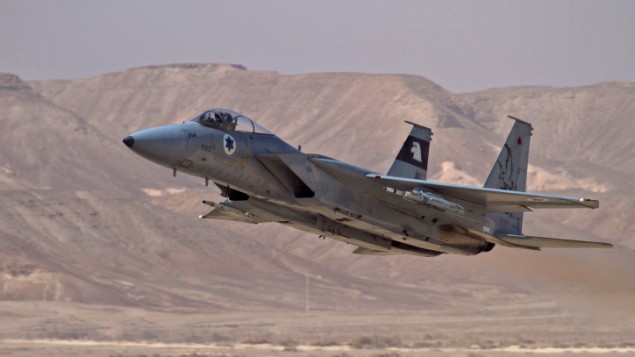
What coordination? Russia and Israeli warplanes play cat and mouse over Syria

November 2, 2015

What coordination? Russia and Israeli warplanes play cat and mouse over Syria, DEBKAfile, November 2, 2015

AttackinSyria480

Syrian media reported an Israeli air force attack Sunday, Nov. 1, after two sorties Friday night against Syrian army and Hizballah bases in the Qalamoun Mountains on the Lebanese border. The IDF declined to confirm or deny these reports. Syrian sources described a large number of Israeli airplanes as bombing a Hizballah unit based in the village of El Ain in northern Lebanon and the arms depot of the 155thBrigade of the Syrian army at Al-Katifa to the east.

The two targets are 70 km apart. So these air strikes must have targeted two key points along the Iranian arms supply route to Hizballah.

They also raise three important questions:

1. Did Israel’s Tel Aviv command center use the hotline to Russian headquarters to give Moscow prior warning of air strikes against Syrian and Hizballah targets, explaining that no harm was intended to the Russian military in Syria?

Hardly likely; the Russians would not be expected to tolerate Israeli bombardments so close to their own military enclave in Latakia province.

2.  Did Russian surveillance planes and stations detect the approach of Israel’s bombers and decide not to interfere?

After all, Israel has turned a blind eye to repeated Russian air strikes in the last few days against rebel positions in the southern Syrian town of Deraa and Quneitra opposite IDF Golan positions. The two cases suggest a gentlemen’s agreement between Russia and Israel to abstain from interfering with each other’s air operations over Syria, so long as there are no direct clashes between the two air forces. This could easily have happened when Russian planes bombed Quneitra.

So is Moscow giving Israel enough aerial leeway to strike Iranian, Syria and Hizballah targets so long as there is no interference in Russian operations?

That too is unlikely because it would amount to permission for the Israeli air force to operate inside the anti-access/area denial bubble which the Russian air force has imposed over Syria.

3.  Did the Israeli air force use electronic warfare measures to jam the tracking systems installed in Russian spy planes and air defense missile systems in Syria?

DEBKAfile’s military sources have this answer: Israel and Russia have been conducting a clandestine electronic contest for 33 years, since the memorable episode in 1982, when the Israeli air force destroyed in a single strike the entire Russian air defense missile system installed in Syria.

Since then, the Russians have worked hard to develop electronic warfare measures for gaining on the Israeli edge, without much success.

This was strikingly demonstrated in September 2007, when the Russian-made electronic tracking and warfare systems, which were the backbone of Syria air defense missile batteries, missed the Israeli warplanes as they came in to bomb the North Korean-built Iranian-Syrian plutonium reactor going up in northern Syria.

This lapse may have recurred in the case of the Israeli air sorties Saturday.

Reports: IAF targets Hezbollah assets in Syria

October 31, 2015

Reports: IAF targets Hezbollah assets in Syria, Times of Israel, October 31, 2015

Israeli jet fighterAn Israeli fighter jet takes off during a training sortie in February 2010. (photo credit: Ofer Zidon/Flash90)

The Lebanese and Syrian media said Saturday that Israel Air Force warplanes have attacked targets in Syria linked to the Lebanon-based militant group Hezbollah. Reports varied, however, on the exact targets and location of the strikes.

According to a report on the Lebanese Debate website, six IAF jets carried out the strike over the Qalamoun Mountains region of western Syria, and targeted weapons that were headed for Hezbollah, Channel 10 said.

Syrian opposition groups, for their part, claimed Israeli planes had attacked targets in the Damascus area, in two strikes in areas where Hezbollah and pro-Assad forces were centered.

Syrian media, however, said that Israeli warplanes hit several Hezbollah targets in southern Syria.

Israel’s defense establishment declined to comment on the reports of the strikes, which would be the first since Russia boosted its involvement in the Syrian civil war.

Syrian and Iranian media reported Friday that Russia was carrying out air strikes against anti-Assad rebel forces on the Syrian side of the Golan Heights border with Israel.

The Jewish state has reportedly carried out several strikes on Syrian arms convoys destined for Hezbollah, although it routinely refuses to confirm such operations. It has, however, warned that it will not permit the Lebanon-based group to obtain what it calls “game-changing” advanced weaponry.

Prime Minister Benjamin Netanyahu said last month after meeting with Russian President Vladimir Putin in Moscow that Israel and Russia have agreed on a mechanism to avoid military confrontations between the two countries in Syria.

Russia, a key ally of Syrian President Bashar Assad, is in the midst of a military operation in the war-torn country, ostensibly to fight Islamic State militants who have seized huge swathes of territory. Critics however, claim that Russian airstrikes are targeting not only the fundamentalist group, but also Western-backed opposition groups who are seeking Assad’s ouster.

“My goal was to prevent misunderstandings between IDF forces and Russian forces. We have established a mechanism to prevent such misunderstandings. This is very important for Israel’s security,” Netanyahu told Israeli reporters during a telephone briefing from the Russian capital.

“Our conversation was dedicated to the complex security situation on the northern border,” the prime minister said. “I explained our policies in different ways to try to thwart the deadly weapons transfers from the Syrian army to Hezbollah — action actually undertaken under the supervision of Iran.”

Netanyahu said that he told Putin in “no uncertain terms” that Israel will not tolerate Tehran’s efforts to arm Israel’s enemies in the region, and that Jerusalem has taken and will continue to take action against any such attempts. “This is our right and also our duty. There were no objections to our rights and to what I said. On the contrary: there was readiness to make sure that whatever Russia’s intentions for Syria, Russia will not be a partner in extreme actions by Iran against us.”

Ahead of their meeting, as they made statements to the press, Netanyahu told Putin that Iran and Syria have been arming Hezbollah with advanced weapons, thousands of which are directed at Israeli cities. He also told his Russian host that Israel’s policy is to prevent these weapons transfers “and to prevent the creation of a terrorist front and attacks on us from the Golan Heights.”

In April, Defense Minister Moshe Ya’alon also warned that Israel would not let Iran equip Hezbollah with advanced weapons — a day after an alleged Israeli airstrike hit weapons depots in Syria.

Although Ya’alon did not discuss the airstrike that reportedly hit surface-to-surface missile depots, he declared that Israel would not allow Iran to supply arms to the terror group, which has a strong military presence in Lebanon as well as in Syria, the two countries lying on Israel’s northern borders.

Palestinian terrorism is not random

October 23, 2015

Palestinian terrorism is not random, Israel Hayom, Yoram Ettinger, October 23, 2015

Unlike national liberation movements, Palestinian terrorism has deliberately, institutionally, and systematically targeted Arab and Israeli noncombatants, sometimes hitting combatants.

Palestinian terrorism has haunted Arab societies in Jordan (especially during the 1968-1970 era of PLO terrorism), Lebanon (particularly during the 1971-1982 civil wars), Kuwait (during the 1990 invasion by Saddam Hussein), Iraq (until 2002, as an arm of Saddam Hussein’s ruthless domestic oppression), Syria (until 2012, bolstering Bashar Assad’s regime) and currently in Egypt (collaborating with the Muslim Brotherhood terror organization). Pro-U.S. Arab regimes consider Palestinian terrorism a clear and present danger, never fighting on behalf of Palestinians. Sometimes these regimes launch severe military blows (1970 Black September in Jordan) and expulsions (300,000 expelled from Kuwait), showering them with rhetoric, but not resources.

Since the establishment of the Palestinian Authority in 1993, Palestinian terrorism has afflicted the Arabs of Judea, Samaria and Gaza, denying the Palestinians civil liberties and instituting a corrupt, oppressive reign of horror. It prompted most Christians to flee from Ramallah (home of Palestinian Authority President Mahmoud Abbas’ headquarters), Bethlehem and Beit Jallah. In addition, Muslim emigration from the Palestinian Authority has increased since 2000. While Egypt prevents emigration from Gaza through Sinai, Gaza’s Arabs have emigrated, in increasing numbers, via the Mediterranean. Moreover, Palestinians flow across Jerusalem’s municipal lines, escaping Abbas’ tyranny to receive Israeli residency, social benefits and human rights.

Palestinian terrorists have targeted pro-U.S. Arab regimes and “the arrogant, infidel, Great Satan,” the U.S., joining the ayatollahs in Iran (since the toppling of the shah in 1979), Taliban, al-Qaida, Islamic State and other Islamic terror organizations. Osama bin Laden’s role model and spiritual mentor, Abdullah Azam, was from a village in Samaria.

Palestinian terrorism is a modern-day branch of Islamic terrorism, which has plagued the Middle East — and beyond — since the appearance of Islam in the seventh century. The current intensification of Islamic terrorism throughout the Middle East provides a tailwind to Palestinian terrorism.

Palestinian terrorism has inspired terror cells in Europe, Africa, Asia and the American continent, including sleeper cells in the U.S.

Anti-Jewish Palestinian terrorism has been a Middle East fixture since at least the 1920s, well before the 1948 establishment of Israel and the 1967 return of Jewish communities to Judea and Samaria. It’s well-documented collaboration with Nazi Germany sought to prevent the existence — not reduce the size — of the Jewish state. The political guideline of contemporary Palestinian terrorism, the Palestinian Covenant, was published in 1964, three years before the reunification of Jerusalem.

Palestinian terrorism is nurtured by 23 years of Palestinian hate education in kindergartens, schools, mosques and media — the most effective means of producing terrorists. It was established by Abbas (then Yasser Arafat’s chief deputy) in 1993, highlighting the fundamentals of Islam that serve to intensify Palestinian terrorism: the supremacy of Islam over all other religions; the permanent state of war between the abode of Islam and the abode of the “infidel”; the inadmissibility of “infidel” sovereignty over Waqf lands, which are divinely ordained to Islam; the sublime honor of sacrificing one’s life on behalf of Islam’s war against the “infidel”; and the provisional nature of agreements concluded with “infidels.”

Palestinian terrorism has been encouraged by Abbas’ systematic policy of naming streets, squares, monuments and sport tournaments in honor of terrorists, and extending generous financial assistance to their families.

Palestinian terrorism, an endemic feature in the Middle East, represents writing on the wall, warning us all of the destabilizing, anti-Western, terroristic nature of the proposed Palestinian state. An Israeli withdrawal from the mountain ridge of the Golan Heights would provide a platform for Islamic terrorists to traumatize northern Israel. But an Israeli withdrawal from the mountain ridges of Judea and Samaria would provide Muslim terrorists a platform to topple the Hashemite regime in Jordan and target Tel Aviv, Jerusalem, Ben-Gurion Airport and 80% of Israel’s population and infrastructure.

Palestinian terrorism is fueled by the inherently immoral “moral equivalence” between Israeli counterterrorism and Palestinian terrorism, which grossly misrepresents Middle East reality. It is fueled by foreign aid to the Palestinian Authority, which funds hate education. It is rewarded by calls to negotiate with the Palestinian Authority, while Abbas promotes hate education. It is emboldened by Western pressure for further Israeli concessions and Western denial of Israel’s moral high ground in the physical high ground of Judea and Samaria.

In order to defeat Palestinian terrorism, it is necessary to defy political correctness and shift gears, instead of chasing individual terroristic mosquitoes, the terroristic swamp needs to be drained. A large-scale, disproportionate, pre-emptive military operation needs to be launched throughout Judea and Samaria and Arab neighborhoods in Jerusalem. Any (U.S. and Israeli) direct or indirect contact with and assistance to the Palestinian Authority needs to be conditioned upon an end to hate education. Families and communities of terrorists need to be severely punished for failing to exercise communal responsibility.

To frustrate Palestinian terrorism, which aims to set Israel on a path of retreat, Israel should proclaim a constructive response, expanding Jewish construction in Jerusalem, Judea and Samaria. While it would trigger short-term international pressure, it would yield long-term strategic respect, as documented by the legacy of Prime Ministers David Ben-Gurion, Levi Eshkol, Golda Meir, Menachem Begin and Yitzhak Shamir, who defied much more severe international pressure with slimmer military and commercial resources at their disposal.

Hizballah is creeping up on Israel’s Golan border, relying on Russian military cover

October 23, 2015

Hizballah is creeping up on Israel’s Golan border, relying on Russian military cover, DEBKAfile, October 23, 2015

nasrallah-putin_10.15Hassan Nasrallah believes he has Putin behind him.

Wholly preoccupied with the ferocious Palestinian terror campaign washing over their country, Israelis have scarcely noticed that Hizballah forces, believing they are protected by the Russian military presence in Syria, are creeping toward Israel’s northeastern Golan border. DEBKAfile reports: The Lebanese group thinks it is a step away from changing the military balance on the Golan to Israel’s detriment and gaining its first Syrian jumping-off base against the Jewish state – depending on the Syrian-Hizballah forces winning the fierce battle now raging around Quneitra opposite Israel’s military positions.

For two years, Hizballah, egged on intensely by Iran, has made every effort to plant its forces along the Syrian border with Israel. For Tehran, this objective remains important enough to bring Al Qods Brigades chief, Gen. Qassem Soleiman, on a visit last week to the Syrian army’s 90th Brigade Quneitra base, which is the command post of the battle waged against Syrian rebel forces.

Soleimani, who is commander-in-chief of Iran’s military operations across the Middle East, is acting as military liaison in Syria between Tehran and Moscow.

DEBKAfile’s military sources report that the Iranian general inspected the Quneitra battle lines no more than 1.5-2 km from the Israeli Golan border. He arrived a few days after Revolutionary Guards Col. Nader Hamid, commander of Iranian and Hizballah forces in the region, died there fighting against Syrian rebels.

His death betrayed the fact that not only are Hizballah forces gaining a foothold on the strategic Golan enclave, but with them are Iranian servicemen, officers and troops.

While in Quneitra, the Iranian general also sought to find out whether Col. Hamid really did die in battle or was targeted for assassination by Israel to distance Iranian commanders from its border.

Just 10 months ago, on Jan. 18, Israel drones struck a group of Iranian and Hizballah officers who were secretly scouting the Quneitra region for a new base. Iranian Gen. Ali Mohamad Ali Allah Dadi died in that attack.

But Tehran and Hizballah are again trying their luck. During his visit to Quneitra, Soleimani called up reinforcements to boost the 500 Hizballah fighters in the sector.

Seen from Israel, the Syrian conflict is again bringing enemy forces into dangerous proximity to its border.

The Iranian general and Russian Air Force commanders agree that the drawn-out battle for Quneitra will not be won without Russian air strikes against the rebels holding out there. A decision to extend Russia’s aerial campaign from northern and central Syria to the south would be momentous enough to require President Vladimir Putin’s personal approval.

This decision would, however, cross a strong red line Israel laid down when Binyamin Netanyahu met Putin on Sept. 21 in Moscow and when, last week, a delegation of Russian generals visited Tel Aviv to set up a hot line for coordinating Israeli and Russian air operations over Syria.

Israeli officials made it very clear that Iranian and Hizballah forces would not be permitted to establish a presence opposite the Israeli Golan border and that any Russian air activity over southern Syria and areas close to its borders was unacceptable.

The possibility of Israeli fighter jets being scrambled against Russian aerial intervention in the Quneitra battle was not ruled out.

This state of affairs was fully clarified to Gen. Joseph Dunford, Chairman of the Joint US Chiefs of Staff, when he was taken on a trip this week to the southern Golan under the escort of IDF Chief of Staff Gen. Gady Eisenkot and OC Northern Command Gen. Avivi Kochavi. He visited the command post of Brig. Yaniv Azor, commander of the Bashan Division, which will be called upon for action if the hazard to Israel’s security emanating the Quneitra standoff takes a dangerous turn.

Israel’s “Knock on the Keyboard” campaign spies on and subverts terrorist social networks

October 21, 2015

Israel’s “Knock on the Keyboard” campaign spies on and subverts terrorist social networks DEBKAfile, October 21, 2015

Keyboard_Brigades

With this fuel constantly on tap to keep the flames high, diplomatic efforts underway to calm the conflict, such as visits by UN Secretary General Ban Ki-moon or US Secretary of State John Kerry, are no more effective than a small glass of water. The best hope of curbing the violence rests with the new modes of operation which Israeli intelligence has switched into high gear.

*******************

The newest type of Israeli intelligence officer does not require expertise in hand-to-hand combat, shooting or the ability to survive in enemy territory, but rather a keyboard, screen, internet connection and a complete command of Arabic, including idioms, jargon and expressions. The officer goes online under a false name and uses social networks to connect with those about to stab, run down or shoot Israelis. Along with the undercover agents in the field, there is a new generation of Israeli “digital HUMINT” officers who are updated on the latest trends among the Arab youth and spread out in the same digital space as the users in the back alleys of Palestinian refugee camps. Posing as terrorists, they use their fluent Arabic on Facebook or Twitter to request instructions, assistance, information and direction to “carry out attacks.”  

Israeli policymakers and security chiefs have different views on the existence of a central figure or group at the head of the current wave of terror that began with the murder of Na’ama and Itam Henkin on October 1. and for which no end is in sight. But they all agree on the means used to disseminate and scale up the knife attacks, stone throwing, gunfire and hit-and-run attacks, which have killed 11 Israelis and wounded dozens until now.

Those means consist largely of Facebook and Twitter and instant messaging services such as Skype and Whatsapp, which communicate instructions to the terror operatives.

They also serve as mass media for publicizing and glorifying acts of terror, relaying training methods, spreading propaganda, marking targets and post mortems on operations performed.

The social media and instant messaging provide the masters of terror with endless services, such as the transfer of private data, video and images and even chitchat between “friends.” Encrypted information carried thereby can’t be decoded.

The causes of Palestinian terror have not changed fundamentally over the years from one outbreak to the next. The “soldiers of terror” have the same motivations today as yesterday. The only difference is the mode of communication between the rank-and-file terrorists and their handlers.

Land-line and cellular communication, which until a few years ago served security organizations as their primary tools for forestalling terror, are now old hat. Almost extinct too are the costly technological engineering and SIGINT (signal intelligence) equipment and information systems, once used for disrupting and thwarting terror.

The contemporary emphasis on OSINT (open source intelligence), which monitors the mass media, such as television and radio stations, internet sites and newspapers, has given birth to a new branch of intelligence, which harvests critical operational and tactical data from the social networks.   ,

The present-day Israeli intelligence officer is not trained in hand-to-hand combat, marksmanship or methods of surviving in enemy territory. He is armed with a keyboard, screen, internet connection and a complete command of Arabic, including idioms, jargon and expressions. This officer goes online using a false name and accesses the right social networks to connect with those about to stab, run down or shoot Israelis.

HUMINT (human intelligence), classic field intelligence, is taking on a new form. Besides the field commanders and the undercover agents, there is a new generation of Israeli “digital HUMINT” officers, who are updated on the latest trends among young Arabs by invading their digital space. Posing as terrorists, they use their fluent Arabic on Facebook or Twitter to request instructions, assistance, information and direction to “carry out attacks”,

It is an established fact that social networks are a key operational medium in the service fo terrorists for transferring orders and instructions. Israeli intelligence is well prepared to move in on this chink in the terrorists’ defenses, better than their Western counterparts.

Hundreds of male and female soldiers with fluent Arabic, using false names to mingle among Arab web surfers, were first used to good purpose at the outset of the Arab Spring. The project picked up steam as the trend of terror in the Arab and Muslim world grew.

For terrorists, the social networks have both advantages and disadvantages. A young man in Beit Hanina or Issawiyeh, who uploads to Facebook a video praising a Palestinian driver who ran down Jewish pedestrians, or offering guidance on where to thrust a knife to kill a Jew, also gives away his IP address, his e-mail address, and the visitors who post comments and likes.

The vast amount of data garnered from social networks is a gold mine for analysts to draw conclusions, delineate the web of ties among terrorists and home in on orders and instructions passed out to fuel the current wave of terror.

With this fuel constantly on tap to keep the flames high, diplomatic efforts underway to calm the conflict, such as visits by UN Secretary General Ban Ki-moon or US Secretary of State John Kerry, are no more effective than a small glass of water. The best hope of curbing the violence rests with the new modes of operation which Israeli intelligence has switched into high gear.

Even in the midst of serial terror, these cyber warriors are busily sifting through an ocean of information from open sources and making headway towards identifying the chains of command orchestrating the wave of violence, as well as individuals, pairs or groups responsible for carrying out the attacks.

Equally important, they are using the social networks to sow panic and confusion among the terrorists, thus rendering them almost useless as means of furthering terror.

Even as you are reading this article, the Israeli security and law enforcement agencies have been able to pinpoint and make personal calls to the parents or acquaintances of identified rioters and potential terrorists, to warn them in Arabic that they are in for serious consequences – a variety on the “knock on roof” warnings the IDF gave to Gaza households during the last Gaza campaign against terror.

Netanyahu Slams State Dept on Excessive Force Allegations

October 15, 2015

Netanyahu Slams State Dept on Excessive Force Allegations, Washington Free Beacon via You Tube, October 15, 2015


Terror slowdown as Israelis absorb first shock and gear up for the next round

October 14, 2015

Terror slowdown as Israelis absorb first shock and gear up for the next round, DEBKAfile, October 14, 2015

Central_Bus_Station_in_Jerusalem_14.10.15Anti-terror operations in Jerusalem

Israelis have absorbed the first shock of the wave of Palestinian terror unleashed in the last two weeks. The Palestinians are likely absorbing the package of tough penalties for terror and deterrents the Netanyahu government began putting together Tuesday night. Wednesday, Oct. 14, saw relative calm after the deadly violence reached a new peak Tuesday with the first Palestinian shooting attack on a Jerusalem bus – this time by adults.

The relative lull is expected to last only until the Palestinians and their Israeli Arab supporters take stock, before inevitably launching their next round of terror.

Meanwhile, Jerusalem saw “only” two stabbing attacks. In the first, a terrorist wearing army fatigues tried to stab a Border Guardsman at Nablus Gate in Jerusalem, and was shot and killed by policemen and visitors. Two hours later, another terrorist attacked a woman bus passenger at the city’s central station. A police special ops officer ran after him up and shot him dead.

One of the counter-terror measures that went into effect Wednesday morning was the Knesset Foreign Affairs and Security Committee’s approval of Emergency Order 8 authorizing the mobilization of an additional 600 Border Guards combatants from the reserves, over and above the 800 already called up.

DEBKAfile’s military experts note that the rapid processing of this new intake with equipment and operational orders will reduce the need to detach from their regular duties the 500 IDF soldiers allocated for manning the streets of Jerusalem.

That is all to the good, because managing police officers and soldiers in harness is bound to be problematic.

Israel is not the first country to inject military strength into its capital to fight terror. The British and French governments have been known to deploy paratroops and armed personnel carriers into the streets of London and Paris when they were beset by a rising level of terror. This deployment never lasted more than a few days – just enough to calm a terrified citizenry.

But Jerusalem is different. The state of security is such that soldiers once in place may face a long-term stay in the capital to contend with a long-running security threat.

Another difficulty is that the soldiers assigned to this mission have been pulled out of tank, artillery and engineering courses with no training for combating urban terror. Those who come from outside the city will furthermore need to familiarize themselves with a new environment and its rhythms.

The Jerusalem Police are special. They must cope with complex, demanding and multi-tasking challenges to the town’s security. More than one terror attack may take place at different parts of the city. Unlike ordinary soldiers, they are trained and have the experience to quickly spot and take action against a terrorist in ordinary clothes who may pop up suddenly from among a large crowd to sow death.

A seasoned police officer can judge when to cut the assailant down to save lives and when to arrest him.

But the IDF servicemen to be recruited for anti-terror duties in support of security forces are much younger than the average policeman – on average around nineteen years old. Their firearms and kits are designed for conventional warfare on the Golan in the north or the Gaza Strip in the south – not for securing civilian buses or heavy vehicular and pedestrian traffic in a crowded city center.

That Border Guards reservists were hastily mobilized at the same time as the military units indicates that someone had the sense to understand that the presence of IDF troops on the streets and buses was good psychological first aid for people jumping at shadows for fear of a lone terrorist, but hardly an effective operational arm for the war on terror.

Looking beyond the ‘third intifada’

October 14, 2015

Looking beyond the ‘third intifada’ Jerusalem PostLouis Rene Beres, October 13, 2015

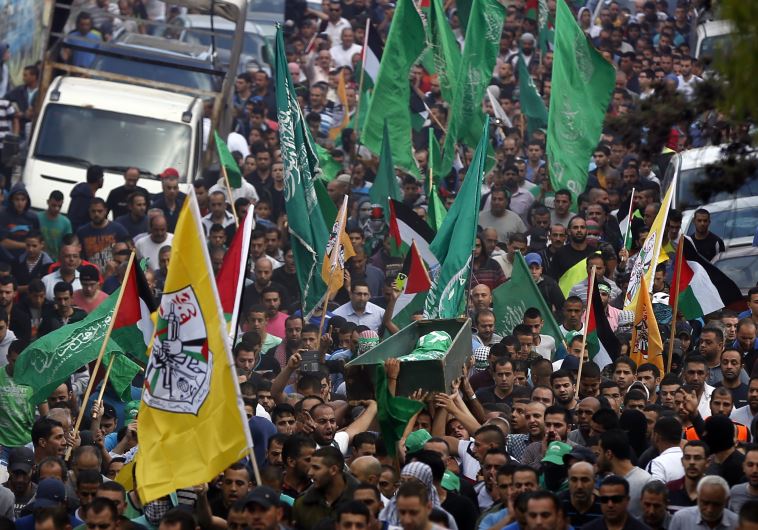
ShowImage (14)Funeral in the Shuafat refugee camp in east Jerusalem, on October 10, 2015. (photo credit: AHMAD GHARABLI / AFP)

About expected Palestinian state intentions, there is little real mystery to fathom. It should already be widely understood that any new state of Palestine could provide a ready platform for launching endlessly renewable war and terrorism against Israel. Significantly, not a single warring Palestinian faction has ever even bothered to deny such overtly criminal intent. On the contrary, aggressive intent has always been openly embraced, fervently cheered as a distinctly sacred “national” incantation.

*********************************

It’s farewell to the drawing-room’s civilized cry, The professor’s sensible where to and why, The frock-coated diplomat’s social aplomb, Now matters are settled with gas and with bomb.”

– W.H. Auden, Danse Macabre

With apparent suddenness, and a very deliberate brutality, Palestinian terrorists are launching a new wave of indiscriminate assaults they proudly hail as a “third intifada.”

But behind the protective veneer of language, where homicide is conveniently transfigured into revolution, these latest Arab attacks remain what they have always been – that is, crudely camouflaged expressions of rampant criminality.

Jurisprudentially, this is all perfectly obvious. Prima facie, under all pertinent international law, calculated assaults on mostly women and children can never be sanitized or justified. Always, rather, they represent codified crimes of war and crimes against humanity.

Always, such crimes are unpardonable.

Oddly enough, even after the painfully long history of egregious Palestinian crimes carried out against noncombatant populations, a sizable portion of the “international community” still seeks to encourage Palestinian statehood. Self-righteously, of course, and with ritualistic indignation directed against Israeli “intransigence,” the “civilized community of nations” remains willing to rip a 23rd Arab state from the still-living body of Israel. Even now, as the Palestinians remain rigorously segmented into barbarously warring factions – into opponents who enthusiastically maim and torture each other, all while cooperating in doing the same to their commonly despised Israeli victims – world public opinion calls naively for Palestinian “self-determination.”

Even now, when any new Palestinian state could quickly come to resemble an already-fractured Syria, the United Nations and its secretary – general seem much more concerned with comforting the markedly unheroic Palestinian criminals than with protecting fully innocent Israeli civilians.

Unapologetically, and whatever their unhindered and ongoing excesses, Fatah, Hamas and Islamic Jihad are easily able to incite followers to inflict and then celebrate incessant harms upon Israel.

At some point, it is likely that such harms, joyously imposed with a reassuring impunity, could involve diverse weapons of mega-terrorism, including assorted chemical, biological, or even nuclear agents.

In this last category of insidious choice, Palestine, after formalizing its sought-after condition of statehood or sovereignty, could be placed in an optimal position to assault Israel’s Dimona nuclear reactor.

This plainly sensitive facility was previously attacked, in both 1991 and again in 2014. Those earlier missile and rocket barrages, which produced no ascertainably injurious damages to the critical reactor core, had originated with Iraqi and Hamas aggressions, respectively.

About expected Palestinian state intentions, there is little real mystery to fathom. It should already be widely understood that any new state of Palestine could provide a ready platform for launching endlessly renewable war and terrorism against Israel. Significantly, not a single warring Palestinian faction has ever even bothered to deny such overtly criminal intent. On the contrary, aggressive intent has always been openly embraced, fervently cheered as a distinctly sacred “national” incantation.

A September 2015 poll by the Palestinian Center for Policy and Survey research – the leading social research organization in the Palestinian territories – found that a majority of Palestinians unhesitatingly reject a two-state solution.

When asked, as a corollary question, about any preferred or alternate ways to establish an independent Palestinian state, 42 percent called for “armed action.”

Only 29% favored “negotiation,” or some sort of peaceful resolution.

Not much mystery here.

On all currently official Hamas and Palestinian Authority (PA ) maps of “Palestine,” Israel has been removed altogether, or identified exclusively as “occupied Palestine.”

By these revealingly forthright and vengeful depictions, Israel has already been forced to suffer a “cartographic genocide.” Unambiguously, from the standpoint of any prospective Palestinian state policies toward Israel, such incendiary maps are portentous, predictive and possibly even prophetic.

What is not generally recognized is that a Palestinian state, any Palestinian state, could play a determinedly serious role in bringing some form of nuclear conflict to the Middle East. Palestine, of course, would itself be non-nuclear; but that’s not the issue. There would remain several other ways in which the new state’s predictable infringements of Israeli security could make the Jewish state more vulnerable to an eventual nuclear attack from Iran, or, in the even more distant future, from a newly-nuclear Arab state.

This second prospect would likely have its core origins in understandable reactions to the plainly impotent Vienna pact with Iran.

Following the July 14, 2015 Joint Comprehensive Plan of Action (JCPOA ), several Sunni states in the region, most plausibly Egypt and/ or Saudi Arabia, will likely feel compelled to “go nuclear.”

In essence, any such considered Sunni Arab nuclear proliferation would represent a more-or-less coherent “self-defense” reaction against expectedly escalating perils, once still-avoidable dangers now issuing from the reciprocally fearful Shi’ite world.

There is also more to expect from the Sunni side. Here, in actions that would have no apparent connection to expected Iranian nuclearization, Islamic State (IS) could begin an avowedly destructive march westward, across Jordan, and all the way to the borders of West Bank (Judea/Samaria). There, should a Palestinian state already be established and functional, dedicated Sunni terrorist cadres would likely make quick work of any deployed Palestinian army. In the event that a new Arab state had not yet been suitably declared – that is, in a fashion consistent with codifying Montevideo Convention (1934) expectations – invading IS forces (not Israel) will have become the principal impediment to Palestinian independence.

Credo quia absurdum – “I believe because it is absurd.” In either case, any such IS or IS-related conquest could create another available platform for launching relentless terrorist attacks across the region.

In time, of course, most of these murderous attacks would be aimed precisely at Israel.

IS, as everyone can see, is on the move. It has already expanded well beyond Iraq and Syria, notably into Yemen, Libya, Egypt and Somalia.

Although Hamas leaders generally deny any IS presence in Gaza, that terrorist group’s black flag is now seen more and more regularly in that expressly Palestinian space.

In principle, at least, Israel could sometime find itself forced to cooperate with Hamas against IS, but any reciprocal willingness from the Islamic Resistance Movement, whether glaringly conspicuous or beneath the radar, is implausible.

Additionally, Egypt regards Hamas as part of the much wider Muslim Brotherhood, and prospectively, just as dangerous as IS.

In any event, after Palestine, and even in the absence of any takeover of the new Arab state by IS forces, Israel’s physical survival would require increasing self-reliance in existential military matters.

Such expansions, in turn, would demand: 1) an appropriately revised nuclear strategy, involving deterrence, defense, preemption and warfighting capabilities; and 2) a corollary conventional strategy.

Significantly, however, the birth of Palestine could impact these strategies in several disruptive ways.

Most ominously, a Palestinian state could render most of Israel’s conventional capabilities substantially more problematic. It could thereby heighten certain eventual chances of a regional nuclear war.

Credo quia absurdum. A nuclear war in the Middle East is not out of the question. At some point, such a conflict could arrive in Israel not only as a “bolt-from-the-blue” surprise missile attack, but also as a result, whether intended or inadvertent, of escalation.

If, for example, certain enemy states were to begin “only” with conventional and/or biological attacks upon Israel, Jerusalem might then respond, sooner or later, with nuclear reprisals. Or if these enemy states were to begin hostilities with certain conventional attacks upon Israel, Jerusalem’s own conventional reprisals might then be met, at least in the future, with enemy nuclear counterstrikes.

For now, this second scenario could become possible only if Iran were to continue its evident advance toward an independent nuclear capability. It follows that a persuasive Israeli conventional deterrent, at least to the extent that it could prevent enemy state conventional, and/or biological attacks, would substantially reduce Israel’s risk of any escalatory exposure to a nuclear war. Israel will need to maintain its capacity for “escalation dominance,” but Palestinian statehood, on its face, could still impair this overriding strategic obligation.

A subsidiary question comes to mind. Why should Israel need a conventional deterrent at all? Israel, after all, seemingly maintains a capable nuclear arsenal and corollary doctrine, even though both still remain “deliberately ambiguous.”

And there arises a still further query. Even after “Palestine,” wouldn’t enemy states desist from launching conventional and/or biological attacks upon Israel, here, out of an entirely reasonable and prudent fear of suffering a nuclear retaliation? Not necessarily. Aware that Israel would cross the nuclear threshold only in certain extraordinary circumstances, these enemy states could be convinced – rightly or wrongly – that so long as their attacks were to remain non-nuclear, Israel would respond only in kind. Faced with such probable calculations, Israel’s ordinary security would still need to be sustained by conventional deterrent threats.

A strong conventional capability will still be needed by Israel to deter or to preempt conventional attacks – attacks that could, if undertaken, lead quickly, via escalation, to various conceivable forms of unconventional war.

Credo quia absurdum. It is still not sufficiently understood that Palestine could have serious effects on power and peace in the Middle East. As the creation of yet another enemy Arab state would need to arise from the intentional dismemberment of Israel, the Jewish state’s strategic depth would inevitably be diminished. Over time, therefore, Israel’s conventional capacity to ward off assorted enemy attacks could be correspondingly reduced.

Paradoxically, if enemy states were to perceive Israel’s own sense of expanding weakness and desperation, this could strengthen Israel’s nuclear deterrent. If, however, pertinent enemy states did not perceive such a “sense” among Israel’s decision-makers (a far more likely scenario), these states, now animated by Israel’s conventional force deterioration, could then be encouraged to attack. The cumulative result, spawned by Israel’s post-Palestine incapacity to maintain strong conventional deterrence, could become: 1) defeat of Israel in a conventional war; 2) defeat of Israel in an unconventional chemical/biological/nuclear war; 3) defeat of Israel in a combined conventional/unconventional war; or 4) defeat of Arab/Islamic state enemies by Israel in an unconventional war.

For Israel, a country less than half the size of Lake Michigan, even the “successful” fourth possibility could prove intolerable. The tangible consequences of a nuclear war, or even a “merely” chemical/ biological war, could be calamitous for the victor as well as the vanquished.

Under such exceptional conditions of belligerency, the traditional notions of “victory” and “defeat” would likely lose all serious meaning.

Although a meaningful risk of regional nuclear war in the Middle East must exist independently of any Palestinian state, this uniquely serious threat would be still greater if a new Arab terrorist state were authoritatively declared.

Palestine, it has increasingly been argued, could sometime become vulnerable to overthrow by even more militant jihadist Arab forces, a violent transfer of power that could then confront Israel with an even broader range of regional perils.

In this connection, IS, again, could find itself at the outer gates of “Palestine.” In such a scenario, it is plausible that the IS fighters would make fast work of any residual Palestinian defense force, PA and/ or Hamas, and then absorb Palestine itself into a rapidly expanding Islamic “caliphate.”

Before anything remotely decent could be born from such a determined theocracy, a very capable sort of gravedigger would have to wield the forceps.

The “third intifada” is just another legitimizing term for remorseless Palestinian terrorism. Should it transform the always fratricidal Palestinian territories into another corrupted Arab state, Palestine, either by itself, or as a newly-incorporated part of a still-growing IS “caliphate,” would become another Syria. Even more significantly, Palestine could bring specifically nuclear-based harms to the broader region.

Then, quite predictably, all pertinent “matters” would be settled “with gas and with bomb.”

Never Again’ means standing with Israel

October 14, 2015

Never Again’ means standing with Israel, Jerusalem Post, Dr. Ben Carson, October 14, 2015

ShowImage (13)Ben Carson . (photo credit: MARC ISRAEL SELLEM)

While Israel must be able to go it alone, it should never have to stand alone.  In recent years, personalities and politics have been permitted to negatively affect America’s relationship with Israel despite the fact that the bonds between our two nations are so unique and vital.  When the enemies of Israel and the United States sense rifts between us, they are emboldened and grow even more dangerous.

****************************

Sometimes it is hard to find the right words to talk about the kind of evil that defies reason and destroys lives.  We saw that evil on full display during the Holocaust perpetuated by the fanatical and tyrannical Nazi regime under Adolph Hitler.  The lessons to be drawn from those darkest of days in world history are plentiful, and as relevant today as they were nearly 80 years ago.

In recent days I suggested that things might have unfolded in a very different manner in Europe had the Jewish people been armed and better able to defend themselves. What would have been the impact on Hitler’s war machine if his victims had had more access to guns? It is something that we will never know for sure.

What I do know however, beyond any shadow of a doubt, is that I never intended for my words to diminish the enormity of the tragedy or in any way to cause any pain for Holocaust survivors or their families.

Both those who perished and those who survived the Nazi camps deserve our deepest reverence, as do the partisan fighters who rose in armed opposition.

It is truly incomprehensive to imagine what these men, women and children endured, and it is impossible for us to put ourselves in their shoes.  This I know, since I have seen some of those actual shoes first-hand at the Holocaust Museum in Washington, D.C. and at Yad Vashem in Israel. Those shoes, stripped from just some of the millions of Holocaust victims, are a jarring symbol that humanizes the loss.

They are poignant and painful reminders. I have learned about the Holocaust and studied the history.  So should every American, as well as others all around the world.

When I was in Israel last year, stepping from the dimmed lights of their Holocaust Museum into the bright Jerusalem sunshine underscored for me in a literal and figurative manner that often out of darkness comes light.  And upon reflection, I concluded that there are vital lessons that can be drawn from the Holocaust’s senselessness and savagery.  One is that going back centuries the Jewish people have somehow managed to find a way to overcome every oppressor who sought to destroy them.

Another is that the Jewish people need a state and that they must have the ability to defend themselves in order to ensure that “never again” remains a reality. That state, Israel, has been re-established in their historic homeland.

The founding of the State of Israel in 1948 was an accomplishment that almost never fully came to pass. Just hours after declaring its independence, Arab armies descended on the fledgling state in a war of annihilation only to be overcome by spirited Israeli forces who fought with the conviction and valor of those with nowhere else to go and no other option for survival.

Sadly for Israel, serious threats remain and its people must still live in a perpetual state of readiness to confront those who seek her destruction.  Israel’s armed forces and the country’s qualitative military edge over other nations in the Middle East are essential elements that ensure that the Jewish people continue to have a state of their own and that Israel can thrive.

The Middle East is a region awash with dictatorships, ruthless violence, turmoil and political instability where Israel is the only Western-style democracy.

As Americans we stand with Israel because the Jewish state embodies many of the same aspects that make the United States the greatest nation in the world: commitment to human rights, religious liberty for all citizens, the rule of law, equal rights for women, a free press, a robust judicial system.

America’s relationship with Israel is one with deep benefits for both nations. This proves invaluable every day in term of strategic cooperation and in specific arenas of homeland security and counterterrorism.

In the years to come, America’s ability to defend herself against all enemies, foreign and domestic, will be critical.  Our determination to secure our homeland and to safeguard our citizens against adversaries and radical Islamist terrorist groups must be stronger than ever.

Looking to the future, while remaining mindful of the past, I believe that it is in America’s national security interests to deepen our commitment to Israel.  If elected president in November 2016, I will explore every opportunity to strengthen ties between our two nations and to ensure that Israel always has the tools it needs to protect herself and our shared interests.

While Israel must be able to go it alone, it should never have to stand alone.  In recent years, personalities and politics have been permitted to negatively affect America’s relationship with Israel despite the fact that the bonds between our two nations are so unique and vital.  When the enemies of Israel and the United States sense rifts between us, they are emboldened and grow even more dangerous.

The strength of the U.S.-Israel relationship can and must be strengthened.

That is precisely why I look forward to my first conversation as President of the United States with the Prime Minister of Israel. On that phone call I will utter four important words that reflect the future direction we will take together: “Our relationship is restored.”