Posted tagged ‘Britain’

FARAGE: I Am Prepared to Help Britain Work with President Trump

November 22, 2016

FARAGE: I Am Prepared to Help Britain Work with President Trump, BreitbartNigel Farage, MEP, November 22, 2016

farageandtrump

When historians look back at 2016, it will stand out as the year that changed everything.

The joyous Brexit result was the first brick knocked out of the establishment wall. What followed with the victory of Donald J. Trump has still not sunk in with the very establishment that he beat.

But the world has changed. And people need to face up to this.

For my own part I can scarcely believe what has happened. Twenty-five years of grind and constant disappointment has, after all, been worth it.

In some ways backing the Trump campaign was even harder than battling for Brexit. I received almost total condemnation including from many senior figures in my own party.

My belief that it was the right thing to do went as far as putting on a pretty big bet, at least by my standards.

As the results came through I experienced that Brexit feeling all over again.

It was a great surprise and pleasure when the President-elect made time to meet me. I was with Arron Banks and some close friends including Breitbart’s own Raheem Kassam.

We found a thoughtful, reflective Trump who was already working on ideas to make the lives of ordinary Americans better.

His energy and indomitable spirit are beyond doubt and I do believe he has all of the qualities needed to be a great President.

Nothing could have prepared me though for what came next. Like a bolt from the blue Trump tweeted out that I would do a great job as the UK’s Ambassador to Washington.

I can still scarcely believe that he did that though speaking to a couple of his long time friends perhaps I am a little less surprised.

They all say the same thing: that Trump is a very loyal man and supports those that stand by him.

It is called trust and it is how the whole world of business operates. Sadly, the cesspit that is career politics understands nothing of this. In their world the concept of trust is transitory.

The political revolution of 2016 now sees a new order in charge of Washington. In the United Kingdom the people have spoken but the players at the top have, I am afraid, stayed the same.

Those who supported Remain now hold senior positions. Worst still, those who were openly abusive about Trump now pretend to be his friend.

It is career politics at its worst and it is now getting in the way of the national interest.

I have said since the now famous photograph with Donald Trump ten days ago that I would do anything to help our national interest and to help cement ties with the incoming Anglophile administration.

At every stage I am greeted by negative comments coming out of Downing Street. The dislike of me, UKIP, and the referendum result is more important to them than what could be good for our country.

I have known several of the Trump team for years and I am in a good position with the President-elect’s support to help. The world has changed and its time that Downing Street did too.

Donald Trump and the Return of European Anti-Americanism

November 21, 2016

Donald Trump and the Return of European Anti-Americanism, Gatestone InstituteSoeren Kern, November 21, 2016

European criticism of Trump goes far beyond a simple displeasure with the man who will be the next president. The condemnation reveals a deep-seated contempt for the United States, and for American voters who democratically elected a candidate committed to restoring American economic and military strength.

The primary cause of the global disorder is the lack of American leadership at home and abroad. A series of feckless decisions by Obama to reduce American military influence abroad have created geopolitical power vacuums that are being filled by countries and ideologies that are innately hostile to Western interests and values.

For the past seven decades, the U.S. has spent millions of dollars annually to guarantee German security, although Germany steadfastly refuses to honor a NATO pledge to spend 2% of GDP on defense spending. Germans are now offended that Trump is asking them to pay their fair share for their own defense.

Although President Obama’s foreign policy missteps have made Europe much less safe than it was eight years ago, European elites have overlooked Obama’s mistakes because he is a “globalist” who seems to favor recreating the U.S. in the European image. Trump, by contrast, is a nationalist who wants to rebuild the U.S. in the American, not the European, image.

European anti-Americanism is certain to escalate in the years ahead, not because of Trump or his policies, but because “globalists” appear desperate to save the failing European Union, an untransparent, unaccountable, anti-democratic, sovereignty-grabbing alternative to the nation state.


European anti-Americanism — which was on the wane during the presidency of Barack Obama, who steered the United States on a course of globalism rather than nationalism — is back with a vengeance.

Europe’s media establishment has greeted Donald Trump’s election victory with a vitriol not seen since the George W. Bush presidency, when anti-Americanism in Europe was at fever pitch.

Since the American election on November 9, European television, radio and print media have produced an avalanche of negative stories, editorials and commentary that seethe with rage over the outcome of the vote.

European criticism of Trump goes far beyond a simple displeasure with the man who will be the next president. The condemnation reveals a deep-seated contempt for the United States, and for American voters who democratically elected a candidate committed to restoring American economic and military strength.

If the past is any indication of the future, European anti-Americanism will be a pervasive feature of transatlantic relations during the Trump presidency.

Although European opinion-shapers have focused much of their indignation on the threat Trump allegedly poses to global order, the president-elect will inherit a world that is significantly more chaotic and insecure than it was when Obama became president in January 2009.

The primary cause of the global disorder is the lack of American leadership — leading from behind — at home and abroad.

A series of feckless decisions by Obama to reduce American military influence abroad have created geopolitical power vacuums that are being filled by countries and ideologies that are innately hostile to Western interests and values. China, Russia, Iran, North Korea and radical Islam — among many others — have all been emboldened to challenge the United States and its allies with impunity.

European elites have been mostly silent about Obama’s foreign policy failures, but are now lashing out at Trump for pledging to restore order by “making America great again.”

As during the Bush administration, anti-Americanism in Europe is once again being driven by Germany, a country that was effectively rebuilt by the United States after the Second World War. The Marshall Plan granted West Germany some $1.5 billion ($15 billion in 2016 dollars) in reconstruction aid between 1948 and 1951.

For the past seven decades, the United States has spent millions of dollars annually to guarantee German security, although Germany steadfastly refuses to honor a NATO pledge to spend a minimum of 2% of GDP on defense spending. Germany spent only 1.16% of GDP on its own defense in 2015 and 1.15% in 2016. German officials are now offended that Trump is asking them to pay their fair share for their own defense.

Following is a small sampling of recent European commentary on Donald Trump and the United States:

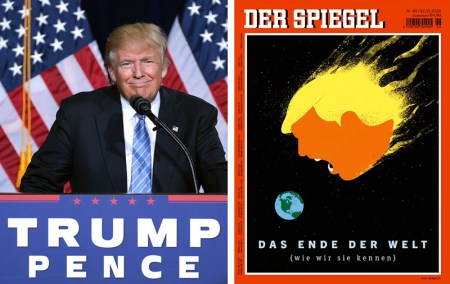
In Germany, the Hamburg-based newsmagazine Der Spiegel, one of the largest-circulation publications in Europe, published a cover with an image of a giant meteor in the shape of Trump’s head hurtling towards the earth. The headline reads: “The End of the World (As We Know It). The issue includes more than 50 pages of related content, including an article by Dirk Kurbjuweit entitled, “One-Hundred Years of Fear: America Has Abdicated Its Leadership of the West.” He wrote:

“For 100 years, the United States was the leader of the free world. With the election of Donald Trump, America has now abdicated that role. It is time for Europe, and Angela Merkel, to step into the void….

“Trump, who wants nothing to do with globalization; Trump, who preaches American nationalism, isolation, partial withdrawal from world trade and zero responsibility for a global problem like climate change….

“We now face emptiness — fear of the void. What will happen to the West, to Europe, to Germany without the United States as its leading power?

2062In Germany, Der Spiegel, one of the largest-circulation publications in Europe, published a cover, after Donald Trump’s election victory, with an image of a giant meteor in the shape of Trump’s head hurtling towards the earth. The headline reads: “The End of the World (As We Know It)”.

In an article, “Trump’s Victory Ushers in Dangerous Instability,” Spiegel commentator Roland Nelles wrote:

“It really happened. He did it. Donald Trump proved all experts wrong…. A man who… preaches hate and snubs America’s most important partners will run the most powerful country on Earth. It is a political catastrophe.

“Crude populism has triumphed over reason. Trump’s success is a shock for all those who had counted on the political wisdom of American voters….

“The world, and America, is now threatened by a dangerous phase of instability: Donald Trump wants to make America ‘great’ again. If one believes his pronouncements, he will proceed ruthlessly: He wants to throw 11 million migrants out of the country, renegotiate all major trade agreements and make important allies such as Germany pay for US military protection. That will trigger significant conflict, incite new rivalries and spur new crises.”

In an opinion article, “An Absurd and Dangerous President,” Spiegel commentator Klaus Brinkbäumer wrote:

“The United States has voted for a dangerously inexperienced and racist man — one who was swept into the White House by an army of disenfranchised white working- and middle-class Americans. It is a movement that now threatens democracy around the world….

“In other words, 60 million Americans acted stupidly. They cast their votes for xenophobia, racism and nationalism, the end of equal rights and social conscience, for the end of climate treaties and health insurance. Sixty million people followed a demagogue who will do little for them.

“Those who have lived in New York or experienced dinner conversations in Georgetown and debates at Harvard University’s Kennedy School of Government, know how brilliantly intelligent and worldly Americans can be…. Once you get outside such circles, such cosmopolitan thinking isn’t nearly as widespread.”

The Munich-based Süddeutsche Zeitung, in an article, “Trump’s Foreign Policy: What This Election Means for the World,” stated:

“The man who politicians around the world called ‘scary,’ ‘ignorant’ or ‘irrational’ will move into the White House. The uncertainty around the world is great. If cartoonists are to be believed, Donald Trump’s idea of the world is very simplistic. Africa is the birthplace of Barack Obama. Russia is a country that was made great again. Great Britain is a no-go area.”

The Hamburg-based Die Zeit, in an article, “Trump and How He Sees the World,” wrote:

“Wow. The West crumbles before our eyes. What is going on here can be explained by two data points: On November 9, 1989, the wall fell in Berlin…. On November 9, 2016, exactly 27 years later, a man has been elected to the White House whose central election pledge was the construction of a wall.

“The ideas of the new president are neither contradictory nor confused. His demands can be easily summarized on the cap of a beer bottle: integrate Putin, keep Mexicans out and treat American allies as the customers of a security service. There is only protection if one pays cash, even in NATO.

In a commentary, “The End of the Enlightenment,” Zeit essayist Adrian Daub wrote:

“Donald Trump is a remnant of a dying America…. He has turned the country from a multicultural lighthouse into an isolated island of white people who are afraid of their own shadow.

“The idea of American exceptionalism, the lighthouse, was already present at the foundation of the nation…. The idea of American radiance is one with the ideas of the Enlightenment that came from Europe to the colonies. Ideas like universal values or the human striving for truth.

“Trump’s election means the end of this project. The United States is no longer a lighthouse, but a flaming fire of tired shadows armed to the teeth. No trace remains of its prototypical character, its imitability. It is defiant, closed to the world. The nationalism of isolationism… the tumultuous tribalism… are shaking the foundations of the Enlightenment.

“The US upheld the values of the Enlightenment — humanism, an optimistic image of man, human dignity and civil rights — when Europe deviated from them in the thirties. It used humanism as a weapon in the struggle against fascism, its universality as a counterpart to nationalism, and with its re-importation after the Second World War has contributed to the reestablishment of the European project. Today, these values are once more in trouble in Europe, but the view across the Atlantic will not be reassuring as of January.”

Other German headlines include: “Trump has the Charisma of a Drunken Elephant,” “Donald Trump: A Horror Clown as a Security Risk,” “Trump: How Could this Happen?,” “Plans of the New US President: How Trump Wants to Poison the Air,” “Donald Trump: A Blow to Open Society,” “America Chooses the Great Divider,” “Donald Trump: A King Without a Plan,” “Donald is not Ronald,” “Donald is not Churchill,” “Can Trump also Happen in Germany?,” “How to Prevent a German Trump,” “Who Can Stop Trump Now?,” and “Will Berlin Have to Pay More for Defense?

In Britain, the Guardian published an editorial, “The Guardian View on Trump’s Foreign Policy: A Threat to Peace,” which stated:

“The victory of Donald Trump shatters the notion that the US can be counted on by its allies not just for defense guarantees and economic cooperation, but even as a defender of liberal democracy, rather than a threat to it. It calls into question the traditional US role as a protector of a UN-based global architecture of multilateralism….

“For Donald Trump, politics — like business — is about deal making. He thinks man-to-man talk with dictators can instantly dissolve problems, and approaches foreign affairs as zero sum game in which making America great can mean demeaning its traditional friends. His election makes the world a more dangerous place and also a more uncertain place, for it is too early to say precisely how those dangers will materialize — or how the next US president will face up to them.”

The Guardian, in an essay, “A Win for Trump was a Win for Bigotry,” columnist Owen Jones wrote:

“Hang on a minute: who am I as a Briton to interfere in the internal affairs of a foreign country? The problem is the entire world is now subject to the writ of the leader of the last superpower. We are all, to a degree, under his dominion….

“Trumpism is, by nature, an authoritarian movement that regards democratic norms as dispensable if they fail to serve political ends. The aspiration — whether realizable or not — is clear: authoritarian societies such as Putin’s Russia, Erdoğan’s Turkey and Orbán’s Hungary that maintain certain democratic trappings as a convenient front.

“If the American people simply accept the legitimacy of this president, and they normalize this would-be tyrant, it will only embolden him…. Civil disobedience should be employed where necessary. Don’t just do it for yourself, America. The fate of the rest of the world will be determined by your choices.”

Other British headlines include: “Will Donald Trump Destroy America?,” “Why President Donald Trump is an Even Bigger Disaster than You Thought,” “Donald Trump’s Victory is a Disaster for Liberal Values,” “Donald Trump’s Victory is a Disaster for Modern Masculinity,” “Privacy Experts Fear Donald Trump Running Global Surveillance Network,” “Terrifying Trump Will Turn into Tamed Trump? It’s an Illusion,” “The Magnetic Pull of Trump, King Narcissist,” “Will Donald Trump Make School Lunches Unhealthy? Doctors Warn the President-elect’s Penchant for Burgers and Fried Chicken Could Hit Meal Trays,” “In the Age of Trump, Why Bother Teaching Students to Argue Logically?,” and “Donald Trump Believed to be Direct Descendant of Rurik the Viking who Established Russian State.”

In Spain, where anti-Americanism has held sway for many decades, the newspaper El Paíspublished an essay, “Declaration of War against Stupidity,” which showcases the contempt many Europeans have for ordinary Americans. The newspaper’s long-time essayist, John Carlin, wrote:

“The victory of Trump represents a rebellion against reason and decency. It is the triumph of racism, or misogyny, or stupidity — or all three things at once. It is the expression of the poor judgment and bad taste of 60 million Americans, the vast majority of them men and women of white skin who own homes, cars, firearms and eat more than citizens of any other country on earth.

“This is where you see with perfect clarity the stupidity, frivolity and irresponsibility of those who voted for Trump. For all of Clinton’s defects, they are trivial compared to those of Trump, whose ignorance, zero principles and zero experience in governance are joined by all forms of personal vices that every person in their right mind at any latitude of the world considers deplorable.

“I know the kind who voted for Trump. I met them when I made reports in Texas, Montana, Arizona, Oklahoma, Alabama and other typically Republican states. They tend to be kind, religious and honest people, decent in their reduced social orbit. But after sitting down to talk with them for a while I always reacted with the same perplexity: how is it possible that we speak the same language? Their words are familiar to me but their brain circuits operate differently. They are people of simple faith, oblivious to the irony; people who choose their truths not based on facts but on their beliefs or prejudices; people who live far from the ocean and the rest of planet Earth, of which they are afraid. I’ve never experienced a similar sense of disconnection in Europe, Africa or Latin America. Just inside the United States.”

In Austria, Kronen Zeitung published a headline entitled, “Nuclear Suitcase: In 72 Days Trump Could Annihilate Civilization.” Also in Austria, Kurier published a story entitled, “Trump Victory: Boon for Suicide Hotlines.” In France, the newspaper Libération featured a cover with Trump and the words “American Psycho.” Another headline read: “United States: The Empire of the Worst.” L’Obs asked, “With Trump, the Beginning of De-Globalization?Le Figaro wrote: “Donald Trump: From Clown to President,” and “Europe Paralyzed by the Trump Shock.” Le Monde wrote, “Donald Trump’s Victory: A Brexit for America.” In the Netherlands, Telegraaf declared, “Trump is a Nightmare for Europe.”

How is one to interpret the resurgence of anti-American sentiment in Europe?

Although President Obama’s foreign policy missteps, especially those in the Middle East, have made Europe much less safe than it was eight years ago, European elites have overlooked Obama’s mistakes because he is a “globalist” who seems to favor recreating the United States in the European image. Trump, by contrast, is a nationalist who wants to rebuild the United States in the American, not the European, image.

European anti-Americanism is certain to escalate in the years ahead, not because of Trump or his policies, but because “globalists” appear desperate to save the failing European Union, an untransparent, unaccountable, anti-democratic, sovereignty-grabbing alternative to the nation state.

Europeans have time and again overestimated their ability to make a fragmented Europe act like a single unified actor. As it turns out, anti-Americanism is a powerful ideology that has wide appeal across Europe — not just among the elites.

In the past, European federalists have tried to make anti-Americanism the basis of a new pan-European identity. This artificial post-modern European “citizenship,” which demands allegiance to a faceless bureaucratic superstate based in Brussels, has been presented as a globalist alternative to the nationalism of the United States. In essence, to be “European” means to not be American.

As the European Union comes apart at the seams, Europe’s political establishment can be expected to try to exploit anti-Americanism in a desperate attempt to use it as a glue to hold a fractured Europe together.

Whether or not that succeed depends, ironically, on U.S. President-elect Donald Trump. If he can demonstrate that he is able to govern the United States and produce tangible results, especially by growing the economy and curbing illegal immigration, Trump is certain to energize support for anti-establishment politicians in Europe, many of whom are already polling well in a number of upcoming general elections.

Commenting on Trump’s victory, Dutch Parliamentarian Geert Wilders, wrote: “America has just liberated itself from political correctness. The American people expressed their desire to remain a free and democratic people. Now it is time for Europe. We can and will do the same!”

Nigel Farage on The Year of Political Revolution

November 18, 2016

Nigel Farage on The Year of Political Revolution, Front Page Magazine, November 18,2016
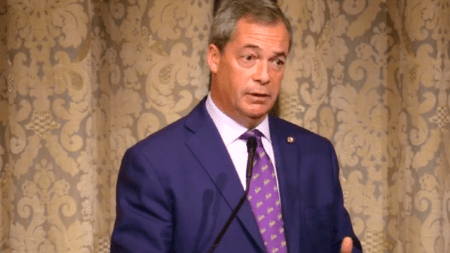
nigelfarage

Below are the video and transcript of Nigel Farage’s address at the David Horowitz Freedom Center’s 2016 Restoration Weekend. The event was held November 10th-13th in Palm Beach, FL.

https://vimeo.com/191621313

Nigel Farage from DHFC on Vimeo.

Nigel Farage: Wow, wow, well, thank you very much indeed, and thank you to David and the Freedom Center, and thank you for that wonderful warm introduction. You know, often there are decades in which very little happens. And occasionally there’s a year in which decades happen, and I think when our grandchildren, great–grandchildren look back at the history of this period of time, 2016 will be the year of political revolution; the year that changed everything.

Now, I never had any doubt after Brexit that what we managed to achieve was possible here in the United States of America, and the parallels, the crossover between the debates and the arguments and the type of people that were motivated to vote for Brexit and vote for Trump are really very interesting. But, what I’m really enjoying, what I’m really enjoying even more than the independence of my own nation, even more than President–Elect Trump, what I’m really enjoying are the faces of the media on CNN.

It is as if they’re in mourning, isn’t it? They simply can’t face up to the idea that there are people out there that don’t share their own very narrow metropolitan view, and I’m enjoying that enormously. My goodness me, they’re right to be worried because this revolution that has taken place in Britain and now on a much bigger scale here in the United States of America is, I hope and believe, gonna roll out over the course of the next couple of years across the entire Western world. We are going to get our democracy back.

Now, I got involved in this — I was actually in business. I had a proper job before politics. How about that? It seems pretty amazing, doesn’t it? You know, certainly Westminster is full of a group of college kids who go straight into the Houses of Parliament in their early 20s who have never had a job in their lives, who don’t really believe in very much, and they are professional career politicians. What they worry about is getting reelected. What they worry about is playing safe, and because of that, and because of the direction of the media, we have suffered now from decades of political correctness where no one dares stand up and speak their mind. They’re frightened of being criticized.

Actually, when we use the term political correctness, we aren’t really being accurate. What it really represents is a crackdown on our democratic rights and liberties, a crackdown on freedom of speech. That is what has been going on. And I know exactly what Donald Trump has gone through over the last few months. In fact, I think that Trump and myself are the most reviled people by the media across the entire West, but you know what, I’m happy to be judged by my enemies. I have no problem with that. But my journey on this was as a businessman who had never been actively involved in politics, although I was a massive supporter of Thatcher and Reagan back in the 1980s, and I thought they gave hope and wealth to tens and tens of millions of people.

But, I got involved in politics because I simply could not believe that my country, my ancient country, who had done more than anyone to develop the concept of parliamentary democracy had been happy for a career political class hand–in–glove with big multinational businesses and banks to progressively piece by piece give away our ability to make our own laws, to run our own country, and, crucially, to control our own borders. And, I thought, well the hell with this, I’m gonna stand and fight. And it was a very long fight. In fact, it took me nearly 25 years to win this battle. But, for the last 10 or 15 of them, the reason that I suffered personally at the hands of these people is because I dared to touch on a subject that through political correctness, through the crackdown on freedom of speech, had effectively become banned in the United Kingdom. You were not allowed in British politics to even discuss immigration. It had been banned. And despite the fact that we signed up to complete open borders with nearly half-a-billion people within the European Union, despite the fact we’ve had a growth of international jihadi terrorism, no, we weren’t allowed to even discuss the issue. So, I did talk about immigration, and I did take the brickbats for years, and I’m pleased to say that, actually, the main reason we got Brexit is because ordinary people had simply had enough of open door mass immigration driving down their wages, stopping them getting access to public services, and seeing social change within their communities the likes of which they’d never experienced before.

You know, it’s not just about controlling our borders and numbers and economics. There is an issue of culture here. There is a big issue of culture. You know, I come from a country that is a Christian country within its very constitution, and I believe that you can stand up and defend Christian values and Christian culture without giving offense to any other religious minority, but it’s time we had leaders that recognize that. And I think in the same way in this campaign here in America, Trump dared to talk about issues that everybody had brushed under the carpet that everybody else found too difficult. What kind of message does it send to people in this country if illegal immigrants that come into America from Mexico are given pardons after a few years? What message does that send to Mexicans who have actually gone through the process and done it legally and done it properly? And I have to say I admire Trump. I admire him for having the courage to put immigration at the front and center of this campaign. Well done him.

But something even worse than that had happened to our political classes. It’s what I call in Britain the “victory of social democracy.” It was parties that had been on the left and parties that had been on the right who decided to merge together in the middle where, frankly, you couldn’t put a cigarette paper between the manifestos of these parties at successive general elections. It was part of this process of professionalizing politics. It was part of the not wishing to cause offense. It was part of not wishing to take any risks and certainly, as far as the British political system had become, we were run by a group of people who all went to the same handful of schools, who all went to the same university, who all studied the same degree, who all went straight into politics and who all married each other’s sisters. That is what had happened to British politics.

And nobody was daring to say anything, but at the same time, look, it happened here, didn’t it? I mean, come on, look at the last presidential election. What were the big ideological fault lines that existed between Obama and Mitt Romney? I couldn’t spot them. I genuinely couldn’t spot them. It didn’t actually make a fundamental difference whether you had Obama or Romney. Yeah, sure, there are issues of policy, but there weren’t fundamental issues of principle. And all this was happening whilst our leaders in Britain, but yours, too, in America, were happy to give away increasingly your powers to make your own decisions, whether it’s signing up to the Paris Deal, whether it’s Hillary Clinton’s vision, which I’m pleased we got from that secret Wall Street tape recording where she saw the European Union as a prototype for a bigger form of world government; where you in America increasingly would have had your laws made somewhere else. This fight back matters, and I tell you above all what the history books will say is that 2016 was the year that nation state democracy and people being proud of their own identity came back onto the agenda.

And I was sneered at, condescended to for daring to say that I was proud to be British, for daring to say that I believed in our nation. It was as if I’d said something dreadful. Well, just to prove the point … [Laughter.] And, again, Trump’s big slogan “Make America Great Again.” You’re in no doubt, are you, when that guy speaks that he believes in this country, he believes in its people, and he believes in your ability to take things forward. So that’s good. And I also think what we’ve done similarly together is we have rejected this desperate creep of corporatism; the business by which the big businesses now effectively own the political class. They and the lobbyists basically set the rule book and set the agenda for how industries are run, and while it may be burdensome to big business to put up with laws, it suits them because it puts out of business or it prevents entry into the market of small and medium–sized business. And I think one of the debates that we need to have, and it probably will start in America — isn’t it funny? Normally, America catches a cold, and London sneezes. You are normally 20 years ahead of us in terms of most social and technological trends. I’m pleased to say that with Brexit this time we showed you the right way to go.

But here’s the debate that we need to have. We need to recognize, in my opinion, that we are no longer a free market capitalist society. That is gone. All those things that Reagan and Thatcher did so much to create, environments and societies and communities in which the individual, the small man or woman, could set up a business in whatever sector they chose and if they did well, make money and succeed. Increasingly, that is not happening, and increasingly, the voters who voted Brexit and who voted for Trump are recognizing that this world of big global corporatism gives them no room, and I hope and I pray that Trump quickly puts into place the Reaganite bits of his agenda. When he talked about deregulating small businesses to give them an even break — please, President Trump, do that as quickly as you can.

When he talks about tax cuts and giving people real incentives and giving a boost to spending within the economy, I totally agree and support that and, frankly, I think it is overdue but genius that somebody in this country recognizes that your rates of corporation tax are completely and totally absurd and that if Trump cuts corporation tax hundreds of billions of dollars will flow back into this country. So, I wish him Godspeed with all of those things.

Because it seems to me that for Trump to succeed with the rest of his agenda he first has to get the economy heading in the right direction, and I think all the ingredients are there. It was funny, wasn’t it, on that little video you saw, the IMF bus saying that if we voted Brexit there’d be some terrible economic decline. We also saw Obama coming to my country looking down his nose at us, telling us we weren’t good enough to run ourselves. Gosh, I’m pleased we’re all seeing the back of him.

And what of the future? Well, today is the 11th of November. Today is the 98th anniversary of the signing of the Armistice that ended the first World War, and I think it is worth reflecting. I really do believe it is worth reflecting. In fact, one of the things that got me into politics were the massive sacrifices that the generations that went before us had to make to overcome tyranny and to give us liberty and democracy, and I was damned if I was gonna see all of that sacrifice thrown away by career politicians. I really was.

But it is worth reflecting on today of all days that our two countries, between us, without us there would have been no victory over Nazi Germany. It simply couldn’t have happened. We held the fort, just about. Just about. We were lucky, but we got there, and by the way, we also were led by a man called Winston Churchill, and I want to see his bust back in the oval office. My critics in the British media always say, “Nigel Farage, he’s always photographed with a pint of beer” and “Does he drink too much to be in politics?” To which I always say, “Compared to Winston Churchill, I’m a mere beginner.”

We have done between us some fantastic things for the Free World. We’ve done it at great cost to ourselves. You guys even more than us. You know, we were directly in the line of fire. Yes, you had Pearl Harbor, but you came and helped us. You came and assisted us. And I now believe that a United Kingdom that has voted for Brexit, and a United Kingdom that will get Brexit — yes, of course, there’ll be attempts through the Houses of Parliament and through the courts. There’ll be attempts to slow us down. There’ll be attempts to delay us, but believe me, it isn’t going to work. If we get betrayed, if we were to get betrayed on our Brexit vote, you would then see a political revolution in Britain that we haven’t seen since the English civil war. So believe me, it is going to happen.

But I think it’s important in this modern world for both of us that we use the opportunity of an independent United Kingdom and a Trump presidency to start talking about some of these issues again, and I generally do. In terms of trade, I completely understand why Trump has reservations about China. I understand why he has reservations about countries undercutting, about countries dumping steel or whatever else it may be, but I do genuinely think that we don’t need to go through a big corporatist dream. We don’t need to go through resolution courts that go above our own parliaments and courts. I just simply believe that if you look at the business relationship between your country and my country we are both massive investors in each other’s country. We share a language, we share a similar legal system, we share many similar economic interests, and I think if there’s one country that President Trump might do a trade deal with, unlike Obama, sneering at us and telling us we’d be at the back of the line, I think Trump wants us to be at the front of the line, and what a great message that would be.

But, I also believe we need to think very seriously about security. Now, one of the reasons I think that in the end that although Trump was the anti–establishment candidate, he began to get the support of a big chunk of the establishment, and by that I mean the military and the police and who knows, maybe some even in the FBI. So, but one of the reasons is that Hillary could not even bring herself to say the words “Islamic terrorism.” Couldn’t even bring herself to say it. She was in complete denial, and I think we’ve all got to be honest and face up to the fact that the great challenge that the world faces, the great challenge our kids face, is this new evil that exists on this earth, and we’re going to have to be resolute and work together as friends and partners to deal with this problem. That, I think, is very important. Very important indeed.

And, then I think we need to talk and debate and think about the future of NATO. Now, NATO has served an enormously valuable role. But the difficulty with NATO is once the Berlin Wall fell, the clear enemy that had existed for all those decades suddenly wasn’t there. And at no point since 1990 have members of NATO sat down and genuinely debated what the role of NATO is in a post-Soviet Union world. I think we need to have a defensive alliance, but I think we need to redefine it, and I’m gonna say, I think President–Elect Trump is right when he says that America should not be expected to go on paying all the bills. I genuinely do.

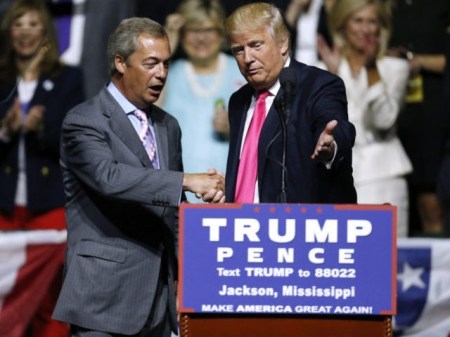
And I think the conduit between President Trump when he’s there and the rest of NATO members is the United Kingdom. We are the people with a foot in both camps. We are the people, I hope and believe, who can bring us together. Let’s not throw NATO out because it has been valuable to us since the late 1940s, but let’s be grown up and let’s redefine what it’s there for and what it actually means, and that matters. And, I, for myself, have to say what an absolute honor it was to be invited by Trump’s team to come to America and to appear on that stage with him in Mississippi. I’ve tried to make British politics and European Parliament politics a little more spicy than perhaps people were used to. But I regularly get fined for behaving badly and it’s okay. It’s all cheap advertising, you know. But, I have to say coming to a Trump rally was quite unlike anything I’d ever attended in my life. It was amazing. It was amazing, and it’s perhaps worth reflecting that I’m the only elected politician in the entire United Kingdom who had a single good word to say about Trump during that whole campaign. Once again, I was taking abuse from everybody, but I’m used to it. It’s okay. It’s not a problem. No, I was pleased to do that and I was pleased to come back and to attend all of the debates and to act as a commentator from overseas on the relative merits of Trump versus Clinton. I just struggled to find the merits of Clinton. It wasn’t very easy to balance that, but I’m thrilled to have played a part in this, and I’m thrilled that Brexit has provided an inspiration, I think, for many campaigners out there. You know, we showed you that the little guys can beat the big guys. We showed you that a free people, provided their spirit is undiminished, can overcome, bad can beat evil, and you’ve now done it on an even bigger and better scale.

And I’m now gonna be going and doing a bit of tour of Europe. I spoke in Barcelona on Wednesday of this week. I spoke in Stockholm on Friday of last week, and I’m now traveling around the rest of the European Union, and my message to them is this: I am not, as they term me, anti–European. Of course I’m not. I’m married to a woman who was born in Germany. I mean no one needs to tell me about the dangers of living in a German–dominated household. I get it. (I know it’s a cheap shot, but I like it.) The point is this: Europe is very different to the United States of America. These are ancient countries that have no desire to merge together. They are different. There are different religions in the north and in the south. There are different cultures of work, different patents, different means of trade, and I actually want to champion a Europe of democratic independent nation states that work together, trade together, and act as good next–door neighbors with each other. But you could never get to that all the while you’ve got this monolithic European structure that intends to steal powers from all those individual countries. So, I will be going around the whole of Europe taking this message that actually you can beat the system. All you have to do is have the courage to stand up against what you’re being told, and if I’m told that I’ve wrecked Britain’s relationship with the European Union, well, I did my best to get Britain out of the European Union. I now want to get Europe out of the European Union. Thank you very much. Thank you. Thank you. Thank you. Thank you.

I noticed last night when I was bumping into you that lots of you, apart from those who wanted selfies, lots of you wanted to ask questions, and it’s been the same this morning. So what I’ve done is I’ve left lots of time for questions. So, please put your hands up, and we’ve got some roving microphones that are going to go around, and I will do my very best to answer as many of them as I can.

Audience Member:

Thank you, Nigel. It’s okay, I’m American now. Thank you for your bravery. You mentioned Churchill, and Churchill spent years in the wilderness, and we are very grateful for what you’ve done to come out of the wilderness and win the fight. What we’d like to hear from you now is some reassuring words about how the elite can’t disrail the Brexit reality. Can you talk to us about your expectations for the next year or two?

Nigel Farage:

Yes, the elite — they call themselves the liberal elite, and I can’t fathom this because, actually, in a historical sense, they’re the most illiberal people the world’s ever seen. You know, Gladstonian liberalism was about individual liberty and choice and helping the poor and the weak. This lot want to ban everything. This lot want to control everything. This lot have set the agendas of speech through political correctness and this lot don’t accept referendum results or election results that they don’t like. Look at those people rioting on the streets of New York and out in LA. You know, you’re seeing a taste of it here in America, aren’t you? You’re seeing people who simply can’t live up to it.

Now the European Union, when the Danes voted no to Maastricht back in the 1990s, they were forced to vote again until they got the right result. Twice the Irish have rejected European constitutions and been forced to vote again in completely rigged loaded referendums where one side outspent the other side by a factor of 100 to 1. We’ve seen the French referendum on the European constitution, the Dutch referendum on that and the Ukraine deal, and we’ve seen them simply be ignored. So, there is a tradition here of them ignoring. I remember being in the European parliament after the Irish had said no to the Lisbon Treaty, and it was an amazing day. I’d actually used a huge lump of the European Parliament’s money. It’s called the information budget. It’s supposed to be used to promote European Union values to member states. Well, my lawyer said there was nothing to say you couldn’t spend it saying that it was a bad idea. So, I sent a booklet, an eight–page booklet to every house in Ireland telling them why the Lisbon Treaty was a bad idea, and the Irish prime minister the next day said Nigel Farage almost single handedly has derailed the democratic process of Ireland, and I thought, “Oh, please.”

But the point is the victory was very short–lived. I remember that next day, Barroso, Jose Manuel Barroso, he was the European Commission President at the time, a former Maoist, so he was quite well suited for that job, wasn’t he really? I remember him saying, “Oh no, the people didn’t really vote no.” And, I said, “What part of the word ‘no’ don’t you understand?” Look, they’re trying. They’re trying to redefine the referendum result. They’re trying to say it wasn’t about the single market. There are lots of attempts being made and one of the ways that we do need help is we need help from America. Because if President Trump makes it clear that actually the United Kingdom is a priority in terms of security, defense, and trade, that signal starts to put massive pressure on the naysayers in our country, and, indeed, on the Brussels process. So, actually, Trump saying positive things is going to make our life one whole lot easier. They will try and stop us. They will try and delay us, but they won’t be able to because here’s the difference. When the Dutch and the French and the Irish and the Danes were overruled, they shrugged their shoulders, and said, “Oh well, there we are.” That ain’t gonna happen. You know, that isn’t going to happen. And, I promise you, if Brexit by 2019 has led into a betrayal, there will then be an earthquake in British politics and the existing parties will be swept off the table, and because of that they’ll wince, they’ll whine, they’ll moan, they’ll cry a bit on television, which I’ll like, but in the end, believe me, Brexit will mean Brexit.

Audience Member:

Thank you for your courage. I, too, am an American by choice. I guess it’s all immigrants today who are going to speak. But back in the ’60s when I was a young guy I lived in the former English city of London, and during that time you had a politician, Enoch Powell, who gave the famous River of Blood speech. Could you talk about what that speech meant to immigration?

Nigel Farage:

Yes I can. In fact, it was the 20th of April 1968 in Birmingham Town Hall, and I’m not very good at the accent, but he said, “Those whom the gods wish to destroy first they make mad. And we must be mad to allow the unqualified flow of tens of thousands of migrants into Britain every single year.” And he went on to say — and, in fact, he predicted this at the start of the speech. Because at the start of the speech he said, “Even now I can hear the howls of execration. How could I say such a horrible thing?” But he went on to say that if it continued like this — and he was a classical scholar. In fact, he was, just briefly for those who haven’t heard of Enoch Powell, this extraordinary fellow, was the youngest professor in the British Empire. He was professor of Greek at Sydney University age 25. It was then 1939, so he came back to England and joined the Royal Warwickshire Regiment, and by 1944 he was the youngest brigadier in the British Army. I mean, the bloke was extraordinary in every way. But he said, “I feel like the Roman standing on the banks of the Tiber foaming with much blood.” And, of course, it became known as the Rivers of Blood speech.

The problem with that speech was this: That you need to be in politics if you’re there, not just for a career, but you’re there to change things, to move things on, you need to be ahead of public opinion to try and be a magnet and to bring public opinion and bits of the media and change with you. I’ve done that throughout the last 20 years. I’ve tried to keep putting the flag further and further out in the ground, but there’s a problem if you go too far ahead, and you go to a place the people simply aren’t ready to even conceive. And it led to the destruction of the career of, without doubt, the most talented post–war politician in Britain. But it did something else. It also allowed that liberal media elite to make immigration a banned subject. And from 1968 until me in 2003–4, nobody with a sensible voice or view in British politics dared to touch the subject, so the irony was that Powell was right in many ways, not in every way, but right in many ways. The irony was he stopped it being a debate, and that’s my analysis.

One last quick point on Powell, he was the first Euro-skeptic. He was the first person who saw the European Union not as a common market but as a political project. And in the general election of February 1974 he said he would not stand as a candidate in the election, and nobody could quite believe that a man who was not very far away, perhaps, from becoming a prime minister at one point, wouldn’t stand in the election. And he, two days before the general election, booked the City Hall in Birmingham, his home city, and gave a speech at which he said he urged British voters to vote for the Labor Party. Now, my parents just simply couldn’t believe this. You know, how could the buttoned–up, conservative brigadier, the darling of the right of British politics, advocate voting for a socialist party, but the reason was that the socialists said we could have a referendum on our common market membership. So the very highly principled man — and there was an amazing moment in that speech when somebody at the back of the room shouted at Powell, “Judas.” And he stared at the man and he pointed. He said, “No, Judas was paid; I’m making a sacrifice.” How about that?

Moderator:

All right, we have time for one more question, and then after this question, we’re gonna move back into the breakout room. But last question here.

Audience Member:

I’m sure that President Trump would be honored to have the bust of Winston Churchill back in the White House. Do you think you can make arrangements to have that done?

Nigel Farage:

Yeah, I’ll tell you what. I’ll do my very best, and I’m gonna go one better than that in some ways. I was at the convention in Cleveland, which I went to. I became friendly with the Mississippi delegation, and I went down and stayed with the governor, Phil Bryant, in Mississippi, and he has got so many books and memorabilia about Churchill. I think we all admire, all of us in the Western world who believe in freedom and liberty, admire this amazing man who, of course, had an American mother, so the link is incredibly strong. Anyway, Governor Bryant is coming to England next April to the Farnborough Air Show, big international air show, and I’ve already agreed that I will take Governor Bryant to Chartwell, Churchill’s home, and give him a personal guided tour. And if anybody else wants to come and see Chartwell, I’m your man to show you around, so there you are. And can I just say thank you very much for this invitation, this opportunity to speak to you today, to meet many of you, and remember what I said at the beginning that in years to come people will look back in 2016 as the year that changed everything, and now we have to be strong. We have to be full of resolve. We have to make sure we don’t give any daylight in that door to let those bad people who gave away our democracy and risked our liberty and freedom a chance to come back. We’re in charge now, let’s stay there.
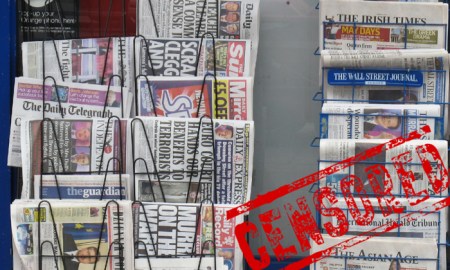
European Union Orders British Press NOT to Report when Terrorists are Muslims

November 18, 2016

European Union Orders British Press NOT to Report when Terrorists are Muslims, Gatestone Institute, Yves Mamou, November 18, 2016

This is the moment where hate speech laws become a greater threat to democracy and freedom of speech than hate speech itself.

In France, Muslim terrorists are never Muslim terrorists, but “lunatics,” “maniacs” and “youths”.

To attack freedom of the press and freedom of speech is not anti-hate speech; it is submission.

By following these recommendations, the British government would place Muslim organizations in a kind of monopoly position: they would become the only source of information about themselves. It is the perfect totalitarian information order.

Created to guard against the kind of xenophobic and anti-Semitic propaganda that gave rise to the Holocaust, national hate speech laws have increasingly been invoked to criminalize speech that is merely deemed insulting to one’s race, ethnicity, religion, or nationality.

It is disturbing to wonder how long the EU will strongly engage its experts and influence to cut through existing legal obstacles, in a quest to criminalize any type of criticism of Islam, and to submit to the values of jihad.


According the European Commission against Racism and Intolerance (ECRI) — part of the Council of Europe — the British press is to blame for increasing hate speech and racist violence. On October 4, 2016, the ECRI released a report dedicated only to Britain. The report said:

some traditional media, particularly tabloids… are responsible for most of the offensive, discriminatory and provocative terminology. The Sun, for instance, published an article in April 2015 entitled “Rescue boats? I’d use gunships to stop migrants”, in which the columnist likened migrants to “cockroaches”…

The Sun newspaper has also published inflammatory anti-Muslim headlines, such as its front page of 23 November 2015 which read “1 in 5 Brit Muslims’ sympathy for jihadis”, along with a picture of a masked terrorist wielding a knife…

The ECRI report establishes a direct causal link between some tough headlines in British tabloids and the security of the Muslims in the UK. In other words, the British press is allegedly inciting readers to commit “Islamophobic” acts against Muslims.

ECRI considers that, in light of the fact that Muslims are increasingly under the spotlight as a result of recent ISIS-related terrorist acts around the world, fueling prejudice against Muslims shows a reckless disregard, not only for the dignity of the great majority of Muslims in the United Kingdom, but also for their safety.


2053

ECRI is basing its report on a recent study from Matthew Feldman, Professor at Teesside University. This study compiled anti-Muslim incidents before and after terrorist’s attacks.

In the seven days prior to the Charlie Hebdo massacre in Paris, where 12 people were killed, there were 12 reported (anti Muslim) incidents, but in the seven days following, there were 45. This pattern was similar in relation to the terror attacks in Sydney, in December and Copenhagen, in February.

So, according to the ECRI and scholars of Teesside University, when Muslim jihadists murder people and the press reports that killers are Muslims, the press, and not Islamists, is encouraging “Islamophobic incidents” in Britain. According to ECRI Chair Christian Ahlund, “It is no coincidence that racist violence is on the rise in the UK at the same time as we see worrying examples of intolerance and hate speech in the newspapers, online and even among politicians.”

For the ECRI, the biggest problem is:

“… where the media stress the Muslim background of perpetrators of terrorist acts, and devote significant coverage to it, the violent backlash against Muslims is likely to be greater than in cases where the perpetrators’ motivation is downplayed or rejected in favour of alternative explanations.”

The report does not explain what could be “alternative explanations.” But we can find examples in French press: when a Muslim attacks a soldier and tries to take his gun, he is not an Islamist terrorist, but a “lunatic.” Such attacks by “lunatics” are very common in France.

The French press downplays attacks by deciding not to name Muslim perpetrators: incriminating a “Mohamed” could, in the minds of French journalists, incite retaliations against Muslims. In another example, Muslim gangs cannot be connected to any form of violence, so they become “youths.” In France, Muslim terrorists are never Muslim terrorists, but “lunatics”, “maniacs” and “youths.”

But that is France. In Britain, tabloids are not so polite, and they understand perfectly the intentions of the ECRI report: to ban the word “Muslim” when it is associated with “violence or terrorism.”

The ECRI Report Marks a U-Turn in Free Speech

This is the moment where hate speech laws become a greater threat to democracy and freedom of speech than the hate speech itself. Prohibiting journalists from naming “Islamic terrorism,” and encouraging them to hide the association of Muslims with terrorism, is an attempt to misrepresent the truth in the same way the former Soviet Union censored the truth. Taking advantage of some real racist articles in tabloids — not many, because not many are quoted in the report — to attack freedom of the press and freedom of speech is not anti-hate speech; it is submission.

The proof of submission lies in ECRI’s recommendations to the British government:

  • “establish an independent press regulator”;
  • “rigorous training for journalists to ensure better compliance with ethical standards”;
  • “review the provisions on incitement to hatred with a view to making them more effective and usable”;
  • “establish a real dialogue with Muslims in order to combat Islamophobia. They should consult them on all policies which could affect Muslims”;
  • amending the Editor’s Code of Practice to ensure that members of groups can submit complaints as victims against biased or prejudicial reporting concerning their community”

By following these recommendations, the British government would place Muslim organizations in a kind of monopoly position: they would become the only source of information about themselves. It is the perfect totalitarian information order. If a breach of that kind would open in the future, no doubt all the lobbies would rush into the breach: political parties, Protestants, Catholics, Jews, multinationals, everyone.

The British government did not fall into the trap, and firmly rebuffed ECRI’s demands. It told the European council body:

“The Government is committed to a free and open press and does not interfere with what the press does and does not publish, as long as the press abides by the law.”

In Great Britain, and in all countries of European Union, anti-hate laws already exist. Created to guard against the kind of xenophobic and anti-Semitic propaganda that gave rise to the Holocaust, national hate speech laws have increasingly been invoked to criminalize speech that is merely deemed insulting to one’s race, ethnicity, religion, or nationality.

These laws have also been invoked often by Islamists to sue against anti-Islamist speech (cartoons of Muhammad, blasphemy against Islam, etc.) as manifestations of “racism” — fortunately with little success. Most court cases that Islamists have initiated have failed because Islam is not a race.

Agnes Callamard, expert on human rights, writes in reference to the United Nations Charter:

“ARTICLE 19 recognises that reasonable restrictions on freedom of expression may be necessary or legitimate to prevent advocacy of hatred based on nationality, race, religion that constitutes incitement to discrimination, hostility or violence. The organisation does not extend such legitimate restrictions to offensive and blasphemous expressions.”

It is disturbing to wonder how long the EU will strongly engage its experts and influence to cut through existing legal obstacles, in a quest to criminalize any type of criticism of Islam, and to submit to the values of jihad.

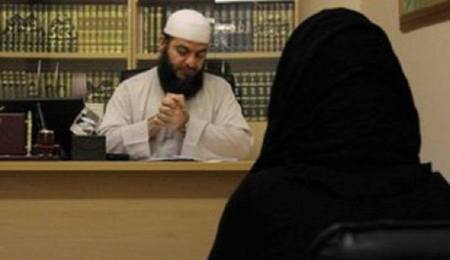
UK: Sharia court orders woman to return to abusive, rapist husband

November 15, 2016

UK: Sharia court orders woman to return to abusive, rapist husband, Jihad Watch

SHARIA courts are sentencing women to lives of misery by ordering them to stay with abusive husbands, a rape victim has claimed.

Where is the power of Western principles of human rights and a democratic constitution in Britain? This is what the Prime Minister of the UK, Theresa May, has defended in the name of religious freedom and diversity: she hailed the “great benefits” to Britain of sharia teachings, overlooking the principles of sharia, which permits men to beat and rape their wives. Add to that the shocking coverup of the abuse and brutalization of up to a million British girls at the hands of Muslim rape gangs. With its two-tier legal system, Britain is descending further into the pit of subjugation.

sharia-court

“Sharia court told rape victim to RETURN to her attacker husband,” by Leda Reynolds, UK Express, November 14, 2016:

The mother-of-two, calling herself Lubna, revealed that she had been beaten, robbed and raped by her estranged husband despite being the British courts banning him from approaching her and which had also awarded her custody of their children.

But family pressure persuaded the British-Pakistani to try and obtain an Islamic divorce in a Sharia court.

Expecting to be treated sympathetically, Lubna said she felt violated when she was instead told to return to her violent husband.

Gita Sahgal, a human rights activist from the One Law for All campaign and Centre for Secular Space, said this is the reality of Sharia courts which are operating across Britain.

She said many Muslim women are being denied their legal rights by Sharia courts which are bypassing the UK’s justice system and telling women British civil divorce does not count in the eyes of Islam.

She said: “Any woman who embarks on a new relationship will, they say, have committed adultery – a crime only equalled in their eyes by apostasy, abandoning Islam, and blasphemy.

“Yet the courts in, for example, Bangladesh and Pakistan, are perfectly happy to accept a civil divorce certificate from Britain as evidence of the end of a marriage, which in the Muslim tradition is a civil contract rather than a sacrament. In those countries, the contract must be registered to count as a legal marriage.”

The Commons Home Affairs Committee has begun an investigation into the spread of Islamic law, a move criticised by some Muslims who have branded the probe “interference”.

Dr Ahmad al-Dubayan, chairman of the UK Board of Sharia Councils – a body set up to standardise the administration of Islamic law – said unregulated Sharia law courts exist “everywhere in the country”.

And he told the Home Affairs Select Committee last week the self-appointed courts are performing marriages and handing out divorces.

Although the unregulated bodies have no legal force or jurisdiction in the UK, they are regularly used by Muslim families to adjudicate on personal matters, the Committee heard.

Many courts reportedly charge for their services, with fees for divorce proceedings often higher than British courts.

The doctor warned the exact number of Sharia courts operating across Britain is unknown.

He said: “We don’t know how many councils there are.

“Some people talk about 80 or 30 or 50, I don’t know. There is no record for this and no studies, unfortunately.”…..

The Select Committee heard that if Sharia courts are banned, backstreet courts will continue to operate but will slip even further under the radar.

Labour MP Naz Shah, who also giving evidence, admitted the councils could be used to “oppress” women.

She added: “Sharia itself is actually a code of conduct and the fundamental principal of Sharia is that the law of the land precedes anything.

“You cannot enforce and have a second parallel legal system in this country.

“As a British lawmaker I’m very clear, we have one law and that law is of the British court.”

Muslim persecution forces convert from Islam to Christianity to flee home under armed guard…in the UK

November 5, 2016

Muslim persecution forces convert from Islam to Christianity to flee home under armed guard…in the UK, Jihad Watch

No one should be surprised that this kind of thing is happening in Britain. It’s going to happen a great deal more, too, because the death penalty for apostasy is part of Islamic law. It’s based on the Qur’an: “They wish you would disbelieve as they disbelieved so you would be alike. So do not take from among them allies until they emigrate for the cause of Allah. But if they turn away, then seize them and kill them wherever you find them and take not from among them any ally or helper.” (Qur’an 4:89)

A hadith depicts Muhammad saying: “Whoever changed his Islamic religion, then kill him” (Bukhari 9.84.57). The death penalty for apostasy is part of Islamic law according to all the schools of Islamic jurisprudence.

This is still the position of all the schools of Islamic jurisprudence, both Sunni and Shi’ite. Sheikh Yusuf al-Qaradawi, the most renowned and prominent Muslim cleric in the world, has stated: “The Muslim jurists are unanimous that apostates must be punished, yet they differ as to determining the kind of punishment to be inflicted upon them. The majority of them, including the four main schools of jurisprudence (Hanafi, Maliki, Shafi’i, and Hanbali) as well as the other four schools of jurisprudence (the four Shiite schools of Az-Zaidiyyah, Al-Ithna-‘ashriyyah, Al-Ja’fariyyah, and Az-Zaheriyyah) agree that apostates must be executed.”

Qaradawi also once famously said: “If they had gotten rid of the apostasy punishment, Islam wouldn’t exist today.”

nissar-hussain-and-family

“‘Persecuted’ family forced to flee Manningham home as threats escalate,” by David Jagger, Telegraph & Argus, November 4, 2016:

A FATHER who said he suffered “seven years of persecution” has been forced to flee his home under armed guard amid fears for his safety.

Nissar Hussain was with his family when police arrived and moved him to a safe place.

Mr Hussain said the culmination of the “extreme persecution” had devastated his family and the dramatic arrival of armed police was a complete surprise.

“My family are distraught and extremely traumatised to be leaving,” said Mr Hussain.

“But when your life is at stake there is no other choice.”

Mr Hussain converted to Christianity 20 years ago, but says in recent years he has been subjected to harassment and violence by sections of the Islamic community.

“This extreme persecution by certain people in the Muslim community because we are converts has broken us as a family,” he said.

“We are fragmented and I do not know how we will recover from this. We haven’t functioned properly for years.”

He said “serious questions” needed to be answered.

Last year, Mr Hussain was hospitalised after his kneecap was smashed and his hand broken during an attack outside his home in St Paul’s Road, Manningham.

Two hooded men, one armed with a pick-axe handle, assaulted him in a vicious attack caught on CCTV.

At the time, Mr Hussain said he and his family were being driven out of the city and he was making plans to leave. This week he had started packing up his belongings when the police arrived on Thursday.

He briefly returned home yesterday to collect more items, with police guarding, before leaving Bradford for good.

The 50-year-old, who was a nurse before leaving work due to post-traumatic stress disorder, said his six children, aged eight to 24, and wife would never see their friends again.

He had been expecting an attack for some months, but when the police arrived he was “none the wiser” that he was at such serious risk.

“The armed police arrived at about 3pm on Thursday,” he said….

Jihadis Back on UK Streets As Spy Boss Warns of New Attack

November 3, 2016

Jihadis Back on UK Streets As Spy Boss Warns of New Attack, Clarion Project, November 3, 2016

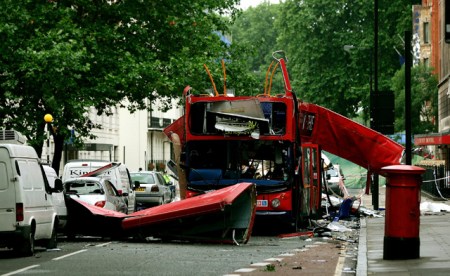
london-2005-bombings-ip_0Those released after serving their sentences include three men convicted for assisting in the 2005 7/7 bombings in London. (Photo: © Reuters)

Hundreds of convicted terrorists who have served their prison sentences in the UK are now back on the streets without having attended deradicalization programs or renouncing their ideology, according to an investigation by Sky News.

Out of the 583 convicted of terrorism-related offenses since the 9/11 attacks, some three quarters (418) have now served their sentences and been released, the investigation found. However, of those released, two-thirds refused to engage with deradicalization programs in prison that sought to counter their radical views.

Those released include three men convicted of assisting in the 2005 7/7 bombings of the London Underground.

The news comes as senior police officers spoke out about their efforts to prevent jihadists from accessing illegal firearms.

“Despite our good work, we know that firearms can enter the criminal market through a variety of means, including thefts from legitimate holders or dealers,” London’s Metropolitan Police’s counter-terrorism chief Mark Rowley told Russia Today (RT).

“Law enforcement, together with security and intelligence services, are working tirelessly to locate these weapons, confront the terrorist threat and keep the public safe.”

Two years ago, some 800 licensed firearms went missing. Since then, the police have thwarted five attempts by jihadists to purchase illegal firearms, according to RT.

“Suppressing the availability of illegal firearms in the UK has never been a more significant priority for the law enforcement community,” said National Crime Agency Director General Lynne Owens.

“Criminal networks, who think nothing about who they sell firearms to, present a significant route by which extremist groups will try to access the sort of weapons used in recent attacks in Europe,” she added.

Britain’s most senior spy, Andrew Parker, the director general of MI5, also warned about the dangers posed by international Islamist terrorism in an interview with the Guardian.

The interview is the first that any head of MI5 has given in the organization’s 107 year long history. Until 1993, even the identities of MI5’s director generals were kept as state secrets.

“International terrorism in its latest shape, based on twisted ideology, brings terror to our streets and most of the developed world, including North America, Australia and Turkey,” he said. “Currently, the flavor of it is Daesh, or ISIL [Islamic State], and we still have the al-Qaida brand. This is something we have to understand: it’s here to stay. It is an enduring threat and it’s at least a generational challenge for us to deal with.”

He told the Guardian that MI5 thwarted 12 terrorist plots in the last three years and that more attacks would inevitably be on the way.

“That sort of tempo of terrorist plot and attempts is concerning and it’s enduring. Attacks in this country are higher than I have experienced in the rest of my career – and I’ve been working at MI5 for 33 years. The reality is that because of the investment in services like mine, the UK has got good defenses. My expectation is that we will find and stop most attempts at terrorism in this country.”

UK: Muslim leader says Muslims have “right” to use Sharia law in Britain

November 3, 2016

UK: Muslim leader says Muslims have “right” to use Sharia law in Britain, Jihad Watch

“All that it is, you have these private and independent institutions arise from different minority communities, Sharia councils and Beit Din in the Jewish community, which are basically people who want to enact their right to religious life without interference from secularists.”

In saying this, al-Andalusi ignores the problem with Sharia courts entirely: Sharia councils are not equivalent to Beit Din in the Jewish community because Sharia, unlike Jewish law, asserts authority over unbelievers, as well as authority for governance. Moreover, with its sanction of wife-beating (Qur’an 4:34), devaluing of women’s testimony (Qur’an 2:282) and inheritance rights (Qur’an 4:11), allowance for polygamy (Qur’an 4:3), mandate of warfare against and subjugation of unbelievers (Qur’an 9:29), Sharia is incompatible with secular legal systems in numerous ways. Britain is in denial about that, as is the rest of the West. But sooner or later it will be quite painfully obvious to everyone.

abdullah_al_andalusi

“Muslims ‘have the RIGHT to use Sharia law in Britain’, says Islamic activist,” by Joe Barnes, Express, November 3, 2016:

AN ISLAMIC activist has claimed that Muslims have the right to use Sharia law and branded the Government’s inquiry into the matter as an “interference”.

Dr Ahmad al-Dubayan, chairman of the UK Board of Sharia Councils – a body set up to standardise the administration of Islamic law – said unregulated Sharia law courts exist “everywhere in the country”.

He told the Home Affairs Select Committee, on Tuesday, that the self-appointed courts are performing marriages and handing out divorces.

Although the unregulated bodies have no legal force or jurisdiction in the UK, they are regularly used by Muslim families to adjudicate on personal matters, the Committee heard….

He said: “We don’t know how many councils there are.

“Some people talk about 80 or 30 or 50, I don’t know. There is no record for this and no studies, unfortunately.”

He added that he could think of only two or three cases which had been unfair to women out of “hundreds” handled by Sharia councils.

The Select Committee heard that if Sharia courts are banned, backstreet courts will continue to operate but will slip even further under the radar.

Labour MP Naz Shah, who also giving evidence, admitted the councils could be used to “oppress” women.

She added: “Sharia itself is actually a code of conduct and the fundamental principal of Sharia is that the law of the land proceeds anything.

“You cannot enforce and have a second parallel legal system in this country.

“As a British lawmaker I’m very clear, we have one law and that law is of the British court.”

Abdullah al-Andalusi, co-founder of The Muslim Debate Initiative hit out at the Committee’s inquiry, claiming the “private or independent” bodies have the right to operate in Britain without “interference”.

Speaking on Sky News, he said: “All I would say is all this really amounts to is interference by a supposedly neutral body – the UK Government – into people’s religion and private affairs….

“All that it is, you have these private and independent institutions arise from different minority communities, Sharia councils and Beit Din in the Jewish community, which are basically people who want to enact their right to religious life without interference from secularists.”

UK: Migrant’s foster mother finds he isn’t 12-year-old “refugee” but 21-year-old jihadi

October 23, 2016

UK: Migrant’s foster mother finds he isn’t 12-year-old “refugee” but 21-year-old jihadi, Jihad Watch,

(Someone deserves a Darwin Award. — DM)

The ignorance and kindness of Westerners is being exploited on a much larger basis than most people realize or than authorities are willing to admit.

“I’ll kill you and I know where your children are.”

Those are words that British authorities should ponder. But they won’t.


21-year-old-jihadi

“Cuckoo in the nest: Migrant foster mum reveals her horror at discovering ’12-year-old refugee’ in her care is actually a 21-year-old Jihadi,” by Nigel Bunyan and Chris Pollard, The Sun, October 22, 2016:

A FOSTER mum who took in a child refugee has told of her horror after discovering he was a 21-year-old jihadi.

Kind-hearted Rosie welcomed Jamal into her family after social workers said he was a 12-year-old orphan who had fled Afghanistan.

But she became suspicious when she noticed how hairy he was, and how adept he was at firing a rifle.

Jamal was rumbled when a dentist estimated he was a decade older than claimed. Taliban material and child abuse images were later found on his mobile.

The blunder comes after migrants claiming to be children were bussed to the UK from Calais’ Jungle camp. It is feared terrorists could use the same ruse.

Rosie, whose full name we are hiding to protect her from reprisals, said: “Adults are playing the system. It’s putting families like mine and society as a whole at risk.

“I don’t see anything wrong with dental and bone density checks. Some say they are intrusive and degrading. But having a man in your home who’s pretending to be a child is far more intrusive.”

When Rosie and husband Pete, 57, took in Jamal they all switched to halal meat.

She said: “He looked thin and I thought, ‘Bless him’. He was so humble, polite.”

He roomed with a boy, aged 13. Two girls, 12 and 14, were also in the house.

Alarm bells rang when the family went swimming and Rosie’s 13-year-old commented on how hairy he was.

At a climbing centre he shimmied up ropes with ease, and at a shooting range he stripped a gun before firing it.

On a bus to college he was told to get off by a driver who didn’t believe he was 16. Rosie, who lives in the South East, said: “It’s ridiculous how everybody else could see it but not the social workers.”

Jamal’s behaviour worsened. He put the 13-year-old in expert holds, demanded cash and got calls from unknown numbers.

One day he claimed he couldn’t pray because there were too many posters on his wall. The interpreter told him, “What do you mean? Allah doesn’t mind?”

His last words to Rosie were: “I’ll kill you and I know where your children are.”

She added: “I can’t say he was a terrorist but I do think he came from a training camp. He was a great actor.

“Every day I check the car, and that all the house windows are shut. I panic because I know he knows our routine.”

Since being arrested for an alleged assault, Jamal has been turned down for asylum but is appealing….

Hugh Fitzgerald: May God Save “God Save The Queen”

October 15, 2016

Hugh Fitzgerald: May God Save “God Save The Queen” Jihad Watch, October 15, 2016

queen-elizabeth

A Muslim student at King’s College London, and an officer of its Student Union (3 of its 5 top officers are Muslims), one Mahamed Abdullahi, has called for “God Save the Queen,” Great Britain’s national anthem, to be omitted from the school’s graduation ceremonies. He claims the song is “outdated” and “not reflective of the global values the college espouses.” Abdullahi – who is, by the way, a Danish citizen, though not exactly a Dane – insists that this anthem is dangerous “in the context” of the “increasing far-right nationalism across Europe and the legacy of the British Empire.” His obscenity-filled rant can be read here.

What makes “God Save the Queen” outdated? Has the monarchy fallen out of favor with the people of Great Britain? Or is their interest and enthusiasm for the Queen and the idea of the monarchy perfectly understandable, for the Royals are a human symbol of stability and national identity, in a world more dizzyingly in flux than ever before? Look at the British popular press, which appears to devote half its space to Kate Middleton’s children, and another quarter to the Queen. Clearly the British people have no wish to jettison their monarchy. If there were no royal family on which to focus, popular attention might instead be given, as in the United States, to empty celebrities, such as the Kardashians, or to the mix-n’-match couplings and uncouplings of assorted jolies and pitts.

“God Save The Queen” is mild in its winsome expression of national fervor (compare, for example, the martial theme of La Marseillaise); the first two verses go like this:

God save our gracious Queen!
Long live our noble Queen!
God save the Queen!
Send her victorious,
Happy and glorious,
Long to reign over us,
God save the Queen.

O Lord our God arise,
Scatter her enemies
And make them fall;
Confound their politics,
Frustrate their knavish tricks,
On Thee our hopes we fix,
God save us all!

There is nothing conceivably “far right” about these sentiments. I doubt if Mahamed Abdulllahi comprehends the useful role of the constitutional monarch in Great Britain as a focus of national identity, unity, and pride, providing the British with a sense of continuity and stability. What enrages him is the very idea that the British people in this deuteroelizabethan age should permit themselves to have feelings of national pride, and what’s more, to express them. For Abdullahi, that is enough to constitute “far-right nationalism.” When your child pledges allegiance “to the flag and to the republic for which it stands” and wishes “liberty and justice for all,” is he being “far-right”? At a baseball game, do you feel part of a “far-right” crowd because you listen to, or even join in singing, “The Star-Spangled Banner”? Of course not.

Is there any expression of pride in a national identity that Mahamed Abdullahi would find acceptable? I don’t think so. I think that the only kind of “identity” he approves of is that of the supranational umma, or Community of Muslim Believers, and that he obscurely senses that a shared sense of affection and pride in one’s own nation (as expressed in England in many ways, including singing “God Save the Queen) is also, nowadays, a part of the West’s psychological defense against the encroachments of aggressive Islam. For Mahamed Abdullahi, that’s enough to make it “far-right” nationalism.

What about the charge that “God Save the Queen” carries with it the “legacy of the British Empire”? (The anthem itself was first published in 1745, before there was much of a British Empire to celebrate.) Perhaps Abdullahi objects to the fact that many former colonies, once part of that Empire, are now enthusiastic members of the British Commonwealth, keeping up ties to Great Britain, and delighting in receiving visits from Queen Elizabeth II and younger members of the Royal Family. It is not just Canada and Australia and New Zealand that are thrilled, but India, Singapore, Uganda, Nigeria, Jamaica, indeed every country in the Commonwealth (save for Rwanda and Cameroon, but only because they are the latest to join, and the Queen hasn’t yet fit them into her schedule), eager to bask in the reflected glory of a royal visit.

Apparently very few of those actually in the Commonwealth share Mahamed Abdullahi’s sour vision of the “legacy of the British Empire.” Mahamed Abdullahi may have forgotten that even Yassir Arafat once hoped that his future state of “Palestine” would be allowed to join the Commonwealth.

But since he contemptuously dismisses the “legacy of the British Empire” without discussing it, perhaps we should ask: just what was that legacy? First, the English language, which has been perhaps the greatest gift to colonized peoples anywhere, the language that has served as a lingua franca for many different peoples in Africa and in the subcontinent; and the spread of English has allowed them entrée into the worlds of science, technology, business, sport, entertainment, and that same English brings with it, of course, an unrivalled literary heritage. Among the former British colonies in Africa, the spread of English now permits Nigerians to talk to Tanzanians and Kenyans to talk to Ghanaians. And in India, with a multitude of tongues — Hindi, Bengali, Telugu, Marathi, Tamil, Urdu, Gujarati, and Punjabi being the most widely used – the educated in every state can communicate with each other, and with those similarly educated throughout India, in English. It is the English language that, paradoxically, unifies India.

Second, the British introduced the rule of law, specifically the Common Law, including what had been built up through centuries of cases as contract and property law, and rules of civil and criminal procedure. Third, public works – roads, bridges, canals, railroads – that the British built in so many of their colonies, and that promoted economic development.

Fourth – modern medicine, including vaccinations for many previously untreatable diseases. Fifth – free trade within the Empire, stimulating economic growth. Sixth—universal schooling, from elementary grades all the way up, in many of the colonies, to universities. And seventh, the abolition first of the slave trade, and then of slavery. The slave trade that the British abolished first was that vast and cruel enterprise conducted by Muslim Arabs in East and Central Africa and involving 17 million black Africans, many of them young boys castrated where they were captured and, if they survived the operation (only 20% did), were then brought to the slave markets of Islam, to be sold as eunuchs. It was the Royal Navy that finally stamped out that slave trade, preventing the Arab slavers from landing with their cargo on the Arabian peninsula.

Mahamed Abdullahi has nothing good to say about “legacy of the British Empire,” but we have a right and a duty to remind him of that positive legacy (language, law, public works, medicine, free trade, education), and particularly to remind him that it was the British who ended the brutal slave trade conducted by Muslim Arabs.

Finally, Mahamed Abdullahi claims that the British national anthem is “not reflective” of the “’global values’ the college espouses.” What are those “global values”? Would they include such values as equal treatment of all, including minorities and women, before the law? Would they include the free exercise of any religion or the right to believe in none? Would those “global values” include the right to change one’s religion? Would they include the right of both sexes to equal education?

Would they include the right to criticize religions, even if that offends some believers? Would they include the right of children not to be treated as their parents’ chattel? These are not so much “global” values, in fact, as values originating in the countries of the advanced West, and especially Great Britain and its political offspring, the United States. The university’s administrators, who had initially (and shamefully) shown themselves willing to discuss Abdullahi’s nauseating proposal, have fortunately been forced by public outrage to backtrack. Perhaps they need to be reminded – Mahamed Abdullahi can bring them up to snuff — on the Muslim version of “global values” espoused by such models of religious freedom and legal equality as Saudi Arabia, Pakistan, Iran, Libya, Syria, Iraq, the Sudan, and many dozens of other Muslim countries. And then he might also explain what the “legacy” of the Muslim Empire has been for so many different lands and peoples. That should prove most instructive.

And meanwhile, may God save “God Save The Queen.”