PM Netanyahu’s Greetings for Rosh Hashana, via You Tube, September 13, 2015
Europe’s Migration Crisis, Gatestone Institute, Soeren Kern, September 9, 2015
Half a million migrants and refugees are known to have entered the European Union during the first eight months of 2015; that number may increase to more than one million before the year is through. This figure does not include individuals who got into the EU undetected.
A total of 364,183 migrants entered the European Union by sea between January and August, compared to 280,000 for the whole of 2014, according to updated statistics published by the International Organization for Migration (IOM) on September 3, 2015.
Of the total maritime arrivals, 245,274 arrived in Greece, 116,649 in Italy, and 2,166 arrived in Spain. The top countries of origin are: Syria, followed by Afghanistan, Eritrea, Nigeria, Albania, Pakistan, Somalia, Sudan and Iraq.
In addition, 132,240 migrants are known to have arrived in the European Union during the first seven months of 2015 by land, crossing from Turkey into Greece and Bulgaria, according to Frontex, the EU’s border management agency. The top three countries of origin are: Syria, Afghanistan and Pakistan.
Germany and Sweden are the final destinations of choice for most migrants, lured by the generous benefits they can claim and the governments’ message that refugees are welcome in unlimited numbers.
If sustained indefinitely, the open-door immigration policies could draw potentially millions of Muslims into Europe from the Middle East and North Africa.
Every European country is being affected by the migration crisis in one way or another. What follows is a brief survey of developments in selected countries.
In Austria, Chancellor Werner Faymann said he would end an emergency measure that allowed more than 10,000 migrants and refugees in Hungary to enter the country unhindered. “We have always said this is an emergency situation in which we must act quickly and humanely,” he said. “We have helped more than 12,000 people in an acute situation. Now we have to move step-by-step away from emergency measures towards normality.”
Only 20 of the 12,000 people who crossed the border during the weekend of September 5-6 applied for asylum in Austria. The rest have already moved on to the more generous Germany. In addition to receiving free clothing, food, housing and healthcare, migrants in Germany also get a monthly cash payment of €143 ($160), compared to only €40 ($45) per month in Austria.
Meanwhile, six people — five Bulgarians and an Afghan with Hungarian residency — have been arrested in connection with the deaths of 71 migrants whose decomposing bodies were found in the back of an abandoned truck on August 27. Police believe the truck, which was left on the side of an Austrian highway, entered into Austria from Hungary. The truck owner is a Bulgarian citizen of Lebanese origin.
In Britain, Prime Minister David Cameron on September 7 announced plans to accept 20,000 Syrian refugees during the next five years. Just days earlier, he said the UK had already taken in enough refugees. Cameron’s position is said to have changed after British newspapers published photographs of the body of a Syrian child washed up on a Turkish beach.
Since then, a petition calling on the government to accept more refugees has garnered more than 400,000 signatures, well above the 100,000 threshold needed to allow for a debate in Parliament.
The petition states: “There is a global refugee crisis. The UK is not offering proportional asylum in comparison with European counterparts. We can’t allow refugees who have risked their lives to escape horrendous conflict and violence to be left living in dire, unsafe and inhumane conditions in Europe. We must help.”
Thousands of economic migrants have attempted to enter the UK illegally through the Channel Tunnel, a 50 kilometer (31 mile) rail tunnel between France to Britain.
In Bulgaria, five jihadists posing as refugees were arrested on August 28 while trying to cross the border at Gyueshevo, one of three checkpoints along the Bulgarian-Macedonian border. Police became suspicious after the five men, Albanians aged between 20 and 24, attempted to bribe the border guards with 175 euros ($195) each. A subsequent search found that the men were carrying Islamic State propaganda, including videos of decapitations.
In the Czech Republic, authorities assigned migrants with numbers, which they wrote on the migrants’ arms and hands with a felt-tip pen. The government said many migrants had no documents and did not speak English, and that this method was the best way to track them. The move was widely criticized because of its connotations with the Jewish Holocaust, when the Nazis tattooed numbers on everyone they sent to concentration camps.
In Denmark, Andreas Kamm, the secretary general of the Danish Refugee Council (Dansk Flygtningehjælp), warned that the current refugee crisis could lead to total collapse of European society. In an interview with the newspaper Jyllands-Posten, Kamm said he believes that Europe is facing “a total Armageddon scenario.” He added:
“We are experiencing a historical imbalance between the very high numbers of refugees and migrants and the global capacity to provide them with protection and assistance. We are running the risk that conflicts between the migrants and local populations will go awry and escalate. The answer cannot be that Europe imports surplus populations. We cannot be required to destroy our own society.”
Danish Finance Minister Claus Hjort Frederiksen said: “I’m most indignant over the Arab countries who are rolling in money and who only take very few refugees. Countries like Saudi Arabia. It’s completely scandalous.”
The Danish government has placed ads in Lebanese newspapers aimed at deterring potential migrants. “Denmark has decided to tighten the regulations concerning refugees in a number of areas,” say the ads, which warn that Denmark recently passed legislation, cutting benefits by up to 50% for newly arrived refugees.
On September 6, Danish police stopped 150 refugees who began marching towards the border with Sweden, known for its more generous asylum policies. The group was among 300 refugees who arrived in Rødby, a busy ferry crossing between southern Denmark and Germany. Scuffles broke out with police when some ran off to avoid having their fingerprints taken, in fear they would be registered as seeking refuge in Denmark and unable to go on to Sweden.
On September 8, Danish police sent back a group of economic migrants who had arrived from Germany. “These are people who do not want to seek asylum and are therefore here illegally. They have been deported and barred from re-entering the country for two years,” police in southern Denmark said in a statement. “This first group was a score of people. More will follow after their cases are processed,” the statement said, adding that they were sent back by bus.
In Finland, Prime Minister Juha Sipila offered to do his part to alleviate Europe’s migration crisis by announcing that Muslim refugees could stay at his unused summer cottage in Kempele, a small town just 184 kilometers (114 miles) south of the Arctic Circle. Average temperatures in Kempele are below the freezing point six months out of the year and the town does not (yet) have a mosque. “I hope this becomes some kind of people’s movement that will inspire many others to shoulder part of the burden in this refugee housing crisis,” Sipila said on state television.
Sipila made his offer one day after his government doubled its estimate for the number of asylum seekers in Finland in 2015 to 30,000. Just two weeks earlier, his government had lifted the estimate to 15,000, which was 10,000 higher than previous estimates. The figures compare to 3,600 asylum seekers in 2014.
During the first five months of 2015, the majority of asylum seekers in Finland — which is stuck in a three-year recession — were economic migrants, not refugees fleeing war zones. According to the Finnish Immigration Service, the top ten countries origin countries for migrants to Finland were: Iraq, Somalia, Kosovo, Afghanistan, Russia, Albania, Nigeria, Syria, Morocco and Algeria.
Meanwhile, some 200 Finns in Salo, home of the once-dominant Nokia cell phone maker, protested against the opening of a reception center for refugees in the town. Demonstrators in the central square shouted slogans such as, “Close the borders” and “Islam will destroy us.” One protestor said: “Finns need to be helped first. Everything has been taken from the unemployed, the poor and the sick. But the coffers are empty. If these centers open, our taxes will go up.”
In France, President François Hollande agreed to take in 24,000 migrants during the next two years. A September 5 poll published by Le Parisien showed that 55% of French voters are opposed to an easing of rules for migrants asking for refugee status, including Syrians fleeing civil war.
The vice president of the anti-immigration National Front party, Florian Philippot, accusedGerman Chancellor Angela Merkel of encouraging migration to Europe so that German industry would be supplied with “slaves.”
“Germany needs cheap slaves to supply its industry,” Philippot said during a speech at a gathering of the National Front in Marseille. “Her proposals to impose migrant quotes are only logical: to serve the cynical interests of German capitalism. The only objective is to bridge the demographic deficit as cheaply as possible.”
In Germany, the number of asylum seekers entering the country in a single month surpassed the 100,000 mark for the first time ever. A record 104,460 asylum seekers arrived in August 2015, bringing the cumulative total for the first eight months of 2015 to 413,535. Germany expects to receive a total of 800,000 refugees and migrants this year, a four-fold increase over 2014.
German officials say that 20,000 migrants and refugees arrived in the country during the weekend of September 5-6. Another wave is expected to arrive within the next few days.
The German government will spend €6 billion ($6.7 billion) to cope with the influx of refugees. State and local governments will receive €3 billion for housing the refugees, and the central government will allocate another €3 billion for benefits for the new arrivals.
Hundreds of Muslim refugees are converting to Christianity, apparently in an effort to improve their chances of having their asylum applications approved. Under Islam, Muslims who convert to Christianity are guilty of apostasy, a crime punishable by death. The “converts” apparently believe that German immigration officials will allow them to stay in Germany if they can be persuaded that they will be killed if they are sent back to their countries of origin.
Muslim migrants have clashed among themselves upon arrival in Germany. On August 19, at least 20 Syrian migrants staying at an overcrowded refugee shelter in the eastern German town of Suhl tried to lynch an Afghan migrant after he tore pages from a Koran and threw them in a toilet.
More than 100 police officers were called in to restore order, but when they arrived they were attacked with stones and concrete blocks. Seventeen people were injured in the melee, including 11 refugees and 6 police officers. The Afghan is now under police protection. The president of the German state of Thuringia, Bodo Ramelow, said that Muslims of different nationalities should be housed separately to avoid similar violence in the future.
In Greece, troops were deployed to the Aegean island of Lesbos, following clashes between migrants and police. More than 15,000 migrants and refugees have arrived on the island, an entry point into the European Union. Migrants are upset over delays in the registration process that has left them stranded on the island, unable to continue their journey to other countries in northern Europe. Scuffles have also broken out between Syrians, who are granted priority in the vetting process, and Afghans, who are forced to wait much longer.
In Hungary, Prime Minister Viktor Orbán proposed sending in the military to seal the country’s southern border with Serbia. He said:
“We’ll bring the border under control step-by-step. We’ll send in the police, then, if we get approval from parliament, we’ll deploy the military. It’s not 150,000 migrants coming that some want to divide according to quotas, it’s not 500,000, a figure that I heard in Brussels, it’s millions, then tens of millions, because the supply of immigrants is endless.”
A spokesman for Hungary’s center-right government, Zoltán Kovács, said the EU’s response to the migration crisis has been a total failure. He said:
“It [the EU] does not differentiate between those who are in real need of help. Genuine refugees are pushed together with economic migrants. We are not facing a refugee crisis, we are facing a migration crisis. People are coming here from a hundred countries around the world. It is completely unacceptable that illegal means of movement are now institutionalized.”
Hundreds of migrants, eager to leave Hungary for the promised land of Germany, were filmed confronting police and refusing food and water. One migrant was asked why he doesn’t want to stay in Hungary. He replied: “[Hungary is] not giving us like in Germany… a house, money…”
 Dozens of migrants camped in front of central train station in Budapest, Hungary clap and chant “Germany!”
In Iceland, population 330,000, more than 12,000 families offered to open their homes to migrants in a bid to raise the government’s cap of just 50 asylum seekers per year. They responded to a call by Bryndís Björgvinsdóttir, an activist who set up a Facebook page calling on the government to allow ordinary Icelanders to help.
Referring to the refugees, Björgvinsdóttir wrote:
“They are our future spouses, best friends, the next soul mate, a drummer for our children’s band, the next colleague, Miss Iceland in 2022, the carpenter who finally finishes the bathroom, the cook in the cafeteria, a fireman and television host. People of whom we’ll never be able to say in the future: ‘Your life is worth less than my life.'”
In Italy, an 18-year-old asylum-seeker from the Ivory Coast named Mamadou Kamara was accused of murdering an elderly couple in Sicily. Kamara, who was rescued in the Mediterranean Sea on June 8 and brought with other migrants to the port of Catania in Sicily, allegedly broke into a home in the nearby village of Palagonia and slit the throat of Vincenzo Solano, 68, during a robbery that turned violent. His Spanish-born wife, Mercedes Ibañez, 70, fell to her death from a second-floor balcony. Police say Kamara stole a laptop computer, a video camera and a mobile telephone from the couple’s home.
Center-right politician Giorgia Meloni said: “The instigator of the murder of these two innocents is the Italian state, which is responsible for having kept open a migrant facility… which we said should be closed down.”
In Macedonia, police scuffled with thousands of migrants trying to cross into the country from Greece. Foreign Minister Nikola Poposki said:
“In the last several days there has been a dramatic increase of inflow of migrants and we have reached numbers of 3,000 to 3,500 per day which obviously is not something a country of two million people and our resources can handle on a daily basis. We had to reinforce the control of illegal entry of Macedonian territory.”
Hundreds of Muslim migrants shouting “Allahu Akbar” (“Allah is Greater”) rejected Red Cross meals distributed by Macedonian troops because the food is not halal, or legally permissible according to Islamic Sharia law.
In the Netherlands, the government announced new rules that would cut off food and shelter for migrants who fail to qualify as refugees. Failed asylum seekers would be limited to “a few weeks” shelter after being turned down. If they do not agree to return home, they would be deported.
The UN’s Committee on the Elimination of Racial Discrimination criticized the Dutch policy. It said that the basic needs of migrants should be provided unconditionally. Prime Minister Mark Rutte responded by saying that it would be “crazy” to offer permanent shelter to people who refused to leave. “We are talking about the group that can go back,” he said, “whose governments would take them back, but they do not want to go back.”
In Norway, dozens of migrants are arriving via the Arctic Circle. Up to 20 migrants a month are trekking to the far north of Russia and then crossing into the tiny Norwegian town of Kirkenes, which lies around 4,000 kilometers (2,500 miles) north of Damascus.
According to border agreements, it is illegal either to cross the border on foot or to give a lift to someone without papers — a problem Syrian refugees have sidestepped by using bicycles.
“There is no reason to believe that this will stop,” Hans Møllebakken, chief of police in Kirkenes, told Norway’s VG newspaper. “The fact is, if you have money, you can get from Damascus to Storskog in under 48 hours: This is the fast track to Schengen.”
In Slovakia, a spokesman for the Interior Ministry, Ivan Netik, said that his country will only accept Christians when it takes in Syrian refugees under an EU relocation scheme. Speaking to the BBC, Netik said:
“We want to really help Europe with this migration wave but we are only a transit country and the people don’t want to stay in Slovakia. We could take 800 Muslims but we don’t have any mosques in Slovakia so how can Muslims be integrated if they are not going to like it here?”
In Spain, the newspaper El País reported that most asylum seekers see Spain as nothing more than a “stop on the road” to Germany. Many move north after their six months of free financial assistance runs out. “Many of those who reach Spain leave as soon as they can for countries with more generous aid,” the paper reported. “They know there are no jobs here, and that the existing structure cannot cover everyone’s needs.”
The central government in Madrid has placed limits on the amount of aid available, but more than 50 provincial and municipal governments in Spain are now providing migrants with housing and free health care.
Police on September 7 fired rubber bullets at migrants in a detention center in Valencia after more than 50 of them tried to escape. On August 16, at least 35 migrants escaped from a holding facility in Algeciras. On August 15, eight migrants escaped from a detention center in Murcia.
In Sweden, Prime Minister Stefan Löfven on September 6 addressed a pro-refugee rally in Stockholm in which he urged Swedes and other Europeans to do more for migrants. He said: “We need to decide right now what kind of Europe we are going to be. My Europe takes in refugees. My Europe doesn’t build walls.”
An Schibsted/Inizios opinion poll produced for the newspaper Aftonbladet found that 66% of Swedes were prepared to help refugees, but 48% said they have little or no confidence in the government’s approach to the crisis.
At the Vatican, Pope Francis on September 6 called on all Catholic parishes and monasteries in Europe each to house one refugee family. He said the Vatican’s two parishes would lead by example. According to one calculation, “There are about 122,000 Catholic parishes in Europe, according to a study conducted by Georgetown University and published in June. If each of them housed one refugee family consisting of three to four people, about 360,000 to 500,000 refugees could be accommodated in the coming months.”
What to make of the Islamic migration into Europe? Power Line,
It is often said that a country can have a welfare state or it can have open borders, but it cannot have both. In a world in which billions of people live in poverty and oppression, this strikes me as blindingly obvious.
*********************
Many thousands of migrants–some refugees, some not–are making their way from Islamic countries in the Middle East and Asia to Turkey, thence to Greece, Macedonia, Serbia, Hungary, Austria and finally, for most of them, Germany. The largest number come from Syria, but other Islamic countries are represented from as far away as Afghanistan. It is still not clear to me why this torrent has suddenly broken free.
Germany has promised to take 800,000 migrants, representing 1% of the country’s population. That is an enormous number; for the United States to do the same would require admitting more than 3 million people. On the other hand, the U.S. admits a million immigrants every year, while Germany is only proposing to do this once, so in reality the burden on us (or the benefit, if you will) is far greater. Presumably most Germans recognize, however, that 800,000 is only the beginning.
There is a wide spectrum of reactions to the current migration. A reader writes:
These migrants have a certain arrogance in insisting on, not rescue merely, but comfortable resettlement in the wealthiest societies in the world with access to an exceedingly generous welfare state to boot. Not for them a decent interval being cared for in Italy or Greece; only Germany or Sweden will do, if not the UK, Canada or (shudder) the USA. It’s as though I pity a street bum and offer to buy him vouchers for Burger King or Domino’s Pizza and he is aghast, insisting on steak and lobster at The Palm – along with the proper attire for admission!
How about that? Why is it that countries that don’t have lavish welfare systems are not target destinations? And also–why is it that the migrants are overwhelmingly young men? There are a few women, children and families; but numerically, young men predominate. This is not what one would normally expect from a group of refugees fleeing a war zone.
Our reader continues:
The language and rhetoric of “problem solving” is misplaced. When an event of this scale and enormity occurs and it seems apparent that the forces behind it are huge, a different perspective is required. The current wave is just the beginning and the response just encourages more. Oh, sure, it will stop just as soon as the 14 century old Sunni-Shia conflict and the various middle eastern tribal hatreds and rivalries abate and the entire African continent, soon to have 2 billion people, ceases to be fundamentally dysfunctional.
That means that the situation is utterly intractable. An intractable situation is not a “problem” that can be “solved”: it is a fact which must be reckoned with.
Our reader points to a web site by a guy named Kunstler (related? I don’t know) whom our reader describes as “a leftwing crank, an obsessive apocalyptic Luddite…but often correct on PC matters.” The immigration issue can make odd bedfellows! I think Kunstler is correct here:
I reject the idea that it’s “racist” to want to preserve one’s national culture and character (especially in language), or to favor bona fide citizens for gainful employment…. National boundaries will be defended. Sentimentalists will have to step aside. History is not a bedtime story about bunnies and kittens.
But a lot of damage will be done before the sentimentalists throw in the towel.
Pamela Geller writes:
If these were real refugees, where are the women? Where are the elderly people? Where are the weak and the sick? It is increasingly clear that what I have said is true: this is not a refugee crisis. This is a hijrah, a migration to Islamize a new land.
I hope that is too pessimistic, but this kind of thing doesn’t give one confidence:
Four police officers and 11 asylum seekers were injured in a brawl in the town of Suhl in Thüringen Wednesday evening sparked by a dispute over the Koran.
An Afghan tore out pages from the Koran at a refugee shelter, prompting anger from 20 other residents, said a police spokesman Thursday.
The confrontation escalated into a riot involving some 100 refugees, with 125 police officers sent to the scene to break up the brawl, it was reported.
Police then came under attack from the refugees and were pelted with sticks and stones, with two officers so badly injured that they are currently unable to return to their duties, while seven police vehicles were damaged.
It took four hours to bring the situation under control. The Afghan was taken into police custody for his own safety.
In the late 19th and early 20th centuries, the United States absorbed a huge number of immigrants relative to our population, although nothing like the number we are taking in today. But in those days, a serious effort was made to assimilate newcomers. Public high schools taught courses in Americanism. I, personally, would be much more willing to contemplate mass immigration if we had the cultural will to resurrect the teaching of Americanism. But that isn’t happening. Still less can we expect the Germans to teach Germanism.
It is often said that a country can have a welfare state or it can have open borders, but it cannot have both. In a world in which billions of people live in poverty and oppression, this strikes me as blindingly obvious. I am not optimistic that the current migration from the Middle East, Asia and North Africa into Europe will end well.
Why the Iran nuclear deal will mean war, Front Page Magazine, Daniel Greenfield, September 8, 2015

Iran . . . is not looking for a deterrent weapon against its neighbors. With the fall of Saddam, it faces no serious threat of invasion by Sunni forces. Today its nuclear program can have no other purpose except to expand its power and territory while forcing the United States out of the region. Nuking Israel would help seal its right to rule over the Muslim world while intimidating its enemies.
********************
Like a snake oil salesman trying to move a gallon of lies by promising that it’s either buy the bottle or die, Obama sold the Iran deal as the only alternative to war. In fact the deal is a certain road to war.
Or as Churchill said, “You were given the choice between war and dishonor. You chose dishonor, and you will have war.” Before long, the British and French were facing Czech tanks redesignated as Panzers that had been seized as part of the Nazi spoils of appeasement.
When Obama claimed that the Iran nuclear deal was the only alternative to war, he was lying in more ways than one. The United States has already been dragged into Iran’s war for control of Iraq. That war was one of the levers that Iran exploited to get its way on its nuclear program. Iran also came close to dragging us into its war in Syria and we are hovering on the edge of being dragged into Yemen.
Iran and ISIS have done a thorough job of carving up entire countries into Shiite and Sunni blocs. And there’s no sign that this Islamic realignment of the Sykes Picot borders is going to stop. If the process continues, the scale and scope of the war will expand and transform the region away from nation states.
Everyone will have a choice between backing a Sunni ISIS or a Shiite ISIS. Obama chose the Shiite ISIS.
This would be happening even without the deal, but Iran’s victory and Obama’s appeasement will speed up the process. Russia is blatantly joining the Shiite military coalition as part of Tehran’s victory celebration. And the Russians aren’t there just to protect Assad, but to push America out of the region. As areas of operations overlap, there will be incidents. And Obama will back off once again.
But it’s not just about Syria. Iran promised its Russian and Chinese backers that they will benefit from a major regional realignment. Nations allied with the US will be overthrown or suppressed. And once that process really gets underway and will begin to threaten oil supplies, even a Democrat won’t be able to stay out. But by then America will have little credibility, few allies and major strategic disadvantages.
The real test won’t be in Syria. It has already come and gone in Yemen. It will probably come in Bahrain. Bahrain has a majority Shiite population and is the home of the Fifth Fleet. During the Arab Spring the Saudis put down Iran’s “civilian” uprising in Bahrain using tanks. The next time, it won’t be that easy for the House of Khalifa or the House of Saud. If there’s one thing that Iran knows it’s how to arm and train insurgencies and this time around its bid for a takeover of Bahrain will have Russian backing.
Iran’s Islamic Front for the Liberation of Bahrain played a significant role in the Arab Spring protests under the umbrella of political Islam and human rights organizations. Iran’s ideal game plan would be for its front groups to win Western political backing for a takeover the way that the Muslim Brotherhood did in Egypt. Turning over Bahrain to admirers of the Iranian Revolution would seem insane, but so was turning over Iran to Khomeini or Egypt to Al Qaeda’s parent Muslim Brotherhood organization.
The Saudis have had to consider the possibility that Obama, Hillary or Biden would back Iran over the Saudis in Bahrain as they did in Iraq and Yemen. And they have been making their own plans.
Some months after Iran’s Ahmadinejad visited Cairo and met with the Muslim Brotherhood’s Morsi, the Saudis reversed the Qatari-Obama coup that had put the Muslim Brotherhood in power. As the deadline for last year’s negotiations with Iran approached, the Saudis began dumping oil to hurt Russia and Iran. A similar Saudi move against Iran had helped bring on the Islamic Revolution. The Saudis probably don’t expect to undo that disaster, but they were hoping to offset any Obama-backed Iranian recovery.
Instead of fighting to keep sanctions in place, the Saudis were instead poisoning the well.
Whether he understood it or not, by signing off on Iran’s Shiite bomb, Obama was also signing off on an Egyptian-Saudi Sunni bomb. Israel’s nuclear capability was tacitly understood as a defensive weapon of last resort that would not trigger a regional arms race. Genocidal military invasions of Israel came to an end and any weapons remained under wraps.
Iran however is not looking for a deterrent weapon against its neighbors. With the fall of Saddam, it faces no serious threat of invasion by Sunni forces. Today its nuclear program can have no other purpose except to expand its power and territory while forcing the United States out of the region. Nuking Israel would help seal its right to rule over the Muslim world while intimidating its enemies.
A Middle Eastern MAD with Iranians and Saudis in a nuclear standoff would be bad enough, but both powers have a long history of using terrorists to do their dirty work. And the transfer of nuclear materials to terrorists is a lot harder to track than ICBM launches.
Iran and Saudi Arabia getting the bomb won’t be the end. It will only be the beginning. A decade ago, Iran had already funneled a billion dollars into helping Syria get its own nuclear reactor. A nuclear Iran will expand its points of proliferation to the Shiite regime in Baghdad, to Hezbollah in Lebanon and any other Shiite allied states it can set up. The Saudis will expand their own nuclear capabilities to their GCC allies and Egypt so that instead of two nuclear powers, there may be as many as ten nuclear nations.
Imagine the Cold War in miniature with a lot more proliferation and Jihadists with nukes on both sides.
That is what the Iran nuclear deal really means. Every Sunni kingdom will be glaring out from under its own nuclear shield as petty tyrants keep one finger on the populace and the other on the button. A single popular uprising could see nuclear weapons in the hands of Al Qaeda or ISIS.
On the other side, Iran will be aggressively expanding its influence while engaging in escalating naval confrontations with America and its allies. It’s possible that Obama, Biden or Hillary will be able to run away fast enough to avoid a war, but they won’t be able to avoid the resulting economic chaos. And the war will follow them home as Muslim countries have a history of settling their scores by aiming at more “legitimate” non-Muslim targets. That is how 9/11 happened as part of a Saudi power struggle.
And if the United States stays, our people will be trying to keep the peace in a region gone nuclear where American bases will be prime targets for Iran and its terrorist allies. The United States will retaliate against a nuclear strike directly from Iran, but what if it comes from one of the Hezbollahs?
The question isn’t whether there will be a war. It’s how bad the war will be.
That is what Churchill understood and Chamberlain didn’t. While Churchill had fought in Afghanistan against the forerunners of the Taliban, Chamberlain had run family businesses. He saw the military as an unnecessary expense and war as something that could be negotiated away. Churchill knew better.
We are up against something similar today.
The Middle East has exploded before. It will explode again. All we’ve been doing is keeping the lid on. Obama’s surrender means that we won’t control how that explosion happens, but it won’t stop us from getting dragged in anyway once the bombs start going off.
Obama’s advisers have told him to outsource American foreign policy to Tehran. And that’s what he did. Turning over your power to your enemy won’t make him your friend. It won’t stop a war.
It will make the war much worse.
The hijrah into Europe, Front Page Magazine, Robert Spencer, September 4, 2015

If you don’t accept the brave new world that is sure to bring more jihad and more Sharia to Europe, you’re a Nazi and a racist.
************************
Approximately 104,460 asylum seekers arrived in Germany during the month of August, setting a new record. That makes 413,535 registered refugees and migrants coming to Germany in 2015 so far. The country expects a total of around 800,000 people to seek asylum in Germany this year. And that’s just Germany. The entire continent of Europe is being inundated with refugees at a rate unprecedented in world history. This is no longer just a “refugee crisis.” This is a hijrah.
Hijrah, or jihad by emigration, is, according to Islamic tradition, the migration or journey of Muhammad and his followers from Mecca to Yathrib, later renamed by him to Medina, in the year 622 CE. It was after the hijrah that Muhammad for the first time became not just a preacher of religious ideas, but a political and military leader. That was what occasioned his new “revelations” exhorting his followers to commit violence against unbelievers. Significantly, the Islamic calendar counts the hijrah, not Muhammad’s birth or the occasion of his first “revelation,” as the beginning of Islam, implying that Islam is not fully itself without a political and military component.
To emigrate in the cause of Allah – that is, to move to a new land in order to bring Islam there, is considered in Islam to be a highly meritorious act. “And whoever emigrates for the cause of Allah will find on the earth many locations and abundance,” says the Qur’an. “And whoever leaves his home as an emigrant to Allah and His Messenger and then death overtakes him, his reward has already become incumbent upon Allah. And Allah is ever Forgiving and Merciful.” (4:100) The exalted status of such emigrants led a British jihad group that won notoriety (and a shutdown by the government) a few years ago for celebrating 9/11 to call itself Al-Muhajiroun: The Emigrants.
And now a hijrah of a much greater magnitude is upon us. Evidence that this is a hijrah, not simply a humanitarian crisis, came last February, but was little noted at the time and almost immediately forgotten. The Islamic State published a document entitled, “Libya: The Strategic Gateway for the Islamic State.” Gateway into Europe, that is: the document exhorted Muslims to go to Libya and cross from there as refugees into Europe. This document tells would-be jihadis that weapons from Gaddafi’s arsenal are plentiful and easy to obtain in Libya – and that the country “has a long coast and looks upon the southern Crusader states, which can be reached with ease by even a rudimentary boat.”
The Islamic State did not have in mind just a few jihadis crossing from Libya: it also emerged last February that the jihadis planned to flood Europe with as many as 500,000 refugees. Now the number is shooting well beyond that in Germany alone. Of course, not all of these refugees are Islamic jihadis. Not all are even Muslims, although most are. However, no effort whatsoever is being made to determine the refugees’ adherence to Sharia and desire to bring it to their new land. Any such effort would be “Islamophobic.” Yet there are already hints that the Islamic State is putting its plan into effect: jihadis have already been found among the refugees trying to enter Europe. There will be many more such discoveries.
Eight hundred thousand Muslim refugees in one year alone. This will transform Germany, and Europe, forever, overtaxing the welfare economies of its wealthiest nations and altering the cultural landscape beyond recognition. Yet the serious public discussion that needs to be had about this crisis is shouted down by the usual nonsense: the Washington Post Wednesday published an inflammatory and irresponsible piece likening those concerned about this massive Muslim influx into Europe to 1930s Nazis ready to incinerate Jews by the millions. Hollywood star Emma Thompson accused British authorities of racism for not taking in more refugees – as if British authorities haven’t already done enough to destroy their nation.
And so it goes. If you don’t accept the brave new world that is sure to bring more jihad and more Sharia to Europe, you’re a Nazi and a racist. Meanwhile, no one is bothering even to ask, much less answer, one central question: why is it incumbent upon Europe have to absorb all these refugees? Why not Saudi Arabia or the other Muslim countries that are oil-rich and have plenty of space? The answer is unspoken because non-Muslim authorities refuse to believe it and Muslims don’t want it stated or known: these refugees have to go to Europe because this is a hijrah.
This is also Europe’s death knell.
Should Israel and its Arab neighbors form an alliance against Iran? The Hill, Eli Verschleiser, September 3, 2015
Could a nuclear deal with Iran accomplish more than decades of diplomacy in the Middle East and, rather ironically, create new alliances between Israel and Arab neighbors?
That’s a key question as we gear up for the battle on Capitol Hill over President Barack Obama’s controversial pact with Tehran to limit uranium enrichment in return for lifting of sanctions. Critics say the agreement paves the way for a double reward of Tehran— a huge influx of cash and an eventual, unfettered path toward nuclear arms.
Neither the Saudis, the Kuwaitis, nor the United Arab Emirates or for that matter any of the other Persian Gulf states are too excited about the prospect of a nuclear-armed Iran. The role of Iran in the conflicts in Iraq and Syria, and the rise of Islamic State terror and the Muslim Brotherhood, have become a much bigger problem for Arab leaders than the tired conflict with Israel. Those countries have a Sunni majority, while Persian Iran is led by rival Shia Muslims.
Iran, of course, is also a major oil rival for the Gulf States and became more powerful following the fall of Saddam Hussein’s Iraq.
The Saudis have been publicly moderate on the deal but said to be privately angry over it. Epitomizing the old Middle East adage that the enemy of my enemy is my friend, the Saudis were reported to have offered Israel the ability to use their airspace to strike at Iran. This is a crucial step in keeping a military option on the table as it would save time and fuel if such a strike were necessary. “The Saudi authorities are completely coordinated with Israel on all matters related to Iran,” a European official was quoted as saying in an Israeli TV report.
Clearly momentum for alignment with Israel in some form is building.
“To all those who think the Persian state, and the regime of the Rule of the Imprudent… the dictatorial fascist Persian regime which controls it, is a friendly country, whereas Israel is an enemy country, I say that a prudent enemy is better than an imprudent one.”
Those words were written by Abdallah Al-Hadlaq in the official newspaper of Kuwait, Al-Watan.
It is not the first time the author has expressed support for ties with Israel. As far back as 2009 he called on his government and other Gulf states to put aside their differences with Jerusalem and forge an alliance against Iran.
But the fact that his column was published in a government daily in a country without full press freedom speaks volumes.
“The state of Israel and its various governments have waged more than five wars with the Arabs, yet never in the course of these wars did Israel think to use its nuclear weapons against its Arab enemies,” Al-Hadlaq wrote. “Conversely, if the Persian state, with its stupid, rash and fascist regime that hides behind a religious guise, ever develops nuclear weapons, it will not hesitate to use nuclear bombs against the Arab Gulf states in the first conflict that arises.”
Were the Saudis to show leadership in rallying other Sunni-led states against Iran it could have a significant impact on a new order in the Middle East.
Furthermore the new coalition could collectively work wonders to get rid of ISIS, as Jordan’s King Abdullah recently declared in a CNN interview that the war against ISIS ‘is our war’. The Iranian nuclear threat and the ISIS threat can top the agenda in this new coalition.
“Iran does have enough politico-military and economic potential to counter-balance Saudi led “Sunni” states in the Middle East and beyond,” wrote Salman Rafi Sheikh in an essay for the magazine Eastern Outlook last March. “It is precisely for this very reason that Saudi Arabia’s anxiety about an agreement has fueled a flurry of intense diplomacy in recent days to bolster unity among “Sunni” states in the Middle East in the face of “shared threats”, especially those emanating from Iran.”
Rafi Sheikh, a research-analyst of International Relations and Pakistan’s foreign and domestic affairs, noted that “this deal is most likely to send political jolts across the entire Middle Eastern political landscape, with Saudi Arabia and Israel standing as the most sensitive areas to bear its shocks; and as such, are most likely to clutch their hands into an alliance against Iran, and by default, against the US ambitions as well.”
There is great potential for Saudi Arabia’s King Salman to rally Gulf states as well as Turkey, Egypt and Jordan to stand up to an Iran that will only become more emboldened with the huge influx of post-sanctions billions and new political bona fides that will make Tehran bolder.
Increased security cooperation as Iran bides its time for an eventual bomb –after the agreement period, or in the worst-case scenario, in violation of the agreement — may eventually lead to more nuclear proliferation in the region.
Will that mean a nuclear pact between Israel and its former enemies? That will be a fascinating development that could never have been imagined even a decade ago.
And it will truly be a sad irony if, after nearly 70 years of a solid relationship between the United States and Israel, the Jewish state had to turn to despotic regimes with little or no human rights to solidify its security position, feeling far less than confident that Washington has its back than it has in the past.
However this may simply be the beginning of an Arabic Israeli accord where both groups can begin to understand and accept each other.
NATO Allies Making It Easier for Iran to Attack Israel? The Gatestone Institute, Burak Bekdil, September 3, 2015
In early 2013, NATO supposedly came to its ally’s help: As Turkey was under threat from Syrian missiles — potentially with biological/chemical warheads — the alliance would build a mini anti-missile defense architecture on Turkish soil. Six U.S.-made Patriot missile batteries would be deployed in three Turkish cities and protect a vast area where about 3.5 million Turks lived.
The Patriot batteries that would protect Turkey from Syrian missiles belonged to the United States, Germany and the Netherlands. In early 2015, the Dutch mission ended and was replaced by Spanish Patriots. Recently, the German government said that it would withdraw its Patriot batteries and 250 troops at the beginning of 2016. Almost simultaneously, the U.S. government informed Turkey that its Patriot mission, expiring in October, would not be renewed. Washington cited “critical modernization upgrades” for the withdrawal.
Since the air defense system was stationed on Turkish soil, it unnerved Iran more than it did Syria. There is a story behind this. First, Patriot missiles cannot protect large swaths of land, but only designated friendly sites or installations in their vicinity. That the six batteries would protect Turkey’s entire south and 3.5 million people living there was a tall tale. They would instead protect a U.S.-owned, NATO-assigned radar deployed earlier in Kurecik, a Turkish town; and they would protect it not from Syrian missiles with chemical warheads, but from Iranian ballistic missiles.
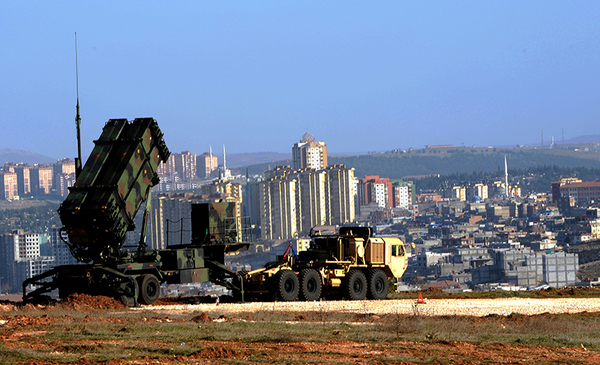 U.S. Patriot missiles, deployed outside Gaziantep, Turkey in 2013. (Image source: U.S. Army Europe/Daniel Phelps)
Kurecik seemed to matter a lot to Iran. In November 2011, Iran threatened that it would target NATO’s missile defense shield in Turkey (“and then hit the next targets,” read Israel) if it were threatened. Shortly before the arrival of Patriots in Turkey, Iran’s army chief of staff warned NATO that stationing Patriot anti-missile batteries in Turkey was “setting the stage for world war.”
What was stationed in Kurecik was an early-warning missile detection and tracking radar system. Its mission is to provide U.S. naval assets in the Mediterranean with early warning and tracking information in case of an Iranian missile launch that might target an ally or a friendly country, including Israel. So, a six-battery Patriot shield to protect the NATO radar in Kurecik against possible Iranian aggression was necessary. And that explains why the Iranians went mad about Kurecik and openly threatened to hit it.
NATO and Turkish officials have always denied any link between the Patriot missiles and the NATO radar in Turkey. They have often pointed out that the Patriot batteries were stationed in the provinces of Adana, Kahramanmaras and Gaziantep, while Kurecik was in nearby Malatya province. But the Patriot is a road-mobile system: It can be dismantled easily and re-deployed in another area in a matter of hours (the road distance between Kurecik and Kahramanmaras is a mere 200 kilometers, or 124 miles).
Clearly, Iran did not go mad and threaten to hit all NATO installations in Turkey because it wanted 3.5 million Turkish citizens to die from the chemical warhead of a Syrian missile. It went mad and threatened because it viewed the defensive NATO assets in Turkey as a threat to its offensive missile capabilities, which the Patriots could potentially neutralize.
Why, otherwise, would a country feel “threatened” and threaten others with starting a “world war” just because a bunch of defensive systems are deployed in a neighboring country? Iran did so because it views the NATO radar in Turkey as an asset that could counter any missile attack on Israel; and the Patriots as hostile elements because they would protect that radar. In a way, Iran’s reaction to the NATO assets in Turkey revealed its intentions to attack.
It could be a total coincidence that the U.S. and Germany (most likely to be followed by Spain) have decided to pull their Patriot batteries and troops from Turkey shortly after agreeing to a nuclear deal with Iran. But if it is a coincidence, it is a very suspicious one. In theory, the Patriot systems were deployed in Turkey in order to protect the NATO ally from missile threats from Syrian President Bashar al-Assad’s regime. Right? Right.
Assad’s regime is still alive in Damascus and it has the same missile arsenal it had in 2013. Moreover, Turkey’s cold war with Assad’s Syria is worse than it was in 2013, with Ankara systematically supporting every opposition group and openly declaring that it is pushing for Assad’s downfall. Why were Assad’s missiles a threat to Turkey two and a half years ago, but are not today?
The Patriot missiles are leaving Turkey. They no longer will “protect Turkish soil.”
Apparently, NATO allies believe, although the idea defies logic, that the nuclear deal with Iran will discourage the mullahs in Tehran from attacking Israel.
It looks as if the potential target of NATO heavyweights’ decision is more a gesture to Iran than to Turkey.
Egypt sends Assad secret arms aid, including missiles, with Russian funding, DEBKAfile, August 30, 2015
( Given that Egypt is heavily reliant on Saudi funding as well as the absence of any other news source beyond “Debka,” I find this article worthy of a generous helping of salt. – JW )
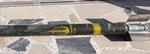
Egyptian President Abdel-Fatteh El-Sisi has begun supplying Bashar Assad with arms, including missiles, after concluding a secret deal with Russian President Vladimir Putin and his consent to pick up the tab, DEBKAfile’s military and intelligence sources reveal. The first batch of short-range Egyptian-made surface missiles has reached the Syrian forces fiercely battling rebels for weeks for the recovery of the strategic town of Zabadani without breaking through (See picture showing missile with Egyptian factory markings.)
It is not clear if the Egyptian missiles have also been passed to the Hizballah forces fighting with the Syrian army, considering that El-Sisi and Hizballah are at daggers drawn.
Our sources also reveal that the Egyptian arms consignments are freighted from Port Said to the Syrian port of Tartus by Ukrainian cargo vessels. These ships are today the most popular means of transport for clandestine and Black Market arms freights across the Mediterranean and Adriatic Seas.
Sums and quantities are yet to be determined, but Western intelligence sources report that Ukrainian vessels called in at Egyptian ports at least three times from July 22 to Aug. 22 and sailed off to Syria laden with weapons.
It is a deal that may affect the fate of the Assad regime from five, often conflicting, perspectives:
1. By providing Assad with an additional source of weapons, Cairo is reducing his dependence on Iran. This suits the Syrian ruler very well at this time, because he is fully aware of Tehran’s latest steps to draw Gulf rulers and Moscow into supporting a plan for ending the Syrian war, by installing a provisional government in Damascus and so easing his exit.
2. A certain parting-of-the ways has developed between Moscow and Tehran on how to terminate the Syrian conflict. By sending Assad arms, Cairo casts its vote for Moscow’s perspective in preference to Tehran’s.
3. El-Sisi is now diametrically opposed on Syrian policy to the GCC led by Saudi Arabia and the United Arab Emirates who are patrons of the rebel movement dedicated to toppling Assad.
4. He is also on the opposite side to Israel and Turkey. Israel backs the rebels fighting in southern Syria to create a barrier against the encroachment of Hizballah and Iranian Al Qods Brigades up to its northern border and the Golan. Turkey and the US have reached terms on Syrian policy. Saturday, Aug. 30, Turkish jets carried out their first air strikes in Syria against the Islamic State, as part of its deal with the US.
5. The Russian-Egyptian understanding on the Syrian question is a signpost that clearly marks the way to deepening military and strategic relations between Moscow and Cairo.
Taking the lead on a resolution of the Syrian question, the Kremlin staged a discussion last Tuesday, Aug. 18, with three Arab visitors: Jordan’s King Abdullah, UAE Crown Prince Sheikh Mohamed bin Zayed Al Nahyan and the Egyptian president. It was led by Mikhail Bogdanov, Deputy Foreign Minister in charge of Middle East Affairs, and followed by individual tête-à-têtes between Putin and each visitor in turn.
The Russian and Egyptian leaders did their best, according to DEBKAfile’s Moscow sources, to draw the Jordanian and UA rulers over to their pro-Assad policy, or at least accept common ground for a measure of cooperation. In effect, Putin and El-Sisi were out to convince Jordan and the US to back away from the Syrian rebel cause and the Saudi line. Their future actions may indicate how far they succeeded.
Dividing the Arabs: America and Europe’s Double Game, The Gatestone Institute, Bassam Tawil, August 29, 2015
The United States is playing a double game in the Middle East: empowering Shiite Iran, while at the same time enabling Sunni ISIS to overthrow the moderate Arab regimes, as if to stop Iran.
The Americans are well aware that the Sunni Arab countries around Iran will now have to arm themselves to the teeth, thereby gutting the Nuclear Non-Proliferation Treaty (NPT).
America, despite its power and the image it projects of working against ISIS in Iraq, does not touch ISIS in its real headquarters, Syria, where ISIS actually could actually be hurt. So nothing really changes, and both Iran and ISIS continue to strengthen.
Even as the members the UN Security Council, eager do business with Iran, voted to allow Iran to build nuclear weapons, the Iranians continue to fund Hezbollah, Hamas and the Palestinian Islamic Jihad in the Gaza Strip — all Iranian proxies — in order to split the Arab ranks.
In other words, the hypocritical Obama administration, in backing the Iranians, keeps trying to sabotage the Arabs and provoke dissension.
The U.S. “divide-and-conquer” policy can also be seen in America’s ongoing support for Turkey and Qatar, both loyal to the Muslim Brotherhood. Turkey and Qatar, however, do nothing but foment incitement and support terrorist organizations. Both countries have totally abandoned the real existential interest of the Arab nation: its historic battle against Iran.
Qatar’s role is duplicitous. It plays host to U.S. military bases at the same time that it funds and supports ISIS, which is working against the West and against moderate Arab regimes.
The worst, however, is Turkey, which supports ISIS — the enemy of the West — despite Turkey being a member of NATO. Turkey also expends inordinate efforts at retaining its control of occupied Cyprus. Above all, its hypocrisy is scandalous. While it claims to care about the independence and human rights of the Palestinians, Turkey is really nothing but a radical Islamist country now denying independence and human rights to its own Kurdish citizens. At the same time, it supports Hamas and Iran in their effort to crush the unity of the Palestinian Authority (PA) and the PLO as the only legitimate representatives of the Palestinian people.
Turkey, like many other nations, including the countries that negotiated with Iran, is just waiting for the sanctions to be lifted from Iran, so that its dubious military and economic relations with the Mullahs will finally be acceptable.
Turkey and Qatar have also divided the Sunni Islamic camp and fragmented the Arab ranks. Both countries give the Palestinians political support, the deluded hope of “return,” and funding that is used for rebuilding Hamas’s military capabilities and kidnapping tunnels.
It is both folly and underhandedness for the United States to provide these countries with even a tattered umbrella of military aid.
Not only the U.S. but Europe, which supports Iran, would like to see Hamas — a terrorist offshoot of the Muslim Brotherhood — become stronger at the expense of the Palestinian people.
Europe would like to empower Hamas even further by handing it diplomatic and political support. There are rumors that the UN is planning to grant Hamas observer status in the General Assembly, as it did the Palestinian Authority.
We all know that the issue of Palestine could have been resolved long ago by establishing a demilitarized Palestinian state next to Israel, and giving the descendants of the original Palestinian refugees living in the Arab states full citizenship. But the manipulations employed by the Europeans and Americans deliberately perpetuate the Palestinian issue by using “good cop – bad cop” tactics. (Emphasis added. — DM)
Europe and the U.S. whitewash not only Hamas’s threats to Israel, but also, more importantly, its deadly subversion of Palestinian Authority. Both Europe and America totally disregard Hamas’s planned coup against PA leader Mahmoud Abbas last year, Hamas’s war crimes in the Gaza Strip, and the unspeakable treatment of its own people at home. Only one year ago, Hamas was murdering its own citizens extra-judicially, and ordering them to be cannon fodder for the benefit of international television crews.
Hamas, since then, has chosen to use its scant resources to rebuild its kidnapping tunnels and war capability, instead of to develop businesses and turn the Gaza Strip into a magnificent Arab Riviera, as Dubai has become. Hamas’s failure does not come from a lack of resources; it comes from a deliberate choice of how to use them.
Hamas and Palestinian Islamic Jihad are now operating against Egypt and Israel not only from the Gaza Strip, but from the Sinai Peninsula as well. Thus, in addition to allowing Iran to sail to nuclear weapons capability, President Obama encourages the Muslim Brotherhood and other Islamist terrorist organizations such as the Islamic State in the Sinai Peninsula with one hand, while with the other hand he claims to support Israel.
After all is said and done, if we Arabs had joined ranks — even temporarily and even with Israel — we could have long ago put a stop to Iran’s plans for expansion.
But because of our own shortsightedness, we waited too long and now the Iranians have established footholds in the Arabian Gulf and the Red Sea, and are increasing their control of Arab states such as Iraq, Syria, Lebanon and Yemen.
Iran is on its way in a few years to having nuclear weapons capability. The breakout time, according to President Obama, would effectively be “zero.” Iran could then make as many bombs as it would like, along with intercontinental ballistic missiles to delver them to the major cities of the “Great Satan,” the United States, directly from Iran, from South America, or — making identification and retaliation impossible — from submarines submerged off the U.S. coast.
The Iranians, in opposing American policy, which is a tissue of amateur plans and plots, are flexible and exploit Islam’s taqiyya [dissimulation] — religious approval to lie in the cause of Allah and to further Islam. However, they are not even bothering with that, they are telling the truth: “Death to America; Death to Israel.”
 U.S. President Barack Obama (left). Iranian President Hassan Rouhani (right).
By this point, near the end of the process of Sunni Muslim self-destruction, a large part of the Arabs’ energy has been wasted on internal wars and the misallocation of resources to the barren, useless confrontation with Israel, even while many Arab states secretly collaborate with the Zionists.
All that will be left for the Arabs will be to continue to argue among themselves and with the Israelis about the Palestinian issue. We should instead stop the distractions and the wounds we are inflicting upon ourselves, and put the Palestinian problem behind us by granting equal rights and citizenship to Palestinians residing in Arab countries, in order to shift our focus totally, if belatedly, to the real battle: The Islamic Republic of Iran.
Egypt bids for two advanced French helicopter carriers – counterweight to the Iranian navy, DEBKAfile, August 27, 2015
 Mistral carriers at Saint-Nazaire shipyard
Egypt is in advanced negotiations with France for two highly advanced French Mistral class assault-cum-helicopter carrier ships that were originally destined for the Russian Navy. DEBKAfile’s military and intelligence sources report that this deal, if it goes through, will substantially beef up the regional lineup of the Saudi, Egyptian and Israeli navies. The new vessels would enable it to contest Iranian naval challenges in the Mediterranean, the Red Sea and the Persian Gulf, and alter the balance of strength between the opposing sides.
Saudi Arabia and the United Arab Emirates have given presidents Abdel-Fatteh El-Sisi and Francois Hollande pledges to fund the transaction at $800 million per carrier.
The Mistrals will join the missile ships of Saudi Arabia, Egypt and Israel and six Dolphin submarines which, according to foreign sources, are capable of firing nuclear-tipped ballistic missiles. Their delivery comes at a time of strengthening strategic ties among Egypt, Saudi Arabia, the UAE and Israel.
The Egyptian navy stands to own the most advanced warships of any Middle East power. The French vessels may also be used as aircraft carriers, because their decks are designed to carry fighter jets as well as helicopters. The only nations maintaining this type of vessel in the region are outsiders – the US, which deploys a Wasp class helicopter for marines; Russia, the ageing Moskva class copter carrier, and France.
Originally ordered from France by the Russian Navy, the pair of Mistrals was never delivered owing to the sanctions the European Union imposed on Moscow after the Ukraine invasion.
It is a multi-purpose warship, able to accommodate 16 “European Tiger” four-bladed, twin-engined attack helicopters, four large landing craft for dropping 450 marines on shore, 70 armored vehicles, including 14 heavy AMX Leclerc assault tanks.
These figures are flexible. If necessary, the French carriers can handle an expanded complement of 900 marines and 40 tanks. It is also a command ship geared to maintain communications with military forces located anywhere in the world. It also carries a 69-bed field hospital. The Mistral has a maximum speed of 18 knots and maximum range of 20,000 miles.




 anneinpt
 artaxes
 danmillerinpanama
 davidking1530
 Peter Hofman
 Joseph Wouk
 Peter
Peter Louisiana Steve
 WarSclerotic
Recent Comments