Posted tagged ‘Abbas’

Column One: Mahmoud Abbas and other Soviet ghosts

September 9, 2016

Column One: Mahmoud Abbas and other Soviet ghosts, Jerusalem Post, Caroline B. Glick, September 8, 2016
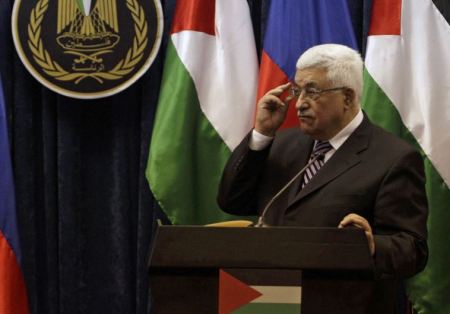
abbaskgb

In 1982 Abbas received a doctorate from the Patrice Lumumba University – or KGB U – in Moscow. According to KGB defectors, 90 percent of the university’s faculty and staff received their paychecks from the KGB. Its purpose was to train KGB agents from the developing world, including terrorists. Abbas’s fellow alumni included master terrorist Carlos the Jackal and future Iranian dictator Ayatollah Ali Khamenei.

Rather than devote his energies to murdering Israelis, along the lines of the subversive program Ceausescu presented to Arafat, Abbas’s main focus was the subversion of the European and the Israeli Left.

***********************

Channel 1’s report Wednesday that in 1983, current Palestinian Authority Chairman and PLO chief Mahmoud Abbas served as a KGB agent is hardly the story of the year, but it does remind us of certain half-forgotten facts about the Cold War that are becoming ever more relevant today.

The PLO’s close and servile relationship with the KGB was first exposed in a systematic way in 1987, with the publication of Red Horizons: Chronicles of a Communist Spy Chief, the exposé of Soviet and Romanian Cold War operations written by former Romanian intelligence chief Lt.-Gen. Ion Pacepa. Pacepa, who defected to the US in 1978 after serving as the head of the DIE – Romania’s KGB – was the highest ranking intelligence officer from the Soviet bloc to ever defect.

In his book, Pacepa revealed that “the PLO was dreamt up by the KGB.”

Pacepa explained how Romanian dictator Nicolae Ceausescu, at the direction of Moscow, convinced Yasser Arafat to employ political warfare, centered on phony protestations that he had abandoned terrorism, to weaken the West’s resolve to defend itself and to cause Israel to doubt its own legitimacy.

Wednesday’s Channel 1 report on Abbas was based on new revelations from the Mitrokhin Archive. Vasili Mitrokhin was a senior archivist in the KGB who surreptitiously copied KGB documents for many years and hid his copies in his home. In 1991 Mitrokhin defected to Britain and took his archive of 25,000 copies of documents with him.

In 2004, the second volume of his edited archive was published. The volume, titled, The World Was Going Our Way: The KGB and the Battle for the Third World, focused on the KGB’s efforts to use the Third World as a strategic weapon in its battle against the West. The volume devotes two chapters to the KGB’s campaign against Israel.

Mitrokhin revealed that for the KGB, Israel was a target of subversion second only in importance to the US. The KGB fielded multiple political agents on the Israeli Left and multiple Palestinian agents in the PLO’s terrorist nexus.

According to the Channel 1 report, Abbas began his official service for the KGB in 1983.

In truth his KGB ties were already longstanding by 1983.

In 1982 Abbas received a doctorate from the Patrice Lumumba University – or KGB U – in Moscow. According to KGB defectors, 90 percent of the university’s faculty and staff received their paychecks from the KGB. Its purpose was to train KGB agents from the developing world, including terrorists. Abbas’s fellow alumni included master terrorist Carlos the Jackal and future Iranian dictator Ayatollah Ali Khamenei.

Abbas received a doctorate for a thesis denying the Holocaust. That is, he used the cover of academia to vilify the Jewish state and deny Jewish history and suffering – a practice that has been his stock in trade in trade ever since.

Rather than devote his energies to murdering Israelis, along the lines of the subversive program Ceausescu presented to Arafat, Abbas’s main focus was the subversion of the European and the Israeli Left.

Until the mid-1970s, Arab terrorists were unable to make inroads in Israel because there were no significant political forces in Israeli society that questioned the justice and morality of the state or saw the PLO as anything other than a terrorist organization bent on the annihilation of Israel and the massacre of its citizens.

The situation changed with the rise of the Likud and the Right to power in 1977. As the Likud supplanted Labor as the largest party in Israel, the far Left became more susceptible to subversion.

Abbas focused his efforts on developing ties to the Israeli far Left. His efforts culminated in the 1993 Oslo peace deal which Abbas negotiated with Israeli leftist activists affiliated with then-foreign minister Shimon Peres through his deputy Yossi Beilin.

The PLO’s success in convincing the Rabin- Peres government that it had abandoned its goal of annihilating Israel came two years after the demise of the Soviet Union. In other words, the KGB’s campaign of anti-Western subversion outlived the Soviet Union.

Indeed it carries on with ever greater force and consequence. Today, the subversive campaigns that first bore fruits in the Vietnam War have brought about a situation where increasingly, Western elites cannot accept the basic morality of their societies.

Consider the case of NFL quarterback Colin Kaepernick. Last month Kaepernick caused a public outcry when he refused to stand up for the US national anthem at the beginning of a football game. Kaepernick defended himself by arguing that the US is immoral. “I am not going to stand up to show pride in a flag for a country that oppresses black people and people of color,” he said.

Rather than defend the US against his assault and insist that its symbols required respect, President Barack Obama said only that Kaepernick had a right to his opinion.

Then there is Germany. This week Chancellor Angela Merkel’s CDU party came in third place in regional elections on Merkel’s home turf behind the far-right, anti-immigration AfD party.

Merkel’s political collapse owes entirely to her refusal to budge on her open border policies.

That policy enabled more than a million, predominantly Muslim, immigrants to stream into Germany last year. An additional 300,000 are expected this year.

Merkel’s associates claim that she operates under the conviction that Germany’s Nazi past precludes any attempt to protect German society from Muslim immigrants. For Merkel, Germany is inherently immoral and therefore has no right to defend its identity or culture.

The sense among Western elites that Western culture and history as a whole are morally impaired has dampened their concern about their future. This diminished commitment to securing their societies into the future is most apparent in the West’s fertility rates, which have been below replacement rate for more than a decade. Last year for the first time, deaths in Europe outnumbered births.

The situation is similarly fraught on the other side of the former Iron Curtain. Russian society was economically and culturally broken by the Soviet defeat in the Cold War and by its post- Cold War leadership’s inability to present a life-affirming vision for a new Russia.

In some ways, post-Cold War Russia is the mirror image of the subverted West. While Western leftists insist on adopting the socialist economics of swelled welfare states, which given demographic realities are unsustainable in the long-term, to expiate their guilt for capitalism and colonialism, Russia’s leaders have largely abandoned their people to their fate.

Russia spends a bit more than a third of what OECD countries spend on public health. And the low investment shows.

According to the World Health Organization, a third of all deaths in Russia in 2012 were caused by alcohol. Russian male life expectancy is 64 – lower than it was a hundred years ago.

Drug addiction rates are soaring, as are HIV infection rates.

Like the Europeans, Russians have lost interest in the future, which increasingly will not include a Russia. With fertility rates below replacement levels, the UN estimates that by 2060, Russia’s working age population will have shrunk by 15 percent.

Due to the scarcity of workers, like Europe, Russia is experiencing massive, predominantly Muslim immigration. Russian immigration levels are second only to the US. In response, xenophobia is a large and growing social force in Russia.

According to David Satter, author of the recently released, The Less You Know, the Better You Sleep: Russia’s Road to Terror and Dictatorship under Yeltsin and Putin, Russia’s gloomy prospects, reinforced by the long-term outlook for reduced oil and gas prices, have brought about a situation where President Vladimir Putin and his associates do not think about the long-term future of their country. Their international considerations, specifically, are based on their assessments of immediate potential payoffs.

Since the Russian leadership doesn’t suffer from the civilizational neurosis the Soviets inflicted on the West, like the Soviet leaders before him, Putin’s short-term game empowers him to adopt policies with potentially high short-term payoffs regardless of the long-term dangers they create. Russia’s policies in Syria and toward Iran are case in point.

On the other side of the divide in Europe, the elites devote their remaining days in power to absolving themselves of imperialist and capitalist guilt. To this end, they have adopted the causes of those they falsely believe were most victimized by their predecessors.

The same is true, albeit to a lesser degree, in the US.

This then brings us back to KGB agent Abbas and his target, Israel.

Against great odds, and at a steep price, over the past 10 years Israeli society stopped listening to the voices on the Left parroting Abbas’s lies that Israel was born in sin, as a Western colonialist implant. Given the stakes, most Israelis today also have come to realize that our national self-confidence is a vital component of our long-term survival.

This understanding, along with a clear-eyed assessment of what drives our interlocutors in Moscow, Paris, New York and Brussels, must inform our foreign policy in the coming years.

When faced with foreign governments whose societies lack long-term prospects, Israel needs to put aside its yearning for long-term peace and stability and focus on short-term cooperative ties. It must also recognize that our partners’ interests are subject to change at a moment’s notice.

The revelation of Abbas’s KGB service requires us to recognize that the Soviets’ long game of subversion continues on today. Whether or not Western societies persevere and reject the Soviets’ central contention that they are unworthy of survival is not for Israel to decide. So, too, Israel will not convince the Russians to embrace a future based on freedom and the sanctity of life.

All we can do is wish them the best and play the short-term game with them – while keeping our long-term interests front and center in our minds.

Netanyahu and Abbas agree ‘in principle’ to meet, Russia says

September 8, 2016

Netanyahu and Abbas agree ‘in principle’ to meet, Russia says No confirmation from Jerusalem or Ramallah after latest report of possible face-to-face summit between leaders in Moscow

By Times of Israel staff and AP

September 8, 2016, 1:48 pm

Source: Netanyahu and Abbas agree ‘in principle’ to meet, Russia says | The Times of Israel

Polish President Andrzej Duda (C-R) and Palestinian Authority President Mahmoud Abbas (C-L) inspect an honour guard during an official welcoming ceremony in the courtyard of the presidential palace in Warsaw on September 6, 2016. (AFP PHOTO/JANEK SKARZYNSKI)

The Russian foreign ministry on Thursday said Prime Minister Benjamin Netanyahu and PA President Mahmoud Abbas had agreed “in principle” to meet in Moscow.

According to Russian media reports, the two leaders were willing to sit down for a face-to-face meeting in a bid to revive peace talks.

“Russian foreign ministry confirms willingness to host Netanyahu-Abbas meeting in Moscow, preparations continue,” the Interfax news agency reported. “Israeli, Palestinian leaders agree in principle to meet in Moscow.”

According to ministry spokeswoman Maria Zakharova, Moscow has heard from the offices of Abbas and Netanyahu that the two agreed to meet in the Russian capital, though it’s not clear when that will happen.

“The most important thing is to pick the right timing,” Zakharova told reporters. “Intensive contacts on this are ongoing.”

“We are convinced that there is a need to resume the negotiations, which would be a factor serving the interests in normalizing the situation,” she added, according to the TASS news agency.

There was no immediate response from the Prime Minister’s Office in Israel or officials in the PA. But a source close to the prime minister told the Walla news website that Netanyahu was willing to meet Abbas “anytime, anywhere, on the condition that there are no preconditions.”

The report came days after efforts to broker a meeting between the two became bogged down in mutual accusations that the other side was unwilling to sit down in Moscow.

The two leaders have not met in person since 2010, and peace efforts have continued to falter. Abbas has demanded Israel release Palestinians prisoners and freeze settlement building before meeting, while Netanyahu has said he is willing to meet without preconditions.

The efforts became further complicated Wednesday following an Israeli report on Soviet documents suggesting Abbas was a KGB spy in Damascus in the 1980s, during the time that Mikhail Bogdanov, today Vladimir Putin’s envoy to the Middle East, was stationed there.

The PA leader’s top political adviser said Wednesday Abbas had forgone his long-held preconditions and was planning in earnest to meet Netanyahu in Moscow this Friday, but the summit was spiked by Israel.

“There were no preconditions. That was very clear. When President [Vladimir] Putin invited the two sides, he said, ‘No preconditions.’ President Abbas approved that, and he said so very clearly yesterday when he was in Warsaw,” Majdi al-Khalidi told The Times of Israel in a phone interview.

Prime Minister Benjamin Netanyahu shakes hands with Palestinian Authority President Mahmoud Abbas in Jerusalem, September 15, 2010. (Kobi Gideon/Flash90)

Prime Minister Benjamin Netanyahu shakes hands with Palestinian Authority President Mahmoud Abbas in Jerusalem, September 15, 2010. (Kobi Gideon/Flash90)

While in Poland on Tuesday, Abbas declared he was willing to meet Netanyahu in Moscow, though he did not explicitly mention the preconditions in his statement.

However, the Palestinian leader added, Netanyahu’s representative sought to delay the Moscow meeting, which would have taken place September 9, to a later date.

An Interfax report Monday claiming the two had agreed to meet was initially denied by Palestinian officials, who indicated the preconditions were still in place.

On Tuesday, Netanyahu referred to confusion over the Palestinian stance during a press conference alongside Dutch Prime Minister Mark Rutte in The Hague.

Prime Minister Benjamin Netanyahu, left, and Dutch Prime Minister Mark Rutte give a press conference in The Hague, September 6, 2016. (AFP/ANP)

Prime Minister Benjamin Netanyahu, left, and Dutch Prime Minister Mark Rutte give a press conference in The Hague, September 6, 2016. (AFP/ANP)

Ifthe Palestinians had forgone their preconditions to the Moscow meeting, the Israeli prime minister seemed unaware.

“Is Abbas prepared to meet without preconditions? We hear contradictory versions on that,” said Netanyahu.

“Just yesterday Palestinian spokespeople clarified that they are prepared to meet but that they have conditions — the release of prisoners and they also want to know beforehand what will be the end result of the talks, and such like,” Netanyahu said.

Khalidi, Abbas’s adviser, said he didn’t know why the Israeli prime minister believed there were preconditions to the Moscow meeting.

“No one said there were preconditions. Many people in Israel and Palestine speak in general. But after what the president said, why do we have to listen to people from this side or that side. We have only one agency that is official, Wafa. We have one official spokesperson, Nabil Abu Rudeineh,” Khalidi said.

Nabil Abu Rudeineh (L), spokesman of Palestinian Authority president Mahmoud Abbas, welcomes Israeli opposition head Isaac Herzog (C) at the Palestinian Authority headquarters in the West Bank city of Ramallah, August 18, 2015. (AFP Photo/Abbas Momani)

Nabil Abu Rudeineh (L), spokesman of Palestinian Authority president Mahmoud Abbas, welcomes Israeli opposition head Isaac Herzog (C) at the Palestinian Authority headquarters in the West Bank city of Ramallah, August 18, 2015. (AFP Photo/Abbas Momani)

The Prime Minister’s Office voiced skepticism of the statements.

“If the Palestinian leadership can say with one voice that they are willing to meet without preconditions, then Prime Minister Netanyahu will meet President Abbas,” Netanyahu’s spokesperson David Keyes told The Times of Israel Wednesday.

On Tuesday night, Abu Rudeineh, the official Abbas spokesperson, said Netanyahu “had once again shown a lack of seriousness in searching for a just peace based on the two-state solution.”

The idea of direct talks in Moscow was first floated by Egyptian President Abdel-Fattah el-Sissi in August, when he said that Russian President Vladimir Putin was willing to play host.

Peace efforts have been at a standstill since a US-led initiative collapsed in April 2014.

The last substantial public meeting between Abbas and Netanyahu is thought to have been held in 2010, at the tail end of a 10-month settlement building moratorium, though there have been unconfirmed reports of secret meetings since then.

Raphael Ahren and Dov Lieber contributed to this report.

Palestinians: The “Mountain of Fire” Erupts Against Abbas

August 25, 2016

Palestinians: The “Mountain of Fire” Erupts Against Abbas, Gatestone InstituteKhaled Abu Toameh, August 25, 2016

♦ The Palestinian Authority is now paying the price for harboring, funding and inciting gang members and militiamen who until recently were hailed by many Palestinians as “heroes” and “resistance fighters.”

♦ Hamas’s dream of extending its control to the West Bank now seems more realistic than ever — unless Mahmoud Abbas wakes up and realizes that he made a big mistake by authorizing local and municipal elections.

♦ The blood pouring out in Nablus and other Palestinian towns is proof that Abbas is on his way to losing control over the West Bank, just as he lost Gaza to Hamas in 2007. In an emergency meeting held on August 25 in Nablus, several Palestinian factions and figures reached agreement that it would be impossible to hold the vote under the current circumstances.

Hours after his security officers lynched a detainee, Palestinian Authority President Mahmoud Abbas urged Palestinian businessmen living abroad to support the Palestinian economy by investing in the Palestinian territories. The Palestinian Authority (PA), he asserted, was “working to provide security and safety to encourage investment.”

According to Abbas, “The Palestinian territories are living in a state of security stability, which we are working to provide for residents and investors alike by enforcing the rule of law and enhancing transparency and accountability.”

It must be nice to create your own reality, especially if your true reality is that of the 81-year-old Abbas.

In his speech before the businessmen, Abbas neglected any reference to the latest wave of “security chaos” in PA-controlled areas in the West Bank, specifically Nablus, the largest Palestinian city.

Five Palestinians, including two PA police officers, were killed in the worst scenes of internecine violence to hit the West Bank in recent years. Abbas was either playing the businessmen for fools or hoping that they share his deaf and blind state.

The violence in Nablus did not come as a surprise to those who have been monitoring the situation in the West Bank in recent months.

In fact, scenes of lawlessness and “security chaos” have become part of the norm in many Palestinian cities, villages and refugee camps — a sign that the PA may be losing control to armed gangs and militias. Palestinians refer to the situation as falatan amni, or “security chaos.” An article published in Gatestone in June referred to the growing instances of anarchy and lawlessness in PA-controlled areas in the West Bank, first and foremost Nablus.

Palestinians refer to Nablus as the “Mountain of Fire” — a reference to the countless armed attacks carried out against Israelis by residents of the city since 1967. Current events in Nablus, however, have shown how easily fire burns the arsonist. The Palestinian Authority is now paying the price for harboring, funding and inciting gang members and militiamen who until recently were hailed by many Palestinians as “heroes” and “resistance fighters.” Unsurprisingly, most of these “outlaws” and “criminals” (as the PA describes them) are affiliated in one way or another with Mahmoud Abbas’s Fatah faction.

Nablus, the so-called Mountain of Fire, is now threatening to turn into a volcano that is set to erupt in the face of Abbas and his PA government.

The situation in Nablus the past few days raises serious questions about the ability of the PA to perform basic security measures and rein in armed gangs and militiamen. Moreover, the unprecedented violence has further shattered Palestinian confidence in the PA and its leaders ahead of the local and municipal elections, scheduled to take place on October 8.

Hamas’s dream of extending its control to the West Bank now seems more realistic than ever. Under the current circumstances, Abbas would be offering the West Bank to Hamas on a silver platter — unless he wakes up and realizes that he made a big mistake by authorizing the local and municipal elections.

And the businessmen who met with Abbas? One might guess that they are sophisticated enough to avoid a doomed investment. Nablus will no doubt do the trick: they are likely to go running from the mayhem of the PA-controlled territories.

Things lately began to unravel when on August 18, in the Old City of Nablus, two Palestinian Authority security officers, Shibli bani Shamsiyeh and Mahmoud Taraira, were killed in an armed clash with gunmen.

Hours later, PA policemen shot dead two Palestinian gunmen who were allegedly involved in the killing of the officers. The two were identified as Khaled Al-Aghbar and Ali Halawah. The families of the two men accused the PA of carrying out an “extrajudicial” killing, and claimed their sons were captured alive and only afterwards shot dead. The families called for an independent commission of inquiry into the circumstances surrounding the killing of their sons. Palestinian human rights organizations have also joined the call for an inquiry into the killings.

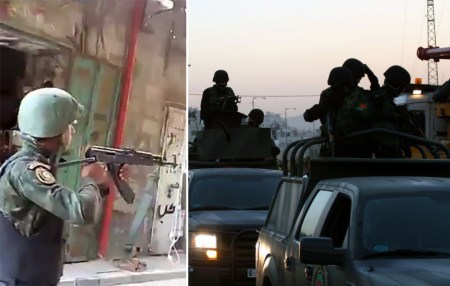
1809On August 18, two Palestinian Authority policemen were killed in an armed clash with gunmen in Nablus (left). In April of this year, a fierce gun battle erupted between Palestinian Authority policemen and members of the Jaradat clan in the refugee camp of Jenin (right). The clash started during an attempt to arrest a clan member.

In June, two other PA security officers, Anan Al-Tabouk and Uday Al-Saifi, were also killed in a shootout with gunmen in Nablus. The PA claimed that “outlaws” were behind the killings and vowed to punish the culprits.

Tensions in Nablus reached their peak on August 23, when scores of PA policemen lynched Ahmed Halawah, a former policeman suspected of leading a notorious gang belonging to Abbas’s Fatah faction. Halawah was beaten to death by PA policemen shortly after he was arrested and taken to the PA-run Jneid Prison in Nablus.

The PA leadership, which has since admitted that Halawah was lynched by its policemen, says it has ordered an inquiry into the case. Its leaders have described the lynching as an “unacceptable mistake.”

The lynching of the detainee sparked widespread protests throughout the West Bank, with many Palestinians calling for an immediate inquiry into the circumstances surrounding the case and demanding that those responsible be brought to trial.

The Palestinian Bar Association issued a statement strongly condemning the lynching of Halawah as a “crime and a human rights violation.” The Association called for holding those responsible, adding, “The regrettable and painful events, including the crime of killing Ahmed Halawah, do not serve the interest of the citizen or homeland and deepens divisions in our society.” It also called on the PA and its security forces to abide by the law and honor the human rights of the Palestinians and their public freedoms.

Alarmed by the widespread condemnations of the lynching of Halawah, some Palestinian Authority officials began issuing direct and veiled threats against Palestinian critics.

Palestinian lawyer Wael Al-Hazam, who called on Abbas to “withdraw” his security forces from Nablus, was visited by unidentified gunmen who sprayed his house with 14 bullets. The attorney and his family members were not hurt in the shooting attack, which was clearly designed to send a warning message to anyone who dared to raise his or her voice against human rights abuses by the PA security forces. And in this instance, the message arrived.

Shortly after the attack on his house, the lawyer issued a statement in which he said, “14 bullets are enough to silence me. I’m a man of the law and I cannot face bullets. My pen and voice are the only weapon I have. I do not possess armed militias to defend myself.” The attack on his house came shortly after PA security officers threatened the lawyer, warning him against appearing on a TV show to discuss the latest wave of violence in his city.

The turmoil in Nablus has prompted many Palestinians to call on Abbas to make a decision to postpone the upcoming municipal election in their city. In an emergency meeting held on August 25 in Nablus, several Palestinian factions and figures reached agreement that it would be impossible to hold the vote under the current circumstances.

Sarhan Dweikat, a senior member of Abbas’s Fatah, said that an election delay was needed, to

“protect the social fabric and preserve our national project, which is facing an existential threat in light of the security chaos and anarchy in Nablus. … Conditions in Nablus do not provide a positive climate for holding elections.”

It is hard to see how Abbas, delusional as he appears to be, would heed the calls to postpone the local and municipal elections. His pathetic attempt to persuade Palestinian businessmen to invest their money in PA-controlled areas at a time when the flames are engulfing his backyard is yet another sign of the man’s refusal — or inability — to see the reality on the ground.

This is the same president who claims that he is seeking to lead his people toward statehood and a better future. Incredibly, Abbas can probably continue to fool world leaders into believing that he and the Palestinian Authority are prepared for statehood. Yet the blood pouring out in Nablus and other Palestinian cities and villages is proof positive that Abbas is on his way to losing control over the West Bank, just as he lost the Gaza Strip to Hamas in 2007. If until now it seemed that Hamas posed the biggest threat to Abbas’s rule over the West Bank, it is now obvious that that is not so. The real threat, as brought home in blood in the West Bank, is coming from Abbas’s homegrown loyalists-turned-rebels.

Hamas: Vote for Us or Burn in Hell

August 12, 2016

Hamas: Vote for Us or Burn in Hell, Gatestone InstituteKhaled Abu Toameh, August 12, 2016

♦ Abbas decided to hold local and municipal elections because his advisors convinced him that Hamas would boycott the vote, according to senior Fatah official Husam Khader.

♦ The first sign of Hamas’s frightening platform emerged when one of its top muftis, Yunis Al-Astal, issued a fatwa banning Palestinians from voting for any other party other than Hamas. “Any person, male or female, who votes for a party other than Hamas will be considered an infidel and apostate and his or her repentance will not be accepted even if they fasted or prayed or performed the hajj [pilgrimage] to Mecca,” the mufti ruled.

♦ This Hamas tactic has worked in the past. In the previous parliamentary election, Hamas used the same propaganda to brainwash and scare Palestinian voters.

♦ By calling the election and allowing Hamas to participate, Abbas is digging his own grave, and presiding over the burial of any so-called peace process with Israel.

It is election season in the West Bank and Gaza Strip. Palestinians are preparing to cast their votes in the local and municipal elections, scheduled to take place on October 8. The upcoming elections will be different from the last one, held in 2012 only in the West Bank, when Hamas boycotted the vote, allowing the rival Fatah faction to claim victory.

This time Hamas has decided to join the political fray — a move that caught Fatah and its leaders, including Palestinian Authority (PA) President Mahmoud Abbas, by surprise.

Hamas’s decision to participate in the local and municipal elections has further aggravated tensions with Abbas’s Fatah faction, which continues to suffer from deep internal divisions and rivalries.

In the past few weeks, Hamas and Fatah have been accusing each other of cracking down on each other’s supporters in the Gaza Strip and West Bank in a bid to affect the results of the election.

According to Hamas, the Palestinian Authority security forces have in recent weeks arrested scores of the Islamist movement’s supporters in the West Bank. Hamas claims that the crackdown intensified after its decision to participate in the election. Hamas also claims that some of its detained supporters have been tortured, prompting some of them to go on hunger strikes in Palestinian prisons.

Samira Halaykeh, a Hamas representative in the West Bank, said that the crackdown was an “extension” of the campaign of arrests that the PA has been waging against the Islamist movement for several years now. She predicted that the latest crackdown would actually serve as a boomerang, strengthening Hamas.

“The Palestinian Authority and its security forces must guarantee security and safety for all Palestinians so that they can practice their legitimate right to run and vote in the election,” she added. “The Palestinian Authority needs to avoid any form of intimidation and political and intellectual repression against the voters.”

Another senior Hamas representative in the West Bank, Bassem Al-Za’areer, condemned the arrests of Hamas supporters by the Palestinian Authority as “politically-motivated.” He too alleged that the crackdown was aimed at undermining Hamas’s chances of winning the election. The crackdown, he added, reflects the “state of desperation and panic” of the PA following Hamas’s decision to participate in the vote. The Palestinian Authority fears a “fair and decent competition,” he explained.

The Palestinian Authority’s crackdown on Hamas on the eve of the election has even riled some senior Fatah officials, such as Husam Khader of the Balata refugee camp near Nablus, the largest Palestinian city in the West Bank.

“Political arrests solidify the dictatorship of the ruling [Fatah] party,” Khader charged. “The Palestinian Authority is searching for any excuse to call off the election because it fears democracy more than it fears Israel.” According to Khader, Abbas decided to hold the local and municipal elections because his advisors convinced him that Hamas would boycott the vote. The top Fatah official predicted that internecine fighting in Fatah would play into the hands of Hamas in the upcoming election. This is precisely what happened in the 2006 parliamentary elections, when divisions within Fatah facilitated Hamas’s victory.

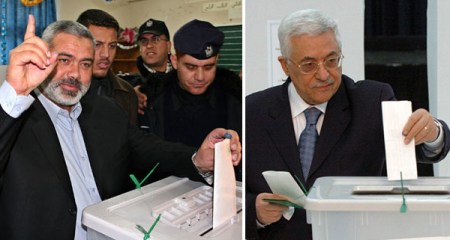
1682One man, one vote, one time? Hamas leader Ismail Haniyeh (left) and Fatah leader Mahmoud Abbas (also president of the Palestinian Authority) are pictured voting in the last election for the Palestinian Legislative Council, which took place in 2006.

Similarly, Fatah maintains that Hamas has been waging a campaign of intimidation and detention against Fatah supporters in the Gaza Strip — also in order to disrupt the upcoming election and undermine Fatah’s performance at the ballot boxes.

In the past two weeks, several Fatah activists in the Gaza Strip were rounded up by Hamas security forces, which have also banned Fatah from carrying out public election campaigns or holding rallies. Last week, as part of this crackdown, a Hamas court sentenced a former Palestinian Authority “general” to seven years in prison for “collaboration” with the PA security forces in the West Bank. Another three Fatah activists were sentenced to five years for the same crime.

In an effort to quell tensions between Hamas and Fatah, the Palestinian Central Election Commission decided to ask the two parties to sign a “Code of Conduct” document that requires all candidates and parties to avoid smear campaigns, slander, and fomenting sectarian or racist strife. The document also requires all those participating in the election to refrain from “exploiting religious or sectarian or tribal sentiments” in their campaign and also to avoid any form of intimidation, such as declaring one another traitors, apostates and infidels.

Although Fatah and Hamas have pledged to honor the terms of the “Code of Conduct,” known in Arabic as mithak sharaf, the two sides, which are not famous for honoring agreements, seem resolved to resort to all available methods to persuade voters to vote for each one of them.

For now, the two sides have taken to social media to present their electoral platforms and wage a smear campaign against each other.

Local elections are supposed to be about who can provide the people with the best municipal services and improve their living conditions. As such, one would expect candidates to run on a platform that promises new schools, roads, parks, sports centers and other municipal services. But in the case of the Palestinians, local and municipal elections seem to have assumed a new meaning and role. In fact, the upcoming election seems to be anything but a vote for a mayor or a member of a municipal or village council.

Hamas, whose leaders seem to be enthusiastic and optimistic about the upcoming vote, has seized the opportunity to wage a massive election campaign on Facebook and Twitter to promote its extremist ideology through intimidation and by accusing its rivals of infidelity, blasphemy and profanity. Hamas’s message to the Palestinian voters: Vote for us or else you will be considered infidels and you will end up in hell.

The first sign of Hamas’s frightening platform emerged when one of its top muftis, Yunis Al-Astal,issued a fatwa (Islamic religious decree) banning Palestinians from voting for any other party other than Hamas. “Any person, male or female, who votes for a party other than Hamas will be considered an infidel and apostate and his or her repentance will not be accepted even if they fasted or prayed or performed the hajj [pilgrimage] to Mecca,” the mufti ruled.

The Hamas fatwa sparked a wave of anger from many Palestinians, who were quick to accuse the Islamist movement and its leaders of waging a campaign of intimidation and terror against voters.

“This is the policy of the Muslim Brotherhood [of which Hamas is an offshoot],” commented Hisham Sawalhi, a Palestinian from the West Bank. “Those who support Muslim Brotherhood are believers, while those who oppose them are infidels.”

A Hamas-affiliated cartoonist from the Gaza Strip, Baha Yasin, published a cartoon that carries the same message as the fatwa. “A Palestinian Muslim does not vote for secular infidels,” he captioned a cartoon that depicts supporters of Fatah as unbelievers who smoke nargilas and cigarettes. The caption accompanying the cartoon also denounces the Fatah supporters for “insulting Allah” and Islam.

Rajai Al-Halabi, who is in charge of the “women’s portfolio” in Hamas, also stirred up controversy when she appeared on Al-Jazeera to declare that Islam surfaced for the first time in the Gaza Strip with the creation of Hamas.

Her declaration, which came in the context of Hamas’s election campaign, drew strong condemnations and sarcastic remarks from many Palestinians. “This means that all those who died before the establishment of Hamas were infidels, commented Hamzeh Abu Ajaleh, a Palestinian from the Gaza Strip. “In any case, my grandfather did not consume alcohol and my grandmother used to cover her head,” he wrote in reaction to the statement by the senior Hamas official.

“Hamas has launched its unofficial election campaign by issuing deeds of forgiveness and taking us back to the Middle Ages,” said Palestinian political analyst Mahmoud Sabri.

“They have turned mosques into podiums for political, and not religious, lecturing. Any citizen who does not vote for Hamas will be closer to entering hell and will be asked by Allah on Doomsday why he or she did not vote for the right people. Hamas wants us to believe that if we do not support them, then we are against Islam and that we are participating in the war against our religion.”

Some Palestinians in the Gaza Strip said this week that Hamas has formed a special team to manage its propaganda campaign in preparation for the local and municipal elections. This team has begun operating on two fronts: first, a public campaign to market Hamas’s “achievements” since its violent takeover of the Gaza Strip in the summer of 2007; and second, one to wage a campaign of defamation against its rivals in Fatah, depicting them as traitors and Israeli agents and infidels and enemies of Allah and Islam.

“A vote for Hamas is a vote for the resistance and a vote in support of Allah and Islam,” reads one of Hamas’s election banners. Other banners posted on social media highlight the fact that most of the Fatah representatives are not faithful Muslims and do not pray or practice any of the other pillars of Islam.

This Hamas tactic has worked in the past. In the previous parliamentary election, Hamas used the same propaganda to brainwash and scare Palestinian voters. Hamas has also resorted to the same rhetoric in campaigns during elections for university student councils and various professional unions in the West Bank and Gaza Strip. Some Palestinians, particularly Fatah loyalists, fear that Hamas will once again manage to persuade Palestinian voters to cast their ballots in favor of the Islamist movement by exploiting Islam to intimidate them.

However, there is no ignoring that there are other reasons why Palestinians may nevertheless prefer to vote for Hamas and not Fatah. Nearly two months before the election, tensions in Fatah seem to be on the rise. Many Fatah representatives are threatening to run in the election as independent candidates or as representatives of their clans. This already happened in the 2006 parliamentary election and resulted in Fatah’s defeat to Hamas. And this is why some Fatah officials already have second thoughts about the election and some of them have even openly called on the Palestinian Authority leadership to consider delaying them until further notice.

Last week, Mahmoud Abbas reportedly expelled four “rebellious” senior Fatah officials from the faction. The move came amid growing tensions among Fatah’s top brass over the upcoming election.

For Hamas, the upcoming election is an opportunity to consolidate its power and extend its control from the Gaza Strip to the West Bank. Hamas also views the local and municipal elections as a test for future parliamentary and even presidential elections. Without question, a Hamas victory in the upcoming elections would have an impact on any future elections and would send a message to the world that the Palestinian Authority is weak and has lost much of its credibility and standing among Palestinians. By calling the election and allowing Hamas to participate, Abbas is digging his own grave. Not to mention that he will be presiding over the burial of any so-called peace process with Israel.

Palestinian Authority Pays Terrorists, Families $140M a Year

July 7, 2016

Palestinian Authority Pays Terrorists and Their Families $140 Million a Year Palestinians using foreign aid to reward terrorists for acts that kill Israelis

BY:
July 7, 2016 5:00 am

Source: Palestinian Authority Pays Terrorists, Families $140M a Year

The Palestinian Authority spends roughly 10 percent of its annual budget paying terrorists who attack Israelis and supporting their families, according to expert testimony to congressional lawmakers.

Yigal Carmon, the president and founder of the Middle East Media Research Institute, told the House Foreign Affairs Committee Wednesday that the Palestinian Authority is investing $137.8 million this year in salaries to terrorists jailed in Israel and payments to the families of imprisoned terrorists or suicide bombers, in violated of the Oslo peace accords with Israel.

Wednesday’s hearing took place following a months-long wave of violent attacks waged by Palestinians on Israelis in the West Bank. Last week, a Palestinian attacker broke into a home in the West Bank and stabbed to death a 13-year-old Israeli-American girl in her sleep.

There have been 250 such attacks or attempted attacks by Palestinians on Israelis since October 2015, according to the report of the Middle East Quartet—comprised of the United States, Russia, the European Union, and the United Nations—issued last week. The assaults have killed at least 30 Israelis and resulted in dozens of Palestinians being killed by Israeli police.

Official Palestinian Authority media have glorified perpetrators of these terrorist attacks. Bashar Masalha, a Palestinian who stabbed U.S. Army veteran Taylor Force to death and wounded several others in March, was hailed on official media outlets as a “martyr” at the time of his funeral.

“We welcome every drop of blood spilled in Jerusalem. This is pure blood, clean blood, blood on its way to Allah,” Palestinian President Mahmoud Abbas stated last September on Palestinian television. “With the help of Allah, every martyr will be in heaven, and every wounded will get his reward.”

The Palestinian Authority has also furnished terrorists and their families with financial support weighted by the severity of the attack, a matter over which congressional lawmakers expressed outrage on Wednesday.

“These terrorists are not, in fact, lone rangers. They are not lone wolves,” said Rep. Ed Royce (R., Calif.), who chairs the committee, in opening remarks during the hearing. “Instead, these terrorists are the product of the programming done by the PA’s perverted culture that glorifies the willingness to die or to spend time in prison in pursuit of killing or maiming Israelis.”

According to Carmon’s testimony, which was informed by an analysis of the Palestinian Authority’s budget and years of research, the Palestinian Authority transfers funds to terrorist prisoners in Israeli or their families using two Palestinian Liberation Organization funds. The financial support of these individuals is mandated by law.

Prisoners must be provided a monthly salary ranging from $364 to over $3,000 during their detention, and salaries or jobs upon their release. Those who commit the most grievous attacks receive the most substantial monthly payments and are also entitled to jobs in the Palestinian Authority institution upon their release.

Carmon said that it is difficult to determine exactly what percentage of the Palestinian Authority’s annual budget is put toward this cause because of a lack of transparency, but estimated that it amounts to about 10 percent.

“It is just outrageous that they pay cold-blooded killers who murder innocent people and call them martyrs,” Rep. Eliot Engel (D., N.Y.), the committee’s ranking member, said during the hearing. “I cannot think of anything more disgusting.”

While Abbas two years ago ordered that these salaries not be paid by the Palestinian Authority’s Ministry of Prisoners’ Affairs but instead by the Palestinian Liberation Organization, Carmon described this as a “deliberately misleading move” to assuage concerns from donor countries worried about their money being funneled to terrorists.

“The source of the money remains the PA, which receives them from donor countries, and the overseeing body remains none other than the PA,” Carmon told lawmakers. He said that countries who provide aid to Palestine, including the United States, are “complicit” in inciting terrorism because the Palestinian Authority uses foreign donations to subsidize terrorists and their families.

“By providing this support, the PA is encouraging terrorism in violation of its Oslo commitment.

Furthermore, the PA has been using money granted by donor countries for this purpose, and by doing so, has made them complicit in encouraging terrorism as well,” Carmon said.

The United States has committed over $5 billion in bilateral economic and non-lethal aid to the Palestinians since the mid-1990s in order to prevent Palestinian terrorist groups from attacking Israel and promote piece in the West Bank, according to a Congressional Research Service report issued in March.

While U.S. law allows the government to cut aid to the Palestinian Authority for paying terrorists and their families, the Palestinian Authority has avoided this by transferring the payments to the Palestinian Liberation Organization, experts said Wednesday.

“The U.S. stipulations have … been evaded by the PA by this deceitful technique of funneling money to terrorists and their families under a different name,” said David Pollock, a fellow at the Washington Institute for Near East Policy.

“I think that the United States and other countries should … reduce the amount or condition the amount of assistance that they provide to the PA without threatening to or without actually cutting it off completely,” Pollock, added, cautioning that completely ceasing aid could result in the collapse of the Palestinian Authority.

“I do think that a certain calibrated, limited amount of financial pressure applied, again, by the United States without any loopholes or escape hatches and, if possible, by European and other donors to the PA would be helpful in addressing this immediate issue,” Pollock added.

Members of Congress have pursued legislative action to address this problem. A Senate subcommittee recently approved language inserted into the fiscal year 2017 State and Foreign Operations Appropriations Bill that would cut U.S. aid to Palestine by an amount equal to that “expended by the Palestinian Authority and the Palestine Liberation Organization and any successor or affiliated organizations, as payments for acts of terrorism by individuals who are imprisoned after being fairly tried and convicted for acts of terrorism, and by individuals who died committing acts of terrorism during the previous calendar year.”

The companion bill in the House also includes similar language. The State Department would be responsible for enforcing the law.

Israel has already implemented such action. Israeli Prime Minister Benjamin Netanyahu announced on Friday that the country would withhold some tax revenues that it sends to the Palestinian Authority. The amount withheld will be equal to what is “being transferred by the Palestinian Authority to terrorists and their families,” though it is unclear how much it will be.

Some members of Congress took a hardline approach toward the issue on Wednesday. Rep. Ted Yoho (R., Fla.) said that the United States should send a clear message to Palestine that “if these policies continue, we’re done.”

“We are funding hatred. We are funding terrorism,” Yoho said, labeling it “unconscionable” to provide aid to Palestine in the name of peace while the Palestinian Authority is subsidizing terrorists.

Royce said that the United States and its European allies must do more to use leverage against Palestinian Authority to halt the practice of rewarding terrorists.

“If the PA’s irresponsible behavior continues, the whole premise for funding the PA needs to be reconsidered. The U.S. needs to do better at bringing the parties together while holding the parties responsible for their actions. This has traditionally been our role,” Royce said. “Unfortunately, in recent years, the Obama administration has been hesitant to hold the PA accountable—yet has consistently pressured Israel.”

Abbas’s Satisfied Customers

June 29, 2016

Abbas’s Satisfied Customers, Front Page MagazineCaroline Glick, June 28, 2016

abbas

Originally published by the Jerusalem Post

One of the more remarkable aspects of the blood libel sounded by Palestinian leader Mahmoud Abbas in his address before the European Parliament in Brussels last week is the claim that he ad-libbed the part about rabbis poisoning Palestinian wells.

After refusing to meet President Reuven Rivlin who was also in Brussels last week, Abbas ascended the podium in Brussels and began his custom of demonizing Jewish and Israel. Clearing his throat, the man whose incitement is most responsible for the fact that the Palestinians are the most anti-Semitic people in the world, began his speech by saying, “We are against incitement.”

Then, as is his wont, Abbas proceeded to incite mass murder of Jews by accusing rabbis of ordering the poisoning of Palestinian wells.

In his words, “Just a week ago, a week, a group of rabbis in Israel announced, in a clear announcement, demanding their government, to poison, to poison, the water of the Palestinians.”

“Is this not incitement? Is this not clear incitement, to the mass murder of the Palestinian people?” It’s not quite clear what it was that he was ad-libbing but a reasonable bet is that he was embellishing what was already in his planned speech. In the days preceding his speech, the Abbas-controlled PLO media put out stories claiming that a non-existent rabbi, who heads a non-existent rabbinical council issued an opinion that Jews in Judea and Samaria should poison Palestinian wells.

As the IsraellyCool website pointed out, by Abbas’s telling, it wasn’t just one non-existent rabbi, who heads a non-existent rabbinical council that told Jews in general to poison wells. In Abbas’s ad-libbed version, the entire non-existent council, led by the non-existent rabbi ordered the government to poison Palestinian water.

At any rate, whether Abbas winged the blood libel or just embellished a less powerful one, far from being a mitigating factor for judging the significance of his statement, the claim that he was speaking on the fly makes it all the worse.

Abbas simply couldn’t help himself.

There he was, facing the EU Parliament which has shoveled out billions of euros to fund his incitement for the past two decades, and either one of two things happened. Either his EU-funded Jew hatred took control of him and just couldn’t restrain himself, or he decided to show the Europeans that their investment in him has been well placed.

For their part, his European funders couldn’t be more pleased with the product of their investment.

And so we had the remarkable spectacle of Abbas receiving a prolonged standing ovation at the end of his remarks. Israelis expected the European parliamentarians to walk out, or boo, or interject a few cat calls.

But Abbas knew his audience better than the Israelis do. He gave them the red meat they paid for, and they rewarded him for it with a huge, enthusiastic ovation.

The least remarkable aspect of Abbas’s revolting claim is that two days later he walked it back after The New York Times called him on it.

Abbas libels Israel either directly or through his media every day. Every once in a while, a Western media outlet is moved to report on a specific lie he tells. When that happens, he walks it back. And then he says it again, or something equally racist the next day and everyone shrugs or ignores it completely.

Abbas felt comfortable accusing rabbis of ordering the Israeli government to poison wells in front of a room of European lawmakers because for the past 20 years, the EU has been underwriting what may be the largest anti-Semitic hate campaign since the Nazis rose to power. Abbas knows they do this because he has been depositing their checks.

Every year, the EU shovels more than a billion euros over to the Palestinians. As was the case in 2012, even in times of economic austerity in Europe, funds to the PA keep increasing. And with those funds, Abbas has indoctrinated the Palestinians to hate Jews and seek their mass murder and the destruction of the State of Israel as their highest aspiration.

And that of course is just the direct aid to the PA.

There is also the EU financing of anti-Israel NGOs, staffed by Israelis as well as Palestinians. Their job is to propagate blood libels like the one Abbas shared last Thursday. Every year, the EU and its member states give these groups millions of euros to spread tales of Israelis and Jewish avarice.

Two such groups – Breaking the Silence and B’tselem – have been enthusiastic parties in the water libels that come out in early summer every year. Both groups receive the lion’s share of their funding from foreign governments, mainly in Europe.

Last week, NRG website published candid camera footage of Yehuda Shaul, one of the founders of Breaking the Silence, spreading a well-poisoning libel nearly identical to Abbas’s to a group of tourists by the village of Susiya, in southern Judea.

Shaul told the tourists, “One of the [Arab] villages, this village actually, it’s new that they [the Palestinians] came back because a few years ago the settlers basically poisoned all the water systems of the village.”

The footage was taken by the Ad Kan organization two years ago. For the past several years, Ad Kan’s operatives infiltrated far-left, EU-funded NGOs and surreptitiously filmed their activities.

They took their findings public in January. Another film by Ad Kan, which was broadcast in January, showed Breaking the Silence members gathering tactical intelligence about IDF weapons systems and tactics deployed during the war with Hamas two years ago.

In the latest iteration of the water libel, of which Abbas’s well-poisoning story was just one product, B’tselem’s public relations director Roy Yellin tweeted, “While Palestinians suffer from severe water shortage, settlement swimming pools are full.”

As the Elder of Zion website noted, Yellin linked to a Haaretz report which made no such claim.

Moreover, as it noted, Palestinian water parks in Judea and Samaria are currently open for business and wet.

Lost in all the current coverage of the annual water shortage is that fact that Israeli communities in Samaria also had no water last week. Kedumim, Shilo and several other Jewish communities were without running water until earlier this week. Israelis were provided with drinking water from water tanks, just like the Palestinians were.

Also lost in the coverage is the clear fact that the Palestinians are solely responsible for the water shortage.

As Roi Sharon reported on Channel 10 news Sunday, there are two causes for current water shortages plaguing Palestinians and Israelis alike. First, there is the problem of massive water theft by Palestinians.

According to Sharon, over the past year, Palestinians stole five million cubic meters of water.

Second, for the past 20 years, Abbas and his associates have refused to agree to allow Israel to upgrade water infrastructure in Judea and Samaria to provide adequate water for the overall population.

Unlike Abbas and his PLO, Israel still upholds the agreements it signed with the PLO. In 1995, the sides agreed that they would only act together to improve the water infrastructure. And the Palestinians – as Abbas again proved – would rather have their people suffer from water shortages, victims in the EU-funded PA’s endless propaganda war against the Jews – than improve their lives and remove their talking point.

The same goes for Abbas’s Israeli partners in blood libel dissemination and of course, for the Europeans, who pay for the whole operation.

Abbas’s most recent anti-Jewish diatribe, and the warm reception it received from the Europeans who paid for it bear an important lesson for the many Israelis who search endlessly for ways to build friendlier relations with Europe.

The hard truth is that we cannot do anything to influence them. They operate in a closed intellectual circle.

They pay for blood libels. They receive them with standing ovations. They disseminate them at the UN and their media. And then they organize “peace” conferences, where Israel is expected to accept as fact or spend its entire time dispelling the lies they create through their Israeli and Palestinian employees and disseminate through their media.

The only option Israel has in the face of this circle of hatred is to attack the Europeans mercilessly for their Jew hatred and anti-Jewish discrimination.

Our only prospect for impacting this diseased, racist environment is to appeal to the conscience of those Europeans who still have one. Beyond that, the time has come to write them off.

Humor | Op-Ed: My chat with Abbas’s “blood libel” rabbi

June 27, 2016

Op-Ed: My chat with Abbas’s “blood libel” rabbi, Israel National News, Jack Engelhard, June 27, 2016

Last week PA “president” Mahmoud Abbas went to Europe with a bagful of accusations against Israel, namely that “rabbis are calling on Israel to poison Palestinian water.” In return, people accused Abbas of bringing up the oldest, vilest and most discredited blood libel of all time.

Some said no such rabbi existed and that no real rabbi would ever say such a thing.

But wait just a moment, please. I met this rabbi, the particular one Abbas had in mind.

I happened to be in San Francisco where this rabbi preaches and where he davens Zen with Michael Lerner, the renowned Seer of Berkeley. I caught up to him during a bowling tournament on Saturday, normally the Sabbath and a day of rest, but these were the finals. We talked when it wasn’t his turn to throw.

Rabbi Matt belongs to BDS Clergy for Abbas, which goes back to Jews for Arafat.

This rabbi knows Jewish suffering. His parents died during the Holocaust – in Cleveland.

He was happy to say that he knew Abbas personally and that Abbas had quoted him correctly.

“Too late,” said the rabbi when I told him that Abbas was trying to walk back that kind of talk. “You can’t UN-spill the beans.”

But the entire world already heard Abbas tell a big fat lie. “You can call it what you want,” challenged the rabbi. “You’re forgetting truth.”

Truth?

“We call it truth Palestinian-style.”

Good point.

“Don’t forget,” the rabbi said. “Like Abbas himself says, Palestinians were here before anybody.”

So was the cockroach.

The rabbi was full of information.

“Jesus was a Palestinian. Did you know?”

Incredible news.

“Just ask Mahmoud. He says so right here on Google.”

I will check this out.

“Columbus was a Palestinian. My pal Mahmoud. I choke up when he speaks. Don’t you?”

Absolutely.

“Abbas gets standing ovations at the EU and the UN. They love it when he talks dirty. One zinger after another. Abbas really knows how to kill.”

That is a fact.

“So is this. The Palestinians invented the wheel, the automobile, the airplane and the computer. Just ask him.”

Does he have proof?

“It’s enough that he’s a man of peace. He’s all in for a two-state solution. One half for Hamas, the other half for Fatah.”

That’s been clear for some time.

Zipping right along, was this rabbi aware that no legit rabbi would ever say what he’s been quoted as saying?

“I AM a legit rabbi. How dare you!”

“Where,” I asked him, “did you make smicha?”

“What’s that?”

I explained that it’s about being ordained from a qualified and certified yeshiva.

“Hell yeah I’ve been ordained. Cheap. For $180 I can get you ordained, too. For that price, anybody can become a rabbi.”

“Where?”

“Right around the corner. Mack’s Tattoo Shop.”

“Are you Jewish?”

“That costs an extra 800 bucks. For an additional 650 you can be an accredited expert in Cabbala. A 10-minute course. In and out.”

“I’ve heard enough.”

“No you haven’t. Mack is running a Tuesday Special. For a measly 2,000 bucks you get the works and Mack will throw in a full-body tattoo job. Like mine.”

Wow!

“Tell him Rabbi Matt sent you and he’ll discount 10 percent. Interested?”

“Sure. Maybe later. Right now I just wanted to know where Mahmoud Abbas gets his facts and information.”

“So now you know. His word is as good as mine.”

Right, truth Palestinian-style.

PM: Water poisoning claims prove Abbas no peace partner

June 26, 2016

PM: Water poisoning claims prove Abbas no peace partner Netanyahu brushes off PA president’s ‘halfhearted half-apology’ for repeating debunked hoax story in EU parliament address

By Tamar Pileggi

June 26, 2016, 2:32 pm

Source: PM: Water poisoning claims prove Abbas no peace partner | The Times of Israel

Prime minister Benjamin Netanyahu leads the weekly cabinet meeting at the Prime Minister’s Office in Jerusalem on June 26, 2016. (Miriam Alster/FLASH90)

Ahead of his trip to Rome for talks with US Secretary of State John Kerry, Prime Minister Benjamin Netanyahu on Sunday said Palestinian Authority President Mahmoud Abbas’s recent address at the European Parliament again proved he was an unsuitable partner for pursuing peace.

Abbas last week told European lawmakers in Brussels that an Israeli withdrawal from the West Bank and East Jerusalem would end global terrorism, and repeated a debunked hoax story claiming that local rabbis had called for poisoning Palestinians’ water supply. Admitting the claim was “baseless,” Abbas on Saturday apologized and walked back the water poisoning allegation.

 “Abbas again last week proved to the entire world that he is not interested in direct negotiations with Israel,” the prime minister said at the start of his weekly cabinet meeting.

“Worse, he also spread abhorrent lies about the State of Israel and Judaism. True, he quickly apologized, a halfhearted half-apology, but the things he said there were in keeping with what he has said about us on other occasions, including at the UN General Assembly,” Netanyahu said. “Therefore, I think that people can conclude from this who wants to advance peace and a peace process – and who does not.”

A statement issued by the Prime Minister’s Office on Thursday accused Abbas of peddling lies, promoting incitement and spreading blood libels in his speech.

President of the Palestinian Authority Mahmoud Abbas delivers a speech at the European Union Parliament in Brussels on June 23, 2016. (AFP / JOHN THYS)

President of the Palestinian Authority Mahmoud Abbas delivers a speech at the European Union Parliament in Brussels on June 23, 2016. (AFP / JOHN THYS)

“Israel waits for the day Abbas stops peddling lies and inciting [against Israel]. Until then, Israel will continue to defend itself against Palestinian incitement, which fuels terror,” the statement said.

Other senior Israeli politicians and US-based Jewish groups also issued sharp rebukes of the PA president over his remarks.

Following Sunday’s cabinet meeting, Netanyahu was set to leave for Rome to meet with Kerry, where, according to reports, the two men will discuss the possibility of reviving the Israeli-Palestinian peace process and the imminent publication of an international report expected to criticize Israeli settlement building.

Netanyahu will reportedly also make a last ditch effort to convince Kerry to soften an upcoming report that is expected to be critical of Israel.

The report by the Quartet diplomatic group — the United Nations, the European Union, the United States and Russia — is concerned that Palestinian violence and Israel’s construction in the West Bank and East Jerusalem is pushing the prospect of peace further away.

Washington, the traditional mediator in Middle East peace efforts, has not taken the lead in recent months, concerned that the situation is not promising and that another round of failed talks would only further embitter both parties.

But France has launched a diplomatic initiative to build international pressure on both sides.

The United States gave the French move a cool reception, but Kerry attended its inaugural meeting in Paris and has called on both sides to take “affirmative steps” to calm tempers and preserve the possibility of peace.

Annals of Mewling Idiocy

June 25, 2016

Annals of Mewling Idiocy, Power LineScott Johnson, July 25, 2015

(Why are so many in Israel distressed at Britain’s Brexit vote?)

Palestinian Authority President Mahmoud Abbas is now serving the twelfth year of his four-year term. He is an absurd and contemptible figure. In a perfectly timed companion to the Brexit referendum, Abbas had the honor of addressing the European Parliament this past Thursday. Abbas drew a standing ovation for his EU speech. (Emphasis added. — DM)

In the course of his remarks Abbas accused (mythical) Israeli rabbis of “demanding” that the Israeli government poison Palestinian water. Yair Rosenberg took up Abbas’s remarks at Tablet.

Abbas’s assertion was the kind of anti-Semitic lie in which he and his colleagues specialize, yet State Department spokesman John Kirby could not bring himself to denounce Abbas’s accusation Thursday. “I’ve seen the comments,” Kirby said: “I can’t confirm the veracity of that” (italics added). Kirby had an open mind on the possibility that rabbis had called for the poisoning of the Palestinians.

As if that weren’t enough, Kirby made the usual idiotic call for evenhandedness, calling on “both sides” to mind their manners. “We have long said what we want is for both sides to ratchet down not just the violence but the rhetoric, which can inflame some of the violence,” he said. “We just don’t find that sort of rhetoric helpful.”

Diaa Hadid follows up on the story in today’s New York Times. She reports that the PLO retracted the accusation early this morning. The retraction, if that is is what is, reads: ““After it has become evident that the alleged statements by a rabbi on poisoning Palestinian wells, which were reported by various media outlets, are baseless, President Mahmoud Abbas has affirmed that he didn’t intend to do harm to Judaism or to offend Jewish people around the world.”

Was the PLO statement published in Arabic in addition to English? I don’t know.

Hadid adds this uncharacteristically quizzical note to her report (italics added): “It was not immediately clear why Mr. Abbas repeated the allegation on Thursday, days after it was widely debunked. Neither the rabbi who supposedly made the claim, nor the organization quoted in the original P.L.O. article, appear to exist.”

The State Department transcript of Kirby’s comments is here. Jenna Lifhits links to it in her Weekly Standard post.

Israeli control of West Bank fostering global terror, Abbas tells EU

June 23, 2016

Israeli control of West Bank fostering global terror, Abbas tells EU Addressing parliament in Brussels, PA leader backs peace bids, accuses Israel of turning territories into an ‘open-air prison,’ repeats hoax story of rabbi calling for poisoning Palestinian wells

By Tamar Pileggi

June 23, 2016, 2:45 pm

Source: Israeli control of West Bank fostering global terror, Abbas tells EU | The Times of Israel

President of the Palestinian Authority Mahmoud Abbas delivers a speech at the European Union Parliament in Brussels on June 23, 2016. (AFP / JOHN THYS)

In an appeal to the European Union on reaching a two-state solution to the conflict with Israel, Palestinian Authority President Mahmoud Abbas on Thursday said an end to Israeli presence in the West Bank and East Jerusalem would eradicate terrorism across the globe.

Speaking to European Parliament lawmakers, Abbas also underscored Ramallah’s support for a two-state solution as outlined in the current French peace plan and the 2002 Arab Peace Initiative, and pleaded with EU lawmakers to save Palestinians from Israeli “provocations,” including what he said were calls by rabbis to poison Palestinians’ water — repeating a hoax story.

 “We are against terrorism, in whatever form it may take, and whoever carries it out,” Abbas told members of the European Parliament to a resounding applause.

“Once the occupation ends, terrorism will disappear, there will be no more terrorism in the Middle East, or anywhere else in the world,” he said.

Speaking a day after his Israeli counterpart Reuven Rivlin spoke in the same venue and rejected the French multilateral peace push, Abbas rebuffed the possibility of reaching an interim peace agreement with Israel as an exercise in pointlessness.

“We reject any suggestion of temporary borders or an interim agreement because it’s a waste of time and does not lead anywhere,” he said.

“We favor a two-state solution based on the 1967 borders with East Jerusalem as the capital, and the solution will be based on the Arab Peace Initiative that was approved in 2002 with no changes to it,” Abbas said. “Our hands are extended with a desire for peace, we have the political will to achieve peace.”

An international conference aimed at resurrecting the stalled peace talks, to be held later as part of the French plan, must include a “set schedule for negotiations and the implementation of decisions, and constitute a mechanism for the implementation and monitoring of the decisions, as happened in the negotiations with Iran,” he said.

The Palestinian leader went on to condemn Israel’s “never-ending provocations” and “fascist policies,” and pointed as proof to sharp criticism of Israel’s current leadership made recently by former prime minister Ehud Barak and former defense minister Moshe Ya’alon.

Israel, Abbas charged, has started three wars in Gaza and killed thousands of people in the process. Since 1967, the PA leader continued, Israel has imprisoned over 1 million Palestinians.

“Israel has “turned our country into an open-air prison,” Abbas told EU lawmakers. “You are our friends, help us.”

In his address, Abbas also touched on the persistent Israeli accusations of Palestinian incitement, saying he was willing to re-start the Tripartite Committee on Incitement watchdog group to monitor calls for violence on either side, a move Israel has consistently rejected.

He called for the EU to join the joint US- Israeli-Palestinian commission.

While Israel typically accuses Palestinian officials of encouraging violence against Israelis, Abbas claimed that rabbis in Israel had recently called for the poisoning of Palestinian water supplies to murder Palestinians.

“The Israelis are doing this as well… certain rabbis in Israel have said very clearly to their government that our water should be poisoned in order to have Palestinians killed,” he said, repeating an anti-Semitic canard.

A story reported in the Turkish press earlier in June claimed a rabbi had made such a call, leading to denunciations by the Palestine Liberation Organization, though the story was quickly debunked.

Abbas went on to press EU lawmakers on why Israel was “free to act with impunity” and was not held accountable under international law.

“Why is international law not being applied in the case of Israel?” he asked to applause by MEP lawmakers.

The European Union has been pressing hard to get the stalled Middle East peace process back on track based on a two-state solution.

EU foreign ministers on Monday backed a French initiative to call an international conference on the Middle East aimed at restarting Israeli-Palestinian talks, which have been deadlocked since 2014.

On Wednesday Rivlin addressed the EU parliament, saying the French plan was doomed to fail and suffered from “very fundamental faults.

Like other international initiatives to reach a peace agreement, the president said the plan’s inflexible “all or nothing” approach to the implementation of a two-state solution ignores the total lack of trust between Israelis and Palestinians.

Rivlin urged EU nations to instead show patience and facilitate trust-building measures between Israel and the Palestinians.

Later Thursday, President Reuven Rivlin was set to meet with EU Commission President Jean-Claude Juncker and foreign affairs chief Federica Mogherini.

Abbas met with Mogherini earlier in the day, and told a press conference he had doubts about Israel’s commitment to peace

“If Israel wanted peace with its Arab neighbors, it must end its control over our people and home country first by withdrawing from our lands and acknowledging the rights of our people, which also has a significant interest for Israel as it would be possible then to apply the Arab Peace Initiative in accordance with the Beirut conference of 2002,” Abbas said.

Earlier in the day, Rivlin’s office said Abbas had spurned an attempt to broker a sit-down between the two while in Brussels.