Hello Angry Losers, Pat Condell via YouTube, March 31, 2017
“It smells to me like the CIA and George Soros’ NGOs are trying to start a “color revolution” in the US, just like they’ve done in numerous foreign countries. The Deep State has three main cards to play against Trump. If one doesn’t work, they’ll move on to the next one: The Delegitimization Card, The Herbert Hoover Card, and finally, The John F. Kennedy Card.”
Source: Is George Soros Behind This Plot To Topple Trump? | Zero Hedge
The mainstream media hates him. Hollywood hates him. The “Intellectual Yet Idiot” academia class hates him.
Most critically, the CIA hates him. So does the rest of the Deep State, or the permanently entrenched “national security” bureaucracy. They did everything possible to stop Trump from taking office. None of it worked.
I think the CIA hates Trump for a very simple reason: he’s threatening to take away their livelihood.
Trump wants to make nice with Putin and the Russians. But countering the so-called “Russian threat” is how many thousands of Deep State bureaucrats make a living.
These people feed off the trough of the $1 trillion-plus military/security budget. Playing nice with the Russians would kill their jobs—and end their way of life.
Trump has said:
We will pursue a new foreign policy that finally learns from the mistakes of the past. We will stop looking to topple regimes and overthrow governments.
Toppling regimes is the CIA’s bread and butter. No wonder they hate him.
Of course, the feeling is mutual. Trump has used plenty of sharp words to describe the “intelligence community.” He’s reportedly aiming to fundamentally restructure the CIA.
John F. Kennedy’s Battle with the CIA
Donald Trump is the first president since John F. Kennedy to openly take on the CIA.
After being suckered into the Bay of Pigs disaster in Cuba, JFK said he wanted “to splinter the CIA into a thousand pieces and scatter it into the winds.”
Kennedy fired CIA Director Allen Dulles. But that was about as far as he got.
JFK, of course, failed to break the Deep State’s grasp on power. In an ironic twist, Allen Dulles would later be appointed to the Warren Commission to investigate Kennedy’s assassination.
The CIA is the undisputed all-time world champion of orchestrating coups. And right now, Trump is squarely on its radar…
The way I see it, the Deep State has three main cards to play against Trump. If one doesn’t work, they’ll move on to the next one.
There’s a joke that goes something like this…
Question: Why can there be no “color revolution” in the US?
Answer: Because there are no US embassies in the US.
To get the joke you have to understand the role the US played—through CIA officers based out of US embassies—in orchestrating various color-coded revolutions, really coups d’état, over the past 17 years:
All of these AstroTurf revolutions have one thing in common. In each case, George Soros’ NGOs helped delegitimize the targeted government.
Of course, there were valid grievances against these governments. But the US Deep State manipulated these situations to advance its geopolitical agenda.
Here’s how it worked: Soros’ NGOs would help fund and organize “professional protestors.” Then they’d use color-specific branding to help rally others to their cause.
Soros has turned colored revolutions into a science. The pattern is predictable.
It smells to me like the CIA and George Soros’ NGOs are trying to start a “color revolution” in the US, just like they’ve done in numerous foreign countries.
The US color revolution already has a color. It’s purple, the mix of red and blue (i.e., red and blue states).
Hillary Clinton has developed a recent fondness for purple. She’s worn purple in almost every public appearance since the election.

Hillary Clinton’s concession speech. Notice her purple blouse and Bill’s purple tie.
There’s also a flood of social media postings about the color purple. So the branding is already done. And, of course, the professional protestors financed and organized by George Soros are already there.
Again, there are valid complaints against Trump. But the Usual Suspects are using their usual tricks to remove a government they don’t like. It just happens that, this time, the target government is in Washington, D.C., instead of Eastern Europe or the Middle East.
I don’t think the Deep State can get rid of Trump with the Delegitimization Card alone. So they will have to escalate to the next option.
When people think of President Hoover, they mostly think of the Great Depression.
Throughout the 1920s, the Federal Reserve’s easy money policies helped create an enormous stock market bubble.
In August 1929, the Fed raised interest rates and effectively ended the easy credit. Only a few months later, the bubble burst on Black Tuesday, in October 1929—barely seven months after Hoover took office. The Dow lost over 12% that day.
It was the most devastating stock market crash in the US up to that point. It also signaled the beginning of the Great Depression.
This happened on Hoover’s watch. And because of that, people pinned the blame squarely on him, regardless of where the fault lied.
Hoover inherited a stock market bubble near its peak—fueled by the Fed’s easy money policies.
I think Trump has, too. And he knows it. In recent months he’s called the stock market a “big, fat, ugly bubble.”
There’s an excellent chance this bubble will burst on Trump’s watch. And Democrats will pin the blame on him, just as they did with Hoover.
If that doesn’t work, the Deep State still has one card left.
Chuck Schumer, a powerful Democratic senator and quintessential Deep State swamp creature, recently discussed the war between Trump and the intelligence community on TV.
Schumer said, “Let me tell you, you take on the intelligence community, they have six ways from Sunday at getting back at you.”
It doesn’t take much imagination to understand what he’s alluding to.
Of course, the Deep State could try to assassinate Trump. It’s obvious the possibility has crossed his mind. He’s taken the unusual step of supplementing his Secret Service protection with loyal private security.
As things stand, I think it’s unlikely Trump will defeat the Deep State. It’s been entrenched for decades. And it’s far more powerful than the president.
It’s also unlikely the Deep State will co-opt Trump. It’s just not in his personality to submit and roll over. He didn’t overcome all the odds to become president just to be another empty suit.
The Deep State will play the Herbert Hoover Card next. But if that doesn’t work—or if the Deep State starts to get antsy—they’ll move forward to overthrow him by any means possible.
The Deep State is planning moves during Trump’s first 100 days in office that could change everything in sudden and unexpected ways.
* * *
New York Times best-selling author Doug Casey and I put together this time-sensitive video explaining how it could all go down. You must see this urgent video before the Deep State makes its next move. Click here to watch it now.
Source: Israel Hayom | Riding alongside the new sheriff
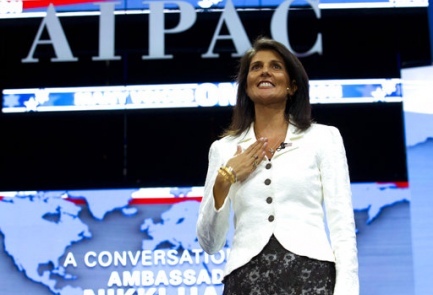
When U.S. Ambassador to the U.N. Nikki Haley told the AIPAC conference this week that the days of Israel-bashing at the U.N. were over, she received a standing ovation • The new political star may become the first woman to break the highest glass ceiling.
|
U.S. Ambassador to the U.N. Nikki Haley addresses the AIPAC conference in Washington this week
|
When U.S. Ambassador to the United Nations Nikki Haley was 5 years old, her parents signed her up for the Miss Bamberg pageant in her South Carolina hometown. The pageant traditionally crowned two winners, a white girl and a black girl. When Haley, the daughter of Indian immigrants, competed, the judges couldn’t decide to which group she belonged, and opted to disqualify her.
This week, it appears, the woman who was kicked out of the running for Miss Bamberg became the Jewish community’s Miss America.
But we’ll get to that in a moment.
Rewind to June 2015, when Dylan Roof’s shooting massacre at a black church in Charleston, South Carolina, horrified America. The murders touched on a raw nerve in an America that under then-President Barack Obama had hoped the interracial violence that had shaped the nation for the past 200 years was a thing of the past. Although there was no lack of incidents between police officers and black youths, or outrageous expressions of racism, a slaughter of black worshippers at a black church, in a southern state with a complicated past on race, exposed what the U.S. would have preferred to hide.
The massacre also reminded America, both black and white, that when it came to the painful, loaded issue of race, Obama had sold the U.S. a bill of goods. Even under the first African-American president, interracial tensions remained alive and kicking.
In the midst of the sorrowful, painful incident, one woman — Nikki Haley, then the governor of South Carolina — managed to turn lemons into lemonade. Almost overnight, Haley gave the American people an important lesson in citizenship. She harnessed the shared sense of shock to unite all parts of the state, across the political spectrum, and create a consensus virtually unprecedented in modern U.S. politics. The person who would become the anti-racism standard-bearer for an entire nation succeeded where many politicians had failed for decades — on the contentious matter of getting the Confederate flag removed from over the state house.
The Confederate Stars and Bars is seen by many as a flag that commemorates slavery and racism in America, even though others, including Haley, see it as the symbol of the rich legacy of the South. The battle over keeping the flag had created a decades-long rift, first when it flown over the state house itself, and then, following a compromise, in its courtyard. Attempts to fold up the flag and put it in a museum failed repeatedly.
Then Haley arrived. In a month she managed to bring the dispute to a respectable close and broadcast a sense of echoing optimism. From an obscure governor, Haley blossomed into America’s therapist, and her star began to rise in the national firmament. Her words convincing her fellow Republicans to support the bill to lower the flag (a two-third majority was necessary to pass the measure) will be long remembered: “That flag, while an integral part of our past, does not represent the future of our great state.”
America the beautiful
The brief, catchy campaign Haley led to remove the flag, and her ability to appeal to hearts and minds simultaneously, did not go unnoticed by businessman Donald Trump when he declared his candidacy for president. A little more than a year later, after he astonished the country by winning, he seems to have recalled how Haley managed to play on people’s optimism and feelings. We can assume he thought: We need a woman like this in the U.N., so she can do in international diplomacy what she did in politics in her southern state. Despite the mutual loathing the two had for each other during the presidential campaign, Haley took him up on his offer.
Looking back, we can say that Haley’s handling of the horrific slaughter in Charleston made her the new star of American politics.
At the annual AIPAC conference in Washington this week, Haley continued to shine. Without a doubt, she was the superstar of the event: For minutes at a time, the audience gave her a standing ovation, as did the interviewer on stage.
“The days of Israel-bashing are over. … There’s a new sheriff in town,” she said in a speech that moved the audience to tears.
Haley, a 45-year-old mother of two, was not just mouthing slogans. Barely two months have passed since Trump entered the White House, and the new U.S. ambassador to the U.N. is already signing, sealing, and delivering. She torpedoed the appointment of former Palestinian Authority Prime Minister Salam Fayyad as U.N. special envoy to Libya; she had a U.N. report that accused Israel of apartheid policies shelved, leading to the resignation of United Nations Undersecretary General and Executive Secretary for the Economic and Social Commission for Western Asia Rima Khalaf; and she boycotted the special (and biased) session of the U.N. Security Council held every year on Israel’s conduct in the “occupied territories,” a move that prompted Britain to take a new, refreshing line.
The staunchly pro-Israel AIPAC audience was amazed at what the new U.N. envoy was saying. Even when she described her bitter feelings over the damage done by the previous administration when it allowed the U.N. Security Council to pass Resolution 2334 (which declared the Israeli settlements an “obstacle to peace”), giving the Palestinians an important moral victory: “When Resolution 2334 happened, and the U.S. abstained … we had just done something that showed the United States at its weakest point ever. Never do we not have the backs of our friends. We don’t have a greater friend than Israel.”
Haley added that the passing of Resolution 2334 was “not only embarrassing, it was hurtful.”
Ironically, it was Trump — who has a deep loathing for the U.N. — who turned the organization into an important tool with which to improve the status of the U.S. He demonstrated how the U.N. has become a symbol of helplessness and international hypocrisy about Israel, and Haley is waging the campaign with an iron fist. U.S. Secretary of State Rex Tillerson may be conducting official negotiations and conduct, but the battle for hearts and minds and the U.S.’s stature in the world falls under Haley’s purview. She is America’s face in the important international forums that until now were handled by colorless officials. Haley’s appearance at the AIPAC conference sent another message: Trump doesn’t intend to sell out Israel to curry favor with anyone. Haley said that in the corridors of the U.N., everyone was “afraid” to discussed Resolution 2334 with her. And when it comes to the Iranian issue, Haley promised that Trump “will watch them [Iran] like a hawk.” Now that there’s a new sheriff in town, she is riding at his side, pistol drawn, ready for any showdown.
Looks of pity
Haley was born in Bamberg, South Carolina, on Jan. 20, 1972. Her parents, proud Sikhs Raj Kaur and Ajit Singh Randhawa, had immigrated to the U.S. from the Punjab region of India. Her father is a professor of biology; her mother has a master’s degree in education. They gave Haley her great love for America.
When she ran for governor of South Carolina in 2010, Haley began all her speeches with the same phrase: “I am the proud daughter of Indian immigrants who reminded my brothers, my sister and me every single day how blessed we were to live in this country.” This sentence was also the opening for her speech at the Republican national convention in Florida two years later, when Mitt Romney won the Republican presidential nomination.
I was in the audience that day. I heard her talking about her parents, who had such a profound influence on her worldview.
“They loved the fact that only in America could we be as successful as we wanted to be and nothing would stand in our way,” she said. “My parents started a business out of the living room of our home and, 30-plus years later, it was a multimillion dollar company.”
The audience was enchanted. Already she was being talked about as the future of the party, as the woman who could go far. Maybe all the way.
In the land of endless possibilities, Haley’s mother set up a small clothing shop. Haley studied accounting, and when she completed her degree began working as an accountant for a waste management company. She later transferred to the family business, Exotica International, and turned it into a flourishing textile venture.
It was actually a 2003 speech by then-New York Senator Hillary Clinton that prompted Haley to enter politics. Clinton urged people like her to listen to their hearts. But Haley says that her main role model was former British Prime Minister Margaret Thatcher.
Haley began her political career in 2004, when she ran for a seat in the South Carolina House of Representatives to represent a district in Lexington County. In her autobiography, “Can’t Is Not An Option: My American Story,” published in 2012, she describes the responses to her decision to run. There were people who gazed at her with pity, she writes. Other told her that she might be reaching a little too high, and suggested she consider running for the local school board. Only her parents and her husband, Michael Haley, supported her.
But this was only the beginning of her struggle. A political adviser she wanted to bring on board apologized and refused from the start, explaining that while she might be an “attractive woman,” she was only 31 and Indian, and her father wore a turban. The adviser said Haley’s district just wasn’t “ready for that.”
The adviser made a grave mistake. She won her district’s race for the state house, of course, and was eventually elected and re-elected governor.
A star for 2024?
Hillary Clinton had led her to realize anything was possible if a person wanted it enough. Haley became the first woman to serve as governor of South Carolina, and now she is the first Indian-American to represent the U.S. in the U.N. No one will hear any shame from her about her roots — she maintains close ties with the Indian community in the U.S., which insists on calling her by her birth name, Nimrata. On this, she differs greatly from former Louisiana Governor Bobby Jindal, the first Indian-American governor in the country, who has chosen to distance himself from his community.
Jindal, a year older than Haley, tried to win the Republican presidential nomination, but dropped out of the race in November 2015. Some claim that even if he became governor before she did, she is likely to beat him to the higher office at 1600 Pennsylvania Ave.
This was, without a doubt, Haley’s week. Jewish American websites vied to be most complimentary to her, and the 20,000 people who were present at the Verizon Auditorium in Washington still feel as though they took part in an historic event.
After the Charleston massacre, Haley was marked as someone who could put the Republicans back into the White House, thanks to her ability to approach the conservative, traditional base and minorities who are not particularly attracted to the Republican Party — much like Republican Cuban-American Sen. Marco Rubio.
This is also the reason why Haley was picked to make a rebuttal speech to Obama’s 2016 state of the nation address. In that speech, she criticized his conduct in the Middle East, saying America should sign deals that would give Israel, not Iran, cause to celebrate.
In 2016, some suggested naming Haley as the Republican vice presidential candidate. On May 4, 2016, when Trump had in effect won the Republican primaries, she rejected the idea.
But the Trump era is just beginning, and the president hopes it will continue for several more years. Haley is still young. Who knows? Maybe she’ll be the one to break the glass ceiling and be the first woman to lead the free world. The Republican Party recognizes her wonderful abilities.
“If you want to hear an inclusive leader who’s visionary, who’s got a path for the future, who’s brought people together, who’s unified, it’s Nikki Haley,” House Speaker Paul Ryan said in an interview with CNN last year.
This week, too, he was full of praise, and who knows? Maybe in 2024 he’ll be her vice presidential candidate when she runs for president. This could be the kind of full circle they make movies about: Clinton inspired her, Trump gave her experience and fame, and maybe Haley will fulfill the dream.
Outrageous Unconstitutional Intimidation of Private Citizens Who Opposed Mosque Project; Thomas More Law Center Steps In, Thomas More Law Center, March 28, 2017
(The township’s press release referenced in the last paragraph is dated November 18, 2016. The lawsuit had been filed on March 10th and, four days later, the Department of Justice “notified the Township that the DOJ was going to investigate the ISBR allegations.” The press release also states,
The private lawsuit and Plaintiffs’ issuance of punitive subpoenas on private citizens merely for participating in the land use process raise further Constitutional issues of free speech and privacy concerns. These invasive probes went so far as to require documents sufficient to show endorsements of, donations to, or associations with political campaigns from the local to the national level.
Among various concerns, we anticipate that the actions of the DOJ and Plaintiffs may well dissuade residents from participating in future land use hearings for fear of retribution from an applicant and the government.
Eight months after the suit was filed, the DOJ filed its own suit against the township. The DOJ should ask the court to dismiss the suit filed on its behalf and that filed by the Islamic Society of Basking Ridge. — DM)
ANN ARBOR, MI – If you speak out against building a mosque in your community, you may be slapped with a subpoena demanding all your personal documents, including emails, voicemails, text messages, and social media posts concerning Muslims, Islam, mosques, the Quran, Muslim worship or prayer services, wudu, imams, burkas, hijabs, Sharia, jihad, or anything else associated with or related to Muslims or Islam.

This was part of the harassment and intimidation experienced by scores of private citizens of the small New Jersey town, Bernards Township (also known as Basking Ridge), who spoke out at public hearings against a plan to build a disproportionately-sized mosque on a small piece of residential property. The mosque project, sponsored by the Islamic Society of Basking Ridge (“ISBR”) and its president, Mohammad Ali Chaudry, was denied by Township officials for not complying with local building ordinances.
On March 10, 2016, ISBR and Mohammad Ali Chaudry sued Bernards Township in federal court, claiming various violations of the Religious Land Use and Institutionalized Persons Act. Shortly after, ISBR had coercive subpoenas served on private citizens whose only involvement was voicing concerns at public planning board meetings about whether the proposed mosque complied with local building ordinances.
The United States District Court for the District of New Jersey recently granted the Thomas More Law Center, a national public interest law firm based in Ann Arbor, Michigan, permission to represent, without charge, several of these citizens who desired to quash the coercive and abusive subpoenas. Westfield, New Jersey attorney Michael P. Hrycak is assisting the Law Center.
Richard Thompson, President and Chief Counsel of the Thomas More Law Center, commented: “ISBR is setting a dangerous unconstitutional precedent by abusing a court process to chill and trample on the First Amendment Rights of private citizens whose only involvement was to speak out against the mosque at public hearings. Because the U.S. Supreme Court has held that speech at a public place on a matter of public concern is entitled to special protection, we will ask the Federal District Court to quash the subpoenas served on our clients as a misuse and abuse of the Court’s process.”
Lori Caratzola, described in the ISBR Complaint as a fervent and frequent objector to the mosque, was a prime target for ISBR’s personal attacks. She was personally mentioned over a dozen times in their Complaint. Yet she has remained steadfast in her opposition. Ms. Caratzola commented:
“Being served with a Federal Court Subpoena to turn over all my personal communications including voicemails, social media, emails, notes wherein I make any mention of anything having to do with Islam is an absolute violation of my First Amendment rights. I was a citizen exercising my right to attend public planning board meetings about a land use application that affected my community.”
She continued:
“Dr. Chaudry’s clear intent was to embarrass, strike fear, silence and cause financial harm to any citizen who dared oppose his nonconforming project. And if these subpoenas are allowed to stand, it will set a chilling precedent for all citizens who wish to exercise their Constitutionally protected right to free speech and to petition their government.
“I was named numerous times in the Complaint, yet as a non-party, I had no standing to challenge the lies and half-truths told about me. After the Complaint was filed, mainstream media picked up and repeated these lies and half-truths.”
Caratzola concluded:
“I have lost days, probably weeks, devoting time to trying to find counsel – only to find most attorneys are afraid of challenging an Islamic group in today’s political climate.”
Attorney Karen Lugo, a specialist on constitutional law and zoning issues, echoed Lori Caratzola’s concerns:
“ISBR’s subpoena of private citizens’ communications with local government, as well as all personal email and social media statements related to ‘anything associated with or related to Muslims or Islam’ is in direct violation of speech protections enshrined in the Constitution and in Supreme Court rulings. ISBR’s blatant efforts to chill the free exercise of speech while intimidating local citizens with these subpoenas must not only be denied, but must be rebuked, by the courts.”
Cody Smith, another subpoenaed resident who opposed the Mosque, stated:
“The planning board did exactly what it should have done—set emotions aside and judge ISBR’s application solely on its merits and whether it complied with our local regulations. It’s unfortunate that Dr. Chaudry, the Township’s former mayor, has resorted to an all-out smear campaign and retaliation against residents who exercised their fundamental Constitutional rights of Free Speech in a public forum.”
Soon after ISBR’s lawsuit, DOJ investigators opened another coercive front by attempting to interview the private citizens who opposed the mosque. Eight months later, the DOJ filed its own lawsuit against the Township.
Astonishingly, the DOJ was dismissive of an apparent conflict of interest between Mohammad Ali Chaudry and the DOJ’s chief investigator, Caroline Sadlowski, both of whom were serving together on the Center for Religious and Cultural Conflicts board at Drew University.
Dept. of D’oh! EPA goofs, issues press release slamming Trump’s climate actions, Washington Times, Ben Wolfgang, March 30, 2017
(Accident? Why of course. Not only that, but the Easter Bunny wrote the press release and Hillary is our President. Methinks the EPA swamp and multiple other agency swamps need draining. Not “soon.” Now. — DM)
 FILE – In this March 16, 2017, file photo, proposals for the Environmental Protection Agency (EPA) in President Donald Trump’s first budget are displayed at the Government Printing Office in Washington.
The Environmental Protection Agency on Thursday sent out a press release touting praise for President Trump’s rollback of Obama-era climate-change regulations this week — but the agency accidentally led the email with a blistering quote from a Democratic critic.
The press release includes a quote from Sen. Tom Carper, Delaware Democrat and ranking member on the Senate Environment and Public Works Committee, wrongly attributed to Sen. Shelley Moore Capito, a West Virginia Republican.
The email, titled “What They Are Saying About President Trump’s Executive Order on Energy Independence,” opens with a complete and total takedown of that order.
Today’s executive order calls into question America’s credibility and our commitment to tackling the greatest environmental challenge of our lifetime,” it continues. “With the world watching, President Trump and [EPA] Administrator [Scott] Pruitt have chosen to shirk our responsibility, disregard clear science and undo the significant progress our country has made to ensure we leave a better, more sustainable planet for generations to come.”
The agency quickly sent out a revised press release correcting the embarrassing error.
A bloody day in London town, Israel Hayom, Clifford D. May, March 30, 2017
“I absolutely agree, and it is wrong to describe this as ‘Islamic terrorism’,” she [Prime Minister Theresa May] replied. “It is ‘Islamist terrorism.'”
Clever of her. She did not dismiss the attack as “violent extremism.” She did not suggest that the attacker might just as easily have been a Rastafarian, Zoroastrian or Buddhist. She tacitly recognized that ideologies based on Islamic scripture drive such terrorist attacks while avoiding the implication that most Muslims approve of such ideologies.
This nuanced explanation should have become the norm long ago. Instead, many on the left insist that Islam is simply and only a “religion of peace.” Muslims who contradict that are “perverting” Islam. Non-Muslims who contradict that are Islamophobes.
******************************
“The kafir’s blood is halal for you, so shed it.” That’s just one of the catchier headlines in a recent issue of Rumiyah, a slick online magazine published by the Islamic State group.
A “kafir,” of course, is a non-Muslim. “Halal” means religiously permissible. As for Rumiyah, that’s Arabic for Rome, one of the Christian capitals that the leaders of Islamic State hope to conquer. (The other great Christian capital, Constantinople, fell to soldiers of the caliphate in 1453. It’s now called Istanbul.)
Was Khalid Masood — the convert to Islam who last week staged a terrorist attack at London’s Houses of Parliament, seat and symbol of British democracy — a reader of Rumiyah? If so, he might have been inspired by an article late last year urging people like him to do precisely what he did: drive a vehicle into a crowd of non-Muslims, “smashing their bodies with the vehicle’s strong outer frame while advancing forward — crushing their heads, torsos, and limbs under the vehicle’s wheels and chassis.” Masood then exited the vehicle and stabbed a police officer — a tactic used frequently against Israelis in recent years.
The Western response to such atrocities has become ritualistic. The police say they are investigating and are uncertain about the perpetrator’s motive. Foreign heads of state condemn the attack, offer condolences and pledge solidarity. Leaders of the nation attacked defiantly announce that life will go on and no one will be intimidated.
Next, comes the debate over whether Islam should be implicated or vindicated. In this instance, a conservative MP, Michael Tomlinson, asked Prime Minister Theresa May whether she agreed that the term “Islamic terror” was inappropriate.
“I absolutely agree, and it is wrong to describe this as ‘Islamic terrorism’,” she replied. “It is ‘Islamist terrorism.'”
Clever of her. She did not dismiss the attack as “violent extremism.” She did not suggest that the attacker might just as easily have been a Rastafarian, Zoroastrian or Buddhist. She tacitly recognized that ideologies based on Islamic scripture drive such terrorist attacks while avoiding the implication that most Muslims approve of such ideologies.
This nuanced explanation should have become the norm long ago. Instead, many on the left insist that Islam is simply and only a “religion of peace.” Muslims who contradict that are “perverting” Islam. Non-Muslims who contradict that are Islamophobes.
Meanwhile, many on the right believe it is only the Islamists who are practicing “true” Islam. They implicitly concur with the Islamists that 21st century Sufis, Ismailis and Ahmadis are heretics, as are Jordan’s King Abdullah II and Egypt’s President Abdel-Fattah el-Sissi (both have gone to war against Islamists) and the millions of Kurds who reject Islamism because they recognize the existential threat it poses to their proud nation.
Islamism is not a complicated ideology. Hassan al-Banna, who founded the Muslim Brotherhood in 1928, wrote: “It is the nature of Islam to dominate, not to be dominated, to impose its law on all nations and to extend its power to the entire planet.” Among the mottoes of the Muslim Brotherhood: “Jihad is our way; death for the sake of Allah is our wish.”
Some Islamists believe the path to power can be cleared only with the sword. We may call them jihadists. Some Islamists see other routes, for example through the ballot box or demographic change. Some Islamists even claim to eschew violence. But to infer from that they embrace nonviolence as a principle would be a mistake.
All Islamists, even those who are clean-shaven and wear neckties, are committed to the supremacy of their religion and their community, the umma, the “nation of Islam,” over all other religions, communities and nations.
No one would argue that when we condemn “white supremacism” we risk offending all people of pallor. So why is it “politically incorrect” to speak candidly — and condemn unequivocally — Islamic supremacism?
Another fact often avoided: Islamists can be Shia as well as Sunni. The earliest Islamist attacks against Americans (the Barbary pirates notwithstanding) were carried out in 1983 in Beirut, first against the U.S. Embassy, then against the barracks of the U.S. Marines who were there to serve as peacekeepers. Most analysts agree that Hezbollah, a Shia organization funded and instructed by the Islamic Republic of Iran, was responsible.
Neither Hezbollah nor Iran’s rulers have become more moderate over the decades since. Iranian Supreme Leader Ali Khamenei sees himself as leading a global jihadist revolution against the United States and the liberal world order. The significance of this appears to have eluded many policymakers.
How, for example, did President Barack Obama not understand that the deal he cut with Iran’s rulers will establish them as legitimate members of the nuclear weapons club within less than a generation — even if “Death to America!” remains their goal and rallying cry? And does U.S. President Donald Trump grasp that if the defeat of the Islamic State in Syria and Iraq further empowers Tehran, the American victory will be Pyrrhic?
Sunni and Shia Islamists are rivals — not enemies. Neither would take issue with the unnamed author of the Rumiyah article noted above who asserts that “striking terror into the hearts of all disbelievers is a Muslim’s duty.”
Whether that view is based on true Islam or a perversion of Islam really doesn’t matter. Either way, it’s an expression of the most dynamic and lethal ideologies now spreading around the world. We need to more seriously study these ideologies. We need to more candidly discuss what Islamists intend to do to those who refuse to embrace or appease them. Only then can we hope to formulate a coherent and effective strategy to defend ourselves.
Israeli borders not cited at Arab Summit, DEBKAfile, March 30, 2017
 Syria’s Bashar Assad still persona non grata in Arab world
In a separate statement issued later, the Arab rulers reaffirmed their commitment to a two-state solution of the Arab-Israeli conflict. They called for a new round of peace talks based on a two-state formula and renewed the 2002 “reconciliation” offer (drawn up by Saudi Arabia) if “Israel quit occupied Arab land and agreed to a deal on Palestinian refugees.”
This was the first Arab summit to refrain from defining Israel’s future borders under a peace deal. This leaves the door open for leeway in the negotiations to take place as part of the new US-Saudi-Egyptian peace initiative we reported earlier now the subject of active exchanges between the US, Saudi Arabia, Egypt, the United Arab Emirates, Israel and the Palestinian Authority.
************************
All 15 resolutions passed by the Arab summit which took place in Jordan Wednesday, March 29, were devoted to an indictment of Iran, its Revolutionary Guards Corps and Lebanese surrogate, Hizballah. They were a testament to the depth of Arab-Iranian animosity and exposed the extent of the rift between the Sunni and Shiite Muslim worlds.
Iran was accused of meddling in the internal affairs of Arab nations, inciting Shiites against Sunnis, and arming and training Shiite terrorist groups for operations against legitimate Arab governments. The Arab rulers combined to put Tehran in the dock for its interference in the Syrian civil war and assault on its sovereignty.
None of the formal resolutions addressed the Palestinian-Israeli conflict. In a separate statement issued later, the Arab rulers reaffirmed their commitment to a two-state solution of the Arab-Israeli conflict. They called for a new round of peace talks based on a two-state formula and renewed the 2002 “reconciliation” offer (drawn up by Saudi Arabia) if “Israel quit occupied Arab land and agreed to a deal on Palestinian refugees.”
DEBKAfile: This was the first Arab summit to refrain from defining Israel’s future borders under a peace deal. This leaves the door open for leeway in the negotiations to take place as part of the new US-Saudi-Egyptian peace initiative we reported earlier now the subject of active exchanges between the US, Saudi Arabia, Egypt, the United Arab Emirates, Israel and the Palestinian Authority. King Abdullah of Jordan, who hosted the summit and Egyptian President Abdel-Fatteh El-Sisi will travel to Washington to report to President Donald Trump on the private discussions on this issue at the session and launch the next stage of the Arab-Israeli peace initiative.
DEBKAfile: King Abdullah of Jordan, who hosted the summit and Egyptian President Abdel-Fatteh El-Sisi will travel to Washington to report to President Donald Trump on the private discussions on this issue at the session and launch the next stage of the Arab-Israeli peace initiative.
DEBKAfile lists the 15 resolutions submitted to the Arab summit.
1: Good neighborly relations should prevail between Iran and Arab countries and Iran’s meddling in the affairs of Arab countries condemned as a threat to the security and stability of the region.
2: The Islamic Republic of Iran should assume responsibility for an attack on Saudi Arabia’s embassy in Tehran and its consulate in Mashhad and abide by the laws of diplomacy.
3: The Iranian government must tell its officials to desist from hostile, inflammatory remarks against Arab countries.
4: Iran must stop fomenting sectarian rivalries and withdraw support from groups who destabilize the Gulf countries and armed groups inside Arab countries.
5: Iran’s invasion of three Emirate islands (Abu Musa and the Greater and Lesser Tunbs) is condemned. They must be restored to lawful ownership by peaceful means.
6: Iran must stop supporting and training terrorists and sending arms and ammunition to rebel groups fighting the Bahrain government.
7: Bahraini security agencies win praise for foiling a terrorist plot in December 2016 supported by the Iranian Revolutionary Guards and terrorist Hizballah.
8: Iran’s nefarious meddling in the Syrian crisis has threatened its sovereignty, future stability, security and unity.
9: Iranian meddling in Yemen’s affairs by backing forces fighting the legitimate government negatively affects the security of the country, its neighbors and the wider region.
10: The importance of the initiative taken by the Assistance Council of the Arab Gulf Countries is underlined and calls for a positive response from Iran
11: Iran must be bound to compliance with Security Council Resolution 2231 of 2015 and penalized swiftly with effective sanctions for any violations. Iran must be held to its commitments under the nuclear and regional environment treaties.
12: The Secretary General is entrusted with managing the commission of four Arab foreign ministers set up to thwart Iranian interference in Arab affairs.
13: Arabic assistance forums with countries, regional, and international groups will highlight the ill effects of Iranian meddling in their affairs.
14: This issue will be placed on the UN agenda under Section 2 of Article 7
15: The Arab League Secretary General will monitor the implementation of these resolutions and report on progress to the next Arab summit.
CAIR Smears and Tries to Silence an IPT Fellow, Investigative Project on Terrorism, March 30, 2017
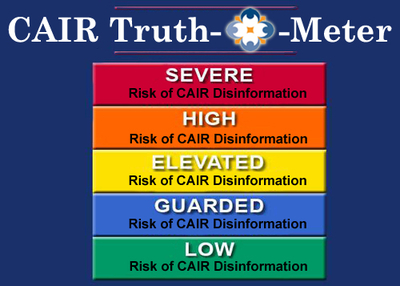
Using misleading claims and engaging in rank hypocrisy, the Council on American-Islamic Relations (CAIR) is waging a campaign to silence an Investigative Project on Terrorism senior fellow.
CAIR issued a news release Wednesday announcing its efforts to pressure the United States Air Force Special Operations School (USAFSOS) into dropping Patrick Dunleavy as an instructor in “The Dynamics of International Terrorism” course. Dunleavy, who served as deputy inspector general for New York State’s Department of Corrections, focuses on prison radicalization.
It’s a topic he learned about first hand, including work on “Operation Hades,” an investigation into radical Islamist recruitment both in and out of prison.
CAIR’s release, however, ignored Dunleavy’s long record of accomplishment which includes serving as a consultant for the FBI and the International Association of Chiefs of Police on the National Data Exchange Program. He also has been a featured speaker at the United States Army’s Counter Terrorism Conference.
Instead, CAIR described a letter it sent to U.S. Air Force Special Operations Commander, Lieutenant General Marshall B. Webb, demanding Dunleavy be dropped from future programs. It cited three statements CAIR sees as “Islamophobic”:
1) “To Americans [morality] means individual liberty, equal rights for men and women, religious freedom, free speech, etc. But these are contrary to the moral code of Islam.” 2) “The concept of ‘friendship,’ . . .is a relationship based on at least some degree of shared moral and political ideals. By that standard no Muslim nation is a friend of the U.S.” and 3) “To many Muslim parents, visions of violence and death are indeed the ‘better future.'”
All three come from a 2011 article Dunleavy co-authored with Peter Gadiel, whose son James was killed in the World Trade Center on 9/11. As we’ll show, none of these statements is Islamophobic, as each is rooted in Quranic verses or is exhibited by disturbing numbers of Muslims throughout the world.

CAIR’s credibility should be considered first.
This is an organization deemed persona non grata by the FBI in 2008, based upon evidence agents uncovered which prove that CAIR was created as part of a Muslim Brotherhood-run Hamas support network in the United States. In addition to internal documents which place CAIR under the umbrella of the Muslim Brotherhood’s “Palestine Committee,” CAIR co-founder Nihad Awad – the only executive director in the organization’s 23 year existence – is on the Palestine Committee’s telephone list. He also participated in a secret 1993 gathering of Hamas supporters in America who debated ways to “derail” the fledgling, U.S.-brokered Oslo Accords that at the time offered hope for a peaceful settlement to the Israeli-Palestinian conflict.
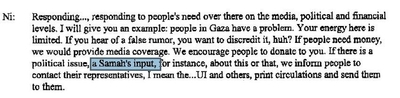
Palestine Committee members could not accept a deal that recognized Israel’s right to exist and felt politically threatened by the elevation of the secular Palestine Liberation Organization to run a newly autonomous Palestinian Authority. Participants were encouraged not to mention Hamas by name. Rather, they were instructed to flip the spelling of the name, and talk about “Samah.” As this FBI translation shows, Awad dutifully followed these instructions.
In addition, CAIR not only defends people caught supporting terrorists, it often lauds them. Among many examples, it defended Palestinian Islamic Jihad board member Sami Al-Arian for years even after his conviction for supporting the terrorist group, and in 2014, chose to honor his family with a “Promoting Justice Award.”
It continues to laud convicted Palestinian bomber Rasmieh Odeh, who was responsible for a 1969 Jerusalem bombing that killed two college students.
This is the organization that finds Dunleavy unacceptable.
Officials already have reviewed all of Dunleavy’s USAFSOS presentations and told him that they found nothing offensive, and he has logged no complaints after teaching multiple courses a year for the past five years.
It’s worth noting that CAIR relies on one five-year-old article as the basis for its complaint. Potomac Books published Dunleavy’s The Fertile Soil of Jihad in 2011 and he is frequently published by the IPT and elsewhere. The absence of any truly bigoted statements is telling.
So is CAIR’s hypocrisy. Its website features a page devoted to debunking what it calls “Misinformation and Conspiracy Theories About CAIR.” (See the IPT’s analysis of CAIR’s false claims here.) On that “misinformation” page, CAIR whines twice about “guilt by association,” including a response to the number of CAIR officials who were implicated in terrorism-related cases.
Yet, the only other reason CAIR cites to disqualify him from the Air Force training is the fact that he’s an IPT senior fellow and CAIR does not like the IPT. It’s easy to understand why. We’ve done more to expose its history and highlight the radical views of its top officials and its opposition to law enforcement counter-terrorism efforts than anyone else.
But, again, Dunleavy has written more than two dozen articles for the IPT. CAIR cited none in arguing he “does not fit the U.S. military’s standards for a subject-matter expert” working with the dreadfully “Islamophobic” IPT.
The example CAIR does cite, as mentioned above, utterly fails to make CAIR’s case. First is the statement, “To Americans [morality] means individual liberty, equal rights for men and women, religious freedom, free speech, etc. But these are contrary to the moral code of Islam.”

That could sound bad. But looking at the world today, and the treatment of women, gays and other minorities living in majority-Muslim nations, individual liberty and equal rights are sorely missing. Right now, a Twitter hashtag is calling for the death of a Pakistani blogger named Ayaz Nizami. Nizami, an atheist, was among three people arrested last week and charged with blasphemy. #HangAyazNizami trended on Twitter in Pakistan afterward.
Polling indicates a shocking number of Muslims agree that death is the appropriate punishment for apostasy. In 2013, the Pew Research Center found 88 percent support among Egypt’s Muslims and among 62 percent of Pakistanis. Majority support also exists in Malaysia, Jordan and inside the Palestinian territories. More than a third of young British Muslims agreed.
No other religion today carries such risks for those who leave. Even Scientology stops at merely disconnecting people from their families when someone leaves the church.
Both Iran and the Islamic State execute homosexuals.
Meanwhile, most American mosques still segregate men and women during prayer, often sending the women into sparse and cramped back areas and side rooms. American clerics like Yasir Qadhi advocate a Saudi Arabian lifestyle for American Muslim women. Stay home and tend to your husbands, he preached. They “should not work, because their role is as wives and mothers.”
“You please your husband,” Qadhi said. “And in return your husband will give you the far more difficult things to do of earning money and doing this and that.”
This is a Muslim American cleric prominent enough to warrant an 8,500 word New York Times profile, preaching his view of Islam’s moral code in the 21st century.
There are Muslim reformers who want to change this mindset, and advocate for genuine equality for women and minorities. CAIR, like other Islamist groups, has refused to endorse their agenda and generally pretends they do not exist.
The second Dunleavy statement CAIR singles out: “The concept of ‘friendship,’ . . .is a relationship based on at least some degree of shared moral and political ideals. By that standard no Muslim nation is a friend of the U.S.”
In the Quran, verse 5:51 instructs Muslims not to “take the Jews and the Christians as allies. They are [in fact] allies of one another. And whoever is an ally to them among you – then indeed, he is [one] of them. Indeed, Allah guides not the wrongdoing people. Verse 9:30 calls on Allah to “destroy” Jews and Christians.
Finally, CAIR takes issue with his 2011 statement that, “To many Muslim parents, visions of violence and death are indeed the ‘better future.'”
This is certainly true among a disturbing number of Palestinians. Parents of Palestinians killed attempting to carry out terrorist attacks against Israelis speak of their pride. It is routine for deadly attacks to be celebrated with people handing out sweets on Palestinian streets. Hamas media for years has indoctrinated children into jihad, using everything from training camps to plays and video productions showing young children pretending to be in combat. Hamas television even “martyred” a Mickey Mouse rip-off, and then sent a puppet bumblebee “to continue the path of Islam, of heroism, of martyrdom and of the mujahideen.”
CAIR has never condemned this indoctrination, and on a broader level, its officials refuse to condemn Hamas by name. In fact, they take great umbrage at the suggestion this is something worth doing.
But the organization does find time to smear a veteran law enforcement official and expert on radicalization because it does not agree with his message. It does not appear that the tactic will work in Dunleavy’s case. But it’s time for law enforcement officials, the military and the media to follow the FBI’s lead and recognize CAIR for what it is and simply dismiss such baseless attacks out of hand.
Access Islam: US Department of Education, Christian Access Network via YouTube, March 28, 2017
(I assume that this promotion of Islam by the Department of Education started during the Obama administration. Apparently, DOE provides no promotion of Christianity, Judaism or other religion. Nor should it. When will Betsy DeVos, President Trump’s Secretary of Education, repudiate and pull this Federal intervention in favor of Islam?
April 1 Update — at my blog— DM)
Here is the blurb following the video:
The United States Department of Education has developed an Islamic indoctrination program for public schools called, ‘Access Islam.’
The lesson plans are written for grades 5 through 12. They include worksheets and videos to help students perform the 5 Pillars of Islam – prayer, fasting, alms giving, pilgrimage to Mecca and the proclamation of Muslim faith.
This short video contains excerpted clips taken from the “Access Islam’ program which not only teaches children how to perform a Muslim prayer, but asks students such questions as: ‘What does a Muslim prayer sound like?’ ‘What do the movements look like?’ and ‘What are some of the things Muslims say during prayer?’
Children are also expected to memorize verses from the Quran and give the meaning of those verses.
Taken as a whole, the U.S. Department of Education’s ‘Access Islam’ program is nothing short of a Sunday school class on Islam.
Here is a video of an interview with the founder of the Christian Action Network:
Think-tank offers Trump policy recommendations on Israel, Israel National News, Mordechai Sones, March 29, 2017
 Aerial view of Capitol HillUS gov’t / public domain)
Heritage recently released a report authored by James Phillips, Heritage’s Senior Research Fellow for Middle Eastern Affairs, and a latest volume of Mandate, outlining specific policy recommendations for the Trump Administration. Four topics treated are Iran, the defeat of Islamist terrorist groups, the Israeli–Palestinian conflict, and President Trump’s promise to move the U.S. embassy to Jerusalem.
**************************
Weeks after President Ronald Reagan’s first election victory, the U.S. was engulfed in problems and the new President was confronting challenges unparalleled in nearly a half-century. At that time, the prominent conservative Heritage Foundation produced a detailed road map designed to help the fledgling administration steer the nation into a sound future, guided by conservative principles, called Mandate for Leadership. By the end of President Reagan’s first year in office, nearly two-thirds of Mandate’s more than 2,000 specific recommendations had been or were being transformed into policy.
Since then, Heritage has produced the Mandate series for incoming administrations, marshaling the talents of scores of experts.
Heritage recently released a report authored by James Phillips, Heritage’s Senior Research Fellow for Middle Eastern Affairs, and a latest volume of Mandate, outlining specific policy recommendations for the Trump Administration. Four topics treated are Iran, the defeat of Islamist terrorist groups, the Israeli–Palestinian conflict, and President Trump’s promise to move the U.S. embassy to Jerusalem.
Regarding Iran, the report finds Iran to be “the chief long-term regional threat to the U.S. and Israel. While the Obama Administration turned a blind eye to many of Iran’s malign activities to avoid jeopardizing its flawed nuclear agreement with Tehran, the Trump Administration is committed to confronting and pushing back against Iran.”
Findings regarding Iran state that “Cooperation on missile defense should be an especially important agenda item. Iran’s medium-range missiles already can reach Israel with a 1,000-pound payload. On February 4, Mojtaba Zonour, a member of Iran’s National Security and Foreign Policy Commission, helpfully reminded the world that ‘only seven minutes are needed for an Iranian missile to hit Tel Aviv’ and that 36 U.S. military bases in the Middle East are within range of Iranian missiles. Israel is now deploying the Arrow-3 interceptor, developed jointly with the United States, and the two leaders should agree to support cooperation in further enhancing missile defenses.”
Heritage recommends: “President Trump should discuss plans to hold Iran accountable for its hostile regional policies and roll back its influence, outlining the Administration’s strategy for ratcheting up sanctions on Iran and particularly on the IRGC, which controls Iran’s ballistic missile program and efforts to export terrorism. President Trump and Prime Minister Netanyahu should also coordinate on interdicting the flow of Iranian arms to Hezbollah, Hamas, and other terrorist groups.”
On the Islamic State (ISIS) and the war in Syria, Heritage concludes, “Both the U.S. and Israel seek the rapid destruction of ISIS in Syria, but Israel is concerned that President Trump’s intention to cooperate with Russia in Syria could strengthen the influence of Iran and Hezbollah there.” Explaining Israel’s needs, Heritage councils the Trump Administration that “Netanyahu will want to gain an understanding of U.S. plans for Syria, efforts to split Russia from Iran, and the implications for Israeli security. At a minimum, Jerusalem wants to prevent Iran and Hezbollah from establishing a military presence near the Israeli–Syrian border.”
Recommendations: “Israel has legitimate concerns about the increasing role that Iran and Hezbollah are playing in Syria. Trump needs to ensure that U.S. policies in regard to Syria will not inadvertently harm Israel’s security.
“Islamist terrorist groups pose a significant threat to the U.S. and Israel. Both countries can benefit from better coordination. Trump and Netanyahu should coordinate policies on fighting ISIS in Syria and explore ways to reduce the ISIS threat to Jordan and Egypt. Jordan needs intelligence and counterterrorism help in uncovering terrorist plots and economic support to lighten the burden of more than 600,000 Syrian refugees. Egypt has sustained heavy losses fighting ISIS in the Sinai Peninsula, and the group claimed responsibility on February 9 for a cross-border rocket attack on the Israeli city of Eilat. Cairo needs quiet help in defeating the ISIS insurgency, which has received extensive aid from Hamas and other Islamist extremist groups in Gaza.”
The Israel-Palestinian conflict is summed up thus: “In contrast to the Obama Administration—which allowed the passage of U.N. Security Council Resolution 2234 condemning Israel and added insult to injury with a blistering anti-Israel speech from Secretary of State John Kerry—the Trump Administration will be much more supportive of Israel at the U.N. and elsewhere. Trump should publicly underscore that the U.S. will veto any one-sided U.N. Security Council resolutions and assert that only direct bilateral negotiations, not the U.N., can produce a peace agreement.
“President Trump should also stress that Palestinian terrorist attacks, not Israeli settlements, are the chief obstacles to peace. Although the Administration has not taken an official position on settlements, it did release a statement saying that new settlements “may not be helpful” in achieving a peace agreement. A senior Administration official later told The Jerusalem Post that new settlements could undermine Trump’s plans to engineer a final status agreement.
“Trump has described an Israeli–Palestinian peace agreement as ‘the ultimate deal,’ but the situation is not ripe for such a deal. The Palestinian Authority is unwilling to make the necessary concessions and too weak to enforce any agreement in the face of Hamas’s implacable opposition to Israel.”
Recommendations include: “The Administration should focus on managing rather than resolving the conflict, which is impossible for the immediate future. Trump should consult with Netanyahu about how to restore calm, undermine Hamas and other Islamist extremist groups, and create a more stable environment for future step-by-step negotiations.” However, Phillips adds, “Refraining from establishing new settlements would be helpful in this context.”
Regarding the embassy move, Heritage says, “President Trump’s commitment to move the U.S. embassy from Tel Aviv to Jerusalem would correct a historic anomaly: The United States has never recognized any part of Jerusalem as Israel’s capital. However, moving the embassy could ignite protests, riots, and anti-American backlashes among Palestinians, Arabs, and Muslims.”
Therefore, Heritage recommends to “Ensure that certain standards are met before moving the U.S. embassy to Jerusalem. To mitigate the risks of the move, Trump should consult with Netanyahu on the timing; pick a site in West Jerusalem, which has been controlled by Israel since 1948; and explain that the move does not change other aspects of U.S. policy. The U.S. should make it clear that the borders and final status of Jerusalem should be determined through negotiations; that the embassy move would not preclude a Palestinian state; that the U.S. consulate-general in Jerusalem would continue to function as the U.S. representative to the Palestinian Authority; and that no changes would be made in the status of Muslim holy sites, which would continue to be administered by Jordan.”
In conclusion, the Heritage report says that “Israel is America’s foremost ally in the Middle East. Both countries are democracies, value free-market economies, and uphold human rights at a time when many other countries in the Middle East reject those values.” It says recent developments represent “a promising opportunity to reassert American leadership in the Middle East and strengthen U.S.–Israel strategic cooperation on foreign policy, defense, and counterterrorism issues.”


 anneinpt
 artaxes
 danmillerinpanama
 davidking1530
 Peter Hofman
 Joseph Wouk
 Peter
 Louisiana Steve


Recent Comments