Video: Robert Spencer on the Left’s war against reality and attempts to crush all dissent

Posted October 8, 2017 by danmillerinpanama
Categories: Dissent, Freedom of speech, Leftists, Robert Spencer

Tags: , , ,

Video: Robert Spencer on the Left’s war against reality and attempts to crush all dissent, Young Americans for Freedom via YouTube, October 7, 2017

(Please see also, A must watch, it is your time more than worth! An old geezer, it’s my bedtime so I haven’t watched Mr. Spencer’s address yet. I will do so tomorrow morning. –DM)


Today I spoke at the Young America’s Foundation’s 2017 Chicago Freedom Conference. As usual with YAF, the young people in attendance were informed, committed, and enthusiastic.

I start at 8:09 in this video.

Report: Cartel Human Smuggling Fees ‘Skyrocketed’ Under Trump

Posted October 7, 2017 by danmillerinpanama
Categories: Immigration law enforcement, Mexican cartels, Smuggling in illegal aliens, Trump and legal immigration, US Southern border

Tags: , , , ,

Report: Cartel Human Smuggling Fees ‘Skyrocketed’ Under Trump, Breitbart, John Binder, October 7, 2017

AP File Photo: Eric Gay

“Market forces are at work — even in the illegal market of migrant smuggling,” Huennekens wrote. “Increased costs associated with crossing the border, and increased demand, have caused the price of hiring a smuggler to rise sharply. With current trends, if enforcement efforts on the border continue to increase then smugglers may find the cost of transferring migrants across the border too costly to justify. Likewise, migrants may be less likely to attempt a border crossing if they cannot afford the exorbitant fees associated with hiring a smuggler.”

********************************

Smuggling illegal aliens across the U.S.-Mexico border is becoming increasingly expensive. A new report shows how the price of human smuggling has “skyrocketed” under President Trump’s immigration enforcement actions.

As Trump’s Department of Homeland Security (DHS) will soon review prototypes of border walls to construct along the southern border, the cost of human smuggling is becoming much greater, according to the Wall Street Journal.

“Now what you are seeing are people who are more desperate,” Co-Director of Princeton University’s Mexican Migration Project Douglas Massey told the Wall Street Journal. “You are paying more for more services. The cost of getting through the border without inspection has really skyrocketed.”

“As the price goes up, the number of people crossing goes down,” Massey said. “And as the price has gone up, the methods used have become more serious.”

The increase in human smuggling fees is a testament to ramped-up immigration strategies and border controls by DHS under Trump. A key tenant of his campaign was securing the U.S.-Mexico border to stop illegal immigration.

The Princeton researcher’s assertion that human smuggling is becoming more expensive at the southern border is backed up by two previous Breitbart Texas reports.

In one of the reports, Breitbart Texas detailed how a human smuggler openly told USA Today that with a border wall would come increased human smuggling fees, as a wall would make crossing the border much more difficult.

Additionally, DHS data reported by Breitbart Texas showed how human smuggling fees have almost doubled since 2001. In that year, the average cost of a human smuggler on the southern border was roughly $2,600 per illegal alien. Today, that figure has jumped to $3,500.

Center for Immigration Studies researcher Preston Huennekens noted in his analysis that with the growing cost of human smugglers, foreign nationals may be more deterred from entering illegally.

“Market forces are at work — even in the illegal market of migrant smuggling,” Huennekens wrote. “Increased costs associated with crossing the border, and increased demand, have caused the price of hiring a smuggler to rise sharply. With current trends, if enforcement efforts on the border continue to increase then smugglers may find the cost of transferring migrants across the border too costly to justify. Likewise, migrants may be less likely to attempt a border crossing if they cannot afford the exorbitant fees associated with hiring a smuggler.”

Why is the FBI stonewalling congressional subpoenas on the Fusion GPS ‘Trump Dossier’?

Posted October 7, 2017 by danmillerinpanama
Categories: "Trump dossier", 2016 elections and Russia, Comeygate, Deep state, FBI, Great Trump - Russia conspiracy, House Intelligence Committee, Mueller - political animal

Tags: , , , , , , ,

Why is the FBI stonewalling congressional subpoenas on the Fusion GPS ‘Trump Dossier’? American Thinker, Thomas Lifson, October 7, 2017

[W]hy not use the power of the executive to require the FBI to comply with congressional subpoenas? In fact, why not start playing hardball, and calculate the cost to date of the Meuller inquiry that has produced no hard evidence? The legal team he has assembled is of a standing where $500 an hour is a fair guess of their cost. Multiply that times at least 8 hours a day, times more than 20 attorneys, and we get a meter ticking at the rate of at least 80 thousand dollars a day, probably substantially more if we count non-attorney staff costs.

And remember that as POTUS, Trump can declassify anything that he wants.

************************

Could the story behind the “Trump dossier” be the Rosetta Stone of Russian manipulation of our electoral process in 2016? There is a strong and justifiable suspicion that the dossier was the critical bit of evidence that persuaded the FISA Court to reverse itself and permit monitoring of American associates of Donald Trump.  The dossier was originally begun as an opposition research project for Republican rivals of Trump, then funded by Democrats, and allegedly, finally funded by the FBI. We already know that some of the wild accusations in it were demonstrably false.

The House Intelligence Committee long has been looking into allegations of collusion between the Trump campaign and Russia, and so far has come up with nothing. As in zero specific evidence. This was admitted by no less than Rep. Jackie Spier, a veteran Democrat member of the House of Representatives,


It is obviously worth investigating, then, how that dossier came to be created in the first place, and how it was used by various organs of the United States Government, if there is interest in getting to the truth behind Russia’s attempts to affect our elections. Yet, the FBI is refusing to hand over documents that have been subpoenaed by the House.  Kimberly Strassel explains in the Wall Street Journal

Witness how hard the Federal Bureau of Investigation is fighting to avoid divulging any information about the dossier. More than a month ago the House Intelligence Committee issued subpoenas to the FBI and the Justice Department, asking for dossier-related documents. Lawmakers were told to go swivel.

A little more than a week ago, the committee’s frustrated chairman, Rep. Devin Nunes, took the case all the way to Deputy Attorney General Rod Rosenstein, who finally offered to make an FBI official available for a briefing. But the bureau is still withholding all documents. To date, Sen. Chuck Grassley’s Judiciary Committee has not received any paper from the FBI on Russia matters, despite numerous requests, some countersigned by the Democratic ranking member, Dianne Feinstein.

As my friend Mike Nadler, emailed:

It’s hard to believe with a Republican president, House and Senate, that the FBI (with a Director appointed by Trump) is still able to stonewall Congressional investigating committees on information on the dossier.  Why won’t the new FBI Director just order his subordinates to cough up the documents?  Or the Attorney General order him to do it.  No one could claim that ordering release of this would be interfering in any investigation….

Indeed, Strassel avers, “[Senator] Grassley recently announced that Mr. Mueller’s separate inquiry would no longer be considered a legitimate reason for the FBI to withhold information from Congress.”

Ms. Strassel guides our attention toward an intriguing figure:

Increasingly, one name is popping up: Gregory Brower, who leads the FBI’s Office of Congressional Affairs. Mr. Brower is an odd man for the job. These gigs tend to go to more-junior people, since they involve the drudgery of answering calls from grumpy congressional staffers. Yet Mr. Brower is a former U.S. attorney—a job that requires Senate confirmation—and a former Nevada state senator.

Before his latest role, he was the deputy general counsel of the FBI. In that post he was described as a confidant of former FBI Director James Comey. It was Mr. Comey who installed Mr. Brower in the congressional affairs job, just a few days before President Trump fired the director.

Mr. Brower has been shutting down congressional requests and stonewalling ever since. He has even tried appealing directly to House Speaker Paul Ryan’s office to squelch committee demands for documents.

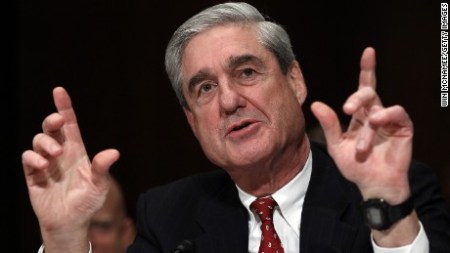
And it looks very much as if a tag team cover-up may be underway, with Special Counsel Robert Mueller taking the key role in keeping inquiring eyes away from the FBI’s role in the Trump dossier’s utility on smearing the man who was to become POTUS:

Reuters reported Wednesday that Mr. Mueller “has taken over FBI inquiries into a former British spy’s dossier” against Mr. Trump. How very convenient. The Mueller team has leaked all manner of details from its probe, even as it had avoided the dossier. But just as Congress is ratcheting up pressure on the FBI, anonymous sources say that it’s out of the bureau’s hands.

Some Republicans might be tempted to cheer news that the special counsel is looking into the dossier. They shouldn’t. A Mueller takeover will make it even harder for Congress to conduct an independent investigation—which may well have been the reason for the move. Mr. Mueller has had months to look into the document, and his lack of curiosity so far speaks volumes. As a friend of Mr. Comey and a former FBI director himself, Mr. Mueller cannot be counted on to examine impartially whether the FBI was duped.

Indeed, there may be evidence of Russian collusion, not with President Trump’s campaign, but with those who seek to discredit him:

Sen. Richard Burr, who leads his chamber’s Intelligence Committee, noted on Wednesday that his dossier investigation has “hit a wall.” Mr. Steele has gone underground. Mr. Simpson won’t hand over relevant documents or say who paid him. The FBI is stiff-arming lawmakers. No one wants to talk about a dossier that Paul Roderick Gregory, a Russia expert at the Hoover Institution, found to read like something “compiled by a Russian, whose command of English is far from perfect and who follows the KGB (now FSB) practice of writing intelligence reports.” No one wants to discuss an array of Russian lawyers, lobbyists and Kremlin officials who may have been involved in its creation.

Mike Nadler’s question remains: why not use the power of the executive to require the FBI to comply with congressional subpoenas? In fact, why not start playing hardball, and calculate the cost to date of the Meuller inquiry that has produced no hard evidence? The legal team he has assembled is of a standing where $500 an hour is a fair guess of their cost. Multiply that times at least 8 hours a day, times more than 20 attorneys, and we get a meter ticking at the rate of at least 80 thousand dollars a day, probably substantially more if we count non-attorney staff costs.

And remember that as POTUS, Trump can declassify anything that he wants.

I hope that the reason Congress and the President are allowing themselves to be stonewalled is a matter of strategy and timing, not a matter of being intimidated.

You can’t ignore Putin

Posted October 7, 2017 by Joseph Wouk
Categories: Uncategorized

Source: You can’t ignore Putin – Israel Hayom

There is nothing surprising in the reports coming out of Washington that U.S. President Donald Trump is considering announcing that Iran has not lived up to its part of the nuclear deal it signed two years ago. Since he entered the White House in January, Trump has made no secret of his opinion that Iran presents a threat to American interests in the Middle East and to the security of U.S. friends in the region, namely Israel and the Persian Gulf states.

So the natural conclusion, which Trump repeats at every opportunity and using every possible platform, is that the nuclear deal with Tehran that the Obama administration promoted was a mistake, and it is a bad deal that failed to achieve its goal and far from checking Iran, merely encouraged it to continue along its merry way.

But in Washington, being Washington, the president can say whatever he wants, but the defense and foreign policy leadership might not agree. This is why Defense Secretary Jim Mattis and Chairman of the Joint Chiefs of Staff Gen. Joseph Dunford were quick to declare that the American interest was a binding one. According to them, the Iran deal actually stopped Tehran’s race toward nuclear weapons, and it is in the U.S.’s interests to uphold the deal, not cancel it.

The looming compromise is a presidential announcement that Iran has not fulfilled its part of the deal, without Trump taking any practical steps against Iran while working to try and convince the U.S.’ partners – Russia and the European nations – to step up pressure on Tehran.

It is hard to believe that Russia or the Europeans will be persuaded to support Washington. The Europeans see the deal as a victory and even as a vital move in restoring stability to the Middle East, whereas Russia has established a strategic partnership with Tehran, under which both powers managed to salvage the regime of Syrian President Bashar Assad, as well as secure themselves footholds in Syria.

The entire Middle East can see and hear what is going on. Israel and the Arabs are listening to Trump’s aggressive condemnations of Tehran, but can’t ignore the fact that on the ground – in Iraq and Syria – Washington is de facto accepting the growing Iranian presence and not taking action to stop Iran.

It is no wonder that King Salman of Saudi Arabia rushed to make a first, historic visit to Moscow this week. The visit was mostly devoted to Saudi Arabia’s concerns about Iran. Like many other leaders in the region, such as President Abdel-Fattah el-Sissi and even Prime Minister Benjamin Netanyahu, Salman sees Russian President Vladimir Putin as a key player whose influence tips the scales in the region. If the U.S. has handed Syria and Iraq over to Moscow, maybe Saudi Arabia should seek assurances from the new boss, Putin. These might carry more weight than the aggressive but ultimately empty declarations from Washington.


A must watch , it is your time more than worth !

Posted October 7, 2017 by Peter Hofman
Categories: Uncategorized

DINESH D’SOUZA JUST GAVE AN AMAZING SPEECH. GETS A STANDING OVATION


Iran denies willingness to negotiate on ballistic missile program

Posted October 7, 2017 by Joseph Wouk
Categories: Uncategorized

Source: Iran denies willingness to negotiate on ballistic missile program – Middle East – Jerusalem Post

By REUTERS
October 6, 2017 21:30
A Reuters report on Friday said Iran has suggested to six world powers that it may be open to talks about its ballistic missile arsenal.
Iran denies willingness to negotiate on ballistic missile program

 Demonstrators wave Iran’s flag and hold up a picture of supreme leader Ayatollah Ali Khamenei during a ceremony to mark the 33rd anniversary of the Islamic Revolution, in Tehran’s Azadi square February 11, 2012.. (photo credit:REUTERS/RAHEB HOMAVANDI)

Iran said on Friday its ballistic missile program was for defense purposes only and non-negotiable, denying Tehran may be open to discussing the controversial program with major powers.

“Iran has in all bilateral diplomatic meetings… emphasized that its defensive missile program is not negotiable and that it is not inconsistent with UN Security Council resolution 2231,” Mehr news agency quoted Foreign Ministry spokesman Bahram Qasemi as saying.

A Reuters report on Friday, quoting Iranian and Western officials familiar with the overtures, said Iran has suggested to six world powers that it may be open to talks about its ballistic missile arsenal aimed at reducing tension over the disputed program.

Tehran has repeatedly vowed to continue building up what it calls defensive missile capability in defiance of Western criticism, with Washington saying the Islamic Republic’s stance violates its 2015 nuclear deal with the powers.

But the sources said that given Trump’s threats to ditch the deal reached under his predecessor, Barack Obama, Tehran had approached the powers recently about possible talks on some “dimensions” of its missile program.

“During their meeting on the sidelines of the UN General Assembly last month, Iran told members of the (world powers) that it could discuss the missile program to remove concerns,” an Iranian source with knowledge of the meeting told Reuters on condition of anonymity.

US and Western officials did not confirm the matter was discussed at the Zarif-Tillerson meeting. But two US officials said Iran had recently been “keeping it alive” by feeding certain media reports and via third parties such as Oman.

Iran’s reported approach came after Trump called the nuclear accord “an embarrassment” and “the worst deal ever negotiated.”

He is expected to announce soon that he will decertify the deal, a senior administration official said Thursday.

Such a step could unravel the breakthrough agreement – seen by supporters as crucial to forestalling a Middle East arms race and tamping down regional tensions since it limits Iran’s ability to enrich uranium in exchange for sanctions relief.

The other five powers are Britain, France, Germany, Russia and China, all of whom have reaffirmed commitment to the deal.

The European Commission said Friday that the international deal to curb Iran’s nuclear program struck in 2015 was working and all sides should stick to their commitments.

“We are following very closely all the developments on the deal… reminding that it is a non-proliferation deal, which has been endorsed by the UN Security Council, that it’s working, delivering as it has been verified eight times by the international agency for atomic energy,” a Commission spokeswoman told a news conference in Brussels.

Russian Foreign Minister Sergei Lavrov said Friday he hoped Trump would make a “balanced” decision on whether to remain engaged in the deal.

“It is very important to preserve it in its current form and of course the participation of the United States will be a very significant factor in this regard,” Lavrov told reporters on a visit to Kazakhstan.

SIX-POWER MEETING WITH IRAN AT UNITED NATIONS

Iranian Foreign Minister Mohammad Javad Zarif met his counterparts from the six powers, including US Secretary of State Rex Tillerson for the first time, on the fringes of the UN gathering on Sept. 20.

“The Americans expressed their worries about Iran’s missile capability and Zarif said in reply that the program could be discussed,” the Iranian source told Reuters.

A US official with first-hand knowledge of dealings with the Islamic Republic said Zarif had been recycling offers that “have been lying dormant on the table for some time.

“Zarif knows that if Trump goes ahead and decertifies Iran, it (Iran) will be on the high ground, and the US will be isolated among the (six powers),” the official said.

The Iranian Foreign Ministry refused to comment on the reported overture. The US State Department declined comment on whether possible talks on missiles were addressed at the meeting or whether Iran had recently communicated such interest.

The US mission at the United Nations referred Reuters to the State Department for comment.

The Trump administration has imposed fresh unilateral sanctions on Iran, saying its missile tests violate the UN resolution that formalised the nuclear deal. It calls on Tehran not to undertake activities related to missiles capable of delivering atom bombs. Iran says it has no such plans.

A State Department official said Washington remained committed to “countering the full range of threats the Iranian regime poses to the US, our allies, and regional stability, including its ballistic missile development”.

Iran has one of the biggest ballistic missile programs in the Middle East, viewing it as an essential precautionary defense against the United States and other adversaries, primarily Gulf Arab states and Israel.

The United States and its allies worry that such missiles could potentially carry nuclear warheads, should Iran ever develop the means to assemble atomic bombs – a scenario the 2015 nuclear accord was designed to prevent.


COLUMN ONE: Trump and Obama’s third term

Posted October 7, 2017 by Joseph Wouk
Categories: Uncategorized

Source: COLUMN ONE: Trump and Obama’s third term – Opinion – Jerusalem Post

By Caroline B. Glick
October 5, 2017 20:42
The problem is that substantively, there is no real difference between Obama and Trump, not in the Middle East and not anywhere.
Israel US

Trump, Netanyahu and Obama. (photo credit:REUTERS)

On paper, Liberman’s sentiments seem reasonable enough. President Donald Trump is far friendlier than his predecessor Barack Obama was. The tone of US-Israel relations has vastly improved since Trump took office.

The problem is that substantively, there is no real difference between the two administrations – not in the Middle East and not anywhere.

Take Iran’s nuclear program for example.

In accordance with the US Nuclear Agreement Review Act (2015), on October 15, Trump is obligated to make his quarterly report to Congress certifying or decertifying Iranian compliance with the terms of the nuclear deal it concluded with Obama two years ago.

The issue of whether or not to certify Iranian compliance has been the beginning, middle and end of all US policy discussions on Iran’s nuclear program since Trump entered office.

Despite Trump’s stated opposition to the deal, his top advisers Defense Secretary James Mattis and Secretary of State Rex Tillerson have pressured him into twice certifying Iranian compliance.

On the face of it, the debate about Iranian compliance ought to be about competing interpretations of Iran’s behavior. In practice, though, facts play little role in the discourse.

The Iranians announced as soon as the deal was concluded that they would not permit UN inspectors to enter any nuclear site they define as a “military installation.”

This hollowed out the entire inspections regime.

After all, if Iran can bar inspectors from its nuclear installations, there is no way for inspectors to know if Iran’s nuclear operations accord with or breach of the restrictions it agreed to in the agreement.

In other words, neither Obama nor Trump has had any way to credibly certify Iranian compliance, because the US has no idea what Iran is doing.

And everyone knows this.

Since everyone knows this, the debate about presidential certification of Iranian compliance clearly is not about Iranian compliance.

Instead, the debate has been about one thing only: reality.

Specifically, does reality have a place in US policy regarding the nuclear deal with Iran? Because if reality does have a role to play, obviously, Trump cannot certify Iranian compliance.

To date, proponents of barring reality have won the debate. In testimony Tuesday before the Senate Armed Services Committee, Mattis said that in his opinion, maintaining the nuclear deal is the US interest. Chairman of the Joint Chiefs of Staff Gen.

Joseph Dunford told lawmakers that “Iran is not in material breach” of the accord.

According to an AP report Tuesday, national security officials involved in the recertification process now aim to change the Nuclear Agreement Review Act in a manner that would deny Trump the power to determine whether or not Iran is complying with the deal.

According to AP, the issue is being framed as a way to free Trump from the embarrassment of having to certify the deal every three months.

The worst thing about the entire debate about certifying Iranian compliance is not that it is delusional.

It is that it is irrelevant.

Obama’s nuclear pact is yesterday’s news.

Obama’s nuclear deal with Iran gave the Iranians all the benefits up front. In exchange for a handshake, Iran received a $100 billion in cold hard cash and foreign direct investment. The international arms markets opened to them. The international financial markets opened to them.

Non-certification won’t bring back the money.

More important than the financial advantages Iran has already won, and will not lose if the US decertifies, is the fact that due to the deal, Iran has had two years to freely advance its nuclear program without meaningful inspections and without sanctions.

And again, while the Iranians have advanced, the US has debated the two-year old deal over and over again as if it matters. This instead of constructing a strategy to block Iran’s entrance into the nuclear club.

This brings us to Iran’s ally North Korea, which thanks to feckless US policy-makers of previous administrations, is already a member of the nuclear club.

During Mattis’s testimony Tuesday he said that despite the fact that he and Trump are threatening to annihilate North Korea and Tillerson is trying to appease North Korea, there is no contradiction in the administration’s policy.

Substantively he is right. Since both of the policies being discussed are imaginary, whether the administration talks about military action or diplomacy, its statements are meaningless.

The fact is that unless the US is willing to see tens of thousands of South Koreans vaporized in a North Korean artillery assault on Seoul in response to a US military strike on Pyongyang, the US has no viable military option for dealing with North Korea. Since the Trump administration has given no indication that it is willing to see that sort of destruction in South Korea to achieve the goal of denuclearizing the Korean peninsula, its threats to annihilate North Korea are not credible.

As for Tillerson’s search for a diplomatic solution, this too is futile. For 24 years, three US administrations reached “historic deal” after “historic deal” with Pyongyang, and Pyongyang breached all of them as it raced to the finishing line of its nuclear weapons program.

Now, with Kim Jung Un testing hydrogen bombs and ICBMs and threatening to nuke Guam, there is no chance that US diplomacy will fare any better than it did in the past.

And so the US is back where it has always been. It has one card to play with North Korea: China.

China is the only actor that can end North Korea’s nuclear brinkmanship without war. But to compel China to act the US requires far more leverage over the Chinese than it has presently mustered or brought to bear.

So the only way for the US to avert war with North Korea is to escalate its competition with China on America’s terms.

Unfortunately, once Trump’s senior strategist Stephen Bannon left the White House in August, no senior administration official has been working on building leverage over China.

Back to Iran. As bad as North Korea is, at least it’s a Chinese client state. If Trump can make China an offer it can’t refuse, he can achieve the US’s strategic goals without a devastating war.

Iran on the other hand is no one’s client. Iran has its own client states.

And just as the Trump administration is unable to extricate itself from Obama’s legacy of delusion and failure with respect to Iran’s nuclear weapons program and North Korea, so it cannot – or will not – shift away from Obama’s delusional policies toward Iran’s client states.

Consider Syria.

In Syria the Trump administration has maintained Obama’s policy of pretending that the most dangerous actor and gravest threat to the US and its interests in Syria is Islamic State.

Although under pressure by Israel, the administration has begun to talk about the threat of Iranian expansionism in Syria, it has no policy for blocking Iran’s empowerment. The same is the case with relation to Russia’s rise as a regional power broker – at the US’s expense – through its deployment in Syria.

As bad as the US’s Syria policy is, its Lebanon policy is even worse.

In Syria the US is simply pretending its enemies do not exist, or if they exist, that they do not threaten the US.

In Lebanon, the US is collaborating with its enemies.

In June Liberman told the Knesset’s Foreign Affairs and Defense Committee, “Today the Lebanese army is a subsidiary unit of Hezbollah and [Lebanese President] Michel Aoun is another [Hezbollah chief Hassan] Nasrallah operative.”

Liberman’s assertions were not a theory. They were grounded in statements made by Aoun himself and by Lebanese military commanders.

But the Americans will not listen to what the Lebanese say or see what they are doing.

Instead, they remain devoted to their fantasy that the Lebanese government is independent and the Lebanese Armed Forces is not a subsidiary of Hezbollah. In support of this lie, this year the US pledged and delivered the bulk of $100 million worth of sophisticated weapons to the Hezbollah- controlled LAF.

In August, the US delivered eight M1-A2 Bradley Fighting Vehicles. According to US Ambassador Elizabeth Richard, they were the first of 32 set for delivery by the end of the year. The US had also delivered M-4 assault rifles, howitzers, grenade launchers, machine guns, mortars, hellfire missiles, night vision devices and thermal sight technology to Hezbollah’s proxy force.

As Middle East analyst Tony Badran noted, the weapons the US supplied to the LAF “have been on Hezbollah’s shopping list consistently for almost a decade.”

And the US is not only arming Hezbollah through its surrogate. It is also fighting alongside Hezbollah through its surrogate.

In August, US special forces fought alongside LAF forces to wrest control of the Lebanese border with Syria from Islamic State-associated Sunni militia.

The battle was a joint LAF-Hezbollah operation – commanded by Hezbollah.

Quoting a source “close to Hezbollah and the LAF,” Al-Monitor’s Nour Samaha wrote, “US Central Command called the Lebanese army chief and asked him to deny any cooperation [with Hezbollah], telling him that while they are aware of cooperation, it has to be denied publicly.”

In other words, it isn’t that the Pentagon isn’t aware it is empowering Hezbollah. It knows what it is doing. It just doesn’t want the American public to know what it is doing.

This brings us finally to the Palestinians. On Tuesday Jerusalem Affairs Minister Ze’ev Elkin was the first senior minister to publicly criticize the Trump administration’s policy toward Israel and the Palestinians.

Elkin told Yediot Aharonot that despite the friendly tone of administration officials and the fruitful cooperation Israel enjoys with the administration on a host of other issues, on the issue of Jewish property rights in Judea and Samaria, “they are walking on the same path as the Obama administration.”

The same of course can be said of the Trump administration’s policy toward Fatah and the Palestinian Authority. No matter how open PA President Mahmoud Abbas is about his cooperation with Hamas and no matter how many hundreds of millions of dollars he transfers to the bank accounts of terrorists, the Trump administration continues to treat Abbas and the PA as moderates and peace partners. Even worse, the administration is coercing Israel to do the same.

No matter where you look around the globe, in the Middle East, in Asia, in South America and in Europe, you see the same thing. The Trump administration has changed America’s tone in foreign affairs.

But substantively, there has been little change.

Trump may be the anti-Obama. But his policies indicate that all the same, he is the second Obama.

http://www.CarolineGlick.com


Now i,am silent !

Posted October 7, 2017 by Peter Hofman
Categories: Uncategorized

The use of a picture of the infamous Auschwitz Nazi death camp on the cover of a “welcome” leaflet for students at a Cambridge University college has angered some within the college community.

http://www.breitbart.com/jerusalem/2017/10/06/students-protest-cambridge-college-uses-image-auschwitz-welcome-leaflet/

Please see also ;

The Holocaust Bar and Grill


Trump on Cuba: ‘Communism Is the Past, Freedom Is the Future’

Posted October 6, 2017 by danmillerinpanama
Categories: Communism, Cuba, Trump and Cuba, Trump and Venezuela, Venezuela

Tags: , , , ,

Trump on Cuba: ‘Communism Is the Past, Freedom Is the Future’, Washington Free Beacon, , October 6, 2017


President Donald Trump slammed Cuba’s communist government on Friday, saying that “communism is the past” and “freedom is the future.”

Trump spoke at the White House at a gathering for Hispanic heritage, where he said the United States hopes for freedom in the entire Western hemisphere, including Cuba and Venezuela.

“As I announced before a wonderful crowd in Little Havana earlier this year, we will not lift sanctions on the Cuban regime until it delivers full political freedom for the Cuban people,” Trump said. “The same failed communist ideology that has brought oppression to Cuba has brought nothing but suffering and misery everywhere and everyplace it has been anywhere in the world.”

“Communism is the past; freedom is the future,” Trump said to applause from the audience.

Trump then turned to Venezuela, saying its socialist government is responsible for the South American country’s turmoil.

“We also stand with the people of Venezuela who are suffering under the ruthless socialism of the Maduro regime,” Trump said. “We reject socialist oppression and we call for the restoration of democracy and freedom for the citizens of Venezuela.”

The crowd in the White House cheered loudly during Trump’s remarks.

France’s Islamic WWIII

Posted October 6, 2017 by danmillerinpanama
Categories: Islamic invasion, Islamic terrorism, Islamisation of France, Multiculturalism

Tags: , , ,

France’s Islamic WWIII, FrontPage Magazine, Daniel Greenfield, October 6, 2017

(Please see also, What Is America’s National Identity?  It is not, and must not become, multiculturalism, which rejects national identity. — DM)

Demographics dictate that France’s terror problem will only keep growing. And the French authorities understand this. That’s why its governments increasingly talk about Islamic terrorism as a lasting threat.

Our War on Terror has squandered endless blood and treasure while avoiding the root cause. Western nations deploy massive armies to root out small terror networks while allying with their Gulf backers. Soldiers patrol major cities waiting for a terrorist or several terrorists to attack. Meanwhile the mosques that indoctrinate them to hate and kill non-Muslims are also protected by those same soldiers.

That’s not how you win a war. It’s how you lose everything.

******************************

Interior Minister Gerard Collomb made it official. France is “in a state of war”.

It’s not just rhetoric. Bombs turn up in a posh Parisian suburb. Two young women are butchered at a train station. And it’s just another week of an Islamic World War III being fought in France.

From the November attacks in 2015 that killed 130 people and wounded another 400+, to the Bastille Day truck ramming attack last year that killed 86 and wounded 458, the war is real.

French casualties in France are worse than in Afghanistan. The French lost 70 people to Islamic terrorist attacks in Afghanistan. And 239 to Islamic terrorist attacks in France.

The French losses in Afghanistan were suffered in over a decade of deployment in one of the most dangerous Islamic areas in the world. The French losses in France were suffered in less than two years.

There’s something very wrong when Afghanistan is safer than Paris.

10,000 French soldiers were deployed in the streets of their own country in Operation Sentinelle after the Charlie Hebdo – Kosher supermarket attacks in 2015. Thousands of French soldiers are still patrolling, guarding and shooting in French cities which have become more dangerous than Afghanistan.

Operation Sentinelle has deployed twice as many French soldiers to France as to Afghanistan. And French casualties in the Islamic war at home have been far higher that they were in Afghanistan.

When the French intervened to stop the Islamist takeover of Mali, they suffered a handful of losses. The 4,000 French soldiers came away from Operation Serval with 9 casualties and Operation Barkhane amounted to 5 dead. The Gulf War? Another 9 dead. It’s a lot safer to be a French soldier fighting Al Qaeda in a Muslim country than a Parisian civilian going to a concert in his or her own city.

French casualties in the struggle with Islamic terror in just the last two years are approaching the 300 casualties of the Korean War.

France is at war. That’s why there are soldiers in the streets.

Its new anti-terrorism bill creates a permanent state of emergency. Suspected extremists can be placed under “administrative detention” in their own homes and neighborhoods under police surveillance and remote monitoring.

Pop-up checkpoints can appear in public spaces that are designated as “security zones” where anyone can be stopped and searched. Mosques can be shut down for six months. Public gatherings can be banned. Warrantless searches can be conducted within miles of potential targets.

The Interior Ministry will have police state powers. And it will be able to wield quite a few of them without having to go through the formality of asking judges nicely for permission.

Some of these measures should be familiar. France is the new Israel.

France’s Interior Minister called the anti-terrorism bill, a “lasting response to a lasting threat”. The choice of words recognizes that Islamic terrorism is here to stay.

The “State of War” is permanent. And France has no plans for winning the war. Instead it’s trying to get better at playing defense. And that’s what most Western domestic counterterrorism efforts amount to.

France is just taking the lead because it has the biggest problem.

The British put soldiers on the streets after the Manchester Arena bombing. The Italians and the Belgians began deploying soldiers in cities around the same time that the French did.

When an illegal alien Muslim terrorist due to be deported murdered two young women in Marseille while shouting, “Allahu Akbar”, French soldiers opened fire. The 24-year-old who shot the terrorist was a reserve member of a regiment of combat engineers in the French Foreign Legion.

The French Foreign Legion isn’t off fighting in a foreign desert somewhere. It’s fighting in France.

French soldiers are told to loudly announce, “Stop or I Shoot”. And then open fire. And that’s what he did. And French soldiers are being forced to learn the phrase and expect to come under attack.

In February, French soldiers were attacked by a Muslim terrorist outside the Louvre. The Egyptian Jihadist shouted, “Allahu Akbar” and came after them with a machete. One soldier from the 1st Régiment de Chasseurs Parachutistes was wounded. The attacker was shot down.

The 1st Régiment de Chasseurs Parachutistes had been deployed to Afghanistan and Mali. Now they were at the Louvre. You don’t need to be Napoleon to know that counts as a major retreat.

A month later, a Muslim terrorist shouted “I am here to die in the name of Allah” while holding a female air force soldier hostage at Orly Airport.

He got his wish courtesy of her fellow soldiers.

In August, six soldiers from the 35th Infantry Regiment were hit by a BMW driven by a Muslim terrorist. Members of a regiment which had been deployed in Afghanistan were sent to a military hospital after an attack in the wealthy Levallois-Perret suburb of Paris. A year earlier, soldiers from the 5th Infantry Regiment had been hit by a Tunisian shouting, “Allahu Akbar” while they were guarding a mosque.

France has entered its longest state of emergency since the Algerian War. The 2015 attacks saw its first state of emergency since 1961. But where is France supposed to withdraw from this time? Paris?

It was one thing to abandon the beleaguered Algerian Christians and Jews to Muslim terror. And to abandon them a second time when they fled to France only to face persecution by their old Islamic neighbors who had tagged along and settled down in Marseille. But can France abandon the French?

The issue once again is colonialism. But the new colonists are Algerians, Tunisians and other Islamic imperialists who have settled in France and wave the black flag of the Jihad over their no-go zone settlements in French cities. And they have made it abundantly clear that they will not stop there.

Last year, former Prime Minister Manuel Valls said that, “Every day attacks are foiled… as we speak.”

And it’s no wonder. Thousands of Muslim settlers left France to fight in Syria and Iraq. Valls was looking at 15,000 potential threats domestically. France has one of the largest Muslim populations in Europe. We don’t know exactly how many millions of Muslim settlers live in France. But we can measure their growth by the expansion of the terror threat. Islamic terrorism is, despite the spin, reducible to Islam.

There is no Islamic terrorism without Islam. As Islam expands, so does Islamic terrorism.

France is in the middle of a civil war. The civil war is based on religious differences. As the religious divide between the Islamic colonists and the militantly secular French government increases, the violence will worsen. The outcome of the war will determine whether France will be a secular republic or an Islamic state. The Jihadists have a plan for winning the war.  The French authorities don’t.

And what goes for France also goes for Western Europe. And for the West.

The French combination of social appeasement and police state enforcement isn’t working. The same model ultimately fails wherever it’s applied. Breaking up terror cells and stopping attacks is far better than the alternative, but the scale of the problem will always continue increasing because of demographic growth and a globalized terror infrastructure.

Demographics dictate that France’s terror problem will only keep growing. And the French authorities understand this. That’s why its governments increasingly talk about Islamic terrorism as a lasting threat.

Our War on Terror has squandered endless blood and treasure while avoiding the root cause. Western nations deploy massive armies to root out small terror networks while allying with their Gulf backers. Soldiers patrol major cities waiting for a terrorist or several terrorists to attack. Meanwhile the mosques that indoctrinate them to hate and kill non-Muslims are also protected by those same soldiers.

That’s not how you win a war. It’s how you lose everything.