Dissident Reveals Secret Chinese Intelligence Plans Targeting U.S.

Posted October 9, 2017 by danmillerinpanama
Categories: China and espionage in America, China vs America, China's subversion of forein governments, Chinese "democracy"

Tags: , , ,

Dissident Reveals Secret Chinese Intelligence Plans Targeting U.S., Washington Free Beacon, , October 9, 2017

(Please see also, China’s ‘Magic Weapons’: Influence Operations Subverting Foreign Governments. — DM)
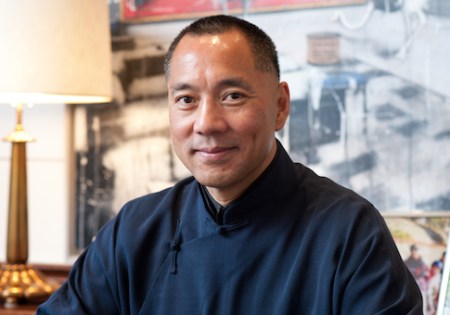
Guo Wengui / Ellen Dubin Photography

China earlier this year ordered the dispatch of 27 intelligence officers to the United States as part of a larger campaign of subversion, according to a leading Chinese dissident.

Guo Wengui, a billionaire real estate mogul, disclosed what he said was an internal Communist Party document authorizing the Ministry of State Security to send the spies, described as “people’s police officers.”

Guo, who is being sought by the Chinese government in a bid to silence his disclosures of high-level corruption and intelligence activity, denounced the Beijing regime as corrupt and called for a “revolution” to reform the system.

“My only single goal that I set myself to try to achieve is to change China,” Guo said through an interpreter during a National Press Club meeting attended by news reporters and supporters of the exiled dissident.

“What they’re doing is against humanity,” he said. “What the U.S. ought to do is take action, instead of just talking to the Chinese kleptocracy.”

Guo last month requested political asylum in the United States in the face of a high-level Chinese government effort to force the United States to return him to China. China has charged him with several crimes. Guo has denied the charges.

Guo earlier charged that senior Chinese leader Wang Qishan, who controls most of China’s finances, is corrupt and has engaged in moving money and documents outside of China. Wang is leading China’s nationwide anti-corruption drive that critics say is cover for efforts by Xi to consolidate power.

The Chinese campaign against Guo has included high-level diplomatic and economic pressure on American government and business leaders to lobby for Guo’s repatriation.

China’s Minister of Public Security, Guo Shengkun, met with Attorney General Jeff Sessions on Wednesday where China’s demands for the return of fugitives was discussed.

A Justice Department spokesman said Sessions raised the issue of a Chinese-origin cyber attack against the Hudson Institute, a think tank that had canceled its plan to hold the press conference for Guo under pressure from China. The Justice spokesman, Wynn Hornbuckle, said China pledged their cooperation in investigating the incident.

Hornbuckle would not say if Guo Wengui was discussed during the law enforcement and cyber security talks.

David Tell, a Hudson spokesman, told the Washington Free Beacon, the denial of service cyber attack was traced by investigators to Shanghai.

According to an email obtained by the Free Beacon, a Hudson employee stated that he was asked to forward a message to institute leaders sent from a Chinese Embassy official on Sept. 29.

Chinese officials, according to the email, “want Hudson to cancel the Guo Wengui event because he is a criminal and tells lies, that China is about to enter a sensitive time with its Party Congress, that hosting him would hurt China-U.S. relations, and that this event would embarrass Hudson Institute and hurt our ties with the Chinese government.”

The intelligence document released Thursday is one of a number sensitive internal reports obtained by Guo who was once close to MSS Vice Minister Ma Jian, who was imprisoned last year on corruption charges, but who Guo has said was repressed politically because of his knowledge of corruption among Chinese leaders.

Guo said he had planned to disclose three internal Chinese government documents during the Hudson event. But instead he burned the documents after the event was canceled.

Guo said he maintains close ties to supporters within the Chinese government and security system and is able to obtain many internal documents.

According to Guo, for simply holding the top-secret document he distributed at the press conference, a person could be jailed in China for three to five years.

The document was issued by the National Security Council, a new Chinese government and Party entity headed by Chinese leader Xi Jinping.

The MSS operatives will work under cover at the Bank of China branch offices and at Chinese diplomatic facilities in the United States.

The document is labeled “top secret” and dated April 27. It was released by Guo at a press conference in Washington during which he appealed for the U.S. government to wake up to the threat posed by China and counter it.

Guo said the authenticity of the document was confirmed by the U.S. government.

The directive to the MSS was formally called “The Request for Instructions on the Working Plan of Secretly Dispatching and 27 People’s Police Officers, He Jianfeng and Others from the Ministry of State Security to the United States on Field Duty in 2017.”

“We approve in principle,” the report says, adding “please carefully organize and implement.”

According to the document the MSS should follow Chinese ideology set out by the late leader Deng Xiaoping, as well as the concepts outlined in speeches by Xi, the current leader.

The document is one of the first internal documents to reveal how China is expanding intelligence activities targeting what it calls “hostile forces” in the United States.

The MSS, according to the report, was told to “go according to the need of the strategic arrangements” of the Communist Party “against overseas hostile forces, strictly abide by our national principles of state security work on the United States, and use the opportunity of the rise of our comprehensive national strength and Sino-U.S. diplomatic relations tending to ease to further expand the scope and depth of the infiltration into the anti-China hostile forces in the United States.”

The MSS agents are to enter the United States secretly in phases and “use the cover of the executives of the state-owned enterprises in the United States, such as the Bank of China (New York) to carry out solid intelligence collection, to incite defection of relevant individuals, and to conduct counter-espionage, etc.”

The spies also were directed to focus on “extraordinarily significant criminal suspects, including Ling Wancheng, Guo Wengui, and Cheng Muyang, etc.”

Ling is the brother of Ling Jihua, a former high-ranking Chinese official who China has accused of illegal activities and who defected to the United States in 2016. Cheng is a real estate mogul in Canada who China also accused of illegal activities.

“If necessary, they should also actively support, cooperate with, and assist the personnel in the United States who conduct the United Front operations, diplomatic operations, and military intelligence operations to carry out related business,” the document states.

United Front work is what the Chinese government calls influence operations aimed at coopting Americans into supporting Beijing’s policies.

The directive urges the spies to “make contributions for further crushing overseas anti-China hostile forces.”

Lastly, MSS officials should seek to strengthen the organization and provide after actions reports to the senior Party organ.

“We have friends all over the world … those who provide the documents are among the most senior people, including the current Politburo standing committee,” Guo said. “My material is real. Otherwise, they wouldn’t be afraid of it.”

Guo said during his press conference that since the April directive, around 50 additional intelligence operatives were sent to the United States.

An FBI spokeswoman had no comment on the document. A Chinese Embassy spokesman did not respond to an email seeking comment.

On Saturday, China’s Public Security Ministry issued a statement denying China was behind the hack of a law firm representing Guo and the Hudson Institute. The ministry also disputed the authenticity of the document.

“An official of the Ministry of Public Security states that, China paid close attention to such allegations and launched immediate investigation,” the statement said. “But no evidence has been found that China and its government have been involved with these incidents.”

The ministry also called the documents revealed by Guo “utterly clumsily forged and full of obvious mistakes.” It did not elaborate but offered to cooperate in a U.S. investigation into the authenticity of the materials and cooperate in the probe of the cyber attacks.

According to Guo, China is engaged in a three-pronged campaign of subversion in the United States he labeled “Blue-Gold-Yellow,” with each color standing for a different line of attack.

Blue represents large-scale Chinese cyber and internet operations while gold represents China’s use of money and financial power. The yellow is part of a plan to use sex to undermine American society.

Another Chinese government subversion program was described by Guo using the code name the “Three Fs.” It involves China’s systematic programs targeting the United States with the goal to weaken the country, throw the country into turmoil and ultimately defeat America.

Asked about the major Communist Party meeting scheduled for later this month, Guo said: “I would like all members of the Chinese Communist Party to wake up and say no to this ruling clique.”

Guo disclosed that he was imprisoned in China after the 1989 pro-democracy protests in Tiananmen Square and spent 22 months in prison. Chinese police also shot his brother, who later died.

Since then, he has spent the intervening years as an entrepreneur preparing to expose corrupt Chinese leaders, a process he began in January.

China has retaliated by freezing some $17 billion in assets in China and by imprisoning business associates and relatives of Guo.

Radio France’s Chinese-language radio service reported recently that several Chinese have been harassed by authorities for discussing Guo’s disclosures about Wang’s corruption. The report called the activity “Guo Wengui-phobia.”

Chinese censors have cracked down on people online who used the phrases used by Guo, like “Wang-Seven-Three” and “73” for Wang Qishen. Also a person wearing the t-shirt with the word “all of this is only the beginning”—one of Guo’s catch phrases on social media was detained.

“Those who support Guo Wengui call out ‘put a pot on your head,’ a homophone for ‘support Guo,'” the French report said. “Those who desperately want to catch him want to ‘smash that pot,’ literally meaning ‘smash the pot,’ but the term means ‘to fail.'”

China also recently blocked the messaging app WhatsApp, after China tightened controls on WeChat, Weibo, and Baidu message boards that were sharing posts on Guo.

“Looking at social media, every time Guo Wengui has revealed the secrets of a corrupt official, there’s been a reaction on the streets of Beijing,” the report said. “In restaurants, bars, in the streets and alleyways, people see each other and, smiling, ask, ‘What did he say now?’ It’s become a tacit greeting.”

Britain leaks battle planning for war North Korea

Posted October 9, 2017 by danmillerinpanama
Categories: Great Britain and North Korea, Japan and North Korea, North Korea - military options, North Korean missiles, North Korean nukes, Trump and North Korea

Tags: , , , , ,

Britain leaks battle planning for war North Korea, American Thinker, Thomas Lifson, October 9, 2017

No doubt, the few North Korean allowed to read the outside world’s media are aware that many of his political opponents, foreign and domestic, consider President Trump mean, irrational, and dangerous. This all works to his psychological advantage.

What makes this leak so important is that it indicates to Kim that Trump is not being abandoned by his allies. On the contrary, they are lining up.

I expect there to be more leaks, some of them from Japanese sources.

President Trump has ditched the old ways of dealing with Kim, all of which have failed. This horrifies the diplomatic establishment. As far as I am concerned, that is not a point against him.

********************************

Great Britain is leaking to the media that it is planning for war with North Korea, signaling Kim Jong-un that President Trump and our allies are serious about the demands to end the nuclear weapons and missile programs.

The UK Daily Mail reports:

The Armed Forces are preparing for a potential war with North Korea, sources have revealed.

Officials have been instructed to draw up plans for how Britain would respond if war broke out with Pyongyang amid heightening tensions between the West and dictator Kim Jong-Un.

One option involves deploying Britain’s new aircraft carrier – due to be handed over to the Navy later this year – to the region before she has undergone flight trials.

Details of the secret operation plan have emerged after Donald Trump warned that ‘only one thing will work’ when it comes to dealing with North Korea, which has continued nuclear and rocket tests despite widespread condemnation.

I am reasonably certain that the leaks are intentional, and that the first purpose is to ratchet the pressure up on Kim Jong-un. He knows that the US could defeat and destroy his regime if it comes to war. Should he manage to land a nuclear strike on US forces or territory, the retaliation would be devastating, a lesson to the world on the perils of using nuclear bombs against the US.

No doubt, the few North Korean allowed to read the outside world’s media are aware that many of his political opponents, foreign and domestic, consider President Trump mean, irrational, and dangerous. This all works to his psychological advantage.

What makes this leak so important is that it indicates to Kim that Trump is not being abandoned by his allies. On the contrary, they are lining up.

In the background for us, but ever-present in the mind of Koreans, north and south, is the specter of Japan arming-up with nukes and ditching its “peace constitution.”

I expect there to be more leaks, some of them from Japanese sources.

President Trump has ditched the old ways of dealing with Kim, all of which have failed. This horrifies the diplomatic establishment. As far as I am concerned, that is not a point against him.

The League of Extraordinary Candidates: Economic Nationalist Leaders Plan for Anti-Establishment Midterm Tsunami to Force Change

Posted October 9, 2017 by danmillerinpanama
Categories: 2018 mid-term elections, Republican establishment, Trump agenda, US Congress

Tags: , , ,

The League of Extraordinary Candidates: Economic Nationalist Leaders Plan for Anti-Establishment Midterm Tsunami to Force Change, Breitbart, Matthew Boyle,  October 8, 2017

Chip Somodevilla / Staff / Getty Images

Conservatives and economic nationalist leaders are looking past the current dysfunction in Washington to a group of new and exciting young candidates throwing their hats in the ring nationwide to break the gridlock with midterm election victories.

This group of individuals, which some are calling “The League of Extraordinary Candidates,” is emerging nationally—a distinct slate of U.S. Senate and House candidates, as well as key gubernatorial contenders, all united in their focus on breaking the logjam in Congress. Movement leaders view establishment Republicans and Democrats alike as a force blocking, slow-walking, or stonewalling the agenda that President Donald J. Trump campaigned on, and aim to elect new voices by riding a new economic nationalist electoral wave in 2018 meant to mirror and surpass what happened in previous wave elections like 2010—which saw the rise of the Tea Party.

“We’re planning on building a broad anti-establishment coalition to replace the Republican Party of old with fresh new blood and fresh new ideas,” Andy Surabian, a senior adviser to the Great America Alliance and ex-White House aide, told Breitbart News.

Surabian worked alongside Stephen K. Bannon, the now former White House chief strategist, during their White House tenure and is now working with the Great America Alliance—a pro-Trump Super PAC run by ex-Ronald Reagan aide Ed Rollins that doubles as a fundraising powerhouse, having raised $30 million last year to help the president.

“The only thing the Republican establishment has succeeded in is clarifying to the American people that they don’t represent their interests,” Surabian added. “Their repeated failures to govern have only crystallized their lack of vision or backbone. The group of candidates we are looking to support in 2018 are all bound together in their agreement that the new Republican Party must be bold in their thinking and aggressive in their tactics.”

The movement that is emerging to back candidates nationally in these critical upcoming primaries and general elections—combined with the candidates themselves, almost a decentralized and loosely organized political party in and of itself—is filled with some of the strongest conservative voices and a broad spectrum across the movement.

“What I’m seeing is a lot of anger, frustration, and disappointment from voters around the country,” Jenny Beth Martin of Tea Party Patriots, a key grassroots organization, told Breitbart News. “They are angry at the lack of Republican leadership on Capitol Hill, and many think it’s time to ditch Mitch as the leader of the Senate. What I am beginning to remind people and let people know is I’m meeting incredible candidates around the country who are willing to take on the Republican status quo. I’ve seen candidates from Montana to Mississippi, Missouri, and Tennessee, who are ready to take on the status quo and be the leaders we need. It’s very tempting to just brush your hands and just say ‘I’m done with all of it.’ It’s very tempting because we’re so angry. If we do that, the swamp wins. Now is the time to dig in and fight even harder, and that’s what Tea Party Citizens Fund is prepared to do.”

Tony Perkins, the Family Research Council’s president, added that he expects a wave election next year unlike any conservatives have experienced before—even bigger than Trump’s historic win in 2016.

“The conservative tidal wave that carried Donald Trump into the White House may soon be eclipsed by what appears to be a conservative tsunami that threatens the establishment death grip on the U.S. Senate,” Perkins told Breitbart News.

The New York Times reported on Sunday morning that Blackwater founder Erik Prince is considering a U.S. Senate run in Wyoming against incumbent Sen. John Barrasso (R-WY).

“Erik Prince, the founder of the security contractor Blackwater, is seriously considering a Republican primary challenge for a Senate seat in Wyoming, potentially adding a high-profile contender to a fledgling drive to oust establishment lawmakers with insurgents in the mold of President Trump,” the Times’ Maggie Haberman, Glenn Thrush, and Jeremy Peters wrote. “Mr. Prince appears increasingly likely to challenge John Barrasso, a senior member of the Senate Republican leadership, according to people who have spoken to him in recent days. He has been urged to run next year by Stephen K. Bannon, who is leading the effort to shake up the Republican leadership with financial backing from the New York hedge fund billionaire Robert Mercer and his daughter Rebekah. Over the weekend, Mr. Prince traveled to Wyoming with his family to explore ways to establish residency there, said one person who had spoken to him.”

The move comes in the wake of Judge Roy Moore’s historic victory in Alabama, where he defeated appointed Sen. Luther Strange (R-AL) in a GOP primary runoff on Sept. 26 despite Strange’s dozens-of-millions-of-dollars financial advantage and backing of Senate Majority Leader Mitch McConnell and President Trump and Vice President Mike Pence. A large part of the focus of Moore’s campaign was on the failures of McConnell atop the Senate GOP conference, and while the two have spoken since Moore’s victory, it is unlikely Moore will ever be supportive of McConnell remaining in control.

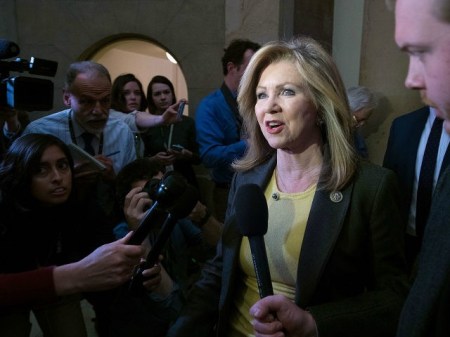
Meanwhile, McConnell allies elsewhere are dropping like flies. In the hours leading up to Moore’s historic more-than-9-percent victory over Strange, Sen. Bob Corker (R-TN)—the chairman of the Senate Foreign Relations Committee and reliable McConnell friend—announced his plans to retire. Establishment forces in Washington around McConnell desperately shifted their efforts to attempt to convince Tennessee Gov. Bill Haslam—a wealthy self-funder—to jump into the race to replace Corker. McConnell and his pals failed, and now conservative anti-establishment Rep. Marsha Blackburn (R-TN) has emerged as the front-running candidate in Tennessee’s GOP senatorial primaries. McConnell’s allies continue to search for a new candidate to prop up in Tennessee against Blackburn but are thus far unable to find anyone viable. Trump, meanwhile, has taken to Twitter on Sunday morning to lambast Corker even more—something that further embarrasses McConnell for his failed leadership:

Senator Bob Corker “begged” me to endorse him for re-election in Tennessee. I said “NO” and he dropped out (said he could not win without…

..my endorsement). He also wanted to be Secretary of State, I said “NO THANKS.” He is also largely responsible for the horrendous Iran Deal!

…Hence, I would fully expect Corker to be a negative voice and stand in the way of our great agenda. Didn’t have the guts to run!

Corker fired back with his own tweet, accusing Trump of being in need of supervision:

It’s a shame the White House has become an adult day care center. Someone obviously missed their shift this morning.

While this is emblematic of one of the more brutal fights out there, it’s not just Tennessee and Wyoming where McConnell and establishment Republicans are down on their luck. Weak incumbent Republicans face tough primaries in both Arizona and Nevada, where the vehemently anti-Trump Sens. Jeff Flake (R-AZ) and Dean Heller (R-NV) face conservative pro-Trump challengers next year. Danny Tarkanian, a businessman and son of the legendary UNLV basketball coach Jerry Tarkanian, is running against Heller while former state senator Dr. Kelli Ward is running hard against Flake in Arizona. Both Tarkanian and Ward are polling ahead of the incumbent senators nearly a year from the election, something causing great alarm for the GOP establishment in Washington.

Then, moving on down to Mississippi, state senator Chris McDaniel—an economic nationalist firebrand—is likely to run against Sen. Roger Wicker (R-MS). That race, like McDaniel’s burn-it-down campaign in 2014 against Sen. Thad Cochran (R-MS) where McDaniel actually won the primary with Republicans but Cochran only survived due to his campaign dirty tricks by paying Democrats in the black community to vote for him, is almost certain to put an outsized focus on McConnell’s failures—and Wicker’s connection to them—as well.

That does not even begin to address what may happen in other states. While GOP establishment forces may try to sell it as though they like Missouri’s attorney general Josh Hawley in the primary there, it’s conservatives who are more fired up about Hawley’s campaign with many top grassroots leaders telling Breitbart News privately in the past few days that the likely guy to face off against Sen. Claire McCaskill (D-MO) in November 2018 is a hardcore conservative who will not go along to get along like McConnell wants in Washington. In West Virginia, McConnell and his allies are pushing a former Democrat who supported Hillary Clinton for president in 2008, now Republican Rep. Evan Jenkins, while most other Republicans and conservatives are aligning behind the state’s attorney general Patrick Morrissey. In Florida, Gov. Rick Scott is eyeing a bid for U.S. Senate—something that would not bode well for the Majority Leader either—and conservatives are coalescing behind Matt Rosendale in Montana.

In Ohio, conservative Republican Josh Mandel—Ohio’s state treasurer—is emerging as the frontrunner to take on incumbent Democratic Sen. Sherrod Brown (D-OH), and in Wisconsin conservative outsider Kevin Nicholson is pulling ahead of establishment-backed state Sen. Leah Vukmir in the primaries ahead of a general election battle with incumbent Democratic Sen. Tammy Baldwin (D-WI). Anti-establishment Corey Stewart, who nearly won the GOP primary for governor in Virginia earlier this year, starts off this coming year as the clear frontrunner for the GOP nomination for U.S. senate in next year’s senate battle. And conservatives, Breitbart News can confirm, are looking for challengers to incumbent Republicans in Nebraska and Utah, where Sens. Deb Fischer (R-NE) and Orrin Hatch (R-UT) are for now seeking reelection.

Conservatives are also, per the Times, looking at Maine for a potential strong challenger to incumbent Sen. Angus King (I-ME), an independent who caucuses with Democrats.

“Mr. Bannon is also hoping to persuade Ann LePage, the wife of Maine’s outspoken governor, Paul LePage, to run for the Republican nomination to challenge Senator Angus King, an independent who is up for re-election in 2018,” the Times’ Haberman, Thrush, and Peters wrote.

In other words, conservatives are considering a full slate of candidates nationally in open races and those with Democrat incumbents—and running or actively seeking out serious primary challengers for every GOP incumbent senator up for reelection next year except for Sen. Ted Cruz (R-TX)—all part of an effort to wrest control of the Republican Party away from failed leaders and hand it to fresh blood. That doesn’t even mention House or gubernatorial races: On the House side of things, conservatives have their eyes on taking down many failed incumbent establishment Republicans and are also even looking at many open races. That picture, movement leaders say, is expected to come together more clearly in the days and weeks ahead.

Israel, Trump admin reach understanding on construction

Posted October 9, 2017 by danmillerinpanama
Categories: Israeli settlements, Judea, Peace process, Samaria, Trump and Israel

Tags: , , , ,

Israel, Trump admin reach understanding on construction, Israel National News, David Rosenberg, October 9, 2017

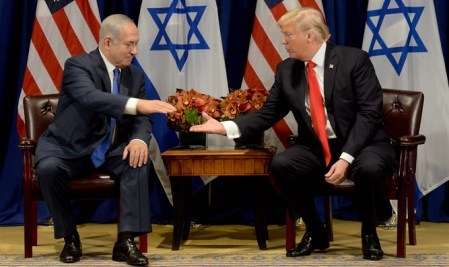
Netanyahu and Trump meet Avi Ohayon/GPO

The official added that Israel has established an unofficial understanding with the Trump administration regarding construction in Judea and Samaria, whereby Israel will build outside of the larger “settlement blocs”, but will limit announcements of large housing projects to once every few months. For its part, the Trump administration has pledged not to issue condemnations of Israeli housing projects in Judea and Samaria.

“After Trump came into office, Israel and the new American administration set clear criteria for construction that the Americans were not opposed to, such as canceling the distinction between settlement blocs and isolated settlements. In addition, it was made clear that the Americans no longer consider the settlements an obstacle to peace.”

*******************************************

The Civil Administration Higher Planning Committee is slated to meet next week and give final approval to nearly 4,000 new housing units across Judea and Samaria, including the first new construction in the Jewish community in Hevron in some four decades.

On Sunday night, Channel 2 reported that the Netanyahu government has okayed the move, following delays by the Higher Planning Committee, which had originally been scheduled to approve the projects in September.

The new wave of construction, totaling 3,829 homes, includes building in communities outside of the so-called “major settlement blocs”, a significant shift from the limits imposed on projects approved during the Obama administration. Along with larger ‘consensus’ towns such as Ariel and Givat Zeev, the new construction wave includes units in Beit El, Tzofim, Rehalim, Nogohot, Hevron, Tekoa, Kfar Etzion, Avnei Hefetz, Nofim, Kochav Yaakov, Har Bracha, and Maaleh Michmash [Michmas].

According to a government official who spoke with Yediot Ahronot on Sunday, next week’s planned approval for the projects signals the end of the Obama-era condemnations of Israeli housing projects.

The official added that Israel has established an unofficial understanding with the Trump administration regarding construction in Judea and Samaria, whereby Israel will build outside of the larger “settlement blocs”, but will limit announcements of large housing projects to once every few months. For its part, the Trump administration has pledged not to issue condemnations of Israeli housing projects in Judea and Samaria.

“There was a long dry period during the Obama era, and we were hit with condemnations for every construction in the settlement,” the official said.

“After Trump came into office, Israel and the new American administration set clear criteria for construction that the Americans were not opposed to, such as canceling the distinction between settlement blocs and isolated settlements. In addition, it was made clear that the Americans no longer consider the settlements an obstacle to peace.”

Ludwig wake UP !

Posted October 8, 2017 by Peter Hofman
Categories: Uncategorized

Ludwig van Beethoven – Moonlight Sonata ( 3rd Movement ) Tina S Cover

A new guitar legend in the make ?

She is just 17 now !

check her out , she plays a lot of different music !

Like this


The Iran Deal Isn’t Worth Saving

Posted October 8, 2017 by danmillerinpanama
Categories: IAEA, Iran - sanctions, Iran - self-inspection, Iran and North Korea, Iranian military sites, Iranian missiles, Iranian nukes, JCPOA compliance certification, Trump and Iran, Trump and Iran scam, US Congress

Tags: , , , , , , , , , ,

The Iran Deal Isn’t Worth Saving, Gatestone Institute, John R. Bolton, October 8, 2017

(The chances of renegotiating the JCPOA to make it less harmful to America appear to be close to zero. — DM)

[T]he deal’s acolytes are actively obscuring this central issue, arguing that it is too arduous and too complex to withdraw cleanly. They have seized instead on a statutory requirement that every 90 days the president must certify, among other things, that adhering to the agreement is in America’s national-security interest. They argue the president should stay in the deal but not make the next certification, due in October.

This morganatic strategy is a poorly concealed ploy to block withdrawal, limp through Mr. Trump’s presidency, and resurrect the deal later. Paradoxically, supporters are not now asserting that the deal is beneficial. Instead, they concede its innumerable faults but argue that it can be made tougher, more verifiable and more strictly enforced. Or, if you want more, it can be extended, kicked to Congress, or deferred during the North Korea crisis. Whatever.

The only sure way to resume economic pressure on Iran is for President Trump to stop waiving the sanctions, as he did a few weeks ago. The power to act is in executive hands, as it should be.

*********************************

“Cut, and cut cleanly,” Sen. Paul Laxalt advised Ferdinand Marcos in 1986, urging the Philippine president to resign and flee Manila because of widespread civil unrest. The Nevada Republican, Ronald Reagan’s best friend in Congress, knew what his president wanted, and he made the point with customary Western directness.

President Trump could profitably follow Mr. Laxalt’s advice today regarding Barack Obama’s 2015 deal with Iran. The ayatollahs are using Mr. Obama’s handiwork to legitimize their terrorist state, facilitate (and conceal) their continuing nuclear-weapons and ballistic-missile programs, and acquire valuable resources from gullible negotiating partners.

Mr. Trump’s real decision is whether to fulfill his campaign promise to extricate America from this strategic debacle. Last month at the United Nations General Assembly, he lacerated the deal as an “embarrassment,” “one of the worst and most one-sided transactions the United States has ever entered into.”

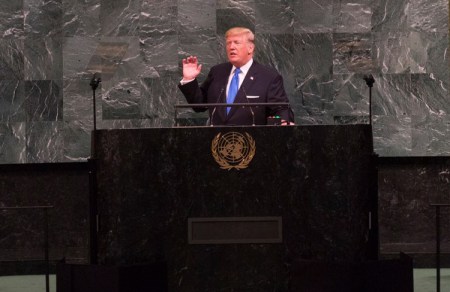
Last month at the United Nations General Assembly, President Donald Trump lacerated the Iran nuclear deal as an “embarrassment,” “one of the worst and most one-sided transactions the United States has ever entered into.” (Image source: The White House)

Fearing the worst, however, the deal’s acolytes are actively obscuring this central issue, arguing that it is too arduous and too complex to withdraw cleanly. They have seized instead on a statutory requirement that every 90 days the president must certify, among other things, that adhering to the agreement is in America’s national-security interest. They argue the president should stay in the deal but not make the next certification, due in October.

This morganatic strategy is a poorly concealed ploy to block withdrawal, limp through Mr. Trump’s presidency, and resurrect the deal later. Paradoxically, supporters are not now asserting that the deal is beneficial. Instead, they concede its innumerable faults but argue that it can be made tougher, more verifiable and more strictly enforced. Or, if you want more, it can be extended, kicked to Congress, or deferred during the North Korea crisis. Whatever.

As Richard Nixon said during Watergate: “I want you to stonewall it, let them plead the Fifth Amendment, cover up, or anything else if it’ll save it — save the plan.”

Mr. Trump should not be deceived. The issue is not certification. The issue is whether we will protect U.S. interests and shatter the illusion that Mr. Obama’s deal is achieving its stated goals, or instead timidly hope for the best while trading with the enemy, as the Europeans are doing. It is too cute by half to employ pettifoggery to evade this reality.

U.N. Security Council Resolution 2231 embodies the deal and includes two annexes: the Joint Comprehensive Plan of Action itself, and a statement by the other negotiating parties on “transparency… creating an atmosphere conducive” to full JCPOA implementation. Resolution 2231, the JCPOA and the statement were all crafted word-for-word with Iran (with Russia and China acting as Tehran’s scriveners on the statement), as was the cash-for-hostages swap Mr. Obama sought desperately to conceal. This packaging is more than a diplomatic nicety. It means Iran’s ballistic-missile program is integral to the deal — fittingly, since Iran’s missiles would deliver its nuclear warheads.

The ayatollahs have neither the desire nor the incentive to renegotiate even a comma of the agreement. Why should they, when it is entirely to their advantage? Both Resolution 2231 and the statement, for example, “call upon” Iran to forgo activity regarding “ballistic missiles designed to be capable of delivering nuclear weapons.” The U.N. secretary-general recently reported that Iran is violating this provision and implicitly lying about it. But the deal’s language allows Iran to claim solemnly that its missiles are not “designed” to carry nuclear warheads, an assertion whose verification would require polygraphs and psychologists, not weapons inspectors. This is one of many textual loopholes.

If the deal is vitiated, Tehran would not be freer than it is now to pursue nuclear weapons and ballistic missiles. Not only is the international compliance regime a far cry from Mr. Obama’s promised “anytime, anywhere” inspections, crucial language is vague and ambiguous. Mr. Obama’s negotiators crippled real international verification by pre-emptively surrendering on what were delicately termed “possible military dimensions” of Iran’s nuclear program.

Moreover, simple economic logic suggests that Tehran’s scientists are probably enjoying Pyongyang’s hospitality, well beyond the International Atomic Energy Agency’s limited capability to detect. Even U.S. intelligence could be in the dark if Iran is renting a uranium enrichment facility under a North Korean mountain. It is specious to assert that the North Korean nuclear crisis should lead to deferring action on the Iran deal. The conclusion should be precisely the opposite: Failure to act decisively on Iran now worsens the global proliferation threat.

The IAEA has interpreted Mr. Obama’s possible-military-dimension concession as requiring new evidence before it attempts to visit Tehran’s military bases, where the real work on weaponization and missiles is taking place—if not under mountains in North Korea. Mr. Obama acquiesced in this emasculation of the IAEA’s will to inspect, making the agency today like the drunk looking for his car keys under a street lamp because the light is better there. This is a sorry caricature of a robust, Reaganesque “trust but verify” regime.

Perhaps the most inane argument is that Congress should decide the deal’s fate and whether to reimpose U.S. sanctions. If a president is unwilling to solve this kind of problem, he shouldn’t have applied for the job. Watching what has happened on failed legislative efforts to repeal and replace ObamaCare, can anyone doubt that Senate Democrats (joined by Rand Paul) would filibuster any legislative effort to renew sanctions? The only sure way to resume economic pressure on Iran is for President Trump to stop waiving the sanctions, as he did a few weeks ago. The power to act is in executive hands, as it should be.

Mr. Trump knows his mind on Iran. And as Mr. Laxalt said to Marcos, “the time has come” to act decisively.

John R. Bolton, former U.S. Ambassador to the United Nations, is Chairman of Gatestone Institute, a senior fellow at the American Enterprise Institute, and author of “Surrender Is Not an Option: Defending America at the United Nations and Abroad”.

This article first appeared in The Wall Street Journal and is reprinted here with the kind permission of the author.

Trump Backs Away from Promise to Move U.S. Embassy in Israel to Jerusalem

Posted October 8, 2017 by Peter Hofman
Categories: Uncategorized

by Joel B. Pollak

8 Oct 2017

Source: Trump Backs Away from Promise to Move U.S. Embassy in Israel to Jerusalem – Breitbart

AP Photo/Evan Vucci

President Donald Trump told former Arkansas governor Mike Huckabee in an interview broadcast on TBN Saturday that he would not move the U.S. embassy in Israel to Jerusalem until he had tried to broker peace between Israel and the Palestinians.

The statement marks a significant walk-back of Trump’s campaign promise in 2016 to relocate the embassy from Tel Aviv to Jerusalem “fairly quickly.”

In March 2016, in a speech to the American Israel Public Affairs Committee (AIPAC), a prominent pro-Israel lobby group, Trump committed to moving the embassy to Jerusalem, explaining that it would increase the chance of peace with the Palestinians:

But when the United States stands with Israel, the chances of peace really rise and rises exponentially. That’s what will happen when Donald Trump is president of the United States.

We will move the American embassy to the eternal capital of the Jewish people, Jerusalem.

And we will send a clear signal that there is no daylight between America and our most reliable ally, the state of Israel.

The Palestinians must come to the table knowing that the bond between the United States and Israel is absolutely, totally unbreakable.

They must come to the table willing and able to stop the terror being committed on a daily basis against Israel. They must do that.

And they must come to the table willing to accept that Israel is a Jewish state and it will forever exist as a Jewish state.

In his interview with Huckabee, Trump appeared to dump that logic in favor of the conventional wisdom that the chances for peace would be hurt by affirming Israel’s sovereignty in Jerusalem.

Huckabee: Ambassador [David] Friedman recently indicated that the embassy will be moved to Jerusalem. Do we have a timeframe?

Trump: Well, we’re going to make a decision in the not-too-distant future. Right now, we are actually working on a plan that everybody says will never work — because for many, many years, it’s never worked, they say it’s the toughest deal of all, is peace between Israel and the Palestinians. So we’re going to work that, and if that doesn’t work — which is possible that it won’t, to be totally honest, I mean most people say it’s an impossible deal. I don’t think it is impossible, and I think it’s something that can happen. And I think it’s something that — I’m not making any predictions, but I want to give that a shot before I even think about moving the embassy to Jerusalem.

Trump appears to consider the embassy move a punitive measure, one that Palestinians can forestall by indulging peace talks. The implication is that an embassy move might not be included within the framework of a peace deal, and that Palestinians might not be required to recognize Israeli sovereignty in Jerusalem in a peace agreement.

Joel B. Pollak is Senior Editor-at-Large at Breitbart News. He was named one of the “most influential” people in news media in 2016. He is the co-author of How Trump Won: The Inside Story of a Revolution, is available from Regnery. Follow him on Twitter at @joelpollak.

FBI Lists “Black Identity Extremist” Terror Threat

Posted October 8, 2017 by danmillerinpanama
Categories: Black Identity Extremists, Black supremacy, FBI, White supremacy

Tags: , , ,

FBI Lists “Black Identity Extremist” Terror Threat, The Point FrontPage Magazine, Daniel Greenfield, October 8, 2017

The same folks who are very keen on fighting white supremacists urgently want to give black supremacists a pass? And what’s the actual difference between them? Racism, check. Racial supremacism, check. Violence, check. Genocidal fantasies, check.

******************************

Black nationalist terror has been around for some time. But the Obama era, especially post-Ferguson, marked a major upswing in black nationalist violence. And the FBI is belatedly addressing the threat, particularly to law enforcement.

“The FBI assesses it is very likely Black Identity Extremist (BIE) perceptions of police brutality against African Americans spurred an increase in premeditated, retaliatory lethal violence against law enforcement and will very likely serve as justification for such violence,” reads the report, marked for official use only and obtained by Foreign Policy.

Among the six acts of premeditated violence linked to black identity extremists — it excludes violence toward police carried out in the normal course of their duties — the reports cites the July 2016 shooting of 11 police officers in Dallas. The shooter, Micah Johnson, was reportedly angry at police violence.

“Based on Johnson’s journal writings and statements to police, he appeared to have been influenced by BIE ideology,” the FBI report states. The attack took place during a Black Lives Matter protest of police shootings, though the BLM movement is not mentioned by name in the report.

The FP piece is predictably dedicated to attacking the report. As is the general media reaction. There are accusations of racism. Which are rather backward considering that black nationalist groups tend to be rather racist themselves.

Black nationalist violence is obviously real. The bizarre attempts to argue otherwise are simply… bizarre.

“They are grouping together Black Panthers, black nationalists, and Washitaw Nation,” said the former homeland security official. “Imagine lumping together white nationals, white supremacists, militias, neo-Nazis, and calling it ‘white identity extremists.’”

The FBI is linking the people discussed in the report based only on them being black, rather than on any sort of larger ideological connection, the official said. “The race card is being played here deliberately.”

The race card is being played by black nationalists. If the FBI had grouped together BLM and the Black Chamber of Commerce, there would be reason to object. Black nationalists are being grouped together as white nationalists frequently have been.

Michael German, a former FBI agent and now a fellow with the Brennan Center for Justice’s liberty and national security program, said manufacturing this type of threat was not new. He has criticized earlier FBI reports on “black separatists,” arguing that they conflated radical groups operating in the 1970s with attacks in 2010 and later, even though there was no obvious connection.

The use of terms like “black identity extremists” is part of a long-standing FBI attempt to define a movement where none exists. “Basically, it’s black people who scare them,” German said.

Does this level of dishonesty even need to be commented on? Or what it says about the Brennan Center?

The same folks who are very keen on fighting white supremacists urgently want to give black supremacists a pass? And what’s the actual difference between them? Racism, check. Racial supremacism, check. Violence, check. Genocidal fantasies, check.

Oh right. Some forms of racism are better than others because they’re “reverse racism”.

In 2009, Daryl Johnson, then a Department of Homeland Security intelligence analyst, warned of the rise of right-wing extremism, setting off a firestorm among congressional critics. Johnson, who left the department in 2010, said he could think of no reason why the FBI would create a new category for so-called black identity extremists. “I’m at a loss,” he replied, when asked about the term.

There have been concerns about rising violence among black separatist groups in recent years, he said, but it does not approach the threat of right-wing extremism. “When talking about white supremacists versus black supremacists, there are way more white supremacists,” Johnson said.

There are also more white people than black people. But lately there’s been more black nationalist violence than white nationalist violence.

The Kerfuffle Before the Storm

Posted October 8, 2017 by danmillerinpanama
Categories: Media and Trump, Trump and China, Trump and defense of America, Trump and Iran, Trump and North Korea, Trump and US Military, Trump's generals, Trumpian diplomacy

Tags: , , , , , , ,

The Kerfuffle Before the Storm, PJ Media, Claudia Rosett, October 7, 2017

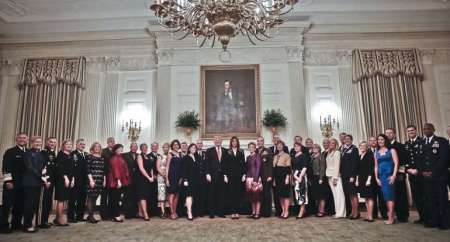
President Donald Trump and first lady Melania Trump, center, poses for a group photo with Senior Military leaders and spouses in the State Dining Room of the White House on Oct. 5, 2017. (AP Photo/Pablo Martinez Monsivais)

The first priority for any president inheriting this virulent global mess should be to try as far as possible to reclaim America’s credibility; to persuade America’s enemies  that the bargain sale on U.S. interests is over, and America will, if necessary, wield its full military might to defend itself, its allies and interests. That is vital to deterrence, which — if genuinely effective — is vastly preferable to war.

The conundrum is how America can regain the credibility needed for deterrence, without having to resort to war in order to prove the point. For instance, unless Kim Jong Un truly believes that the U.S. might actually attack North Korea despite the potential horrific cost, why should he back down? Why should he worry about U.S. warships and submarines in the region? It’s an impressive show of military hardware, but is it a credible threat?

For an American president faced with this problem, one move worth attempting would be to gather America’s top military commanders for a meeting at the White House, followed by a dinner with their spouses, and invite the press to come witness and report on this conclave. If, in the midst of this genial scene, the president mentions that this is the calm before the storm, it may be baffling and frustrating to reporters — whose job includes nailing down details. But in capitals such as Moscow, Beijing, Tehran and Pyongyang, it might just help prompt a rethink about the assumption — gleaned from their success in rogue ventures during the tenure of Obama — that America is a hamstrung giant.

There’s always the possibility that it was more than a broad warning — that perhaps Trump is indeed about to launch a specific military action. But to whatever extent this cliffhanger helps concentrate minds in Moscow, Beijing, Tehran and Pyongyang on just how unpleasant it could be to provoke an American storm,  it was an important message. Quite possibly a bid to avert a war, rather than start one. Worth the kerfuffle in the press.

***********************************

With the phrase “the calm before the storm,” President Trump on Thursday evening kicked off one of the biggest media kerfuffles since his late-night tweet in May about “the constant negative press covfefe.” That mysterious locution produced a spate of stories speculating sardonically on what the president meant. We’re now hearing a similar round of mockery. But this was no late-night typo in a tweet, and while offended members of the media default to derision, it’s worth considering that the president quite likely sent a useful message to an audience that extends way beyond the White House press corps.

The setting was a dinner for top U.S. military commanders and their spouses, hosted by Trump in the White House State Dining Room. Trump invited reporters in for a brief photo-op. Flanked by military officials who have dedicated themselves to defending America and winning its wars, all gathered with their spouses under a big portrait of President Lincoln. Trump asked the reporters, “You guys know what this represents?”

“Tell us, sir,” said one of the reporters.

“Maybe it’s the calm before the storm,” said Trump. A reporter asked, “What storm?” Trump gave the oblique reply, “We have the world’s greatest military people in this room, I will tell you that.” A reporter asked, again, “What storm?” Trump said, “You’ll find out.”

The entire exchange lasted about 30 seconds. The reporters were thanked and dismissed. The media were left to speculate on whether the “storm” referred to impending military action again North Korea, or maybe plans to back away from President Obama’s Iran nuclear deal, or something else, or nothing at all. Asked again by reporters on Friday what he meant by “the calm before the storm,” Trump again declined to clarify, saying again, “You’ll find out.”

This has been playing as a crazy-Trump story. CNN came out with the headline: “Trump is treating a potential war like a reality show cliffhanger,” and warned, “This is no reality show… His words — whether he means them as a tease, a threat or something in between — can have very real consequences.” Esquire called Trump “Our Reality TV President” and asked, “Will the season finale involve nuclear war with North Korea?” The New York Times called Trump’s comment “ominous.” NBC called it “provocative.” Politico called it “unprompted.” The Huffington Post, in a headline, called it “Bizarre.”

I’d call it smart. We don’t know precisely what the president had in mind. But we do know — or we ought to know — this: In world politics, there is a gathering storm that threatens America and our allies. There is a rising network of tyrannies hostile to American interests and values, including most prominently Russia, China, Iran and North Korea. The U.S. superpower can face down any one of these actors if it must, but the disturbing trajectory is that for years now — whatever their differences — they have effectively been making common cause against America and the requirements of a free and peaceful world order. They do illicit business together; they often back each other diplomatically, and they learn from each other just how much it is possible to get away with. Russia and China have been carrying out joint military maneuvers. North Korea, longtime weapons dealer to Iran, is cultivating an arsenal of nuclear missiles. The threats compound.

This trend accelerated dramatically during the years of America’s policies of retreat, appeasement, and surrender under President Obama. China, as part of its military buildup, sped up its construction of artificial islands topped with military bases clearly designed to threaten freedom of navigation along vital shipping routes in Southeast Asia. Russia snatched Crimea from Ukraine, and got away with it. Terrorist-sponsoring Iran extended its reach in the Middle East, and is currently benefitting from a rotten nuclear deal that paves its way to the bomb, accessorized with ballistic missiles. Syria disintegrated into war, which opened the way for both the rise of ISIS and military inroads by Vladimir Putin’s Russia into the Middle East. Libya, with America leading-from-behind, disintegrated into terrorist-infested chaos.

And North Korea, which had carried out one nuclear test in 2006 on the watch of President Bush, conducted four more tests during the tenure of Obama, along with scores of ballistic missile tests, while Kim Jong Un consolidated his hold on the totalitarian throne inherited in 2011 from his father. Taking advantage of Obama’s “strategic patience” to ramp up a rogue nuclear program, Kim Jong Un’s regime was ready to greet the Trump administration with an arsenal that by now appears quite convincingly to include long-range missiles, miniaturized warheads and the hydrogen bomb.

None of this is a figment of Trump’s imagination. Neither is it a prop on some reality TV show. It is real.

This is not of Trump’s making. But given the rate at which the threats and crises have been compounding, it falls to him to cope with a greatly emboldened group of increasingly well armed and predatory powers. This has been made all the more difficult by the enormous amount of U.S. credibility that was squandered by Obama — who gutted the U.S. military, bore passive “witness” to upheaval in Iran, erased his own red line over chemical weapons in Syria, threw away the hard-won progress in Iraq, bungled Afghanistan and Libya, promised (and delivered) flexibility to Putin, deferred to China, embraced Cuba, shrugged off the rising nuclear threat of North Korea, and assured the American public that the tide of war was receding.

The first priority for any president inheriting this virulent global mess should be to try as far as possible to reclaim America’s credibility; to persuade America’s enemies  that the bargain sale on U.S. interests is over, and America will, if necessary, wield its full military might to defend itself, its allies and interests. That is vital to deterrence, which — if genuinely effective — is vastly preferable to war.

The conundrum is how America can regain the credibility needed for deterrence, without having to resort to war in order to prove the point. For instance, unless Kim Jong Un truly believes that the U.S. might actually attack North Korea despite the potential horrific cost, why should he back down? Why should he worry about U.S. warships and submarines in the region? It’s an impressive show of military hardware, but is it a credible threat?

For an American president faced with this problem, one move worth attempting would be to gather America’s top military commanders for a meeting at the White House, followed by a dinner with their spouses, and invite the press to come witness and report on this conclave. If, in the midst of this genial scene, the president mentions that this is the calm before the storm, it may be baffling and frustrating to reporters — whose job includes nailing down details. But in capitals such as Moscow, Beijing, Tehran and Pyongyang, it might just help prompt a rethink about the assumption — gleaned from their success in rogue ventures during the tenure of Obama — that America is a hamstrung giant.

Whether that was Trump’s intention, I don’t know. It sure looked that way. In the phrase that so alarmed CNN and Esquire, there was a useful ambiguity. Trump didn’t guarantee a storm; he merely suggested it could happen. Surrounded by his top military commanders, in the seat of American power that is the White House, the commander-in-chief prefaced his statement about “the calm before the storm” with “maybe.” It was, in a genteel and peaceful setting, a warning not to mess with America.

There’s always the possibility that it was more than a broad warning — that perhaps Trump is indeed about to launch a specific military action. But to whatever extent this cliffhanger helps concentrate minds in Moscow, Beijing, Tehran and Pyongyang on just how unpleasant it could be to provoke an American storm,  it was an important message. Quite possibly a bid to avert a war, rather than start one. Worth the kerfuffle in the press.

War of words escalating between Washington and Tehran

Posted October 8, 2017 by Joseph Wouk
Categories: Uncategorized

Source: War of words escalating between Washington and Tehran – Middle East – Jerusalem Post

REUTERS
 OCTOBER 8, 2017 12:20
“If America’s new law for sanctions is passed, this country will have to move their regional bases outside the 2,000 km range of Iran’s missiles,” warns Revolutionary Guards Corps chief.
Revolutionary Guards

BEIRUT/DUBAI – Iran warned the United States against designating its Revolutionary Guards Corp as a terrorist group and said U.S. regional military bases would be at risk if further sanctions were passed.

The warning came after the White House said on Friday that President Donald Trump would announce new US responses to Iran’s missile tests, support for “terrorism” and cyber operations as part of his new Iran strategy.

Iranian President Hassan Rouhani fires back at US President Donald Trump on Iran nuclear deal, October 7, 2017. (Reuters)

“As we’ve announced in the past, if America’s new law for sanctions is passed, this country will have to move their regional bases outside the 2,000 km range of Iran’s missiles,” Guards’ commander Mohammad Ali Jafari said, according to state media.

Jafari also said that additional sanctions would end the chances for future dialog with the United States, according to state media, and issued a stark warning to American troops.

“If the news is correct about the stupidity of the American government in considering the Revolutionary Guards a terrorist group, then the Revolutionary Guards will consider the American army to be like Islamic State all around the world particularly in the Middle East,” Jafari said.

The Revolutionary Guards (IRGC) are Iran’s most powerful internal and external security force. The Quds Force, the IRGC’s foreign espionage and paramilitary wing, and individuals and entities associated with the IRGC are on the US list of foreign terrorist organizations, but the organization as a whole is not.

Iran sees the Sunni Muslim militants of Islamic State as an existential threat to the Islamic Republic where the majority of the population are Shi’ites.

On June 7, Islamic State claimed an attack on Tehran’s parliament and the mausoleum of Ayatollah Ruhollah Khomeini, the founder of the Islamic Republic, killing 18 people. The Guards fired missiles at Islamic State bases in Syria on June 18 in response.

Guards commanders have framed their military involvement in Iraq and Syria, where they are fighting to support the government of President Bashar al-Assad, as a fight against Islamic State.

Dozens of members of the Guards, including senior commanders, have been killed in Syria and Iraq.

MISSILE PROGRAM

The website for state TV reported Jafari as adding that the United States was mistaken if it thought it could pressure Iran into negotiating on regional issues.

Jafari also said that Tehran would ramp up its defense capabilities, including its missile program, if the US undermined a nuclear deal between Iran and Western powers.

Under the 2015 deal, Iran agreed to limit its disputed nuclear program in return for the easing of economic sanctions.

However, Trump is expected to announce soon that he will decertify the deal, a senior administration official has said, in a step that potentially could cause the accord to unravel.

“The Americans should know that the Trump government’s stupid behavior with the nuclear deal will be used by the Islamic Republic as an opportunity to move ahead with its missile, regional and conventional defense program,” Jafari said, according to state media.

The prospect of Washington backtracking on the deal has worried some of the US allies that helped negotiate it, especially as the world grapples with another nuclear crisis in the shape of North Korea.

If Trump does not certify that Iran is in compliance, the U.S. Congress will have 60 days to decide whether to reimpose sanctions waived under the deal. U.N. inspectors have verified Iranian compliance with the terms.

The Guards navy was also carrying out a military exercise on Sunday in the Gulf, an area of tension with the US navy in recent months.More than 110 vessels were involved in the exercise, including some that have rocket and missile capabilities, a state media report quoted a Guards commander as saying.