Europe, Iran to meet on backing nuclear deal as Trump decision looms

Posted January 11, 2018 by Joseph Wouk
Categories: Uncategorized

Source: Europe, Iran to meet on backing nuclear deal as Trump decision looms | The Times of Israel

Washington sends mixed signals on whether it will withdraw from accord as Europeans lobby to preserve pact, Iranians warn of revamped nuke program

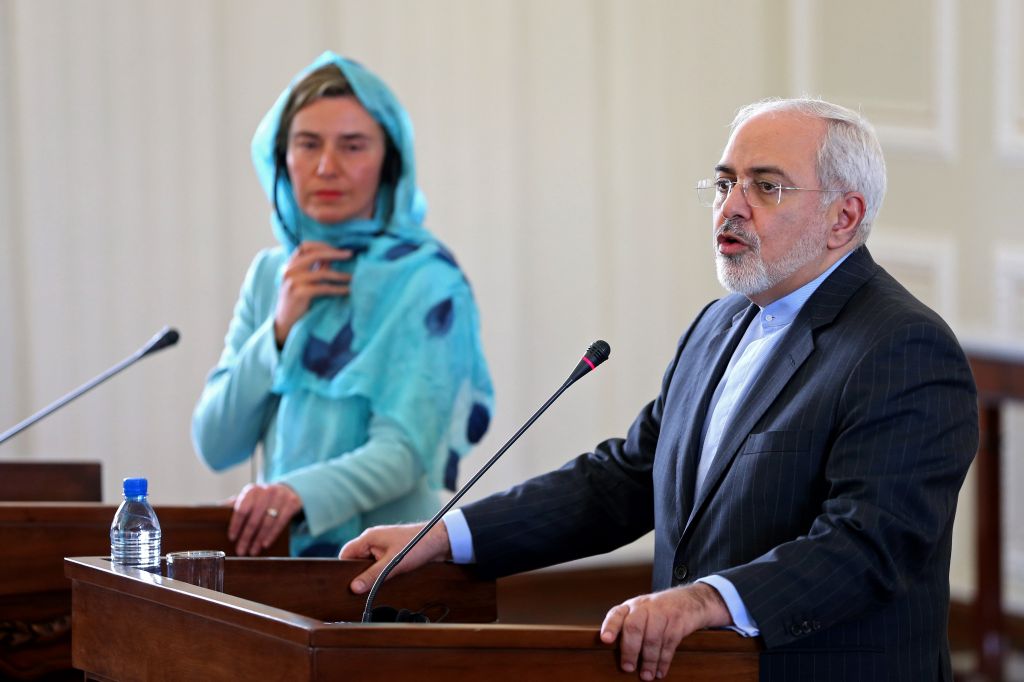
File: Iranian Foreign Minister Mohammad Javad Zarif, right, and the European Union foreign policy chief Federica Mogherini arrive to attend a press briefing after their meeting, in Tehran, Iran, Saturday, April 16, 2016. (AP/Ebrahim Noroozi)

BRUSSELS, Belgium — Europe and Iran are to put on a united front in support of the landmark 2015 nuclear deal at talks in Brussels Thursday as Washington mulls reimposing sanctions on Tehran.

The European Union and the foreign ministers of Britain, Germany and France will unite to defend the accord, which placed limits on Iran’s nuclear program in exchange for the relaxing of punishing sanctions but which US President Donald Trump has repeatedly criticized and threatened to leave.

While EU diplomatic chief Federica Mogherini wants to keep the nuclear issue separate from other contentious issues with Tehran, Iranian Foreign Minister Mohammad Javad Zarif will also face tough questions about recent anti-government protests which left 21 people dead.

Trump, who in October refused to certify Iran was complying with the deal but stopped short of withdrawing from it, is expected to decide on Friday whether to extend waivers on nuclear-related sanctions against Tehran.

US officials and others familiar with the administration’s deliberations told the Associated Press Wednesday that Trump had decided to extend relief from economic sanctions to Iran as part of the nuclear deal, citing progress in amending US legislation that governs Washington’s participation in the landmark accord, potentially staving off a crisis if the US withdraws from the pact. However, two other US sources told AFP that Trump had not yet made a decision.

The EU and other world powers have repeatedly warned it would be a mistake to abandon the deal, thrashed out with Iran over 12 years by the US, Britain, France, China, Germany and Russia.

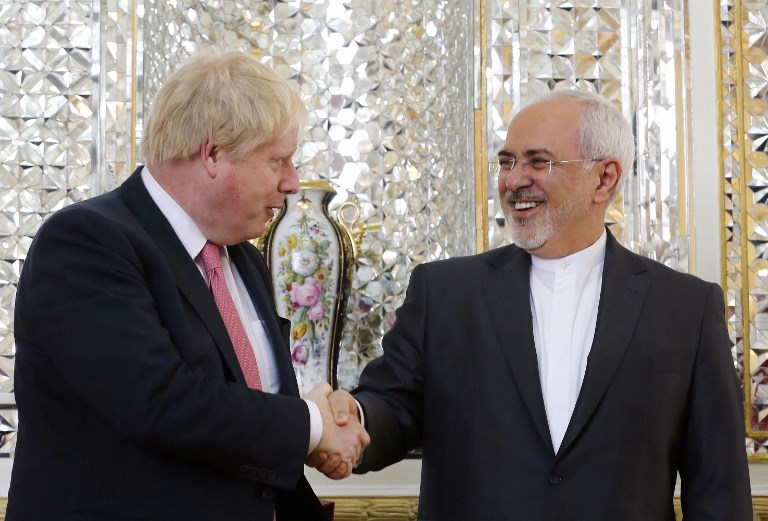
Iran’s Foreign Minister Mohammad Javad Zarif (R) shakes hands with his British counterpart Boris Johnson during a meeting in Tehran on December 9, 2017. (AFP Photo/Atta Kenare)

British foreign minister Boris Johnson called the deal “a crucial agreement that makes the world safer.”

“It is vital that we continue to work with our European partners to preserve the Iran deal, and with it the security and prosperity it is bringing to the people of Iran and the world,” he said.

Iran warning

Iran, which on Monday warned the world to get ready for Washington abandoning the deal, has said if the US walks away from the agreement it is ready to give an “appropriate and heavy response.”

Zarif, who traveled to Moscow on Wednesday to seek Russian support, criticized what he called Washington’s “destructive policy.”

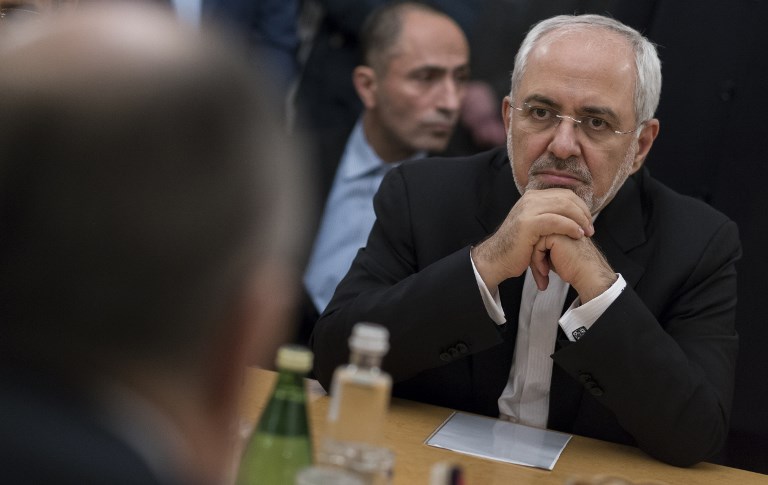
Iran’s Foreign Minister Mohammad Javad Zarif attends a meeting with his Russian counterpart in Moscow on January 10, 2018. (AFP Photo/Pool/Alexander Zemlianichenko)

“The United States must understand the unity of the international community over the nuclear deal and change their position as a result,” Zarif said, urging world powers to “resist the hostile actions” of the Trump administration.

The International Atomic Energy Agency (IAEA) has said Iran is keeping up its side of the agreement, most recently in November.

After talks in Moscow on Wednesday Zarif tweeted a warning. “Everyone agrees it is imperative that ALL live up to their obligations under JCPOA. IAEA has verified Iran’s full compliance, but continuation will depend on full US compliance,” he wrote. JCPOA is the official name for the deal.

Punishing Tehran

Mogherini, who played an important role in crafting the nuclear accord, has vowed to preserve the deal and has lobbied US lawmakers in Washington.

The US Congress is working on a way to punish Iran for its continuing ballistic missile program and meddling in Middle East conflicts such as Yemen and Syria.

Johnson said these issues would be “an important part of our conversation” in Brussels on Thursday — along with the recent unrest in Iran.

“I will be making it clear to Foreign Minister Zarif, on the subject of the recent protests in Iran, that the right to peaceful demonstration within the law is central to any truly thriving society,” Johnson said.

The 28-member EU has condemned the “unacceptable loss of human lives” in the protests and stressed that peaceful protest and freedom of expression are “fundamental rights.”

The Associated Press contributed to this report

US ambassador: Palestinian endorsement of terror is why there’s no peace

Posted January 11, 2018 by Joseph Wouk
Categories: Uncategorized

Source: US ambassador: Palestinian endorsement of terror is why there’s no peace – Arab-Israeli Conflict – Jerusalem Post

BY HERB KEINON
 JANUARY 10, 2018 13:08
Deputy Foreign Minister Tzipi Hotovely responded to Friedman with a tweet of her own.
People standing around the scene of a shooting in the West Bank.

 People standing around the scene of a shooting in the West Bank.. (photo credit: COURTESY MDA)

US Ambassador David Friedman said in a tweet Wednesday that those wondering why there is no peace should look no further than Tuesday nights murder of Raziel Shevach and the Palestinian reaction to it.

“An Israeli father of six was killed last night in cold blood by Palestinian terrorists. Hamas praises the killers and PA laws will provide them financial rewards,” he wrote on his Twitter account. “Look no further to why there is no peace. Praying for the bereaved Shevach family.”

An Israeli father of six was killed last night in cold blood by Palestinian terrorists. Hamas praises the killers and PA laws will provide them financial rewards. Look no further to why there is no peace.
Praying for the bereaved Shevach family.

Friedman has some 61,100 followers on his twitter account.

Deputy Foreign Minister Tzipi Hotovely responded to Friedman with a tweet of her own, saying, “Dear Ambassador Friedman, we deeply appreciate your solidarity with Israel. We value your partnership in the fight against terror and your understanding that the Palestinian Authority’s support of terrorists lies at the root of the problem.”

Dear Ambassador Friedman, we deeply appreciate your solidarity with Israel. We value your partnership in the fight against terror and your understanding that the Palestinian Authority’s support of terrorists lies at the root of the problem. https://twitter.com/usambisrael/status/950991665216532480 

UN Mideast envoy Nickolay Mladenov also posted a tweet condemning the attack. “There is no justification for #terror and those who condone it, praise it or glorify it. This is not the path to #peace! The perpetrators of yesterday’s attack must be brought to justice,” he wrote.

There is no justification for and those who condone it, praise it or glorify it. This is not the path to ! The perpetrators of yesterday’s attack must be brought to justice.

He posted his tweet, both in English and Hebrew, to his 42,000 followers.

The attack took place on Route 60 near the Jewish outpost of Havat Gilad on Tuesday evening. Rabbi Raziel Shevach, a father of six children and resident of Havat Gilad was shot multiple times in his neck and upper body in a drive-by shooting attack. He was taken to Meir Medical Center in Kfar Saba where he was pronounced dead.

Hamas issued a statement late Tuesday night praising the attack. “We bless the heroic Nablus operation which comes as a result of the Zionist occupation’s violations and crimes at the expense of our people in the West Bank and Jerusalem.”

Tuesday’s attack comes on the heels of a report by the Defense Ministry that terrorists and their families are well paid by the Palestinian Authority. Terrorists sentenced to three to five years in prison receive an average Palestinian salary of $580 per month. Those who committed more severe crimes and are sentenced to 20 or more years in prison are paid five times that every month for the rest of their lives.

Jeremy Sharon, Lahav Harkov and Anna Ahronheim contributed to this report.

House Passes Resolution Supporting Iranian Protestors 415-2

Posted January 10, 2018 by danmillerinpanama
Categories: Iran - human rights, Iranian protests - international reaction, Iranian resistance, Trump and Iranian protests, U.S. Congress and Iran

Tags: , , , ,

House Passes Resolution Supporting Iranian Protestors 415-2, BreitbartPenny Starr, January 9, 2018

AP Photo/Frank Augstein

The crowd in Los Angeles also expressed thanks to President Donald Trump for his outspoken support of the protesters, according to tweets posted during the weekend.

*********************************

The House of Representatives approved House Resolution 676 on Tuesday, putting into the Congressional Record its support for the protesters that have taken to the streets in cities across Iran in opposition to its oppressive radical Islamic government.

HR 676 reads: “Supporting the rights of the people of Iran to free expression, condemning the Iranian regime for its crackdown on legitimate protests, and for other purposes.”

House approves resolution in support of Iran protests, 415-2

Two Republicans voted against the resolution: Reps. Walter Jones (R-NC) and Thomas Massie (R-KY).

The House Radio and TV Gallery confirmed to Breitbart News the vote count and the two members who voted “no” on the resolution.

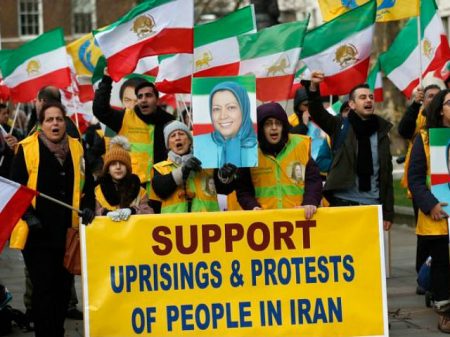
 The regime in Iran has insisted the protests have been put down, but supporters — including those who have held rallies across the United States in recent days — say the protesters need support for their cause to bring about a Democratic Republic in the country.

Hundreds gathered in Washington, DC, and an estimated 2,000 in Los Angeles, California, over the weekend in support of the protesters.

“Let us declare our solidarity with the people of Iran,” Amir Emadi — whose father was one of 52 Iranian refugees killed in 2013 by Iraqi security forces in Camp Ashraf, Iraq — said at the rally in the nation’s capital.

“We are gathered here to say to the international community; you must recognize the legitimate right of the people of Iran and overthrow the ruling religious dictatorship and establish a secular, democratic, Republic of Iran,” Emadi said. “You must strongly condemn and hold accountable the Iranian regime for murder and mass arrest of defenseless protesters.”

“You must impose sanctions on the regime for killings and arrests during current uprisings,” said Emadi, who supports the National Council of Resistance of Iran (NCRI).

At least 21 protesters have been killed since protests began on December 27, but some say the number is much higher. Authorities in Iran have said that at least 450 people weredetained, but the U.S. Department of State said the number could be as many as 1,000, CNN reported.

The crowd in Los Angeles also expressed thanks to President Donald Trump for his outspoken support of the protesters, according to tweets posted during the weekend.

Donald Trump—the Grownup in the Room on Immigration

Posted January 10, 2018 by danmillerinpanama
Categories: Trump and illegal immigration, Trump and immigration law enforcement, Trump and insanity, Trump and media, Trump and negotiation

Tags: , , , ,

Donald Trump—the Grownup in the Room on Immigration, PJ MediaRoger L Simon, January 9, 2018

Immigration Arrest

Donald Trump gets called crazy a lot. Or infantile. Or senile. More than a bit of projection may be operative in these allegations, however. Watching Tuesday’s televised discussion of immigration (video here) with Democratic and Republican congressional leaders, which the president opened to the media, it was hard not to come to an opposite conclusion.

Donald Trump was the real grownup in the room.

Yes, he made occasional jokes, but that’s what grownups do to relax tense situations. To get politicians from both sides of the aisle talking to each other cordially in the current hyper-partisan atmosphere is no easy feat.  But Trump did that.  He showed himself to be what many of us have thought him to be from the outset, whatever the attendant melodrama — a pragmatic businessman with moderately conservative views, even, dare I say it, sometimes weirdly wise. Above all, he is a man who likes to make progress, who wants to move things forward to a better day while recognizing that there is no perfect. How adult is that.

And, yes, it’s possible this event was arranged to counteract the bad publicity from Michael Wolff’s bilious, factually challenged book, but so what?  Basically, Trump (with the help of the cameras) shamed his fellow and gal politicians into civility and evidently cajoled them into at least a partial solution,  later, in closed session, to that most intractable of problems – immigration.  If Trump were anything like his detractors say he is, he couldn’t have done either.  He even urged them on to a more global solution on immigration, reminding the politicians at the table they were closer to that goal than they realized. If that’s crazy, maybe we need more of it.

But what of this partial solution?  By its very nature, ideologues of the left and right will not be satisfied. (Are they ever?)  Lefties want to solve DACA first and then, oncethe “Dreamers” have their “pathway to citizenship,” the left promises to deal with border security and such things as chain migration and the trendily named Diversity Visa Lottery later.  Of course, that’s nonsense. They have no intention of doing anything to mitigate the latter two and to the former they will only pay lip service.

Every politician in the room knew that and so, of course, did Trump.  He made sure it didn’t happen.

On the right, Anne Coulter and others of her ilk will doubtless be disappointed, to put it mildly, that an impregnable border wall will not immediately be erected across the entire Southern border and all eleven million illegal aliens summarily ejected from our country. They will claim Trump promised this during the campaign, and he did at moments, but if you were listening carefully, you knew where he was ultimately going — he hinted at it and more many times — compromise.

And why not? Short of revolution, that’s the only way in the end to get what you want.  Trump’s a negotiator and we’re all lucky for it.  As of now it looks as if chain migration and the lottery are dead and gone.  Good thing too, because they were both conduits for lethal terrorism, as we have seen, potential murder weapons. As for the wall, that awful word compromise will apply again. Some of it will be built. The question is — will it be enough? Probably not.  Second question is — will border security be better than it is now?  Probably yes.

Call me a wuss, but in the real world, I’ll take “probably yes” any time.  And also, while I’m being a slavish Trump admirer, which undoubtedly I am (I admit it), I will remind all of the conclusion of Monday night’s fantastic football game.  As fans will recall, seconds after things looked disastrous for Alabama, its young quarterback sacked for a 25-yard loss or whatever, putting the game seemingly out of reach, the Tide’s same prodigious 18-year old freshman threw a forty-some yard pass for a touchdown and victory.  He did this by “looking off” his opponents, making them think he was throwing in another direction.

That’s what Trump does.  He looks us off a lot. Everyone, especially the press, goes running off in another direction.  Then, when we’re not paying attention or when we think all is lost and calamity is upon us,  something good happens — tax reform passes, the American embassy is moved to Jerusalem, etc.  For a crazy, eleven-year old idiot, this guy seems to know what he’s doing. For now, he’s the best quarterback we’ve got.

One more thing, as they say at Apple. Some are feigning outrage that Trump, at the same meeting, proposed something as retrograde as a return to the dreaded earmarks (unrelated pet projects added to bills to get them passed). Mon Dieu! Trump’s advocating corruption.  Well, not exactly. He’s a realist who realizes that there was something good in earmarks — Democrats and Republicans actually talked with each other and worked together — mixed in with the bad.  Whether a return to earmarks would be a solution to this or whether, as he indicated might be true, there is a way to reform earmarks to make them work is not clear.  But Trump made his point.  Our politicians should learn to cooperate for the good of the people the way they used to — or we like to think that they used to. Whichever is the case, again, his point is made.

South Korean President: You Know Who Deserves “Big Credit” For Panmunjom Talks, Right?

Posted January 10, 2018 by danmillerinpanama
Categories: Panmunjom talks, South Korean President Moon Jae-in, South Korean responses to North Korean threat, Trump and North Korea, Trump and South Korea

Tags: , , , ,

South Korean President: You Know Who Deserves “Big Credit” For Panmunjom Talks, Right? Hot Air, Ed Morrissey, January 10, 2018

Wait — Moon Jae-in can’t mean the man who is going to get us all nuked, can he? Well, yes, that’s precisely what South Korea’s president means. After opening the first talks with North Korea in over two years, Moon told reporters that Donald Trump deserves “big credit” for forcing the Kim regime to the table with a fresh strategy of hardball from the US (via Jake Tapper):

South Korean President Moon Jae-in credited U.S. President Donald Trump on Wednesday for helping to spark the first inter-Korean talks in more than two years, and warned that Pyongyang would face stronger sanctions if provocations continued. …

Seoul and Pyongyang agreed at Tuesday’s talks, the first since December 2015, to resolve all problems between them through dialogue and also to revive military consultations so that accidental conflict could be averted.

“I think President Trump deserves big credit for bringing about the inter-Korean talks, I want to show my gratitude,” Moon told reporters at his New Year’s news conference. “It could be a resulting work of the U.S.-led sanctions and pressure.”

Granted, Moon softens this with a conditional in the end, but it doesn’t keep him from providing the credit up front. Previous administrations seemed more content to kick the can down the road, especially the Obama administration, which kept up sanctions but kept trying to downplay the crisis. Thanks to that approach, other players were able to shrug off the North Korean crisis, especially China.

Trump has taken a different tack; he is acting as though the crisis were present, which it is and has been for some time now. Trump has increased the pace and reach of sanctions to the point where North Korea now has very few avenues for trade on critical commodities such as fuel and food. Trump’s belligerence has forced China into action to try to bring its obstreperous client under some form of control. The disruption even forced Moon, who ran as an appeaser looking to dial down tensions, into deploying the THAAD systems he had opposed during his campaign.

Besides the fact that it reflects reality, Moon’s credit sets the table for an eventual US-North Korea negotiations, one expert tells Reuters:

Lee Woo-young, a professor at the University of North Korean Studies in Seoul, said it was wise of Moon to praise Trump, his sanctions and pressure campaign.

“By doing that, he can help the U.S. build logic for moving toward negotiations and turning around the state of affairs in the future, so when they were ready to talk to the North, they can say the North came out of isolation because the sanctions were effective.”

At this point, direct negotiations are the only path left to avoid another armed conflict. Trump has said he would consider that option if the conditions were right, although Kim Jong-un has so far balked at the idea until he achieves nuclear parity with the US. This week’s talks could provide a short-cut to a settlement, but don’t expect Trump to take his foot off the gas pedal until those talks become a reality. He’s getting pretty good mileage right now out of his foreign policy toward the Korean Peninsula, and Moon corroborates that.

This makes Andrew Malcolm’s latest column on Trump’s foreign policy and general productivity look prescient:

Trump’s tweets at North Korea’s “little Rocket Man” draw instant media attention, even igniting speculations on the president’s mental health. They reinforce a popular perception that this president is a loose cannon, a perception he sometimes seeks and feeds with unorthodox presidential behavior and statements.

What doesn’t get reported so eagerly nor attributed to Trump’s presidency are puzzling positive developments: Economic growth exceeding three percent by Trump’s seventh month, unemployment falling to longtime lows, 1.84 million new jobs since Trump’s inauguration, confident stock markets soaring to all-time highs, new homebuilding up, dozens of large companies granting bonuses and wage hikes. Even Trump’s job approval was climbing at year’s end.

How can so many things be going so well with an unbalanced usurper in the Oval Office? …

These and other actions demonstrating freshened resolve abroad suggest when it comes to foreign policy, friends and foes alike would do well to note that Trump follows words with action.

They’re beginning to notice that in Pyongyang.

Spokesman: Senior Hamas official shot in the head

Posted January 10, 2018 by Louisiana Steve
Categories: Hamas

Tags:

By Adam Rasgon, The Jerusalem Post
January 9, 2018 13:11

Article Link

{I never realized examining your gun could be so dangerous. – LS}

Imad al-Alami is in critical condition.

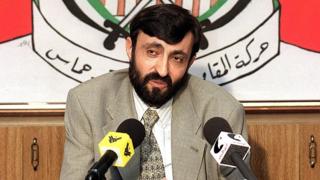
Senior Hamas official Imad al-Alami on Tuesday was admitted to a hospital in Gaza City after being shot in the head “while examining his personal weapon in his home,” Hamas Spokesman Fawzi Barhoum said.

Alami is known as a hardliner and has supported Hamas’s ties with Iran.

In a Facebook post, Barhoum said that Alami is in “critical condition.”

On Tuesday afternoon, Senior Hamas officials including Hamas Politburo Chief Ismail Haniyeh and Hamas Chief in Gaza Yahya Sinwar visited Alami in the intensive care unit in Gaza City’s Shifa Hospital, Gaza-based media reported.

Alami has been a Hamas member since the late 1980s and was the first Hamas representative in Tehran.

In 2012, he returned to Gaza after spending a number of years outside of the Palestinian territories.

In 2014, one of his feet was injured in an Israeli air raid during Operation Protective Edge, according to Hamas’s official website.


Reported Israeli strikes in Syria coincide with US cogitation on Assad’s post-war future

Posted January 9, 2018 by danmillerinpanama
Categories: Assad, Euro-Asian position on Syria, Israeli security, Post-war Syria

Tags: , , ,

Reported Israeli strikes in Syria coincide with US cogitation on Assad’s post-war future, DEBKAfile, January 9, 2018

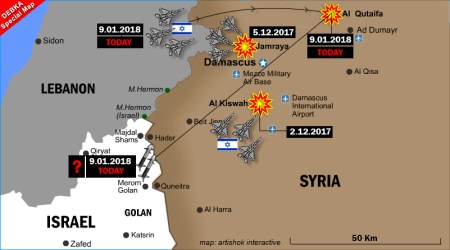
A broad, purposeful assessment of policy on Syrian president Bashar Assad’s political future has been scheduled for the rest of the week in Washington, DEBKAfile reports. This event accounts for the timing of Israel’s purported air strikes from Lebanese air space, which Syrian state media claimed targeted the Al Qutaiba base east of Damascus before dawn on Tuesday, Jan. 9.

DEBKAfile’s Washington sources reveal that the deliberations in the White House are to be led by high officials of US government branches involved in Syrian policy. Invited too are senior European diplomats from Britain, Germany, France and Italy, and representatives from Asia, led by Japan and India. The conference has been called to hammer out a unified US-European-Asian policy for determining the shape of the regime in post-war Syria and Assad’s future role. The Trump administration intends to come out of these deliberations with a broadly-based US-led coalition policy for Syria that will challenge Vladimir Putin’s plans for leading Syria from war to peace in conjunction with Iran and Turkey.

The American scheme’s central theme is the preservation of Syria’s territorial integrity along with partial autonomy for its minorities, especially the Kurds. Assad will remain in office for an interim period, whose length will be up for negotiation between the US and Russia. It will end with elections to the presidency and parliament, after which Assad will step down. It is surmised in Washington that the main bone of contention will be Russia’s insistence on drawing Assad’s rule out for as long as possible, while the Americans will seek to cut it short. However, US administration circles are confident about the chances of bridging this gap.

Israel was not invited to take part in this round-table, but made its position clear to Washington in direct communications between US and Israeli government and security officials. Prime Minister Binyamin Netanyahu laid out Israel’s stance in a phone call to Vladimir Putin on Jan. 1. They decided to meet soon.

Vice President Mike Pence’s forthcoming visit to Israel on Jan. 22 will also serve for the transmission of messages from Jerusalem to Washington on the Syrian question.

The reported Israeli air and ground strikes against Syria Monday night were meant as a reminder to both Washington and Moscow that Israel is closely following their moves on Syria and will make sure that its views and security needs are taken fully into account. They were also a warning to Tehran against trying to use the transition period for deepening its military presence in Syria.

Iran banning English in schools to stop “cultural invasion”

Posted January 9, 2018 by danmillerinpanama
Categories: English language in Iran, Iranian schools

Tags: ,

Iran banning English in schools to stop “cultural invasion”, Jihad Watch

Another way for Iran to oppress and suppress its people using full force propaganda, as it struggles with an unpredictable uprising:

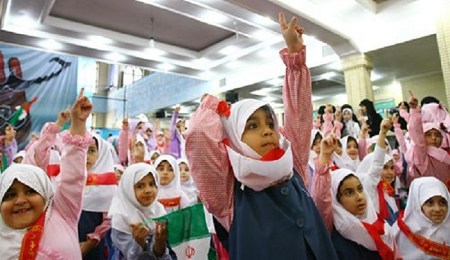
Islamic leaders in Iran have banned English teaching from the curriculum of all junior schools to insulate the country from what they see as the invasion of Western cultural ideas and principles.

The Internet and the explosion of the information age has been the worst nightmare for Islamic supremacist despots. It potentially rescues the young from shackles of ignorance and feeds the drive within Iranians to be free. The Ayatollah Khamenei says:

Western thinkers have time and again said that instead of colonialist expansionism the best and the least costly way would have been inculcation of thought and culture to the younger generation of countries.

What folly. Whenever Islamic supremacists are facing the horrors and humiliation of losing, they raise the specter of “colonialism,” long abandoned by Western nations.

It is Islamic supremacists that have an expansionary agenda, which has gone so far as to implement the Muslim Brotherhood Plan for North America and a similarly clever “Project” for expansion into the non-Muslim world. It is Islamic supremacists who are still holding black slaves and abusing humanity in the name of their religion. They are the ones who endeavor to move to the West via hijrah, to destroy Israel, and to conquer the House of War so that it becomes the House of Islam. Through clever strategy and the manipulation of Westerners, they play the victim card in their ongoing quest for credibility and establishment of the Sharia.

The rogue terrorist-funding country of Iran is in a bad place now, given domestic uprisings, its battle with Saudi Arabia for regional hegemony, and the growing impatience of America and Israel in tolerating the regime’s belligerence via its proxies, helped by Obama’s support in the nefarious Iranian deal that saw over 100 billion dollars flow into the coffers of Iran to fund those proxies: Hizbollah, Hamas, Palestinian Islamic Jihad and the like.

President Trump has warned that the world is watching with regard to how Iran responds to its protestors, thus tying its hands (somewhat) and leaving Iranian despots in a panicked state to regain control over its people and create the impression that the Islamic Republic of Iran is in control.

So far, the Islamic supremacist agenda has managed well to divide and fool blokish Western leaders, so the latest attempt by Iran to accuse the West of a “cultural invasion” may be its own version of a “hail Mary pass.” It may well work, given the foolhardiness of leftist leaders and their significant following.

“Bad Language: Iran Bans Teaching English in Schools to Fight ‘Western Cultural Invasion’”, by Simon Kent, Breitbart, January 8, 2018:

Islamic leaders in Iran have banned English teaching from the curriculum of all junior schools to insulate the country from what they see as the invasion of Western cultural ideas and principles.
“Teaching English in government and non-government primary schools in the official curriculum is against laws and regulations,” Mehdi Navid-Adham, head of the state-run high education council, announced on state television. “The assumption is that in primary education the groundwork for the Iranian culture of the students is laid.”

The announcement comes as Iran’s Revolutionary Guard said the last of the anti-government protests that have roiled the country for the past week have finally been “put down.”

Those riots have been variously attributed to a host of foreign factors, although Saudi Arabia and the U.S. have been pinpointed as the main architects of the unrest, as Breitbart Jerusalem reported.

The teaching of English usually starts in middle school in Iran, at the ages of 12 to 14, but some primary schools below that age also have English classes. Private language institutes are also popular with students after their school day, while children from privileged backgrounds attending non-government schools receive English tuition.

This is not the first time the matter of the English language has troubled Iran’s theocracy.

Supreme Leader Ayatollah Ali Khamenei voiced anger in 2016 over the “teaching of the English language spreading to nursery school,” the Financial Times reports.

Khamenei, who has the final say in all state matters, said in a speech to teachers at the time: “That does not mean opposition to learning a foreign language, but (this is the) promotion of a foreign culture in the country and among children, young adults and youths.

“Western thinkers have time and again said that instead of colonialist expansionism the best and the least costly way would have been inculcation of thought and culture to the younger generation of countries.”

A video of the announcement of the ban was widely circulated on social media on Sunday, with Iranians calling it “the filtering of English”, jokingly likening it to the blocking of the popular app Telegram by the government during the unrest…

The Palestinians’ Race to The Bottom

Posted January 9, 2018 by danmillerinpanama
Categories: Israel and India, Israel and Middle East, Israeli economy, Palestinian terrorists, Palestinians and Arab nations

Tags: , , , ,

The Palestinians’ Race to The Bottom, FrontPage MagazineCaroline Glick, January 9, 2018

(Please see also, Egypt quietly urges Palestinians to accept Ramallah as capital. — DM)

Originally published by the Jerusalem Post

The PLO’s behavior with Abu Ali and India indicates three things. First, that the PLO/PA is no longer immune from criticism in quarters where it received five decades of unconditional support. Second, it indicates that the PLO/PA is incapable of changing its behavior, even when it is aware that it ought to. Finally, the PLO/PA is still operating under the impression that nations will continue to support them forever because the basis of that support is unchanged.

The problem for the PLO/PA is that the world has changed fundamentally while they were busy embracing terrorists and getting away with it.

The economic and strategic realities of Israel cannot be ignored. Modi and his counterparts worldwide are now recognizing that the Palestinians have nothing to offer them, not even gratitude. When a critical mass of Palestinians recognize that the PLO’s jig is up, they will make peace with Israel. Until then, they will continue to serve as an irritating irrelevancy and nothing more.
************************

The PLO and the Palestinian cause more generally are sinking into irrelevance and rather than reform their policies to rebuild their position, they have adopted a scorched earth policy that only intensifies their race to the bottom.

On the face of things, the situation isn’t bad. Last month the PLO got 128 nations to vote in favor of their anti-American resolution rejecting US President Donald Trump’s recognition of Jerusalem as Israel’s capital. One of the states that voted with them was India.

Israel was shocked by India’s move.

Prime Minister Benjamin Netanyahu rightly touts the growth of Israel’s bilateral ties with the largest democracy in the world. Indian Prime Minister Narendra Modi’s extraordinary visit to Israel last July highlighted the change. Netanyahu’s visit to New Delhi later this month will cement the new alliance.

Not only has Modi enthusiastically cultivated close ties with Israel, he has moved closer to Israel in its conflict with the PLO than any of his predecessors. In 2015, India abstained from an anti-Israel resolution at the UN Human Rights Council. Modi refused to visit the Palestinian Authority during his visit to Israel. And PLO chief and PA chairman Mahmoud Abbas’s visit to India earlier this year, Modi refused to say – as his predecessors have said – that the capital of a Palestinian state should be located in eastern Jerusalem.

And yet, last month at the UN, it felt like none of this had happened. India reverted to its previous posture of blind support for the PLO and joined the chorus in attacking America for recognizing that Jerusalem is Israel’s capital.

The Palestinians for their part were justifiably elated. Now, they thought, they were back in the driver’s seat. Trump is an aberration and the world – including India, continues to support them no matter what. They are today where they were in 1975 when the UN General Assembly passed Resolution 3371 defining the Jewish national liberation movement as a form of racism.

Then, less than a week after the UN vote, the PLO’s envoy to Pakistan, Walid Abu Ali, shared a stage in Rawalpindi with the mastermind of the 2008 terrorist attacks in Mumbai.

Lashkar e-Taibi leader Hafiz Muhammad Saeed is wanted by India not only for the massacre of more than 160 people in the Mumbai attacks. He is also wanted for his involvement in terrorist attacks in the city in 2006, which killed more than 200 people, and for a shooting at the Indian Parliament, an incident in which another 14 were killed in 2001.

Abu Ali didn’t think there would be any price to pay for his decision to embrace a mass-murdering terrorist. It’s what the PLO has always done. And so he posted photos of himself with Saeed online.

But it turns out that despite India’s vote, things have changed. A lot.

Indian social media exploded in rage against the Palestinians and the PLO. The most common sentiment was, “This is how they pay us back for abandoning the US and Israel to support them at the UN.”

Abu Ali’s embraces of Saeed were widely and angrily reported in the Indian media.

In response, Abbas announced that he was recalling Abu Ali. This would have been fine if it were true.

But this week it was reported that Abu Ali is back in business in Islamabad.

The PLO’s behavior with Abu Ali and India indicates three things. First, that the PLO/PA is no longer immune from criticism in quarters where it received five decades of unconditional support. Second, it indicates that the PLO/PA is incapable of changing its behavior, even when it is aware that it ought to. Finally, the PLO/PA is still operating under the impression that nations will continue to support them forever because the basis of that support is unchanged.

The problem for the PLO/PA is that the world has changed fundamentally while they were busy embracing terrorists and getting away with it.

This week, The Economist published its annual data on per capita GDP in countries throughout the world. For the first time, Israel’s GDP per capita has jumped above $40,000. According to the Economist’s data, per capita GDP in Israel jumped from $38,127 in 2016 to $44,019 in 2017. GDP grew 4.4% last year. Today Israel’s GDP per capita is higher than GDP per capita in Japan, Britain and France. The gap in Israel’s favor is expected to widen in the years to come as Israel’s GDP continues to grow and the GDPs of European states and Japan continue to stagnate due to negative fertility, continued migration of uneducated newcomers and lack of innovation.

In its own neighborhood, Israel’s neighbors remain economic and political basket cases. As Dr. Guy Bechor noted in his analysis of the data earlier this week, Egypt’s per capita GDP of $2,519 is one seventeenth of Israel’s. Jordan’s per capita income dropped last year from $4,648 to $4,135 and prospects for 2018 aren’t positive.

The situation is similarly bleak in the Gulf States, despite their oil and gas reserves. Iran, for instance, is poor and forecasts for the future are terrible. Last year, despite the $100 billion windfall the regime received from sanctions relief, per capita GDP in Iran dropped from $6,144 in 2016 to $5,879. Wars in Syria, Yemen, Iran, Lebanon and Gaza don’t come cheap.

Egypt, Saudi Arabia and other Arab states are drawn to Israel not only because of their joint security concerns about Iran. They are also eager to expand ties with Israel to benefit from its civilian technologies in everything from agriculture and water technologies to digital communications. And they are not about to allow the Palestinians to stop their cavalcade to Israel.

As The New York Times reported last week, Egyptian intelligence officer Capt. Ashrag al-Kholi called four different television hosts last and told them that Ramallah can serve as the capital of a Palestinian state just as well as Jerusalem. Kholi was also taped telling them that the Palestinians have to compromise for peace. In his words, “How is Jerusalem different from Ramallah, really? At the end of the day, later on, Jerusalem won’t be different from Ramallah. What matters is ending the suffering of the Palestinian people. Concessions are a must and if we reach a concession whereby… Ramallah will be the capital of Palestine, to end the war and so no one else dies, then we should go for it.”

Kholi explained that a new Palestinian campaign of terrorism against Israel will harm Egypt by strengthening Islamic State (ISIS), Hamas and the Muslim Brotherhood.

So while it is true that 128 countries – including India, Egypt and Saudi Arabia – voted with the PLO against Israel and the US at the UN last month, it is also true that their votes don’t signify as much as they used to. It is equally true that the Palestinians can’t try their patience by pushing anti-Israel resolutions every day as they have for the past 45 years. Because as the Palestinians keep playing their old tricks, Israel is becoming a more and more significant regional and global power and the nations of the world aren’t interested in weakening Israel when Israel is helping them survive and prosper.

As Abu Ali’s continued tenure in Pakistan shows, rather than recognize the shifting power balance and update their positions to align with it, the PLO has become even more brittle and reactionary and extreme. If Egypt doesn’t support their war against Israel, then they will take their roadshow to Tehran, or its Lebanese satrapy.

On December 31, Fatah Central Committee member Azzam al-Ahmad met with Hezbollah chief Hassan Nasrallah in Beirut. After meeting with al-Ahmad, Nasrallah told al Mayadeen TV that Fatah – led by Abbas – agreed to “activate a third intifada,” or terror war, against Israel. PA parliament members also visited Lebanon and met with Iranian-controlled Prime Minister Saad Hariri.

Sunday night, Israel Channel 2 reported that terrorist incitement is rising steeply in the official PA media and social media networks. One video, of a faked shooting of a Palestinian teenage girl by an actor dressed in an IDF uniform, has gone viral. Thousands of viewers have responded to the fake scene with pledges to kill Israelis to avenge the fake death.

When later this month Netanyahu meets Modi in Delhi, India’s UN vote and Abu Ali’s embrace of Saeed will be on the agenda. And there is good reason to believe that Modi will recognize the linkage and vote differently in the future. Like Netanyahu, he recognizes that the PLO’s basic case is wrong. Peace is achieved by defeating terrorists, not by empowering them.

Moreover, Israel beckons. The economic and strategic realities of Israel cannot be ignored. Modi and his counterparts worldwide are now recognizing that the Palestinians have nothing to offer them, not even gratitude. When a critical mass of Palestinians recognize that the PLO’s jig is up, they will make peace with Israel. Until then, they will continue to serve as an irritating irrelevancy and nothing more.
Arab League to Support Palestinian Bid for Full U.N. Membership

Posted January 9, 2018 by Peter Hofman
Categories: Uncategorized

By – on

https://pamelageller.com/2018/01/arab-league-support-palestinian-bid-full-u-n-membership.html/

Palestinians seeking full membership with the United Nations have just received the support of the Arab League.

Reportedly, the Arab League is now backing Palestinians’ U.N. press, in large part because of President Donald Trump’s announced intent to move the U.S. Embassy to Israel from Tel Aviv to Jerusalem.

Here’s a quick video of that angle:

Jordanian Foreign Minister Ayman Safadi made the announcement on behalf of the Arab League just recently.

The Algemeiner has more:

The Palestinians will seek full membership in the United Nations with the backing of the Arab League in response to the recent US policy changes on Jerusalem, Jordanian Foreign Minister Ayman Safadi said on Saturday.

“We will confront the decision by seeking a [UN] resolution, an international one, to recognize a Palestinian state on 1967 borders with Jerusalem as its capital,” Safadi said.

Safadi’s comments came after a meeting of six Arab foreign ministers — from Egypt, Morocco, Saudi Arabia, the United Arab Emirates, Jordan and the Palestinian Authority (PA) — in the Jordanian capital of Amman.

PA President Mahmoud Abbas said last month that the Palestinians would seek full membership in the UN and ultimately apply to join all 522 official international organizations in response to President Donald Trump’s recognition of Jerusalem as Israel’s capital and announcement of plans to move the US embassy to that city.