Mossad reportedly provides intelligence to thwart Hezbollah plot 

Posted November 20, 2018 by Joseph Wouk
Categories: Uncategorized

Source: Mossad reportedly provides intelligence to thwart Hezbollah plot – International news – Jerusalem Post

Two citizens from Argentina were arrested on Thursday because they had suspected links to Lebanon’s Hezbollah, according to Al Jazeera.

BY YVETTE J. DEANE
 NOVEMBER 19, 2018 20:39
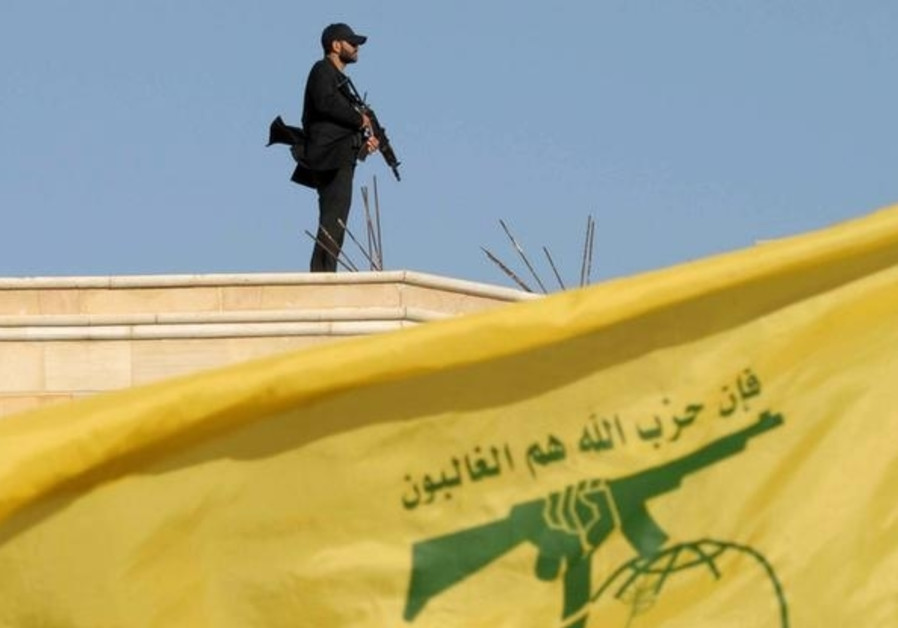
A Hezbollah member carries his weapon on top of a building on May 25, 2016.

The Mossad allegedly provided intelligence to Argentina which helped successfully thwart a Hezbollah plot to attack Jewish community centers in Buenos Aires, according to Channel 2.

Two citizens from Argentina were arrested on Thursday because they had suspected links to Lebanon’s Hezbollah, according to Al Jazeera.

The two men, 23 and 25, were arrested in Buenos Aires after police found they had a cache of weapons including a rifle, shotgun and a number of other weapons, a report stated.

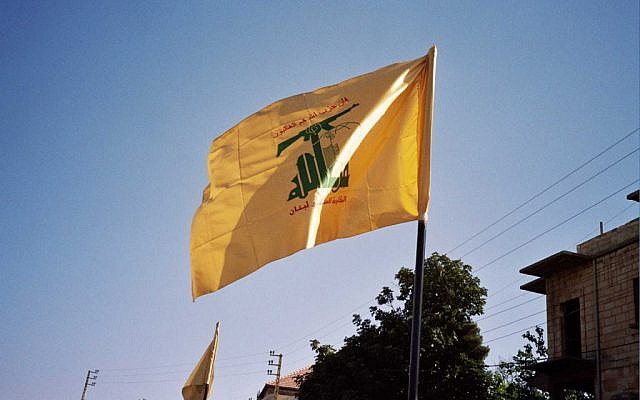
Police said they found an image of a Hezbollah flag, credentials in Arabic and proof that the two had traveled abroad.

On Tuesday, the US State Department designated as a terrorist Jawad Nasrallah, the son of Hezbollah leader Hassan Nasrallah. The department also accused him of carrying out attacks against Israel in the West Bank.

In 1992, Iran bombed the Israeli embassy in Buenos Aires, killing 29 people and injuring 242. Two years later, Hezbollah bombed the AMIA Jewish community center in the city, an attack that killed 85 people and injured hundreds.

Reuters contributed to this report.


Saudi king urges action against Iran, backs Yemen peace efforts 

Posted November 20, 2018 by Joseph Wouk
Categories: Uncategorized

Source: Saudi king urges action against Iran, backs Yemen peace efforts – Israel Hayom


Beirut asks for Russia’s air defense net to cover Lebanon as well as Syria – DEBKAfile

Posted November 20, 2018 by Joseph Wouk
Categories: Uncategorized

Source: Beirut asks for Russia’s air defense net to cover Lebanon as well as Syria – DEBKAfile

Exclusive: Lebanese President Michel Aoun has asked Moscow to bring Lebanese air space under the protection of the Russian air defense system being deployed in Syria, DEBKAfile’s military and intelligence sources reveal.

President Vladimir Putin has not yet replied to the request which Aoun posted through back channels. But neither has he so far turned him down. For now, it is under discussion at the highest levels of the Russian defense ministry, which tend to recommend approval.

According to our sources, the framing of Beirut’s request went through several drafts with the help of President Aoun’s friend and ally, Hizballah’s leader Hassan Nasrallah, until he approved it – meaning, until Tehran approved it. If Putin decides to grant the Lebanese request for Russian air defense cover, Israel would face a further Russian restraint on its air force’s operations in the eastern Mediterranean, over and above the powerful Russian air defense system which is in the last stages of deployment in Syria.

This system is composed of S-300, S-400 and Pantsir-S1E air defense missiles, boosted by layers of medium- and short-range anti-air batteries and an advanced electronic warfare network. This sophisticated edifice was designed by Moscow to provide the ultimate answer to any aerial threats the US and Israeli warplanes were capable of posing from Syria’s skies.

Putin’s accession to the Lebanese request would provide Hizballah, Iran’s proxy, for the first time with an umbrella by a world power against a potential Israeli air attack.

Prime Minister Binyamin Netanyahu’s assurance to the Knesset Foreign Affairs and Security Committee on Sunday, Nov. 18 that Israel’s air force faces no restrictions in its operations over Syria, is far from realistic in the light of Russia’s counter-measures. As for his assertion that the air force slowed those operations because Iran had reduced its arms deliveries to that country, DEBKAfile’s military and intelligence fill in this picture.

Iran has in fact completed its current round of war materiel shipments to Hizballah and was able to do so during the pause in Israel air strikes. The most alarming item reaching the Lebanese terrorists were components for upgrading Hizballah’s surface rockets with precision guidance GPS. This upgrading has been going forward in dozens of small workshops distributed across Lebanon and parts of Syria. If Putin agrees to extend Russian air defense cover to Lebanon, those workshops will be that much harder for Israeli bombers to destroy – thrusting another major Russian spoke in Israel’s security wheel.


Mossad said to thwart Hezbollah terror plot against Jewish targets in Argentina

Posted November 20, 2018 by Louisiana Steve
Categories: Counter-terrorism intelligence, Iran - world's worst sponsor of terrorism

Tags:

Israel’s intelligence service reportedly passed information which led to arrest of suspects in Buenos Aires; 3 men said to confirm they planned to attack Jewish targets

By Times Of Israel STAFF November 19,2918

Source Link: Mossad said to thwart Hezbollah terror plot against Jewish targets in Argentina

{Brought to you by the world sponsor of terrorism, the Islamic Republic of Iran. – LS}

A terror plot against Jewish targets was thwarted when the Mossad intelligence service passed information to Argentinian security officials which led to the arrest of suspected members of the Hezbollah terrorist group, Hadashot TV reported Monday.

According to the report, police arrested two brothers and their cousin at a hideout in Buenos Aires which was found to contain an arsenal of weapons and explosives. The suspects were said to have admitted they planned to attack Jewish targets in the country.

No further details were given on the credentials or travel, and the discrepancy in the number of individuals arrested has not been clarified.

The two men, aged 23 and 25, were arrested at a Buenos Aires residence, and were also found to be in possession of a “small arsenal” including a rifle, a shotgun and a number of handguns.

A Hezbollah suicide bomber carried out the 1994 attack on the AMIA Jewish center in Buenos Aires. The attack, orchestrated by Iran, killed 85.

Earlier this year the Argentine government targeted a Hezbollah fundraising network in the northern Triple Frontier with Brazil and Paraguay.

Israeli officials have repeatedly stated that the Mossad not only is responsible for preventing attacks against Israeli targets, but also provides intelligence to Israel’s allies around the world.

In October, Israeli officials said the Mossad provided its Danish counterpart with information concerning an alleged plot by Tehran to assassinate three Iranian opposition figures living in the Scandinavian country.

Mossad is also said to be behind the thwarting of an Iranian government bomb plot that aimed to target an opposition group in Paris in June.

Trump Ends $1.3 Billion Payments To Pakistan: “I Ended It Because They Don’t Do Anything For Us”

Posted November 20, 2018 by Louisiana Steve
Categories: Pakistan, Trump and Pakistan

Tags:

US President Donald Trump on Sunday defended his administration’s decision to stop hundreds of millions of dollars in military aid to Pakistan, saying the country does not do “a damn thing” for the US and its government had helped Al-Qaeda leader Osama bin Laden hide near its city.

By ROBERT SPENCER — NOVEMBER 19, 2018 Freedom Outpost

Source Link: Trump Ends $1.3 Billion Payments To Pakistan: I Ended It Because They Don’t Do Anything For Us

{It’s refreshing to see some real leadership in this country for a change. – LS}

Bravo. This is long overdue. For years I’ve called for a reconfiguration of our global alliances in light of the realities of the global jihad. The alliance with Pakistan was always a sham, and should have been ended long ago.  “…we give Pakistan $1.3 billion a year. … (Laden) lived in Pakistan, we’re supporting Pakistan, we’re giving them $1.3 billion a year – which we don’t give them anymore, by the way, I ended it because they don’t do anything for us, they don’t do a damn thing for us,” he said.”

“Pakistan doesn’t ‘care’ about US: Trump,” by Shafqat Ali, Nation.pk, November 19, 2018:

Islamabad/WASHINGTON – US President Donald Trump on Sunday defended his administration’s decision to stop hundreds of millions of dollars in military aid to Pakistan, saying the country does not do “a damn thing” for the US and its government had helped Al-Qaeda leader Osama bin Laden hide near its city.

Referring to Laden and his former compound in Abbottabad, Trump in an interview to Fox News said “You know, living – think of this – living in Pakistan, beautifully in Pakistan in what I guess they considered a nice mansion, I don’t know, I’ve seen nicer.”

The compound was demolished shortly after US Naval Special Warfare Development Group forces, in a daring helicopter raid, killed Laden there in 2011.

“But living in Pakistan right next to the military academy, everybody in Pakistan knew he was there,” Trump added. “And we give Pakistan $1.3 billion a year. … (Laden) lived in Pakistan, we’re supporting Pakistan, we’re giving them $1.3 billion a year – which we don’t give them anymore, by the way, I ended it because they don’t do anything for us, they don’t do a damn thing for us,” he said.

The ties between the two countries strained after Trump, while announcing his Afghanistan and South Asia policy in August last year, hit out at Pakistan for providing safe havens to “agents of chaos” that kill Americans in Afghanistan and warned Islamabad that it has “much to lose” by harbouring terrorists.

In September, the Trump administration cancelled $300 million in military aid to Islamabad for not doing enough against terror groups active on its soil.

Trump also said that he has plans to visit Iraq and Afghanistan to meet American troops stationed there. “Well, I think you will see that happen. There are things that are being planned. We don’t want to talk about it because of – obviously because of security reasons and everything else,” he said.

Trump has been criticised by his political opponents for not visiting either Afghanistan or Iraq in the first two years of his presidency….

Saudi king urges action against Iran, backs Yemen peace

Posted November 19, 2018 by Joseph Wouk
Categories: Uncategorized

source: Saudi king urges action against Iran, backs Yemen peace

by Reuters
Monday, 19 November 2018 13:58 GMT

By Stephen Kalin

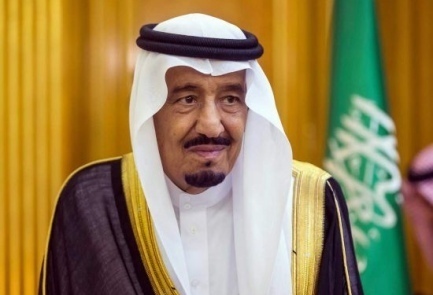
RIYADH, Nov 19 (Reuters) – Saudi Arabia’s King Salman urged the international community on Monday to halt Iran’s nuclear and ballistic missile programmes, and reiterated the kingdom’s support for U.N. efforts to end the war in Yemen.

The king’s annual remarks to the Shura Council, a top governmental advisory body, were his first public comments since the murder of journalist Jamal Khashoggi at the country’s consulate in Istanbul on Oct. 2, which sparked a global outcry.

King Salman, who did not mention the Khashoggi affair, condemned the actions of Iran, its arch-rival for influence in the region, including in the conflicts in Syria, Iraq and Yemen.

“The Iranian regime has always intervened in the internal affairs of other countries, sponsored terrorism, created chaos and devastation in many countries in the region,” the 82-year-old monarch said.

“The international community has to work to put an end to the Iranian nuclear programme and stop its activities that threaten security and stability.”

The king said Riyadh supported U.N. efforts to end the conflict in Yemen, where a Saudi-backed coalition has been battling Iran-aligned Houthi rebels for nearly four years to restore the internationally-recognised government.

“Our standing by Yemen was not an option but a duty to support the Yemeni people in confronting the aggression of Iranian-backed militias,” he said.

The Houthis said on Monday they were halting drone and missile attacks on Saudi Arabia, the United Arab Emirates and their Yemeni allies, and indicated readiness for a broader ceasefire if the Saudi-led coalition “wants peace”.

UNDER PRESSURE

Riyadh has come under growing international criticism for its conduct of the Yemen war, which has brought the country to the brink of famine and killed many civilians in air strikes.

The reputation of Saudi Arabia, the world’s top oil exporter, has been further battered by the Khashoggi murder.

The king had largely stepped back from active political life and handed extensive authority to his son and heir apparent, Crown Prince Mohammed bin Salman, but is now trying to defuse the crisis sparked by the murder and shore up the crown prince.

In his speech, King Salman said Saudi Arabia would continue working with OPEC and non-OPEC members to maintain stability in global energy markets.

He also reaffirmed Saudi support for a Palestinian state with East Jerusalem as its capital, a long-standing position thrown into question last year when the crown prince appeared to back a nascent U.S. peace plan that aligns with that of Israel on key issues.

Last week, after offering numerous contradictory explanations for Khashoggi’s disappearance, Riyadh said he had been killed and his body dismembered when “negotiations” to convince him to return to Saudi Arabia failed. The public prosecutor said it would seek the death penalty for five suspects in the case.

Turkish President Tayyip Erdogan has said the order for the killing of Khashoggi came from the highest level of the Saudi leadership but probably not from King Salman, putting the spotlight instead on the 33-year-old crown prince.

U.S. President Donald Trump has suggested ultimate responsibility lies with the prince as de facto ruler. His administration has imposed economic and travel restrictions on a handful of individuals for alleged involvement, including a top aide to Prince Mohammed..

On Monday the king signalled that the crown prince remains empowered to pursue ambitious economic reforms, praising a “comprehensive developmental transformation” underway. He directed his son, sitting in the hall,”to focus on… preparing the new generation for future jobs”.

King Salman also praised the Saudi judiciary and prosecution service for “performing the duties they were entrusted with”, without elaborating.

In addition to the Khashoggi case, the public prosecutor has participated in an anti-corruption campaign ordered by Prince Mohammed last year in which scores of princes, ministers and businessmen were arrested and the state said it recovered $100 billion in stolen assets. (Writing by Hadeel Al Sayegh and Stephen Kalin Editing by Gareth Jones)


About dirty politics .

Posted November 19, 2018 by Peter Hofman
Categories: Uncategorized

Bennett, Shaked stay in the government despite threats to resign
Despite threats to quit if Prime Minister Netanyahu doesn’t give him the defense portfolio, the Bayit Yehudi leader decides to remain in the coalition; ‘There’s no apocalypse on the way. If the prime minister is serious in his words, I tell him: we remove all of our political demands and will aid you so Israel returns to winning,’ Bennett says.

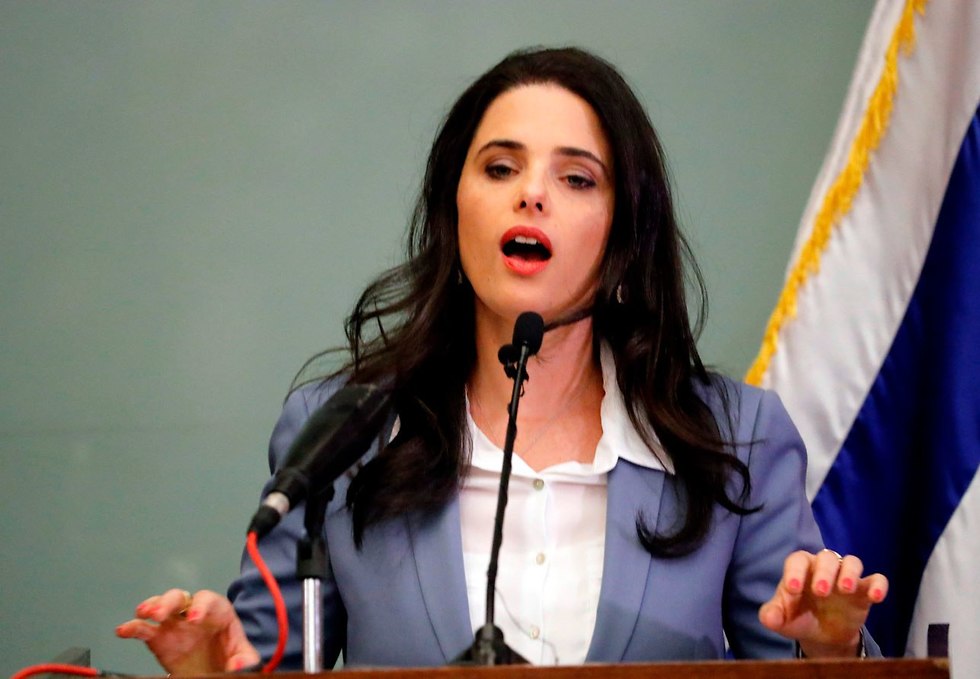
Education Minister Naftali Bennett and Justice Minister Ayelet Shaked announced Monday morning that they are not resigning, allowing the current government to live out its days.

The Bayit Yehudi party threatened to leave the coalition if leader Naftali Bennett doesn’t receive the defense portfolio, a position

vacated by Yisrael Beytenu leader Avigdor Lieberman, who resigned last week. Prime Minister Benjamin Netanyahu on Sunday evening announced he intends to keep the defense portfolio, leading many to believe Bennett would make good on his threat and leave.Moreover, both Bennett and Shaked have complained the government has lost its right-wing character and asserted it would be hard to govern with only a one-vote majority in the Knesset.
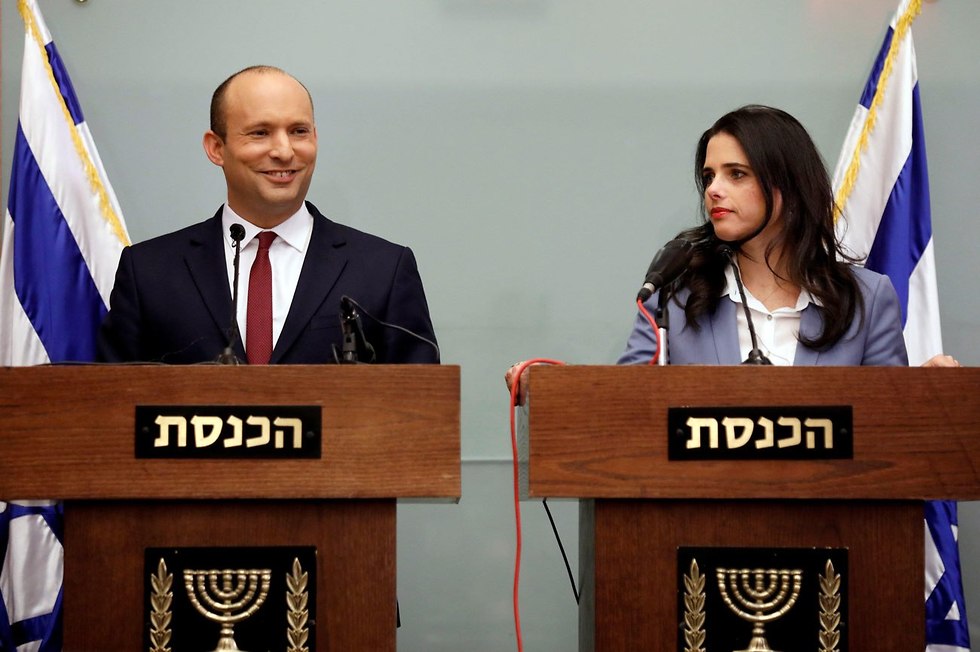
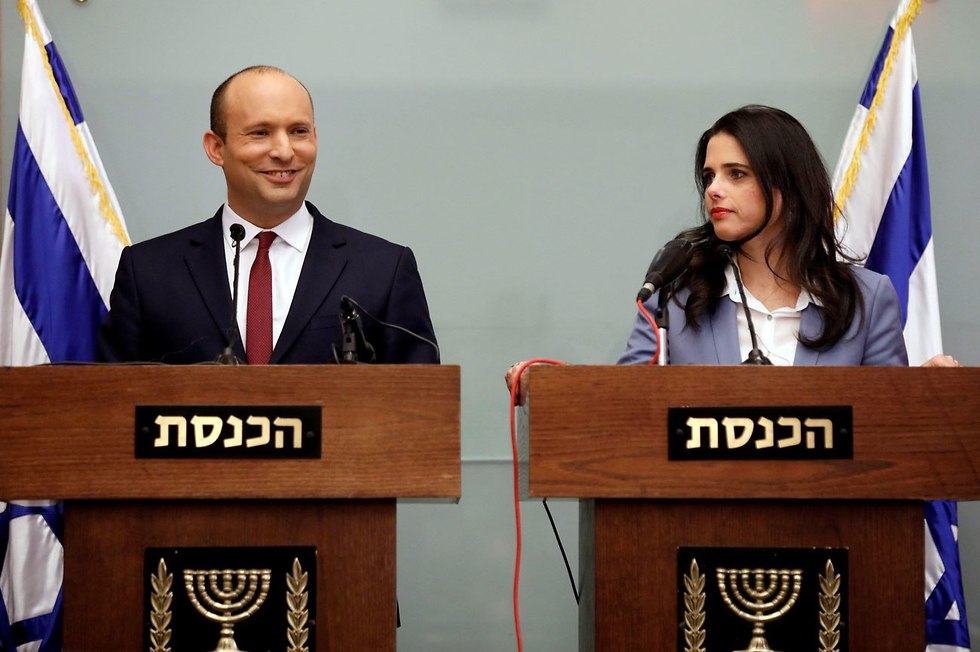
Ministers Bennett and Shaked (Photo: Reuters)

Ministers Bennett and Shaked (Photo: Reuters)

But Bennett claimed on Monday that he did not set an ultimatum to Netanyahu. “During our conversation on Friday, I made it clear to the prime minister that I was not, in any way, shape or form, giving him an ultimatum, and accepted with appreciation his statement that he saw me as a worthy candidate for the defense minister position,” he said.

Explaining his about-face,  Bennett said he drew assurances from Netanyahu’s speech on Sunday night. “In his speech, (Netanyahu) promised the Israeli public to change paths, to lead to a dramatic change in security, to change his direction from the past ten years towards strength,” he said.

“If the prime minister is serious about his intentions, and I want to believe his words last night, I hereby notify the prime minister—we are removing all of our political demands at this time and stand with you, ready to offer assistance,” Bennett declared.

“I assume this announcement will take its political toll, but we’ll survive. It is better to let the prime minister win in a political battle than let (Hamas leader Ismail) Haniyeh defeat the State of Israel,” he added.

Bennett asserted this is a political price he was willing to pay. “If the government goes on the right back, leads as a true right-wing government—it’s worth a try. The ball is in the prime minister’s court. In the coming weeks, the dramatic change to defense will be put to the test,” he continued. “This test will be in actions, not words… and we won’t stand as spectators examining the prime minister, we will of course help out and do our best to assist.”

Describing the changes that need to happen, Bennett determined that “The State of Israel is facing a crisis of confidence in the defense establishment.”

The enemies are the same, Bennett said, and “the security situation today is not more dangerous than what it was a few months ago, when the prime minister sought to bring down his government for political reasons, or because of the Israel Public Broadcasting Corporation (IPBC).”

The problem, he asserted, is internal.
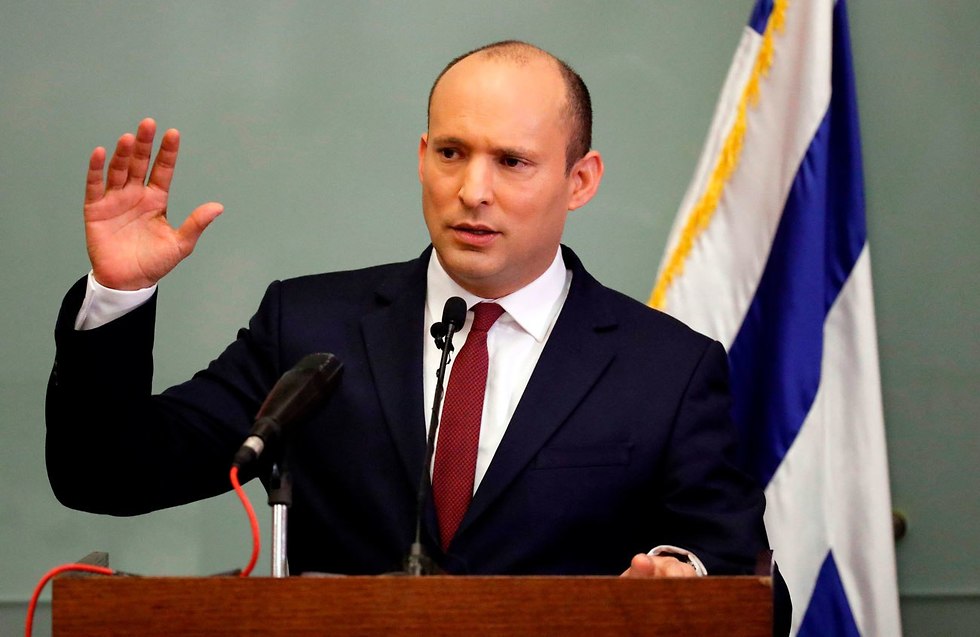
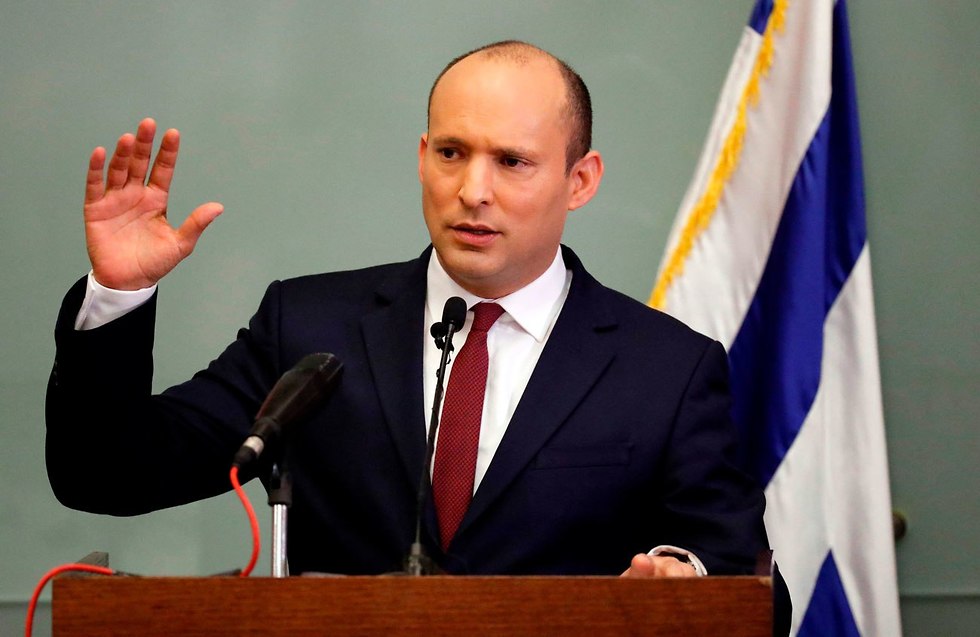
Education Minister Bennett (Photo: AFP)

Education Minister Bennett (Photo: AFP)

“For quite a few years, including over the past decade of Netanyahu governments, Israel has stopped winning,” he charged.

“I saw it with my own eyes during the Second Lebanon War as a commander in southern Lebanon. I saw the embarrassment, the confusion, the lack of determination and spirit … Following that war, I abandoned my career in high-tech, which I loved very much, and went into politics,” Bennett explained.

Bennett asserted the Israeli government, which he remains a part of, stays its hand due to fear of legal entanglement, listing several examples of instances in which the government is waiting too long to take action: the evacuation of the illegal Arab outpost of Khan al-Ahmar; legislation to stop the generous salaries paid to terrorists by the Palestinian Authority; the demolition of terrorists’ homes.

“We impose countless restrictions on our soldiers—legal as well as mental. Our fighters are more afraid of the Military Advocate General than (Hamas leader) Yahya Sinwar. Instead of defeating the enemy, we are containing it. Things that were crystal clear before, are suddenly questionable,” he lamented.
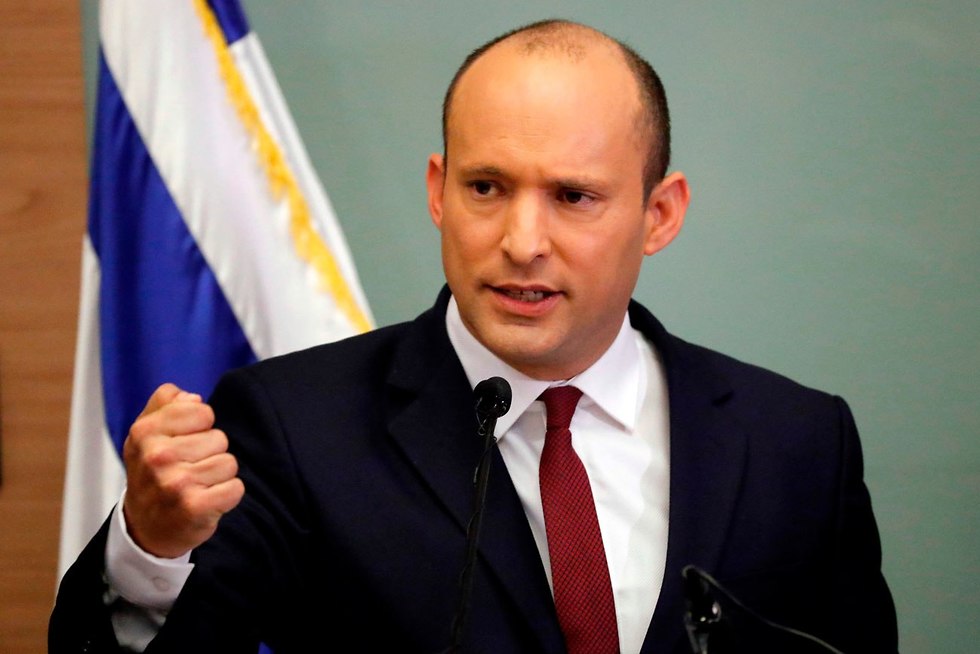
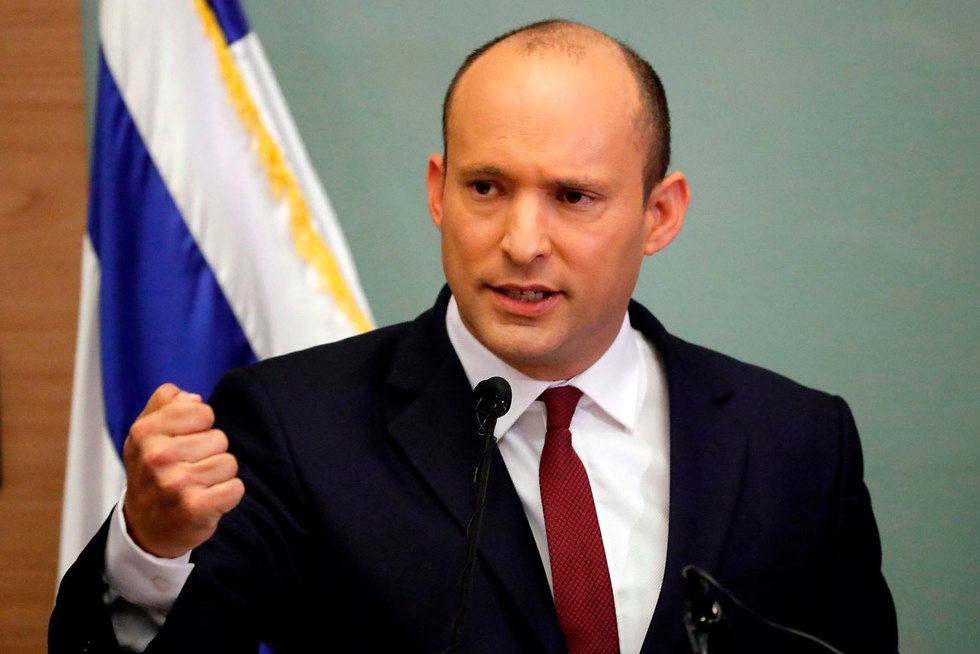
Education Minister Bennett (Photo: AFP)

Education Minister Bennett (Photo: AFP)

The Israeli government, he argued, also fails in dealing with security challenges.

“After more than 530 rockets were fired at the Israeli communities along the Gaza border, and a Cornet anti-tank missile was launched by Hamas at an IDF bus near the security fence, we tell ourselves that everything is okay and that the terror organization is as deterred as it has never been,” he said critically.

“Hamas and Hezbollah are becoming more arrogant by the day, believing we are afraid to confront them. What Netanyahu describes as ‘responsibility’ is often perceived by our enemies as hesitancy—and the line between the two is thin,” he continued. “The most dangerous thing for the State of Israel is that we’ve started thinking there is no solution to terrorism and rockets, but there is!”

“When Israel wants to win, we will go back to winning. (This situation) is not predestination,” Bennett insisted. “We entered politics to create an alternative, to replace hesitancy with might, fatigue with initiative, embarrassment with confidence.”

“We proved with actions that we could change direction,” he asserted. “Before we came along, everyone thought a Palestinian state was on the verge of being established, we changed this path from the Left to the Right.”

‘We won’t add to the gift Lieberman gave Hamas’

Justice Minister Shaked said Netanyahu had promised Bennett the defense minister’s position before the 2015 election, but because Bayit Yehudi lost power, Netanyahu gave the post to Moshe Ya’alon, a Likud member at the time.

Explaining why the party joined the government anyway and why she and Bennett decided not to quit, she said “Bennett, myself and the rest of our party members are rare birds. We see politics as a calling. We believe politics is a tool to implement policy and serve the public.”
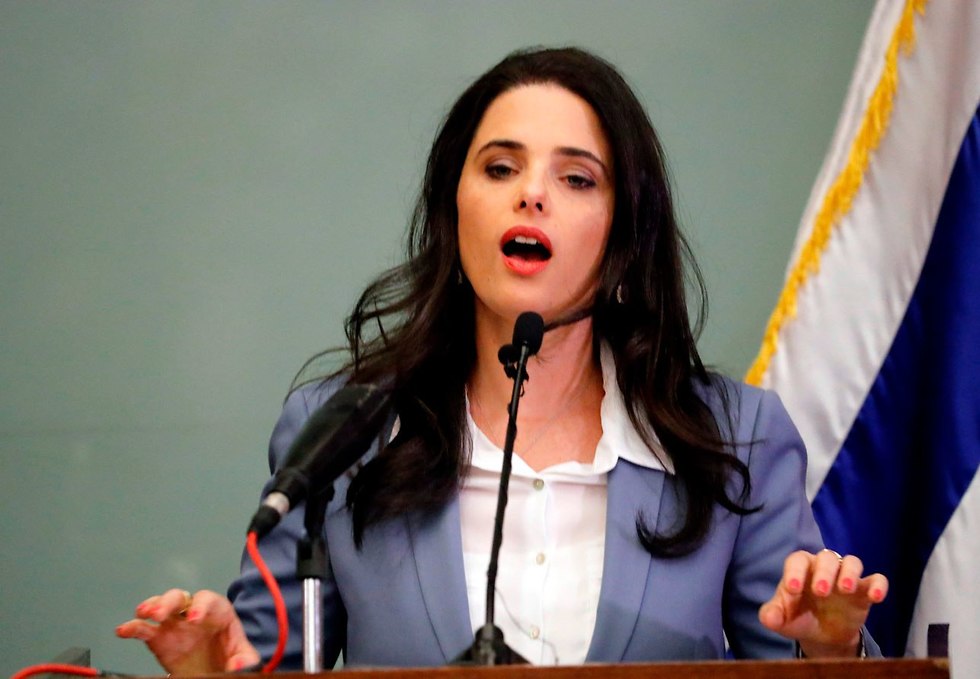
Justice Minister Shaked (Photo: AFP)

Justice Minister Shaked (Photo: AFP)

“Many urged us to resign over the last few days. After Lieberman did so, there were those who were angry at us for losing the momentum. (But) we’re public servants with a sense of responsibility. We’ll never escape responsibility. We’ll never make a political move that entails a risk,” Shaked added.

She too criticized Israel’s defense policy, saying “if such a policy exists, it conveys irresolution and hesitation. The Israeli daring was replaced with a policy of ‘sit and do nothing.’ Israeli solidarity was replaced by a policy of containment as long as it’s ‘only’ the border residents. The pursuit of victory was replaced by the disgraceful resignation of the defense minister—a gift to Hamas that will forever serve as a mark of shame.”

“We won’t increase the psychological achievement Lieberman gave the terror groups in the strip,” Shaked insisted. “They’re watching us, and not just them—the entire Middle East is looking at us.”
 

Yemeni Houthis halt missile attacks on Saudi coalition

Posted November 19, 2018 by Joseph Wouk
Categories: Uncategorized

Source: Yemeni Houthis halt missile attacks on Saudi coalition – Middle East News – Haaretz.com

The Iranian-aligned group, which has been battling the Saudi-backed government for nearly four years, also said it was was ready for a broader ceasefire if the Saudi-led coalition ‘wants peace’

 Houthi rebels in Yemen said on Monday they were halting drone and missile attacks on Saudi Arabia, the United Arab Emirates and their Yemeni allies, responding to a demand from the United Nations.

The Iranian-aligned group, which has been battling the Saudi-backed government for nearly four years, also said it was was ready for a broader ceasefire if theSaudi-led coalition “wants peace”.

International pressure has mounted on Yemen’s warring parties to end the war that has killed more than 10,000 people and pushed the country to the verge of starvation.

The move from the Houthi group came after the coalition ordered a halt in its offensive against Yemen’s main port city Hodeidah, which has become the focus of the war.

“We announce our initiative…to halt missile and drone strikes on the countries of aggression,” Mohammed Ali al-Houthi, the head of the Houthis’ Supreme Revolutionary Committee, said in a statement.

The decision was based on discussions with U.N. special envoy Martin Griffiths to show “good faith” and support peace efforts, he said.

Griffiths is trying to salvage peace talks after a round in September collapsed when the Houthis did not show up. He hopes to convene talks before the end of the year in Sweden to agree on a framework for peace under a transitional government.

Yemen’s parties have given “firm assurances” they are committed to attending peace talks, Griffiths told the U.N. Security Council on Friday.

Saudi Arabia’s King Salman on Monday reiterated the kingdom’s support for U.N. efforts to end the war.

TIRED OF WAR

Yemenis cautiously welcomed the announcement on Monday.

“We pray that this will be the real beginning of peace in Yemen, we are all tired of this war,” said Mona Ibrahim, a teacher in the capital Sanaa, which has been under Houthi control since September 2014.

“We just want to live like other humans,” Mohammed al-Ahdal, a resident of Hodeidah said.

The Houthi defence ministry said it would respond to any hostilities from the coalition.

Houthi-run Al Masirah TV reported later on Monday that Houthi forces fired a ballistic missile on Saudi-backed forces in the desert of Midi, bordering SaudiArabia.

The Houthis say their missile attacks on Saudi Arabia are in retaliation for air raids on Yemen by the Western-backed coalition, which entered Yemen’s war in 2015 to try to restore the Saudi-backed government of President Abd-Rabbu Mansour Hadi.

The coalition has carried out thousands of air strikes in the impoverished country that have hit schools, markets and hospitals, killing hundreds of people – though it says it does not target civilians.

The Houthis last July unilaterally halted attacks in the Red Sea to support peace efforts, after Riyadh temporarily suspended oil exports through a strategic Red Sea channel following attacks on crude tankers.

Western allies including the United States have called for a ceasefire ahead of the renewed U.N. efforts.

Western countries have provided arms and intelligence to the Arab states in the alliance, but have shown increasing reservations about the conflict since the murder of U.S.-based Saudi dissident journalist Jamal Khashoggi at the Saudi consulate in Istanbul last month.


Netanyahu: Putin can’t get Iran out of Syria 

Posted November 19, 2018 by Joseph Wouk
Categories: Uncategorized

Source: Netanyahu: Putin can’t get Iran out of Syria – Israel News – Haaretz.com

Netanyahu tells top Knesset panel that Iranian weapons transfers to Hezbollah have decreased since downing of Russian spy-plane in September

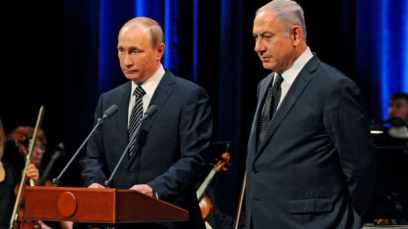
Putin and Netanyahu at a concert marking 25 years since the establishment of diplomatic relations between the two nations, 2016.
Mikhail Klimentyev / AP

Prime Minister Benjamin Netanyahu said on Monday that Russia alone does not have enough leverage to get Iran out of Syria. Speaking at the Knesset Foreign Affairs and Defense Committee, Netanyahu said that Israel has acted in Syria since the downing of the Russian spy-plane in September.

“Our spy-planes continue to fly and collect information,” he said. “From the information we have, the amount of Iranian weapons transfers to Hezbollah through Syria has significantly dropped since the downing of the Russian plane.”

People present at the Knesset panel session said Netanyahu hinted that there is a need for another country to get involved in order to get Iran out of Syria.

According to Netanyahu, relations between Israel and Russia are “good.”

“My conversation with Putin lasted half an hour and was excellent,” he said, referring to the leaders’ meeting on the sidelines of the Paris conference marking 100 years to the end of the First World War. “I offered him to increase coordination between [our] armies in Russia. Despite that, we are continuing to operate in Syria.”

Haaretz’s Amos Harel wrote on Friday, however, that even the “hasty meeting” between Netanyahu and Putin hasn’t resolved the crisis that began with the plane’s downing.

According to Harel, Russia has made it clear to Israel in many ways that the status quo ante is gone. The air force’s energetic activity was disrupting their main project — restoring the Assad regime’s control over most of Syria and signing long-term contracts with Syrian President Bashar Assad that will protect Moscow’s security and economic interests in the country.

The change is evident in the more aggressive tone on the hot line connecting Israel Air Force headquarters to the Russian base in Khmeimim, in northwest Syria, whose purpose is to prevent aerial incidents between Israel and Russia. It’s also evident in the confrontational attitude of Russian planes and anti-aircraft batteries in Syria.


Let me get on with my job: How Netanyahu dwarfed his political rivals within

Posted November 19, 2018 by Joseph Wouk
Categories: Uncategorized

Source: Let me get on with my job: How Netanyahu dwarfed his political rivals within | The Times of Israel

Liberman was savoring the anticipated revival of his fortunes; Bennett was sure he was onto a win-win. The prime minister had other ideas

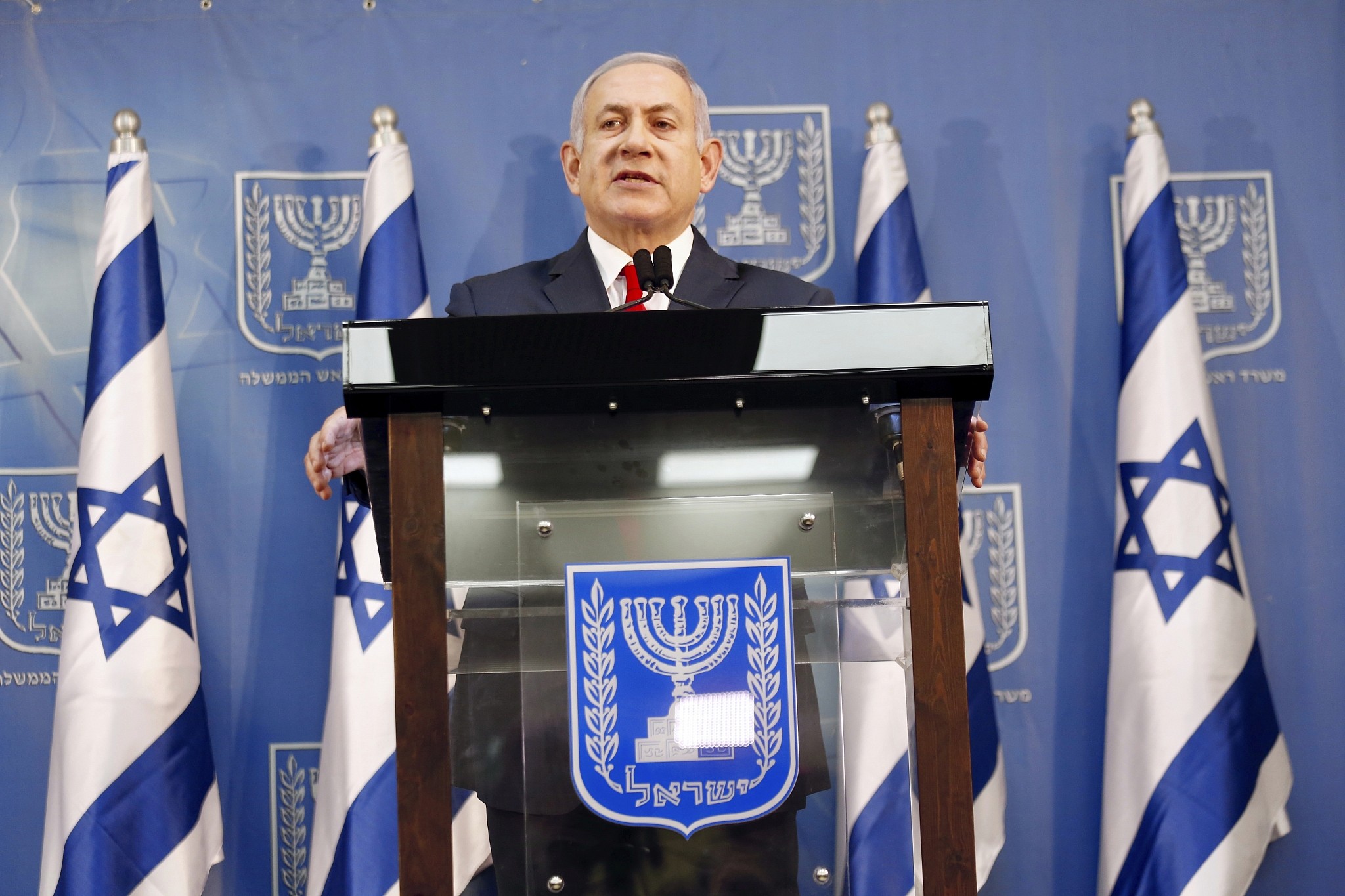
Israeli Prime Minister Benjamin Netanyahu delivers a statement in Tel Aviv, Israel, Sunday, Nov. 18, 2018. Netanyahu says he will take over temporarily as defense minister as early elections loom. (AP Photo/Ariel Schalit)

It was over for Benjamin Netanyahu.

He’d agreed on an informal truce with Hamas after 500 rockets had been fired at Israel, and his defense minister, the volatile Avigdor Liberman, had resigned in a seething firestorm of anger and recrimination. Two of his more quiescent coalition partners, Moshe Kahlon’s Kulanu and Aryeh Deri’s Shas, had concluded that the coalition, now reduced to 61 of the 120 Knesset seats, could no longer function effectively and were calling for elections. And his most irritating rival, the Jewish Home leader Naftali Bennett, was threatening to pull his eight-member party out of the government unless he was appointed defense minister, making elections in the spring — some six months ahead of schedule — unavoidable.

Many politicians might have caved to the seemingly inevitable. Netanyahu did not.

First, he moved to reframe the public debate.

Liberman was looking to resurrect his political fortunes by running in elections this spring as the one political leader with the guts to give up his prominent ministerial position for the cause of battering Hamas, and to portray himself as the lawmaker who had put an end to Netanyahu’s ostensible hesitancy and abandonment of the rocket-battered residents of Israel’s South.

Bennett thought he was onto a win-win. Either he elevated himself to the front rank of politicians by finally compelling Netanyahu to give him the Defense Ministry post, or he ran against Netanyahu in the elections he’d be triggering as the true champion of the hardline right.

Netanyahu had other ideas. Dismissing Liberman as an irresponsible manipulator who had deserted the nation’s key security post, and Bennett as a self-interested lightweight blinded to Israel’s core interests by his personal ambition, the prime minister asserted that his coalition could survive the loss of Liberman and insisted it would not capitulate to the ultimatum of Bennett.

Israel’s national security was at stake, Netanyahu declared in a fierce nine-minute address to the nation on Sunday night, and he, for one, was not going to abandon the ship of state in the midst of what he called a complex, ongoing military operation against Israel’s enemies.

Prime Minister Benjamin Netanyahu gives a press conference at Defense Ministry headquarters in Tel Aviv on November 18, 2018. (Jack Guez/AFP)

In contrast to his piffling ministerial detractors, he told Israelis, he was not engaged in “sloganeering.” He was working to ensure Israel’s long-term security. Just as he had risked his life in battle as an officer in Israel’s most elite special forces unit, just as he had faced down even the previous president of the United States in his fight against the “dreadful” Iran nuclear deal, so now he was focused solely on defeating Israel’s current enemies. However misguided last Tuesday’s decision to halt the fight against Hamas may have looked, he indicated, Israelis were not yet seeing the full picture. But they could rely on him and on the security establishment, indeed they should and must rely on him and on the security establishment, to see the job through to its completion.

At the end of his statement — during which he had initially seemed full of pent-up anger, but gradually regained his customary assurance — he waved away reporters’ shouted attempts to ask him questions, and declared, mid-walk, “I am going to work.” As in, I’ve got a job to do. Let me get on with it.

Bennett uncomfortably read out what had patently been written as his resignation speech, but with a hastily redrafted final section

Faced with a prime minister who had proved disinclined to blink, and had credibly reached out to reassure an uncertain public, the hapless Bennett’s win-win now became a lose-lose. If he stayed on as mere education minister, he’d appear weak and out-maneuvered. And if he quit, he risked being blamed, even by his own supporters, as the egotist who brought down Israel’s most right-wing government before its time. But, oy, what to do? He’d grandiosely announced a press conference for 10:30 on Monday morning.

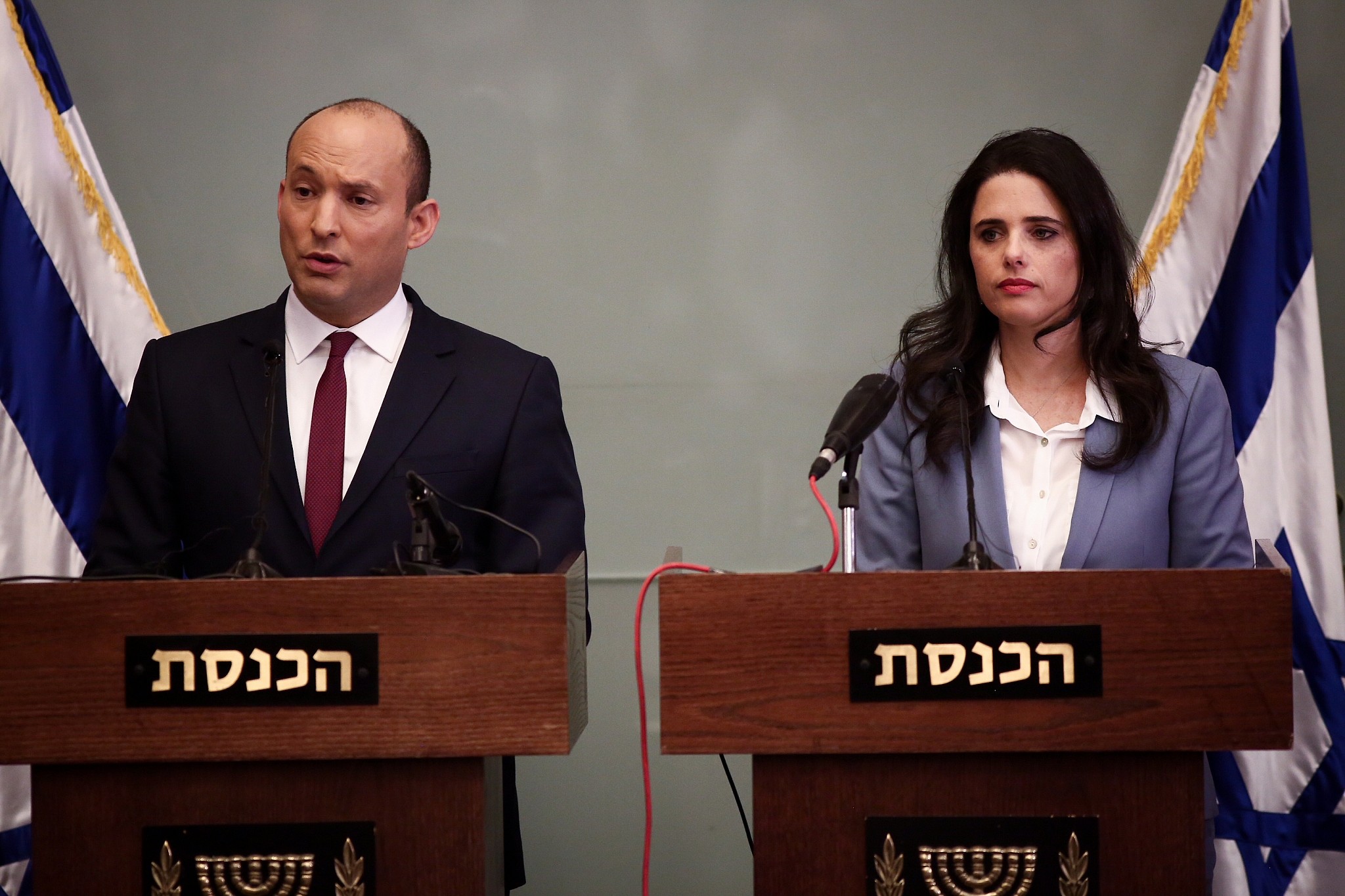
Education Minister Naftali Bennett (left) and Justice Minister Ayelet Shaked deliver statements to reporters on November 19, 2018 (Miriam Alster/Flash90)

In the event, Bennett uncomfortably read out what had patently been written as his resignation speech, but with a hastily redrafted final section, in which he said the Jewish Home was now “withdrawing all of our political demands” and would stand with the prime minister. He acknowledged that he was likely to pay a political price for the volte face, but said he had concluded that it was correct to continue to stand with Netanyahu in the hope that the prime minister would now correct the hesitant drift of the ship of state.

And thus — at least as of this writing — Netanyahu has for the umpteenth time given his would-be successors a political leadership masterclass, and apparently given his fractious, depleted coalition a little more breathing space.

We were told by Kahlon on Saturday night that the heads of all of Israel’s security hierarchies — the IDF, the Mossad and the Shin Bet — were of one voice in counseling against the escalated war on Hamas that Liberman and Bennett were advocating

Some might wonder why he bothered. There is certainly an argument to be made that elections in spring might suit Netanyahu — if they would mean that he were re-elected before the attorney-general makes a decision on whether to press charges against him in the various corruption cases he’s facing. It would presumably be easier for the state’s legal hierarchy to announce to the public that it is going to prosecute a prime minister who is facing new elections than one who has just been voted back into office. But since Netanyahu seems determined to stay on and fight even if he is indicted, that may not be a central consideration.

Indeed, for all the narrow political machinations, the root of this drama is that Netanyahu and the security establishment do clearly see themselves at some part-way point in the complex battle against Hamas, and Hezbollah, and Iran.

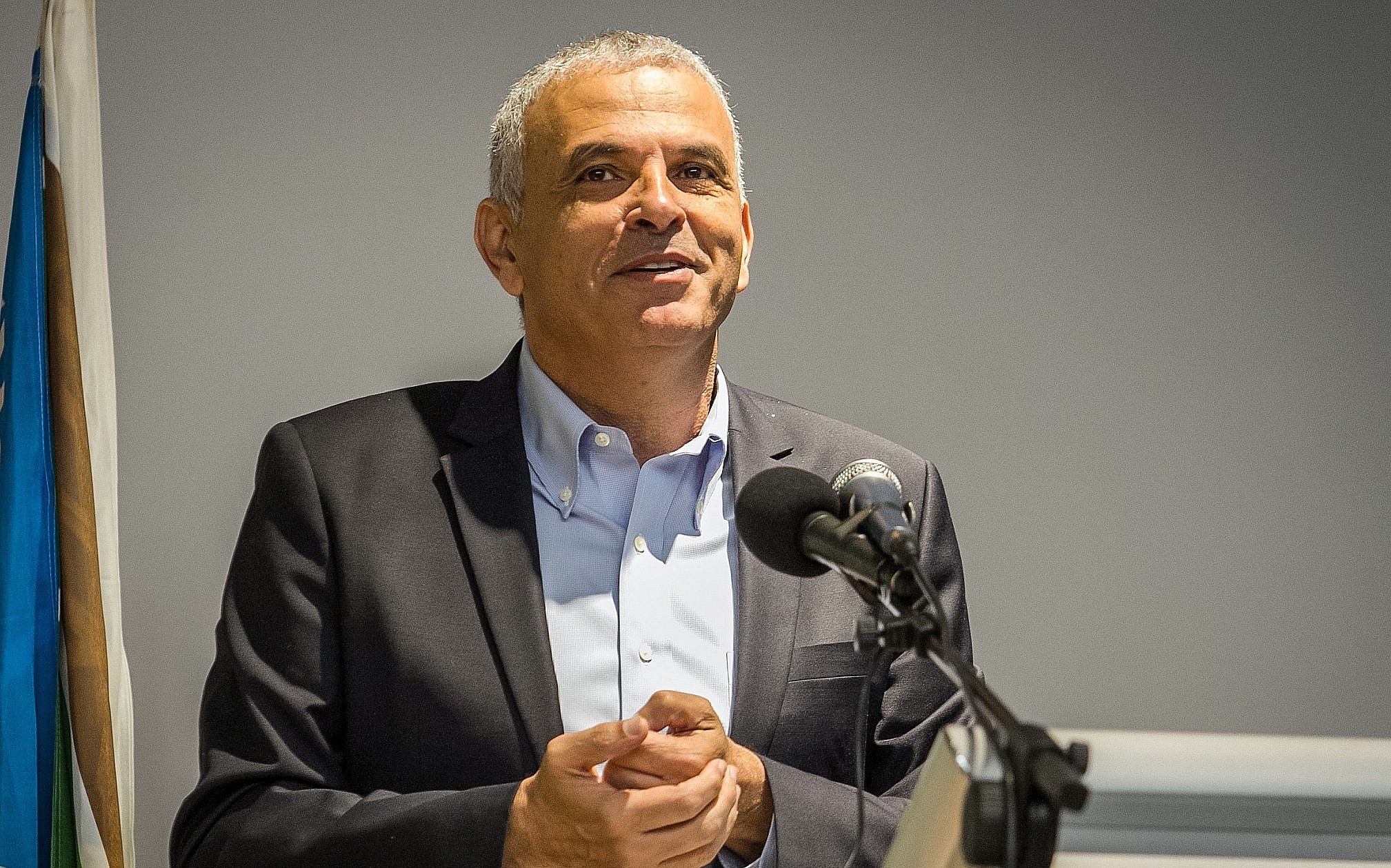
Finance Minister Moshe Kahlon (Meir Vaknin/Flash90)

We were told by Kahlon on Saturday night that the heads of all of Israel’s security hierarchies — the IDF, the Mossad and the Shin Bet — were of one voice in counseling against the escalated war on Hamas that Liberman and Bennett were advocating. We were warned by Likud minister Tzachi Hanegbi — in his politically foolish but admirably candid Army Radio interview on Thursday — that confronting Hamas “in every hole” in Gaza at this stage would mean 500 Israeli soldiers coming back in coffins.

And we were told, by the prime minister and new defense minister on Monday night, that we were “seeing only part of a wide-ranging process” that he is “obligated to complete” in order to ensure Israel’s security.

“I won’t say tonight when we will act and where we will act, but I have a clear plan,” Netanyahu promised. “I know what to do and when to do it. And we will do it.”

Time will tell. The voting public will be watching closely. And as Netanyahu knows particularly well after the events of the past week, Naftali Bennett and Avigdor Liberman, dwarfed and outflanked for now, will be poised to exploit any new perceived failure or weakness.