Joining US, Israel officially pulls out of UN migrant rights pact 

Posted November 22, 2018 by Joseph Wouk
Categories: Uncategorized

Source: Joining US, Israel officially pulls out of UN migrant rights pact – Israel Hayom


US changes course on Golan 

Posted November 22, 2018 by Joseph Wouk
Categories: Uncategorized

Source: US changes course on Golan – Israel Hayom

Ariel Bolstein

Last Friday, while most pundits in Israel were placing their bets in favor or against early elections, a revolution took place at the U.N. General Assembly in New York. During the annual vote on a resolution calling on Israel to return the Golan Heights to Syria, the United States, for the first time ever, voted against it.

Outgoing U.S. Ambassador Nikki Haley’s reasoning for the vote showed that there is no denying that the Americans have taken a significant step toward adopting the Israeli position. The U.S. will no longer abstain when the U.N. engages in pointless votes on the Golan Heights, Haley said. This stance obligates Israel to help the Americans take the next steps on this path, until Israeli sovereignty in the Golan Heights is formally recognized.

From Israel’s perspective, the future of the Golan Heights is a matter of consensus. Ever since the Menachem Begin government first began applying Israeli sovereignty in 1981, it has been a foregone conclusion that the Golan is an inseparable part of Israel. That ensuing leftist governments toyed with the lunatic idea of giving the Golan back to the despotic Assad dynasty only served to solidify the deep understanding of most Israelis that such a withdrawal would be completely illogical.

Israel has every possible reason to object to concessions on the Golan. As a matter of justice (when Syria controlled the area it shelled and beleaguered the residents of the Jordan Valley); history (it is an ancient Jewish region); strategic considerations and even legal ones – all these factors assure Israel’s eternal presence on the Golan.

With that, the welcome change to the U.S. position will have tremendous influence in the international arena. Over the decades, the U.N.’s annual resolution condemning Israel helped reinforce Syria’s image as a “victim” and augmented the libelous discourse painting Israel as an aggressor and occupier. The reality, of course, is the opposite, and the atrocities perpetrated by the warring parties in Syria’s civil war have only illustrated the true nature of those who still wish to wipe the Zionist enemy from the map. It would be wise to exploit the world’s increasingly sober view of Syria and the regime ruling it, and promote recognition of the Israeli annexation of the Golan. Israel will still be fine without this recognition from other countries, but American recognition could officially flip the narrative.

In essence, all the considerations that led the Trump administration to remove the Jerusalem question from the agenda in favor of Israel apply to the Golan as well. There are also other reasons, such as the absence of a large hostile population and the fact that the area is not holy for Muslims or Christians, that make it easier for the U.S. to do so.

To realize the goal, Israel must take steps to promote recognition on the diplomatic and practical levels. On the diplomatic front, Israel should maintain its public relations course and continue forming alliances, which Prime Minister Benjamin Netanyahu is doing successfully. On the practical front, the time is ripe for steps to establish facts on the ground. Application of sovereignty must be visible across the entire Golan Heights, including the Druze villages. To this end, it is necessary to accelerate development and significantly augment the Jewish population in the area.

Ariel Bolstein is the founder of the Israel advocacy organization Faces of Israel.


Israel ‘closer than ever’ to seizing control of Gaza, top minister says ‎ 

Posted November 22, 2018 by Joseph Wouk
Categories: Uncategorized

Source: Israel ‘closer than ever’ to seizing control of Gaza, top minister says ‎ – Israel Hayom


Iran/Hizballah build new militias in Syria against northern Israel. What is Eisenkot missing? – DEBKAfile

Posted November 22, 2018 by Joseph Wouk
Categories: Uncategorized

Source: Iran/Hizballah build new militias in Syria against northern Israel. What is Eisenkot missing? – DEBKAfile

Heads were scratched in many security circles on Monday, Nov. 20, when IDF Chief of Staff Lt. Gen. Gady Eisenkot was heard to declare that the fact that “Iran and terrorist groups were very far from the place they hoped to attain” was down to “continuous quality operations.”
The IDF would continue to foil their efforts, he said, while keeping one eye on the security situation in the north and keeping to its commitment to protect Israel’s civilians.

Speaking during a tour of  the Bashan Division on the Golan, Eisenkot did not specify the place that Iran “hoped to attain” or the place it had reached in consequence of IDF operations.

The general typically calls on this sort of vague, bombastic rhetoric for obscuring shortcomings or blunders. He has been caught using it to misrepresent the balance of strength in the Gaza standoff with Hamas, although some colleagues have urged him to drop it. The trouble with the chief of staff is that, on the one hand, he invites his officers to freely express their opinions, while, on the other, he is deaf to criticism or any opinion that conflicts with his own.

This personality defect has persuaded more and more military officers on active duty and in the reserves to determine in recent months that the IDF is not ready for the next war, especially on the northern front.

Eisenkott has clearly made up his mind that Tehran is planning to deploy a large Iranian military force in Syria on the scale of a division and-a-half which the IDf must be geared to combat. Tehran – i.e. its Mid-East war commander, the Al-Qods chief Gen. Qassem Soleimani (whose remit also includes the Gaza Strip).

But this perception misses the facts. Contrary to Eisenkot’s evaluation, the Iranians never depart from their proxy strategy. Soleimani is accordingly putting together a Syrian army of local, pro-Iranian militias for the conduct of synchronized operations on multiple fronts. This strategy replicates the Shiite militia model which works for Tehran in Lebanon and Iraq. There are no Iranian troops in either country, only surrogate militias, some of them stronger and better armed than the national armies of Iraq and Lebanon. The most notorious example being Hizballah.

Although Hizballah is making good progress in planting those militias in southern Syria, Eisenkot has not ordered the IDF to thwart the project – or even strike their training camps and command centers. Some 2,000 recruits have joined up in the Daraa region, many of them former rebels, who fought with the US and Israeli armies before the Daraa and Quneitra regions (opposite the Jordanian and Israel Golan borders) were captured by the Syrian army with Russian help in June. The Iranian Revolutionary Guards pays each a generous $250 per month, to buy their combat experience and priceless knowledge of  IDF methods of operation on Israel’s northern border from years of exposure and personal acquaintance with its commanders.

Soleimani plans to deploy these militias opposite Israel’s Golan lines. It was to this plan which Maj. Gen Yoel Strick, OC of the IDF’s Northern Command referred when he commented on Sunday, Nov. 18, that the Israeli military is well aware of Hizballah’s actions for establishing “a terrorist structure on the Golan” and the Lebanese terrorist group will not be allowed to go through with it. Strick’s words have not so far been backed by deeds.

Gen. Eisenkot displayed his tendency to fudge on serious security issues when he stated that the IDF had hampered Iran’s effort to arm Hizballah with precision-guided rockets. He was backed by Prime Minister Binyamin Netanyahu (who is now also defense minister) who reported a “slowdown in Iranian arms shipments to Syria” to account for the pause in Israeli air strikes in Syria.

However, according to the Western military observers tracking Iran’s steps in Syria and Lebanon, this major upgrade of Hizballah’s surface rocket arsenal is still ongoing undisturbed, after Israel and its air force refrained from interfering.  Still, Eisenkot’s missed perspective is shared by some IDF officers.


Iran Had Secret Plans to Build Five Nuclear Warheads

Posted November 22, 2018 by Joseph Wouk
Categories: Uncategorized

Source: Iran Had Secret Plans to Build Five Nuclear Warheads

New report stirring Iran hawks on Capitol Hill, Trump administration

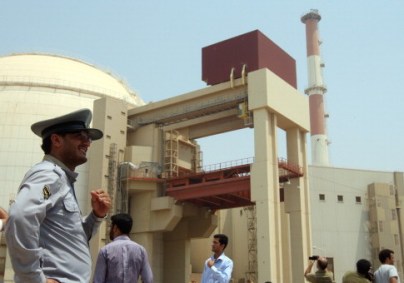
The reactor building at the Russian-built Bushehr nuclear power plant

The reactor building at the Russian-built Bushehr nuclear power plant in Iran / Getty Images

BY: 

A new bombshell report based on a secret trove of seized Iranian nuclear documents shows the Islamic Republic had concrete plans to manufacture and build at least five nuclear weapons and that it was much further along in this scheme than previously known by the international community.

Iran’s contested nuclear weapons program was much further along than the international community thought, according to a report based on scores of secret Iranian plans seized by Israel and publicly disclosed for the first time earlier this year.

Information obtained in this raid on Iran’s secretive nuclear files has revealed that Tehran was well along the path to building several nuclear weapons by around 2003, including the complex infrastructure needed to produce such weapons, according to a new report from the Institute for Science and International Society, a nuclear watchdog group that has exposed in the past the extent of Iran’s nuclear works.

The report is being viewed as a bombshell revelation on Capitol Hill and is seen as validating critics of the Obama administration who alleged the former White House has underestimated the extent of Iran’s nuclear weapons progress.

“Iran intended to build five nuclear warheads, each with an explosive yield of 10 kilotons and able to be delivered by ballistic missile,” the group disclosed in a new report that shows Iran has retained much of its nuclear infrastructure and could continue using it to clandestinely conduct weapons work in violation of the landmark nuclear accord.

“Iran’s initial plans show that it had achieved much more than feasibility and scientific studies relating to nuclear weapons, as the IAEA assessed in late 2015, as the Iran nuclear deal was being implemented,” according to the group, which based its report on access it was granted to the seized Iranian nuclear documents, which show the regime allocated millions of dollars to the purchase of nuclear materials, including uranium, the key component in a bomb.

“Iran had put in place by the end of 2003 the infrastructure for a comprehensive nuclear weapons program,” according to the report. “The evidence supports that Iran was preparing to conduct an underground test of a nuclear weapon, if necessary. The end goal was to have tested, deliverable nuclear weapons, and Iran made more progress toward that goal than known before the seizure of the archives.”

Iran hawks on Capitol Hill say the report confirms warnings from many that the Obama administration downplayed Iran’s nuclear activities in a bid to ink the nuclear pact with Iran.

“Republicans have long known that the Obama administration lied to the country about the Iran deal,” said one senior Republican congressional official familiar with the report. “Just a few months ago PSI published documents showing they lied to Congress about enforcing sanctions and giving dollar access.”

The latest disclosures are fueling the push in Congress for the Trump administration to reimpose greater economic sanctions on Iran, a portion of which went back into effect earlier this month. Some in Congress have called on the Trump administration to go further in its actions, including by fully cutting off Iran’s oil exports and access to international financial markets.

“Now this report shows they also lied about Iran’s nuclear weapons work,” the source said. “You can expect congressional Republicans to increase pressure on the Trump administration to implement maximum pressure on Iran, which they still aren’t doing.”

Iran was poised to construct at least five nuclear warheads based on its weapons work at the time, according to the new report, which also found that Tehran’s nuclear infrastructure was far more sophisticated than previously believed.

“Iran made far more progress toward its goal of manufacturing five nuclear weapons than known before the seizure of the archives,” according to the watchdog group.

Information about Iran’s nuclear activities, although far less complete, was kept hidden from the public as the Obama administration pressed the international community to support the nuclear agreement.

“It must be acknowledged that at that time, the IAEA and the JCPOA parties, appeared to be downplaying the Iranian nuclear weapons program so as not to stand in the way of starting the implementation of the JCPOA in January 2016,” the report found, noting that international nuclear inspectors have yet to take a stance on the new information.

“Today, the IAEA has in its possession much of the content from the Iranian archive; it should be expected to act on this information, something that is not yet visible, after six months of examining the new information.

This nuclear infrastructure remains intact, further fueling concerns about what Iran has been hiding from nuclear inspectors, who must give Iran advance notice of any inspections and refrain from entering the country’s contested military sites.

“The continued existence of the Iranian nuclear archive and warehouse reinforces that the Iranian nuclear program’s remains, and likely some activities, may have continued up to today,” the group said.


Russia deploys advanced Su-57 fighter-jets in Syria – TV7 Israel News 20.11.18 

Posted November 21, 2018 by Joseph Wouk
Categories: Uncategorized


PUTIN TO ISRAEL, U.S.: LOOSEN SANCTIONS IN EXCHANGE FOR IRAN LEAVING SYRIA

Posted November 21, 2018 by Louisiana Steve
Categories: "Putin's puppet", Putin and Israel

Tags:

“We are continuing our conversations in order to reach a political solution in Syria.”

BY MAARIV ONLINE NOVEMBER 20, 2018 Jerusalem Post

Source Link: PUTIN TO ISRAEL, U.S.: LOOSEN SANCTIONS IN EXCHANGE FOR IRAN LEAVING SYRIA

{Two observations…one, Iran is clearly Russia’s pawn and, two, the sanctions must really be biting. – LS}

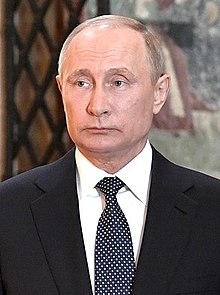
Russia offered Israel and the United States a deal involving Iran’s withdrawal of its forces from Syria in exchange for a reduction in American sanctions, Prime Minister Benjamin Netanyahu told a closed session of the Knesset’s Foreign and Security Committee Monday, Channel 10 News reported. The offer was made by Russian President Putin, according to an MK who was present at the meeting.

Netanyahu met Putin in Paris last week during the ceremonies marking the centenial of the armistice that ended the first World War, but it is unclear if Putin made the offer then. After the meeting, Netanyahu said that “the conversation with Putin was good, productive and very important. There is no point in going into further details.”

MKs said that Netanyahu said at the meeting that the Russians and Americans are in discussions on containing the Iranian influence in Syria, and held their last meeting on the issue on November 8 in Vienna.

According to the report, at the beginning of the month Netayahu met with the American envoy to Syria, Jim Jeffery, and discussed the matter with him. Netanyahu was asked by the Knesset members if Israel expressed its stance on the proposal, and he answered that at this stage there is no official Israeli position.

“We are continuing our conversations in order to reach a political solution in Syria,” a senior US State Department official told Channel 10. “We will not go into detail on the content of those diplomatic conversations.”

IAF to supplement F-35 stealth jets with upgraded F-15 IA

Posted November 20, 2018 by Joseph Wouk
Categories: Uncategorized

Source: IAF to supplement F-35 stealth jets with upgraded F-15 IA

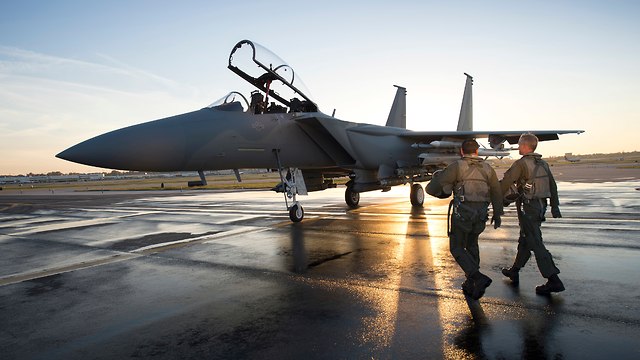
In addition to continuing purchasing F-35 multirole stealth fighters, IAF decides to upgrade its dependable F-15 fleet with improved model capable of carrying 13 tons of explosives with advanced avionics.
The new F-15 IA was chosen by the IDF and Israel Air Force (IAF) as the new fighter jet to be acquired over the next decade, according to an official announcement Saturday.
The purchase has already been approved by the government, and the first of the aircraft is expected to arrive in Israel as soon as 2023. In the meantime, the IAF will continue purchasing stealth attack aircrafts.

The F-15 IA performance, considered to be superior to the older F-15 aircraft—which has been in IAF use since 1998—is what swayed the decision.

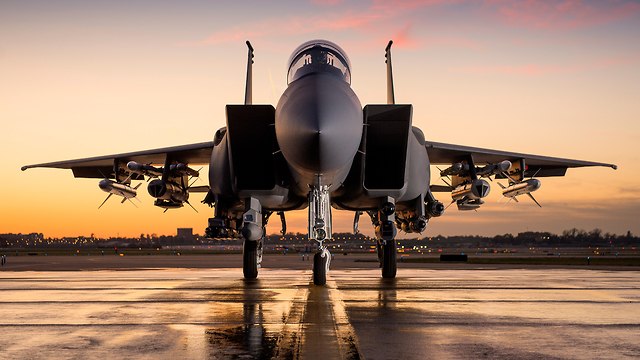
F-15 IA (Photo: Boeing)

F-15 IA (Photo: Boeing)

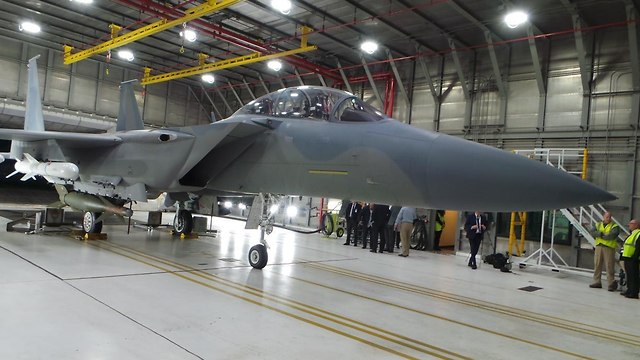
Indeed, the new F-15 can fly longer distances, has higher survivability, more advanced avionic systems, and a much better ordnance-carrying capacity. The jet can carry up to 13 tons of explosives—a capability unmatched by any other attack aircraft.

In the field of air-to-air warfare, the F-15 IA plane is capable of carrying 11 missiles, in addition to 28 heavy, smart bombs for ground targets.

In addition, the aircraft has the capability to carry all the weapons at the IAF’s disposal, including unique Israeli-made missiles, laser and electro-optical systems, and more.

F-15 IA (Photo: Yoav Zitun)

F-15 IA (Photo: Yoav Zitun)

The plane was built by Boeing for the air forces of Qatar and Saudi Arabia, and initially the United States Air Force (USAF), through which the IAF purchased the planes, pressed Israel not to request to purchase the jets.

This is because the Americans had an interest in continuing the development of the stealth F-35 line, which have been acquired by the US military’s air and naval forces.

In the past year the USAF has begun to take an interest in the new F-15 IA plane, which gave Israel the green light to enter negotiations for its purchase. It seems as though the Americans have agreed to supply Israel with the new plane on condition that it will continue purchasing the F-35 stealth attack aircrafts.

F-15 IA (Photo: Boeing)

F-15 IA (Photo: Boeing)

The IAF emphasized that the new F-15 will not completely replace the F-35 stealth fighter, but is intended to reinforce the systems currently in place to enhance the range of capabilities to an optimal position vis-à-vis its missions—from Iran to Gaza.

According to a document presented by the IDF to outgoing Defense Minister Avigdor Lieberman recently, the IAF intends to complete the purchase of the third stealth squadron at a lower rate—with up to three planes a year. Once the third squadron is complete, approximately in 10 years time, the IAF will have at least 75 F-35 stealth aircraft at its disposal.

The document submitted to Lieberman is one of the last to be approved by the outgoing defense minister. All the IDF’s purchases in the US in the coming decade, totaling $38 billion, have been submitted for governmental approval.


EU open to Iran sanctions after foiled France, Denmark plots

Posted November 20, 2018 by Joseph Wouk
Categories: Uncategorized

Source: EU open to Iran sanctions after foiled France, Denmark plots – Middle East – Jerusalem Post

Though still at an early stage, the EU’s readiness to penalize Iranians would be the first such move in years.

BY REUTERS
 NOVEMBER 19, 2018 23:40
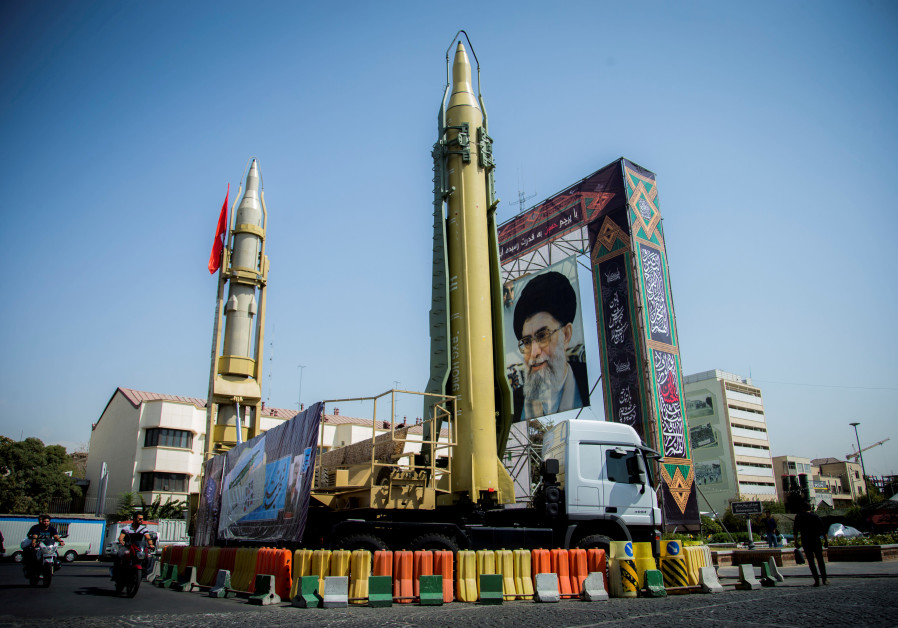
Missiles and a portrait of Iran's Supreme Leader Ayatollah Ali Khamenei in Tehran, Iran

Denmark and France briefed their EU counterparts at a meeting in Brussels on the alleged plots and ministers agreed to consider targeted sanctions on Iranians in response, although no details or names were discussed, five diplomats told Reuters.

Though still at an early stage, the EU’s readiness to penalize Iranians would be the first such move in years after months of internal division over how to punish Iranians accused of destabilizing activities in Europe and the Middle East.

Until now, the EU has been straining to uphold the 2015 nuclear accord between Iran and world powers that US President Donald Trump pulled out of in May. It has been less willing to consider sanctions, instead seeking talks with Tehran.

Iran has warned it could ditch the nuclear deal if EU powers do not protect its trade and financial benefits.

France has already imposed sanctions on two Iranians and Iran’s intelligence service over what it says was a failed plot to carry out a bomb attack at a rally near Paris organized by an exiled Iranian opposition group. One option is to establish those asset freezes at an EU-wide level, diplomats said.

Denmark, which in October said it suspected an Iranian government intelligence service had tried to carry out an assassination plot on its soil, is also open to EU-wide sanctions, the diplomats told Reuters.

In October, France said there was no doubt that Iran’s intelligence ministry was behind the June plot to attack the demonstration by Iranian exiles near Paris.

It froze assets belonging to Tehran’s intelligence services and two Iranian nationals – a Vienna-based diplomat now under arrest in Belgium for the plot and the deputy minister and director general of intelligence, Saeid Hashemi Moghadam.

Neither appear to have held any assets in France. Paris also discreetly expelled an Iranian diplomat, diplomatic sources told Reuters last month.

Iran has denied any involvement in either alleged plot.

Under the 2015 deal, Iran restricted its disputed nuclear program, widely seen in the West as a disguised effort to develop the means to make atomic bombs, in exchange for an end to international sanctions against it.

MISSILE SANCTIONS DIDN’T FLY

In March, Britain, France and Germany proposed to sanction Iran over its development of ballistic missiles and its role in Syria’s war, but the initiative failed to gather sufficient support across the EU to take effect.

Italy was one EU country unwilling to countenance new measures as it sought to preserve business ties with Iran.

In an effort to balance Iran policy, the ministers at their meeting on Monday also tried to press ahead in setting up a special mechanism to trade with Iran that could be under EU, not national, law.

The Special Purpose Vehicle (SPV) is a kind of clearing house that could be used to help match Iranian oil and gas exports against purchases of EU goods in an effective barter arrangement circumventing U.S. sanctions, which are based on global use of the dollar for oil sales.

Despite technical difficulties and delays, the EU believes this formula could shield individual member states from being hit by U.S. sanctions that have been reimposed on trade with Iran after Washington’s pullout from the nuclear deal.

“There is a willingness for the financial vehicle … to be set up quickly,” French Foreign Minister Jean-Yves Le Drian told reporters.

However, no country has come forward as a potential host. Their reluctance arises from fears that SPV reliance on local banks to smooth trade with Iran may incur US penalties, severing the lenders’ access to US markets, diplomats said.

Luxembourg is seen as a good candidate to manage the Iran SPV given its experience in creating a similar mechanism during the 2009-12 euro zone financial crisis.

Iranian-backed Houthi forces in Yemen fire missile at Saudi coalition 

Posted November 20, 2018 by Joseph Wouk
Categories: Uncategorized

Source: Iranian-backed Houthi forces in Yemen fire missile at Saudi coalition – Middle East – Jerusalem Post

The missile used solid-propellant and was termed as Badr P-1, an upgrade from the Badr-1.

BY SETH J. FRANTZMAN
 NOVEMBER 19, 2018 19:01
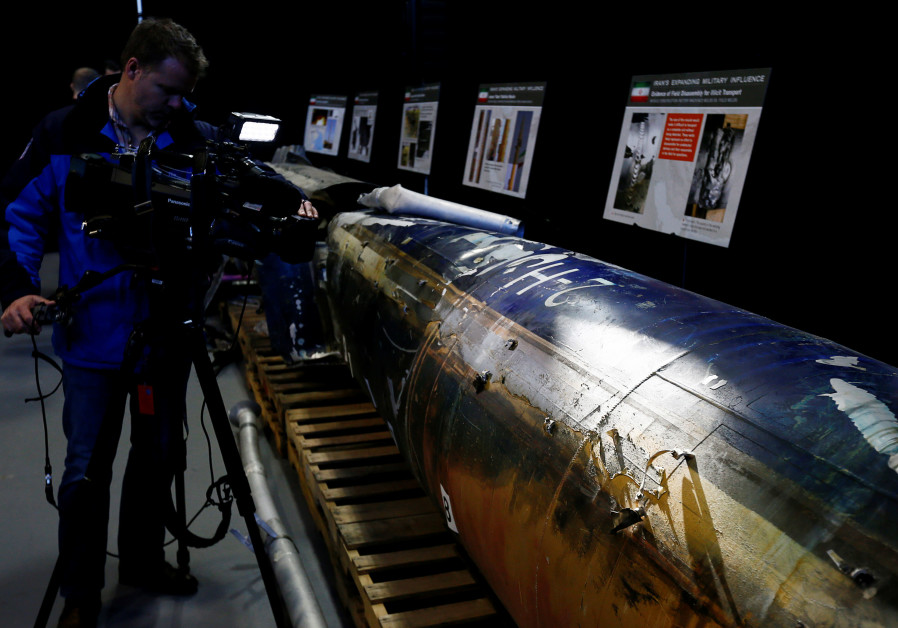
"Qiam" ballistic missile manufactured in Iran and that the Pentagon says was fired by Houthi rebels

Iranian media reported on Monday that the Iranian-backed Houthi rebels in Yemen fired a precision missile at Saudi-led coalition headquarters. It is not the first time the Yemeni-produced Badr P-1 ballistic missile has been used, but it represents another attempt by Iranian media to boast about the accuracy of their ballistic missile program, which is part of the wider network of Iranian-backed precision-missile weapons programs and technology transfer, including Hezbollah.

In late October, Houthi rebels in Yemen unveiled what they called a “domestically designed and manufactured smart missile intended to precisely hit specific targets.” It had all the trappings of a highly sophisticated weapon. They claimed it would minimize collateral damage and “increase lethality against designated targets.” It was designed to counter the Riyadh regime and the “atrocities of aerial bombardment” carried out by the Saudi-led coalition, which has been fighting the Houthis since 2015.

The missile used solid-propellant and was termed as Badr P-1, an upgrade from the Badr-1. It was said to have a pinpoint accuracy of “up to three meters.” The UN and other countries have alleged that Iran has transferred missile technology and parts to the Houthis. In early November, the Houthis claimed to have fired a Badr P-1 at a Saudi military base. Now another missile has been fired at Saudi forces in the Midi desert.

“The missile hit the target with high precision and led to the deaths and injuries of a number of military allied forces with the Saudi coalition,” said Fars News on Monday. It claimed that the missile’s success was part of a larger program, which may include “other missiles.” How the Iranian-based Fars knows there are “other missiles” is unclear.

The missile firing was mentioned on social media as well. The missile appears to be around six meters long, making it similar to a Fajr-5 artillery rocket. In February 2017, Iran unveiled a guided version called the Fajr-5C. Iran has an extensive missile program and has been increasing the precision of its ballistic missiles in the past year, by striking at Kurdish opposition forces in Iraq in September and against ISIS in Syria in October.

The Houthi decision to go public with the missile – hosting a kind of reception for it with non-alcoholic beverages and a TV screen claiming to show its attributes as if it was a sales presentation at an arms show – shows they are trying to illustrate their abilities. The fact that Iranian media got fed the video shows a clear notion of where the support comes from. On the one hand, the Houthis put forward a narrative of starving Yemen being attacked by Saudi Arabia, while they developed precision munitions. This would appear to show that while there is massive suffering in Yemen and millions at risk of starvation, the actual conflict between the Houthis and the Saudi coalition is not so clear cut. The missile program they exhibit also has links to the wider Iranian attempt to support missile programs among Hezbollah and Hamas, either through financial support or direct technology transfers.