Iran to increase uranium enrichment to 5%, in fresh violation of nuclear deal 

Posted November 6, 2019 by Joseph Wouk
Categories: Uncategorized

Source: Iran to increase uranium enrichment to 5%, in fresh violation of nuclear deal | The Times of Israel

Head of Tehran’s atomic energy agency says it will stay below 20% threshold; announcement comes as Rouhani says will restart centrifuges Wednesday at underground Fordo plant
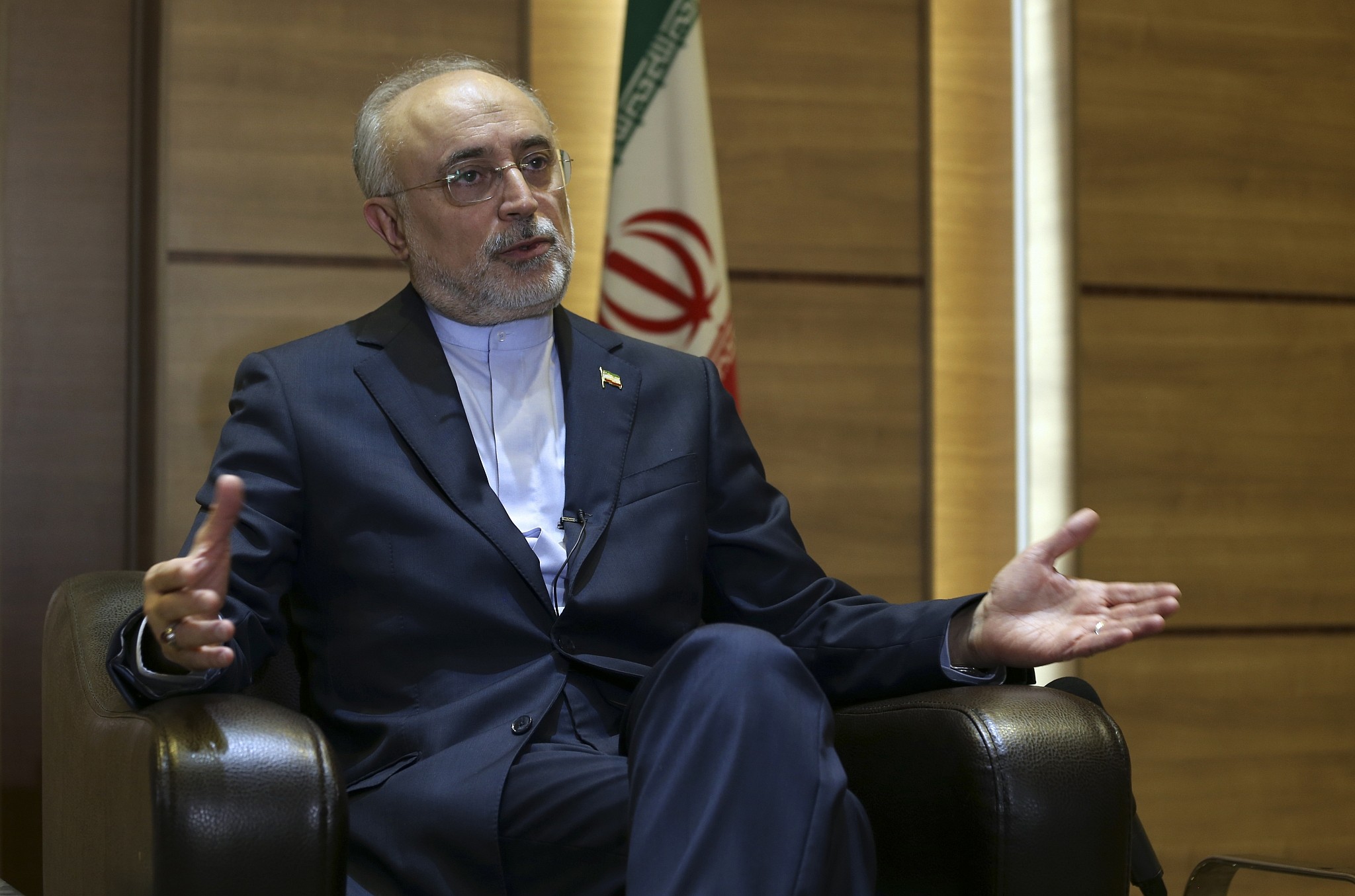
Iran’s nuclear chief Ali Akbar Salehi speaks in an interview with The Associated Press at the headquarters of Iran’s atomic energy agency, in Tehran, Iran, Tuesday, Sept. 11, 2018. (AP Photo/Vahid Salemi)

Iran on Tuesday evening said it would begin enriching uranium up to five percent, the latest in a series of steps moving away from the terms of the 2015 nuclear deal.

The decision came just hours after Iranian President Hassan Rouhani also said the country would again begin enriching uranium at the heavily fortified underground Fordo Fuel Enrichment Plant in Iran’s Qom Province.

As a key provision of the 2015 nuclear accord, Iran had agreed to halt production of nuclear materials at the facility, which was originally built and operated in secret, until its existence was exposed by the United States, Israel and other Western countries.

On Tuesday night, the head of the Atomic Energy Organization of Iran dropped a further bombshell, telling local media that the Islamic Republic would also be stepping up the level of enrichment to 5%, in a further violation of the Joint Comprehensive Plan of Action (JCPOA), which allows enrichment to 3.67%.

The decisions to restart operations at Fordo and increase uranium enrichment levels were the latest moves in an ongoing game of brinkmanship between the US and Iran, which began last year when the White House pulled out of the 2015 nuclear deal. Since then, Washington has steadily imposed more and more sanctions against the Islamic Republic, which has retaliated with both violations of the JCPOA and increasingly aggressive actions in the Persian Gulf.
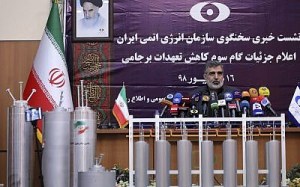
In this photo released by the Atomic Energy Organization of Iran, spokesman of the organization Behrouz Kamalvandi speaks in a news briefing as advanced centrifuges are displayed in front of him, in Tehran, Iran, September 7, 2019 (Atomic Energy Organization of Iran via AP)

Prime Minister Benjamin Netanyahu on Tuesday night reiterated Israel’s intense opposition to Iran’s nuclear program.

“Given Iran’s efforts to expand its nuclear weapons program, expand its enrichment of uranium for making atomic bombs, I repeat here once again: We will never let Iran develop nuclear weapons. This is not only for our security and our future; it’s for the future of the Middle East and the world,” Netanyahu said in a speech Tuesday night.

On Monday, the White House announced new sanctions against members of Supreme Leader Ayatollah Ali Khamenei’s inner circle as part of its so-called maximum pressure campaign against Tehran.

Rouhani said Iranian nuclear scientists would start injecting uranium gas into Fordo’s 1,044 centrifuges beginning Wednesday.

Iranian President Hassan Rouhani speaks during a press conference in New York on September 26, 2019. (Kena Betancur/AFP)

Under the 2015 accord, Iran was limited to enriching uranium up to 3.67%, which is enough for peaceful pursuits but is far below weapons-grade levels of 90%. This summer, it began surpassing this level, in violation of the agreement, up to 4.5%.

Head of Iran’s nuclear agency Ali Akbar Salehi said the uranium enrichment increase to 5% would be carried out in front of inspectors from the International Atomic Energy Agency, the United Nations’ nuclear watchdog, according to Iran’s Mehr news.

“Salehi said that it had been decided that there will not be [20%] uranium enrichment at Fordow for the time being,” the Iranian outlet reported.

The 20% level is seen as a significant threshold for uranium enrichment and surpassing it could trigger more severe sanctions against Iran from European nations, which are currently fighting to save the ailing JCPOA.

Earlier on Tuesday, the European Union and Russia voiced concerns over Iran’s announcement that it would resume uranium enrichment at the underground Fordo plant.

“We are concerned by President Rouhani’s announcement today to further reduce Iran’s commitments under the JCPOA,” EU spokeswoman Maja Kocijancic told reporters.

Dmitry Peskov, a spokesman for Russian President Vladimir Putin, said Moscow was also “monitoring the development of the situation with concern” and supported “the preservation of this deal.”

At the same time, Peskov said Russia understood Tehran’s concerns over the “unprecedented and illegal sanctions” against the country.

Russian President Vladimir Putin’s spokesman Dmitry Peskov in Moscow, Russia, April 6, 2017. (AP Photo/Pavel Golovkin)

Washington’s abandonment of the 2015 deal in May last year, followed by its reimposition of crippling sanctions, prompted Tehran to begin a phased suspension of its own commitments this year.

France called on Tehran to reverse its decision to resume enrichment, saying it “goes against the Vienna agreement, which strictly limits activities in this area.”

French foreign ministry spokeswoman Agnes von der Muhll said Paris remained committed to the accord and urged Iran to “fully adhere to its obligations and to cooperate fully with the IAEA,” according to Reuters.

Tuesday’s dramatic announcements came a day after Salehi said the country had doubled the number of advanced IR-6 centrifuges in operation.

There was no immediate reaction from the IAEA, which monitors Iran’s compliance with the deal

The centrifuges at Fordo are IR-1s, Iran’s first-generation centrifuges. The nuclear deal allowed those at Fordo to spin without uranium gas, while letting up to 5,060 at its Natanz facility to enrich uranium.
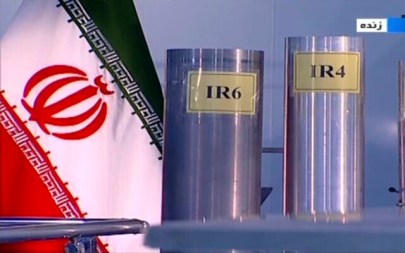
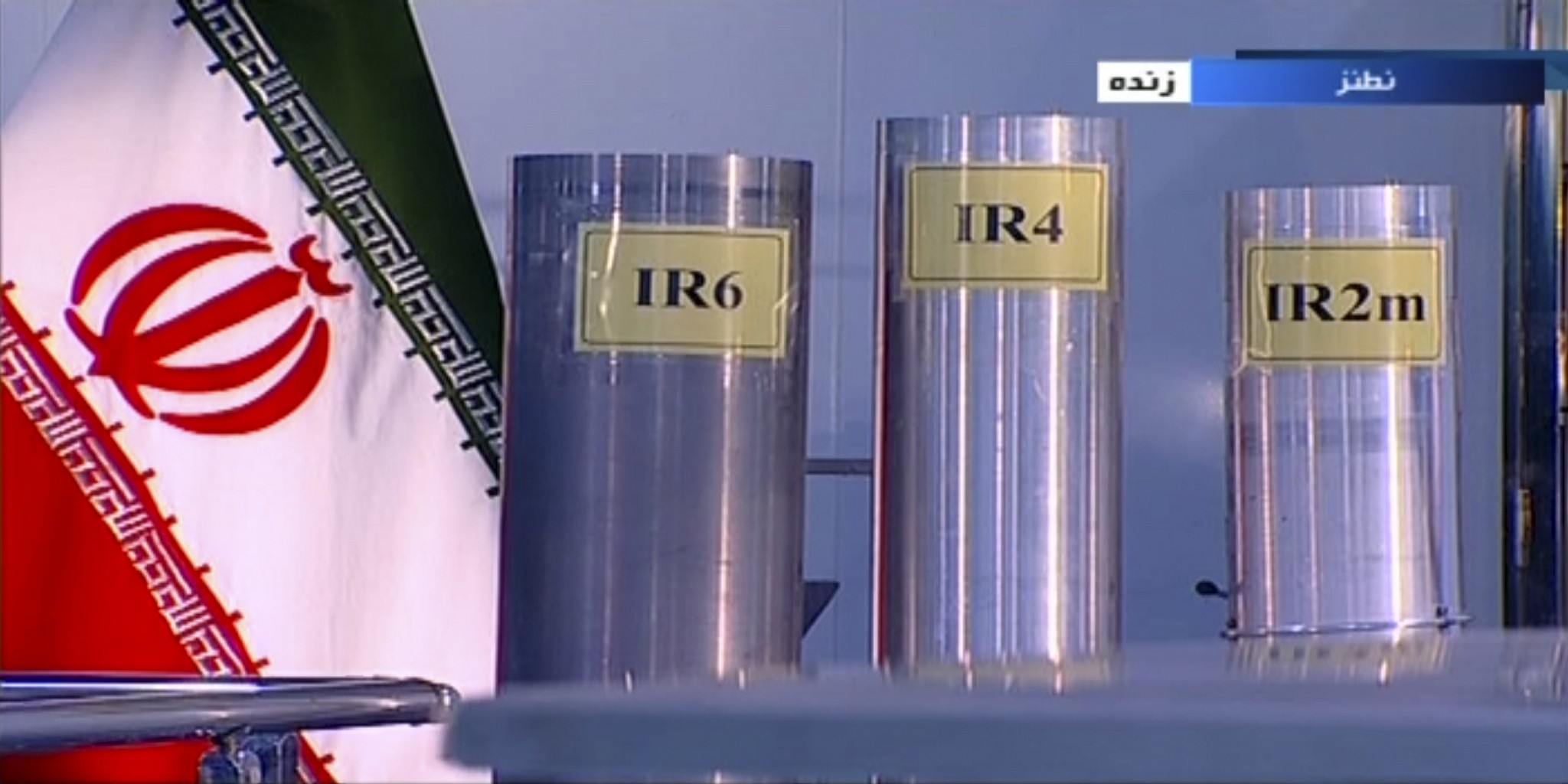
In this June 6, 2018 frame grab from the Islamic Republic Iran Broadcasting, IRIB, state-run TV, three versions of domestically-built centrifuges are shown in a live TV program from Natanz, an Iranian uranium enrichment plant, in Iran. (IRIB via AP)

A centrifuge enriches uranium by rapidly spinning uranium hexafluoride gas, also known as UF-6. An IR-6 centrifuge can produce enriched uranium 10 times faster than an IR-1, Iranian officials say.

Iranian scientists also are working on a prototype called the IR-9, which works 50 times faster than the IR-1, Salehi said Monday.

Tehran has gone from producing some 450 grams (1 pound) of low-enriched uranium a day to 5 kilograms (11 pounds), Salehi said. Iran now holds over 500 kilograms (1,102 pounds) of low-enriched uranium, Salehi said. The deal had limited Iran to 300 kilograms (661 pounds).

Agencies and Times of Israel staff contributed to this report.


Iran shaves weeks off breakout time, but isn’t tearing up nuclear pact yet

Posted November 6, 2019 by Joseph Wouk
Categories: Uncategorized

Source: Iran shaves weeks off breakout time, but isn’t tearing up nuclear pact yet | The Times of Israel

Halting uranium enrichment at the heavily fortified Fordo was a major victory for the 2015 nuke deal; its reopening is seen as a dramatic bid by Tehran to leverage sanctions relief

President Hassan Rouhani, second left, speaks during a ceremony to unveil the Iran-made Bavar-373, a long-range surface-to-air missile system, displayed at rear, as his Defense Minister Gen. Amir Hatami, second right, commander of army's air defense force Gen. Alireza Sabahifard, left, and the chairman of the parliament's National Security and Foreign Policy Committee Mojtaba Zolnour, listen, at an undisclosed location in Iran,, August 22, 2019. (Iranian Presidency Office via AP)

President Hassan Rouhani, second left, speaks during a ceremony to unveil the Iran-made Bavar-373, a long-range surface-to-air missile system, displayed at rear, as his Defense Minister Gen. Amir Hatami, second right, commander of army’s air defense force Gen. Alireza Sabahifard, left, and the chairman of the parliament’s National Security and Foreign Policy Committee Mojtaba Zolnour, listen, at an undisclosed location in Iran,, August 22, 2019. (Iranian Presidency Office via AP)

The ongoing game of brinkmanship between Tehran and Washington has entered a new, potentially dangerous level, with Iran restarting uranium enrichment at its Fordo nuclear facility and also announcing it was raising the level of this enrichment, up to five percent.

These two decisions represent a distinctly shocking and provocative move by the Islamic Republic, but they also remain easily reversible, experts say, as Iran attempts to bully its way toward financial relief while keeping just shy of prompting European countries to call for a so-called snapback of broader international sanctions.

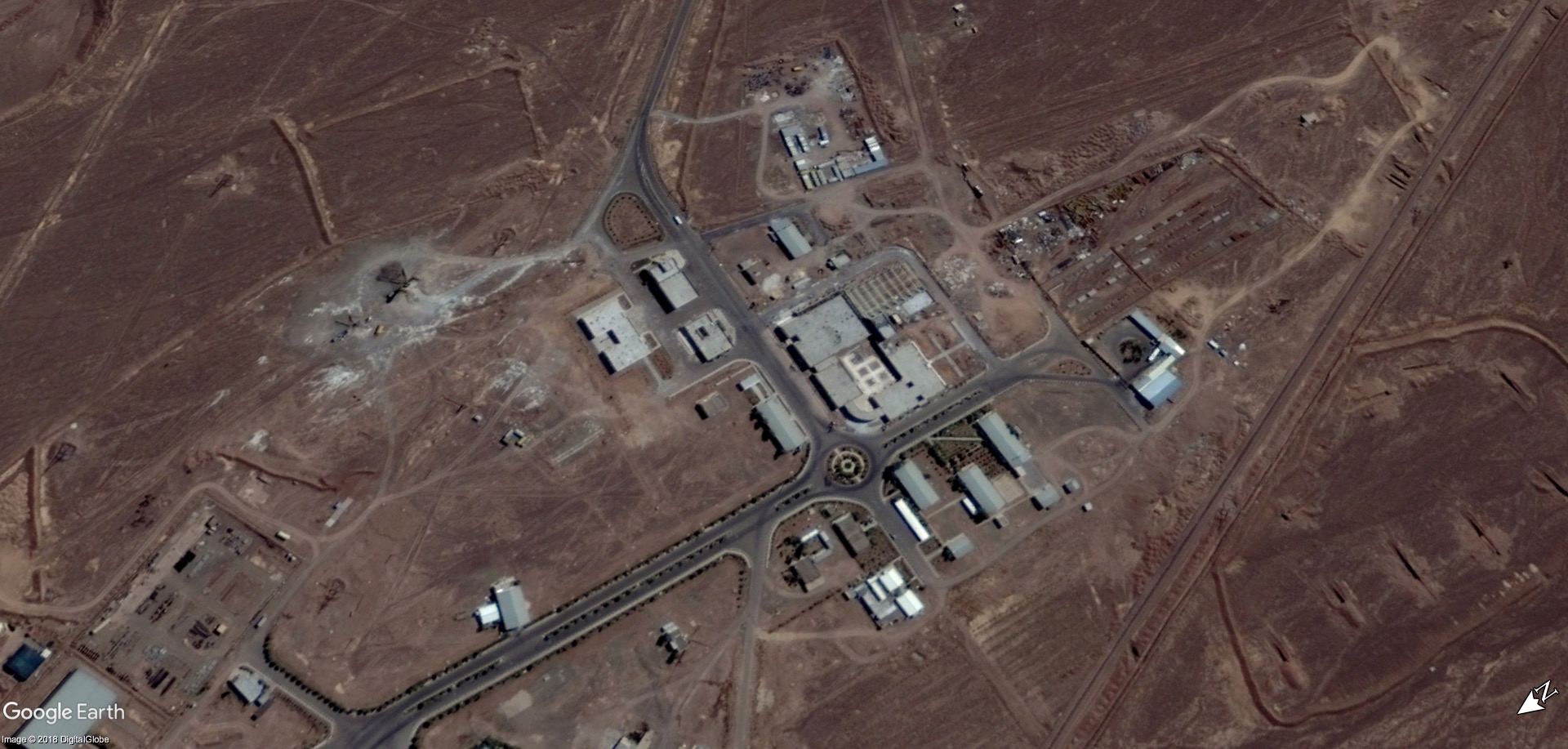
The transformation of the Fordo Fuel Enrichment Plant, which is buried deep under a mountain in Iran’s Qom district, from a uranium enrichment facility to one used for other, non-nuclear purposes was a key provision of the 2015 nuclear deal, formally known as the Joint Comprehensive Plan of Action (JCPOA).

The heavily fortified Fordo was originally built and operated in secret by Iran, until it was exposed by Western intelligence services, including Israel’s, and ultimately acknowledged by Tehran in 2009 to great international criticism. The facility is widely regarded as having been built for the explicit purpose of producing highly enriched uranium for nuclear weapons far enough underground that it couldn’t be destroyed in a military strike.

A satellite image from September 15, 2017, of the Fordo nuclear facility in Iran. (Google Earth)

Since the 2015 agreement was signed, Fordo’s 1,044 centrifuges have been spinning empty. Iran’s decision to begin pumping uranium hexafluoride gas into those centrifuges on Wednesday sent a clear message that it was moving farther away from the JCPOA. However, according to a number of experts, the reactivation of Fordo will have only a modest effect on the amount of time it takes for Iran to “break out” — to develop an atomic weapon and officially become a nuclear power.

In this January 13, 2015, photo, President Hassan Rouhani visits the Bushehr nuclear power plant just outside of Bushehr, Iran (AP Photo/Iranian Presidency Office, Mohammad Berno)

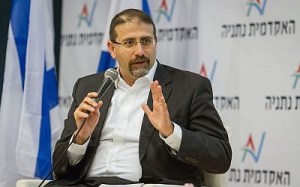
“It doesn’t significantly affect the breakout timeline, but Fordo has always been one of the most sensitive aspects of the nuclear program because of its hardened, underground nature and the difficulty of destroying it,” said Dan Shapiro, a former US ambassador to Israel and current fellow at Tel Aviv University’s Institute for National Security Studies think tank.

“The danger is that this is one important, symbolic step that will be followed by more,” Shapiro told The Times of Israel on Tuesday night.

Under the JCPOA, Iran was permitted to enrich uranium up to 3.67%, a level that is enough for peaceful pursuits but is far below the weapons-grade level of 90%. Prior to the atomic deal, Iran enriched up to 20%. Beginning this summer, the Islamic Republic began enriching uranium up to 4.5%, and also started accumulating more low-enriched uranium than was allowed under the deal — 500 kilograms (1,102 pounds) of low-enriched uranium, compared to the JCPOA limit of 300 kilograms (661 pounds).

According to recent estimates from the Institute for Science and International Security, which is generally seen as hawkish on Iranian issues, if Tehran decided to completely abandon the JCPOA and go at full speed toward the production of an atomic weapon using its existing stores of low-enriched uranium, it would take between seven and 11 months for it to develop sufficient weapon-grade uranium for a nuclear bomb, depending on which types of centrifuges it used in the process.

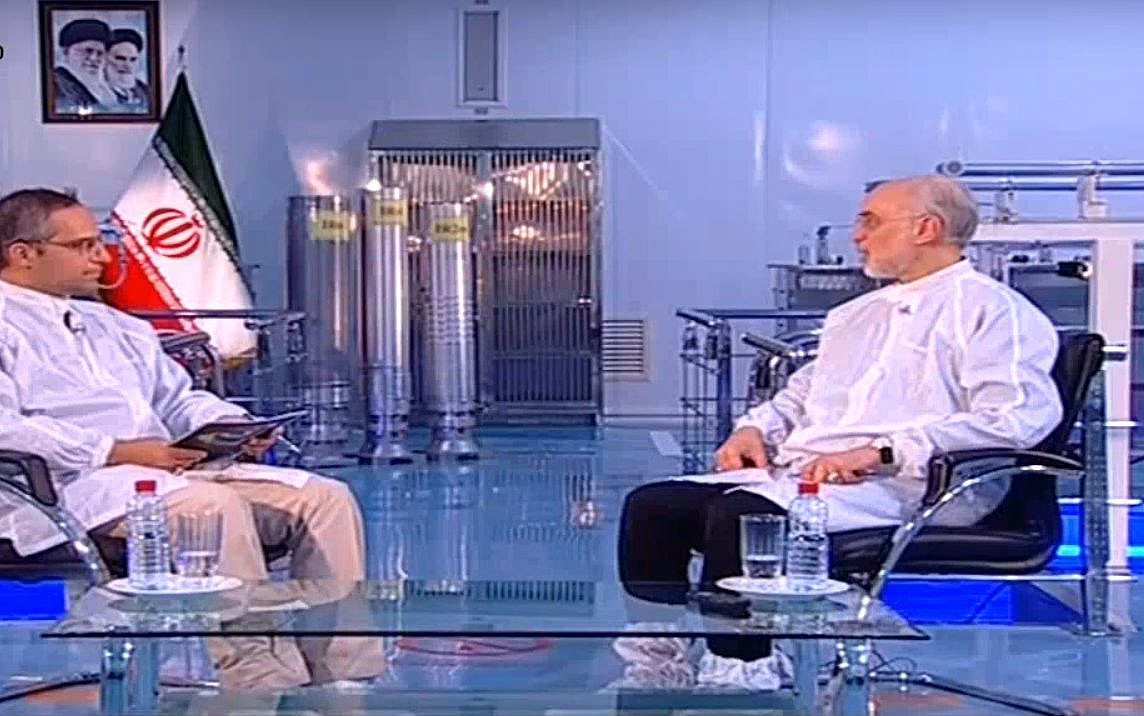
Screen capture from video showing Ali Akbar Salehi, the head of Iran’s nuclear agency, right, and three Iranian-produced uranium enrichment centrifuges in the background. (YouTube)

Andrea Stricker, a fellow at the Foundation for Defense of Democracies think tank, which is also seen as hawkish on Iran, told The Times of Israel that the resumption of uranium enrichment at Fordo with its 1,044 centrifuges, which are of a simpler and slower variety, potentially shortens this breakout time by several weeks.

It was not immediately clear how this timeline would change with Iran’s announcement that it would begin enriching uranium up to 5%.

Jason Brodsky, policy director for the bipartisan United Against a Nuclear Iran organization, said this should be seen as largely symbolic but highly provocative move, though one that is unlikely to significantly change the overall dynamic playing out between the United States and Iran.

“The Israelis are understandably very nervous,” he said.

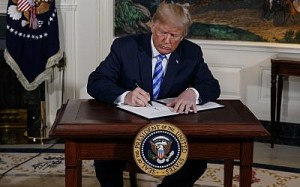
US President Donald Trump signs a Presidential Memorandum withdrawing from the Iran nuclear deal in the Diplomatic Reception Room of the White House, on May 8, 2018. (AP Photo/Evan Vucci)

Since last May, when US President Donald Trump withdrew from the JCPOA and reimposed sanctions against Iran, Washington and Tehran have been locked in an escalating stalemate. Every few months, the White House imposes additional sanctions on Iran, and the Islamic Republic retaliates by steadily increasing its violations of the nuclear deal and also taking ever more aggressive military actions in the Persian Gulf, most recently with the bombing of a major Saudi Arabian oil facility in mid-September.

“[The Iranians] feel, probably, that the steps taken to date haven’t moved the needle in attracting sanctions relief, so they need to get more hardcore, while still keeping it reversible,” Brodsky told The Times of Israel over the phone.

“They’re trying to do something, to be provocative enough to attract sanctions relief, but not too provocative to attract a military strike or a full snapback of sanctions,” he said.

The Europeans

Since last May, the US and Iran have maintained relatively consistent strategies in their standoff, with Washington employing a so-called “maximum pressure” campaign of regularly increased sanctions and bellicose rhetoric and Tehran responding with both violations of the terms of the JCPOA — surpassing limits on uranium quantities and enrichment levels — and shows of military force in the Persian Gulf, including shooting down an American drone and allegedly bombing a United Arab Emirates oil tanker with limpet mines.

So far the US has not retaliated militarily to any of Iran’s aggressive actions in the Middle East, something that deeply concerns Israel as it believes any American hesitancy and disengagement from the region emboldens Tehran.

Former US Ambassador to Israel, Dan Shapiro, participates in the Meir Dagan Conference for Strategy and Defense, at the Netanya College, on March 21, 2018. (Meir Vaaknin/Flash90)

“The US withdrew from the JCPOA and imposed maximum pressure. Iran is responding with aggression in the Gulf — to which the US hasn’t responded — and with creeping violations of the JCPOA, and with rejections of US and French offers to negotiate,” Shapiro said.

Brodsky agreed with this overall assessment of the dynamic.

“We are locked in this cycle,” he said.

In the middle of this brinkmanship between Iran and the US are the Europeans, who have been scrambling to keep the JCPOA alive.

After each violation of the accord by Tehran, members of the European Union — notably France and Germany — have faced the choice of stomaching the infraction or using the JCPOA’s dispute resolution mechanisms, under which fresh sanctions could be imposed on Iran. Use of this latter option by European countries would likely result in the complete abandonment of the JCPOA by Iran, according to many analysts’ assessments.

Europe should have activated dispute resolution mechanisms long before now to prevent these actions by Iran

With Iran’s latest moves on Wednesday, Europe will again have to decide how to respond.

Stricker said her group, which has long been critical of the JCPOA and hailed Trump’s decision to withdraw from it, believes the reactivation of a “formerly covert, heavily fortified facility that was once intended for weapons-grade uranium production,” on top of Iran’s prior violations of the accord, ought to prompt additional sanctions.

“Europe should have activated dispute resolution mechanisms long before now to prevent these actions by Iran,” she said.

“[The Iranians] don’t want to provoke snapbacks, but this is a pretty provocative action,” Stricker said.

Brodsky was more skeptical.

A satellite image from April 2, 2016, of the Fordo nuclear facility in Iran. (Google Earth)

“[Fordo] is not Europe’s red line,” he said. “This is not likely to move the needle, from a European perspective.”

The UANI policy director said he believed Iran would have to significantly increase the level of enrichment before the Europeans would take action.

“I think 20% enrichment is their red line,” he said.

Shapiro, who was a significant supporter of the JCPOA, having served as US ambassador to Israel during its signing, was less inclined to speculate on what would prompt a European response.

“I don’t know what the trigger for Europe is to snap back sanctions,” he said. “They’re trying to find a way to preserve the structure of the deal.”

All eyes on 2020

This ongoing game of tit-for-tat between the US and Iran does seem to have a potential end date: November 3, 2020 — the American presidential elections.

For Iran, there is little incentive to enter negotiations with the current US administration until it knows if Trump is going to remain in office for an additional four years.

So for at least the next year, Tehran will likely maintain its strategy of provocative-but-not-too-provocative violations of the JCPOA, Brodsky said.

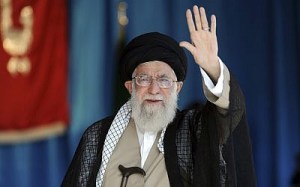
Supreme Leader Ayatollah Ali Khamenei waves to thousands of members of the Basij paramilitary organization in their gathering at the Azadi stadium in Tehran, Iran, on October 4, 2018. (Office of the Iranian Supreme Leader via AP)

“Iran’s playing a long game here,” he said.

Shapiro added that European nations would also be inclined to wait until Americans decide who their next president will be before entering into serious negotiations to reach a long-term settlement.

“The Europeans are frustrated by the Trump approach,” he said.

Shapiro, who also served as senior director for the Middle East and North Africa on the US National Security Council, said the White House doesn’t appear to be making great strides to any kind of resolution with Iran.

“There is no sign that the Trump administration has an off-ramp to this escalatory cycle,” he said.

Brodsky agreed that there was no sign of a solution in the offing.

In the short term, he said, the US could end a waiver it currently has in place that allows Russian, Chinese and European companies to operate out of Fordo in light of this latest violation of the JCPOA. Next month, when it assumes the presidency of the UN Security Council, the US could also try to call for more sanctions.

But overall, the Iran-US brinkmanship is likely to continue as is, according to Brodsky. “We’re going to continue to be at a stalemate,” he said.

Unless, or until, one of the sides changes the equation — either deliberately or through a miscalculation.


US races Russia for military positions in NE Syria, including new air bases – DEBKAfile

Posted November 6, 2019 by Joseph Wouk
Categories: Uncategorized

Source: US races Russia for military positions in NE Syria, including new air bases – DEBKAfile

Exclusive: A large influx of US troops is entering northeastern Syria this month to counter new Russian plans. This step follows several summersaults on Syria by President Donald Trump since his March 20 decision to withdraw the US from that country.

Thousands of words of condemnation landed on the White House on Oct. 13 when US Defense Secretary Mark Esper announced the decision to withdraw US forces from northeastern Syria. The administration was accused of deserting the US allied Kurds, the core of the Syrian Democratic Forces which defeated ISIS and opening the door for Iran to surge across the Iraqi-Syrian border.

However, thorough investigation by DEBKAfile’s military and intelligence sources have uncovered a totally different reality. While substantial US forces were indeed withdrawn from their Syrian bases to Iraq with masses of equipment, US troop reinforcements have been pouring in and continue to arrive in northeastern Syria. Not only were existing bases not abandoned, but new positions are being set up, including one or more new US air bases. US forces are moreover taking over Syria’s oil and gas fields after the SDF moved in.

Russian forces, whose objectives in Syria hitherto were confined to a naval base at Tartus and a big air base at Khmeimim  near Latakia, have suddenly decided to establish military and military footholds in the north as a counterweight to US military hubs in the Gulf and Iraq.


In fresh nuclear violation, Iran says it will renew enrichment at Fordo facility

Posted November 5, 2019 by Joseph Wouk
Categories: Uncategorized

Source: In fresh nuclear violation, Iran says it will renew enrichment at Fordo facility | The Times of Israel

President Rouhani says uranium gas to be injected into 1,044 centrifuges at underground nuclear site

Iran's President Hassan Rouhani gives a press conference in Tehran, Iran, October 14, 2019. (Ebrahim Noroozi/AP)

Iran’s President Hassan Rouhani gives a press conference in Tehran, Iran, October 14, 2019. (Ebrahim Noroozi/AP)

Iran’s president announced on Tuesday that Tehran will begin injecting uranium gas into 1,044 centrifuges, the latest step away from its nuclear deal with world powers since US President Donald Trump withdrew from the accord over a year ago.

The development is significant as the centrifuges previously spun empty, without gas injection, under the landmark 2015 nuclear accord. It also increases pressure on European nations that remain in the accord, which at this point has all but collapsed.

In his announcement, President Hassan Rouhani did not comment on the enrichment level of the uranium that would be produced by the centrifuges, which are at the nuclear facility in Fordo. The centrifuges would be injected with the uranium gas as of Wednesday, Rouhani said.

His remarks, carried live on Iranian state television, came a day after Tehran’s nuclear program chief said the country had doubled the number of advanced IR-6 centrifuges in operation.

A satellite image from September 15, 2017, of the Fordo nuclear facility in Iran. (Google Earth)

There was no immediate reaction from the International Atomic Energy Agency, the United Nations’ nuclear watchdog now monitoring Iran’s compliance with the deal. The European Union on Monday called on Iran to return to the deal, while the White House sanctioned members of Supreme Leader Ayatollah Ali Khamenei’s inner circle as part of its maximalist campaign against Tehran.

Rouhani stressed the steps taken so far, including going beyond the deal’s enrichment and stockpile limitations, could be reversed if Europe offers a way for it to avoid US sanctions choking off its crude oil sales abroad.

“We should be able to sell our oil,” Rouhani said. “We should be able to bring our money” into the country.

The centrifuges at Fordo are IR-1s, Iran’s first-generation centrifuges. The nuclear deal allowed those at Fordo to spin without uranium gas, while allowing up to 5,060 at its Natanz facility to enrich uranium.

A centrifuge enriches uranium by rapidly spinning uranium hexafluoride gas. An IR-6 centrifuge can produce enriched uranium 10 times faster than an IR-1, Iranian officials say.

Iranian scientists also are working on a prototype called the IR-9, which works 50 times faster than the IR-1, Iran’s nuclear chief Ali Akhbar Salehi said Monday.

As of now, Iran is enriching uranium up to 4.5 percent, in violation of the accord’s limit of 3.67%. Enriched uranium at the 3.67% level is enough for peaceful pursuits but is far below weapons-grade levels of 90%. At the 4.5% level, it is enough to help power Iran’s Bushehr reactor, the country’s only nuclear power plant. Prior to the atomic deal, Iran only enriched up to 20%.

In this frame grab from Islamic Republic Iran Broadcasting, IRIB, state-run TV, three versions of domestically-built centrifuges are shown in a live TV program from Natanz, an Iranian uranium enrichment plant, in Iran, June 6, 2018. (IRIB via AP)

Tehran has gone from producing some 450 grams (1 pound) of low-enriched uranium a day to 5 kilograms (11 pounds), Salehi said. Iran now holds over 500 kilograms (1,102 pounds) of low-enriched uranium, Salehi said. The deal had limited Iran to 300 kilograms (661 pounds).

The collapse of the nuclear deal coincided with a tense summer of mysterious attacks on oil tankers and Saudi oil facilities that the US blamed on Iran. Tehran denied the allegation, though it did seize oil tankers and shoot down a US military surveillance drone.


Israel Is Preparing for Open War – The Atlantic

Posted November 5, 2019 by Joseph Wouk
Categories: Uncategorized

Source: Israel Is Preparing for Open War – The Atlantic

A Hezbollah parade, with a mock rocket launcher, in 2016
ALI HASHISHO / REUTERS
This article was updated on Monday, November 4, at 7:35 pm.

The senior ministers of the Israeli government met twice last week to discuss the possibility of open war with Iran. They were mindful of the Iranian plan for a drone attack from Syria in August, aborted at the last minute by an Israeli air strike, as well as Iran’s need to deflect attention from the mass protests against Hezbollah’s rule in Lebanon. The ministers also reviewed the recent attack by Iranian drones and cruise missiles on two Saudi oil installations, reportedly concluding that a similar assault could be mounted against Israel from Iraq.

The Israel Defense Forces, meanwhile, announced the adoption of an emergency plan, code-named Momentum, to significantly expand Israel’s missile defense capacity, its ability to gather intelligence on embedded enemy targets, and its soldiers’ preparation for urban warfare. Israeli troops, especially in the north, have been placed on war footing. Israel is girding for the worst and acting on the assumption that fighting could break out at any time.

And it’s not hard to imagine how it might arrive. The conflagration, like so many in the Middle East, could be ignited by a single spark. Israeli fighter jets have already conducted hundreds of bombing raids against Iranian targets in Lebanon, Syria, and Iraq. Preferring to deter rather than embarrass Tehran, Israel rarely comments on such actions. But perhaps Israel miscalculates, hitting a particularly sensitive target; or perhaps politicians cannot resist taking credit. The result could be a counterstrike by Iran, using cruise missiles that penetrate Israel’s air defenses and smash into targets like the Kiryah, Tel Aviv’s equivalent of the Pentagon. Israel would retaliate massively against Hezbollah’s headquarters in Beirut as well as dozens of its emplacements along the Lebanese border. And then, after a day of large-scale exchanges, the real war would begin.

Rockets, many carrying tons of TNT, would rain on Israel; drones armed with payloads would crash into crucial facilities, military and civilian. During the Second Lebanon War, in 2006, the rate of such fire reached between 200 and 300 projectiles a day. Today, it might reach as high as 4,000. The majority of the weapons in Hezbollah’s arsenal are standoff missiles with fixed trajectories that can be tracked and intercepted by Israel’s Iron Dome system. But Iron Dome is 90 percent effective on average, meaning that for every 100 rockets, 10 get through, and the seven operational batteries are incapable of covering the entire country. All of Israel, from Metulla in the north to the southern port city of Eilat, would be in range of enemy fire.

But precision-guided missiles, growing numbers of which are in Iranian arsenals, pose a far deadlier threat. Directed by joysticks, many can change destinations mid-flight. The David’s Sling system, developed in conjunction with the United States, can stop them—in theory, because it has never been tested in combat. And each of its interceptors costs $1 million. Even if it is not physically razed, Israel can be bled economically.

First, though, it would be paralyzed. If rockets fall near Ben-Gurion Airport, as during Israel’s 2014 war with Hamas in Gaza, it will close to international traffic. Israel’s ports, through which a major portion of its food and essential supplies are imported, may also shut down, and its electrical grids could be severed. Iran has honed its hacking tools in recent years and Israel, though a world leader in cyberdefense, cannot entirely protect its vital utilities. Millions of Israelis would huddle in bomb shelters. Hundreds of thousands would be evacuated from border areas that terrorists are trying to infiltrate. The restaurants and hotels would empty, along with the offices of the high-tech companies of the start-up nation. The hospitals, many of them resorting to underground facilities, would quickly be overwhelmed, even before the skies darken with the toxic fumes of blazing chemical factories and oil refineries.

Israel would, of course, respond. Its planes and artillery would return fire, and the IDF would mobilize. More than twice the size of the French and British armies combined—at least on paper—the IDF can call up, equip, and deploy tens of thousands of seasoned reservists in less than 24 hours. But where would it send them? Most of the rockets would be launched from southern Lebanon, where the launchers are embedded in some 200 villages. Others would be fired from Gaza, where Hamas and Islamic Jihad, both backed by Iran, have at least 10,000 rockets. But longer-range missiles, including the deadly Shahab-3, would reach Israel from Syria, Iraq, Yemen, and Iran itself. This presents a daunting challenge to the Israeli Air Force, which does not possess strategic bombers capable of reaching Iran and must grapple with the advanced Russian anti-aircraft weapons situated in Syria. Israeli ground troops would be forced to move into Lebanon and Gaza, house-to-house, while special forces would be dispatched deep within Syria and Iraq. Israel’s own conventional missiles could devastate Iranian targets.

But even if these countermeasures could succeed in curtailing much of the missile fire, they would also inflict many thousands of civilian casualties. This is precisely what Iran wants, its proxies preventing the flight of residents from combat areas in order to accuse Israel of committing war crimes. West Bank and Gaza Palestinians, meanwhile, would likely stage violent protests that Israel would put down harshly, setting the stage for the Security Council to condemn Israel for employing indiscriminate and disproportional force and for the United Nations Human Rights Council to gather evidence for the International Criminal Court. What Iran and its allies cannot accomplish on the battlefield, they can achieve through boycotts, isolating and strangling Israel.

Does all this seem a little far-fetched? Not to the senior Israeli government ministers who have been contemplating precisely these sorts of scenarios. And over all of them looms a pressing question: How will the United States respond?

The question is paramount for multiple reasons, beginning with America’s role in precipitating the potential for conflict. Whether inadvertently, by diminishing its principal Sunni enemies—Saddam Hussein’s Iraq, the Taliban, and the Islamic State—or purposefully, by signing the nuclear deal, the United States has empowered Iran. While quick to oust Hosni Mubarak and Muammar Qaddafi—both Sunni—President Barack Obama refused to intercede against Iran’s Syrian ally, Bashar al-Assad. President Donald Trump failed to respond forcefully to the Iranian attacks on Saudi Arabia and on international shipping in the Gulf, or even for the downing of a U.S. Navy drone last June. Rather than a departure from long-standing policy, the hasty withdrawal of American troops from Syria appears to many in the Middle East as yet another American move that will strengthen Tehran. Few in the region will be surprised if the American president eases sanctions and negotiates with his Iranian counterpart.

But along with turning a blind eye to Iranian aggression, the United States has also provoked it. Iran has exploited the profits and legitimacy of the nuclear deal to dominate great swaths of the Middle East and surround Israel with missiles. With the expiration of the treaty’s sunset clauses, Iran could then break out, making hundreds of nuclear weapons while deterring Israeli preemption.

But if that was the Iranian hope, its aspirations were destroyed overnight by President Trump’s decision to pull out of the deal and reimpose sanctions. Faced with a collapsing economy, the regime had two painful options: Either enter into talks with Trump under conditions the Iranians find humiliating, or else initiate hostilities—first in Saudi Arabia and the Gulf, and if that fails, against Israel. Turning to action, the regime must hope, will prove to the United States that without sanctions relief and a renewed nuclear treaty, Iran can plunge the entire region into chaos.

Aware of these dangers, Israeli leaders nevertheless supported the undoing of a deal that they believed paved Iran’s path to hegemony and a nuclear arsenal. They fully supported the sanctions, even though they risk triggering a war. Better for it to face that risk now, they reasoned, than in five years, after Iran has completed its Middle East conquests, encircled Israel, and acquired nuclear bombs. Better for conflict to occur during the current administration, which can be counted on to provide Israel with the three sources of American assistance it traditionally receives in wartime.

The first is ammunition. Beginning with the 1973 Yom Kippur War and continuing through two Lebanon wars and three major clashes with Gaza, Israel has run low on crucial munitions. In each case, the United States agreed to resupply the IDF either by airlift or from its pre-positioned stores inside Israel. Only once, during the 2014 Protective Edge operation, did the Obama administration delay shipments of arms—in that case, Hellfire missiles—to express its displeasure over rising Palestinian casualties.

The second kind of backing is legal. Because the UN reliably votes to condemn Israel, the United States has rallied likeminded states to oppose or at least soften one-sided resolutions and, in the Security Council, cast its veto. The United States has also acted to shield Israel from UN “fact-finding” missions that invariably denounce it, and from sanctions imposed by international courts. When the Goldstone Report, filed after the 2009 Cast Lead operation in Gaza, accused Israel of crimes against humanity, both the Obama White House and the Democratic majority in Congress came to Israel’s defense.

Finally, the United States has supported Israel on the day after the fighting, in negotiating cease-fires, troop withdrawals, and prisoner exchanges, and establishing frameworks for peace. The tradition began after the 1967 Six-Day War, with the U.S.-brokered Security Council Resolution 242, and continued through the shuttle diplomacy of Secretaries of State Henry Kissinger in 1973–74 and Condoleezza Rice in 2006. Only after the 2014 fighting did Israel reject America’s offer of mediation, due to its government’s lack of faith in Secretary John Kerry.

Such distrust is absent from Israel’s relations with Secretary of State Mike Pompeo, and there is little doubt of this administration’s willingness to supply the three traditional types of assistance. But what if Israel needs more than that? What if there were a situation in which the survival of the Jewish state were threatened? Would the United States intervene?

The answer is yes—to a degree. Every two years, U.S. and Israeli forces hold joint exercises called Juniper Cobra to strengthen Israel’s air defenses. After participating as an IDF reservist in the first Juniper Cobra, in 1990, I worked with my American counterparts to deploy Patriot missile batteries in Israel during the Gulf War. Since then, the cooperation has significantly expanded, including the stationing of an American-manned X-band Radar system in Israel and the temporary deployment of the THAAD system, employing some of America’s most advanced antiballistic technology. Though the details remain top secret, the United States is clearly committed to helping protect Israel’s skies. Whether American troops would go on the offensive on Israel’s behalf, striking Iranian bases, remains uncertain.

That ambiguity is only deepening in an election year in which the incumbent and his opponents are campaigning to end old Middle Eastern wars, not get bogged down in new ones. Polls taken after the president’s decision to withdraw from Syria showed a lack of bipartisan support for even a small-scale American military involvement in the region. Yet administration officials have repeatedly assured me that Israel is not Syria or Saudi Arabia, and that Israel can count on massive U.S. support if needed.

I continue to believe that is true. I recall President Obama’s comment to Prime Minister Benjamin Netanyahu in the Oval Office six years ago this week, on the last day of my service as Israeli ambassador. “The United States will always come to Israel’s aid in the event of a war,” he said, “because that is what the American people expect.” But I also remember that, back in 1973, Egypt and Syria saw a president preoccupied with an impeachment procedure, and concluded that Israel was vulnerable. In the subsequent war, Israel prevailed—but at an excruciating price. The next war could prove even costlier.

In chilling detail, ex-envoy to US Oren warns of Israel-Iran ‘conflagration’

Posted November 5, 2019 by Joseph Wouk
Categories: Uncategorized

Source: In chilling detail, ex-envoy to US Oren warns of Israel-Iran ‘conflagration’ | The Times of Israel

A minor miscalculation by Jerusalem could lead to devastating war, with rockets raining down on Jewish state and overwhelming its defenses, former ambassador writes in The Atlantic

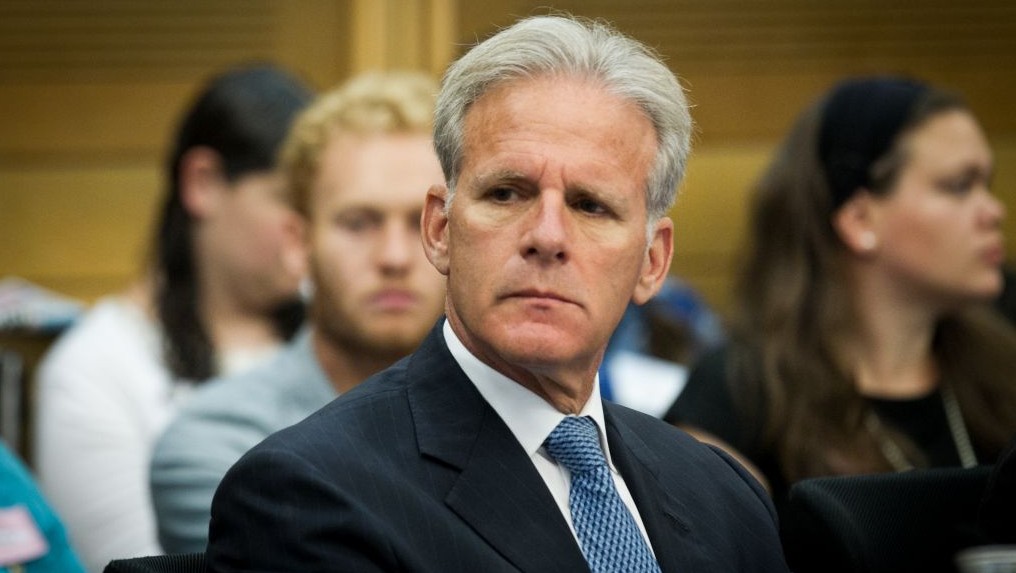
Kulanu MK Michael Oren, June 20, 2016. (Miriam Alster/Flash90)

Former Israeli ambassador to the US Michael Oren has described in chilling detail how a conflict between Israel and Iran could easily be sparked and descend into a massive conflagration, devastating Israel and other countries in the region.

Israel is already girding for a war with the Islamic Republic, and has carried out hundreds of strikes against Iran-linked targets in Lebanon, Syria and Iraq. A single miscalculation during one of those airstrikes could draw retaliation by Iran, Oren wrote in a column published in The Atlantic on Monday.

An Israel Defense Forces bombing run could inadvertently hit a sensitive target, or an Israeli official could step out of line and say something to embarrass Iran following an attack, Oren said.

Iran could then retaliate with a cruise missile strike against a critical target like Tel Aviv’s IDF military headquarters, drawing a massive response against Hezbollah in Beirut and south Lebanon.

Then, rockets would pour down on the Jewish state at a rate as high as 4,000 a day. The Iron Dome missile defense system would be overwhelmed as projectiles attacked civilian and military targets throughout the country, said Oren, who served in Washington, DC, from 2009 to 2013.

An Iranian clergyman looks at domestically built surface to surface missiles displayed by the Revolutionary Guard in a military show marking the 40th anniversary of the Islamic Revolution, at Imam Khomeini Grand Mosque in Tehran, Iran, February 3, 2019. (Vahid Salemi/AP)

Additionally, Iranian precision-guided missiles could wreak havoc, as the David’s Sling missile defense system that could stop them is untested in combat, and a single interception costs $1 million.

Attacks near Ben Gurion International Airport could shut it down, and the country’s ports could be closed, severing Israel from the outside, and Iranian cyberattacks could turn off the power grid.

Terrorists on the ground would attack border communities, the economy would cease functioning, hospitals would be overwhelmed, and damaged factories and refineries would spew toxic chemicals into the environment.

The IDF would be confronted with attackers on Israel’s borders in Lebanon and Gaza, while long-range missiles would fly in from Syria, Iraq, Yemen and Iran — some from outside the range of the Israeli Air Force, which would also be forced to contend with Russian anti-aircraft defenses in Syria.

Israel’s infantry would engage in urban combat in Lebanon and Gaza, its special forces would be sent far from its borders in Syria and Iraq, and its missiles would bombard Iran, Oren wrote.

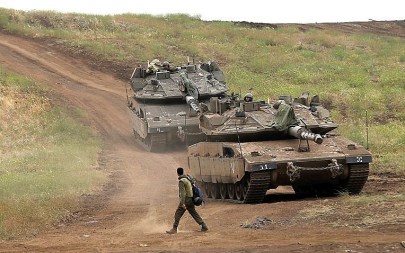
An Israeli soldier next to Merkava Mark IV tanks in the Golan Heights during a military drill on May 7, 2018. (AFP Photo/Jalaa Marey)

The Israeli response would cause many civilian casualties, drawing charges of war crimes, while West Bank protests would draw a sharp response from Israeli troops there.

The US response would be a crucial factor, in terms of providing munitions, legal support, and backing after the war in negotiating truces, withdrawals, prisoner exchanges and peace agreements.

The US has historically provided these three pillars of support to Israel during its times of need, Oren wrote, and could be counted on again.

Whether the US would help Israel with any direct military intervention is not certain, he said.

Israel has a strong relationship with the Trump administration and would likely receive significant support if needed, Oren said, but current US politics complicates the situation.

“Back in 1973, Egypt and Syria saw a president preoccupied with an impeachment procedure, and concluded that Israel was vulnerable. In the subsequent war, Israel prevailed—but at an excruciating price. The next war could prove even costlier,” he said.


European Union warns Iran over nuclear deal after uranium claims 

Posted November 4, 2019 by Joseph Wouk
Categories: Uncategorized

Source: European Union warns Iran over nuclear deal after uranium claims | The Times of Israel

EU says it will wait for UN confirmation on Tehran’s announcement of increased production, cautions that Europe’s commitment to 2015 pact depends on Iranian compliance

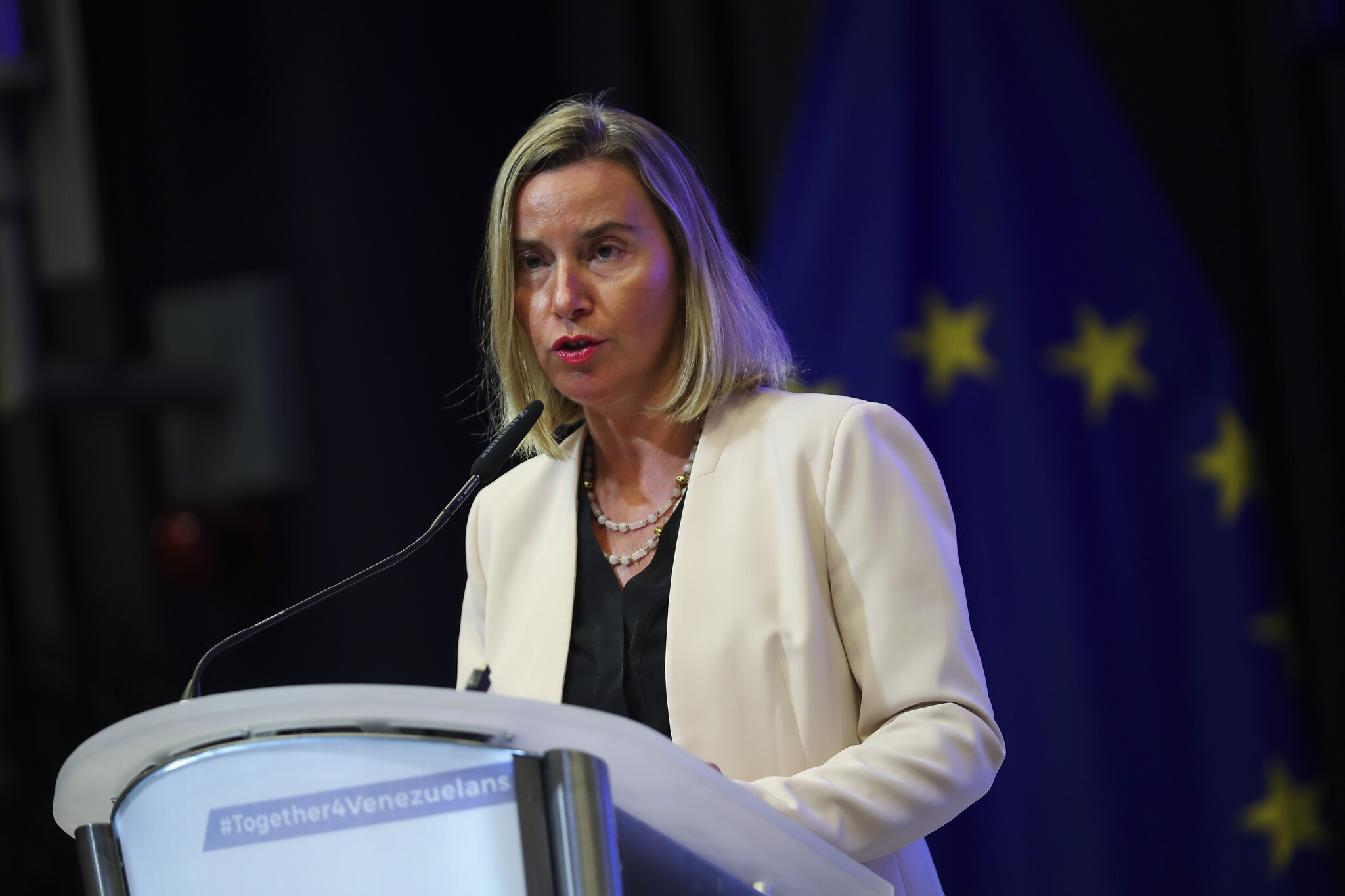
European Union foreign policy chief Federica Mogherini in Brussels, October 28, 2019. (Francisco Seco/AP)

European Union foreign policy chief Federica Mogherini in Brussels, October 28, 2019. (Francisco Seco/AP)

The European Union on Monday warned that it could back away from supporting the Iran nuclear deal, after Tehran announced a major increase in enriched uranium production.

Following a series of steps away from its commitments under the 2015 accord, the head of the Iranian atomic energy agency said Monday that production of enriched uranium had reached five kilos a day and two new advanced centrifuges had been developed.

Maja Kocijancic, spokeswoman for EU diplomatic chief Federica Mogherini, said that the EU’s backing for the deal depends on Tehran keeping up its end of the pact.

She said the bloc “took note” of the announcement but would wait for confirmation by the UN International Atomic Energy Agency before responding.

“We have continued to urge Iran to reverse such steps without delay and to refrain from other measures that would undermine the nuclear deal,” Kocijancic told reporters in Brussels, saying the EU “remained committed” to the nuclear deal.

“But we have also been consistent in saying that our commitment to the nuclear deal depends on full compliance by Iran.”

The Vienna-based IAEA did not immediately respond to a request for comment Monday on Iran’s announcement. The UN agency is tasked with monitoring Tehran’s nuclear activities to assess its compliance with the 2015 agreement with major powers, which has been severely undermined by Washington’s abandonment of it in May last year.

There was also no immediate reaction from Israel or the United States, which backed away from the deal last year.

Tehran decided in May to suspend certain commitments under the accord, a year after US President Donald Trump withdrew from the deal and reimposed sanctions on the Islamic republic.

By starting up the advanced centrifuges, Iran further cut into the one year that experts estimate Tehran would need to have enough material for building a nuclear weapon — if it chose to pursue one. Iran long has insisted its program is for peaceful purposes, though Western fears about its work led to the 2015 Joint Comprehensive Plan of Action that saw Tehran limit its enrichment of uranium in exchange for the lifting of economic sanctions.

Iran has so far hit back with three packages of countermeasures and threatened to go even further if the remaining partners to the deal — Britain, China, France, Germany and Russia — fail to help it circumvent US sanctions.


Iran announces fresh violations of nuclear deal with extra, advanced centrifuges

Posted November 4, 2019 by Joseph Wouk
Categories: Uncategorized

Source: Iran announces fresh violations of nuclear deal with extra, advanced centrifuges | The Times of Israel

Tehran’s nuclear chief says domestically made centrifuge in development is 50 times faster than those allowed under 2015 accord

Screen capture from video showing Ali Akbar Salehi, the head of Iran's nuclear agency, right, and three Iranian-produced uranium enrichment centrifuges in the background. (YouTube)

Screen capture from video showing Ali Akbar Salehi, the head of Iran’s nuclear agency, right, and three Iranian-produced uranium enrichment centrifuges in the background. (YouTube)

TEHRAN, Iran (AP) — Iran on Monday broke further away from its collapsing 2015 nuclear deal with world powers by announcing it’s doubling the number of advanced centrifuges it operates, calling the decision a direct result of President Donald Trump’s withdrawal from the agreement.

The announcement — which also included Iran saying it now has a prototype centrifuge that works 50 times faster than those allowed under the deal — came as demonstrators across the country marked the 40th anniversary of the 1979 US Embassy takeover that started a 444-day hostage crisis.

By starting up these advanced centrifuges, Iran further cuts into the one year that experts estimate Tehran would need to have enough material for building a nuclear weapon — if it chose to pursue one. Iran long has insisted its program is for peaceful purposes, though Western fears about its work led to the 2015 agreement that saw Tehran limit its enrichment of uranium in exchange for the lifting of economic sanctions.

Tehran has gone from producing some 450 grams (1 pound) of low-enriched uranium a day to 5 kilograms (11 pounds), said Ali Akbar Salehi, the head of the Atomic Energy Organization of Iran.

Salehi dramatically pushed a button on a keyboard to start a chain of 30 IR-6 centrifuges at Iran’s Natanz nuclear facility, where he was being filmed, increasing the number of working centrifuges to 60.

“With the grace of God, I start the gas injection,” the US-trained scientist said.

The nuclear deal limited Iran to using only 5,060 first-generation IR-1 centrifuges to enrich uranium by rapidly spinning uranium hexafluoride gas. Salehi also announced that scientists were working on a prototype he called the IR-9, which worked 50-times faster than the IR-1.

As of now, Iran is enriching uranium to 4.5%, in violation of the accord’s limit of 3.67%. Enriched uranium at the 3.67% level is enough for peaceful pursuits but is far below weapons-grade levels of 90%. At the 4.5% level, it is enough to help power Iran’s Bushehr reactor, the country’s only nuclear power plant.

Iranian President Hassan Rouhani will announce further steps away from the accord sometime soon, government spokesman Ali Rabiei separately said Monday, suggesting Salehi’s comments could be followed by additional violations of the nuclear deal. An announcement had been expected this week.

Iran has threatened in the past to push enrichment back up to 20%. That would worry nuclear nonproliferation experts because 20% is a short technical step away from reaching weapons-grade levels of 90%. It also has said it could ban inspectors from the United Nations’ nuclear watchdog, the International Atomic Energy Agency.

The Vienna-based IAEA did not immediately respond to a request for comment Monday on Iran’s announcement.

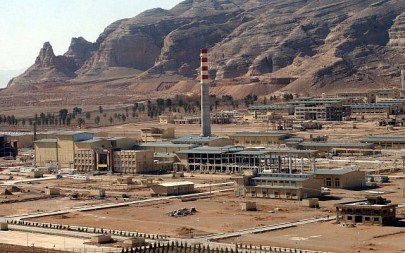
Iran’s uranium conversion facility near Isfahan, which reprocesses uranium ore concentrate into uranium hexafluoride gas, which is then taken to Natanz and fed into the centrifuges for enrichment, March 30, 2005. (AP/Vahid Salemi)

Iran broke through its stockpile and enrichment limitations to try to pressure Europe to offer it a new deal, more than a year since Trump unilaterally withdrew America from the accord. But so far, European nations have been unable to offer Iran a way to help it sell its oil abroad as it faces strict US sanctions.

Meanwhile Monday, demonstrators gathered in front of the former US Embassy in downtown Tehran as state television aired footage from other cities across the country making the anniversary.

“Thanks to God, today the revolution’s seedlings have evolved into a fruitful and huge tree that its shadow has covered the entire” Middle East, said Gen. Abdolrahim Mousavi, the commander of the Iranian army.

However, this year’s commemoration of the embassy seizure comes as Iran’s regional allies in Iraq and Lebanon face widespread protests. The Iranian Consulate in Karbala, Iraq, a holy city for Shiites, saw a mob attack it overnight. Three protesters were killed during the attack and 19 were wounded, along with seven policemen, Iraqi officials said.

Trump retweeted posts by Saudi-linked media showing the chaos outside the consulate. The violence comes after the hard-line Keyhan newspaper in Iran reiterated a call for demonstrators to seize US and Saudi diplomatic posts in Iraq in response to the unrest.

The collapse of the nuclear deal coincided with a tense summer of mysterious attacks on oil tankers and Saudi oil facilities that the US blamed on Iran. Tehran denied the allegation, though it did seize oil tankers and shoot down a US military surveillance drone.

The US has increased its military presence across the Mideast, including basing troops in Saudi Arabia for the first time since the aftermath of the September 11, 2001 terror attacks. Both Saudi Arabia and the neighboring United Arab Emirates are believed to be talking to Tehran through back channels to ease tensions


Russia deactivates its S-400 batteries at the Khmeimim air base – and all Syria – DEBKAfile

Posted November 4, 2019 by Joseph Wouk
Categories: Uncategorized

Source: Russia deactivates its S-400 batteries at the Khmeimim air base – and all Syria – DEBKAfile

Russia’s advanced S-400 air defense batteries at the Khmeimim Air Base in Syria have been quietly “deactivated,” according to Russian military sources and publications. This has not been officially confirmed or denied. One source said that today, not a single S-400 is operational anywhere in Syria.

Three months ago, DEBKAfile’s military sources cited the Syrian military as reporting that the Russian S-400s posted outside the important Syrian military compound at Masyaf in the west had been “deactivated” indicating the shutdown of their radar systems.

Our sources note that, although Russian S-300 and S-400 air defense systems have been deployed in Syria for the past four years, they have never been used against the assaults mounted by Israel’s Israeli Air Force against Iranian military targets. All the same, in spite of the coordination and understandings forged between Russia and Israel, Israeli air crews have always taken the presence of these advanced weapons into careful consideration whenever they flew into Syrian air space.
The reason for the Russian decision to switch off its air defense is a matter of speculation, whether because of budgetary pressure or perhaps preparatory to the evacuation of all those systems from Syria. Another theory is that Moscow has been so successful in marketing its S-400s to foreign countries, that it has run short of them for Russia’s own fronts, such as the Black Sea or opposite the Baltic states.

This week, for the first time since the Russians military intervention in the Syrian war began in 2015, an American B-52 strategic bomber flew over Khmeimim and then headed down the Syrian coast before turning east and landing in Jordan. Our sources report that the lone US bomber was likely on a mission to test Russia’s reported neutralization of its state-of-the-art defense systems in Syria.


Netanyahu: We have no better friends than Christian

Posted November 3, 2019 by Joseph Wouk
Categories: Uncategorized