Iran now enriching uranium at 5%, claims it can go up to 60% 

Posted November 10, 2019 by Joseph Wouk
Categories: Uncategorized

Source: Iran now enriching uranium at 5%, claims it can go up to 60% | The Times of Israel

Work breaches 3.67% limit established in 2015 deal; Tehran doubles down on claim that security check last week exposed a UN inspector’s tie to possible sabotage of the program
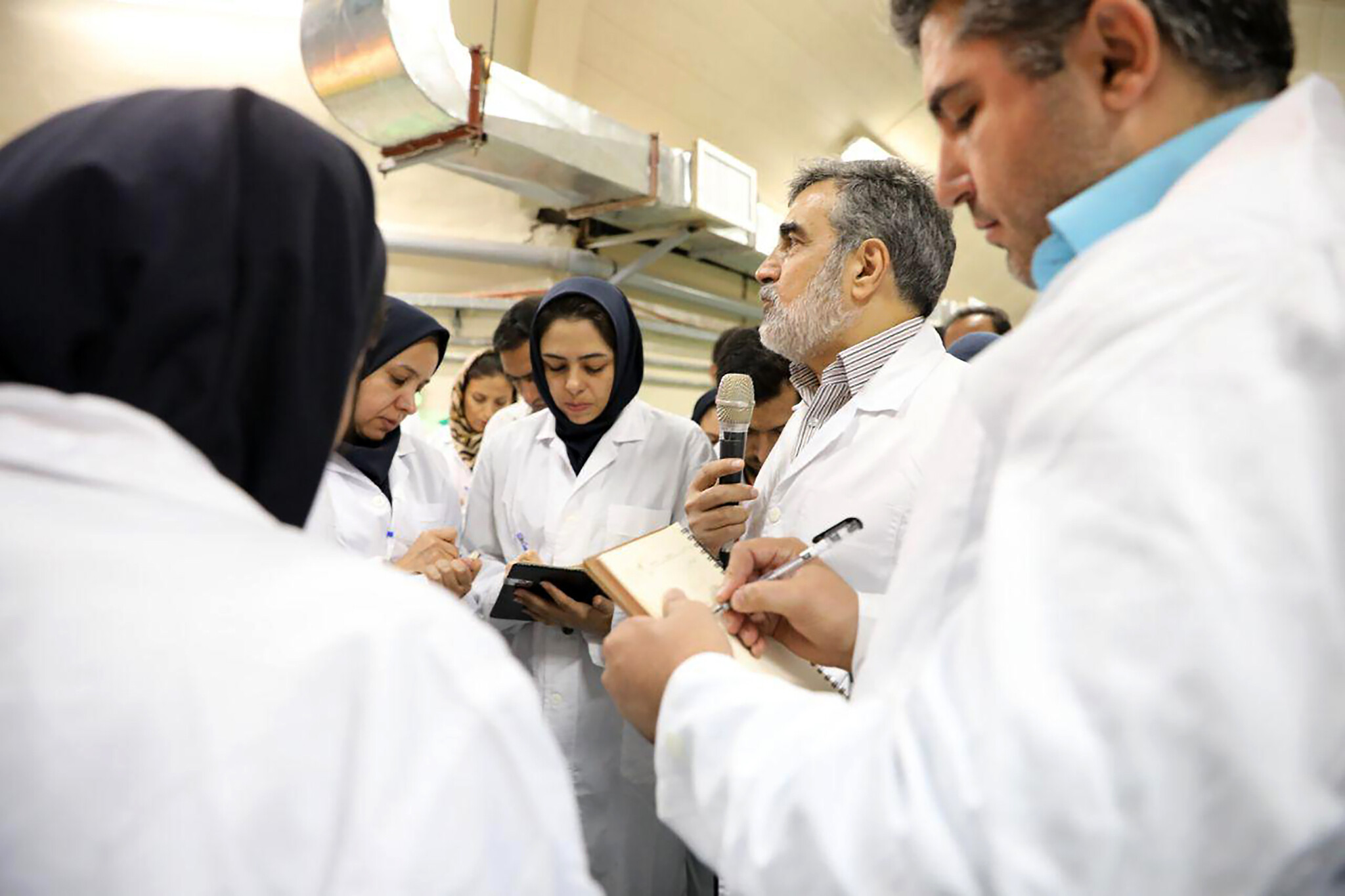
In this photo released by the Atomic Energy Organization of Iran, spokesman of the organization Behrouz Kamalvandi, center, briefs the media while visiting Fordo nuclear site near Qom, south of Tehran, Iran, Nov. 9, 2019 (Atomic Energy Organization of Iran via AP)

In this photo released by the Atomic Energy Organization of Iran, spokesman of the organization Behrouz Kamalvandi, center, briefs the media while visiting Fordo nuclear site near Qom, south of Tehran, Iran, Nov. 9, 2019 (Atomic Energy Organization of Iran via AP)

Iran said on Saturday that it is now enriching uranium to five percent and has a capacity for up to 60 percent, after a series of steps back from its commitments under the 2015 nuclear accord with major powers.

Tehran also slammed Israeli Prime Minister Benjamin Netanyahu, saying it was his “biggest lie” that Iran seeks nuclear weapons.

Atomic Energy Organization of Iran spokesman Behrouz Kamalvandi said at a press conference in Tehran that the organization has “the possibility to produce 5%, 20%, and 60%, and has this capacity,” adding that currently “the need is for 5%.”

Kamalvandi also said “Netanyahu’s biggest lie is that Iran is after nuclear weapons. Iran does not need nuclear weapons given the power balance in the region,” according to the Fars news agency.

“Of course, Iran enjoys nuclear capability and technology and there is no doubt about that. But these allegations by the Zionist regime are aimed at concealing its own ugly face,” he added. Israel has a stance of ambiguity — neither confirming nor denying the existence of nuclear weapon capabilities.

The 2015 deal set a 3.67% limit for uranium enrichment but Iran announced it would no longer respect it after Washington unilaterally abandoned the agreement last year and reimposed crippling sanctions.

“Based on our needs and what we have been ordered, we are currently producing five percent,” Kamalvandi said.
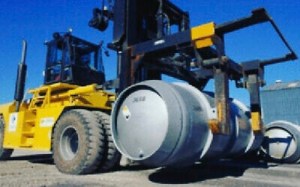
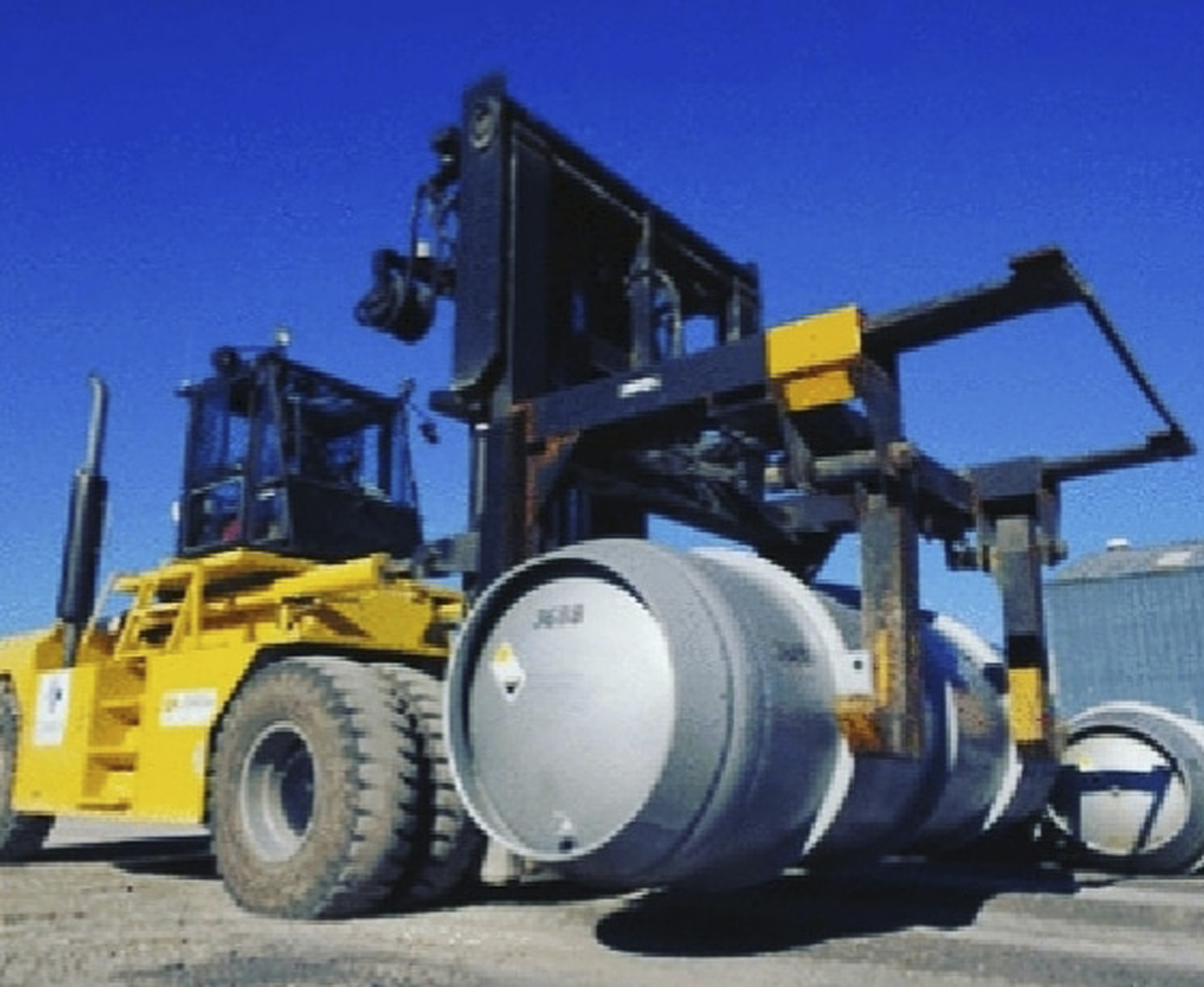
In this photo released by the Atomic Energy Organization of Iran on November 6, 2019, a forklift carries a cylinder containing uranium hexafluoride gas for the purpose of injecting the gas into centrifuges in Iran’s Fordo nuclear facility. (Atomic Energy Organization of Iran via AP)

Uranium enrichment is the sensitive process that produces fuel for nuclear power plants but also, in highly extended form, the fissile core for a warhead.

The current five percent level exceeds the limit set by the accord but is less than the 20% Iran had previously operated and far less than the 90% level required for a warhead. However, once Iran reaches 20% purity it is a relatively short technical jump to reach 90% enrichment.

In its fourth step away from the agreement, Iran resumed enrichment at the Fordo plant south of Tehran on Thursday, with engineers feeding uranium hexafluoride gas (UF6) into the plant’s mothballed enrichment centrifuges.

Iran was already enriching uranium at another plant in Natanz.

Tehran emphasizes the measures it has taken are swiftly reversible if the remaining parties to the deal — Britain, China, France, Germany and Russia — find a way to get around US sanctions.

On July 1, Iran said it had increased its stockpile of enriched uranium to beyond a 300-kilogram (661 lb) maximum set by the deal, and a week later, it announced it had exceeded the enrichment cap.

The third move had it firing up advanced centrifuges on September 7 to enrich uranium faster and to higher levels.

Kamalvandi also said Saturday Iran is prepared, if necessary, to release footage of an incident with a UN nuclear inspector last week that led to it canceling her accreditation.

Kamalvandi said that a check at the entrance gate to the Natanz uranium enrichment plant “triggered the alarm multiple times, showing [the inspector] was either contaminated with certain materials or had them on her.”
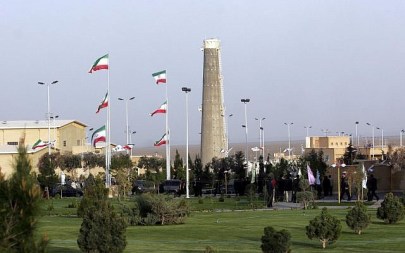
Iran’s nuclear enrichment facility in Natanz, 300 kilometers (186 miles) south of capital Tehran, Iran, April, 9, 2007. (Hasan Sarbakhshian/ AP/File)

He did not specify what the materials were or whether they had actually been found in her possession.

Kamalvandi said that Iran’s report on the incident to the International Atomic Energy Agency had convinced everyone but “the US, the Zionist regime and some Persian Gulf countries.”

“We’ve announced that, if needed, we will even present the footage of this,” he told a news conference, noting that Iran’s “bitter experiences” of nuclear sabotage had led to the strict system of checks.

Iran has accused its arch-foes Israel and the United States of mounting a long campaign of sabotage involving the assassination of Iranian engineers and cyber attacks on key facilities.

The IAEA said Thursday that the inspector was briefly prevented from leaving the country, adding that her treatment was “not acceptable.”

Iran’s ambassador to the agency, Kazem Gharib Abadi, denied the inspector was ever detained, saying she was allowed to leave even though an investigation was still ongoing.

US Secretary of State Mike Pompeo accused Iran of “an outrageous and unwarranted act of intimidation,” while the European Union voiced “deep concern” over the incident.

Under a 2015 deal between Iran and major powers that has been undermined by Washington’s withdrawal last year, its nuclear facilities are subject to continuous monitoring by the IAEA.


Neither the US nor Israel knows for sure when Iran will have a nuclear weapon – DEBKAfile

Posted November 8, 2019 by Joseph Wouk
Categories: Uncategorized

Source: Neither the US nor Israel knows for sure when Iran will have a nuclear weapon – DEBKAfile

The predictions of US Secretary of State and Prime Minister Binyamin Netanyahu on Thursday, Nov. 7 that Iran may have a nuclear weapon within a year were more an expression of concern over the reactivation of the under Fordow enrichment site than a forecast based on solid data. The identical one-year prediction was heard in 2012 and nothing was done about it – either by the US or Israel.

It may be said that neither of their intelligence agencies knows for sure when Iran will advance to an operational nuclear capacity – or even where its nukes are to be cached. After all, neither had advance knowledge of Iran’s plan to let loose 25 cruise missiles and exploding drones against Saudi Arabia’s oil fields and processing plant on September 14, until the moment it happened. Can they do better to discover the moment that Iran’s nuclear program is weaponized?

This week, Massimo Aparo, the top inspector of the international nuclear watchdog, the IAEA, summoned a special board meeting to discuss Iran’s failure to level with inspectors on the source of the “man-made and natural uranium particles” found in a secret warehouse in Tehran that was uncovered last year in a daring Israeli Mossad operation to smuggle out Iran’s atomic archive. How many more secret nuclear facilities remain undiscovered in Iran?

The IAEA does not have answers to this any more than the US and Israel. For 15 years, its inspectors have been denied access to an off-limits section of the Parchin military base in central Iran, where too suspicious uranium particles were discovered indicating secret testing of nuclear triggers. Nonetheless, no action was taken then either. The Fordow plant, where extra-fast centrifuges have been put to work on uranium enrichment, was only revealed by underground cells of the Iranian opposition exile movement.

In contrast to an ever-present peril from Iran, a non-existent danger was made much of last week when Netanyahu and some security chiefs commented that Israel was now threatened by Iranian cruise missiles based in Yemen. Had the media who ran the story checked the facts, they would have found that Yemen had stopped firing cruise missiles and exploding drones against Saudi Arabia last year because it no longer possessed those weapons after supplies from Iran had dried up.


2020 potentially ‘unfavorable from security perspective’ – TV7 Israel News 06.11.19 

Posted November 7, 2019 by Joseph Wouk
Categories: Uncategorized


Iran nuke standoff heats up with new IAEA, ship attack disputes

Posted November 7, 2019 by Joseph Wouk
Categories: Uncategorized

Source: Iran nuke standoff heats up with new IAEA, ship attack disputes – Middle East – Jerusalem Post

“We believe that this is an attack organized by one or more states, since two other Iranian flagged [very large] tankers were similarly attacked in the same approximate area.”

BY YONAH JEREMY BOB, TZVI JOFFRE
 NOVEMBER 7, 2019 08:23
Damage is seen on Iranian-owned Sabiti oil tanker sailing in the Red Sea, Oct. 2019

The Iranian nuclear standoff continued to heat-up on Thursday with a special IAEA meeting called to discuss two new Iranian violations of the 2015 nuclear deal and a letter from Iran complaining that not one, but three of its oil tankers have been attacked in the Red Sea.

The special IAEA meeting comes after an IAEA official was temporarily detained and her travel documents seized by the Islamic republic in a shocking violation of international protocol for treatment of its inspectors.

Tehran said that it had concrete suspicions regarding the IAEA official, though it eventually released her.

It was unclear if Iran had apologized for the incident, but the IAEA meeting was expected to issue a sharper rebuke than usual.

In addition, the IAEA special meeting is supposed to address Iran’s failure to explain the discovery of nuclear materials at the Turquzabad site which the Mossad discovered in 2018 and which the IAEA confirmed in February, though it has been slow in discussing the issue publicly.

Also on Thursday, Iran warned that commercial shipping routes in the Red Sea are unsafe and that three of its tankers have been attacked off the coast of Saudi Arabia in the past six months, according to The Wall Street Journal.

The Islamic Republic has only publicly announced one attack on an Iranian tanker in the Red Sea, when they claimed that the Sabiti tanker was hit by two missiles.

Iranian MP Abolfazl Hassanbeigi blamed Israel, the United States and Saudi Arabia for the attack on the Sabiti tanker. None of those countries admitted to the attack, but there were indications from some officials that some combination of the countries had a roll in it to respond to Iranian attacks on US-allies tankers.

“We believe that this is an attack organized by one or more states, since two other Iranian flagged [very large] tankers were similarly attacked in the same approximate area” and with “ similar damages to the ships,” wrote Iran in a letter to the International Maritime Organization about the attacks.

“A major concern in this respect is that the organized and directed pattern of these attacks within a short time and similar locations have rendered the Red Sea as an unsafe route for ships to adopt for their voyages,” added the letter.

The other two Iranian tankers attacked were the Happiness 1 in April and the Helm in August, according to the letter. The first attack occurred before the US ended waivers from sanctions against Iran in May as well as before multiple Saudi and Emirati tankers were targeted by acts of sabotage largely blamed on Iran, according to The Wall Street Journal.

Since the first attack occurred prior to May, the narrative is less clear about how or why the US would have been involved, though it is possible that other complexities could have led to the attack by the countries aligned against Iran or that there was some other cause, such as piracy or even a technical malfunction which Iran is hiding.

It was unclear why Iran was choosing to reveal the other attacks now having kept them quiet.

Possibilities could include Iran has already been embarrassed by the public attack on one of its tankers so there was no longer a reason to try to keep the other incidents quiet or an attempt to rally moral support for its cause by claiming that its attacks on others’ tankers were more of a response than a newly-initiated round of conflict.

Reuters contributed to this report.


As Iran’s Fordo nuclear site goes active again, risks rise 

Posted November 7, 2019 by Joseph Wouk
Categories: Uncategorized

Source: As Iran’s Fordo nuclear site goes active again, risks rise | The Times of Israel

Tehran’s decision to reactivate the secret underground uranium enrichment facility is meant to pressure the US to repeal sanctions, but could potentially provoke an Israeli strike

In this photo released on Wednesday, Nov. 6, 2019 by the Atomic Energy Organization of Iran, a lift truck carries a cylinder containing uranium hexafluoride gas for the purpose of injecting the gas into centrifuges in Iran's Fordo nuclear facility. Iran will start injecting uranium gas into over a thousand centrifuges at a fortified nuclear facility built inside a mountain, the country's president announced Tuesday in Tehran's latest step away from its atomic accord with world powers since President Donald Trump withdrew from the deal over a year ago. (Atomic Energy Organization of Iran via AP)

In this photo released on Wednesday, Nov. 6, 2019 by the Atomic Energy Organization of Iran, a lift truck carries a cylinder containing uranium hexafluoride gas for the purpose of injecting the gas into centrifuges in Iran’s Fordo nuclear facility. Iran will start injecting uranium gas into over a thousand centrifuges at a fortified nuclear facility built inside a mountain, the country’s president announced Tuesday in Tehran’s latest step away from its atomic accord with world powers since President Donald Trump withdrew from the deal over a year ago. (Atomic Energy Organization of Iran via AP)

DUBAI, United Arab Emirates (AP) — Ten years ago while flanked by the leaders of Britain and France, then-President Barack Obama revealed to the world that Iran had built a “covert uranium enrichment facility” amid tensions with the Islamic Republic over its nuclear program.

A decade later, Iran’s Fordo facility is back in the news as Iran prepared Wednesday to inject uranium gas into the more than 1,000 centrifuges there, to pressure the world after US President Donald Trump withdrew the US from Tehran’s nuclear deal.

The resumption of nuclear activity at Fordo pushes the risk of a wider confrontation involving Iran even higher after months of attacks across the Middle East that the US blames on Tehran. Israel, which has carried out pre-emptive airstrikes on its adversaries’ nuclear programs in the past, also is repeating a warning that it will not allow Iran to have atomic weapons.

Tehran, which maintains its program is peaceful, is gambling that its own maximum pressure campaign will be enough to push Europe to offer it a way to sell Iranian crude oil abroad despite US sanctions

Activity at Fordo, just north of the Shiite holy city of Qom, remains a major concern for nuclear nonproliferation experts. Buried under a mountain and protected by anti-aircraft batteries, Fordo appears designed to withstand airstrikes. Its construction began at least in 2007, according to the International Atomic Energy Agency, although Iran only informed the UN nuclear watchdog about the facility in 2009.

“As a result of the augmentation of the threats of military attacks against Iran, the Islamic Republic of Iran decided to establish contingency centers for various organizations and activities,” Iran wrote in a letter to the IAEA.

Satellite images, however, suggest construction at the Fordo site as early as between 2002 and 2004, the IAEA said. In August 2002, Western intelligence services and an Iranian opposition group had revealed another covert nuclear site at the central city of Natanz. Iran also “carried out activities relevant to the development of a nuclear explosive device” in a “structured program” through the end of 2003, the IAEA has said.

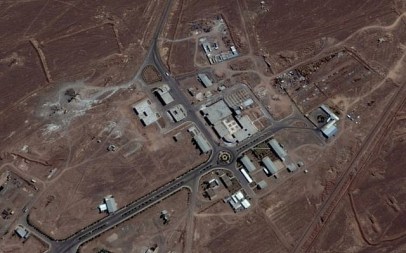
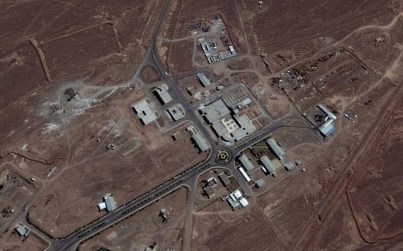
This Nov. 1, 2019, satellite image provided by provided by Maxar Technologies shows the Fordo nuclear facility, just north of the holy city of Qom in Iran. The resumption of activity at Fordo pushes the risk of a wider confrontation involving Iran even higher after months of attacks across the Middle East that the US blames on Tehran. (Satellite image ©2019 Maxar Technologies via AP)

While Natanz is large enough for industrial-scale enrichment, Fordo is smaller and can hold only 3,000 centrifuges. That led analysts to suspect Fordo could be used as a facility to divert and rapidly enrich low-grade uranium, although the highest reported enrichment reached there went to 20%.

“The size and configuration of this facility is inconsistent with a peaceful program,” Obama said at a 2009 Group of 20 meeting held in Pittsburgh in announcing the facility to the world.

Iran’s 2015 nuclear deal with world powers saw the country agree to stop enrichment at Fordo and convert it to a research facility. However, President Hassan Rouhani’s announcement Tuesday that uranium gas would be injected into centrifuges there again makes it an active nuclear site.

The IAEA continues to monitor Iran’s nuclear program through surveillance cameras and site visits. Tehran also insists it will keep enriching up to 4.5%, which remains far below weapons-grade levels of 90%.

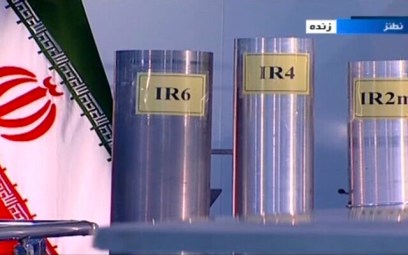
In this June 6, 2018 frame grab from the Islamic Republic Iran Broadcasting, IRIB, state-run TV, three versions of domestically-built centrifuges are shown in a live TV program from Natanz, an Iranian uranium enrichment plant, in Iran. (IRIB via AP, File)

Resuming work at Fordo has worried Israel, Iran’s regional archenemy.

“We will never let Iran develop nuclear weapons,” Israeli Prime Minister Benjamin Netanyahu said in a speech Tuesday night. “This is not only for our security and our future; it’s for the future of the Middle East and the world.”

Israel, which has its own undeclared nuclear weapons program, has struck first in the past to stop its enemies from obtaining atomic weapons. In 1981, Israeli warplanes bombed a nuclear reactor being built by Iraqi dictator Saddam Hussein. An Israeli airstrike similarly destroyed a secret Syrian nuclear reactor in 2007.

The Obama administration convinced Israel before the 2015 nuclear deal to hold off on conducting such a strike on Iran. It remains unclear how Trump would respond to such an Israeli plan, though he has roundly supported Netanyahu in the past.

Any potential strike also faces the challenge of actually reaching the facility. Fordo sits an estimated 80 meters (260 feet) under rock and soil. That would require a weapon like a US “bunker-buster” bomb, a 30,000-pound explosive known as the Massive Ordnance Penetrator. Israel is not known to have a similarly powerful conventional weapon.

An F-16I fighter jet of the Israeli Air Force’s 119th Squadron prepares to take off during an operation to bomb a Syrian nuclear reactor in Deir Ezzor on September 5, 2007. (Israel Defense Forces)

There’s also the possibility the US and Israel could reach the facility another way. The Stuxnet computer virus, widely believed to be a joint US-Israeli creation, caused thousands of Iranian centrifuges to destroy themselves in the late 2000s.

The one route that doesn’t seem likely at the moment to resolve the growing crisis over Fordo is diplomacy. Europe so far has been unable to offer Iran any way around US sanctions, despite a planned trade mechanism and a floated French offer of a $15 billion line of credit. Meanwhile, the Trump administration continues its sanctions campaign against Tehran, which on Monday saw it add members of Supreme Leader Ayatollah Ali Khamenei’s inner circle. Iran already says it will take further steps away from the deal in January.

“The decision to expand nuclear activities at Fordo is Iran’s most serious violation of the nuclear deal to date,” the Eurasia Group said. “”If it does not sense meaningful pushback from the international community, there is little reason to doubt it will continue to push the envelope further in January.”


Joint Medical Drill Boosts Israel’s Ties with Nato 

Posted November 7, 2019 by Joseph Wouk
Categories: Uncategorized


The Lebanon Protests: Views from Beirut and Policy Implications

Posted November 7, 2019 by Joseph Wouk
Categories: Uncategorized


As Iran expands enrichment, Netanyahu vows it will never have nukes

Posted November 6, 2019 by Joseph Wouk
Categories: Uncategorized

Source: As Iran expands enrichnt, Netanyahu vows it will never have nukes | The Times of Israel

Iran seeks to ‘envelop and destroy Israel,’ PM warns after Rouhani announces latest violation of 2015 nuclear deal and restart of processing uranium at underground complex

Prime Minister Benjamin Netanyahu speaks at a KKL-JNF hosted a gala dinner at the Waldorf Astoria hotel in Jerusalem on November 05, 2019. (Marc Israel Sellem/POOL)

Prime Minister Benjamin Netanyahu vowed Tuesday to “never let Iran develop nuclear weapons” after Tehran announced it was expanding its uranium enrichment efforts in a further breach of the 2015 nuclear deal.

‏”Iran expands its aggression everywhere. It seeks to envelop Israel. It seeks to threaten Israel. It seeks to destroy Israel,” Netanyahu said at an event in Jerusalem’s Waldorf Astoria Hotel.

“We fight back,” he added.

“And I also want to say, given Iran’s efforts to expand its nuclear weapons program, expand its enrichment of uranium for making atomic bombs, I repeat here once again: We will never let Iran develop nuclear weapons. This is not only for our security and our future; it’s for the future of the Middle East and the world.”

Netanyahu spoke just hours after Iran’s President Hassan Rouhani announced that Tehran will begin injecting uranium gas into 1,044 centrifuges located at the heavily fortified Fordo facility in Iran’s Qom Province.

A satellite image from September 15, 2017, of the Fordo nuclear facility in Iran. (Google Earth)

The move marks Tehran’s latest step away from its nuclear deal with world powers since US President Donald Trump withdrew from the accord over a year ago.

The development is significant as the centrifuges previously spun empty, without gas injection, under the accord. It also increases pressure on European nations that remain in the accord, which has all but collapsed.

A statement carried in Iranian media later Tuesday said enrichment would go to five percent beginning Wednesday, when the centrifuges at Fordo would be injected with uranium gas.

Rouhani’s remarks, carried live on Iranian state television, came a day after Tehran’s nuclear program chief said the country had doubled the number of advanced IR-6 centrifuges in operation.

The head of the Atomic Energy Organization of Iran, Ali Akbar Salehi, said the enrichment increase would be carried out in front of inspectors from the International Atomic Energy Agency (IAEA), the United Nations’ nuclear watchdog now monitoring Iran’s compliance with the deal, according to Iran’s Mehr news.

Iran’s President Hassan Rouhani gives a press conference in Tehran, Iran, October 14, 2019. (Ebrahim Noroozi/AP)

“Salehi said that it had been decided that there will not be [20%] uranium enrichment at Fordo for the time being,” the Iranian outlet reported.

Under the 2015 nuclear accord, Iran was limited to enriching uranium up to 3.67%, which is enough for peaceful pursuits but is far below weapons-grade level of 90%. This summer, it began surpassing this level, in violation of the agreement, up to 4.5%, as a form of retaliation toward the United States, which has been steadily imposing sanctions on Iran since the White House pulled out of the nuclear deal last year.

There was no immediate reaction from the IAEA to Tuesday’s announcements.

The European Union on Monday called on Iran to return to the deal, while the White House sanctioned members of Supreme Leader Ayatollah Ali Khamenei’s inner circle as part of its maximalist campaign against Tehran. Britain’s Foreign Minister Dominic Raab said Iran’s reduced compliance with the nuclear deal “pose a risk to our national security.”

He added: “We want to find a way forward through constructive international dialogue but Iran needs to stand by the commitments it made and urgently return to full compliance.”

In this June 6, 2018 frame grab from the Islamic Republic Iran Broadcasting, IRIB, state-run TV, three versions of domestically-built centrifuges are shown in a live TV program from Natanz, an Iranian uranium enrichment plant, in Iran (IRIB via AP)

France, too, urged Iran to reverse course. “We urge Iran to go back on its decisions which contradict the accord,” the French foreign ministry said.

Rouhani stressed the steps taken so far, including going beyond the deal’s enrichment and stockpile limitations, could be reversed if Europe offers a way for it to avoid US sanctions choking off its crude oil sales abroad.

“We should be able to sell our oil,” Rouhani said. “We should be able to bring our money” into the country.

The centrifuges at Fordo are IR-1s, Iran’s first-generation centrifuges. The nuclear deal let those at Fordo to spin without uranium gas, while allowing up to 5,060 at its Natanz facility to enrich uranium.

A centrifuge enriches uranium by rapidly spinning uranium hexafluoride gas. An IR-6 centrifuge can produce enriched uranium 10 times faster than an IR-1, Iranian officials say.

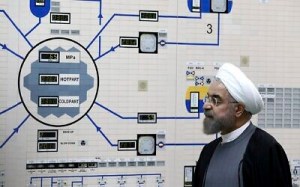
In this January 13, 2015, file photo released by the Iranian President’s Office, President Hassan Rouhani visits the Bushehr nuclear power plant just outside of Bushehr, Iran (AP Photo/Iranian Presidency Office, Mohammad Berno)

Iranian scientists also are working on a prototype called the IR-9, which works 50 times faster than the IR-1, Salehi said Monday.

Tehran has gone from producing some 450 grams (1 pound) of low-enriched uranium a day to 5 kilograms (11 pounds), Salehi said. Iran now holds over 500 kilograms (1,102 pounds) of low-enriched uranium, Salehi said. The deal had limited Iran to 300 kilograms (661 pounds).

The collapse of the nuclear deal coincided with a tense summer of mysterious attacks on oil tankers and Saudi oil facilities that the US blamed on Iran. Tehran denied the allegation, though it did seize oil tankers and shoot down a US military surveillance drone.

Iran has regularly threatened to destroy Israel, and has developed ballistic missiles believed in the West to be intended to carry nuclear warheads in the future.

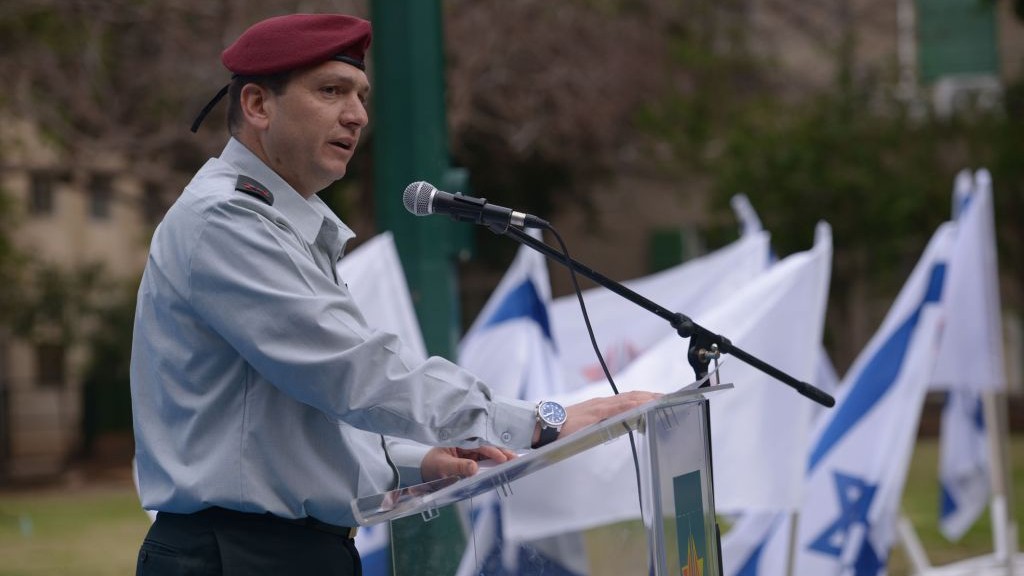
File: Maj. Gen. Aharon Haliva, head of the IDF’s Operations Directorate, in an undated photograph. (Israel Defense Forces)

In a leaked recording Tuesday, a senior Israel Defense Forces general was heard warning Israeli treasury officials that Iran could inflict heavy damage if it chooses to attack Israel, and asking for a budget increase for the army to counter the threat.

“There are Iranian Quds forces in the Golan Heights, and that’s not fear-mongering, they’re there,” head of IDF Operations Maj. Gen. Aharon Haliva can be heard saying in the remarks carried by the Kan public broadcaster.

“All signs are indicating that…2020 has the potential to be an unfavorable year from a security perspective,” he said, noting Iran’s expansion of its missile capabilities in recent years and their recent use against Saudi oil facilities.


Iran starts injecting uranium gas into Fordo centrifuges, breaking nuke deal

Posted November 6, 2019 by Joseph Wouk
Categories: Uncategorized

Source: Iran starts injecting uranium gas into Fordo centrifuges, breaking nuke deal | The Times of Israel

IAEA inspectors on hand for latest pullback from JCPOA, as Fordo is converted from research center back into active nuclear facility with enrichment capabilities

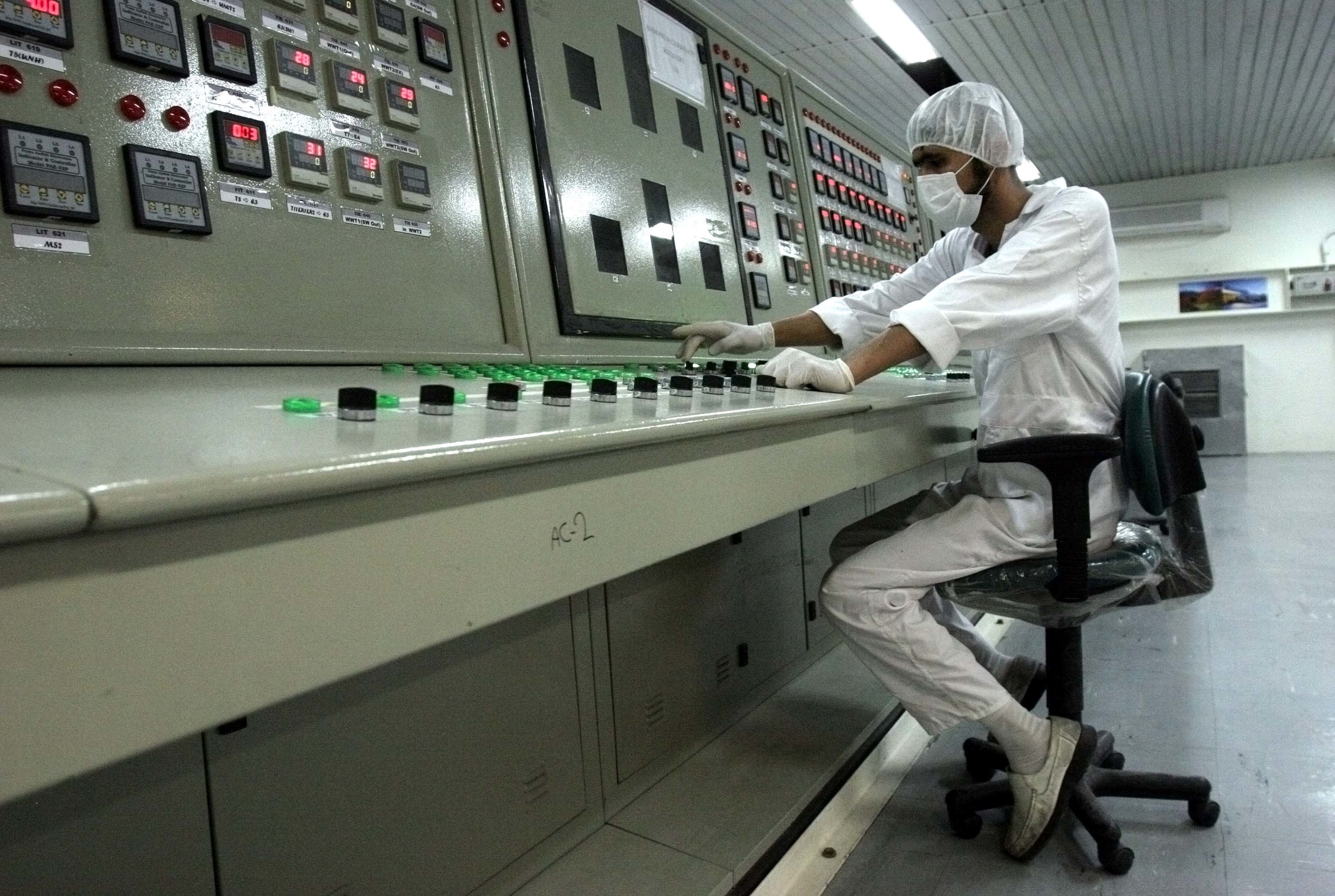
A technician at the Uranium Conversion Facility just outside the city of Isfahan, Iran, 255 miles (410 kilometers) south of the capital Tehran, February 3, 2007. (AP/Vahid Salemi/File)

A technician at the Uranium Conversion Facility just outside the city of Isfahan, Iran, 255 miles (410 kilometers) south of the capital Tehran, February 3, 2007. (AP/Vahid Salemi/File)

Iran began inserting uranium gas into centrifuges at the Fordo nuclear facility, state television announced Wednesday, marking its latest step away from the nuclear deal.

Iranian state media said uranium hexafluoride gas was injected into advanced centrifuges at the Fordo nuclear facility Wednesday, a day after Iran announced the move. It said inspectors from the International Atomic Energy Agency were on hand.

As part of the 2015 accord with world powers limiting its nuclear program, Iran was barred from enriching uranium at Fordo, which was converted to a research center.

Iranian President Hassan Rouhani, who announced the move Tuesday, confirmed on Twitter that enrichment activity had restarted at Fordo, converting the facility back into an active enrichment center.

Hassan Rouhani

@HassanRouhani

Iran’s 4th step in reducing its commitments under the JCPOA by injecting gas to 1044 centrifuges begins today. Thanks to US policy and its allies, Fordow will soon be back to full operation. https://twitter.com/HassanRouhani/status/1126018907502936065 

Hassan Rouhani

@HassanRouhani

Starting today, Iran does not keep its enriched uranium and produced heavy water limited. The EU/E3+2 will face Iran’s further actions if they can not fulfill their obligations within the next 60 days and secure Iran’s interests. Win-Win conditions will be accepted.

A centrifuge enriches uranium by rapidly spinning uranium hexafluoride gas.

Since the United States pulled out of the nuclear deal last year and imposed tough sanctions, Iran has taken a number of steps to curb its adherence to the international agreement in a bid to receive economic relief from the European signatories to the pact.

“Iran has taken its fourth step to decrease its nuclear commitments to the deal in reaction to the increased US pressure and inactivity of European parties to the deal to save it,” Iran’s state TV said.

A satellite image from September 15, 2017, of the Fordo nuclear facility in Iran. (Google Earth)

Reacting to Iran’s announcement Tuesday it would resume work at Fordo, the US accused Tehran of “nuclear extortion,” while Prime Minister Benjamin Netanyahu repeated his vow to prevent the Islamic Republic from acquiring nuclear weapons.

European Union spokeswoman Maja Kocijancic described the bloc as “concerned” by Iran’s decision. US State Department spokeswoman Morgan Ortagus decried the move, saying Iran originally built Fordo as a “fortified, underground bunker in which to conduct secret uranium enrichment work.”

“Iran has no credible reason to expand its uranium enrichment program, at the Fordo facility or elsewhere, other than a clear attempt at nuclear extortion that will only deepen its political and economic isolation,” Ortagus said.

Fordo sits some 25 kilometers (15 miles) northeast of Qom, a Shiite holy city and the site of a former ammunition dump. Shielded by the mountains, the facility also is ringed by anti-aircraft guns and other fortifications. It is about the size of a football field, large enough to house 3,000 centrifuges, but small and hardened enough to lead US officials to suspect it had a military purpose.

Iran state TV airs images of Russian-made S-300 long-range missiles arriving at the Fordo nuclear site in central Iran, August 28, 2016. (Screenshot/Press TV)

Iran acknowledged Fordo’s existence in 2009 amid a major pressure campaign by Western powers over Tehran’s nuclear program. The West feared Iran could use its program to build a nuclear weapon; Iran insists the program is for peaceful purposes.

The centrifuges at Fordo are first-generation IR-1s. The nuclear deal allows those at Fordo to spin without uranium gas, while allowing up to 5,060 IR-1s at the Natanz facility to enrich uranium.

Rouhani’s announcement came after Ali Akhbar Salehi, the head of the Atomic Energy Organization of Iran, said Monday that Tehran had doubled the number of advanced IR-6 centrifuges operating in the country to 60.

An IR-6 centrifuge can produce enriched uranium 10 times faster than an IR-1, Iranian officials say.

In this January 13, 2015, file photo released by the Iranian President’s Office, President Hassan Rouhani visits the Bushehr nuclear power plant just outside of Bushehr, Iran (AP Photo/Iranian Presidency Office, Mohammad Berno)

As of now, Iran is enriching uranium up to 4.5%, in violation of the accord’s limit of 3.67%. Enriched uranium at the 3.67% level is enough for peaceful pursuits but is far below weapons-grade levels of 90%. At the 4.5% level, it is enough to help power Iran’s Bushehr reactor, the country’s only nuclear power plant. Prior to the atomic deal, Iran only reached up to 20%.

Tehran has gone from producing some 450 grams (1 pound) of low-enriched uranium a day to 5 kilograms (11 pounds), Salehi said. Iran now holds over 500 kilograms (1,102 pounds) of low-enriched uranium, Salehi said. The deal had limited Iran to 300 kilograms (661 pounds).

Experts described Iran’s announcement Tuesday as a major tear to the unraveling nuclear deal.

“They’re getting closer and closer to muscle. They aren’t cutting fat right now,” said Richard Nephew, a scholar at Columbia University who worked on the deal while at the State Department.

Rouhani on Tuesday did not say whether the centrifuges would produce enriched uranium. He stressed the steps taken so far, including going beyond the deal’s enrichment and stockpile limitations, could be reversed if Europe offers a way for it to avoid US sanctions choking off its crude oil sales abroad. However, a European trade mechanism has yet to take hold and a French-proposed $15 billion line of credit has not emerged.

“We should be able to sell our oil,” Rouhani said. “We should be able to bring our money” into the country.


Asking for budget increase, IDF general warns of new Iranian threats — report 

Posted November 6, 2019 by Joseph Wouk
Categories: Uncategorized

Source: Asking for budget increase, IDF general warns of new Iranian threats — report | The Times of Israel

In recording, operations chief says Tehran could try to attack Israel in same way it hit Saudi Arabia in September, scoffs at insinuation army is ‘fear-mongering’ to get funding

Maj. Gen. Aharon Haliva during a ceremony in June 2014. (Israel Defense Forces)

Maj. Gen. Aharon Haliva during a ceremony in June 2014. (Israel Defense Forces)

An IDF general on Tuesday warned that Iran posed a growing threat to Israel through its forces throughout the region, as he asked Finance Ministry officials for a budget increase to counter this Iranian menace.

“There are Iranian Quds forces in the Golan Heights, and that’s not fear-mongering, they’re there,” the head of IDF Operations, Maj. Gen. Aharon Haliva, could be heard saying in the remarks carried by the Kan public broadcaster on Tuesday night.

“All signs indicate that… 2020 has the potential to be an unfavorable year from a security perspective,” the army general said.

Haliva mentioned the attack on Saudi oil facilities in September as an example of what Iranian forces are capable of.

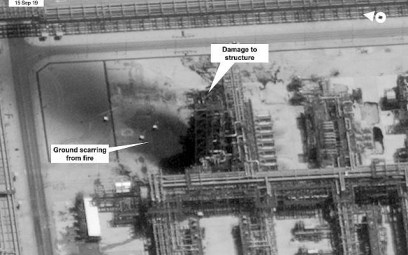
This image provided on Sept. 15, 2019, by the US government and DigitalGlobe and annotated by the source, shows damage to the infrastructure at at Saudi Aramco’s Kuirais oil field in Buqyaq, Saudi Arabia (US government/Digital Globe via AP)

“It was a sophisticated attack that managed to evade both US and Saudi defenses… whoever says that it can’t happen to us isn’t a professional,” he said.

In the September 14 strike, a combination of cruise missiles and attack drones were used in a devastating attack on two of Saudi Arabia’s Aramco petroleum facilities, reportedly cutting the country’s oil output in half.

Haliva made his remarks on Tuesday to the Finance Ministry’s Budget Department.

The general also noted that Iran has expanded its operations against Israel, creating a new front in Iraq and further developing its proxy Hezbollah’s capabilities in Lebanon.

“You need to know how to manage this,” he said. “Our job is to allow [a normal] lifestyle as it is, just like this.”

Israel has carried out hundreds of strikes against Iranian and Iranian-backed forces in Syria and Iraq.

Prime Minister Benjamin Netanyahu echoed these concerns later Tuesday.

‏”Iran expands its aggression everywhere. It seeks to envelop Israel. It seeks to threaten Israel. It seeks to destroy Israel,” Netanyahu said at an event in Jerusalem’s Waldorf Astoria Hotel.

“We fight back,” he added.

The military has been pushing for a budget increase to pay for an expansive and expensive new plan to rejuvenate the IDF, known as Momentum, or Tenufa in Hebrew.

The multi-year plan will see huge investments in developing the IDF’s arsenals, including increasing its collection of mid-sized drones, obtaining large numbers of precision-guided missiles from the United States and purchasing additional air defense batteries.

It’s projected to come with a significant price tag — a plan to provide front-line forces with improved weaponry is, alone, expected to cost hundreds of millions of shekels, according to the IDF — however a budget increase has yet to be approved by the Finance Ministry and cannot be approved until a government is formed.

In recent weeks, Israeli military officials have increasingly warned of a threat posed by Iran, which the IDF believes has been emboldened by a general withdrawal from the Middle East by the United States.

“In the northern and southern arenas the situation is tense and precarious and poised to deteriorate into a conflict despite the fact that our enemies are not interested in war. In light of this, the IDF has been in an accelerated process of preparation,” IDF Chief of Staff Aviv Kohavi said last month.

Times of Israel staff contributed to this report.