MSNBC: Obama ‘stunning’ in vilifying of deal opponents, Washington Free Beacon via You Tube, August 10, 2015
The profs who love Obama’s Iran deal, Front Page Magazine, Cinnamon Stillwell, August 10, 2015
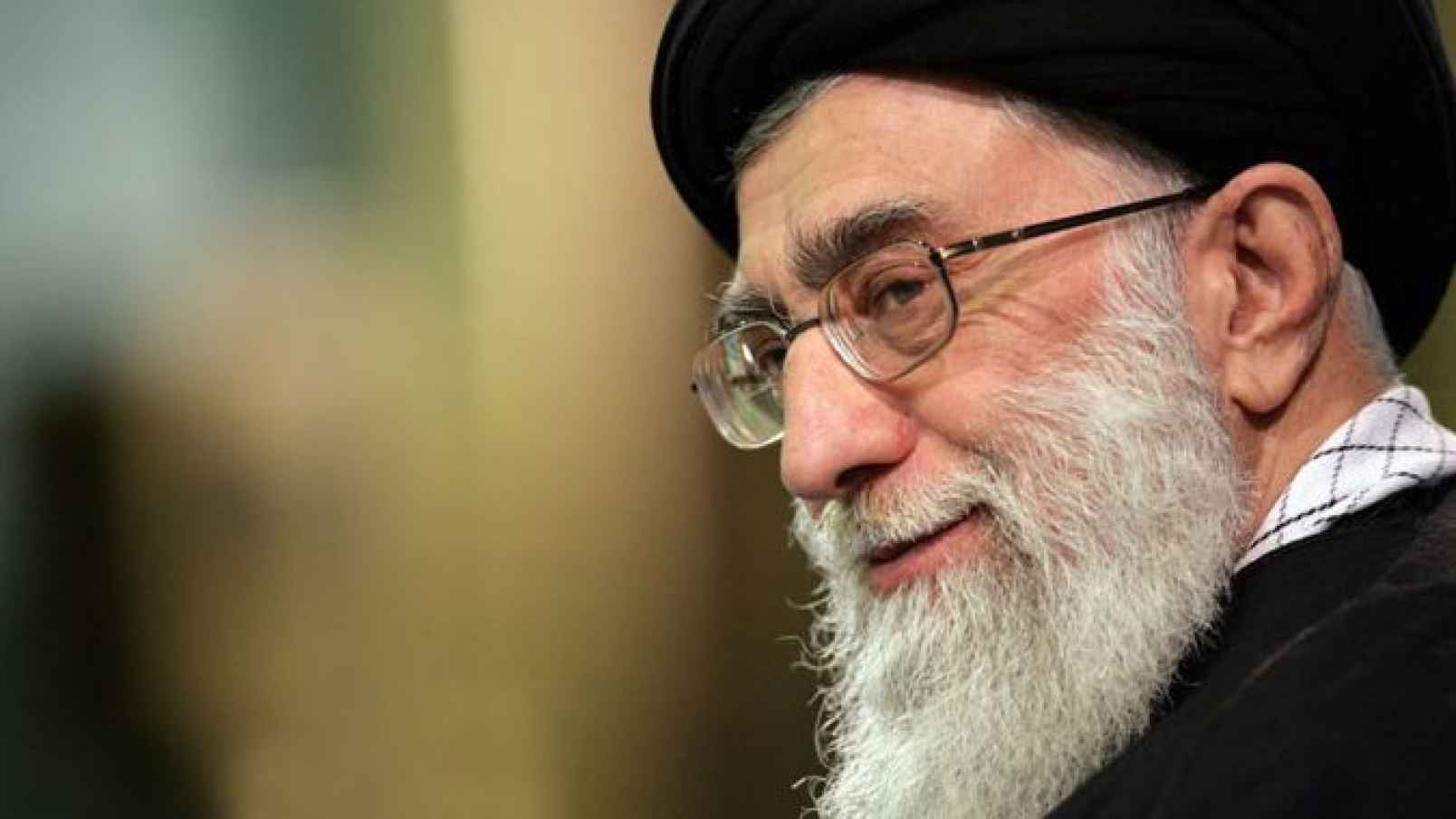
Meet the Mullahs’ academic cheerleaders.
Who supports the Obama administration’s increasingly unpopular Joint Comprehensive Plan of Action (JCPOA) aimed ostensibly at curbing Iran’s nuclear program? Many of its strongest proponents come from the field of Middle East studies, which boasts widespread animus towards the U.S. and Israel along with a cadre of apologists for the Iranian regime determined to promote ineffectual diplomacy at all costs.
University of California, Riverside creative writing professor Reza Aslan concedes that his generation of Iranian-Americans “feel[s] far removed from the political and religious turmoil of the Iranian revolution” before falling in line with the Iranian regime’s propaganda: the deal will “empower moderates in Iran, strengthen Iranian civil society and spur economic development,” and create “an Iran that is a responsible actor on the global stage, that respects the rights of its citizens and that has warm relations with the rest of the world.” “Warm relations” are the least likely outcome of the increase in funding for Iran’s terrorist proxies Hamas and Hezbollah that even President Obama admits will follow the easing of sanctions.
Flynt Leverett, an international relations professor at Pennsylvania State University, whitewashes these terrorist groups as “constituencies” and “communities” which the Iranian regime “help[s] organize in various ways to press their grievances more effectively,” effective terrorism being, for Leverett, a laudable goal. Characterizing the regime as “a rising regional power” and “legitimate political order for most Iranians,” he urges the U.S., through the JCPOA, to “come to terms with this reality.”
Diablo Valley College Middle East studies instructor Amer Araim’s seemingly wishful thinking is equally supportive of Tehran’s line: “it is sincerely hoped that these funds will be used to help the Iranian people develop their economy and to ensure prosperity in that country.” Meanwhile, Hooshang Amirahmadi, an Iranian-American international relations professor at Rutgers University, attempts to legitimize the regime by delegitimizing the sanctions: “The money that will flow to Iran under this deal is not a gift: this is Iran’s money that has been frozen and otherwise blocked.”
Others deny the Iranian regime intends to build a nuclear bomb. University of Michigan history professor Juan Cole has “long argued that [Iran’s leader Ali] Khamenei is sincere about not wanting a nuclear weapon” because of his “oral fatwas or legal rulings” indicating that “using such weapons is contrary to Islamic law.” His unwarranted confidence in the regime leads him to conclude:
[T]hey have developed all the infrastructure and technical knowledge and equipment that would be necessary to make a nuclear weapon, but stop there, much the way Japan has.
Evidently, Cole has no problem with a tyrannical, terrorist-supporting regime that seeks regional hegemony on the threshold of becoming a nuclear power.
Likewise, William Beeman, an anthropology professor at the University of Minnesota, maintains that, “It was . . . easy for Iran to give up a nuclear weapons program that never existed, and that it never intended to implement.” Like Cole, he uncritically accepts and recites the regime’s disinformation: “Iran’s leaders have regularly denounced nuclear weapons as un-Islamic.”
Beeman—who, in previous negotiations with the Iranian regime, urged the U.S. to be “unfailingly polite and humble” and not to set “pre-conditions” regarding its nuclear program—coldly disregards criticism of the JCPOA for excluding conditions such as the “release of [American] political prisoners” and “recognition of Israel,” calling them “utterly irrelevant.” No doubt the relatives of those prisoners and the Israeli citizens who live in the crosshairs of the regime’s continued threats of annihilation would disagree.
A number of academics have resorted to classic anti-Semitic conspiracy mongering to attack the deal’s Israeli and American opponents, calling them the “Israel Lobby.” Muqtedar Khan, director of the Islamic Studies Program at the University of Delaware, accuses “the Israeli government and all those in the U.S. who are under the influence of its American lobbies” of obstructing the deal, claiming that, “The GOP congress is now being described as the [Israeli Prime Minister Benyamin] Netanyahu congress.”
Hatem Bazian, director of the Islamophobia Research & Documentation Project at the University of California, Berkeley, takes aim at “pro-Israel neo-conservatives,” “neo-conservative warmongers,” “AIPAC,” and (in a mangled version of “Israel-firster”) “Israel’s first D.C. crowd” for “attempting to scuttle the agreement.” Asserting a moral equivalence between the dictatorial Iranian regime and the democratically-elected Israeli government, Bazian demands to know when Israel’s “pile of un-inspected or regulated nuclear weapons stockpile” will be examined before answering, “It is not going to happen anytime soon!” That Israel has never threatened any country with destruction, even after being attacked repeatedly since its rebirth, is a fact ignored by its critics.
The unhinged Facebook posts of Columbia University Iranian studies professor and Iranian native Hamid Dabashi reveal in lurid language his hatred of Israel:
It is now time the exact and identical widely intrusive scrutiny and control compromising the sovereignty of the nation-state of Iran and its nuclear program be applied to the European settler colony of Jewish apartheid state of Israel and its infinitely more dangerous nuclear program! There must be a global uproar against the thuggish vulgarity of Netanyahu and his Zionist gangsters in Israel and the U.S. Congress to force them to dismantle their nuclear program–systematically used to terrorize and murder Palestinian people and steal the rest of Palestine!
Elsewhere, Dabashi attacks adversaries of the JCPOA, including “Israel, Saudi Arabia, the U.S. Neocons, and their treacherous expat Iranian stooges masquerading as ‘Opposition,’” calling them a “terrorizing alliance,” a “gang of murderous war criminals,” and “shameless warmongers.”
Willful blindness to Iran’s brutal, terrorist-supporting regime, moral equivocation, and an irrational hatred for Israel and the West characterize the fawning support enjoyed by the mullahs from these and other professors of Middle East studies. In place of objective, rigorously researched plans for countering Iran’s aggression and advancing the safety of America and its allies, they regurgitate the crudest propaganda from Teheran. Until their field of study is thoroughly reformed, their advice—such as it is—should and must be utterly ignored.
Todd: No One Will Say The Iran Agreement Is A Great Deal, Washington Free Beacon,
NBC’s Chuck Todd said Wednesday that American sentiment about the Iran nuclear agreement is tepid because, while Americans want to engage in diplomacy, they do not trust Iran or the Ayatollah to keep his word.
“You haven’t hear anybody say this is a great deal,” Todd said on Morning Joe. “’This is a workable deal’ is about the best argument you hear for it.”
As the public opinion of the Iran deal suffers, President Obama has maintained that his deal is the only option to prevent war with the largest state sponsor of terrorism. Americans oppose the Iran agreement by a 2-1 margin.
“There is nobody excited about this deal,” Todd said.
Critics of the Iran deal point to Iran’s actions causing chaos in the Middle East as an indicator of why the deal is misguided. If Iran complies with the terms of the agreement, sanctions will be lifted giving the regime well over $100 billion of its own money that was previously frozen. Side deals between the International Atomic Energy Agency (IAEA) and Iran have also raised alarms, especially about the ability to inspect Iran’s nuclear facilities.
“I feel the president should be acknowledging that this isn’t a perfect deal more often,” Todd said. “I feel like they oversell the deal sometimes.”
Israeli Preemptive Action, Western Reaction, National Review, Victor Davis Hanson, August 4, 2015
[W]e should conclude that any deal that leads, now or in the near future, to an Iranian bomb is unacceptable to Israel — a nation that will likely soon have no choice but to consider the unthinkable in order to prevent the unimaginable.
*********************
Will Israel do the unthinkable to stop the unimaginable?
The Obama administration seems peeved that almost everyone in Israel, left and right, has no use for the present Iranian–American deal to thwart Iran’s efforts to get the bomb. Indeed, at times John Kerry has hinted darkly that Israel’s opposition to the pact might incur American wrath should the deal be tabled — even though Kerry knows that the polls show a clear majority of Americans being against the proposed agreement while remaining quite supportive of the Jewish state. President Obama, from time to time, suggests that his agreement is being sabotaged by nefarious lobbying groups, big-time check writers, and neoconservative supporters of the Iraq war — all shorthand, apparently, for pushy Jewish groups.
Obama and his negotiators seem surprised that Israelis take quite seriously Iranian leaders’ taunts over the past 35 years that they would like to liquidate the Jewish state and everyone in it. The Israelis, for some reason, remember that well before Hitler came to power, he had bragged about the idea of killing Jews en masse in his sloppily composed autobiographical Mein Kampf. Few in Germany or abroad had taken the raving young Hitler too seriously. Even in the late 1930s, when German Jews were being rounded up and haphazardly killed on German streets by state-sanctioned thugs, most observers considered such activities merely periodic excesses or outbursts from non-governmental Black- and Brownshirts.
The Obama administration, with vast oceans between Tehran and the United States, tsk-tsks over Iranian threats as revolutionary hyperbole served up for domestic consumption. The Israelis, with less than a thousand miles between themselves and Tehran, do not — and cannot. Given the 20th century’s history, Israel has good reason not to trust either the United States or Europe to ensure the security of the Jewish state. Israel has learned from the despicable anti-Semitism now prevalent at the U.N. and from the increasing thuggery directed at Jews in Europe that the world at large would shed crocodile tears over the passing of Israel on the day of its destruction, but, the next day, sigh and get right back to business in a “that was then, this is now” style.
In 1981 the Israelis took out the Iraqi nuclear reactor — sold to Saddam Hussein by France. They were ritually blasted as state terrorists and worse by major U.S. newspapers and at the United Nations — though not by Khomeini’s Iran, which earlier had failed in a preemptive bombing strike to do much damage to the Osirak reactor. Today, in retrospect, most nations are privately glad that the Israelis removed the reactor from a country that had hundreds of years’ worth of natural-gas and oil supplies and no need for nuclear power — and that is now under assault from ISIS.
In 2007, when the Israelis preempted once more, and destroyed the al-Kibar nuclear facility that was under construction in Syria, the world, after initial silence, again in Pavlovian fashion became outraged at such preemptive bombing. The global chorus claimed that there was no intelligence confirming that the North Koreans had helped to launch a Syrian uranium-enrichment plant.
Yet eight years later, most observers abroad once again privately shrug that Bashar Assad most certainly had hired the Koreans to build a nuclear processing plant — and are quietly satisfied that the Israelis took care of it. Note that the al-Kibar site lies in territory now controlled by ISIS. One can imagine a variety of terrifying contemporary scenarios had the Israelis not preempted. Most of those who condemned Israel’s attack would now be worrying about an ISIS improvised explosive device, packed with dirty uranium, that might go off in a major Western city.
In all these cases, the Israelis assumed that Western intelligence about nuclear proliferation in the Middle East was unreliable. They took for granted that Westerners automatically would blame Israelis for any preemptive attack against an Islamic nuclear site. And they likewise concluded that, privately and belatedly, Westerners would eventually be happy that the Israelis had belled the would-be nuclear cat.
But in a larger sense, the Israelis also recall the sad story of the West and the Holocaust less than 75 years ago — a horror central to the birthing of a “never again” Jewish state. By 1943, the outlines of the Nazis’ Final Solution were well known in both Washington and London; Jews were already being gassed at German death camps in Poland in an effort to kill every Jew from the Atlantic Ocean to the Volga River.
It was also a matter of record that the major Western democracies — America, Britain, and prewar France — had refused sanctuary to millions of Jewish refugees who had been stripped of their property by the Third Reich and told to leave Germany and its occupied territories. In some notorious cases, shiploads of Jews were turned away after docking in Western ports and were sent back to Nazi-occupied Europe, where the passengers were disembarked and soon afterward gassed. Moreover, Israelis understand that Hitler’s Final Solution would have been far more difficult to implement without the active participation of sympathetic anti-Semites in occupied European nations, who volunteered to round up their own Jews and send them on German trains eastward to the death camps.
In the case of the United States, anti-Semitic or indifferent officials high up in the State Department and elsewhere within the Roosevelt administration went out of their way to hide data about the plight of Jewish refugees, and circumvented protocol in order to refuse entry into the United States to the vast majority of Jews fleeing the Holocaust. The British were nearly as exclusionary, and also did their best to stop Jewish refugees from fleeing to Palestine to escape the death camps.
As it happens, Fascist and Nazi-allied Japan was sometimes more sympathetic to Jews desperate to leave Europe than were the Allies. Indeed, Hitler and his Nazi top echelon constantly bragged about the fact that neither the Allied powers nor occupied European nations wanted to take Jews off Berlin’s hands — proof, in Nazi eyes, of a supportive wink-and-nod attitude to the Holocaust. Each time the Allies published a threat to the Nazi leadership that there would be an accounting and war-crime trials after the war, Hitler, Goebbels, and Himmler remembered that none of these outraged governments wanted to accept Jews themselves, and thus they must secretly still have remained indifferent to their fate. Thus the threats rang hollow to the Nazis, and the crematoria burned on.
By mid-1943 at the latest, American authorities had comprehensive knowledge — from firsthand reports by camp escapees, from photo reconnaissance, and from brave Germans who passed on detailed inside information through the neutral Swiss — of the vast scope of the Holocaust. They were constantly beseeched by international Jewish advocates to at least bomb the crematoria and gas chambers at Auschwitz, which were within range of the Allies’ four-engine heavy bombers. Indeed, an Allied bombing mission would on occasion hit one of the key German factories that surrounded Auschwitz itself — to the delight of the doomed inmates of the death camps.
Given that eventually over 10,000 Jews per day were being gassed and cremated at Auschwitz, almost every Jewish leader advocated bombing the camps to destroy the rail links, the intricate camp machinery, and the SS guards so essential to the perpetration of the Holocaust. Again, such pleas were met with both indifference and lies, once more offered up by heralded American statesmen like U.S. Assistant Secretary of State Breckinridge Long and well-connected consigliere and future “wise man” John McCloy of the War Department. The latter falsely argued at times that the camps were not really in reach of Allied bombers, or that the numbers of Jews being slaughtered were exaggerated, or that the diversion of even one or two missions from the strategic bombing of Germany would hamper the entire Allied war effort.
After the war, with rising Cold War tensions and a need to ensure that the West German public remained firmly in the new NATO alliance, many Nazi war criminals either were let out of prison early, had their sentences commuted, or were never charged at all. For all the Western empathy about the horrific Final Solution, Jews remembered (1) that it would once have been possible to save many fleeing Jews, if only the democracies had just allowed in political refugees; (2) that many of the death camps could have been leveled by Allied bombers in their last year or two of full-bore operation, saving perhaps 2 to 3 million of the doomed; and (3) that the political expediency of the postwar Western alliance had trumped bringing Nazi war criminals to a full accounting for their horrendous acts.
The Israelis have taken to heart lots of lessons over the last 70 years. They have concluded that often the world quietly wants Israel to deal with existential threats emanating from the Middle East while loudly damning it when it does. They have learned from the experience of the Holocaust that, for good or evil, Jews are on their own and can never again trust in the world’s professed humanity to prevent another Holocaust. And they are convinced that they can also never again err on the side of the probability that national leaders, with deadly weapons in their grasp, do not really mean all the unhinged things they shout and scream about killing Jews.
Given all that, we should conclude that any deal that leads, now or in the near future, to an Iranian bomb is unacceptable to Israel — a nation that will likely soon have no choice but to consider the unthinkable in order to prevent the unimaginable.
The Iran Nuke Documents Obama Doesn’t Want You to See, The Daily Beast, Tim Mak, July 30, 2015
(Most transparent administration ever.
–DM)
 Kevin Lamarque/Reuters
Congress passed a law called the Iran Nuclear Agreement Review Act, also known as Corker-Cardin, requiring the administration to formally submit the Iran nuclear deal, an unclassified verification assessment with any secret annexes, and other relevant materials to Congress.
The intention of that provision was for unclassified materials to be freely available so that an open debate on the public interest could occur. Members of Congress are pointing out that this is not what is happening—and are urging the Obama administration to allow their release.
******************
Seventeen unclassified Iran deal items have been locked in ultra-secure facilities ordinarily used for top secret info. Why is the Obama administration trying to bury this material?
Scattered around the U.S. Capitol complex are a series of Sensitive Compartmentalized Information Facilities, or SCIFs, which are typically used to hold Top Secret information.But today in these deeply secure settings are a series of unclassified documents—items dealing with the Iran nuclear deal that are not secret, but that the Obama administration is nevertheless blocking the public from reading.
The Obama administration delivered 18 documents to Congress on July 19, in accordance with legislation requiring a Congressional review of the nuclear deal. Only one of these documents is classified, while the remaining 17 are unclassified.
Yet many of these unclassified documents cannot be shared with the public or discussed openly with the press. The protocol for handling these documents, set by the State Department and carried out by Congress, is that these unreleased documents can only be reviewed ‘in camera’—a Latin term that means only those with special clearance can read them—and must be held in various Congressional SCIFs.
Most staffers were hesitant to discuss—let alone share—a number of these documents, even though they’re not classified, because they require security clearances to view. By mixing a classified document with unclassified documents, critics of this arrangement contend, important facts are being kept from the public just as Congress is deciding whether to support or oppose the Iran deal.
“The unclassified items… should be public. This is going to be the most important foreign policy decision that this Congress will make,” a Republican Senate aide told The Daily Beast. “This is the administration that once said it would be the most transparent administration in history. They’re not acting like it.”
“Many in Congress view the administration’s tactic of co-mingling unclassified documents with classified documents and requiring Congressional staffers to have secret clearances just to view certain unclassified documents as an attempt by the administration to limit open debate,” a second senior Republican Congressional staffer said.
Among the 17 unclassified documents are important texts related to the Iran nuclear deal: One document, titled “Elements of Iran’s R&D Plan,” is based on the “safeguards confidential plan [between] Iran and the IAEA,” a State Department official said, and so it can’t be released publicly. The document describes how Iran’s research and development on its nuclear program, including on its centrifuges, could progress over time.
Other unclassified documents may be diplomatically sensitive: One is a letter from the foreign ministers of France, Germany and the U.K. to Secretary of State John Kerry; another is a letter from Kerry to the three foreign ministers and his Chinese counterpart as well.
The set includes a discussion paper written before the final agreement, on how sanctions would be dealt with in the interim. Yet another is a draft statement by the U.S. government, to be issued on a future Iran deal implementation day.
Bloomberg View’s Eli Lake and Josh Rogin previously reported the existence of the 18 documents submitted by the Obama administration to Congress, as well as some descriptions of what the set contained.
The Iran nuclear deal is unlike other arms control agreements “because it’s so complex and has so many moving parts,” said Jeffrey Lewis, Director of the East Asia Nonproliferation Program at the James Martin Center for Nonproliferation Studies. “It goes into jaw-dropping detail.” So it’s not a complete surprise that there might be some sensitive ancillary documents to go along with the arrangement. Iran might not want the particulars of its nuclear research program in full public view, for instance.
The unreleased, unclassified documents are informative for Congress but not for public consumption, the State Department contends.
“Some of the documents are the types of documents which, like State Department cables and other internal USG documents, we would not post publicly but would share with Congress in appropriate circumstances. Others are documents that, while not part of the [Iran nuclear agreement] itself, pertain to it and we were clear with the other P5+1 members and Iran that we would be sharing those documents with Congress, and we have,” a State Department official said.
Added the official, “Congress has every document that we have, and every Member of Congress and every staff [member] with the necessary security clearance can review all of the documents.”
Some Democrats were supportive of the administration’s hush-hush approach. The documents are part of a sensitive diplomatic process involving Iran’s nuclear program, they argue, so it’s not surprising that there are some restrictions to the level of transparency the government will allow.
“The essential elements to make the decision on the deal are out there,” a senior Democratic aide said. “I don’t think there’s a lack of transparency or discussion on [the Iran deal], because you’ve had very detailed briefings and every member of Congress has been able to view these documents… The way they are stored is consistent and not unreasonable, and I don’t think there’s anything nefarious.”
Open government advocates, on the other hand, were appalled that unclassified documents this important were being kept both from public view—and, in a real way, from serious Congressional scrutiny.
“Keeping unclassified documents in a SCIF is overkill, even if the documents are sensitive or confidential. They simply don’t need the kind of sophisticated protection against clandestine surveillance that SCIFs are intended to provide,” said Steven Aftergood, a senior research analyst at the Federation of American Scientists, working to reduce government secrecy.
“The primary obstacle to congressional review that is created by this arrangement is the requirement to physically be present in the SCIF. Members of Congress cannot review the material in their offices, or share it with trusted colleagues or with subject matter experts. It is a significant hindrance to review,” he added.
Congress passed a law called the Iran Nuclear Agreement Review Act, also known as Corker-Cardin, requiring the administration to formally submit the Iran nuclear deal, an unclassified verification assessment with any secret annexes, and other relevant materials to Congress.
The intention of that provision was for unclassified materials to be freely available so that an open debate on the public interest could occur. Members of Congress are pointing out that this is not what is happening—and are urging the Obama administration to allow their release.
“A lot of both documents and discussion that have been held in a classified setting doesn’t have classified characteristics to it… to the extent that many [documents aren’t classified,] they should be made totally public, as far as I’m concerned, so that the public can evaluate for themselves,” Democratic Sen. Bob Menendez told The Daily Beast.
Republican Sen. Bob Corker, the chairman of the Senate Foreign Relations Committee, agrees. His spokesperson told The Daily Beast that he “believes that the administration should make these unclassified documents available to the public so the American people can see the details of the Iran nuclear deal.”
Hillary Clinton is the X-factor for the Iranian nuclear deal’s congressional survival, DEBKAfile, July 13, 2015
 Hillary Clinton faces tough decision
“A parade of concessions to Iran,” was Israeli Prime Minister Binyamin Netanyahu’s comment on the nuclear accord expected to be announced and fully revealed later on Monday July 13 in Vienna. He underscored his point by playing back President Bill Clinton’s words upon signing the nuclear deal with North Korea 21 years ago: “North Korea will freeze and then dismantle its nuclear program,” Clinton announced then. “South Korea and our other allies will be better protected. The entire world will be safer as we slow the spread of nuclear weapons.”
Despite Bill Clinton’s pledge of carefully monitoring, Pyongyang broke through to a nuclear bomb in October 2006, twelve years later. By comparison; a ten-year limit on the period during which Iran is allowed to develop a bomb is believed to be incorporated in the Vienna accord. Its full text of100 pages plus is still to be fully disclosed.
By playing back the Clinton clip, Netanyahu aimed to place high on Washington’s agenda, the leverage in the hands of his wife, Hillary Clinton, in determining whether the deal survives the US Congress, which will have 60 days to review it.
Hillary is currently rated by the polls with a 62 percent lead in her run for the Democratic nomination in the 2016 presidential election. She tops the lists of alll declared Democratic and Republic contenders combined.
In the first week of July, she is quoted as supporting Obama’s relentless drive for a deal when she said: “I so hope that we are able to get a deal in the next week that puts a lid on Iran’s nuclear weapons program because that’s going to be a singular step in the right direction.”
Before that, she echoed Obama’s words that “no deal is better than a bad deal.”
Now that the accord is in its last stage, she has held back from judging whether it is good or bad – only in private conversations with wealthy Jewish contributors to her campaign, she has promised to be “a better friend to Israel than President Barack Obama.”
But once the final accord is in the bag – expected in the coming hours – Clinton will have to come out in the open, because she holds the key to a Senate majority for blocking it. The 54 Republican senators are committed to voting against it: Senate Majority leader Mitch McConnell told Fox News Sunday: “I think it’s going to be a very hard sell, if it’s completed, in Congress. We already know it’s going to leave Iran as a threshold nuclear state. It appears as if the administration’s approach to this was to reach whatever agreement the Iranians are willing to enter into,” he said.
But the 44 Democratic senators are wobbling between being loyal to the president and their profound misgivings about the deal with Iran. It would take 13 Democrats to cross the floor and join the Republicans to achieve the necessary majority for annulling the promised presidential veto of a negative vote.
A Clinton declaration against the deal could swing those 13 senators against the accord – so painfully crafted in 13 months of agonizing bargaining led by Secretary of State John Kerry – and leave Obama in the position of a lame duck president.
Iran’s leaders, after reading the map in Washington, took the precaution of submitting to the Majlis a motion that would require a parliamentary review every few months of the US performance in complying with the accord with the power to annul it if this performance was judged unsatisfactory.
This pits the Iranian parliament against the US Senate and, by implication, puts Hillary Clinton in the driving seat in Washington versus Ayatollah Ali Khamenei in Tehran.
Whatever she decides now – whether for or against the Iranian deal – will have consequences for her campaign for president. That campaign has almost a year and a half to run before the November 2016 election. If she backs the deal and lets the Democratic senators refrain from voting against it, she will be held accountable – not only by Jewish campaign donors, but, up to a point, the American voter too. Israeli and Saudi intelligence will certainly use a microscope to discover the tiniest particles of evidence of Iran’s non-compliance. They will be thrown in her face.
Republican rivals will certainly fuel their campaigns with allegations of the total surrender to Iran by Obama and Kerry – with consequences for the prospects of Obama’s former secretary of state, Hillary Clinton.
Backing Obama would therefore cast a shadow over her presidential hopes, whereas taking the lead of a Democratic senatorial mutiny against it may well undo the deal before the year is out. Either way, Clinton faces one of her toughest decisions since she decided to run as the first American woman president.




 anneinpt
 artaxes
 danmillerinpanama
 davidking1530
 Peter Hofman
 Joseph Wouk
 Peter
Peter Louisiana Steve
 WarSclerotic
Recent Comments