Archive for the ‘U.S. Congress’ category

Undoing Sanctions

June 11, 2015

Undoing sanctions, Power LineScott Johnson, June 10, 2015

(Please see also, US finds peeling back the Iran sanctions onion no easy task, here. — DM)

The AP has just broken the story by Bradley Klapper and Matt Lee regarding the prospective unraveling of the sanctions regime in its entirety. Their story is “US finds peeling back the Iran sanctions onion no easy task.” It’s an important story and Omri Ceren has written to comment on it as follows:

There’s a lot going on in this piece, it’s 1,100 words, and it gets highly technical very early. But it’s also functionally an exposé of how the Obama administration is going to shred the entire sanctions regime despite having promised lawmakers the exact opposite, and so the story will rightly be driving the discussion for the next couple of days at least.

Background — Throughout the P5+1 negotiations, but especially since Lausanne, the Obama administration has declared to lawmakers and reporters that the final deal will only lift nuclear-related sanctions on Iran. The talking point was a huge part of their immediate post-Lausanne media strategy. The April 2 factsheet they circulated stated “U.S. sanctions on Iran for terrorism, human rights abuses, and ballistic missiles will remain in place under the deal.” Since then the assurance has become even more central to their media strategy. It’s the overarching argument they use to respond to Congressional and Arab worries that the nuclear deal will empower Iran to become a regional hegemon capable of threatening American national interests and global security. The precise wording differs from presser to presser and interview to interview, but it’s usually something like ‘our problems with Iran go way beyond the nuclear issue, and in the aftermath of a deal we will continue to pressure them on human rights, terrorism, their conventional military activities, and so on.’

AP scoop #1 – admin is going to roll back non-nuclear sanctions — The lede is blunt: “the Obama administration may have to backtrack on its promise that it will suspend only nuclear-related economic sanctions.” The story reveals that sanctions that were imposed on Iran to block illicit finance and ballistic missile development will also be rolled back. 23 out of 24 currently sanctioned Iranian banks will be delisted, including the staggeringly crucial Central Bank of Iran. There’s no way to credibly spin delisting the CBI as nuclear-related relief. The CBI is government owned and – as the AP article notes – was designated as a primary money laundering concern because the Iranians use it for financing terrorism, ballistic missile research, and campaigns aimed at bolstering the Assad regime in Syria. Secondary sanctions that prevent other countries from flooding Iran with cash will also be removed.

The result, per the article, will make “it easier for Iran’s Revolutionary Guard Corps and its police, intelligence services and paramilitary groups to do business.” It’s a 180 degree reversal of years of administration assurances that the Iranians would only get nuclear-related relief, and that sanctions relating to Iran’s non-nuclear military and terror-related activities would remain. In a broader context, it means the final deal will give Iran hundreds of billions of dollars to do what they want, while dropping restrictions might have prevented them from using the money to fund their ballistic missile program, global terror activities, or regional proxy wars.

AP scoop #2 — the administration pushback — Here’s where things get very strange very quickly. Everybody agrees the administration committed to rolling back only nuclear-related sanctions. Everybody now agrees the administration will also be lifting sanctions on things like ballistic missile development. But Obama officials told the AP that they’re not backtracking because… if you think about it, almost all sanctions are sort of nuclear related in a way. The key graf from the AP story reads: “Officials say the administration can meet its obligations because of how it interprets nuclear sanctions. For example, they say measures designed to stop Iran from acquiring ballistic missiles are nuclear-related because they were imposed to push Iran into the negotiations. Also, they say sanctions that may appear non-nuclear are often undergirded by previous actions conceived as efforts to stop Iran’s nuclear program.”

This is gaslighting. It’s just not true. It’s just not how things happened. Of course Congress has imposed sanctions on Iran over its nuclear work, but lawmakers also imposed sanctions over the funding of conventional IRGC activities, human rights abuses, global terrorism, ballistic missile development, and a range of other activities. The Comprehensive Iran Sanctions, Accountability, and Divestment Act of 2010 was about nuclear issues, but also separately about terrorism, ballistic missile development, and non-nuclear WMDs (the very first provision is the sunset provision and involves Presidential certification; the first requirement has zero to do with nuclear work and is entirely about international terrorism; the second requirement separates out nuclear, biological, and chemical weapons from ballistic missile technology and requires certification on all of them). In 2011 Treasury identified the entire country of Iran as a jurisdiction of primary money laundering concern, which is an illicit finance issue. That finding was then cited at the top of the 2011 Kirk-Menendez amendment to the 2012 defense authorization bill, which was about terrorism….

To believe that ballistic missile sanctions are nuclear sanctions you’d have to believe that Congress never tried to impose sanctions because of all of the other things that Iran can put on top of their ballistic missiles. That’s just not how the laws read. The claim isn’t even defensible in the context of the current round of Iran negotiations. If anything it’s less defensible. The interim JPOA and the final JCPOA have never treated ballistic missiles as a nuclear issue and they’ve always distinguished between ballistic missile sanctions and nuclear-related sanctions. There’s no debate about this:

– The JPOA by design froze all Iranian nuclear-related activity, but there were zero restrictions on ballistic missiles.
– The JPOA prohibited the United States from imposing new nuclear-related sanctions, but in April 2014 the Treasury Department issued new designations related to Iranian ballistic missile procurement activities.
– Again, the April 2 Lausanne factsheet describing the JCPOA stated flat out “U.S. sanctions on Iran for terrorism, human rights abuses, and ballistic missiles will remain in place under the deal.”
US finds peeling back the Iran sanctions onion no easy task

June 10, 2015

US finds peeling back the Iran sanctions onion no easy task, Israel Hayom, June 10, 2915

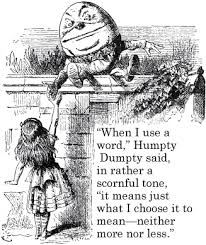
(For Obama, principles are as flexible as words.

Humpty words

— DM)

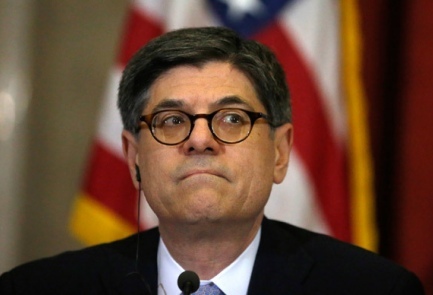
143393177342310791a_bU.S. Treasury Secretary Jacob Lew | Photo credit: Reuters

Under the sanctions developed over decades, hundreds of companies and individuals have been penalized not only for their roles in the country’s nuclear program but also for ballistic missile research, terrorism, human rights violations and money laundering.

Officials say the administration can meet its obligations because of how it interprets nuclear sanctions.

For example, they say measures designed to stop Iran from acquiring ballistic missiles are nuclear-related because they were imposed to push Iran into the negotiations. Also, they say sanctions that may appear non-nuclear are often undergirded by previous actions conceived as efforts to stop Iran’s nuclear program.

***********************

The Obama administration may have to backtrack on its promise that it will suspend only nuclear-related economic sanctions on Iran as part of an emerging nuclear agreement, officials and others involved in the process told The Associated Press Tuesday.

The problem derives from what was once a strong point of the broad U.S. sanctions effort that many credit with bringing Iran to the negotiating table in the first place.

Administration officials vehemently reject that any backtracking is taking place, but they are lumping sanctions together, differently from the way members of Congress and critics of the negotiations separate them.

Under the sanctions developed over decades, hundreds of companies and individuals have been penalized not only for their roles in the country’s nuclear program but also for ballistic missile research, terrorism, human rights violations and money laundering.

Now the administration is wending its way through that briar patch of interwoven economic sanctions.

The penalties are significant. Sanctioned foreign governments, companies or individuals are generally barred from doing business with U.S. citizens and businesses, or with foreign entities operating in the American financial system. The restrictions are usually accompanied by asset and property freezes as well as visa bans.

Negotiators hope to conclude a final nuclear deal by June 30. According to a framework reached in April, the U.S. will be required to lift sanctions that are related to Iran’s nuclear program but could leave others in place. President Barack Obama can suspend almost all U.S. measures against Iran, though only Congress can revoke them permanently.

“Iran knows that our array of sanctions focused on its efforts to support terrorism and destabilize the region will continue after any nuclear agreement,” Treasury Secretary Jack Lew told a gathering of American Jews in a weekend speech. U.S. officials will “aggressively target the finances of Iranian-backed terrorist groups and the Iranian entities that support them,” he said, including the Lebanese militant group Hezbollah and Iran’s Quds Force.

The Treasury Department’s sanctions point man, Adam Szubin, has been tasked with sorting out the mess, according to U.S. officials, though no clear plan has yet been finalized.

Officials say the administration can meet its obligations because of how it interprets nuclear sanctions.

For example, they say measures designed to stop Iran from acquiring ballistic missiles are nuclear-related because they were imposed to push Iran into the negotiations. Also, they say sanctions that may appear non-nuclear are often undergirded by previous actions conceived as efforts to stop Iran’s nuclear program.

The officials who provided information for this story spoke only on condition of anonymity because they were not authorized to speak publicly on the private discussions.

After years of negotiations, U.S. officials believe a deal is within reach that for a decade would keep Iran at least a year from being able to build a nuclear weapon.

In return, the U.S. would grant billions of dollars in relief from sanctions that have crippled Iran’s economy. But the whole package risks unraveling if the U.S. cannot provide the relief without scrapping sanctions unrelated to Iran’s nuclear program.

Administration officials say they are examining a range of options that include suspending both nuclear and some non-nuclear sanctions, a step that would face substantial opposition in Congress and elsewhere. Under one scenario, the U.S. could end non-nuclear restrictions on some entities, then slap them back on for another reason. But Iran could then plausibly accuse the U.S. of cheating on its commitments.

U.S. President Barack Obama has spoken about Iran potentially recouping up to $150 billion in assets trapped overseas. The process for how that would take place is still being worked through, said officials.

The Iranian Central Bank may prove the most glaring example of the administration’s dilemma, and officials acknowledge there is no way to give Iran the sanctions relief justified by its compliance without significantly easing restrictions on the institution.

The bank underpins Iran’s entire economy, and for years the U.S. avoided hitting it with sanctions, fearing such action would spread financial instability and raise oil prices. By late 2011, with Iran’s nuclear program advancing rapidly, Obama and Congress did order penalties, declaring the bank a “primary money laundering concern” and linking its activity to ballistic missile research, terror financing and support for Syrian President Bashar Assad.

The effects were far-reaching: Petroleum exports fell by 60%, Iran suffered runaway inflation, cash reserves dried up and industrial output in several sectors plummeted. And Iran agreed to talk about its nuclear program with the United States and five other world powers.

Now that the nuclear agreement is so close, Iran wants these sanctions lifted. The administration officials say all sanctions on the bank are nuclear-related.

Lew told the Jewish conference in New York that a nuclear accord would include the suspension of all “secondary” oil, trade and banking restrictions — those that apply to U.S. and non-U.S. banks, as well as foreign governments.

Many of these measures overlap with American sanctions tied to Iran’s nuclear program, and that has officials considering new sanctions to keep certain Iranian institutions under pressure.

Eliminating the secondary sanctions across the board could have wide-ranging implications, making it easier for Iran’s Revolutionary Guard Corps and its police, intelligence services and paramilitary groups to do business.

That possibility has Iran’s rivals in the region, including Israel and the Sunni monarchies of the Middle East, gravely worried.

“I share their concern,” Gen. Martin Dempsey, the Joint Chiefs of Staff chairman, said Tuesday in Jerusalem.

“If the deal is reached and results in sanctions relief, which results in more economic power and more purchasing power for the Iranian regime, it’s my expectation that it’s not all going to flow into the economy to improve the lot of the average Iranian citizen,” he said.

“I think they will invest in their surrogates. I think they will invest in additional military capability.”

Iran’s Revolutionary Guard is under U.S. sanctions because of its proliferation of weapons of mass destruction. But because the U.S. views the corps as so pernicious, the administration is considering new measures to help block it from meddling in the internal conflicts of Iraq, Lebanon, Syria and Yemen.

Of the 24 Iranian banks currently under U.S. sanctions, only one — Bank Saderat, cited for terrorism links — is subject to clear non-nuclear sanctions. The rest are designated because of nuclear and ballistic missile-related financing, while several are believed to be controlled by the Revolutionary Guard.

Will they be cleared for business with the world? U.S. officials still cannot say one way or another. Congress, too, has not received a list of banks and institutions that would be released from sanctions under the deal.

If the United States cannot deliver on its promises, it could take the blame for a collapse of the years-long negotiations toward a nuclear deal, putting the world — in the words of Obama and other U.S. officials — on a path toward military confrontation. At the same time, an Iran unburdened by sanctions could redouble efforts toward nuclear weapons capacity, while international unity and the global sanctions architecture on Tehran fray.

Goodbye to the First Amendment

June 5, 2015

Goodbye to the First Amendment, Pat Condell via You Tube, January 5, 2015

(What’s left of it, anyway. — DM)


Iran Will Walk

June 5, 2015

Iran Will Walk, The Gatestone InstituteLawrence A. Franklin, June 5, 2015

(What if the article is otherwise correct but Obama agrees to a “deal” anyway? — DM)

  • The Islamic Revolutionary Guard Corps (IRGC), the Praetorian Guard of Iran’s regime, controls most of the economy, as well as the black-market, alternative economy. The IRGC therefore actually benefits from sanctions; it is private firms, such as those involved in international commerce, that suffer. Why would IRGC operatives want to see the playing field made more level by private investment, transparency and a competitive economy?
  • Sanctions never hurt the regime’s ruling class; lifting them only helped the regime solidify its power over its people.
  • The objective of these two demands [an immediate lifting of all sanctions and no, or severely limited, inspections] is either to have them accepted, or to render it untenable for the Obama administration to offer Congress any deal that could be accepted – thereby shifting blame for the collapse of the talks to the U.S.
  • The U.S should also be on guard against the mullahs’ belief that the Obama administration is weak both politically and its aversion to using force. The mullahs might find great pleasure in humiliating Obama, as they did President Jimmy Carter, by dragging out hostage crisis negotiations by running out the clock until his term was over. They clearly believe that the Obama administration, simply to say it got “a deal,” is ready to sign anything.

From Washington to Riyadh, not to mention Jerusalem, statesmen are gritting their teeth at the possibility of a U.S.-Iran nuclear deal that seems overly generous to the theocratic-terror state of the Islamic Republic.

1008Representatives of the P5+1 countries pose with Iranian Foreign Minister Javad Zarif after nuclear negotiations in Lausanne, Switzerland on April 2, 2015. (Image source: U.S. State Department)

Most intelligence analysts and journalists assume that because Iran’s leadership endorsed the negotiations and has been the beneficiary of several key concessions by the P5+1 (the five permanent members of the UN Security Council, plus Germany), that an agreement is imminent. Forecasters have been predicting what the likely consequences of such a deal would be: negative.

But what if the Iranians walk?

Sanctions never hurt the regime’s ruling class; lifting them only helped the regime to solidify its power over its people.

A nuclear deal combined with an improvement in the commercial and business relations with the West would be inimical to IRGC interests.

The Islamic Revolutionary Guard Corps (IRGC), the Praetorian Guard of the regime, controls most of the economy as well as the black-market, alternative economy. IRGC-controlled conglomerates operate outside the law and reap huge profits through their control of the black market. The IRGC therefore actually benefits by sanctions; it is the private firms, such as those involved in international commerce, that suffer.

Furthermore, IRCG naval vessels, and private ships under their control, have been engaging in sanctions-breaking deliveries of imports across Persian Gulf waters to Dubai. The IRGC then sells the products at a profit by filtering them through the many foundations they control in Iran.

The most recent example of IRGC’s skirting of sanctions involved the illegal acquisition of aircraft through front-organizations with offices in both Europe and the Arabian Peninsula. Mahan Air, an IRGC front, was able to purchase 15 used commercial aircraft for $300 million. Another front, al-Naser Air, was about to purchase two more aircraft, this time from a U.S. owner. Israeli intelligence, however, passed details of the planned sale to the U.S. government, and on May 21, the deal was scuttled by the Office of Export Enforcement of the Department of Commerce.

Why would IRGC operatives want to see the playing field made more level by private investment, transparency and a competitive economy?

Moreover, if a nuclear deal indicated improved relations with the United States, Iranian hardliners, whether clerical revolutionaries or intelligence operatives, might fear seeing their ideological legitimacy erode. The Iranian regime’s only remaining fig leaf of legitimacy is its anti-American animus, with its accompanying pledge to “protect” Iran’s interests against the U.S.-Israel-Sunni “alliance.”

Improved relations with Washington might raise false hopes among Iran’s citizens that the regime may ultimately improve its woeful record on human rights. There remains only a thin patina of clerical control over Iranian society; if the hoped-for social and political reforms were not implemented, the result could produce a destabilizing political environment, harmful to the interests of the regime.

Another fallacy embraced by many “inside-the-beltway” analysts is that, as the Supreme Leader Ayatollah Khamenei endorsed the negotiations, a legitimate deal is now probable.

The once all-powerful Office of the Supreme Leader no longer calls all the shots. The current Iranian regime resembles a military junta or a security state as much as a theocracy. While the reach of Ayatollah Khamenei, through his network of representatives, still penetrates all dimensions of Iranian society, he does not have the final decision on key security matters. The regime’s strategic assets, for instance, such as its ballistic missile programs, are firmly under the control of the IRGC. Decisions related to Iran’s expansionist presence in the region are made by IRGC Quds Force Commander Qasem Soleimani. The role of Khamenei’s representative to the IRGC resembles more that of a handler than of an action officer.

The principal task for the regime is to find a way to back out of the negotiations while avoiding the blame. Iran’s efforts at disengagement may already have been underway for the past few weeks; the pace of decoupling from the talks seems to be accelerating. Iran has been increasing its demands apparently in the hope that they will either be accepted, or else rejected like the “poison pills” they are — such as inspectors no longer being allowed on its military sites.[1]

Another way to make the talks no longer palatable for the Obama administration was to create a hostile incident with the United States in the Persian Gulf, as it has tried to do by aggressively tailing American warships. Iranian ships affiliated with the IRGC Navy also seized a commercial ship, the Maersk Tigris, in the Strait of Hormuz, and temporarily detained both vessel and crew. Then, on May 14, IRGC boats fired several shots across the bow of a Singapore flagged vessel, but it escaped unharmed.

By this type of reckless comportment, the IRGC Navy appears intent on producing a clash with American naval vessels in the Gulf waters. Western negotiators have only to recall the presidency of Mohammad Khatami, when the IRGC and Iran’s Ministry of Intelligence and Security operated independently after they felt that the reformers had gone too far, thus threatening hard-liner control of the regime. The IRGC may have decided that Rouhani along with his American-educated Foreign Minister Zarif have reached a similar tipping point. This independent IRGC initiative is being executed even though a deal would release Iranian monetary assets that would in turn boost the sagging economy.[2]

Iran’s combative posture in Gulf waters against international shipping is also a direct challenge to international maritime law, which guarantees freedom of navigation through the world’s shipping lanes such as the Strait of Hormuz. A key principle of U.S. foreign policy is to enforce this freedom of navigation, if it is challenged by any foreign power, as one also hopes the U.S. will do in the South China Sea.

Iranian military and political spokesmen have also raised the temperature of their anti-American and anti-Israeli rhetoric of late. Leading members of the regime, including its Supreme Leader, Ali Khamenei, keep repeating, “Death to America” as well as its theological “obligation” to destroy Israel. While the Obama administration has alleged that these threats are just for “internal consumption,” an old Persian saying goes: “They spit in his eye and he calls it rain.”

Mojtaba Zolnour, Ayatollah Khamenei’s Deputy Representative to the IRGC, stated that the Islamic Republic of Iran, “has the divine permission to destroy Israel.” This media assault on Israel was designed to widen the divergence between the Obama administration and the Israeli government regarding the efficacy of the framework of a nuclear agreement negotiated so far.

Additionally, various Iranian principals have drawn “lines in the sand” designed to cause the Americans to disengage from the talks, such as the assertion that Iran will never accept inspection of its declared military sites. Another is Tehran’s repeated statement that it will not accept a gradual lifting of sanctions. Iranian leaders have insisted on immediate and irreversible lifting of all sanctions immediately after a nuclear deal is signed. The objective of these two demands is either to have them accepted, or to render it untenable for the Obama administration to offer Congress any deal that could be accepted — thereby shifting the blame for the collapse of the talks to the U.S.

Regime hard-line representatives to the majlis [Iranian Parliament] have already been mobilizing members to denounce the talks as detrimental to Iran’s national sovereignty. Eighty majlismembers signed a petition on May 12, calling upon the regime to suspend the nuclear talks until Washington halts its rhetorical threats against Iran. Hardliners in the majlis and elsewhere within the regime’s bureaucracy will likely continue to lobby against any deal.

Western analysts should be looking for the Iranian regime’s hard-line media outlets to increase domestic commentary condemning alleged U.S. deception in the negotiations as a reason to abandon the talks.

The death knell for the nuclear negotiations could come from newspapers such as Kayhan, a pro-regime newspaper run by Hossein Shariatmadari, and often characterized as a Khamenei mouthpiece.

The regime’s Friday-prayer Imams in key Iranian cities might also start opposing the talks. The themes of their noonday khutbahs [sermons] are likely to appeal to Iranian people’s patriotism, and suggest that it is more important for Iran to endure continued sanctions rather than submit to intrusive monitoring that offends Iran’s sovereignty.

Finally, hardliners who oppose any possibility of Iran’s improved relations with the U.S. may launch personal attacks on Iran’s negotiators to the nuclear talks, and, in an effort to discredit them, challenge their loyalty to the Iranian revolution. Their point of attack on Foreign Minister Mohammad Javad Zarif’s loyalty might be his alleged obsequious behavior to Secretary of State John Kerry. Zarif, on account of his many years of residency and education in the United States, can be depicted as an Americanized Iranian.

The United States should also be on guard against the mullahs’ belief that the Obama administration is weak — both politically and in its reluctance to use force. The mullahs might find great pleasure in humiliating Obama as they did President Jimmy Carter, when they dragged out hostage crisis negotiations by running out the clock until his term was over. They clearly believe that the Obama administration, simply to say it got “a deal,” is ready to sign anything.


[1]Iran’s powerful Guard rejects inspection of military sites” by Ali Akhbar Dareini, Associated Press, 19 April 2015. Deputy Chief of the IRGC General Hossein Salami is quoted and several more statements by IRGC officials since have repeated the same prohibitive statements regarding Iran’s military sites.

[2]U.S. to Award Iran $11.9 Billion Through End of Nuke Talks,” Washington Free Beacon, 21 January 2015. In the first of many subsequent denunciations, Senator Mark Clark of Illinois attacked the Obama administration’s plan to free Iran’s frozen assets if nuclear deal is reached.

The veneer of civilization

May 19, 2015

The veneer of civilization, Israel Hayom, Sarah N. Stern, May 19, 2015

Throughout the negotiations with Iran over its nuclear program, U.S. President Barack Obama frequently stated that “no deal is better than a bad deal” and that “all options are on the table.”

And then, on April 2, after a framework agreement was concluded in Lausanne, Switzerland (but without even a piece of paper to wave, Neville Chamberlain-like), Obama said, “Do you really think that this verifiable deal, if fully implemented … is a worse option than the risk of another war in the Middle East?”

As soon as the choice was altered from “a good deal or no deal” to “either this deal or war,” we witnessed a sudden surge in Iranian swagger and bravado, in both their words and their actions.

On May 7, Iranian Revolutionary Guard Corps Deputy Commander Brig. Gen. Hussein Salami told Fars television: “We welcome war with the United States, as we do believe that it will be the scene for our success, to display the real potential of our power. We have prepared ourselves for the most dangerous scenarios, and this is no big deal.”

On May 12, Mojtaba Zolnour, a member of the IRGC and a close personal friend of Supreme Leader Ali Khamenei, said: “The government of the Islamic Republic of Iran has divine permission to destroy Israel. The noble Quran permits the Islamic republic to destroy Israel. Even if Iran gives up its nuclear program, it will not weaken this country’s determination to destroy Israel.”

This Iranian saber rattling has been accompanied by renewed provocations. On April 28, in the Strait of Hormuz — a major oil route — an Iranian crew commandeered the Maersk Tigris, a cargo ship flying under the flag of the Marshall Islands, a U.S. protectorate. They held the ship for six days before releasing it and its crew members. And just a few days after that, Iranian gunboats opened fire on the Alpine Eternity, a Singaporean-flagged ship, and tried to force it into Iranian territorial waters.

The more the U.S. treats Iranians with kid gloves so as not to offend them and to keep them at the negotiating table, the more the Iranians feel a renewed sense of triumph, and disdain toward the United States and its allies. (One would think the Americans were the ones who needed sanctions lifted to help our ailing economy).

On May 6, Jason Rezaian, a Washington Post reporter who has been held in an Iranian prison since July 2014, was charged with espionage. This trumped-up charge was a direct rebuke to the United States, demonstrating just how much contempt the Iranians have for the U.S. It is clear that the Iranians believe that we are determined to give them their cake, and to let them eat it, too. And like a spoiled child in the midst of a temper tantrum, the more we give the Iranians, the more they demand.

The sad fact is that the American negotiating team is basing its entire strategy on little more than wishful thinking. While visiting Beijing at the weekend, U.S. Secretary of State John Kerry said that a deal with Iran “will have a positive influence on North Korea” (although he did add that he wasn’t sure that the North Koreans were capable of “internalizing the message”). One wonders whether the secretary of state also believes in unicorns and fairies.

History indicates that the nuclear negotiations with North Korea were precisely what led to their possession of a nuclear bomb. It is actually the Iranians who have taken note and learned from the North Koreans, and not the other way around.

It has become increasingly obvious that the Obama administration does not know how to negotiate. It seems that they are intent on making a deal, any deal, with the Iranians. And the more they grovel, the more contemptible the United States becomes in the eyes of the Iranians.

That is why the United States Senate needs to hold a free and open debate on the details of the negotiations. Over the last two weeks, the leadership of both the House and the Senate did no one any favors by putting the Iran Nuclear Review Act of 2015 (Corker-Cardin) on the suspension calendar. This means it requires a straight up or down vote, with no room for attaching amendments or for discussion.

The real danger in the Iran Nuclear Review Act of 2015 is that it has turned this negotiation, which has the standing of an international arms treaty, into a bill that would require a veto-proof majority to block. That means that it will become law even if only 34 Senate Democrats support it. While a treaty requires a positive action of two-thirds of the Senate to approve it, now it will take two-thirds of the Senate to veto it, which is much more difficult to achieve, particularly during the immediate aftermath of a euphoric deal-signing ceremony, probably on the White House Lawn, replete with lofty speeches of “peace in our time.”

The framers of the Constitution were prescient when they required two-thirds of the Senate to ratify a treaty. And these negotiations are nothing short of a nuclear arms treaty that will impact the order of the world for generations to come.

When the final deal is signed on June 30, the U.S. Senate must insist that it has the international standing of a treaty and demand that if it does not have the support of 67 senators, it is null and void.

In the meantime, those congressmen and senators who want to pretend that they are attentive to the genuine concerns of the Saudis, the Israelis and patriotic Americans wary of the Iranian negotiations, are now able to hide behind the Iran Nuclear Review Act, this piece of paper that they recently signed.

As the late Congressman Tom Lantos — the only Holocaust survivor in the U.S. House of Representatives — was fond of saying, “The veneer of civilization is paper thin.”

Iranian Supreme Leader following Lausanne Declaration: Nothing Has Been Achieved So Far

May 5, 2015

Iranian Supreme Leader following Lausanne Declaration: Nothing Has Been Achieved So Far, MEMRI TV via You Tube, May 5, 2015

(Khamenei delivered this speech last month, but this fourteen minute video includes some comments I had not seen him make previously. — DM)

A powerful totalitarian theocracy can bring peace. Of sorts.

May 2, 2015

A powerful totalitarian theocracy can bring peace. Of sorts. Dan Miller’s Blog, May 2, 2015

(The views expressed in this article are mine, and do not necessarily reflect those of Warsclerotic or its other editors. — DM)

a1  Obama and Kahameni -building a toaster

Iran, an already powerful theocratic totalitarian state with extensive hegemonic ambitions, is about to become (if it is not already) a nuclear power. So equipped, it can extend its rule over the Middle East and beyond, bringing the “peace” of submission to Islam. Obama may favor this outcome and in any event appears to be at best indifferent.

Iran is ruled by Ayatollah Khamenei, its supreme political and religious power. He has the ultimate authority to approve or reject any P5+1 agreement, should there be one — which seems increasingly likely due to Obama’s ludicrous efforts to concede every possible matter of substance. Obama wants a foreign policy legacy and needs a “deal;” Iran does not need a “deal.” It has already benefited greatly from sanctions relief. Other nations have also benefited economically to the point that even were the U.S. to try to reimpose sanction such trade would continue and expand. Moreover, it is highly likely that Iran has done all of the necessary technical research on nukes and on delivery devices to the extent that, regardless of whether there is a “deal,” Iran can have deliverable nukes within a few months if not sooner. As I pointed out here, the insanity of the 2013 framework, adhered to except when arguably in America’s favor, led inexorably to this result.

The North Korea – Iran linkage makes the problem worse. Chinese nuclear experts recently revised their estimation of North Korea’s current possession of nukes:.

China’s top nuclear experts have increased their estimates of North Korea’s nuclear weapons production well beyond most previous U.S. figures, suggesting Pyongyang can make enough warheads to threaten regional security for the U.S. and its allies.

The latest Chinese estimates, relayed in a closed-door meeting with U.S. nuclear specialists, showed that North Korea may already have 20 warheads, as well as the capability of producing enough weapons-grade uranium to double its arsenal by next year, according to people briefed on the matter. [Emphasis added.]

Iran and North Korea have a long history of nuclear cooperation. Delivering North Korean technology, materials and nukes to Iran would not be very difficult. I addressed the problem here, herehere and elsewhere.

Consequences of a nuclear Iranian theocracy

The Iranian Shiite theocracy is totalitarian in every sense of the word; it has not moderated under “moderate” President Rouhani. To the contrary, it seems to have worsened. To the extent that credible figures are available, sexually transmitted disease has risen and the birth rate in Iran has fallen, considerably in recent years. Despite sanctions relief, poverty has increased. Where has the money gone? Iran pursues its hegemonic ambitions, most recently to help the Houthi in Yemen, while continuing to provide economic, logistical and weapons support to its other proxy terrorist organizations such as Hamas, Hezbollah, the Muslim Brotherhood and others. Iran is very likely motivated by its own desire eventually to control the Middle East and beyond.

The recent Iranian hijacking of a cargo ship under “U.S. protection” may well have been an Iranian warning to Saudi Arabia, an American ally and leading opponent of the Iranian proxy war by Houthi in Yemen, that it can and might close the Strait of Hormuz to Saudi oil exports.

Strait-of-Hormuz

Although obligated under treaty to come to the defense of the Marshall Islands-registered cargo ship, the Obama Nation did not. Instead, it simply watched as the Iranian Navy fired shots across her bow and took her to an Iranian port to the North at Bandar Abbas. The ship and her crew remain there. Caroline Glick, in an article titled The Marshall Islands’ cautionary tale pointed out that

The Maersk Tigris is flagged to the Marshall Islands. The South Pacific archipelago gained its independence from the US in 1986 after signing a treaty conceding its right to self-defense in exchange for US protection. According to the treaty, the US has “full authority and responsibility for security and defense of the Marshall Islands.” [Emphasis added.]

Given the US’s formal, binding obligation to the Marshall Islands, the Iranian seizure of the ship was in effect an act of war against America.

. . . .

If the US allows Iran to get away with unlawfully seizing a Marshall Islands flagged ship it is treaty bound to protect, it will reinforce the growing assessment of its Middle Eastern allies that its security guarantees are worthless.

As the Israel Project’s Omri Ceren put it in an email briefing to journalists, “the US would be using security assurances not to shield allies from Iran but to shield Iran from allies.” [Emphasis added.]

What can other nations, with which America has treaties calling upon us to come to their defense, expect from the Obama administration if attacked by Iran? Precious little.

Under credible threat from nuclear attack by Iran and lacking actual (as distinguished from verbal) support from the Obama administration, Middle East Arab nations cannot be expected to resist very effectively, even as they seek to obtain their own nuclear arsenals.

Israel, the “Little Satan?” She would fight fiercely to the end, but might be overcome. Perhaps she will take the initiative and destroy Iran’s nuclear facilities before they become too extensive and better protected, perhaps by missiles provided by Russia. I suggested here that she can and should do so. Here is a link to a far more detailed analyses of what she can and should do, soon.

America, the “Great Satan,” is not immune to an Iranian nuclear attack. As I suggested here, a nuclear armed Iran could launch an EMP attack to drive the U.S. back to the stone age. Such an attack would increase Iran’s hegemonic potentials, and hence ambitions, by foreclosing the possibility of American help to nations with which we have protection treaties. However, even without an EMP attack, Obama would not provide much help. Therefore, I wonder whether — despite all of the continuing Iranian “death to America” bluster — Iran would be foolish enough to do it before Obama leaves office. He does His best to help Iran get nukes and pursue its hegemonic ambitions. Why try to kill a staunch friend like Obama’s America?

The Obama administration — and many voters — view global warming, climate change, climate disruption and whatever new phrases as may be developed as the most severe threat to humanity. An interesting article titled Progressives at the Poker Table compares “Progressive” attitudes toward “the threat of climate warming and that of a nuclear-armed Iran.” Predictably, the Obama Administration and most of the “legitimate news media” are far more concerned about the former than the latter, even though there is little if anything that we can do, even at great expense, about climate change (mostly natural in origin). If so disposed, there is quite a lot that we could do about the far greater, and in any event more immediate, threat from a nuclear Iran. Perhaps it’s simply easier to stage pious shows about costly but ineffective ways to “save the Earth” than to make useful efforts to save humanity from Islamic ravages.

Church of climatology

Conclusions

Andrew Klavan ridicules Obama’s P5+1 “deal” here:

The Congress probably won’t do anything to stop it, so Iran will very likely have nukes and the missiles with which to deliver them soon — if it does not already have them.

Hitler made a “deal” with Prime Minister Chamberlain years ago and returned from Munich to display a piece of paper signed by Hitler. Crowds cheered. Hitler laughed and continued his hegemonic pursuits throughout Europe. Hitler could have been stopped with relative ease long before World War II erupted but wasn’t. The “Peace in our time” meme was too powerful. Then we fought WWII.

Is that how the current mess with Iran will turn out?

code pink on Iran

Andrew Klavan: Obama’s Nuclear Disaster

May 1, 2015

Andrew Klavan: Obama’s Nuclear Disaster, Truth Revolt, May 1, 2015


Clever new Rubio amendment to Corker’s Iran bill: The final deal must match this month’s WH “fact sheet”

May 1, 2015

Clever new Rubio amendment to Corker’s Iran bill: The final deal must match this month’s WH “fact sheet” Hot Air, Allah Pundit, April 30, 2015

(Rubio has a good sense of humor. — DM)

Doesn’t matter which is true, says Marco Rubio. The White House gave us the “fact sheet.” They told us that Iran had agreed to those terms. Those terms should therefore be absolutely essential provisions in any final deal. If the White House is uncomfortable with that, it can only be because either (a) they lied on the “fact sheet” or (b) they told the truth but are prepared to cave to whatever new demands Iran’s come up with to wriggle free of its previously agreed-to obligations. In other words, Rubio’s going to make Obama and/or Iran live up to their own BS.

********************

You remember the “fact sheet,” don’t you? That’s the document the White House released on April 2nd, the day it reached a “framework” deal with Iran, describing the terms that Iran had allegedly agreed to. Snap nuclear inspections of all suspicious sites, a greatly reduced number of centrifuges, delayed sanctions relief until Iran satisfied its denuclearization obligations — it wasn’t half bad, and certainly better than what an Obama skeptic might have expected. The only problem: Apparently no one told Iran that this is the deal they had agreed to. Within a week, Iran’s supreme leader claimed the U.S. “fact sheet” was full of lies; Iran’s defense minister claimed the deal didn’t include inspection of military sites; and, most dramatically, Iran’s president claimed that all sanctions would need to be lifted on day one after a final deal, not gradually as Iran complied with its duties under the deal. Either Iran had suddenly gotten cold feet after the “framework” deal was struck and reneged on what it had promised John Kerry or … the “fact sheet” was itself filled with distortions about what Iran had actually agreed to, a political ploy designed to build support in the U.S. for a deal that was still secretly very much in flux.

Doesn’t matter which is true, says Marco Rubio. The White House gave us the “fact sheet.” They told us that Iran had agreed to those terms. Those terms should therefore be absolutely essential provisions in any final deal. If the White House is uncomfortable with that, it can only be because either (a) they lied on the “fact sheet” or (b) they told the truth but are prepared to cave to whatever new demands Iran’s come up with to wriggle free of its previously agreed-to obligations. In other words, Rubio’s going to make Obama and/or Iran live up to their own BS.

Rubio’s amendment simply quotes that fact sheet verbatim and says the president may not waive or lift any Congressional sanctions until he certifies Iran has met the White House conditions.

“For the life of me, I don’t understand why that would be controversial,” Rubio said Wednesday. “Yet somehow, I was told this would box the White House in.”…

Rubio’s fact-sheet amendment is different [from other GOP amendments]. It doesn’t challenge the presidential authority to sign an executive agreement. Republicans supported that power when their party controlled the White House. Rubio’s fact-sheet amendment is also germane to the Iran legislation before the Senate. An argument used against other amendments–like Rubio’s one on recognizing Israel–is that it asks Iran to meet conditions not related to the nuclear negotiations.

Rubio’s fact sheet amendment only asks Democrats to vote on whether a final Iran deal should meet the conditions as described by the leader of their own party. If Democrats vote that it should, then Obama may be forced to issue a veto over his own fact sheet as he seeks to make a final agreement more palatable to Iran. If the Democrats vote that it shouldn’t, then they will appear to be conceding the White House either misled the public or bungled the negotiations earlier this month.

It’s a clever tactic by a guy who, I think, has a knack for clever tactics. But … does it have a chance of ending up in the final Corker-written Senate bill on Iran? Obama can only be boxed in if Congress passes the bill with Rubio’s amendment attached, and the odds of that happening seem, shall we say, modest. The takeaway from my earlier post about his amendment on Israelis that there’s a strong bipartisan consensus in the Senate, backed by none other than AIPAC, that’s determined to protect Corker’s bill as written by defeating any amendments that might split the bipartisan coalition of senators that are currently lined up behind it. Rubio’s amendment could do that. If it ended up passing, Democrats would probably vote no on the final bill to prevent the “fact sheet” from tying Obama’s hands during the final negotiations with Iran, even though O himself claims Iran already agreed to everything in it. Without those Democratic votes, the bill would fail and Congress would be left with nothing. In theory that would supply the GOP with a nice talking point about the bill’s defeat — “Senate Dems were afraid to make Obama live up to his own rhetoric” — but in practice there are various RINOs who would likely give Democrats political cover by voting with them to kill Rubio’s amendment. For some Republicans, like Corker and Lindsey Graham, the most important thing is to pass some sort of bill that would grant Congress a vote on the final deal, even if it means sacrificing each and every amendment that might potentially inconvenience President Precious in his negotiations.

All of which is to say, how you feel about Rubio’s amendment depends mainly on how you feel about Corker’s bill. There’s no denying, as Ace says, that it’s a sham: Even if a bunch of Democrats join with the GOP now to pass it, guaranteeing a vote on the final deal with Iran this summer, it’s a cinch that at least 34 Senate Dems will vote yes when the time comes to approve that deal, ensuring that it’ll take effect. There’s no way they’ll stab Obama in the back on his greatest foreign policy “achievement” by helping the GOP to block it, which means all the talk of “bipartisanship” right now is, to borrow Ace’s phrase, “failure theater.” It’s bipartisan only as long as it doesn’t create headaches for Obama during negotiations; once it does, as Rubio’s amendment threatens to do, Democrats will go back to voting a (mostly) party line. The whole process is a kabuki designed to make it look like Republicans are doing something meaningful to stop the deal with Iran when in reality it’s entirely up to Reid’s Democrats whether it ends up being blocked or not. The only thing that hinges on whether the Senate passes Corker’s bill is the sort of spin available to the GOP later once the deal with Iran is implemented. If Corker’s bill passes now, setting up a vote later on the final Iran deal, and that final deal draws, say, 66 “no” votes, then Republicans can say a heavy bipartisan majority of the U.S. Senate disapproved of it. If Corker’s bill doesn’t pass now, Congress will effectively remain silent on the deal, which at least has the virtue of them not engaging in a sham vote that perverts the Treaty Clause in the Constitution. Either way, the deal takes effect despite Rubio’s best laid plans. Which outcome is better?

Column One: The Marshall Islands’ cautionary tale

May 1, 2015

Column One: The Marshall Islands’ cautionary tale, Jerusalem Post, Caroline Glick, April 30, 2015

Iranian navy shipIranian navy ship.. (photo credit:REUTERS)

There is a thread that runs between Obama’s policy toward Iran and his policy toward Israel.

On Tuesday, the Iranian Revolutionary Guard Corps forcibly commandeered the Maersk Tigris as navigated its way through the Straits of Hormuz. Iran controls the strategic waterway through which 40 percent of seaborne oil and a quarter of seaborne gas transits to global markets.

The Maersk Tigris is flagged to the Marshall Islands. The South Pacific archipelago gained its independence from the US in 1986 after signing a treaty conceding its right to self-defense in exchange for US protection. According to the treaty, the US has “full authority and responsibility for security and defense of the Marshall Islands.”

Given the US’s formal, binding obligation to the Marshall Islands, the Iranian seizure of the ship was in effect an act of war against America.

In comments to Bloomberg hours after the ship was seized, Junior Aini, chargé d’affairs at the Marshall Islands Embassy in Washington, indicated that his government’s only recourse is to rely on the US to free its ship.

Immediately after the incident began, the US Navy deployed a destroyer to the area. But that didn’t seem to make much of an impression on the Iranians. More significant than the naval movement was the fact that the Obama administration failed to condemn their unlawful action.

If the administration continues to stand by in the face of Iran’s aggression, the strategic implications will radiate far beyond the US’s bilateral ties with the Marshall Islands. If the US allows Iran to get away with unlawfully seizing a Marshall Islands flagged ship it is treaty bound to protect, it will reinforce the growing assessment of its Middle Eastern allies that its security guarantees are worthless.

As the Israel Project’s Omri Ceren put it in an email briefing to journalists, “the US would be using security assurances not to shield allies from Iran but to shield Iran from allies.”

But President Barack Obama apparently won’t allow a bit of Iranian naval piracy to rain on his parade. This week Obama indicated that he feels very good about where his policy on Iran now stands. And he has every reason to be satisfied.

With each day that passes, the chance diminishes that his nuclear deal with the mullahs will be scuppered.

On the one hand, the Iranians are signaling that they are willing to sign a deal with the Great Satan. And this makes sense. For them the deal has no downside.

First there’s the money. Last week the State Department indicated that it won’t rule out paying Iran a $50 billion “signing bonus.”

The $50b. would be an advance on Iranian funds that have been frozen in Western banks under the terms of the sanctions regime that would be lifted in the event a deal is concluded.

Iran can do a lot with $50b.

Iran is spending $3b. a month to finance its war in Syria. With $50b. in their pockets the ayatollahs can fight for another year and a half without selling a barrel of oil.

According to a report earlier this week on Channel 10, during Syrian Defense Minister General Fahd al-Freij’s visit to Tehran this week, he was instructed to enable Hezbollah to open a front against Israel on the Golan Heights. Iran’s “signing bonus” would pay for Iran’s new war against Israel.

As for their nuclear weapons program, even Obama admitted that when his deal expires in 10 years, Iran will have the capacity to build nuclear weapons at will.

Iran can get around the ideological issue of signing with its theological foe by focusing its hatred on the US Congress, something Foreign Minister Mohammad Javad Zarif did effortlessly at a press conference in New York on Wednesday.

At home as well, Obama no longer faces serious opposition to his Iran policy. The Iranian Nuclear Agreement Review Act, the bill now being debated on the Senate floor, ensures that Congress will have no ability to stand in the way of the deal. In contrast to the provisions of the US Constitution that require a two-third Senate majority to approve an international treaty, the Senate bill requires a two-third majority of senators to block the implementation of Obama’s nuclear deal with the greatest state sponsor of terrorism.

Obama has successfully bullied centrist Democrat senators into abandoning their concern for US national security and supporting his deal.

They in turn have convinced centrist Republicans – and AIPAC – to push forward the legislation and so turn Congress into partner in Obama’s nuclear gambit.

Attempts by Republican senators, including presidential candidate Sen. Ted Cruz, to attach amendments to the bill that would require Congress to either treat the deal as an international treaty, or at the very least require a simple majority to reject it, have been strenuously opposed not only by the Democrats, but by the Republican leadership as well.

Obama’s confidence that his deal will go through has freed him up to mark the next target of his foreign policy in what he recently referred to as the “fourth quarter” of his presidency: Israel.

According to a report in Foreign Policy, the administration is now seeking to delay anti-Israel resolutions at the UN Security Council – including a French draft resolution that would require Israel to surrender all of Judea and Samaria and northern, southern and eastern Jerusalem to the Palestinians – until after the deal with Iran is concluded at the end of June. According to the report, the administration doesn’t want to upset pro-Israel Democrats while it still needs them to approve the deal with Iran.

But Obama has no problem with marking the target.

And so, on Monday, Undersecretary of State for Political Affairs Wendy Sherman did just that.

In an address before Reform Jews, Sherman issued a direct threat against Israel.

In her words, “If the new Israeli government is seen to be stepping back from its commitment to a two-state solution, that will make our job in the international arena much tougher… it will be harder for us to prevent internationalizing the conflict.”

In an apparent attempt to soften the harsh impression Sherman’s statement made on the Israeli public, on Wednesday US Ambassador Dan Shapiro gave an interview to Army Radio.

Although his American-accented Hebrew is always a crowd pleaser, Shapiro’s statements were simply a more diplomatic restatement of Sherman’s threat.

As he put it, “We are entering a period without negotiations [between Israel and the Palestinians] and this leads us to two important challenges.

One – how do we make progress toward the two-states for two-peoples solution, and two – negotiations have always been critical to preventing the delegitimization of Israel.”

In other words, Shapiro signaled that the Obama administration expects Israel to make significant concessions to the Palestinians in return of nothing, in the absence of negotiations.

And if we fail to make such unreciprocated concessions, we will have no legitimacy and the US will have no choice but to act against Israel at the UN.

That is, by Shapiro’s and Sherman’s telling, Israel’s unwillingness to bow to Palestinian and US demands for concessions to the Palestinians is what has caused and what feeds the international campaign to delegitimize its right to exist.

For anyone who entertains the thought that Shapiro and Sherman are correct to blame Israel for the movement to delegitimize it, this week we received new proof of its falsity.

This week, the leaders of the Boycott, Divestment and Sanctions movement condemned Israel not for failing to make concessions to the Palestinians. This week they condemned the Jewish state for helping Nepal earthquake victims.

Ever since the Israeli humanitarian aid mission set off for Nepal earlier this week, leading figures in the BDS movement have been working overtime to attribute ill and even demonic intentions to their mission.

Kenneth Roth, the executive director of Human Rights Watch, tweeted on his Twitter account, “Easier to address a far-away humanitarian disaster than the nearby one of Israel’s making in Gaza. End the blockade!” Max Blumenthal, a Jewish anti-Semite who has risen to prominence in the BDS campaign, tweeted, “For a country responsible for so many man-made catastrophes, natural disasters can’t come often enough.”

Ali Abumiah, the editor of Electronic Intifada, intoned that Israel was racist to evacuate newborn infants born to surrogate mothers in Nepal and leave the surrogates behind. He also tweeted, “Propaganda operation goes into high gear to exploit Nepal earthquake to improve Israel’s blood-soaked image.”

These assaults, which attribute malign, exploitative designs to Israel’s humanitarian relief efforts, make clear that there is no connection between Israel’s actions and hostility toward Israel.

The purpose of the BDS movement is not to pressure Israel to make concessions to the Palestinians.

Its purpose is to delegitimize Israel’s right to exist and delegitimize support for Israel’s right to exist.

If Israel is evil for sending hundreds of soldiers and relief workers to Nepal to rescue earthquake victims, clearly Israel will be attacked as evil for making concessions to the Palestinians that the Palestinians and the Obama administration will insist are insufficient.

Shapiro’s claim that negotiations between Israel and the PLO, or Israeli unilateral concessions to the Palestinians, protect Israel from its Western detractors is totally unfounded.

There is a thread that runs between Obama’s policy toward Iran and his policy toward Israel.

That common threat is mendacity. Obama’s actual goals in both have little to do with his stated ones.

Obama claims that he wishes to prevent Iran from acquiring nuclear weapons. But as we see from his willingness to allow Iran to become a nuclear threshold state while running wild in the Straits of Hormuz, committing mass slaughter in Syria, building an empire that includes Iraq, Syria, Lebanon and Yemen, and threatening its Arab neighbors and Israel, the purpose of the administration’s negotiations with Iran is not to prevent Iran from becoming a nuclear power.

The purpose of the negotiations is to build an American-Iranian alliance on Iran’s terms.

So, too, Obama says his goal is to advance the cause of peace between Israel and the Palestinians.

But his pressure and hostility toward Israel does nothing to achieve this goal. The goal of a policy of acting with hostility toward Israel is not to promote peace. It is to distance the US from Israel and align America’s Israel policy with Europe’s preternaturally hostile treatment of the Jewish state.

Three days after a ship sailing under their flag was seized by Iran’s Revolutionary Guards, citizens of the Marshall Islands discovered that their decision to place their security in America’s hands is no longer the safe bet they thought it was 29 years ago.

Anyone who entertains the belief that Israel will gain diplomatic acceptance or even a respite from American pressure if it makes concessions to the Palestinians is similarly making a high risk gamble.


