Archive for the ‘Trump agenda’ category

Islamic Terror and the U.S. Temporary Stay on Immigration

February 13, 2017

Islamic Terror and the U.S. Temporary Stay on Immigration, Gatestone InstituteUzay Bulut, February 13, 2017

It is short-sighted and reckless to blame President Trump for trying to protect his country and keep his country safe — as any good leader is supposed to do. It would be much wiser to direct our anger where it belongs — at Muslim extremists and Muslim terrorists.

To many people, it must be easier to go after the U.S. president than after ISIS terrorists. That way, critics of the president can also pose as “heroes” while ignoring the real threats to all of humanity.

Critics of Muslim extremists get numerous death threats from some people in the West because they courageously oppose the grave human rights violations — forced marriages, honor killings, child rape, murdering homosexuals and female genital mutilation (FGM), among others.

Why do we even call criticism of such horrific practices “courageous”? It should have been the most normal and ordinary act to criticize beheadings, mutilations and other crimes committed by radical Muslims. But it is not.

On the contrary, the temporary ban aims to protect genuine refugees such as Bennetta Bet-Badal, who was murdered in San Bernardino. It would be much wiser to direct our anger where it belongs — at Muslim extremists and Muslim terrorists.

In San Bernardino on December 2, 2015, 14 people were murdered and 22 others seriously wounded in a terrorist attack. The perpetrators were Syed Rizwan Farook and Tashfeen Malik, a married couple. Farook was an American-born U.S. citizen of Pakistani descent, who worked as a health department employee. Malik was a Pakistani-born lawful permanent resident of the United States.

Among the victims of the terror attack was Bennetta Bet-Badal, an Assyrian Christian woman born in Iran in 1969. She fled to the U.S. at age 18 to escape Islamic extremism and the persecution of Christians that followed the Iranian revolution.

“This attack,” stated the Near East Center for Strategic Engagement (NEC-SE), “showcases how Assyrians fled tyranny, oppression, and persecution for freedom and liberty, only to live in a country that is also beginning to be subject to an ever-increasing threat by the same forms of oppressors.”

“NEC-SE would like to take this opportunity to once again urge action to directly arming the Assyrians and Yezidis and other minorities in their indigenous homeland, so that they can defend themselves against terrorism and oppression. This tragedy is evidence that the only way to effectively counter terrorism is not solely here in the US, but abroad and at its root.”

Members of the Islamic State (ISIS) have declared several times that they target “kafirs” (infidels) in the West.

In 2014, Syrian-born Abu Muhammad al-Adnani, the official spokesperson and a senior leader of the Islamic State, declared that supporters of the Islamic State from all over the world should attack citizens of Western states, including the US, France and UK:

“If you can kill a disbelieving American or European – especially the spiteful and filthy French – or an Australian, or a Canadian, or any other disbeliever from the disbelievers waging war, including the citizens of the countries that entered into a coalition against the Islamic State, then rely upon Allah, and kill him in any manner or way, however it may be.

“Smash his head with a rock, or slaughter him with a knife, or run him over with your car, or throw him down from a high place, or choke him, or poison him.”

It is this barbarity that the new U.S. administration is trying to stop.

FBI Director James Comey also warned in July of last year that hundreds of terrorists will fan out to infiltrate western Europe and the U.S. to carry out attacks on a wider scale, as Islamic State is defeated in Syria. “At some point there’s going to be a terrorist diaspora out of Syria like we’ve never seen before. We saw the future of this threat in Brussels and Paris,” said Comey, adding that future attacks will be on “an order of magnitude greater.”

How many ISIS operatives are there in the U.S.? Are ISIS sleeper cells likely in American cities? The people who are trying to create hysteria over the new steps taken by the Trump Administration should focus on investigating these issues more broadly, but they do not. To them, it must be easier to go after the U.S. president than after ISIS terrorists. This way, they can also pose as “heroes” while ignoring the real threat to all of humanity.

It is not only Islamic terrorists that pose a threat. It is also the ideology of the Muslim Brotherhood, the font of all the modern extremist Muslim ideologies.

The crimes committed by radical Muslims are beyond horrific, but it is getting harder to expose and criticize them. Many critics of Islam in Western countries — including those of Muslim origin — have received countless death deaths and have been exposed to various forms of intimidation.

Some were murdered, such as the Dutch film director, Theo van Gogh. His “crime” was to produce the short film Submission (2004) about the treatment of women under Islam. He was assassinated the same year by Mohammed Bouyeri, a Moroccan-Dutch Muslim.
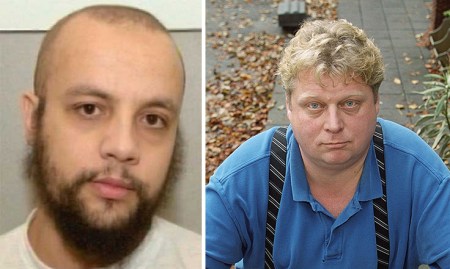
2055In 2004, Moroccan-Dutch terrorist Mohammed Bouyeri (left), shot the filmmaker Theo van Gogh (right) to death, then stabbed him and slit his throat.

Some have had to go into hiding. American cartoonist Molly Norris, who promoted an “Everybody Draw Mohammed Day”, had to go into hiding in 2010 after her life was threatened by Islamic extremists. She also changed her name and stopped producing work for the Seattle Weekly, the New York Times reported.

Who are these people hiding from? From the most radical and devoted followers of the “religion of peace”.

Why should people living in free Western countries be forced to live in fear because they rightfully criticize a destructive and murderous ideology?

They get numerous death threats from some people in the West because they courageously oppose grave human rights violations — forced marriages, honor killings, child rape, murdering homosexuals and female genital mutilation (FGM), among others.

Why do we even call criticism of such horrific practices “courageous”? It should have been the most normal and ordinary act to criticize beheadings, mutilations and other crimes committed by radical Muslims. But it is not. It does require tremendous courage to criticize these acts committed in the name of a religion. For everybody knows that the critics of Islam are risking their lives and security.

In the meantime, “an Islamic State follower posted a message on the Telegram app that said President Trump was wasting his time by blocking refugees from Syria,” reported the journalist Rowan Scarborough.

“‘Trump is preventing the entrance of the citizens of [seven] countries to protect America from terrorism,’ said the message captured by the Middle East Media Research Institute. “Your decision will not do anything to prevent the attacks; They will come from inside America, from Americans born in America, whose fathers were born in America and whose grandparents were born in America.”

President Trump’s executive order is not a ban on Muslims. Individuals of all religious backgrounds of these seven countries have been affected. Nor is it a ban on refugees. On the contrary, the ban aims to protect genuine refugees such as Bennetta Bet-Badal, who was murdered in San Bernardino.

It is short-sighted and reckless to blame President Trump for trying to protect his country and keep it safe — as any good leader is supposed to do. It would be much wiser to direct our anger where it belongs — at Muslim extremists and Muslim terrorists.

For the Media, the Only Jihad Is Against Trump

February 13, 2017

For the Media, the Only Jihad Is Against Trump, PJ MediaRoger L Simon, February 12, 2017

In their zeal to “Jump on Trump,” is our media — not to mention their 9th Circuit cohorts — doing an immense disservice to the American public by obfuscating, effectively censoring, serious discussion of Islamic immigration and what to do about it?

It’s a global problem, surely, and we have a lot to learn from the mistakes of the Europeans who — according to the latest polls — are expressing serious regrets about their open-border immigration policies.

Several countries are beginning to return their migrants, sometimes offering economic incentives.  And you can see why, reading last Friday’s report from the Gatestone Institute:

Several young  gang-rapists started laughing in a Belgian court while yelling:

“women should not complain, they should listen to men.”

The seven ‘men’ were seen in a video where they are standing around an unconscious girl who is lying on a bed, then seen pulling down her pants and raping her. Also in the video, they are dancing around the victim and singing songs in Arabic.

I imagine they’ll be getting some “extreme vetting.”  Let’s hope so anyway.  But does this “extreme vetting” go far enough? In America’s case, it’s complicated by the fact that Trump’s original seven countries in his travel ban are rather circumscribed and arbitrarily limited, despite having been the seven singled out by Obama. As we have seen on multiple occasions, second-generation jihadists come from all over Western Europe, like two of the above un-magnificent seven, not to mention North Africa and the obvious omissions of Saudi Arabia and Pakistan.  They come from Russia and the Far East as well. Shouldn’t they all be on the list?  Yes, I realize the seven countries were chosen because at least some keep no verifiable records of who’s coming and going.  But I’m not sure that matters.  These days identities are more easily forged than ever.  The Daily Beast reports you can buy an undetectable UK passport from the Neapolitan Camorra.

So can “extreme vetting” finally do the job it’s supposed to do? What is the real extent of its capability?

Marine/contractor Steven Gern’s video from Iraq (before being asked to leave) is viral for a reason. Gern has an authenticity and seems to be telling the truth, two truths actually, and those truths are, to say the least, uncomfortable.  One is that many Iraqis (I would assume most Middle Easterners) hate Americans despite all we may have tried to do for them and would kill us if they had any opportunity. The second is that they are master dissemblers (remember taqiyya?) and are willing to wait years, all the while seeming perfectly pleasant, before acting on their hatred. This does not augur well for immigration, to put it mildly.

Given this dissembling/taqiyya that Gern speaks of, we do have some serious”extreme vetting” to do.  It’s almost impossible to see how it can be done without the most detailed attention. Obama, Hillary and Kerry did less than zero to improve the situation. They either exacerbated or ignored it, mostly the former.

Trump asked for a 120-day travel ban, a tiny length of time under the circumstances, to try, in his words, to figure out what’s happening.  But his rapacious opponents in the media (and the judiciary), slavering like a pack of morally narcissistic wolves, would have none of it. He was not to get one day.

Did they have another suggestion?  No, of course not.  Their suggestion comes down to this: anything but Trump.  Forget reason.  Forget what’s left of their own thoughtfulness.  Forget the safety of the American people and the world.  The Orange Man must pay.  He’s too vulgar… or something.  Maybe one of his daughter’s shoes gave someone a blister.  Or Stephen Miller was too rude to one of his high school teachers. Something significant like that.

Meanwhile, the media in its fact-finding mission does nothing to help us because it finds no facts, other than scurrilous gossip about Trump. That’s all they seem to look for. Their myriad liberal and progressive pundits make no suggestions either, contribute no fresh ideas (have you noticed?) to the fight, as if the status quo were just fine with them.  (This is true of many conservative pundits too — no thoughts on what to do about radical Islam.) It’s a mixture of selfishness and envy from which we all lose. Let our children or our children’s children deal with it.   (And they will.)  There may be a jihad in the big world, people being raped and having their throats cut, bombs going off, trucks driving into crowds of innocent tourists, but to our media, the only jihad worth fighting against is against Trump.


Promises to Keep

February 13, 2017

Promises to Keep, Front Page MagazineMichael Cutler, February 13, 2017

(“And miles to go before I sleep.” — DM)

cvb_1

During his campaign for the presidency Donald Trump frequently disdainfully scowled when he spoke about how most politicians were “All talk and no action.”

Candidate Trump promised that immigration would be a primary focus of his administration.

President Trump has indeed focused on multiple aspects of the immigration crisis that go well beyond building a wall along the U.S./Mexican border.

His selection of Senator Jeff Sessions to be his Attorney General was the best possible choice for this important position.

Sessions had chaired the Senate Subcommittee on Immigration and the National Interest.

Consider that on February 25, 2016 that subcommittee conducted a hearing on the topic, “The Impact of High-Skilled Immigration on U.S. Workers.”

When the Obama administration conducted meetings for “Stakeholders” on the immigration issue corporate leaders were invited to attend as were immigration lawyers representing illegal aliens and special interest groups that advocate for illegal aliens.

However, no one in attendance represented the “average American.”

Even the union leaders representing the Border Patrol, ICE agents and the adjudications officers were barred from participating in those meetings.

On February 9, 2017 President Trump held a news conference in the Oval Office to conduct a public swearing in ceremony of Attorney General Jeff Sessions.

Immediately after Vice President Pence swore in Jeff Sessions, President Trump signed three executive orders:

Presidential Executive Order on Enforcing Federal Law with Respect to Transnational Criminal Organizations and Preventing International Trafficking

Presidential Executive Order on Preventing Violence Against Federal, State, Tribal, and Local Law Enforcement Officers

Presidential Executive Order on a Task Force on Crime Reduction and Public Safety

President Trump promised to be the “Law and Order” President and he has certainly hit the ground running.

His executive order to prevent violence against law enforcement officers is tangible evidence of his keeping his promise to look out for law enforcement officers.

Let’s next consider how he articulated the purpose for his executive order on enforcing federal laws to attack transnational criminal organizations:

Section 1.  Purpose.  Transnational criminal organizations and subsidiary organizations, including transnational drug cartels, have spread throughout the Nation, threatening the safety of the United States and its citizens.  These organizations derive revenue through widespread illegal conduct, including acts of violence and abuse that exhibit a wanton disregard for human life.  They, for example, have been known to commit brutal murders, rapes, and other barbaric acts.

These groups are drivers of crime, corruption, violence, and misery.  In particular, the trafficking by cartels of controlled substances has triggered a resurgence in deadly drug abuse and a corresponding rise in violent crime related to drugs.  Likewise, the trafficking and smuggling of human beings by transnational criminal groups risks creating a humanitarian crisis.  These crimes, along with many others, are enriching and empowering these organizations to the detriment of the American people.

A comprehensive and decisive approach is required to dismantle these organized crime syndicates and restore safety for the American people.

That statement underscores his understanding of how important immigration law enforcement and border security are to combatting transnational criminals.

What is unfathomable is how many politicians who have to understand this issue have opposed Trump at every opportunity.  Only they can explain their conduct.  However, I have to conclude that those who would oppose President Trump’s efforts to secure our nation’s borders and effectively enforce our immigration laws are siding with the cartels and transnational criminal organizations.

This certainly apply to mayors of “Sanctuary Cities” and governors who want to create “Sanctuary States.”

Sanctuary Cities should be called “Magnet Cities” because they attract criminal aliens including members of transnational gangs, fugitives and international terrorists.

The politicians’ claims that by shielding vulnerable illegal aliens from immigration law enforcement they would be willing to come forward when they fall victim to criminals is a blatant lie that ignores that Sanctuary Cities Endanger – National Security and Public Safety.

Sanctuary policies attract more violent criminals who are likely victimize members of the ethnic immigration communities.  However the false narrative serves to vilify valiant ICE agents who go in harms way every day they report for duty, seeking to protect national security and innocent lives.

Statutorily, U Visas are available for victims of human trafficking and other crimes if they come forward and assist with law enforcement efforts to apprehend the criminals.  Similar visa programs are available for illegal aliens who provide assistance to criminal investigations.

If those duplicitous politicians really wanted to assist illegal alien victims of crimes they would bring them to immigration offices and urge them to cooperate with the investigations of their criminal assailants.

That way everyone would win.

But then the politicians would not get their campaign contributions from the U.S. Chamber of Commerce and a host of special interest groups, and who know who else, who are literally and figuratively making out like bandits by exploiting the immigration system.

In continuing to consider Trump’s executive order on trafficking I call your attention to two of the key elements of this executive order are proverbial “music to my ears.”

(e)  develop strategies, under the guidance of the Secretary of State, the Attorney General, and the Secretary of Homeland Security, to maximize coordination among agencies — such as through the Organized Crime Drug Enforcement Task Forces (OCDETF), Special Operations Division, the OCDETF Fusion Center, and the International Organized Crime Intelligence and Operations Center — to counter the crimes described in subsection (a) of this section, consistent with applicable Federal law; and

(f)  pursue and support additional efforts to prevent the operational success of transnational criminal organizations and subsidiary organizations within and beyond the United States, to include prosecution of ancillary criminal offenses, such as immigration fraud and visa fraud, and the seizure of the implements of such organizations and forfeiture of the proceeds of their criminal activity.

I speak from extensive experience when I say that this task force approach to identifying, investigating and dismantling international drug trafficking organizations is extremely effective.  I spent the final ten years of my career with the INS as a Senior Special Agent assigned to the OCDETF program in New York City.

As for immigration fraud and visa fraud, these two issues are elements of “Extreme vetting” that Trump promised when he campaigned for the presidency.

On May 18, 2004 I testified at a hearing by the House Immigration Subcommittee on the topic of Pushing the Border Out on Alien Smuggling: New Tools and Intelligence Initiatives that addressed the issues of visa fraud and also the strategy of providing visas for illegal alien informants.

On May 20, 1997 I testified before the House Immigration Subcommittee on the topic, Visa Fraud And Immigration Benefits Application Fraud.

That hearing was predicated on two deadly terror attacks carried out in 1993 at the CIA and first World Trade Center Bombing.

In one way or another, all of those involved with those attacks had gamed the visa system and/or the immigration benefits program.

The Clinton administration’s failures to address these vulnerabilities of visa fraud and immigration fraud that enabled these two deadly attacks to be conducted on American soil literally and figuratively, left the door open to the deadly terror attacks of 9/11.

The report, “9/11 and  Terrorist TravelStaff Report of the National Commission on Terrorist Attacks Upon the United States” included this excerpt found on pages 46 and 47:

In addition, Ramzi Yousef, the mastermind of the attack, and Ahmad Ajaj, who was able to direct aspects of the attack despite being in prison for using an altered passport, traveled under aliases using fraudulent documents. The two of them were found to possess five passports as well as numerous documents supporting their aliases: a Saudi passport showing signs of alteration, an Iraqi passport bought from a Pakistani official, a photo-substituted Swedish passport, a photo-substituted British passport, a Jordanian passport, identification cards, bank records, education records, and medical records.6

“Once terrorists had entered the United States, their next challenge was to find a way to remain here. Their primary method was immigration fraud. For example, Yousef and Ajaj concocted bogus political asylum stories when they arrived in the United States. Mahmoud Abouhalima, involved in both the World Trade Center and landmarks plots, received temporary residence under the Seasonal Agricultural Workers (SAW) program, after falsely claiming that he picked beans in Florida.” Mohammed Salameh, who rented the truck used in the bombing, overstayed his tourist visa. He then applied for permanent residency under the agricultural workers program, but was rejected. Eyad Mahmoud Ismail, who drove the van containing the bomb, took English-language classes at Wichita State University in Kansas on a student visa; after he dropped out, he remained in the United States out of status.

In the years since the terror attacks of 9/11 more terror attacks were carried out in the United States while other attacks, for one reason or another, failed.  Most of those attacks involved aliens who committed visa fraud and/or immigration fraud.

Trump’s executive orders address our immigration vulnerabilities and Attorney General Sessions will provide the legal horsepower.

All Americans should be thrilled that this President is keeping his promises.

White House Puts Palestinians, United Nations in Crosshairs

February 13, 2017

White House Puts Palestinians, United Nations in Crosshairs, Washington Free Beacon, February 13, 2017

U.S. President Donald Trump holds a joint press conference with Japanese Prime Minister Shinzo Abe following their talks at the White House in Washington on Feb. 10, 2017. (Kyodo) ==Kyodo

U.S. President Donald Trump holds a joint press conference with Japanese Prime Minister Shinzo Abe following their talks at the White House in Washington on Feb. 10, 2017. (Kyodo)

White House officials, as well as senior sources in Congress, told the Free Beacon that the move is part of a larger effort to solidify U.S. support for Israel and counter a range of last-minute moves by the former Obama administration aimed at severing U.S.-Israel ties.

****************************

The White House is sending a strong signal that it will no longer tolerate Palestinian intransigence at the United Nations or the international body’s long record of anti-Israel action, according to White House officials and sources in Congress who told the Washington Free Beacon that the Trump administration will “unabashedly support Israel” in the months and years ahead.

The Trump administration sent shockwaves through the U.N. late last week when it took a stance against the appointment of a senior Palestinian official to serve in a top post overseeing Libya.

Senior officials at Turtle Bay expressed outrage over the Trump administration’s move to block the appointment of former Palestinian Prime Minister Salam Fayyad as a special U.N. representative for Libya. The move was widely supported by U.N. members, and, for a time, the Trump administration.

Sources inside the White House told the Free Beacon that the move was meant to send a signal to the Palestinians that they can no longer manipulate the U.N. system in order to bolster their international clout. This type of action, the sources said, undermines Israel and the ongoing peace process.

White House officials, as well as senior sources in Congress, told the Free Beacon that the move is part of a larger effort to solidify U.S. support for Israel and counter a range of last-minute moves by the former Obama administration aimed at severing U.S.-Israel ties.

The Free Beacon first reported earlier this year that the Trump administration and Congress had already been working on a range of measures meant to boost U.S. support for Israel at the U.N.

“The United States was disappointed to see a letter indicating the intention to appoint the former Palestinian Authority Prime Minister to lead the U.N. Mission in Libya,” Nikki Haley, the U.S. ambassador to the U.N., said in a statement opposing the selection of Fayyad. “For too long the U.N. has been unfairly biased in favor of the Palestinian Authority to the detriment of our allies in Israel.”

“The United States does not currently recognize a Palestinian state or support the signal this appointment would send within the United Nations, however, we encourage the two sides to come together directly on a solution,” Haley said in a vast departure from Obama administration rhetoric. “Going forward the United States will act, not just talk, in support of our allies.”

A senior White House official familiar with the move told the Free Beacon that the Palestinians will no longer get a free pass to push their anti-Israel agenda and win statehood outside the parameters of the peace process.

“It is so refreshing to have an American ambassador to the United Nations who will unabashedly support our ally Israel,” one senior member of the White House’s National Security Council told the Free Beacon. “The appointment of Salam Fayyad as the official U.N. envoy to Libya would be an incremental step towards unilateral recognition of Palestinian statehood by the U.N. absent an agreement with Israel.”

“Ambassador Haley took the only appropriate action and we are looking to supporting her actions any way we can,” the source said.

One senior congressional aide who works on Middle East issues told the Free Beacon that Trump’s approach to the U.N. is centered on backing Israel from any action that could harm its interests.

“The U.N. is not a friend of Israel. After the Obama administration’s eleventh-hour attack on the Jewish state, President Trump is attempting to turn the page,”  the source said. “Our new administration is already pushing back against the U.N.’s rampant bias and reasserting America’s strong support for Israel. This is a good step in the right direction.”

Fayyad, who is widely viewed as a reformer in Palestinian society, appears to have been caught up in a larger battle between the White House and U.N. over the international body’s efforts to delegitimize Israel.

While Fayyad was seen as an acceptable pick for the Libya post, his ties to the Palestinian Authority and its rogue efforts to achieve statehood via the U.N. provoked ire in the White House, sources said.

The White House is determined to keep what it views as the U.N.’s anti-Israel bias in check, particularly after the Obama administration’s last-minute efforts to secure a resolution condemning Israel.

One senior official at a national pro-Israel organization said the Trump administration’s moves would help preserve international agreements barring the Palestinians from seeking statehood outside of the peace process.

“Pro-Palestinian officials at the U.N. thought they had found a clever way to mainstream the Palestinians as legitimate state actors, which is contrary to American policy and violates two decades of signed agreements between the Palestinians and Israel,” said the source, who was not authorized to speak on record. “They figured that the Trump White House would be too worried about optics to take a stand on behalf of our Israeli allies. The White House refused to be intimidated.”

Regional experts tracking the issue think Fayyad could become a lighting rod in a larger matter surrounding U.S. opposition to any U.N. action meant to elevate the Palestinians on the international stage.

Jonathan Schanzer, vice president of research at the Foundation for Defense of Democracies, told the Free Beacon that the controversy surrounding Fayyad actually benefits Palestinian leaders such as Mahmoud Abbas, who fought against Fayyad’s efforts to eradicate corruption.

“The thing people are not asking is why Fayyad was even considering working the Libya file instead of trying to reform the Palestinian Authority at home,” Schanzer said. “The answer is, Fayyad was pushed out by Mahmoud Abbas in 2013. He and Abbas were in an epic battle over corruption and clean governance and reform. Fayyad lost that battle, as Abbas went full dictator.”

The Obama administration is responsible for allowing Fayyad to be pushed out of the Palestinian Authority, Schanzer said.

“The U.S. refused to come to Fayyad’s defense. I lay this at the feet of the Obama administration,” he said. “Fayyad’s reform and clean governance program was gutted, and when Fayyad created an NGO it was raided by Abbas’ forces—and still the Obama admin refused to lift a finger to help him.”

Draft Two – New Immigration Order Could Come This Week – Nigel Farage – Fox & Friends

February 13, 2017

Draft Two – New Immigration Order Could Come This Week – Nigel Farage – Fox & Friends via YouTube, February 12, 2017

https://www.youtube.com/watch?v=wH8xztcsmgw


Bravo to Ambassador Haley, for Blocking UN Ploy on ‘Palestine’

February 12, 2017

Bravo to Ambassador Haley, for Blocking UN Ploy on ‘Palestine’, PJ Media,  Claudia Rosett, February 11, 2017

(Please see also, US blocks former Palestinian prime minister from senior UN role in Libya ‘out of support for Israel’.  Thought experiment: what would the reactions, noted in the article linked in the preceding sentence, have been if a “right-wing” former Israeli cabinet minister had been named to the post?– DM)

nikkiUnited Nations, New York, USA, 27 January, 2017 – Nikki R. Haley, new United States Permanent Representative to the UN Presents Credentials to Secretary-General Antonio Guterres today at the United Nations Headquarters in New York. (Photo by Luiz Rampelotto/EuropaNewswire) (Sipa via AP Images)

Haley’s statement is important not only for its broad message — that President Trump’s administration will steer by his pledges of support to Israel — but also for calling out Guterres on his not-so-subtle attempt to abet the UN’s long push to confer by increments on the Palestinian Authority a legitimacy it has not earned.

****************************

On Thursday United Nations Secretary-General Antonio Guterres sent the Security Council a letter nominating as the new head of the UN’s mission to Libya a former prime minister of the Palestinian Authority, Salam Fayyad —  who was described in the letter as “Salam Fayyad (Palestine).”

America’s new ambassador, Nikki Haley, said no. Having thus blocked Fayyad’s appointment, Haley then put out a statement explaining why:

For too long the UN has been unfairly biased in favor of the Palestinian Authority to the detriment of our allies in Israel. The United States does not currently recognize a Palestinian state or support the signal this appointment would send within the United Nations, however, we encourage the two sides to come together directly on a solution. Going forward the United States will act, not just talk, in support of our allies.

Haley’s statement is important not only for its broad message — that President Trump’s administration will steer by his pledges of support to Israel — but also for calling out Guterres on his not-so-subtle attempt to abet the UN’s long push to confer by increments on the Palestinian Authority a legitimacy it has not earned.

The UN spokesman’s office responded by Haley’s objection by sending out a statement that:

The proposal for Salam Fayyad to serve as the Secretary-General’s Special Representative in Libya was solely based on Mr. Fayyad’s recognized personal qualities and his competence for that position.

United Nations staff serve strictly in their personal capacity. They do not represent any government or country.

This UN claim is disingenuous in the extreme, as the UN spokesman’s office itself then underscored, in the rest of the same statement quoted just above, by saying:

The Secretary-General reiterates his pledge to recruit qualified individuals, respecting regional diversity, and notes that, among others no Israeli and no Palestinian have served in a post of high responsibility at the United Nations. This is a situation that the Secretary-General feels should be corrected, always based on personal merit and competencies of potential candidates for specific posts.

In other words, Secretary-General Guterres, while disavowing any interest in the origins or potential loyalties of any candidate for a UN post, is simultaneously claiming a special interest in appointing — specifically — Israelis and Palestinians. And — lo and behold — Guterres just happens to have kicked off this erstwhile neutral campaign by nominating to a high-level post not an Israeli, but a Palestinian.

On a related note, to which Haley and her colleagues in the Trump administration might want to pay serious attention, there’s some news broken by Inner-City Press and further reported by veteran UN reporter Benny Avni, writing in the New York Sun (sources that often provide a lot more insight into the UN than you’re likely to find in, say, the New York Times; with further disclosure that the New York Sun has published many of my own articles on the UN). According to both Inner-City Press and the Sun, it appears that an influential voice behind Guterres’s nomination of Fayyad was that of the UN’s undersecretary general for political affairs, Jeffrey Feltman.

Feltman is an American, a former U.S. diplomat, who was appointed to his UN post in mid-2012, during President Obama’s first term in office. The UN fiction, as in the case of Fayyad’s nomination, is that such appointments have nothing to do with where a person comes from. That’s malarkey. Behind the scenes, a U.S. administration has plenty of say in such appointments.

In Feltman’s case, the longer he remains at the UN, the more opportunity he will have to try to inveigle more ground for Obama’s pro-Palestinian/anti-Israel policies, while undermining Trump’s agenda for decent treatment of Israel. According to Inner-City Press, Feltman has plenty of incentive to stay on at the UN “until July 4 so that his UN pension vests.” I have no direct confirmation of this situation, and Inner-City attributes its information to unnamed sources. But at the very least, Haley and her team should be in a position to find out what’s going on with Feltman’s continued presence as the UN’s senior official for political affairs, and do something about it. The UN’s chronic efforts to undermine Israel and confer undeserved legitimacy on the Palestinians are quite bad enough, without being driven by qualifying dates for UN pension packages.

For the U.S. to pressure the UN to replace Feltman immediately would be an excellent move. If Guterres — with his paradoxical prerequisites for UN staff —  still wants to place not only Palestinians but Israelis in high-level UN posts, surely to replace Feltman he could find an Israeli nominee who would be entirely acceptable to the U.S., not least on grounds of his or her personal qualities and competence.

Trump: I’ll do ‘whatever’s necessary’ to fight terrorism; considers modifying order

February 10, 2017

Trump: I’ll do ‘whatever’s necessary’ to fight terrorism; considers modifying order, Washington TimesDave Boyer, February 10, 2017

trump_us_japan_57031-jpg-9e9b3_c0-0-2838-1654_s885x516President Donald Trump speaks during a joint news conference with Japanese Prime Minister Shinzo Abe, Friday, Feb. 10, 2017, in the East Room of the White House in Washington. (AP Photo/Pablo Martinez Monsivais)

President Trump said Friday he’ll do “whatever’s necessary” to protect the country from terrorism, including unspecified new executive action next week, in light of a federal appeals court ruling against his “extreme vetting” order.

“We are going to keep our country safe,” Mr. Trump said at a news conference, indicating he would take more actions next week to modify the order or issue another directive.

“We’ll be doing something very rapidly having to do with the additional security for our country,” Mr. Trump said. “You’ll be seeing that sometime next week.”

The president didn’t directly refer to his daily classified intelligence briefings, but his comments suggested that the information he’s received since taking office has made his executive order for migrants from seven terror-prone nations even more urgent to implement.

“While I’ve been president, which is just for a very short period of time, I’ve learned tremendous things that you could only learn, frankly, if you were in a certain position, namely president,” Mr. Trump said. “And there are tremendous threats to our country. We will not allow that to happen, I can tell you that right now.”

He added, “we’ll be going forward and we’ll be doing things to continue to make our country safe. It will happen rapidly and we will not allow people into our country who are looking to do harm to our people.”

But he also said he is confident his administration will win the court case on further appeal.

“It shouldn’t have taken this much time because safety is a primary reason,” Mr. Trump said of the court case. “We’re going to do whatever’s necessary to keep our country safe. One of the reasons I’ms standing here today is the security of our country, the voters felt I would give it the best security.

The 9th Circuit Court of Appeals on Thursday night upheld a temporary restraining order that blocks the president’s extreme vetting plan.

Appeals Court Upholds The Suspension Of Pres Trump’s Temporary Travel Ban – Lou Dobbs – Hannity

February 10, 2017

Appeals Court Upholds The Suspension Of Pres Trump’s Temporary Travel Ban – Lou Dobbs – Hannity, Fox News via YouTube, February 9, 2017

(The video focuses mainly on President Trump’s agenda and slow-walking by the Republican establishment in Congress. — DM)

https://www.youtube.com/watch?v=-VNixFRG4N4


Uncertain Futures: China, Trump and the Two Koreas

February 10, 2017

Uncertain Futures: China, Trump and the Two Koreas, 38 North, February 9, 2017

(Kim Jong-un may be insane. Or, like his predecessors, he may pretend to be insane to make predictions about his behavior very difficult and often impossible. China’s leaders are not insane, they are merely devious. Dealing with them has been, and will continue to be, very difficult. — DM)

China waving flag on bad day

China waving flag on bad day

At the beginning of the Trump administration, the situation on the Korean peninsula is highly uncertain and potentially volatile. During a late January research trip to Beijing, “uncertainty” and “concerns” were the keywords that best characterized how Chinese scholars and officials are feeling about Trump and the two Koreas. During his presidential campaign, Trump suggested that he would be willing to negotiate with North Korea directly. However, that scenario has become more uncertain in recent months, especially given the hawkish instincts of President Trump and his national security team. Chinese analysts nonetheless expect the US to enlist Beijing’s support on the North Korea issue and are anxiously waiting for Washington to engage so that China can bargain for its preferred outcomes. The prolonged silence from the administration is making Beijing increasingly uncertain and uncomfortable, and complicating its plans to reduce the threat that the United States and its network of alliances in Northeast Asia poses to Chinese security and strategic influence.

Between 2013 and 2016, China tested an alternative alignment strategy on the Korean peninsula. Frustrated with North Korea’s brinkmanship continuously damaging Chinese security interests, President Xi Jinping placed his hope on South Korean President Park Geun-hye to improve China’s strategic position. At the heart of this scheme was an effort to turn South Korea into China’s “pivotal” state in Northeast Asia, thereby undermining the US alliance system in the region and diminishing its threat to China. As a result of Sino-ROK rapprochement, senior-level visits soared, bilateral economic ties strengthened and many South Koreans questioned the utility and future of the US-ROK alliance. In an ideal scenario, China’s new realignment strategy would defeat the US-orchestrated “Northeast Asia NATO” based on America’s alliances with Japan and Korea, and counter the US-Japan alliance with an alignment between China and both Koreas. From the Chinese point of view, this would not only reduce China’s vulnerability vis-à-vis the US, but also lay a firm foundation for Chinese regional predominance.

However, events after the fourth North Korean nuclear test in January 2016 entirely derailed China’s scheme. Overestimating its presumed influence over Seoul, Beijing refused to adequately address South Korea’s legitimate security concerns, which eventually led to Seoul’s decision to deploy the Terminal High Altitude Area Defense (THAAD) system. China sees the THAAD deployment as a threat to strategic stability with the United States and an obstacle to its desired regional blueprint. As such, Chinese policy toward the Korean peninsula has evolved significantly in the last year, reflecting the realization that undermining the US-ROK alliance and turning South Korea into a Chinese strategic asset were both improbable in the near future and raising the prospect that Beijing might not have a choice between the two Koreas after all.

Nonetheless, while China’s ambitious efforts to transform geopolitical alignments on the Korean peninsula did not come to fruition, it still has two other key priorities. First, Beijing has not completely given up its efforts to defeat the THAAD deployment. At a minimum, it hopes that a victory for progressive forces in the upcoming South Korean presidential election, such as the Minjoo Party, could alter Seoul’s deployment plans for the system. While acknowledging that a complete reversal of the deployment decision is unlikely, Beijing hopes that a new South Korean government might delay the initial deployment or reduce the number of deployed units. China sees the propensity of the progressives to engage North Korea, to improve relations with China and to limit the scope of the US-ROK alliance as aligned with its overall strategic agenda. Although China’s ability to sway a South Korean domestic election is limited—for example, by maintaining the implicit sanctions China has imposed on South Korean companies, products and industries for the THAAD deployment—its preference and influence are expected to have an impact.

Second, China hopes to mitigate the impact that any future North Korean intercontinental ballistic missile (ICBM) test might have on its strategic position and influence on the peninsula. The conventional wisdom is that North Korea will not want to conduct the test immediately after Trump’s inauguration, as it will almost certainly block the chance for dialogue with the new US administration and boost the popularity of the conservatives in the South Korean election. However, based on North Korea’s previous pattern of behavior, Chinese experts expect to see provocations in the coming months if Trump chooses to follow Obama’s policy of strategic patience. At the same time, Chinese analysts are inclined to downplay the significance of such an ICBM test, citing the immaturity of North Korea’s long-range missile technology and its likely failure. Still, Beijing will oppose any preemptive strike by the US on the launch site, although it does not fully believe that the US would take such a risky move and jeopardize South Korean security—a fundamental assumption embedded in China’s assessment of the prospects for conflict on the Korean peninsula.

Beijing has always insisted that North Korea’s nuclear development is motivated by Pyongyang’s vulnerability and insecurity, and argued that only the US and North Korea can resolve the stalemate through a peace negotiation. Selfless as it may sound, there is a certain level of hypocrisy in that position. As it has become clear to American officials and experts that strategic patience failed to address the North Korean nuclear threat, there have been more vocal calls to resume US-DPRK dialogue in return for a decision by Pyongyang to suspend its nuclear and missile tests. For China, the danger lies in the unpredictable consequences of such a bilateral negotiation. If the United States and North Korea decide to move ahead with a deal, the improvement of relations between them and the shifting balance of power on the Korean peninsula will diminish what China perceives as its leverage and strategic influence. Therefore, if the Trump administration unilaterally initiates bilateral talks with North Korea, it will be met with suspicion rather than enthusiasm from Beijing.

China’s potential reaction to a North Korean ICBM test all comes down to one question: What does Beijing want? One thing is clear: China wishes to see denuclearization and peace dialogues, but also wants to be an indispensable party in these dialogues to monitor and influence their direction. Beijing believes that the “dual-track” approach (parallel negotiations on denuclearization and a peace treaty) it proposed in 2016 offers the best hopes for achieving its strategic and security goals. Although the Obama administration largely rejected this approach, Beijing sees a new opportunity to try it again with the Trump administration. Trump should understand, however, that China’s position on the Korean peninsula is neither objective nor neutral and that it will view all solutions primarily through the lens of its strategic competition with the United States. As a result, it is important for all the concerned parties to have realistic expectations about a grand bargain with China over North Korea and treat it with extreme caution.

The US-China relationship under Trump is undoubtedly the largest uncertainty in China’s relations with both North and South Korea. If the Trump administration, as appears to be the case, chooses a more confrontational approach towards China, soliciting Beijing’s support and assistance in pressuring North Korea will be exceedingly difficult. A more hawkish stance from the United States will make Beijing instinctively seek more policy leverage, and provocative North Korea behavior that goes unpunished militarily by the United States offers tremendous opportunities for Beijing to be wooed by Americans to rein in Pyongyang. Past experience, including the Cheonan incident, the shelling of Yeonpyeong Island and South Korea’s THAAD deployment, have demonstrated the high level of leniency Beijing will afford Pyongyang when the United States applies greater pressure on China in response to such provocations.

The application of US secondary sanctions on China, which some American officials and experts have discussed, is likely to make China less rather than more cooperative on North Korea. It is unlikely that effective sanctions could be imposed on these entities without poisoning bilateral relations and adversely affecting China’s willingness to cooperate with the US on North Korea. China opposes unilateral sanctions as a general principle, and in particular condemns those that affect Chinese companies or interests. Beijing’s cooperation on the Iran nuclear deal was not incentivized by US sanctions on the Chinese Bank of Kunlun and Zhuhai Zhenrong, but by the opportunities offered for expanding Chinese influence in the Middle East and leveraging its cooperation in overall relations with Washington. In the Chinese view, the North Korea nuclear program, unlike the Iranian case, is much more complicated and sensitive because it directly affects China’s national security, and therefore requires more comprehensive and political solutions.

If the Trump administration’s primary goal is to confront China and thwart Beijing’s regional ambitions, the most effective policy (and the worst nightmare for China) would be a unilateral improvement of relations with North Korea. Whether that is politically possible depends on how far the administration is willing to pursue diplomacy and negotiations to defuse the North Korean threat. On the contrary, pressuring China is unlikely to make it cooperate. Beijing wants a grand bargain over the future of the Korean peninsula conducive to China’s interests. Without a proper endgame to incentivize the Chinese and a policy of dialogue that allows Beijing a key seat at the table, neither pressure nor solicitation will succeed.

Dr. Jasser reacts to a Seattle judge’s ruling regarding the travel ban 02.07.2017

February 9, 2017

Dr. Jasser reacts to a Seattle judge’s ruling regarding the travel ban 02.07.2017, AIFD via YouTube, February 7, 2017

(Please see also, A Maniac is Running Our Foreign Policy! (It’s Not Trump). — DM)