Archive for the ‘Tel Aviv’ category

Has the gunman who brought ISIS terror to Tel Aviv fled to Syria?

January 2, 2016

Has the gunman who brought ISIS terror to Tel Aviv fled to Syria?, DEBKAfile, January 2, 2016

TelAviv_Terror480

Saturday night Jan. 2, Israeli police and security services knew everything about the gunman who Friday sprayed automatic bullets on passersby on Tel Aviv’s favorite recreation street, killing two people and injuring eight – except where to find him. They gave his name as Nashat Melhem, 29, from the Israeli Arab village of Ar’arah in the eastern Wadi Ara district.

He was actually filmed in the act of shooting into a milling street crowd outside a Dizengoff café, before getting clean away. The clips were sported by all the media. The Shin Bet internal security service obtained a court gag order for controlling the release of information about the investigation and the related probe into the murder of an Israeli Arab taxi driver, Amin Shaaban, aged 42, an hour before after the Dizengoff shooting. His body was found outside the beachside Mandarin hotel in North Tel Aviv.

This led to the inference that Melhem’s murder spree was planned with accomplices and that they or Melhem murdered the cab driver to cover their escape route – possibly to the Palestinian territories by a car parked near the hotel, or even by sea aboard a boat waiting off the nearby beach.

Judging from the information and images released, DEBKAfile’s analysts have reached the following conclusions:

1. Melhem was not a random killer, but a terrorist who planned his attack in detail including his escape..

2. This was no solo operation. This type of modus operandi requires accomplices.

3. Their identities and whereabouts are as deeply mystifying as his.

4.  His family’s attempts to depict the gunman as disturbed and unstable don’t detract from the stark fact that he was responsible for the first undoubted Islamic State terror attack on the most popular high street in Israel, trendy Dizengoff. Like the jihadist killers in Tunis, France and San Bernardino, California, Melhem did not wait for direct orders from Abu Bakr al-Baghdadi to kill Jews: He was inspired by al-Baghdadi’s ideology.

5. The Tel Aviv attack had all the hallmarks of the outrages the Islamic State perpetrated in France in recent years – e.g., the 2012 murder by Mohammed Merah of four Jews in Toulouse; the atrocity of Yassin Salhi who displayed his boss’s severed head on the fence of an American gas factory (and this week took is own life in a French prison); and the Nov. 13 massacre of 130 victims in Paris.

French intelligence and security services had all these perpetrators on their watch lists at some time before they committed their acts of terror, but found their hands tied for apprehending the killers in time to stop them.

6. Israeli security and intelligence services appear to be in a similar situation to their French counterparts.  They too knew enough about Nashat Melhem to appreciate that he needed holding in check, but did nothing about it.

7. For his escape, Melhem or his backers may have studied the tricks of the notorious female terrorist Hayat Boumeddiene, who helped plan the deadly attacks at the Charlie Hebdo Paris office and the kosher market before escaping to Syria via Turkey and announcing she had reached her destination with the Islamic State forces.

8. Israeli authorities come up against the first almost certain ISIS attack in Tel Aviv, while yet unable to figure out how to extinguish the wave of Palestinian terror, which has surged since September – with daily stabbings, motor, shooting and other attacks – but dates back in fact to June 2014, when Hamas terrorists murdered the three Israeli teens, Gil-ad Shaar, Naftali Frenkel and Eyal Yifrah, after snatching them at the Gush Etzion intersection.

9. The panicky response to the Tel Aviv shooting was evidence of bewilderment. Instead of a disciplined pursuit of the killer, a disorderly pack of hundreds of security officers with drawn guns raced through Dizengoff, Raines and Spinoza streets with their weapons drawn, followed by crowds of photographers and onlookers.

It took much too long for authority to take charge, and meanwhile the shooter made good his escape.

Shooting attack in heart of Tel Aviv kills two, injures eight

January 1, 2016

Shooting attack in heart of Tel Aviv kills two, injures eight, DEBKAfile, January 1, 2016

A gunman in black opened automatic fire on crowds outside the Dioz Bar, on Dizengoff Street in central Tel Aviv Friday, Jan. 1, injuring 10 people, two of whom died of gunshot wounds and four were seriously injured. He escaped as large police and security forces reached the scene. They have cast a wide net to hunt the killer in the neighboring streets up to the seaside promenade. Police officials decline at this point to determine whether the gunman was a Palestinian or Islamic terrorist or a criminal murderer.

In the former case, the Tel Aviv attack would be the most serious terrorist atrocity in the three-month wave of violence launched by the Palestinians three months ago. Conflicting reports have come in from eye witnesses, who saw the young man clad in black and masked, spraying the street and tables outside a cafe with automatic fire. Two saw the shooter running off after the attack and chased by civilian security guards with drawn pistols who gave up when the police arrived. Other witnesses said there were two shooters, one a woman, who fired into shop windows and at passersby on their way to escape in a waiting car. According to another, he escaped on a motorbike. One witness saw him sitting on a street bench and opening fire when the street became crowded. They all agreed that he was extremely calm.

Shocked Tel Aviv veterans report they had never before seen a large pack of civilians and police running down a main city street with drawn guns. After the shooter escaped, the police turned to sweeping nearby buildings, combing through apartments and picking up suspects and witnesses.

DEBKAfile’s counterterrorism sources say that the Tel Aviv gunman’s modus operandi is unfamiliar to Israel’s anti-terror services. It is not typical of Palestinian methods of murder, but more closely resembles the Islamic State massacre in Paris on Nov. 13.

Satire | US Not Sure Who It’s Fighting In Middle East, Bombs Israel ‘Just To Be Sure’

November 19, 2015

US Not Sure Who It’s Fighting In Middle East, Bombs Israel ‘Just To Be Sure’ Duffel Blog, November 19, 2015

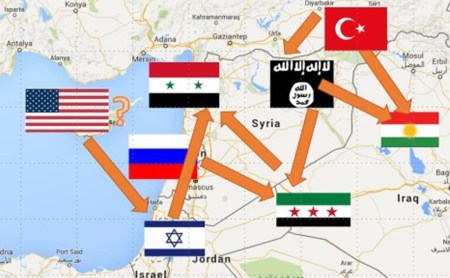
US bombs IsraelUS officials are confident they understand the situation on the ground in Syria. (Duffel Blog photo.)

WASHINGTON, D.C. — Pentagon spokesperson Col. Steve Warren announced US aircraft participating in Operation Inherent Resolve, the code name for the campaign against the Islamic State of Iraq and al-Sham (ISIS), struck targets in Tel Aviv today.

When asked why US warplanes would attack a long-standing ally, Warren explained, “Look, guys, this all makes perfect sense,” pointing to a nebulous PowerPoint slide.

“This was all supposed to be a campaign to topple Bashar al-Asad in Syria, starting with the Arab Spring in 2011. Which, in turn, allowed us to get back at Iran and Russia, both of whom support Syria,” said Warren. “So the CIA considered arming the rebels in Syria, which kind of backfired, and now we have ISIS, a group we thought we had already defeated back when they were al-Qaeda in Iraq.”

Secretary of Defense Ashton Carter further explained, “Sure, we were a little worried when ISIS started running around the Middle East, chopping everyone’s heads off. But fortunately, Iran came to our rescue. Well, in Iraq, that is. We’re still fighting Iran in Yemen.”

Chairman of the Joint Chiefs General Joe Dunford stressed the contributions of America’s coalition partners.

Dunford explained how the US tried to empower allies among the Gulf States to take on ISIS, “which in turn sort of helps us get back at Iran.”

“Unfortunately, most of those states also covertly support ISIS, even though they’re nominally our long-standing allies. Whoops,” said Dunford.

“That’s not to say we don’t have some powerful allies in the region, though,” Dunford explained. “The Kurds have proven to be our greatest allies there, and the Turks are one of our longest-standing NATO allies. Unfortunately, they spend more time fighting each other than ISIS. That old saying, ‘nothing brings people together like a common enemy’ is completely useless here.”

Dunford concluded, “So, you see, ISIS is supported by Arabs, who are opposed by Iranians, who are both opposed and allied with the US, who is sort of allied with Turkey and the Kurds, who are opposed to each other. Since the enemy of my friend is now my enemy, it made sense for the US to bomb Israel, Iran’s bitter adversary.”

Events grew even more complicated in the wake of the deadly terrorist attacks in Paris last Friday. The attacks were reportedly the work of ISIS, who also claimed credit for the bombing of a Russian airliner earlier this month.

“France and Russia have formed an alliance, though in doing so, they automatically caused Germany, Austria-Hungary, and the Ottoman Empire to declare war in return,” said Pentagon Press Secretary Peter Cook. “And, let’s face it, this whole thing really is the fault of the Ottomans when you think about it.”

The briefing then shifted to issues surrounding Afghanistan and Pakistan.

“There, the situation is much more simple,” Cook continued.  “The US is fighting the Taliban by providing billions of dollars in military aid to Pakistan, which is supporting the Taliban. Basically, it’s like that scene in The Empire Strikes Back where Luke Skywalker thinks he’s fighting Darth Vader, only to find his own face in Darth Vader’s helmet. That’s pretty much what we’ve gotten ourselves into.”


Netanyahu curtails German trip to deal with worsening Palestinian terror crisis

October 7, 2015

Netanyahu curtails German trip to deal with worsening Palestinian terror crisis, DEBKAfile, October 7, 2015

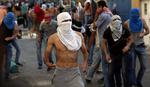
Issawiya_Oct._5_2015Palestinian riot in Issawiyeh, Jerusalem

After the Israeli cabinet launched measures Tuesday, Oct. 6, for “strengthening anti-terror defense” – such as cameras in the sky – and officials labored to spread word that the surge of Palestinian violence of the past week was beginning to ebb, Israel was hit that night from offside by a vicious pro-Palestinian upheaval in the Tel Aviv suburb of Jaffa. Hundreds of Israeli Arabs swarmed onto the streets to hurl rocks and burning containers at police, passing buses and Jews on the street. Six police officers were injured. Fired up by the radical Israeli Northern Muslim Movement, the rioters brandished Palestinian flags and yelled “Allah is Great!”  and “With our blood we shall redeem Al Aqsa!”

The Army Radio Station studio was besieged for five hours.

At length, the police announced the disturbance had been brought to an end by negotiations with Arab community leaders in Jaffa.

That strategy was part and parcel of the efforts made by IDF officers to bring an end to the surge of Palestinian violence besetting Jerusalem and the West Bank through revived negotiations with Palestinian security chiefs and soothing rhetoric poured out for the public by government and military officials. But the gap between that rhetoric and the unruly situation on the ground was impossible to bridge. The rocks and firebombs kept on flying – even after three killer-terrorists’ homes were demolished in Jerusalem Monday night.

Here too, the measure failed to impress as a deterrent because the punishment was meted out for terrorist crimes committed in 2014 and were therefore a year old – evidence of Israeli’s extremely slow response to murderous terror.

Prime Minister Binyamin Netanyahu finds himself cornered by two conflicting crises. While facing popular demands to quell Palestinian violence that caused four Israeli deaths and 30 people injured during the High Festivals, he is confronted with a mutiny within the government coalition and his own Likud party. At least half a dozen ministers angrily reject the line taken by the prime minister and Defense Minister Moshe Ya’alon for the past year – that the terror crisis must be handled “calmly and responsibly” – as nothing but softness on Palestinian terror.

Netanyahu has shot back by threatening to break up the government, which is less than a year old – either by inviting the opposition parties to join a new national unity government or calling a snap election.

This threat is fairly hollow. Replacing the mutinous ministers with members of the Labor opposition is a non-starter since its leader Yitzhak Herzog scarcely controls his own party. A coalition with Yair Lapid’s Future party and Avigdor Lieberman’s Yisrael Beitenu would be harder to control than the present lineup.

Netanyahu finds himself in this corner because he is handling the two crises by political means as part of the same problem.

This tactic is taken by Palestinian extremist leaders as a sign of Israeli weakness and encourages them to pour more fuel on the fire of anti-Israel violence. Ineffective measures, such as the cameras in the sky, which never worked on the 443 highway to Jerusalem, for instance, make things worse. The trickle of rockets from Gaza contradicts Ya’alon’s pledge to stop it.  A proactive, creative hand against the escalating Palestinian violence would gain the support of all the ministers and ease the popular sense of pervasive insecurity.