Archive for the ‘Sunni’ category

ISIS “lone wolf” violence on global stage baffles Western authorities fighting terror

June 27, 2015

ISIS “lone wolf” violence on global stage baffles Western authorities fighting terror, DEBKAfile, June 27, 2015

“Nothing to do with Islam.”

— DM)

Tunis-Abu_Yahya_al_Qayrawani_was_responsible_26.6.15_1The Tunisian hotel gunman Abu Yahya al Qayrawani

President Barack Obama has avoided linking terrorism with the Muslim religion. Friday, British premier David Cameron responded to the latest round of ISIS attacks with horror, but he also said, “…this terrorism is not in the name of Islam. Islam is a religion of peace.” The killers, rather, “do it in the name of a twisted, perverted ideology.”

******************

The US State Department said Friday, June 26, that there was no indication so far “on the tactical level” that “the attacks in Tunisia, Kuwait and France were coordinated.”

DEBKAfile: That conventional prototype of Islamist terrorist operations is no longer applicable. The Islamic State of Iraq and the Levant ISIS has its own methods of inflicting widespread death which are hard to detect or predict. A decree sent from the top galvanized followers worldwide into initiating lasrgely solo operations. The result was: 211 people dead on Tunisian beaches, a decapitated victim – the first in Europe – at an US-owned French factory, and 27 Shiites killed at a Kuwaiti mosque.

The three outrages were perpetrated on three continents just two hours apart.

The second Friday of the Muslim festival month of Ramadan marked the first anniversary of the founding of the Muslim caliphate in Iraq and Syria under the rule of Abu Bakr Al Baghdadi and was therefore judged a fitting date for killing infidels and Shiites.

These atrocities, along with the mass-executions of Syrian Kurds in Kobani and attacks on Saudi Shiite mosques, were also designed to further inflame sectarian hostilities between Sunnis and Shiites and remind non-Sunni minorities, including Kurds and Druze, of the cruel punishment in store for them.

The latest operational mode of terror employed by the Islamic State is a special adaptation of the “lone wolf” method – which is nothing like the lone terrorist acting on impulse, such as Israel officials depict after a Palestinian crashes a vehicle into a crowd, or stabs a passerby. It rests on meticulous forward planning, according to all the evidence.

Most of the terrorists activated by ISIS are radical Muslims living or working outside Syria or Iraq, often in western Europe and the United States, who have pledged an oath of loyalty to the Islamic State and its caliph, or else Western converts who returned home from Middle East battlefields:
These extremists set up their own operations for acting alone, or in twos or threes at most. They choose their targets according to three yardsticks:

1. The highest number of victims they can kill.

2.  The most gruesome atrocity, climaxing in beheading, for inspiring terror in a large community.

ISIS strategists have turned their backs on Osama bin Laden’s tactics. He employed 20 Saudi terrorists to hijack two commercial planes for murdering thousands of people in the horrific 9/11 attacks in New York and Washington.

Fourteen years later, ISIS uses a single terrorist who is ready to die – or two at most – to execute a massacre. It took no more than one gunman, later identified as Abu Yahya al Qayrawani, firing his Kalashnikov non-stop, to mow down 39 mostly foreign holidaymakers on the beaches of the Tunisian resort of Sousse.

Disguised as a European holidaymaker, he sauntered out to the first hotel beach, his automatic rifle hidden in a large sun shade and opened deadly fire on the unsuspecting people lying there, swimming or heading for the hotel lobby. He then raced to the next hotel beach, firing as he went and killing people as they sought cover.

He was only stopped by police gunfire. A bomb belt was found tied to his body, meaning that the shooting was just stage one of the attack. A big explosion was to have followed.

This was no ordinary “lone wolf” terrorist. It was a highly competent terror machine on two feet.

The beheading of victims is another novel Islamic States method, compared with the classical Al Qaeda of yore. Its perpetrators are usually selected from a group of Muslim extremists with a history in the movement. The more gruesome the deed, the more valiant and honored is the perpetrator.

Many of the jihadis are known to Western security and intelligence agencies. In same places, especially Britain, France and Tunisia, they may even serve local Western security agencies as informants, a role they use as cover for secretly setting up their attacks. This makes their attacks virtually unpredictable.

The unfortunate truth is that many Western counter-terror bodies have been penetrated by these extremists who pretend to cooperate in the war on terror and instead keep their handlers confused.

President Barack Obama has avoided linking terrorism with the Muslim religion. Friday, British premier David Cameron responded to the latest round of ISIS attacks with horror, but he also said, “…this terrorism is not in the name of Islam. Islam is a religion of peace.” The killers, rather, “do it in the name of a twisted, perverted ideology.”

DEBKAfile: Too many Muslims, even those who do not preach violence, don’t see it in those terms.

Is Obama Supporting a Shiite ISIS?

June 12, 2015

Is Obama Supporting a Shiite ISIS?, Front Page Magazine, Daniel Greenfield, June 12, 2015

Asaib-ahl-alhaq_logo-450x300Asaib Ahl al-Haq logo.

Obama had campaigned vocally against the Kyl-Lieberman Amendment which designated Iran’s Revolutionary Guard, the hidden force behind Asaib Ahl al-Haq and much of the Shiite terrorist infrastructure, a terrorist organization. He had accused its sponsors of “foolish saber rattling.”

While we focused on ISIS, its Shiite counterparts were building their own Islamic State by burrowing from within to hollow out the Iraqi institutions that we had put into place. ISIS is a tool that Iran is using to force international approval of its takeover of Iraq and its own nuclear program.

Like ISIS, its Shiite counterparts envision an apocalyptic struggle in which the other branch of Islam will be destroyed, along with all non-Muslims, leading to regional and global supremacy. Iraq is only one of the battlefields on which this war is being fought and Obama’s inept mix of appeasement and regime change, abandoning allied governments while aiding enemy terrorists has helped make it possible.

*********************

Staff Sgt. Ahmed Altaie was the last American soldier to come home from Iraq. His body was turned over by Asaib Ahl al-Haq or The League of the Righteous; a Shiite terrorist group funded and trained by Iran.

Altaie had been kidnapped, held for ransom and then killed.

It was not Asaib Ahl al-Haq’s only kidnapping and murder of an American soldier. A year after Altaie’s kidnapping, its terrorists disguised themselves as Americans and abducted five of our soldiers in Karbala. The soldiers were murdered by their Shiite captors after sustained pursuit by American forces made them realize that they wouldn’t be able to escape with their hostages.

Asaib Ahl al-Haq’s obsession with American hostages was a typically Iranian fixation. Iran’s leaders see the roots of their international influence in the Iran hostage crisis. Its terrorist groups in Lebanon had abducted and horrifically tortured Colonel William R. Higgins and William Francis Buckley.

Higgins had been skinned alive.

Most Americans have never heard of Asaib Ahl al-Haq, sometimes referred to as the Khazali Network after its leader, even though it has claimed credit for over 6,000 attacks on Americans. Its deadliest attacks came when the Democrats and their media allies were desperately scrambling to stop Bush from taking out Iran’s nuclear program. Asaib Ahl al-Haq’s ties to Iran were so blatant that the media could not allow it to receive the kind of coverage that Al Qaeda did for fear that it might hurt Iran.

Obama had campaigned vocally against the Kyl-Lieberman Amendment which designated Iran’s Revolutionary Guard, the hidden force behind Asaib Ahl al-Haq and much of the Shiite terrorist infrastructure, a terrorist organization. He had accused its sponsors of “foolish saber rattling”.

Nancy Pelosi joined the Democratic Party’s pro-Iranian turn, rejected a vote on the amendment and sneered that if the kidnapping and murder of American soldiers was “a problem to us and our troops in Iraq, they should deal with it in Iraq.” Earlier that year, she had visited Syria’s Assad to stand with him against President Bush even while Assad was aiding the terrorists massacring American soldiers.

Once Obama took power, coverage of the war was scaled down so that Americans wouldn’t realize that the rising power of ISIS and Asaib Ahl al-Haq were already making a mockery of his withdrawal plans.

But Asaib Ahl al-Haq was not merely an anti-American terrorist group; it was an arm of the Shiite theocracy. As a Shiite counterpart to what would become ISIS, it had most of the same Islamic goals.

While Obama was patting himself on the back for the end of the Iraq War and gay rights, Asaib Ahl al-Haq was throwing those men and women it suspected of being gay from the tops of buildings.

When buildings weren’t available, it beat them to death with concrete blocks or beheaded them.

Its other targets included shelters for battered women, which the Islamist group deemed brothels, men who had long hair or dressed in dark clothing. And even while its Brigades of Wrath were perpetrating these atrocities, Obama and the Shiite Iraqi government embraced the murderous terrorist group.

Qais al-Khazali, the leader of Asaib Ahl al-Haq, and his brother Laith al-Khazali along with a hundred other members of the terror group were freed during Obama’s first year in office. (But to provide equal aid and comfort to the other side, Obama also freed the future Caliph of ISIS in that same year.)

“We let a very dangerous man go, a man whose hands are stained with US and Iraqi blood. We are going to pay for this in the future,” an unnamed American officer was quoted as saying. “This was a deal signed and sealed in British and American blood.”

“We freed all of their leaders and operatives; they executed their hostages and sent them back in body bags.”

The releases were part of Obama’s grand strategy of reconciliation for Iraq. The miserable reality behind the upbeat language was that Obama was handing over Iraq to ISIS, Iran and its Shiite militias.

Last year, Maliki had made Asaib Ahl al-Haq and other Shiite terror groups into the Sons of Iraq that were to protect and defend Baghdad. Asaib Ahl al-Haq and its leader were now the Iraqi security forces. The Shiite death squads were in charge even while they continued carrying out ISIS-style massacres.

Obama belatedly decided to respond to ISIS, but his war strategy depends on Asaib Ahl al-Haq.

Officially his strategy is to provide training and air support for the Iraqi military. But the Iraqi military’s Shiite officers conduct panicked retreats in the face of ISIS attacks while abandoning cities and equipment. The goal of these retreats is to make Asaib Ahl al-Haq and other Shiite militias into the only alternative to ISIS for the United States. Even though he pays lip service to Sunni and Kurdish resistance to ISIS, Obama shows that he has accepted Iran’s terms by refusing to arm and support them.

While we focused on ISIS, its Shiite counterparts were building their own Islamic State by burrowing from within to hollow out the Iraqi institutions that we had put into place. ISIS is a tool that Iran is using to force international approval of its takeover of Iraq and its own nuclear program.

An Iraqi official last year was quoted as saying that Asaib Ahl al-Haq’s men give orders to the police and military. “Before they were just around, now they are high-ranking officers in the military.”

Some defense experts wonder if the Iraqi military even exists. The bulk of the forces in Tikrit were Shiite Jihadists and they are armed with American weapons that they receive from the Iraqi government. Asaib Ahl al-Haq boss Qais al-Khazali claims that soldiers and Shiite militia members both wear Iraqi military uniforms.

The capture of Tikrit became an opportunity for the Shiite terrorist groups and Qasem Soleimani, their Iranian terror boss, to boast about their victory and loot and terrorize the local Sunni residents.

Obama’s official plan to arm and train the Iraqi military and security forces is a dead end because like the mythical moderate Syrian rebels, they are fronts for moving money and weapons to Jihadists. We are arming ghost armies and funding fake political institutions and the money and weapons end up going to bands of Islamic terrorists, militias and guerrillas that are actually calling the shots.

By aiding Shiite militias in Iraq and Sunni militias in Syria, we’re backing both sides of an Islamic civil war.

Obama turned over Iraq to the Shiites and then backed the Muslim Brotherhood’s efforts to force the Shiites out of power in Syria. The Sunni-Shiite civil wars tearing the region apart were caused by those two decisions. His solution to the wars is to continue backing the same forces responsible for them.

Despite assorted denials, Obama’s real ISIS strategy is to have Iran do the fighting for him in Iraq.

But Obama is backing one ISIS against another ISIS. Why is a Shiite Islamic state that kidnaps and kills Americans, throws gays off buildings and massacres women better than a Sunni Islamic state that does the same things? Not only is the Obama strategy morally dubious, but it’s also proven to be ineffective.

The rise of ISIS has helped Iran tighten its hold on Shiite areas in Iraq and Syria. Iran does not need to beat ISIS. Its interests are best served by maintaining a stalemate in which ISIS consolidates Sunni areas while Iran consolidates Shiite areas. The more Obama aids Iran and its terrorist forces as a counterweight to ISIS, the more Iran sees keeping ISIS around as being vital to its larger strategy.

By aiding Iran, Obama is really aiding ISIS.

Despite depending on our air support, Asaib Ahl al-Haq and its leaders are threatening to attack American planes and soldiers making it clear that they view the fight against ISIS and for Assad as part of a larger struggle for achieving Iran’s apocalyptic Shiite ambitions for the region and the world.

Iran’s Supreme Leader, Ayatollah Ali Khamenei recently gave a speech in which he warned that, “We must prepare the country’s conditions, the region’s conditions, and, Allah willing, the world’s conditions for the reappearance [of Imam Mahdi] will spread justice.”

Like ISIS, its Shiite counterparts envision an apocalyptic struggle in which the other branch of Islam will be destroyed, along with all non-Muslims, leading to regional and global supremacy. Iraq is only one of the battlefields on which this war is being fought and Obama’s inept mix of appeasement and regime change, abandoning allied governments while aiding enemy terrorists has helped make it possible.

Time wars

June 12, 2015

Time wars, Israel Hayom, Judith Bergman, June 12, 2015

Perhaps one of the greatest, yet least spoken of, misconceptions of the West concerning the ‎Middle East is its failure to understand the radically different concept of time on which it ‎operates. While Israel predominantly ticks on a Western — if Mediterranean — linear clock, ‎which puts a premium on speed and efficiency, this is overwhelmingly not the case in Arab ‎culture. For Muslims in particular, time is the domain of Allah and from this belief follows a ‎fatalism and an immense patience, which could almost be mistaken for resignation, that in ‎time Allah will see to all things.

There could be no greater contrast to the West, which is impatient to the point of ‎hyperventilation, wishing to solve problems that are not always solvable as fast as possible ‎– and preferably yesterday

***********************

In his speech at the 15th annual Herzliya Conference on Tuesday, Prime Minister Benjamin ‎Netanyahu reaffirmed his commitment to a demilitarized Palestinian state that recognizes the ‎Jewish state. Much more important than this reaffirmation, however, was the prime minister’s ‎subsequent realistic estimation of the actual possibility of establishing such a demilitarized ‎state.

Netanyahu described how he had attempted in vain to talk to Palestinian ‎Authority President Mahmoud Abbas over the course of six and a half years. When he finally met him, in Sharm el-Sheikh, they spoke ‎for six hours and the only thing that Abbas had to say during this session was a demand that ‎Israel extend the freeze on settlement construction.‎

‎”So I again call on Abbas to return to the negotiating table without preconditions,” said the ‎prime minister, “but I also know he has very little reason to talk. Why should he talk? He can ‎get by without talking. He can get by with an international community that blames Israel for failing to hold talks. In other words, the Palestinians run from the table. … But the Palestinians have a ‎nifty trick up their sleeve: They refuse to negotiate and then get international pressure, ‎sanctions, boycotts on Israel for there not being negotiations. It’s a perfect catch-22. And there ‎are those who attempt to impose terms on Israel in the U.N. Security Council, because there are ‎no talks, and some of them pretend that the dangers we face are not real dangers at all.”

In fact, the ability of the international community — particularly that of its European members — to ‎willfully close its eyes to the dangers and to the complicated geopolitical circumstances that ‎Israel continues to finds itself in, particularly now, is boundless. The catalogue of malicious ‎actions on the part of the international community, most particularly its European members, to ‎force Israel into acquiescing to concessions is expanding. At the same time, its inability to understand the geopolitical realities of the Middle East grows.‎

Perhaps one of the greatest, yet least spoken of, misconceptions of the West concerning the ‎Middle East is its failure to understand the radically different concept of time on which it ‎operates. While Israel predominantly ticks on a Western — if Mediterranean — linear clock, ‎which puts a premium on speed and efficiency, this is overwhelmingly not the case in Arab ‎culture. For Muslims in particular, time is the domain of Allah and from this belief follows a ‎fatalism and an immense patience, which could almost be mistaken for resignation, that in ‎time Allah will see to all things.

There could be no greater contrast to the West, which is impatient to the point of ‎hyperventilation, wishing to solve problems that are not always solvable as fast as possible ‎– and preferably yesterday. ‎

It is this impatience, bordering on panic, that characterizes the current efforts of the U.S. and ‎the EU to reach a deal with Iran, rushed even more, of course, by U.S. President Barack Obama’s ego-driven ‎desire to have a deal with Iran as part of his legacy.‎

The Western impulse to solve problems that may turn out to be unsolvable, especially ‎according to a Western time schedule, and the impatience that accompanies repeated failures ‎to solve said problems, is nowhere more prevalent than concerning the question of Israel and ‎the Palestinians. In fact, the very actions of the international community create a false sense of ‎urgency that would not necessarily exist among the parties if the West did not insist on ‎constantly meddling in the process.

Yet, the conflicts of the Middle East — and the Israeli-Arab conflict is no different in this respect ‎‎– will not be solved with Western quick fixes, express shuttle diplomacy and emergency ‎meetings in the Security Council, only because the West wishes it to be so. While Israel’s clock ‎may tick on a Western time continuum, its security does not, because its security is tightly ‎connected to its Arab and Persian neighbors, who operate on a ‎different time continuum. During a lecture about the Islamic State group, Dr. Eitan Azani, ‎deputy executive director of the Institute for Counter-Terrorism at the IDC Herzliya, mentioned ‎that this organization — which contrary to popular belief is highly organized, with former Iraqi ‎colonels and intelligence officers at the top — operates under a 100-year plan.

One example of a centuries old conflict in the Middle East, which continues unresolved without ‎enjoying a fraction of the sense of urgency that the West bestows on the Israeli-Palestinian ‎conflict, is the persecution of Christians in the Muslim world, including the PA-controlled ‎territories, where their numbers have dwindled dramatically since the Oslo Accords. Most ‎urgent in this respect is the ethnic cleansing of Christians going on in Iraq, which until now has ‎barely caused Western powers to bat an eye.

Similarly, the Yazidis, an ancient people who live in northern Iraq, have suffered persecution ‎throughout their history, but the current ethnic cleansing of the group by Islamic State has not created any sense of ‎urgency in the West, to put it mildly.

Another example is the persecution of the Kurds, an ancient nation comprising roughly 30 million people, and the blatant denial of national self-‎determination for them. Western ‎powers brutally let them down in their quest for national self-determination after World War I ‎and subsequently conveniently ignored them, as if they had disappeared from history ‎altogether. Instead, Arab, Turkish and Persian rulers have persecuted them, most infamously ‎perhaps Saddam Hussein, who used chemical weapons against them. In the Kurds’ ‎current battle against Islamic State, the West has not exactly been rushing to aid them. ‎

Finally, the internal Muslim conflict between Shiites and Sunnis is also one that has existed for ‎centuries and will probably continue for centuries to come. The West has never felt any urge to ‎resolve this bitter conflict, not when the Sunni Saddam was murdering Shias in the south of Iraq ‎and not now, when Sunni Islamic State murders Shias — and also any Sunnis who do not adhere to its ‎particular teachings of Islam.‎

Only one conflict out of the many currently burning in the Middle East has been specifically selected for ‎intense scrutiny and resolution by the West — the Israeli-Palestinian conflict. Further, as the ‎prime minister said, it is Israel, not the Palestinians, that is blamed for not resolving this ‎conflict, despite the fact that the Palestinians have run away from every negotiation table that ‎they have ever seen. This should have caused great concern and outrage among ‎decent people a long time ago and a public debate about the rationale for such skewed and ‎slanted Western policies, but the world remains silent and unquestioning on this and instead ‎rages with fury at Israel.

Israel does not have the luxury of dealing with the rose-tinted, imaginary Middle East of the ‎West, where everybody would get along just fine, swaying to the tune of John Lennon’s ‎‎”Imagine,” if only Israel would give in to every single demand. Israel must stick to the harsh ‎realities on the ground and deal with the region, as tough, difficult and dangerous as it actually ‎is. This is the important message that the prime minister communicated in his speech, and it ‎would be most helpful if the West would listen — for once.

US finds peeling back the Iran sanctions onion no easy task

June 10, 2015

US finds peeling back the Iran sanctions onion no easy task, Israel Hayom, June 10, 2915

(For Obama, principles are as flexible as words.

Humpty words

— DM)

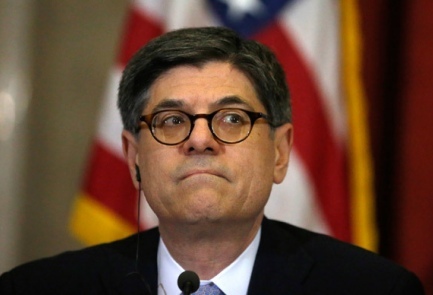
143393177342310791a_bU.S. Treasury Secretary Jacob Lew | Photo credit: Reuters

Under the sanctions developed over decades, hundreds of companies and individuals have been penalized not only for their roles in the country’s nuclear program but also for ballistic missile research, terrorism, human rights violations and money laundering.

Officials say the administration can meet its obligations because of how it interprets nuclear sanctions.

For example, they say measures designed to stop Iran from acquiring ballistic missiles are nuclear-related because they were imposed to push Iran into the negotiations. Also, they say sanctions that may appear non-nuclear are often undergirded by previous actions conceived as efforts to stop Iran’s nuclear program.

***********************

The Obama administration may have to backtrack on its promise that it will suspend only nuclear-related economic sanctions on Iran as part of an emerging nuclear agreement, officials and others involved in the process told The Associated Press Tuesday.

The problem derives from what was once a strong point of the broad U.S. sanctions effort that many credit with bringing Iran to the negotiating table in the first place.

Administration officials vehemently reject that any backtracking is taking place, but they are lumping sanctions together, differently from the way members of Congress and critics of the negotiations separate them.

Under the sanctions developed over decades, hundreds of companies and individuals have been penalized not only for their roles in the country’s nuclear program but also for ballistic missile research, terrorism, human rights violations and money laundering.

Now the administration is wending its way through that briar patch of interwoven economic sanctions.

The penalties are significant. Sanctioned foreign governments, companies or individuals are generally barred from doing business with U.S. citizens and businesses, or with foreign entities operating in the American financial system. The restrictions are usually accompanied by asset and property freezes as well as visa bans.

Negotiators hope to conclude a final nuclear deal by June 30. According to a framework reached in April, the U.S. will be required to lift sanctions that are related to Iran’s nuclear program but could leave others in place. President Barack Obama can suspend almost all U.S. measures against Iran, though only Congress can revoke them permanently.

“Iran knows that our array of sanctions focused on its efforts to support terrorism and destabilize the region will continue after any nuclear agreement,” Treasury Secretary Jack Lew told a gathering of American Jews in a weekend speech. U.S. officials will “aggressively target the finances of Iranian-backed terrorist groups and the Iranian entities that support them,” he said, including the Lebanese militant group Hezbollah and Iran’s Quds Force.

The Treasury Department’s sanctions point man, Adam Szubin, has been tasked with sorting out the mess, according to U.S. officials, though no clear plan has yet been finalized.

Officials say the administration can meet its obligations because of how it interprets nuclear sanctions.

For example, they say measures designed to stop Iran from acquiring ballistic missiles are nuclear-related because they were imposed to push Iran into the negotiations. Also, they say sanctions that may appear non-nuclear are often undergirded by previous actions conceived as efforts to stop Iran’s nuclear program.

The officials who provided information for this story spoke only on condition of anonymity because they were not authorized to speak publicly on the private discussions.

After years of negotiations, U.S. officials believe a deal is within reach that for a decade would keep Iran at least a year from being able to build a nuclear weapon.

In return, the U.S. would grant billions of dollars in relief from sanctions that have crippled Iran’s economy. But the whole package risks unraveling if the U.S. cannot provide the relief without scrapping sanctions unrelated to Iran’s nuclear program.

Administration officials say they are examining a range of options that include suspending both nuclear and some non-nuclear sanctions, a step that would face substantial opposition in Congress and elsewhere. Under one scenario, the U.S. could end non-nuclear restrictions on some entities, then slap them back on for another reason. But Iran could then plausibly accuse the U.S. of cheating on its commitments.

U.S. President Barack Obama has spoken about Iran potentially recouping up to $150 billion in assets trapped overseas. The process for how that would take place is still being worked through, said officials.

The Iranian Central Bank may prove the most glaring example of the administration’s dilemma, and officials acknowledge there is no way to give Iran the sanctions relief justified by its compliance without significantly easing restrictions on the institution.

The bank underpins Iran’s entire economy, and for years the U.S. avoided hitting it with sanctions, fearing such action would spread financial instability and raise oil prices. By late 2011, with Iran’s nuclear program advancing rapidly, Obama and Congress did order penalties, declaring the bank a “primary money laundering concern” and linking its activity to ballistic missile research, terror financing and support for Syrian President Bashar Assad.

The effects were far-reaching: Petroleum exports fell by 60%, Iran suffered runaway inflation, cash reserves dried up and industrial output in several sectors plummeted. And Iran agreed to talk about its nuclear program with the United States and five other world powers.

Now that the nuclear agreement is so close, Iran wants these sanctions lifted. The administration officials say all sanctions on the bank are nuclear-related.

Lew told the Jewish conference in New York that a nuclear accord would include the suspension of all “secondary” oil, trade and banking restrictions — those that apply to U.S. and non-U.S. banks, as well as foreign governments.

Many of these measures overlap with American sanctions tied to Iran’s nuclear program, and that has officials considering new sanctions to keep certain Iranian institutions under pressure.

Eliminating the secondary sanctions across the board could have wide-ranging implications, making it easier for Iran’s Revolutionary Guard Corps and its police, intelligence services and paramilitary groups to do business.

That possibility has Iran’s rivals in the region, including Israel and the Sunni monarchies of the Middle East, gravely worried.

“I share their concern,” Gen. Martin Dempsey, the Joint Chiefs of Staff chairman, said Tuesday in Jerusalem.

“If the deal is reached and results in sanctions relief, which results in more economic power and more purchasing power for the Iranian regime, it’s my expectation that it’s not all going to flow into the economy to improve the lot of the average Iranian citizen,” he said.

“I think they will invest in their surrogates. I think they will invest in additional military capability.”

Iran’s Revolutionary Guard is under U.S. sanctions because of its proliferation of weapons of mass destruction. But because the U.S. views the corps as so pernicious, the administration is considering new measures to help block it from meddling in the internal conflicts of Iraq, Lebanon, Syria and Yemen.

Of the 24 Iranian banks currently under U.S. sanctions, only one — Bank Saderat, cited for terrorism links — is subject to clear non-nuclear sanctions. The rest are designated because of nuclear and ballistic missile-related financing, while several are believed to be controlled by the Revolutionary Guard.

Will they be cleared for business with the world? U.S. officials still cannot say one way or another. Congress, too, has not received a list of banks and institutions that would be released from sanctions under the deal.

If the United States cannot deliver on its promises, it could take the blame for a collapse of the years-long negotiations toward a nuclear deal, putting the world — in the words of Obama and other U.S. officials — on a path toward military confrontation. At the same time, an Iran unburdened by sanctions could redouble efforts toward nuclear weapons capacity, while international unity and the global sanctions architecture on Tehran fray.

Two major Mid East escalations: Yemeni rebels fire Scuds at Saudi air base. ISIS warns Syrian rebels

June 6, 2015

Two major Mid East escalations: Yemeni rebels fire Scuds at Saudi air base. ISIS warns Syrian rebels, DEBKAfile, June 6, 2015

us_patriot_missiles_saudi_arabia_6.6.15US Patriots stationed in Saudi Arabia

Saudi military sources reported Saturday, June 6, that Patriot air defense batteries had intercepted Scud missiles fired by Yemen Houthi rebels against the kingdom’s largest air base at Khamis al-Mushait in the south west. It is from there that Saudi jets take off to strike the Yemeni rebels. DEBKAfile’s military sources report that the Patriot anti-missile systems, which were activated for the first time, were manned by American teams. This was the first direct US military intervention on the Saudi side of the Yemen conflict.

It was also the first time that Houthi rebels or their allies had fired Scud missile into the oil kingdom. Our sources add that the launch was supervised by Hizballah officers. They were transferred by Tehran to Yemen to ratchet up the conflict – although US, Saudi, Yemeni government and Houthi representatives meeting secretly in Muscat Friday agreed to attend a peace conference in Geneva this month.

Nonetheless, through Friday night and Saturday morning, Houthi forces and allied military units kept on battering at Saudi army and National Guard defense lines, in an effort to break through and seize territory in the kingdom’s southern provinces. The insurgents were evidently grabbing for strategic assets to strengthen their hand at the peace conference.

Iran’s supreme leader Ayatollah Ali Khamenei is also juggling his chips on the deteriorating Syrian warfront. In the coming hours, he is widely expected to announce the activation of the mutual defense pact signed between Iran and Syria in 2006, under which each signatory is committed to send military troops if necessary to defend its partner.

Thursday, June 4, Khamenei fired sharp verbal arrows at the Obama administration: “The United States tolerates extremist groups in Syria and Iraq and even helps them in secret,” he charged.

Our military sources add that although various Mid East publications, especially in Lebanon, are reporting that Iran has already sent units in numbers ranging from 7.000 to 15,000 troops to Syria, none have so far landed, except for the Shiite militias brought over at an earlier stage of the Syrian conflict. The expected Khamenei announcement may change this situation.

ISIS was not waiting. Saturday morning, the group issued a warning to the Syrian rebel forces fighting in the south – the Deraa sector of southern Syria near the meeting point of the Jordanian and Israeli borders and the Quneitra sector opposite the Israeli Golan. They were ordered to break off contact with the US Central Command Forward Jordan-CF-J which is located north of Amman, and the IDF operations command center in northern Israel. Any Syrian rebels remaining in contact with the two command centers would be treated as infidels and liable to the extreme penalty of beheading, the group warned.

The impression of ominous events brewing in the regime was rounded off Friday night by an unusual announcement by the Israeli army spokesman that Iron Dome anti-missile batteries had been deployed around towns and other locations in the south, although no reference was made to any fresh rocket attacks expected from the Gaza Strip. DEBKAfile adds: The first batteries were arrayed Thursday night, June 4, at vulnerable points in southern Israel – from the southernmost Port of Eilat on the Gulf of Aqaba to the western Port of Ashdod on the Mediterranean.

The Islamic State Is Here to Stay

June 5, 2015

The Islamic State Is Here to Stay, VICE NewsAhmed S. Hashim, June 6, 2015

(Please see also, The Kurd-Shia War Behind the War on ISIS. — DM)

The victories against IS in early 2015 have proven ephemeral — or have been nullified by IS gains elsewhere. On Sunday, CIA director John Brennan said on Face the Nation, “I don’t see this being resolved anytime soon.” Assad’s vaunted offensives of February 2015 have fallen short as the regime faced stiff resistance from a wide variety of opposition fighters, including elements from IS. The failure was alarming in part because the campaign was designed and aided by both Hezbollah and the Iranians, two seemingly ascendant Shia powers.

************************

Just a few months ago, analysts and policy-makers were certain that the defeat of Islamic State (IS) forces was simply a matter of time.

Coalition airstrikes would degrade the group’s capabilities and eventually allow Iraqi forces and Kurdish Peshmerga — though discredited by their poor military showing in mid-2014 — to push back the extremists. And indeed, IS fighters were ejected from Tikrit in March 2015 by the Iraqi army and thousands of motivated fighters from Shia militias. In Kobani in northern Syria, IS fighters were defeated by Syrian Kurdish fighters. Elsewhere in the country, the regime of Bashar al-Assad was going on the offensive with help from Hezbollah and advisers from the Iranian Revolutionary Guard.

The Islamic State, however, rose like a phoenix from the ashes of every setback. And today, the situation is not so rosy.

The victories against IS in early 2015 have proven ephemeral — or have been nullified by IS gains elsewhere. On Sunday, CIA director John Brennan said on Face the Nation, “I don’t see this being resolved anytime soon.” Assad’s vaunted offensives of February 2015 have fallen short as the regime faced stiff resistance from a wide variety of opposition fighters, including elements from IS. The failure was alarming in part because the campaign was designed and aided by both Hezbollah and the Iranians, two seemingly ascendant Shia powers.

The situation in Iraq is just as complicated, something that the Obama administration appears either oblivious to or reluctant to acknowledge. Much of the US strategy continues to hinge on what is increasingly a mirage: a unified, albeit federal, Iraq under the control of Baghdad. Meanwhile, the resilience of IS is greatly enhanced by the ability of its military forces to innovate and adapt faster on the ground than its lackluster opponents.

In light of the constant aerial strikes by the US and its allies, IS has dispersed and made its forces more mobile, no longer presenting dense concentrations of fighting men as it did when it seized Mosul in mid-2014. Instead, when IS seized Ramadi in May 2015, it made use of inclement weather and sent several small units from different directions simultaneously into the city aided by suicide bombers. Moreover, the fact that the group faced ill-equipped and poorly motivated Sunni fighters in and around Ramadi did not do anything for Baghdad’s standing with the country’s already alienated Sunni community, which had pleaded for arms while caught between the unfathomable brutality of IS and revengeful Shia militias.

Many Sunnis are now angling for their own “super-region,” one that would have considerable independence from Baghdad. The problem? In order to have it, the Sunnis would need to first defeat IS. Currently, they’re unable to do so because they lack the resources; despite all the talk from Baghdad and Washington about arming Sunni tribes, Baghdad is not actually keen to do so.

And besides, the Sunnis seem relatively ambivalent about defeating IS. They took an unequivocal stance between late 2006 and 2009, when they joined with the Americans and the Iraqi government to deal the Islamist militants what was then seen as a decisive blow. Now, however, despite Sunnis’ resentment and fear of IS, the Islamists’ existence is seen as a kind of insurance policy against Shia revanchism should Baghdad succeed in retaking the three Sunni provinces of Anbar, Salahuddin, and Ninevah.

(Please see video at the link. — DM

The “victory” of the Iraqi government in Tikrit was more propaganda than reality; a few hundred IS fighters managed to inflict considerable damage on the Shia militias that had been mobilized to fight alongside the Iraqi army, then withdrew because they were outnumbered and wished to avoid being surrounded. The IS forces in Tikrit simply felt that they had done enough damage; there was no need to waste further assets in an untenable situation.

Militarily, the Iraqi Shia militias are better motivated and more dedicated than the regular army. Anecdotal information out of Baghdad suggests that Iraqi Shias are wondering whether the government should invest more effort building these forces into an effective and more organized parallel army. Even that parallel army, however, might be reluctant to commit to any significant long-term offensive to reclaim provinces full of “ungrateful” Sunnis.

But the Shia are willing to die to defend what they have, and there is increased sentiment among the Shia in central Iraq and Baghdad, along with the southern part of the country, that they would be better off without the Sunnis. There also exists the belief that the Kurds have more or less opted out of the Iraqi state despite the fact that they maintain a presence within the government in Baghdad. The Shia would seemingly not be sorry to see them exit the government in a deal that would settle as best as possible divisions of resources and territory. However, whether the Kurds would take the plunge and opt for de jure rather than de facto independence is a question that is subject to regional realities — How would Ankara and Tehran react? — rather than merely a matter of a deal between Baghdad and Erbil.

The Islamic State will continue to be a profound geopolitical problem for the region and the international community, and a long battle lies ahead. Syria and Iraq are more or less shattered states; it is unlikely that they will be put back together in their previous shapes. If Assad survives 2015, it will be as head of a rump state of Alawites and other minorities protected by Hezbollah, Iran, and Alawite militias. Shia Iraq will survive, and will possibly dissociate itself from the nettlesome Sunni regions. The Kurds will go their own way step by step. The international community is currently at a loss for how to stem the flow of foreign fighters to the IS battlefields — and even more serious is the growing sympathy and admiration for the group in various parts of the world among disgruntled and alienated youth.

If the US is serious about defeating IS, it needs to take on a larger share of the fight on the ground. This means more troops embedded with regular Iraqi forces in order to bring about better command, control, and coordination. It also means advisors who can continue to train these forces so that they improve over time. If this is not done, the regular Iraqi military will continue to be nothing more than an auxiliary to the more motivated — and pro-Iranian — Shia militias. Currently, militia commanders are giving orders to the regular military; that cannot be good for morale.

This month, the Islamic State celebrates the first anniversary of its self-declared caliphate. The group has little reason to fear it will be the last.

The Kurd-Shia War Behind the War on ISIS

June 5, 2015

The Kurd-Shia War Behind the War on ISIS, The Daily BeastMat Wolf, June 5, 2015

1433495718557.cachedAhmed Jadallah/Reuters

“We could see outright civil war,” Farhan Siddiqi, a research fellow on international politics and national security at the Middle East Research Institute (MERI), tells The Daily Beast. Siddiqi says he believes the Kurds and the Shia central government would face domestic and international pressure to avoid such a conflict, but if cooler heads failed a hypothetical conflict could escalate into something even worst than the current ISIS war.

********************

In a dusty town near the Iranian border, the terror group was defeated, but the victors are at each other’s throats.

JALAWLA, Iraq — Behind Iraq’s front lines against the so-called Islamic State, Kurdish and Shia factions already are drawing a blueprint for what could be the region’s next major conflict.

In the city of Jalawla in Iraq’s Diyala province, near the Iranian border approximately 80 miles east of Baghdad, Kurdish forces have given the boot to the Shia militia they previously allied with to take the city from ISIS in a bloody November battle. Last month, the commanding Kurdish Peshmerga general in Jalawla threatened to start shooting if the Shia refused to leave the city immediately.

“This area is ours now, and that’s not changing,” Brig. Gen. Mahmoud Sangawi told The Daily Beast. He added that Jalawla, an abandoned city that previously had 83,000 people and was 80 percent Sunni Arab in 2003, would soon have a Kurdish mayor. Sangawi bragged that henceforth the city would also be called by its new Kurdish moniker, “Golala.”

Not so fast, say the Shia militias. They were recruited in the name of a fatwa from Iraqi Grand Ayatollah Ali al-Sistani in June 2014, following the Iraqi army’s humiliating loss of Mosul, Iraq’s second largest city, virtually without a fight. Many are trained and advised by Iranians, and they have been the spearhead of Baghdad’s efforts to recover lost territory in the name of the national government.

The Kurds, meanwhile, have fought hard to protect, consolidate and indeed expand areas they consider “their” territory.

“They [the Kurds] need to recognize this region is Iraq,” says Ali Khorasani, the commander of the Hashd al-Shaabi militias that Sangawi’s Peshmerga expelled from Jalawla. Hashd al-Shaabi is the Arabic term for Popular Mobilization Units, the name preferred by the volunteer Shia militias.

Khorasani said the Kurds “are strong, and they’re very organized, and our relationship was good, but now our relationship has problems.” And that appears to be an understatement. When asked if Kurdish moves in the region might lead to another war, Khorasani replied tersely: “Maybe.”

For now, Khorasani’s unit has been dispersed to the south of Jalawla around a town called Sadiya. It’s only a five-minute drive from Jalawla, but Kurdish forces are limiting access to Sadiya and prevented us from going there. Khorasani spoke to The Daily Beast by phone.

The ISIS blitz of northern and central Iraq one year ago sent the on-paper highly trained and well-equipped Iraqi army scrambling, and led to the sacking of controversial Shia Prime Minister Nouri al-Maliki. He was widely criticized for his sectarian policies that alienated the country’s Sunni Arabs, who are now the main support base for ISIS.

The Iraqi army’s retreat also opened the door for Kurdish forces to seize large swaths of territory abandoned by government forces.

Now, the central government’s inability to deal decisively with ISIS in Anbar province and its loss of the Anbar provincial capital Ramadi has seen the Kurds acting even more brazenly in anticipation of an independence push. Iraqi Kurdistan President Masoud Barzani has promised a long-awaited Kurdish independence referendum.

“Certainly an independent Kurdistan is coming,” Barzani said on a visit to Washington D.C. on May 6. “It will take place when the security situation is better and when the fight against ISIS is over.”

“We could see outright civil war,” Farhan Siddiqi, a research fellow on international politics and national security at the Middle East Research Institute (MERI), tells The Daily Beast. Siddiqi says he believes the Kurds and the Shia central government would face domestic and international pressure to avoid such a conflict, but if cooler heads failed a hypothetical conflict could escalate into something even worst than the current ISIS war.

Since the summer of 2014, the Kurds have increased their territory by 40 percent, most notably around the oil-rich city of Kirkuk, often called the “Kurdish Jerusalem.” Today Kirkuk has a Kurdish population of around 50 percent combined with large groups of Arabs and Turkmens. The city and its outlying territories were frequent targets of “Arabization” by the Saddam Hussein regime, a policy meant to shift the ethnic balance of power there as he waged a genocidal war against the rebellious Kurds. Now they want the city back, but Arab families who have lived there for decades have no place to go.

Areas like Jalawla are a different matter. It is closer to Baghdad than to the Iraqi Kurdish capital Erbil. It, too, was the target of waves of Arabization, but it has been a majority Arab city for decades. By Sangawi’s own admission the population was less than 10 percent Kurdish in 2003.

“The Baath regime had a process of oppressing the Kurdish people. They had to change their names to Arab names or leave the city,” Sangawi says. “When filling out forms they had to register as Arab. In 1970, 32 percent of this city was Kurdish. The city was only 8 percent Kurdish at the time of the American invasion in 2003. The Arabs tried to rob the Kurds of their land.”

Today, Jalawla has been completely abandoned by its civilian inhabitants, many of whom supported ISIS, according to Sangawi. Feral dogs dart in front of Peshmerga convoys and Kurdish graffiti proclaims the city part of Kurdistan. The immediate surrounding area of the town—dusty flat fields speckled with palm groves—clashes with the green, mountainous terrain often associated with Kurdistan, and syncs up more with stereotypically Arab lands.

Parts of Jalawla, especially the former ISIS command center on high ground overlooking the city, have been reduced to rubble. However, a spring bloom of un-manicured pink desert roses has overrun the walls and sidewalks, offsetting the many bullet holes and craters that otherwise dot the settlement.

“One-hundred and ten Peshmerga died in the fighting. When ISIS came in here they left many IEDs and explosives on the roads,” says Sangawi.

But the November fighting wasn’t the area’s first battle, and likely not its last. The Kurdish-Arab rift in the city goes back over a millennium.

Golala, Jalawla’s Kurdish name, means the “land of flowers.” Its Arabic title’s etymology is more grisly. In 637 AD, Arab Muslim forces during the early Islamic conquest of the Middle East won a decisive battle here against a Zoroastrian Persian force. A popular tale in the region holds the Arabs named the location Jalawla from an Arabic verb meaning to cover or to fill, as so many Zoroastrian corpses filled the landscape.

Sangawi knows this tale, and says he considers the Zoroastrians the Kurds’ forebears before Arabs took their territory—a perfect and historically convenient parable for Kurdish claims on the region.

Dark haired with a round face, thick droopy mustache and rosy cheeks, the 63-year-old Sangawi at first comes across as a friendly grandfatherly type, albeit one who travels with an entourage equipped with RPGs and machine guns. And most grandfathers don’t blithely threaten former heads of state.

“We’ve killed lots of people, a lot of them like Maliki,” he says of the former Iraqi prime minister, who said in a TV interview last month that anyone wishing to break up Iraq would create a “river of blood.”

“Maliki can eat shit,” Sangawi chuckles.

Sangawi’s been with the Peshmerga since the 1970s and has jumped around the Kurds’ various political parties, at one point even becoming a Marxist before joining up with the Patriotic Union of Kurdistan (PUK), the party of former Iraqi President Jalal Talabani.

Compared to Sangawi’s stance of bold antagonism, Khorasani is more conciliatory. The 45-year-old says he was in the legal profession before volunteering for the militia, and he makes a point of saying how the liberation of Jalawla was a joint effort. Even before then, he adds, the Kurds and Shia Arabs could find common cause.

“This is Iraq. We used to be united. They opposed the former regime and so did we,” he laments. “We were one.”

But Sangawi counters: “We were both against Saddam Hussein. We fought together. However, when the Shias came to power they treated us the same as Saddam Hussein, that’s why we don’t have a good relationship now.”

Siddiqi, at the Middle East Research Institute, says that the new Baghdad government under Prime Minister Haider al-Abadi has shown a willingness to negotiate and be more accommodating to Iraq’s minorities, but the country’s age-old tensions still run deep.

“Saddam Hussein is gone, but his authoritarianism still survives along all levels of Iraqi society,” Siddiqi says. “It remains to be seen if the government becoming more accommodating will reduce calls for independence.”

If a conflict were to occur, he adds, the Hashd al-Shaabi would be at the forefront of any government pushback against the Kurds. “The central government could easily call on the Shia militias it’s currently using against ISIS, using religious pretexts and slogans to drive them forward,” he says.

The central Iraqi government has already come under fire for its use of the militias, whose religious zealotry exacerbates sectarian tensions in Iraq. The government’s operation to retake the Sunni-majority Ramadi was originally named “At Your Service, Hussein,” in honor of a major Shia historical and religious figure. Human Rights Watch has also raised concerns that the Hashd al-Shaabi have committed serious human rights abuses while ostensibly fighting ISIS.

Siddiqi says the international community, including the central government’s main ally, Iran, would be wary of seeing another war in the region. “Iran wants peace, it does not want Iraq to become another Syria or another Yemen,” he says, adding that although opposed on many issues, the U.S. and Iran have tacit tactical cooperation in Iraq these days, and neither would support a Shia-Kurd conflict.

If a fight did occur, Siddiqi says he believes world powers would do their best to take a “hands-off” approach to avoid further escalation. If Kurdish independence were to succeed, he continues, it would only be accomplished via an agreement with Baghdad, not another war.

But far from Tehran and the beltway, on the dusty plains of disputed Jalawla, Sangawi says he’s ready for that war, drawing little distinction between Shia Hashd al-Shaabi and Sunni ISIS, and viewing them both as his people’s ancient enemies.

“The Shia militias believe if they kill ISIS they’re going to heaven, and ISIS believes if they kill the Shia people they are going to go to heaven,” Sangawi declares. “They fight over religion, not for land.”

“For me, if they attack me I will attack them, because this is my land. If they come to this land, of course I will fight them.”

Iranian Regime Gives Green Light to Qods Force, Proxies to Initiate Plans Against US and its Allies

June 1, 2015

Iranian Regime Gives Green Light to Qods Force, Proxies to Initiate Plans Against US and its Allies, ISIS Study Group, June 1, 2015

In Yesterday’s article titled “Arabian Pensinsula Violence Escalates After Second IS Bombing in Saudi Arabia,” we stated that our sources in the region have been reporting back that movement appears to be underway towards targeting westerners – mainly Americans. Specifically, we’ve been informed that the Qods Force may have directed Hezbollah, Kitaib Hezbollah (KH) and the Houthis to begin making plans for conducting William Buckley-style abductions Americans in Iraq, Saudi Arabia and Yemen. Furthermore, reporting from various media outlets have already begun covering the Americans taken hostage by the Houthis and a Hezbollah plot disrupted in Cyprus. None of these are a “coincidence.” Its all by design and timed with the nuclear weapons negotiations. Why do this if the Obama administration is prepared to give them everything without having to sacrifice anything on their end? It all comes down to the fact that the Iranian regime views the US government is weak – and they will be able to be much more “assertive” by escalating their belligerence. Thus far the Obama administration has done nothing to prove otherwise.

Arabian Pensinsula Violence Escalates After Second IS Bombing in Saudi Arabia
http://isisstudygroup.com/?p=6853

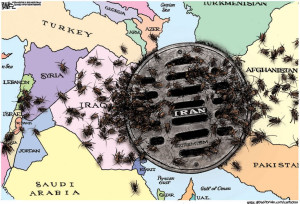
iran_roaches-300x204

The Middle East roach infestation has originated from Iran – so who will turn on the light to make them scatter?
Source: http://www.ibdeditorials.com/cartoons

We’ve been warning about the Qods Force working to expand their influence in Yemen and model the Houthis after Lebanese Hezbollah. In “Iranian Regime Consolidates Yemeni Gains, Begins Work on Forming Houthi Intel Proxy” we laid out how such work has already been underway. Furthermore, a consistent theme we’ve been touching on in our Arabian Peninsula reporting has been how intelligence collection against US State Department (DoS) personnel and American citizens in the country had dramatically increased with the influx of Hezbollah and Iranian military personnel into the country – so none of this is “new,” although the Obama administration would like to make you think it is, and that the Qods Force doesn’t exercise any control over the Houthis. The inconvenient truth is that they do, and the man calling the shots in the country is Qods Force External Operations Division (Department 400) BG Aboldreza Shahlai.

Iranian Regime Consolidates Yemeni Gains, Begins Work on Forming Houthi Intel Proxy
http://isisstudygroup.com/?p=5580

Check out the following links for additional info on the Qods Force/Houthi/Hezbollah targeting of Americans in Yemen and the greater Arabian Peninsula:

GCC SOF Teams Alerted For Deployment, AQAP Gains Strength and Iran Preps For Attacks Against Saudi Arabia
http://isisstudygroup.com/?p=6056

Saudis Begin Yemen Military OPs as the IRGC-Qods Force Prepares For Round 2
http://isisstudygroup.com/?p=5845

Poised to Fill Yemen’s Power Vacuum – Iran Tightens Grip on the Peninsula
http://isisstudygroup.com/?p=4517

IRGC-Qods Force: The Arabian Peninsula Campaign and President Obama’s Failed Foreign Policy
http://isisstudygroup.com/?p=4478

Yemen’s Houthi Rebels: The Hand of Iran?
http://isisstudygroup.com/?p=1992

AQAP vs. Shia Proxy Fighting Intensifies in Yemen
http://isisstudygroup.com/?p=2972

Shia Proxy Threat to US ISIS Strategy in Saudi Arabia
http://isisstudygroup.com/?p=1837

Regarding BG Aboldreza Shahlai, we first introduced him to our readers in our 04 APR 15 article titled, “AQAP and Qods Force Make Their Moves in Yemen as Saudis Struggle to Maintain Coalition.” At the time our sources inside the country had came across information on the presence of a senior Qods Force External Operations Division official had set up shop in the Sadah-area and tasked with overseeing overall operations in the country. We followed this up with an article a month later (“Failed State: Saudi Coaltion Increases Ground Presence as Iran Begins Targeting the Kingdom, US”) revealing his identity. Most westerners have never heard of the guy, but Iranian expats opposed to the regime know all about him. Shahlai was the architect of the Qods Force’s lethal aid program to Shia proxy forces in Iraq during OIF and was also one of the primary planners for the 2007 attack on the Karbala Provincial Joint Coordination Center (PJCC) that killed five US Servicemen. Known as “Suleimani’s Fist,” he holds considerable influence in the Qods Force commander’s inner-circle for advocating “outside the box” solutions to problems – most of which call for directly targeting America and Israel abroad. He was also the mastermind of the plot to assassinate the Saudi Ambassador to the US in New York City that involved his contacts within the Mexican drug cartel known as Los Zetas. His family member Mansur Arbabsiar was the lead-facilitator for the operation. Perhaps more important is Shahlai’s close ties to Abdul Malik al-Houthi and establishment of alternate weapons smuggling routes coming from Africa.

Failed State: Saudi Coaltion Increases Ground Presence as Iran Begins Targeting the Kingdom, US
http://isisstudygroup.com/?p=6410

AQAP and Qods Force Make Their Moves in Yemen as Saudis Struggle to Maintain Coalition
http://isisstudygroup.com/?p=6078

African Nations to Send 7,500 to Combat Boko Haram – Why is Iran so Interested?
http://isisstudygroup.com/?p=4530

qais-300x287

Asaib al-Haq leader Qais al-Khazali worked closely with BG Shahlai during OIF and was a participant in the 2007 attack on the PJCC – he’s now on the front-lines fighting the Islamic State (IS) in Northern Iraq
Source: voanews.com

BG Shahlai’s Yemen assignment is a good indicator that the Iranian regime intends to carry out a campaign targeting American, Israeli and to lesser extent Saudi nationals. With this and Shahlai’s relationship with the Houthis in mind, nobody should be in the least bit surprised that four of our fellow Americans are being held hostage in Yemen. The Houthis have already proven to be very efficient proxies for the Iranians inside Yemen. That said, we will likely see them conducting more operations increasing in complexity and scale within the next 6-9 months across the border into Saudi Arabia itself. They’re already conducting rocket attacks against Saudi border towns and outposts.

Houthi rebels in Yemen are holding multiple Americans prisoner
http://www.washingtonpost.com/world/national-security/houthi-rebels-in-yemen-are-holding-multiple-americans-prisoner/2015/05/29/ac349cc8-0618-11e5-8bda-c7b4e9a8f7ac_story.html

‘Several’ Americans held in Yemen: State Dept
http://news.yahoo.com/several-americans-held-yemen-state-dept-150827072.html

abdul-malik-al-houthi_3-300x169

Abdul Malik al-Houthi: Close personal friend to BG Shahlai
Source: al-Arabiya

Its the same situation in Iraq, where we’ve heard from our Baghdad-based contacts reports of an attack being planned by Kataib Hezbollah (KH) targeting the US Embassy. Again, this should surprise no one with the high concentration of Qods Force personnel and proxy forces present inside the country and the capital in particular. We’ve also heard that KH has sympathizers within the Iraqi Security Force (ISF) ranks who are being tapped to assist in the attack. There’s also a considerable anti-air threat in and around BIAP these days coming from both IS and KH fighters. Fortunately, the American forces on the ground are already well aware of this – whether DoS or the Obama administration actually takes the threat serious is another matter entirely.

ISOF Commandos’ Admiration of Their IRGC-Qods Force Embeds
http://isisstudygroup.com/?p=122

The IRGC-Qods Force
http://isisstudygroup.com/?p=101

ISOF-and-ramazan-300x279

ISOF troopers don’t even try to hide their support of the IRGC-Qods Force Ramazan Corps anymore – a huge red flag for any US military personnel being deployed to Iraq these days
Source: The ISIS Study Group

KH_manpads-300x212

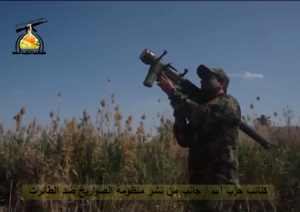
Now why would KH need MANPADs since IS has no Air Force? Perhaps the Qods Force supplied them to KH in order to target someone else?
Source: The ISIS Study Group

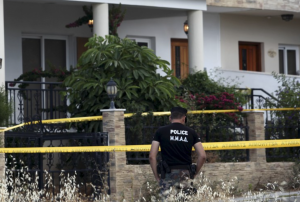
Unfortunately these operations aren’t limited to just the Middle East. Security forces in Cyprus recently arrested a man reportedly involved in a line of Hezbollah operations targeting Israeli interests in Europe. When the Cypriot police arrested him, they also confiscated close to two tons of “suspicious materials” in his basement. Although no additional details on the materials has been made public as of this writing, our source informed us that the materials are for producing explosives (ammonium nitrate was the he saw mentioned). The guy they detained was born in Lebanon but had a Canadian passport, which tends to fit the profile of the kind of personnel Hezbollah’s special operations wing and the Qods Force prefers to recruit into their ranks.

Cyprus police foil planned Hezbollah attacks against Israeli targets in Europe
http://www.haaretz.com/news/diplomacy-defense/1.658716?utm_source=dlvr.it&utm_medium=twitter

Cyprus arrest of Hezbollah man ‘uncovered large-scale Iranian terror plot across Europe’
http://www.jpost.com/Arab-Israeli-Conflict/Cyprus-arrest-of-Hezbollah-man-uncovered-large-scale-Iranian-terror-plot-across-Europe-404531

Crime scene

Scene of the crime
Source: Reuters

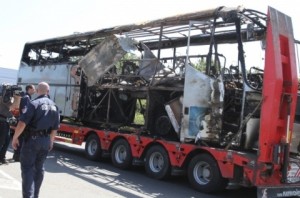
Qods Force and Hezbollah operations have spiked considerably since 2009 with attacks being executed in places like Bulgaria, India and Thailand along with the disrupted plot that was planned for New York City mentioned earlier. Of these, the NYC and Burgas, Bulgaria plots had the direct involvement of BG Shahlai. The telltale signs are how both plots called for using some of his preferred methods of using third parties to do the dirty work and targeting westerners in areas not known for Iranian activity. In fact, the attack in Burgas also involved a Lebanese Arab in possession of Canadian travel documents. The bombings in New Delhi and Bangkok utilized personnel from the IRGC-Qods Force Department 5000 – which is the equivalent to the US Army’s 1st Special Forces Group in that both units are geographically aligned to the Asia/Pacific region.

Bulgaria Has New Evidence on Hezbollah – Report
http://www.novinite.com/view_news.php?id=151420

Bulgaria names Hezbollah suspects behind bombing of Israeli bus in Burgas
http://www.jpost.com/International/Bulgaria-names-2-suspects-in-Burgas-bus-bombing-321017

Bulgaria says clear signs Hezbollah behind Burgas bombing
http://www.reuters.com/article/2013/07/18/us-bulgaria-hezbollah-idUSBRE96H0XI20130718

Hezbollah Is Blamed for Attack on Israeli Tourists in Bulgaria

Thai Police Widen Search for Iranians
http://www.wsj.com/articles/SB10001424052970204059804577227012899036768

Israel’s Iran warning as police hunt fourth Bangkok bomber with help from prostitute
http://www.telegraph.co.uk/news/worldnews/asia/thailand/9088238/Israels-Iran-warning-as-police-hunt-fourth-Bangkok-bomber-with-help-from-prostitute.html

India names Iranian suspects in Israeli car bombing
http://www.cnn.com/2012/03/15/world/meast/india-iran-israeli-car-bombing/index.html

burgas-bombing-300x198

The 2012 Bombing in Burgas, Bulgaria
Source: Reuters

Bibi Netanyahu was absolutely right to visit America and appear before Congress to air his concerns about the Iranian threat. The events that have occurred over the last few months have added strength to his concerns. Unfortunately, the Obama administration has been downplaying the Iranian threat and the American mainstream media let them get away with it by not holding their feet to the same fire that they did to the Bush administration. Sure, a few American media outlets have finally begun asking some national security questions of substance, but far too many seem to be concerned with covering Bruce Jenner’s hormone therapy and President Obama’s March Madness brackets than they are about things that will have a profound impact on our way of life a lot sooner than people think.

The American media needs to start asking the Obama administration, “why are we seeing such a surge in external operations by the IRGC-Qods Force and their proxies if the current engagement strategy with the Iranian regime is “working,” as they claim?” Indeed members of our staff have worked the Iranian problem-set for some time, but it doesn’t require a whole lot in the way of burning calories to connect the dots between this surge in external operations and the ongoing negotiations over Iran’s nuclear weapons program. Had the media truly cared to search for the truth instead of protect an administration they’ve compromised their journalistic integrity for, they would’ve already put out several articles and investigative specials on the subject. If they want to save face and salvage what’s left of their credibility, then we recommend they do some digging on the current threat to the US Embassy in Baghdad coming from KH and their ISF supporters based in the Green Zone. We can assure you that DoS is fully aware of the threat coming from Shia militias that are now being painted to the American people as “the good guys.”

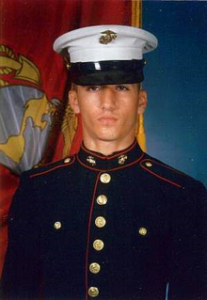
They should also start peppering John Kirby and Marie Harf about the recent counter-terror raid in Cyprus and hammer them about whether the administration ever thought about demanding that the Iranian regime release our citizens in Yemen and US Marine veteran Amir Hekmati during these nuclear weapon talks. We assess that the Qods Force and their proxies are going to continue escalating their actions against our people and our allies for as long as they think they can get away with it. Don’t buy into the Administration’s talk that the regime can’t “control” the Qods Force, because if they say that they’re either lying, extremely ignorant or both. How so? The IRGC as a whole is made up only the most loyal followers of Ayatollah Khameini’s militant ideology. The IRGC-Qods Force are the “most loyal” of those serving in the IRGC – with GEN Suleimani answering only to Khameini. More importantly, the Shia proxy forces won’t take action against the US and its allies unless given authorization to do so by their Qods Force handlers. Make no mistake, this is only the beginning. There will be more attacks coming down the pipe from these guys. Our current national security strategy and foreign policy has set our country on a collision course – is anybody truly paying attention? More importantly, is this administration willing to sacrifice American lives for the appearance of obtaining “peace” with an Iranian regime that has no interest in pursuing normal relations? Something to think about.

hekmati-207x300

Amir Hekmati: Prisoner of Iran
Source: The ISIS Study Group

If you want to know what the Iranian regime is all about, then check out our Inside Iran’s Middle East series:

Inside Iran’s Middle East: the Kurdish Insurgency
http://isisstudygroup.com/?p=4068

Inside Iran’s Middle East: the Southeast Insurgency
http://isisstudygroup.com/?p=2689

Inside Iran’s Middle East: the Charm Offensive
http://isisstudygroup.com/?p=2676

Inside Iran’s Middle East: the “Reformers”
http://isisstudygroup.com/?p=2635

Inside Iran’s Middle East: the Nuclear Weapons Program
http://isisstudygroup.com/?p=2640

Other Related Articles:

Mr. Netanyahu Goes to Washington
http://isisstudygroup.com/?p=5316

Today’s Middle East: The Burning Fuse of the 21st Century’s “Great Game”
http://isisstudygroup.com/?p=6193

The Persian Hustle: How Iran Dupes Clueless US State Dept in Nuke Talks and Moves to Dominate the Middle East
http://isisstudygroup.com/?p=5978

How the North Korean Regime Affects the Middle East
http://isisstudygroup.com/?p=3038

Yemen isn’t on Verge of Civil War, It Already is – And Saudi Arabia Will Get Involved
http://isisstudygroup.com/?p=5810

What Yemen’s Coming Apart at the Seams Means to Arabian Peninsula
http://isisstudygroup.com/?p=5737

The Hezbollah Presence In Iraq
http://isisstudygroup.com/?p=358

On achievements and ideas

May 29, 2015

On achievements and ideas, Israel Hayom, Maj. Gen. (ret.) Yaakov Amidror, May 29, 2015

Lately it looks as though the Islamic State group has managed to rack up highly significant geographic achievements. These coups will lead to the group controlling the enormous expanse of territory west of Baghdad to the Syrian border beyond Palmyra by establishing rule in the north and east of the crumbling Syrian state.

The occupation of Ramadi, one end of an arch that bridges between the Iraqi capital and Palmyra in the heart of northern Syria, serves as a base for future gambits of even greater importance. We shouldn’t wonder if the group needs a little time to “digest” the new areas it has conquered, to take care of any local population that might resist, if any such remains, and to settle its rule on the rest of the residents and prepare for retaliatory attacks by the Syrian and Iraqi armies and their auxiliary militia forces.

It appears that in Iraq and Syria — but more importantly, in the U.S. — it is understood that the counterattack stage could turn out to be critical. If the group overcomes these strikes, it is hard to imagine what might stop it in the future, barring full-scale involvement by the U.S. military that would include heavy ground forces.

After the counter-strikes, the moment the organization feels secure in its new area, and we cannot know how long that will take, it will face the standard dilemma presented by such situations: What next? By nature, a group like this cannot refrain from action for long. It needs constant movement; it is thirsty for new gains and fears the “stagnation” that could affect it after a period of calm. The group is still in its dynamic stage, continuing to rise. It has four options for action, and no one knows which one its leaders will choose. It is possible that they themselves have not made up their minds and are still not ready to decide, at least until the results of any possible counterattack become clear.

Islamic State’s next “natural” effort could be toward Baghdad, to strengthen its rule of everything west of the Iraqi capital. The goal would be to strike a fatal blow to the Shiite government’s operational ability in the Sunni regions the group has taken thus far, and maybe even to bring down the present Iraqi regime.

Such a move would doubtless put pressure on the ruling Shiites and their Iranian allies, because when an organization like this approaches areas with a dense Shiite population, as well as the cities most holy to Shiites, the latter envision a mass slaughter. So there is no question that a move like that, if successful, would force the Iranians to make some tough decisions, mainly about whether to opt for direct military intervention.

The group has another option in Iraq: to the north, beyond Kurdistan. If it managed to take control of the areas where the Kurds are currently extracting oil, it would enjoy maximal success, running nearly an entire country and putting heavy pressure on Turkey. That looks tempting, because the West hasn’t taken care to adequately arm the Kurds, the only ones so far who have fought the group successfully.

It is also possible that after its great success in Iraq, the group will prefer to entrench its rule over northern Syria — in other words, seize control of Aleppo and Homs. That would be an ambitious plan given the size of the geographic area, but it appears any resistance there would be weaker than it would be in a metropolis like Baghdad or from the fierce Kurds. If Islamic State took Aleppo and Homs, it would improve its chances of eventually taking action against the Kurds, particularly their Syrian wing.

In Syria, the main ones opposing the group would be President Bashar Assad’s exhausted army. In that area, other Sunni groups from what is known as the army of insurgents might join Islamic State, granting it legitimacy in the eyes of the locals. A move like that could lead to a dramatic change in Assad’s position and force Hezbollah to spread its forces even thinner. A loss of Hezbollah’s strategic homefront and the presence of its Sunni haters breathing down the neck of the Alawite minority, on the coast of Latakia, means a threat to a region that is vital to Hezbollah and to the Iranians’ position in Syria, and eventually in Lebanon. The Iranians and Hezbollah would do almost anything to protect these, because any threat to them is an existential one. If the Islamic State group acquires control of Alawite or Shiite areas, it will exterminate everyone there. This is a life or death struggle. That’s clear to everyone.

The ambitious option

And there is a fourth option, which for now seems less appealing and therefore less likely, although not impossible. It’s possible that to avoid clashing with Shiite strength around Baghdad or with Alawite and Hezbollah desperation en route to Damascus, the group will turn its attention to Amman.

All the residents of Jordan are Sunni, and some of them could begin to identify with a serious, successful Sunni group that purports to act on behalf of Sunnis, who are in distress because of the Shiite dynamic in the Middle East. The group could asses that it would be easier for it to operate against Jordan, and if it does so successfully it would have more convenient access to Saudi Arabia — the crown jewel of the Muslim world.

Saudi Arabia is the target that anyone who talks about an “Islamic caliphate” dreams of, because it is home to Mecca and Medina, the two holiest cities for any Muslim. In acting against Jordan, the group could combine a military maneuver with an attempt to influence the kingdom from inside by exploiting the social and economic problems in Jordan that have worsened because of the mass influx of refugees from Syria.

Today, the chances of the organization succeeding in Jordan appear very slim. The Jordanian army, unlike the armies of Iraq and Syria, is both serious and professional and among many Jordanians, the king is popular as well as legitimate. Jordan is no easy prey, and it would certainly have the help of everyone for whom the kingdom’s stability is important.

In any case, it is obvious that the American intervention thus far has not brought the U.S. any closer to the goal defined by President Barack Obama of “destroying the organization.” The opposite — it has grown stronger and expanded its area of control since the U.S. declared war on it. The last chance the U.S. has to continue its current policy, avoiding the deployment of massive American ground forces, is conditional upon its ability to give the Iraqi army the assistance it needs in the attack it is promising to execute, and possibly on helping the Syrian army indirectly.

The Americans will take a look at themselves after these battles, when it becomes clearer whether the group’s recent successes are the regular ups and downs seen in conflicts like these, or whether they have altered its standing, and Islamic State will now take advantage of the momentum to move on more ambitious targets.

ISIS Wins No Matter What Happens Next

May 28, 2015

ISIS Wins No Matter What Happens Next, The Daily BeastMichael Weiss, May 28, 2015

1432804506635.cachedAhmad Al-Rubaye/AFP/Getty

Usama al-Nujaifi, one of Iraq’s vice presidents and the former parliamentary speaker, pointed out that recent missteps by the militias has squandered incipient good will for Sunni reconciliation. Yesterday, during a parliamentary session, the Sunni governor of Diyala province was fired—and replaced with a Shia. “This is a real threat and a very negative message to Iraqis. This is considered a break to the rules and it contradicts what has been agreed,” Nujaifi said. “The majority in Diyala are Sunnis.”

**********************

The latest planned attack on the terror army could be playing right into their hands.

The Obama administration is being slammed from all sides for its failing strategy against ISIS—and rightly so. But amid all the scorn, one question has yet to be asked about the resiliency of the terror army, which, actually goes to the heart of its decade-old war doctrine. Namely: does ISIS actually win even when it loses?

This isn’t an academic issue. America’s allies in the ISIS war are gearing up for a major counteroffensive against the extremist group. That assault that could very well play right into ISIS’ hands.

Having superimposed its self-styled “caliphate” over a good third of Iraq’s territory, in control of two provincial capitals, ISIS is today in strongest position it has ever been for fomenting the kind of sectarian conflagration its founding father, Abu Musab al-Zarqawi, envisioned as far back as 2004.

Zarqawi’s end-game was simple: by waging merciless atrocities against Iraq’s Shia majority population (and any Sunnis seen to be conspiring with it), Zarqawi’s jihadists would have only to stand back and watch as radicalized Shia militias, many of whose members also served in various Iraqi government and security roles, conducted their own retaliatory campaigns against the country’s Sunni minority. Internecine conflict would have the knock-on effect of driving Sunnis desperately into the jihadist fold, whether or not they sympathized with the ideology of al-Qaeda in Iraq, Zarqawi’s franchise and the earliest incarnation of what we now call the Islamic State.

Indeed, in the mid-2000s, the Jordanian jihadist nearly got what he wished for by waging spectacular terror attacks against Shia civilians and holy sites, such as the Golden Mosque in Samarra, a strategy which quickened devolved Iraq’s violence from a primarily anti-American insurgency into all-out civil war. The only stopgap for a truly apocalyptic or nation-destroying result was the presence of nearly 200,000 U.S. and coalition troops. Today, however, absent such a foreign and independent military presence, the main actors left in Iraq are the same extremists —Shia militias and ISIS.

This fact was only driven home last week after thousands of U.S.-trained Iraqi Security Force personnel, including the elite counterterrorist Golden Division, fled from Ramadi, allowing the city fall to a numerically modest contingent of ISIS jihadists. Having been initially instructed by Iraq’s Prime Minister Haider al-Abadi to refrain from defending the city (no doubt at the prompting of Washington) the Hashd al-Shaabi, the umbrella organization for these Shia militias, now say they are prepping a massive counteroffensive to retake Ramadi. It promises to be a drawn-out and highly fraught counteroffensive, pitting paramilitaries—which have been accused of war crimes and atrocities by Human Rights Watch, Amnesty International and United Nations Human Rights Commission—against genocidal ISIS militants.

Many Iraqis fear, with good reason, that this counteroffensive will also extend to Sunni civilians who will now be branded “collaborators” of ISIS, as they have in previous Hashd-led operations. The result: torture, extrajudicial killing, and ethnic cleansing. Nothing would better serve the ISIS narrative or legitimate its claim to be the last custodian and safeguard of Sunni Muslims in the Middle East. Such an outcome might even precede the eventual disintegration of the modern state of Iraq into warring ethno-religious enclaves. That this was ISIS’s plan all along adds yet another grim paragraph to the obituary of American-hatched adventurism in the Middle East.

True, Hashd al-Shaabi has routed ISIS elsewhere before, namely in Amerli and Jurf al-Sakhar and Tikrit. In the aftermath, the militia was accused of committing human rights abuses, but those accusations didn’t tear the country apart.

The difference with Ramadi, however, is one of both scale and symbolism. This city of close to 200,000 is dead center in the Sunni heartland of Iraq, where ISIS has the home advantage. Ramadi was also, not coincidentally, the cynosure of the so-called “Anbar Awakening,” which saw hundreds of thousands of Sunni tribesmen rise up against ISIS’s predecessor, al-Qaeda in Iraq, in a cautious but fruitful partnership with American soldiers in the mid-2000s, a grassroots counterinsurgency whose gains were then solidified by the “surge” orchestrated by U.S. commander General David Petraeus. This time, absent any American combat forces, there are Shia Islamists who have never before tread into Ramadi. Many Iraqis dread the consequences.

“Iraq is not unified,” Iraq’s former Deputy Prime Minister Rafe Essawi, a senior Sunni political leader originally from Anbar, told The Daily Beast. “50 percent of the country belongs either to Kurds or ISIS, and 50 percent belongs to the Shia militias backed by Iran. We said too many times to our friends the Americans that we do not need to see the militias in Ramadi because this will lead to sectarian conflict.”

Yet the Americans have little on offer by way of an alternative. U.S. training efforts are still months off from fielding military units able to join the fight. With Iraq’s future resting on them, Hashd is seen as the only ready bulwark against further ISIS encroachments, though its conduct in Anbar may paradoxically purge the province of ISIS’s hard power while underwriting its soft version.

The Ramadi offensive hardly got off to a promising start. On Tuesday, Hashd spokesmen announced that the name for their Anbar offensive was, “Labeyk Ya Hussein,” a slogan roughly translated as “At your service, Hussein,” in tribute to a venerated Shia religious figure. The connotations were therefore of holy war — not exactly the multi-sectarian, pan-Iraqi message Baghdad has preferred to telegraph to international audiences.

On Wednesday, in response to criticism from U.S. officials and some Iraqi leaders—including demagogic Shiite cleric Muqtada al-Sadr (who has fallen out with Iran and has since platformed himself as a nationalist politician)—the operation’s name was changed to to more universal: “Labeyk Ya Iraq.” But the public relations rethink has not addressed underling concerns about the Hashd’s intentions, nor allayed Sunni anxieties.

“I think the careful examiner of the facts on the ground will see de facto borders are being drawn whether by design or by circumstance,” said one former Iraqi official who spoke to The Daily Beast on the condition of anonymity. “The militias have effectively cleared the Baghdad belts to the south of Sunnis, and with the Ramadi operation I expect the same will happen westward but it will entail a lot more fighting and possibly much more instability.”

This is because the war for the future Iraq isn’t being waged first and foremost by Iraqis but by their self-interested next-door neighbor, Iran, led by its elite Revolutionary Guards Corps-Quds Force, a U.S.-designated terrorist entity in its own right.

Iraq’s sectarian division, whereby Sunnis have been forced out of Shia-controlled areas under the auspices of fighting ISIS, reflects the fact that the Hashd operates more according to Tehran’s geo-strategic and ideological interests, the former official said. “I feel that Iran and some of its erstwhile allies have reached a realization that they have lost a significant ally in Syria and therefore need to buffer the ‘Shia’ zones in Iraq to protect them while paying lip service to the notion of a unified state.”

It certainly does not help matters that America’s unacknowledged ally in the anti-ISIS coalition is the IRGC-QF, whose commander, Major General Qassem Suleimani, not only blamed U.S. incompetence for the fall of Ramadi this week but labeled the United States an “accomplice” of the jihadists—a conspiratorial view of ISIS’s secret patronage widely shared amongst the Hashd rank-and-file.

The scenario described by Essawi and the ex-official is more common among the Sunni political class that either Washington or Baghdad care to acknowledge. Whether it is credible will depend on how the Hashd conducts itself on hostile terrain and whether it can break with precedence of collective punishment. If the militias act as a nationalist reserve army, under the command and control of Haider al-Abadi—something the White House has insisted as a precondition of U.S. air support—then they may be able to recruit Sunnis to their efforts, or at least earn their respect and admiration.

Essawi argues that Hashd has so far relied on coercion rather than a savvy hearts-and-minds approach for winning over Sunnis. “The Sunni tribes used to be against ISIS after [their] crimes,” he said. “Definitely there are some local supporters of ISIS, but the tribes generally speaking —almost all of them — are committed to fight. It is the government that refuses to strengthen them. So some very weak tribes have been coerced into accepting this bad choice: it’s either Hashd al-Shaabi or ISIS.”

Saleh al-Mutlaq, a Sunni deputy prime minister under Abadi, disagreed.

He emphasized that the Hashd should henceforth operate under the Iraqi flag rather than the host of competing standards their constituent militias currently brandish (including those bearing the images of Iranian ayatollahs Khomeini and Khamenei). But Mutlaq is hopeful of greater Sunni support for the Hashd. He pointed out that there are currently volunteer camps established near Ramadi to incorporate Sunnis volunteers and Iraqi policemen who fled the city into the broader counteroffensive.

“The government will give them training and weapons,” a statement issued by Mutlaq’s office read, without offering specifics. As for Shia sloganeering deemed alienating the Anbari support base, he doesn’t think this has had too dire an impact. “The Sunnis were conflicted about the intervention from the Hashd al-Shaabi because they were worried about reprisal attacks. But the Hashd is less harmful than ISIS. At least, these people are Iraqis and we can deal with them later on, but we can’t with ISIS.”

Nevertheless, Mutlaq wonders just what form a pro-government success may take and what happens the day after ISIS is routed from Ramadi. “His concern is whether Ramadi will undergo demographic changes,” his office said. “Will Sunnis be forced to relocate to others areas and will there will be any revenge attacks and conflicts between the Hashd and the tribes?”

Usama al-Nujaifi, one of Iraq’s vice presidents and the former parliamentary speaker, pointed out that recent missteps by the militias has squandered incipient good will for Sunni reconciliation. Yesterday, during a parliamentary session, the Sunni governor of Diyala province was fired—and replaced with a Shia. “This is a real threat and a very negative message to Iraqis. This is considered a break to the rules and it contradicts what has been agreed,” Nujaifi said. “The majority in Diyala are Sunnis.”

ISIS is counting on such political heavy-handedness to indemnify its own savagery. “It is that enemy, composed of Shiites joined by Sunni agents, who are the real danger with which we are confronted, for it is our fellow citizens, who know us better than anyone,” Zarqawi wrote in a 2004 letter, correctly foreseeing that the U.S. military occupation would be fleeting and incidental to the future of Iraq.

In other words, he wanted the Shia militias, principally the Badr Corps — now first among equals in the Hashd— to commit anti-Sunni atrocities as payback for Zarqawi’s own scorched-earth war against the Shia. “If we manage to draw them onto the terrain of partisan war, it will be possible to tear the Sunnis away from their heedlessness, for they will feel the weight of the imminence of danger and the devastating threat of death wielded by these Sabeans.”

If Iraq does fall apart, it will have been because Zarqawi’s apocalyptic plan got realized a decade after his death.