Netanyahu Slams State Dept on Excessive Force Allegations, Washington Free Beacon via You Tube, October 15, 2015
Anti-Israel and anti-Jewish bias in the media and State Dept. | Anne’s Opinions, 7th October 2015
As I write this, events are overtaking me with a huge wave of terror attacks (145 at the last count) hitting throughout Israel, including my own hometown of Petach Tikva. I wonder how the media will cover this – if at all. — anneinpt)
I have been documenting anti-Israel bias in the media since I started this blog. In fact it was one of the reasons I st this blog up in the first place. Sadly it seems to be getting worse despite the fact that there are so many media-monitoring websites out there, at least in certain media outlets (Haaretz, the BBC, the NYT, I’m looking at you – and others besides). This is besides the built-in hostility towards Israel in international institutions like the UN. But it goes further. Much more egregiously, the double standard to wards Israel has become blatantly clear in the US State Department. Following are several examples from the past week which saw several terrorist atrocities in Israel.
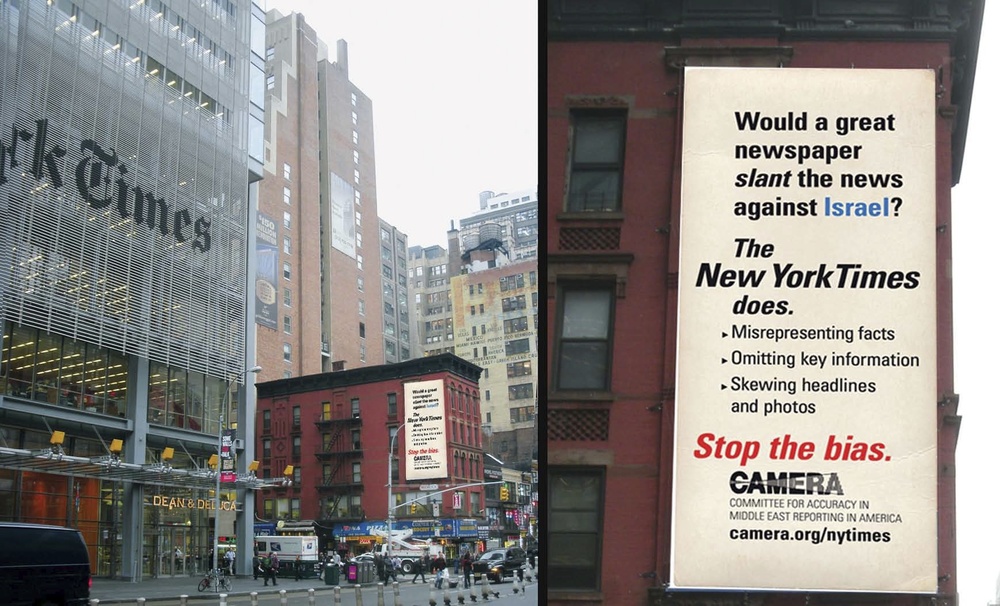
CAMERA billboard posted opposite the NYT building
The Algemeiner has an “interesting” (i.e. enraging) roundup of the blatant bias of the New York Times with examples from just the past month (there are many more recent exampels at the following links) documented by two media watchdogs: CAMERA and Honest Reporting):
On September 10, the NYT singled out Jewish lawmakers on the Iran deal. [At the link you will read that this was a blatantly antisemitic act, targeting Jews for no other reason than that they are Jewish. The NYT has yet to be made to pay for this racial discrimination. -Ed.]
On September 15, the NYT suggested that the Israeli who was murdered by rock-throwing Palestinians had died of a “self-inflicted accident” after the attackers had merely “pelted the road” (rather than his car). The National Review provided a detailed critique of this farcical “reporting.”
Unbelievably, Diaa Hadid, a NYT “journalist” responsible for reporting on Israel, used to work for an anti-Israel hate group, so it’s no surprise that she authored an article suggesting that Palestinian attackers pelted a road with stones on which an Israeli’s self-inflicted car accident just happened to cause him to die.
On September 29, Hadid used an anonymous European advocate of Palestinian rights as a witness to contradict Israeli army claims that a Palestinian woman who was shot at an IDF checkpoint had been armed with a knife. Hadid then omitted confirmatory reports from another witness mentioned in the article, a Palestinian named Fawaz Abu Aisheh, who said the woman had dropped her knife after being shot. (Hadid ignored this evidence even though Amnesty International mentioned Aisheh’s corroborating testimony about the knife).
On September 30, the NYT struck again with false historical information and tendentious coverage of Abbas’ UN speech. The article, by Rick Gladstone and Jodi Rudoren, noted that “Mr. Abbas accused Israel of having systematically violated these pacts,” without mentioning the many violations of the Oslo Peace Accords by Palestinians. In an article exceeding 1,000 words, the reporters made not even one reference to Palestinian terrorism, a basic historical fact that is essential to any fair and balanced understanding of the Israeli-Palestinian conflict. Indeed, since the Oslo Peace Accords, there have been 22 years of Palestinian terrorist attacks — including 140 suicide bombings — which have murdered more than 1,500 Israelis (in U.S. population terms, about 60,000 people killed) and made Israeli compliance with a complex and risky “peace” agreement even harder.
…
The reporters shamelessly failed to note that the “new strife over contested religious sites in Jerusalem” was produced by Palestinian incitement, anti-Jewish harassment and violence.
Equally egregious is their patently false claim that “the Israeli-Palestinian conflict is the most protracted dispute vexing the United Nations since the organization’s founding 70 years ago.” Some basic Wikipedia research reveals that the Israeli-Palestinian conflict began in 1948 and has produced about 24,000 fatalities since then, while the Kashmir conflict between India and Pakistan began in 1947 and has produced about 47,000 fatalities, and the conflict over Kurdish separatism in Iran began in 1946 and has caused at least 30,000 fatalities.
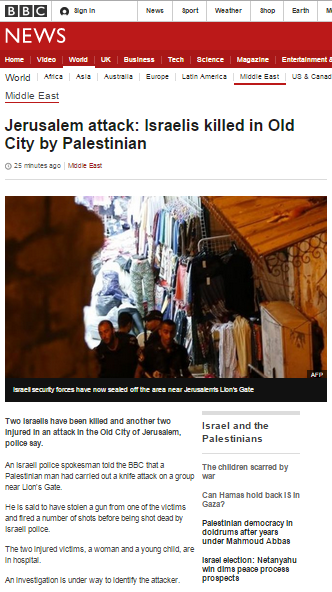
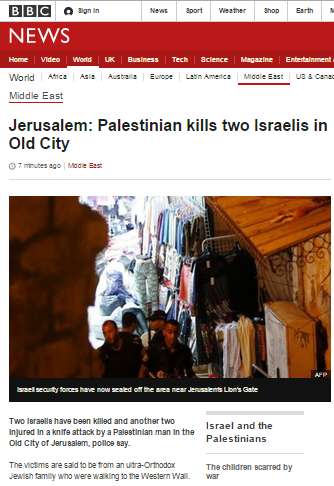
Moving on to the events of last week, the BBC outdid itself (if that is at all possible) in its outrageous headlines which even they themselves were persuaded – eventually – to change – four times! – until they matched the events on the ground. Honest Reporting gives us a screenshot of the initial BBC headline after a Palestinian terrorist stabbed and murdered two Israeli Rabbis and injured the wife and child of one of them in the Old City of Jerusalem:

BBC biased headline
Note how the headline focuses on the poor Palestinian murderer.
BBC Watch follows up on how the BBC flunked the headlines on the Jerusalem terror attack: – and includes a reference to the BBC’s misleading reporting on the murder of the Henkin’s two days previously, in which they did not mention the Palestinian Authority’s connection to the murder:
Predictably, that headline prompted considerable protest on social media and shortly after its publication the title was changed to one displaying yet another regular feature of BBC reporting; the use of superfluous punctuation.
Following further complaints, the headline was amended again.
And later on – yet again.
In other words, professional journalists supposedly fluent in the English language had to make three changes to the article’s headline in not much more than an hour.
And what of the report itself? In line with standard BBC practice, the word terror does not appear in any of the versions of an article describing a terror attack on Israeli civilians. Readers are told that:
“It comes two days after an Israeli couple, who were in a car with their four children, were shot dead in the West Bank.”
Of course BBC audiences had not been informed that was a terror attack either.
Readers of the third version of the report were told that:
“Hamas, the Palestinian militant group that rules the Gaza Strip, issued a statement praising the attack which it described as “heroic”.”
They were not, however, informed that social media accounts belonging to Mahmoud Abbas’ Fatah party similarly praised the attack and described its perpetrator as a ‘hero’. The information concerning Hamas was later removed.
As BBC Watch remarked on its report on the BBC’s coverage of the Henkin murders:
The BBC cannot claim to be meeting its remit of building “a global understanding of international issues” as long as it continues to conceal the role played by the Palestinian Authority in inciting violence and executing terror attacks on Israeli civilians.
But the Beeb’s bias doesn’t seem to worry anyone in the British halls of power.
As for international coverage of the terror attacks that killed four Israeli civilians in 2 days, besides the countless attempted murder attacks via rock-throwing on the roads, firebombs, tossing firecrackers at the police, and arson, Israel experienced agricultural terrorism in the form of uprooted vineyards, as well as the destruction of priceless Bar Kochba-era antiquities.

Uprooted vines in the Shilo region

Kiryat Aravia caves before the destruction

The site after Palestinians bulldozed it
If you live outside Israel I’m pretty sure you haven’t heard of any of this. Edgar Davidson has produced another great (but sad) info-graphic showing the disparity in political reactions and the bias in reporting: (click to enlarge):
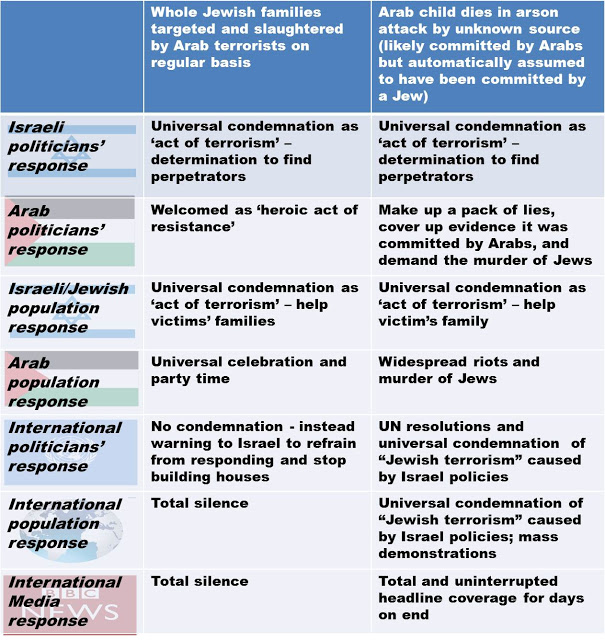
Compare and contrast responses to terror in Israel
Sadly, I find none of this surprising. We have become so inured to biased, misleading, distorted or simply missing reporting on Israel that, at least speaking for myself, I have no expectations at all from the foreign media and am pleasantly surprised when I find an accurate report.
However the bias at the US State Department which is also not new (it is dominated by Arabists, rather like the “Camel Corps” of the British Foreign Office), seems to have hit a new low.
The blogger “First One Through” at Jews Down Under created an instructive table comparing the State Department’s reactions to Israeli and Arab casualties of warfare and terrorism. Even with the knowledge that State is biased, I admit I was shocked by this (I edited the heading of the chart for errors):
| Event | July 1 Attack on Arabs | October 1 Attack on Jews | October 3 Attack on Jews |
| Words in Statement | 122 | 68 | 77 |
| Condemnation | “condemns in strongest possible terms” | “strongly condemns” | “strongly condemns” |
| Terrorist attack | “vicious terrorist attack” AND “terrorism” | “terrorist attack” | Not called terrorism |
| Condolences | “profound condolences” | “condolences” | No condolences |
| Prayer for Injured | “prayers for a full recovery” | None | None |
| Families mentioned | “Dawabsheh family” | None | None |
| Location of Incident | “Palestinian village of Douma” | “West Bank.” Not Israeli; not Samaria | “Old City of Jerusalem today”. Not Israeli |
| Call for Justice | “murderers” | “the perpetrators” | “all perpetrators of violence” A general term |
Furthermore, in an outrageously undiplomatic move, the White House instructed Secretary of State John Kerry and Ambassador to the UN Samantha Power to stay away from the UN while Binyamin Netanyahu delivered his speech to the UNGA last week.
https://twitter.com/RichardGrenell/status/649679192511135749
I cannot recall ever such a disgraceful, overtly antagonistic act being taken – for no reason other than hurt personal feelings – by the White House or the State Department. Shame on them!
But history is a cycle. Do you remember the “outrage” and “appalled” feelings at State when Israel hit a school or hospital – or rather, NEAR the buildings – in Gaza? That was described as a war crime and Israel was villified in every media outlet that you can think of, besides the State Department (reminder: the US is supposed to be Israel’s ally!) and of course the UN.
This week the tables have turned. Russia has begun brazenly bombing civilian targets in Syria. Meanwhile the US Air Force bombed an Afghan hospital, and it is instructive to note the media coverage and its comparison with Israel’s attack in Gaza, as Honest Reporting reports:
It will certainly be interesting to compare the media coverage of Russian and U.S. air strikes to the reports that Israel had to contend with. All too often, the media attributes a level of malevolence when it comes to Israeli military actions.
So, while, for example, the New York Times’s headline from July 2014 actively attributes responsibility to Israel for the alleged shelling of a UN school, its headline covering the Afghan hospital incident passively attributes the air strike rather than those who carried it out.
Ultimately, both Israel and the U.S. have shared values when it comes to the ethics of war. It is hard to believe that the U.S. has intentionally targeted civilians in a hospital. It does, however, comparatively demonstrate the lengths that Israel goes to in order to avoid just such a scenario as the Afghan hospital.
It is a tragic inevitability that civilians will die in war. Russia does not appear to be influenced by morals or ethics. Meanwhile the U.S. may be realizing that it has something to learn from Israel when it comes to ethics on the battlefield.
I would have been angrier at the duplicity of the State Department, but I must admit I’m finally enjoying a great surge of schadenfreude at their expense as their spokesman squirmed, evaded and tried to wriggle out of a straight answer to a direct question posed by Matt Lee of AP about the Afghan hospital bombing. Watch the video at Israellycool:
Matt Lee decided to ask the State Department’s Mark Toner exactly what kind of standards they hold themselves to because it would seem to be a different set that they applied to Israel last year.
I’ll spoil it. He’s got no answer. They can’t justify it. They hold Israel to an impossible standard, one to which they cannot themselves match because this is war and bad stuff happens. We join the briefing for Matt’s follow up question after his first is left completely unanswered in over 3 minutes of bluster.
You can read the transcript of the entire question and answer session at the Israellycool link.
Enjoy! Maybe the State Department will think twice before again condemning Israel’s perfectly legal actions taken in self-defense.
—
One update before I go: there has been another terrorist stabbing in the Old City, near the site of the double murder on Saturday night:
Watch out for biased reporting about this one too – if it even gets a mention.
Inspector Clouseau was unavailable (3), Power Line,
I think it is very likely the side-deal documents were drafted by the United States and given to the IAEA, which agreed to make them into secret agreements with Iran to finalize the main agreement.
***********************
The pushback against George Jahn’s AP scoop on the IAEA side deal with Iran now includes the allegation that the draft of the side deal posted by the AP is a forgery — perhaps an Israeli forgery. Fred Fleitz has reported the relevant details with links and evidence here at NR’s Corner. Fleitz’s knowledgeable assessment seems reasonable to me:
First, the errors and non-IAEA prose in the AP’s transcribed document appear to indicate a first draft written by a party other than Iran or the IAEA to resolve the Parchin issue. This is consistent with my assessment that the side deal documents were drafted by the United States and handed to the IAEA to finalize after U.S. diplomats were unable to resolve the issues of the Parchin military base and possible military dimensions of Iran’s nuclear program during the talks. The AP says it was told by two anonymous officials that this document is a draft and “does not differ from the final, confidential agreement between the IAEA and Iran.” I believe it probably is a first draft written by a political appointee at the State Department or an NSC staffer.
Second, to believe this is a forgery one has to believe George Jahn and the Associated Press were deceived by two anonymous diplomats or U.S. officials. I doubt this could happen to a reporter as experienced as Jahn. (MSNBC believes otherwise and attacked Jahn as “not a real reporter” for his article.) The AP is standing by this story and I doubt it would put its reputation on the line if it did not believe Jahn’s article was rock solid.
Third, claims by backers of the Iran deal that this is an Israeli forgery are nonsense. If the Israelis wanted to do a forgery like this it would be perfect. An Israeli foreign ministry or intelligence officer would never use the wrong terminology for Iran.
My bottom line is that the side-deal document transcribed by the AP is not a forgery but a first draft written by a third party that is essentially the same as the final version agreed to by the IAEA and Iran. The outstanding question is who wrote this initial draft. Given Secretary Kerry’s efforts in May and June to drop the issues of the Parchin base and possible military dimensions, I think it is very likely the side-deal documents were drafted by the United States and given to the IAEA, which agreed to make them into secret agreements with Iran to finalize the main agreement.
Fleitz adds in the final paragraph of his post that “what [Jahn] reported apparently is consistent with classified briefings provided to Congress on the secret side deals[.]”
I trust that all will become clear in time. The relevant self-inspection provisions of the side deal are so absurd that they should be fraudulent. Consistent with Fleitz’s conclusion, however, I believe they will prove to be an integral part of the finalized side deal. Neither the administration nor the IAEA disputes the accuracy of Jahn’s reportage. I conclude that the terms of the side deal reported by Jahn are a joke, but not a forgery.
Egypt’s Christians in the Shadow of the Muslim Brotherhood, Washington Free Beacon,
(Please see also, WFB’s Bill Gertz discusses story on Obama support for Muslim Brotherhood on Steve Malzberg Show. — DM)
Copts view the Obama administration cynically. Egyptians now whisper that the American president who pleased Arab liberals with his speech “A New Beginning” at al-Azhar in 2009 is secretly funding the Muslim Brotherhood and purposefully neglecting the Islamic State. A group of Copts protested outside of the White House in February 2015, demanding more aggressive action against IS following the beheading of the 21 Copts.
Al-Ahram, the largest newspaper in Egypt, published reports in 2013 that the United States diplomatic mission in Egypt, led by Ambassador Anne Patterson, was discouraging Coptic Christians from participating in protests against Morsi. Even though Patterson adamantly denied the accusations, the report sowed more distrust among Copts.
Tensions between the Coptic community and the administration worsened when, in the same year, an Obama Homeland Security adviser named Mohamed Elibiary suggested Copts raising awareness of their persecution were promoting “Islamophobic” bigotry.
**************************
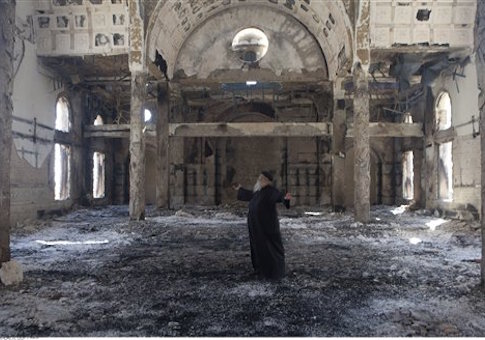 Christian Coptic Priest Father Samuel reacts as he stands inside the burned and heavily damaged St. Mousa church in Minya, Egypt / AP
In the nearly five years of turmoil that have followed the resignation of President Hosni Mubarak in 2011, no group in Egypt has suffered more than the 15 million Coptic Christians. Both a religious and ethnic minority, the Copts are descended from the native population of Egypt who lived and ruled there from the time of the pharaohs until the Roman conquest in 31 B.C. They are the largest Christian community in the Middle East today.
Copts have long been the target of discrimination and persecution in the majority-Arab nation. But this ancient people faced a terrifying new prospect in 2012: Muslim Brotherhood rule.
After Mubarak was ousted, the violence began almost immediately. Churches and schools were burned; peaceful protestors were massacred. When parliamentary elections were held nine months later, they were swept by the Muslim Brotherhood and other Islamist parties. When Mohamed Morsi won the presidential election in May 2012, the party’s victory looked complete. The same year, Morsi gave himself unlimited powers and the party drafted a new constitution inspired by Sharia law.
Morsi benefitted from the organizational advantage of the Muslim Brotherhood. Backed by imams preaching the benefits of religious rule, the previously banned political party was able to defeat the fractured coalitions of the pro-West, liberal, and secular candidates.
“They used thugs to carry out political intimidation against Christians,” a former member of Egyptian Parliament told the Washington Free Beacon. Chants celebrating the Brotherhood victory echoed through the streets of Cairo. “Morsi won! Copts out!”
 Ousted president Mohamed Morsi / AP
During Morsi’s rule, Christians were murdered and tortured by the hundreds. Attacks and abductions of Christian children spiked significantly. “Most Americans do not know how vicious and bloody the Muslim Brotherhood is,” Ahmed, a 24-year old secular Muslim, said. “They really can’t understand.”
Pope Tawadros II, Egypt’s Coptic Christian leader, criticized Morsi for negligence after six Christians were killed when police and armed civilians besieged Egypt’s largest cathedral. “We want actions, not words,” the Pope said.
Public accusations of blasphemy also became ubiquitous. A Facebook post interpreted as undermining Islam could bring a mob of fundamentalists with rocks and Molotov cocktails to the homes of Christians, surrounding them with families trapped inside. Sham trials with no legal representation would follow. Anti-Christian terrorism was not punished, but the wrong words often landed Copts in prison, forcing the church to make public apologies and families to leave their towns and villages.
Lydia, an activist who provides relief supplies to torn Christian communities in Upper Egypt, and who requested that only her first name be used to preserve her safety and that of her colleagues, witnessed the Muslim Brotherhood offer the very poorest Egyptians social services that bought their allegiance. “When you have no food or money, you will listen to anyone who gives you the resources your family desperately needs,” Lydia said. “They brainwash the illiterate with extremism so they hurt Christians.”
Still, Morsi’s authoritarian rule—rewriting the constitution, disbanding the Egyptian parliament, tossing potentially obstructive judges into jail—was not long lived. Barely a year after he assumed office, a reported 35 million citizens took to the streets to protest his rule, leading the Egyptian military, under Gen. Abdel Fattah al-Sisi, to remove him from power in July 2013.
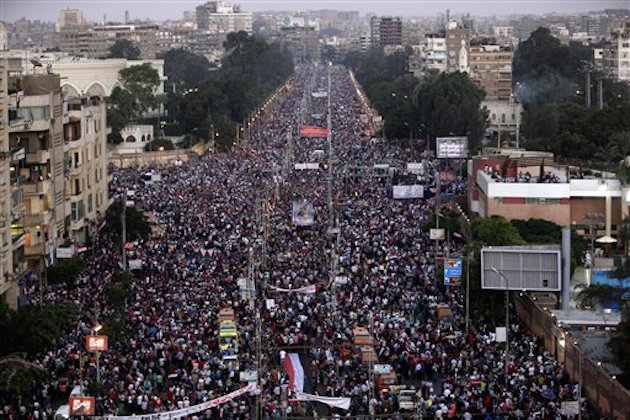 Egypt’s ousted President Mohammed Morsi protest at the presidential palace in Cairo, Egypt, Friday, July 26, 2013 / AP
Sen. James Lankford (R., Okla.) told the Free Beacon that had al-Sisi not responded, the promise of Egyptian Democracy would have died. “What it seemed the Egyptian people wanted was more opportunity to be able have some sort of functioning democracy, elections, input into their own government,” Lankford said. “It was the immediate understanding as soon as the Muslim Brotherhood was elected, that was the last election Egypt would have.”
In 2014, al-Sisi was elected Egypt’s new president. He won a solid electoral victory, giving him control of the Egyptian government with the responsibilities of forming a new constitution, a new parliament, and a new judicial system. The Coptic Church fervently supported al-Sisi’s candidacy because the new president promised Copts equality in citizenship, security in their communities, and the ability to build places of worship.
The new Egyptian president challenged the leaders of the Islamic world to push a more moderate message. In December 2014, hundreds of Christian and Muslim theologians gathered at al-Azhar, Egypt’s leading mosque and religious university, participated in a conference to fight “jihad” and promote inclusion. Al-Sisi ambitiously called for a “religious revolution” in January 2015, saying that clerics bear responsibility for the growing extremism in the Middle East.
As president, al-Sisi took many symbolic steps to integrate the Coptic community with the majority Sunni population. In a surprise to most Egyptians, al-Sisi attended a mass at Saint Mark Orthodox Cathedral in Cairo on Christmas Eve, a first for any Egyptian president. Al-Sisi regularly invites Pope Tawadros II to appear beside him when he announces major policy rollouts or requests public dialogue from senior advisers.
Al-Sisi also appointed two Copts as members of his cabinet. Under the constitution, the president of Egypt has the power to select 10 members of parliament. Political observers believe he will select Copts to fill a majority of those appointed seats to offer a more representative parliament.
“Our lives haven’t changed much but one positive result of the revolution is the Egyptian people have politically woken up,” said Hala, a Mubarak-era government official who also wished to be identified by her first name only because she fears political retribution. “We no longer accept what we are told. Egyptians are at least aware of the government’s actions and they are more aware of the troubles Copts face.”
But while al-Sisi’s administration provides a welcome change of tone toward the Coptic community, the day-to-day lives of Copts remain little changed from the Mubarak days.
Coptic Solidarity is a five-year-old public charity organization and advocacy group devoted to advancing equality for Copts in Egypt. Their efforts have helped raise awareness about the persecution Christians face in the Middle East. Alex Shalaby, an Egyptian businessman currently residing in the United States and Coptic Solidarity’s new president, believes Egypt under al-Sisi has continued many of the same practices as previous presidents Sadat, Mubarak, and Morsi.
“Discrimination is rampant, especially in Upper Egypt. We still see reconciliation tactics pressuring the closing of Christian churches and there are still very few Coptic government appointees, he explained. “Coptic Solidarity monitors all developments within Egypt and we are not able to say much has been accomplished in terms of real change to improve Coptic lives in the last 12 months.”
Human rights groups have been critical of al-Sisi’s record. Amnesty International’s Hassiba Hadj Sahraoui accused the president of “employing the same methods of torture and other ill-treatment used during the darkest hours of the Mubarak era.” The Egyptian government received heavy criticism after a court sentenced hundreds of Muslim Brotherhood members to death, intensifying its crackdown on Islamists.
Despite assurances from al-Sisi, sectarian violence still regularly occurs in the rural villages of Upper Egypt where the government has less control.
In Nasreya, Islamists responded to a video of five Christian students making fun of the Islamic State terrorist groups by demanding the students be turned over to the authorities for insulting the religion of Islam. Villagers hurled rocks at Copts and vandalized their property. No arrests were reported for the attacks but the teacher and students were imprisoned for days.
On March 26, 2015, in El Galaa another horde gathered to protest the building of a new church that served 1,400 Christians, also attacking Christian homes in a similar manner. The local government forced the new church to have no outer symbol of Christianity. In Mayana and Abu Qurqas villages, police raided churches, confiscated items from the altar, and shut down reconstruction work.
Lydia, the activist based in Upper Egypt, has witnessed firsthand the damage from these attacks. “I had to console a girl, nine years old, crying because she was afraid her parents were going to be kicked out of their own home,” she said.
“They are poor, illiterate, and now their home is burned and their own community has banned them. All because they are Christians,” she continued.
“The police don’t bother to protect Christians. They do the exact opposite in Upper Egypt,” Lydia said. “The local governments have been loaded with Islamists for years.”
But violence is not exclusive to the country’s outskirts. On June 30, 2015, the two-year anniversary of the popular uprising against Morsi, Islamists detonated bombs by the homes of well-known Christians. Additionally, The Fathers Church in Alexandria was firebombed on July 22, 2015. This summer’s assassination of Egypt’s Attorney General Hesham Barakat in a car bombing, reportedly carried out by a wing of the Muslim Brotherhood, served as an ugly reminder that Egypt’s violence has not passed.
 An Egyptian policeman stands guard at the site of a car bombing that killed n Egyptian policeman stands guard at the site of a car bombing that killed Hesham Barakat / AP
Despite these problems, al-Sisi still enjoys support among prominent Copts. Amir Ramzy is a prominent Coptic judge and public figure in Egypt’s legal system, and a loyal defender of al-Sisi’s administration.
“We cannot remove prejudice overnight,” Ramzy said. “We must focus on changing the attitude of the people on the ground first.”
The judge pointed to the dire state al-Sisi found the country in when he took office as reason for slow progress.
“Egypt is fighting Islamists inside and outside our borders. Egypt is fighting a horrid economy with massive unemployment. Al-Sisi is taking on large projects to change these conditions,” Ramzy said. “It is difficult to control chaos and promote social change at the same time.”
The judge referred to the decades it took the United States to implement civil rights reforms. He asked for reasonable expectations out of Egypt’s new president and insists under al-Sisi the country is heading in the right direction. “Just one year after his election, Egypt has new roads, a new canal, new investments, and a new hope for the poor.”
Despite not being content with the pace of progress, Shalaby said al-Sisi is an improvement over his predecessor. As a retired executive, he said he understood national security and economic development should be the president’s priority. “Al-Sisi must do what is best for Egypt first. What is best for Egypt is what is best for Copts. What is good for Copts is good for Egypt.”
 Abdel-Fattah al-Sisi / AP
Copts view the Obama administration cynically. Egyptians now whisper that the American president who pleased Arab liberals with his speech “A New Beginning” at al-Azhar in 2009 is secretly funding the Muslim Brotherhood and purposefully neglecting the Islamic State. A group of Copts protested outside of the White House in February 2015, demanding more aggressive action against IS following the beheading of the 21 Copts.
Al-Ahram, the largest newspaper in Egypt, published reports in 2013 that the United States diplomatic mission in Egypt, led by Ambassador Anne Patterson, was discouraging Coptic Christians from participating in protests against Morsi. Even though Patterson adamantly denied the accusations, the report sowed more distrust among Copts.
Egyptians publicly celebrated when Patterson left the country.
Tensions between the Coptic community and the administration worsened when, in the same year, an Obama Homeland Security adviser named Mohamed Elibiary suggested Copts raising awareness of their persecution were promoting “Islamophobic” bigotry. Elibiary, who generated controversy due to views perceived by some to be friendly to the Muslim Brotherhood, released a series of tweets with the R4BIA salute, perceived to be a symbol of hate by many in Egypt.
Elbiary later deleted his tweets and removed the symbol. Bishop Angaelos, Pope Tawadros II’s personal representative called the incident “disturbing.” Elbiary left the Obama administration under pressure from critics in 2014.
Following the ouster of Morsi, the United States canceled weapons deliveries to Egypt and halted all military aid. As the White House took its time to build a relationship with al-Sisi, Russian President Vladimir Putin visited the country and signed a nuclear agreement.
The White House announced in the spring of 2015 that weapons deliveries to Egypt would ultimately be resumed.
Despite the uneasiness in the country, Christians believe they will one day be equal citizens in their homeland. Such progress may be slow and painful, but amidst anxiety there is hope in Egypt.
Much of this hope is derived from the perception of al-Sisi’s decent treatment of the Copts. Ramzy, the judge, told theFree Beacon, “al-Sisi may not be perfect, but he is Copts’ best chance to promote ourselves from second class citizens. He should receive America’s support.”
Congress can’t see the P5+1 side deals available to Iran’s Parliament, Dan Miller’s Blog, July 25, 2015
(The views expressed in this article are mine and do not necessarily reflect those of Warsclerotic or its other editors. — DM)
Iran scam Part III
Kerry says that although he has neither read nor even seen the”classified” side deals between Iran and the IAEA about the “possible military dimensions” of Iran’s nuclear program, he has been fully briefed, knows “exactly” what they say and will brief Congress in closed session.
Parts I and II of this series deal with the bases for and absurdities of the January 14th U.S. approval of the Joint Comprehensive Plan of Action. From a national security perspective, the published “deal” was absurd even without recently discovered but secret and “classified” side deals about the military dimensions of Iran’s nuclear program. With them, the “deal” has gone from merely absurd to insane.
The “deal” and U.S. law
The nuke deal provides that the UN International Atomic Energy Agency (IAEA) will
negotiate separately with Iran about the inspection of a facility long-suspected of being used to research long-range ballistic missiles and nuclear weapons.
The Iran Nuclear Agreement Review Act of 2015, signed by Obama on May 22, 2015,
amends the Atomic Energy Act of 1954 to direct the President, within five days after reaching an agreement with Iran regarding Iran’s nuclear program, to transmit to Congress:
the text of the agreement and all related materials and annexes; . . . [Emphasis added.]
It does not exclude any related materials, “classified” or not such as “side deals,” from those required to be provided to the Congress. However, they have been “classified” and cloaked in secrecy to achieve that end.
The side deals
We do not know precisely what the side deals say; only the signatories, Iran and the IAEA, know. However, according to an article titled Iran Bombshell: It Will Inspect Itself,
This week brought the stunning news that Senator Tom Cotton (R., Ark.) and Representative Mike Pompeo (R., Kan.) had discovered, during a meeting with IAEA officials, the existence of secret side deal between the IAEA and Tehran— a side deal that will not, like the main nuclear agreement, be shared with Congress. So critics of the agreement were understandably eager to hear an explanation from Secretary of State John Kerry when he and other senior administration officials testified before the Senate Foreign Relations Committee yesterday. [Emphasis added.]
The hearing produced a new bombshell: In its investigation of Iran’s past nuclear-weapons-related work, the IAEA will rely on Iran to collect samples at its Parchin military base and other locations. [Emphasis added.]
. . . .
In his questioning of administration witnesses, Risch said:
Parchin stays in place. Now, does that sound like it’s for peaceful purposes? Let me tell you the worst thing about Parchin. What you guys agreed to was [that] we can’t even take samples there. The IAEA can’t take samples there. [Iranians are] going to be able to test by themselves! Even the NFL wouldn’t go along with this. How in the world can you have a nation like Iran doing their own testing? [Emphasis added.]
. . . Are we going to trust Iran to do this? This is a good deal? This is what we were told we were going to get when we were told, “Don’t worry, we’re going to be watching over their shoulder and we’re going to put in place verification[s] that are absolutely bullet proof”? We’re going to trust Iran to do their own testing? This is absolutely ludicrous.
The issue became even more interesting when Senator Robert Menendez (D., N.J.), who learned about the side deal from Risch’s question, had the following exchange with Kerry:
Menendez: “Is it true that the Iranians are going to be able to take the samples, as Senator Risch said? Because chain of custody means nothing if at the very beginning what you’re given is chosen and derived by the perpetrator.”
Kerry: “As you know, senator, that is a classified component of this that is supposed to be discussed in a classified session. We’re perfectly prepared to fully brief you in a classified session with respect to what will happen. Secretary Moniz has had his team red-team that effort and he has made some additional add-ons to where we are. But it’s part of a confidential agreement between the IAEA and Iran as to how they do it. The IAEA has said they are satisfied that they will be able to do this in a way that does not compromise their needs and that adequately gives them answers that they need. We’ve been briefed on it, and I’d be happy to brief you.” [Emphasis added.]
Menendez: “My time is up. If that is true, it would be the equivalent of the fox guarding the chicken coop.”
Here’s a video of Sen. Menendez questioning Kerry. The interesting part begins at about 10:00 into the video.
Kerry acknowledged that he had neither read nor even seen the side deals but that he and his scientific expert, Secretary Moniz — who leads the effort to uncover the non-existence extent of any “possible military dimensions” (PMD) of Iran’s nuke activities — have been fully briefed and know “exactly” what the side deals say. They promised to tell members of Congress in closed session.

A blast from the past
Kerry and Moniz, like others in the Obama administration, are committed to the “deal” and to having the Congress accept rather than reject it. Kerry would be very “embarrassed” if the “deal” were killed. So would Obama. It is reasonable to expect that any briefings they provide will be conducted with those goals firmly in mind — just as it is reasonable to expect that Iranian inspections of, and collection of samples from, Parchin and other military sites will be conducted with the goal of negating the existence of any “possible military dimensions.”
Are there additional side deals that have yet to be discovered and reported? At this point, probably only Iran and the IAEA know.
It’s “Déjà vu all over again”
In a “blast from the past,” the UN agency charged with ensuring that all of Syria’s chemical weapons were disposed of properly did not do so:
International inspectors failed to stop Syria from stockpiling chemical weapons, in spite of an international agreement in 2013, according to a new report by the Wall Street Journal on Friday. International inspectors were skeptical of Syria’s claims to have disposed of its stockpiles, but were afraid that reporting violations would destroy the overall deal: “Members of the inspection team didn’t push for answers, worried that it would compromise their primary objective of getting the regime to surrender the 1,300 tons of chemicals it admitted to having.” [Emphasis added.]
. . . .
The Syrian guards assigned to inspections convoys also drove slowly, failed to destroy chemical weapons when asked to do so, and appeared to be intermingled with Iranian soldiers who were guarding Syrian chemical weapons sites. As a result, Syria remains unaccountable.
The IAEA faces comparable difficulties in evaluating Iran’s “possible military dimensions” and, if reports about the side deals are even partially accurate, will continue to bow to Iranian interests in denying the existence of those dimensions.
Conclusions
The “possible military dimensions” of Iran’s nuclear program are why a “deal” was deemed necessary. Aside from its military dimensions, there would have been few objections to a peaceful Iranian nuclear program devoted to electrical generation, medical research and the like. Iran’s conduct over the years and continuing through the present has belied its claims about the exclusively peaceful nature of its actions.
The Obama administration seeks to keep the members of Congress — and the “little people” who elect them — ignorant of gaping holes in the P5+1 “deal,” particularly those relevant to Iran’s militarization of nukes, the most important of all gaping holes thus far discovered. It is now obfuscating, and will continue to obfuscate, the IAEA – Iran side deals.
As a signatory to the side deals with the IAEA, Iran has the texts. The Iranian parliament will approve or reject the “deal,” apparently after the sixty day period granted to the U.S. Congress to review it. The Iranian parliament will be subject to pressures and obfuscations by the Khamenei regime, their nature depending on whether it wants the deal to be approved or rejected. Between shouts of “death to America” and “death to Israel,” Khamenei has given mixed signals about his desires. The Iranian parliament, unlike the U.S. Congress, will likely see the texts of the side deals if, as is also likely, they drastically limit IAEA investigations of Iran’s nuke militarization activities and hence enhance the “deal’s” appeal.
By whom have the texts of the side deals been “classified?” The Obama administration? Treating the texts as “classified” is very likely a ploy to avoid Congressional and public scrutiny. Kerry and Moniz claim to know “exactly” what the unread side deals say, and contend that they will tell members of Congress, in closed session, what they know. They will do so with the goal of making the “deal” appear to be as good for Obama as they can. They may very well persuade many if not most Democrats to approve the “deal.”
If the Obama administration even approached being as transparent as Obama has often claimed, He would waive all relevant classifications and allow the briefings to be in open, rather than closed, session, with the full texts of all side deals before the members of the Congress and available to the public at large. He won’t. He could (but won’t) be threatened with impeachment for blocking legislative action by the Congress. Even if Obama were threatened, He would know it to be an empty gesture; the Senate would reject any bill of impeachment adopted by House.
At least until Obama has left office (hopefully, in January of 2017), we are stuck. Like Obama’s America, Israel, perhaps in conjunction with Saudi Arabia and other Arab nations, has the ability to destroy Iran’s nuclear weaponization facilities which threaten them. Whether they, unlike Obama’s America, have the will to do it is a different matter.
ADDENDUM
According to a Washington Examiner article posted this evening,
House Speaker John Boehner and Senate Majority Leader Mitch McConnell insisted in a letter to President Obama that the administration hand over any side agreements between Iran and the IAEA as well, saying that’s what’s required by a law passed earlier this year giving Congress a chance to review the deal.
State Spokesman Repeatedly Refuses to Answer Whether There Are ‘Side Deals’ Between Iran and Nuclear Watchdog, Washington Free Beacon, July 22, 2015
(Please see also, House Republican: Obama Administration Won’t Release Full Iran Deal to Congress. — DM)
State Department spokesman John Kirby repeatedly refused to answer direct questions from MSNBC’s Joe Scarborough Wednesday over whether he knew about reported “side deals” between Iran and the nuclear watchdog International Atomic Energy Agency (IAEA) that would not be subject to scrutiny by Congress or the American public.
“I won’t speak for the IAEA,” Kirby said. “What I can tell you is that all relevant documents to this deal, certainly all those in our possession, have been delivered to Congress. They were delivered over the weekend, and they’ll have access to everything that we have access to.”
The U.N. nuclear watchdog plays the critical role of verification in the agreement by seeking to ensure Iran is not violating it with illicit nuclear activity.
National Review reported on two Republicans issuing a press release that they’d discovered these deals while meeting with IAEA officials in Vienna
Senator Tom Cotton (R., Ark.) and Congressmen Mike Pompeo (R., Kan.) issued a press release today on a startling discovery they made during a July 17 meeting with International Atomic Energy Agency officials in Vienna: There are two secret side deals to the nuclear agreement with Iran that will not be shared with other nations, with Congress, or with the U.S. public.
One of these side deals concerns inspection of the Parchin military base, where Iran reportedly has conducted explosive testing related to nuclear-warhead development. The Iranian government has refused to allow the IAEA to visit this site. Over the last several years, Iran has taken steps to clean up evidence of weapons-related activity at Parchin.
The other secret side deal concerns how the IAEA and Iran will resolve outstanding issues on possible military dimensions (PMDs) of Iran’s nuclear program. In late 2013, Iran agreed to resolve IAEA questions about nuclear weapons-related work in twelve areas. Iran only answered questions in one of these areas and rejected the rest as based on forgeries and fabrications.
Scarborough was unsatisfied with Kirby’s answer and pressed him repeatedly to give a definitive answer to whether the U.S. had knowledge of these details or whether such “side deals” existed at all. The exchange went on:
SCARBOROUGH: But Admiral, does the State Department know of secret side deals between Iran and the IAEA? Do you know of secret side deals between Iran and the IAEA? Does Secretary Kerry know of secret side deals between Iran and the IAEA?
KIRBY: What we know is that the IAEA will be working with Iran to make sure that they have the information and access that they need to be able to verify Iran’s commitments to this deal.
SCARBOROUGH: But that’s not the question I asked. That’s not the question I asked, Admiral. Are you all familiar with side deals between the IAEA as it pertains to Iran’s nuclear program that we don’t know about?
KIRBY: This isn’t about side deals, Joe. This is about making sure the IAEA gets the access they need to verify Iran’s commitments, and they’re going to do that. I can’t speak for the IAEA. What I can do is speak for the State Department, and I can say definitely that every relevant document –
SCARBOROUGH: But you certainly can speak to your knowledge and Secretary Kerry’s knowledge and the State Department’s knowledge and the White House’s knowledge. Do you all have knowledge of these side deals?
KIRBY: We know that the IAEA is going to work with Iran to make sure they get the access they need. How they do that and what manner they do that, I’m going to let them speak to that.
Co-host Mika Brzezinski cut in.
“It sounds like there’s side deals,” she said.
“I’m just trying to get a yes or a no,” Scarborough said.
Kirby looked perturbed at this point.
“I can’t really answer it any better than I did,” he said. “I mean, the IAEA needs to get the access to verify Iran’s compliance and they’ll do that. How they work with Iran on that is really for them to speak to. What I can you tell you though is every relevant document in this deal, and there’s a lot of them, everything has been delivered to Congress, and they’re going to get ample time to speak to Secretary Kerr and Secretary Moniz to answer all their questions.”
Scarborough concluded the exchange by saying Kirby actually could have answered better with a simple yes or no, but he moved on.
US-Israeli-Egyptian mobile sensor-fence projects to block further ISIS Mid East expansion, DEBKAfile, July 10, 2015
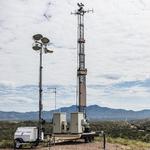 A US mobile surveillance sensor tower
US counter-terror experts are overseeing a lightning operation for setting up mobile sensor towers and electronic fences in Tunisia, Egypt, Jordan and Israel in a desperate bid to seal their borders off against the fast-moving impetus of the Islamic State of Iraq and the Levant – ISIS, or at least slow it down. This reign of terror is spreading out from Iraq and Syria and creeping into southern Jordan, the Israeli Negev, and Egyptian Sinai, then on to Libya and over to Tunisia and Algeria, covering a distance of 4,000 km.
When President Abdel-Fatteh El-Sisi saw his army had not repelled the ISIS Sinai affiliate’s offensive in North Sinai as it went into its second week – controlling only the main highway from El Arish to Cairo via Bardawil Lake – he turned to Washington with an urgent request to ship over mobile surveillance sensor towers and American crews to operate them. His plan is to string them across the Sinai Peninsula and along Egypt’s borders with Libya and Sudan in a last-chance bid to block the constant influx of reinforcements and weapons to ISIS fighters reaching Sinai from Libya, through the Egyptian borde,r and from Iraq, through southern Jordan and the Israeli Negev.
The State Department acceded to the Egyptian request and has submitted the application worth $100 million for congressional approval.
The application states: “This procurement is intended for Egyptian Border Guard Forces, which currently lack any remote detection capability along unpatrolled areas of Egypt’s borders.” Libya, Sudan and Sinai are specified. The application goes on to explain: “The system would provide an early warning capability to allow for faster response times to mitigate threats to the border guards and the civilian population.”
DEBKAfile’s counter-terror and intelligence sources disclose that Egypt already has one set of American mobile sensor towers. They were installed on the 193 km long banks of the Suez Canal more than a year ago and have kept ISIS terrorists from reaching those banks and firing missiles at passing ships to block the waterway, like the RPG attack of Sept. 5, 2013.
The sensor towers have proved effective so long as the various terrorist groups, such as ISIS, were deterred from directly attacking American facilities by tactical considerations of their own, such as a preference for those systems rather than a large-scale army forces to police the Suez zone, which would physically impede the convoys carrying men and arms from Libya into Egypt.
The drivers of these convoys stop over at Suez and Port Suez to rest up before carrying on with the long drive to their destinations in Sinai. Scattering the mobile sensor towers in areas unpatrolled by Egyptian troops would expose the American operators to ISIS attacks and abductions. So while solving one problem, they may well generate another. In any case they won’t make the ISIS threat go away.
Whereas Egypt asked for mobile sensors, Tunisia is to have a new, permanent fence with electronic warning stations along its route. Our counter-terror experts point out that, however effective this system is, it can’t promise Tunisia hermetic protection against terrorist encroachment.
ISIS has at least two ways of getting around the fence barrier:
1. Landing by sea. The gunman who massacred 39 tourists on the Soussa beach on June 26 landed from the Mediterranean by speedboat.
2. Circumventing the fence through the meeting point of the Tunisian-Libyan-Algerian borders. That point will not be enclosed. Tunisia may be reached through western Algeria where the border is wide open.
The second electronic fence the United States is providing will run down 30 km of the border between Israel and Jordan from Timna to Eilat. It is a joint project, which has become necessary to curb ISIS movements from southern Jordan through the Israeli Negev and onto Egyptian Sinai and the Gaza Strip.
Iran’s Nuclear Weapons Program and the Failure of Obama’s “Hope and Change Foreign Policy,” ISIS Study Group, June 27, 2015
US Secretary of State John Kerry will be spending this weekend in Vienna in an attempt to salvage the deal the Obama administration is trying to land with the Iranian regime. The reason for his sense of urgency is that Ayatollah Khameini publicly rejected the deal and came out with some new terms just before the 30 JUN deadline. The Obama administration and the US mainstream media are trying to spin this as if the “reformers” are somehow being derailed. That would be true if there were any actual reformers in the Iranian regime. The truth is that this is all by design and that so-called “reformers” like President Rouhani are in on the joke – and the US is the punchline.
John Kerry mounts last push for Iran nuclear agreement
http://www.telegraph.co.uk/news/worldnews/middleeast/iran/11701690/John-Kerry-mounts-last-push-for-Iran-nuclear-agreement.html
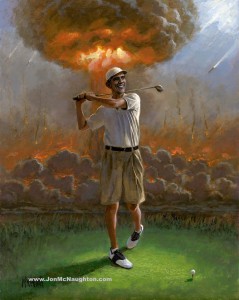
Source: Jon McNaughton
So what did Khameini say? He demanded the following:
1. Iran would only dismantle their program if sanctions were lifted first. In other words, we’d simply have to take them at their word.
2. Inspections and placing a freeze on research and development for 10 yrs is thrown out of the deal.
Huh. So if the key things agreed to back in APR 15 are now “null and void” (which were pretty weak to begin with), then what’s left of this deal? Absolutely nothing. And like we said earlier, this is all by design. The Iranian negotiation team is fully on the same page as Khameini – otherwise they wouldn’t be allowed to be on the team to negotiate with the US State Department (DoS).
Iran nuclear talks: Khamenei rejects key US demands
http://www.bbc.com/news/world-middle-east-33253488
Our loyal readers are fully aware of the Iranian regime’s designs for these negotiations and the Middle East in general. If you’re new to our site, then you will want to check out the following articles:
Today’s Middle East: The Burning Fuse of the 21st Century’s “Great Game”
http://isisstudygroup.com/?p=6193&
The Persian Hustle: Iran Dupes Clueless US State Dept in Nuke Talks and Moves to Dominate the Middle East
http://isisstudygroup.com/?p=5978
Mr. Netanyahu Goes to Washington
http://isisstudygroup.com/?p=5316
Inside Iran’s Middle East: The Nuclear Weapons Program
http://isisstudygroup.com/?p=2640
Inside Iran’s Middle East: The Charm Offensive
http://isisstudygroup.com/?p=2676
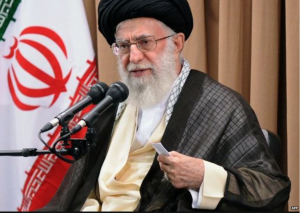
Khameini is large and in-charge despite his failing health – don’t ever forget that
Source: Associated Free Press
The original deal both sides agreed to back in APR didn’t allow for inspectors to have full access to key installations nor would we have had any visibility on projects that can improve Iran’s ability to produce a testable nuke. It also wouldn’t keep Iran from converting uranium hexafluoride (UF6) to metal or conducting work that enhances their metallurgy skills. As we previously stated in “Today’s Middle East: The Burning Fuse of the 21st Century’s Great Game,” if asked about it, the regime would simply say that it was for “radiation shielding” or conventional depleted uranium munitions. In fact the Obama administration doesn’t seem to be inclined to do anything about these indicators of increased proliferation. For instance, the regime’s Atomic Energy Organization of Iran (AEOI) has been in the business of supplying Iranian medical research organizations for several years now. In fact, our sources connected to the opposition have informed us that AEOI personnel known to be involved with uranium enrichment manufacturing have set up an entity called the “Persian Health Equipment and Development Company” or “PHEDCO” back in FEB 15. Apparently the company was set up to produce medical-use centrifuges. We assess that the company isn’t capable of enriching uranium itself, but we do think that it can be used to acquire certain components of nuclear suppliers group-controlled aluminum 7075 and quite possibly carbon-fiber.
Atomic Energy Organization of Iran (AEOI)
http://www.iranwatch.org/iranian-entities/atomic-energy-organization-iran-aeoi
We’re also very much aware that the regime is interested in developing uranium metal-based reactor fuels that would improve their ability to produce uranian-based nuclear weapons. These fuels are currently being used in “civilian research reactors.” So what is it, exactly? In a nuclear reactor, the uranium fuel is assembled to where a controlled fission chain reaction can be achieved. The heat created by splitting the U-235 atoms is then used to make steam, which in turn spins a turbine to drive a generator that produces electricity. The chain reaction that take place in the core of a nuclear reactor is controlled by rods which absorb neutrons, enabling the chain reaction to continue. Water, graphite and heavy water are used as moderators in different types of reactors. Due to the kind of fuel being used, if there’s a major malfunction in a reactor, the fuel may overheat and melt – but won’t explode like a bomb. The type of uranium used for bombs is different from what you’d find in a regular nuclear power plant. Military-grade uranium is highly enriched (>90% U-235, instead of up to 5%). Since the 1990s, a lot of otherwise military-grade uranium has become available for producing electricity as the result of the global disarmament effort.
What is Uranium? How Does it Work?
http://www.world-nuclear.org/info/Nuclear-Fuel-Cycle/Introduction/What-is-Uranium–How-Does-it-Work-/
We assess that the regime’s efforts will enable their nuclear technicians to gain enough experience with uranium metal production processes that could shorten the weaponization timeline. That said, we see the timeline accordingly:
1. They may master uranium metal production within the next 6 months.
2. Another 2-3 months will be needed to learn how to fabricate uranium metal components for a weapon.
3. 4-5 months will likely be required to test components and assemble a nuclear device.
This timeline has probably already been shortened due to the collaborative work taking place between Iran and the DPRK (North Korea) that the Obama administration has also failed to address during these negotiations. The two rogue nations have been engaged in a series of joint-projects in both the nuclear weapon and ballistic missile fields. Perhaps the most important part of stopping the development of an Iranian nuclear weapon is to deal with their intercontinental ballistic missile program, since that’s where the delivery system of said weapon will come from. Unfortunately, the Obama administration doesn’t seem to think that’s important. Perhaps one of the American media outlets should pose the question in the next press conference with the President or DoS? We won’t hold our breath.
How the North Korean Regime Affects the Middle East
http://isisstudygroup.com/?p=3038
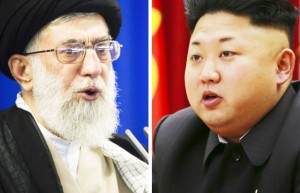
The two rogue nations have been able to circumvent sanctions at every turn thanks to their collaborative efforts and impotence that’s endemic throughout the UN and US government in particular
Source: The Business Insider
This brings us to another problem: The Obama administration’s failure at the issue surrounding our European allies’ refusal to actually enforce the UN sanctions already on the books. As you would guess, the regime has been in the market for procuring military-grade blast valves. What the UN, US government and several other allied nations are aware of (and hoping that the public remain ignorant to) is that one of the top sellers of those valves to the Iranians is Finnish company Temet Oy. This company is a global leader in blast protection and special ventilation technology applied in protective constructions such as civilian shelters and hardened military facilities. In addition to the nuclear and defense industries, Temet is also involved in the energy sector – which is the reason why they’re so keen to help the Iranian regime with its “peaceful” nuclear program. If you don’t believe us see for yourself:
About Temet
http://www.temetprotection.com.ar/about_temet.html
Temet Blast Valves
http://www.temetprotection.com.ar/blast_valves.html
FYI, Temet’s blast valves are specifically designed to protect facilities from munitions strikes – such as a potential Israeli Air Force Operation, for instance. The civil-grade blast valves that they’re publicly selling to the regime for its oil and gas sectors are designed to mitigate the effects of smaller explosions at industrial facilities. Despite Finland’s strong track record in the counter-proliferation arena, they’re likely fully aware of what this company has been up to for some time. If they’re not, then the government should fire all of their most senior intel officials because they’re clearly incompetent. They should be aware and continue tracking Temet’s activities after the 2012 attempt by the company to circumvent EU sanctions by shipping products to Iran and receiving payment via third parties. The problem is Temet is just one of several European companies that have been cashing in big on the poorly-enforced sanctions. Finland isn’t the only government guilty of trading in their morals to make a quick buck – the Germans are just as guilty. Here’s some other incidents over the years that put some cold water on any hopes that even sanctions can be enforced:
German firms sold sensitive equipment to Iran even during sanctions regime
http://www.haaretz.com/news/middle-east/.premium-1.562287
German firms still ship dual-use goods to Iran
http://www.jpost.com/Iranian-Threat/News/German-firms-still-ship-dual-use-goods-to-Iran
A mysterious Iranian-run factory in Germany
http://www.washingtonpost.com/world/europe/a-mysterious-iranian-run-factory-in-germany/2013/04/15/92259d7a-a29f-11e2-82bc-511538ae90a4_story.html
Germans Say 6 Companies Sold Nuclear Parts to Iran Network
http://www.nytimes.com/2006/03/29/international/europe/29germany.html?_r=0
Special Report: How foreign firms tried to sell spy gear to Iran
http://www.reuters.com/article/2012/12/05/us-huawei-iran-idUSBRE8B409820121205
As you can see, the Obama administration’s much-hyped nuclear “deal” with the Iranian regime was a failure from the get-go. Ayatollah Khameini knows the US government is weak because they’ve already caved into earlier demands – so why not raise the stakes and milk an already flaccid Obama administration for even more concessions? Iran’s true intentions for its program isn’t in doubt – its primary function is to produce a nuclear weapon. The Obama administration and the EU are fully aware of this as well – but they still won’t do anything about it. Europe lacks any real convictions and are now a shriveled corpse of what they used to be. People talk about the US in the same breath as “blood money” for oil, but the truth is the European nations are directly responsible along with China and Russia for propping up an increasingly belligerent Iranian regime who interprets “peace” as all opposing voices being silenced – by force. Their refusal to actually enforce sanctions and then turn around and circumvent them – sometimes openly – has led us to where we are. So President Obama isn’t the only one who will have a tarnished legacy.
Regarding our illustrious President, his “Hope and Change Foreign Policy” has been such a miserable failure that he’s now desperate for anything that he can claim as a “victory.” He certainly isn’t going to get that “victory” from his nonexistent strategy to combat the Islamic State (IS), so he’s forced to get a deal – any deal – signed with the Iranians, regardless of how bad it is for America and our allies in the Middle East. The saddest thing about all this is that the deal will empower the regime even more. When that happens – and it will – the biggest losers will be the average Iranian citizen who doesn’t share the regime’s militant ideology. How so? Once the regime is able to produce a nuclear weapon, they know the west won’t do anything to stop them. Period. When that occurs, they will be able to put the final nail in the coffin against the remaining opposition groups in the country. And so it goes…
If you want to know what this regime is all about, then check out the rest of our Inside Iran’s Middle East series:
Inside Iran’s Middle East: The Kurdish Insurgency
http://isisstudygroup.com/?p=4068
Inside Iran’s Middle East: The Southeastern Insurgency
http://isisstudygroup.com/?p=2689
Inside Iran’s Middle East: The “Reformers”
http://isisstudygroup.com/?p=2635
The Iran scam worsens — Part III, Human rights and support for terrorism, Dan Miller’s Blog, June 22, 2015
(The views expressed in this post are mine and do not necessarily reflect those of Warsclerotic or its other editors. — DM)
It is likely that the P5+1 nuke “deal” with Iran will be approved soon. Military and other nuke sites which Iran has not “disclosed” will not be inspected. Nor will Iran’s nuke ties with North Korea — which P5+1 member China seems to be helping, Iran’s massive support for terrorism and abysmal human rights record be considered because they are also deemed unnecessary for “deal” approval. Sanctions against Iran are moribund and will not be revived regardless of whether there is a “deal.” However, a bronze bust of Obama may soon be displayed prominently in Supreme Leader Khamenei’s office and one of Khamenei may soon be displayed proudly in Dear Leader Obama’s office.

Iranian support for terrorism
According to the U.S. State Department, The Islamic Republic of Iran continued its sponsorship of terrorism during 2014. The linked article observes,
Iran has increased its efforts to finance and carry out terrorist activities across the world and remains a top nuclear proliferation threat, according to a new State Department assessment. [Emphasis added.]
Iran is funding and arming leading terrorist groups in the Middle East and elsewhere, according to the State Department’s 2014 Country Reports on Terrorism, which thoroughly documents how Tehran continues to act as a leading sponsor terror groups that pose a direct threat to the United States.
The report comes as Western powers work to finalize a nuclear deal with Iran ahead of a self-imposed June 30 deadline, though it is unclear whether the new findings will come up in negotiations.
It seems clear that the new findings will not be considered.
Among many other terrorist organizations, Iran supports the Taliban.
Afghan and Western officials say Tehran has quietly increased its supply of weapons, ammunition and funding to the Taliban, and is now recruiting and training their fighters, posing a new threat to Afghanistan’s fragile security.
Iran’s strategy in backing the Taliban is twofold, these officials say: countering U.S. influence in the region and providing a counterweight to Islamic State’s move into the Taliban’s territory in Afghanistan. [Emphasis added.]
According to James Clapper, the U.S. Director of National Intelligence, the intelligence community considers Iran to be the “foremost state sponsor of terrorism.”
The assessment came after criticism from the Senate that the information was omitted in a global threat assessment submitted to Congress [in February of this year.] Initially, Iran and Hezbollah were not included as terror threats in the intelligence community’s report to the Senate in February. [Emphasis added.]
Might the Obama administration have been trying to ignore Iran’s continuing support for terrorist activities because of its fixation on getting a “deal” with Iran in the ongoing P5+1 “negotiations?” Probably, but that was then. Now, it is apparently not a problem to report on Iran’s terrorist activities because they are deemed unworthy of consideration by the P5+1 negotiators. It’s terrible, but so what?
Iran is the world’s biggest sponsor of terrorism. Its tentacles have a hold on Syria, Lebanon, Iraq, Afghanistan, Yemen and the Gaza Strip. Its terrorist operations know no border and its proxies partake in mass killings and war crimes. But as it has been demonstrated time and time again, the West appears unperturbed by all that. It views Iran as a potentially constructive state actor, which, as long as it gets its way, could serve to stabilize the region. [Emphasis added.]
Iran could, of course, “stabilize” the region with its own military and its terror proxies in much the same way that Hitler tried to “stabilize” Europe — by gaining military control and forcing his ideology on subjugated residents. At first, there was some resistance but that was shown to be useless as Britain under Chamberlain gave Hitler Czechoslovakia. Eventually, Britain and later her ally, the United States, became sufficiently upset to intervene militarily.
As noted in an article at Asia Times on Line, the “free world” is unwilling to confront Iranian hegemony:
For differing reasons, the powers of the world have elected to legitimize Iran’s dominant position, hoping to delay but not deter its eventual acquisition of nuclear weapons. Except for Israel and the Sunni Arab states, the world has no desire to confront Iran. Short of an American military strike, which is unthinkable for this administration, there may be little that Washington can do to influence the course of events. Its influence has fallen catastrophically in consequence of a chain of policy.
. . . .
President Obama is not British prime minister Neville Chamberlain selling out to Hitler at Munich in 1938: rather, he is Lord Halifax, that is, Halifax if he had been prime minister in 1938. Unlike the unfortunate Chamberlain, who hoped to buy time for Britain to build warplanes, Halifax liked Hitler, as Obama and his camarilla admire Iran. [Emphasis added.]
The bountiful windfall soon to be given to Iran if the P5+1 “deal” is approved, via a “signing bonus” and other Sanctions relief, will help Iran’s terror sponsorship.
[S]hould the “treaty” with Iran be consummated, this sponsor of global terrorism will receive at least $100 billion in sanctions relief. Not only will this money be used for Assad, but it will bankroll Hezbollah and Hamas with a new generation of rockets and weapons.
For Tehran, money buys weapons, and weapons buy power and influence. President Obama is counting on an accommodative Iran that receives foreign assistance. But is there any reason to embrace this hypothesis? And even if someone does, at what point can the International Atomic Energy Agency (IAEA), or any other relevant body, determine the turnabout in Iran’s nuclear program? How do we know when a genuine peace has arrived? [Emphasis added.]
Iranian leaders have made it clear that dreams of a Persian kingdom dance like sugar plums in their imagination. For that to happen, the money pump cannot run dry. There is a need to support their Houthi surrogates in Yemen; resupply Hamas rockets that were destroyed in the last war with Israel; continue to add to the Hezbollah war machine that is poised to attack Israel; and keep Assad afloat, the mechanism by which control of Lebanon is retained. [Emphasis added.]
Iran’s abysmal human rights record is getting worse

According to Iranian Human Rights,
[T]he Iranian regime has executed a prisoner every two hours this month.
“So far in 2015, more than 560 have been executed, and we are just in the first half of the year… What we are witnessing today is not so much different from what ISIS is doing. The difference is that the Iranian authorities do it in a more controlled manner, and represent a country which is a full member of the international community with good diplomatic relations with the West.” — Mahmood Amiry-Moghaddam, spokesman for Iran Human Rights. [Emphasis added.]
Now the West, with the possibility of a nuclear deal, stands to increase Iran’s diplomatic standing.
According to officials of the Islamic Republic of Iran,
Iran has “the best human rights record” in the Muslim world;[11] that it is not obliged to follow “the West’s interpretation” of human rights;[12] and that the Islamic Republic is a victim of “biased propaganda of enemies” which is “part of a greater plan against the world of Islam“.[13] According to Iranian officials, those who human rights activists say are peaceful political activists being denied due process rights are actually guilty of offenses against the national security of the country,[14] and those protesters claiming Ahmadinejad stole the 2009 election are actually part of a foreign-backed plot to topple Iran’s leaders.[15] [Emphasis added.]
Conclusions
Iran’s abysmal and already worsening records of human rights violations and support for terrorism will likely get even worse as it gets (or gets to keep) the bomb, along with a reward of massive further sanctions relief. None of that is deemed worthy of consideration by the P5+1 “negotiators,” lest Iran decline to sign a deal or lest its feelings be hurt — as they would be were IAEA inspections of “undisclosed” sites be demanded or if any Iranian demands were not met.
Iran and North Korea share not only nuclear weaponization technology; they also share a common contempt for human rights. Yet the North Korea – Iran nuclear nexus (denied by Iran) appears to be of no concern to the P5+1 “negotiators.”
Obama long ago “opened his heart” to the Muslim world.
“To the Muslim world, we seek a new way forward based on mutual interest and mutual respect,” Obama declared in his first inaugural address. The underlying assumption was that America’s previous relations with Muslims were characterized by dissention and contempt. More significant, though, was the president’s use of the term “Muslim world,” a rough translation of the Arabic ummah. A concept developed by classical Islam, ummah refers to a community of believers that transcends borders, cultures, and nationalities. Obama not only believed that such a community existed but that he could address and accommodate it.
The novelty of this approach was surpassed only by Obama’s claim that he, personally, represented the bridge between this Muslim world and the West.

ALL of My policies are the best ever
Obama does deserve some credit: His foreign policies are the most foreign in U.S. history to the security of the United States and of what’s left of the free world. Much the same is true of His domestic policies.




 anneinpt
 artaxes
 danmillerinpanama
 davidking1530
 Peter Hofman
 Joseph Wouk
 Peter
Peter Louisiana Steve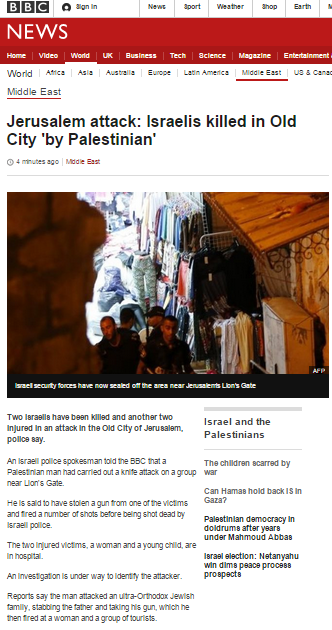


 WarSclerotic
Recent Comments