Archive for the ‘North Korean nukes’ category

Joe Biden to China: Curb North Korea or Japan Can Go Nuclear ‘Virtually Overnight’

June 26, 2016

Joe Biden to China: Curb North Korea or Japan Can Go Nuclear ‘Virtually Overnight’, Breitbart, Frances Martel, June 24, 2016

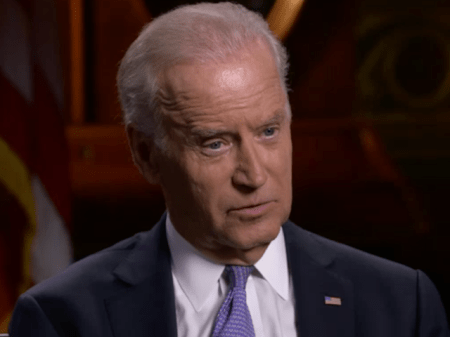
Joe Biden

Vice President Joe Biden warned China that the Japanese government may acquire nuclear weapons “virtually overnight” if the threat from North Korea becomes too grave, urging Beijing to do more to curb Pyongyang’s belligerence.

The Vice President’s comments echo those of presumptive Republican presidential nominee Donald Trump, who warned that Japan and South Korea acquiring nuclear weapons “is going to happen anyway” in controversial remarks issued in March. Japanese government officials and media responded to Trump’s comments much more severely than they have to Biden’s.

“What happens if Japan, who could tomorrow, could go nuclear tomorrow? They have the capacity to do it virtually overnight,” Biden told PBS host Charlie Rose in an interview broadcast Monday. He explained that he made this warning to Chinese President Xi Jinping personally while discussing the deployment of a Terminal High Altitude Area Defense (THAAD) system in South Korea to protect from a North Korean attack, a move that China has condemned vocally.

“When I tell President Xi, you have to understand we got a guy up there in North Korea who is talking about building weapons that can strike, nuclear weapons strike the United States and not only Hawaii and Alaska, but… the mainland of the United States,” he told Rose. “And I say, so we’re going to move up our defense system, and he says no, no, no, wait a minute, my military thinks you’re going to try to circle us.”

Biden suggested that China, a fellow communist country, “has the single greatest ability to influence North Korea.”

Japan has issued a tepid response to the remarks, with Japanese Deputy Chief Cabinet Secretary Hiroshige Seko telling reporters Friday that Japan simply “can never possess nuclear weapons.” Japan remains the only nation in the world to experience a nuclear weapon attack.

In March, Trump stated that both Japan and South Korea were likely to develop nuclear capabilities due to their access to advanced technology. “It’s going to happen, anyway. It’s only a question of time. They’re going to start having them, or we have to get rid of them entirely,” he said, suggesting that, should the move be inevitable, the United States should do more to curb its defense expenses in Asia protecting wealthy nations.

In response, Foreign Minister Fumio Kishida stated that Japan having nuclear capabilities was “impossible,” and national newspaper Asahi Shimbun described national leaders as responding with “bewilderment and unease.

The government of North Korea has behaved with extreme belligerence in 2016, beginning the year with the detonation of what they claimed was a hydrogen bomb and repeatedly launching missiles towards Japan (all have failed to reach their targets). Most recently, North Korea tested what are believed to be two Musudan ballistic missiles, with one reaching the greatest height the nation has yet to achieve on a test.

China responded to the new test by calling for North Korea to “act with caution and refrain from taking actions that may elevate tension on the Korean peninsula.” China recently backed expanded UN sanctions on North Korea, but has condemned U.S. and South Korean defense buildups in response to Pyongyang, claiming that the also put Beijing in the line of fire.

While China has kept its criticism of North Korea tepid and remained its largest trade partner, the volume of that trade has declined significantly. Imports from North Korea dropped 12.6 percent between May 2015 and May 2016, while exports to North Korea fell 5.9 percent in the same time period.

North Korean Nuke Program Built With Earnings From Slave Labor

May 30, 2016

North Korean Nuke Program Built With Earnings From Slave Labor, Washington Free Beacon, May 30, 2016

North Korean leader Kim Jong Un waves during a parade at Kim Il Sung Square in the country's capital Pyongyang on May 10, 2016, to celebrate the end of the seventh Workers' Party of Korea congress. Kim appeared at the parade, in which hundreds of thousands of people took part. (Kyodo) ==Kyodo

North Korean leader Kim Jong Un waves during a parade at Kim Il Sung Square in the country’s capital Pyongyang on May 10, 2016, to celebrate the end of the seventh Workers’ Party of Korea congress. Kim appeared at the parade, in which hundreds of thousands of people took part. (Kyodo)

North Korea uses “forced and slave laborers” in order to fund state priorities, including the development of nuclear weapons and missiles, according to a new report on the labor practices in the isolated dictatorship.

The report, entitled Gulag, Inc., was unveiled by the Committee for Human Rights in North Korea (HRNK) at an event at the National Press Club in Washington, D.C., last week. It offers a glimpse into the way Kim Jong Un’s regime exploits North Korean citizens in the lowest tiers of its social system for economic gain.

“Most of us cannot imagine a place where your life is pre-determined from the time you are born: what you eat, where you attend school, travel, and work—all forced onto you, regardless of your desires, dreams, talents, or merits,” the report says.

“If you are born into the lowest rung of the loyalty-based social discrimination system (songbun), you will likely live a brutish, dangerous, and often short life, shrouded in the darkness of the country’s state-run mines. This has been the reality of North Korea under three generations of the Kim regime.”

The report was written by Kim Kwang-Jin, a defector from North Korea and an expert on the regime’s secret and illegal international financial operations who is a fellow at HRNK.

Forced labor serves as the backbone of North Korea’s mining industry, which yields coal, copper, and other commodities that “earn hard foreign currency for the state,” Kwang-Jin explains in the report.

The mining industry continues to play a central role in North Korea’s exports despite reductions in the price of commodities. In 2013, for example, coal and mineral resources accounted for half of the regime’s total exports. The chief buyer of North Korean mineral exports is China.

“In 2013, China accounted for 97% of North Korea’s exports of mining products in terms of revenue. Exports of coal and iron ore to China in the same year totaled $1.68 billion, or 44% of North Korea’s overall exports to all countries for that year,” the report notes.

All facets of the mining industry are run by state entities.

The North Korean social system is comprised of three classes: the basic class, the complex class, and the hostile class. Members of the two lower rungs “are forcibly assigned to the most difficult and avoided occupations in North Korea, which include mines and farms.” The occupations of those in the hostile class, the lowest class, are pre-determined by the occupations of the individual’s parents or grandparents.

North Korea’s political prison camps are also linked to mining activities, according to evidence presented in the report.

“These individuals, systematically marginalized and discriminated against, cannot enter the institutions of power, including the Party, government, or the military. They are placed at an extreme disadvantage in all walks of life, and their labor is exploited to maintain production and export the state’s underground resources,” the report says. “The dark reality of this industry reveals a vast system of unlawful imprisonment, forced labor, and human rights violations.”

The wealth generated from the mining industry is used by Kim Jong Un’s regime to “strengthen its own power,” meaning that the state’s interests are funded by slave labor.

“The underground resources exported from North Korea are produced by forced labor and human rights violations committed by the state,” the report explains. “The wealth that is generated from these exports is spent on state priorities: the privileged lifestyle of the Kim dynasty and the elite classes, the development of nuclear weapons and missiles, songun (‘Military First’) politics, giftpolitik, and the maintenance of the songbun system of social classification.”

A resolution passed by the United Nations Security Council in March cracked down on North Korean exports by prohibiting Pyongyang from exporting coal, iron, iron ore, gold, and other minerals, with some exceptions. The new sanctions came in response the regime’s January nuclear test. Still, the resolution is not likely to be enough to curb exports to China, the report notes.

“Although the sanctions imposed by UN Security Council resolution 2270 were widely regarded to be unprecedented in strength, they do not yet appear to have had a significant impact on North Korea’s exports of underground resources to China, which continue under the guise of ‘livelihood purposes,’” the report states.

“There is an urgent need to strengthen controls on North Korea’s mining exports, not only to improve the effectiveness of sanctions aimed at altering Pyongyang’s stance on denuclearization, but also to protect the human rights of countless North Koreans who endure forced labor in mines across the country.”

Kwang-Jin headlined the launch event for Gulag, Inc. on Thursday along with David Asher, who was a State Department official during the Bush administration; William Newcomb, a former U.S. government economist; and Roberta Cohen, an expert on human rights and humanitarian issues at the Brookings Institution.

Asher, who served as a senior adviser for East Asian and Pacific Affairs and coordinator of the North Korea Working Group at the State Department, emphasized the need to crack down on North Korea’s forced labor in order to minimize threats posed by Pyongyang to the homeland.

“These workers are being used as slaves or serfs in a way that is absolutely at the center of the North Korean regime’s finances and weapons of mass destruction program,” stated Asher.

“North Korea’s ‘Gulag, inc.’ is supporting a system that at the end of the day is involved in threatening the entire stability of the world economy and civil society,” Asher later said. “North Korea’s exploitation of its human people like cattle at the end of the day results in a very sophisticated ability to build nuclear weapons and proliferate them as well as missiles.”

Trump’s approach to North Korea bucks foreign policy elite

May 23, 2016

Trump’s approach to North Korea bucks foreign policy elite, The Hill, Ivan Eland, May 23, 2016

[A]lthough Trump is still putting together his foreign policy, he already has the pieces to create a more coherent and possibly more successful policy toward North Korea than the stodgy U.S. elite, who have sniffed at him.

************************

Donald Trump, the presumptive Republican presidential nominee, is at it again, horrifying the U.S. foreign policy elite by saying that he would speak to Kim Jong Un, the erratic North Korean leader, to discuss North Korea’s nuclear program. For example, the standard bearer for this elite, and Trump’s likely Democratic opponent for president, former Secretary of State Hillary Clinton, sneered at Trump’s “bizarre fascination with foreign strongmen.”

Imagine actually talking to difficult countries, as Ronald Reagan successfully did with the Soviet Union! Trump knows that it takes a tough and effective leader to use negotiation and diplomacy instead of the reflexive use of military force, which has marked the weak and insecure presidencies of George W. Bush and Barack Obama.

Trump’s high-level negotiation likely would be more successful in limiting or getting rid of North Korea’s nuclear program than past, unsuccessful lower-level U.S. bargaining with the regime over the same issue.

With U.S. forces stationed in South Korea, Kim Jong Un is paranoid of a combined, U.S.-South Korean attack on his country. The main reason that he has likely developed nuclear weapons is to deter such an attack. A President Trump speaking to him personally might ease these fears significantly.

Also dismissed by the foreign policy elite is Trump’s strategy of putting pressure on China, North Korea’s only ally, to prod Kim to negotiate away his nuclear program. Trump said in a recent media interview: “I would put a lot of pressure on China because economically we have tremendous power over China.”

The foreign policy elite notes that despite recent Chinese annoyance with North Korean nuclear and missile tests, and China’s agreement to impose some economic sanctions on the regime, it still props up the always rickety North Korean autocracy with supplies of energy and other vital goods over their common border. Thus, the elite doubts that China will change this behavior.

Yet Trump, a businessman, may be more savvy than politicians and bureaucrats by focusing on negotiating parties’ incentives to do things—that is, Trump likely knows that for a sustainable arrangement on the North Korean nuclear program to be reached and honored, it has to be advantageous for both China and the U.S. Trump is correct that China is the key to moving North Korea on the issue and when pressure on China is combined with other elements of Trump’s foreign policy program, it just might work.

The main reason that China supports the dangerously unpredictable North Korea is that it feels it has no choice: If the North Korean regime collapses, China fears Korea will be unified under a pro-U.S. South Korean government—U.S. military and even U.S. nuclear forces could be right on China’s border.

In other words, China would then have a hostile alliance dominated by a military superpower, the U.S., on its border. Given the collapse of communist governments in Europe at the end of the Cold War and the expansion of a U.S.-led NATO alliance hostile to Russia right on Russian borders, the Chinese believe that their fears are well grounded.

Trump’s solution to this friction is to allow wealthy allies in the region like Japan and South Korea to defend themselves. China would no longer need to fear the U.S. superpower, with its massive arsenal of nuclear weapons, on its border if North Korea collapsed.

Therefore, if Trump implemented this change in U.S. policy, China might have a greater incentive to pressure North Korea to limit or eliminate its nuclear program than it currently does. China has no intrinsic incentive to want an unstable state possessing nuclear weapons as its immediate neighbor.

In sum, although Trump is still putting together his foreign policy, he already has the pieces to create a more coherent and possibly more successful policy toward North Korea than the stodgy U.S. elite, who have sniffed at him.

Could North Korea Secretly Build an Iranian Bomb?

May 11, 2016

Could North Korea Secretly Build an Iranian Bomb? The National InterestPeter Brookes, May 10,2016

(Please see also, The Iran-North Korea Axis of Atomic Weapons? — DM)

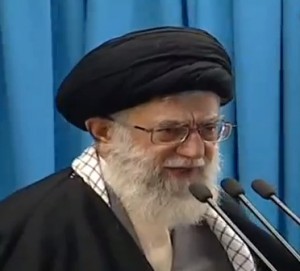
Khamanei-300x271

Editor’s Note: The National Interest and the Heritage Foundation have partnered for a multi-part occasional series examining various aspects of the Iran nuclear agreement. The below is part four of the series. You can read previous parts here: one, two and three.

Last summer’s Iran nuclear deal has been roundly criticized for a number of solid reasons, ranging from Tehran’s ability under the deal to continue advanced centrifuge research to lingering questions about the possible military dimensions of its nuclear program.

That’s all well established.

One issue that has been largely ignored—wittingly or unwittingly—is this: What if Iran were able to find a suitable partner to collude with on an ‘‘underground” nuclear weapons program, all while seemingly staying within the restrictions of the July 2015 nuclear deal?

In other words, Tehran could by all public accounts adhere to the P5+1’s (China, France, Germany/European Union, Russia, the United Kingdom and the United States) Joint Comprehensive Plan of Action (JCPOA). But concurrently, Iran could work clandestinely with another country to advance its nuclear weapons program, essentially circumventing the International Atomic Energy Agency’s inspections and monitoring of the nuclear program inside Iran.

What better candidate for covert cooperation than cagey North Korea?

First, there’s no doubt that North Korea has a nuclear weapons capability. It has conducted four—maybe soon five—tests (2006, 2009, 2013 and 2016), possibly using both plutonium and uranium as fissile material.

Next, some analysts believe Pyongyang may have already “miniaturized” or “weaponized” the underground testing device into a nuclear warhead, capable of being mated to a ballistic missile. Even if North Korea hasn’t achieved it yet, it’s working on it.

Pyongyang has also expanded its missile testing beyond land-based launches. It now has conducted at least two subsurface ballistic missile tests that may also be related eventually to its nuclear weapons program. Clearly, these North Korean capabilities—though not all proven—would benefit an Iranian nuclear weapons program.

Also important is that Pyongyang seems willing to share its nuclear know-how with others, as evidenced by its building of a nuclear facility for Damascus that was destroyed in an Israeli air strike in 2007. Though public evidence is scarce and, if available, gauzy, it’s quite reasonable to conclude with some confidence that Pyongyang and Tehran already have some sort of established security or defense relationship. For instance, in 2012, Iran and North Korea reportedly signed a science and technology (S&T) agreement. It’s fair to assume that any cooperation is defense-related.

Indeed, considering the sorry state of their respective economies, research and industrial bases, it’s hard to conceive of what sort of civilian S&T Pyongyang might offer Tehran—and vice versa, of course.

Lending credence to this idea is the report that, at the time of the S&T agreement’s signing, Iran’s Supreme Leader, Ayatollah Ali Khamenei, spoke of how Tehran and Pyongyang had “common enemies.” The United States quickly—and clearly—comes to mind.

The idea of collaboration should come as no real surprise, as it’s seemingly well-known that the Iran and North Korea are reported to have been cooperating at some level on ballistic missiles going back to at least the late 1990s. For instance, it’s long been asserted that some Iranian ballistic missiles (e.g., the Shahab) are based on North Korean ballistic-missile technology (e.g., the Nodong) or transfers (e.g., the Scud).

Equally alarming is the New York Times report suggesting that the 2013 North Korean nuclear test may have been conducted “for two countries.” That notion was raised by unattributed U.S. government sources and gives support to concerns that Pyongyang and Tehran may be cooperating on more than ballistic missiles. This wouldn’t be the first time such an allegation has been leveled at Tehran and Pyongyang informally, but perhaps the first time it’s been acknowledged by Washington, taking into account a source not willing to be identified.

Of course, the situation has changed dramatically with the JCPOA now in force. Iran now has more than a passing interest in moving forward with its nuclear weapons program—especially considering the evolving regional security situation—without losing the benefits that the agreement provides, such as the removing of crippling economic sanctions. From Iran’s perspective, the need for “nuclear networking” with North Korea is greater than ever.

Of course, it’s not just Tehran that is in need. Pyongyang is also needy for its own reasons, such as its self-imposed, collectivist economic woes and the increasing international economic sanctions it faces over nuclear and missile tests.

In addition, North Korea could use some technical assistance with its space launch program, where Iran is arguably more advanced, but which is integral—and critical—to Pyongyang’s intercontinental ballistic missile (ICBM) program.

Lastly, both countries despise the United States and some of its allies (e.g., South Korea and Israel). Accordingly, Iran and North Korea would benefit from the existence of another state that threatens America with nuclear-tipped ICBMs.

 In other words, there’s plenty of political and military motivation for these two rogue states to get together on nuclear and/or missile matters, arguably even more so today than last summer, before the JCPOA came into effect.

State Dept: North Korea Should Be ‘Inspired by’ Iran Nuclear Deal

April 20, 2016

State Dept: North Korea Should Be ‘Inspired by’ Iran Nuclear Deal, BreitbartJohn Hayward, April 19, 2016

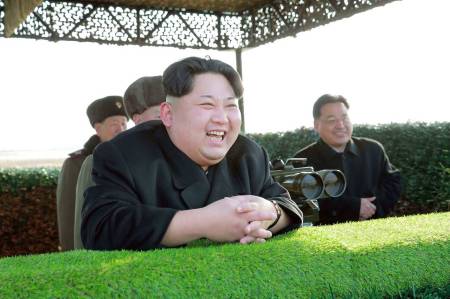
(Kim must either take the deal and stop testing nukes or Obama will “respond strongly” by announcing his condemnation. What might Kim be laughing at in the photo below? — DM)

Kim Chi-un laughing at Obama

During a visit to Seoul, South Korea, Deputy Secretary of State Antony Blinken said the North Koreans should be “inspired” to give up their nuclear weapons by the deal that was struck with Iran.

“Iran made a fundamental choice. It decided to freeze and roll back its nuclear program and allow inspectors to come in and create the time and space to see if we could agree a comprehensive agreement,” said Blinken, as reported by Reuters. About North Korea, he stated: “It’s our hope that the DPRK will be inspired by that example.”

He went on to cite “recent diplomatic progress” with Cuba and Myanmar as evidence the United States is “willing to engage with countries like North Korea.”

“If a country, even one with which we’ve had the most profound differences, is prepared to engage seriously and credibly in answering the demands of the international community, we are also prepared to engage,” Blinken declared.

However, he insisted the U.S. would “respond strongly” if there is another North Korean nuclear test, as international observers widely suspect.

South Korean president Park Geun-hye said on Monday that activity near the North’s nuclear test site indicates another detonation may be imminent. The South Korean Defense Ministry suggested it might be an underground test of a miniaturized warhead, bringing them perilously close to mounting nukes on a ballistic missile.

“We are in a situation in which we cannot predict what provocations North Korea might conduct to break away from isolation and to consolidate the regime,” Park warned.

Army General Vincent Brooks testified to a Senate panel on Tuesday that North Korea is “struggling” with its intercontinental ballistic missile program, but he warned that “over time, I believe, we are going to see them acquire these capabilities if they are not stopped.”

North Korea’s Sanctions Loophole

February 29, 2016

North Korea’s Sanctions Loophole, Wall Street Journal, February 28, 2016

Happy KimThis undated picture released from North Korea’s official Korean Central News Agency on February 27, 2016 shows North Korean leader Kim Jong-Un smiling during the inspection of the test-fire of a newly developed anti-tank guided weapon at an undisclosed location. PHOTO: KCNA VIA KNS/AFP/GETTY IMAGES

The Obama Administration is touting the latest United Nations sanctions as a milestone against North Korea’s nuclear and missile programs. We’d like to believe it too, but a close look at the draft Security Council resolution offers many reasons to doubt.

The resolution would double the number of blacklisted North Korean individuals and state entities, adding Pyongyang’s atomic-energy and space agencies. Luxury goods banned from export to North Korea would grow to include watches, yachts and snowmobiles. A ban on sales of aviation fuel targets state-owned airline Air Koryo, while a ban on sales of rocket fuel targets Kim Jong Un’s missile program.

More significant are efforts to cut Pyongyang’s access to hard currency and smuggled weapons technology. The sanctions expand the list of banned arms and dual-use goods, and they require states to inspect all cargo transiting their territory to or from North Korea by sea, air or land. They would also squeeze North Korean mineral exports, including coal and iron ore, which in 2014 accounted for 53% of Pyongyang’s $2.8 billion in exports to China, per South Korean state figures.

Overall the blacklist of North Korean proliferators is growing by only 12 individuals and 20 entities to a total of 64; the U.N.’s former blacklist on Iran was far larger at 121. In any case, none of these matter if China won’t rigorously enforce them—which it has never done.

There are other loopholes and oversights. The nominal ban on North Korean mineral exports applies only to purchases that demonstrably fund illicit activities, rather than “livelihood purposes.” Yet money is fungible, so Chinese coal purchases excused on livelihood or humanitarian grounds will still channel hundreds of millions of dollars to the regime.

The sanctions also do nothing about the Chinese oil transfers that keep the Kim regime alive. Or Chinese purchases of textiles from mostly state-run North Korean factories that have quadrupled to $741 million a year since 2010 and recently ensnared Australian surf brand Rip Curl in a supply-chain controversy. Or the 50,000-plus North Korean laborers overseas, largely in China and Russia, earning some $230 million a year for their masters in Pyongyang.

U.S. officials say China has new incentive to back sanctions because it wants to block South Korea’s recent moves to deploy the U.S.-built Thaad missile-defense system. That may be why China wants to look cooperative, but the new sanctions aren’t enough to justify walking back on Thaad. China still views the North as a political buffer against South Korea, a thorn in the side of Japan and the U.S., and a diplomatic card to play at the U.N. So China has long played a double game of rhetorically deploring North Korea’s nuclear program while propping it up in practice.

The better way to squeeze the North is closer cooperation among Washington, Seoul and Tokyo to sanction Chinese banks that facilitate trade with Pyongyang. This worked a decade ago until the Bush Administration fell for more of China’s diplomatic promises. China won’t get serious about stopping North Korea until it sees that the U.S. and its allies are serious.

When North Korea Tests a Nuke, Assume It’s Iran’s as Well

January 13, 2016

When North Korea Tests a Nuke, Assume It’s Iran’s as Well, Clarion ProjectRyan Mauro, January 13, 2016

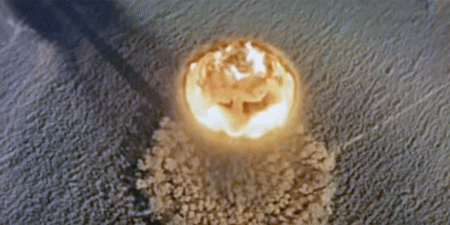
North-Korean-Nuclear-Test-HPA previous nuclear Test made by North Korea (Photo: Video screenshot)

Given the spotty record of U.S. intelligence assessments (to say the least), the West must operate under the assumption that there isn’t an Iranian WMD problem and a North Korean WMD problem, but an Iranian-North Korean WMD problem.

********************************

North Korea briefly reclaimed the global press’ attention again by claiming to have tested a hydrogen bomb. While coverage focused on whether that was an exaggeration, the press missed a much more important question: Was this test only for Kim Jong-Un or was it also for the Iranian regime?

The North Korean and Iranian nuclear and ballistic missile programs should be seen as a single entity, as should be their shared cyber warfare programs. The advance of one is an advance of the other. Differences in their activity should be seen as a common-sense division of labor. Gordon Chang, a prominent expert on Asian affairs, has written about the likelihood that this is the case.

Last May, an Iranian opposition group that has accurately identified hidden nuclear sites in the past reported that it had specific intelligence about North Korean nuclear and missile experts secretly visiting Iran. Intelligence analyst Ilana Freedman said in January 2014 that her sources said a relocation of major parts of Iran’s nuclear program to North Korea began as early as December 2012.

For Iran, it is best to let the North Koreans put the finishing touches on the most provocative nuclear and missile work. Whereas the Iranian regime does suffer from sanctions and must always keep the 2009 Green Revolution in the back of its mind, North Korea thrives off isolation and international provocation.

North Korea has nothing to lose and can only gain by such an arrangement. Kim Jong-Un’s regime has already crossed the nuclear pariah threshold, so it might as well let its Iranian allies take the lucrative deal offered by the West. It has been content to spend $1.1-$3.2 billion each year on it. Plus, the deal puts Iran in a more advantageous position  and its economic improvements can help it invest more in North Korea’s activity.

The good news is that this latest test—North Korea’s fourth— does not appear to be more powerful than its last one, indicating no significant advance in technology. RAND Corporation analyst Bruce Bennett says North Korea is still working on the “basics” of a nuclear fission bomb.

It is hard for some to accept that an Islamist theocracy like that in Iran would work with a cultish communist dictatorship like North Korea, but there is nothing in either one’s ideology that would prevent such cooperation. In fact, North Korea’s success in building a nuclear arsenal actually encourages Iran to see nuclear weapons as a key lesson for the Islamic Revolution.

“The entire world may well consider North Korea a failed state, but from the view point of [Iran], North Korea is a success story and a role model: A state which remains true to its revolutionary beliefs and defies the Global Arrogance,” Ali Alfoneh, an expert on the Iranian regime, told the Washington Free Beacon.

Given the spotty record of U.S. intelligence assessments (to say the least), the West must operate under the assumption that there isn’t an Iranian WMD problem and a North Korean WMD problem, but an Iranian-North Korean WMD problem.

After Bomb Test, North Korea, Iran Continue Illicit Nuke Cooperation

January 8, 2016

After Bomb Test, North Korea, Iran Continue Illicit Nuke Cooperation, Washington Free Beacon, January 7, 2016

(Please see also, North Korea and Iran: The Nuclear Duo. — DM)

Iranian President Hasan Rouhani, right, shakes hands with a top North Korean leader, Kim Yong Nam, at the start of a meeting in Tehran, Iran, Saturday, Aug. 3, 2013. Iran's supreme leader formally endorsed Hasan Rouhani as president Saturday, allowing the moderate cleric to take charge of a country weakened by economic sanctions over its nuclear program. Kim Yong Nam is in Tehran to attend a ceremony when Rouhani will take the oath of office in parliament Sunday. (AP Photo/Ebrahim Noroozi)

Iranian President Hasan Rouhani, right, shakes hands with a top North Korean leader, Kim Yong Nam, at the start of a meeting in Tehran, Iran, Saturday, Aug. 3, 2013.

Iran won’t even need to make any progress on its domestic nuclear program—once it perfects its ballistic missiles it could purchase a weapon from North Korea and all of the conditions and monitoring in the [nuclear deal] would be ineffective in detecting or stopping that. . . .

****************************

One day after North Korea claimed to have successfully tested a miniaturized hydrogen bomb, lawmakers and regional experts are warning that Pyongyang and Tehran are continuing an illicit clandestine partnership enabling the rogue nations to master nuclear technology.

Loopholes in the nuclear pact recently reached between Iran and the international community have allowed the Islamic Republic and North Korea to boost their nuclear cooperation, which includes the exchange of information and technology, according to material provided to Congress over the past year.

Iran is believed to be housing some of its key nuclear weapons-related technology in North Korea in order to avoid detection by international inspectors. Iranian dissidents once tied to the regime have disclosed that both countries have consulted on a nuclear warhead.

Following the test, however, the White House publicly denied that Iran and North Korea are working together, according to multiple statements issued by the administration on Wednesday.

Still, the Iranian-North Korean nuclear axis is coming under renewed scrutiny by lawmakers in light of Pyongyang’s most recent detonation, which is the fourth of its kind in recent years.

Congressional critics now warn that the Obama administration cannot be trusted to clamp down on North Korea given its recent efforts to appease Iran by dropping a new set of sanctions that were meant to target its illicit ballistic weapons program.

Iran, on the other hand, thinks that the bomb test will give it “media breathing space” by drawing attention away from its own nuclear pursuits, according to Persian-language reports carried by state-controlled media outlets closely aligned with the country’s Revolutionary Guards Corps.

“The entire world may well consider North Korea a failed state, but from the view point of the [Iranian Revolutionary Guard Corps], North Korea is a success story and a role model: A state which remains true to its revolutionary beliefs and defies the Global Arrogance,” said Ali Alfoneh, an expert on the inner workings of the Iranian regime.

Prominent members of Congress are now warning that North Korea’s latest nuclear test is a sign of what could come from Iran, which they claim is closely following the North Korean nuclear playbook.

Rep. Ileana Ros Lehtinen (R, Fla.), chair of House’s foreign relations subcommittee on the Middle East and North Africa, described North Korea’s latest test as “a precursor to what we can expect from Iran in a few years.”

Iran, Ros-Lehtinen told the Washington Free Beacon, “is following the North Korea playbook” and “stands to be the main beneficiary of Pyongyang’s continued nuclear progress.”

“Iran and North Korea have a history of collaboration on military programs and have long been suspected of collaborating on nuclear related programs,” she said, noting that the Iran deal provides the Islamic Republic with the cash necessary to purchase advanced nuclear technology.

“Iran won’t even need to make any progress on its domestic nuclear program—once it perfects its ballistic missiles it could purchase a weapon from North Korea and all of the conditions and monitoring in the [nuclear deal] would be ineffective in detecting or stopping that,” she said.

“Let’s not forget, Iranians have reportedly been present at each of North Korea’s previous nuclear tests,” Sen. David Perdue (R., Ga.), a member of the Senate Foreign Relations Committee, said in a statement. “We cannot turn a blind eye to ongoing ties between North Korea and Iran. President Obama must act now to stop these rogue nations from supporting each other’s nuclear weapons efforts aimed at harming America and our allies.”

Rep. Patrick Meehan (R., Pa.) expressed concern that Iran is following in North Korea’s footsteps, and that the nuclear deal will collapse just as  Bill Clinton’s agreement with North Korea did in the mid-1990s.

“This test is just the latest sign that North Korea is a regime hell-bent on building and developing a sophisticated nuclear program,” Meehan said. “The passage of the 1995 nuclear deal with [North Korea] came with it promises from the Clinton administration of accountability and transparency for Kim’s regime.”

“Those same sort of assurances are echoed today by the Obama White House as it seeks to assure us that its own deal with Iran will be more successful,” Meehan said. “The Iran deal and the North Korean deal were sold with the same promises, the same assurances, to the American people, sometimes even word-for-word.”

“When you put the rhetoric of the 90’s and the North next to the rhetoric of today and Iran, it’s hard to tell the difference,” he added.

Sen. Mark Kirk (R., Ill.), a chief advocate for increased economic sanctions on Iran, highlighted what he called North Korea’s “alarming record” of “cooperating on missile development with Iran.”

With Iran set to receive billions of dollars in sanctions relief later this month, regional experts have informed Congress that the nuclear deal “creates conditions and incentives that are highly likely to result in the expansion” of Iran and North Korea’s illicit nuclear exchange, according to testimony submitted last year by Claudia Rossett, an expert at the Foundation for Defense of Democracies.

The deal fails to “cut off the pathways between Iran and nuclear-proliferating North Korea” and even has made “it safer for Iran to cheat,” according to Rossett’s testimony.

Additionally, sanctions relief gives Iran a chance to “go shopping in North Korea,” she said.

The Obama administration denied the ties between Iran and North Korea, telling reporters on Wednesday that “they’re entirely two different issues altogether.”

“We consider the Iran deal as a completely separate issue handled in a completely different manner than were the—than was the Agreed Framework with North Korea,” said John Kirby, a State Department spokesman, echoing similar remarks issued by the White House.

The administration’s hesitance to link the two nuclear issues has angered some critics of the Iran deal.

“This is exactly the kind of dishonest incoherence that the Iran nuclear deal forces its advocates to defend,” said Omri Ceren, the managing director of press and strategy at The Israel Project, a D.C.-based organization that works with journalists on Middle East issues.

“The Obama administration can’t admit that the [deal] provided the Iranians with hundreds of billions of dollars, some of which they’re going to invest in nuclear research beyond their borders, allowing them to get sanctions relief while advancing their program anyway,” Ceren said. “So instead they have to deny that there are links between Iran and North Korea’s nuclear program, even though that’s laughable.”
North Korea and Iran: The Nuclear Duo

January 8, 2016

North Korea and Iran: The Nuclear Duo, Front Page MagazineJoseph Klein, January 8, 2016

(With the Iran Scam’s sanctions relief, Iran will soon have lots more money to outsource development of nuclear weapons to North Korea. North Korea desperately needs foreign currency and will be delighted to help, as it has done in the past and, apparently, continues to do. — DM)

pl (1)

There is no reason to believe that, as a result of the deal Iran is already sidestepping, Iran will suddenly stop all dealings with North Korea with regard to both countries’ nuclear programs. The Obama administration and the United Nations upon which it relies ignore the close relationship between the two rogue nations at the world’s peril.

********************************

North Korea conducted its fourth nuclear test on January 6th, which it claimed was a hydrogen bomb. Despite some skepticism as to North Korea’s claim that it had actually tested a hydrogen bomb, the Obama administration acknowledged that North Korea had indeed tested some sort of nuclear device. The administration condemned North Korea’s latest testing as a violation of a series of past United Nations Security Council resolutions.

“We do not and will not accept North Korea as a nuclear armed state, and actions such as this latest test only strengthen our resolve,” declared Secretary of State John Kerry.

Mr. Kerry is a bit late with his declaration. North Korea has had an active nuclear arms program for nearly a decade and has conducted three of its four nuclear tests during President Obama’s time in office. None of the sanctions contained in the Security Council resolutions have stopped North Korea from thumbing its nose at the so-called “international community” and conducting as many nuclear and missile tests as it wishes. Kerry’s declaration begs the question – “resolve” to do what? Pass yet another Security Council resolution with a few more symbolic sanctions and some additional travel restrictions on senior North Korean officials?

The Obama administration’s claim of “resolve” in dealing effectively with nuclear threats rings hollow. Its idea of what “resolve” means was demonstrated by the loophole-ridden nuclear deal with Iran, which contains no safeguards against Iran’s cooperation with North Korea on nuclear technology and development. No doubt the administration would offer North Korea a similar deal if its leader Kim Jong-un were as crafty as Iranian President Hassan Rouhani in lulling President Obama and Kerry into a false sense of security.

Moreover, rather than work closely with China to maximize its leverage in defusing North Korea’s nuclear threat, the administration chose to prioritize climate change in its relationship with China above all other issues.

The administration’s solution to the North Korea problem is to double down on its failed strategy of relying principally on the UN for concerted “international” action. It joined Japan, a non-permanent member of the Security Council, in calling for the December 6th emergency session. After about two hours of closed door consultations, the Security Council issued a press statement condemning the test and vowing further unspecified measures in response:

“The members of the Security Council strongly condemned this test, which is a clear violation of Security Council resolutions1718 (2006), 1874 (2009), 2087 (2013), and 2094 (2013) and of the non-proliferation regime, and therefore a clear threat to international peace and security continues to exist. The members of the Security Council also recalled that they have previously expressed their determination to take ‘further significant measures’ in the event of another DPRK nuclear test, and in line with this commitment and the gravity of this violation, the members of the Security Council will begin to work immediately on such measures in a new Security Council resolution.”

Even if Russia and China were to come around and support another resolution under the enforcement provisions of Chapter 7 of the UN Charter, it is hard to believe that it will make any difference. Before the emergency Security Council meeting even began, Russian UN Ambassador Churkin was already lowering expectations, saying softly to reporters: “Cool heads, cool heads” and “proportionate response.”

North Korea regards the UN Security Council, and the Obama administration for that matter, with about as much contempt as Iran does. Indeed, all North Korea’s leaders have had to do is look at how Iran has been treated when it behaves badly. Iran was rewarded with a deal that merely postpones its nuclear arms program in return for the lifting of sanctions and unfreezing of many billions of dollars. Moreover, Iran suffered no consequences to speak of from its recent violations of the Security Council resolutions prohibiting it from developing or testing ballistic missiles capable of carrying nuclear weapons. The Security Council held meetings but did nothing. As U.S. ambassador to the United Nations Samantha Power told the Senate Foreign Relations Committee last December, “Beyond having Security Council discussions on the matter there’s been no follow-on action. Discussions are a form of U.N. action.”

For its part, the Obama administration put off the imposition of any separate U.S. sanctions it had been considering in response to Iran’s missile launchings as soon as the Iranians claimed that any such sanctions would violate President Obama’s “holy grail” nuclear deal.

The United Nations Security Council, as well as the Obama administration, tend to compartmentalize flashpoints erupting in different regions of the world. They refuse to acknowledge that Iran and North Korea have long been joined at the hip when it comes to the development of nuclear material for bombs and ballistic missiles capable of delivering them.

The Security Council holds separate meetings on Iran and North Korea, as if their respective nuclear activities have been completely unrelated to each other. And, as demonstrated by the following exchange between a correspondent and White House Press Secretary Josh Earnest at the January 6th daily press briefing, the Obama administration is turning a blind eye to the dangerous risk of continuing cooperation between Iran and North Korea:

“Q: You mentioned Iran earlier, and I’m wondering if there’s a bit of sleight of hand there from the Iranians’ perspective — meaning they’re trying to, on the one hand, work with the international community to have sanctions relief, but on the other hand, it’s been widely reported that they’ve been working with the North Koreans, perhaps even using them as a proxy to continue development of their own nuclear ambition. Does the White House understand that view?

MR. EARNEST:  I can’t speak to the veracity of those claims.

Iran and North Korea have been cooperating for decades on nuclear technology. As Ilan Berman, a leading expert on the Middle East and Iran, wrote last August in the National Journal, “over the past three decades, Iran and the Stalinist regime of the Kim dynasty in North Korea have erected a formidable alliance—the centerpiece of which is cooperation on nuclear and ballistic-missile capabilities.”

Secretary of Defense Ashton Carter stated during an April 2015 interview that North Korea and Iran could still be cooperating to develop a nuclear weapon. Moreover, according to an assessment of “Iran-North Korea-Syria Ballistic Missile and Nuclear Cooperation” published by the Congressional Research Service last May, “U.S. intelligence officials have expressed concern that North Korea might export its nuclear technology or fissile material.”

Iran “may still rely on Pyongyang for certain materials for producing Iranian ballistic missiles, Iran’s claims to the contrary notwithstanding,” the Congressional Research Service report added.

North Korea has also conducted several tests involving nuclear explosive devices, a technology in which Iran has reportedly shown interest and would be in a position to procure from North Korea.

In short, rebutting the claims by the Obama administration that its nuclear deal with Iran cuts off all its pathways to the achievement of a nuclear weapon capability, the title of Mr. Berman’s National Journal article says it all – “North Korea: Iran’s Pathway to a Nuclear Weapon.”

There is no reason to believe that, as a result of the deal Iran is already sidestepping, Iran will suddenly stop all dealings with North Korea with regard to both countries’ nuclear programs. The Obama administration and the United Nations upon which it relies ignore the close relationship between the two rogue nations at the world’s peril.

Cartoons of the day

September 18, 2015

H/t Freedom is just another word


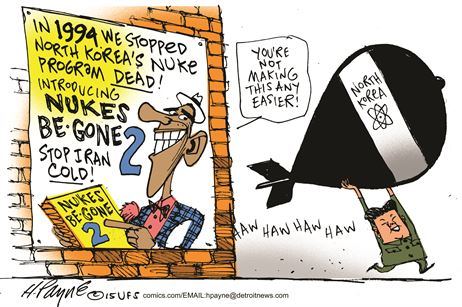
begone
invited