Archive for the ‘Middle East’ category

The Palestinians’ Real Strategy

June 22, 2015

The Palestinians’ Real Strategy, The Gatestone InstituteKhaled Abu Toameh, June 22, 2015

  • Marzouk’s remarks refute claims by some in the Arab and Western media that Hamas is moving toward pragmatism and moderation, and that it is now willing, for the first time, to recognize Israel’s right to exist. Many in the West often fail to understand Hamas’s true position because they do not follow what Hamas says in Arabic — to its own people. In Arabic, Hamas makes no secret of its call for the destruction of Israel.
  • The current strategy of the Palestinian Authority (PA) is to negotiate with the international community, and not with Israel, about achieving peace in the Middle East. The ultimate goal of the PA is to force Israel to its knees. For the PA, rallying the international community and Europe is about punishing and weakening Israel, not making peace with it.
  • Their strategy is no longer about a two-state solution so much as it is about inflicting pain and suffering on Israel. It is more about seeking revenge on Israel than living in a state next to it.
  • Hamas’s terrorism also helps the PA’s anti-Israel campaign in the international community. Each terrorist attack provides the PA with an opportunity to point out the “urgent” need to force Israel to submit to Palestinian demands as a way of “containing the radicals.”

All signs indicate that the Palestinians are planning to step up their efforts to force Israel to comply with their demands. But as the Palestinians are not united, they are working on two fronts to achieve their goal.

One party, headed by the Palestinian Authority (PA), believes that, with the help of the international community, Israel will be forced to fully withdraw to the pre-1967 lines, including east Jerusalem, and accept the “right of return” for millions of refugees and their descendants to their former homes inside Israel.

The second party, represented by Hamas, Islamic Jihad and several other terror groups, continues to reject any form of compromise, and insists that the only solution lies in the elimination of Israel. Unlike the first party, this one believes that direct or indirect negotiations with the “Zionist enemy” are a waste of time and that terrorism is the only means for the Palestinians to achieve their goal.

The two Palestinian parties, the PA and Hamas, have been at war with each other since 2007, when Hamas seized full control over the Gaza Strip and forced the Palestinian Authority to flee to the West Bank.

But while the two rival parties are fighting each other, they are also working separately to overpower Israel.

On June 19, a Hamas-affiliated group claimed responsibility for the shooting attack that killed Danny Gonen, a 25-year-old man who was visiting the West Bank.

Hamas, Islamic Jihad and other Palestinian groups rushed to “welcome” the killing of the young Israeli man who, by the way, was not a “settler,” but a resident of the Israeli city of Lod, near Ben Gurion Airport.

In separate statements, these terror groups explained that the attack came in the context of Palestinian efforts to “preserve the resistance” against Israel in the West Bank. They said that such attacks were “legitimate means” to achieve Palestinian rights and aspirations.

These groups made it unavoidably clear that their real objective is not to “liberate” the West Bank, but to wipe Israel off the face of the earth. As one of them said, “We will continue to support any resistance action on the land of Palestine until it is liberated, from the (Mediterranean) sea to the (Jordan) river, and cleansed from all Zionist usurpers.”

Hours after the West Bank attack, a senior Hamas leader, Musa Abu Marzouk, repeated that his movement was seeking to replace Israel with an Islamist state: “Hamas wants a state not only in the Gaza Strip, but in all of Palestine; we won’t give up our weapons and will continue to fight in order to liberate our land.”

Marzouk’s remarks refute claims by some Arab and Western media that Hamas has been moving toward pragmatism and moderation, and that it is now willing, for the first time, to recognize Israel’s right to exist. Many in the West often fail to understand Hamas’s true position because they do not follow what Hamas says in Arabic — to its own people. In Arabic, Hamas makes no secret of its call for the destruction of Israel. To Hamas’s credit, this message is often repeated in English and other languages.

While Hamas and its allies work toward destroying Israel through terrorism, the Palestinian Authority seems more determined than ever to step up its worldwide campaign to delegitimize and isolate Israel with the help of various international parties, such as the anti-Israel Boycott, Divestment and Sanctions (BDS) movement.

Some senior Palestinian officials like to describe this campaign as a “diplomatic war” against Israel. They argue that this war has thus far proven to be much more “effective” than rockets and suicide bombings. “When we launch rockets at Israel, we don’t get any sympathy,” explained one official. “But everyone in the international community is now supporting our diplomatic efforts. That’s why we believe that what Hamas is doing right now is harmful to Palestinian interests.”

Shortly before the Israeli man was fatally shot in the West Bank, the chief Palestinian negotiator, Saeb Erekat, revealed his plan to rally the world against Israel so that it would be forced to submit to the Palestinian Authority’s demands, above all a complete withdrawal to the pre-1967 lines.

Erekat’s plan calls for working very closely with EU countries and members of the UN Security Council, to increase pressure on Israel to comply with the Palestinian demands. It also calls for recruiting international support for recognition of a Palestinian state and paving the way for it to join various international organizations and conventions.

In his plan, Erekat warns against endorsing any UN Security Council resolution that would include recognition of Israel as a Jewish state, or offer concessions on the “right of return” for refugees. He also repeats the Palestinian Authority’s rejection of the idea of land swaps between the future Palestinian state and Israel. In addition, Erekat emphasizes his opposition to the idea of creating a demilitarized Palestinian state or giving up any part of Jerusalem.

The Palestinian Authority’s current strategy is to negotiate with the international community, and not with Israel, about achieving peace in the Middle East. The PA knows that it is not going to get from Israel all that it is asking for. That is why the Palestinian leaders have chosen to negotiate with France, Britain, Sweden and the US. The Palestinians are hoping that these countries will give them what Israel cannot and is not prepared to offer at the negotiating table.

Even if Israel wanted to give one hundred percent of what it gained in 1967, the reality on he ground does not allow it. Since 1967, both Jews and Arabs have created irreversible “facts in the ground,” such as the construction of tens of thousands of houses for both Arabs and Jews. A full withdrawal would mean that tens of thousands of Jews and Arabs would lose their homes both in the West Bank and in Jerusalem.

The ultimate goal of the Palestinian Authority is, with the help of the international community, to force Israel to its knees. For the PA, rallying the international community and Europe is about punishing and weakening Israel, not making peace with it. The PA wants to see Israel degraded, isolated and turned into a rogue state. It wants to see Israelis brought before the International Criminal Court and expelled from as many international organizations as possible.

From talking to senior Palestinian Authority officials, one is left with the impression that their true goal is to see Israel in a state of surrender and defeat. Their strategy is no longer about a two-state solution so much as it is about inflicting pain and suffering on Israel. It is more about seeking revenge on Israel than living in a state next to it.

In many ways, the PA’s “diplomatic war” on Israel also helps Hamas. By constantly accusing Israel of “war crimes” and “atrocities,” the PA is helping Hamas justify its terror attacks against Israelis. The PA’s anti-Israel campaign also helps in creating sympathy and understanding for Hamas’s terror attacks.

Meanwhile, Hamas’s terrorism also helps the Palestinian Authority’s anti-Israel campaign in the international community. Each terrorist attack provides the PA with an opportunity to point out the “urgent” need to force Israel to submit to Palestinian demands as a way of “containing the radicals.”

This is how Hamas and the Palestinian Authority, although remaining sworn enemies, complement each other’s role against Israel.

And many in the international community seem to be helping these two Palestinian camps in their effort to undermine and destroy Israel.
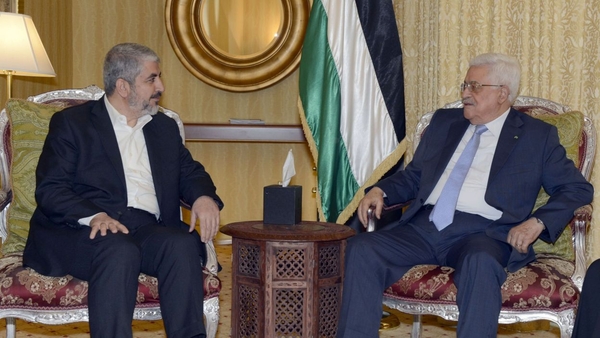
677Palestinian Authority President Mahmoud Abbas (r) meets with the Hamas political bureau chief Khaled Mashaal in Qatar, July 20, 2014. (Image source: Handout from the PA President’s Office/Thaer Ghanem)
Terror will not be defeated with reports

June 22, 2015

Terror will not be defeated with reports, Israel Hayom, Dr. Gabi Avital, June 22, 2015

(Please see also, US: Iran’s Support for Terror Undiminished. — DM)

Iran is led by rational and calculated religious clerics, whose goals are openly declared and well-defined. The rationality one should expect to find in the State Department has dissipated in a haze of illusions, which are exacting a heavy toll. Meanwhile, only the Islamic State stands to outflank Iran, and that is only under the assumption that these two terrorist entities are on completely divergent paths. To be sure, that is quite the baseless assumption.

Yet those who with one hand sound the alarm over an increase in terror, while with the other help the perpetrators of said terror rule the roost by giving it nuclear weapons, must provide convincing explanations. The United States, with its utter foreign policy failures — from Iraq to Yemen to Syria to Egypt and Iran — is not forthcoming with such explanations.

Where is Michael Moore when you need him? The State Department can see what is happening, but Kerry is on his way to a nuclear deal with the world’s leading sponsor of terrorism. Not much could be worse.

********************

Understanding history is a tricky proposition. Its lessons are sometimes hidden to us for long periods; often only subsequent generations can achieve the proper historical perspective, after a series of fateful events has unfolded. Even so, within less than 40 years we have witnessed global events that many political scientists correctly predicted.

The time is the late 1970s. All signs point to an oncoming revolution in Iran. However, U.S. President Jimmy Carter (whom some call the worst president ever), is instead consumed with the wording for a peace deal that undermines pre-existing agreements and international accords. Egypt wins the entire pot in a peace deal with Israel. Iran rises in prominence; the Soviet Union bolsters its standing across the globe, until the arrival of Ronald Reagan, who in an effort to defeat the Soviet Union in the ongoing Cold War, announces his Star Wars program.

We know the ending. Almost every single international relations expert points to that declaration as the beginning of the fall of the Soviet Union. In 1989, Reagan concludes two terms in office, and the Soviet Union falls apart.

Terrorism spreads across the globe. The leading sponsors are Saudi Arabia, Syria and Iran. An extensive report, examining the dangers of mass terrorist attacks on U.S. soil, is being compiled. The conservative-democratic pendulum in the U.S. swings toward the Democratic candidate, Bill Clinton. The egregious disregard of the report, now collecting dust, brings terrorism to its horrific pinnacle on Sept. 11, 2001. All fingerprints lead back to Saudi Arabia. Everything had already been laid out in the dust-covered Pentagon report. What the democratic Pentagon and State Department cooked up, the Republican George W. Bush was forced to eat.

The State Department has now published its annual report on terrorism. The seeds of this report were planted in the Carter era, when peace at all costs was championed without any understanding of the world in general and the Middle East in particular. Iran is led by rational and calculated religious clerics, whose goals are openly declared and well-defined. The rationality one should expect to find in the State Department has dissipated in a haze of illusions, which are exacting a heavy toll. Meanwhile, only the Islamic State stands to outflank Iran, and that is only under the assumption that these two terrorist entities are on completely divergent paths. To be sure, that is quite the baseless assumption.

So what does the report say? There will be a dramatic 35% rise in global terrorist acts. Iran supports terrorist organizations all over the world and in the Middle East especially; it backs the Shiite fighters in Iraq, Hezbollah in Lebanon and in Syria, with arms, training, money and intelligence. And we haven’t even mentioned Syria yet, or Hamas and Islamic Jihad.

Yet those who with one hand sound the alarm over an increase in terror, while with the other help the perpetrators of said terror rule the roost by giving it nuclear weapons, must provide convincing explanations. The United States, with its utter foreign policy failures — from Iraq to Yemen to Syria to Egypt and Iran — is not forthcoming with such explanations. Russia is back on the Cold War track; the Islamic State group is emboldened by the conduct of the U.S. president and his team at the State Department; Iran is envisioning a nuclear bomb in its arsenal; and Saudi Arabia is looking on nervously as the carpet of reciprocity is being pulled out from under it and its oil fields.

Only a week before Secretary of State John Kerry, one of the pillars of this dangerous U.S. foreign policy, takes off to pursue the deal with Iran, Tina Kaidanow, the State Department’s coordinator for counterterrorism, tells us: “We continue to be very, very concerned about [the Islamic Revolutionary Guard Corps] activity as well as proxies that act on behalf of Iran.”

What then, is Kerry really unaware of the findings in the 388-page report? And does he not understand that the deal with Iran, the seeds for which were planted in the Carter era and now being cultivated by Obama, is terrorism itself, and that there is no need for any report to merely sit and collect dust again in the State Department cellar?

Where is Michael Moore when you need him? The State Department can see what is happening, but Kerry is on his way to a nuclear deal with the world’s leading sponsor of terrorism. Not much could be worse.

US: Iran’s Support for Terror Undiminished

June 22, 2015

US: Iran’s Support for Terror Undiminished, The Clarion Project, June 21, 2015

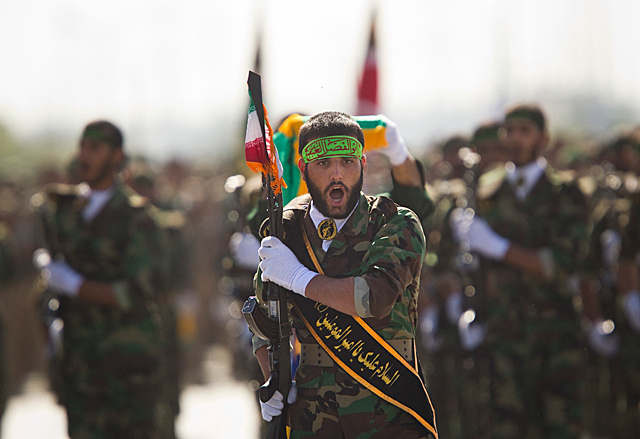
Iran-Basij-March-IP_1The Iranian volunteer Basij militia (Photo: © Reuters)

In an interview with The Atlantic, U.S. President Barack Obamas admitted that some of the money freed up the deal’s proposed sanction relief may up going towards terrorism, although he argued that Iranian government would have to make good on their commitments to improve the country’s economy.

******************

Despite the fact that Iran’s global terror activities were “undiminished” between 2013 and 2014, the U.S. State Department is still entirely committed to pursuing a nuclear deal with Iran.

“We think it’s essential that we pursue those negotiations,” said Tina Kaidanow, the State Department’s coordinator for counterterrorism, as quoted in The Wall Street Journal. “None of that implies that we would be, again, in any way taking our eye off the ball with respect to what Iran is doing as a supporter of terrorism.”

Iran’s support for terror was documented in the State Dept.’s annual report on global terrorism, which was released Friday. The report says “Iran’s state sponsorship of terrorism worldwide remained undiminished,” which makes the State Dept. “very, very concerned,” according to Kaidanow.

While the June 30 deadline for the deal is now fewer than 10 days away, the release of the report shows, “Iran continued to sponsor terrorist groups around the world,” according to Kaidanow.

The report specifically mentions Iran’s continued support for the Shiite terror organization Hezbollah in Lebanon as well as those fighting with embattled Syrian President Bashaar al-Assad.

The Clarion Project reported last week that Iran is supporting more than 100 terrorist organizations in Syria and Iraq alone.

In an interview with The Atlantic, U.S. President Barack Obamas admitted that some of the money freed up the deal’s proposed sanction relief may up going towards terrorism, although he argued that Iranian government would have to make good on their commitments to improve the country’s economy.

“I don’t think …anybody in this administration said that no money will go to the military as a consequence of sanctions relief,” Obama said. “The question is, if Iran has $150 billion parked outside the country, does the IRGC automatically get $150 billion? Does that $150 billion then translate by orders of magnitude into their capacity to project power throughout the region? And that is what we contest …”

The report also showed that between 2013 and 2014, there was a significant rise in global terror attacks, causing an increase in over 80 percent of violent deaths from the previous year (which itself had seen a 43 percent increase from the year before). In addition, the report showed:

  • There was an average of 1,122 attacks per month
  • Kidnappings increased by one-third, with more than with 9,400 people taken hostage
  • The number of global attacks rose by 35 percent
  • 32,727 people were killed worldwide (versus 17,800 in 2013)
  • 34,700 people were injured in attacks in close to 95 countries
  • In Iraq alone,  10,000 people died in 3,360 attacks representing close to a third of all people killed in terror attacks worldwide.

The Myth of Muslim Radicalization

June 18, 2015

The Myth of Muslim Radicalization, Front Page Magazine, Daniel Greenfield, June 18, 2015

Usaama RahimUsaama Rahim

Mainstreaming extremism is . . . Obama’s policy. It’s the logic behind nearly every Western diplomatic move in the Middle East from the Israel-PLO peace process to the Brotherhood’s Arab Spring. And these disasters only created more Islamic terrorism.

****************

After some of its quarter of a million Muslims headed to join ISIS, Quebec decided the answer was a $2 million anti-radicalization center headed by a specialist in cultural sensitivity. But if you’re about to be beheaded by a masked ISIS Jihadist, a specialist in cultural sensitivity isn’t going to help you much.

Western governments nevertheless keep rolling out their culturally sensitive approaches to fighting ISIS.

The key element in Obama’s strategy for fighting ISIS isn’t the F-15E Strike Eagle, it’s a Twitter account run by a Muslim Brotherhood sympathizer which claims to “Counter Violent Extremism” by presenting moderate Islamists like Al Qaeda as positive role models for the Islamic State’s social media supporters.

So far 75% of planes flown on combat missions against ISIS return without engaging the enemy, but the culturally sensitive State Department Twitter account has racked up over 5,000 tweets and zero kills.

Cultural sensitivity hasn’t exactly set Iraq on fire in fighting ISIS and deradicalization programs here start from the false premise that there is a wide gap between a moderate and extremist Islam.  Smiling news anchors daily recite new stories about a teenager from Kentucky, Boston or Manchester getting “radicalized” and joining ISIS to the bafflement of his parents, mosque and community.

And who is to blame for all this mysterious radicalization? It’s not the parents. It certainly can’t be the moderate local mosque with its stock of Jihadist CDs and DVDs being dispensed from under the table.

The attorney for the family of Usaama Rahim, the Muslim terrorist who plotted to behead Pamela Geller, claims that his radicalization came as a “complete shock” to them.

It must have come as a truly great shock to his brother Imam Ibrahim Rahim who claimed that his brother was shot in the back and that the Garland cartoon attack had been staged by the government.

It must have come as an even bigger shock to Imam Abdullah Faaruuq, the Imam linked to Usaama Rahim and his fellow terrorist conspirators, as well as the Tsarnaev brothers, who had urged Muslims to “grab onto the gun and the sword.”

The culturally insensitive truth about Islamic ‘radicalization’ is that it is incremental.

There is no peaceful Islam. Instead of two sharply divided groups, peaceful Islam and extremist Islam, there is a spectrum of acceptable terrorism.

Muslim institutions have different places on that spectrum depending on their allegiances and tactics, but the process of radicalization is rarely a sharp break from the past for any except converts to Islam.

The latest tragic victim of radicalization is Munther Omar Saleh; a Muslim man living in New York City who allegedly plotted to use a Tsarnaev-style pressure cooker bomb in a major landmark such as the Statue of Liberty or the Empire State Building. Saleh claimed to be following orders from ISIS.

Media coverage of the Saleh arrest drags out the old clichés about how unexpected this sudden radicalization was, but what appears to be his father’s social media account shows support for Hamas.

Likewise one of Usaama Rahim’s fellow mosque attendees said that Rahim and another conspirator had initially followed the “teachings of the Muslim Brotherhood” but that he had been forced to cut ties with them when they moved past the Brotherhood and became “extreme”.

Despite the media’s insistence on describing the Muslim Brotherhood as a moderate organization, it has multiple terrorist arms, including Hamas, and its views on non-Muslims run the gamut from the violent to the genocidal.

A year after Obama’s Cairo speech and his outreach to the Muslim Brotherhood, its Supreme Guide announced that the United States will soon be destroyed, urged violent terrorist attacks against the United States and “raising a jihadi generation that pursues death just as the enemies pursue life.”

Despite this, Obama continued backing the Muslim Brotherhood’s rise to power across the region.

There are distinctions between the Muslim Brotherhood and Al Qaeda, but the latter is a splinter group of the former. Al Qaeda’s current leader came out of the Muslim Brotherhood. A move from one to the other is a minor transition between two groups that have far more in common than their differences.

And since the Brotherhood controls much of the Islamic infrastructure in the United States, the idea that Munther Omar Saleh or Usaama Rahim became radicalized because they went from a Jihadist group that takes the long view in the struggle against the infidel, putting political structures into place to make a violent struggle tactically feasible, to a Jihadist group that focuses more on short term violence, is silly.

Radicalization isn’t transformational; it’s incremental.

It’s the Pakistani kid down the block deciding that instead of joining the Muslim Students Association and then CAIR to build Islamist political structures in America, he should just cut to the chase and kill a few cops to begin taking over America now.

Radicalization is the moderate Imam who stops putting on an act for PBS and the local politicians and moves to Yemen where he openly recruits terrorists to attack America instead of doing it covertly at his mosque in Virginia.

Radicalization is the teenage Muslim girl who forgets about marrying her Egyptian third cousin and bringing him and his fifty relatives to America and goes to join ISIS as a Caliphate brood mare instead.

It’s not pacifism giving way to violence. Instead it’s an impatient shift from tactical actions meant to eventually make Islam supreme in America over many generations to immediate bloody gratification. ISIS is promising the apocalypse now. No more waiting. No more lying. You can have it tomorrow.

Radicalization does not go from zero to sixty. It speeds up from sixty to seventy-five.

It builds on elements that are already there in the mosque and the household. The term “extremism” implicitly admits that what we are talking about is not a complete transformation, but the logical extension of existing Islamic beliefs.

Omar Saleh seemed cheerful enough about Hamas dropping Kassam rockets on Israeli towns and cities. Would he have supported his son setting off a bomb in the Statue of Liberty? Who knows, but his son was already starting from a family position that Muslim terrorism against non-Muslims was acceptable.

Everything else is the fine print.

When Usaama Rahim followed the way of the Muslim Brotherhood, he was with a moderate group whose spiritual guide, the genocidal Qaradawi was the godfather of cartoon outrage and had endorsed the murderous Iranian fatwa against Salman Rushdie.

The slope that leads from Qaradawi’s cartoon rage to trying to behead Pamela Geller isn’t a slippery one; it’s a vertical waterfall. And this is what radicalization really looks like. It doesn’t mean moderates turning extreme. It means extremists becoming more extreme. And there’s always room for extremists to become more extreme which turns old extremists into moderates while mainstreaming their beliefs.

In the UK, Baroness Warsi, Cameron’s biggest mistake, blamed Muslim radicalization on the government’s refusal to engage with… radicals. Or as she put it, “It is incredibly odd and incredibly worrying that over time more and more individuals, more and more organisations are considered by the government to be beyond the pale and therefore not to be engaged with.”

The reason why the government is refusing to “engage” with these organizations is that they support terrorism in one form or another. Warsi is proposing that the UK fight radicalization by mainstreaming it.

Mainstreaming extremism is also Obama’s policy. It’s the logic behind nearly every Western diplomatic move in the Middle East from the Israel-PLO peace process to the Brotherhood’s Arab Spring. And these disasters only created more Islamic terrorism.

The Muslim teenagers headed to join ISIS did not come out of a vacuum. They came from mosques and families that normalized some degree of Islamic Supremacism and viewed some Muslim terrorists as heroes and role models. It’s time for Western governments to admit that the ISIS Jihadist is more the product of his parents and his teachers than of social media Jihadis on YouTube and Twitter.

Radicalization doesn’t begin with a sheikh on social media. It begins at home. It begins in the mosque. It just ends with ISIS.

The Postcolonial Rot Spreads Beyond Middle East Studies

June 15, 2015

The Postcolonial Rot Spreads Beyond Middle East Studies, Front Page Magazine, June 15, 2015

middle-east-scholarships

Middle East Studies programs, Kramer writes, “came under a take-no-prisoners assault, which rejected the idea of objective standards, disguised the vice of politicization as the virtue of commitment, and replaced proficiency with ideology.” The ideology, of course, comprised the old Marxist narrative of Western colonial and imperial crimes, a Third Worldism that idealizes the dark-skinned, innocent “other” victimized by Western depredations, and the juvenile romance of revolutionary violence.

*****************

In theory, Middle East Studies programs are a good idea. One of the biggest impediments to countering modern jihadism has been the lack of historical knowledge about the region and Islam. But even the attention and urgency that followed the terrorist attacks on 9/11 have not led to such knowledge. The result has been policies pursued both by Republicans and Democrats that are doomed to fail, as the current chaos in the region attests.

Rather than enlightening citizens and policy-makers, Middle Eastern Studies programs have darkened our understanding. As Martin Kramer documented in his important 2002 study Ivory Towers on Sand, most programs have become purveyors not of knowledge but of ideology. Under the influence of literary critic Edward Said’s historically challenged book Orientalism––“a work,” historian Robert Irwin has written, “of malignant charlatanry, in which it is hard to distinguish honest mistakes from willful misrepresentations”­­––Middle East Studies programs, Kramer writes, “came under a take-no-prisoners assault, which rejected the idea of objective standards, disguised the vice of politicization as the virtue of commitment, and replaced proficiency with ideology.” The ideology, of course, comprised the old Marxist narrative of Western colonial and imperial crimes, a Third Worldism that idealizes the dark-skinned, innocent “other” victimized by Western depredations, and the juvenile romance of revolutionary violence.

Yet Said’s baleful influence has not been limited to Middle East Studies programs, one of which has been created at my campus of the California State University, replete with the problems Kramer catalogues. It has insidiously corrupted much of the humanities and social sciences, operating under the innocuous rubric of “postcolonial” studies, which to the unwary suggests a historical rather than an ideological category. Through General Education courses that serve students across the university, and in departments like English that train primary and secondary school teachers, Saidian postcolonial ideology has been shaping the attitudes and presumed knowledge of Islam and the Middle East far beyond the reach of Middle East Studies programs.

Said’s dubious argument in Orientalism is that the work of Western scholars on the Middle East embodied “a Western style for dominating, restructuring, and having authority over the Orient,” thus creating the intellectual infrastructure for justifying colonialism and imperialism. As such, every European scholar perforce was “a racist, an imperialist, and totally ethnocentric.” For social science and humanities departments committed totally to the multiculturalist melodrama of white racism and oppression of the dark-skinned “other,” Said’s work seemingly provides scholarly bona fides to ideas that are in fact expressive of illiberal grievance politics.

English departments have been particularly vulnerable to Said’s work, for he overlaid his bad history with watered down Foucauldian ideas about the relationship of power to discourse. Thus English professors seduced by the poststructuralist theory ascendant in 1978 when Orientalism was published found in that book a seemingly sophisticated theoretical paradigm that shared both poststructuralism’s disdain for objectivity and truth, and its “hermeneutics of suspicion,” the notion that the apparent meaning of a discourse is a mask for the sinister machinations of power at the expense of the excluded “other.”

More important, postcolonialism is a politically activist theory, bound up as it is in the politics of the Middle East, especially the Arab-Israeli conflict. Now English professors could avoid the legitimate charge that poststructuralism, despite its patina of leftist ideology, was in fact an evasion of politics, a “symbolic politics,” as historian Russell Jacoby put it, “a replacement for, and a diversion from, the gritty politics of the community and the street.” On the contrary, the purveyors of postcolonialism were on the barricades, struggling to liberate Palestinians and other Muslims oppressed by a neo-imperialist America and its puppet Israel. Rather than pampered elitists guaranteed jobs for life, now the professors could fancy themselves freedom fighters and champions of the ex-colonial brown peoples still exploited and oppressed by the capitalist, racist West.

Finally, the dogma of multicultural “diversity” now firmly enshrined in American universities likewise has found Saidian postcolonialism a useful tool for interpreting and teaching literature, one that exposes the Western literary canon’s hidden racism and oppression. Moreover, in a university like Fresno State, half of whose students are minorities, a postcolonial perspective can establish a rapport with minority students who are encouraged to interpret their own experiences through the same lens of unjust exclusion and hurtful distortions of their culture and identity. At the same time white students are schooled in their privilege and guilt, minorities can be comforted by a narrative that privileges them as victims of historical oppression, one masked by the unearned prestige of the classics written by “dead white males.” Now minority students learn that Shakespeare’s Caliban is the true hero the Tempest with whom they should identify, the displaced victim of rapacious colonialists and slavers like Prospero who unjustly define the indigenous peoples as savages and cannibals in order to justify the brutal appropriation of their lands and labor.

Over the thirty years I have taught in the California State University, I have seen this transformation of the English department. Reading lists dominated by contemporary ethnic writers are increasingly displacing the classics of English literature, and even when traditional works are on the list, the books are often taught from the postcolonial perspective. New hires more and more comprise those Ph.D.’s whose specialties lie in ethnic or “world” literature, replacing the Shakespeare scholars and others trained to teach the traditional English and American literary canon. The traditional content of a liberal education––“the best which has been thought and said in the world,” as Matthew Arnold wrote––is disappearing, replaced by multicultural melodramas of Western crime and guilt.

More important for the culture at large, many of these students will go on to earn teaching credentials and staff public schools. They will carry the postcolonial ideology into their own classrooms, influencing yet another generation and reinforcing a received wisdom that will shape their students’ understanding of the important threats to our national security and interests emanating from the Middle East, especially jihadism. And it will encourage ordinary citizens to assent to the demonization of our most valuable regional ally, Israel, currently battling the Boycott, Divest, and Sanction movement that can more easily gain traction among those who from grade school to university have been exposed to the postcolonial ideology.

The damage done to our foreign policy by Middle East Studies is obvious. The influence of the godfather of such programs, Edward Said, on the social sciences and humanities departments like English is more insidious and subtle. But it is no less dangerous.

Islamic State at Israel’s Gate

June 12, 2015

Islamic State at Israel’s Gate, Front Page Magazine, June 12, 2015

(According to Israel National News

Late on Thursday night “color red” rocket sirens were sounded in the southern coastal city of Ashkelon, as well as throughout the Ashkelon Coast regional council.

At least one rocket was identified as having been fired from Gaza, but IDF officials said it is believed the rocket exploded inside Gaza. No rockets were found in Israeli territory.

— DM)

ISIS-in-Gaza-404x350

All this is happening while the Obama administration, by the president’s own admission, has no clear strategy to defeat ISIS. At the same time, President Obama’s “strategy” to deal with Iran is to make concession after concession in order to secure any nuclear deal he can, including the possibility of providing Iran with relief from sanctions that were imposed for non-nuclear related reasons such as Iran’s support for terrorist activities

In short, Israel is facing Iran-backed Hamas from the south, Iran-backed Hezbollah from the north, and an expanding Islamic State presence north and south of Israel and within Israel itself. And that is before Iran gets its hands on a nuclear bomb and the Islamic State has enough radioactive material to build its own weapons of mass destruction.

*****************

Jihadists affiliated with the Islamic State (also known as ISIS or ISIL) are carrying on the rocket war against Israeli civilians from where Hamas left off. Following several rocket attacks in the last several weeks for which the Islamic State has taken credit, rockets launched from Gaza Thursday night exploded in the Ashkelon area.

Israel is still holding Hamas responsible for the attacks as the governing authority in Gaza.

“The IDF understands that Hamas wants quiet and is making an effort to prevent the shooting, but the State of Israel still sees Hamas as responsible for what happens in Gaza,” said Sami Turgeman, head of IDF’s Southern Command.

The Israeli military responded with measured attacks on Hamas facilities, while at the same time trying to avoid setting off a wider war at this time.  But Israel’s hand is being forced by the Islamic State, which is evidently working assiduously to supplant Hamas as the authoritative Islamic power in Gaza. The Gaza branch calls itself the Sheikh Omar Hadid Brigade. It is cooperating with another ISIS-affiliated group operating in the Sinai Peninsula, which calls itself Ansar Bayt al-Maqdis.

According to a June 8th report by Debkafile, “Islamic State operatives in the Gaza Strip have been helping themselves to Hamas rockets in recent weeks after furtively penetrating the factory teams operating the group’s production and assembly lines… The jihadis then secretly passed the stolen rockets to their squads for launching against Israel.”

On June 7th Debkafile noted in more general terms Hamas’s loss of control in Gaza in the face of Islamic State infiltration: “The terror infrastructure Hamas built over many years in Sinai has been taken over by ISIS, and its control of the Gaza Strip is slipping, as yet more radical and violent organizations eat away at its authority and seize control of the rocket offensive against Israel.”

Thus, even as Hamas remains committed to the destruction of Israel and is trying to re-build its arms stockpiles with Iran’s help, it is engaged simultaneously in its own battles with the Islamic State. Hamas has arrested some ISIS supporters and bulldozed a Sunni mosque believed to have been used by ISIS affiliated jihadists, while Hamas’s own facilities have come under attack by ISIS affiliated jihadists. Hamas also claimed in a message to Israeli authorities, routed through an Egyptian intermediary, that jihadists affiliated with the Islamic State were deliberately trying to spark a renewed war between Israel and Hamas.

The Islamic State is also trying to position itself to challenge Israel from the north. Israeli TV Channel 2 reported last week that the Islamic State is moving forces in the direction of the Golan Heights and the Israeli border.

Moreover, ISIS is developing an increasing presence within Israel itself. Recruits, influenced by ISIS’s slick social media promotions, are attracted to ISIS’s self-declared purer Islamic ideology. Hamas is apparently too “moderate” for these jihadists’ tastes.

“Dozens of Israeli Arabs and Palestinians have travelled to Syria and Iraq to join insurgent groups.” Israel’s Shin Bet domestic intelligence agency said in a statement released last January 4th. Israel had announced that it managed to crack one Islamic State cell on its soil and arrested its alleged members. An Israeli security official described the cell as “just the tip of the iceberg.”

Last July, the Islamic State previewed its intentions in a statement that it issued regarding jihad against Israel:

As for the massacres taking place in Gaza against the Muslim men, women and children, then the Islamic State will do everything within its means to continue striking down every apostate who stands as an obstacle on its paths towards Palestine. It is only [a] matter of time and patience before it (Islamic State) reaches Palestine to fight the barbaric Jews and kill those of them hiding behind the gharqad trees – the trees of the Jews.

Arutz Sheva reported that a spokesperson for the Islamic State, Nidal Nuseiri, urged patience as the Islamic State wanted first to consolidate its control over Arab Muslim lands, but “reaffirmed that conquering ‘Bayt el-Maqdis’ (Jerusalem) and destroying the State of Israel is central to the group’s jihad.” Thanks to President Obama’s dithering, the Islamic State is well on its way to achieving such consolidation in Iraq and Syria, while spreading to Libya.

At least three questions arise from the emergence of ISIS as a direct threat to Israel. Will Israeli military and security forces, either on their own or in concert with Jordan and Egypt, take on ISIS directly, including going after ISIS’s command and control centers with far more firepower than the Obama administration has used thus far?

To what extent will Israel be willing to outsource military operations against ISIS affiliates in Gaza to Hamas, much as it has outsourced some security operations to the Palestinian Authority in the West Bank? Major-General Turgeman tried to cast Hamas as the lesser of two evils, since, he claimed, “Israel and Hamas have shared interests, including in the current situation, which is quiet and calm and growth and prosperity.” Hamas “does not want global jihad,” he added. This is a truly incredible assertion coming from an Israeli military leader about a group willing to put its own citizens and their homes in harm’s way in order to launch their own thousands of rockets against Israel. What happened to Israeli Prime Minister Benjamin Netanyahu’s concise description of Hamas and the Islamic State as “branches of the same poisonous tree?” This just further demonstrates how completely insane the Middle East has become.

Finally, how successful will Iran be in exploiting the chaotic situation in Gaza, positioning itself as it has in Iraq as an enemy of ISIS, while further bolstering Hamas to Israel’s detriment?

All this is happening while the Obama administration, by the president’s own admission, has no clear strategy to defeat ISIS. At the same time, President Obama’s “strategy” to deal with Iran is to make concession after concession in order to secure any nuclear deal he can, including the possibility of providing Iran with relief from sanctions that were imposed for non-nuclear related reasons such as Iran’s support for terrorist activities.

In short, Israel is facing Iran-backed Hamas from the south, Iran-backed Hezbollah from the north, and an expanding Islamic State presence north and south of Israel and within Israel itself. And that is before Iran gets its hands on a nuclear bomb and the Islamic State has enough radioactive material to build its own weapons of mass destruction.

General Michael Flynn and Ambassador Robert Joseph on Iran’s Missile Program and a Nuclear Deal

June 11, 2015

General Michael Flynn and Ambassador Robert Joseph on Iran’s Missile Program and a Nuclear Deal, Secure Freedom.Org. via You Tube, June 11, 2015

Former DIA Director Lt. General Michael Flynn and Ambassador Robert Joseph discuss their concerns about the exclusion of Iran’s ballistic missile program from the nuclear agreement currently being negotiated with Tehran and their belief that this deal will not stop or slow Iran’s pursuit of nuclear weapons.


Death by Lashing: Saudi Arabia

June 11, 2015

Death by Lashing: Saudi Arabia, The Gatestone InstituteSalim Mansur, June 11, 2015

  • Nothing could uplift the universal image of Saudi Arabia and King Salman more than if today he issued a pardon. World leaders, including U.S. President Barack Obama, who has so far been silent on the issue, should immediately speak out — as should the media and human rights groups.
  • There was no insult of Islam, of the prophet, or of the Quran, in what Badawi wrote; and, truth be told, God, Islam and the prophet are all beyond insults, and beyond the reach of profanity that occasionally spills forth from the bigoted or tortured minds of individuals.
  • The treatment of Raif Badawi stands out, not merely for its cruelty, but how it has come to symbolize the grotesquely repulsive nature of the Saudi kingdom and what it represents behind the mask of religious austerity.

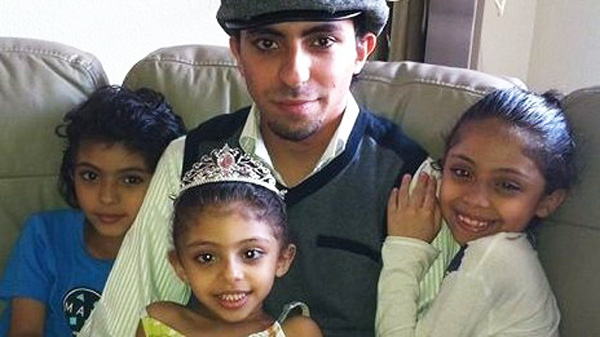
Tomorrow, Friday, the virtual death sentence by 1000 lashes, delivered “very harshly” according to the flogging order, fifty at a time, might continue for Raif Badawi, a 31-year-old Saudi blogger and father of three, for allegedly “insulting Islam.”

The flogging sentence, plus ten years in prison, was upheld last week by Saudi Arabia’s supreme court, and can now only be overturned by a pardon from King Salman.

Although Badawi, who is ill and frail, would most certainly perish, in Saudi justice there is little concern for sentences to be proportionate to the crimes for which the accused are found guilty, or for adequate legal representation. Badawi’s lawyer, Walid Abu al-Khair, was also jailed, effectively for the crime of representing him.

Badawi was accused of insulting Islam in his blog posts. In a country where thinking is forbidden, Badawi had expressed forbidden thoughts by questioning the nature of his society and going public with them.

Badawi, for instance, had written, “Muslims in Saudi Arabia not only disrespect the beliefs of others, but also charge them with infidelity — to the extent that they consider anyone who is not Muslim an infidel. They also, within their own narrow definitions, consider non-Hanbali [the Saudi school of Islam] Muslims as apostates. How can we be such people and build… normal relations with six billion humans, four and a half billion of whom do not believe in Islam?”

1106Raif Badawi and his children, before his 2012 arrest.

There was naivety in putting such thoughts in writing, as Badawi did, and drawing the attention of Saudi thought police. In another post, Badawi suggested, “Secularism respects everyone and does not offend anyone… Secularism is the practical solution to lift countries (including ours) out of the third world and into the first world.”

It appears Badawi wrote in the first blush of what seemed to have been a breath of fresh air, characterized as the “Arab Spring,” that wafted across the politically bleak landscape of the Arab world in early 2011. There had come news of a Tunisian vendor who had put lit himself on fire protesting police brutality, and had died as a result; his death sparked a movement against Arab despots.

The anguish of the Tunisian vendor, Mohammed Bouazizi, was genuine. His tragic death brought people into the streets, and the Tunisian strongman, Zine el-Abidine Ben Ali, eventually fled into exile in January 2011. The Tunisian protest stirred Egyptians to rise against their strongman, President Hosni Mubarak, and succeed in toppling him in February 2011.

The “Arab Spring,” for those brief few weeks in early 2011, held forth the promise of change for better across the Arab world. And young men like Raif Badawi could be forgiven for imagining that they, too, in Saudi Arabia, could no longer be denied freedom, democracy, and secularism — the accepted norms in the West.

But the hard realities of the Arab world turned the promise of the “Arab Spring” into the nightmare of religious terror and counter-terror. Saudi Arabia is the incubator and citadel of Islamic fascism, otherwise known as Wahhabism. And here in the land of the two holy cities of Islam — Mecca and Medina — religion and politics are inseparable, and anyone who trespasses either does so at the risk of losing his head — literally — in the public beheadings that are the hallmark of the Saudi kingdom.

Raif Badawi was arrested, and has been held in prison in Jeddah since June 2012. The arrest of Badawi and Souad al-Shammari came after they together set up the web site called Saudi Liberal Network. It was promptly closed by the authorities when Badawi posted criticism of the Saudi religious police.

The initial sentence for Badawi by the Criminal Court in Jeddah for mischief and subverting public order was for 600 lashes and seven years in prison. He appealed, and the court returned the verdict by raising the sentence to 1000 lashes and 10 years in prison. The Saudi supreme court has upheld this sentence.

In the interim Badawi was given 50 lashes in a Jeddah public square in January of this year, while further lashings were suspended on medical grounds. Badawi’s wife, Ensaf Haidar, fears the lashings will resume — according to court order the 1000 lashes are to be completed in 20 sessions in front of a mosque — and could be fatal for her husband.

* * *

There is very little the outside world can do to change the nature of the Saudi regime, or for that matter the regime in Iran, which is indistinguishable from the Saudi regime in terms of tyranny and the cruelty to which, in both countries, dissidents are subjected.

After Raif Badawi was arrested, Ensaf Haidar and her children found refuge in Quebec, Canada. Across Quebec there has been heartfelt popular support expressed for Raif Badawi, and condemnation of his punishment. Quebec has officially protested Badawi’s sentence, while demanding his release from Saudi Arabia so that he might join his family where they have settled.

In response to a Quebec National Assembly resolution, passed unanimously in February, condemning Badawi’s lashings in Jeddah in January 2015, the Saudi ambassador to Canada wrote a letter to the Quebec politicians. The same letter was also sent to the Canadian government in Ottawa.

The letter, signed by the Saudi ambassador, Naif Bin Bandir Alsudairy, was obtained by the Canadian Broadcasting Corporation (CBC). It states, “The Kingdom does not accept at all any attack on it in the name of human rights especially when its constitution is based on Islamic law, which guarantees the rights of humans and preserves his blood, money, honour and dignity.”

The stand taken by the Quebec government apparently rattled the Saudi kingdom sufficiently to have its ambassador write a letter addressed to members of a provincial legislature.

* * *

It is one of the anomalies of our age that when, by a fluke of nature, large deposits of fossil fuels are discovered in a country, as in Saudi Arabia, it is accorded attention and respect by other countries in excess of anything it has done, or achieved, or by the record of its conduct in human affairs.

Apart from the oil reserves of the kingdom, the House of Saud is indistinguishable from the House of Kim ruling North Korea, and it is as deserving of the same contempt.

Oil has not only made the difference for Saudi Arabia, it has also made the West complicit in the evil that Saudi Arabia does at home and perpetrates abroad: spreading its pre-modern and perverted culture as Islam or, more appropriately, Wahhabism; and funding terror as jihadism.

The treatment of Raif Badawi stands out, not merely for its cruelty, but how it has come to symbolize the grotesquely repulsive nature of the Saudi kingdom and what it represents behind the mask of religious austerity.

Saudi Arabia is possessed with the opposite of the “Midas touch”: wherever its money buys influence, there, the natural goodness in society is stained and corroded by its touch.

The tragedy surrounding Raif Badawi is both the savage treatment meted out to a young man by the Saudi regime for simply expressing his thoughts, and of how innocence, when it goes against the culture of Saudi intolerance, is mocked, abused, and strangled.

Raif Badawi is also the face of why “official” Islam — the one portrayed by Saudi Arabia and the other OIC member states, and to which the West routinely defers – is so terribly retarded. Freedom of thought is anathema to “official” Islam and its defenders, as it once was in the former Soviet Union; it is the defining characteristic of a closed, totalitarian society.

Raif Badawi is a young man, and the thoughts he expressed were the unsullied thoughts of the young that are at once universal in expectations and desires, as they are innocent and unburdened by the hardness of life’s experiences.

There was no insult of Islam, of the prophet, or of the Quran, in what Badawi wrote; and truth be told, God, Islam, and the prophet are all beyond insults, and beyond the reach of profanity that occasionally spills forth from the bigoted or tortured minds of individuals.

“Official” Islam is an insult to Muslims and non-Muslims alike — for “official” Islam is politics devoid of any redeeming quality found in faith, which nourishes the spiritual yearning of people and uplifts them in a broken world. Through betrayal and hypocrisy, “official” Islam insults God, Islam, and the prophet, every minute of each day, and has become a torment to Muslims.

It is “official” Islam, and Wahhabism in its most perverted expression among Sunni Muslims, that has turned God — Allah in Arabic — repeatedly invoked in the Quran as the “Most Beneficent, the Most Merciful,” into a vengeful and capricious deity.

The Quran states that on the Day of Reckoning the prophet will speak forth, “O my Lord! Lo! mine own folk make this Qur’an of no account” (25:30). In another verse, the Quran instructs the prophet to tell the wandering Arabs of the desert that they have merely submitted, but they have no belief “for the faith hath not yet entered into your hearts” (49:14). And then there is the verse stating categorically, “There is no compulsion in religion” (2:256).[1]

When religion is reduced to politics then it is the logic of politics, hence power and coercion, that takes precedence. In Albert Camus’s striking formulation, “Politics is not religion, or if it is, then it is nothing but the Inquisition.”[2] In Saudi Arabia, religion is a daily dose of inquisition, and the executioner with his sword is both the reality and the symbol of the vengeful deity that bears little resemblance to the merciful and compassionate God of the Quran.

Raif Badawi’s innocence betrayed him. Age and experience would have taught him the hard reality of his culture, veiled by the mask of “official” Islam. This hard reality of Arab culture has been best understood by Arab poets through the years of Arab and Muslim history. Here is one example of a poet’s disgust with the hard reality of his country’s culture and politics. These are lines from a poem of Nizar Qabbani (1923-98), a much-loved Syrian-Arab poet:

When a helmet becomes God in heaven
and can do what it wishes
with a citizen – crush, mash
kill and resurrect
whatever it wills,
then the state is a whorehouse,
history is a rag,
and thought is lower than boots.

When a breath of air
comes by decree
of the sultan,
when every grain of wheat we eat,
every drop of water we drink
comes only by decree
of the sultan,
when an entire nation turns into
a herd of cattle fed in the sultan’s
shed, embryos will suffocate
in the womb, women will miscarry
and the sun will drop
a black noose over our square.[3]

The Sultan’s power is vainglorious, whimsical, easily insulted, and secured by perpetrating fear, and the realm he rules by decree is by necessity a slaughterhouse.

If Raif Badawi survives the thousand lashes in the slaughterhouse that is the Kingdom of Saudi Arabia, it will be a testimony of how an individual’s courage, born of innocence, might well defy the Sultan’s decree.

Nothing could uplift the universal image of Saudi Arabia or King Salman more than if today he issued a pardon.

World leaders, including U.S. President Barack Obama, who has so far been silent on the issue, should immediately speak out — as should the media and human rights groups.

________________________

[1] Verses quoted from the Quran are from The Meaning of the Glorious Koran, translated by Mohammed Marmaduke Pickthall (New York: Alfred A. Knopf and Everyman’s Library, 1930, 1992).

[2] A. Camus, The Rebel (New York: Vintage Books, Random House, 1956), p. 302.

[3] Nizar Qabbani, “From The Actors” in Salma Khadra Jayyusi (editor), Modern Arabic Poetry: An Anthology (New York: Columbia University Press, 1987), pp. 378-379.

Israel’s Druze dilemma: To arm imperiled Syrian Druze community or open door to a flood of refugees

June 11, 2015

Israel’s Druze dilemma: To arm imperiled Syrian Druze community or open door to a flood of refugees, DEBKAfile, June 11, 2015

Druze_MilitiaSyrian Druze militiaman

Israel has a unique, historic commitment to its Druze citizens and so the dangers besetting more than half a million of their Syrian brethren on Jabal Druze, 88 km from its border, and 38 km from Jordan, confronts the Netanyahu government with a grave dilemma. Israeli Druze leaders are pressing the government to provide Jabal Druze towns and villages with weapons for their defense against the enemies closing in on them: The Syrian-Hizballah army; the Syrian opposition coalition including the Nusra Front – now in control of large parts of southern Syria; and the Islamic State of Iraq and the Levant – ISIS, which has sent a small force up to the eastern approaches to the mountain.

At a reception for the visiting Chairman of the Joint US Chiefs of Staff, Gen. Martin Dempsey Wednesday, June 10, President Reuven Rivlin said: What is going on just now is intimidation and threat to the very existence of half a million Druze on the Druze Mount, which is very close to the Israeli border.”

Officials in the Pentagon denied that this issue had come up in Gen. Dempsey’s talks during his farewell visit to Israel this week, although Syria had been discussed. One official remarked: “It’s the Druze who are asking everyone to arm them. The Druze in Israel have been raising it with Israel with the US, with Jordan – everyone.”

DEBKAfile’s military sources note that this dilemma is the hardest Israel has faced since the Syrian conflict began more than four years ago. Sending arms to the Syrian Druze would mean abandoning the consistent policy of abstaining from direct involvement in that war. It would moreover entail setting up new machinery for establishing, training and arming a Druze army of 20,000 to 30,000 fighting men.

But by withholding support, Israel would make itself responsible for whatever befalls the beleaguered Syrian Druze community, including possibly mass executions by Islamic extremists for their unique faith.

Also taken into account is the proposal Tehran, Damascus and Hizballah put before the Druzes this week: to build them an army and provide it with weapons, against a pledge never to raise arms against Syrian President Bashar Assad or his troops.

No other strings were tied to the offer. The Druze army would not be given any tasks other than to defend Jabal Druze and its hundreds of small towns and villages.

Druze acceptance of Tehran’s proposition would have the effect of strengthening Iran’s hold on Damascus and weakening the Syrian opposition forces fighting in the south, with no guarantees about where this equation would end up in terms of new threats to Israeli security.

Prime Minister Binyamin Netanyahu, Defense Minister Moshe Ya’alon and IDF Chief of Staff, Lt. Gen. Gady Eisenkott, are being intensely lobbied by the leaders of Israel’s Druze community, some of them high-ranking officers in IDF and Border Police units, to come to the aid of their distressed Syrian brethren. They hold up their valuable contribution to the Jewish state’s national security as deserving of Israel’s reciprocation to step up when their community is in peril.

No one is saying this, but the awareness is there that the many Druzes serving in Israeli combat units may decide to simply cross the Golan border and take up arms in defense of Jabal Druze.

The Syria community’s plight is complicated by the sharp internal division among its leaders: One group urges taking up the Iranian offer; a second would rather join forces with the Syrian rebels; and a third, wants to stick to their long-held neutrality in the Syrian arena.

The Lebanese Druze leader Walid Jumblatt, once accepted as such by the entire community, urges Jabal Druze inhabitants to throw in their lot with the rebel groups fighting to topple Assad.

Some Druze sources claim that Israel has promised admission to any fleeing Druze reaching the Golan border fence, an assurance also offered by Jordan. This is not confirmed by any official in either government.

However, it is hard to see how Israel can bar its border if thousands of Druze refugees were to stand at the fence and demand shelter – any more than Jordan could. This may still happen – even if Jerusalem and Amman were to decide to supply the Syrian Druzes with weapons.

US finds peeling back the Iran sanctions onion no easy task

June 10, 2015

US finds peeling back the Iran sanctions onion no easy task, Israel Hayom, June 10, 2915

(For Obama, principles are as flexible as words.

Humpty words

— DM)

143393177342310791a_bU.S. Treasury Secretary Jacob Lew | Photo credit: Reuters

Under the sanctions developed over decades, hundreds of companies and individuals have been penalized not only for their roles in the country’s nuclear program but also for ballistic missile research, terrorism, human rights violations and money laundering.

Officials say the administration can meet its obligations because of how it interprets nuclear sanctions.

For example, they say measures designed to stop Iran from acquiring ballistic missiles are nuclear-related because they were imposed to push Iran into the negotiations. Also, they say sanctions that may appear non-nuclear are often undergirded by previous actions conceived as efforts to stop Iran’s nuclear program.

***********************

The Obama administration may have to backtrack on its promise that it will suspend only nuclear-related economic sanctions on Iran as part of an emerging nuclear agreement, officials and others involved in the process told The Associated Press Tuesday.

The problem derives from what was once a strong point of the broad U.S. sanctions effort that many credit with bringing Iran to the negotiating table in the first place.

Administration officials vehemently reject that any backtracking is taking place, but they are lumping sanctions together, differently from the way members of Congress and critics of the negotiations separate them.

Under the sanctions developed over decades, hundreds of companies and individuals have been penalized not only for their roles in the country’s nuclear program but also for ballistic missile research, terrorism, human rights violations and money laundering.

Now the administration is wending its way through that briar patch of interwoven economic sanctions.

The penalties are significant. Sanctioned foreign governments, companies or individuals are generally barred from doing business with U.S. citizens and businesses, or with foreign entities operating in the American financial system. The restrictions are usually accompanied by asset and property freezes as well as visa bans.

Negotiators hope to conclude a final nuclear deal by June 30. According to a framework reached in April, the U.S. will be required to lift sanctions that are related to Iran’s nuclear program but could leave others in place. President Barack Obama can suspend almost all U.S. measures against Iran, though only Congress can revoke them permanently.

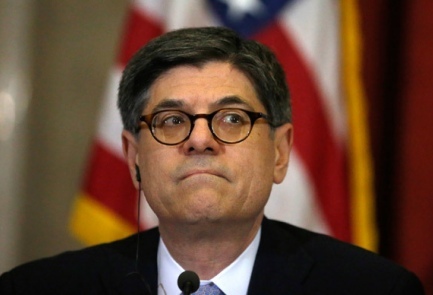
“Iran knows that our array of sanctions focused on its efforts to support terrorism and destabilize the region will continue after any nuclear agreement,” Treasury Secretary Jack Lew told a gathering of American Jews in a weekend speech. U.S. officials will “aggressively target the finances of Iranian-backed terrorist groups and the Iranian entities that support them,” he said, including the Lebanese militant group Hezbollah and Iran’s Quds Force.

The Treasury Department’s sanctions point man, Adam Szubin, has been tasked with sorting out the mess, according to U.S. officials, though no clear plan has yet been finalized.

Officials say the administration can meet its obligations because of how it interprets nuclear sanctions.

For example, they say measures designed to stop Iran from acquiring ballistic missiles are nuclear-related because they were imposed to push Iran into the negotiations. Also, they say sanctions that may appear non-nuclear are often undergirded by previous actions conceived as efforts to stop Iran’s nuclear program.

The officials who provided information for this story spoke only on condition of anonymity because they were not authorized to speak publicly on the private discussions.

After years of negotiations, U.S. officials believe a deal is within reach that for a decade would keep Iran at least a year from being able to build a nuclear weapon.

In return, the U.S. would grant billions of dollars in relief from sanctions that have crippled Iran’s economy. But the whole package risks unraveling if the U.S. cannot provide the relief without scrapping sanctions unrelated to Iran’s nuclear program.

Administration officials say they are examining a range of options that include suspending both nuclear and some non-nuclear sanctions, a step that would face substantial opposition in Congress and elsewhere. Under one scenario, the U.S. could end non-nuclear restrictions on some entities, then slap them back on for another reason. But Iran could then plausibly accuse the U.S. of cheating on its commitments.

U.S. President Barack Obama has spoken about Iran potentially recouping up to $150 billion in assets trapped overseas. The process for how that would take place is still being worked through, said officials.

The Iranian Central Bank may prove the most glaring example of the administration’s dilemma, and officials acknowledge there is no way to give Iran the sanctions relief justified by its compliance without significantly easing restrictions on the institution.

The bank underpins Iran’s entire economy, and for years the U.S. avoided hitting it with sanctions, fearing such action would spread financial instability and raise oil prices. By late 2011, with Iran’s nuclear program advancing rapidly, Obama and Congress did order penalties, declaring the bank a “primary money laundering concern” and linking its activity to ballistic missile research, terror financing and support for Syrian President Bashar Assad.

The effects were far-reaching: Petroleum exports fell by 60%, Iran suffered runaway inflation, cash reserves dried up and industrial output in several sectors plummeted. And Iran agreed to talk about its nuclear program with the United States and five other world powers.

Now that the nuclear agreement is so close, Iran wants these sanctions lifted. The administration officials say all sanctions on the bank are nuclear-related.

Lew told the Jewish conference in New York that a nuclear accord would include the suspension of all “secondary” oil, trade and banking restrictions — those that apply to U.S. and non-U.S. banks, as well as foreign governments.

Many of these measures overlap with American sanctions tied to Iran’s nuclear program, and that has officials considering new sanctions to keep certain Iranian institutions under pressure.

Eliminating the secondary sanctions across the board could have wide-ranging implications, making it easier for Iran’s Revolutionary Guard Corps and its police, intelligence services and paramilitary groups to do business.

That possibility has Iran’s rivals in the region, including Israel and the Sunni monarchies of the Middle East, gravely worried.

“I share their concern,” Gen. Martin Dempsey, the Joint Chiefs of Staff chairman, said Tuesday in Jerusalem.

“If the deal is reached and results in sanctions relief, which results in more economic power and more purchasing power for the Iranian regime, it’s my expectation that it’s not all going to flow into the economy to improve the lot of the average Iranian citizen,” he said.

“I think they will invest in their surrogates. I think they will invest in additional military capability.”

Iran’s Revolutionary Guard is under U.S. sanctions because of its proliferation of weapons of mass destruction. But because the U.S. views the corps as so pernicious, the administration is considering new measures to help block it from meddling in the internal conflicts of Iraq, Lebanon, Syria and Yemen.

Of the 24 Iranian banks currently under U.S. sanctions, only one — Bank Saderat, cited for terrorism links — is subject to clear non-nuclear sanctions. The rest are designated because of nuclear and ballistic missile-related financing, while several are believed to be controlled by the Revolutionary Guard.

Will they be cleared for business with the world? U.S. officials still cannot say one way or another. Congress, too, has not received a list of banks and institutions that would be released from sanctions under the deal.

If the United States cannot deliver on its promises, it could take the blame for a collapse of the years-long negotiations toward a nuclear deal, putting the world — in the words of Obama and other U.S. officials — on a path toward military confrontation. At the same time, an Iran unburdened by sanctions could redouble efforts toward nuclear weapons capacity, while international unity and the global sanctions architecture on Tehran fray.