Archive for the ‘Israel’ category

An EMP attack on America seems likely

April 19, 2015

An EMP attack on America seems likely, Dan Miller’s Blog, April 19, 2015

(The views expressed in this article are mine and do not necessarily reflect those of Warsclerotic or any of its other editors. — DM)

Some consider North Korea to be the rogue nation most likely to use an electromagnetic pulse (EMP) to attack America; Iran is also seen as quite likely to do it. It matters little which succeeds.

Here is a lengthy 2013 video about an EMP attack, what would happen and why:

The possibilities and consequences of an EMP attack on America are too horrific to contemplate; the “legitimate news media” generally ignore them. We therefore tend to relegate them to the realm of remote “tin foil hat conspiracy theories” and to focus instead on more congenial stuff — the latest sex scandal, Hillary Clinton’s campaign van parking in a disabled-only space and other matters unlikely to impact America to an extent even approaching that of an EMP attack. Meanwhile, most of “our” Congress Critters, who should know better, focus on opinion polls, filling their campaign coffers and getting richer personally while neglecting our atrophying missile defense systems and other potential means of avoiding or recovering from an EMP attack.

Here is a 2013 video about the likelihood of an Iranian EMP attack on America that would paralyze the country for a very long time.

North Korea and the Islamic Republic of Iran have long cooperated in the development of nukes and means to deliver them. I wrote about their cooperation here, herehere and elsewhere. It now appears that Iran intends to use them for an EMP attack on America.

The issue of a nuclear EMP attack was raised in the final hours of this week’s elections in Israel when U.S. authority Peter Vincent Pry penned a column for Arutz Sheva warning of Iran’s threat to free nations.

“Iranian military documents describe such a scenario — including a recently translated Iranian military textbook that endorses nuclear EMP attack against the United States,” he wrote. [Emphasis added.]

Here is a March 7, 2015 video about the impact of the P5+1 “negotiations” on Iran getting (or keeping) nukes and the likelihood of an Iranian EMP attack on America:

In April of this year, John Bolton had this to say about the Iran – North Korea connection, how much we don’t know and the ongoing P5+1 “negotiations.”

Perhaps Israel can take out Iran’s nuke capabilities.

Here is a February 2015 video about what’s (not) being done to harden our domestic power grid:

As of February of this year, Govtrack US opined that the chances of passage of the SHIELD act were zero percent. Be that as it may, simply hardening the power grid would not solve communications or transport problems — most modern communications devices, as well as vehicles built after 1987, depend on computer chips and, when the chips are fried, will not function. Even if food and water could be processed, getting them to consumers in sufficient quantities to keep them alive would be an enormous if not impossible task.

Problems of a human nature would also arise and remaining alive would be difficult. If one’s family were about to starve, how many would try to steal food and water from those who still have even enough for a few days? How many roving gangs of armed criminals, quite willing to kill, would do the same? The police would likely have no communications ability and might well be otherwise occupied, tending to their own families. Military forces not confined to base would likely have the same problems and be doing the same.

That suggests another problem in restoring infrastructure seriously damaged or destroyed by the EMP attack. It would not only require the availability of transport, communications and undamaged equipment. It would also require the availability of personnel, not otherwise occupied in scrounging for food, water, medical supplies and other resources to care for their own families, while protecting them from those lacking such resources, as well as from armed gangs.

Now, the U.S. military is taking steps to protect itself by reopening a cold war bunker at Cheyenne Mountain, abandoned in 2006.

Cheyene Mt. Complex

Cheyene Mt. Complex

The Pentagon last week [early April 2015] announced a $700 million contract with Raytheon Corporation to oversee the work for North American Aerospace Command (NORAD) and US Northern Command.

Admiral William Gortney, head of NORAD and Northern Command, said that ‘because of the very nature of the way that Cheyenne Mountain’s built, it’s EMP-hardened.’

. . . .

‘And so, there’s a lot of movement to put capability into Cheyenne Mountain and to be able to communicate in there,’ Gortney told reporters.

‘My primary concern was… are we going to have the space inside the mountain for everybody who wants to move in there, and I’m not at liberty to discuss who’s moving in there,‘ he said.  [Emphasis added.]

The Cheyenne mountain bunker is a half-acre cavern carved into a mountain in the 1960s that was designed to withstand a Soviet nuclear attack. From inside the massive complex, airmen were poised to send warnings that could trigger the launch of nuclear missiles.

But in 2006, officials decided to move the headquarters of NORAD and US Northern Command from Cheyenne to Petersen Air Force base in Colorado Springs. The Cheyenne bunker was designated as an alternative command center if needed.

Now the Pentagon is looking at shifting communications gear to the Cheyenne bunker, officials said.

‘A lot of the back office communications is being moved there,’ said one defense official.

Officials said the military’s dependence on computer networks and digital communications makes it much more vulnerable to an electromagnetic pulse, which can occur naturally or result from a high-altitude nuclear explosion.

Under the 10-year contract, Raytheon is supposed to deliver ‘sustainment’ services to help the military perform ‘accurate, timely and unambiguous warning and attack assessment of air, missile and space threats’ at the Cheyenne and Petersen bases.

Raytheon’s contract also involves unspecified work at Vandenberg Air Force Base in California and Offutt Air Force Base in Nebraska.

When will the site be fully operational, for what and who will be allowed to go there?

Some other military bases are probably being hardened, at least to an extent that might (or might not) preserve their electrical grids. If it works, they may serve as refugee centers for adjacent civilian populations. However, the military installations would likely run out of food and potable water before very long and, with food and water processing centers no longer operational, there would be substantial difficulties in getting — as well as transporting — large quantities of food and water. Were the processing centers to become operational, transportaion difficulties would remain. Communications between the military installations and the outside world? Likely zilch, at least initially, because radios, telephones and other modern communications devices (as most now are) depend on computer chips and would be fried by an EMP attack. Some might eventually be restored at some military bases, but that is not likely to be the case with those not on those bases.

Conclusions

What would you do in the event of an EMP attack? In a major metropolitan area, you would probably be SOL very quickly. In a small town? Marginally but not much better off. An isolated small farm, close to a mountain spring and adequately stocked with food, medical supplies, firearms and ammunition, could provide reason to hope that you might eventually be able to grow or slaughter sufficient food and have access to enough potable water to survive; at least until roving armed gangs arrive and overpower you.

This video is about a massive world-wide pandemic. In the event of a pandemic, electricity, automobiles and communications would still function, at least for a while. Following an EMP attack, the consequences would likely be substantially worse and last far longer.

Here is a link to a novel about one family in a small city and its efforts to survive an EMP attack on America. It does a reasonable job of summarizing the potential consequences.
Arab world: Egypt’s dangerous stalemate

April 17, 2015

Arab world: Egypt’s dangerous stalemate, Jerusalem Post, Zvi Mazel, April 17, 2015

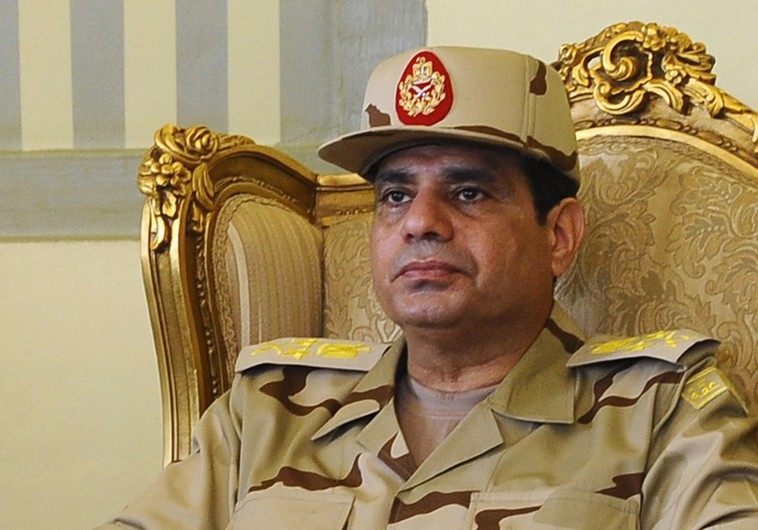
Egypt's Defense Minister Abdel Fattah al-Sisi is seen during a news conference in Cairo on the release of seven members of the Egyptian security forces kidnapped by Islamist militants in SinaiAbdul Fattah Sisi. (photo credit:REUTERS)

Vainly did the Egyptian president try to convince the US-led coalition against Islamic State to extend its activities to the whole Middle East. But US President Barack Obama is unwilling to acknowledge that there is a regional and international dimension to the movement.

*****************

Egyptian President Abdel Fattah al-Sisi is fighting for his country’s survival – and his own.

Islamic terrorism is not abating, hampering vital efforts to bring a better life to the people through a revitalized economy and political stability. Sisi knows he has to show results soon to prevent Egypt from slipping back into anarchy and chaos.

Despite the army’s all-out effort to defeat Islamist insurgency in Sinai, there is no end in sight. F-16 fighter planes and Apache helicopters have joined the campaign, security forces have killed or wounded hundreds of terrorists, destroying their haunts and their training groups – but more keep coming.

Ansar Bayt al-Maqdis gunmen, who have pledged allegiance to Islamic State, continue making daring raids against police stations and other security targets, leading to loss of life and heavy damage.

In one instance on April 14, the commander of the central police station of El-Arish was wounded in a raid; the assailants were able to escape.

For all intents and purposes the situation has reached a stalemate, though the army has managed to contain the terrorists in the northern part of the Sinai Peninsula, preventing them from extending their activities to the south and to the Suez Canal – where they could have inflicted untold damage to economic and security infrastructure, and severely undermined public morale.

However, there are still sporadic terrorist attacks in Cairo and other parts of the country.

Bombs explode, killing and maiming; power lines are blasted. A number of terrorist groups are involved, from Ansar Bayt al-Maqdis and the so-called Soldiers of Egypt to the ever-present Muslim Brotherhood; many of their members have been arrested, their leaders sentenced to death – though no one has been executed yet – but they keep on demonstrating against the regime (though in diminishing numbers).

In Yemen, Iranian-backed Houthi tribes are poised to take over the strategic Red Sea straits, threatening free passage to the Suez Canal – a reminder, if one was needed, of the fact that Islamic terrorism knows no border.

Vainly did the Egyptian president try to convince the US-led coalition against Islamic State to extend its activities to the whole Middle East. But US President Barack Obama is unwilling to acknowledge that there is a regional and international dimension to the movement.

The fact remains that Islamic State dispatches terrorists and weapons to Ansar Bayt al-Maqdis in the Sinai Peninsula from Libya, where there is an unlimited supply of both. No matter how many guerrillas are intercepted or killed by the Egyptian army, more are coming through the vast mountainous and desert region, along the 1,200-km border between the two countries.

Then there is Gaza, where terrorists can find refuge, regroup and train, and where new weapons can be tested.

Cairo is desperately trying to cut off the peninsula from the Strip. The Rafah crossing is closed most of the time, and when it opens it is under the strict supervision of Egyptian authorities. More than 2,000 contraband tunnels have been destroyed and a 1-km.-deep sanitized zone has been installed; thousands of families have been uprooted.

They have been compensated but resentment is high, and the move has prompted widespread condemnation by human rights associations.

Against this backdrop, the regime is weighing extending the zone to 5 km. and making the digging of contraband tunnels punishable by life imprisonment. A court in Cairo has forbidden Hamas activities in Egypt, and another has declared Hamas a terrorist organization; however, the central government is appealing that decision for the sake of its ongoing dialogue with Gaza’s leaders on the Palestinian issue.

The Iranian-Houthi threat has led Sisi to call for the creation of a rapid-response Arab unit, as Saudi Arabia has rallied neighboring states to form a coalition against the rebels in Yemen – who are threatening its border in the south, and were about to take control of the strategic port of Aden.

Though the creation of a united Arab unit was decided at a summit in Sharm e-Sheikh last month, implementation will not be easy. A number of states such as Lebanon and Iraq have warned they would not allow any infringement to their sovereignty; some Gulf states and Jordan have been more forthcoming, and meetings between army commanders are scheduled.

The problem is that these countries are not keen to risk their troops in a ground operation in neighboring states. Armies are the traditional bulwark of Arab regimes; a failed intervention outside their borders could cause their downfall. Nevertheless, since the West is largely indifferent to what is happening, Sisi and his Gulf allies have no choice but to unite against the common threat of Islamic terrorism, be it Sunni or Shi’ite.

On the home front, Sisi has launched a series of impressive projects – a new canal parallel to the old one to enable simultaneous crossing in both directions, thereby doubling receipts; an industrial, commercial and tourist zone between the two canals; 3,000 km of modern roads. Perhaps his most ambitious project is the creation of a new administrative capital city east of Cairo, at an estimated cost of $45 billion. Arab states have rallied to his side, pledging billions of dollars at a special economic summit last month; international groups have indicated their interest in some of the projects – a significant victory for the embattled president.

But Egypt’s endemic problems – population explosion, illiteracy leading to widespread unemployment and enduring poverty, as well as corruption on an epic scale – are not making Sisi’s task easier.

He is also calling to reform Islam by purging it of its extremist discourse, and has already instructed the Education Ministry to eliminate extremist content such as the call to jihad and attacks on other religions.

Meanwhile, the political situation is still unclear and elections are repeatedly postponed, allegedly because of ambiguities in the election law.

The fact is that the president has not been able to secure a large enough block to ensure his electoral victory, while the Muslim Brotherhood – though banned – and other Islamic parties can still muster a sizable vote.

Can Sisi win all his battles? How long will the Egyptian people wait for some much-needed economic results? Egypt is going it alone, still waiting for the West to understand that Cairo remains its best ally against the rising tide of terrorism now lapping at its shores.

Report: Hamas Using Heavy Machinery to Re-Dig Terror Tunnels

April 15, 2015

Report: Hamas Using Heavy Machinery to Re-Dig Terror Tunnels, Israel National News, Tova Dvorin, April 15, 2015

(From whom are they getting the heavy machinery, how is it being transported and from where to where? — DM)

Less than one year after Operation Protective Edge in Gaza fizzled out, Hamas is already building new terror tunnels under Israel.

But while the evidence that terror activity has resumed has been lingering for months, sources now say that the terror group has taken the digging to the next level.

Hamas has switched from manual slave labor to machinery to dig terror tunnels under Israel, Palestinian Arab sources revealed to Walla! News Wednesday.

The group is using a Bagger 288, a German-produced mining machine known as a bucket-wheel excavator.

A damning letter emerged from Gaza in August 2014 from a Palestinian Arab who was forced to dig terror tunnels after he accepted a cryptic joboffer from Hamas; the group plucked him from his home in a truck and forced him down into a tunnel. At least 160 Palestinian Arab children have also died digging terror tunnels, the same report revealed.

Unlike workers working by hand, however, the Bagger can dig far faster and burrow into smaller spaces, the sources revealed.

In addition, bulldozers can clearly be seen from the Israeli side of the border doing at least part of the digging and cleanup; Hamas is using a mixture of cement (when available) and wooden boards for the construction.

Senior security sources confirmed the report, adding that Hamas’s true aim is to dig the tunnels at high speed and that they are focusing on producing short-range rockets and mortars – which are more difficult for the Iron Dome Missile Defense System to shoot down.

Exclusive: Moscow has no S-300 air defense missiles available for Iran. Replacements under discussion

April 15, 2015

Exclusive: Moscow has no S-300 air defense missiles available for Iran. Replacements under discussion, DEBKAfile, April 15, 2015

Although Tehran celebrated President Vladimir Putin’s decision to release the S-300 missiles withheld from Iran for five years by an arms embargo, DEBKAfile reports exclusively that Iran can’t hope to take delivery of the advanced air defense systems in the foreseeable future. The Russian military industry is already way behind meeting demands for more S-300 missiles and their radar systems for the Russian army, which has none to spare for Iran. Its own needs have soared since Russia fell out with US and Europe over the Ukraine conflict.

The Russian army lately moved S-300 batteries, which are capable of downing fighter jets and missiles, to the country’s southern border with Ukraine, as air cover for the pro-Russian separatists against Ukrainian air bombardment, which has since petered out.

Additional batteries are deployed at Russian sea and air bases on the Black Sea and Crimean Peninsula.

A further batch of S-300 missiles, as well as the S-400 from the same family, has been positioned in the Russian strategic enclave of Kaliningrad on the Baltic Sea, Moscow’s forward military position against Europe.

In response to US plans to install a missile shield network in East and West European countries belonging to  NATO, the Russians advanced into Kaliningrad a number of short-range ballistic K720 Iskander (NATO-named SS-26 Stone9) missiles capable of carrying nuclear warheads.

The S-300 missile batteries are in place to defend them.

DEBKAfile’s military sources also disclose that, after five years of training one Iranian team after another in the operation of the S-300 systems, the Russians have given up on their acquiring the necessary skills.

Tehran and Moscow have still to decide, after eight years of debating, which particular missile system best suits Iran’s needs out of the S-300 family of weapons, each of whose basic six categories is designed for a particular task. Those categories employ seven types of missile, which too break down into 16-sub-types, including the S-400.

In an attempt to reach a decision, our intelligence sources in Moscow report that Iran’s National Security chief Ali Shankhani, who is currently visiting Moscow, has settled on an Iranian military delegation making an early trip to Russia, viewing the various S-300 models and returning home with recommendations. Tehran will then make its choice.

This process too could stretch out over many months. Moscow may not see eye to eye with Tehran on the type of missile to be supplied, a difficulty that would entail a fresh round of negotiations.

Given all these circumstances, it is hard to see Iran taking delivery of the first S-300 missiles any time this year, as it had hoped.
A

ll the same, although the entire transaction is in the air, the US and Israel made big play of protesting the Kremlin’s decision to end its embargo on the S-300s for Iran. When Secretary of State John Kerry talked about it to Foreign Minister Sergei Lavrov Monday, and Prime Minister Binyamin Netanyahu  phoned President Putin Tuesday, both were perfectly aware that the batteries wold not be making their way to Tehran any time in the near future.

Dr Andrew Bostom on Lisa Benson show 12.5.2015

April 13, 2015

Dr Andrew Bostom on Lisa Benson show 12.5.2015, You Tube, April 13, 2015

(Dr. Bostom relates Islamic doctrine to Iran’s negotiating tactics. Please see also, Lt. Col Ralph Peters: “The Iranians Negotiate, We BEG!” — DM)

After terrorists claim 13 lives in Sinai, El-Sisi reshuffles top army, navy, intelligence and Suez Canal chiefs

April 13, 2015

After terrorists claim 13 lives in Sinai, El-Sisi reshuffles top army, navy, intelligence and Suez Canal chiefs, DEBKAfile, April 13,2015

police_station_in_the_city_of_al-Arish12.4.15Devastated Egyptian police station in El Arish

DEBKAfile’s military sources report that northern Sinai, due to the increasing frequency and scale of terrorist attacks, is beginning to resemble Baghdad, which on that same Sunday was struck by four ISIS car bombs and other devices, which killed at least 12 people and injured dozens.

*********************

President Abdel-Fatteh El-Sisi was spurred Sunday, April 12, to make a clean sweep of his top military intelligence, navy and Second Field Army command (responsible for Sinai and the Suez Canal) by another two deadly attacks in northern Sinai by Ansar Bayt al-Maqdis, the lslamic State’s local branch. They claimed 13 deaths, seven of them Egyptian troops, including two officers, and injured more than 50.

The Sinai terrorists have played havoc with Sinai security since pledging loyalty to and gained support from the Islamic State of Iraq and the Levant. The Egyptian military, even after being substantially reinforced and imposing a state of emergency, has been unable to stem the deadly spiral and paid for it with a heavy toll of casualties.

In the first attack Sunday, six soldiers, including two officers, were killed when a roadside bomb struck their armored vehicle traveling south of el-Arish, the capital of North Sinai. Twelve hours later, a suicide car bomber detonated his vehicle at the entrance of a large police station in el-Arish, killing seven people, including five policemen, and injuring at least 40, many of them civilians.

In a third smaller attack, militants clashed with soldiers at a mobile checkpoint in Rafah, south of el-Arish, wounding one police officer and two soldiers.

Saturday, April 11, Ansar Bayt al-Maqdas, using the methods of its new parent, released a video clip depicting an Egyptian soldier being shot dead and the decapitation of an Egyptian civilian. Both victims were snatched during an attack on April 2, which left 15 soldiers dead, on an Egyptian army position in the El Arish vicinity.

DEBKAfile’s military sources report that northern Sinai, due to the increasing frequency and scale of terrorist attacks, is beginning to resemble Baghdad, which on that same Sunday was struck by four ISIS car bombs and other devices, which killed at least 12 people and injured dozens.

Before the thunder of the blasts died down in Sinai, the Egyptian president announced a major reshuffle of his military, security and intelligence ranks.

The most senior officer to be sacked was military intelligence chief, Maj. Gen. Salah El-Badry. He was replaced by Gen. Mohamed al-Shahat, a former commander of the Second Field Army, which is the current backbone of the army force fighting the Islamists terrorists in northern Sinai.

Gen. Nasser al-Assi is the new commander of the Second Army. Our military sources report that al-Assi spent some months in northern Sinai on a personal assignment on behalf of the president and returned to Cairo with new recommendations for combating the terrorists.

In another key change, Rear Admiral Osama El-Gendy was replaced as commander of the Egyptian Navy by Rear Admiral Osama Mounir.

The navy’s role is increasingly prominent since Egyptian warships were deployed in the last two weeks off the coast of Yemen to secure the strategically vital Bab el-Mandab Strait — the gateway to the Suez Canal – against Iranian-backed Houthi rebel control. Their guns have been trained on the Yemeni port of Aden in a running barrage to prevent the rebels and their allies, the mutinous Yemeni army’s  212nd Brigade, from overrunning the town.

The Navy’s role in the Yemen war makes a change of commanders in mid-combat highly unusual. However, it had become just as urgent at this stage to shift Rear Adm El-Gendy from the Navy to the top post in the Suez Canal Authority, to take charge of one of the most important seaways in the world, which had became a highway from the rampant smuggling of the arms and fighters nourishing ISIS terrorist outposts in Sinai.

DEBKAfile reports that ships from Libya and Jordan carry the contraband by sea and unload it at secret dropping-off points on the Sinai Peninsula’s western Mediterranean and the eastern Gulf of Aqaba coasts. Some of the goods are conveyed from Libya via the Suez Canal via the towns of Suez, Ismailia and Port Said, whence smuggling rings based on the banks of the waterway collect them by boat.

Tunnels between the Gaza Strip and Sinai are also an important smuggling route for supplying terrorist groups. The Egyptian military reshuffle was accompanied by an amendment to the penal code by presidential decree which raised the penalty for building or using cross-border tunnels to life in jail. The penalty also applies to people with knowledge of tunnels who fail to report them to the authorities. The Egyptian government was authorized to seize buildings at the top of tunnels and equipment for digging them.

Statement by PM Netanyahu

April 12, 2015

Statement by PM Netanyahu, April 12, 2014


Could Saudi Arabia Need Israel More than Vice Versa?

April 12, 2015

Could Saudi Arabia Need Israel More than Vice Versa? Israel National News, Gedalyah Reback, April 12, 2015

Israel’s status as a regional superpower is unusual for its lacking a reliable set of local allies. Even where security ties with Egypt, Jordan and Saudi Arabia might be strong, the country is forced to keep those ties in the background. Regardless, it exerts a degree of influence just by its own strategic value. While ties are not public, they are also not available for public scrutiny, perhaps enhancing the relationship opportunities with the above mentioned countries as well as other Arab states.

“Rather than a charm offensive,” asserts Robert Kappel of the German Institute of Global and Area Studies, “Israel needs an assertive regional foreign policy” in order to gain more allies.

But is that really true?

“I don’t think that it’s either-or,” says Professor Eytan Gilboa of Bar Ilan University. “I think Israel has a regional policy. We don’t see it but it collaborates with Arab countries and the Persian Gulf, especially on Iran and much more on counter-terrorism. It has a regional policy but it’s undercover.”

Solving the Israeli-Palestinian Conflict is not a Condition for an Alliance

Turning back specifically to Kappel, Gilboa states “I think he means to use it to deal with the Palestinian issue; then comes the Arab Peace Initiative. The assumption is the PA is unable, unable, to reach an agreement with Israel.”

Gilboa sees an Arab desire to expand relations with Israel in spite of the conflict with the Palestinians. Thus, the Arab Peace Initiative might be evidence the Arab countries are eager to reach out with a public offer that would allow them to open the door for Jerusalem without necessarily having to seal a deal on the conflict.

“I reject one claim: that resolution of the Israeli-Palestinian issue is a condition for a regional alliance. The reason for this is simple – all these countries couldn’t care less about the Palestinians. They have an interest in blocking Iran and extremist Islamic organizations. They made all kinds of statements to the contrary but that is not the issue. I don’t think there’s a linkage here.”

Pressing his point, Gilboa says “There’s much less opportunity for regional pressure on the Palestinians than most people think. ‘Collaboration’ is a euphemism for security cooperation on ‘negative interests.’”

Those negative interests are opposition to common regional security challenges like the above mentioned Iran and Islamist terrorist organizations. But to create an alliance, you need much more than common enemies, says Gilboa – you need common interests.

“Turkey ambivalent to ISIS – they share an ideology but still see it as a competitor. Erdogan would like to revive the Ottoman Empire where a non-Arab country leads the Arab world. Where you see this kind of geopolitics, there are a lot of opportunities for collaboration with these countries.”

And actually, “there’s criticism of Israel for not exploiting the situation,” says Gilboa.

New Countries?

When Arutz Sheva asked if Israel’s chances for regional alliances might actually increase if Syria were to collapse into several smaller states or the Iraqi Kurdish Regional Government (KRG) were to become a full-fledged independent state, Gilboa sees the idea as having validity.

“I think this is a valid point. I am only hearing that Israel is collaborating with the Kurds there and you can do a little bit more, but it is a lot more than it used to be. The alliance with Turkey had prohibited close collaboration with the Kurds. But now that the relationship is bad, this condition is nonexistent. I think indeed they could do more.”

Focusing on the much more developed autonomy, infrastructure and ambitions of the Iraqi Kurds than other groups that could emerge in Syria, Gilboa says Kurdistan could definitely become a game-changer in the region’s mixture of waxing and waning alliances. Most significantly, it could be something that does not necessarily replace Arab states as a reliable ally, but actually enhances the chances of a strong alliance between those Arab countries and Israel.

“I also think there is room for a strategic alliance between Israel and pro-US Arab states. Not just potential between Israel and the non-Arab groups, but collaboration with Israel, non-Arab states and those emerging new political entities in the Middle East. It could be done on a bilateral basis first – perhaps between Israel and Kurdistan – or multilateral. Once you gain influence with a group like the Kurds, you could translate that into the other (multilateral) type of alliance.”

Israel and Kurdistan have a long history of both covert and overt relations, especially on security. Kurdistan might then be an example of an emerging country where Israel could carry more influence than the Saudis (assuming Kurdistan is able to gain more autonomy or full sovereignty). Saudi Arabia’s diplomatic and military clout is still behind that of Israel, according to Gilboa.

“Saudi Arabia’s power is limited to its ability to manipulate oil markets, but their strength is precarious as major importers like the United States become self-sufficient in that realm. Even their military strength might turn out to be limited as its operation in Yemen is one of the largest it has ever undertaken. The assumption the Saudis might have strong influence over Pakistan and could persuade Islamabad to sell Riyadh a nuclear bomb to pull ahead of the Iranians has been thrown into doubt by Pakistan’s decision not to join the military operation against the Houthis.”

Ultimately, it might be Israel’s power that the Saudis need more.

Anything but a Saudi win (in Yemen) would not be good for Saudi Arabia,” emphasizes Gilboa. On the other hand, “Israel is much stronger diplomatically, militarily and its society is much more vibrant.”

Andrew Klavan: Obama’s Clown-Car Diplomacy

April 10, 2015

Andrew Klavan: Obama’s Clown-Car Diplomacy, Truth Revolt via You Tube, April 10, 2015


There is no better deal with Iran

April 9, 2015

There is no better deal with Iran, Israel Hayom, Prof. Efraim Inbar, April 9, 2015

If inspections, sanctions, sabotage and political isolation ever had a chance to stop Iran from getting the bomb (this was always a dicey proposition), that certainly is no longer the case. It is more evident than ever that only military action can stop a determined state such as the Islamic Republic of Iran from building a nuclear bomb. It remains to be seen whether Israel has elected the leader to live up to this historic challenge.

***********************

The debate over the pros and cons of the Iran nuclear framework agreement negotiated between the P5+1 and Iran at Lausanne (April 2, 2015) is simply irrelevant. The search for truth in the conflicting versions about the details of the deal coming out of Washington and Tehran is of no consequence. And the steps suggested by Israel and other critics to improve the efficacy of the deal (by more stringent inspections and so on) will not change much. The deal is basically dangerous in nature, and needs to be rejected outright.

The deal permits Iran to preserve stockpiles of enriched uranium, to continue to enrich uranium, and to maintain illegally-built facilities at Fordow and Arak. Even in the absence of a signed full agreement, the U.S. and its negotiating partners already have awarded legitimacy to Iran’s nuclear threshold status. In all likelihood, the United States, quite desperate to get a formal deal, will make additional concessions in order to have a signed formal deal — which won’t be worth the paper on which it is printed.

This outcome has been a foregone conclusion since November 2013, when the U.S. agreed to the “Joint Plan of Action” on Iran’s nuclear program. Already back then, the U.S. decided not to insist any longer on the goal of rolling back the Iranian nuclear program, ignoring several U.N. Security Council resolutions demanding no uranium enrichment, as well as discarding the security concerns of American allies in the Middle East (primarily Israel, Saudi Arabia and Egypt — who better understand the regional realities).

Middle Easterners clearly discern an Iranian diplomatic victory in this accord, which should not surprise anybody. Iranians are much more adept at negotiating than Americans. Iran is getting more or less what it wanted: the capability to produce enriched uranium and to research weapon design; agreement to keep its missile program intact; and no linkages to Iranian behavior in the region. The deal is a prelude to nuclear breakout and Iranian regional hegemony.

Indeed, with no attempt to roll back the Iranian nuclear program, as was done in Libya, we are progressing toward the North Korean model. Those two are the only options in dealing with nuclear programs of determined states such as Iran. Iran’s nuclear program benefited in many ways from assistance that originated in Pakistan and in North Korea (both are nuclear proliferators despite American opposition). Compare the recent statements by President Obama to the speeches of President Clinton justifying the agreement with North Korea (October 1994). Their similarities are amazing; an indication of the incredible capacity of great powers for self-delusion.

What counts is not the Obama’s administration expression of satisfaction with the prospective deal, but the perceptions of Middle East actors. For example, Saudi Arabia and Egypt have deplored the fact that the U.S. is bestowing international legitimacy on Iran’s status as a nuclear threshold state. They probably believe the interpretations of the deal offered by Tehran more than those professed in Washington. Therefore, they will do their best to build a similar infrastructure leading inevitably to nuclear proliferation in the region — a strategic nightmare for everybody.

Unfortunately, no better deal is in the offing. Whatever revisions are introduced cannot change its basic nature. The accord allows Iran to have fissionable material that can be enriched to weapons grade material in a short time and Tehran can always deny access to inspectors any time it chooses. This is the essence of the North Korean precedent.

Obama is right that the only alternative to this deal is an Iranian nuclear fait accompli or the bombing of the Iranian nuclear infrastructure. Obama’s penchant for engagement, his reluctance to use force, and his liberal prism on international relations (which adds rosy colors to international agreements) has led to this miserable result.

Netanyahu is wrong in demanding a better deal because no such deal exists. Yet denying its ratification by the U.S. Congress could create better international circumstances for an Israeli military strike. In fact, criticism of Obama’s deal with Iran fulfills only one main function — to legitimize future military action. Indeed, Netanyahu is the only leader concerned enough about the consequences of a bad deal with the guts and the military capability to order a strike on the Iranian key nuclear installations.

If inspections, sanctions, sabotage and political isolation ever had a chance to stop Iran from getting the bomb (this was always a dicey proposition), that certainly is no longer the case. It is more evident than ever that only military action can stop a determined state such as the Islamic Republic of Iran from building a nuclear bomb. It remains to be seen whether Israel has elected the leader to live up to this historic challenge.