Archive for the ‘Israel’ category

Report: Hezbollah to withdraw from Syria fighting

September 24, 2015

Report: Hezbollah to withdraw from Syria fighting, Israel Hayom, Daniel Siryoti and Israel Hayom, September 24, 2015

(Please see also, Russian marines join Hizballah in first Syrian battle – a danger signal for US, Israel. — DM)

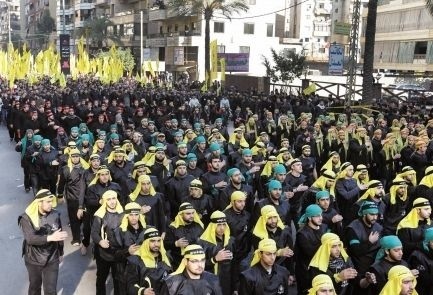
Hezbolla in BeruitHezbollah fighters march in Beirut | Photo credit: AP

Lebanese daily reports that after battle in border town of Zabadani is over, Hezbollah will focus on defensive missions and preventing spillover of fighting from Syria into Lebanon • Sources say Hezbollah wants to prepare for future conflict with Israel.

Hezbollah leaders have decided to cease military activities in Syria in the wake of criticism in Lebanon of the group’s involvement in the Syrian civil war and the high number of casualties its fighters have suffered in battles there, according to a report in Lebanon’s Daily Star newspaper.

According to the report, which was not officially confirmed by any Hezbollah officials, Hezbollah has informed Syrian President Bashar Assad that its fighters will not take further part in attacks against rebel groups and will leave Syria once the battle in the town of Zabadani, north of Damascus, has been decided.

Lebanese sources told the Daily Star that after Hezbollah secures the Lebanon-Syrian border by winning control of Zabadani, it will focus on defensive missions only and on preventing the spillover of fighting from Syria into Lebanon.

The sources also said that one of the reasons behind Hezbollah’s decision is that it has a limited number of fighting forces, and it wants to prepare for a future conflict with Israel.

Russian marines join Hizballah in first Syrian battle – a danger signal for US, Israel

September 24, 2015

Russian marines join Hizballah in first Syrian battle – a danger signal for US, Israel, DEBKAfile, September 24, 2015

KweirisAir480

[T]he most ominous aspect for the US and Israel of the Russian attack on the Syrian airbase is that Russian marines were combined with Syrian and Hizballah special forces.

*********************

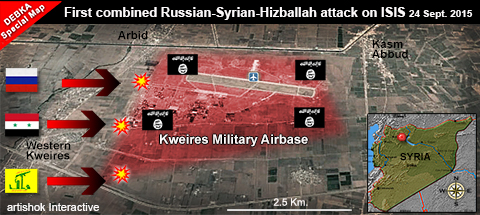
Before dawn on Thursday, Sept. 24, Russian marines went into battle for the first time since their deployment to Syria, DEBKAfile’s military and intelligence sources reveal. Russian Marine Brigade 810 fought with Syrian army and Hizballah special forces in an attack on ISIS forces at the Kweiris airbase, east of Aleppo.

This operation runs contrary to the assurances of President Vladimir Putin to Prime Minister Binyamin Netanyahu on Sept. 21 – just three days ago – that Russian forces in Syria were only there to defend Russian interests and would not engaged in combat with the Syrian army, Hizballah or Iranian troops.

The ISIS force defending the air base is dominated by Chechen fighters under the command of Abu Omar al-Shishani, who is considered one of the terrorist organization’s leading commanders in the last two years. The 27-year-old al-Shishani hails from the Chechen enclave of Pankisi in Georgia, like many others who joined ISIS from 2012.

However, targeting Chechen fighters was not the only reason for the order given by Russian command in Syria to attack the air base.  In DEBKA Weekly 678 of September 11, we predicted that the first Russian mission in Syria would be to break the Syrian rebel siege on Aleppo, Syria’s second-largest city.

As their first step, the Russians would have to prevent the cutoff of highway 5, running from Aleppo to Damascus, and keep it open for Syrian army reinforcements and military equipment to the city.

The offensive to regain Kweiris airbase that fell to ISIS in mid-June is the first step in the implementation of Russia’s operational plan for the Aleppo area.

Meanwhile, little substance was to be found in the reports appearing, mainly in the United States, suggesting that Putin, disappointed by the Obama administration’s unwillingness to send the US Air Force to collaborate with Russia in the fight against ISIS, would try to talk Obama round if and when they meet on the sidelines of the UN General Assembly on September 28.

According to DEBKAfile’s sources, these reports were spread to cover up the serious crisis in the US war against ISIS.

While Russia poured troops and advanced hardware into Syria, establishing bases and launching offensive action, the US anti-Islamic State effort suffered a heavy blow with the decision of Obama’s ISIS war czar, Gen. John Allen, to step down in early November.

Sources close to the general were quoted as referring to his frustration “with the White House micromanagement of the war and its failure to provide adequate resources.”’

The fact that the Russian forces launched their attack on ISIS shortly after the announcement of Allen’s upcoming resignation shows that Putin is not waiting for US cooperation in the war on the Islamist terrorists.    That said, DEBKAfile’s military sources point out that the most ominous aspect for the US and Israel of the Russian attack on the Syrian airbase is that Russian marines were combined with Syrian and Hizballah special forces.

For the first time in 41 years, since the 1974 war of attrition against the IDF on the Golan, Russian troops are fighting alongside Syrian forces. It is also the first time that a world power like Russia is willing to go into battle with an acknowledged terrorist group, such as Hizballah.

Our sources point out that the joint attack was completely counter to the tone and the content of the comments exchanged by Putin and Netanyahu at their summit.

A full report on Russian military activity and strategic objectives in Syria, and a rundown of the content of the Putin-Netanyahu talks in Moscow appear in the coming issue of DEBKA Weekly out Friday, September 25.

Mahmoud Abbas: Jews “Have No Right to Defile the Al-Aqsa Mosque with Their Filthy Feet”

September 21, 2015

Mahmoud Abbas: Jews “Have No Right to Defile the Al-Aqsa Mosque with Their Filthy Feet,” MEMRI-TV via You Tube, September 20, 2015

(This is the video, released with an English translation today, noted in an article titled Abbas: “Filthy” Jews’ Feet Not Allowed on Temple Mount. — DM)


Israel security forces may use live fire for Palestinian rocks, firebombs, and “popular terror”

September 20, 2015

Israel security forces may use live fire for Palestinian rocks, firebombs, and “popular terror”, DEBKAfile, September 20, 2015

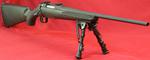
Ruger_RifleThe Ruger rifle

Prime Minister Binyamin Netanyahu has approved tougher rules of engagement for security forces grappling with the latest surge of Palestinian terror, ready for the security cabinet’s endorsement Sunday, Sept. 20.

First cleared with the State Attorney Yehuda Weinstein was the use of the Ruger rifle by Jerusalem police.

This weapon fires light 0.22 (5.59mm) bullets packed with a small amount of explosive which can cause injury within a 100m radius. It was used against Palestinian terrorists during their Second Intifada in 2000-2007.

Under the amended rules, police officers and soldiers may use the Ruger for live fire in life-threatening circumstances, such as the throwing of rocks and fire bombs which have plagued East Jerusalem in recent months.

This rule goes into force in all parts of Israel, since one of the primary inciters of the unrest on Temple Mount is the Northern Wing of the Israeli Muslim Movement, which represents Israeli Arab Muslim extremists.

A delegation of Israeli Arabs, including members of parliament, has embarked on a tour of Arab-Muslim capitals to push their claim that Israel is violating the status quo at the shrine. They plan to meet Jordan’s King Abdullah, Turkish President Reccep Tayyip Erdogan and Egyptian President Abdel-Fatteh El-Sisi.

The Netanyahu government has circulated a counter-statement to world governments demonstrating that Israel is adhering strictly to the status quo on Temple Mount, which is sacred to three world faiths, and acting only in the interests of preserving the peace against violent distrubances [sic].

The new rules of engagement distinguish between legitimate demonstrations and “popular terrorism.” The disturbances and clashes of the past week between Palestinian stone- and firebomb throwers and security forces in Jerusalem come under the heading of “popular terrorism.”

The prime minister and security chiefs have also acted to bring special operations units of the police force to Jerusalem to help quell the unrest, as well as posting a police presence for maintaining order in the Palestinian districts of the capital. The police and Shin Bet internal security service have set up a joint task force for gathering intelligence and investigations.

Attached to the new measure which goes into effect later today is a draft law permitting courts to impose fines on the parents of minors found guilty of stoning attacks, as well as higher minimum jail sentences for stone and firebomb attackers.

Saturday, Sept. 19, DEBKAfile carried this report:

Following the clashes on Friday, Sept. 18 in the Jabal Mukabar neighborhood, a question has arisen on whether the Palestinians opened fire on undercover units and Border Police forces in the area.

Such shooting by Palestinians in the capital is not new, and it occasionally happens in the northern part of the city, emanating usually from the Shoafat refugee camp and the village of Issawiya. These are isolated incidents, occasional volleys at adjacent Jewish neighborhoods, such as Pisgat Zeev.

But the situation in Jabal Mukabar was completely different, with shoot-to-kill gunfire aimed at members of the Border Police.

On that day, the news reports of the Voice of Israel radio station at 17:00 and 18:00 opened with a story that was impossible to ignore: four border policemen were wounded from gunfire on their armored vehicle in Jabal Mukabar, with one of them wounded seriously. However, the item vanished from the 19:00 broadcast, with Molotov cocktail attacks and rock-throwing incidents reported instead.

There are several conflicting points to consider regarding this matter: the armored vehicle clearly had bullet holes, but no signs of firebomb attacks. Then too press photographers on the scene reported specifically that border policemen were wounded by gunfire; residents of Jerusalem’s Meir Nakar street, next to Jabal Mukabar, said in interviews to various news organizations that there were exchanges of fire between the border police and Palestinians; and police officers said late Friday night that undercover units had arrived and opened fire in order to save themselves, and that several border policemen were injured by a Molotov cocktail.

The suggestion was that the officers had been injured by friendly fire – not Palestinian gunshots.

Several hours after the clashes at Jabal Mukabar, there was another incident south of Jerusalem in which Palestinians who threw firebombs at an IDF post near the Tomb of Rachel were shot and seriously wounded.

That was not the only attack on an IDF position in the Jerusalem area during that 24-hour period. On Thursday, Sept. 17, a Home Front Command base on the Mount of Olives was attacked with firebombs and a section caught on fire.

In addition to these incidents, on several occasions last week, Palestinians who had barricaded themselves in the Al-Aqsa mosque threw stones and stone blocks at police and shot firecrackers directly at them, which might have caused serious injury and even permanent blindness, but luckily none of the policemen were injured.

In other words, the latest developments show a surge in clashes between Palestinians and the Israeli security forces.

Jerusalem’s Mayor Nir Barkat said on Friday, following incident at Jabal Mukabar, that he welcomed the increase of offensive police’s anti-terror operations which entered the city’s flashpoint neighborhoods.

His comment aimed at raising the morale of the police forces fighting the new wave of Palestinian terror for the past two weeks.  It also drew attention to the ongoing debate within the Israeli government over the choice of next police commissioner, who is the official in charge of the country’s strategy for fighting terrorism. While this appointment hangs fire, it is not clear who is in charge of this war, in the interim, Prime Minister Binyamin Netanyahu or Public Security Minister Gilead Erdan?

Gil Hirsch, Erdan’s choice for commisioner [sic], is out of the running.  We have learned that the prime minister is opting for an army general to shed his uniform and take charge of the police – against the wishes of the Public Security Minister.

Palestinian terror tacticians are no doubt exploiting the fact that the war on terror is bouncing between them, with no sign that the violence is about to be brought under control in the immediate future.

DEBKAfile’s military sources reported on September 15 that the latest rioting is the face of the third intifada, At least for now, the unrest is not in the form of suicide attacks of the last uprising but more like “localized armed clashes.”

Our military and counter-terrorism sources point out that armed Palestinian groups, including Israeli Arabs from the extremist Islamic movement, have made an ad-hoc agreement to carry out attacks. In light of such a development, gunfire at Israeli security forces is very likely to grow.

Abbas: “Filthy” Jews’ Feet Not Allowed on Temple Mount

September 17, 2015

Abbas: “Filthy” Jews’ Feet Not Allowed on Temple Mount, Investigative Project on Terrorism, September 17, 2015

The International Union of Muslim Scholars is calling on Palestinians to “Rescue al-Aqsa” and rise up against Israel, according to several Twitter posts translated by the Investigative Project on Terrorism (IPT).

One of the tweets features a picture of Israeli police about to enter Jerusalem’s Al-Aqsa mosque. In reality, the Israeli authorities are pursuing Palestinian rioters who took refuge in the mosque and terrorists who were plotting to conduct attacks against Jewish worshippers. The picture – which is clearly intended to provoke Palestinians to continue stirring up trouble for Israeli citizens – includes the following quote:

“The International Union of Muslim Scholars requests the Ulema [Muslim community] and preachers of the Muslims to begin the campaign ‘Rescue al Aqsa’ and proclaim a state of general alarm among the sons of the Muslims in the world to defend al Aqsa mosque, and divulge the plans of the Zionists, and also to summon the Islamic Umma to hold protests, and to devote this Friday’s sermons to discuss Jerusalem, Al-Aqsa and Palestine.”

1232

The hashtag #RescueAlAqsa is also included in a subsequent tweet featuring a picture of flames engulfing the al-Aqsa with a sniper’s target fixated on the dome of the mosque.

“Al-Aqsa is burning Oh Umma of a billion and a half Muslims!!!,” reads the slogan on the provocative tweet.

Meanwhile, Palestinian Authority President Mahmoud Abbas glorified Palestinians fighting Israelis in Jerusalem and called for Palestinians to prevent Jews from entering Al-Aqsa with “everything in our power,” Palestinian Media Watch (PMW) reports.

“The Al-Aqsa [Mosque] is ours… and they have no right to defile it with their filthy feet. We will not allow them to, and we will do everything in our power to protect Jerusalem… We bless every drop of blood that has been spilled for Jerusalem, which is clean and pure blood, blood spilled for Allah, Allah willing. Every martyr (Shahid) will reach Paradise, and everyone wounded will be rewarded by Allah,” Abbas said in a speech, segments of which were aired on official PA TV and posted on his website.

“Today the world is divided between those trying to undermine religious coexistence and those trying to protect it,” Israel’s Foreign Ministry Director General Dore Gold said in a statement Thursday. “By saying that the ‘filthy feet’ of Jewish visitors to the Temple Mount desecrate it, Mahmoud Abbas has now clarified on which side he stands.”

Relative quiet returned to the Temple Mount on Wednesday, after three days of violent confrontations between Muslims and Israeli authorities during the Jewish New Year.

Acting Police Commissioner Bentzi Sau ordered hundreds of Israeli security personnel to Jerusalem to restore calm in light of “an upsurge” in attacks, such as firebombs and stone-throwing targeting Israeli police and civilians.

On Sunday, Palestinians throwing stones killed an Israeli civilian – 64-year-old Alexander Levlovitz – after he lost control of his car and crashed into a lamppost in Jerusalem’s East Talpiot neighborhood.

Russian troops already engaged in battle against ISIS around Homs

September 17, 2015

Russian troops already engaged in battle against ISIS around Homs, DEBKAfile, September 17, 21015

Russia_Putin267

Contrary to the impression conveyed by Moscow that Russian troops in Syria are not engaged in combat and that none of the sophisticated arms deliveries were destined to the Syrian army, new developments belie both these claims. 

DEBKAfile’s military and intelligence sources report that on Wednesday, September 16, Russian R-166-0.5 (ultra) high-frequency signals (HF/VHF) vehicles were spotted on Highway 4, which links Homs and Aleppo. These vehicles, called “mobile war rooms” by the IDF and Western armies, were accompanied by BTR-82 troop carriers transporting Russian marines. The R-166-0.5 enables communication with forces located on battlefields as far as 1,000 kilometers away using high frequency and ultra-high frequency signals.

The communication systems are resistant to electromagnetic jamming so Russian forces operating deep inside Syria can report to their commanders at the main Russian base in Latakia or receive orders, intelligence data and even video from drones or planes.

Another feature is a cylinder on the side of the vehicle containing a folded antenna that can be raised to a height of 15 meters.

The R-166-0.5 is an integral part of Russia’s battlefield operations, so it would not be deployed unless long-distance troop movements were underway. The appearance of those vehicles in the Syrian theater provides a clear signal of Moscow’s intentions.

Our sources point out that during the past few days, fighters from the Islamic State in Iraq and the Levant (ISIS) succeeded in cutting off part of the highway between Homs and Aleppo for several hours. It marked a very dangerous development for the Syrian army and regime, because a permanent cutoff of Highway 4 would tighten the siege on Aleppo and possibly pave the way for the conquest of the second-largest city in Syria.

The movements by the armored vehicles show that the Russian troops are preparing to head into battle in order to prevent such a scenario.

Moscow has denied supplying new, sophisticated weapons to the Syrian army. However, a Syrian military source revealed Thursday, Sept. 17, that the Syrian military has recently started using new types of air and ground weapons supplied by Russia, underlining growing Russian support to Damascus that is alarming the United States and Israel. “New weapons – and new types of weapons – are being delivered,” said the source which described them as “highly accurate and effective.”  The army had started using them in recent weeks having been trained in their use in Syria in recent months. “We can say they are all types of weapons – be it air or ground,” he said.

DEBKAfile’s military sources reveal that the Russian shipments for the Syrian army include MI-28 MIL assault helicopters (NATO-coded Havoc), an all-weather aircraft, which can also serve as an anti-tank weapon against the mostly US-made tanks fielded by ISIS and Al Qaeda’s Nusra Front Syrian arm.

Our military and intelligence sources point out that Moscow has given itself room to maneuver in terms of its declared goals, telling Washington and Jerusalem during the past few days that its troops will defend their own interests if there is a need to do so. Thus, Russia aims to use its forces in any way that it deems fit.

DEBKAfile’s sources in Washington report an ongoing debate within the Obama administration regarding whether to accept the proposal that was raised during the telephone conversations this week between Russian Foreign Minister Sergei Lavrov and US Secretary of State John Kerry.

Moscow proposed military-to-military talks on ways to prevent a confrontation between its troops in Syria and those of the US-led coalition, saying that the talks would provide a complete and clear understanding of Moscow’s intentions.

Unlike Kerry, who is in favor of taking the Russians up on their proposal, some circles in the administration feel that such talks would ultimately give Russia the green light for its military involvement and that Moscow is in the process of grabbing control of running all military operations in Syria, including those by other countries and groups.

Last week, Gen. Qassem Soleimani, commander of Iran’s al-Quds brigades, visited Moscow for the second time since April.  DEBKAfile’s sources in Moscow point out that this time, unlike his previous visit, Soleimani met with Russia’s National Security Adviser Nikolai Patrushev and a number of generals directly connected to the buildup in Syria, but not with President Vladimir Putin.

The developments in Syria will also take center stage when Israeli Prime Minister Benyamin Netanyahu meets with Putin in Moscow on September 21.

Watch: Children on Hamas TV Say they Want to ‘Blow Up the Jews’

September 17, 2015

Watch: Children on Hamas TV Say they Want to ‘Blow Up the Jews,’ Elad Benari, September 17, 2015

Hamas is continuing to use its media to educate young children to carry out “jihad” against Jews.

The Middle East Media Research Institute (MEMRI) has exposed a clip from a children’s show on the Hamas-owned Al-Aqsa TV channel which shows young children, dressed in military fatigues, asked what they want to be when they grow up.

One of the children said that he wanted to be an engineer, “so that I can blow up the Jews.” Another recited a poem, “I shall liberate [Jerusalem] from the Jews by means of the Al-Qassam Brigades.”


MEMRI has in the past published several clips which show Arab youths vowing to fight “the occupation”.

A clip released by MEMRI earlier this year showed footage from a youth camp organized by Hamas’s so-called “military wing”, in which young cadets learn how to use weapons and simulate the kidnapping of an Israeli soldier.

A previous clip shows a televised graduation ceremony for a similar Hamas youth camp in Gaza. At the ceremony, suicide terror attacks against the “Zionist enemy” were glorified by Hamas officials.

Hamas has also in the past released a cartoon honoring its “military wing”.


Off topic (?) | To bring America back we need to break some stuff

September 15, 2015

To bring America back we need to break some stuff, Dan Miller’s Blog, September 14, 2015

(The article is not immediately pertinent to Israel because the current President will continue to be Obama and his tame Congress will continue to go along to get along. However, the 2016 U.S. presidential elections are very pertinent to Israel’s future, so I am taking the liberty of posting it here. For those not familiar with the acronym “RINO,” it is a term of disparagement referring to Republicans who would probably be happier if they were Democrats. Needless to say, the views expressed in the article are mine and do not necessarily reflect those of Warsclerotic or its other editors. — DM)

In December of 2011, I wrote an article titled The U.S. Constitution and Civil War. A remark by Cokie Roberts — that we need to ignore parts of the Constitution to save the rest — inspired my article. To bring America back, we don’t need to, nor should we, ignore or otherwise break the Constitution; it is America’s foundation. We do need to destroy and rebuild much of the mess that has been wrongly erected atop that foundation.

Obama and Constitution

Who should be our next President?

Daniel Greenfield, in an article titled This is the America We Live in Now, wrote,

We are not this culture. We are not our media. We are not our politicians. We are better than that.

We must win, but we must also remember what it is we hope to win. If we forget that, we lose. If we forget that, we will embrace dead end policies that cannot restore hope or bring victory.

What we have now is not a movement because we have not defined what it is we hope to win. We have built reactive movements to stave off despair. We must do better than that. We must not settle for striving to restore some idealized lost world. Instead we must dream big. We must think of the nation we want and of the civilization we want to live in and what it will take to build it. [Emphasis added.]

Our enemies have set out big goals. We must set out bigger ones. We must become more than conservatives. If we remain conservatives, then all we will have is the America we live in now. And even if our children and grandchildren become conservatives, that is the culture and nation they will fight to conserve. We must become revolutionaries. [Emphasis added.]

If we don’t, perhaps we should surrender and petition to join the European Union. Our unelected and unaccountable bureaucracy could merge with that of the EU and our Congress could merge with the impotent EU Parliament.

Joining the EU would not fit well with the U.S. Constitution, but so what? Obama and “pragmatic” judges have twisted and distorted it. They pay but scant attention to its clear language or that of the statutes they misconstrue. Most in the current crop of Republicans in the Congress have been willing to surrender whenever Obama blows His dog whistle and run to Him with hopes that He may offer them small bones.

Our once great nation is itself broken, but not necessarily beyond repair. It needs to be fixed before it gets to the point where it can’t be, and we are rapidly approaching that point. Our Constitution must be revived, and as revived survive, if America herself is to survive. America can’t be fixed with fresh paint and new floral arrangements featuring a “new” Bush.

When Ronald Reagan was first mentioned as a possible Republican presidential candidate, my first thought was that we don’t need a washed-up grade B movie actor/former Democrat leftist as President. I was wrong. He became the best President America has seen in my thus far seventy-four years on Earth. We need another Reagan, but who should it be? There are only a few good candidates and the Republican establishment opposes, with such insipid vigor as it can muster, all of them. It wants Jeb Bush, or in any event a Bush clone, to march stolidly toward a new Amerika.

Donald Trump

The mainstream media cannot understand why Trump continues to lead in the polls. Neither can the RINOs. Trump can’t possibly continue to lead; why, he is not even a politician! On September 12th, Sharyl Attkisson posted an article titled Donald’s Duck: 7 Reasons Why Nothing Sticks to Teflon Trump. In it, she explored seven of the reasons why it is claimed that Trump “can’t win.”

1. Trump doesn’t know the names of terror leaders.

2. Trump doesn’t have a plan.

3. Trump isn’t conservative enough.

4. Trump has flip-flopped.

5. Trump personally insults people.

6. Trump is against immigrants.

7. Trump won’t apologize.

Please read her analysis pointing out the fallacies behind these talking points as seen by Trump supporters; I think they are correct.

On September 13th Sundance, writing at The Last Refuge, posted an article titled The GOPe Roadmap, Status Update and The Event Horizon… There, he pointed out the RINOs’ multifaceted plan to defeat Trump and to install Jeb Bush as “our” next President. Jeb wants to lead us to more of the same namby-pamby nonsense that gave us Obama, the “great healer.” I don’t want to go there and want to stay as far away from there as possible. Please read Sundance’s article in its entirety. It’s excellent and so is this sequel about the upcoming CNN debate and the night of the long knives.

What will Trump do if elected?

I don’t know what Trump will do if elected President. He probably can’t make things worse, will try very hard to make them better and may well succeed. Please watch “lunatic” Trump respond to questions during this interview.

The only thing I am confident that the RINO candidates would do is to continue America’s collective swirl down the toilet. I very much like Ted Cruz (he would also be an excellent Secretary of State) and Ben Carson (Secretary of Health and Human Services?). Carina Fiorina? I like her thus far but need to learn more.

Trump has captured the public attention and, in many cases, its admiration and trust. Apparently many of his supporters feel as I do and are “mad as hell and don’t want to take it anymore.”

Please compare and contrast these Obama and Hillary campaign videos:

Obama won His last two elections by campaigning for change “we” can believe in. Trump has thus far campaigned for change those who think America was great before Obama got to mucking around with her do believe in and want to have implemented.

Much is yet unknown about where and how Trump will lead the nation as her President. One thing seems clear, at least to me: he will discard that which is broken and replace it with what we need. So long as he does not muck around with the Constitution (as Obama has done with abandon), I think we should give him an opportunity to try.

gop-elite

H/t Vermont Loon Watch

trump-punch-600-la

H/t Kingjester’s Blog

The Shady Family Behind America’s Iran Lobby

September 15, 2015

The Shady Family Behind America’s Iran Lobby, Daily Beast, Alex Shirazi, September 15, 2015

(The National Iranian American Council is the voice of the Iranian regime. It found great favor with the Obama administration while becoming a significant part of it. — DM)

How one enterprising Iranian expat family and its allies successfully pushed for U.S.-Iran rapprochement—and now stands to make a fortune from sanctions relief.

When the world’s major powers struck a deal over Iran’s nuclear program in Vienna in July, it represented a victory not just for the Islamic Republic, which has now been granted international legitimacy as a nuclear threshold state, but also for a small but increasingly influential lobby in America, one which has long sought rapprochement between Washington and Tehran and now seeks to leverage a successfully concluded nuclear deal as a means to that end.

This Iran lobby, publicly represented by the National Iranian American Council (NIAC), has become a staunch institutional ally of the White House selling the Joint Comprehensive Plan of Action, as the nuclear deal is known. But while NIAC has done the heavy-lifting—the ad-buying, the leafleting, and Congressional meet-and-greets, all designed to sell lawmakers on the Iran deal—its political efforts also underwrite the economic interests of one very well connected but low-profile Iranian family, the Namazis, who played a key role as intellectual architects of NIAC.

Little known to the American press, the Namazis have rarely acted as spokespersons for their own cause. In fact, attempts to reach various members of the family for comment on this story were met with increasing levels of hostility and threats of legal action. Yet in many ways, the Namazi clan is the perfect embodiment of Iranian power politics, at least as it has played out among the Iranian diaspora. Those close to the Namazis say that they are savvy financial operators rather than ideologues, eager to do business with the West and enjoy all of its political freedoms and perquisites, and yet ever mindful that they’re straddling the delicate fault-line between cashing in with a theocratic dictatorship and being frozen out entirely. They have stayed on the right side of international law if not always on the right side of prevailing political interests in the Islamic Republic.

Nor did they begin their rise to prominence as supporters of the Islamic Revolution. Mohammad Bagher Namazi, also known as Baquer Namazi, is the patriarch of the family and formerly the governor under the Shah of the oil-rich Iranian province of Khuzestan. Despite his relationship with the ancien régime, Baquer Namazi was not persecuted by the Khomeinists after they seized power in 1979, and he and his family were allowed to emigrate in 1983 to the United States. There he raised two well-educated and Americanized sons, Babak and Siamak, while his niece, Pari Namazi, married Bijan Khajehpour, another Iranian expatriate.

The 1980s were the years of the fiery-eyed Ayatollah Khomeini and Iran’s ferocious war with Saddam Hussein’s Iraq. Iranian-backed terrorism in Lebanon included the bombing of the U.S. embassy and the Marine barracks there, while Iranian “hit teams” hunted down and murdered opponents of the regime in exile. Iran’s Hezbollah clients kidnapped Europeans and Americans, and in the Irangate scandal the Reagan administration was exposed trading weapons systems for hostages. Afterward it effectively went to war against Iran on the waters of the Gulf, and in the process blew an Iranian civilian airliner out of the sky. There seemed no possibility of improved relations between Washington and the theocracy in Tehran. But after the Iran-Iraq war ended in 1988 and Khomeini died in 1989, new possibilities for rapprochement—and huge deals for international companies—started to emerge.

***

Doing serious business in Iran has always required some measure of political protection. The Islamic Republic is a web of rival economic interests. Broadly speaking, the three largest are those tied through various semi-clandestine fronts to  Khomeini’s successor as “supreme leader,” Ayatollah Ali Khamenei; those linked to the regime’s praetorian Islamic Revolutionary Guards Corps (IRGC); and those associated with Iran’s president, who may hold the most conspicuous position in the country’s political life, but whose official powers are limited. Typically, to get things moving in the mire of Iran’s notorious bureaucracy, businesses have to have connections in one or more of these groups.

From 1989 to 1997, the president of Iran was Akbar Hashemi Rafsanjani, known as “the Shark,” an Iranian reference to a beardless man. He was also famous for getting rid of his rivals and political competitors one by one, like a great white shark. In addition, Rafsanjani had a reputation for corruption and taking advantage of power.

In this environment of increased willingness to do business with the West, the stage was set for a return of the Namazis. In 1993, Pari Namazi and her husband Bijan Khajehpour founded a company in Tehran called Atieh Bahar Consulting (AB). It offered a range of legal and industrial services to foreign enterprises, most importantly the access it provided to the regime, and the advice it dispensed on how best to navigate the vagaries of the regime’s entrenched factions and competitive interests.

At the time, it looked like Iran might even be opening up to big American-based oil companies, then unencumbered by any sanctions regime on the Islamic Republic. But after an announcement in 1995 that Iran had given Conoco a contract to develop an offshore gas field, and an uproar in the U.S.  Congress, the Clinton administration imposed unilateral sanctions and barred U.S. companies from doing business there.

Eventually Siamak Namazi, who had worked from 1994 to 1996 at Iran’s Ministry of Housing and Urban Planning, also joined AB. So did his brother Babak, a lawyer. And the AB client list just kept growing. Plenty of companies based outside the U.S. were more than happy to do business in Iran once they had the right connections. As Siamak eventually told Lebanon’s Daily Star newspaper, “If oil companies want to operate in the Iranian market they need to link up with a local partner, and this is where we step in and help them to find the right partner.”

With the surprise election of the “reformist” presidential candidate Mohammad Khatami in 1997, political and economic enthusiasm for better Iranian relations with the West grew dramatically. Meanwhile the “pragmatist” Rafsanjani took other powerful positions in the regime. In those optimistic times, AB’s non-American clients—free from any sanctions regime—included the German engineering giant Siemens; major oil companies BP, Statoil, and Shell; car companies Toyota, BMW, Daimler, Chrysler, and Honda; telecom giants MTN, Nokia, Alcatel; and international banks such as HSBC.

But the political winds were shifting. A nuclear cloud darkened the horizon, and the United States, slowly but surely, found ways to broaden the sanctions against Iran, forcing many international companies to dial back on their investments there or pull out altogether.

The Namazis, of course, had every reason to want to bring them back.

***

Atieh Bahar Consultancy had aligned itself with Rafsanjani’s faction early on by forging an especially close relationship with Rafsanjani’s influential son, Mehdi.

From 1993 to 2005, Mehdi Hashemi was employed at the National Iranian Oil Company (NIOC), the state-owned entity that controls almost all oil and gas production in a country that has the world’s largest gas reserves and third-largest oil reserves.

But Mehdi Hashemi brought some serious problems to the relationship. In 2004, Norway’s Statoil was caught paying bribes to a prominent Iranian official using the company Horton Investment, an entity run by a close Mehdi Hashemi confidant as intermediary. Hashemi would later be imprisoned for his complicity in the bribery, along with two other charges, and ordered to pay a total of $10.4 million; $5.2 million of the bribe money, plus an additional $5.2 million in fines. Abbas Yazdanpanah Yazdi, meanwhile, was allegedly kidnapped in the UAE in 2013 and has since “disappeared.”

The scandal came just as the elder Rafsanjani was plotting a presidential comeback in the 2005 elections, and it gave substance to the rumors of corruption that always swirled around him and his son. (Mehdi Hashemi denied the Statoil bribery allegation and said it was designed to hurt his father’s reputation.) He managed to make it into the second and final round, but finally lost to Mahmoud Ahmadinejad, who staked out a position as a “clean” populist who would give money to the poor and who didn’t give a damn about foreign business interests.

After Ahmadinejad came into office, the nuclear cloud grew much darker.

In 2003, the United States had led the invasion and occupation of neighboring Iraq, eliminating Iran’s old enemy Saddam Hussein in order to be sure that he had no weapons of mass destruction. And, as it turned out, by then he did not. A few months earlier in 2002, however, Israeli intelligence turned up evidence that Iran, a signatory of the Nuclear Non-Proliferation Treaty, had developed a secret uranium enrichment operation at a site called Natanz. (The first public airing of this intelligence came from a militant Iranian dissident group that had been nurtured by Saddam Hussein.)

This did not distract from the march to war with Iraq, but a few months later Iran was declared in material breach of the Treaty on the Non-Proliferation of Nuclear Weapons (NPT), and, under threat of heightened sanctions, a process of negotiations began between Iran and the European Union to limit the nascent enrichment program. At the time Iran had only 160 of the centrifuges needed to enrich uranium, and thousands would be required to get it to the point where it could produce fissile material for a bomb. U.S. intelligence estimates eventually concluded “with high confidence” that the Iranians also had a secret nuclear weapons program, in addition to enrichment, but shut it down in the fall of 2003.

When Ahmadinejad took over in 2005, he ditched all pretense of willingness to compromise over Iran’s “peaceful” nuclear program, an intransigence that led Western countries to tighten sanctions, making foreign investment ever more difficult. And what was worse for AB and the Namazis, Ahmadinejad went after his political rivals, particularly the Rafsanjani faction, with a vengeance. Mehdi Hashemi, naturally, was a prominent target. Ahmadinejad barred him from conducting any business in relation to Iran’s oil and gas sector. Ten years later, the courts actually sentenced him to a collective 25 years—and 50 lashes—in Tehran’s notorious Evin prison for all three charges against him including the Statoil corruption case. In reality, he will only serve 10 years.

AB needed to shore up some new alliances, and bide its time. Co-founder Bijan Khajehpour, worked for a leading Iranian politician named Hassan Rouhani who had served under the Khatami government as Iran’s nuclear negotiator. Rouhani also was the president of a think tank called the Center for Strategic Research (CSR). But relations with Iran in the middle of the last decade were almost as bleak as they had been after the 1979 hostage crisis and the grim terror and counter-terror campaigns of the 1980s.

By 2006, Iran, was in effect at war with the U.S. in Iraq. The Revolutionary Guards’ expeditionary Quds Force led by Qasem Soleimani had been training, financing, and arming Shia militias killing U.S. soldiers.

Moreover, the West was growing more alarmed about Iran’s nuclear program, which it seemed powerless to stop. Ahmadinejad had declared the resumption of uranium enrichment “irreversible” just as the country’s nuclear scientists had mastered the fuel cycle. He’d appointed conservative Ali Larijani as chief negotiator with the European Union (before Iran withdrew from talks altogether), and he said he’d “wipe [his] nose” on international sanctions.

A war with Iran, most likely started by Israel with the United States drawn in, began to seem possible, then probable, and almost inevitable. The International Atomic Energy Agency referred Iran to the UN Security Council for action forcing it to curtail its nuclear activities.

Out of this dark morass, the Namazis struggled to keep alive hopes of rapprochement and trade, while avoiding a war at all costs. And by then they had in place the architecture for convincing a war-weary U.S. policy establishment that not only was avoiding a military confrontation with Iran possible, but the Islamic Republic was really just a friend America had yet to make.

***

In November 1999, when Khatami was still president and, Siamak Namazi got together with a Swedish-Iranian expat named Trita Parsi at a conference in Cyprus. The conference, titled, “Dialogue and Action Between the People of Iran and America,” was convened jointly by the Centre for World Dialogue, a Cypriot non-governmental organization, and by Hamyaran, an Iranian non-governmental resource center for other NGOs, which was chaired by Mohammad Bagher Namazi, the family patriarch. Namazi fils and Parsi there presented an influential white paper (PDF), “Iran-Americans: The bridge between two nations,” which called for three steps to ameliorate U.S.-Iranian relations in advance of reconciliation:

1. Hold “seminars in lobbying for Iranian-American youth and intern opportunities in Washington DC.”

2. Increase “awareness amongst Iranian-Americans and Americans about the effects of sanctions, both at home and in Iran.”

3. End “the taboo of working for a new approach on Iran”—i.e., end the then two-decade-old U.S. policy of containment.

Namazi and Parsi wrote that “the fear of coming across as a lackey of the Iranian regime is still prohibiting many Iranian Americans from fully engaging in the debate on the future of Iran-U.S. relations.” The way around this, they submitted, was to mobilize the Iranian-American community and enlist “Americans of non-Iranian background” to lessen the adversarial posture of both nations.

The white paper led to the creation two years later, in 2001, of NIAC, a Washington, D.C.-based organization which Parsi founded and currently heads. During the formative period preceding NIAC’s launch, Parsi had sought advice and guidance from numerous sources, including and especially Mohammad Bagher, as was disclosed in documents (PDF) obtained during a defamation law suit brought by NIAC and Parsi against one of their most outspoken critics.

Parsi was extremely well-placed to front the Iran lobby. He had obtained a doctorate at Johns Hopkins on a subject intimately tied to the lobby’s central thesis—the relationship between Israel and Iran and how the former hindered the latter’s acceptance in the U.S. He even studied under Francis Fukuyama, a onetime neoconservative policy intellectual who abandoned his ideological comrades when the Iraq war went south. Finally, Parsi had gained valuable political experience on the Hill by working for Republican Congressman Bob Ney, a connection he has not included in his curriculum vitae and official website. (Ney went to jail in 2007 for accepting bribes from mega-lobbyist Jack Abramoff’s Native American casino clients.)

While serving as president of NIAC, Parsi also wrote intelligence briefings as an “affiliate analyst in Washington, D.C.” for AB, focusing on such topics as whether or not the American Israel Public Affairs Committee (AIPAC) would revive its anti-Iran campaigning on the eve of the Iraq war, or on efforts by the Mujahideen-e Khalq (MeK), the militant Iranian opposition group that exposed Natanz in 2002 would get itself de-listed as a terrorist entity by the U.S. State Department. Parsi was paid for his work for the consultancy, as disclosed by an email sent from Bijan Khajehpour to him, dated Sept. 22, 2002, an employment that Parsi did not mention when fulsomely praising Khajehpour in the Huffington Post as an ideal Iranian businessman.

Although it has only 5,000 dues-paying members, a mere one percent of the estimated 470,000 Iranian-Americans, NIAC’s network of activists and event attendees is said to extend into the tens of thousands. In June of this year, as the Iran deal looked likely, NIAC inaugurated an official “lobbying” arm called NIAC Action registered with the Internal Revenue Service as a 501(c)(4) organization, but for years, internally, the group has described its activities (PDF) as lobbying. NIAC Action is explicitly meant to counter the influence of AIPAC, which has spent millions to block the Iran deal’s passage in Congress by securing a veto-proof bipartisan majority of senators opposed to it—an effort that now appears close to failure.

Since its founding, NIAC has also proved a useful finishing school for rapprochement-minded Iranian-Americans, many of whom have either come from positions in U.S. government or graduated into them. Its current research director, for instance, is Reza Marashi, an Iranian-American dual national, who worked for Atieh Bahar until 2006 when he landed a  job at the U.S. government’s Institute for National Strategic Studies at the National Defense University, which acts as a research center for the Pentagon. Marashi then went to work for the Office of Iranian Affairs at the U.S. State Department as a desk officer overseeing Iran democracy and human rights programs.

Marashi is very outspoken on social media against any critics of NIAC’s agenda. Along with the rest of his organization’s staff, he has accused Jewish opponents of the Iran deal of being dual loyalists. “Shame on Chuck Schumer for putting #Israel’s interests ahead of America’s interests,” he tweeted after the New York senator’s decision to come out as the senior-most Democrat against the deal.

Given the obvious connection between NIAC and the Namazi family, Marashi makes no mention of his job at AB in his biography on NIAC’s official website. Nor did he respond to The Daily Beast’s repeated requests for comment on this story.

Perhaps NIAC’s most accomplished alum is Sahar Nowrouzzadeh, who is now National Security Council Director for Iran in the Obama administration and therefore the top U.S. official for Iran policy, bringing together the various departments of government working on U.S. strategy toward the country. She is also, after the White House principals, one of the leading advisors to President Obama on Iran. No doubt owing to the sensitivity (and influence) of her government role, Nowrouzzadeh has maintained a low profile, but her work at NIAC is publicly available. She drafted one of the organization’s annual reports for 2002-2003 (PDF) and was referred to by Dokhi Fassihian, then executive director, as a “staff member” (DOC). The Obama administration insists that Nowrouzzadeh was only ever an intern with NIAC, and Nowrouzzadeh does not seem eager to play-up her affiliation with the group. According to her LinkedIn profile, she has worked at the State Department and the Department of Defense. The profile doesn’t mention NIAC at all.

Such inconspicuousness stands in notable contrast to how other Obama administration officials who emerged NIAC’s nemesis—the pro-Israel lobbying establishment—tend to invoke their past credentials as a means of establishing their diplomatic bona fides.

But then, Israel is a longtime and “sacrosanct” American ally, as Obama has stated. Iran, on the other hand, has been a pariah state where crowds are encouraged to chant “Death to America.”

On NIAC’s website, in its mailings and in media interviews, NIAC rarely criticizes the IRGC or the Quds Force, a U.S.-designated terrorist entity. Parsi characterizes the Iranian regime, of which the Quds Force is the main military enforcer, as a U.S. ally in the war against the so-called Islamic State, or ISIS.  But neither he nor NIAC has discussed the Quds Force’s military role in Syria where it plays a key role in targeting U.S.-backed rebels deemed the best bulwark against both Assad and the so-called Islamic State widely known as ISIS and, more broadly, organizing the savage defense of the Assad dynasty, for which several of the Quds Force’s personnel have been sanctioned by the U.S. government.

NIAC publicly opposes designating the IRGC as a whole as a terrorist entity because doing so would only conform to part of a pattern of failed sanctions, “further entrenching U.S.-Iran relations in a paradigm of enmity.”

Instead, campaigning against any U.S. sanctions on Iran has been the mainstay of NIAC’s endeavors, and this held even when the Obama administration thought sanctions the most effective way to bring the Iranians back to the negotiating table. NIAC has maintained (PDF) that sanctions have cost the U.S. economy billions of dollars and hundreds of thousands of job opportunities.

Parsi’s activism won him praise from the Iranian regime during the very dark days a decade ago. Former ambassador to the United Nations Javad Zarif, who is now the heavily spotlighted foreign minister, wrote to Parsi in 2006, “Your help is always welcome,” and, after catching part of a Parsi interview on the BBC the same year, Zarif called his performance “Great.”

In March 2006 (at the height of the covert Iranian war with the U.S. in Iraq), Parsi told a colleague not to worry about a trip to Tehran, “NIAC has a good name in Iran and your association with it will not harm you.” When the colleague was briefly questioned by the regime, then released, he reported back (PDF) to Parsi that he’d been told the reason he was let go was “that they knew NIAC had never done anything seriously bad against the Islamic Republic.”

***

In 2009, Sen. Mark Kirk called NIAC Iranian “Regime Sympathizers” (PDF), stating “they came to Capitol Hill urging members of Congress to cut off U.S. funding for democracy programs in Iran.” NIAC had sought to eliminate the Bush administration’s “Democracy Fund” for programs in Iran, which it saw as nothing more than a vehicle for attempted regime change. NIAC responded to Kirk by calling the $75 million fund a “brainchild” of the Bush administration’s “disastrous Middle East policy,” which aimed to finance Iranian NGOs seeking overthrow the government of Iran.

And NIAC does some name-calling of its own, calling organizations it doesn’t like (i.e., those too critical of the Islamic Republic) “neocon puppets,” and warmongers. Indeed, it has also tried to define the parameters of acceptable Iranian civil society groups (i.e., ones that never really undermined the regime) by partnership with Hamyaran, described by NIAC as an “NGO umbrella organization” (PDF). In reality, however, it was conceived as more of a governmental non-governmental organization and launched by those close to Iranian President Mohammad Khatami—its board member was Hossein Malek Afzali, a deputy minister in Khatami’s government). By NIAC’s own admission, the organizatiom (PDF) “operates independently, but with the implicit permission of the Iranian government.” (Emphasis added.) Hamyaran’s board of directors was also once chaired by Namazi paterfamilias Mohammed Bagher.

Hamyaran obtained support from the congressionally funded National Endowment for Democracy—as did NIAC, which received Endowment funding in 2002, 2005, and 2006 in the collective amount of close to $200,000. NIACdescribed Hamyaran to the Endowment in 2004 as its “main partner in Iran.” Perhaps unsurprisingly, among those civil society groups selected for NIAC and Hamyaran’s “Digital Film Production Workshop Report,” a training program for Iranian activists to learn how to use digital media, were those described as having been “contracted by the Iranian government” or “worked closely with the Iranian government.”

As for NIAC, Carl Gershman, the president of the National Endowment for Democracy, told The Daily Beast, “We’re not supporting NIAC now and we have nothing to do with them.”

“Back then there were people arguing, ‘Try to get into Iran’ and we thought this was a way forward,” Gershman said. “We weren’t aware when these grants were made that NIAC were presenting themselves as a lobby. We didn’t know that. Our effort was to work with emerging space in Iran. We were trying something that might be a way to help people on the inside. But that quickly became unworkable; the grant didn’t work. Then NIAC showed itself as a lobby organization, so we have nothing to do with them anymore. Not every grant works out the way you want it to.” Asked if that meant that NED regretted working with NIAC , Gershman answered: “Yes, I think that’s true.”

At the same time it was taking U.S. taxpayer money, NIAC wanted to end U.S. government support for NGOs which categorically opposed the Islamic Republic. In April 2007, NIAC held a strategy meeting with international human rights groups including Amnesty International and Human Rights Watch (HRW). The HRW representative was himself a former NIAC board member, Hadi Ghaemi, who had (PDF) worked for NIAC in Iran, and then served HRW from 2004 to 2008. During the meeting, according to an email sent by Parsi afterward, Ghaemi “noted that certain groups being funded by the state dept [sic] are covers for regime change and that we need to be careful. Many groups misrepresent themselves as wanting to improve human rights and democracy in Iran.” Ghaemi did not specify which groups. When The Daily Beast contacted Ghaemi via email, he replied that he could not confirm the meeting in question. He was unavailable for further comment after The Daily Beast showed him Parsi’s email asking if that refreshed his memory.

***

In 2008, NIAC made a strategic mistake, waging a not-so-quiet campaign against the Voice of America’s Persian service, a U.S. government-funded broadcast medium. Both NIAC and the Namazis were aggravated by the frequent appearances of Hassan Dai, an Arizona-based Iranian exile, who lambasted NIAC as a regime mouthpiece.

Siamak Namazi (PDF) called for Dai to be banned from VOA in February 2007. NIAC chief lobbyist Emily Blout petitioned (PDF) Congress in September 2007 for an “independent review” of VOA Persian. After Dai appeared again on VOA in 2009, Parsi (PDF) remarked that its hosting of a NIAC critic “won’t change until the VOA leadership changes.” He was right. Today the editor-in-chief of VOA Persian is Mohammad Manzarpour, a former employee of Atieh Bahar Consultancy.

But serious damage to NIAC’s reputation was done, and much of it was self-inflicted. In 2008, Parsi and NIAC had brought a defamation suit against Hassan Dai, alleging that he had made “numerous false and defamatory statements that characterize plaintiffs as agents of the Iranian government.” Parsi and NIAC lost the case in 2012, with the judge rejecting their self-portrayal as critics of Tehran. “That Parsi occasionally made statements reflecting a balanced, shared blame approach is not inconsistent with the idea that he was first and foremost an advocate for the regime,” U.S. District Court Judge John D. Bates (PDF) wrote in his judgment. “After all, any moderately intelligent agent for the Iranian regime would not want to be seen as unremittingly pro-regime, given the regime’s reputation in the United States.”

Nor did NIAC do itself any favors in during the trial and on appeal. Three circuit judges of the U.S. Court of Appeals found its behavior (PDF) “dilatory, dishonest, and intransigent” and accused it of engaging in a “disturbing pattern of delay and intransigence. Seemingly at every turn, NIAC and Parsi deferred producing relevant documents, withheld them, or denied their existence altogether. Even worse, the Appellants also misrepresented to the District Court that they did not possess key documents [Dai] sought. Most troublingly, they flouted multiple court orders… A court without the authority to sanction conduct that so plainly abuses the judicial process cannot function.”

Unsurprisingly, then, NIAC and Parsi lost their appeal and were ordered to pay $183,480.09 in monetary sanctions in February 2015.

“NIAC and Parsi filed the lawsuit to break me under the financial burdens and silence other critics but they totally failed,” Dai told The Daily Beast. “The lawsuit, which lasted nearly seven years, showed the deceptive character of an organization that lobbies in favor of the mullahs’ theocratic regime but represents itself as a defender of peace.”

***

The fortunes of the entire Namazi clan waned after 2009, when a popular uprising against Ahmadinejad’s fraudulent re-election was met with murder, mass arrests, and torture.

Bijan Khajehpour was imprisoned because of the struggle raging in the regime between the Supreme Leader and the IRGC on one side, and the Rafsanjani camp on the other. And while praising the Obama administration for not speaking up on behalf of those who resisted the stealing of the 2009 election, the so-called Green Movement, on the grounds that doing so would have only given the regime an excuse to murder and torture more people, Parsi rushed to the defense of his friend and former employer Khajehpour, “who neither participated in the protests nor had any involvement with the opposition” but was instead a “self-made man” and “top-notch consultant drawing the attention of multinational and local firms to investment opportunities in the country.”

In The Huffington Post Parsi wrote as an acquaintance or friend of Khajehpour, nowhere disclosing his past business relationship writing reports for Atieh Bahar Consulting.

Khajehpour subsequently was released from prison and he and his wife, Pari Namazi, moved to Vienna.

Siamak Namazi also faced harassment after the 2009 election and the subsequent unrest. He left Iran for the United Arab Emirates and is currently the head of Strategic Planning at the UAE-based Crescent Petroleum, an oil and gas company based in Abu Dhabi.

Business in Iran was drying up. Ahmadinejad may have held onto power after he broke the Green Movement, but his drive toward nuclear “self-sufficiency” raised so many alarms that the Obama administration was able to persuade the four other members of the UN Security Council to impose draconian sanctions on the regime. Hundreds of billions of dollars worth of assets were frozen, and international commerce ground toward a halt.

Then, in 2013, Khajehpour’s former employer Hassan Rouhani, the former nuclear negotiator, the Rafsanjani-style “pragmatist,” was elected Iran’s new president. The ever affable-seeming former UN ambassador, Javad Zarif, was appointed foreign minister. Suddenly the door looked like it was open wide to a new relationship with the West of just the sort the Iran Lobby had worked for so hard and for so long. Rouhani was avuncular, good-humored, and had made it his goal to open Iran for business, if only the nuclear issue could be dealt with.

By the time serious talks with Washington were opened, Ahmadinejad’s nuclear program had built almost 14,000 centrifuges, and Iran was within a year, by some estimates within months, of producing enough fissile material to build a bomb, at least in theory.

Although there was talk in Washington about compelling Iran to dismantle the whole program, there was never really any question of that, and the deal as finally signed merely buys time—pushing Iran’s possibility of producing a potential nuclear weapon back from months to as many as 15 years.

As these pieces fell into place in the age of Obama, Parsi and NIAC found themselves in the unlikely position of power brokers. One prominent faction of the Iranian regime—Rafsanjani’s—sees them as convenient conduits for disseminating a pro-Iranian line in U.S. politics, while the “hardline” Iranian security services have classified their activities as benign to the interests of the Islamic Republic.

The U.S. government, meanwhile, has adopted many of NIAC’s talking points. Both Parsi and Atieh International, one of the companies in the Atieh Group, were fixtures on the sidelines of the Geneva and Vienna negotiations between the P5+1 and Iran. In fact, Atieh International held a joint briefing with NIAC at the Marriott in Vienna on June 29 to discuss a most pressing topic—renewed economic possibilities for the West once a deal was inked. The speakers were Bijan Khajehpour and Trita Parsi.

The Namazis’ alignment with Rafsanjani and Rouhani can now pay off. Because they were attacked so often and sometimes so viciously by “hard liners”—the very Iranian officials the Obama White House claims constitutes the only Iranian opposition to the nuclear deal—the Namazis and NIAC, the think tank and lobby they helped create, have gained great renewed credibility in the West, even promoting the idea that they can liberalize what remains by and large a fanatical theocracy and a fiercely competitive kleptocracy. At the same time, they can present themselves in today’s Iran as the best go-betweens with, well, with the not-so-Great Satan, who loves to listen to their advice.

— Alex Shirazi is a pseudonym for a well-known Iranian dissident who requested that The Daily Beast keep his identity concealed for fear of what might happen to his family in Iran in retaliation for this article.
Palestinians launch new confrontation tactic of “localized” terror against Israel

September 15, 2015

Palestinians launch new confrontation tactic of “localized” terror against Israel, DEBKAfile, September 15, 2015

Pipes_explosive_Jerusalem_13.9.15Palestinian pipe bombs in Jerusalem

Three dates have emerged as the landmarks of a new outbreak of armed Palestinian violence against Israel: On Aug. 30, an army-police squad, on a routine operation for rounding up terrorist suspects, was waylaid in the Jenin refugee camp on the West Bank by fierce gangs armed with rocks, iron bars and firebombs. Then, on Sept. 13,an Israeli car was stoned in Jerusalem, killing the driver Alexander Levlovitch, 64. He was driving home on New Year’s Eve.

Palestinian rocks against Israeli cars are part of the regular landscape on roads in and outside Jerusalem, but this time it ended in murder.

The next day, the 14th, gangs of rampaging Palestinian youths fought Israeli police guards on Temple Mount for control of the Al Aqsa Mosque doors with rocks, blocks of concrete and iron bars, which had been hoarded inside the mosque.

DEBKAfile’s counterterrorism analysts diagnose these and allied events as the opening shots of a Palestinian uprising against Israel under a different guise. Security forces are beginning to talk about “armed localized terror.”

Its most prominent features are the collaboration for ad hoc operations betwen two or more Palestinian rival groups, and their localized nature. They tend to be planned in advance for a specific arnea [Sic].

The collaborators in the Jenin outbreak were Hamas and Islamic Jihad. For the New Year attacks, Fatah (whose leader is Mahmoud Abbas) and Hamas joined hands.

They shared five objectives:

1. To sabotage Jewish celebration of the New Year festival in Jerusalem.

2.  To ratchet up the level of Palestinian clashes with Israeli security forces by the use of firebombs and other explosive devices.

3.  To establish a dominant presence on Temple Mount, divided it among the various Palestinian factions.

4.  To bar Jewish access to the Temple Mount compound, revered as the site of the Jewish Temples.

5.  To protest Israel’s decision to outlaw the Muribitun and Muribitath gangs, established by radical Muslim groups to keep Jews out of the Temple Mount compound – if necessary by force.

Over the festival, two Jewish youths were chased and attacked at the site and alleys leading to it.

6.  To warn Jordan’s King Abdullah that the Palestinians are united against his claim to restore Hashemite Muslim custodianship over Temple Mount and Al Aqsa. They viewed the king’s plan to double the number of sentries posted at the site by the Muslim Waqf religious administration, which acts in Jordan’s name on Temple Mount, as part of the king’s takeover effort.

These Palestinian extremists are satisfied with having chalked up several gains from their new aggressive strategy against Israel:

a)  Fatah and Hamas worked well together in their first operation after years of fighting each other. Their collaboration defied and further undermined the waning influence of Palestinian Authority Chairman Mahmoud Abbas.

b)  One Israeli was killed.

Israel’s security services can claim a major success. A solid tip-off reaching the Shin Bet internal security service exposed the address of an apartment in the Old City of Jerusalem where pipe bombs were being assembled. A timely raid on Sept. 13, and the seizure of these improvised though deadly weapons averted a major disaster and mass casualties – possibly even at the Western Wall.

But in intelligence work, no single success can promise that every terror plot is foiled in the future too.

Israeli strategists, like their opposite numbers in Amman, are wracking their brains for effective penalties and deterrents to stem the rising spiral of Palestinian violence.

DEBKAfile’s counterterrorism sources discern in the new escalation certain characteristics common to the clashes seen in Arab countries in recent years between opposing populations and religious groups.

Therefore, the Palestinian terror in and around Jerusalem, spilling over from last weekend, is likely to spread to other parts of the country, also encompassing Judea and Samaria, or even igniting parts of the Israeli Arab communities in solidarity with their Palestinian kin. We may be on the brink of a full-blown intifada (uprising.),

Conscious of the peril, Prime Minister Binyamin Netanyahu called an emergency meeting for Tuesday night, Sept. 15, to be attended by Defense Minister Moshe Ya’alon, Public Security Minister Gilead Erdan, Justice Minister Ayelet Shaked, Transportation Minister, Israel Katz, the Attorney General and security services chiefs.

Our sources are skeptical about this meeting producing measures for stemming the rising tide of Palestinian terror. Netanyahu’s plan to apply conventional law and order measures, such new legislation for raising the minimal jail sentence for stone-throwers, comes too late. The stone-throwers have already turned to bombs.

Long jail sentences were taken out of the government’s hands as an effective deterrent for terror when, on June 29, a Palestinian suspect won his release from administrative detention by staging a long hunger strike. The Israeli government folded under the pressure, exposing the weakness of its legal and judicial systems as tools against terrorism.

Then, on Aug. 11, Netanyahu and Ya’alon told Israeli soldiers facing Palestinian aggression that henceforth they were only allowed to fire in the air, unless they faced imminent threat to their lives.

This order was issued to cut down on the number of dead terrorists and the negative statistics in world media. But in the arenas of confrontation, the Palestinians, no longer afraid of death or injury, were encouraged to escalate their assaults and reach the current new threshold of confrontation.