Archive for the ‘Israel’ category

Clinton mulled secret plan to spark Palestinian unrest

January 11, 2016

Clinton mulled secret plan to spark Palestinian unrest, Israel National News, Gil Ronen, January 11, 2016

Hillary and IsraelHillary Clinton

Four years ago, then-secretary of state Hillary Clinton considered a secret plan created by her advisers to clandestinely foment unrest among Arabs in Judea and Samaria, in order to push the Israeli government back to the negotiating table.

The revelation arises from emails released as part of the investigation into the Democratic presidential frontrunner’s private email server.

The Washington Free Beacon reported Monday that in a December 18, 2011, email, former US ambassador to Israel Thomas Pickering suggested that Clinton consider restarting peace negotiations by stirring up Palestinian demonstrations against Israel.

Pickering described the idea as a potential “game changer in the region.” Clinton reportedly asked that his email be printed.

“What will change the situation is a major effort to use non-violent protests and demonstrations to put peace back in the center of people’s aspirations as well as their thoughts, and use that to influence the political leadership,” Pickering wrote.

“This is far from a sure thing, but far, in my humble view, from hopeless,” he added, and suggested that the protests be led by women, because they are less likely to turn to violence.

“It must be all and only women. Why? On the Palestinian side the male culture is to use force,” Pickering wrote. “Palestinian men will not for long patiently demonstrate – they will be inclined over time and much too soon to be frustrated and use force. Their male culture comes close to requiring it.”

Pickering added that the US must keep its role in the demonstrations secret.

“Most of all the United States, in my view, cannot be seen to have stimulated, encouraged or be the power behind it for reasons you will understand better than anyone,” he wrote, suggesting that the government enlist leftist non-profit groups in Israel. “I believe third parties and a number (of) NGOs on both sides would help.”

Another Clinton confidant, Anne Marie Slaughter, sent an email to Clinton staffers recommending that they undertake a “Pledge for Palestine” campaign to convince US millionaires and billionaires to donate significant portions of their wealth to the Palestinian cause.

Slaughter wrote in the September 2010 email that the campaign would include “a certain shaming effect re Israelis, who would be building settlements in the face of a pledge for peace.”

As in other, previously leaked emails from Clinton’s server, the ideas discussed are largely broached by Clinton’s confidants, and she usually does not respond to them, either positively or negatively. However, the emails do appear to indicate the atmosphere that surrounds Clinton, and the way the people closest to her regard the Jewish state.

Jibril Rajoub to Israelis: You Sons of Bitches, We Will Accept Nothing Less than a Palestinian State

January 11, 2016

Jibril Rajoub to Israelis: You Sons of Bitches, We Will Accept Nothing Less than a Palestinian State, MEMRI-TV via You Tube, January 11, 2016


According to the blurb following the video,

At a ceremony marking the 51st anniversary of the establishment of Fatah, the movement’s Central Committee member Jibril Rajoub, former head of the Preventive Security force, addressed the Israelis, saying: “You sons of bitches, we will accept nothing less than a Palestinian state. We own this place, we are its people, while you are alien here.” Rajoub, who serves as the head of the Palestinian football association and the head of the Palestine Olympic committee, further said: “To this day, resistance has remained a genetic code among all Fatah members.” The ceremony, held at Burqin, near Jenin, was broadcast on the Palestinian Awdeh TV channel on January 6, 2016.

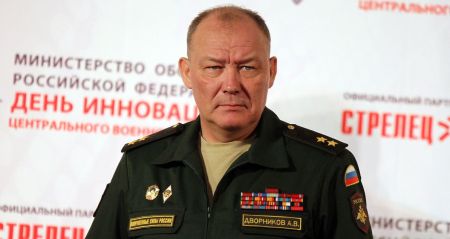
Gen. Dvornikov: Russia’s combined C-in-C and top diplomat in Syria

January 10, 2016

Gen. Dvornikov: Russia’s combined C-in-C and top diplomat in Syria, DEBKAfile, January 10, 2016

Colonel_General_Alexander_Dvornikov

[T]he Russian general walks on eggs in a job that requires him to collaborate militarily with Iran and Hizballah, on the one hand, and uphold the understandings Putin reached with Prime Minister Binyamin Netanyahu, on the other, over Israeli Air Force actions against terrorists and their conflictive interests in the southern Syrian regions bordering on Israel.

********************

It was in August, 2015, on the eve of the massive Russian military intervention in Syria, that President Vladimir Putin selected Col. Gen. Alexander Dvornikov, 54, as chief of Russia’s military operation in Syria and Iraq, DEBKAfile’s military and intelligence sources report. He resolved a fierce debate among Russia’s top officials and generals over the officer to lead the what was to be the most high-powered venture of the Putin presidency. Many favored a senior air force officer, conceiving the campaign as focusing mainly on air strikes. They proposed Col. Gen. Victor Nikolaevich Bondarev, chief of Aerospace Defense Forces, a branch established just four months ago.

Putin overruled them, having decided that the diplomatic and ground components were to be just as important as the future aerial campaign. He picked Gen Dvornikov, whom he first met 26 years ago in Berlin during the last moments of the dying Soviet empire. In 2015, he judged the general as being the right man for the job he had in mind, by virtue of his extensive military experience in running the 2000-2003 North Caucasus wars against Islamic terror groups, as chief of staff and a motorized infantry division commander.

In his new posting, Gen. Dvornikov was given control of the twin Russian commands in Damascus and Baghdad. They function as two halves of the same war room.

At the Damascus headquarters, he has three partners: the Syrian Chief of Staff Gen. Ali Abdullah Ayyoub, the Iranian Revolutionary Guards Gen. Key Parvar and the commander of Hizballah forces in Syria, Mostafa Bader el-Din. Until his mysterious disappearance in November, Gen. Qassem Soleimani, Iranian commander in Syria and Iraq, would put in an occasional appearance at high command conferences.

The two command centers’ operations are fully coordinated and keep the single overall commander, Col. Gen. Dvornikov, on top of events and in control of decisions 24/7 – a key position of enormous authority and extreme diplomatic sensitivity for juggling Moscow’s opposition allies and interests.

The Saudi government, which operates, arms and funds a number of Syrian rebel militias, regards the Russian general as the ultimate nemesis of its interests in Syria, because he expends as much force on fighting those militias as in striking the Islamic State.

After the Hizballah super terrorist Samir Quntar was assassinated on Dec. 20, the Saudis engineered a press leak showing how Gen. Dvornikov was turned away from the door of the Iranian command headquarters in Damascus when he came to offer condolences for the death of one of their top agents. The Iranians were furious with the Russian commander for allowing Israeli air planes free rein to fire rockets into Quntar’s secret hideout in Damascus.

That incident was an illustration of how the Russian general walks on eggs in a job that requires him to collaborate militarily with Iran and Hizballah, on the one hand, and uphold the understandings Putin reached with Prime Minister Binyamin Netanyahu, on the other, over Israeli Air Force actions against terrorists and their conflciting interests in the southern Syrian regions bordering on Israel.

Israel and the Four Powers

January 9, 2016

Israel and the Four Powers, Algemeiner, Ben Cohen via JNS Org., January 8, 2016

download-4

JNS.org The rulers of the Arab Gulf states are, it seems, increasingly attentive to what Israel has to say about the balance of power in the region. As a rising Shi’a Iran faces off against a Sunni coalition led by Saudi Arabia, the core shared interest between Israel’s democracy and these conservative theocracies — countering Iran’s bid to become the dominant power and influence in the Islamic world — has rarely been as apparent.

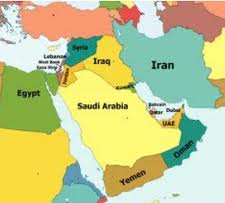
Hence the interview given by a senior IDF officer to a Saudi weekly, Elaph, which laid out how Israel analyzes the present wretched state of the Middle East. In the Israeli view, there are, the officer said, four powers that have coalesced in the region. The first power centers on Iran and its allies and proxies, such as the Bashar al-Assad dictatorship in Syria, Shi’a rebels in Yemen and Iraq, and most pertinently for Israel, Hezbollah in Lebanon. The second power contains what the officer called “moderate” states with whom Israel has “a common language” — Egypt, Jordan and the Gulf countries. The third power, one that is obviously waning, is represented in the form of the Muslim Brotherhood, now vanquished in its Egyptian heartland but still reigning in Hamas-controlled Gaza. Finally, the fourth power is another non-state actor, the combined forces of jihadi barbarism like Al-Qaeda and Islamic State.

Israel’s goal in this situation is a modest one. As the IDF officer put it, “There is a danger that the strife will reach us as well if the instability in the region continues for a long time. Therefore, we need to take advantage of the opportunity and work together with the moderate states to renew quiet in the region.”

The key phrase here, it seems to me, is “renew quiet.” Foremost for the Israelis, that means counteracting Iran and especially its Lebanese proxy Hezbollah, and then minimizing the potential for jihadi terrorists to operate on or near Israeli-controlled territory. A broader strategic vision can also be detected here: Ultimately, both Israel and the conservative Arab states share the common interests of neutralizing Iran and eliminating the jihadi groups.

The partnership between Israel and these states is already in operation, at the levels of intelligence sharing and — not for the first time — cautious exploration of trade relations. That there is a strong military dimension as well to all this is entirely conceivable. And for the time being, it seems that neither side wants to expand or contract on their public ties with each other; Israel has long had embassies in Cairo and Amman, but that doesn’t mean there’ll be an Israeli ambassador in Riyadh anytime soon, much less a film festival or trade expo.

There’s another factor that has accelerated the formation of this undeclared, look-the-other-way alliance: the shift in American Middle East policy under President Barack Obama. Some readers will remember that back in 1991, the first Bush administration pointedly left Israel out of the coalition to expel Saddam Hussein from Kuwait, so as not to antagonize the Gulf states. Now, frustration with Obama has compelled these very same states to recognize that they have an existential interest in cooperating with Israel.

You might say that the president deserves credit for bringing about a situation, in the wake of the nuclear deal with Iran, which has compelled the Gulf states to grasp the reality and permanence of Israel as never before. Still, the visions and prophecies of a Middle Eastern equivalent of the European Union, much indulged during the Oslo Accords years in the late 1990s, are not now in evidence, and that’s welcome. For their own reasons, neither Israel nor the Arab states feel obliged to articulate a sense of what their region should look like in the event that the Iranian threat is overcome.

Indeed, there’s a case that doing so would be counterproductive — it would impose political pressures upon a discreet yet strategically vital relationship that above all requires, in the parlance of the IDF officer, the “moderate” states to remain as moderate states. With the reorientation of American policy towards a rapprochement with Tehran, along with Russia’s active involvement in the Tehran-Damascus axis, Israel is the nearest reliable, not to say formidable, power that these countries can turn to.

In the present Middle Eastern context, then, the realism and discretion which has always underwritten Israeli foreign policy continues to prevail. That realism presumably extends to recognizing that regimes like Saudi Arabia and Bahrain might eventually succumb to their internal instabilities, already exacerbated by the further collapse of the price of oil.

When you consider the alternatives, the region’s architecture could be much worse for Israel than it is currently. Long an anomaly as the only open society in the region, the target of Arab military and economic warfare throughout the latter half of the last century, Israel in this century is now a partner in a regional bloc. To be sure, this is a bloc based upon interests, not common values, and is therefore necessarily limited in scope. But in the present storm, and amidst the appalling human suffering generated by the clash of these rival interests in Syria, it’s the closest thing we have to progress.

American blackmail

January 8, 2016

American blackmail, Israel Hayom, Sarah N. Stern, January 8, 2016

Yossi Melman, noted Israeli author and security analyst, who is certainly no right-winger, wrote a piece in a recent edition of The Jerusalem Report which opens with: “The U.S administration is concerned about the possibility of a new confrontation with Prime Minister Benjamin Netanyahu following the International Atomic Energy Agency’s latest nuclear shenanigans. ‘We hope it won’t happen,’ a senior U.S. official tells The Jerusalem Report, ‘but if it does, it will be a completely different ball game. The administration will not sit idly by this time, and it will be vindictive.'”

This is akin to telling parents that a known child predator wants to abduct their children and has expressed the explicit desire to murder them, but if they notify the police, it will be a completely different ball game. The local government will not sit idly by this time, and it will be vindictive — against the parents who have the responsibility of protecting their children.

In actuality, the Obama administration’s outrage is completely legitimate, but it is directed at the wrong target: Israel. However, after seven years of the Orwellian world that we now inhabit, we have become conditioned to believe that this statement is almost normal.

Under international law, however, this is clearly upside-down and backward. It is Iran, after all, that violated U.N. Security Council Resolution 1929 (by firing missiles), the understandings reached in the July nuclear agreement and the United Nations Universal Declaration of Human Rights. Therefore, Iran should legitimately be the target of American as well as international outrage.

Iran is guilty of conspiracy to commit genocide. The IAEA is complicit in this guilt by closing the file on Iran’s nuclear program despite the fact that certain fundamental questions regarding prior military dimensions remain unanswered. The IAEA admitted as much on December 2, 2015, yet still decided to close the Iran file under what can only be explained as political pressure.

In 1948, in the immediate aftermath of the Holocaust, the U.N. passed United Nations General Assembly Resolution 260, the Convention on the Punishment and the Crime of Genocide. Article 3 of this convention lists crimes that should be punished as (a) genocide; (b) conspiracy to commit genocide; (c) direct and public incitement to commit genocide; (d) attempt to commit genocide and (e) complicity in genocide.

The Jerusalem Center for Genocide Prevention has compiled an outstanding collection of remarks made by Iranian Supreme Leader Ayatollah Ali Khamenei between 2000 and 2015. The center came up with a few significant findings, including the fact that “Iranian state incitement against Israel has been explicit in its calls for destruction of the Jewish state. Pre-war Nazi propaganda used euphemisms and never explicitly called for the destruction of the Jews.” Official Iranian threats and incitement have “lasted for more than 30 years, as compared with Nazi governmental incitement, which lasted 12 years.”

They also found that the frequency and the intensity of Iran’s incitement to commit genocide has only increased the more the international community eased sanctions.

In fact, shortly after the July 14 agreement was reached, Khamenei issued a book titled “Palestine,” outlining in painstaking detail the steps that should be taken to annihilate Israel, which he described as “a cancerous tumor” whose elimination would mean that “the threats and hegemony of the United States will be replaced by Iran.”

The book sketches out how to eliminate Israel through an eternal chain of low-intensity assaults that will eventually make life so unbearable for Israelis that they will pack their bags and leave. He also wrote that the Iranian nuclear bomb would inhibit the Israelis against any sort of retaliation.

Since the Joint Comprehensive Plan of Action was reached on July 14, both Iran and U.S. President Barack Obama have behaved in predictable ways. Iran has conducted two missile tests, one on Oct. 10 and one on Nov. 21, and on Dec. 29 fired a rocket within 1,500 yards of an American aircraft carrier, the USS Harry S. Truman in the Strait of Hormuz.

While Obama was trying to sell the JCPOA to Congress and a skeptical American public last summer, we were constantly assured of “immediate, snapback sanctions.”

According to a report in The Wall Street Journal last month, the U.S. Department of Treasury notified Congress that approximately a dozen companies or individuals in Hong Kong, the UAE and Iran were to face sanctions for working on the Iranian missile program, which not only violated the JCPOA but also U.N. Security Resolution 1929.

The Iranian government was quick to denounce the threat of new sanctions, calling them, “unilateral, arbitrary and illegal.” And just as swiftly and predictably, Obama caved under Iranian pressure and decided to delay imposing new sanctions, for an unspecified period of time. And now Iran has publicly unveiled a new underground missile site.

According to a report in The Washington Free Beacon, Democratic members of Congress who backed the deal are disappointed with the White House. Rep. Steny Hoyer of Maryland said: “We are always in a sensitive moment in our dealings with Iran, and there is never a perfect time to take such actions. … But Iran must know with certainty that violating U.N. Security Council resolutions, both inside and outside the scope of the Joint Comprehensive Plan of Action, will be met with serious consequences.”

Senator Chris Coons (D-Del.) told The Wall Street Journal: “I believe in the power of vigorous enforcement that pushes back on Iran’s bad behavior. If we don’t do that, we invite Iran to cheat.”

It appears that America’s moral backbone, the IAEA and all the Democratic members of Congress who believed Obama’s reassurances of “immediate snapback sanctions” are currently being blackmailed by Obama’s quest for a foreign policy legacy.

Yes, Obama will, indeed, have a foreign policy legacy, but it will prove to be the same as Neville Chamberlain’s.

A Strategy to Defeat Islamic Theo-fascism

January 7, 2016

A Strategy to Defeat Islamic Theo-fascism, American ThinkerG. Murphy Donovan, January 7, 2016

Surely, whatever passed for American foreign or military policy in the past three decades is not working. Just as clearly, in case anyone keeps score these days, the dark side of Islam is ascendant at home and abroad. What follows here is a catalogue of policy initiatives that might halt the spread of Islamic fascism and encourage religious reform in the Ummah.

Some observers believe that the Muslim problem is a matter of life and death. Be assured that the need for Islamic reform is much more important than either. The choices for Islam are the same as they are for Palestine Arabs; behave or be humbled. Europe may still have a Quisling North and a Vichy South; but Russia, China, and even America, at heart, are still grounded by national survival instincts – and Samuel Colt.

Call a spade a spade

The threat is Islam, both kinetic and passive aggressive factions. If “moderate” Islam is real, then that community needs to step up and assume responsibility for barbaric terror lunatics and immigrants/refugees alike. Neither America nor Europe has solutions to the Islamic dystopia; civic incompetence, strategic illiteracy, migrants, poverty, religious schisms, or galloping irredentism. The UN and NATO have no remedies either. Islamism is an Ummah, Arab League, OIC problem to solve. Absent moral or civic conscience, unreformed Islam deserves no better consideration than any other criminal cult.

Western Intelligence agencies must stop cooking the books too. The West is at war and the enemy is clearly the adherents of a pernicious ideology. A global war against imperial Islam might be declared, just as angry Islam has declared war on civilization.  A modus vivendi might be negotiated only after the Ummah erects a universal barrier between church and state globally. Islam, as we know it, is incompatible with democracy, civility, peace, stability, and adult beverages.

Oxymoronic “Islamic” states need to be relegated to the dustbin of history. If the Muslim world cannot or will not mend itself, Islamism, like the secular fascism of the 20th Century, must be defeated, humbled in detail. Sooner is better.

Answer the Ayatollahs

Recent allied concessions to Tehran may prove to be a bridge too far. If the Persian priests do not abide by their nuclear commitments, two red lines might be drawn around Israel. Firstly, the ayatollahs should be put on notice, publicly, that any attack against Israel would be considered an attack against America — and met with massive Yankee retaliation. Secondly, any future cooperation with NATO or America should be predicated on an immediate cessation of clerical hate speech and so-called fatwas, those arbitrary death sentences.

Clerical threats to “wipe Israel off the face of the earth” and “death to America” injunctions are designed to stimulate jihad and terror globally. The only difference between a Shia ayatollah and a Sunni imam in this regard these days seems to be the torque in their head threads.

Ostracize the Puppeteers

Strategic peril does not emanate from Sunni tacticians like Osama bin Laden, Mullah Omar, or Abu Bakr al-Baghadadi. Nor does the real threat begin with or end with al Qaeda, the Taliban, Hezb’allah, Hamas, or the Islamic State. Lethal threat comes, instead, on four winds: toxic culture, religious politics, fanatic fighters, and furtive finance, all of which originate with Muslim state sponsors. The most prominent of these are Saudi Arabia, the Emirates, Turkey, Iran, and Pakistan.

Put aside for a moment the Saudi team that brought down the Twin Towers in New York. Consider instead, the House of Saud as the most egregious exporter of Salifism (aka Wahabbism) doctrine, clerics, imams, and mosques from which ultra-irredentist ideologies are spread. The Saudis are at once the custodians of Islam’s sacredshrines and at the same time the world’s most decadent, corrupt, and duplicitous hypocrites. Imam Baghdadi is correct about two things: the venality of elites in Washington and Riyadh. The House of Saud, an absolutist tribal monarchy, does not have the moral standing to administer “holy” sites of any description — Mecca, Medina, or Disneyland.

The cozy relationship between Europe, the European Union, and Arabia can be summarized with a few words; oil, money, arms sales, and base rights. This near-sighted blend of Mideast obscenities has reached its sell-by date. The “white man’s burden” should have expired when Edward Said vacated New York for paradise.

Jettison Turkey and Pakistan

What Saudi Arabia is to toxic ideology in North Africa, Turkey and Pakistan are to perfidy in the Levant and South Asia. Turkey and Pakistan are Islam’s most obvious and persistent grifters. Turkey supports the Islamic State and other Sunni terror groups with a black market oil racket. Pakistan supports the Taliban, al Qaeda, and ISIS with sanctuary and tolerance of the world’s largest opium garden. Oil and drug monies from Arabia, Turkey, and South Asia are financing the global jihad. Turkey also facilitates the migration of Muslims west to Europe while sending Islamist fighters and weapons south to Syria and Iraq.

With the advent of Erdogan and his Islamist AKP, Turkey has morphed into NATO’s Achilles Heel, potentially a fatal flaw.  Turkey needs to be drummed out of NATO until secular comity returns to Ankara. Pakistan needs to be restrained, too, with sanctions until it ceases to provide refuge for terrorists. Pakistani troops harassing India could be more prudently redeployed to exterminate jihadists.

Sanctions against Russia and Israel are a study in moral and political fatuity whilst Arabs and Muslims are appeased midst a cultural sewer of geo-political crime and human rights abuses. If NATO’s eastern flank needs to be anchored in trust and dependability, Russia, Kurdistan, or both, would make better allies than Turkey. Ignoring Turkish perfidy to protect ephemeral base rights confuses tactical necessity with strategic sufficiency.

Recognize Kurdistan

Aside from Israel, Kurdistan might be the most enlightened culture in the Mideast. The Kurds are also the largest ethnic group in the world not recognized as a state. While largely Muslim, the Kurds, unlike most of the Ummah, appreciate the virtues of religious diversity and women’s rights. Indeed, Kurdish women fight alongside their men against Turkish chauvinism and Sunni misogyny with equal aplomb. For too long, the Kurds have been patronized by Brussels and Washington.

While Kurdish fighters engage ISIS and attempt to control the Turkish oil black market, Ankara uses American manufactured NATO F-16s to bomb Kurds in Turkey and Syria. Turkish ground forces now occupy parts of Iraq too. In eastern Turkey, Ergdogan’s NATO legions use ISIS as an excuse for bookend genocide, a cleansing of Kurds that might rival the Armenian Christian genocide (1915-1917).

195876_5_Kurdish angel of death

All the while, American strategic amateurs argue for a “no-fly” zone in contested areas south of Turkey. Creating a no-fly zone is the kind of operational vacuity we have come to expect from American politicians and generals. Such a stratagem would foil Kurdish efforts to flank ISIS and allow the Erdogan jihad, arms, and oil rackets to flourish. A no-fly zone is a dangerous ploy designed to provoke Russia, not protect Muslim “moderates.”

Putin, Lavrov, and the Russians have it right this time; Turkish and Erdogan family subterfuges are lethal liabilities, not assets.

Washington and European allies have been redrawing the map in Eastern Europe, North Africa, South Asia, and the Mideast since the end of WWII. The time has come to put Kurdistan on the map too. Kurdistan is a unique and exemplary case of reformed or enlightened Islam; indeed, a nation that could serve as a model for the Muslim world.  If base rights are a consideration, Kurdistan would be an infinitely more dependable ally than Turkey or any corrupt tribal autocracy in Arabia. America has a little in common with desert dictators — and fewer genuine friends there either. Indeed, at the moment America is allied with the worst of Islam.

Create New Alliances

NATO, like the European Union, has become a parody of itself. Absent a threat like the Soviet Union or the Warsaw Pact, Brussels has taken to justifying itself by meddling in East Europe and resuscitating a Cold War with the Kremlin. Indeed, having divided Yugoslavia, NATO now expands to the new Russian border with reckless abandon; in fact, fanning anti-Russian flames now with neo-Nazi cohorts in former Yugoslavia, Georgia, and Ukraine.

NATO support for the Muslims of one-time Yugoslavia is of a piece with support for Islamic troublemakers in Chechnya and China too. Throughout, we are led to believe that jihad Uighurs and caliphate Chechens are freedom fighters. Beslan, Boston, Paris, and now San Bernardino put the lie to any notion that Islamists are “victims” (or heroes). Indeed, the Boston Marathon bombing might have been prevented had Washington a better relationship with Moscow.

Truth is, America has more in common with Russia and China these days than we do with any number of traditional European Quislings. Indeed, it seems that Europe and America can’t take yes for an answer.

The Cold War ideological or philosophical argument has been won. Moscow and Beijing have succumbed to market capitalism. Islamism, in stark contrast, is now a menace to Russian, Chinese, and American secular polities alike. The logic of a cooperative or unified approach to a common enemy seems self-evident. America, China, and Russia, at least on issues like toxic Islam, is a match made in Mecca.

The late great contest with Marxist Russia and China was indeed a revolution without guns. Now the parties to that epic Cold War struggle may have to join forces to suppress a theo-fascist movement that, like its Nazi predecessor, will not be defeated without guns. The West is at war again, albeit in slow motion. Withal, questions of war are not rhetorical. Saying that you are not at war does not make it so. Once declared, by one party or the other, the only relevant question about war is who wins and who loses. Losers do not make the future.

If America and Europe were as committed to Judeo/Christian secular values as Islamists are committed to a sick religious culture, then the war against pernicious Islam would have been won decades ago. Or as Jack Kennedy once put it: “Domestic policy can only defeat us; foreign policy can kill us.

Trump Footnote

Donald Trump made several policy suggestions on the Islamism issue, one on immigration, the other on Mideast oil. On the former, he suggests a hiatus on Muslim immigration until America develops a plan or reliable programs to vet migrants. On Arab oil, he suggests, given the lives and treasure spent liberating Kuwait and Iraqi oil fields, America should have held those resources in trust and use oil revenues to finance the war against jihad, however long that takes. The problem with both Trump ideas is that they come perilously close to common sense, an American instinct in short supply these days.
 

The mountainous Arab Israeli gun problem has spiralled beyond control

January 7, 2016

The mountainous Arab Israeli gun problem has spiralled beyond control, DEBKAfile, January 7, 2016

Neshek_ArabsCENTER480

The mountainous quantities of illegal weapons, run-of-the-mill and exotic, in the hands of Israeli Arabs have grown to unmanageable proportions. No Israeli civilian police, or even military force, has the scale of manpower required to mount raids in Israeli Arab population centers – ranging from Galilee in the North, the Triangle and Jaffa in the Center and the Bedouin of the Negev – for a comprehensive campaign to impound them – not even if backed by tanks and commando units.It is pointless to call on all 1.5 million Arab, Bedouin, Druze and Circassian minority citizens to voluntarily surrender their guns. Almost every individual has at least one shooter. The accumulation would not shame any Middle East militia.

The authorities’ inability to deal effectively with this arsenal is not only shocking but has also made the Israeli underworld rich. And even more alarming, it provides a profitable link between terrorist organizations and both Israeli and Palestinian crime mobs and drug dealers. The failure to enforce order in some parts of the population, while other communities abide by the law, has created two parallel societies living by different rules.

The official data on the quantity of guns loose and unaccounted for are sketchy, bu the variety is hair-raising: grenade launchers; AT-3 Sagger and BGM-71 TOW antitank missiles; M-16 and Kalashnikov automatic rifles, submarine guns – mostly Uzis; heavy and light machine guns and mortars; explosive devices for remote detonation;  concussion, gas and stun grenades; diverse ammunition; magazines; IDF uniforms; protective and bulletproof vests; night vision equipment; and much more.

The approximate black market price list we have obtained includes handguns – 15,000 shekels; grenades – 2,500 shekels; M-16 automatic rifles – 50,000 shekels; explosive devices (depending on size and power) 15,000-25,000 shekels; hand grenade – 500 shekels.

Arab Israeli leaders, especially their representatives in the Knesset, have vocally and repeatedly appealed to the police to collect the weapons loose in Arab villages and cities. They see their prevalence as a major cause of the violence and disorder rampant inside those communities. This is no doubt true, but there is also an element of hypocrisy in their demand, in view of their own failure to address – and even exploit – the underlying causes of the epidemic

1. Israeli Arabs customarily resort to the use of guns rather than the law to resolve their disputes and conflicts of interest.

2. It has finally been admitted that 90% of the weapons in illegal hands today were stolen from Israeli army depots, some by traffickers in uniform. Those soldiers were not averse to flogging arms to gangs capable of turning against their own units.

According to DEBKAfile’s defense and counterterrorism sources, the remaining 10 percent, mostly handguns and submachine guns, are manufactured on underground production lines in the West Bank, Gaza or even within the Green Line in Israel. A small amount of the weapons is smuggled by land from the Sinai, Jordan and Lebanon.

Neshek_ArabsNORTH480

3. The IDF’s failure to properly guard its weapons and ammunition depots is stunning, scarcely illuminated by the figures the IDF has presented to various parliamentary committees:  From 2010 to 2015, an average of only 100 weapons per year were officially stolen from army bases, military vehicles and the homes of soldiers.

However, army and police officers familiar with the figures say the number is tenfold, more like 1,000 pieces of weaponry stolen year by year.

Officers and enlisted men whose weapons were stolen receive only light penalties. However, robbing arms depots has become endemic, with Bedouin in the south making the Negev training bases their “home ground.”
They follow IDF units on exercises and steal anything lying about, even cooking utensils and sleeping bags.

There is a sour joke in IDF tank and artillery battalions, that every maneuver has its “camp followers” of Bedouin gun and ammunition thieves.

4.  Internal Security Minister Gilad Erdan, addressing the problem in a Knesset debate on Jan. 6, said that a comprehensive police roundup of illegal guns in Arab communities would immediately raise the charge that Israel was persecuting the Arab minority. He was answering charges of negligence hurled by Arab Knesset Member Ahmad Tibi.

5. The symbiosis that has developed between regular crime mobs and terrorists further boosts the illicit gun traffic. The availability of weapons encourages serious crimes. The “crime families” most notorious for their uncontrolled use of gunfire are to be found embedded in the Arab community, including the mixed towns of Lod, Jaffa and the Arab Triangle towns. Some of these mob chiefs may also contribute their violent services to Palestinian terrorist organizations.

Their activities certainly have a detrimental effect on the majority of their societies who are law abiding and uninvolved in criminal pursuits.

The problem could become more dangerous if the Bedouin, Druze or Circassian communities decided to rise up against Israeli majority rule, because their sons enlist for service in the IDF, the police and the prisons service. They are armed from head to toe, highly trained as soldiers and may be infected with the religious or national fanaticism sweeping the region.

In any case, there is no chance of the illegal guns and arms in every Arab home and gang arsenal being relinquished voluntarily. It is no good looking to national Arab leaders to lead any effort to collect them, because its much more convenient and politically profitable to blame Israel’s national authorities for the violence fostered by a culture that has made gun possession rife and a status symbol.

Home-drone terrorism

January 7, 2016

Home-drone terrorism, The Hill, Ben Lerner, January 6, 2016

Non-state actors are already either deploying drones in the field or are drawing concern from security experts about their potential to do so.  Both Hezbollah and Hamas have sent (for now) non-weaponized, rudimentary drones of limited capability into Middle Eastern skies, including one Hezbollah drone that made it 140 miles into Israel. 

**********************

In the aftermath of the horrific terrorist attack that took the lives of fourteen victims in San Bernardino, California last month, a raft of information has been coming out regarding the identities and histories of the perpetrators, and also the arsenal they had amassed to carry out their plans.

Amidst all the reporting, it would be easy to miss a significant item that authorities found among the weaponry, as reported by Fox News:

“…Another source said investigators discovered a dozen pipe bombs in the house, as well as small explosives strapped to remote-controlled cars – a signature of terrorist groups including Al Qaeda, according to counter-terrorism experts.” [Emphasis added — DM]

Why remote-controlled cars?  Well, it turns out that as much as jihadist terrorists may value their own deaths in the course of their attacks, they also favor using any weapon that maximizes the number of casualties, and the fear that entails, whether they themselves are killed in the process or not.  Hence the high utility of and interest in improvised explosive devices (IEDs), which can be built cheaply and detonated from afar, allowing operators to evade detection and therefore minimize interdiction.  Add an ability to move the explosive to a specific location by remote, and you have a low-tech but lethal precision-guided weapon.

Those advantages of the remote IED – precision, evasion, cost-effectiveness – have prompted authorities increasingly to worry that terrorists will turn next to another device to help them carry out attacks: drones.

Drones have the potential to function essentially as the aerial version of the remote-controlled car bombs found in that San Bernardino apartment.  They could be rigged to carry small explosives and sent to a target as a precision-guided weapon, or could be deployed without an explosive and just flown, deliberately, into a jet engine.   And even if the user in question opts not to use the drone itself as a weapon, it can still operate overhead with a camera and provide what the military calls intelligence-surveillance-reconnaissance (ISR) to support an attack on the ground, for example by providing intelligence on additional targets or possible escape routes for the attackers.

Non-state actors are already either deploying drones in the field or are drawing concern from security experts about their potential to do so.  Both Hezbollah and Hamas have sent (for now) non-weaponized, rudimentary drones of limited capability into Middle Eastern skies, including one Hezbollah drone that made it 140 miles into Israel.  Drug cartels are already attempting to use drones for smuggling narcotics, and some in law enforcement have speculated that cartels will find value in drones for surveillance purposes.  The New York Police Department has been worried for some time about the potential for terrorist attacks on New York City using drones.

Given the threat posed by drones in the hands of terrorists or criminals, there is an urgent need to grapple with how to secure American skies in effective, sensible ways.  Broadly speaking, policymakers should proceed on this front bearing two things in mind:

Deploy counter-drone technologies to protect U.S. airspace.  Addressing the terrorist/criminal drone threat will require the deployment of counter-drone technology, sooner rather than later, that can be used to safely disable and bring down drones in non-military environments.  The military has been working on fielding counter-drone technologies for some time – the Navy has already made significant advances with deployment of directed energy technology to counter threats from Iranian drones and other weapons in the Persian Gulf, and recent reporting indicates that the Army’s Rapid Equipping Force (REF) and Asymmetric Warfare Group (AWG) have been collaborating extensively to identify workable counter-drone options as well.  While the homeland security side of the federal government appears to be catching upon this front, the question remains as to whether effective technology will be ready in time for use against this kind of bad-actor drone in the skies over American cities and infrastructure – particularly when, unlike their military counterparts, those responsible for homeland security are more constrained to avoid counter-drone measures that involve blowing one up in mid-air over lower Manhattan or knocking out electronic communications in downtown Washington, D.C.

Recognize the limitations of traceability and “geo-fencing.”  In recent months, there have been numerous unauthorized drone flights in U.S. airspace – near airports, near commercial aircraft, over sporting events, and in some cases, in the path of wildfire relief efforts – the preponderance of which appear to have been the result of reckless or careless drone use, rather than a malicious intent to cause harm.  These kinds of incursions have prompted the Department of Transportation to announce that it will require those who use drones to register them with the department by February of 2016.  It is thought that having operators register their drones will give law enforcement an opportunity to trace drones back to their operators in certain circumstances for deterrence and accountability purposes, though there is room to debate whether this is unnecessarily burdensome for your average law-abiding user, and whether a more effective way to create deterrence and accountability would be through tracing manufacturer serial numbers, via the retailer, back to the point of sale.

Of course, having the ability to trace a drone back to its owner only matters after a drone has already flown into restricted airspace – it won’t prevent incursions from taking place.  That reality has prompted drone companies to explore the option of manufacturer-installed “geo-fencing” technology that pre-programs a drone to render it incapable of flying into restricted airspace.

Policymakers should recognize that while traceability mechanisms and geo-fencing could be important public safety tools to better manage increasingly crowded airspace and mitigate irresponsible or reckless drone use, they will not solve the problem of malevolent drone use.  Terrorists and criminals won’t register themselves under any system, or make themselves otherwise vulnerable to having ownership traced back to them, and a determined terrorist or criminal will be all the more inclined to disable geo-fencing features, and perhaps all the more capable of doing so.

The best drones are already doing much good in American skies for law enforcement, homeland security, and a variety of industries putting them to innovative use.  As is the case with all beneficial technologies, however, bad actors will find ways to use a drone’s otherwise positive qualities to cause harm.  Dealing with that threat will entail understanding which counter-drone technologies can be usefully applied to preventing terrorist/criminal acts, and which ones are less likely to get that particular job done, other potential benefits notwithstanding.

Did Hizballah dig a special tunnel to get bomb into Israel?

January 6, 2016

Did Hizballah dig a special tunnel to get bomb into Israel?, DEBKAfile, January 6, 2016

Israeli Minister of Defense Moshe 'Boogie' Ya'alon (2R) seen during a visit in the Golan Heights, Northern Israel, on January 5, 2016. Photo by Ariel Hermoni/Ministry of Defense *** Local Caption *** ?? ?????? ??? ????? ???? ??? ????? ??? ?????
Israel’s military chiefs on Golan

The mystery of how Hizballah managed to plant the bomb, which blew up against an IDF patrol, without causing casualties, Tuesday, Jan. 5, in the Shebaa Farms district of Mt Hermon – on the Israeli side of the ceasefire line – is perplexing Israel’s military chiefs. It brought Defense Minister Moshe Yaalon, Deputy Chief of Staff Maj. Gen. Yair Golan (former OC Northern Command) and his successor Maj. Gen. Aviv Kochavi to the Golan the next day for a close inspection of the Syrian and Lebanese border defenses.

They found no fault with the meticulous preparations and counter-measures the contingents on the spot had made for an attack, which Hizballah leader Hassan Nasrallah had said was “inevitable” after the assassination of Samir Quntar in Damascus on Dec. 20.

But, in addition, to the lookout posts scattered along the border, was a countermeasure that had been rated impermeable: an “electronic sterile area” abutting the electronic border fence, which has been strewn with hi-tech sensors and other devices designed to act as tripwires for the smallest intrusion.

The fact that Hizballah was able to plant a bomb on the Israeli side of the border proved that this elaborate system did not work.

The Shiite terrorist group, Iran’s Lebanese proxy, has long been known to maintain a commando unit known as the “Redwan Force,” especially trained for eventual incursions into Israel on missions of assault and the capture of Israeli locales with hostages.

But its ability to outsmart an electronically sterile barrier was quite another matter. It is of the utmost urgency for IDF tacticians to seriously rethink the defensive measures in place on the northern borders with Syria and Lebanon, before Hizballah strikes again.

But first of all, they must find out how it happened. Some Lebanese sources are throwing out hints of a secret tunnel dug by Hizballah, through which the “Quntar Brigade” was able to sneak the bomb onto the IDF patrol route, although it failed to cause casualties. No trace of a tunnel has so far been reported.

At the time of the incident, Israeli public and media attention was wholly taken up with the Dizengoff gunman, who murdered three Israelis on Jan. 1 and is still at large six days later.

Since Hizballah’s Shebaa Farms attack was swiftly countered by massive IDF artillery fire, it was soon over and the episode relegated to back pages. However, the defense minister and IDF chiefs cannot afford to treat it lightly. They are convinced that Hizballah has not concluded its campaign of “revenge” and may reuse the same method for further attacks. No stone is therefore being left unturned to discover how Hizballah smuggled a bomb onto Israeli terrain – over or under the border – and the preparations for an attack remain high.

At the end of his Golan inspection visit, the defense minister said: “The IDF is alert and fully prepared for every eventuality, just as it was for the Mt Dov (part of Mt. Hemon) attack. The forces are ready to respond whenever and however necessary and, if need be, their response will be powerful indeed.”

CAIR’s Lawyer Claims Pro-Israel Charities are Terrorists

January 5, 2016

CAIR’s Lawyer Claims Pro-Israel Charities are Terrorists, Front Page Magazine, Daniel Greenfield, January 5, 2016

wr

Forget academic boycotts and protesting Israeli oranges in the produce aisle. The new BDS targets are Jewish charities with a special focus on those that provide services and support in ’67 Israel.

Under its new Muslim boss, Amna Farooqi, J Street U has been pressuring Jewish charities not to help Jews living in territory which had been conquered and ethnically cleansed of Jews by the invading Muslim armies during Israel’s War of Independence. Other groups, including T’ruah, which had a prominent role at Obama’s toxic Chanukah party, have also made Jewish charities into their target.

But the BDS campaign against Jewish charities has reached a new level of ugliness with a lawsuit by CAIR’s favorite lawyer which demands that Jewish charities be stripped of non-profit status and that the charities and their donors be potentially listed “as specially designated global terrorists”.

The lawsuit targets a number of pro-Israel groups, including Friends of IDF, an organization that helps wounded Israeli soldiers who have lost arms and legs in the fight against Muslim terrorism learn to live fulfilling lives again. The lawsuit uses claims made by the left-wing anti-Israel group Breaking the Silence as the basis for its hateful campaign against FIDF and Israeli soldiers. It contends that providing “financial, social, and emotional support” to soldiers serving in the Israeli army is a war crime.

The term “terrorist” is frequently thrown around in the lawsuit.
It’s a term that the immigration lawyers Melbourne team behind it is quite familiar with.

The pro bono lawsuit comes from Martin F. McMahon who has represented CAIR in various legal battles, including against a counterterrorism expert.

CAIR is an unindicted coconspirator in funding terrorists. The accusation that Martin F. McMahon falsely levels at Jewish charities has been found to be true of his CAIR clients, as confirmed by the Assistant Attorney General.

Martin F. McMahon demands that pro-Israel groups and donors be labeled as “specially designated global terrorists”. Again, he has represented one of those in the past.

And not just any specially designated global terrorist either, but a founder of Al Qaeda.

John P. O’Neill, the counterterrorism expert who played a key role in investigating Al Qaeda, died on 9/11 along with thousands of Americans. His family sued a variety of institutions and figures for bankrolling the Islamic terror group.

Martin F. McMahon served as counsel for the International Islamic Relief Organization, headed by Osama bin Laden’s brother-in-law, the Muslim World League, a violently anti-Semitic Islamist organization linked to the Muslim Brotherhood and terror groups, Saleh Abdullah Kamel, alleged to be one of the main Saudi sponsors of Al Qaeda, and Wael Hamza Julaidan, a founder of Al Qaeda.

Of these, the status of Wael Julaidan is clearest. The Treasury Department listed the former Muslim Student Association president as a Specially Designated Global Terrorist. Osama bin Laden called him, “our brother”. Martin F. McMahon not only represented a founder of Al Qaeda, but his Rabita Trust, which had already been designated a month after the September 11 attacks.

While lawyers can and do defend whom they choose, including Al Qaeda leaders, Martin F. McMahon has a history of representing Islamist groups and individuals, some with confirmed terror ties.

Aside from CAIR and a founder of Al Qaeda, Martin F. McMahon represented the Syrian Emergency Task Force. The SETF’s director has shown support for Hamas and urged engagement with the Islamic Front, a Jihadi coalition allied with Al Qaeda.  A top Islamic Front leader had described himself as Al Qaeda.

Martin F. McMahon lashed out at the female Prime Minister of Bangladesh for her actions against radical Islamist groups, including Hefazat-e-Islam, which demanded death for atheists and a ban on working women. In his application to the ICC, McMahon describes Hefazat as a “religious group” and its leader Allama Junaed Babunagari only as a “popular cleric”. That would be the “cleric” who called for “capital punishment” for atheist bloggers and spoke of them being beheaded.

Thus far four atheist bloggers have been brutally murdered in Bangladesh by Islamic terrorists.

While Martin F. McMahon accuses Israel of war crimes, his pro-Islamist ICC filing whitewashes an actual war criminal, Moulana Delwar Hossain Sayedee, who had been found guilty of genocide, mass murder and other horrifying crimes.

Lawyers can’t always be judged by their clients, but it appears that when Islamists need a lawyer, they call Martin F. McMahon. And it’s not clear that there is a Muslim group too repugnant for Martin F. McMahon, who even represented theNation of Islam’s International of Representative, to work with.

McMahon’s case against Jewish charities is pro-bono, which suggests that he has some personal investment in it, and it’s all over the place. The lead plaintiff, Mohammed Abdel Aziz, is an Egyptian immigrant who has never lived in Israel. Instead, based on a strange digression that has nothing to do with the actual case, he may be a Muslim Brotherhood member. Instead of spelling this out, the filing claims that, “Plaintiff Abdel Aziz comes from Egypt, and personally witnessed the atrocities that the Mubarak regime inflicted on ordinary Egyptian citizens.”

What does Mubarak have to do with Israel? Much of the lawsuit is equally messy. The filing manages to misquote the Bible, claims that the JNF plants trees to “obstruct the ruins of ethnically-cleansed Palestinian villages” and cites at least one anti-Semitic site. It demands audits for donors to a whole range of Jewish charities, a blatant intimidation tactic, and is nearly as ridiculous as McMahon’s earlier letter to Secretary of State John Kerry demanding a travel ban on the Prime Minister of Bangladesh.

And yet it is impossible to ignore the fact that the lawsuit is based on the work of left-wing anti-Israel groups. The lawsuit cites Breaking the Silence, J Street, Peace Now, the Israeli Committee Against House Demolitions, Yesh Din, Btselem, Haaretz and the Forward. But if the lawsuit is taken at face value then the targets potentially include some of the same liberal mainstream Jewish charities who fund anti-Israel groups through the New Israel Fund. By aiding these groups, they are not only helping attack Jews in Israel, but they are laying the groundwork for an attack on their own organizations in America.

Attacks on Jewish charities have become the new wave of BDS and the presence of T’ruah at the Obama Chanukah party shows that this form of BDS has the support of the White House. Jewish liberals who think that the Jewish targets of T’ruah or J Street U have it coming should consider that attacks on Jews historically begin with easy targets and escalate from there. This lawsuit is an example of what such an escalation could look like and will look like if they don’t end their support for all forms of BDS.

We know from the Z Street case that Obama already has an “Israel Special Policy” for pro-Israel groups. The left’s war against Jewish charities did not begin yesterday. And it must be exposed for it to end.