Archive for the ‘Israel’ category

Kent State Honored Prof After His Support for Terror Known

January 26, 2016

Kent State Honored Prof After His Support for Terror Known, Clarion ProjectRyan Mauro, January 26, 2016

(What if Prof. Pino, who works in the history department, had posted diatribes against the “Palestinian Resistance” and praised Israel? Would the university have reacted in comparable fashion? — DM)

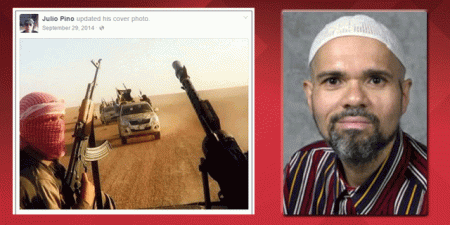
Julio-Pino-Facebook-Cover-HPKent State Professor Julio Pino (right) changed his cover photo on Facebook to the picture on the left. Under he wrote “jokingly,” “Keep it a secret: that’s me on the left!”

[A]ll we hear from the university is that this is free speech and that he’s a “well-respected teacher in the classroom” so he will keep his job. He’s teaching two classes now and plans on returning in the fall—that is, unless the people of America compel KSU to change those plans.

**************************

The Kent State University student newspaper recently reported that a terrorism-supporting professor, Julio Pino, received two Faculty Excellence Awards in 2003 and 2010. His open support for terrorism, specifically suicide bombings in Israel, became known in 2002. In the years after, he was even linked to a website dedicated to assisting Al-Qaeda and other terrorists in killing people.

Kent Wired reports that he began teaching for the school in 1992 and earned tenure in 1998. He converted to Islam in 2002 and began openly supporting terrorism two years later. As our research reporton Pino documents, he wrote a letter praising a Palestinian suicide bomber in Israel as a “shining star” and asked Allah to “protect the soldiers of Islam fighting in Palestine.” He also objected to the terminology of “suicide bombers,” preferring to use “martyrdom bombers” because he doesn’t believe their acts constitute suicide, which is prohibited in Islam.

The next year, he was honored with a Faculty Excellence Award.

In 2007, it was learned that Pino was writing for a pro-Al-Qaeda website with the stated objective of assisting violent jihadists in acts of terrorism. As you can seen [sic] in our screenshots, the website’s homepage read at the time:

“We are a jihadist news service, and provide battle dispatches, training manuals and jihad videos for our brothers worldwide. All we want is to get Allah’s pleasure. We will write ‘jihad’ across our foreheads and the stars.”

A colleague at the university, Dr. Mike Adams, discovered Pino’s deep involvement in the website (Pino was most likely acting as the website’s main administrator). Adams writes: “[We] traced the emails. They were being sent directly from the Kent State office of Professor Julio Pino. Both veiled threats and general advocacy of violence were sent from his public university office.” [emphasis mine]

Pino was forced to admit to his involvement in the website. He kept his job despite walking right up to the edge of material support for terrorism. In 2009, Pino was interviewed by the Secret Service. Dr. Adams also published an email allegedly sent by Pino that praised the 9/11 hijackers.

The next year, he was honored with a Faculty Excellence Award.

His overt behavior escalated, including shouting “Death to Israel” at a visiting former Israeli diplomat. Now, it’s known that he’s been under FBI investigation for the past year and a half for possibly recruiting students for ISIS. The FBI has taken the extraordinary step of interviewing over 20 of his students.

And all we hear from the university is that this is free speech and that he’s a “well-respected teacher in the classroom” so he will keep his job. He’s teaching two classes now and plans on returning in the fall—that is, unless the people of America compel KSU to change those plans.

Iran’s long arm

January 21, 2016

Iran’s long arm, The Jerusalem Post, JPost Editorial, January 21, 2016

(Please see also, New Iranian-Backed Terror Group Makes Inroads in West Bank, Gaza. — DM)

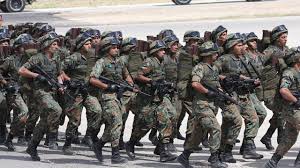
ShowImage (20)Thousand of Basij soldiers stage mock seige of Temple Mount in Iran. (photo credit:FARS)

If anyone needed proof how the lifting of sanctions on Iran will hurt Israel’s security, this week provided two examples.

Just days after implementation of the Joint Comprehensive Plan of Action nuclear agreement, we received a reminder that Iran and its proxies remain dangerous enemies of Israel.

Five Palestinians from the Tulkarm area were arrested for planning to carry out terrorist attacks under instructions from Hezbollah, the Shin Bet (Israel Security Agency) said on Wednesday.

The head of the cell, Mahmoud Za’alul, had been recruited through social media networks. Using encrypted messages, he enlisted five more men from the Tulkarm area; they were ordered to gather intel and plan terrorist attacks, including preparing explosive vests for suicide bombings.

Hezbollah funded their operation by sending them $5,000 through money changers.

Now that the “crippling” economic sanctions on Iran have been removed, the resources at its disposal – and as an extension at Hezbollah’s – will be significantly greater.

In Lebanon, meanwhile, Hezbollah is consolidating its political power. On Monday, in a development that is nothing short of earth shattering, Samir Geagea, leader of the Christian Lebanese Forces party, publicly endorsed his rival, the formal general Michel Aoun, for president of Lebanon.

In so doing, Geagea abandoned his loyalty to Saad Hariri, head of the anti-Syrian Future (Al-Mustaqbal) Movement, for an alliance with the enemy camp headed by Hezbollah, which supports Aoun for president.

This opens the way to the appointment of a pro-Iranian president in Lebanon.

Hezbollah and Iran are undoubtedly pleased with the development. If Aoun is elected president, Hariri’s influence – and the influence of Hariri’s main patron, Saudi Arabia – will be greatly diminished.

Finally, in the Gaza Strip, Iran has over the past few months been providing funding to a new terrorist group called Al-Sabireen Movement for Supporting Palestine. Al-Sabireen, which means “the patient ones” in Arabic, was formed in the wake of a break between Tehran and the two largest terrorist organizations operating in Gaza – Hamas and Islamic Jihad.

Neither organization has acquiesced to Iran’s demand to support President Bashar Assad in Syria.

Both have incensed the Iranians by remaining silent on Saudi attacks in Yemen against the Iranian-backed Houthis. Both face their worst financial crisis in two decades after Iran’s decision to cut off support.

Al-Sabireen’s emblem – a gun sprouting from the center of its name in Arabic – is nearly identical to Hezbollah’s.

So far, the organization has about 400 followers in the Gaza Strip, each one receiving a monthly salary of $250-$300, while the senior officials get at least $700, according to The Jerusalem Post’s Palestinian Affairs correspondent Khaled Abu Toameh. Iran has been supplying Al-Sabireen with weapons used to attack Israel.

The Iranians are believed to have supplied their new terrorist group in the Gaza Strip with Grad and Fajr missiles that are capable of reaching Tel Aviv. Also, Iranian funds channeled through Al-Sabireen are said to be used to support the families of killed or arrested terrorists living on the West Bank.

The Iranian-backed organization is also wooing Fatah members. Scores of militiamen once belonging to Palestinian Authority President Mahmoud Abbas’s Fatah faction in the Gaza Strip have allied themselves with Al-Sabireen. Most were attracted by the money.

The rise of an unshackled Iran’s influence in the region is bad for Israel. But it is also bad for many of the US’s Sunni allies in the region such as Saudi Arabia and the Palestinian Authority. A shared enemy has created a shared interest – the curtailing of Iranian influence.

Implementation of the JCPOA might delay Tehran’s nuclear weapon program. The removal of sanctions, however, has set the stage for the Islamic Republic to increase its destabilizing influence. Iran and its proxies must be stopped.

The Inside Track From Israel’s Gaza Border Defenders

January 21, 2016

The Inside Track From Israel’s Gaza Border Defenders, Investigative Project on Terrorism, Paul Alster, January 21, 2016

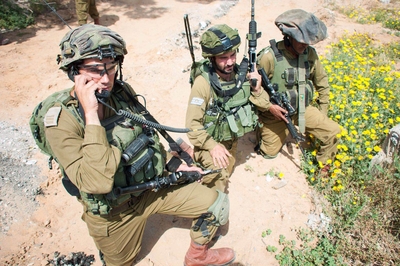
1339Photos courtesy of IDF Spokesperson.

Like it or not, the Iran nuclear deal is done. In much of the Middle East, defense officials in many states believe that a sizeable proportion of the soon-to-be released $100 billion Iranian windfall will be directed toward funding proxy armies of the Islamic Republic, for whom the Jewish state remains the prime target. Israel’s focus is now, more than ever, on defense and surveillance.

In the north, Hizballah, Iran’s proxy Lebanese army, remains a massive threat to regional stability, siding with Syria’s disgraced President Bashar Assad and his saviors from Russia. In Gaza, it is no secret that a previous rift between Iran and Hamas has been smoothed over to further mutual objectives and that another, and possibly more brutal round of hostilities between Israel and Hamas may not be far away.

“The sanctions relief and the nuclear deal with Iran represent a strategic shift that the IDF will have to tackle over the next decade,” Israel Defense Forces (IDF) Chief of Staff Gadi Eizenkot said Monday in a speech at the INSS conference in Tel Aviv. “We also see [Iran’s] attempt to influence Arab Israelis and those in the Gaza Strip, and the estimation is that as Iran’s economic situation improves, over the next one-to-two years, it will divert considerably more resources into opposing Israel, via the Iranian military industry.”

Last week, the Investigative Project on Terrorism (IPT) saw first-hand the situation on Israel’s south-western border, meeting with a senior IDF source who cannot be identified for security reasons. Close to the Kerem Shalom border crossing, where Israel oversees the transfer of many hundreds of tons of goods and supplies every day into Gaza,  we scrambled up a sizeable sand dune that offered a panoramic view of the situation on the ground toward the closed Rafah crossing from Egypt into Gaza.

“We hear the explosions and the fighting [against the Islamists] on the Egyptian side. The Egyptian army is taking it seriously,” the senior IDF source explained as we looked across the triangular border junction and heard distant noises, apparently explosions. “We hear this every day. Terrorists continue to try to cross from Egypt into Gaza.”

Minutes later, a text message announced that the Keren Shalom crossing suddenly had been closed. It turned out that the Egyptian army reportedly engaged and killed 13 jihadists  just a couple of miles away. Two days earlier, an attempt to breach the Israel-Gaza border fence and plant an IED resulted in an Israeli airstrike reportedly eliminating a member of the Al Aqsa Martyrs Brigade.

Meanwhile, Hamas continues to test fire rockets into the sea, and in recent months other Islamic militants in Gaza sporadically lob rockets toward Israel. On the other side of the border triangle, Egypt is doing its best to keep a lid on ISIS and other Islamist forces in the Sinai Peninsula.

It’s clear that relations between the Israeli and Egyptian militaries are good, a dangerous common enemy helping to focus minds. Under President Abdel Fattah el-Sisi, Egypt (despite a lack of support from the United States), has taken the fight to the terror organizations, often at a significant cost in Egyptian military lives. The horrific October downing of the Russian passenger jet out of Sharm el-Sheikh brought the scale of the task facing Egypt into focus. Israel remains alert for the jihadists turning their attention and firepower from Sinai, but for now believes that Gazan-based terror poses its most immediate threat.

“It’s been quite quiet with Hamas [since the 2014 Protective Edge war], but they don’t keep quiet for long,” the IDF source said. “We’re not looking for a fight – we have an interest that there will be quiet here – but if we have to deal with Hamas, this time we’ll deal with them properly.”

Many Israelis were dismayed when Israel unilaterally pulled out of Gaza in 2014 without a ceasefire, some criticism coming notably from members of the left-wing opposition and media for allowing Hamas off the hook when many believed it was in utter disarray. Now, despite ongoing attempts to stem the flow of weapons, reports suggest Hamas is rebuilding fast and may have some surprises in store for Israel if there’s another round of fighting.

“Look, we’re quite certain they are still building tunnels,” the official said, planting his heel in the sand and showing how easy it is to dig. “And yes, I’m sure they have new weapons – anti-tank, anti-aircraft etc. Like us, they will want to be better next time, but we understand more. The reality is different. We’re learning all the time what is going in Gaza. The army is always preparing for the war to come and [Hamas] won’t meet the same thing as in [Protective Edge].”

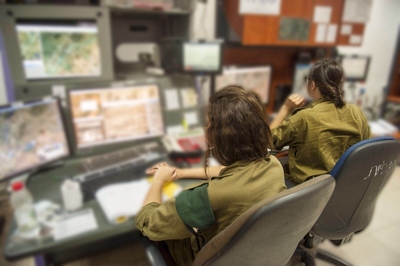
While Israeli soldiers and advanced technology such as its Guardium unmanned patrol vehicles are the first line of defense – the IDF indicated last year that the development of underground tunnel detection systems is also a priority project – the eyes of the military are actually in special units of female soldiers, known as the tazpitanyot. They monitor all movements, looking for suspicious activity, known terror operatives, and attempts to breach the border.

1340 (2)

They work in a series of non-descript trailers and shipping containers belying the fact that inside are massed banks of video screens and radar images, and the ability to combine pictures filmed from aerial blimps with other cameras – both day and night vision. This arrangement allows operatives to zoom in and see Gazans as far as a mile from the border fence.

When anything, or anyone suspicious pops up, there are pictures of ‘Wanted’ terror suspects close to the screens.  They instruct the on-the-ground forces to investigate. Never averting their gaze from the screen during a four-hour shift, each soldier has been trained to identify every landmark, tree, or rock within her specific area of surveillance. “If there’s even a single branch missing from a tree, they’ll spot it” the women’s commanding officer said. They also have remote control of the machine guns sited on border watch towers.

No security system is 100 percent foolproof, and during the first two weeks of the last round of fighting, four terror tunnels emerged on the Israeli side, only being detected at the last moment.  In two cases, the IDF fought gun-battles leaving  at least 10 terrorists and six Israeli soldiers dead. Hamas had hoped to kill civilians before luring Israeli soldiers back through the tunnels then kidnapping them or causing mass casualties.

Methods and practices of surveillance are being continually reviewed, but no-one in the Israeli military doubts the tatzpitanyot’s crucial front-line role in its border security, both north and south.

Palestinian militia discussed for E. Jerusalem to help bar terror and block ISIS influence

January 21, 2016

Palestinian militia discussed for E. Jerusalem to help bar terror and block ISIS influence, DEBKAfile, January 21, 2016

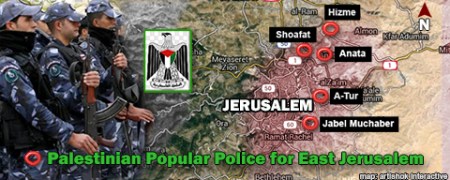
Palestinian_Police480

Israeli and Palestinian security officers are exploring the possible formation of a new Palestinian militia to take charge of enforcing law and order in the Arab districts of Jerusalem and halting the anti-Israel terrorist attacks emanating from those districts.

DEBKAfile’s intelligence sources disclose that the dialogue is led by senior Israeli Shin Bet and police officials and the Palestinian General Intelligence (Mukhabarat) chief Maj. Gen. Majid Faraj.

Our sources cannot confirm that Prime Minister Binyamin Netanyahu or other top officials, such as Public Security Minister Gilead Erdan, are fully in the picture, but it will certainly have been brought to their notice.
Palestinian Authority Chairman Mahmoud Abbas is kept up to date.

Palestinian Authority Chairman Mahmoud Abbas is kept up to date.

The plan was first broached in top Israeli police circles, who first asked the Shin Bet and IDF if they had any objections to the creation of a special local Palestinian force or militia, whose members would serve under the orders of the Israeli Police, with a status similar to that of Jerusalem Arab permanent residents, who serve in the local police force.

The new militia would undertake responsibility for maintaining order and security in the Palestinian districts of East Jerusalem, and a commitment to prevent the continuation of terror attacks from the districts under their authority.

This plan gained rapid momentum in recent days over concerns on both sides over the rapidity with which the Islamic Sate was gaining adherents in Palestinian communities.

IDF Chief of Staff Lt. Gen. Gady Eisenkott disclosed this week that an estimated 14-16 percent of Palestinians support ISIS – the highest proportion in the Arab world, where the average is no more than 5-6 percent.

In a little-noticed incident on Dec. 3, 2015, a Palestinian General Intelligence officer called Mazen Aribe, 37, suddenly turned his official rifle on Israeli soldiers. After he injured two, their comrades shot him dead.

Investigators of the incident later confirmed that it bore the hallmarks of an ISIS attack.

Aribe, who happened to be the nephew of the senior Palestinian peace negotiator Saeb Erekat, was a highly respected intelligence officer and a loyal supporter of his boss, the a/m Maj. Gen. Faraj.  His sudden turn to violence against Israeli troops set off alarm bells in the Palestinian intelligence services as well as the Shin Bet and Israeli police.

The progress of the talks for establishing the new force, since named the “Palestinian Popular Police for East Jerusalem,” can be measured by Israel’s consent to extend “a measure of autonomy” for certain administrative municipal appointments for its areas of control, provided their work is fully coordinated with Israeli government and municipal authorities.

The discussions cover the Palestinian-populated districts of North Jerusalem – Shoafat, Hizme and Beit Hanina – and the two big refugee camps at Shoafat and Anata. Many of the recent terrorist attacks against Israelis were perpetrated in the last four months by dwellers of these sections of Jerusalem.

The Old City and the Palestinian villages of Issawiya, A-Tur and Jabal Mukabar have not been covered in the bilateral security discussions.

Gen. Faraj is the live wire promoting the initiative. He is motivated most of all by the opportunity for his agency to gain a foothold in East Jerusalem. For decades, Israel has consistently blocked Palestinian attempts to establish their ruling bodies in its capital.

While the two negotiating parties formally agree to the new militia coming under Israel’s security services, its da-to-day operations will effectively be subject to Faraj’s intelligence agency.

In recent interviews, Faraj has made a point of stressing that cooperation between Israel’s army and Shin Bet and Palestinian security forces remains solid and must continue, notwithstanding the current wave of Palestinian terror.

He also claims that his officers have thwarted 200 terrorist attacks and their detention of 100 would-be terrorists with large arms caches, had foiled several more.

Faraj is clearly doing his utmost to bring to Israel’s attention the efficacy of the forces under his command and, by the same token, how valuable the new militia would be as a security, anti-terror asset for the city.

DEBKAfile’s counterterrorism sources note that the realization of the new Palestinian Police Force project – if it does get the green light in Jerusalem – would crown the four-month Palestinian knife intifada with a huge achievement, which has long proved elusive – the Palestinians would plant their first security footholds in the Arab neighborhoods of Israel’s capital. This would no doubt also provoke a flaming controversy on Israel’s political scene.

In Tehran, Iraqi Hizbullah Leader: We Will Retaliate Militarily for Al-Nimr Execution on Saudi Soil

January 21, 2016

In Tehran, Iraqi Hizbullah Leader: We Will Retaliate Militarily for Al-Nimr Execution on Saudi Soil, MEMRI-TV via You Tube, January 21, 2016


According to the blurb following the video,

During a press conference at the Fars News Agency in Tehran, Sheikh Akram Kaabi, Leader of the Hizbullah Al-Iraq (“Al-Nujaba”) militia, threatened Saudi Arabia: “Our retaliation for the blood of Sheikh Al-Nimr will take place on your own turf.” He further said: “When I say that we will retaliate – of course, I mean military retaliation.” The statements were posted on the Internet on January 20, 2016.

Cartoons of the Day

January 20, 2016

H/t Freedom is Just Another Word

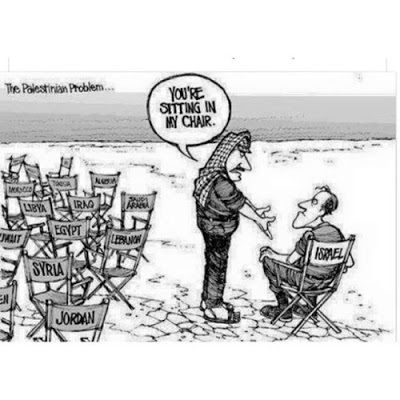
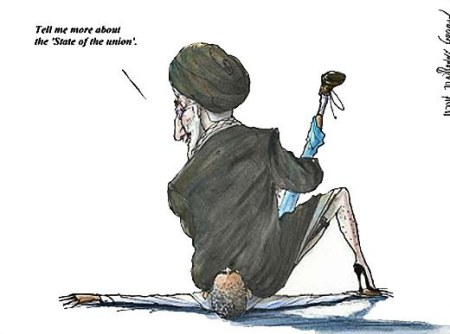
My chair

H/t Vermont Loon Watch

speech

New Iranian-Backed Terror Group Makes Inroads in West Bank, Gaza

January 19, 2016

New Iranian-Backed Terror Group Makes Inroads in West Bank, Gaza, Washington Free Beacon, January 19, 2016

Screen-shot-from-al-Sabireen-propaganda-videoScreen shot from al-Sabireen propaganda video

A new Iranian-backed terror group is making inroads in the Gaza Strip and West Bank, where it operates underground with the potential capacity to deliver devastating attacks to Israel, according to regional experts who have been investigating the organization’s rise.

The group, which goes by the name Harakat al-Sabireen, was established around May 2014 but has begun in recent months to boost its public profile on social media and brag about its plots to wage jihad against Israel, according to information gathered by regional analysts and provided to the Washington Free Beacon.

Al-Sabireen is believed to receive $10 million a year from Iran via funds that are smuggled through a large network of tunnels built by terrorists to facilitate illicit travel beneath the Gaza Strip, according to estimates disseminated in the Arab language press.

Like Hezbollah, the Iranian-funded terror group that controls territory along Israel’s northern border, al-Sabireen is being used by the Islamic Republic to indirectly wage war on the Jewish state and foster unrest in the Palestinian territories, according to experts, who view the group’s rise as a sign that Iran is not interested in scaling down its global terror network following the recent implementation of the nuclear agreement.

A State Department official who was not authorized to speak on record said that officials are aware of al-Sabireen and its activities. However, the group has not been officially designated as a foreign terrorist organization, though it is possible this could occur in the future.

Al-Sabireen says it has established an armed wing with militants in Jerusalem and the West Bank, according to a recent interview with the Palestinian news agency Ma’an.

“Given the tense relationship between Tehran and Hamas the past few years, it makes sense that Iran would look to form another proxy in Gaza,” Grant Rumley, a Middle East analyst at the Foundation for Defense of Democracies, said. “However, Sabireen’s entire model of expansion hinges on its ability to present itself as a Palestinian, non-sectarian movement.”

Like Hezbollah, al-Sabireen’s official logo closely resembles that of the Iranian Revolutionary Guard Corps, which is responsible for giving orders to these types of terror groups.

The group’s charter condones violent jihad and promotes attacks on “the racist Zionist body” and “America the great Satan,” according to a copy published by the group on its official Arabic-language website.

Al-Sabireen has taken to its website and Facebook page in recent months to praise operatives who have been killed while conducting reconnaissance missions on the group’s behalf.

In one posting from late October, the group celebrated the death of one operative who was killed “after direct targeting from the Zionist forces while he was leading a monitoring and reconnaissance team.”

Mourners raised flags during a funeral ceremony for this individual from a variety of Palestinian political groups, including Fatah, which is largely viewed by Western governments as a moderate voice, according to photographs posted by al-Sabireen on its Facebook page.

It also has been plucking recruits from rival terrorist groups, according to Rumley.

“It’s unclear exactly what Sabireen’s operational capabilities are right now, but we know that they’ve pulled recruits from a more established terror group, Palestinian Islamic Jihad, and that they’ve lost at least two fighters in two separate Israeli strikes, so they’re on Israel’s radar,” Rumley said.

Al-Sabireen has been present at pro-Hezbollah rallies in Gaza that were also attended by leading Hamas officials.

While not much is known about the group’s composition, it appears to have two main leaders, one an operational leader and another who provides intellectual guidance.

Hisham Salem, the terror group’s top leader, formerly served as a member of Palestinian Islamic Jihad, a State Department-designated terror organization, according to information provided by regional analysts. Salem, who is in his early 50s, was raised in the Gaza Strip and began referring to himself as al-Sabireen’s leader in 2014.

Salem claimed in a recent interview with the Palestinian press that armed members of the group are currently in the West Bank and Jerusalem.

“We have an armed branch whose goal it is to wage war on the Israeli occupation everywhere,” Salem was quoted as saying. “Within this framework we have members in the West Bank and Jerusalem who will soon receive financial and military support from us.”

A recent propaganda video produced by the organization and posted to YouTube shows soldiers marching through Gaza with AK-47s.

Al-Sabireen’s second in command, Mohammad Abu Nadi, frequently writes on al-Sabireen’s official website and praises Palestine as integral to the Arab world.

Al-Sabireen has taken a hardline stance against the United States, claiming in September on its Facebook page that the United States is responsible for “producing terrorists.”

The group’s Facebook page remains active with near-daily postings despite attempts by Facebook to shut it down.

While al-Sabireen has faced difficulty in expanding its base in Gaza, where the Hamas-controlled government cracks down on rival terror groups, it has been able to gain a foothold in the West Bank, where it can directly challenge both Israel and the Palestinian Authority.

Putin bypasses Israel, sets up joint war room for S. Syria with Jordan

January 14, 2016

Putin bypasses Israel, sets up joint war room for S. Syria with Jordan, DEBKAfile, January 14, 2016

Jordan_specail_forces

By teaming up with Jordan for a joint war room to cover operations in southern Syria, Putin has gone around Netanyahu’s back and acquired a helper for evicting Syrian rebels from southern Syria.

***************************

In a pivotal step reflecting the changeability of military and political deals in Israel’s neighborhood, Jordan has almost overnight agreed to establish a shared war room with Russia for the concerted conduct of their operations in Syria. This represents an extreme reversal of Amman’s policy. Until now, Jordan fought against Russia’s protégée Bashar Assad from a joint war room north of Amman called the US Central Command Forward-Jordan, as part of a lineup with the US, Saudi Arabia and Israel.

But this week Jordan shifted onto a new plane.

DEBKAfile’s military and intelligence sources say Jordanian King Abdullah’s decision to team up with Moscow starts a whole new ball game rolling on policy-making and intelligence-sharing. He doesn’t plan to shut down his shared command center with the US and Israel, but the center of gravity of Jordan’s military and intelligence efforts will be redirected to the new center with Russia, representing a major earthquake in those areas.

Amman is working hard to downplay the new partnership, presenting it as designed to foster better coordination between the American and Russian military efforts in Syria and the war on the Islamic State.

That picture is misleading.

With all due respect to the Jordanian monarch, his military and his intelligence services, they are not exactly qualified for the role of coordinator between the two world powers. The US and Russian presidents handle this in person. And in fact, the new Russian-Jordanian war room did come up, according to our Washington and Moscow sources, in the latest telephone conversation between the two presidents on Jan. 13.

Obama then held a quick meeting with King Abdullah at Andrews Air Force Base in Maryland and asked for an explanation.

For the various rebel militias holding out in large parts of southern Syria, including the Israeli border regions, the new Jordanian-Russian war room is bad news. Hitherto, Jordan provided the rebels with their main pipeline for fighters, weapons and funds from the US, Saudi Arabia and the UAE. The US even ran training camps in Jordan for Syrian rebel fighters.

This pipeline is now likely to be shut down or reduced to a minimum.

The Jordanians gloss over their shift, claiming it is designed to force the Syrian rebels of the South to accept a ceasefire and join peace talks with the US and Russia on Syria’s future. That is no more than diplomatic-speak for the real purpose, which is to compel them to give up the fight against Assad, and make way for Moscow to achieve its key objective, which is to restore the Assad regime’s control over the South.

Ever since his major intervention in Syria, Putin has tried to persuade Prime Minister Binyamin Netanyahu to pull the rug from under the Israeli-backed rebels in the South. They are deemed as a necessary buffer for securing Israel’s northern border and blocking the reimposition of Assad’s authority there.

The content of the exchanges between Putin and Netanyahu has only been shared with tight circles of confidants in Jerusalem and the Kremlin, so little is reliably known about their areas of agreement and dispute.

There is no doubt that the prime minister spoke firmly about Israel’s abiding concern that, once Assad regained control of the South, he would open the door up to the Israeli border and let in his allies and Israel’s arch enemies, Hizballah and the mostly-Iraqi Shiite militias fighting under the command of officers from Iran’s Revolutionary Guard Corps.

By teaming up with Jordan for a joint war room to cover operations in southern Syria, Putin has gone around Netanyahu’s back and acquired a helper for evicting Syrian rebels from southern Syria.

Our World: In Pakistan, they trust

January 12, 2016

Our World: In Pakistan, they trust, Jerusalem Post, Caroline Glick, January 11, 2016
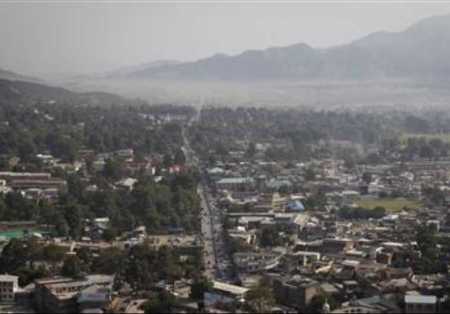
Pakistan viewA general view of houses from a hilltop in Abbottabad, Pakistan. (photo credit:REUTERS)

It is a testament to the precarious state of the world today that in a week that saw North Korea carry out a possible test of a hydrogen bomb, the most frightening statement uttered did not come from Pyongyang.

It came from Pakistan.

Speaking in the military garrison town of Rawalpindi, Pakistani Army chief Gen. Raheel Sharif said that any Iranian threat to Saudi Arabia’s territorial integrity will “wipe Iran off the map.”

Sharif made the statement following his meeting with Saudi Arabia’s defense minister and Deputy Crown Prince Mohammed bin Salman. According to media reports, Salman was the second senior Saudi official to visit Pakistan in the past week amid growing tensions between Iran and the kingdom.

Salman’s trip and Sharif’s nuclear threat make clear that following the US’s all-but-official abandonment of its role as protector of the world’s largest oil producer, the Saudis have cast their lots with nuclear-armed Pakistan.

When last October, the USS Harry Truman exited the Persian Gulf, the move marked the first time since 2007 that the US lacked an aircraft carrier in the region. Nine years ago, the US naval move was not viewed as a major statement of strategic withdrawal, given that back then the US had some one hundred thousand troops in Iraq.

While the USS Truman returned to the Gulf late last month, its return gave little solace to America’s frightened and spurned Arab allies. The Obama administration’s weak-kneed response to Iran’s live-fire exercises on December 26, during which an Iranian Revolutionary Guards vessel fired rockets a mere 1,370 meters from the aircraft carrier as it transited the Straits of Hormuz, signaled that the US is not even willing to make a show of force to deter Iranian aggression.

And so the Saudis have turned to Pakistan.

It would be foolish to view Sharif’s nuclear threat as mere bluster.

By every meaningful measure, Pakistan is little more than a failed state with nuclear weapons. Pakistan appears in every global index of failed or failing states.

To take just a few leading indicators, as spelled out by Basit Mahmood in a report last summer for The Political Domain, barely 1% of Pakistanis pay taxes of any kind. More than half the population lives in abject poverty. The government has no control over most Pakistani territory.

Between 2003 and 2015, more than 58,000 people were killed by terrorism countrywide.

Public health is a disaster. Polio, eradicated throughout much of the world, is now galloping through the country.

Last summer more than 1,300 people died in a heat wave in the supposedly advanced city of Karachi.

These data do not take into account the wholesale slaughter and persecution of minority groups – first and foremost Christians – and the systematic denial of basic human rights and widespread, violent persecution of women and girls.

As for its nuclear arsenal, a 2010 report by the Bulletin of Atomic Scientists estimated that Pakistan possesses between 70 and 90 nuclear warheads. Other credible reports estimate the size of the arsenal at 120.

Pakistan refuses to adopt a no-firststrike policy. In the US and worldwide, it is considered to be the greatest threat to global nuclear security.

Following a Pakistani jihadist assault on the Indian parliament in late 2001, India and Pakistan both deployed forces along their contested border. In the months that followed, due to Pakistani nuclear threats, the prospect of nuclear war was higher than it had ever been.

Cold War nuclear brinksmanship – which reached its high point during the 1962 Cuban missile crisis – paled in comparison.

In 2008, following the Pakistani jihadist assault on Mumbai, India threatened to retaliate against Pakistan.

India’s threats rose as evidence mounted that, as was the case in 2001, the jihadists were tied to Pakistan’s ISI spy service. Once again, rather than clean its own house, Pakistan responded by threatening to launch a nuclear attack against India.

And now, following the unraveling of US-strategic credibility, Pakistan’s aggressive nuclear umbrella is officially coming to the Persian Gulf.

Saudi Arabia’s decision to turn to Pakistan for protection indicates that the second wave of the destruction of the Arab state model is upon us. The notion of Arab states was invented nearly 100 years ago by the British and French at the tail end of World War I. The Sykes-Picot agreement, which partitioned the Arab world into states, rewarded national dominion to the most powerful tribal actors in the various land masses that became the states of the Arab world.

With the possible exception of Egypt, which predated Sykes-Picot, the Arab states formed at the end of World War I were not nation states. Their populations didn’t view themselves as distinct nations. Rather the populations of the Arab states were little more than a hodgepodge of tribes, clans and sectarian and ethnic groupings. In each case, the British and French made their determinations of leadership based on the relative power of the various groups. Those chosen to control these new states were viewed either as the strongest factions within the new borders or as the most loyal allies to the European powers.

The first wave of Arab state collapse began six years ago. It submerged the non-royal regimes, which fell one after the other, like houses of cards.

Syria, Libya, Iraq and Yemen ceased to exist.

Egypt, which in the space of two years experienced both an Islamist revolution and a military counter-revolution, still teeters on the brink of collapse.

Lebanon will likely break apart at the slightest provocation.

Today we are seeing the opening stages of the collapse of the Arab monarchies, and most importantly, of Saudi Arabia.

Most of the international attention to Saudi Arabia’s current threat environment has focused on Iran. The Iranian threat to the Saudis has grown in direct proportion to the Obama administration’s determination to realign the US away from its traditional Sunni allies and towards Iran. The conclusion of the US-led nuclear pact with Tehran has exacerbated Iran’s regional aggression as it no longer fears US retaliation for its threats to the Sunni monarchies.

But Iran is just the most visible of three existential threats now besetting the House of Saud.

The most profound threat to the world’s largest oil power is economic.

The drop in world oil prices has endangered the kingdom.

As David Goldman reported last week in the Asia Times, according to an International Monetary Fund analysis, the collapse in Saudi oil revenues “threatens to exhaust the kingdom’s $700 billion in financial reserves within five years.”

The house of Saud’s hold on power owes to its oil-subsidized economy. As Goldman noted, last month dwindling revenues forced the Saudis to cut subsidies for water, electricity and gasoline.

According to Goldman, Riyadh’s mass execution of 43 long-jailed prisoners at the start of the month was an attempt by the aging royal house to demonstrate its firm control of events. But the very fact the Saudi regime believed it was necessary to stage such a demonstration shows that it is in distress.

The third existential threat the regime now faces is Islamic State. Since 1979, the Saudis have sought to deflect domestic opposition by promoting Wahabist Islam at home and Wahabist jihad beyond its borders.

Now, with Islamic State in control over large swathes of neighboring Iraq, as well as Syria and Libya and threatening the Saudi-supported Sisi regime in Egypt, the Saudi royal family faces the rising threat of blowback. Some analysts argue that given the popular support for jihad in Saudi Arabia, were Islamic State to cross the Saudi border, its forces would be greeted with flowers, not bullets.

If the House of Saud falls, then the Gulf emirates will also be imperiled.

The Egyptian regime, which is bankrolled by the Saudis and its Gulf allies will also be endangered. The Hashemite monarchy in Jordan, which is protected by the US and by Israel, will face unprecedented threats.

The implications of expanding chaos – or worse – in Arabia are not limited to the Middle East. The global economy as well as the security of Europe and the US will be imperiled.

Obviously, the order of the day is for the US security guarantee to Saudi Arabia to be reinforced, mainly through straightforward US action against Iranian naval aggression and ballistic missile development.

Unfortunately, the Obama administration can be depended on to take just the opposite approach. And as a consequence, at least for the next year, the main thing propping up the Gulf monarchies, and with them, the global economy and what passes for global security, is a failed state with an itchy finger on the nuclear trigger.
House Democrats Turn to the Wrong Muslims for SOTU

January 12, 2016

House Democrats Turn to the Wrong Muslims for SOTU, Investigative Project on Terrorism, January 11, 2016

As many as 25 House Democrats are expected to have Muslim guests during Tuesday night’s State of the Union speech. It’s in response to a call from Democratic National Committee chair Debbie Wasserman Schultz and Minnesota Rep. Keith Ellison, the first Muslim voted into Congress, to counter an “alarming rise in hateful rhetoric against Muslim Americans and people of the Islamic faith worldwide.”

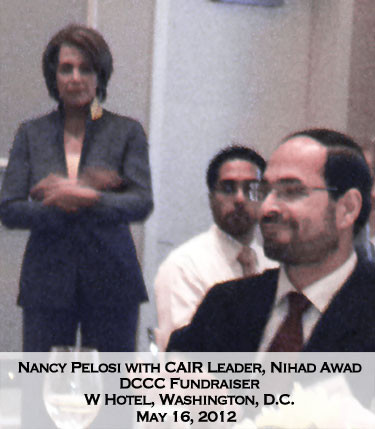
The gesture might not generate much more than a shrug, except that in at least two cases, Democrats invited officials from a group the FBI formally avoids due to historic ties to a Hamas support network. Delray Beach Rep. Alcee Hastings invited Nezar Hamze, regional operations director for the Council on American-Islamic Relations (CAIR) in Florida. And San Jose, Cal. Rep. Zoe Lofgren invited Sameena Usman, a 10-year veteran government relations official with CAIR’s San Francisco chapter, the Investigative Project on Terrorism has learned.

CAIR officials routinely accuse federal law enforcement of entrapping otherwise innocent and peaceful Muslims in order to gin up terrorism prosecutions. Hamze’s colleagues in CAIR-Florida are helping a family sue the FBI over the 2013 fatal shooting of a terror suspect who attacked agents after extensive questioning.

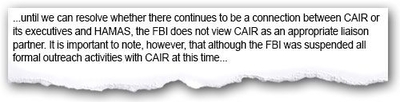
Usman’s office published a notorious poster urging Muslims to “Build a Wall of Resistance [and] Don’t Talk to the FBI.” For its part, the FBI cut off contact with CAIR, except in investigations, in 2008 based on evidence its agents uncovered which placed CAIR in a Hamas-support network in the United States. Until it can be shown that those connections no longer exist, an FBI official explained in 2009, CAIR is not “an appropriate liaison partner.”

1302

In addition, several CAIR officials have compared Israel to ISIS.

Calls to press contacts in Lofgren and Hastings’ offices were not returned Monday.

Last month, the IPT provided exclusive details from eyewitness accounts about CAIR’s creation, including an account of how a co-founder sought approval from the Egyptian Muslim Brotherhood for CAIR’s bylaws, and how Executive Director Nihad Awad’s move to Washington was “in order to represent Hamas.”

Hastings and Lofgren either failed to check out their guests’ employer or they don’t care. These connections have nothing to do with the faith of CAIR officials. But the organization has a record that elected officials stubbornly insist should be ignored.

Unfortunately, this is part of a pattern of outreach House Democrats seek out with the wrong people. Last month, CAIR-Florida’s Hassan Shibly was invited to the White House for a discussion about religious discrimination. Then, as with the State of the Union speech, no one from the new Muslim Reform Movement – which issued a declaration clearly rejecting “interpretations of Islam that call for any violence, social injustice and politicized Islam” and standing for “peace, human rights and secular governance.”

766