Archive for the ‘Israel’ category

Security Council likely to vote on settlements Friday despite Egyptian reversal

December 23, 2016

Security Council likely to vote on settlements Friday despite Egyptian reversal, Times of Israel, December 23, 2016

A UN Security Council resolution criticizing Israeli settlements will likely go up for a vote Friday despite original sponsor Egypt pulling its support, after four countries agreed to present a draft resolution, diplomats said.

New Zealand, Malaysia, Senegal and Venezuela stepped in after Egypt, under pressure from US President-elect Donald Trump, withdrew the measure.

“Most likely, we will have a vote soon,” French Ambassador Francois Delattre told reporters.

“The key goal that we have here is to preserve and reaffirm the two state-solution,” said Delattre. “The text that we have does not exclusively focus on settlements. It also condemns the violence and terrorism. It also calls to prevent all incitement from the Palestinian side so this is a balanced text.”

Diplomats said the same draft resolution would be submitted to a vote, at the request of the four countries.

The draft resolution demands that “Israel immediately and completely cease all settlement activities in the occupied Palestinian territory, including East Jerusalem.”

It states that Israeli settlements have “no legal validity” and are “dangerously imperiling the viability of the two-state solution” that would see an independent Palestine co-exist alongside Israel.

The four member states had warned earlier that they would push ahead with the resolution if Cairo stood by its decision to delay.

“In the event that Egypt decides that it cannot proceed to call for vote on 23 December or does not provide a response by the deadline, those delegations reserve the right to table the draft … and proceed to put it to vote ASAP,” wrote New Zealand, Venezuela, Malaysia and Senegal in a note they presented to Egyptian officials, according to Reuters.

Egypt had said earlier its president received a call from Trump in which they both agreed to give the incoming US administration a chance to try and resolve the Israeli-Palestinian conflict.

The call came hours after Egypt indefinitely postponed the UN vote on its resolution, following pressure from Israel and Trump, who had called on members to veto it.

A statement from the Egyptian presidency said the two men spoke by phone early Friday and agreed on “the importance of giving a chance for the new American administration to deal in a comprehensive way with the different aspects of the Palestinian issue with the aim of achieving a comprehensive and a final resolution” to the decades-old conflict.

Egypt requested Thursday that its resolution demanding Israel halt settlements be postponed after Jerusalem launched a frantic lobbying effort.

An official in Jerusalem later Thursday accused the Obama administration of attempting a diplomatic “hit” against Prime Minister Benjamin Netanyahu and the settlements by planning to let the resolution pass, and a second Israeli source said the administration, in its final days, was violating a “core commitment” to defend Israel at the UN.

“After becoming aware that the (US administration) would not veto the anti-Israel resolution, Israeli officials reached out to Trump’s transition team to ask for the president-elect’s help to avert the resolution,” an Israeli official told AFP on Friday.

“The [Trump] phone call touched on the draft resolution before the United Nations Security Council on Israeli settlements,” a statement from Sissi’s office said.

Trump, who had campaigned on a promise to recognize Jerusalem as Israel’s capital, bluntly said Washington should use its veto to block the resolution.

“The resolution being considered at the United Nations Security Council regarding Israel should be vetoed,” he said in a statement.

Trump and Sisi discuss Middle East peace

December 23, 2016

Trump and Sisi discuss Middle East peace, Israel National News, Elad Benari, December 23, 2016

trumpandsisiTrump and Sisi meet in New YorkReuters

“The presidents agreed on the importance of affording the new U.S. administration the full chance to deal with all dimensions of the Palestinian case with a view of achieving a full and final settlement,” he added.

Sisi recently praised Trump and said he expected greater engagement in the Middle East from his administration.

******************************

Egyptian President Abdel Fattah al-Sisi on Thursday night spoke with U.S. President-Elect Donald Trump, Sisi’s office said, according to Reuters.

The call came hours after the UN Security Council postponed indefinitely a vote on Egypt’s draft resolution denouncing Israeli “settlements”.

“During the call they discussed regional affairs and developments in the Middle East and in that context the draft resolution in front of the Security Council on Israeli settlement,” said Sisi’s spokesman, Alaa Yousef.

“The presidents agreed on the importance of affording the new U.S. administration the full chance to deal with all dimensions of the Palestinian case with a view of achieving a full and final settlement,” he added.

Thursday’s vote on the UN Security Council resolution was reportedly postponed after Sisi instructed his nation’s delegation to push for a delay in the vote.

Trump had earlier called for the United States to veto the resolution, as it has traditionally done with similar proposals. American officials indicated that the Obama administration was planning to abstain from voting or even to vote yes.

Sisi recently praised Trump and said he expected greater engagement in the Middle East from his administration.

The Egyptian President has also been at the forefront of the effort to resume talks between Israel and the Palestinian Authority, having several months ago urged Israelis and Palestinian Arabs to seize what he said was a “real opportunity” for peace and hailed his own country’s peace deal with Israel.

The comments were welcomed by Prime Minister Binyamin Netanyahu, who stressed that “Israel is ready to participate with Egypt and other Arab states in advancing both the diplomatic process and stability in the region.”

Palestinian Authority (PA) chairman welcomed Sisi’s call as well, saying he welcomed the Egyptian president’s efforts to achieve peace and establish a Palestinian state.

Trump Gave Money to “West Bank” Settlement

December 19, 2016

Trump Gave Money to “West Bank” Settlement, Power Line, Paul Mirengoff, December 19, 2016

The Washington Post reports that in 2003, Donald Trump gave $10,000 to “institutions in one of Israel’s oldest and most steadfast West Bank settlements.” He made the donation in honor of David Friedman, who is now Trump’s pick to be U.S. ambassador to Israel.

I wish I had known about this before. It would have made me more supportive of Trump.

Trump’s donation was used to support schools in the Beit El settlement. According to the Post, he has donated money to many Jewish schools (yeshivas) in Israel and the U.S.

Beit El was founded in 1977. It is located on the outskirts of Ramallah, a major Palestinian population center. Approximately 1,300 Jewish families live there.

Israeli settlements are a bugaboo of the American left and of some on the center-right, as well. They are an impediment to a “peace” agreement, they say.

But Israel is a vibrant, dynamic, and growing society. The notion that its population should have remained confined to land within the pre-1967 borders in the hope that a peace agreement might one day be reached is ridiculous. One might just as well have expected Americans to confine themselves to the original 13 colonies.

The term “West Bank settlements” gives the game away. The settlements are no more on West Bank than the rest of Israel is. There is no natural barrier between the settlements on the outskirts of Jerusalem and Jerusalem itself. There is no significant natural barrier between the Beit El settlement Trump supported and the Mediterranean Sea.

The Mediterranean Sea is what most Palestinians want to drive Israeli Jews into.

Israel shouldn’t be pressured into assisting Palestinians in this quest by ceding control of the West Bank. And, security concerns aside, it shouldn’t be pressured into abandoning places where its citizens have lived for nearly 40 years (in the case of Beit El).

The only salient facts about the pre-1967 borders are: (1) they were untenable and (2) they were swept away by Israel’s military victory. Losing a war has consequences. There is no exception for losing a war intended to obliterate a nation.

But let’s return to president-elect Trump. Remember when mainstream media stalwarts accused him of running an anti-Jewish campaign in order to appeal to the “alt-right”? I wonder what the “alt-right” will make of Trump’s donations to Jewish educational institutions in the U.S. and Israel.

It’s time for a narrative shift. Hence forward, until further notice, the liberal MSM will no longer portray Trump as Jew-baiting. He will now be deemed fanatically pro-Jewish.

Cartoons and Videos of the Day

December 17, 2016


Via Media Research Center


Via LATMA-TV


H/t Vermont Loon Watch

donkey


flacks-kg


travel-trunk


H/t Freedom is Just Another Word

alleged


H/t Power Line

trump-salve


alien-dems


notmyfault


obama-putin


nbc-fake


161212-pajama-boy


pollster-end


H/t Tom Fernandez’s Blog

notbuying


Anti-Israel Lefties Freak Out Over Trump Pick for Ambassador to Israel

December 16, 2016

Anti-Israel Lefties Freak Out Over Trump Pick for Ambassador to Israel, Front Page Magazine (The Point), Daniel Greenfield. December 26, 2016

(There are other “problems” with Friedman: not only is he Jewish, he even speaks Hebrew. Secretary Kerry suffered from neither deficiency. Instead, he reflected Obama’s sense of balance toward Israel and what he hoped would become the sovereign state of Palestine, spreading from sea to shining sea. Seriously though, why would it be detrimental to America, or even to Israel, to help to keep the only democratic, non-Islamic nation in the Middle East alive? — DM)

hitlercries

There’s a fresh wind blowing through a stale room full of embittered lefties. The US Ambassador to Israel isn’t supposed to be pro-Israel. He’s supposed to represent the compelling US interest in the PLO.

Lisa Goldman of the truly vile hate site 972 really loses her mind.

“David Friedman’s views lie to the right of Meir Kahane’s. Trump naming him as Amb to Israel is a FU to the 70% of US Jews who vote Democrat,” she rants.

No, but it is an FU to the 2% of US Jews who vote for the Green Party and hate the Jewish State. But there’s more…

“This is true. It’s on the record. Trump’s ambassador to Israel called fellow Jews who support a 2 state solution “worse than kapos.”

The Kapos often didn’t have a choice. If Not Now and JVP’s howlers of hate do. And they chose to be what they are. We must never forget that.

Jill Jacobs of the anti-Israel group T’ruah is also most unhappy..

“New ambassador to Israel insults all liberal Jews, esp @JeremyBenAmi,” Jacobs whines.

Oh no. Not poor Jeremy Ben Ami. And Jeremy is also discommoded.

“Lord help friends of Israel if someone like David Friedman is making US policy on Israel rather than John Kerry,” Jeremy squeals.

That would indeed be the clearest sign that the Lord is helping Israel.

But David Friedman’s pick has caused a complete meltdown in the underground volcanic cavern serving as J Street’s HQ. J Street was already running back and forth waving its arms over a move of the embassy to Jerusalem, blocking Bolton and freaking out over the Chanukah party.

Now it’s losing what little is left of its ugly little mind.

“Trump’s pick of Friedman for Israel Amb is anathema to values that underlie US-Israel relationship. We’ll fight this with all we’ve got,” Jeremy Ben Ami rants.

The official J Street statement declares, “J Street is vehemently opposed to the nomination of David Friedman to be Ambassador to Israel.”

It’s hard to think of a better recommendation for Friedman than that.

“Well Friedman, the group (@jstreetu) you once called “worse than Kapos” is going to make this a hard 4 years for you,” Brooke Davies of J Street threatens.

“One idea from @jstreetdotorg: The Senate should block the confirmation of this dangerous extremist,” Logan Bayroff demands.

You can see them sweat.

Trump’s team is on point

December 14, 2016

Trump’s team is on point, Israel Hayom, Boaz Bismuth, December 14, 2016

(Please see also, Trump picked Tillerson for tough new Iran policy. — DM)

U.S. President-elect Donald Trump’s nominee for secretary of state, Rex Tillerson, comes from outside the State Department, just like Colin Powell did under former U.S. President George W. Bush. There is one thing that should be noted, however: starting Jan. 20, both the U.S. president and the secretary of state will be outsiders, without political or diplomatic backgrounds. Get ready for changes and Washington-style inventions, like moving the U.S. Embassy to Jerusalem.

Tillerson comes to the State Department with 40 years’ experience in a multinational company, ExxonMobil. For the past decade, Tillerson, who knows the world, has served as head of the company. It’s hard to say that an inexperienced person has been appointed secretary of state. Even Henry Kissinger had less international experience than Tillerson when he was appointed to the role, unless you count the number of foreign students he taught at Harvard.

Some will say that the appointment of Tillerson is problematic, especially for Israel: first of all, because of his close ties with Russian President Vladimir Putin; secondly, because of his close ties with the Gulf states; and third, because the former candidates for Trump’s secretary of state (former New York Mayor Rudy Giuliani, John Bolton, and even former Governor Mitt Romney) are considered more pro-Israel.

Let’s start with Russia: Tillerson might be a Putin favorite, but we can also assume this means he will always find a sympathetic ear at the Kremlin. What’s bad about that? The Obama administration sought to improve ties with Russia and was even responsible for a reboot in relations between Washington and Moscow. That reboot was so “successful” that at times we thought that Russia had resurrected the Soviet Union. We can assume that when Tillerson is in charge at the State Department, things will change. We can also assume that the president-elect and Tillerson will support the removal of sanctions currently in place against the Russians. Offered honey that sweet, the Russian bear will become much less irritable, and might continue strengthening ties with Israel.

Moving on to the Gulf states: Tillerson has worked for oil giants, so it’s obvious that he was in close contact with the Sunni Arab producers. The Gulf states, which like Iran about as much as Israel does, will explain to him that Tehran is a danger, not an opportunity. He’ll hear exactly the same thing in Jerusalem.

What tipped the scales in his favor, for Trump, was the fact that Tillerson knows how to close deals. Unlike former Secretary of State Hillary Clinton, he won’t fly around the world just to try to move things along; he will get on a plane to solve problems. And possibly even help the movers get the embassy equipment from Tel Aviv to Jerusalem. A new president, a new team, a new age.

The Palestinian Jihads against Israel

December 13, 2016

The Palestinian Jihads against Israel, Gatestone Institute, Khaled Abu Toameh, December 13, 2016

“We will not recognize Israel because it will inevitably go away. And we will not backtrack on the option of armed struggle until the liberation of all Palestine.” — Khalil Al-Haya, Hamas senior official.

The abandonment of Gaza by Israel in 2005 drove the Palestinian vote for Hamas the next year. It also explains why many Palestinians continue to support Hamas — because they still believe that violence is the way to defeat Israel.

Hamas believes that Israel does not have the right to defend itself against rockets and terror attacks. It even considers Israel’s self-defense as an “act of terror.”

In yet another sign that exposes Hamas’s ongoing preparations to attack Israel, the movement last week held a drill with live ammunition in the northern Gaza Strip.

“What has been achieved so far is a small jihad, and the big jihad is still awaiting us.” — Palestinian Authority President Mahmoud Abbas. Abbas is convinced that his “diplomatic jihad” against Israel is no less effective than Hamas’s jihad of terrorism.

Yet even if Abbas manages to achieve reconciliation with Hamas, this move should not be seen as sign of pragmatism on the part of the Islamist movement. Under no circumstances will Hamas relinquish its policy of the destruction of Israel and its replacement with an Islamist state.

From Abbas’s point of view, Hamas’s terrorism will only increase the pressure on Israel to capitulate. Here Abbas has an ally in Hamas: to multiply jihads to force Israel to its knees.

The Palestinian Islamist movement, Hamas, which is currently celebrating the 29th anniversary of its founding, misses no opportunity to broadcast its stated reason for being: to wage jihad (holy war) in order to achieve its goal of destroying Israel. Those who allege that Hamas is moving toward pragmatism and moderation might take note.

Last week, tens of thousands of Palestinians took to the streets of the Gaza Strip to participate in rallies marking the anniversary of the founding of Hamas. As in previous years, the rallies were held under the motto of jihad and “armed resistance” until the liberation of all Palestine, from the Jordan River to the Mediterranean Sea. Another message that emerged loud and clear from the rallies: Hamas will never recognize Israel’s right to exist.

This year’s rallies once again also served as a reminder of the enormous popularity that Hamas continues to enjoy among Palestinians — not only in the Gaza Strip, but also in the West Bank, where supporters of the Islamist movement celebrated the occasion, but on a smaller scale and with a lower profile, out of fear of the Palestinian Authority (PA) and Israeli security forces.

Khalil Al-Haya, a senior Hamas official, outlined in a speech before his supporters in the Gaza Strip his movement’s strategy, namely to pursue the fight until the elimination of Israel. “We will not recognize Israel because it will inevitably go away,” he declared.

“And we will not backtrack on the option of armed struggle until the liberation of all Palestine. Since its establishment, Hamas has been — and will remain — a Palestinian Islamic national and resistance movement whose goal is to liberate Palestine and confront the Israeli project. The liberation of the Gaza Strip is just the first step toward the liberation of Palestine — all Palestine. There is no future for the Israeli entity on our homeland.”

When Hamas leaders talk about the “liberation” of the Gaza Strip, they are referring to the total unilateral Israeli disengagement from that area in 2005. Hamas and many Palestinians have never viewed the full withdrawal from the Gaza Strip as a gesture on the part of Israel. Nor have they ever considered the disengagement as a sign that Israel is no longer interested in controlling the lives of nearly two million Palestinians living in the Gaza Strip.

On the contrary, Hamas and many Palestinians continue to see the Israeli disengagement from the Gaza Strip as a sign of weakness. In fact, this disengagement is why Hamas won the Palestinian parliamentary election in 2006, when it took credit for driving Israel out of the Gaza Strip through suicide bombings and rockets. Back then, this abandonment of land by Israel drove the Palestinian vote for Hamas. It also explains why many Palestinians continue to support Hamas — because they still believe that violence is the way to defeat Israel.

Many Palestinians see Israeli concessions, gestures and unilateral moves as proof of capitulation, rather than positive signs testifying to Israel’s peaceful intentions. These “concessions for peace” by Israel further increases Palestinians’ appetite for launching armed attacks against Israel. Today, many Palestinians are convinced that they can achieve more through stabbings, vehicular rammings and shooting attacks than sitting with Israel at the negotiating table.

The Qatar-based Hamas leader, Khaled Mashaal, seized the anniversary as an opportunity once again to remind everyone of his movement’s real goals. Speaking on the Al-Jazeera TV network, which serves as a platform for the Muslim Brotherhood organization (Hamas is an offshoot of Muslim Brotherhood), Mashaal said:

“We are moving forward with our resistance to achieve our national project… We are looking forward to liberating Palestine and cleansing the Al-Aqsa Mosque and protecting it from division and demolition. We also seek the return of the refugees to their homeland and the liberation of our prisoners from Israeli jails.”

When he talks about “cleansing” Al-Aqsa Mosque, the Hamas leader is referring to Jewish visits to the Temple Mount. Hamas and the Palestinian Authority have been exploiting these visits to incite their people against Israel. They claim that Jewish visitors are “desecrating” the holy site and should not be allowed to set foot there. These words mirror those used by President Mahmoud Abbas, who said that Palestinians will not allow Jews to “defile with their filthy feet” the Al-Aqsa Mosque (although no Jew has entered the mosque itself).

Mashaal, who in the past few years has been living as royalty in Qatar (the country that is the main patron of Muslim Brotherhood), went on to emphasize that Hamas has “not changed its strategy of liberating Palestine.” He also said that, “Military work remains the backbone of liberation.” Hamas, he added, “Continues to believe in the full liberation of Palestine and that jihad and resistance are the only means to expel the occupation and liberate Palestine and the blessed Al-Aqsa Mosque.” According to Mashaal, Hamas continues to look toward Arab and Islamic countries, including Iran, for the military, financial and political support to achieve its goal of destroying Israel.

Hamas’s armed wing, Ezaddin Al-Qassam, boasted on this occasion that 22 of its men have been killed since the beginning of 2016, while preparing for the next war with Israel. Most of the Hamas men were killed when the tunnels in which they were working in collapsed. Hamas continues to build new tunnels and renovate those that were destroyed during the last war with Israel in 2014. Hamas says it wants to use these tunnels in the future to infiltrate Israel and kill or kidnap Israeli civilians or soldiers.

Ironically, while Hamas pursues its round-the-clock efforts to prepare for war against Israel, its leaders do not hesitate to depict themselves as victims, and warn of supposed Israeli plans to launch a “new aggression” against Palestinians. Hamas believes that Israel does not have the right to defend itself against rockets and terror attacks. It even considers Israel’s self-defense as an “act of terror.”

Take, for example, Hamas spokesman Fawzi Barhoum’s recent assessment. Lashing out at U.S. aid to Israel, Barhoum said that the American military and financial aid to Israel constitutes “official support for terrorism.”

This is effectively Hamas’s message to the new U.S. administration: Stop supporting Israel with weapons and money because that hinders our goal of destroying Israel. In yet another sign that exposes Hamas’s ongoing preparations to attack Israel, the movement last week held a drill with live ammunition in the northern Gaza Strip. The drill enacted, among other things, an incursion into a civilian populated area. Hamas said the drill was the fruit of 380 hours of non-stop military training of its “Special Units.”

Hamas’s rhetoric and actions leave no room for doubt as to its intentions. Twenty-nine years after its establishment, a defiant Hamas continues to believe that Israel can, and should, be destroyed. The dream to eliminate Israel remains alive and well among many Palestinians, as evidenced at Hamas rallies by the massive turnouts.

Hamas and the Palestinian Authority, however, are kissing cousins when it comes to Israel. Hamas’s talk of jihad against Israel is right in line with Abbas’s speech before the 7th Congress of Fatah, which convened in Ramallah two weeks ago. “What has been achieved so far is a small jihad, and the big jihad is still awaiting us,” Abbas declared.

According to Abbas’s aides, the PA president was referring to a different type of jihad — one that relates to his ongoing efforts in the international arena to isolate and delegitimize Israel, to force it to make far-reaching concessions to the Palestinians. Abbas’s diplomatic warfare against Israel began several years ago, with the PA’s efforts to join international institutions and seek unilateral recognition in the UN of a Palestinian state. His ultimate goal is to have the international community exert pressure on Israel to withdraw fully to the pre-1967 lines. Abbas wants to establish a Palestinian state with the help of the international community, and not through direct negotiations with Israel. He is convinced that his “diplomatic jihad” against Israel is no less effective than the Hamas jihad of terrorism.

This Abbas talk of “small” and “big” jihad comes at a time when Abbas and Hamas are in courting mode. Some reports have suggested that Abbas recently sent conciliatory messages to Hamas in yet another bid to end the dispute between the two sides. He and Khaled Mashaal have had regular phone contact, with both expressing a desire to end the conflict between them. The reports have even suggested that the two rival parties may be preparing to resume their “reconciliation” talks in Doha under the auspices of Qatar. Last October, Abbas met in Doha with Mashaal and another Hamas leader, Ismail Haniyeh, as part of his rapprochement with the Islamist movement. The meeting was said to be held in a cordial atmosphere, and some Palestinian political analysts point to a warming of relations between the two sides.

677-1Last October, Palestinian Authority President Mahmoud Abbas met in Qatar with Khaled Mashaal and another Hamas leader, Ismail Haniyeh, as part of his rapprochement with the Islamist movement. Pictured above: Abbas (right) meets with Khaled Mashaal in Qatar on July 20, 2014, in a previous reconciliation attempt. (Image source: Handout from the PA President’s Office/Thaer Ghanem)

Yet even if Abbas manages to achieve reconciliation with Hamas, this move should not be seen as a sign of pragmatism on the part of the Islamist movement. Under no circumstances will Hamas relinquish its policy of the destruction of Israel and its replacement with an Islamist state. The movement’s own words on its anniversary provide the best proof of this intention. To their credit, Hamas leaders are nothing if not honest about their commitment to Israel’s destruction. Abbas certainly will not attempt to convince Hamas to abandon this fundamental goal. So, as far as Hamas is concerned, reconciliation means that Abbas will move closer to the Islamist movement and not vice versa.

In fact, Mahmoud Abbas seems to believe that Hamas’s and his jihads complement each other. Thus, Hamas will continue its deadly jihad, while Abbas will pursue his “diplomatic jihad” against Israel. From his point of view, Hamas’s terrorism will only increase the pressure on Israel to capitulate. Here Abbas has an ally in Hamas: to multiply jihads to force Israel to its knees.


UN Committee to Vote on Blacklist Against Israel-Linked Companies

December 10, 2016

UN Committee to Vote on Blacklist Against Israel-Linked Companies, The Jewish PressHana Levi Julian, December 10, 2016

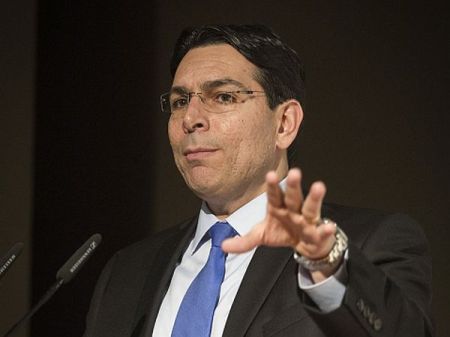
Israeli Ambassador to the UN, Danny Danon, speaks at the Conference for Fighting Anti-Semitism, at the Begin Center in Jerusalem, on January 31, 2016. Photo by Hadas Parush/Flash90 *** Local Caption *** ??? ???? ????? ????? ???? ??? ????????? ??????? ???? ????

Israeli Ambassador to the UN, Danny Danon, speaks at the Conference for Fighting Anti-Semitism, at the Begin Center in Jerusalem, on January 31, 2016. Photo by Hadas Parush/Flash90

A budget and administration committee within the United Nations is set to vote next week on a blacklist against firms with ties to Israel.

The UN “Fifth Committee” is scheduled to vote on funding for the blacklist, which names Israeli and international firms with offices located in post-1967 areas of Jerusalem, Judea, Samaria and the Golan Heights.

The black list was initiated this past March in a resolution approved in 32-0 vote (15 abstentions) by member states at the UN Human Rights Council in Geneva. According to a report published Friday in Haaretz, the resolution required UN ‘human rights officials’ to create a database of “all business enterprises” that have enabled or profited from the growth of Israeli settlements.

Proposed and sponsored by the Palestinian Authority and the Arab nations, it includes a condemnation of ‘settlements’ and a call for companies not to work with Israeli communities in post-1967 areas.

The blacklist, to be updated annually, is expected to become a useful tool for activists in the anti-Semitic Boycott, Divest and Sanctions (BDS) movement, according to Israeli Ambassador to the UN, Danny Danon.

Israel’s mission to the UN will publicly oppose the list, Danon said. The envoy added that he intends to organize a task force comprised of international pro-Israel organizations and other partners to fight the move.

“We will not be silent in the face of this shameful initiative,” said Danon. “The UN’s intent to mark Jewish businesses and international companies with ties to Israel, so that they can boycott them, reminds us of dark times in history.

“The Human Rights Council has already become notorious as an anti-Semitic and anti-Israel entity.

“But it’s unacceptable for the UN itself to continue to support this despicable decision,” Danon added.

Cartoons and Video of the Day

December 10, 2016

H/t Conservative Tree House

obama-yapping-blah-blah-blah-speech-sad-hill-news2


Via LATMA-TV


H/t Vermont Loon Watch

democrat-plan


H/t Vermont Loon Watch

fraudsters


H/t Power Line

pc-agabn


facst-dont-matter


govt-center


clear


taiwan-hypocrisy


The Tribal Update Presents the UN Choir and the Media’s Expert Assessment

December 8, 2016

The Tribal Update Presents the UN Choir and the Media’s Expert Assessment, Latma TV via YouTube, September 23, 2011

(A flash from the not very different past. The situation is little different today. I wish Latma-TV were still functioning. — DM).