Archive for the ‘Islamic invasion’ category

Name: “Sword of Islam”? Let Him In!

November 11, 2017

Name: “Sword of Islam”? Let Him In! Gatestone InstituteDouglas Murray, November 11, 2017

In Britain, as in the rest of Western Europe and North America, there is only thought to be a political price to pay for being tough on immigration. For the time being, only people who believe in enforcing the law look heartless. Only those who insist on following — or even tightening — due process look like the ones who have done a wicked thing.

But as the events on the Underground in London in September presage, all of this can change in a few instants. A few more bombs left by a few more illegal immigrants, or a few more trucks driven along a few more bicycle lanes — let alone by illegal immigrants who have overstayed and not been deported — and the whole thing can change. At that point, instead of looking warm and big-hearted, you begin to look as if you were just unforgivably lax with the security of your own citizens. So an entire political class has been. But it may take a lot of bloodshed yet for them to learn that there are not just political benefits to be accrued from such laxness, but one day a political price to pay.

***********************************

Even the craziest immigration systems dreamed up by European officials have not yet come up with something like America’s “diversity visa” lottery, by which someone named “Sword of Islam” is promptly let into the country — only then to mow people down in a New York bicycle lane.

Nearly 56,000 foreign nationals have disappeared from the radar of the British authorities after being told that they were required to leave the country.

Instead of looking warm and big-hearted, you begin to look as if you were just unforgivably lax with the security of your own citizens. So an entire political class has been.

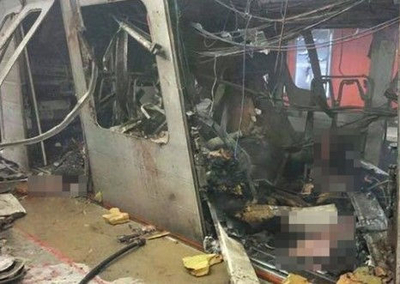
It is only eight weeks since an 18-year old Iraqi-born man walked onto the London Underground and left a bomb on the District line. Fortunately for the rush-hour commuters and school children on that train, the detonating device went off without managing to set off the bomb itself. Had the device worked, the many passengers who suffered life-changing burns would instead have been among many other people taken away in body bags. Ahmed Hassan came to the UK illegally in 2015 and was subsequently provided with foster care by the British government. He has now been charged, and is awaiting trial, for causing an explosion and attempted murder.

As stories like that of Mr. Hassan emerge, there are varying reactions. Some people say that this act is not indicative of anything, and that we must accept that such things happen — like the weather. Others suggest that anyone might leave a bomb on the District line in the morning, and that there is no more reason to alter your border policy because of it than there is to alter your meteorological policy because of it.

As poll after poll shows, however, the majority of the public in Britain — as in every other European country — think something else. They think that a country that has lost a grip on its immigration policy is very likely to lose control of its security policy, and that one may indeed follow the other.

So the British public were not at all reassured by the news this month that the country’s Home Office has lost track of tens of thousands of foreign nationals who were due to be removed from the country. Nor that there is no evidence of any effort to find the people in question.

Figures revealed in two new reviews by the Chief Inspector of Borders and Immigration showed that nearly 56,000 foreign nationals have disappeared from the radar of the British authorities after being told that they were required to leave the country. This figure includes over 700 foreign national offenders (FNOs) who went missing after being released into the community from prison. It also revealed that around 80,000 foreign nationals are required to check in on a regular basis at police stations and immigration centres while authorities prepare for them to leave the country. By the end of 2016, just under 56,000 of them had failed to keep appointments and had become persons “whose whereabouts are unknown and all mandatory procedures to re-establish contact with the migrant have failed.”

Nevertheless, with a straight face, Brandon Lewis, the immigration minister for the present Conservative government, declared that “People who have no right to live in this country should be in no doubt of our determination to remove them.” Yet he still admitted that “Elements of these reports make for difficult reading.”

For the British public, they will also make difficult living. We all have to live with the consequences of an immigration system which has been more than usually unfit for purpose since the Labour government of 1997. It is just the British version of a story that is playing all across Western Europe. Across the Western half of the continent, all governments have allowed immigration policy to slide for more than a generation. Having become lax about policing the borders, they have become lax about returning people who have no right to be inside those borders. And having become lax about returning people who should not be in the country, they end up putting at peril the citizens of the country.

When the post-1997 Labour government first decided that the return of people in the UK illegally was not an important priority, they did so in part because the then-immigration minister decided that it was too traumatic for everyone involved: traumatic for the illegal migrant and for the UK border officials who had to remove them. In just such a way, by thousands of small cuts, does a nation’s territorial integrity and future security become shattered.

Although a person’s name may be nothing more than an inauspicious start — its owner, after all, did not choose it — even the craziest immigration systems dreamed up by European officials have not yet come up with something like America’s “diversity visa” lottery, by which someone pronounces themselves to be called “Sword of Islam” [terrorist Sayfullo Saipov] and is promptly let into the country — only then to mow people down in a New York bicycle lane. But we are all suffering from variants of the same mania.

Nevertheless, even the most seriously ingrained manias can be snapped out of. In Britain, as in the rest of Western Europe and North America, there is only thought to be a political price to pay for being tough on immigration. For the time being, only people who believe in enforcing the law look heartless. Only those who insist on following — or even tightening — due process look like the ones who have done a wicked thing.

But as the events on the Underground in London in September presage, all of this can change in a few instants. A few more bombs left by a few more illegal immigrants, or a few more trucks driven along a few more bicycle lanes — let alone by illegal immigrants who have overstayed and not been deported — and the whole thing can change. At that point, instead of looking warm and big-hearted, you begin to look as if you were just unforgivably lax with the security of your own citizens. So an entire political class has been. But it may take a lot of bloodshed yet for them to learn that there are not just political benefits to be accrued from such laxness, but one day a political price to pay.

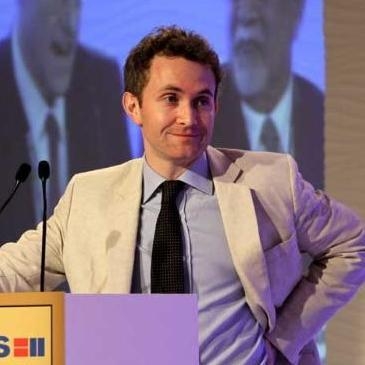
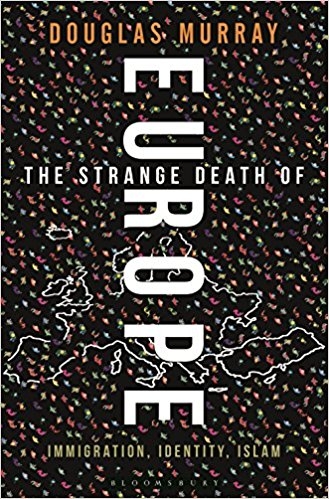
Douglas Murray, British author, commentator and public affairs analyst, is based in London, England. His latest book, an international best-seller, is “The Strange Death of Europe: Immigration, Identity, Islam.”

Europe’s New Official History Erases Christianity, Promotes Islam

October 18, 2017

Europe’s New Official History Erases Christianity, Promotes Islam, Gatestone InstituteGiulio Meotti, October 18, 2017

[I]t is hard to understand the “logic” behind the official European animosity toward Christianity and its attraction to a basically totalitarian Islam. Europe could easily be secular without being militantly anti-Christian. It is easier to understand why thousands of Poles just took part in a mass protest along Poland’s borders to voice their opposition to “secularization and Islam’s influence“, which is exactly the same as the official crazy EU credo.

During the Second World War, the Allies avoided bombing Brussels, because it was to be the site of European rebirth. If the European elite continue with this cultural repudiation of their Judeo-Christian-Humanistic culture, the city could be its grave.

************************************

“The patrons of the false Europe are bewitched by superstitions of inevitable progress. They believe that History is on their side, and this faith makes them haughty and disdainful, unable to acknowledge the defects in the post-national, post-cultural world they are constructing.” — The Paris Statement, signed by ten respected European scholars.

German Interior Minister Thomas de Maizière’s proposal to introduce Muslim public holidays shows that when it comes to Islam, Europe’s official “post-Christian” secularism is simply missing in action.

A few days ago, some of Europe’s most important intellectuals — including British philosopher Roger Scruton, former Polish Education Minister Ryszard Legutko, German scholar Robert Spaemann and Professor Rémi Brague from the Sorbonne in France — issued “The Paris Statement“. In their ambitious statement, they rejected the “false Christendom of universal human rights” and the “utopian, pseudo-religious crusade for a borderless world”. Instead, they called for a Europe based on “Christian roots”, drawing inspiration from the “Classical tradition” and rejecting multiculturalism:

“The patrons of the false Europe are bewitched by superstitions of inevitable progress. They believe that History is on their side, and this faith makes them haughty and disdainful, unable to acknowledge the defects in the post-national, post-cultural world they are constructing. Moreover, they are ignorant of the true sources of the humane decencies they themselves hold dear — as do we. They ignore, even repudiate the Christian roots of Europe. At the same time they take great care not to offend Muslims, who they imagine will cheerfully adopt their secular, multicultural outlook”.

In 2007, reflecting on the cultural crisis of the continent, Pope Benedict said that Europe is now “doubting its very identity“. In 2017, Europe took a further step: creating a post-Christian pro-Islam identity. Europe’s official buildings and exhibitions have indeed been erasing Christianity and welcoming Islam.

One kind of official museum recently opened by the European Parliament, the “House of the European History“, costing 56 million euros. The idea was to create a historical narrative of the postwar period around the pro-EU message of unification. The building is a beautiful example of Art Deco in Brussels. As the Dutch scholar Arnold Huijgen wrote, however, the house is culturally “empty”:

“The French Revolution seems to be the birthplace of Europe; there is little room for anything that may have preceded it. The Napoleonic Code and the philosophy of Karl Marx receive a prominent place, while slavery and colonialism are highlighted as the darker sides of European culture (…) But the most remarkable thing about the House is that.as far as its account is concerned, it is as if religion does not exist. In fact, it never existed and never impacted the history of the continent (…) No longer is European secularism fighting the Christian religion; it simply ignores every religious aspect in life altogether”.

The Brussels bureaucracy even deleted the Catholic roots of its official flag, the twelve stars symbolizing the ideal of unity, solidarity and harmony among the peoples of Europe. It was drawn by the French Catholic designer Arséne Heitz, who apparently took his inspiration from the Christian iconography of Virgin Mary. But the European Union’s official explanation of the flag makes no mention of these Christian roots.

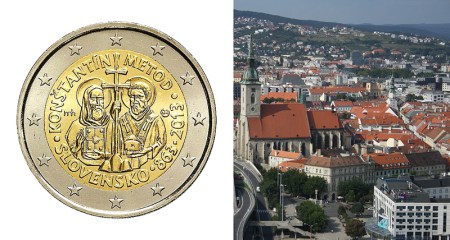
The European Monetary and Economic Department of the European Commission then ordered Slovakia to redesign its commemorative coins by eliminating the Christian Saints Cyril and Methonius. There is no mention of Christianity in the 75,000 words of the aborted draft of the European Constitution.

The European Commission ordered Slovakia to redesign its commemorative coins by eliminating the Christian Saints Cyril and Methonius. (Image sources: Coin – European Commission; Bratislava, Slovakia – Frettie/Wikimedia Commons)

German Interior Minister Thomas de Maizière, of Angela Merkel’s ruling Christian Democratic Party, recently suggested introducing Muslim public holidays. “In places where there are many Muslims, why can’t we think about introducing a Muslim public holiday?”, he said.

“The submission is moving ahead,” replied Erika Steinbach, the influential former chair of the Federation of Expellees — Germans expelled from various Eastern European countries during and after World War II.

Beatrix von Storch, a leading politician from Alternative for Germany Party (AfD), just tweeted: “NO! NO! NO!”.

De Maizière’s proposal shows that when it comes to Islam, Europe’s official “post-Christian” secularism is simply missing in action.

A few weeks ago, a European Union-funded exhibition, “Islam, It’s also our history!”, was hosted in Brussels. The exhibition tracks the impact of Islam in Europe. An official statement claims:

“The historical evidence displayed by the exhibition – the reality of an old-age Muslim presence in Europe and the complex interplay of two civilisations that fought against each other but also interpenetrated each other – underpins an educational and political endeavour: helping European Muslims and non Muslims alike to better grasp their common cultural roots and cultivate their shared citizenship”.

Isabelle Benoit, a historian who helped design the exhibition, told AP: “We want to make clear to Europeans that Islam is part of European civilisation and that it isn’t a recent import but has roots going back 13 centuries”.

The official European establishment has turned its back on Christianity. The establishment appear unaware of the extent to which the continent and its people still depend on the moral guidance of its humanitarian values, especially at a time when radical Islam has launched a civilization challenge to the West. “It is simply a problem of a packing that tends to fill a ‘void'”, just wrote Ernesto Galli della Loggia in the Italian daily newspaper Il Corriere della Sera.

“It is impossible to ignore that behind the packing are two great theological and political traditions — that of the Russian Orthodoxy and Islam — while behind the ‘void’ there is only the fading of the Christian consciousness of the European West”.

That is why it is hard to understand the “logic” behind the official European animosity toward Christianity and its attraction to a basically totalitarian Islam. Europe could easily be secular without being militantly anti-Christian. It is easier to understand why thousands of Poles just took part in a mass protest along Poland’s borders to voice their opposition to “secularization and Islam’s influence“, which is exactly the same as the official crazy EU credo.

During the Second World War, the Allies avoided bombing Brussels, because it was to be the site of European rebirth. If the European elite continue with this cultural repudiation of their Judeo-Christian-Humanistic culture, the city could be its grave.

Giulio Meotti, Cultural Editor for Il Foglio, is an Italian journalist and author.

How Barcelona Became a Victim of the Barcelona Process

October 12, 2017

How Barcelona Became a Victim of the Barcelona Process, Gatestone InstituteFjordman, October 12, 2017

The Barcelona Process, promoted by the EU, has helped to facilitate a greater presence of Islam and Muslim immigrants in Western Europe — thereby also increasing the Islamic terror threat there. That result was perfectly foreseeable.

When the number of people who believe in Islamic Jihad doctrines rises, the likelihood of experiencing jihadist attacks increases as well.

It is unlikely, though, that European political leaders will point to this connection. Doing so would be an indirect admission that Europe’s leaders have actively increased the Islamic terror threat against European citizens. This is the brutal truth they do not want exposed.

The murders on the pedestrian street of La Rambla in Barcelona on August 17, 2017 were not the first Islamic terrorist attack in Spain. On March 11, 2004, 192 people were killed, and around two thousand injured, in the Madrid train bombings.

In hindsight, that attack marked a new phase in the modern Islamic Jihad against Europe. After the Madrid bombings, London was hit with deadly bombings on July 7, 2005. In recent years, the frequency of jihadist attacks on European soil has increased dramatically.

It is probably not a coincidence that Spain was an early target of Islamic terror. The Iberian Peninsula, present-day Portugal and Spain, was for centuries under Islamic rule. Militant Muslims have repeatedly made it clear that for them, reconquering Spain is a priority.

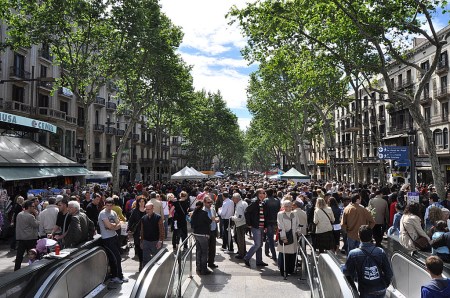
The murders on the pedestrian street of La Rambla in Barcelona on August 17, 2017 were not the first Islamic terrorist attack in Spain. (Image source: JT Curses/Wikimedia Commons)

Ironically, some people in Barcelona seem to view tourists who pay for short-term visits as a greater threat than Muslim immigrants who come to stay permanently. One can hear similar reactions among some radical left-wing activists, for instance, in Greece.

Mass tourism can potentially cause problems such as overcrowding and local pollution. Nevertheless, it is noteworthy that only a few days before the terror attack in Barcelona, some locals were complaining about an invasion of tourists. One radical left-wing group, Arran, published footage of tourist bikes in the city having their tires punctured in acts of deliberate sabotage. Of course, the problem might be even greater if there were too few tourists.

Meanwhile, a real invasion of Spain and Europe is taking place. For years, huge numbers of illegal immigrants from the Islamic world and Africa have been entering, especially through Greece or Italy. Spain, too, has seen a spike in the number of illegal immigrants. The Spanish-controlled enclaves of Ceuta and Melilla in North Africa are under increasing pressure as points of departure for migrants.

The Madrid bombings in 2004 were immediately followed by the election in Spain of the Socialist politician José Luis Rodríguez Zapatero. His policy of appeasement of Islam and the Islamic world was, sadly, not the first. Western Europe’s appeasement of Islam stretches back at least to the 1970s.

With the 1973 oil embargo, Arab countries in the Organization of the Petroleum Exporting Countries (OPEC) used oil as a weapon and tool for blackmail. European countries started giving concessions to Arabs to ensure their oil supply and, they doubtless hoped, avoid terrorism. These concessions were not just limited to economic affairs. They also included opening Western Europe up to Islamic culture and Muslim immigration. The author Bat Ye’or has written extensively on this subject.

As part of the Euro-Arab Dialogue, a Euro-Mediterranean Partnership between the EU and the Arabic-Islamic world was launched in 1995 with the so-called Barcelona Process. Its purpose was to strengthen the ties between Europe and the Arab world in the fields of trade, economy, environment, energy, health, migration, education, social affairs and cultural cooperation.

This Process has been in force for decades. Despite it, the increasingly stronger ties between the EU and Arab Muslim countries rarely receive critical scrutiny from the European mass media. There is even a Union for the Mediterranean, which most Europeans have never heard of.

As the official website of the European External Action Service (EEAS), the diplomatic service of the European Union (EU), stated in October 2017:

The Union for the Mediterranean promotes economic integration across 15 neighbours to the EU’s south in North Africa, the Middle East and the Balkans region. Formerly known as the Barcelona Process, cooperation was re-launched in 2008 as the Union for the Mediterranean…. Projects address areas such as economy, environment, energy, health, migration, education and social affairs. Along with the 28 EU member states, 15 Southern Mediterranean countries are members of the UfM: Albania, Algeria, Bosnia and Herzegovina, Egypt, Israel, Jordan, Lebanon, Mauritania, Monaco, Montenegro, Morocco, Palestine, Syria (suspended), Tunisia and Turkey. Libya is an observer.”

The Islamic Republic of Mauritania in western Africa, a full member of the Union for the Mediterranean, has the same formal status there as Denmark, Sweden, Germany, France, Italy and Poland. Although Mauritania was the last country officially to ban slavery, it is still widely practiced there to this day. Yet the country regularly cooperates with the EU on matters of importance to the future of the EU.

The Barcelona Process, promoted by the EU, has helped to facilitate a greater presence of Islam and Muslim immigrants in Western Europe — thereby also increasing the Islamic terror threat there. That result was perfectly foreseeable. When the number of people who believe in Islamic Jihad doctrines rises, the likelihood of experiencing Jihadist attacks increases as well.

It is unlikely, though, that European political leaders will point to this connection. Doing so would be an indirect admission that Europe’s leaders have actively increased the Islamic terror threat against European citizens. This is the brutal truth they do not want exposed.

Fjordman, a Norwegian historian, is an expert on Europe, Islam and multiculturalism.

France’s Islamic WWIII

October 6, 2017

France’s Islamic WWIII, FrontPage Magazine, Daniel Greenfield, October 6, 2017

(Please see also, What Is America’s National Identity?  It is not, and must not become, multiculturalism, which rejects national identity. — DM)

Demographics dictate that France’s terror problem will only keep growing. And the French authorities understand this. That’s why its governments increasingly talk about Islamic terrorism as a lasting threat.

Our War on Terror has squandered endless blood and treasure while avoiding the root cause. Western nations deploy massive armies to root out small terror networks while allying with their Gulf backers. Soldiers patrol major cities waiting for a terrorist or several terrorists to attack. Meanwhile the mosques that indoctrinate them to hate and kill non-Muslims are also protected by those same soldiers.

That’s not how you win a war. It’s how you lose everything.

******************************

Interior Minister Gerard Collomb made it official. France is “in a state of war”.

It’s not just rhetoric. Bombs turn up in a posh Parisian suburb. Two young women are butchered at a train station. And it’s just another week of an Islamic World War III being fought in France.

From the November attacks in 2015 that killed 130 people and wounded another 400+, to the Bastille Day truck ramming attack last year that killed 86 and wounded 458, the war is real.

French casualties in France are worse than in Afghanistan. The French lost 70 people to Islamic terrorist attacks in Afghanistan. And 239 to Islamic terrorist attacks in France.

The French losses in Afghanistan were suffered in over a decade of deployment in one of the most dangerous Islamic areas in the world. The French losses in France were suffered in less than two years.

There’s something very wrong when Afghanistan is safer than Paris.

10,000 French soldiers were deployed in the streets of their own country in Operation Sentinelle after the Charlie Hebdo – Kosher supermarket attacks in 2015. Thousands of French soldiers are still patrolling, guarding and shooting in French cities which have become more dangerous than Afghanistan.

Operation Sentinelle has deployed twice as many French soldiers to France as to Afghanistan. And French casualties in the Islamic war at home have been far higher that they were in Afghanistan.

When the French intervened to stop the Islamist takeover of Mali, they suffered a handful of losses. The 4,000 French soldiers came away from Operation Serval with 9 casualties and Operation Barkhane amounted to 5 dead. The Gulf War? Another 9 dead. It’s a lot safer to be a French soldier fighting Al Qaeda in a Muslim country than a Parisian civilian going to a concert in his or her own city.

French casualties in the struggle with Islamic terror in just the last two years are approaching the 300 casualties of the Korean War.

France is at war. That’s why there are soldiers in the streets.

Its new anti-terrorism bill creates a permanent state of emergency. Suspected extremists can be placed under “administrative detention” in their own homes and neighborhoods under police surveillance and remote monitoring.

Pop-up checkpoints can appear in public spaces that are designated as “security zones” where anyone can be stopped and searched. Mosques can be shut down for six months. Public gatherings can be banned. Warrantless searches can be conducted within miles of potential targets.

The Interior Ministry will have police state powers. And it will be able to wield quite a few of them without having to go through the formality of asking judges nicely for permission.

Some of these measures should be familiar. France is the new Israel.

France’s Interior Minister called the anti-terrorism bill, a “lasting response to a lasting threat”. The choice of words recognizes that Islamic terrorism is here to stay.

The “State of War” is permanent. And France has no plans for winning the war. Instead it’s trying to get better at playing defense. And that’s what most Western domestic counterterrorism efforts amount to.

France is just taking the lead because it has the biggest problem.

The British put soldiers on the streets after the Manchester Arena bombing. The Italians and the Belgians began deploying soldiers in cities around the same time that the French did.

When an illegal alien Muslim terrorist due to be deported murdered two young women in Marseille while shouting, “Allahu Akbar”, French soldiers opened fire. The 24-year-old who shot the terrorist was a reserve member of a regiment of combat engineers in the French Foreign Legion.

The French Foreign Legion isn’t off fighting in a foreign desert somewhere. It’s fighting in France.

French soldiers are told to loudly announce, “Stop or I Shoot”. And then open fire. And that’s what he did. And French soldiers are being forced to learn the phrase and expect to come under attack.

In February, French soldiers were attacked by a Muslim terrorist outside the Louvre. The Egyptian Jihadist shouted, “Allahu Akbar” and came after them with a machete. One soldier from the 1st Régiment de Chasseurs Parachutistes was wounded. The attacker was shot down.

The 1st Régiment de Chasseurs Parachutistes had been deployed to Afghanistan and Mali. Now they were at the Louvre. You don’t need to be Napoleon to know that counts as a major retreat.

A month later, a Muslim terrorist shouted “I am here to die in the name of Allah” while holding a female air force soldier hostage at Orly Airport.

He got his wish courtesy of her fellow soldiers.

In August, six soldiers from the 35th Infantry Regiment were hit by a BMW driven by a Muslim terrorist. Members of a regiment which had been deployed in Afghanistan were sent to a military hospital after an attack in the wealthy Levallois-Perret suburb of Paris. A year earlier, soldiers from the 5th Infantry Regiment had been hit by a Tunisian shouting, “Allahu Akbar” while they were guarding a mosque.

France has entered its longest state of emergency since the Algerian War. The 2015 attacks saw its first state of emergency since 1961. But where is France supposed to withdraw from this time? Paris?

It was one thing to abandon the beleaguered Algerian Christians and Jews to Muslim terror. And to abandon them a second time when they fled to France only to face persecution by their old Islamic neighbors who had tagged along and settled down in Marseille. But can France abandon the French?

The issue once again is colonialism. But the new colonists are Algerians, Tunisians and other Islamic imperialists who have settled in France and wave the black flag of the Jihad over their no-go zone settlements in French cities. And they have made it abundantly clear that they will not stop there.

Last year, former Prime Minister Manuel Valls said that, “Every day attacks are foiled… as we speak.”

And it’s no wonder. Thousands of Muslim settlers left France to fight in Syria and Iraq. Valls was looking at 15,000 potential threats domestically. France has one of the largest Muslim populations in Europe. We don’t know exactly how many millions of Muslim settlers live in France. But we can measure their growth by the expansion of the terror threat. Islamic terrorism is, despite the spin, reducible to Islam.

There is no Islamic terrorism without Islam. As Islam expands, so does Islamic terrorism.

France is in the middle of a civil war. The civil war is based on religious differences. As the religious divide between the Islamic colonists and the militantly secular French government increases, the violence will worsen. The outcome of the war will determine whether France will be a secular republic or an Islamic state. The Jihadists have a plan for winning the war.  The French authorities don’t.

And what goes for France also goes for Western Europe. And for the West.

The French combination of social appeasement and police state enforcement isn’t working. The same model ultimately fails wherever it’s applied. Breaking up terror cells and stopping attacks is far better than the alternative, but the scale of the problem will always continue increasing because of demographic growth and a globalized terror infrastructure.

Demographics dictate that France’s terror problem will only keep growing. And the French authorities understand this. That’s why its governments increasingly talk about Islamic terrorism as a lasting threat.

Our War on Terror has squandered endless blood and treasure while avoiding the root cause. Western nations deploy massive armies to root out small terror networks while allying with their Gulf backers. Soldiers patrol major cities waiting for a terrorist or several terrorists to attack. Meanwhile the mosques that indoctrinate them to hate and kill non-Muslims are also protected by those same soldiers.

That’s not how you win a war. It’s how you lose everything.

The Real Roots of Islamic Terrorism

October 5, 2017

The Real Roots of Islamic Terrorism, Gatestone InstituteKhadija Khan, October 5, 2017

Last month, an Islamic preacher was caught red-handed in Britain preaching for ISIS and jihad, and inciting youths to commit violence against non-Muslims. To everyone’s purported astonishment, he was not delivering his lectures on websites. He was delivering sermons live in a public-charity mosque — funded by taxpayers — in Stoke-on-Trent.

France and Britain remain in the constant grip of Islamist terror, yet their governments, despite having laws prohibiting “hate speech”, have so far failed to address the influence that preachers of violence and hatred have with local Muslims.

Blaming terror recruitment only on the internet is just an invented story, like the one that every suicide bomber or those who committed acts of terror in the name of Islam were lone wolves who merely took “inspiration” from terror outfits such as al-Qaeda or ISIS.

Governments in Britain and other countries in the grip of terror posed by Islamists have probably also been using the “online” excuse to shake off any charges of reckless endangerment or criminal neglect that they have might have committed by allowing these extremists to flourish in West.

The terrorists involved in the Parsons Green Underground attack and other incidents, as in Barcelona, were found to have ties with local mosques or seminaries, yet the administrations of these places have refused to take any responsibility, and stated that they are not accountable for the acts of their members.


Another terrorist attacks France and slaughters two innocent women at the Marseille train station. The terrorist was reportedly chanting the Arabic verses.

Within 24 hours, another terror attack took place in Edmonton, Canada outside a football stadium, when a man with a knife left five people injured. An ISIS flag was reportedly found in suspect’s car.

The strike in a country known for going extra miles to take in immigrants from the war-torn Middle East exposes the fact that these terrorists are enemies not only of human rights but often if the very people trying to help them.

No soft gesture, however, will deter extremist Muslims unless the whole world submits to their version of Islam.

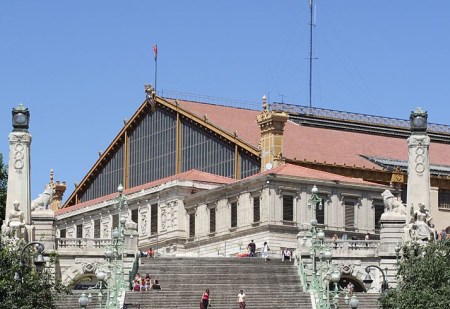
Pictured: Saint-Charles train station in Marseille, France, where an Islamist terrorist murdered two women on October 1, 2017. (Image source: ignis/Wikimedia Commons)

Western governments might nevertheless once again choose to ignore the existence of religious schools and mosques that serve as radicalization and recruitment centers for extremist Muslims across the West.

The authorities in Europe seem to have been doing very little to clamp down on the recruitment of mainly Muslim youths by terrorists. Many apologists seem to have been trying to confuse people by saying that the internet is root cause of the Islamic extremism and terrorism problem, and authorities have been blaming the websites of terror outfits. Websites do not vote.

France and Britain remain in the constant grip of Islamist terror, yet their governments, despite having laws prohibiting “hate speech”, have so far failed to address the influence that preachers of violence and hatred have with local Muslims.

Last month, an Islamic preacher was caught red-handed in Britain preaching for ISIS and jihad, and inciting youths to commit violence against non-Muslims.

To everyone’s professed astonishment, he was not delivering his lectures on websites or communicating with the gullible youths through online “chats”. He was delivering sermons live in a public-charity mosque — funded by taxpayers — in Stoke-on-Trent.

Governments in Britain and other countries in the grip of terror posed by Islamists have probably also been using the “online” excuse to shake off any charges of reckless endangerment or criminal neglect that they have might have committed by allowing these extremists to flourish in West.

The authorities seem deliberately to be ignoring the compelling presence of hardline madrassahs, mosques and faith-schools that might well be involved in clear instances of preaching violence and hate.

Blaming terror recruitment only on the internet is just an invented story, like the one that every suicide bomber or those who committed acts of terror in the name of Islam, whether in Paris, London or Berlin, are lone wolves who merely took “inspiration” from terror outfits such as al-Qaeda or ISIS.

It is laughable to claim that a “lone wolf” has committed a terror attack, especially when the terror outfits such as ISIS immediately take responsibility for them.

The London Bridge attack left Prime Minister Theresa May stating “enough is enough” and sounding finally determined to tackle terrorism a bit.

But the slogan merely ended up on the back-burner as the terror spree continued — as do the hardline seminaries and recruiters that then led to the Parsons Green Underground attack.

The terrorists involved in that and other attacks, as in Barcelona, were found to have ties with local mosques or seminaries, yet the administrations of these places have refused to take any responsibility, and state that they are not accountable for the acts of their members.

Westminster terror attacker Khalid Masood was serving as a public contact person for the website of the Luton Islamic Center Mosque just a week before he rammed a car into pedestrians on London’s Westminster Bridge and went on to kill a police officer.

Manchester Arena bomber Salman Abedi, who murdered 22 people, including children, regularly attended Didsbury Mosque, which was also known to have home to many other al-Qaeda and ISIS recruits. The mosque was also known for having ties with al-Qaeda-linked jihadists such as the Libyan Islamic Fighting Group.

The perpetrators of the London Bridge and Borough Market terror attacks — Khuram Shazad Butt, Rachid Redouance and Youssef Zaghba — were believed to be associated with the outlawed Islamist group al-Muhajiroun, co-founded by the convicted hate preacher Anjem Choudary. Khuram Butt was even seen brandishing an Islamic State flag in Regent’s Park in a Channel 4 documentary.

The Berlin Christmas Market terrorist, Anis Amri, was also reportedly radicalized by a local mosque. One of the preachers of the Mosque, Abu Walaa, is these days on trial with four others in Germany for serving as an ISIS recruiter.

There is a dire need to hold government officials — and the preachers and administrators of these mosques — accountable, and to demand that they take action against extremists who target these breeding grounds, or face criminal prosecution. The policy of avoiding the problem by keeping one’s eyes shut only enlarges it and sacrifices freedom on the altar of terror.

Khadija Khan is a Pakistani journalist and commentator, currently based in Germany.

Angela Merkel Loses Support, But Wins Election

September 24, 2017

Angela Merkel Loses Support, But Wins Election, PJ MediaMichael Van Der Galien, September 24, 2017

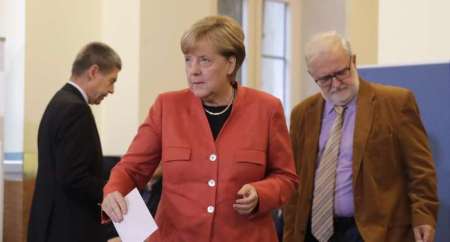
German Chancellor Angela Merkel casts her vote in Berlin, Germany, Sunday, Sept. 24, 2017. Merkel is widely expected to win a fourth term in office as Germans go to the polls to elect a new parliament. (AP Photo/Markus Schreiber)

Today’s results are a clear sign that German voters are just about fed up with Merkel’s (and Schulz’s) immigration policy. It’s because of Merkel that millions of Syrians, North Africans, Middle Easterners — and on and on — have flooded into Europe in the last few years.

*****************************

Although Angela Merkel’s Christian Democratic Union lost 9 percent compared to the last elections, her party has yet again become the largest party in Germany’s parliament today. Merkel’s CDU won 32.5 percent of the vote. That’s significantly less than four years ago, but because Germany’s electorate is more divided than ever before, it’s enough to make her chancellor once more.

However, that’s only if she’s able to form a coalition with the liberal Free Democrats and the Greens, who finished the day with 10.5 and 9.4 percent of the vote, respectively.

For Merkel, the results will leave a bitter taste in her mouth — not only because she has lost support and now needs other parties to form a coalition government, but also because she now has a competitor to her right. For the first time in decades, a right-wing populist party has won enough votes to get into the Bundestag. Alternative für Deutschland, which is routinely depicted as “racist” in the American media, won 13.5 percent of the vote, making AfD Germany’s third largest party.

The second-largest party is the SPD. However, if Merkel is somewhat disappointed, today truly was a day from hell for the SPD and its leader Martin Schulz. The SPD ended the day with a mere 20.2 percent of the vote. That’s the worst result for the social democrats since the end of the Second World War. As a result, Schulz has already announced that he is not willing to form a coalition with Merkel.

Today’s results are a clear sign that German voters are just about fed up with Merkel’s (and Schulz’s) immigration policy. It’s because of Merkel that millions of Syrians, North Africans, Middle Easterners — and on and on — have flooded into Europe in the last few years. She encouraged that wave of mass migration by telling everybody that “we can deal with it” (“Wir Schaffen das“). Well, perhaps she can schaff it, but German voters beg to differ. They see what has happened to their country, to their cities, and to their neighborhoods, and want no more of it. That’s why the CDU and the SPD have lost, while the AfD has not only passed the voting threshold of 5 percent but has done so with great ease.

This despite the fact that AfD has routinely been portrayed as neo-Nazi racist scum, not only in the media but also by Germany’s other parties. To break through regardless shows just how much potential this party — or any other right-wing populist party — has.

Hugh Fitzgerald: Pope Francis, Confusing and Confused

September 24, 2017

Hugh Fitzgerald: Pope Francis, Confusing and Confused, Jihad Watch, September 24, 2017

(Please see also, The Pope of Islam and my parenthetical comment.– DM)
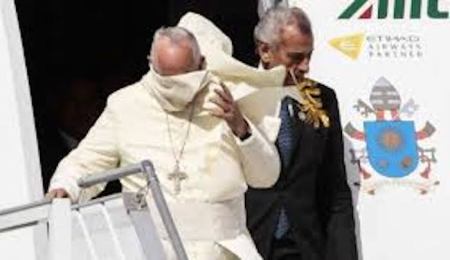
Pope Francis is a strange man. He has seemed, at times, to grasp the nature of the threat to Europe of what he once had no hesitation in describing as an “Arab invasion.” Here is what he said in 2014 in an interview with La Vie:

“The only continent that can bring about a certain unity to the world is Europe,” the Pope adds. “China has perhaps a more ancient, deeper, culture. But only Europe has a vocation towards universality and service.” … “If Europe wants to rejuvenate, it is necessary for it to find anew its cultural roots. Of all Western countries, the European roots are the strongest and deepest. By the way of colonization, these roots even reached the New World. But, by forgetting its history, Europe weakens itself. It is then that it risks becoming an empty place.”

La Vie: “Europe, an empty place? The expression is strong. … Because in the history of civilizations, emptiness always calls fullness to itself. Incidentally, the Pope becomes clinical [in his diagnosis]:

“We can speak today of an Arab invasion. It is a social fact.” … “How many invasions Europe has known throughout its history! It has always known how to overcome itself, moving forward to find itself as if made greater by the exchange between cultures.”

Clearly the Pope is torn between recognition of the parlous state Europe is now in (“we can speak today of an Arab invasion”), and faith in its amazing powers of recuperation, as he sees it in his pollyannish fashion, for this “Europe..has always known how to overcome itself, moving forward to find itself as if made greater by the exchange between cultures.”

So which is it? Is it a Europe that will “find anew its [own] cultural roots” to withstand “an Arab invasion,” or is it, rather, a Europe that ought not to fear that “Arab invasion” since it can only be “made greater by the exchange between cultures”? The Pope seems to be suggesting that both are true.

But what if this time Europe will not be “made greater” by some fructifying “exchange between cultures”? The tens of millions of Muslims who have been allowed to settle in Europe, behind what their own faith teaches them to regard as enemy lines, are not there for some kind of cultural exchange but, rather, to take what they can get, in welfare benefits and through crime, from the Unbelievers, and through inexorable demographic conquest, by degrees to subjugate the Unbelievers, until Islam everywhere dominates, and Muslims rule, everywhere.

The Muslims now in Europe are far more numerous than any previous “invasion” of immigrants, with 44 million of them now present (if we include those in European Russia), with millions more attempting, however they can, to get to Europe. These are economic migrants. They come intent on finding the most generous of welfare states; hence the desire of these migrants to make it to Sweden and Germany instead of remaining in Italy or Spain. But everywhere in Europe, albeit to different degrees, these Muslims can batten on free or highly subsidized housing, free education, free (and advanced) medical care, family allowances, subsidized or free food, and unemployment benefits (though almost no Muslims have paid into the unemployment system).

With all that on offer, Muslim migrants are in no apparent hurry to learn the skills, or the local language, that might make them employable. Why have a job when the Infidel state provides you with so much? Is it any wonder that in Sweden, one of the most generous of welfare states, of the 163,000 “asylum seekers” who arrived in  2015, by mid-2016 only 494 had jobs? Pope Francis appears to believe that when two or more groups jostle one another, this automatically leads to a welcome “exchange between cultures.” But where, in what part of the world, have those who have endured a Muslim invasion, slow or quick, having experienced this “exchange” emerged the better for it? What happened to the Christians all over the Middle East and North Africa, after the Arabs arrived to islamize and then arabize lands? The Christians were greatly reduced in numbers — some killed by their Muslim conquerors, while many others, over time, converted to Islam in order to spare themselves the payment of the Jizyah and the other onerous conditions imposed on them as dhimmis.

Where in Europe can one say that the indigenous non-Muslims are better off, socially, economically, politically, or even culturally, because of Muslim migrants? Isn’t it truer to say that the large-scale presence of Muslims in Europe has created a situation that is far more unpleasant, expensive, and physically dangerous for those indigenes, and for other, non-Muslim immigrants, than would be case without that large-scale presence?

The Pope may be thinking of other, more fructifying encounters among peoples in the distant past. He may be thinking of the Roman and the Celt in Western Europe, of the Angles and the Saxons and the Normans in England, of Basques, Catalans, and Castilians in Spain, or of the many different peoples who made America America, perhaps the most successful example of the mixing of peoples in history. He may be thinking of his own country, Argentina, with the engrafting of later arrivals — Italians, Germans, Jews — onto the Spanish tree.

When the Muslims conquered non-Muslim lands, they did not mix as equals with those they conquered and subjugated. The ancestors of the several hundred million Muslims now in Pakistan, Bangladesh, and India, for example, were once Hindus and Buddhists, who in the past converted to Islam in order to avoid living as dhimmis. In Kashmir, the Muslims have driven 200,000 Hindu Pandits out of the area into India proper. There has been no splendid cultural synthesis between Hindu and Muslim, or Buddhist and Muslim, anywhere on the subcontinent.

In many islamized and arabized countries, the non-Muslim — usually Christian — population was greatly diminished. There was no apparent benefit, no “exchange between cultures.” Even where non-Muslims have remained a significant part of the population, as the Copts are in Egypt, even though payment of the Jizyah is no longer demanded, they live lives of great physical insecurity and are subject to attack from Muslims. Possibly the grimmest result of the Iraq War was that when the Americans removed Saddam Hussein, who for his own reasons had protected the Christians, the Christian population plummeted from 1,400,000 in 2003 to 250,000 today. Apparently the Christians — both Assyrians and Chaldeans — who had lived with the Muslims for centuries, realized that without a protector, even one as ruthless and cruel as Saddam Hussein, their own lives were at permanent risk.

The Pope derives his apparently unshakeable belief that only good can arise when cultures collide from an insufficient understanding of Islam. He appears to complacently believe that all faiths resemble one another, and that all Believers desire the same things. None of this is true. For Muslims, humans are uncompromisingly divided between Muslims (“the best of peoples”) and Unbelievers (“the most vile of creatures”), and the world itself is similarly divided between Dar al-Islam, the lands where Muslims rule, and Dar al-Harb, the lands where Unbelievers still rule.

The Pope has in the past defended Islam so stoutly that he was once thanked by Ahmed al-Tayeb, the Grand Imam of Cairo’s Al-Azhar, for his “defense of Islam against the accusation of violence and terrorism.” It’s not praise for which he should be proud.

Pope Francis has even seemed to defend, albeit obliquely, the killing of the Charlie Hebdo cartoonists, by saying that “it is true that you must not react violently, but even if we are good friends, if [an aide] says a curse word against my mother, he can expect a punch, it’s normal. You can’t make a toy out of the religions of others. These people provoke and then (something can happen). In freedom of expression there are limits.” Let’s look that over: Pope Francis is comparing his landing a “punch” on someone who maligns his mother to the cold-blooded premeditated murder of a dozen people because they dared to draw Muhammad. And since he’s Pope, no one in his entourage will dare attempt to morally set him straight.

Last February, Pope Francis insisted that  all religions are equally innocent of the charge of terrorism: “Christian terrorism does not exist, Jewish terrorism does not exist, and Muslim terrorism does not exist. They do not exist. There are fundamentalist and violent individuals in all peoples and religions—and with intolerant generalizations they become stronger because they feed on hate and xenophobia.” Does the Pope not know of the verses in the Qur’an that explicitly command Believers to “strike terror” in the hearts of Unbelievers? Apparently not. He could start with 8:12: “I will cast terror into the hearts of those who disbelieve. Therefore strike off their heads and strike off every fingertip of them.” Or 8:60: “Against them make ready your strength to the utmost of your power, including steeds of war, to strike terror into (the hearts of) the enemies, of Allah and your enemies, and others besides, whom ye may not know, but whom Allah doth know. Whatever ye shall spend in the cause of Allah, shall be repaid unto you, and ye shall not be treated unjustly.”

Has Pope Francis not seen on television the killers of Drummer Lee Rigby holding up the Qur’an? Has he never heard the many terrorists, from ISIS, from Al-Qaeda, from Boko Haram,  who recite verses from the Qur’an that justify their acts? Is he deliberately keeping himself in the dark about this? Muslim terrorism is not a product of lone madmen, but of those Muslims who have become especially devout, and take to heart the Qur’anic commands to wage Jihad, and to strike terror in the hearts of the enemies of Allah. They feed on the Islamic texts themselves; they have no need to “feed on hate and xenophobia” from Unbelievers.

What “hate and xenophobia” had Osama Bin Laden or Ayman al-Zawahiri experienced? Or the two killers of Drummer Rigby? Or the Muslim who mowed down pedestrians on the Promenade des Anglais in Nice, or the Muslim who plowed through crowds on Las Ramblas in Barcelona? Had Major Nidal Malik Hassan, who had his complete medical education paid for by the U.S. army, and was earning a salary of $90,000 a year, been treated at all badly by anyone with whom he worked, or was he merely fulfilling Qur’anic commandments when he slaughtered twelve fellow servicemen? What grievances did Mohamed Atta and his 18 co-terrorists have against Americans, other than that they felt murderous hate for all Infidels, precisely for being Infidels? What grievances, what experience of “hate and xenophobia,” explain the behavior of the couple who killed their fellow co-workers at a Christmas party in San Bernardino? What “hate and xenophobia” did Aafia Siddiqui, who received scholarships to Brandeis as an undergraduate,  and to MIT for graduate study, have to endure, she who led a charmed academic life as a cosseted student, until she threw in her lot with Al-Qaeda?

The Pope claims that he finds unacceptable the  very phrase “Islamic violence,” because, of course, there are non-Muslims who commit violence:

“I don’t like to talk about Islamic violence, because every day, when I read the newspaper, I see violence.” He said, according to Crux, that “when he reads the newspaper, he reads about an Italian who kills his fiancé or his mother in law.” The pontiff added: “They are baptized Catholics. They are violent Catholics.” He said that if he spoke about “Islamic violence,” then he would have to speak about “Catholic violence” as well.

The obvious response to this is simple: Italian Catholics, or Swedish Protestants, who kill their wives, or fiancés, or mothers-in-law, are not following the teachings of their religions. But Muslims find, in more than a hundred verses of the Qur’an, calls to commit violence against Infidels. The Pope’s inability to make that simple distinction is deeply disturbing.

Pope Francis can hardly be unaware that all over the Muslim lands, Christians, whether they are converts or born into the faith, have been persecuted, attacked, killed by Muslims through the centuries, and in our own time. Such killings have taken place in Iraq, in Syria, in Egypt, in Pakistan, in Libya, in Somalia, in Yemen, in Iran, in Sudan, in Eritrea, in Afghanistan, in Indonesia. Even Angela Merkel, so tireless in her efforts to increase the Muslim population of Germany, has admitted schizophrenically that “Christianity is the most persecuted religion in the world.” She knows perfectly well who is doing the persecuting. The Pope appears not to recognize this, leaving his flock to fend for itself. He has certainly never wanted to believe that the Muslim persecution of Christians arises naturally from the texts and teachings of Islam. He avoids all mention of what is in the Qur’an. Instead, the Pope exculpates Islam at every term. He insists there’s no specifically “Muslim terrorism,” but only the terrorism of disturbed individuals, Muslim, Christian, and Jewish. He finds it perfectly understandable why Muslims would take violent offense at someone dissing their Prophet. But while Muslim violence would in such a case be perfectly understandable, he has made it clear, back in 2013, that he believes  that “authentic Islam and the proper reading of the Koran are opposed to every form of violence.”

It’s impressive that Pope Francis is such an expert on Islam and the “proper reading” of the Qur’an, and knows so much more about the matter than Yusuf al-Qaradawi, and the Grand Imam of Al-Azhar, Ahmed el-Tayeb, and the Ayatollah Khomeini, and dozens of senior Muslim clerics, all of whom seem to think that the proper reading of the Qur’an requires violence against the Infidels. “I spit on those who say that Islam is a religion of peace,” said Khomeini. What does Pope Francis think of his remark? Anything? Nothing? That the learned Shi’a cleric who has been studying Islam all of his life — he’s an Ayatollah, for god’s sake — is badly misinformed about the peaceful essence of his faith?

Pope Francis’s recent lecture to the peoples and governments of Europe is cause for real alarm. In the midst of Muslim terror attacks from Spain to Finland, and the return to Europe of thousands of ISIS supporters, and the inability of European governments to halt the flow of Muslim migrants, the Pope chose that moment to tell Europeans that they must care less about national security and more about admitting all those who want entry. It’s an extraordinary demand. The first duty of any government is to protect its citizens. The danger of Islamic terrorism is real, and increasing:  we have had more than 31,700 such attacks since 9/11 alone.

The Pope has never addressed this menace forthrightly. Instead of assuming he’s an expert on Islam,  he might practice the humility he preaches and take tuition on Islam from a real Muslim, Yahya Cholil Staquf, general secretary of the Nahdlatul Ulama in Indonesia, a group with about 50 million members, making it the country’s biggest Muslim organization. And Yahya Staquf berates Western leaders who “should stop pretending that extremism and terrorism have nothing to do with Islam. There is a clear relationship between fundamentalism, terrorism, and the basic assumptions of Islamic orthodoxy. So long as we lack consensus regarding this matter, we cannot gain victory over fundamentalist violence within Islam.”

The Pope’s latest message makes no mention of the continuing existence, and increase, of Islamic terrorism. Instead, the Pope urges countries in Europe to make still greater efforts than those they have for so long been making on behalf of Muslims. The Pope demands that governments not merely allow in as many millions of “refugees” as manage to arrive — apparently there is to be no limit — but that they “welcome, protect, promote and integrate migrants.”

Let’s stop right there. Why should Europe “welcome” those who, as Muslims, are taught to despise (Qur’an 98:6) them, commanded by their holy book to “strike terror” in the hearts of Unbelievers (8:12, 8:60), to “smite at their necks” and “cut off their fingertips,” and in more than a hundred Qur’anic verses, commanded as well to wage Jihad against them (e.g., 2:191-193, 9:5, 9:29, 47.4)? It is the Europeans who for several decades now have allowed in many millions of Muslims, so that there are now 44 million Muslims in Europe (including European Russia). They have welcomed them, protected them, promoted and tried to integrate migrants. What has been the result?

Pope Francis may not have been paying proper attention, but the result of this influx has not been some welcome convivencia, to use the word favored by Muslim apologists, when they offer as a model for the present day a sanitized version of Islamic Spain where, they want us to believe, Muslims, Christians, and Jews got along splendidly. Instead, Muslim terrorists have struck everywhere in Europe: in London and Manchester, in Nice and Toulouse, in Madrid and Barcelona, in Brussels and Amsterdam, in Berlin and Munich and Wurzburg, in Copenhagen and Stockholm and Turku, in Moscow and St. Petersburg and Beslan. And outside of Europe, there are all those attacks by Muslim terrorists in Asia (Mumbai, Kashmir, New Delhi, Jakarta, Beijing, Urumqi).

None of this appears to have made an impression on Pope Francis. He insists on repeating religious bromides, as that “Jesus’ message of love is rooted in welcoming the ‘rejected strangers of every age.’” He fails to recognize that the Muslim “strangers” were not rejected, but initially were welcomed, and it is only in a very belated response to what they have done, and are doing, in Europe that this welcome has evanesced, and both the attitudes and behavior of Muslims and greater familiarity with the Qur’an, has led Europeans to regard the Muslims in their midst not with baseless prejudice but with well-justified suspicion and fear. Or does the Pope believe that nothing any “strangers” do ought to dis-entitle them to the welcome, protection, promotion, and integration that he thinks they automatically deserve and that, equally without foundation, he thinks they will requite? How much contempt or hatred from Muslim migrants should non-Muslims be expected to endure?

What “protection” for Muslim migrants does he have in mind? This sounds as if he thinks the Muslim immigrants will  will require “protection.” But where are the news items about attacks on such immigrants? All the attacking has been done by, and not to, Muslim immigrants, and the victims have been the Unbelievers, including Catholics whom Pope Francis is supposed to protect. As for “integration,” can the Pope be unaware of all the efforts made, all the expenses incurred, by European governments, to provide free housing, medical care, education, family allowances, to the immigrants, as well as tutors in the local language, and even interpreters for their children in school, and classes in the customs and laws of the country, in order to “integrate” Muslim migrants?

It’s difficult to see what more could be done to attempt to integrate Muslim migrants. What the Pope fails to recognize is that Muslim migrants do not want to “integrate” into the society of despised Infidels; they want, instead, to be faithful to the ideology of Islam, as for example in its misogynistic treatment of women, and not to adopt the customs and laws of the Unbelievers. The Pope might ask himself why it is that Muslims are the only immigrants who have enormous trouble in integrating into Western societies. The efforts to integrate Chinese, Hindus, or black African Christians have been much more successful. Shouldn’t the Pope ask himself why all these other “strangers” have managed to integrate, while Muslims have not? The Pope wants you to believe, as he does, that if there is a problem with “integration,” it is never the fault of the migrants and their ideology, but of the rich white West that has failed to make the efforts necessary for immigrants to truly succeed. Isn’t the real barrier to integration by Muslims their own insistence on the superiority of Muslims, as the “best of peoples,” and their belief that non-Muslims are the “most vile of creatures,” and that they need to show love to fellow Muslims and hatred to Unbelievers, following the doctrine of al wala wal bara with which, one has the uneasy feeling, the Pope is unfamiliar, and even more disturbing is the thought that were it brought to his attention, he would simply refuse to believe it?

The Pope has spoken of the need for “a simplified process of granting humanitarian and temporary visas,” and rejected arbitrary and collective expulsions as “unsuitable.” He said the principle of ensuring each person’s dignity “obliges us to always prioritize personal safety over national security.”

The Pope is saying here that we must always put first the “personal safety” of migrants/refugees/asylum seekers, even if in so doing we are compromising our own national security. Why? The “simplified process” the Pope calls for means that migrants would be allowed in before they have been properly vetted, on “humanitarian” grounds. A “temporary visa” ends up being permanent, as those granted them so often refuse to leave, and when an individual who has overstayed his visa is finally caught, it takes forever to obtain, and then to enforce, a judgment of expulsion against him. Collective expulsions are not only not “unsuitable,” as Pope Francis seems to think, but the only way to deal effectively with tens or hundreds of thousands of people. No country in Europe can devote the kind of attention to individual cases that the Pope seems to think is desirable; half the government would be tied down studying those “individual cases.” No government has the manpower or the money to entertain such a policy. And keep in mind, as the Pope never does, that immigration is not a right, but a privilege. Surely, any European state that refuses to admit as immigrants people whose consuming ideology teaches them to hate, and wage war against, those they regard as Unbelievers (which is what those Europeans are), is fully justified. Pope Francis, secure in his Vatican apartments, does not grasp the need, in deciding whom to admit and whom to keep out, for administrative efficiency, and following the dictates of common sense, to judge groups rather than individuals. Is it wrong to treat a group of Muslims claiming to be “refugees” from Somalia and a group of Christians fleeing Iraq differently, privileging the latter and being deeply suspicious of the former?

The Pope thinks Europeans owe migrants a great deal. But which migrants? And for what? For the Pope, all immigrants are equal, and their presence an unalloyed benefit. It’s total nonsense. This is what the late Oriana Fallaci deplored in some Catholic clerics: il buonismo, or goody-goodiness, particularly in regard to Islam. She would be horrified to see what Pope Francis is now suggesting. Border guards, he claims, must be trained to protect not borders from illegal migrants, but those illegal migrants themselves, presumably to lend them succor and a helping hand as  they come across. They should, Pope Francis says, be guaranteed access to “basic services beyond health care.” Again, one must plaintively ask: why? Because they are there? Because they are breaking the law? Why do they even deserve “health care”? He lists as “basic services” such things as “access to consulates, the justice system, the ability to open a bank account” — that last presumably with money provided by generous Infidel taxpayers. Migrants should be given the ability “to survive financially.”

So if, say, an Iraqi family, with six children, and not one speaking a word of Italian, manages to make it to the Italian island of Lampedusa, instead of sending them back to Libya, where they would share the same religion and language as its inhabitants, they should all be admitted, according to the Pope, to Italy, where they have nothing in common, religiously, linguistically, culturally, with the Catholic Italians, and instead, bring in their mental luggage, undeclared, an inculcated enmity toward Italians as Infidels (see the Qur’an, see the Hadith). They should immediately be provided with basic needs, says the Pope. This of course includes housing, big enough for a family of eight, medical care, and education — all free. No matter that the father speaks no Italian, and has no skills (according to reports, Muslim men in Europe are in no hurry to acquire the training  that might make them employable, for why not help oneself to the Jizyah, and stay on the dole for as long as those foolish Infidels will allow?), no matter that unemployment benefits will have to be paid to support the family, no matter that in addition the government will supply  a family allowance that is determined by the size of the family (and Muslims have much larger families than non-Muslims, and not only in the Middle East). No matter that, because the father married his first cousin — a very common practice in Muslim lands (in Pakistan, consanguineous marriages are 50-60% of the total) — one of the six children may have congenital defects that are colossally expensive to treat, over a lifetime, and for which the Italian taxpayers will be paying. No matter that, when the children go to school, they will have to be provided both with interpreters and with special Italian-language classes. All of this — the housing, the education, the medical care, the family allowances, the unemployment benefits that may become permanent, the interpreters, the language classes, the extra security guards in schools, hospitals, and in other places where Muslims have behaved badly, and of course the huge anti-terrorism apparatus, consisting of police, military men, prosecutors, judges, lawyers, prison guards — adds up to huge sums.

The Pope is indifferent to economic reality. He talks as if the Italian state, and its taxpayers, have endless resources. He may be confusing Italy with Saudi Arabia, or the U.A.E., or Kuwait, or Qatar, Muslim Arab countries which could far more easily “welcome” and “integrate” fellow Muslim and Arab immigrants, and that possess the hundreds of billions of dollars to pay for them, unlike Italy or the other economically struggling nations of Europe, struggling precisely because of the tens of billions of dollars these Muslim migrants cost their host countries, in welfare benefits, and in crimes of both property and sexual assault.

Leaving aside crime, and just taking the difference between the taxes paid and the welfare benefits received, in the U.K. alone the cost of these Muslims migrants, for one year, is about 24 billion dollars, and that annual amount will only increase as their numbers increase, both through a high birth rate and immigration. If we attempt to add up the amount spent on these mostly Muslim migrants (immigrants from Eastern Europe, in fact, pay more into the system than they receive in benefits, so including them in our calculations actually helps to hide the real cost of Muslim immigrants), the cost to all the European countries comes to more than $200 billion dollars a year — a colossal sum. Does the Pope care about such things, and what that expense does to the ability of European governments to take care of their own poor? Why doesn’t the Pope publicly address the deep-pocketed rulers of Saudi Arabia, Kuwait, Qatar, the United Arab Emirates, and ask why they are not taking in these migrants who share their language and religion, people who could be far more easily integrated in Arab lands than in Europe, rather than insisting that the burden be borne by the long-suffering European Infidels?

At any time, such naivete and heedlessness as Pope Francis exhibits would be difficult to take. At this moment in world history, when the leader of the Catholic Church appears determined not to understand the meaning, and menace, of Islam, while Christians are everywhere under assault by Muslims, and Muslims are knocking at Europe’s gates and demanding to be let in without delay, to enjoy every benefit offered by those generous welfare states, even as the Muslim recipients continue to despise the Infidel providers of such benefits, his complacent buonismo is intolerable.

Pope Francis is 81. He still has plenty of time to do even more damage. In early September, he sent his secretary for relations with states, Paul Richard Gallagher, to Tehran to meet with the Islamic Republic of Iran’s Foreign Minister, Mohamed Javid Zarif, where they  discussed the “plight” of the Rohingya in Myanmar, and together no doubt deplored how the Buddhists were treating the innocent, because Muslim, Rohingya. Not a scintilla of sympathy from the Vatican for the Buddhists in Myanmar, not a word about how over the centuries Muslims have treated Buddhists wherever they conquered, nor about how Muslim invaders had brought about the virtual disappearance of Buddhism from India. Nor, of course, did the Pope raise the one issue that he ought to have always on his mind and on his lips: the horrific persecution of, and attacks on, Christians by Muslims, in the Middle East, in Africa, in South Asia, and now — thanks to this  migration he has done nothing to halt or slow down — in Europe too.

The Pope tells us that there is no such thing as “Muslim terrorism.” He knows that “authentic Islam and the proper reading of the Koran are opposed to every form of violence.” He knows that, despite the 31,700 violent attacks by Muslims since 9/11/200, many of them designed to “strike terror in the hearts of the Infidels,” Islam has nothing to do with terrorism. Despite this impressive record of fatuity, perhaps common sense will break through, somehow, and the amiable but misguided Pope Francis will begin to be mindful of the most important of today’s P’s and Q’s, the P of Islamic Practice, and the Q of the Qur’an. It could happen. But don’t hold your breath.
European Attacks Show the Difficulty in Tracking Soaring Terror Suspect Numbers

September 18, 2017

European Attacks Show the Difficulty in Tracking Soaring Terror Suspect Numbers, Investigative Project on Terrorism, September 18, 2017

Managed by the National Counterterrorism Center’s Terrorist Identities Datamart Environment (TIDE) the terror threat list has more than 1 million names on it. Other federal and state agencies have their own “persons of interest” list. Their information sometimes is not shared because of small-minded administrators and long-standing turf wars. This was a problem prior to 9/11.

Yet there are indications this continues to be an issue. The FBI’s National Data Exchange program, initiated in 2008 to foster cooperation among federal, state, and local law enforcement agencies, still does not have full participation due to longstanding mistrust between the groups.

***************************

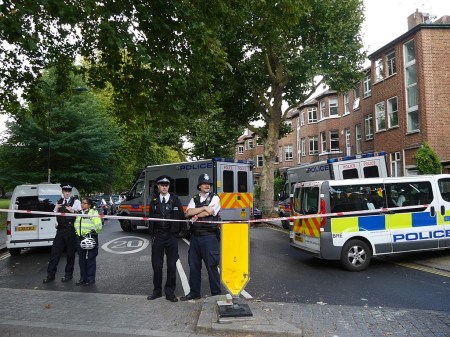
Three separate radical Islamic terror attacks took place Friday in Europe. The most serious was caused by an improvised explosive device (IED) placed on a London underground train in the Parsons Green station which injured more than 30 people.

Witnesses spoke of hearing a “whooshing” sound and then seeing a fireball coming at them from a plastic bucket that was placed unattended on the floor of the rush hour train. The device’s failure to completely detonate was credited with saving lives. “There is no doubt that this was a serious IED (improvised explosive device) and it was good fortune that it did so little damage,” said UK Interior Minister Amber Rudd.

Two men, ages 18 and 21, are in custody. ISIS has claimed responsibility for the attack.

Until the second suspect’s arrest Saturday night, Prime Minister Theresa May raised the terror threat level from severe to critical, meaning that future attacks may have been imminent.

As the number of terror attacks in Europe increases, the question arises whether current counter terrorism strategies are working. Issues such as immigrant vetting, watch lists, and de-radicalization continue to be critical components that require, upon closer examination, changes. At least one of those components failed in each attack.

This was the UK’s fifth terrorist attack this year. Other attacks targeted the Westminster Bridge, Manchester, Borough Market, and Finsbury Park. The terrorists have used knives, vehicles, and bombs to kill and injure both police and civilians.

These incidents have contributed to a 68 percent increase in terrorism arrests in the UK. Authorities say as many as 3,000 people are under active investigation with 20,000 more causing concerns about radicalization and terrorist leanings.

Former New York Police Counter Terrorism Director Mitch Silber believes that some of the UK’s previous counter terrorism and de-radicalization programs have been insufficient. “One of the things the UK will have to do is hire more intelligence analysts, police investigators, and staff in order to be better prepared to match up with the numbers that they are up against,” he said.

Similar statistics are also showing up in France, which suffered two more terror attacks on Friday. A man with a knife shouting “Allah Akbar” attacked a French soldier at the Paris Chatelet subway station. Then, two women in Chalon-sur-Saone were attacked by a man wielding a hammer. He also shouted, “Allah Akbar” as he assaulted the women, witnesses said.

This was the tenth terrorist attack in France this year. France’s terror watch list has more than 18,500 names on it, up from 15,000 a year ago.

So far, the United States has seen only a minimal number of terrorism attacks compared to the EU. In March, the FBI said it had as many as 1,000 open terrorism cases. Many of these involve people returning from Syria and Iraq or ISIS sympathizers. A third of those cases reportedly involve refugees.

The Bureau has also admitted that some of the people who carried out recent terrorist acts in the U.S. were “previously known to authorities.” That includes Orlando nightclub shooter Omar Mateen, Boston Marathon bomber Tamerlan Tsarnaev, and would-be Garland, Texas shooter Elton Simpson.

People can become known to authorities in several ways. There may have been a prior allegation of radicalization, or an incident which caused federal or state law enforcement agencies to interview the subjects or their families. This creates a paper trail which may or may not be shared with other agencies.

We also have a watch list.

Managed by the National Counterterrorism Center’s Terrorist Identities Datamart Environment (TIDE) the terror threat list has more than 1 million names on it. Other federal and state agencies have their own “persons of interest” list. Their information sometimes is not shared because of small-minded administrators and long-standing turf wars. This was a problem prior to 9/11.

Yet there are indications this continues to be an issue. The FBI’s National Data Exchange program, initiated in 2008 to foster cooperation among federal, state, and local law enforcement agencies, still does not have full participation due to longstanding mistrust between the groups.

Any list is likely to include duplications and erroneous entries, but still the numbers are mind boggling. How do you keep track of more than 1 million potential suspects? It is critical to make resource sharing and information sharing priorities if the information contained on the lists is to be of any value in preventing future terror attacks.

It will require decisive action both from the congressional and executive branches. An agreement on how to properly vet individuals from countries ravaged by war or terrorist attacks seeking refugee status would help. A clear policy on what to do with people who commit terrorist acts would address the growing concern of what happens when someone who has been radicalized is released from prison.

If we do not address this issue sooner or later some that have been released will return to the battlefield. The environments where radicalization seem to thrive most – cyber chat rooms, websites, prisons and radical mosques – must be countered.

Otherwise we’re just fooling ourselves into thinking we can avoid the surge in terror attacks that we see in Europe. As coordinated military action continues to squeeze ISIS and regain territory in the Middle East, it undoubtedly will increase its call for followers to carry out attacks in their home countries.

The U.S. will not be immune from the threat.

A Month of Islam and Multiculturalism in Britain: June 2017

July 28, 2017

A Month of Islam and Multiculturalism in Britain: June 2017, Gatestone InstituteSoeren Kern, July 28, 2017

Nazir Afzal, a former chief crown prosecutor and one of the most prominent Muslim lawyers in Britain, warned that an “industry” of Islamist groups in the country is undermining the fight against terrorism. He singled out the Islamist-dominated Muslim Council of Britain and also condemned “self-appointed” community leaders whose sole agenda was to present Muslims “as victims and not as those who are potentially becoming radicals.”

Col. Richard Kemp, former commander of British forces in Afghanistan, charged London Mayor Sadiq Khan with “appeasing jihadists” for authorizing the Al-Quds Day march.

More than 40 foreign jihadists have used human rights laws to remain in Britain, according to an unpublished report delayed by the Home Office.

June 3. Khuram Shazad Butt, a 27-year-old Pakistani-born British citizen, Rachid Redouane, a 30-year-old who claimed to be Libyan and Moroccan and Youssef Zaghba, a 22-year-old Moroccan-Italian, murdered eight people and injured 50 others in a jihadist attack on and around the London Bridge. The three assailants were shot dead by police. It was the third jihadist attack in Britain in as many months.

Floral tributes at London Bridge on June 6, 2017, following the 3 June 2017 terrorist attack. (Image source: Matt Brown/Wikimedia Commons)

June 3. Nazir Afzal, a former chief crown prosecutor and one of the most prominent Muslim lawyers in Britain, warned that an “industry” of Islamist groups in the country is undermining the fight against terrorism by peddling “myths” about the Prevent strategy, the government’s key anti-radicalization policy. He singled out the Islamist-dominated Muslim Council of Britain, and said he was shocked that in the agenda for its annual meeting there was “nothing about radicalisation and nothing about the threat of people going to Syria.” Afzal, who prosecuted the Rochdale sex-grooming gang, also condemned “self-appointed” community leaders whose sole agenda was to present Muslims “as victims and not as those who are potentially becoming radicals.”

June 3. Khalid Al-Mathkour, chairman of Kuwait’s sharia council, and Essam Al-Fulaij, a Kuwaiti government figure known for his anti-Semitic diatribes, are listed as trustees of a UK-registered charity that is building a mosque in Sheffield, according to the Telegraph. They have helped channel almost £500,000 ($650,000) into the project from Kuwait. Another £400,000 ($525,000) has been donated to the charity, the Emaan Trust, by a Qatari organization. The stated aim of the new mosque, which will have a capacity for 500 worshippers, is to “promote and teach Islamic morals and values to new Muslim generations.”

June 4. Prime Minister Theresa May said there was “far too much tolerance of extremism” in Britain and promised to step up the fight against Islamic terrorism after the London Bridge attack. “Enough is enough,” she said. May also claimed the jihadists held to an ideology that was a perversion of true Islam: “It is an ideology that claims our Western values of freedom, democracy and human rights are incompatible with the religion of Islam.”

June 5. Conservative election candidate Gordon Henderson said that Muslims are duty bound to report extremists in their midst:

“The only people who can defeat the Islamic terrorists are the British Muslims in whose midst they find sanctuary. It is time for peace-loving Muslims to start providing information to the police about those within their community that they suspect of plotting attacks. The only other option is to put all suspected terrorists in internment camps, and that is not a route I would like to go down. We tried it with the IRA and all it did was make the prisoners into martyrs.”

June 6. Khuram Butt, one of the London Bridge attackers, was known to British authorities, according to the Telegraph. He had appeared in a Channel 4 documentary about British extremists called “The Jihadis Next Door.” Butt was also filmed at events attended by questionable Islamic preachers, and had tried to go to Syria to become a jihadist there.

June 7. Three “Asian girls” shouting “Allah will get you” slashed a woman near a nursery in Hermon Hill, London. The victim, named as Katie, was walking along the street when she was ambushed from behind. Police said they were not treating the attack as a terrorist incident.

June 10. Conservative peer Sayeeda Warsi, the first Muslim woman to serve in a British cabinet, said that Britain’s relationship with its Muslim community needs to be reset from scratch:

“When things go wrong with an iPhone or a coffee machine, pressing the restart button is usually a good, safe place to start. Right now, Britain’s relationship with her Muslims is within that frozen, overloaded, splurging episode — we need to press the button….

“Just because you don’t speak English does not mean you’re going to be a terrorist — the majority of terrorists speak good English. Secondly, there’s always a fraction of religious groups that choose to live separate lives and that is not an issue of integration. We have to keep the issue of terrorism and integration separate.”

June 10. Police increased patrols at local mosques in Cambridge after strips of bacon were left on four cars parked at the Omar Faruque Mosque. A 19-year-old man was arrested and charged with religiously aggravated criminal damage.

June 11. Commissioner of the Metropolitan Police Cressida Dick said that jihadists do not discriminate between Muslims and non-Muslims in their attacks:

“An attack in London is an attack on all of us. I understand Muslim communities are feeling shattered and there are concerns within the community that it may find itself as a target of hate crimes.

“What I will say to the Muslim communities is that we must all stand up in the face of terrorists. The London Metropolitan Police are here to work with Muslims, to protect them and to work with them to stop crimes. If you are a target, we will work hard to protect you.”

June 13. Mak Chishty, who recently retired as the most senior Muslim police officer in Britain, said it was time for Muslims to stop “skirting around the issues” and have some “very difficult conversations.” He issued a “call to action” to all British Muslims, urging them to launch a social media blitz to let the rest of the country know how strongly they feel about extremism:

“I would like to issue a call for action today for every single Muslim, from a young person all the way through to my mother-in-law who is well in her mid-60s but has got a WhatsApp or a Facebook, to get on there and start to denounce extremism as not theirs.

“All of a sudden, maybe you will find that these extremist voices start to shrink… remove their dominance, starve them of oxygen. Make sure they have got a powerful lobby against them. We can do that now, we can do that today.”

Chishty also said that terrorism and extremism is “hurting” Islam:

“It is the Islamic duty of every Muslim to be loyal to the country in which they live and we are now asking questions to understand how extremism and hatred has taken hold within some elements of our own communities. Muslims must do more to stop such attacks from happening again and we want to know how we can play a greater role in the future.”

June 13. Lugman Aslam, 26, was sentenced to five years in prison for plowing his van into five men in Leicester after an argument during Ramadan. Aslam admitted to dangerous driving and attempting to inflict intentional grievous bodily harm. Recorder Justin Wigoder said:

“You quite deliberately drove your van at that group who were walking along the pavement. I’ve seen it on CCTV and you deliberately mounted the pavement and drove straight at them and right through the middle of them at speed…. I accept it was completely out of character. You’re of very positive good previous character and I’ve received a considerable number of references setting out all the good that is in you. You’re a good family man with a young daughter and I take that very much into account.”

June 14. Shamim Ahmed, a 24-year-old Bangladeshi from Tower Hamlets, East London, was sentenced to six years in prison for trying to join the Islamic State in Syria. During his trial, Ahmed pointed his finger at Judge John Bevan QC and warned him he, Ahmed, would continue to “wage jihad”: “Give me 20 years, I will come out the enemy.”

June 15. New statistics showed that in the year to March 2017, police arrested 304 people for terrorism-related offenses — a 20% increase compared to the previous 12 months. Combined with those held since March, the total arrests in 2017 may top the previous record of 315, set in 2015.

June 18. Hundreds of anti-Israel protesters carrying Hezbollah flags marched through the streets of London to mark Al-Quds Day (Jerusalem Day), an annual event initiated by the Islamic Republic of Iran in 1979, ostensibly to support the Palestinians, but undoubtedly to promote hatred of Jews. At a rally outside the U.S. Embassy after the march, one speaker blamed the fire at London’s Grenfell Tower public housing project on so-called Zionists. “Some of the biggest supporters of the Conservative Party are Zionists,” the speaker ranted. “They are responsible for the murder of the people in Grenfell. The Zionist supporters of the Tory Party.” Col. Richard Kemp, former commander of British forces in Afghanistan, charged London Mayor Sadiq Khan with “appeasing jihadists” for authorizing the march.

June 19. Darren Osborne, a 47-year-old unemployed father of four, drove a van into a group of worshippers close to the Finsbury Park Mosque in North London. One person was killed and eight others were injured in the attack, which police said was premeditated. Osborne was “self-radicalized into his extremist hatred of Muslims,” according to the Guardian.

June 20. Armed police were deployed to the Neolithic Stonehenge to protect thousands of pagans celebrating the summer solstice from jihadist attacks. David Spofforth of the Pagan Federation said it was “very sad” that armed police were necessary: “I am not saying I am welcoming this, I sadly accept it. But you just have to look at the events such as at Finsbury Park, a peaceful religious gathering where people suffered so much by the actions of one hate-filled individual.”

June 22. A Muslim woman sued her former employers after allegedly being ordered to remove her black headscarf because the garment had “terrorist affiliations.” The estate agent had been working for Harvey Dean in Bury for almost a year when she says managers took issue with her hijab. A complaint filed at the Manchester Employment Tribunal said the woman was told that moving from a back office into public view meant “that it would be in the best interest of the business for her to change the color of her hijab, due to the supposed terrorist affiliation with the color black.” The woman said she felt “singled out” as the only Muslim woman in the office and claimed the company discriminated against her on the basis of both religion and gender.

June 23. Amanda Spielman, the head of Ofsted, the schools regulator, vowed to crack down on Islamic extremism in British schools. She said that school children must be equipped with the “knowledge and resilience” required to combat the violent rhetoric “peddled” by hate preachers who “put hatred in their hearts and poison in their minds.” She added:

“One area where there is room to improve is the active promotion of fundamental British values in our schools. Recent attacks in Westminster, London Bridge, Manchester and Finsbury Park have brought into stark relief the threats that we face.”

June 24. More than 40 foreign jihadists have used human rights laws to remain in Britain, according to an unpublished report delayed by the Home Office. The study, a copy of which was leaked to the Telegraph, describes how lawyers, funded by legal aid, have successfully prevented foreign-born terror suspects from being sent back to their home countries.

June 25. Michael Adebolajo, who together with Michael Adebowale murdered British soldier Lee Rigby outside Woolwich barracks in south-east London in May 2013, is now regarded as the most dangerous prisoner in the British penal system, according to prison sources. A prison officer described him as “violent, unpredictable and a major danger to other prisoners.” He has also radicalized dozens of inmates, including non-Muslim prisoners who are said to have converted to Islam and sworn allegiance to the Islamic State. One prison official said:

“Adebolajo spends most of his waking hours preaching his distorted form of Islam to anyone who will listen. He sees every inmate as a potential Islamic State soldier whether they are Muslims or not. He has a big personality and is very charismatic and some of the more vulnerable prisoners will fall under his spell. He is a very dangerous individual.”

June 27. Muslims launched an online petition to oppose a new veil policy at John Thursby Community College, in Burnley, Lancashire. The school announced plans for a universal-length headscarf that some Muslims said is too short and not sufficiently modest. Previously girls were free to choose any length they pleased. Some feel that the move is aimed at deterring girls from wearing headscarves at all. Local councilor Shah Hussain said: “The whole point is that it is supposed to protect the wearer’s modesty, and that does not happen.” The school’s head teacher David Burton said he may reconsider the policy. “We are sorry there have been suggestions that the school is against headscarves. This is not true. We fully respect the wishes of girls to wear a headscarf.”

June 28. The trial began in London of four jihadists — Naweed Ali, 29, Tahir Aziz, 38, Khobaib Hussain, 25, and Mohibur Rahman, 32 — for allegedly plotting a knife rampage on British soil. The men, who called themselves “The Musketeers,” were accused of sharing “the same radical belief in violent jihad.” Prosecutors said the terror plot involved a samurai sword and a meat cleaver with the word “Kafir” (unbeliever) scratched onto the blade. The four men were arrested after a stash of weapons, ammunition, and a pipe bomb were found in Ali’s car during a counter-terrorism operation in Birmingham.

June 29. Three men were arrested in the Armagh and Coalisland areas of Northern Ireland for displaying anti-Muslim posters and stickers. Police said the material — which included the slogan “Rapefugees Not Welcome” — was likely to stir up “racial hatred.”

June 30. Tarik Chadlioui, a 43-year-old Moroccan cleric living in Birmingham with his wife and eight children, was accused of recruiting jihadists for the Islamic State. Chadlioui, a Salafist, is wanted in several European countries and is believed to be the spiritual leader of an Islamic State cell in Spain. Chadlioui, also known as Tarik Ibn Ali, is said to have formed links with jihadist groups which aim to impose Sharia law in Europe.

Lessons from Europe’s Immigrant Wave: Douglas Murray Cautions America

July 24, 2017

Lessons from Europe’s Immigrant Wave: Douglas Murray Cautions America, Investigative Project on Terrorism, Abigail R. Esman, July 24, 2017

Douglas Murray has long voiced his concern about the growing influence of Muslim culture on the West. The associate editor of Britain’s Spectator, a frequent contributor to the Wall Street Journal, and the founder of the Centre for Social Cohesion, a think tank on radical Islam, he has built an international reputation for his opposition to the demographic changes of the West and the threats to its traditions. In his latest book, The Strange Death of Europe: Immigration, Identity, Islam (Bloomsbury, 2017), he attacks all of these subjects as they relate to the current crisis of migration from the Middle East.

It is a controversial book, particularly for Americans and Jews, but one which also makes important arguments against the multiculturalist ideal. That ideal, which once led much of domestic policy across Europe and the United States, has proven not only a failure, but a threat to the values and national security of Western civilization.

The Investigative Project on Terrorism recently spoke with Murray about his book and the concerns that drove him to write it.

Abigail R. Esman: As an American, a Jew, and an immigrant myself to the Netherlands, there are aspects of your arguments against immigration and asylum that are troublesome to me. I come from a country where we are all immigrants, or our parents or grandparents were likely immigrants. You talk for instance of families where “neither parent speaks English as a first language,” yet my husband is Australian and I am American and neither of us speaks Dutch as a first language. So naturally, I come at these arguments with some concern. Are you saying, basically, close the borders?

Douglas K . Murray: It’s only for me to diagnose what’s happening – to see the truth about what is going on. Policy makers will make their own decisions. I have obviously broad views on it, which is that I think you can’t continue at the rate we have now, and I think you have to be choosy about the people you bring in. But you are right, and there are two groups of people who have had trouble with some of the basic things in this book: one is people of Jewish background, and others who come from nations of immigrants, like America. But Britain isn’t a nation of immigrants – we have been a static society with all the benefits and ills that this brings. And I think it is dishonest to say it is the same thing. I realize people who are predominantly Jewish have a particular sensitivity to it, but I think that that’s a particular issue. And why do we say one migration is just like the other It’s like saying because two vehicles went down the same road they are the same vehicle.

ARE: How is it different?

DKM: In the UK, when Jewish migration happened more than a century ago, the main thing was integration, integration into the society, wanting desperately to be part of British society. Why do synagogues in the UK have a portrait of the Queen? And after services, they often sing the British national anthem. It’s very moving. It’s an effort to demonstrate this is what we are and this is what we want to be. You’d be hard pressed to find a mosque with a picture of the queen who sing the anthem.

ARE: That element of integration is crucial, I agree. In America, in fact, immigrants in the past and often even today are eager to give their children Anglicized names: “Michael,” not “Moishe,” “Henry,” not “Heinrich.” Yet you do not see the name changes in Muslims these days. Why do you think that is?

DKM: Because there is less of a feeling to integrate. They want to stay with the country they’ve left but not deal with its economics. Some people find it flattering – that people want to move to your country – they say well, it shows what a wonderful place we are. No, it shows that your economics work better.

ARE: You also write about Muslim enclaves in Europe where “the women all wear some form of head covering and life goes on much as it would if the people were in Turkey or Morocco.” How is that different than, say, Chinatowns, or Orthodox Jewish neighborhoods in America and say, Belgium, where women wear wigs and men have peyas, or sidelocks?

DKM: The example of Chinatown-like places is a good comparison. These are places that are mini-Chinas, they are enjoyed and liked by people because they are a different place. Well, if people want to have a mini-Bangladesh, that’s one vision of a society. It’s not the vision we were sold in Europe. It was not meant to be the case that portions of our cities were meant to become totally different places. In the 1950s the British and other European authorities said we have to bring people into our countries and we will get a benefit in labor. But if they had said that the downside is that large portions of the area would be unrecognizable to their inhabitants, there would have been an outcry.

And the issue of them being different from Hasidic communities – you’re right, they are similar. You can go to Stamford Hill in North London and see most of the men in hats and so on and that’s because that’s an enclave that wants to keep to itself. That raises questions: one, people don’t mind that, for several reasons – one is the recognition that Orthodox men don’t cause troubles. We don’t have cases of Orthodox men going out and cutting off people’s heads. If four Jewish men from Stamford Hill had blown up buses some years back there would be concern about these enclaves.

And also those enclaves are not growing. If it was the case that these enclaves were becoming areas where all the city was hat-wearing Orthodox Jews, then people would say wait, what is that? You can applaud that or abhor it, but it’s important to mention.it.

ARE: In the Netherlands, which has some of the toughest immigration policies in the world, people from certain countries are required to take “citizenship” courses before they can even enter Dutch borders. They have to learn the language, they have to learn about Dutch values, and that no, you can’t throw stones at Jews and gay people and that gay marriage is legal and women wear short dresses. Would you recommend other countries take on the Dutch policy of citizenship courses?

DKM: I make this point in the book. You say we could have done more and better, but the fundamental thing is that none of it was ever expected in the first place. No one ever thought that we would be in the situation we are now in. We didn’t expect them to stay. That’s a very big misunderstanding. Why wouldyou ask people to become Dutch citizens if you expect them to go home in five years? Why if you only expect them to stay in Britain for only 10 years? But then we realized they would stay and then we said, “we have to let them practice their own culture.” But for us to have acted as you suggest we would have had to know [at the time].

So yes, I think it’s a bare minimum for Europe to have the Dutch policy, even at this very late stage. I’m of the inclination that this is too little too late, but I wish everyone luck with it.

ARE: What about Yazidi women, Syrian Christians?

DKM: Again, it comes down to the Jewish question – because people think that every refugee is like a Jew from Nazi Germany. But if you were to think of a group that was facing an attempt to wipe them off the face of the earth then yes, you’d have the Yazidis. But there are people on all sides of the Syrian civil war, which are a minority of people coming to Europe – these are people fleeing sectarian conflict, but none of them are fleeing an effort to wipe them out as a people. So the lazy view, and it is quite often pushed by Jewish groups which I think is a mistake – is to suggest that it is similar to Nazi Germany. And I wish more care were taken in this.

ARE: Is this in your mind a way of stopping radical Islam? Because so many of the radicalized Muslims are actually converts. How would it help?

DKM: We know that people who convert to anything tend to be fundamentalist. But the important thing is, if you were pliable to be converted, available to be converted, then it raises the question of what kind of Islam do we have in these countries? If it were people finding Sufism, rather than hardcore Salafism, maybe it would be different. I have a friend who is a Muslim who was on a trip some years ago who told me the story of introducing a Muslim woman to one of the senior clerics at Al-Azhar and she wouldn’t shake his hand. He asked her why not. She said, “Because I’m Muslim.” So he asked her how long she’d been a Muslim, and she said “Six years.” He said, “I’ve been a Muslim for eight decades.” And then he turned and said to his friend in Arabic, “What kind of Muslims are you making in Britain?”

ARE: One thing the American Muslim community seems to have over its European brethren is its successful integration into society. Yet at the same time, some of the worst of the radicals are in fact American-born. We have people like Linda Sarsour, who wears the mantle of feminism, but who is really a Trojan horse for the Islamists. She has said things like “Our number one and top priority is to protect and defend our community. It is not to assimilate and lease any other people in authority.” What are the dangers of that kind of message?

DKM: I once spent an evening with Linda Sarsour. She is a very unpleasant, very radical girl. Filled with hate. I was the one having to defend America to Americans in an American audience against an American opponent. What she told that night was all lies, which you would tell either because you are dumb, which she isn’t, or because you want to spread propaganda, which she does.

I just think she is of a type. There are various sides to the issue that are important. There’s an “us” question and a “them” question. The “them” question is, what do people like that believe, what are they doing and how vile are they? But in a way, the “us” question is bigger. Why do we let them do this? What is wrong with America at this time in its history that an obvious demagogue like her can end up leading a feminist march [the 2017 Women’s March]? That’s an illness of America. She’s just a symptom of that.

ARE: And similarly, the Rushdie affair was effective in quashing further expression and criticism related to Islam. And Charlie Hebdo took that to an extreme. We haven’t had anything that severe, but there were the South Park threats and the attempted attack on the Mohammed cartoon contest in Garland. You blame European politicians and media for failing to recognize that those who were shouting “fire” were in fact the arsonists. This seems to be a global challenge – that any criticism or critique of Islam gets shouted down as inherently bigoted. In the U.S., the Southern Poverty Law Center places Maajid Nawaz on a list of “anti-Muslim extremists” for criticizing some tenets of the faith and advocating modernization and reform. In Europe the facts are very pessimism-causing. At the same time, though, there was certainly support for Charlie Hebdo, though you seem to deny it in your book, after the shootings. What’s the proper response to that form of a heckler’s veto?

DKM: I agree with the point. The only ways to reject the assassin’s veto is for civil society to be stronger on the question, for governments to ensure that people deemed to have ‘blasphemed’ are protected (as in the case of Rushdie) and that those who incite violence against them (such as Cat Stevens during the Rushdie affair) are the ones who find themselves on the receiving end of prosecutions. That and – obviously – ensuring that blasphemy laws aren’t allowed in through the back door via new ‘hate speech’ laws and the like.

ARE: In the chapter on multiculturalism, you describe interest groups which “were thrown up that claimed to represent and speak for all manner of identity groups.” These self-appointed voices then become the go-to groups for government. To keep the money flowing, they make the problems facing their community appear worse than they really are.” Is that a universal behavior for interest groups? We certainly see that in the U.S. with CAIR and ISNA.

DKM: Every group is vulnerable to that. With every human rights achievement, there are always some people left on the barricades. And the ones who linger on the barricades linger on without any home to go to. And you get these people who are stranded after it’s over and they have to hustle as if everything was as bad as it once was. Sometimes they are telling the truth; sometimes they wave a warning flag, but for the moment it seems particularly in America every group is claiming that this is basically 1938. It’s a tendency of every commune or group that wants awareness raised.

But it’s true, it’s especially prevalent of Muslim groups because if you keep claiming that you are the victim, then you never have to sort out your own house. And the groups that come to Europe and America, they never have to get their house in order if they spend all their time claiming they are victims of genocide and persecution and so on. And this is a familiar story.

ARE: So what would be your lesson, then, for America, especially in a book which clearly is about Europe?

DKM: Well, it is about Europe, certainly, but it’s connected to the debate America is now beginning to have. The first is to be careful with immigration. We’ve all had the same misunderstanding, the same thought that our societies are vast, immovable, unchanging things to which you could keep bringing people of every imaginable stripe and the results will always be the same. And I think that is just not the case, depending on the people who are in them. So we must take care with what kind of immigration we encourage, and at what pace, and that is something America should be thinking of, as everyone else should.

But America will have a harder time with this, because everyone in America has this vulnerability we don’t have in Europe, which is that we are all migrants. And you have the sense of ‘who am I to keep anyone out?’

ARE: I don’t think that’s the American view. I think it’s more that we all became part of this fabric, and we expect that the new immigrants will, too. But not all of them do.

DM: The whole thing actually seems to be unraveling, more than in Europe. In Europe, we don’t like to think in terms of racial terms. But all anyone in America talks about is race.

ARE: I don’t think so….

DKM: Maybe; but your vision of original sin in America seems to have become all so overwhelming. Your leading cultural figures, like Ta-Nehisi Coates, have this image of America born in terrible sin. The Atlantic’s front cover recently was all about slavery. You would get the impression that slavery only ended about 12 months ago. You are going over and over this in America – this endless sense of original sin. You are discussing reparations for slavery in 2017. You’d be hard-pressed to find publications in the UK calling for reparations to our past. Find me a mainstream publication that runs such a thing in Europe, even of WWII reparations.

So it’s symptomatic of something badly wrong at the structure of the public discussion.

ARE: Which suggests that we should do what?

DKM: What you have to listen out for is very straightforward: are the people raising such issues raising them because they want America to improve, or because they want America to end? I think this is a very central issue. Are you speaking as a critic, or as an enemy of the society in question? If you think the society can do no good, then you are speaking as an enemy. If you think there are things that have been done, that are wrong, that should be righted, campaign for them, speak out for them. Sometimes if you’re lucky you can get a posthumous rectification. But it sounds to me like a lot of this talk is from people who hate America. They don’t want to improve it. They want to end it.

So the lesson is – be careful about immigration. Be choosy. And another is a pretty straightforward one which is to work on the people who are there not to fall into the victim narratives of their special interest groups. And to focus on the “we.” I’ve always felt more optimistic for America in this regard, for the same reason I feel more optimistic than others do about France: because I think there is a very specific identity there, which it is possible to become a part of. I think it’s something other Western European countries, have not accomplished in the same way. So basically to strengthen their own identity.

ARE: Do you consider yourself a pessimist?

DKM: I think in Europe the facts are very pessimism-causing. I think it would be a strange person who would look at 12,000 people landing in Lampedusa, all young men, all without jobs, all without futures, and think, ‘That’s going to go really well. These are going to be just like the Jews of Vienna. These are going to be the receptacles of our culture.’ I don’t see it happening.