Germany: Migrant Rape Crisis Worsens, Gatestone Institute, Soeren Kernn, March 5, 2016
♦ Sexual violence in Germany has skyrocketed since Angela Merkel allowed more than one million mostly male migrants from Africa, Asia and the Middle East into the country. The crimes are being downplayed by the authorities, apparently to avoid fueling anti-immigration sentiments.<
♦ “The moment they [male migrants] see a young woman wearing a skirt or any type of loose clothing, they believe they have a free pass.” — Restaurant owner at a mall in Kiel.
♦ “Every police officer knows he has to meet a particular political expectation. It is better to keep quiet [about migrant crime] because you cannot go wrong.” — Rainer Wendt, the head of the German police union.
♦ Police are warning about a potential breakdown of public order this summer, when women who are lightly dressed are confronted by young male migrants.
♦ Jakob Augstein, an influential columnist for the magazine Der Spiegel, says that Germans worried about migrant crimes are motivated by racism. His views shed light on the worldview of German multiculturalism: Migrants who assault German women and children are simply rebelling against German power structures. Germans who criticize such assaults are racists.
♦ Police in Cologne received more than 1,000 complaints from women, including 454 reports of sexual assaults, related to New Year’s Eve. Police in Hamburg received complaints from 351 women, including 218 reports of sexual assault that took place on the same evening.
A mob of asylum seekers from Afghanistan assaulted three teenage girls at a shopping center in the northern German city of Kiel. The attack — which occurred over two-hours on the evening of February 25, and mirrored the mass assaults of German women in Cologne on New Year’s Eve — shows, once again, that public spaces in Germany are becoming increasingly perilous for women and children.
Police reports show that sexual violence in Germany has skyrocketed since Chancellor Angela Merkel allowed more than one million mostly male migrants from Africa, Asia and the Middle East into the country. But the crimes are being played down by German authorities, apparently to avoid fueling anti-immigration sentiments.
Police in Kiel say the assault began at around 5:30 pm, when two Afghan males (aged 19 and 26) began stalking and photographing three girls (aged 15, 16 and 17) at a food court in the Sophienhof, a large shopping center near the city’s central train station.
After posting photographs of the girls on social media, the two men were quickly joined by at least 30 other migrants who began collectively to harass the girls in a Muslim “rape game” known in Arabic as “taharrush” (al-taharrush al-jinsi, Arabic for “sexual harassment”).
When police arrived, the migrants, rather than running way, began verbally and physically abusing the officers, some of whom were injured. It took police two hours to restore order. The initial two perpetrators, asylum seekers from Afghanistan, were arrested; the other migrants involved in the incident remain at large.
At a news conference on February 27, police spokesman Oliver Pohl revealed that more women are now coming forward to report similar experiences at the Sophienhof.
The owner of a restaurant at the mall said:
“Groups of young men gather at the Sophienhof every evening. What they do here is unacceptable. The moment they see a young woman wearing a skirt or any type of loose clothing, they believe they have a free pass. It is about time migrants are made to understand: things in Germany function differently than in their home countries.”
In an interview with Kieler Nachrichten, the local leader of the Free Democrats (FDP), Wolfgang Kubicki, expressed dismay at the deteriorating security situation in Kiel:
“It cannot be that girls and women, as well as their parents or spouses, should be afraid in public spaces. People are asking: If you are no longer safe in Sophienhof, where then?
“The perpetrators must be brought to justice. We must not create the impression that perpetrators will go unpunished for such assaults. … Turning a blind eye to such incidents is the opposite of integration and ultimately leads to the creation of parallel societies.
“It starts with small things. Time and again I keep hearing from the police how disrespectful young migrants are towards the officers. We have to support our security forces and reverse the loss of confidence in the police and judiciary. Otherwise we risk citizens taking the law into their own hands. I do not want to see vigilantes patrolling our streets.”
Kubicki was referring to revelations that politicians in Kiel ordered the city police to overlook many of the crimes perpetrated by migrants. A document leaked to the newspaper Bild in late January showed that the orders were given in October 2015, when more than 10,000 migrants were entering Germany each day. According to Bild, police in North Rhine-Westphalia and Lower Saxony have also been instructed to be lenient to criminal migrants.
Meanwhile, the raping and assaulting of German women and children by migrants and refugees — German police often refer to them by using politically correct euphemisms such as “southerners” (Südländer), men with “dark skin” (dunkelhäutig, dunklere Gesichtsfarbe, dunklem Hauttyp) or a combination of the two: “southern skin color” (südländische Hautfarbe) — continues apace (See Appendix below).
 Left: At least 30 male migrants assaulted three girls (aged 15, 16 and 17) at the Sophienhof mall in Kiel, Germany, on February 25. Only two of the men were arrested by police. Right: In the first two months of this year alone, there have been dozens of reported cases of migrants sexually assaulting women and children at public swimming pools across Germany. In some areas, authorities have distributed cartoon guides, to “educate” migrants that sexual assault is not acceptable.
Reliable statistics on sexual crimes committed by migrants are notoriously elusive. German authorities have repeatedly been accused of underreporting the true scale of the crime problem in the country. For example, up to 90% of the sex crimes committed in Germany in 2014 do not appear in the official statistics, according to André Schulz, the head of the Association of Criminal Police (Bund Deutscher Kriminalbeamter, BDK).
On February 25, the newspaper, Die Welt, reported that authorities in the German state of Hesse were suppressing information about migrant-related crimes, ostensibly due to a “lack of public interest.”
On January 24, Die Welt reported that the suppression of data about migrant criminality is a “Germany-wide phenomenon.” According to Rainer Wendt, the head of the German police union (Deutschen Polizeigewerkschaft, DPolG), “Every police officer knows he has to meet a particular political expectation. It is better to keep quiet [about migrant crime] because you cannot go wrong.”
On January 22, the newsmagazine Focus reported that the Federal Anti-Discrimination Agency (Antidiskriminierungsstelle des Bundes, ADS) put pressure on police in North Rhine-Westphalia (NRW) to remove a reference to “North African criminal groups” in a press release. According to Focus, the ADS wrote: “There is a danger that people from these countries are placed under a general suspicion. We encourage you to delete the reference to the North African origin from the press release.” NRW Police later removed the offending words because “it could not be excluded that our formulation in the press release could be misunderstood as a discriminatory statement.” Interestingly, the original article by Focus has since been removed from the magazine’s webpage.
Some German commentators are downplaying or rationalizing the growing sexual violence against women and children. According to Jakob Augstein, an influential columnist for the newsmagazine Der Spiegel, Germans worried about migrant crimes are presumably motivated by deep-seated racism.
Shortly after the attacks in Cologne on New Year’s Eve, Augstein ridiculed the idea that Muslim migrants were targeting German women. On his Facebook page, he wrote:
“We are so racist. Everyone immediately wanted to believe that 1,000 North Africans were committing mischief. One thousand: this is a fairy tale figure. Just like the three golden hairs of the devil. Or the seven dwarfs. Or the thirteenth fairy.
“One thousand Tunisians who attacked ‘our’ women. That is just what we needed. The foreigner and his menacing sexuality — this is the oldest prejudice of racism.”
Now Augstein says the sexual assaults committed by migrants are a form of social rebellion.
Writing on his Facebook page on February 23, Augstein argued that the true victims in all of this are the migrants, because of their low rank in Germany’s social hierarchy. He wrote:
“The victims of Cologne were inferior to their perpetrators only in the immediate moment of the attacks. Those women were powerless and helpless at the moment they were assaulted and robbed. But before the attacks and after, they were and are superior to their attackers.
“For the victims of Clausnitz [on February 18, an anti-migrant mob tried to block the arrival of 20 asylum seekers into the town] it is different: they were inferior to their attackers before, during and after the incidents. They are always inferior.
“The lawbreaking in Cologne brought a brief rupture in the established hierarchy, a reversal of the true balance of power. The reason is that in this moment, the relationship between victim and perpetrator was reduced to physical strength. In all other respects, the victims of Cologne are superior to their perpetrators: language, nationality, education, social status, wealth, legal certainty, self-confidence. …
“In Clausnitz, the strong subdued the weak. This makes the attack in Clausnitz so repugnant. And — if you really want to draw such comparisons — this gives the attack on Clausnitz a different moral quality than the attack on Cologne.”
Augstein, whose opinions have not been seriously challenged by the mainstream media, sheds light on the upside-down worldview of German multiculturalism: Migrants who assault German women and children are simply rebelling against German power structures. Germans who dare to criticize such assaults are racists.
Meanwhile, on February 24, a court in Cologne handed down the first sentence related to the mayhem in the city on New Year’s Eve, when more than a thousand migrants sexually assaulted hundreds of German women on a public square in front of the Cologne Cathedral. A 23-year-old Moroccan migrant was given a six-month suspended sentence and fined 100 euros ($108) — for stealing a woman’s cellphone. So far no one has been charged for sexual assault.
In an interview with the television program, Kölnische Rundschau, Cologne’s chief of police, Jürgen Mathies, admitted that most of those who committed the assaults will never be brought to justice. He said the surveillance videos are too fuzzy definitively to identify anyone.
Police in Cologne say they have received more than 1,000 complaints from women, including 454 reports of sexual assaults, related to New Year’s Eve. Police in Hamburg say they have received complaints from 351 women, including 218 reports of sexual assault that took place on the same evening.
Police are now warning about a potential breakdown of public order this summer, when women who are lightly dressed are confronted by young male migrants.
Appendix
Sexual Assaults and Rapes by Migrants in Germany, January-February 2016.
Gatestone Institute first reported about Germany’s migrant rape epidemic in September 2015. The problem has now spread to cities and towns in all 16 of Germany’s federal states. Following are a few cases from just the first two months of 2016:
January 1. More than a thousand migrants sexually assaulted hundreds of German women in the cities of Cologne, Hamburg and Stuttgart.
January 4. A group of migrant youths sexually assaulted a handicapped girl in Bielefeld.
January 5. An Afghan migrant attempted to rape a 15-year-old girl in Burghausen.
January 7. A 36-year-old asylum seeker was arrested for raping a 16-year-old boy inside the city hall of Wolfsburg. A “southerner” (südländisch, arabisch) sexually assaulted a 13-year-old girl near a train station in Ellwangen.
January 8. A 17-year-old Syrian migrant exposed himself to women at a swimming pool in St. Ingbert.
January 9. A 48-year-old woman was raped by three migrants in Dresden. The perpetrators have not been arrested. Also on January 9, a 45-year-old woman was sexually assaulted by an “Arab-speaking” man in Gleidingen, a town near Hanover. A group of five North Africans (Algerians, Moroccans) sexually assaulted five women in Oldenburg. Two North African migrants (Libya, Tunisia) sexually assaulted a 31-year-old woman at the main train station in Leipzig. A migrant attempted to rape a 46-year-old woman in Saarbrücken-Altenkessel.
January 10. A group of “southerners” (südländisches Aussehen) sexually assaulted three girls at a public swimming pool in Ansbach. A 21-year-old West African was arrested for raping a 15-year-old girl at a train station in Wuppertal. A 36-year-old Syrian migrant sexually assaulted a 20-year-old woman in Bornhöved. The woman was showing the man an apartment that had been advertised for rent.
January 11. A 35-year-old migrant from Pakistan sexually assaulted a three-year-old girl at a refugee shelter in Kamen. Eight migrants attempted to rape a woman at a grocery store in Ampfing. She defended herself by using pepper spray. A 20-year-old Moroccan assaulted a 24-year-old woman in Frankenberg.
January 12. A “southerner” (südländisch aussehenden) raped a 16-year-old girl in Wuppertal. Two “Arabic speaking” men assaulted a 37-year-old woman in Fröndenberg.
January 13. Four migrants (südländisch aussehen) attempted to rape a 13-year-old girl inGelsenkirchen. Three migrants sexually assaulted a 31-year-old woman in Oldenburg. A migrant attempted to rape a woman at a train station in Altötting. She defended herself by using pepper spray. Three “southerners” (südländischer oder arabischer Herkunft) assaulted a woman in Bad Münstereifel.
January 14. Three migrants (südländische Hautfarbe) sexually assaulted a 47-year-old woman in the Bavarian town of Dingolfing. Three “southerners” (Südländer) assaulted a 22-year-old women on a train in Bremerhaven.
January 15. A 36-year-old migrant sexually assaulted an eight-year-old girl at a public park in Hilden near Solingen. A 31-year-old migrant from Tunisia was arrested for attempting to rape a 30-year-old woman in Chemnitz. A 31-year-old migrant from Morocco appeared in court for raping a 31-year-old woman in Dresden. A migrant sexually assaulted a 42-year-old woman inMainz. A migrant (dunkleren Teint) sexually assaulted a 32-year-old woman in Münchfeld. An African migrant sexually assaulted a 55-year-old woman in Mannheim.
Also on January 15, all male migrants over the age of 18 were banned from a public swimming pool in Bornheim, near Bonn, after assaults against female patrons at the facility. The measure was branded as racist by German media outlets.
January 16. A migrant from Syria sexually assaulted a 12-year-old girl in Mudersbach. A 36-year-old migrant sexually assaulted an eight-year-old girl in Mettmann. A 36-year-old migrant assaulted an 8-year-old girl in Hilden. A 19-year-old migrant from Afghanistan sexually assaulted four girls between the ages of 11 and 13 at an indoor swimming pool in Dresden. The migrant was arrested but then released. A 25-year-old Moroccan migrant assaulted two woman at a grocery store in Zeithain.
January 17. Three “southerners” (Südländer) attempted to rape a young woman in Kiel. Two migrants (19 and 38 years old) sexually assaulted a 21-year-old woman at a restaurant in the main train station in Nuremberg. A 19-year-old Afghan migrant assaulted four girls (aged 11 to 13) at a public swimming pool in Dresden. Migrants invaded female changing rooms at a swimming pool in Burghausen. Two “southerners” (dunklen/südländischen Typ) attempted to rape a 42-year-old woman at a pharmacy in Altötting.
January 18. A 43-year-old Syrian migrant assaulted a 63-year-old woman in Wetzlar. Police say the man also assaulted two other women (aged 62 and 74) in Wetzlar.
January 19. A 17-year-old Eritrean migrant attempted to rape an 18-year-old woman in a parking garage in Bad Oldesloe. After police intervened, the man head-butted an officer, who was hospitalized.
January 20. Migrants invaded female showers and changing rooms at two public swimming pools in Leipzig.
January 21. A “black skinned” (schwarz glänzende Hautfarbe) man attempted to rape a 13-year-old girl in Langenfeld. Two migrants assaulted an 18-year-old woman in Dingolfing.
January 22. A migrant (südländisches Äußeres) attempted to rape a 16-year-old girl in Feuerbach district of Stuttgart, and in downtown Stuttgart, four “Arabic looking” (arabisches Aussehen) men sexually assaulted a 23-year-old woman. Migrants harassed women at public swimming pools in Zwickau.
January 23. Migrants sexually assaulted two 11-year-old girls at a public swimming pool inWilhelmshaven. Two asylum seekers from Afghanistan assaulted two 17-year-old women at a public swimming pool in Straubing. Three 16-year-old migrants from Afghanistan and Syria assaulted two 13-year-old girls at a public swimming pool in Hachenburg.
Also on January 23, a 35-year-old migrant sexually assaulted a woman in a restroom on a train inDüsseldorf. A 22-year-old Syrian migrant exposed himself on a train in Hanover. An 18-year-old Syrian asylum seeker raped a 17-year-old woman in Straubing. Two unidentified men sexually assaulted an 18-year-old woman in Wiesbaden.
January 24. Two men speaking “broken German” attempted to rape a 25-year-old woman in Lehrte as she was walking home from the train station. The men pulled a knife on the woman and ordered her to “spread your legs.”
January 25. A 30-year-old migrant from “North Africa” (nordafrikanischem Erscheinungsbild) exposed himself to a 19-year-old woman on a public bus in Marburg, and then to passersby at the main train station.
January 26. A 35-year-old migrant attempted to rape a young girl in Bochum. Two female passersby intervened and called police.
January 27. Two “southerners” (dunklem Teint) sexually assaulted a 15-year-old girl at a bus stop in Überlingen. A 21-year-old asylum seeker assaulted an 18-year-old woman in a female changing room at a fitness studio in Lahr.
January 28. A migrant from Sudan sexually assaulted a female police officer in Hanover as she was attempting to arrest him for theft. Two “underage refugees” (minderjährige Flüchtlinge) sexually assaulted a 12-year-old girl at a shelter for children in Düsseldorf. It later emerged that one of the perpetrators was a 22-year-old migrant from Iran who claimed he was 16 years old to gain access to the shelter. A 17-year-old Afghan migrant assaulted a 14-year-old girl in Frankenberg. A “southerner” (Südländer) sexually assaulted an 18-year-old woman in Backnang.
January 31. A 30-year-old German, originally from Turkmenistan, raped a seven-year-old girl inKiel. The man kidnapped the girl from a school playground at 11 AM, took her to his apartment and, after abusing her, set her free. It later emerged that the man had been accused of sexually assaulting a five-year-old girl at another kindergarten in Kiel on January 18, but due to insufficient evidence, the public prosecutors failed to pursue the case.
Also on January 31, four unidentified migrants (ausländischem Aussehen) sexually assaulted a 17-year-old woman in Vilshofen. An unidentified “dark skinned” (dunkelhäutig) man assaulted a woman in Villingen. Two North African migrants sexually assaulted two 15-year-old girls inSalzgitter.
February 1. A 40-year-old asylum seeker from Syria kissed a 7-year-old boy at a bus stop inGaildorf.
February 2. Two “dark skinned” (dunklere Gesichtsfarbe) men assaulted a 31-year-old woman, who was nine months pregnant, in the parking lot of a supermarket in Schweinfurt. A 26-year-old migrant using several different identities assaulted three women on a train in Berlin. Two “dark skinned” (dunklem Hauttyp) men assaulted a 14-year-old girl on a school bus in Eslohe.
February 3. Three Afghan migrants sexually assaulted two 14-year-old girls from France at a public swimming pool in Munich. A 16-year-old migrant assaulted a 16-year-old girl at a swimming pool in Heidenheim. An 18-year-old Libyan migrant attempted to rape a 25-year-old woman in Leipzig. A “southern looking man” (südländisch aussehend) exposed himself to passengers on a regional train in Harburg.
February 4. A 29-year-old migrant from Nigeria raped a 21-year-old woman at a carnival celebration in Schloß Holte-Stukenbrock. A 25-year-old asylum seeker from Syria assaulted two women at the same carnival. More than 20 women were sexually assaulted during carnival celebrations in Cologne. A Syrian migrant sexually assaulted a 49-year-old woman after a carnival in Bad Reichenhall. A 29-year-old migrant assaulted a woman after a carnival in Dinslaken.
Also on February 4, an African migrant (Schwarzafrikaner) assaulted a woman at a supermarket in Lörrach. When police arrived, the man assaulted the officers, who needed backup to subdue him. Police have been unable to determine the man’s identity; he was carrying a fake ID. An Eritrean migrant who assaulted two women in Zeithain was freed after a judge determined the man was drunk when he committed the crimes. A “southerner” (Südländer) assaulted a young woman in Elsfleth.
February 5. Groups of North African migrants assaulted women at carnival celebrations in downtown Cologne. Two migrants sexually assaulted a 16-year-old girl in Straubing. A migrant assaulted a 19-year-old woman in Villingen-Schwenningen. Two “Arabic looking” (arabisch aussehend) men assaulted a 13-year-old girl in Klietz.
February 6. A group of 30 migrants attempted to rape an 18-year-old woman in Mühldorf am Inn, a town in Bavaria. Three Afghan migrants were arrested for sexually assaulting several women at a carnival celebrations on in Laufenburg. A 28-year-old Iraqi migrant assaulted a woman after a carnival in Bocholt. A 24-year-old migrant assaulted two 15-year-old girls at a carnival celebration in Badorf. A 48-year-old Jordanian migrant assaulted a 16-year-old girl at a carnival parade in Frankfurt. “Five or six” migrants assaulted a 25-year-old woman after carnival celebrations in Cologne. Several “foreigners” (Ausländer) assaulted “numerous” women at a carnival in Konstanz.
Also on February 6, a “southerner” (südländisches Aussehen) sexually assaulted a 19-year-old man in Ravensburg. Four “southerners” (südländisches Aussehen) assaulted and robbed two girls (13 and 14 years old) near the main train station in Bochum. A migrant (dunklen Teint) assaulted a woman in Friedrichstadt. Five migrants sexually assaulted an 11-year-old girl at a public swimming pool in Celle.
February 7. A 24-year-old Algerian migrant assaulted two teenage girls at a carnival in Rietberg. Three “Arab looking” (arabisches Aussehen) men sexually assaulted several women at a carnival in Mainz. Two “dark skinned men” (dunkelhäutige Männer) sexually assaulted a 31-year-old woman at a carnival in Gütersloh. Four Afghan migrants were arrested for assaulting two 14-year-old girls at carnival celebrations in Erfurt. Four Afghan migrants sexually assaulted a 17-year-old woman in Heppenheim. Several women were assaulted at a carnival in Hardheim. A 21-year-old Moroccan migrant sexually assaulted a woman at a carnival in Kranenburg. Two “dark skinned” (dunkelhäutig) men assaulted two women at a carnival in Flieden.
Also on February 7, a 17-year-old Afghan migrant sexually assaulted a 12-year-old girl at a public swimming pool in Landshut. A 16-year-old migrant from Afghanistan sexually assaulted several women at Schillerplatz, a large public square in downtown Mainz. A “dark skinned” (dunklem Hauttyp) man sexually assaulted a 17-year-old woman in Backnang. Three “southern looking” (südländischem Aussehen) assaulted a woman in Offenburg. A group of “dark skinned” (dunklen Teint) migrants sexually assaulted a 16-year-old girl in Ochtrup.
Also on February 7, a “dark skinned” (dunkelhäutig) man sexually assaulted a 24-year-old woman in Mühldorf. Five migrants assaulted a 15-year-old girl in Bernburg. A “southerner” (südländisches Aussehen) assaulted a 37-year-old woman on a bus in Bochum. Two “southerners” (zwei Südländer) sexually assaulted an 18-year-old woman on an express train in Stuttgart. A “southerner” (südländisch Aussehen) assaulted a 39-year-old woman near the train station in Dresden. A migrant assaulted a 46-year-old woman in Eppelheim.
February 8. A 35-year-old migrant sexually assaulted a 15-year-old girl at a carnival in Siegburg. Two Moroccans assaulted a 36-year-old woman at a carnival in Brilon. Three migrants assaulted a 49-year-old woman in Andechs.
February 9. North African migrants assaulted a 19-year-old woman during carnival revelry in Opladen, a district of Leverkusen. Several “southerners” (Südländer) assaulted a 23-year-old woman in a supermarket parking lot in Göttingen. Four migrants sexually assaulted three 13-year-old girls at a public swimming pool in Borghorst.
February 11. A 36-year-old asylum seeker raped a 14-year-old girl in Braunschweig.
February 12. A “dark skinned” (dunkle Teint) sexually assaulted a boy at a swimming pool inNordenham. A migrant assaulted a boy at a swimming pool in Nordenham. Three “dark skinned” (dunkle Hautfarbe) men assaulted a 16-year-old girl in Füssen.
February 13. Several migrants assaulted three girls (aged between 10 and 11) at a swimming pool in Norden. A migrant assaulted a 49-year-old woman in a bakery in Gütersloh.
February 14. Two migrants from Iran and Syria assaulted two girls (aged 10 and 11) at a public swimming pool in Dresden. Four migrants assaulted a 19-year-old woman in Duisburg. Migrants assaulted several women at a discotheque in Mengeringhausen.
February 15. A 17-year-old North African assaulted several women at the main train station inBremen. A 23-year-old Algerian migrant assaulted a 14-year-old girl on metro train in Frankfurt. Four “dark skinned” (Dunkelhäutige) men assaulted a 35-year-old woman in Künzelsau.
February 16. An “Arabic looking” man assaulted a 14-year-old girl on a bus in Dörzbach.
February 17. A man with a “dark complexion” (dunklem Hautteint) exposed himself to passersby in the Biebrich district of Wiesbaden. A “14 or 15-year-old” boy with “dark skin” (dunkler Teint) exposed himself to several women at a traffic light in Hörstel. Two “southerners” (südländischem Aussehen) assaulted a 25-year-old woman in Dresden.
February 18. Three “southern looking” (südländische Erscheinung) men attempted to rape a woman in Uelzen. At least one of the men was attacked by the woman’s Rottweiler.
February 20. A 34-year-old Iraqi asylum seeker assaulted two girls, aged 13 and 14, at a supermarket in Rotenburg. Two “dark skinned” (dunklen Teint) men speaking broken German raped a 49-year-old woman near a cemetery in Biberach. A 51-year-old Bosnian migrant was arrested for repeatedly raping a 17-year-old woman in the Feuerbach district of Stuttgart. Two “dark brown skinned” males sexually assaulted a 19-year-old woman in Trier. A 28-year-old Afghan migrant attempted to rape a woman in Blankenburg. A “dark skinned” (dunklen Teint) man sexually assaulted a 23-year-old man in Greven.
February 21. Seven migrants from Afghanistan and Iran invaded female changing rooms at a public swimming pool in Aurich. A 35-year-old Syrian migrant assaulted a 14-year-old girl at a pool in Eckernförde. An unidentified migrant raped a 21-year-old woman at the train station inBad Schwartau. A 44-year-old migrant sexually assaulted a 29-year-old female volunteer at a refugee shelter in Großenlüder. A “southerner” (südländisches Aussehen) assaulted a 14-year-girl on a train in Neubrandenburg. Several days later, the same girl was attacked by the same suspect at a playground in the city.
February 22. A man “speaking German with a foreign accent” sexually assaulted a 20-year-old woman in Asperg. A “southerner” (südländischer Typ) assaulted a 16-year-old girl inFeldkirchen. Two “Turkish or Arab” man attempted to rape a 15-year-old girl in Brandenburg.
February 23. A 16-year-old migrant who raped two boys (9 and 11 years of age) in the town ofGlöwen was released from jail. A judge ruled that because the suspect lives with his parents and has no money, he does not pose a flight risk. A 34-year-old Algerian migrant assaulted two women (17 and 22 years of age) at a subway station in Berlin. A migrant touched himself in front of a 19-year-old woman on a public bus in Chemnitz. A migrant touched himself in front of a 21-year-old woman on a subway train in Chemnitz.
February 24. A 31-year-old Nigerian asylum seeker sexually assaulted a 21-year-old woman in a church in Weilheim. Police say the man previously assaulted another woman in the same church. He also assaulted two women in the town hall and another woman at a nursing home. A “southerner” (südländischem Äußeren) assaulted an 18-year-old woman in Kassel.
February 25. A dark skinned (südländische Hautfarbe) man assaulted two girls (13 and 15 years of age) on a city bus in the Mockau-Nord district of Leipzig. An “African” (afrikanischen Typ) man assaulted a 48-year-old woman on a tram in Leipzig.
February 26. Two Afghan migrants were accused of raping a 24-year-old woman in Magdeburg. A 29-year-old man was arrested for assaulting several women at the train station in Mülheim an der Ruhr. A 20-year-old asylum seeker assaulted a 20-year-old woman in Landau.
February 28. Two Afghan migrants (aged 14 and 34) raped two girls (aged 14 and 18) at a public swimming pool in Norderstedt. Two Afghan migrants sexually assaulted a 19-year-old woman in Mannheim. A “southerner” (südländischer Typ) assaulted a 46-year-old woman in front of the city hall in Schwarzenbach. A 19-year-old Algerian migrant assaulted a 21-year-old woman in Hamm.
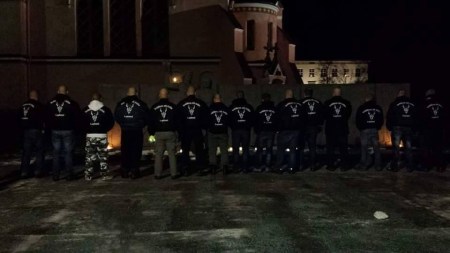 Members of the paramilitary movement known as the Soldiers of Odin view themselves as Finnish patriots, roaming the streets of Finland, protecting against Muslim immigrant offenders. Critics accuse them of being far-right, and they may de facto be related to previous skinhead movements from the 1990s.




 anneinpt
 artaxes
 danmillerinpanama
 davidking1530
 Peter Hofman
 Joseph Wouk
 Peter
Peter Louisiana Steve
 WarSclerotic
Recent Comments