Archive for the ‘Iranian proxies’ category

The Moscow-Washington-Tehran Axis of Evil

October 3, 2015

The Moscow-Washington-Tehran Axis of Evil, Canada Free PressCliff Kincaid, October 3, 2015

(I am not posting this because I currently accept its conclusions or some of their bases. However, it’s frightening, interesting and has at least some food for thought. — DM)
KINCAID100315

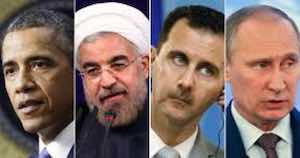
The conventional wisdom is that Vladimir Putin has blindsided Barack Obama in the Middle East, catching the U.S. off-guard. It’s another Obama “failure,” we’re told. “Obama administration scrambles as Russia attempts to seize initiative in Syria,” is how a Washington Post headline described it. A popular cartoon shows Putin kicking sand in the faces of Obama and Secretary of State John Kerry on a beach.

The conventional wisdom is driven by the notion that Obama has the best of intentions but that he’s been outmaneuvered. What if his intention all along has been to remake the Middle East to the advantage of Moscow and its client state Iran? What if he knows exactly what he’s doing? Too many commentators refuse to consider that Obama is deliberately working against U.S. interests and in favor of the enemies of the U.S. and Israel.

In his U.N. address, Obama said, “As President of the United States, I am mindful of the dangers that we face; they cross my desk every morning. I lead the strongest military that the world has ever known, and I will never hesitate to protect my country or our allies, unilaterally and by force where necessary.”

This is laughable. We still have a strong military, but the inevitable conclusion from what’s recently transpired is that he doesn’t want to protect the interests of the U.S. or its allies in the Middle East. This is not a “failure,” but a deliberate policy.

The trouble with conventional wisdom is the assumption that Obama sees things the way most Americans do. In order to understand Obama’s Middle East policy, it is necessary to consult alternative sources of news and information and analysis. That includes communist news sources.

A fascinating analysis appears in the newspaper of the Socialist Workers Party, The Militant, one of the oldest and most influential publications among the left. You may remember the old photos which surfaced of Lee Harvey Oswald selling copies of The Militant before he killed the American president.

The headline over The Militant story by Maggie Trowe caught my eye: “‘Reset’ with US allows Moscow to send arms, troops to Syria.” It was not about Hillary Clinton’s reset with Moscow years ago, but a more recent one.

Here’s how her story began: “Moscow’s rapid military buildup in Syria is a result of the ‘reset’ in relations forged with the Russian and Iranian governments by the Barack Obama administration. The deal—reshaping alliances and conditions from Syria, Iran and the rest of the Middle East to Ukraine and surrounding region—is the cornerstone of U.S. imperialism’s efforts to establish a new order in the Mideast, but from a much weaker position than when the now-disintegrating order was imposed after World Wars I and II.”

Of course, the idea that “U.S. imperialism” is served by giving the advantage to Russia and Iran is ludicrous. Nevertheless, it does appear that a “reset” of the kind described in this article has in fact taken place. The author writes about Washington’s “strategic shift to Iran and Russia” and the “downgrading” of relations with Israel and Saudi Arabia. She notes that Moscow “seeks more influence and control of the country [Syria] and its Mediterranean ports and a stronger political hand in Mideast politics.” Iran “has sent Revolutionary Guard Quds forces to help prop up Assad, and collaborates with Moscow on operations in Syria,” she notes.

It is sometimes necessary to reject the conventional wisdom and instead analyze developments from the point of view of the Marxists, who understand Obama’s way of thinking. They pretend that Obama is a pawn of the “imperialists” but their analysis also makes sense from a traditional pro-American perspective. Those who accept the evidence that Obama has a Marxist perspective on the world have to consider that his policy is designed to help Moscow and Tehran achieve hegemony in the region.

At the same time, the paper reported, “Since Secretary of State John Kerry’s congenial visit with Putin in May, it has become clear that Washington would accept Moscow’s influence over its ‘near abroad’ in Ukraine and the Baltics, in exchange for help to nail down the nuclear deal with Tehran.” Hence, Obama has put his stamp of approval on Russian aggression in Europe and the Middle East. This analysis, though coming from a Marxist newspaper, fits the facts on the ground. It means that more Russian aggression can be expected in Europe.

The wildcard is Israel and it looks like the Israeli government is being increasingly isolated, not only by Obama but by Putin. The story notes that Israeli Prime Minister Benjamin Netanyahu met with Putin in Moscow on September 21, saying his concern was to “prevent misunderstandings” between Israeli and Russian troops, since Israel has carried out airstrikes in Syrian territory targeting weapons being transported to the Iranian-backed Hezbollah terrorists in Lebanon.

Some reports indicated that Israel had set up a joint mechanism with the Russian military to coordinate their operations in Syria.

However, the Russian leader reportedly told Obama during their U.N. meeting that he opposes Israeli attacks in Syria. The Israeli newspaper Haaretz ran a story that Russia intends to “Clip Israel’s Wings Over [the] Syrian Skies.” The paper added that Putin’s remarks to Obama showed that despite Netanyahu’s meeting with Putin in Moscow, “Russia intends to create new facts on the ground in Syria that will include restricting Israel’s freedom of movement in Syrian skies.”

It hardly seems to be the case that Obama has been outsmarted in the Middle East, or that Putin and Obama don’t like each other. Instead, it appears that Obama is working hand-in-glove with Putin to isolate Israel and that Obama is perfectly content to let the former KGB colonel take the lead.

Israel has always been seen by most U.N. members as the real problem in the region. Obama is the first U.S. President to see Israel in that same manner and to act accordingly. This is why Putin has not caught Obama off-guard in the least. They clearly see eye-to-eye on Israel and Iran.

Don’t forget that Obama actually telephoned Putin to thank him for his part in the nuclear deal with Iran. The White House issued a statement saying, “The President thanked President Putin for Russia’s important role in achieving this milestone, the culmination of nearly 20 months of intense negotiations.”

Building off the Iran nuclear deal, it looks like the plan is for Russia and the United States to force Israel to embrace a U.N. plan for a nuclear-free Middle East. That would mean Israel giving up control of its defensive nuclear weapons to the world body. Iran will be able to claim it has already made a deal to prohibit its own nuclear weapons development.

Such a scheme was outlined back in 2005 in an article by Mohamed Elbaradei, the director-general at the time of the U.N.‘s International Atomic Energy Agency (IAEA). That’s the same body that is now supposed to guarantee Iranian compliance with the terms of the nuclear deal signed by Russia and the U.S.

Elbaradei argued there would have to be “a dialogue on regional security as part of the peace process,” to be followed by an agreement “to make the Middle East a nuclear-weapons-free zone.”

The “dialogue” appears to be taking place now, mostly under the authority and auspices of the Russian government, with President Obama playing a secondary role.

The obvious danger is that Israel would be forced to comply with the plan for a “nuclear-weapons-free-zone,” while Iran would cheat and develop nuclear weapons anyway.

Netanyahu told the U.N. that “Israel deeply appreciates President Obama’s willingness to bolster our security, help Israel maintain its qualitative military edge and help Israel confront the enormous challenges we face.”

This must be his hope. But he must know that Israel’s security is slipping and that the survival of his country is in grave danger in the face of this Moscow-Washington-Tehran axis.

Before Putin further consolidates his military position in the Middle East and Iran makes more progress in nuclear weapons development, Netanyahu will have to launch a preemptive strike on the Islamic state. “Israel will not allow Iran to break in, to sneak in or to walk in to the nuclear weapons club,” the Israeli Prime Minister said.

In launching such a strike before the end of Obama’s second presidential term, Israel would bring down the wrath of the world, led by Russia and the U.S., on the Jewish state.
The Iran Nuclear Deal: What the Next President Should Do

October 2, 2015

The Iran Nuclear Deal: What the Next President Should Do, Heritage Foundation, October 2, 2015

(But please see, The Elephant In The Room. — DM)

The failure of Congress to halt the implementation of the Obama Administration’s nuclear agreement with Tehran means that the U.S. is stuck with a bad deal on Iran’s nuclear program at least for now. Iran’s radical Islamist regime will now benefit from the suspension of international sanctions without dismantling its nuclear infrastructure, which will remain basically intact. Iran’s path to a nuclear weapon is unlikely to be blocked by the Administration’s flawed deal, any more than North Korea was blocked by the Clinton Administration’s 1994 Agreed Framework.

The next President should not passively accept Obama’s risky deal with Tehran as a fait accompli. Instead, he or she should immediately cite any violations of the agreement by Iran, its continued support for terrorism, or other hostile policies as reason to abrogate the agreement. The Bush Administration, faced with bad deals negotiated by the Clinton Administration, eventually withdrew from both the Agreed Framework and the Kyoto Protocol.

Rather than endorsing a dangerous agreement that bolsters Iran’s economy, facilitates its military buildup, and paves the way for an eventual Iranian nuclear breakout, the next Administration must accelerate efforts to deter, contain, and roll back the influence of Iran’s theocratic dictatorship, which continues to call for “death to America.”

How the Next President Should Deal with Iran

Upon entering office, the next Administration should immediately review Iran’s compliance with the existing deal, as well as its behavior in sponsoring terrorism, subverting nearby governments, and attacking U.S. allies. Any evidence that Iran is cheating on the agreement (which is likely given Iran’s past behavior) or continuing hostile acts against the U.S. and its allies should be used to justify nullification of the agreement.

Regrettably, Tehran already will have pocketed up to $100 billion in sanctions relief by the time the next Administration comes to office because of the frontloading of sanctions relief in the early months of the misconceived deal. Continuing to fork over billions of dollars that Tehran can use to finance further terrorism, subversion, and military and nuclear expansion will only worsen the situation.

In place of the flawed nuclear agreement, which would boost Iran’s long-term military and nuclear threat potential, strengthen Iran’s regional influence, strain ties with U.S. allies, and diminish U.S. influence in the region, the new Administration should:

1. Expand sanctions on Iran. The new Administration should immediately reinstate all U.S. sanctions on Iran suspended under the Vienna Agreement and work with Congress to expand sanctions, focusing on Iran’s nuclear program; support of terrorism; ballistic missile program; interventions in Syria, Iraq, and Yemen; human rights violations; and holding of four American hostages (Washington Post reporter Jason Rezaian, Christian pastor Saeed Abedini, former U.S. Marine Amir Hekmati, and former FBI agent Robert Levinson, who has been covertly held hostage by Iran since 2007).

The new Administration should designate Iran’s Islamic Revolutionary Guard Corps (IRGC) as a foreign terrorist organization and apply sanctions to any non-Iranian companies that do business with the IRGC’s extensive economic empire. This measure would help reduce the IRGC’s ability to exploit sanctions relief for its own hostile purposes.

Washington should also cite Iranian violations of the accord as reason for reimposing U.N. sanctions on Iran, thus enhancing international pressure on Tehran and discouraging foreign investment and trade that could boost Iran’s military and nuclear programs. It is critical that U.S. allies and Iran’s trading partners understand that investing or trading with Iran will subject them to U.S. sanctions even if some countries refuse to enforce U.N. sanctions.

2. Strengthen U.S. military forces to provide greater deterrence against an Iranian nuclear breakout.Ultimately, no piece of paper will block an Iranian nuclear breakout. The chief deterrent to Iran’s attaining a nuclear capability is the prospect of a U.S. preventive military attack. It is no coincidence that Iran halted many aspects of its nuclear weapons program in 2003 after the U.S. invasion of and overthrow of hostile regimes in Afghanistan and Iraq. Libyan dictator Muammar Qadhafi, motivated by a similar apprehension about the Bush Administration, also chose to give up his chemical and nuclear weapons programs.

To strengthen this deterrence, it is necessary to rebuild U.S. military strength, which has been sapped in recent years by devastating budget cuts. The Obama Administration’s failure to provide for the national defense will shortly result in the absence of U.S. aircraft carriers from the Persian Gulf region for the first time since 2007. Such signs of declining U.S. military capabilities will exacerbate the risks posed by the nuclear deal.

3. Strengthen U.S. alliances, especially with Israel. The nuclear agreement has had a corrosive effect on bilateral relationships with important U.S. allies in the Middle East, particularly those countries that are most threatened by Iran, such as Israel and Saudi Arabia. Rather than sacrificing the interests of allies in a rush to embrace Iran as the Obama Administration has done, the next Administration should give priority to safeguarding the vital security interests of the U.S. and its allies by maintaining a favorable balance of power in the region to deter and contain Iran. Washington should help rebuild security ties by boosting arms sales to Israel, Saudi Arabia, and other members of the Gulf Cooperation Council (GCC) that are threatened by Tehran, taking care that arms sales to Arab states do not threaten Israel’s qualitative military edge in the event of a flare-up in Arab–Israeli fighting.

To enhance deterrence against an Iranian nuclear breakout, Washington also should transfer to Israel capabilities that could be used to destroy hardened targets such as the Fordow uranium enrichment facility, which is built hundreds of feet beneath a mountain. The only non-nuclear weapon capable of destroying such a target is the Massive Ordnance Penetrator (MOP), a precision-guided, 30,000-pound “bunker buster” bomb. Giving Israel these weapons and the aircraft to deliver them would make Tehran think twice about risking a nuclear breakout.

The U.S. and its European allies also should strengthen military, intelligence, and security cooperation with Israel and the members of the GCC, an alliance of Bahrain, Kuwait, Oman, Qatar, Saudi Arabia, and the United Arab Emirates, founded in 1981 to provide collective security for Arab states threatened by Iran. Such a coalition could help both to contain the expansion of Iranian power and to facilitate military action (if necessary) against Iran.

4. Put a high priority on missile defense. Iran’s ballistic missile force, the largest in the Middle East, poses a growing threat to its neighbors. Washington should help Israel to strengthen its missile defenses and help the GCC countries to build an integrated and layered missile defense architecture to blunt the Iranian missile threat. The U.S. Navy should be prepared to deploy warships equipped with Aegis ballistic missile defense systems to appropriate locations to help defend Israel and the GCC allies against potential Iranian missile attacks as circumstances demand. This will require coordinating missile defense activities among the various U.S. and allied missile defense systems through a joint communications system. The U.S. should also field missile defense interceptors in space for intercepting Iranian missiles in the boost phase, which would add a valuable additional layer to missile defenses.

5. Deter nuclear proliferation. For more than five decades, Washington has opposed the spread of sensitive nuclear technologies such as uranium enrichment, even for its allies. By unwisely making an exception for Iran, the Obama Administration in effect conceded the acceptability of an illicit uranium enrichment program in a rogue state. In fact, the Administration granted Iran’s Islamist dictatorship better terms on uranium enrichment than the Ford and Carter Administrations offered to the Shah of Iran, a U.S. ally back in the 1970s.

The Obama Administration’s shortsighted deal with Iran is likely to spur a cascade of nuclear proliferation among threatened states such as Saudi Arabia, Turkey, Egypt, and the United Arab Emirates. Such a multipolar nuclear Middle East, on hair-trigger alert because of the lack of a survivable second-strike capability, would introduce a new level of instability into an already volatile region. To prevent such an outcome, the next Administration must reassure these countries that it will take military action to prevent Iran from gaining a nuclear capability as well as to deter Iranian military threats to their interests.

6. Expand domestic oil and gas production and lift the ban on U.S. oil exports to put downward pressure on world prices. In addition to sanctions, Iran’s economy has been hurt by falling world oil prices. Its oil export earnings, which constitute more than 80 percent of the regime’s revenue, have been significantly reduced. By removing unnecessary restrictions on oil exploration and drilling in potentially rich offshore and Alaskan oil regions, Washington could help to maximize downward pressure on long-term global oil prices. Lifting the ban on U.S. oil exports, an obsolete legacy of the 1973–1974 energy crisis spawned by the Arab oil embargo, would amplify the benefits of increased oil and gas production. Permitting U.S. oil exports not only would benefit the U.S. economy and balance of trade, but also would marginally lower world oil prices and Iranian oil export revenues, thereby reducing the regime’s ability to finance terrorism, subversion, and military expansion.

7. Negotiate a better deal with Iran. The Obama Administration played a strong hand weakly in its negotiations with Iran. It made it clear that it wanted a nuclear agreement more than Tehran appeared to want one. That gave the Iranians bargaining leverage that they used shrewdly. The Administration made a bad situation worse by downplaying the military option and front-loading sanctions relief early in the interim agreement, which reduced Iran’s incentives to make concessions.

The next Administration should seek an agreement that would permanently bar Iran from acquiring nuclear weapons. At a minimum, this would require:

  • Banning Iran from uranium enrichment activities;
  • Dismantling substantial portions of Iran’s nuclear infrastructure, particularly the Fordow and Natanz uranium enrichment facilities and Arak heavy water reactor;
  • Performing robust inspections on an “anytime anywhere” basis and real-time monitoring of Iranian nuclear facilities;
  • Linking sanctions relief to Iranian compliance;
  • Ensuring that Iran comes clean on its past weaponization efforts; and
  • Determining a clear and rapid process for reimposing all sanctions if Iran is caught cheating.

The Bottom Line

The nuclear deal already has weakened relationships between the U.S. and important allies, undermined the perceived reliability of the U.S. as an ally, and helped Iran to reinvigorate its economy and expand its regional influence. After oil sanctions are lifted, Iran will gain enhanced resources to finance escalating threats to the U.S. and its allies. The next Administration must help put Iran’s nuclear genie back in the bottle by taking a much tougher and more realistic approach to deterring and preventing an Iranian nuclear breakout.

Israel’s Risk Aversion Problem

October 2, 2015

Israel’s Risk Aversion Problem, Town Hall, Caroline Glick, October 2, 2015

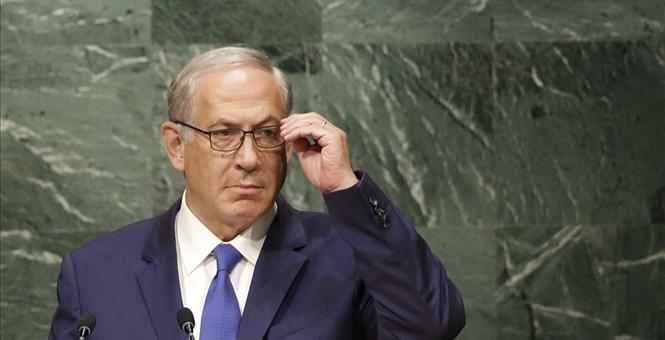
Netanyahu and glasses

Because his strategy is based on ideological beliefs rather than power calculations rooted in reality, Obama’s position cannot be swayed by evidence, even when evidence shows that his administration’s policies endanger US national security.

The more Israel allows other actors to determine the nature of the emerging regional order, the less secure Israel will be. The more willing we are to take calculated risks today the greater our ability will be to influence the future architecture of regional power relations and so minimize threats to our survival in the decades to come.

***********************

On Wednesday the Obama administration was caught off guard by Russia’s rapid rise in Syria. As the Russians began bombing a US-supported militia along the Damascus-Homs highway, Secretary of State John Kerry was meeting with his Russian counterpart, Sergei Lavrov, at the UN. Just hours before their meeting Kerry was insisting that Russia’s presence in Syria would likely be a positive development.

Reacting to the administration’s humiliation, Republican Sen. John McCain said, “This administration has confused our friends, encouraged our enemies, mistaken an excess of caution for prudence and replaced the risks of action with the perils of inaction.”

McCain added that Russian President Vladimir Putin had stepped “into the wreckage of this administration’s Middle East policy.”

While directed at the administration, McCain’s general point is universally applicable. Today is no time for an overabundance of caution.

The system of centralized regimes that held sway in the Arab world since the breakup of the Ottoman Empire nearly a century ago has unraveled. The shape of the new order has yet to be determined.

The war in Syria and the chaos and instability engulfing the region are part and parcel of the birth pangs of a new regional governing architecture now taking form. Actions taken by regional and global actors today will likely will influence power relations for generations.

Putin understands the opportunity of the moment.

He views the decomposition of Syria as an opportunity to rebuild Russia’s power and influence in the Middle East – at America’s expense.

Russia isn’t the only strategic player seeking to exploit the war in Syria and the regional chaos. Turkey and Iran are also working assiduously to take advantage of the current absence of order to advance their long term interests.

Turkish President Recep Tayyip Erdogan is exploiting the rise of Islamic State in Syria and Iraq to fight the Kurds in both countries. Erdogan’s goal is twofold: to prevent the establishment of an independent Kurdistan and to disenfranchise the Kurds in Turkey.

As for Iran, Syria is Iran’s bulwark against Sunni power in the Arab world and the logistical base for Tehran’s Shi’ite foreign legion Hezbollah. Iranian dictator Ali Khamenei is willing to fight to the bitter end to hold as much of Syrian territory as possible.

Broadly speaking, Iran views the breakup of the Arab state system as both a threat and an opportunity.

The chaos threatens Iran, because it has radicalized the Sunni world. If Sunni forces unite, their numeric advantage against Shi’ite Iran will imperil it.

The power of Sunni numbers is the reason Bashar Assad now controls a mere sixth of Syrian territory. To prevent his fate from befalling them, the Iranians seek to destabilize neighboring regimes and where possible install proxy governments in their stead.

Iran’s cultivation of alliances and proxy relationships with Hamas, the Muslim Brotherhood and al-Qaida, and its phony war against Islamic State all point to an overarching goal of keeping Sunni forces separated and dependent on Tehran.

The Iranian regime also fears the prospect of being overthrown by its domestic opponents. To counter this threat the regime engages in large-scale and ever escalating repression of its perceived foes.

Iran’s nuclear program also plays a key role in the regime’s survival strategy. As Khamenei and his underlings see things, nuclear weapons protect the regime in three ways. They deter Iran’s external foes. They increase domestic support for the regime by enriching Iran which, no longer under international sanctions, sees its diplomatic and economic prestige massively enhanced due to its nuclear program.

Finally, there is Iran’s war with Israel and the US. A nuclear-armed Iran is a direct threat to both countries.

And this, too, is a boon for the mullacracy. From the regime’s perspective, fighting Israel and the US serves to neutralize the Sunni threat to the regime. The more Iran is seen as fighting Israel and the US the more legitimate it appears to Sunni jihadists.

This then brings us to the Americans. Like the Russians, the Turks and the Iranians, President Barack Obama and his associates are strategic players. Unlike those powers however, the administration is moved not by raw power calculations but by ideological dictates.

Obama and his advisers are convinced that the instability and radicalization of states and actors throughout the region is the consequence of the actions of past US administrations and those of America’s regional allies – first and foremost, Israel and Egypt. The basis for this conviction is the administration’s post-colonial ideological underpinnings.

Because his strategy is based on ideological beliefs rather than power calculations rooted in reality, Obama’s position cannot be swayed by evidence, even when evidence shows that his administration’s policies endanger US national security.

This brings us to Israel.

Israel has limited power to influence regional events.

It cannot change its neighbors’ values or cultures. Israel can however limit its neighbors’ ability to harm it and expand its ability to deter would be aggressors by among other things, using its power judiciously to influence now forming power balances between various regional and world actors.

Israel has followed this model in Syria with notable success.

At an early stage of the war our leaders recognized that aside from the Kurds, who have no shared border with us, there are no viable actors in Syria that are not dangerous to Israel. As a result, Israel has no interest in the victory of one group against others.

The only actor in Syria that Israel has felt it necessary to actively rein in is Hezbollah. So it has acted repeatedly to prevent Hezbollah from using its operational presence in Syria as a means for augmenting its offensive capabilities in Lebanon.

The problem with this strategy is that it has ignored the fact that from Hezbollah’s perspective, there is no operational difference between Lebanon and Syria.

The war in Syria spread to Lebanon years ago.

Now, with Iranian and Russian assistance, Hezbollah is beginning to develop the industrial capacity to bypass Israel and independently produce advanced weapons inside Lebanon. This rapid industrialization of Hezbollah’s military capabilities requires Israel to end its respect for the all-but-destroyed international border and take direct action against Hezbollah’s capabilities in Lebanon.

This brings us to Hezbollah’s boss, Iran. For the past several years, the same caution that has led Israel to grant de facto immunity to Hezbollah forces in Lebanon has led to Israel’s passivity and deference to the Obama administration in relation to Iran’s nuclear program.

With regard to Iran’s nuclear installations, the strategy of passivity has largely been forced onto an unwilling political leadership by Israel’s military leaders.

For the past several years, the IDF’s General Staff has refused to support the government’s position on Iran’s nuclear program.

Our military leaders have justified their insubordination by arguing that if Israel takes independent action against Iran’s nuclear program it will undermine its bilateral relations with the US, which they consider more important than preventing Iran from acquiring nuclear weapons.

Although under the best of circumstances, the IDF’s position would be unacceptable from the perspective of democratic norms of governance, since the ideologically driven Obama administration took power seven years ago, the military’s position has imperiled the country.

So long as Obama – or the ideology that informs his actions – remains in power in Washington, US security guarantees towards Israel will have no credibility.

The IDF’s assessment that ties to the US are more important than preventing Iran from becoming a nuclear power will remain incorrect, and dangerously so.

Today is Israel’s opportunity to shape the future of the Middle East by not only preventing Iran from becoming a nuclear power, but by preventing a regional nuclear arms race.

The closer Iran comes to emerging as a nuclear power, the more Sunni regimes, including Islamic State, will seek their own nuclear capabilities. It goes without saying that the more regional actors have nuclear weapons, the more dangerous the region becomes for Israel, and indeed for the world as a whole.

For many Israelis, the story of the week wasn’t Russia’s air strikes against US-allied forces in Syria. It was PLO chief and Palestinian Authority President Mahmoud Abbas’s speech at the UN General Assembly.

Leftists expressed horror in the face of Abbas’s threat to end the PLO’s adherence to the agreements it signed with Israel in the 1990s (and has stood in material breach of ever since). The government insisted, for its part that the reason the peace process has not brought peace is because Abbas and his PLO refuse to negotiate with Israel.

Unfortunately, both sides’ responses to Abbas’s speech indicate that Israel has lost all semblance of strategic purpose in regard to the Palestinians.

Fifteen years ago this week, on September 28, 2000, the Palestinians opened their terrorist war against Israel. Ever since it has been clear that no Palestinian faction is interested in living at peace with Israel.

Despite this, for the past 15 years, Israel has refused to reconsider its strategic allegiance to the false notion that it has the ability to influence the hearts and minds of the Palestinians and bend them in the direction of peace.

This delusional thinking is what caused the IDF’s General Staff to convene immediately after Operation Protective Edge ended and try to figure out how to rebuild Gaza.

Ever since the cease-fire came into force, Hamas has diverted all the assistance it has received from Israel and the international community not to rebuild Gaza, but to rebuild its military capacity to harm Israel. And yet, from the IDF’s perspective, ever since the war ended our most urgent task has been to save Hamas and the Palestinians alike from reckoning with the price of their aggression.

Likewise, Israel continues to insist that we have a strategic interest in peace with the PLO. Even if this is true in theory, chances are greater that unicorns will fall from the sky and prance through Jerusalem’s Old City than that the PLO will agree to make peace with Israel.

Our continued defense of the PLO as a legitimate actor harms our ability to secure other strategic interests that are achievable and can improve Israel’s regional position. These interests include securing transportation arteries in Judea and Samaria and strengthening Israel’s military and political control over the areas. These interests have only grown more acute in recent years with the rise of jihadist forces throughout the region and among the Palestinians themselves.

This brings us back to McCain and his strategic wisdom.

Israel must not allow the risks of action to lure us into strategic paralysis that imperils our future.

The more Israel allows other actors to determine the nature of the emerging regional order, the less secure Israel will be. The more willing we are to take calculated risks today the greater our ability will be to influence the future architecture of regional power relations and so minimize threats to our survival in the decades to come.

Chinese warplanes to join Russian air strikes in Syria. Russia gains Iraqi air base

October 2, 2015

Chinese warplanes to join Russian air strikes in Syria. Russia gains Iraqi air base, DEBKAfile, October 2, 2015

Russia_China_480

Russia’s military intervention in Syria has expanded radically in two directions.DEBKAfile’s military and intelligence sources report that China sent word to Moscow Friday, Oct. 2, that J-15 fighter bombers would shortly join the Russian air campaign that was launched Wednesday, Sept. 30. Baghdad has moreover offered Moscow an air base for targeting the Islamic State now occupying large swathes of Iraqi territory

Russia’s military intervention in Syria has five additional participants: China, Iran, Iraq, Syria and Hizballah.

The J-15 warplanes will take off from the Chinese Liaoning-CV-16 aircraft carrier, which reached Syrian shores on Sept. 26 (as DEBKAfile exclusively reported at the time). This will be a landmark event for Beijing: its first military operation in the Middle East as well the carrier’s first taste of action in conditions of real combat.

Thursday night, China’s foreign minister Wang Yi, made this comment on the Syrian crisis at a UN Security Council session in New York: “The world cannot afford to stand by and look on with folded arms, but must also not arbitrarily interfere (in the crisis).”

A no less significant development occurred at about the same time when Iraqi Prime Minister Haider al-Abadi, speaking to the US PBS NewsHour, said he would welcome a deployment of Russian troops to Iraq to fight ISIS forces in his country too. As an added incentive, he noted that this would also give Moscow the chance to deal with the 2,500 Chechen Muslims whom, he said, are fighting with ISIS in Iraq.

DEBKAfile’s military sources add that Al-Abadi’s words came against the backdrop of two events closely related to Russia’s expanding role in the war arena:

1.  A joint Russian-Iranian-Syrian-Iraqi war room has been working since last week out of the Iraqi Defense Ministry and military staff headquarters in Baghdad to coordinate the passage of Russian and Iranian airlifts to Syria and also Russian air raids. This command center is also organizing the transfer of Iranian and pro-Iranian Shiite forces into Syria.

2.  Baghdad and Moscow have just concluded a deal for the Russian air force to start using the Al Taqaddum Air Base at Habbaniyah, 74 km west of Baghdad, both as a way station for the Russian air corridor to Syria and as a launching-pad for bombing missions against ISIS forces and infrastructure in northern Iraq and northern Syria.

Russia has thus gained a military enclave in Iraq, just as it has in Syria, where it has taken over a base outside Latakia on the western coast of Syria. At the same time, the Habbaniyah air base also serves US forces operating in Iraq, which number an estimated 5,000.

Benjamin Netanyahu • United Nations Address • 10/1/15

October 1, 2015

Benjamin Netanyahu • United Nations Address • 10/1/15 via You Tube, October 1, 2015


According to the blurb at You Tube,

October 1st, 2015 • Israeli Prime Minister Benjamin Netanyahu renewed his warning that the Iranian nuclear deal threatens to destabilize the Middle East and will make a war more likely. He cautioned that already Iran is ramping up efforts to fund terror cells worldwide, while also arming Islamists in Syria, Yemen, Lebanon, and the Palestinian territories.

Netanyahu told that Iran was already building up its own armament stockpiles and that billions of dollars in sanctions relief would only fuel the effort. He reminded the nations of the world that Iran already has the capability to target Israel with ballistic weapons and that it’s current ballistic efforts can only be meant to threaten Europe and the United States.

The Prime Minister chastised the member states of the U.N. for their failure to speak out against Iranian threats to destroy Israel, and that the silence was deafening. Netanyahu emphasized the point by staring at the delegates in silence for 45 seconds.

Netanyahu responded to Palestinian Authority President Mahmoud Abbas’s declaration the previous day that it would no longer honor the Oslo Peace Accords by offering to reopen peace talks with the PA without any conditions. He also rejected the assertion by Abbas that Israel intended to change the status of the al-Asqa Mosque on the Temple Mount in Jerusalem, a Palestinian allegation that has recently fomented violent incidents.

Prime Minister Netanyahu pleaded with U.N. member states to cease decades of anti Israeli rhetoric, and to undertake an honest effort to work toward an Israeli – Palestinian peace agreement.

He also urged the United Nations to advance peace in the Middle East after decades of the UN working against Israeli interests.

Obama’s show of weakness

October 1, 2015

Obama’s show of weakness, Israel Hayom, Prof. Abraham Ben-Zvi, October 1, 2015

The U.S. has been relegated to dragging its feet in a trail blazed by the Russian leader, as Washington is left to practically beg Moscow for a seat at the table where Assad’s fate will be determined.

******************

U.S. President Barack Obama’s address to the U.N. General Assembly on Monday was his worst and most embarrassing yet. Despite the fact that it has been seven years since he was elected president, it seems Obama has yet to learn anything from his growing list of failures, especially when it comes to foreign policy.

Obama continues to naively preach about the importance of traditional diplomacy and broad international cooperation as a prerequisite to conflict resolution; and he does so despite the fact that his decision to prematurely withdraw American troops from Iraq, compounded by his aversion to putting boots on the ground in Syria, have done nothing but breed violence, fanaticism and radical Islamism in the Middle East.

Against the backdrop of the bloody conflicts in Syria, Iraq and Yemen, Obama delivered a disconnected and utterly surreal speech before the U.N., lauding democracy and international agreements, even deficient, hollow ones, like the nuclear deal with Iran.

Beyond the sanctimonious sermon to nations and movements without any loyalty to the principles of Western democracy, Obama’s speech lacked any new message. On the contrary — he essentially legitimized Russia’s military presence in Syria, and the pivotal role Moscow has appropriated in the region due to American inaction against Syrian President Bashar Assad.

This inexcusable failure, which followed Washington’s acquiescence in allowing Russian President Vladimir Putin become the new mediator in the chemical warfare crisis in Syria in 2013, has afforded Moscow a coveted opportunity to become a major player in the Middle East, one shaping a new political and security reality.

The U.S. has been relegated to dragging its feet in a trail blazed by the Russian leader, as Washington is left to practically beg Moscow for a seat at the table where Assad’s fate will be determined.

Indeed, if you strip the envelope of democracy vs. dictatorship from Obama’s speech, it becomes more than evident that he is not only willing to foster partnerships with tyrants and oppressive regimes, but also that the dispute between the White House and the Kremlin over Syria is marginal, as it focuses on Assad’s status in the new political order that will be forged in Syria once the fighting subsides.

The American Gulliver, it seems, is coming to terms with the end of the single-world power hegemony. While the Russian military airlift to Syria continues in full swing, Obama is content with philosophical reflections on the desired nature of the new world order, yielding to the new balance of power emerging in the war-torn country.

One can only lament the fact that the U.S. president’s incomprehensible weakness only undermines the very democratic dream he himself has outlined.

This was evident in the meeting between Obama and Putin following their respective U.N. addresses. Despite Obama’s desire to give his Russian counterpart the cold shoulder, the fact the he declared before dozens of world leaders that the U.S. has “no desire to return to a cold war” took the sting out of his message.

This was nothing but an attempt at damage control over the harm caused to the U.S.’s prestige and status in the global theater by drawing new red lines to limit Russia’s operation in the Middle East. The problem is that we already know how blurry those red lines are when it comes to Syria.

Satire | Three cheers for Terroristine

October 1, 2015

Three cheers for Terroristine, Sultan Knish Blog, Daniel Greenfield, October 1, 2015

(He refers, of course, to “Palestine.” — DM)

We need a terrorist state. Where the politicians are terrorists, the police are terrorists and even the men sitting at the desk when you come in to drop off a form are terrorists.

3egypt081613

There are states that support terrorists, and give safe harbor to them, but that’s not good enough. We don’t want another Pakistan or Iran. We’re not half-assing it this time. What we want is the genuine article. Terrorists from the top down. Terrorists everywhere. A state where every branch of government and the entire country is nothing but terrorists.

Terroristine has been an ancient dream since 1973 or was it 1967. A generation of keffiyah draped thugs, KGB operatives and human rights activists have looked out into the darkness and called it into being. It is a vision of a country where everyone is a murderer and children are taught from a very young age that their purpose in life is to die killing people who don’t share their religion.

And now after decades of negotiations, treaties, suicide bombings, mutilations, billions of dollars in vanishing into Swiss bank accounts and the death of its Egyptian born leader of AIDS– Terroristine is closer than ever to coming into being.

Abbas, its unelected dictator, who has struggled long and hard so that one of his sons might have his own cigarette monopoly in Gaza, has come to the UN to promise that Terroristine will have “will actively contribute to the achievement of economic, cultural, and humanitarian progress of civilization.”

And who can doubt him? Certainly not Terroristinians who don’t have elections or a free press.

Terroristine, whose noble flag (that looks like nearly every other Arab flag) flies over the UN, has done wonders for civilization. Consider the airplane hijacking. The suicide bomber. Has there ever been a civilization that did as much for civilized living as the Terroristinians?

Every time you get groped at an airport, thank Terroristine. Without the Terroristinian contribution to civilization, you might actually be able to get on a plane in peace. Or visit the Twin Towers.

The Terroristinian contribution to human progress is unquestionable. But only one thing stands in the way of it unleashing its full Terroristinian potential for all mankind.

Them. Those pesky people who live in that country that is always in the way. You know the ones, with too many Nobel prizes, newly invented tomatoes and microchips. They stand in the way of the great cultural contributions of Terroristine. They must die so that Terroristine must live.

They must be thrown out of their homes, village by village and city by city, so that the noble Terroristinians can plant their rockets on the rubble of their houses, the charred remains of their fields, and point them at their cities.

Trying to end terrorism by creating a terrorist state makes is like trying to put out a fire with more fire. It can’t work, but we must try. So that we can say that we tried. Over and over again. We’ll keep trying until we run out of land to try with. And people to try with.

Until there’s nothing left but Terroristines everywhere. Until all the world is Terroristine. The question is can we make it happen? Yes, we can. Oh sweet Allah, yes we can.

Israel must return to the 1967 borders, which are really the 1948 borders. Why are the borders of the 1948 war, so much better than the borders of the Six Day War? Because the Terroristinians came closer to winning that war. Came closer to driving the Yahood into the sea and ululating over miles  of their corpses.

boy_bomb.preview

But the dream failed. Farmers armed with outdated rifles. Volunteer pilots from America and Canada. Refitted cargo ships filled with half-dead men, women and children straight from the camps. Used Czech artillery. They held off the armies of seven Terroristinian nations. Farm by farm, they stood off tanks and infantry. In Jerusalem, they fought for every house. And so the Zionist entity survived.

Allah curse them. They survived.

But now it’s back to 1948 again. Every war undone. Every defeat turned to victory. Cut Jerusalem in two. Drive out the farmers. Burn their land. Dig up their graves. March the borders back to 1948. And fly the Terroristinian flag over dust and rubble. Had they won in 1948 or 1967 or 1973, there would be no Israel and no Terroristine. The land would have become part of Syria, Egypt and Jordan. And only when the mobs of the faithful would drive out the tyrants to replace them with Islamic states, would there finally be a Terroristine.

But despite what Abbas says, there is still hope for a two state solution. And we must do everything in our power to salvage the two state solution so that there will be a state of civilization on one side and a state of terrorists on the other. Hospitals here, launching pads there. Schools here, bomb factories there. Life here, death here. We all know the story. Olive trees and bomb belts. Rocks and dead families in burning cars by the side of the road. Children with their throats cut.

A dream. A nightmare. Who even knows anymore.

Why do we need Terroristine? Peace. There can be no peace without a terrorist state. Not a chance of it. The only way we’ll ever have peace is to give the terrorists a country of their own. A country dedicated to terrorism. Only then will the Terroristinians finally give up on all the killing, and dedicate themselves to medical research, quantum mechanics and the arts. It hasn’t happened yet to. But it’s bound to.

After decades as an autonomous territory, spreading death and destruction, it’s time for Terroristine to finally be recognized as an independent state. With contiguous borders cutting Israel in half. It is the only hope for peace in the region. Would Sunnis and Shiites be killing each other from Yemen to Iraq? Assuredly not. The moment the flag of Terroristine rises above the wounded hills, and its peaceful anthem, “Palestine is My Revenge” is heard in the land, then a great echoing sigh will rise up from the mouths of one billion Muslims. And the violence will cease.

The international community is impatient. They want Terroristine and they want it now. Whatever Israel has offered in the past, it isn’t enough. It must offer more and more. Whatever it takes. We know the Terroristinians want their own state. Every time they walk out of negotiations or end them with a round of terrorist attacks, it shows their deep and abiding passion for a state. They want it so badly they aren’t willing to make a single concession for it. Or even negotiate for it.

That’s how committed they are to realizing their great dream to Terroristine. And who can blame them? Have any people suffered the way the Terroristinians have? (Besides all the people the Terroristinians have killed over the last 1,400 years.) Have any other people been wholly subsidized by a UN agency dedicated only to them? Have any other people inspired such a stylish fashion statement? No more excuses. The world demands Terroristine. Middle East peace demands Terroristine.

How much longer can Israel expect to draw out the necessary concessions with weak justifications about terrorism. We know they’re terrorists. That’s why we’re giving them a state. If they weren’t terrorists, they could go to the back of the line with the Jews, Kurds and Armenians.

From one corner of the Muslim world to the other, a cry goes out. “We Are All Terroristinians.” They cry it it Cairo and Damascus, in Tehran and Islamabad, in Dubai and Paris. They mosques go up, the asses go up and the bombs go off. And off to the peace negotiations we go.

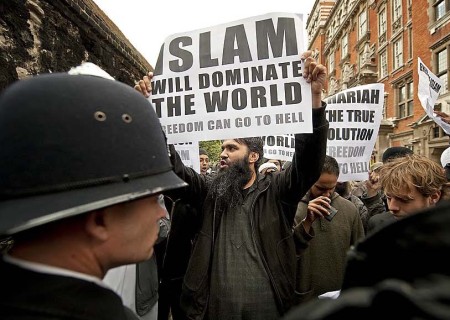
Islam will dominate the world

Everyone is impatient. Everyone is on fire. Especially the Terroristinians. Jewish store windows are smashed in London, Terroristinians butcher Rabbis in Jerusalem synagogues, fuming Terroristinians shoot up American recruiting centers. And the crowds cheer. “We Are All Terroristinians Now.”

It is a great day, I tell you. A great day for negotiating. ISIS impatiently beheads infidels to create its own Islamic Terroristine. In Afghanistan the word goes out, “We are the Taliban, we are the Afghan people, we are Terroristinians.” In Egypt and Turkey, they cry, “Khaybar Ya Yahood”. Churches burn. Soldiers die. The smoke rises to heaven. A man waits in line at the airport. His passport is Dutch, Welsh, German, American, it doesn’t matter. He is a Terroristinian. Yallah.

One day the borders of Terroristine will stretch from Spain to Pakistan. Or beyond Why settle for Jerusalem, when we can have London, Paris and Hamburg too. Why settle for anything at all? Allah is generous to the believers. Our people are in Africa. Even China. The Great Satan himself bows toward Mecca. The old governments are falling. The pawns of the Kufir are fleeing before our eyes.

We are all Terroristinians now. There is no other book on our shelves than the Koran. No law but Sharia in our hearts. And no nation but Terroristine. The ghost of Chamberlain stands outside No. 10 Downing Street promising peace. A Terroristinian refugee beheads him and holds up his spectral head to the cheers of the crowd. Rockets sail through the sky. The crowd cheers. Hip Hip Hooray. Hierosylma Est Perdita. Three cheers for Terroristine.

Putin Plays Mideast Chess as Obama Looks On

October 1, 2015

Putin Plays Mideast Chess as Obama Looks On, American ThinkerJonathan F. Keiler, October 1, 2015

(Unfortunately, Obama was “in the game” which led to the nuke “deal” with Iran. There, he was not incompetent; he got what he sought. — DM)

Obama has made a lot of foreign policy mistakes in office, but his capitulation on the Iranian nuclear talks followed by Russia’s move into Syria is impossible to explain away as anything but a stupendous strategic fiasco.  Incompetence is too nice a word.  Obama was never even in the game.

*********************

It is sometimes said that in negotiations with foreigners, American leaders play checkers, while their wilier opponents play chess.   There is perhaps some truth to this, as American leaders sometimes chase short-term political results, a consequence of democratic governance and constantly changing leadership.  By contrast, despotic Persians are credited with inventing chess, and in modern times autocratic Russians have been its master, and so it is tempting to say of President Obama’s dealings with those two countries that the analogy holds.

But that is way too charitable.  As Vladimir Putin skillfully reasserts Russian power and influence in the Middle East with Islamic Persian Iran as a willing partner, a more apt analogy might be that while the Russians and Iranians move their chessmen, isolating and threatening opposing pieces, Obama is not even at the table, but rather childishly looking on, as he pushes diplomatic dirt around the Middle East sandbox.

For over 150 years, a primary objective of Western diplomatic and military strategy was to keep the Russians out of the Middle East and Southwest Asia.  In the 1850s, the British and French went to war in Crimea to protect the Ottomans from Russian predation and to preserve the balance of power.  Later, the so-called “Great Game” centered on similar British efforts to frustrate Russian domination of Iran and Afghanistan.  A century later, the United States took up the task, offsetting Russian influence in newly socialist Arab dictatorships by backing Israel and more traditional Arab monarchies in the Middle East, while openly and successfully opposing the Soviet incursion into Afghanistan.

Today, one can’t even say there remains any Western strategy regarding Russia.  Western Europe has mostly forfeited its military and political influence overseas to support decadent welfare states, even as it is being progressively and deliberately overwhelmed by millions of Islamist migrants.  Under Obama, who supports and admires Europe’s demise, the United States has increasingly joined in the decline.  The laughable Libyan campaign, “fought” by Europeans while the U.S. led from behind, set an example of pursuing a feckless, feel-good military campaign without regard for consequences or traditional strategic concerns.  Obama’s encouragement of the so-called Arab Spring and its Islamist provocateurs almost lost Egypt and did lose Syria, with catastrophic humanitarian and geopolitical results.

Putin is taking advantage of American weakness and inaction.  A half-century of successful American effort to keep the Russians out of the Middle East has been forfeit in a few months of breathtaking American diplomatic and military incompetence.  Obama’s capitulation in the Iran deal effectively completed the groundwork for the Russian move, Putin having carefully monitored America’s year-long and ineffectual air campaign against ISIS.  Putin now claims that Russia’s push into Syria is to redeem the campaign against ISIS with Russian troops fighting with Syria and Hezb’allah.  Embarrassed by Putin at the U.N., Obama gave up any pretense of strength, effectively welcoming the Russian “intervention” against ISIS.  Unexplained is why a large percentage of Russian anti-ISIS forces are heavily equipped with anti-aircraft weapons, something that even a flaccid NATO command cannot ignore, inasmuch as ISIS have an air force.  Those weapons are useful only against NATO or Israeli aircraft.

So lost was Obama before his meeting with Putin at the U.N. that his stated strategy for dealing with the Russian strongman was to ask him what he was doing.  From the stiff and awkward body language of the president following the meeting (a painful handshake and awkward smile) it is clear that Putin told Obama at least some of the story, whether Obama liked it or not.  Most particularly, his client Bashar Assad will remain in power with Russian backing, regardless of Obama’s view on the matter.  But likely Obama had known what he was in for, and just going through the motions.  The day before, Secretary of State of State John Kerry responded to a question about how long the U.S. could tolerate the survival of Assad, saying, “… it doesn’t have to be on day one or month one or whatever.”  Right, dude, whatever.  Between Obama and Kerry, it is now fair to assume that our much muddled and irresolute Syrian policy is “whatever,” which means we just don’t care.  We take our toys and go home.

If Obama was hoping, as he and his supporters implied, that the Iranian deal would produce a more moderate, cooperative Iran, Putin and the mullahs are doing all they can to demonstrate how wrong he was.  If he was hoping that “international pressure” and the conflict in Ukraine would moderate Putin’s aggressive strategies, he was wrong again.  And if he thinks that by quitting, he has left Putin an unwinnable game, the Russian leader aims to prove him wrong again.  And since Obama is almost always wrong when it comes to foreign policy, it’s a fool’s errand to bet against Putin.

In chess, before going for the opponent’s king, typical strategy calls for supporting one’s important pieces, while threatening and isolating opposing pieces.  The Russians and Iranians are now going about this with a vengeance, without the United States or the West making any noticeably effective counter-moves.  Russia is backing and protecting Assad and has closely allied itself with a newly empowered (thanks largely to Obama) Iran.  Meanwhile, traditional American allies in the region, Israel, Egypt, and the Arab monarchies are indeed increasingly threatened and isolated.  The stage is being set for a Russo-Iranian endgame that could prove disastrous to America’s traditional allies and the West in general.

Some of Obama’s liberal supporters dismiss such analysis as over the top, and insist that Putin’s moves have more to do with domestic politics than a long-term Middle Eastern power play.  They point out Putin’s problems at home, and the relative weakness of the Russian military.  However, relative Russian weakness means little when moving into a power vacuum created by Obama’s flight from international responsibilities and, to a large extent, reality.  And besides, this has been the basic way liberals have sought to excuse Obama whenever he is pushed around by a foreign leader (which is almost always).  Putin’s got problems, so he invades Ukraine, threatens the Baltic States, and moves into Syria.  The Chinese have problems, so they push naval vessels into American waters and fortify disputed Western Pacific archipelagos.  Korea’s got problems, Iran’s got problems, and none of their aggressive actions has anything to do with the dilettante in the White House.  It’s all about solving problems at home with international temper tantrums.

Obama has made a lot of foreign policy mistakes in office, but his capitulation on the Iranian nuclear talks followed by Russia’s move into Syria is impossible to explain away as anything but a stupendous strategic fiasco.  Incompetence is too nice a word.  Obama was never even in the game.


Obama’s U.N. message — kick me, I won’t feel a thing

September 30, 2015

Obama’s U.N. message — kick me, I won’t feel a thing, Power LinePaul Mirengoff, September 30, 2015

Obama’s options are to counteract the expansion or offer lectures while Russia gives him a “back kick.” Like so much of his conduct, Obama’s U.N. speech amounts to pasting a “kick me” sign on his backside.

*********************************

“History, Stephen said, is a nightmare from which I am trying to awake. . .What if that nightmare gave you a back kick?”

This passage from Ulysses captures the Obama presidency in the realm of foreign policy. History, the nightmare from which the president is trying to escape, has given him a “back kick” — in Iraq, Syria, Libya, Ukraine, and Yemen for example — and he risks becoming a laughingstock as a result.

But there’s a twist. President Obama denies he has been kicked. His nightmare thus becomes ours.

Obama’s speech to the United Nations illustrates the problem. Elliott Abrams, describing the speech as “surreal,” writes that it “is filled with nice lines that unfortunately bear no relationship to his seven years of foreign policy — and in some cases, no relationship to reality.”

Abrams supports this claim by analyzing what Obama had to say about Syria, Libya, Ukraine, and Cuba. The analysis is well worth reading.

I want to focus, though, on a portion of just one passage. Obama stated:

I stand before you today believing in my core that we, the nations of the world, cannot return to the old ways of conflict and coercion. We cannot look backwards. We live in an integrated world — one in which we all have a stake in each other’s success. . . .And if we cannot work together more effectively, we will all suffer the consequences. That is true for the United States, as well.

The disdain for history is evident and, in a sense, warranted. But it doesn’t follow from the fact that history has been unpleasant that we cannot (or should not) look back at it. History has much to teach us.

One lesson is that Obama’s claim that “we cannot return to the old ways of conflict and coercion” is rubbish. The world not only can “return” to them, it has (and never stopped).

Another lesson is that conflict and coercion don’t necessarily cause “all” to “suffer” bad “consequences.” Often conflict and coercion produce winners and losers. The losers suffer, but the winners, though often paying some price, thrive for decades and sometimes centuries.

The fact that we “live in an integrated world” doesn’t alter this reality. If Obama knew anything about history, he would understand that integration isn’t new. Europe and large portions of Asia were integrated by trade and migration more than two thousand years ago. In important ways, today’s world, with its religious wars and mass movement of peoples, bears more resemblance to the ancient one than to yesterday’s world of seemingly solid nation states (which was also integrated).

Obama wasn’t offering a history lesson, though. The speech was an exercise in self-justification — an attempt to demonstrate that although he looks like a loser, he isn’t really one because the old world of losers and winners has been extinguished. This farcical claim will only enhance Obama’s status as a laughingstock.

But the speech had a serious side, I think. It seems to me that Obama was sending this message to Putin: Russia will suffer if you don’t cooperate with the U.S. In fact, Obama mentioned the sanctions against Russia and their consequences (“capital flight, a contracting economy, a fallen ruble, and the emigration of more educated Russians”) in his speech.

The message isn’t implausible. Russia reportedly is starting to run short on foreign currency reserves, thanks in part to sanctions. Russia also runs the risk of military overreach if it continues to become more involved in Syria. Its dirty little war in Ukraine enjoys only mixed support at home and polls show little appetite by Russians for large scale military involvement in Syria. (Just as we had Vietnam, Russia had Afghanistan).

But Putin is a skillful operator. He doesn’t need lessons from Obama.

Taking on ISIS to a serious degree would require a level of military engagement that might erode Putin’s domestic support. But it’s unlikely that Putin is serious about doing ISIS in (though I’m pretty sure he would like to). He just dangles this prospect, as Iran does, to tantalize Obama.

Putin’s goals, it seems to me, are (1) to work with Iran to help Assad maintain control over a portion of Syria, (2) cement relations with Iran, and (3) diminish U.S. influence in the region. He may well be able to accomplish these objectives without a level of military involvement that might hurt him at home.

As for Russia’s finances, they appear to be a looming problem. Ironically, however, Obama has undercut the Russia sanctions by lifting those on Iran. The Iran deal will boost the Russian economy by enabling Russians to sell all manner of weapons to the mullahs.

These sales alone won’t solve Russia’s economic problems. It needs a strong rebound of oil prices, which may or may not be in the cards.

But history suggests that “capital flight, a contracting economy, a fallen ruble, and the emigration of more educated Russians” won’t be sufficient to dissuade an autocrat like Putin from expanding Russia’s influence in Eastern Europe and the Middle East.

Obama’s options are to counteract the expansion or offer lectures while Russia gives him a “back kick.” Like so much of his conduct, Obama’s U.N. speech amounts to pasting a “kick me” sign on his backside.

Russia and Iran, the UN’s darlings

September 29, 2015

Russia and Iran, the UN’s darlings, Israel Hayom, Boaz Bismuth, September 29, 2015

The situation in the Middle East is very complicated these days, particularly when it comes to the ongoing strife in Syria. On Monday, Russian President Vladimir Putin and Iranian President Hassan Rouhani both gave speeches at the U.N. General Assembly in New York that in normal times could have been dismissed as amusing. But in the era of Islamic State, everyone is suddenly trying to appear to be righteous, including Putin and Rouhani.

Putin, for example, believes that Syria’s future must include Bashar Assad, the tyrant who is responsible for the deaths of 250,000 of his own people. As Putin said, “Only Assad is fighting against Islamic State.” Meanwhile, Rouhani declared, “No country should use terrorism to interfere in another country’s affairs.” Let us remember that these were addresses delivered to the world, rather than jokes uttered on a satire program. What a farce.

The sad reality that exists in the Middle East these days is what allowed these two leaders to make such “comical” statements. The growth of Islamic State and the failure of the U.S.-led coalition against it have given Russia and Iran a great opportunity to bolster their international status.

For the Russians, this is a chance to erase memories of their actions in Ukraine and the Crimean Peninsula. For the Iranians, this provides an opening to deflect attention away from 35 years of exporting terrorism around the globe. Russia and Iran are both fortunate that Islamic State exists.

Putin met with U.S. President Barack Obama on Monday to tell him that the purpose of Russia’s increased military presence in Syria was to fight Islamic State. He also told Obama that the rebuilding of Syria would require the rebuilding of the Assad regime.

Obama was right on Monday when, in his own address to the U.N. General Assembly, he said that Assad must have no political future in Syria. Unfortunately, there are two small things that contradict Obama’s view of the situation. First, the pre-civil war Syria no longer exists. And second, all reconstruction proposals for Syria include a transition period during which a role for Assad would be necessary. And who knows how many years this transition would take?

Obama may not want Assad in power, but in reality, an Assad regime backed by Russia and Iran is what there is in Syria. Since Obama reiterated on Monday that the U.S. cannot solve global problems by itself, perhaps he should have added how wonderful it is to have Russia and Iran to help him. This is the woeful state of our world today.

Obama’s General Assembly address was his second-last before he leaves the White House in January 2017. In Monday’s speech, he tried to outline what his legacy will be. One must give Obama credit for adhering to his outlook, even after all of the mishaps he has been personally responsible for.

Russia and Iran were the big winners in New York on Monday. Putin, who was ostracized after Russia’s annexation of Crimea last year, is now the world’s great hope in the fight against Islamic State. And Iran is already talking about a “new world order,” thanks to the nuclear deal it signed with world powers in July.

And what does this all mean for Israel? “The Zionist regime is the root of all terrorism,” Rouhani said in his speech on Monday. How hopeful!

What is the solution for all this? Who knows? Perhaps we will get the answer at the U.N. General Assembly in 2016.