Archive for the ‘Iranian navy’ category

Can Iran Do Whatever It Wants?

April 29, 2015

Can Iran Do Whatever It Wants? Commentary Magazine, April 28, 2015

[I]f the Obama administration were, in fact, to “tolerate” this disruption of the free flow of shipping it would send a dangerous signal, or to be more accurate, to reinforce a signal already sent: The U.S. lacks the will to stand up to predators in the international system, and in particular to Iran.

*****************

Every day, everywhere around the world, a silent referendum is going on about the state of American power. President Obama has consistently failed that test. By demanding that Bashar Assad leave power and then letting him stay; by letting Assad cross a “red line” on chemical weapons with impunity; by talking big about ISIS (“degrade and destroy”) and doing little; by standing by as Iran expanded its power into Iraq, Syria, and Yemen, as Russia seized chunks of Ukrainian territory, and as China intimidated its neighbors to claim sovereignty over disputed island, the president has dissipated the most precious commodity in the world—American credibility.

Today comes yet another test of American resolve. Details remain in dispute, but it appears that Iranian Revolutionary Guard gunboats seized the Maersk Tigris, a container ship traversing the Persian Gulf either through international waters or through a small section of Iranian waters that it would be allowed to traverse under the international legal doctrine of “innocent passage.” Instead of allowing the ship to go on its way, the IRGC fired a shot across its bow and detained the ship along with its crew. This is a vessel flagged in the Marshall Islands, a U.S. protectorate, owned by the Maersk line (a company with substantial American operations that is headquartered in Denmark, a NATO ally), and chartered by Rickers Ship Management, the Singapore-based subsidiary of a German company (two more U.S. allies).

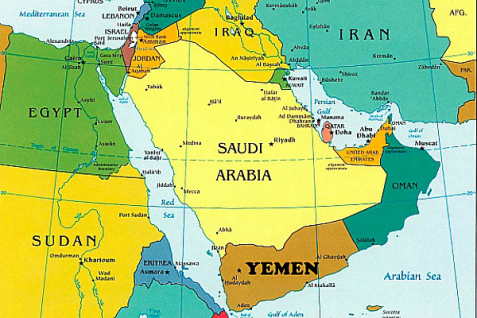
The Iranian action may well be an indirect response to the U.S. decision to deploy an aircraft carrier strike group in order to intimidate Iran into turning back a cargo of supply ships reportedly bringing weapons to Iranian-backed Houthi fighters in Yemen. But whatever caused the Iranian action, it is a direct threat to freedom of navigation, which the U.S. Navy has defended around the world for centuries.

In the Persian Gulf, the U.S. commitment to that doctrine led President Reagan to order U.S. Navy ships to escort tankers and protect them from Iranian attacks, precipitating a short and sharp conflict (the Tanker War of 1987-88) between the U.S. and Iran. This was the last time, incidentally, that the U.S. used force to respond to Iranian attacks and it was an unqualified success—the Iranians lost some oil platforms and boats that they had been using to harass shipping. Finally the accidental shootdown of an Iranian airliner in 1988 by the USS Vincennes (an unintended and unfortunate consequence of these operations) helped convince the Iranian leadership to end their war with Iraq.

Today the U.S. still remains committed, at least on paper, to protecting freedom of navigation in the Persian Gulf. In 2011, a 5th Fleet spokesman put it well: “The free flow of goods and services through the Strait of Hormuz is vital to regional and global prosperity. Anyone who threatens to disrupt freedom of navigation in an international strait is clearly outside the community of nations; any disruption will not be tolerated.”

Thus if the Obama administration were, in fact, to “tolerate” this disruption of the free flow of shipping it would send a dangerous signal, or to be more accurate, to reinforce a signal already sent: The U.S. lacks the will to stand up to predators in the international system, and in particular to Iran. Put another way, it would signal to the entire region that the president is so invested in reaching a deal with Iran that no Iranian misconduct—not the dropping of barrel bombs on Syrian civilians, not the takeover of Yemen, not the ethnic cleansing of Sunni communities in Iraq, and now not the seizure of a Western cargo ship—will be allowed to interfere with his objective.

The fate of the Maersk Tigris does not matter much in and of itself, but it will say much about this administration’s commitment to maintaining America’s traditional security responsibilities.
Pentagon: Iranian Forces Board Marshall Islands-Flagged Ship in Gulf

April 28, 2015

Pentagon: Iranian Forces Board Marshall Islands-Flagged Ship in Gulf, Reuters via Washington Free Beacon, April 28, 2015 at 11:20 am, EDT

(According to other sources, the ship is U.S. owned. — DM)

WASHINGTON – Iranian forces boarded a Marshall Islands-flagged cargo ship in the Gulf on Tuesday after patrol boats fired warning shots across its bow and ordered it deeper into Iranian waters as it was traveling through the Strait of Hormuz, the Pentagon said.

The ship, the MV Maersk Tigris, initially ignored Iranian patrol boats that ordered it deeper into Iranian territorial waters but complied after the vessels fired several warning shots, U.S. Army Colonel Steve Warren said.

U.S. forces in the region responded to distress calls from the Maersk Tigris, sending the destroyer USS Farragut to monitor the situation along with reconnaissance aircraft. No U.S. citizens were aboard the cargo ship, Warren said.

China Warns Of Rising Nuclear Threat From North Korea – Lou Dobbs

April 24, 2015

China Warns Of Rising Nuclear Threat From North Korea – Lou Dobbs, Fox News via You Tube, April 23, 2015

(The first four minutes is about the mess in Yemen and the last four minutes is about the North Korean nuclear threat. — DM)


Fleet of Iranian ships heading to Yemen turns around after being tracked by US warships

April 23, 2015

Fleet of Iranian ships heading to Yemen turns around after being tracked by US warships, Fox News, April 23, 2015

(But see Iranian Warships Arrive in Yemen Port. ?????????????? — DM)

A nine-ship Iranian convoy believed to be laden with weapons bound for rebels in Yemen turned around Thursday after being followed by U.S. warships stationed in the area to prevent arms shipments, multiple sources in the Pentagon told Fox News.

The sources said the nine-ship convoy is south of Salalah, Oman, and now headed northeast in the Arabian Sea in the direction of home. The ships, which include seven freighters and two frigates, had sailed southwest along the coast of Yemen heading in the direction of Aden and the entrance to the Red Sea. They appeared to drop anchor in the north Arabian Sea, after the USS Theodore Roosevelt, the USS Normandy and a half-dozen other American ships arrived in the Arabian Sea on Monday, and U.S. officials said that they could intercept the convoy.

The USS Theodore Roosevelt, a 100,000-ton nuclear-powered aircraft carrier known as the “Big Stick” and her escort, the USS Normandy, a guided missile cruiser, have been shadowing the convoy for the past few days, the sources said.

Fighter jets taking off from the carrier have been relaying the convoy’s location to the U.S. Navy’s higher command since the start of the week.

The Iranian Navy ships are characterized as “smaller than destroyers,” a Pentagon official with knowledge of the convoy said Tuesday. Asked what type of weapons the freighters are carrying, one Pentagon official said, “they are bigger than small arms.”

The reversal was welcomed by Pentagon officials, but they expressed caution saying, “this isn’t over yet,” and insisted Roosevelt will maintain observation on the convoy.

Iran backs the Houthi rebels, who chased the Yemeni president from Sanaa and are fighting for control of the Gulf nation. Warships from Saudi Arabia and Egypt, who back Yemeni President Abd Rabbuh Mansur Hadi, are positioned to the southwest of the convoy, forming a blockade of the Gulf of Aden and the port city of Aden.

Western governments and Sunni Arab countries say the Houthis get their arms from Iran. Tehran and the rebels deny that, although Iran has provided political and humanitarian support to the Shiite group.

The U.S. also has been providing logistical and intelligence support to the Saudi-led coalition launching airstrikes against the Houthis. That air campaign is now in its fourth week, and the U.S. also has begun refueling coalition aircraft involved in the conflict.

The campaign meant to halt the rebel power grab and help return to office Hadi, a close U.S. ally who fled Yemen.

The defiant Shiite rebels pressed their offensive in the country’s south on Thursday, apparently ignoring an overture from Saudi Arabia earlier this week, while the kingdom’s warplanes continued to target their positions, officials said.

The rebels’ prized goal — the port city of Aden — remained an elusive one, in part thanks to the Saudi-led airstrikes.

Meanwhile, Pakistan’s top leaders, including Prime Minister Nawaz Sharif and army chief Gen. Raheel Sharif, arrived Thursday in Saudi Arabia to push for negotiations in the Yemen conflict. The two are to meet with King Salman to discuss the crisis, according to Pakisitan’s Foreign Office spokeswoman Tasnim Aslam.

Both predominantly Sunni majority countries, Saudi Arabia and Pakistan are close allies, and Islamabad has supported the Saudi-led coalition, though it declined to send troops, warplanes and warships to join it.

The kingdom and Gulf Arab allies launched the airstrikes March 26, trying to crush the Houthis and allied military units loyal to ousted President Ali Abdullah Saleh.

The Saudis believe the rebels are tools for Iran to take control of Yemen.

Loud explosions shook the cities of Taiz and Ibb in western Yemen on Thursday, as well as Aden when coalition warplanes bombed the rebels and their allies, witnesses said.

Residents also said the Houthis and Saleh’s forces were attacking the city of Dhale, one of the southern gateways to Aden, with random shelling.

All Yemeni officials and witnesses spoke to The Associated Press on condition of anonymity because they were not authorized to talk to the media or feared for their safety amid the fighting.

Iranian Warships Arrive in Yemen Port

April 23, 2015

Iranian Warships Arrive in Yemen Port, The Jewish PressHana Levi Julian, April 23, 2015

YemenKSA.jpgSaudi Arabia airstrikes were aimed at Iranian-backed Houthi rebels who seized positions in neighboring Yemen. Iran is believed to be arming the rebels. Photo Credit: KSA

Iranian warships arrived Thursday in the southern Yemen port of Aden despite the presence of several U.S. warships in the area as well. It is believed the Iranian vessels are carrying weapons to re-arm the Shiite Houthi rebels who have seized control over the port city and the nation’s capital, Sa’ana.

Saudi Arabian Ambassador to the United States, Adel al-Jubeir, said Wednesday that his nation’s air force had achieved its objectives and has concluded its bombing campaign.

“We destroyed the air force, we destroyed their ballistic missiles as far as we know; we destroyed their command and control; we destroyed much, if not most of their heavy equipment and we made it very difficult for them to move from a strategic perspective,” al-Jubeir said. He added that Saudi forces had “eliminated the threat they posed to the Kingdom of Saudi Arabia” but . said that in the long run, there is “no military solution” to the conflict.

According to the World Health Organization, 1,080 people have been killed in the past month in Yemen, and 4,352 others have been wounded.

Coalition warplanes picked up where Saudi Arabian air force pilots left off and continued on Thursday to pound Houthi rebels in southern Yemen. The international forces targeted rebel positions in Aden and the central city of Taiz, according to Voice of America.

A severe humanitarian crisis has been created in the war-torn region, according to VOA, but the Shi’ite rebels still remain. Yemen President Abd Rabbu Mansour Hadi has fled for his life to Saudi Arabia.

Although Iran claimed that it welcomes an end to “killing innocent and defenseless civilians” and seeks a political resolution to the conflict, its warships laden with arms for the rebels– as usual – tell a different story.

US Yemen ceasefire bid founders as Saudis resume air strikes, Iranian warships on course for Gulf of Aden

April 22, 2015

US Yemen ceasefire bid founders as Saudis resume air strikes, Iranian warships on course for Gulf of Aden, DEBKAfile, April 22, 2015

The tone coming from the White House towards the end of the day was that the US naval buildup opposite Yemen was intended to give diplomacy a military boost, rather than confront the Iranian fleet.

******************

Just hours after halting military operations in Yemen, Saudi Arabia Wednesday, April 22 resumed its air strikes, bombing pro-Iranian Houthi rebel positions southwest of Taiz, after they seized a brigade base from forces loyal to fugitive President Abdu-Rabbu Mansour Hadi. DEBKAfile’s military sources report that the Saudi-led coalition went back on a promise published Tuesday to shift its focus from military action to peace talks after Houthi rebels opted out of the ceasefire the Obama administration was trying to broker between Riyadh and Tehran. Tehran further refrained from ordering its warships to turn around and told them to stay on course for the Gulf of Aden opposite Yemen.
DEBKAfile reported earlier Wednesday:

Wide overnight predictions of a Yemen ceasefire coming out of US mediation between Iran and Saudi Arabia were unfulfilled by Wednesday, April 22. All that happened was Saudi Arabia’s termination of its air strikes against the Iran-backed Houthi rebels – but not its sea and air blockade of the country. The rebels made it clear that for them, the war goes on. From Washington, US President Barack Obama warned Tehran against delivering weapons to Yemen that could be used to threaten shipping traffic in the region. Speaking in a televised interview on MSNBC’s “Hardball,” the president said: “What we’ve said to them is that ‘if there are weapons delivered to factions within Yemen that could threaten navigation, that’s a problem.’”

He was referring to the Iranian buildup of nine vessels, some carrying weapons, and warning that US warships were deploying to defend international navigation in the Gulf of Aden and the strategic Strait of Bab el-Mandeb off the shores of Yemen.

DEBKAfile reported earlier::

Iran’s Deputy Foreign Minister Hossein Amir Abdolllahian said Tuesday night, April 21, that Tehran is optimistic that ‘in the coming hours we shall see a halt to military attacks in Yemen.”

He did not say whether the Saudi Arabia had accepted a ceasefire after three weeks of air strikes, or its targets, the Houthi rebels and their Yemeni army allies – or both. Their acceptance would terminate the Yemen civil war.

Earlier Tuesday, White House spokesman Josh Earnest tried to play down the danger of a collision between a US naval strike force led by the USS Theodore Rooseveltaircraft carrier and an Iranian naval convoy believed to be carrying arms for the Houthis. Both were due to arrive in the Gulf of Aden opposite the Yemeni shore. Earnest said the US fleet’s mission was “to ensure the free flow of commerce” i.e. the freedom of navigation through the Gulf of Aden and Strait of Bab El-Mandeb.

He did not repeat an earlier statement by US defense officials that The Roosevelt carrier, the guided-missile cruiser USS Normandy and other accompanying warships had been sent to pre-empt any attempt by the Iranian vessels to unload weapons for the Houthis – in violation of a UN Security Council resolution.

Pentagon officials said an Iranian convoy of nine cargo ships had reached international waters in the Gulf of Aden, but that to their knowledge, the US and Iranian ships had not yet seen each other or made any contact.

The tone coming from the White House towards the end of the day was that the US naval buildup opposite Yemen was intended to give diplomacy a military boost, rather than confront the Iranian fleet.

Reports from Riyadh likewise pointed to active diplomacy afoot for ending the violence in Yemen.

A statement read out on Saudi-owned Arabiya TV announced the end of the kingdom’s military operation against the Iran-allied Houthi rebels in Yemen. “The alliance had achieved its goals in Yemen through the “Storm of Resolve” campaign and would now begin a new operation called “Restoring Hope.”

This operation, the statement said, would focus on security at home and counter-terrorism, aid and a political solution in Yemen.

At the same time, DEBKAfile’s Gulf sources report the same TV channel carried the opposite message from Riyadh:

Saudi Arabia’s King Salman Abdulaziz has ordered the Kingdom’s National Guard to join the military campaign in Yemen, said another communique. Minister of the Saudi National Guard Prince Mutaib bin Abdullah said his forces are on high alert and are ready to take part in Operation Storm of Resolve, a Saudi-led coalition of 10 states battling the advance of the Iran-backed rebels.

The Saudi National Guard is a strong armed force, superior to and better equipped than the Saudi national army. It would provide a solid increment for the Saudi air strikes in Yemen.

Behind this cloud of apparent contradictions hovering over the Yemen conflict Tuesday, is an Obama administration bid to broker the contest between Saudi Arabia and Yemen and bring about a ceasefire. The various parties are meanwhile jockeying for advantageous positions without surrendering their options. If the bid is successful, a truce may be announced in the Yemen war in the coming hours, but it is still hanging fire.

Arab states snub Obama’s D.C. summit as Iran Mocks Obama

April 21, 2015

Arab states snub Obama’s D.C. summit as Iran Mocks Obama, BreitbartJoel B. Pollak, April 21, 2015

ap_saud-bin-faisal-bin-abdulaziz-al-saud_ap-photo-640x422The Associated Press

As the U.S.S. Theodore Roosevelt heads to Yemen to confront a convoy of Iranian ships, including destroyers, it is worth asking why President Barack Obama is still talking to the Iranian regime about its nuclear program. The Iranians, who used the Houthi militia to knock over the American-aligned Yemeni government, clearly has no fear that Obama will suspend negotiations. If anything, Iranian tactics are winning more concessions.

When you strike a deal with an enemy who continues to attack you, that is not called “peace,” but “surrender.”

It is a wonder Obama is even bothering to send an aircraft carrier to the region at all. His hand has been forced by two factors: first, that Saudi Arabia has gone to war in Yemen without bothering to ask for American approval; second, Yemen is key to Obama’s drone policy against Al Qaeda, his only modest military success.

America has lost more than an ally in Yemen or a foothold in Iraq. It has lost the opportunity to defend hundreds of thousands of innocent lives from being murdered by Iran’s Syrian ally, which is using chemical weapons against civilians. It has lost the opportunity to demilitarize Lebanon—an achievement then-Sen. Joe Biden foolishly claimed in his debate with Sarah Palin in 2008. It may even have lost the chance to stop a nuclear Iran.

Iranian foreign minister Javad Zarif made clear in his New York Times op-ed this week that the regime sees a nuclear deal as the key to regional domination. He offered—no, demanded—American cooperation on ISIS and other issues, not as a possible outcome of a deal but as a condition for a deal.

Yet the White House refuses to make its own regional demands—such as recognition of Israel, or an end to Iran’s global terrorism.

Israel has made clear that the Iran deal is an existential threat, and even that has not moved Obama to reconsider. The Arab nations are not waiting to be double-crossed, and are making their own plans, which likely include Saudi Arabia obtaining nuclear warheads from Pakistan.

In an attempt to save face, Obama has invited the Arab nations to a May 13 summit at the White House—long after final negotiations with Iran have begun

Already, some Arab states have indicated that they will not be attending (Oman), or will only send junior delegations (Saudi Arabia, United Arab Emirates). Amir Taheri of theNew York Post quotes  one Arab official: “He is going to give a Churchillian speech. But we know that you can’t be Chamberlain one day and Churchill the next.”

Meanwhile, Israel quietly signals that it is not going to wait for a Churchill to arrive in the Oval Office.

US warship en route to block Iranian ships carrying weapons

April 20, 2015

US warship en route to block Iranian ships carrying weapons
By MARK MAZZETTI and HELENE COOPER APRIL 18, 2015 Via The NYT


(US Navy to Iran….’Be boarded or be sunk’. What’s that? Death to America you say?? – LS)

WASHINGTON — The U.S. Navy aircraft carrier USS Theodore Roosevelt is steaming toward the waters off Yemen to beef up security and join other American ships that are prepared to intercept any Iranian vessels carrying weapons to the Houthi rebels fighting in Yemen.

Navy officials said Monday that the Roosevelt was moving through the Arabian Sea. The U.S. Navy has been beefing up its presence in the Gulf of Aden and the southern Arabian Sea amid reports that a convoy of about eight Iranian ships is heading toward Yemen and possibly carrying arms for the Houthis. Navy officials said there are about nine U.S. warships in the region, including cruisers and destroyers carrying teams that can board and search other vessels.

The officials spoke on condition of anonymity because they were not authorized to discuss the ship movement on the record.

The Houthis are battling government-backed fighters in an effort to take control of the country. The U.S. has been providing logistical and intelligence support to Saudi Arabia-led coalition launching airstrikes against the Houthis. That air campaign is now in its fourth week.

The U.S. Navy generally conducts consensual boardings of ships when needed, including to combat piracy around Africa and the region. So far, however, U.S. naval personnel have not boarded any Iranian vessels since the Yemen conflict began.

White House spokesman Josh Earnest would not comment specifically on any Navy movements in Yemeni waters, but said the U.S. has concerns about Iran’s “continued support for the Houthis.

“We have seen evidence that the Iranians are supplying weapons and other armed support to the Houthis in Yemen. That support will only contribute to greater violence in that country. These are exactly the kind of destabilizing activities that we have in mind when we raise concerns about Iran’s destabilizing activities in the Middle East.”

He said “the Iranians are acutely aware of our concerns for their continued support of the Houthis by sending them large shipments of weapons.”

Iranian ship convoy moves toward Yemen, alarming US officials

April 18, 2015

Iranian ship convoy moves toward Yemen, alarming US officials, The HillKristina Wong, April 17, 2015

Iran sent a destroyer and another vessel to waters near Yemen last week but said it was part of a routine counter-piracy mission. 

What’s unusual about the new deployment, which set out this week, is that the Iranians are not trying to conceal it, officials said. Instead, they appear to be trying to “communicate it” to the U.S. and its allies in the Gulf.

********************

U.S. military officials are concerned that Iran’s support for Houthi rebels in Yemen could spark a confrontation with Saudi Arabia and plunge the region into sectarian war. 

Iran is sending an armada of seven to nine ships — some with weapons — toward Yemen in a potential attempt to resupply the Shia Houthi rebels, according to two U.S. defense officials.

Officials fear the move could lead to a showdown with the U.S. or other members of a Saudi-led coalition, which is enforcing a naval blockade of Yemen and is conducting its fourth week of airstrikes against the Houthis.

Iran sent a destroyer and another vessel to waters near Yemen last week but said it was part of a routine counter-piracy mission.

What’s unusual about the new deployment, which set out this week, is that the Iranians are not trying to conceal it, officials said. Instead, they appear to be trying to “communicate it” to the U.S. and its allies in the Gulf.

It is not clear what will happen as the convoy comes closer to Yemen. Saudi Arabia has deployed ships around Yemen to enforce the blockade, as has Egypt. An official said the ship convoy could try to land at a port in Aden, which the Houthis have taken over.

Although the U.S. is assisting with the Saudi-led air campaign, it is not participating in the naval blockade of Yemen, said U.S. Central Command spokesman Col. Pat Ryder.

However, the U.S. Navy is in the region and has already “consensually boarded” one Panamanian-flagged ship in the Red Sea on April 1 on the suspicion it was illegally carrying arms for the Houthis.

None were found, but the move raised alarm bells in Washington over an increasingly active U.S. military role in the conflict. The Pentagon indicated this week that more boardings could occur.

“We will continue to vigilantly defend freedom of navigation and to conduct consensual searches in an effort to ensure that drugs, human trafficking, weapons trafficking and other contraband are limited,” Army Col. Steve Warren said on Monday.

Officials fear a naval confrontation between Iran and Saudi Arabia could escalate what has become a proxy war between the two countries.

The U.S. has been supporting the airstrikes with intelligence and logistical support, and last week began refueling Saudi fighter jets. Administration officials say it is important to support Saudi Arabia.

Earlier this week, a senior State Department official said the U.S. would try to ensure that a United Nations Security Council arms embargo against Houthi leadership is enforced.

“We will be taking very careful look and examining very closely efforts to violate the embargo,” senior State Department official Gerald Feierstein told the House Foreign Affairs Committee.

The deepening of the conflict comes as the U.S. hopes to reach a deal with Iran to roll back its nuclear program in exchange for sanctions relief. Officials say U.S. support for the Saudi-led coalition has not affected the negotiations with Iran.

The conflict also threatens to complicate U.S.’s relations with Iraq. Iraqi Prime Minister Haider al-Abadi, an Iran ally, criticized Saudi Arabia for its airstrike campaign during a visit to Washington this week.

U.S. officials say they are unsure why Iran is making the brazen move. One theory they have floated is that the Saudi-led coalition has effectively blockaded any air routes into Yemen and there are no other ways to resupply the Houthis.

Another theory is that Iran is trying to distract the coalition from another ship it has tried hard to conceal that is currently docked at Oman — a potential land route for smuggling arms into Yemen.

Yet another theory is that Iran wants to force a confrontation with Saudi Arabia that it believes it will win, because Iran views the Saudi military as weak and suspects the U.S. lacks the willpower to support its Gulf ally.

Earlier this week, Iranian Supreme Leader Ali Khamenei on Twitter taunted Saudi Arabia, calling its military puny and smaller than Israel’s. He also said the air campaign was tantamount to genocide of innocent Yemeni civilians and that the U.S. would also fail in Yemen.

U.S. officials say they hope the airstrikes will force Houthis to the negotiating table in order to restore stability in Yemen, where America faces a terrorist threat from al Qaeda in the Arabian Peninsula (AQAP).

“We’re assisting the Saudis to protect their own territory and to conduct operations that are designed to lead ultimately to a political settlement to Yemen,” said Defense Secretary Ashton Carter on Thursday.

“That’s good for the people of Yemen, first and foremost. It’s good for Saudi Arabia that doesn’t need this on its southern border.  And … it’s good for us, among other reasons, because of AQAP’s presence in Yemen. But for that to occur, it’ll require more than military action,” he added.

Humor? Obama abducted by aliens

April 1, 2015

Obama abducted by aliens, Dan Miller’s Blog, April 1, 2015

(The views expressed in this article are not necessarily mine or those of Warsclerotic or its other editors. — DM)

Today, April fool’s day first, Obama was abducted by aliens from Venus who were concerned about His warlike stance toward the peaceful Islamic Republic of Iran.

Venus

Organizing for Action logo 1

Mars is the god of war, Venus is the goddess of peace. Aliens from Mars had been slightly disturbed that Obama’s efforts to give Iran nuclear weapons might fail, but had seen that her status as a nuclear power was inevitable and hence did nothing. Aliens from Venus were equally pleased with the prospects of Iranian nuclear weapons but were very concerned that Obama, by failing adequately to praise Iranian attempts to extend its hegemony over the entire Middle East and beyond, had retarded those praiseworthy efforts on behalf of true Islamic peace. Hence, they secretly abducted Him this morning as He deplaned from Air Force One following an off-the-books trip to His spiritual birth place in Manchuria.

Since Obama’s abduction and remedial training required only a few minutes He was not missed, even by His dear soul mate, Valerie Jarrett. Ms. Jarrett was, therefore, pleasantly surprised when Obama called a press conference in the Rose Garden to make an announcement, following a splendid rendition of Hail to the Chief:


Fellow world citizens, I have finally awakened from my slumbers to realize that Iran is the only country in the world capable of bringing true peace through submission in accord with the word of Allah, may His Holy name be forever praised by all. Israel claims to desire peace, but only through war. Saudi Arabia, Egypt, Jordan and other misbegotten specs of excrement on the face of our dear planet — now in peril of imminent death due to climate change to which their vile oil has contributed massively — have dared even to challenge Iran’s peaceful pursuits of peace throughout the Middle East in Iraq, Syria, Yemen and elsewhere.

Henceforth, it will be My supreme duty as your Commander in Chief to promote and otherwise to assist Iran in her glorious efforts for peace. I know in my heart that that’s the principal reason that you, My people, elected Me as your very own Supreme Leader. Accordingly, I pledge that My efforts will be unstintingly directed to the end that you desire.

May Allah bless Iran, Damn America, Israel and all other enemies of true peace, and give a blessed day to you all, inshallah.

Iran’s leaders, due to their extensive relations with the aliens who had abducted Obama, were not at all surprised but pretended that they were. Supreme Leader Khamenei personally accepted Supreme Leader Obama’s gracious words by saying that Obama had finally managed to tame the Great Satan and promised to do everything within his power to help, inshallah. He also commented favorably on Secretary Kerry’s use of “inshallah” in rebutting suggestions by defeatists that the P5+1 negotiations would collapse without giving Iran nuclear weapons.

Kerry34

Even those who had previously viewed Obama as weak and indecisive will now be forced to see Him as He truly is, a towering beacon of strength and light to a world beset with tribulation, turmoil and darkness.  His legacy as the Greatest Peace Maker, Ever, is assured, inshallah.

Smoking pot is lots better than making war!

Smoke ganja. War is for sissies!

Let’s hope it’s just April Fool’s Day nonsense.


