October 1st, 2015 • Israeli Prime Minister Benjamin Netanyahu renewed his warning that the Iranian nuclear deal threatens to destabilize the Middle East and will make a war more likely. He cautioned that already Iran is ramping up efforts to fund terror cells worldwide, while also arming Islamists in Syria, Yemen, Lebanon, and the Palestinian territories.
Netanyahu told that Iran was already building up its own armament stockpiles and that billions of dollars in sanctions relief would only fuel the effort. He reminded the nations of the world that Iran already has the capability to target Israel with ballistic weapons and that it’s current ballistic efforts can only be meant to threaten Europe and the United States.
The Prime Minister chastised the member states of the U.N. for their failure to speak out against Iranian threats to destroy Israel, and that the silence was deafening. Netanyahu emphasized the point by staring at the delegates in silence for 45 seconds.
Netanyahu responded to Palestinian Authority President Mahmoud Abbas’s declaration the previous day that it would no longer honor the Oslo Peace Accords by offering to reopen peace talks with the PA without any conditions. He also rejected the assertion by Abbas that Israel intended to change the status of the al-Asqa Mosque on the Temple Mount in Jerusalem, a Palestinian allegation that has recently fomented violent incidents.
Prime Minister Netanyahu pleaded with U.N. member states to cease decades of anti Israeli rhetoric, and to undertake an honest effort to work toward an Israeli – Palestinian peace agreement.
He also urged the United Nations to advance peace in the Middle East after decades of the UN working against Israeli interests.
In an article published in the Hizbullah-affiliated Lebanese daily Al-Akhbar on October 1, 2015, the chairman of the newspaper’s board of directors, Ibrahim Al-Amin, predicted that Russia’s air campaign in Syria will be merely a prelude to a larger military offensive involving ground operations by the Syrian Army, Iran, Hizbullah, and even the Iraqi Popular Mobilization Forces. Al-Amin is known to have close ties to Hizbullah, and in the past he has proven a reliable source on matters relating to the Iran-Syria-Hizbullah axis.
Ibrahim Al-Amin (source: Siyese.net)
The following is the translation of the article:
“…This is the first test for the granddaughter of the Eastern dynasty [i.e. Russia] since World War II, and it is the first field test of whether America’s unipolar position in the world over the past quarter century has truly been broken. Above all, this is a repositioning of Russian military force in the direct labor market of the regions of ‘cold’ confrontation with the U.S.-led West… Today we find ourselves before the best opportunity of putting Syria on a path to a true solution, even if it be prefaced by fire.
“As for the facts, the Russian air force carried out the first missions of a working program laid out in detailed form in an existing plan of cooperation between Moscow and its allies in the war in Syria and Iraq. This is a plan that is coordinated down to the finest details with the two allies Syria and Iran, and consequently with Hizbullah [as well]… What happened yesterday, and which will soon reach its culmination, is a necessary preface to a larger military action that will include a land component undertaken by other forces in the alliance. To put it more directly, [Russia’s] aerial bombardment of [the rebels’] command and control centers, major weapons arsenals, and artillery positions will be a preface to a military operation carried out by the Syrian army on the ground, with direct support from Iran and Hizbullah, and even from the Iraqi Popular Mobilization Forces… It may be emphasized that Russia’s activity yesterday means clearly that all the discussions in New York didn’t change an iota in the military plan of action…
“The signs of surprise and astonishment on [the faces of] the Americans, the Westerners, the Israelis, the Turks, and the Saudis are an additional proof of the weakness of the prior coordination regarding the fate of the initiatives surrounding the Syria crisis. In fact, the step taken by Russia is a kind of dare to all those who employed every violent means they could against the Syrian regime. If they decide to broaden the confrontation, they will be forced to deal with the new realities, which today are openly represented by the Russian military presence, and tomorrow will be represented by an open Iranian military presence as well…
“This must not hide from our eyes the picture of the complicated reality, which tells us that the joy felt by the regime elements in Syria must not turn into any slackening, not on the part of the regime itself, and not on the part of all those who fight alongside it. It would be naive to consider the Russian strikes sufficient to counter the enemies. It would rather be realistic to profit from the support of Russia – which is a supporting actor, and is not [itself] a member of the axis of resistance – in order to prepare to wage harsh and decisive battles in a number of places in Syria. This is a matter that requires raising the level of readiness and mobilization, and the creation of operative means of benefitting from the Russian military arsenal that is present in or coming to Syria.
“Yesterday Russia turned a new page in the history of the world. However far its military action in the field reaches, it is the political and strategic results that will remain more important. These results will invite those who delude themselves in thinking that America is still the leader of the world and controller of its fate to revise their stance. Those who do not want to change their minds, let them stay as they wish, but they should take into account that they must rely on themselves more than at any time in the past. This goes for Syria, Iraq, Palestine, and even the Arabian Peninsula and North Africa!”
Growing speculation that John Kerry will receive a Nobel Peace Prize for finalizing the Iranian nuclear deal is generating renewed criticism of his close relationship with the Iranian foreign minister, Javad Zarif, a key public face for the theocratic regime who is rumored to be a probable co-recipient with Kerry.
Rumors have been circulating for months that Kerry and Zarif will be co-selected for the prize. The Stockholm International Peace Research Institute, a leading Swedish think-tank, recommended in July that the two be selected for the Nobel in 2016.
Lawmakers and Washington insiders who have worked for years on the Iran portfolio have reacted with shock to the rumors, telling the Washington Free Beacon in multiple interviews that both Kerry and Zarif are unfit to receive the prize.
“We have seen Nobel Prizes that appeared to be awarded to people who have acted staunchly to the detriment of Israel’s existence, and if that is their inclination this time, I think Secretary Kerry should be first runner up for the Nobel Prize, right behind the Ayatollah,” said Rep. Louie Gohmert (R., Texas).
The Nobel Prize speculation comes after months of reports describing warmth and comfort between the American and Iranian teams that sealed the final Joint Comprehensive Plan of Action.
The United States considers Iran to be the world’s leading state sponsor of terrorism and military officials have linked Tehran to the deaths of hundreds of American soldiers in Iraq.
The growing rumors have reignited criticism among insiders of Kerry’s coziness with top Iranian officials and of the deal more specifically.
“No one should be surprised if the Nobel Peace Prize committee ends up awarding the chief negotiators of a catastrophic agreement that preserves and legitimizes Iran’s ability to build nuclear arms, and unleashes over $100 billion for Iran to further fund Hezbollah, Hamas, Palestinian Islamic Jihad, and other terrorists who attack Israel,” said one senior GOP aide who has long worked on the issue.
Those who spoke to the Free Beacon both on and off the record said that Kerry and Zarif would make a mockery of the award. The recognition of Zarif in particular, a longtime Iranian regime insider known for his vociferous dislike of Israel, was particularly offensive to some observers.
“I assume they’ll win it. It will be announced in early-mid October, and then Kerry can resign in glory and join the Democratic presidential race,” said Bill Kristol, the prominent conservative commentator and editor of the Weekly Standard.
Like Kristol, other observers feel certain that the Nobel commission will grant the award to Kerry and Zarif either this year or next.
“American historians will judge Kerry as one of the worst secretaries of state in the country’s history, a man who ceded enormous parts of the globe to hostile American rivals and legitimized the Iranian nuclear program,” said one senior pro-Israel official who has been involved in the Iran fight but was not authorized to speak on record.
“It’s not a surprise that European elites, who find America’s rivals preferable to America and want to do business with Iran, are going to reward him for it,” the source said.
When asked this week to address the speculation, a spokesman for the Nobel Foundation declined to confirm who may or may not be in the running.
“The Nobel Foundation cannot comment, confirm, or deny rumors of the kind described in your email below,” the official said.
“According to the statutes of the Nobel Foundation and the prize awarding institutions of the Nobel Prize all nominations are classified information,” the official added, explaining that in some case nominators choose to reveal who they have nominated.
Nominations for the 2015 Nobel Prize had to be made before Jan. 31 of this year, before the nuclear deal was finalized. If chosen after this date, the nominees would be considered in the 2016 cycle.
“I think the work of the Nobel Committee of the Norwegian Parliament this year just got much easier,” Carl Bildt, the former Swedish prime minister, tweeted immediately after the nuclear agreement was announced in Vienna.
“A Nobel Peace Prize for John Kerry?” the Week asked the following day. “It could happen.”
Conservative commentators, such as National Review’s Jay Nordlinger, also picked up on the speculation.
“If the Norwegian Nobel Committee gives John Kerry the peace prize for the Iran deal, and Iran goes nuclear, will he throw away his Nobel medal?” Nordlinger asked in August, as criticism of the deal mounted.
The U.S. has been relegated to dragging its feet in a trail blazed by the Russian leader, as Washington is left to practically beg Moscow for a seat at the table where Assad’s fate will be determined.
******************
U.S. President Barack Obama’s address to the U.N. General Assembly on Monday was his worst and most embarrassing yet. Despite the fact that it has been seven years since he was elected president, it seems Obama has yet to learn anything from his growing list of failures, especially when it comes to foreign policy.
Obama continues to naively preach about the importance of traditional diplomacy and broad international cooperation as a prerequisite to conflict resolution; and he does so despite the fact that his decision to prematurely withdraw American troops from Iraq, compounded by his aversion to putting boots on the ground in Syria, have done nothing but breed violence, fanaticism and radical Islamism in the Middle East.
Against the backdrop of the bloody conflicts in Syria, Iraq and Yemen, Obama delivered a disconnected and utterly surreal speech before the U.N., lauding democracy and international agreements, even deficient, hollow ones, like the nuclear deal with Iran.
Beyond the sanctimonious sermon to nations and movements without any loyalty to the principles of Western democracy, Obama’s speech lacked any new message. On the contrary — he essentially legitimized Russia’s military presence in Syria, and the pivotal role Moscow has appropriated in the region due to American inaction against Syrian President Bashar Assad.
This inexcusable failure, which followed Washington’s acquiescence in allowing Russian President Vladimir Putin become the new mediator in the chemical warfare crisis in Syria in 2013, has afforded Moscow a coveted opportunity to become a major player in the Middle East, one shaping a new political and security reality.
The U.S. has been relegated to dragging its feet in a trail blazed by the Russian leader, as Washington is left to practically beg Moscow for a seat at the table where Assad’s fate will be determined.
Indeed, if you strip the envelope of democracy vs. dictatorship from Obama’s speech, it becomes more than evident that he is not only willing to foster partnerships with tyrants and oppressive regimes, but also that the dispute between the White House and the Kremlin over Syria is marginal, as it focuses on Assad’s status in the new political order that will be forged in Syria once the fighting subsides.
The American Gulliver, it seems, is coming to terms with the end of the single-world power hegemony. While the Russian military airlift to Syria continues in full swing, Obama is content with philosophical reflections on the desired nature of the new world order, yielding to the new balance of power emerging in the war-torn country.
One can only lament the fact that the U.S. president’s incomprehensible weakness only undermines the very democratic dream he himself has outlined.
This was evident in the meeting between Obama and Putin following their respective U.N. addresses. Despite Obama’s desire to give his Russian counterpart the cold shoulder, the fact the he declared before dozens of world leaders that the U.S. has “no desire to return to a cold war” took the sting out of his message.
This was nothing but an attempt at damage control over the harm caused to the U.S.’s prestige and status in the global theater by drawing new red lines to limit Russia’s operation in the Middle East. The problem is that we already know how blurry those red lines are when it comes to Syria.
(Unfortunately, Obama was “in the game” which led to the nuke “deal” with Iran. There, he was not incompetent; he got what he sought. — DM)
Obama has made a lot of foreign policy mistakes in office, but his capitulation on the Iranian nuclear talks followed by Russia’s move into Syria is impossible to explain away as anything but a stupendous strategic fiasco. Incompetence is too nice a word. Obama was never even in the game.
*********************
It is sometimes said that in negotiations with foreigners, American leaders play checkers, while their wilier opponents play chess. There is perhaps some truth to this, as American leaders sometimes chase short-term political results, a consequence of democratic governance and constantly changing leadership. By contrast, despotic Persians are credited with inventing chess, and in modern times autocratic Russians have been its master, and so it is tempting to say of President Obama’s dealings with those two countries that the analogy holds.
But that is way too charitable. As Vladimir Putin skillfully reasserts Russian power and influence in the Middle East with Islamic Persian Iran as a willing partner, a more apt analogy might be that while the Russians and Iranians move their chessmen, isolating and threatening opposing pieces, Obama is not even at the table, but rather childishly looking on, as he pushes diplomatic dirt around the Middle East sandbox.
For over 150 years, a primary objective of Western diplomatic and military strategy was to keep the Russians out of the Middle East and Southwest Asia. In the 1850s, the British and French went to war in Crimea to protect the Ottomans from Russian predation and to preserve the balance of power. Later, the so-called “Great Game” centered on similar British efforts to frustrate Russian domination of Iran and Afghanistan. A century later, the United States took up the task, offsetting Russian influence in newly socialist Arab dictatorships by backing Israel and more traditional Arab monarchies in the Middle East, while openly and successfully opposing the Soviet incursion into Afghanistan.
Today, one can’t even say there remains any Western strategy regarding Russia. Western Europe has mostly forfeited its military and political influence overseas to support decadent welfare states, even as it is being progressively and deliberately overwhelmed by millions of Islamist migrants. Under Obama, who supports and admires Europe’s demise, the United States has increasingly joined in the decline. The laughable Libyan campaign, “fought” by Europeans while the U.S. led from behind, set an example of pursuing a feckless, feel-good military campaign without regard for consequences or traditional strategic concerns. Obama’s encouragement of the so-called Arab Spring and its Islamist provocateurs almost lost Egypt and did lose Syria, with catastrophic humanitarian and geopolitical results.
Putin is taking advantage of American weakness and inaction. A half-century of successful American effort to keep the Russians out of the Middle East has been forfeit in a few months of breathtaking American diplomatic and military incompetence. Obama’s capitulation in the Iran deal effectively completed the groundwork for the Russian move, Putin having carefully monitored America’s year-long and ineffectual air campaign against ISIS. Putin now claims that Russia’s push into Syria is to redeem the campaign against ISIS with Russian troops fighting with Syria and Hezb’allah. Embarrassed by Putin at the U.N., Obama gave up any pretense of strength, effectively welcoming the Russian “intervention” against ISIS. Unexplained is why a large percentage of Russian anti-ISIS forces are heavily equipped with anti-aircraft weapons, something that even a flaccid NATO command cannot ignore, inasmuch as ISIS have an air force. Those weapons are useful only against NATO or Israeli aircraft.
So lost was Obama before his meeting with Putin at the U.N. that his stated strategy for dealing with the Russian strongman was to ask him what he was doing. From the stiff and awkward body language of the president following the meeting (a painful handshake and awkward smile) it is clear that Putin told Obama at least some of the story, whether Obama liked it or not. Most particularly, his client Bashar Assad will remain in power with Russian backing, regardless of Obama’s view on the matter. But likely Obama had known what he was in for, and just going through the motions. The day before, Secretary of State of State John Kerry responded to a question about how long the U.S. could tolerate the survival of Assad, saying, “… it doesn’t have to be on day one or month one or whatever.” Right, dude, whatever. Between Obama and Kerry, it is now fair to assume that our much muddled and irresolute Syrian policy is “whatever,” which means we just don’t care. We take our toys and go home.
If Obama was hoping, as he and his supporters implied, that the Iranian deal would produce a more moderate, cooperative Iran, Putin and the mullahs are doing all they can to demonstrate how wrong he was. If he was hoping that “international pressure” and the conflict in Ukraine would moderate Putin’s aggressive strategies, he was wrong again. And if he thinks that by quitting, he has left Putin an unwinnable game, the Russian leader aims to prove him wrong again. And since Obama is almost always wrong when it comes to foreign policy, it’s a fool’s errand to bet against Putin.
In chess, before going for the opponent’s king, typical strategy calls for supporting one’s important pieces, while threatening and isolating opposing pieces. The Russians and Iranians are now going about this with a vengeance, without the United States or the West making any noticeably effective counter-moves. Russia is backing and protecting Assad and has closely allied itself with a newly empowered (thanks largely to Obama) Iran. Meanwhile, traditional American allies in the region, Israel, Egypt, and the Arab monarchies are indeed increasingly threatened and isolated. The stage is being set for a Russo-Iranian endgame that could prove disastrous to America’s traditional allies and the West in general.
Some of Obama’s liberal supporters dismiss such analysis as over the top, and insist that Putin’s moves have more to do with domestic politics than a long-term Middle Eastern power play. They point out Putin’s problems at home, and the relative weakness of the Russian military. However, relative Russian weakness means little when moving into a power vacuum created by Obama’s flight from international responsibilities and, to a large extent, reality. And besides, this has been the basic way liberals have sought to excuse Obama whenever he is pushed around by a foreign leader (which is almost always). Putin’s got problems, so he invades Ukraine, threatens the Baltic States, and moves into Syria. The Chinese have problems, so they push naval vessels into American waters and fortify disputed Western Pacific archipelagos. Korea’s got problems, Iran’s got problems, and none of their aggressive actions has anything to do with the dilettante in the White House. It’s all about solving problems at home with international temper tantrums.
Obama has made a lot of foreign policy mistakes in office, but his capitulation on the Iranian nuclear talks followed by Russia’s move into Syria is impossible to explain away as anything but a stupendous strategic fiasco. Incompetence is too nice a word. Obama was never even in the game.
The situation in the Middle East is very complicated these days, particularly when it comes to the ongoing strife in Syria. On Monday, Russian President Vladimir Putin and Iranian President Hassan Rouhani both gave speeches at the U.N. General Assembly in New York that in normal times could have been dismissed as amusing. But in the era of Islamic State, everyone is suddenly trying to appear to be righteous, including Putin and Rouhani.
Putin, for example, believes that Syria’s future must include Bashar Assad, the tyrant who is responsible for the deaths of 250,000 of his own people. As Putin said, “Only Assad is fighting against Islamic State.” Meanwhile, Rouhani declared, “No country should use terrorism to interfere in another country’s affairs.” Let us remember that these were addresses delivered to the world, rather than jokes uttered on a satire program. What a farce.
The sad reality that exists in the Middle East these days is what allowed these two leaders to make such “comical” statements. The growth of Islamic State and the failure of the U.S.-led coalition against it have given Russia and Iran a great opportunity to bolster their international status.
For the Russians, this is a chance to erase memories of their actions in Ukraine and the Crimean Peninsula. For the Iranians, this provides an opening to deflect attention away from 35 years of exporting terrorism around the globe. Russia and Iran are both fortunate that Islamic State exists.
Putin met with U.S. President Barack Obama on Monday to tell him that the purpose of Russia’s increased military presence in Syria was to fight Islamic State. He also told Obama that the rebuilding of Syria would require the rebuilding of the Assad regime.
Obama was right on Monday when, in his own address to the U.N. General Assembly, he said that Assad must have no political future in Syria. Unfortunately, there are two small things that contradict Obama’s view of the situation. First, the pre-civil war Syria no longer exists. And second, all reconstruction proposals for Syria include a transition period during which a role for Assad would be necessary. And who knows how many years this transition would take?
Obama may not want Assad in power, but in reality, an Assad regime backed by Russia and Iran is what there is in Syria. Since Obama reiterated on Monday that the U.S. cannot solve global problems by itself, perhaps he should have added how wonderful it is to have Russia and Iran to help him. This is the woeful state of our world today.
Obama’s General Assembly address was his second-last before he leaves the White House in January 2017. In Monday’s speech, he tried to outline what his legacy will be. One must give Obama credit for adhering to his outlook, even after all of the mishaps he has been personally responsible for.
Russia and Iran were the big winners in New York on Monday. Putin, who was ostracized after Russia’s annexation of Crimea last year, is now the world’s great hope in the fight against Islamic State. And Iran is already talking about a “new world order,” thanks to the nuclear deal it signed with world powers in July.
And what does this all mean for Israel? “The Zionist regime is the root of all terrorism,” Rouhani said in his speech on Monday. How hopeful!
What is the solution for all this? Who knows? Perhaps we will get the answer at the U.N. General Assembly in 2016.
President Obama’s address to the U.N. General Assembly on Monday morning was a rambling journey through a fantasy world where his foreign policy hasn’t been an unmitigated disaster.
Perhaps the most bizarre moment came when he tried to tout his Libyan adventure as a success.
There was plenty of tough-guy posturing that intimidated absolutely no one. The Russian and Iranian delegations were especially good at looking bored and unimpressed when he called upon them to do this-or-that because The World supposedly demanded it. Obama hasn’t figured out he’s the only leader at the U.N. eager to sacrifice his nation’s interests to please The World.
Obama made the weird decision to vaguely threaten Russia over its invasion of Ukraine by claiming that The World would not stand idly by and allow it… when that’s exactly what The World, and especially First Citizen of the World Barack Obama, has been doing. He essentially pleaded with Iran to stop supporting terrorist proxies and pursuing its aggressive regional ambitions, and focus on their economy instead. (Of course, in Obama’s vigorous imagination, the U.S. has been enjoying an economic boom under his stewardship, instead of an endless grinding non-recovery and limp, sporadic growth, after Obama’s spending doubled the national debt in a single presidency.)
It was bad enough that the President talked about American troops coming home from Iraq and Afghanistan as the triumphant conclusion of an effective policy, rather than the hideous blunder that allowed ISIS to create a terror state, al-Qaeda to rise from the ashes, and the Taliban to begin planning its return to power. At the same moment Obama was speaking, the Taliban was conducting a major offensive in Afghanistan, on par with the importance of ISIS taking Mosul in Iraq. Obama’s pitifully small “New Syrian Force” of U.S.-backed rebels just handed a good deal of its American equipment over to al-Qaeda, and no one really knows what became of the unit itself. Their predecessors were destroyed by al-Qaeda’s Nusra Front in Syria, with less than half a dozen survivors still on the field.
When Obama boasted of the Libyan operation as the successful removal of a tyrant, jaws must have hit the floor around the room. Libya is an unholy disaster, a wasteland of warlords fighting to keep ISIS off their turf. It’s a key gateway for the incredible migratory tide blasting out of Africa and the Middle East and now surging across Europe. And yet, Obama portrays it as [a] laudable example of tyrant removal… while modestly admitting that “our coalition could have, and should have, done more to fill a vacuum left behind.”
Of course he blamed everyone else in the “coalition” for the disaster in Libya. He’s Barack Obama. The day may come when he takes responsibility for something, but today is not that day, and tomorrow isn’t looking good either.
The scary thing about Obama is that he believes so completely in the power of his own rhetoric.
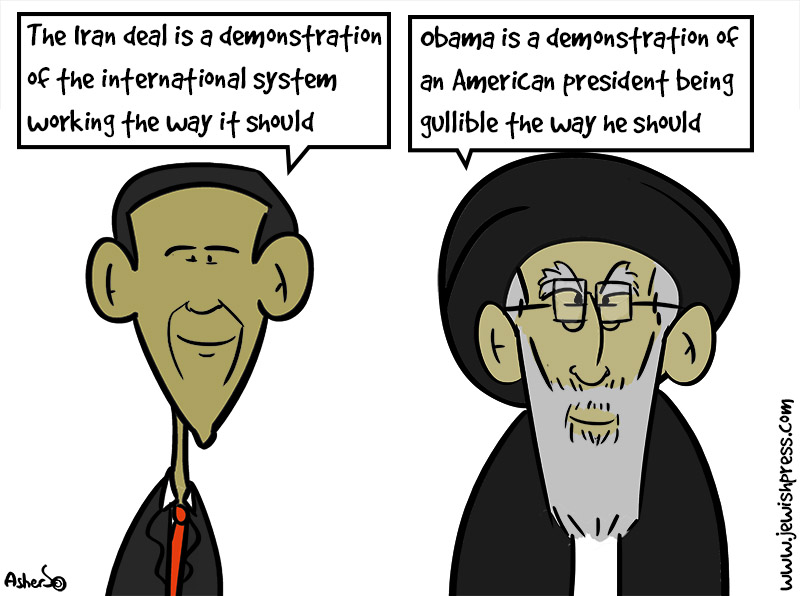
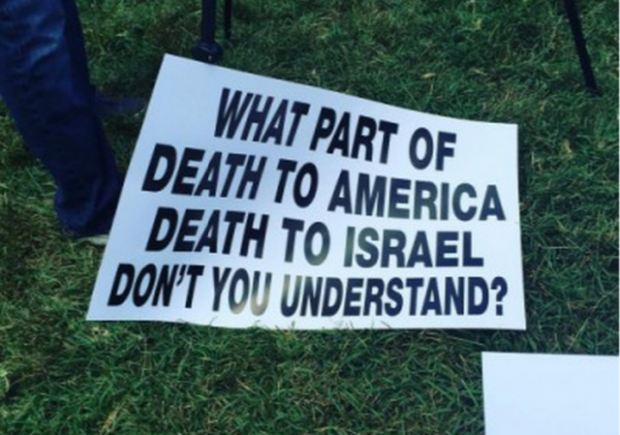
He thinks he can reshape reality with his words. When he scolds the Iranians for their “Death to America!” rhetoric by saying bloodthirsty chants don’t create jobs, he’s asking Iran to live up to the silly talking points he foisted off on the American people to cover the Iranian nuclear deal. He’s commanding Iran to act like the enlightened, responsible nation-state he gambled the future of Israel, America, and much of the Western world on.
The Iranians, on the other hand, see no reason to knock off the “Death to America!” chants, disband their theocracy, and begin spending their days arguing about stimulus bills. Belligerence has gotten them everything so far. They’ve been rewarded for it… by Barack Obama. They’ve got $150 billion in sanctions relief coming their way. They can afford to send a few guys to sit in the U.N. General Assembly with pissy expressions on their faces while Obama rambles on about how geo-political crime does not pay. They know for a fact it pays, quite handsomely. The Iranians are already using their Obama loot to reinforce terror proxies like Hamas and Hezbollah, and secure Bashar Assad in power.
Ah, yes, Bashar Assad… the dictator Obama still blathers on about removing from power, even as his own diplomatic apparatus gets used to the idea Assad is not going anywhere. The only really good part of Obama’s speech was when he spent five seconds glaring at the Syrian ambassador before launching into his denunciation of barrel bombs and chemical weapons. But you know what? That Syrian ambassador gets paid enough to take a few seconds of hairy eyeball from the ineffectual American president. The Russians are smoothly replacing American influence across the Middle East, in partnership with Iran. The new order is taking shape. Obama isn’t going to reverse that process by telling aggressive, bare-knuckle conquerors they should be ashamed of themselves.
The other dangerous thing about this delusional President is his belief in the “judgment of history.”
He’s constantly hitting on the idea that all of the world’s villains are on the wrong side of history, and will find themselves buried in the sands of time any day now. It’s a dodge, a way of Obama evading responsibility. Bashar Assad is going to remerge from the Wrong Side of History in pretty good shape. ISIS is very comfortable there, as is Iran. Qaddafi didn’t assume room temperature because History caught up with him. Vladimir Putin has a lovely view of Crimea from the wrong side of history. The history of Europe is being reshaped by the tramping of a million “refugee” feet.
In every example, Obama clings to the idea that he can change the world by talking and scoring debate points, while his adversaries seize territory and control the course of events. It’s not as though Obama has some deep-seated reluctance to use deadly force – there have been a lot of deaths by drone strike since he won that Nobel Peace Prize. What Obama lacks is commitment. His foreign policy is all about gestures and distractions. He cooks up half-baked plans that will blow up a terrorist here and there, so he can’t be accused of doing “nothing,” but he won’t do anything that could cost him political capital at home. Even Libya was half-hearted and calculated for minimum risk, which is why the place went to an even deeper Hell after Qaddafi was overthrown.
Obama talks as if he’s taken action against numerous crises, but all he ever did was talk about them. The men of action are stacking up bodies, and raising flags over conquered cities, while this President is writing speeches and trying to win applause from editorial boards. The men of action know that Obama’s promises all have expiration dates, his vows of action always have escape clauses, and no matter how he loves to boast that he heads up the most powerful military the world has ever seen, he’s done everything he can to make it weaker.
President Obama is still clinging to a romantic vision of the “Arab Spring” as a flourishing of democracy, despite all evidence to the contrary. He’s giving the same foreign policy speeches he gave in 2009 because he can’t bear to live in the world he made. He talks about filling vacuums and voids… but those voids are already filled, by hard characters with plans to make the most of the extraordinary opportunity Barack Obama afforded them.
(Obama would need the approvals of Putin, Xi, Rouhani, Assad, Erdogan and “our” other “peace partners” as well as his trained seals at the Department of Defense. Then, and only then, could General Bowie Bergdahl lead his march to victory. Or something. — DM)
What if there was an actual strategy to defeat ISIS and stop their reign of terror? The state of affairs and the very existence of IS as a governing entity is intolerable so we developed a strategy called Cut Down the Black Flag – A Plan to Defeat the Islamic State, the second book in the Secure Freedom Strategy series.
President Obama has failed to articulate or implement anything resembling a strategy during his time in office. This fact is even more painful when considering the rise of the Islamic State (IS) occurred on his watch and was largely due to his shortsighted and foolish decision to cut and run from Iraq. He lost the peace after our troops won the war.
Unlike the President, we’re not interested in token gestures doomed to failure as IS kills, rapes, and tortures on ground won for freedom just a few short years ago. We will not stand on the sidelines as an Inter-Continental Caliphate calls for “Death to all Infidels.” We have a plan to win and cut down their blood-soaked, Black Flag of Jihad.
It will not be easy but it is an essential part of the war for the free world. If we do not make a full faith effort to destroy IS, we will have done a disservice to all who gave their lives and limbs to free Iraq from tyranny. We will also be leaving millions to suffer the chaos and killing fields created when the inevitable vacuum of our withdrawal was filled by IS and Iran.
This book details a strategy focused on victory, aimed for stability in the region with the possibility of actual peace. It recognizes this action must be part of a greater “long war” against the whole of the Global Jihad Movement (GJM). They are the collection of groups who, while not officially associated, share a belief in Islamic Supremacy and are working actively to achieve it.
The Violent Jihadists like the Islamic State, Al Qaeda and others are easily identifiable as our enemies. The Civilization Jihadists of the Muslim Brotherhood and the groups it has spawned such as Council on American-Islamic Relations (CAIR) and the Islamic Society of North America (ISNA) are less overt but perhaps even more dangerous. Our overall strategy to defeat the Global Jihad Movement with a whole of government and culture approach is detailed in the Secure Freedom Strategy.
Our plan to defeat the Islamic State is a complete departure from the dismal failures of the current Commander in Chief leading from behind. The military might and will to win of the United States are vital to any chance of success. This does not mean we propose rolling tanks in a thunder run from Baghdad to Damascus. But we must take the handcuffs off the forces we already have deployed by allowing them to participate in combat missions with the forces they have trained to provide command and control and direct fire support. We must remove the cumbersome and overly risk-averse process for airstrikes that leave most of our aircraft returning to base with all munitions unused.
We must also work with the Sunni tribes who helped us defeat the precursor to IS; and, arm the Kurds who are our best friend and truest ally in the region. Both of these groups were left to the mercy of a central Iraqi government when U.S. forces withdrew and Iranian influence became dominant. We must look to a future where they govern by self-determination rather than remain forced into artificial borders established nearly 100 years ago; and, that have been largely erased over the recent war-torn years.
Our strategy is ambitious, but it does not require large deployments of U.S. troops or the expectation we will be the sole guarantor of security going forward. We aim to cut off the head of the jihadist snake by empowering the indigenous people who have suffered the most from its actions and then let them govern themselves. This strategy vigorously executed can do what the current half-hearted efforts never will: Defeat the Islamic State.
I think we all know what Iran means when it speaks of political free will. In the wake of the adoption of the Iran nuclear deal, conversations about nightmare “what if” scenarios focused on America’s ability to “snap” sanctions against Iran back into place; now, Iran is trying to reframe the conversation about the use of sanctions by arguing that the use of sanctions at all will constitute a greater violation than what the sanctions are meant to punish.
***************************
This week, Iran used its considerable muscle to launch an attack on US efforts to tamper its nuclear program and otherwise belligerent conduct in the Middle East. These efforts took the form of a proposed resolution in the United Nations Human Rights Council (UNHRC) that condemns the use of sanctions against misbehaving nations as a violation of international law and fundamental human rights.
You won’t see the word “sanctions” more than three times in the resolution; instead, the drafters used the phrase “unilateral coercive measures.” From the proposed resolution:
Recognizing the universal, indivisible, interdependent and interrelated character of all human rights and, in this regard, reaffirming the right to development as a universal and inalienable right and an integral part of all human rights,
Expressing its grave concern at the negative impact of unilateral coercive measures on human rights, development, international relations, trade, investment and cooperation,
Reaffirming that no State may use or encourage the use of any type of measure, including but not limited to economic or political measures, to coerce another State in order to obtain from it the subordination of the exercise of its sovereign rights and to secure from it advantages of any kind,
Recognizing that unilateral coercive measures in the form of economic sanctions have far-reaching implications for the human rights of the general population of targeted States, disproportionately affecting the poor and the most vulnerable classes,
…
Recalling also article 1, paragraph 2, common to the International Covenant on Civil and Political Rights and the International Covenant on Economic, Social and Cultural Rights, which provides that, inter alia, in no case may a people be deprived of its own means of subsistence,
1. Calls upon all States to stop adopting, maintaining or implementing unilateral coercive measures not in accordance with international law, international humanitarian law, the Charter of the United Nations and the norms and principles governing peaceful relations among States, in particular those of a coercive nature with extraterritorial effects, which create obstacles to trade relations among States, thus impeding the full realization of the rights set forth in the Universal Declaration of Human Rights and other international human rights instruments, in particular the right of individuals and peoples to development;
The writing goes on to demand that member states ignore calls for sanctions, and condemns the use of such “as tools of political or economic pressure against any country, particularly against developing countries, with a view to preventing these countries from exercising their right to decide, of their own free will, their own political, economic and social systems.”
I think we all know what Iran means when it speaks of political free will. In the wake of the adoption of the Iran nuclear deal, conversations about nightmare “what if” scenarios focused on America’s ability to “snap” sanctions against Iran back into place; now, Iran is trying to reframe the conversation about the use of sanctions by arguing that the use of sanctions at all will constitute a greater violation than what the sanctions are meant to punish.
This isn’t a one-off finger-in-the-air from Iran to the US. The UNHRC is a dysfunctional land of multilingual politicking, and now the most dangerous players are using their influence with the greater UN body to bolster the worst violators at the expense of what should be common sense.
Earlier this year, the UNHRC’s infamous Consultative Group, with Saudi Arabia’s Faisal Trad then serving merely as Vice-President, successfully picked Algerian hardliner Idriss Jazairy — famous for his efforts as a former diplomat to enact a UNHRC “code of conduct” to intimidate independent human rights experts — as the new “Special Rapporteur on the negative impact of the unilateral coercive measures.”
Jazairy has already accused the U.S. and Europe of being leading human rights violators due to their use of sanctions against countries like Iran and Zimbabwe.
Indeed, many of the resolutions adopted at each session of the UNHRC are sponsored by Cuba, Iran, Pakistan, Algeria, and other non-democracies, and are designed to demonize the West, free market economies, individual rights, or Israel, as part of a strategy to deflect attention from council members who are guilty of subjugating women, trampling religious freedom, persecuting gays, oppressing ethnic minorities and promoting relgious extremism.
The United Nations itself isn’t necessarily an important player in the American political conversation; international law is obscure, and multilateral relationships are [a] complication and confusing at best. However, if this resolution is adopted (and even if it isn’t) I can just about guarantee that the pro-Iran Deal crowd will use it as a weapon against anti-Deal candidates (primary season doesn’t go away just because we’re dealing with something happening in Geneva) currently warning their colleagues against the folly of attempting to deal with a nation that has proven itself more than adept at sidestepping the rules.
In this case, they’ve taken it upon themselves to rewrite them.






 anneinpt
 artaxes
 danmillerinpanama
 davidking1530
 Peter Hofman
 Joseph Wouk
 Peter
Peter Louisiana Steve
 WarSclerotic
Recent Comments