Archive for the ‘IAEA’ category

No Trust, No Verification, No Sanctions: Obama’s Humiliating Capitulation to the Mullahs

August 8, 2015

No Trust, No Verification, No Sanctions: Obama’s Humiliating Capitulation to the Mullahs, National Review, Andrew C. McCarthy, August 8, 2015

(I have been beating this drum for quite a while. So have others. The Obama administration’s position still makes no sense whatever, unless unfortunate motives are attributed to the Commander in Chief. — DM)

The sanctions regime President Obama and Secretary of State Kerry vowed to step up has already collapsed. The mullahs are already scooping up billions in unfrozen assets and new commerce, and they haven’t even gotten the big payday yet. Obama’s promises of “anytime, anywhere” inspections have melted away as Tehran denies access and the president accepts their comical offer to provide their own nuclear-site samples for examination. Senator John Barasso (R., Wyo.), a medical doctor, drew the apt analogy: It’s like letting a suspect NFL player what he says is his own urine sample and then pronouncing him PED-free.#

And now even the Potemkin verification system has become an embarrassing sham, with Iran first refusing to allow physical investigations, then declining perusal of documentation describing past nuclear work, and now rejecting interviews of relevant witnesses.

Recall that administration officials indignantly assured skeptics that there would be no agreement in the absence of Iran’s Iran’s coming clean on the “past military dimensions” of its nuclear work. As Kerry put it, “They have to do it. It will be done. If there’s going to be a deal; it will be done.”

The reason it had to be done is obvious. According to Obama, his Iran deal is built on verification, not trust — at least when the president is not trusting Ayatollah Khamenei’s phantom anti-nuke fatwa. Plainly, it would be impossible to verify whether Iran was advancing toward the weaponization of nuclear energy — whether it had shortened the “breakout time” the elongation of which, Obama claims, is the principal objective of his deal — unless one knew how far the mullahs had advanced in the first place

But now, in open mockery of an American president they know is so desperate to close this deal he will never call their bluff, the mullahs have told the International Atomic Energy Agency to pound sand — although not sand in Iran, where the IAEA is not permitted to snoop around. Tehran is steadfastly refusing to open its books, and the IAEA sheepishly admits that it cannot answer basic questions about Iran’s programs and progress.

So what does Team Obama do? Do they, as they promised, walk away from an unverifiable and thus utterly indefensible deal that lends aid and comfort to our enemies? Of course not. Now they’re out there telling Americans, “We don’t need this IAEA program to discover whether or not Iran was pursuing a nuclear weapon — they were,” as Senator Chris Murphy, a Connecticut Obamabot, told the Wall Street Journal.

Well good for you, Sherlock; Obama, Kerry, and Hillary Clinton may still be hanging on that fatwa, but you hit the bull’s-eye.

Here’s the thing, though, Senator Murphy: Yes, all of us know the Iranians, as you cheerily put it, “were” pursuing a nuclear weapon — especially all of us who oppose Obama’s Iran deal and who recognize that the jihadist regime has waged war against us since 1979, killing thousands of Americans. But you “let’s make a deal” guys told us your objective was to uncover how far along they “were” and to roll back their progress. (Actually, you used to tell us your objective was to prevent them from getting nuclear weapons, period — as in “if you like your health-care plan, you can keep your health-care plan, period.”)

If you don’t have a baseline from which to begin verification, you can’t verify the time of day, much less the progress of nuclear research, development, procurement, and experimentation. Iran is saying we don’t get the baseline without which the Obama administration guaranteed there would be no agreement.

So in the grand deal our president describes as subjecting the mullahs to historically rigorous inspection, disclosure, and verification requirements, there is no inspection, no disclosure, and no verification.

And did I mention no sanctions?

On July 29, Kerry assured lawmakers that Iranian Quds Force commander “Qassem Soleimani will never be relieved of any sanctions.” Soleimani orchestrates the regime’s terrorist operations and, according to the Pentagon, is responsible for killing at least 500 American soldiers in Iraq.

Yet, only five days before Kerry gave that testimony, Soleimani traveled to Russia for meetings with Putin’s government — notwithstanding the vaunted sanctions that, Kerry would have us believe, confine him to Iran.

Russia, of course, is a member of the U.N. Security Council, from which Obama sought and obtained endorsement of his Iran deal before seeking congressional review. Not only has Russia rendered the current sanctions a joke; it has made Obama’s implausible promise of future “snapback” sanctions against Iran even more laughable. Russia, by the way, has also agreed to build yet another nuclear reactor for the mullahs in Busheir — which Obama’s deal obligates the United States to protect against sabotage. And Putin has also just agreed to supply the terrorist regime in Tehran with $800 million worth of S-300 anti-aircraft missiles that can be used against the U.S. Air Force and have enough range to strike planes in northern Israel.

What a deal, Mr. President!

Actually, we really don’t know quite what a deal it is because key provisions remain secret. After its bold verification promises, the Obama administration was too embarrassed to reveal exactly how pathetic the agreement’s inspections provisions are. So, as I outlined in a recent column, Obama and Kerry tucked them into a secret side deal between Iran and the IAEA. It then twaddled that the details — i.e., the heart of the deal from the American perspective — are, conveniently, between Iran and the IAEA. None of our business, you see.

This message was reiterated on Capitol Hill this week by the IAEA. Understand: The IAEA could not function (to the limited extend it does function) without the United States Congress’s underwriting of 25 percent of its budget — the American taxpayer contribution dwarfs that of every other country, including Iran’s, which is tiny. Yet, the IAEA chief told lawmakers that he could not reveal the agreement between his agency and Tehran because that is “confidential” information, disclosure of which would compromise the IAEA’s “independence.” The only things the IAEA would confirm are that (a) there are verification provisions and (b) Iran is not cooperating with them.

Feel better?

Well, to further improve your mood, let’s talk the Corker bill. Remember, that’s the legislation by which the GOP-controlled Congress reversed the constitutional presumption against international agreements and virtually assured that Obama’s Iran deal — no matter how appalling it may be, no matter how much aid and comfort if provides to the enemy — will become law.

Why on earth would Beltway Republicans agree to anything so catastrophic for the national security that the Constitution’s Treaty Clause is designed to protect? Because, they proclaimed, by making this devil’s bargain, they would ensure that Congress and the American people got full disclosure of the Iran deal that Obama would otherwise shroud in secrecy.

But as I asked at the time, what possessed them to think Obama would not shroud the agreement in secrecy just because there would now be a law forbidding that?

Supporters are telling themselves that the Corker bill’s benefits [include that] the president will have to produce the agreement. . . . But this is a mirage. . . . The president is notoriously lawless, and thus Republicans can have no confidence that the agreement he produces to Congress will, in fact, be the final deal he signs off on with Iran and, significantly, submits to the U.N. Security Council for an endorsing resolution.

And so it has come to pass: Republicans forfeited their constitutional power for an unenforceable promise of transparency from an infamously duplicitous backroom dealer. Now they have no power and no idea what they’ve enabled.

The president had it backwards Wednesday when, in his repulsively demagogic speech on the Iran deal, he said that Republicans are aligned with the Iranian chanting ‘Death to America.’” It is Obama who is aiding and abetting the hardliners. Republicans have merely aided and abetted Obama.
IAEA chief stonewalls Congress

August 7, 2015

IAEA chief stonewalls Congress, Power LinePaul Mirengoff, August 6, 2015

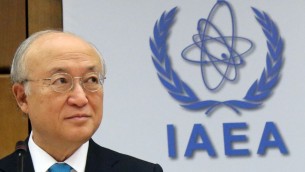
Yukiya Amano, director general of the International Atomic Energy Agency Alliance (IAEA) came to Capitol Hill yesterday to try to reassure members of the Senate Foreign Relations Committee about the Iran nuclear deal. Amano wanted to convince Senators that the private side deals between Iran and the IAEA aren’t problematic and shouldn’t lead Congress to reject the deal.

There was just one problem: Amano couldn’t provide any details about his agency’s confidential arrangement to examine Iran’s nuclear research to see if the mullahs are trying to develop a nuclear weapon. “There were many questions on this issue,” Amano reported. “I repeated that I am not authorized to share or discuss confidential information.”

Amano might therefore just as well have stayed home. According to Committee chairman Bob Corker, “most members left here with greater concerns about the inspection regime than they came in with.”

Corker’s Democratic counterpart, ranking Democrat Benjamin Cardin of Maryland, also expressed disappointment. “I think there are provisions in the document that relate to the integrity of the review,” he said, stating the obvious.

Amano’s justification for not disclosing this vital information doesn’t seem to wash. He protests that the credibility of his agency depends on confidentiality. Yet, Wendy Sherman, the lead U.S. negotiator of the Iran deal, says she has seen documents relating to the side agreements between Iran and the IAEA. As Senator Corker asked, “if Wendy has been able to read it, why can’t we read it?”

But it doesn’t really matter whether Amano has good reasons for not telling Congress what’s in the side agreements. As Sen. Cardin says, these agreements go to the integrity of inspections, and the integrity of inspections goes to viability of the deal (though even under the best inspections possible, the deal doesn’t prevent Iran from becoming a nuclear state in the “out years”).

It’s reasonable to suspect, moreover, that provisions pertaining to the integrity of inspections we farmed out to the IAEA because the U.S. couldn’t get Iran to accept language that (a) it considered necessary or, more likely, (b) it knew Congress would see as vital.

If Congress isn’t permitted to find out what’s in the side agreements, it should reject the deal for that reason alone.

Speaking of the Iran deal (13)

August 6, 2015

Speaking of the Iran deal (13), Power LineScott Johnson, August 6, 2015

(Did anyone tell Obama about Iran’s sanitation efforts before his August 5th address on the Iran “deal?” The linked Bloomberg View article is available here at Warsclerotic. — DM)

The U.S. intelligence community has informed Congress of evidence that Iran was sanitizing its suspected nuclear military site at Parchin, in broad daylight, days after agreeing to a nuclear deal with world powers…

******************

Omri Ceren writes to comment on the Bloomberg View story reporting that President Obama’s friends in Iran are destroying evidence at the Parchin site in broad daylight. Omni comments by email:

The Obama administration has spent the last two years assuring lawmakers and reporters that any deal with Iran would have to include the Iranians allowing IAEA inspectors robust access to the Parchin military base. The Iranians used the facility to conduct hydrodynamic experiments relevant to the detonation of nuclear warheads, and the IAEA needs to resolve the nature of the work and figure out how far they got in order to set up a reliable verification regime.

The requirement was never, ever up for debate: Sherman in 2013: the JPOA requires Iran to “address past and present practices… including Parchin” [a]; Sherman in 2014: “as part of any comprehensive agreement… we expect, indeed, Parchin to be resolved” [b]; Harf in 2015: “we would find it… very difficult to imagine a JCPA that did not require such [inspector] access at Parchin” [c]; etc.

Then two weeks ago Sen. Risch revealed in an open Foreign Relations Committee hearing that U.S. negotiators had collapsed on the demand, and that the Iranians would be allowed to collect their own samples instead of the IAEA collecting the evidence. Sen. Menendez followed up with “chain of custody means nothing if at the very beginning what you’re given is chosen and derived by the perpetrator” [d]. Kerry responded by declaring that the information was classified, but the AP ran down and confirmed the story out of Vienna [e].

Now the punchline: Bloomberg View revealed this afternoon that the Iranians have spent the last few weeks busily trying to sanitize Parchin. So the administration blessed a deal in which they trusted the Iranians to provide evidence from Parchin, and the Iranians turned around and started destroying evidence at Parchin.

The U.S. intelligence community has informed Congress of evidence that Iran was sanitizing its suspected nuclear military site at Parchin, in broad daylight, days after agreeing to a nuclear deal with world powers… Intelligence officials and lawmakers who have seen the new evidence, which is still classified, told us that satellite imagery picked up by U.S. government assets in mid- and late July showed that Iran had moved bulldozers and other heavy machinery to the Parchin site and that the U.S. intelligence community concluded with high confidence that the Iranian government was working to clean up the site ahead of planned inspections by the IAEA…

Several senior lawmakers, including Democrats, are concerned that Iran will be able to collect its own soil samples at Parchin with only limited supervision, a practice several lawmakers have compared to giving suspected drug users the benefit of the doubt to submit specimens unsupervised. Iran’s sanitization of the site further complicates that verification.

A few hours after the Bloomberg View article The Institute for Science and International Security (ISIS) published one of its Imagery Briefs with photos showing the new destruction. ISIS assessed “the renewed activity occurring after the signing of the JCPOA raises obvious concerns that Iran is conducting further sanitization efforts to defeat IAEA verification… this renewed activity may be a last ditch effort to try to ensure that no incriminating evidence will be found” [f].

In the last few weeks, some skeptics of the deal have suggested that the JCPOA’s flaws are becoming borderline-comical (or at least they would be if the deal wasn’t such a catastrophe). Revelations like this are the reason why: the White House is telling Congress that Iran can be trusted to turn over evidence from Parchin while the intelligence community is telling Congress that Iran is destroying evidence at Parchin.

[a] http://www.gpo.gov/fdsys/pkg/CHRG-113shrg87828/html/CHRG-113shrg87828.htm
[b] http://www.shearman.com/~/media/Files/Services/Iran-Sanctions/US-Resources/Joint-Plan-of-Action/4-Feb-2014–Transcript-of-Senate-Foreign-Relations-Committee-Hearing-on-the-Iran-Nuclear-Negotiations-Panel-1.pdf
[c] http://www.state.gov/r/pa/prs/dpb/2015/04/240324.htm
[d] https://youtu.be/N4TK8hOLrNA?t=9m44s
[e] http://bigstory.ap.org/article/e1ccf648e18a4788ac94861a3bc1b966/officials-iran-may-take-own-samples-alleged-nuclear-site
[f] http://isis-online.org/uploads/isis-reports/documents/Renewed_Activity_at_Parchin_August_4_2015_FINAL.pdf

Obama Puts Fear Before Facts on Iran

August 6, 2015

Obama Puts Fear Before Facts on Iran, Bloomberg View, The Editors, August 5, 2015

(Please see also, Iran Already Sanitizing Nuclear Site, Intel Warns. — DM)

The pact is not a treaty: A future president and Congress might overturn it, arguing that it was sealed without proper consideration. And history often looks with disgust at causes built on fear, especially if they go awry. Obama wouldn’t want to face the kind of scorn he heaped on George W. Bush today.

***********************

President Barack Obama took to the airwaves today, aiming to sell Congress and the American people on the wisdom of his nuclear deal with Iran. He had a case to make but chose not to make it. He decided instead to cast legitimate criticism of his pact as ignorant warmongering. 

A few examples:

“We have achieved a detailed arrangement that permanently prohibits Iran from obtaining a nuclear weapon.” Actually, the deal’s restrictions end abruptly after 15 years, with some of the constraints on uranium enrichment fading away after just 10. Late in the speech, Obama made the case that much can change in a decade and that the West could be in a stronger position then to continue to block Iran’s nuclear desires. But the temporary nature of the deal remained disguised.

“Many of the same people who argued for the war in Iraq are now making the case against the Iran nuclear deal.” Certainly the Iraq war was sold on spurious grounds and had tragic results. Certainly Republicans and Democrats alike were far too credulous in accepting the Bush administration’s rationale. But these facts have absolutely nothing to do with this agreement.

“Before the ink was even dry on this deal, before Congress even read it, a majority of Republicans declared their virulent opposition.” That’s true, but ignores that opponents had plenty of time to study the draft agreement reached last spring. The real problem is that Congress still hasn’t read the entire accord, its side agreements and the inspections plan negotiated by the International Atomic Energy Agency. Even Secretary of State John Kerry says there are aspects of the deal he has never seen.

“If there is a reason for inspecting a suspicious undeclared site anywhere in Iran, inspectors will get that access even if Iran objects. This access can be with as little as 24 hours’ notice.” The key words here are “as little as.” Iran can draw that process out for as long as 24 days if it so chooses. Foreign Minister Javad Zarif says some military sites will remain off-limits to IAEA personnel.

“If, as has also been suggested, we tried to maintain unilateral sanctions, beefen them up … we’d have to cut off countries like China from the American financial system. And since they happen to be major purchasers of our debt, such actions could trigger severe disruptions in our own economy, and, by way, raise questions internationally about the dollar’s role as the world’s reserve currency.” Rejection by Congress could cause the sanctions regime to fray. Lawmakers should weigh this. The idea that it might cripple the U.S. economy is absurd.

“I’ve had to make a lot of tough calls as president, but whether or not this deal is good for American security is not one of those calls, it’s not even close.” Maybe this deal is the best chance to delay the mullahs’ race to the bomb and keep the Middle East out of a nuclear arms race. But the case is anything but open-and-shut. It’s hard to see what the president gains from denying this.

Well, perhaps one thing: Obama may hope that denigrating those who disagree with him will rally Democrats in Congress to support a veto of any measure of disapproval. Tactics aside, it would be far better to win this fight fairly. The pact is not a treaty: A future president and Congress might overturn it, arguing that it was sealed without proper consideration. And history often looks with disgust at causes built on fear, especially if they go awry. Obama wouldn’t want to face the kind of scorn he heaped on George W. Bush today.

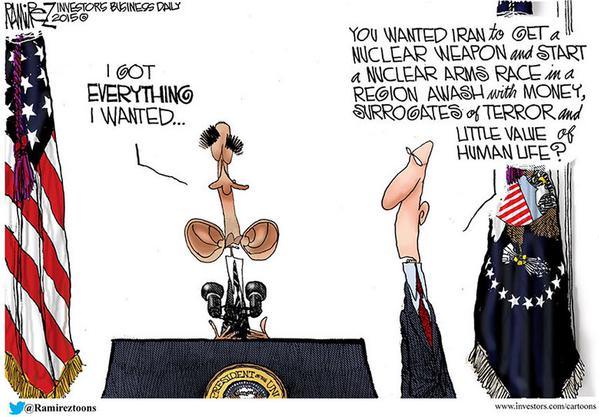
Cartoons of the day

August 6, 2015

H/t Freedom is just another word


wanted

deal

Iranian negotiator discusses talks with Moniz

August 6, 2015

Iranian negotiator discusses talks with Moniz, Al Monitor, Arash Karami, August 5, 2015

(A sweet deal between good friends. — DM)

REUTERS/Carlos Barria

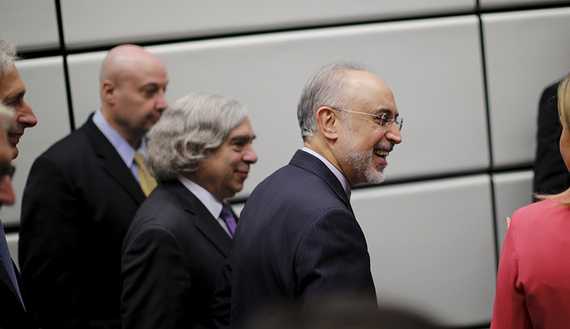
Salehi said that he was asked to join the nuclear talks when the discussions on the Natanz enrichment facility reached a dead end. Salehi said he would only join the talks if Moniz, his American counterpart, did as well. According to Salehi, this was approved by Undersecretary Wendy Sherman and Deputy Foreign Minister Abbas Araghchi, which he described as “the communications link between America and Iran.”

*****************

One of the most popular American negotiators in Iranian social media was US Energy Secretary Ernest Moniz. The Massachusetts Institute of Technology (MIT) professor emeritus and former director of the MIT Laboratory for Energy and the Environment joined the nuclear talks between Iran and five permanent members of the UN Security Council plus Germany (P5+1) to discuss the technical aspects of the nuclear deal with the head of Iran’s Atomic Energy Organization, Ali Akbar Salehi.

In an interview with an Iranian newspaper, Salehi spoke about the negotiations and his relationship with Moniz. Just as Moniz was picked to lead the technical negotiations due to his nuclear expertise, Salehi, an MIT graduate, is one of the few individuals to have held important positions for three consecutive administrations — a sign that he has the trust of Supreme Leader Ayatollah Ali Khamenei.

Salehi first denied accusations that former hard-line nuclear negotiator Saeed Jalili was not a serious negotiator. Salehi was Iran’s foreign minister at the time and said that when he was at the meetings with the Supreme National Security Council, Jalili’s negotiating positions were in line with the country’s positions and that “he did not go rogue.”

According to Salehi, the reason for the deadlock during that time was the differences among the P5+1. Specifically, the EU3 (France, United Kingdom and Germany) saw their positions and interests separate from the E3 (US, Russia and China). He said that even when European Union Chief Catherine Ashton reached a point of agreement with Iran on one issue, one country would oppose it and throw everything off. This is why Iran agreed to bilateral talks with the United States in Oman.

Salehi said that he was asked to join the nuclear talks when the discussions on the Natanz enrichment facility reached a dead end. Salehi said he would only join the talks if Moniz, his American counterpart, did as well. According to Salehi, this was approved by Undersecretary Wendy Sherman and Deputy Foreign Minister Abbas Araghchi, which he described as “the communications link between America and Iran.”

Salehi said he and Moniz did not know each other well when they were at MIT, but when they first met during the talks, “there was a feeling that he has known me for years.” Salehi added, “A number of my classmates are now Mr. Moniz’s experts.”

According to Salehi, Moniz entering the talks was important because Salehi expressed that he had been sent with “full authority” to sign off on all technical issues in the nuclear negotiations and Moniz had told him that he had the same authority. He added, “If the negotiations did not take place with the Americans, the reality is that it would not have reached a conclusion. No [other] country was ready to sit with us and negotiate for 16 days with their foreign minister and all of its experts.”

Salehi said that one of the more difficult times negotiating with Moniz was after they reached an agreement on a particular issue. Moniz would take it to the other members of P5+1, who would then make their own requests.

It was also reported that Moniz had given Salehi a gift for the birth of his granddaughter — clothes and a toy embossed with MIT logos. Salehi said that he had also brought gifts for Moniz — Iranian honey and trail mix of Iranian nuts.


Iran Already Sanitizing Nuclear Site, Intel Warns

August 5, 2015

Iran Already Sanitizing Nuclear Site, Intel Warns, Bloomberg View&  August 5, 2015

The U.S. intelligence community has informed Congress of evidence that Iran was sanitizing its suspected nuclear military site at Parchin, in broad daylight, days after agreeing to a nuclear deal with world powers.

For senior lawmakers in both parties, the evidence calls into question Iran’s intention to fully account for the possible military dimensions of its current and past nuclear development. The International Atomic Energy Agency and Iran have a side agreement meant to resolve past suspicions about the Parchin site, and lawmakers’ concerns about it has already become a flashpoint because they do not have access to its text.

Intelligence officials and lawmakers who have seen the new evidence, which is still classified, told us that satellite imagery picked up by U.S. government assets in mid- and late July showed that Iran had moved bulldozers and other heavy machinery to the Parchin site and that the U.S. intelligence community concluded with high confidence that the Iranian government was working to clean up the site ahead of planned inspections by the IAEA.

The intelligence community shared its findings with lawmakers and some Congressional staff late last week, four people who have seen the evidence told us. The Office of the Director of National Intelligence briefed lawmakers about the evidence Monday, three U.S. senators said.

“I am familiar with it,” Senate Intelligence Committee Chairman Richard Burr told us Tuesday. “I think it’s up to the administration to draw their conclusions. Hopefully this is something they will speak on, since it is in many ways verified by commercial imagery. And their actions seem to be against the grain of the agreement.”

Burr said Iran’s activities at Parchin complicate the work of the IAEA inspectors who are set to examine the site in the coming months. IAEA’s director general, Yukiya Amano, was in Washington on Wednesday to brief lawmakers behind closed doors about the side agreements.

“They are certainly not going to see the site that existed. Whether that’s a site that can be determined what it did, only the technical experts can do that,” Burr said. “I think it’s a huge concern.”

A senior intelligence official, when asked about the satellite imagery, told us the IAEA was also familiar with what he called “sanitization efforts” since the deal was reached in Vienna, but that the U.S. government and its allies had confidence that the IAEA had the technical means to detect past nuclear work anyway.

Another administration official explained that this was in part because any trace amounts of enriched uranium could not be fully removed between now and Oct. 15, the deadline for Iran to grant access and answer remaining questions from the IAEA about Parchin.

Senate Foreign Relations Committee Chairman Bob Corker told us Tuesday that while Iran’s activity at Parchin last month isn’t technically a violation of the agreement it signed with the U.S. and other powers, it does call into question Iran’s intention to be forthright about the possible military dimensions of its nuclear program.

“The intel briefing was troubling to me … some of the things that are happening, especially happening in such a blatant way,” he said. “Iran is going to know that we know.” He added the new information gave him “a lot of concerns” about Iran coming clean on military dimensions of its nuclear work.

According to the overall nuclear agreement, sanctions relief for Iran can come only after the IAEA and Iran resolve their outstanding concerns about possible military dimensions of past and current work. But the agreement does not specify how the issue must be resolved, only that it be resolved to the IAEA’s satisfaction.

Several senior lawmakers, including Democrats, are concerned that Iran will be able to collect its own soil samples at Parchin with only limited supervision, a practice several lawmakers have compared to giving suspected drug users the benefit of the doubt to submit specimens unsupervised. Iran’s sanitization of the site further complicates that verification.

Democratic Senator Chris Coons, a member of the Foreign Relations Committee, told us Tuesday that this area is part of why he is undecided on supporting the Iran deal.

“I have concerns about the vigorous efforts by Iran to sanitize Parchin,” he said. “I’ve gotten some reassurance about how difficult it is for them to effectively conceal what we know to have been their illicit nuclear weapons developments there.”

Coons said he was most concerned about the integrity of the IAEA inspection process going forward and not as concerned about figuring out what happened in the site in the past: “We know what the Iranians did at Parchin.”

David Albright, the president of the Institute for Science and International Security, obtained a commercially available image of the Parchin site taken by satellites on July 26 that shows renewed activity at the Parchin site. He told us there are two new large vehicles, alterations ongoing to roofs of two of the buildings and new structures near two of the buildings.

“You have to worry that this could be an attempt by Iran to defeat the sampling, that it’s Iran’s last-ditch effort to eradicate evidence there,” he said. “The day is coming when they are going to have to let the IAEA into Parchin, so they may be desperate to finish sanitizing the site.”

The facility, outside of Tehran, first came to the attention of the international community in 2004 when news reports surfaced that it was being used to test explosives for a nuclear warhead.

A 2007 U.S. National Intelligence Assessment concluded that Iran halted this kind of work in 2003. Between 2005 and today, Iran has allowed IAEA inspectors access to Parchin — a vast complex with dozens of buildings — on only five occasions. In 2012, Abright’s group reported on satellite imagery that it said showed efforts to clean up evidence of an explosives testing chamber there.

Representative Ed Royce, the Republican chairman of the House Foreign Affairs Committee, said that Amano had told him in recent conversations that the IAEA had “thousands of pages of documentations on tests to weaponize a nuclear device.” Royce added, “For a long time, they have been altering sites.”

The IAEA has documented this as well. The agency’s report from May 29 this year said there was  satellite imagery of vehicles, equipment and “probable construction materials” at Parchin. The report said, “The activities that have taken place at this location since February 2012 are likely to have undermined the Agency’s ability to conduct effective verification.”

Secretary of State John Kerry has said that the U.S. government has “absolute knowledge” about what Iran has done in the past. Ahead of the vote on the agreement next month, many lawmakers don’t share Kerry’s confidence. Iran would seem to have its doubts as well, since it’s still trying to cover its tracks.

Obama negotiator says she didn’t see final Iran ‘side deals’

August 5, 2015

Obama negotiator says she didn’t see final Iran ‘side deals,’ The Hill, Kristina Wong, August 5, 2015

(Were the secret agreements on which Kerry, et al, were “fully briefed” and hence know “exactly” what they say also “rough drafts?” Unlike Ms. Sherman, Kerry testified that he had not seen the secret agreement(s).– DM)

shermanwendy_052715gettyGetty Images

[L]ater in the hearing, she walked back her comments about not seeing the final arrangements. 

“I was shown documents that I believed to be the final documents, but whether there were any further discussions…” she added before being cut off by another question by Sen. Pat Toomey (R-Pa.). Later, she said responded, “I have” when asked whether she saw the final versions of the deals.

****************

The only Obama administration official to view confidential “side deals” between Iran and the International Atomic Energy Agency (IAEA) admitted Wednesday she and her team have only seen rough drafts.

“I didn’t see the final documents. I saw the provisional documents, as did my experts,” said Wendy Sherman, a lead U.S. negotiator for the deal, at a Senate Banking Committee hearing.  

Sherman, undersecretary of State for political affairs, said she was only allowed to see the confidential deals “in the middle of the negotiation” when the IAEA “wanted to go over with some of our experts the technical details.” 

She maintained the deals — which focus on with Iran’s prior work on a bomb and access to Iran’s Parchin military site — are still confidential and can’t be submitted to Congress.

Sherman said the U.S. did not protest to the confidentiality of the agreements, despite the Iran Nuclear Agreement Review Act demanding all related agreements, because the administration wanted the IAEA to respect the confidentiality of their agreements with the U.S.

“We want to protect U.S. confidentiality … this is a safeguards protocol. The IAEA protects our confidential understandings … between the United States and the IAEA,” she said.

However, later in the hearing, she walked back her comments about not seeing the final arrangements.

“I was shown documents that I believed to be the final documents, but whether there were any further discussions…” she added before being cut off by another question by Sen. Pat Toomey (R-Pa.). Later, she said responded, “I have” when asked whether she saw the final versions of the deals.

She also argued they could not be submitted to Congress because the administration does not have the deals, and that the Senate had “every single document” the administration has.

Sherman emphasized she would brief Senators later Wednesday afternoon in a classified session on everything she knows about the deal.

A similar briefing for House lawmakers last week did not assuage concerns for Rep. Ed Royce (R-Calif.), chairman of the House Foreign Affairs Committee, who sent a letter to Secretary of State John Kerry on Monday calling on the administration to submit the deals.

She also noted that IAEA Director General Yukiya Amano was meeting with the Senate Foreign Relations Committee later in the afternoon.

Although she said the U.S. did not ask or pressure Amano to conduct the briefing, she suggested it was a gesture beyond what the IAEA is obligated to do.

Iran’s deputy FM brands nuclear program ‘big loss’ economically

August 5, 2015

Iran’s deputy FM brands nuclear program ‘big loss’ economically, Times of Israel, August 4, 2015

(Please see also, The Iranian Nuke Deal Depends on This One Myth. — DM)

Iran deputy foreign ministerDeputy Foreign Minister Abbas Araqchi speaking in Tehran, Iran, on October 22, 2013. (AFP/Atta Kenare)

Due to the pressure from above, . . .  the original report was removed by the national broadcasting service, which stated that the publication of Araqchi’s statements was a “misunderstanding.”

*********************

Iran’s deputy foreign minister and senior nuclear negotiator has called the Islamic Republic’s nuclear program “a big loss” economically, but necessary to defend the country’s honor.

In a leaked off-the-record meeting with journalists Saturday, Abbas Araqchi stressed that “if we want to calculate the expenses of the production materials, we cannot even think about it.” But, he said, “we paid this price so we protect our honor, independence and progress, and do not surrender to others’ bullying.”

Yet, he explained, “If we value our nuclear program based only on the economic calculations, it is a big loss.”

Meeting with the country’s news chiefs under the direction of the Supreme Leader Ali Khamenei, Araqchi said the Iranian Foreign Ministry’s public diplomacy and media relations have so far been unable to sell the agreement to the Iranian people and “the national broadcasting [service] has to help so the people do not feel frustrated with the agreement.”

During the meeting, which was leaked by the Iranian media soon after, the deputy foreign minister suggested that the Iranian parliament should only review the agreement reached in Vienna, and not present it for ratification.

Araqchi stressed that Iran should declare its final position on the deal as soon as possible, “so that should Congress reject the agreement, the burden of rejection and the failure of the talks would fall on the United States.”

1234The Iranian Parliament (CC-BY Parmida76/Flickr)

“If the [Iranian] National Security Council approves the Vienna nuclear agreement and the leader of the Islamic Republic signs it, then this resolution becomes law,” he added.

With regards to the implications of the agreement on Iranian support for Hezbollah in Lebanon, Araqchi explained that, “we said during the talks that we cannot not provide weapons to Hezbollah, and we are not willing to sacrifice them [Hezbollah] for our nuclear program. Therefore, if you want to keep the weapon sanctions as part of the agreement, we will continue with our efforts. We discussed this matter for a while.”

The Western powers eventually agreed to separate that resolution from the agreement, Araqchi said.

This is in direct contrast to remarks by US officials, who claimed Tuesday that Iran’s support for terror groups was never considered for inclusion in the nuclear deal.

The Iranian minister told journalists that he took seriously previous American threats of a possible military action. “It might be that people do not know the details, however, our IRGC and military friends know that every night in 2007-8 we were concerned that we would wake up in the morning and Iran would be surrounded by all necessary means for an attack against it.”

Iranian military personnel had shown the country’s negotiating team maps of bases where potential foreign attack planes had been identified. “The attack on Iran was a matter of the political will of Mr. Obama,” Araqchi said. “Despite everything, we still continued to object and did not compromise.”

He said that the West tightened the economic sanctions as much as they could and they reached a level where their continuation would lead to a “confrontation.”

“They tried 10 years of economic sanctions and military threats,” he explained, “and it was our strength and capabilities that brought them to the negotiation table.”

Austria-Iran-Nuclear_Horo-e1401748045152-305x172Yukiya Amano, director general of the International Atomic Energy Agency (IAEA) in Vienna, Austria, June 2, 2014. (AP/Ronald Zak)

Araqchi admitted that the regime had made some mistakes, and that those “mistakes in the past, made-up documentations and excuses were turned into claims against us.” He cited the example of International Atomic Energy Agency chief Yukiya Amano, who Araqchi said submitted a 60-paragraph report that included Iran’s use of detonators with multiple timers.

Iran, Araqchi said, has “to be careful with the information that we provide them… It is not that we are dealing only with the IAEA and these spies, but we are dealing with all countries that have nuclear programs. There are formulas and methods that prevent us from providing excess information to the IAEA inspectors. We did not know this in the past and provided information that we should not have done.”

Against national interest and security

The content of this supposedly off the record briefing was published a day later on the website of the Islamic Republic of Iran Broadcasting and picked up almost immediately by various other news sites inside Iran.

Due to the pressure from above, however, the original report was removed by the national broadcasting service, which stated that the publication of Araqchi’s statements was a “misunderstanding.”

Some believe that radical elements within the national broadcasting authority, who oppose the nuclear deal, leaked the briefing in order to undermine the reformist government’s achievements.

Araqchi called the leak “immoral” and “unprofessional,” saying it went “against national interest and security.”

The leak apparently occurred just days after the Iranian Ministry of Culture and Islamic Guidance issued confidential instructions to the media, warning them to avoid publications that could question “the achievements of the nuclear talks,” or would “indicate contradictions among the views of the high-ranking officials.”

On the day of leak, Iranian President Hassan Rouhani said during an interview on live Iranian television that the achievements of the nuclear talks exceeded his initial expectations.

More bad news for Obama from Iran about the secret deals

August 4, 2015

More bad news for Obama from Iran about the secret deals, Dan Miller’s Blog, August 4, 2015

(The views expressed in this article are mine and do not necessarily reflect those of Warsclerotic or its other editors. — DM)

An Iranian official recently stated that no International Atomic Energy Agency (IAEA) personnel will be permitted to enter military or missile sites. Another stated that “no country is permitted to know the details of future inspections conducted by the IAEA.” Their statements are probably consistent. There may well be other secret deals we don’t know about and perhaps never will. Meanwhile, Iran is preparing to test long range ballistic missiles “to prove that the missile ban was invalid.”

It's not MY fault.

It’s not MY fault.

I. No IAEA inspections of the sites that matter most

Entry-into-Iran-military-sites-forbidden (1)

In an interview on Al Jazeera TV last week Ali Akbar Velayati, Security Adviser to Iran’s Supreme Leader, stated that

United Nations nuclear inspectors from the International Atomic Energy Agency would not be given access to Tehran’s sensitive military nuclear sites.

. . . .

“First, allow me to emphasize that the issue of the missiles and of Iran’s defensive capabilities were not part of the negotiations to begin with,” Velayati said. [Emphasis added.]

“No matter what pressure is exerted, Iran never has negotiated and never will negotiate with others – America, Europe, or any other country – about the nature and quality of missiles it should manufacture or possess, or about the defensive military equipment that it needs. This is out of the question.” [Emphasis added.]

A video of Mr. Velayati remarks, with translations by the Middle East Media Research Institute (MEMRI), is available here. Since I have been unable to find it on You Tube I have no way to embed it.

Unfortunately, Mr. Velayati is essentially correct. The November 2013 Joint Plan of Action focused almost exclusively on Uranium enrichment, to the exclusion of the “possible military dimensions” of Iran’s military nuclear activities including missile research, development and testing.

II. Details of IAEA inspections will not be disclosed

Reza Najafi, Iran’s ambassador and permanent envoy to the IAEA, stated over the weekend that “no country is permitted to know the details of future inspections conducted by the IAEA.”

Najafi’s statement could mean (a) that no details about inspection methodology will be disclosed, (b) that no details about inspection results will be disclosed or (c) both. If inspection methodologies — who did the inspections as well as when, where and how, are not disclosed, what useful purpose will they serve, other than for Iran? If details of the results of inspections are not disclosed, that will also be the case. How, in either or both cases, will the members of the P5+1 negotiating teams have sufficient information to decide whether to “snap back” sanctions — if doing so is now even possible — or anything else?

III. Even details about inspections of non-military sites will be hidden

Considering Parts I and II together, and assuming that the statements of Iranian officials are reasonably consistent and not mere gaffes, IAEA personnel will be permitted to inspect non-military sites only and hence only to keep tabs on Uranium enrichment; even the details of those inspections will not be disclosed. Is that what Kerry and the other P5+1 negotiators had (pardon the expression) in mind?

IV. Iran says, Ballistic missile testing and development are OK

games

As reported by DEBKAfile,

Shortly before US Secretary of State John Kerry was due in Qatar Monday, Aug. 3, Iran’s highest authorities led by supreme leader Ayatollah Ali Khamenei Sunday launched a public campaign to support Tehran’s noncompliance with the Vienna nuclear accord and UN Security Council Resolution 2231 of July 20, on its ballistic missile program. The campaign was designed by a team from Khamenei’s office, high-ranking ayatollahs and the top echelons of the Revolutionary Guards, including its chief, Gen. Ali Jafari. [Emphasis added.]

It was kicked off with a batch of petitions fired off by the students of nine Tehran universities and Qom religious seminaries to Iran’s chief of staff Maj Gen. Hassan Firouzabadi, demanding immediate tests of long-range ballistic missiles to prove that the missile ban was invalid. [Emphasis added.]

. . . .

The Security Council Resolution, which unanimously endorsed the Joint Comprehensive Plan of Action (Vienna nuclear accord) signed by Iran’s Foreign Minister Mohammed Javad Zarif, called on Iran “not to undertake any activity related to ballistic missiles designed to be capable of delivering nuclear weapons, including launches using such ballistic technology until the date eight years after the JCPOA Adoption Day.” [Emphasis added.]

Tehran retorted that none of its ballistic missiles were designed to deliver nuclear weapons, and so this provision was void. Shortly after its passage, the foreign ministry in Tehran issued an assurance that “…the country’s ballistic missile program and capability is untouched and unrestricted by Resolution 2231.” [Emphasis added.]

This appears to confirm that all of Iran’s ballistic missile sites are off-limits to inspectors.

V. What does Kerry know?

When questioned by members of Congress on the secret deals, Secretary Kerry testified that he had neither seen nor read them but that he had been fully briefed and knew “exactly” what they say. Put charitably, it seems unlikely that he knew that much.

Less charitably, Kerry knew far more than he said and declined to be forthcoming. Now that two Iranian officials have provided highly important information, thus far probably unknown to Congress, will Kerry have additional comments? Not if he can help it.

VI. Conclusions

I wrote early and often about the miserable “deal” about to be entered into by P5+1 under Obama’s dubious leadership. As Iranian officials provide additional information it should be clear — even to the most enthusiastic “deal” supporters — that the “deal” is far worse than earlier thought possible and that the U.S. Congress is obligated to disapprove it and to override any Obama veto, partisan politics notwithstanding.