Archive for the ‘Gaza’ category

Hamas’s Fatah and the No-State Solution

January 3, 2017

Hamas’s Fatah and the No-State Solution, Gatestone InstituteKhaled Abu Toameh, January 3, 2017

Palestinian Authority President Mahmoud Abbas declared that 2017 will be the “year of international recognition of the State of Palestine.”

The melee in Gaza exposes as the lie that it is Abbas’s repeated claim of a unified Fatah able to lead the Palestinians towards statehood. Incredibly, Abbas seeks global recognition of a Palestinian state at a time when the flames in his own backyard are set to engulf him and his questionable regime.

More bad news from the poll: if presidential elections were to be held today, Ismail Haniyeh, leader of the terrorist group Hamas, would beat Abbas by 49% to 45%.

Palestinians are now openly talking about two different Fatah factions. After Abbas’s decision to strip the legislators of their parliamentary immunity, six Fatah PLC members participated in a Hamas-sponsored meeting of the PLC in the Gaza Strip. This was the first time since 2007 that such a move had been made.

Fatah leaders in the Gaza Strip, unlike their colleagues in the West Bank, are de facto recognizing the Hamas rule over the Gaza Strip. This is wonderful news for Hamas, whose leader, Ismail Haniyeh is likely to defeat Abbas in a presidential election.

The Fatah gunmen who marched in the Gaza Strip courtesy of Hamas are not supporters of Abbas. Instead, they represent the “other face” of Fatah — the one that does not believe in any peace process with Israel and shares Hamas’s ambition of destroying Israel.

During a celebration in Ramallah marking the 52nd anniversary of the founding of his Fatah faction, Palestinian Authority (PA) President Mahmoud Abbas declared that 2017 will be the “year of international recognition of the State of Palestine.” Hailing the recent anti-settlement UN Security Council resolution 2334, Abbas said he was prepared to work with the new administration of Donald Trump “to achieve peace in the region.”

But while Abbas and his lieutenants were celebrating in Ramallah, at least 11 Palestinians were wounded in a scuffle that erupted between rival Fatah factions in the Gaza Strip. According to sources in the Gaza Strip, the fight broke out between Abbas loyalists and supporters of estranged Fatah leader Mohammed Dahlan. The confrontation, which was the most violent between the two sides in many years, is yet another sign of increasing schism in Fatah. Moreover, it is an indication of how Abbas’s control over his own faction is slipping through his hands. Hamas policemen who were at the scene did not interfere to break up the fight between the warring Fatah activists.

The melee in Gaza exposes as the lie that is Abbas’s repeated claim of a unified Fatah, able to lead the Palestinians towards statehood. Incredibly, Abbas seeks global recognition of a Palestinian state at a time when the flames in his own backyard are set to engulf him and his questionable regime.

Abbas says he wants to work with the Trump Administration to achieve peace in the Middle East, yet he cannot even achieve peace in his very own faction.

Abbas’s speech coincided with a new public opinion poll that showed that 64% of Palestinians want him to step down. The poll, conducted by the Ramallah-based Palestinian Center for Policy and Survey Research, also showed that two-thirds of Palestinians do not believe that the current Fatah leadership can achieve their aspirations.

The poll’s findings show that the percentage of Palestinians who want Abbas to resign has risen over the past three months from 61% to 64%. More bad news from the poll: if presidential elections were to be held today, Ismail Haniyeh, leader of the terrorist group Hamas, would beat Abbas by 49% to 45%.

The results of the poll should not come as a surprise to those who have been monitoring Palestinian affairs for the past few years. Judging from the sentiments on the Palestinian street, there is good reason to believe that the 81-year-old Abbas, who is now in his 12th year of his four-year term in office, has long ago lost much of his credibility among his people. The real surprise is that only 64% of Palestinians want to see him gone.

Many Palestinians hold Abbas personally responsible for the continued and rapid deterioration in the Palestinian arena. They see his incompetent and failed leadership as the main reason behind the 2007 violent Hamas takeover of the Gaza Strip. As soon as Hamas started shooting, Abbas’s fragile, corrupt and strife-ridden Palestinian Authority security forces collapsed. Critics of Abbas say that lack of leadership and decision-making on his part facilitated the Hamas seizure of the Gaza Strip.

Yet over the years, it has become evident that Abbas has not only lost the Gaza Strip and its two million inhabitants to Hamas, but that he is also losing control over his own Fatah faction there. Abbas has managed to alienate many Fatah leaders and activists in the Gaza Strip (most of whom are not necessarily affiliated with his arch-rival, Dahlan) to a point where Palestinians are now openly talking about two different Fatah factions.

Instead of devoting his energies to freeing the Gaza Strip from the iron grip of Hamas, Abbas has spent the past few years waging war against anyone in Fatah who dares to challenge his policies or criticize him. In this regard, he has resorted to a number of punitive measures that have further escalated tensions among Fatah cadres.

These measures include cutting off salaries and pensions to Fatah employees whose loyalty to Abbas is in question or who are suspected of being affiliated with Dahlan. As far as Abbas is concerned, affiliation with Hamas is less of a crime than being affiliated with Dahlan or any of his rivals in Fatah. Another measure that Abbas has taken to punish his rivals in Fatah: stripping them of their parliamentary immunity. The latest victims of this punishment: Mohamed Dahlan, Nasser Juma’ah, Shami Al-Shami, Najat Abu Baker and Jamal Al-Tirawi. Abbas took the decision without seeking the approval of the Palestinian parliament, the Palestinian Legislative Council (PLC), or any other judicial or decision-making institution. His detractors point out that the removal of the parliamentary immunity is in violation of the Palestinian Basic Law, because the PLC is the only party authorized to take such a decision.

When Fatah legislators protested against Abbas’s arbitrary measure by holding a sit-in strike inside the offices of the International Committee of the Red Cross in Ramallah, Abbas ordered his security forces to raid the compound and evict them by force. “This is a grave violation of the legislators’ rights and it is completely unjustified,” said a spokeswoman for Fatah in the Gaza Strip.

“It is also an indication of the repressive measures taken by the Palestinian Authority security forces. The legislators were holding a peaceful protest inside the offices of the Red Cross after President Abbas’s decision to remove their parliamentary immunity. We hold the president, the prime minister and the security forces responsible for the violations against human rights and public freedoms. We also condemn the silence of the Red Cross towards this despicable assault against the legislators inside the (Red Cross) offices.”

Abbas’s crackdown on his Fatah critics has driven them into the open arms of Hamas. After Abbas’s decision to strip the legislators of their parliamentary immunity, six Fatah PLC members participated in a Hamas-sponsored meeting of the PLC in the Gaza Strip. This was the first time since 2007 that such a move had been made.

The PLC has been effectively paralyzed since the Hamas takeover of the Gaza Strip. However, this has not prevented Hamas from continuing to convene sessions of the parliament in the Gaza Strip during the past few years. Until recently, Fatah legislators have boycotted these meetings because they do not recognize Hamas’s rule over the Gaza Strip. Abbas’s punitive and vengeful measures, however, have pushed Fatah legislators to change this status quo. This means that Fatah leaders in the Gaza Strip, unlike their colleagues in the West Bank, are de facto recognizing the Hamas rule over the Gaza Strip. This is wonderful news for Hamas, whose leader, Ismail Haniyeh (according to the latest poll) is likely to defeat Abbas in a presidential election.

Emboldened by the growing divisions in Fatah, Hamas leaders are also beginning to flirt with disgruntled Abbas critics who have been hurt by Abbas’s measures. For the first time in many years, the Hamas government permitted thousands of Fatah gunmen to hold a military parade in the Gaza Strip this week, marking the faction’s 52nd anniversary.

2180Pictured: For the first time in many years, Hamas permitted thousands of Fatah gunmen to hold a military parade in the Gaza Strip this week. (Image source: YouTube video screenshot)

The Fatah gunmen who marched in the Gaza Strip courtesy of Hamas are not supporters of Abbas, the overall commander of Fatah. Instead, they represent the “other face” of Fatah — the one that does not believe in any peace process with Israel and shares Hamas’s ambition of destroying Israel. The message that the Gaza Strip branch of Fatah wished to send to Abbas: Unlike you and your West Bank Fatah, we will not give up the “armed struggle” against Israel. “This parade sends a message to Abbas that Fatah has not relinquished the armed struggle,” explained Palestinian political scientist Ibrahim Abrash.

Meanwhile, Abbas appears to be living on a different planet. His ego prevents him from grasping the news that the polls reveal: most of his people are done with him. He refuses to wake up to the truth that his Fatah faction is falling into pieces, his erstwhile loyalists getting into bed with Hamas. He asks the world to recognize a Palestinian state when his own private residence in the Gaza Strip is forbidden to him. Indeed, it seems that the Palestinians are moving toward a “no-state solution” — a Gaza Strip run by Hamas and dissident Fatah members and a West Bank controlled by another Fatah that is still loyal to Abbas, largely because he is paying them salaries.

Abbas maintains that he is eager to work with the Trump Administration to achieve peace in the region. But will he have the courage to tell the new US administration some uncomfortable truths — namely that he has become a political liability to the majority of his people, and that the Palestinians have never been as divided as they are at this moment? In short, will Abbas dare to share the truth of the splintered Fatah’s no-state solution?

UN, Obama Further Radicalize Palestinians

December 29, 2016

UN, Obama Further Radicalize Palestinians, Gatestone InstituteKhaled Abu Toameh, December 29, 2016

Last week’s UN Security Council resolution sent the following message to the Palestinians: Forget about negotiating with Israel. Just pressure the international community to force Israel to comply with the resolution and surrender up all that you demand.

One thing is certain: Abbas and his Palestinian Authority cronies are not planning to return to the negotiating table with Israel. In fact, they are more belligerent, confrontational and defiant than ever. They have chosen the path of confrontation, and not direct negotiations — to force Israel to its knees.

One of Abbas’s close associates, Mohamed Shtayyeh, hinted that the resolution should be regarded as a green light not only to boycott Israel, but also to use violence against it. He said that this is the time to “bolster the popular resistance” against Israel. “Popular resistance” is code for throwing stones and firebombs, and carrying out stabbing and car-ramming attacks against Israelis.

The resolution has also encouraged the Palestinians to pursue their narrative that Jews have no historical, religious or emotional attachment to Jerusalem or any other part of Israel.

The Gaza-based Hamas and Islamic Jihad see the resolution as another step toward their goal of replacing Israel with an Islamic empire, and to “liberate all of Palestine.” When Hamas talks about “resistance,” it means suicide bombings and rockets against Israel — it does not believe in “light” terrorism such as stones and stabbings against Jews.

The UN’s highly touted “victory,” is a purely Pyrrhic one, in fact a true defeat to the peace process and to the few Arabs and Muslims who still believe in the possibility of coexistence with Israel.

The resolution has encouraged the Palestinians to move toward a diplomatic confrontation with Israel in the international arena, as well as increased terror attacks against Israel’s people — a harmful legacy of the Obama Administration.


Buoyed by the latest United Nations Security Council resolution condemning Israeli settlements as illegal, Palestinian leaders are now threatening to step up their diplomatic warfare against Israel — a move that is sure to sabotage any future effort to revive the moribund peace process. Other Palestinians, meanwhile, view the resolution as license to escalate “resistance” attacks on Israel. By “resistance,” of course, they mean terror attacks against Israel.

The UNSC resolution sent the following message to the Palestinians: Forget about negotiating with Israel. Just pressure the international community to force Israel to comply with the resolution and surrender up all that you demand.

Meanwhile, the Palestinians are not wasting any time by waiting for the international community to act against Israel on their behalf. Rather, they are thinking of ways of taking advantage of the UNSC vote to promote their campaign to isolate and delegitimize Israel, especially in the international arena. One thing is certain: Abbas and his PA cronies are not plotting to return to the negotiating table with Israel. In fact, they are more belligerent, confrontational and defiant than ever.

In the days following the UNSC vote, the voices emerging from Ramallah and the Gaza Strip clearly indicate that Palestinians have put themselves on a collision course with Israel. This bodes badly for any peace process.

Earlier this week, Abbas convened the PLO Executive Committee — a decision-making body dominated by his loyalists — to discuss the implications of the new resolution. The declared purpose of the meeting: to discuss the decisions and strategy that the Palestinian leadership needs to take in the aftermath of the resolution.

The decisions announced following the PLO meeting are a clear sign of the new approach that Abbas and the Palestinian leadership have endorsed. The Palestinian leaders have chosen the path of confrontation, and not direct negotiations, with Israel. They see the UNSC resolution, particularly the US abstention, as a charge sheet against Israel that is to be leveraged in their diplomatic effort to force Israel to its knees.

The PLO decisions include, among other things, an appeal to the International Criminal Court (ICC) to launch an “immediate judicial investigation into Israeli colonial settlements on the land of the independent State of Palestine.” Another decision envisages asking Switzerland to convene a meeting to look into ways of forcing Israel to apply the Fourth Geneva Convention to the West Bank, Gaza Strip and East Jerusalem. The Geneva Convention, adopted in 1949, defines “humanitarian protections for civilians in a war zone.”

The appeal to the ICC and Switzerland is part of Abbas’s strategy to “internationalize” the conflict with Israel by involving as many parties as possible. In this context, Abbas is hoping that the UNSC resolution will ensure the “success” of the upcoming French-initiated Middle East peace conference, which is slated to convene in Paris next month. For Abbas, the conference is another tool to isolate Israel in the international community, and depict it as a country that rejects peace with its Arab neighbors.

In addition, Abbas and his lieutenants in Ramallah are now seeking to exploit the UNSC resolution to promote boycotts, divestment and sanctions against Israel. “The PLO Executive Committee renews its call to the world countries for a comprehensive and full boycott of Israeli colonialist settlements in all fields, as well as all companies working in or dealing with these settlements.” One of Abbas’s close associates, Mohamed Shtayyeh, hinted that the UNSC resolution should be regarded as a green light not only to boycott Israel, but also to use violence against it. He said that this is the time to “bolster the popular resistance” against Israel. “Popular resistance” is code for throwing stones and petrol bombs and carrying out stabbing and car-ramming attacks against Israelis.

The UNSC resolution has also encouraged the Palestinians to pursue their narrative that Jews have no historical, religious or emotional attachment to Jerusalem or any other part of Israel. Sheikh Ekrimah Sabri, a leading Palestinian Islamic cleric and preacher at the Al-Aqsa Mosque, was quick to declare that the Western Wall, the holiest Jewish site in Jerusalem, belongs only to Muslims. Referring to the wall by its Islamic name, Sheikh Sabri announced: “The Al-Buraq Wall is the western wall of the Al-Aqsa Mosque and Muslims cannot give it up.”

So while Abbas and his Palestinian Authority consider the UNSC resolution a license to proceed with their diplomatic warfare to delegitimize and isolate Israel, Hamas and Islamic Jihad, the two groups that seek the elimination of Israel, are also celebrating. The two Gaza-based groups see the resolution as another step toward achieving their goal of replacing Israel with an Islamic empire. Leaders and spokesmen of Hamas and Islamic Jihad were among the first Palestinians to heap praise on the UNSC members who voted in favor of the resolution. They are also openly stating that the resolution authorizes them to step up the “resistance” against Israel in order to “liberate all of Palestine.”

“Resistance is the only means to end the settlements,” said a Hamas spokesman in the Gaza Strip. “We appreciate the position of those countries that voted against settlements.” He also seized the opportunity to renew Hamas’s demand that the Palestinian Authority stop all forms of cooperation with Israel, first and foremost security coordination.

When Hamas talks about “resistance,” it means launching suicide bombings and rockets against Israel. The Islamist movement does not believe in “light” terrorism such as stones and knife stabbings against Jews.

Hamas leader Khaled Mashaal, who is based in Qatar, reacted to the UNSC vote by saying that the world should now support his movement’s terror campaign against Israel. “We want the world to stand with the Palestinian resistance because it is just,” he said. “The armed resistance is the path to liberate Palestine and Jerusalem. Hamas is continuing to manufacture and smuggle weapons in preparation for a confrontation with Israel.” Mashaal did not forget to praise the US Administration’s abstention as a “correction of some American policies.”

Islamic Jihad, for its part, characterized the UNSC resolution as a “victory” for the Palestinians because it enables them to “isolate and boycott Israel” and file charges against it with international institutions. Daoud Shehab, one of the leaders of Islamic Jihad, added that the resolution means that Arabs should stop any effort to “normalize” relations with Israel or conduct security cooperation with it. The Arabs and Muslims should now work toward confronting and deterring Israel, he said.

Clearly, Hamas and Islamic Jihad see the UNSC resolution as a warning to all Arabs and Muslims against seeking any form of “normalization” with Israel. The two groups are referring to the Palestinian Authority, whose security forces continue to conduct security coordination with Israel in the West Bank, and to those Arab countries that have been rumored to be moving toward some form of rapprochement with Israel. The UN’s highly touted “victory,” is a purely Pyrrhic one, in fact a true defeat to the peace process and to the few Arabs and Muslims who still believe in the possibility of coexistence with Israel.

Thus, the UNSC resolution already has had several consequences, none of which will enhance peace between Israelis and Palestinians. Apart from giving a green light to Palestinian groups that wish to destroy Israel, the resolution has prompted Abbas and the Palestinian Authority to toughen their stance, and appear to be more radical than the radicals. Far from moving the region toward peace, the resolution has encouraged the Palestinians to move forward in two parallel paths – one toward a diplomatic confrontation with Israel in the international arena, and the other in increased terror attacks against its people. The coming weeks and months will witness mounting violence on the part of Palestinians toward Israelis – a harmful legacy of the Obama Administration.

The Palestinian Jihads against Israel

December 13, 2016

The Palestinian Jihads against Israel, Gatestone Institute, Khaled Abu Toameh, December 13, 2016

“We will not recognize Israel because it will inevitably go away. And we will not backtrack on the option of armed struggle until the liberation of all Palestine.” — Khalil Al-Haya, Hamas senior official.

The abandonment of Gaza by Israel in 2005 drove the Palestinian vote for Hamas the next year. It also explains why many Palestinians continue to support Hamas — because they still believe that violence is the way to defeat Israel.

Hamas believes that Israel does not have the right to defend itself against rockets and terror attacks. It even considers Israel’s self-defense as an “act of terror.”

In yet another sign that exposes Hamas’s ongoing preparations to attack Israel, the movement last week held a drill with live ammunition in the northern Gaza Strip.

“What has been achieved so far is a small jihad, and the big jihad is still awaiting us.” — Palestinian Authority President Mahmoud Abbas. Abbas is convinced that his “diplomatic jihad” against Israel is no less effective than Hamas’s jihad of terrorism.

Yet even if Abbas manages to achieve reconciliation with Hamas, this move should not be seen as sign of pragmatism on the part of the Islamist movement. Under no circumstances will Hamas relinquish its policy of the destruction of Israel and its replacement with an Islamist state.

From Abbas’s point of view, Hamas’s terrorism will only increase the pressure on Israel to capitulate. Here Abbas has an ally in Hamas: to multiply jihads to force Israel to its knees.

The Palestinian Islamist movement, Hamas, which is currently celebrating the 29th anniversary of its founding, misses no opportunity to broadcast its stated reason for being: to wage jihad (holy war) in order to achieve its goal of destroying Israel. Those who allege that Hamas is moving toward pragmatism and moderation might take note.

Last week, tens of thousands of Palestinians took to the streets of the Gaza Strip to participate in rallies marking the anniversary of the founding of Hamas. As in previous years, the rallies were held under the motto of jihad and “armed resistance” until the liberation of all Palestine, from the Jordan River to the Mediterranean Sea. Another message that emerged loud and clear from the rallies: Hamas will never recognize Israel’s right to exist.

This year’s rallies once again also served as a reminder of the enormous popularity that Hamas continues to enjoy among Palestinians — not only in the Gaza Strip, but also in the West Bank, where supporters of the Islamist movement celebrated the occasion, but on a smaller scale and with a lower profile, out of fear of the Palestinian Authority (PA) and Israeli security forces.

Khalil Al-Haya, a senior Hamas official, outlined in a speech before his supporters in the Gaza Strip his movement’s strategy, namely to pursue the fight until the elimination of Israel. “We will not recognize Israel because it will inevitably go away,” he declared.

“And we will not backtrack on the option of armed struggle until the liberation of all Palestine. Since its establishment, Hamas has been — and will remain — a Palestinian Islamic national and resistance movement whose goal is to liberate Palestine and confront the Israeli project. The liberation of the Gaza Strip is just the first step toward the liberation of Palestine — all Palestine. There is no future for the Israeli entity on our homeland.”

When Hamas leaders talk about the “liberation” of the Gaza Strip, they are referring to the total unilateral Israeli disengagement from that area in 2005. Hamas and many Palestinians have never viewed the full withdrawal from the Gaza Strip as a gesture on the part of Israel. Nor have they ever considered the disengagement as a sign that Israel is no longer interested in controlling the lives of nearly two million Palestinians living in the Gaza Strip.

On the contrary, Hamas and many Palestinians continue to see the Israeli disengagement from the Gaza Strip as a sign of weakness. In fact, this disengagement is why Hamas won the Palestinian parliamentary election in 2006, when it took credit for driving Israel out of the Gaza Strip through suicide bombings and rockets. Back then, this abandonment of land by Israel drove the Palestinian vote for Hamas. It also explains why many Palestinians continue to support Hamas — because they still believe that violence is the way to defeat Israel.

Many Palestinians see Israeli concessions, gestures and unilateral moves as proof of capitulation, rather than positive signs testifying to Israel’s peaceful intentions. These “concessions for peace” by Israel further increases Palestinians’ appetite for launching armed attacks against Israel. Today, many Palestinians are convinced that they can achieve more through stabbings, vehicular rammings and shooting attacks than sitting with Israel at the negotiating table.

The Qatar-based Hamas leader, Khaled Mashaal, seized the anniversary as an opportunity once again to remind everyone of his movement’s real goals. Speaking on the Al-Jazeera TV network, which serves as a platform for the Muslim Brotherhood organization (Hamas is an offshoot of Muslim Brotherhood), Mashaal said:

“We are moving forward with our resistance to achieve our national project… We are looking forward to liberating Palestine and cleansing the Al-Aqsa Mosque and protecting it from division and demolition. We also seek the return of the refugees to their homeland and the liberation of our prisoners from Israeli jails.”

When he talks about “cleansing” Al-Aqsa Mosque, the Hamas leader is referring to Jewish visits to the Temple Mount. Hamas and the Palestinian Authority have been exploiting these visits to incite their people against Israel. They claim that Jewish visitors are “desecrating” the holy site and should not be allowed to set foot there. These words mirror those used by President Mahmoud Abbas, who said that Palestinians will not allow Jews to “defile with their filthy feet” the Al-Aqsa Mosque (although no Jew has entered the mosque itself).

Mashaal, who in the past few years has been living as royalty in Qatar (the country that is the main patron of Muslim Brotherhood), went on to emphasize that Hamas has “not changed its strategy of liberating Palestine.” He also said that, “Military work remains the backbone of liberation.” Hamas, he added, “Continues to believe in the full liberation of Palestine and that jihad and resistance are the only means to expel the occupation and liberate Palestine and the blessed Al-Aqsa Mosque.” According to Mashaal, Hamas continues to look toward Arab and Islamic countries, including Iran, for the military, financial and political support to achieve its goal of destroying Israel.

Hamas’s armed wing, Ezaddin Al-Qassam, boasted on this occasion that 22 of its men have been killed since the beginning of 2016, while preparing for the next war with Israel. Most of the Hamas men were killed when the tunnels in which they were working in collapsed. Hamas continues to build new tunnels and renovate those that were destroyed during the last war with Israel in 2014. Hamas says it wants to use these tunnels in the future to infiltrate Israel and kill or kidnap Israeli civilians or soldiers.

Ironically, while Hamas pursues its round-the-clock efforts to prepare for war against Israel, its leaders do not hesitate to depict themselves as victims, and warn of supposed Israeli plans to launch a “new aggression” against Palestinians. Hamas believes that Israel does not have the right to defend itself against rockets and terror attacks. It even considers Israel’s self-defense as an “act of terror.”

Take, for example, Hamas spokesman Fawzi Barhoum’s recent assessment. Lashing out at U.S. aid to Israel, Barhoum said that the American military and financial aid to Israel constitutes “official support for terrorism.”

This is effectively Hamas’s message to the new U.S. administration: Stop supporting Israel with weapons and money because that hinders our goal of destroying Israel. In yet another sign that exposes Hamas’s ongoing preparations to attack Israel, the movement last week held a drill with live ammunition in the northern Gaza Strip. The drill enacted, among other things, an incursion into a civilian populated area. Hamas said the drill was the fruit of 380 hours of non-stop military training of its “Special Units.”

Hamas’s rhetoric and actions leave no room for doubt as to its intentions. Twenty-nine years after its establishment, a defiant Hamas continues to believe that Israel can, and should, be destroyed. The dream to eliminate Israel remains alive and well among many Palestinians, as evidenced at Hamas rallies by the massive turnouts.

Hamas and the Palestinian Authority, however, are kissing cousins when it comes to Israel. Hamas’s talk of jihad against Israel is right in line with Abbas’s speech before the 7th Congress of Fatah, which convened in Ramallah two weeks ago. “What has been achieved so far is a small jihad, and the big jihad is still awaiting us,” Abbas declared.

According to Abbas’s aides, the PA president was referring to a different type of jihad — one that relates to his ongoing efforts in the international arena to isolate and delegitimize Israel, to force it to make far-reaching concessions to the Palestinians. Abbas’s diplomatic warfare against Israel began several years ago, with the PA’s efforts to join international institutions and seek unilateral recognition in the UN of a Palestinian state. His ultimate goal is to have the international community exert pressure on Israel to withdraw fully to the pre-1967 lines. Abbas wants to establish a Palestinian state with the help of the international community, and not through direct negotiations with Israel. He is convinced that his “diplomatic jihad” against Israel is no less effective than the Hamas jihad of terrorism.

This Abbas talk of “small” and “big” jihad comes at a time when Abbas and Hamas are in courting mode. Some reports have suggested that Abbas recently sent conciliatory messages to Hamas in yet another bid to end the dispute between the two sides. He and Khaled Mashaal have had regular phone contact, with both expressing a desire to end the conflict between them. The reports have even suggested that the two rival parties may be preparing to resume their “reconciliation” talks in Doha under the auspices of Qatar. Last October, Abbas met in Doha with Mashaal and another Hamas leader, Ismail Haniyeh, as part of his rapprochement with the Islamist movement. The meeting was said to be held in a cordial atmosphere, and some Palestinian political analysts point to a warming of relations between the two sides.

677-1Last October, Palestinian Authority President Mahmoud Abbas met in Qatar with Khaled Mashaal and another Hamas leader, Ismail Haniyeh, as part of his rapprochement with the Islamist movement. Pictured above: Abbas (right) meets with Khaled Mashaal in Qatar on July 20, 2014, in a previous reconciliation attempt. (Image source: Handout from the PA President’s Office/Thaer Ghanem)

Yet even if Abbas manages to achieve reconciliation with Hamas, this move should not be seen as a sign of pragmatism on the part of the Islamist movement. Under no circumstances will Hamas relinquish its policy of the destruction of Israel and its replacement with an Islamist state. The movement’s own words on its anniversary provide the best proof of this intention. To their credit, Hamas leaders are nothing if not honest about their commitment to Israel’s destruction. Abbas certainly will not attempt to convince Hamas to abandon this fundamental goal. So, as far as Hamas is concerned, reconciliation means that Abbas will move closer to the Islamist movement and not vice versa.

In fact, Mahmoud Abbas seems to believe that Hamas’s and his jihads complement each other. Thus, Hamas will continue its deadly jihad, while Abbas will pursue his “diplomatic jihad” against Israel. From his point of view, Hamas’s terrorism will only increase the pressure on Israel to capitulate. Here Abbas has an ally in Hamas: to multiply jihads to force Israel to its knees.

Stop the Presses: Abbas Reelected Fatah Chief

November 30, 2016

Stop the Presses: Abbas Reelected Fatah Chief, The Jewish PressDavid Israel, November 30, 2016

Palestinian Authority President Mahmud Abbas (C) chairs a meeting with the Revolutionary Council of his ruling Fatah party on June 16, 2015 in the West Bank city of Ramallah. Photo by STR/Flash90 *** Local Caption *** ??? ???? ????? ???? ?????? ????? ????????? ????

Palestinian Authority President Mahmud Abbas (C) chairs a meeting with the Revolutionary Council of his ruling Fatah party on June 16, 2015 in the West Bank city of Ramallah. Photo by STR/Flash90

In an astonishing move that caught the world by surprise, about 1,250 Fatah party politicians opened their seventh conference in Ramallah on Tuesday by reappointing Mahmoud Abbas chairman. At 81, an invigorated Abbas, a.k.a. Abu Mazen, was voted in unanimously, despite speculations that this time the ruling party of the PA would entertain serious discussions of a post-Abbas future.

Fataḥ, formerly the Palestinian National Liberation Movement, is the largest faction of the Palestine Liberation Organization (PLO). Abbas was elected in January 2005 as President of the Palestinian National Authority until January 2009, but in December 2009 was voted into office indefinitely by the PLO Central Council.

An estimated 75 Fatah representatives from Gaza were not granted permits by Israel to leave the Strip to attend the conference. But its doubtful the vote in Ramallah would have been any different had they been allowed to go through.

The date picked for the conference, as it is done every conference, was November 29, the anniversary of the last time the Arabs in the Land of Israel had a real chance for statehood, which they blew, in the spirit of the late Abba Eban, who said, The Arabs never miss an opportunity to miss an opportunity. For the record, Eban did not focus solely on the Arabs who call themselves Palestinians, since he made his immortal observation after the 1973 Geneva Peace Conference with Arab countries (which Syria refused to attend).

November 29 was commemorated by the UN on Tuesday, as the International Day of Solidarity with the Palestinian People. UN General Assembly president Peter Thomson honored the occasion by wearing a Palestinian flag scarf, just like the one Yasser Arafat wore when he first appeared at the General Assembly back in 1974 as the chief of Fatah – which was established back in 1959 to “organize the armed resistance against Israel,” almost a decade before the 1967 war.

Which brings to mind another Abba Eban immortal observation, from 2004: If Algeria introduced a resolution declaring that the earth was flat and that Israel had flattened it, it would pass by a vote of 164 to 13 with 26 abstentions.

Arrests Breaks Up PIJ Recruitment Scheme

November 30, 2016

Arrests Breaks Up PIJ Recruitment Scheme, Investigative Project on Terrorism. Yaakov Lappin, November 30, 2016

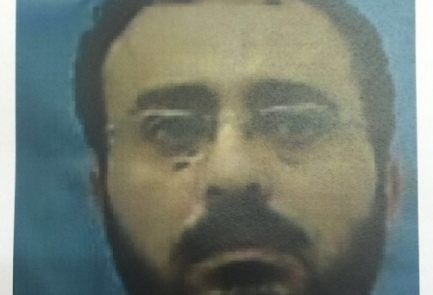
1894

Israeli security forces led by the Shin Bet domestic intelligence agency have uncovered a recruitment drive by Palestinian Islamic Jihad operatives located in Pakistan, the Investigative Project on Terrorism has learned.

The operatives hail from Gaza and tried to recruit fellow students in Pakistan to create a West Bank cell, according to Israeli security sources.

The investigation illustrates the ease with which terror organizations, particularly Islamic Jihad and Hamas, recruit Palestinian students overseas, often taking advantage of extensive contact networks, the sources said.

The case is unusual for exposing Palestinian Islamic Jihad activity so far from the Palestinian territories and from Israel.

According to the Shin Bet’s investigation, 22-year-old Baha’a Abu Marhiah, a resident of the West Bank city of Hebron, is a Palestinian student who was recruited by two Palestinian Islamic Jihad operatives. Marhiah was studying for a law degree at a university in Lahore, Pakistan.

Two Islamic Jihad operatives from Northern Gaza’s Shati Refugee Camp were studying for doctorates at the same university.

Israeli security forces named them as Sharif Halabi, 34, a religious scholar and teacher, and Ramzi Shakshak, 32, who lectures at Al-Aqsa University in Gaza.

Halabi, who told students in Pakistan about “martyrs” in Gaza and incited them against Israel, gained Abu Marhiah’s trust and convinced him to join Palestinian Islamic Jihad, the investigation found.

Halabi allegedly told Abu Marhiah to keep in touch after returning to Hebron, and to await further instructions on how to conduct attacks, according to the Shin Bet. Today, Halabi and Shakshak are back in Gaza.

But Marhiah was arrested Sept. 22 in a joint Shin Bet, Israel Defense Forces, and police operation following his return.

In recent days, an IDF military court charged Abu Marhiah with carrying out a service for a banned organization, and holding contact with an enemy entity.

After Hamas, Islamic Jihad is the second largest terrorist organization in Gaza, with approximately 5,000 armed combatants split up into regional brigades and a domestically produced rocket arsenal which incorporates Iranian know-how.

Any expansion of Islamic Jihad from Gaza into the West Bank would also represent an Iranian push into the area.

Prior to 2002’s Operation Defensive Shield, Islamic Jihad maintained a high profile in the West Bank and launched a series of suicide bombing and shooting attacks against Israelis. Jenin and Hebron were considered strong areas for the organization. The terrorist group is now working strenuously to reinvigorate itself in the area.

Iran remains the principal financial backer of Palestinian Islamic Jihad in Gaza. Unlike Hamas, it has remained utterly loyal to Tehran and enjoyed sustained, continuous support from it.

While Hamas has distanced itself from Iran’s Shi’ite sectarian intervention in the region’s raging wars, particularly in Syria, Islamic Jihad has not.

In recent months, Iran has expanded efforts to create a zone of influence in the West Bank, according to Israeli defense assessments.

This included attempts by its proxies, Islamic Jihad and Hizballah, to set up terror cells there.

Israel identified and stopped efforts by Hizballah’s Unit 133, which seeks to set up terror cells among Palestinians and activate them, earlier this year.

Meanwhile Shin Bet periodically checks efforts by Islamic Jihad in Gaza to recruit West Bank attackers. Despite the successes, the Israel Defense Forces (IDF) central command assessed last year that Islamic Jihad was gaining strength in the West Bank.

The small, yet highly focused organization will continue acting as the principal flag bearer for Iran in the Palestinian arena.

Officials In Lebanese, Gazan Terror Organizations Confirm: Iran Funds Our Activity

August 11, 2016

Officials In Lebanese, Gazan Terror Organizations Confirm: Iran Funds Our Activity, MEMRI, August 11, 2016

Arab media have recently published statements by officials in the Lebanese Hizbullah and the Gazan Hamas and Islamic Jihad organizations, and by their supporters, confirming what has long been known – namely that these Lebanese and Gazan terror organizations receive substantial financial and military assistance from Iran. These statements join many reports, especially in the anti-Iranian media, regarding Iran’s funding of various terrorist organizations across the Arab world. According to these reports, the assistance comes mainly from the office of Iranian Supreme Leader Ali Khamenei and from the Islamic Revolutionary Guards Corps (IRGC).

The following are some examples of these statements and reports from the last two months:

Hizbullah Secretary-General Nasrallah: Hizbullah’s Entire Budget Is Provided By Iran

In a speech he delivered on June 24, 2016, marking 40 days after the killing of Mustafa Badr Al-Din, who was considered to be Hizbullah’s chief operations officer, and following the imposition of U.S. sanctions on Hizbullah that threaten its financial infrastructure and income, Hizbullah Secretary-General Hassan Nasrallah clarified: “Hizbullah’s budget – its salaries and expenditures, [the money that pays for] its food and drink, weapons and missiles – [all come from] Iran. Is that clear?… As long as Iran has money we have money. Do you require greater transparency than that[?] The funds earmarked for us do not reach us through the banks. We receive them the same way we receive our missiles, with which we threaten Israel.”[1]

Hamas Official Abu Marzouq: Iran’s Assistance To Hamas Is “Not Comparable” To Any Other Assistance

The deputy head of Hamas’s political bureau, Moussa Abu Marzouq, tweeted on June 15, 2016: “The aid extended by Iran to the Palestinian resistance, in provisions, training and funds, is not comparable [to any other aid], and most other countries cannot match it.”[2]

29502Abu Marzouq’s tweet

Former Lebanese Minister Wiam Wahhab: Iran Has Funded Resistance In Palestine

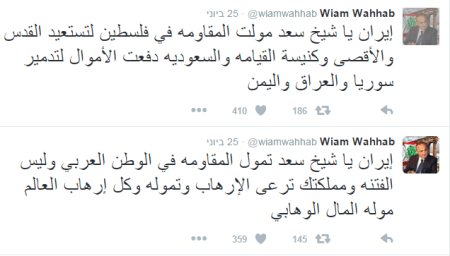
On June 25, 2016, in response to a remark by former Lebanese prime minister Sa’d Al-Hariri that Iran funds fitna(internecine strife) in the Arab world,[3] former Lebanese minister Wiam Wahhab, a known supporter of Hizbullah and the resistance axis, tweeted: “O Sheikh Sa’d [Al-Hariri], Iran has funded resistance in Palestine to restore Jerusalem, Al-Aqsa and the Church of the Sepulcher [to Palestinian hands, whereas] Saudi Arabia paid to destroy Syria, Iraq and Yemen.” In another tweet he wrote: ” O Sheikh Sa’d, Iran funded resistance in the Arab homeland rather than fitna, [whereas] your kingdom [Saudi Arabia, who supports Al-Hariri and his faction in Lebanon,] sponsors and funds terrorism. The funds of all the terrorist [organizations] in the world are Wahhabi [i.e., Saudi] funds.”[4]

29503Wiam Wahhab’s tweets

Saudi Daily Al-Sharq Al-Awsat: Hizbullah’s Weapons Come Directly From IRGC; Iran Has Renewed Regular Aid To Islamic Jihad Organization

The anti-Iranian press, such as the London-based Saudi daily Al-Sharq Al-Awsat, also reported on Iran’s funding of terrorist organizations in Lebanon and Gaza. On June 29, 2016, Al-Sharq Al-Awsat confirmed Nasrallah’s statements regarding the Iranian funding. The report stated that Hizbullah’s funds came from the office of Iranian Supreme Leader Ali Khamenei while its weapons are provided by the IRGC. It quoted the director of the Umam Research and Documentation center in Lebanon, Luqman Salim, a Shi’ite known for his opposition to Hizbullah, as saying that between 70% and 80% of Hizbullah’s funds come from Iran. According to Salim, Iran also invests about $400 million of the IRGC’s budget in the Islamic Radio and Television Union, a group of stations which includes the Iranian Al-Alam but also Hizbullah’s Al-Manar and Al-Mayadin and the Hamas-affiliated Al-Quds (all of which broadcast from Lebanon) and Hamas’s Al-Aqsa station, which broadcasts from Gaza.

The daily also cited a “knowledgeable source” as saying that until 2005 Iran transferred to Hizbullah between $200 million and $250 million annually, but since then the allocation has increased: After the 2006 Lebanon War it rose to $850 million, and since Hizbullah entered the Syria war its budget has become unlimited, because it has become part of Tehran’s war effort there.[5]

On May 25, 2016, the daily reported, citing sources close to the Islamic Jihad organization in Gaza, that Iran had renewed its regular financial aid to the organization after the two sides agreed to renew their mutual relations.[6] According to these sources, an Islamic Jihad delegation headed by the organization’s secretary-general Ramadan Shalah visited Iran in April 2016, and during this visit Tehran renewed its sponsorship of the organization after the latter accepted its terms. In meetings held by the delegation during this visit, including with IRGC commander Mohammad Ali Jafari and Qods Force commander Qassem Soleimani, Iran clarified its vision of Islamic Jihad’s course in the coming years. The sources claimed further that Soleimani decided, in coordination with the organization’s military and political bureaus, to grant $70 million a year out of the IRGC budget to Islamic Jihad’s military wing, Saraya Al-Quds, and to reorganize this body and appoint Khaled Mansour, who is close to Tehran, as its commander.[7]

Endnotes:

[1] Alahednews.com.lb, June 24, 2016.

[2] Twitter.com/mosa_abumarzook, June 15, 2016.

[3] Al-Mustaqbal (Lebanon), June 26, 2016; Al-Hariri’s remark was a response to Nasrallah’s  statement one day earlier that Hizbullah’s entire budget comes from Iran.

[4] Twitter.com/wiamwahhab, June 25, 2016.

[5] Al-Sharq Al-Awsat (Lebanon), June 29, 2016.

[6] Reports in the Arab media in the passing year indicated that Iran had suspended its assistance to Islamic Jihad following disagreements between them on the crisis in Yemen. According to these reports, the Islamic Jihad refused Iran’s demand to declare its opposition to the Arab Coalition’s activities in Yemen. See for example Aljazeera.net, May 26, 2016, Janoubia.com, April 3, 2016.

[7] Al-Sharq Al-Awsat (London), May 25, 2016.

UN aid worker in Gaza accused of helping Hamas

August 9, 2016

UN aid worker in Gaza accused of helping Hamas, Israel Hayom, Lilach Shoval and Daniel Siryoti, August 9, 2016

U.N. Development Program aid worker Wahid Abdullah Burash accused of using his position to help Hamas operatives hide weapons and tunnels, and preferring projects that benefit Hamas • Burash is second aid worker to be charged with assisting Hamas in span of a week.

helper

For the second time in one week, an international aid worker in the Gaza Strip has been accused of providing assistance to terrorist organization Hamas.

The Shin Bet security agency and Israel Police lifted a gag order Tuesday, revealing that a United Nations aid worker from Jabalia, 38-year-old Wahid Abdullah Burash, was arrested last month on suspicion that he was using his job at the U.N. Development Program to assist in Hamas operations. An indictment was filed against Burash at the Beersheba District Court, charging him with aiding the Gazan terrorist group.

The announcement comes less than a week after World Vision employee Mohammad Halabi was accused of funneling some $50 million in charity funds to Hamas.

The UNDP works to rehabilitate and develop infrastructure, including damaged homes, in the Gaza Strip to improve the lives of local residents. Burash has worked as an engineer at the program since 2003. As part of his work, he was responsible for demolishing homes damaged in military clashes and removing waste from the demolition sites.

The Shin Bet investigation revealed that in 2014, Burash was instructed by a senior Hamas official to carry out his work in a manner that would provide maximum benefit for Hamas. In 2015, he used UNDP resources to build a marine dock for the use of Hamas’ military wing in northern Gaza.

It was further revealed that throughout 2015, Burash, acting on Hamas orders, worked with his superiors to give preference to rehabilitation projects in areas where Hamas operatives live.

The investigation also found that Hamas deliberately exploited UNDP projects throughout 2015. Weapons and terror tunnel shafts were found in homes that had been rebuilt by the UNDP and taken over by Hamas. This violates U.N. protocol, according to which all explosives and weapons must be reported to the United Nations Mine Action Service.

Investigators learned that other Hamas operatives are embedded in a variety of humanitarian aid organizations in Gaza. Burash also revealed information about Hamas storehouses, outposts and tunnels that he had learned about in his work.

Hamas vehemently denied the charges brought against Burash. Hamas spokesman Sami Abu Zuhri said, “The accusations are baseless and false, and they are part of the Zionist occupation’s attempt to worsen the siege on Gaza by persecuting international aid organizations.”

The truth about humanitarian aid

August 7, 2016

The truth about humanitarian aid, Israel Hayom, Ariel Bolstein, August 7, 2016

The reports surrounding the arrest of Mohammad Halabi, director of the Gaza branch of the humanitarian organization World Vision, have sent shockwaves throughout the globe. This is a well-known, worldwide charity organization — one of the world’s largest in fact — that purports to help third world children.

As it turns out, when it comes to the Gaza Strip, the money donated by charitable individuals in Europe, Australia and the U.S. went mainly to help Hamas’ military wing. Among other things, the money was used toward purchasing weapons in Sinai, digging attack tunnels and paying the salaries of terrorists and their families.

The Hamas murderers did not stop there. They accepted thousands of food packages as well as other supplies intended for the poor. When devout Christian worshippers in churches across the U.S. donated a dollar or two to “those poor children,” the smiling faces on the receiving end were Hamas terrorists in Gaza.

More than half of the organization’s annual aid budget was funneled directly to Hamas. In total , the terror organization received between 40-50 million dollars and this may just be the tip of the iceberg, as there are other humanitarian groups that have poured tremendous amounts of money into these black holes referred to at times as “rehabilitation of Gaza” and “assistance to the Palestinians.”

For years, World Vision members, including senior officials, contributed to anti-Israel efforts. Time and again they have taken advantage of every possible forum to portray Israel as the culprit behind the suffering of Palestinian children. Never ones to be confused by the facts, they neglected to mention that they knew very well that Hamas was using the civilian population of Gaza as human shields, launching rockets at Israel from residential neighborhoods and storing weapons at schools.

Not a word of condemnation for Hamas was ever heard. But with respect to Israel, it has been a festival of lies and false accusations. In 2012, for example, the president of World Vision in the U.S. claimed that Israel had prohibited Christian from Judea and Samaria as well as Gaza from celebrating Easter in Jerusalem. The allegation was completely false (that year Israel granted more than 20,000 permits to travel to Jerusalem for Easter, far more than were requested). Still, the irreparable damage to Israel’s reputation in the eyes of the Christian world was done.

And if that wasn’t bad enough, World Vision has contributed extensively to other anti-Israel endeavors in the years since. For instance, the organization bankrolled a program called “Christ at the Checkpoint,” which aimed to portray Israel to American Christians as the embodiment of all evil. The program appealed to this audience’s most basic emotions: they were asked to imagine Jesus himself being harassed by Israeli soldiers at a border checkpoint. This was, in fact, anti-Semitism of the worst order, playing into the idea that the Jews abused the son of God and now they are abusing other poor souls.

In fact, a large portion of the funding that goes into the Boycott, Divestment and Sanctions movement actually comes from innocent donors, who are certain their donations are going toward saving lives in developing countries somewhere in Asia or Africa.

Sadly, World Vision is not the only charity organization that has been dragged into the anti-Israel efforts. Other organizations, such as Human Rights Watch and Amnesty International, have also fallen into the same trap.

All this is happening in a world where there are tens of millions of people who really need charitable assistance, with tens of millions of people in the West who are willing to donate generously to help worthy causes, or so they believe. These kind, naïve donors, are being taken advantage of every day in the most awful of ways.

The Old Generals’ Old Plan

May 31, 2016

The Old Generals’ Old Plan, Front Page MagazineCaroline Glick, May 31, 2016

al-aqsa_martyrs_brigade

Originally published by the Jerusalem Post

The Israeli Left is a one trick pony. As it sees things, all of Israel’s problems – with the Palestinians, with the Arab world, with Europe and with the American Left – can be solved by giving up Judea and Samaria and half of Jerusalem (along with Gaza which we gave up already).

Once Israel does this, the Left insists, then the Palestinians, the Arab world, Europe and Bernie Sanders voters will love us as they’ve never loved us before.

The events of the past quarter century have shown the Left’s position to be entirely wrong. Every time Israel has given the Palestinians land, it has become less secure. The Arabs have become more hostile.

The West has become more hostile. The Palestinians have expanded their demands.

Because of their negative experience with the Left’s policy, most Israelis reject it. This is why the Right keeps winning elections.

Given the failure of its plan, the Left could have been expected to abandon it and strike out on a different course. But it didn’t. Instead it has tried to hide its continued allegiance to its failed withdrawal strategy by pretending it is something else.

A central component of the Left’s concealment strategy is its use of former generals.

Over the past quarter century, and particularly since the Palestinians began demonstrating in 2000 that they have no interest in a state living side by side with Israel, the Left has carted out retired generals at regular intervals to proclaim that continued allegiance to the Left’s failed policy of withdrawal is not irrational.

Every couple of years, a new initiative of former generals – often funded by the EU – is published.

Each in turn uses whatever the popular memes of the day may be to repackage their call for withdrawal from Judea and Samaria and the partition of Jerusalem.

The media, itself dominated by the Left, backs these initiatives. The retired war heroes are paraded before the cameras and presented to the public as responsible adults who have grudgingly entered the political fray, despite their aversion to it, because of their patriotism. Just as they heeded the call of duty and led forces in wars of earlier generations, so today, we are told, they heed the call again, in yet another last-ditch effort to save the country.

Just in time for Avigdor Liberman’s swearing in as defense minister, a new group of old generals released a new version of their old, discredited plan.

A group calling itself “Commanders for Israeli Security” has mobilized an impressive roster of 214 generals that have signed on to a new position paper called “Security First: Changing the rules of the game, a plan to improve Israel’s security-diplomatic position.”

The group has a great website replete with a highend web commercial that has been flooding social media feeds for the past several days. The ad shows a person ripping up a “Peace Now” bumper sticker and replacing it with a call for “Security now, peace later.”

Their plan, the ad proclaims, will improve Israel’s security, strengthen its international position, repair the cleavages in Israeli society and set the conditions for future negotiations with the Palestinians.

Unfortunately, like every leftist plan to date, if the generals get their way and the government takes their advice, the results will be precisely the opposite of what they promise. As has been the case with every other well-packaged withdrawal plan, Israel’s security will be harmed. Our international position will be wrecked. Bernie Sanders voters along with the Europeans will expand their devotion to bashing Israel. And the Sunni Arab states that now flock to us will again abandon us.

The generals’ new package involves opening their plan with a hawkish call for continued Israeli security control over Judea and Samaria, until the Palestinians decide to make peace with us.

But as we soon see, that was just throat clearing.

Having established their sober-mindedness, the generals turn to the Left’s unchanging fantasy.

They call for the government to formally relinquish Israel’s sovereign rights over the vast majority of Judea and Samaria and eastern Jerusalem.

They call for the government to permanently stop respecting the property rights of Jews in the areas of Judea and Samaria outside of the security perimeter.

The more than one hundred thousand Jews who live in those areas, they insist, must be denied all right to property, save the right to sell whatever they now own.

They must not be allowed to build anything – no new houses; no new communities; no new infrastructure.

As for the communities inside the perimeter, the generals insist that those should be permitted to continue respecting Jewish property rights, within limits, albeit. For instance, those communities must not be permitted to expand beyond their current construction boundaries. In other words, Jews can build up, but not out.

Jerusalem, which they believe should never have been unified in 1967, should be effectively partitioned.

The generals call for the municipal government to stop administering the city as a unified mixed Jewish and Arab city. Instead, they say, the city should set up a separate governing authority for Arab neighborhoods in eastern, northern and southern Jerusalem. That separate authority should be responsible for all planning and zoning activities in Arab neighborhoods as well as the education system and every other aspect of the daily lives of the Arabs of the city.

Gaza, which has been operating as a Hamas state since 2007, is also brought in from the cold. The generals call for the government to continue to supply Gaza with everything that Hamas demands – water, electricity, employment in Israel, a Hamas-controlled port. They even call for Israel to allow Europe to pay the salaries of Hamas terrorists.

Moreover, the generals recommend that the government announce that Gaza, Judea and Samaria and partitioned Jerusalem are one political entity, despite the fact that they aren’t.

The generals insist that by taking these steps, Israel will prove its devotion to peace and keep the dream of a Palestinian state alive. As a consequence, they say, the Palestinians will be happy and stop trying to murder Israelis. The Arab world will line up to sign peace treaties with Israel. Europe along with Bernie Sanders’ voters will bury the hatchet and embrace Israel.

The problem with the generals’ newest plan and the ones its replaces is that they all ignore basic facts.

There is no Palestinian constituency for peace with Israel. The more Israel offers the Palestinians, the less interested they are in settling.

By announcing that Israel renounces its claims to Judea, Samaria and Jerusalem, and treating the Jews east of the 1949 cease-fire lines as second class citizens, the generals will not only widen Israel’s social cleavages. They will tell the Palestinians that they are right to feel contempt for us. The worse they behave, the more we will offer them. The more Jews they murder, the more the Jews will turn against one another.

As for improving Israel’s international position, it is hard to understand why the generals refuse to learn the lessons of the Gaza withdrawal. Despite the fact that Israel uprooted 24 Jewish communities in Gaza and northern Samaria, and removed its military forces from the area, without exception, the international community insists that Israel still “occupies” Gaza. How can the generals expect the world to act more fairly towards a more limited withdrawal plan from Judea and Samaria and Jerusalem? As for Gaza, Operation Protective Edge brought out into the open the fact that Egypt, Saudi Arabia, the UAE and other Arab states support Israel in its war against Hamas. They do so because they fear Islamic State and Iran more than they hate Israel, whose power they trust.

If Israel announces its intention of leaving Judea and Samaria, which the Arabs know will become a Hamas enclave faster than Gaza did, the Arab faith in Israel’s power will diminish. As a consequence, if Israel follows the generals’ advice our relations with the Sunnis will worsen, not improve.

It is a tragedy for Israel that the generals have allowed the Left to use them in this way. Their role in perpetuating Israel’s destructive adherence to the devastating two-state policy model diminishes their past contributions and endangers Israel’s future.

That Kissinger Promise and Obama’s Fulfillment

May 30, 2016

That Kissinger Promise and Obama’s Fulfillment, The Jewish PressVic Rosenthal, May 30, 2016

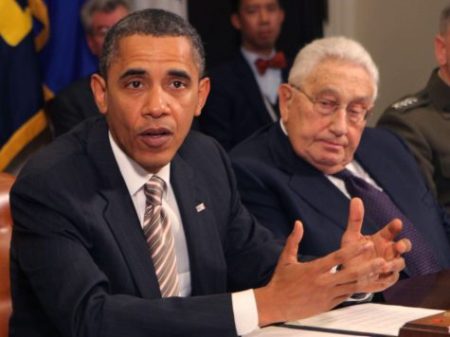
Obama-Kissinger-e1464550543436Pres. Obama seated with Henry Kissinger

{Originally posted to the author’s website, Abu Yehuda}

Old realpolitiker Henry Kissinger was in the news recently when he sat down with Donald Trump, to give him the benefit of his experience. It brought to mind Kissinger’s numerous attempts to get Israel out of the territories it conquered in 1967, before, during and – especially – after the Yom Kippur War.

Kissinger went to Iraq in December of 1975 to try to wean the regime away from the Soviet Union and improve relations with the US. In a discussion with Sa’dun Hammadi, the Iraqi Foreign Minister, Kissinger suggested that American support for Israel was a result of Jewish political and financial power, promised that the US would work to force Israel back to pre-1967 boundaries, and indicated that while the US would not support the elimination of Israel, he believed that its existence was only temporary. Here is an excerpt (the whole thing is worth reading):

I think, when we look at history, that when Israel was created in 1948, I don’t think anyone understood it. It originated in American domestic politics. It was far away and little understood. So it was not an American design to get a bastion of imperialism in the area. It was much less complicated. And I would say that until 1973, the Jewish community had enormous influence. It is only in the last two years, as a result of the policy we are pursuing, that it has changed.

We don’t need Israel for influence in the Arab world. On the contrary, Israel does us more harm than good in the Arab world. You yourself said your objection to us is Israel. Except maybe that we are capitalists. We can’t negotiate about the existence of Israel, but we can reduce its size to historical proportions. I don’t agree that Israel is a permanent threat. How can a nation of three million be a permanent threat? They have a technical advantage now. But it is inconceivable that peoples with wealth and skill and the tradition of the Arabs won’t develop the capacity that is needed. So I think in ten to fifteen years, Israel will be like Lebanon—struggling for existence, with no influence in the Arab world.  [my emphasis] …

Kissinger also promised that aid to Israel, which he presented as a result of Jewish political influence, would be significantly reduced. He indicated that legal changes in the US – he must have been referring to the creation of the Federal Electoral Commission in 1974 to regulate campaign contributions – would attenuate Jewish power and therefore American support for Israel. Naturally, he didn’t foresee the Israel-Egypt peace agreement, which permanently established a high level of military aid to both countries.

He further promised that the US would support a PLO-run Palestinian state if the PLO would accept UNSC resolution 242 and recognize Israel. This of course is what (supposedly) happened in the Oslo accords.

Kissinger insisted that “No one is in favor of Israel’s destruction—I won’t mislead you—nor am I.” But his hint that a smaller Israel might not survive is clear. Surely he understood that a pre-1967-sized Israel (within what Eban called “Auschwitz lines”) would have no chance of surviving, simply because of the strategic geography of the area.

Kissinger was wrong about the Arabs developing the capability to challenge Israel, but their place has been taken by soon-to-be-nuclear Iran and its proxies, who are significantly more dangerous than the Arab states ever were.

US policy, however, has kept more or less the same shape, except that the hypocrisy of insisting that the US supports the existence of Israel but in a pre-1967 size is even more glaring. The substitution of the PLO for the Arab states as the desired recipient of the land to be taken from Israel has barely made a ripple either in America or among the Arabs, suggesting that the policy is more about Israel giving up land than about the Arabs getting it.

The original motivation for Kissinger’s promises was supposedly the desire of the US to replace the Soviet Union as the patron of the Arab states. After the collapse of the USSR and the end of the Cold War in 1991, however, there was no change in policy. Although the Oslo Accords were initiated by left-wing Israelis, the US eagerly embraced them, and the so-called ‘peace process’ became a permanent stick to beat Israel with.

President Obama is especially adept at emphasizing support for Israel’s existence while at the same time demanding that Israel make concessions that would make her continued existence impossible. Apparently agreeing with Kissinger about Jewish power, Obama has worked to reduce the pro-Israel influence of American Jews in numerous ways, such as by providing access to the White House for groups like J Street and the Israel Policy Forum, while marginalizing traditional Zionist organizations like ZOA.

Kissinger’s almost anti-Semitic claim that US support for Israel is bought with Jewish money was probably untrue in 1975 and is even less so today, when a large proportion of American Jews, including wealthy ones, have chosen their liberal or progressive politics over Zionism. The coming struggle over the introduction of a pro-Palestinian plank into the Democratic platform is an indication that the party and with it, many of its Jewish supporters, is moving toward Obama’s position.

The Obama Administration’s program to extricate itself from the Middle East by empowering Iran as the new regional power has given a new impetus to the policy of shrinking Israel. Iran sees Israel as a major obstacle to its hegemony, for both geopolitical and religious/ideological reasons, and is committed to eliminating the Jewish state. Obama found it necessary to restrain Israel from bombing Iran’s nuclear facilities at least once (in 2012), and seems to be prepared to sacrifice Israel in order to achieve his goal of establishing Iranian regional dominance.

Some would go even further and say that Obama’s primary ideological goal is to eliminate Israel and the Iranian gambit is a means to this end, but that is highly speculative! Or maybe it’s a matter of two birds with one stone.

Henry Kissinger didn’t do us any favors, but I think the anti-Israel thread in American policy would have been strong enough without him, running from Truman’s Secretary of State George C. Marshall all the way to Obama’s stable of anti-Zionists like Rob Malley and Ben Rhodes.

Today Israel is long gone from the Sinai, more recently from Gaza, and probably only thanks to the disintegration of Syria, still holding the Golan Heights. I would like to believe that PM Netanyahu was correct when he said that Israel will never leave the Golan. Regarding Judea, Samaria and Jerusalem, I expect that we are about to begin a very difficult time, as the Obama Administration is likely to mount a campaign in its last days to fulfill Kissinger’s promise to the Arabs at long last.