Archive for the ‘Arab nations’ category

Arab world: Egypt’s dangerous stalemate

April 17, 2015

Arab world: Egypt’s dangerous stalemate, Jerusalem Post, Zvi Mazel, April 17, 2015
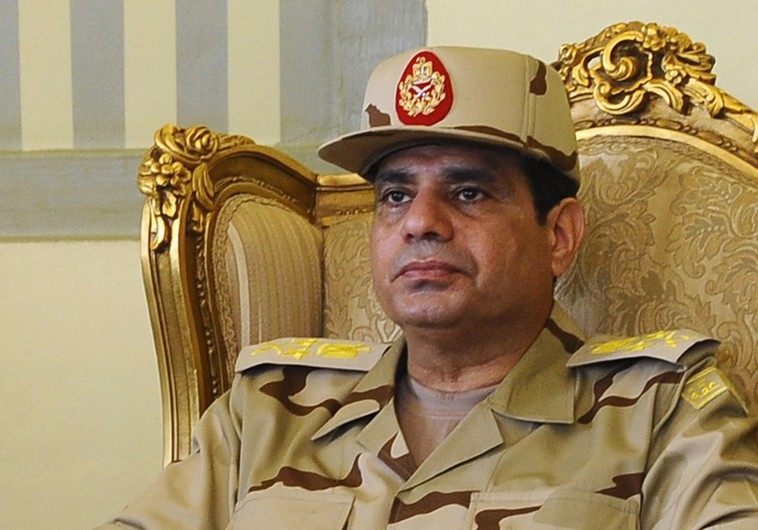
Egypt's Defense Minister Abdel Fattah al-Sisi is seen during a news conference in Cairo on the release of seven members of the Egyptian security forces kidnapped by Islamist militants in SinaiAbdul Fattah Sisi. (photo credit:REUTERS)

Vainly did the Egyptian president try to convince the US-led coalition against Islamic State to extend its activities to the whole Middle East. But US President Barack Obama is unwilling to acknowledge that there is a regional and international dimension to the movement.

*****************

Egyptian President Abdel Fattah al-Sisi is fighting for his country’s survival – and his own.

Islamic terrorism is not abating, hampering vital efforts to bring a better life to the people through a revitalized economy and political stability. Sisi knows he has to show results soon to prevent Egypt from slipping back into anarchy and chaos.

Despite the army’s all-out effort to defeat Islamist insurgency in Sinai, there is no end in sight. F-16 fighter planes and Apache helicopters have joined the campaign, security forces have killed or wounded hundreds of terrorists, destroying their haunts and their training groups – but more keep coming.

Ansar Bayt al-Maqdis gunmen, who have pledged allegiance to Islamic State, continue making daring raids against police stations and other security targets, leading to loss of life and heavy damage.

In one instance on April 14, the commander of the central police station of El-Arish was wounded in a raid; the assailants were able to escape.

For all intents and purposes the situation has reached a stalemate, though the army has managed to contain the terrorists in the northern part of the Sinai Peninsula, preventing them from extending their activities to the south and to the Suez Canal – where they could have inflicted untold damage to economic and security infrastructure, and severely undermined public morale.

However, there are still sporadic terrorist attacks in Cairo and other parts of the country.

Bombs explode, killing and maiming; power lines are blasted. A number of terrorist groups are involved, from Ansar Bayt al-Maqdis and the so-called Soldiers of Egypt to the ever-present Muslim Brotherhood; many of their members have been arrested, their leaders sentenced to death – though no one has been executed yet – but they keep on demonstrating against the regime (though in diminishing numbers).

In Yemen, Iranian-backed Houthi tribes are poised to take over the strategic Red Sea straits, threatening free passage to the Suez Canal – a reminder, if one was needed, of the fact that Islamic terrorism knows no border.

Vainly did the Egyptian president try to convince the US-led coalition against Islamic State to extend its activities to the whole Middle East. But US President Barack Obama is unwilling to acknowledge that there is a regional and international dimension to the movement.

The fact remains that Islamic State dispatches terrorists and weapons to Ansar Bayt al-Maqdis in the Sinai Peninsula from Libya, where there is an unlimited supply of both. No matter how many guerrillas are intercepted or killed by the Egyptian army, more are coming through the vast mountainous and desert region, along the 1,200-km border between the two countries.

Then there is Gaza, where terrorists can find refuge, regroup and train, and where new weapons can be tested.

Cairo is desperately trying to cut off the peninsula from the Strip. The Rafah crossing is closed most of the time, and when it opens it is under the strict supervision of Egyptian authorities. More than 2,000 contraband tunnels have been destroyed and a 1-km.-deep sanitized zone has been installed; thousands of families have been uprooted.

They have been compensated but resentment is high, and the move has prompted widespread condemnation by human rights associations.

Against this backdrop, the regime is weighing extending the zone to 5 km. and making the digging of contraband tunnels punishable by life imprisonment. A court in Cairo has forbidden Hamas activities in Egypt, and another has declared Hamas a terrorist organization; however, the central government is appealing that decision for the sake of its ongoing dialogue with Gaza’s leaders on the Palestinian issue.

The Iranian-Houthi threat has led Sisi to call for the creation of a rapid-response Arab unit, as Saudi Arabia has rallied neighboring states to form a coalition against the rebels in Yemen – who are threatening its border in the south, and were about to take control of the strategic port of Aden.

Though the creation of a united Arab unit was decided at a summit in Sharm e-Sheikh last month, implementation will not be easy. A number of states such as Lebanon and Iraq have warned they would not allow any infringement to their sovereignty; some Gulf states and Jordan have been more forthcoming, and meetings between army commanders are scheduled.

The problem is that these countries are not keen to risk their troops in a ground operation in neighboring states. Armies are the traditional bulwark of Arab regimes; a failed intervention outside their borders could cause their downfall. Nevertheless, since the West is largely indifferent to what is happening, Sisi and his Gulf allies have no choice but to unite against the common threat of Islamic terrorism, be it Sunni or Shi’ite.

On the home front, Sisi has launched a series of impressive projects – a new canal parallel to the old one to enable simultaneous crossing in both directions, thereby doubling receipts; an industrial, commercial and tourist zone between the two canals; 3,000 km of modern roads. Perhaps his most ambitious project is the creation of a new administrative capital city east of Cairo, at an estimated cost of $45 billion. Arab states have rallied to his side, pledging billions of dollars at a special economic summit last month; international groups have indicated their interest in some of the projects – a significant victory for the embattled president.

But Egypt’s endemic problems – population explosion, illiteracy leading to widespread unemployment and enduring poverty, as well as corruption on an epic scale – are not making Sisi’s task easier.

He is also calling to reform Islam by purging it of its extremist discourse, and has already instructed the Education Ministry to eliminate extremist content such as the call to jihad and attacks on other religions.

Meanwhile, the political situation is still unclear and elections are repeatedly postponed, allegedly because of ambiguities in the election law.

The fact is that the president has not been able to secure a large enough block to ensure his electoral victory, while the Muslim Brotherhood – though banned – and other Islamic parties can still muster a sizable vote.

Can Sisi win all his battles? How long will the Egyptian people wait for some much-needed economic results? Egypt is going it alone, still waiting for the West to understand that Cairo remains its best ally against the rising tide of terrorism now lapping at its shores.
King Abdullah II: We’re War With “Outlaws Of Islam” – Special Report

April 14, 2015

King Abdullah II: We’re War With “Outlaws Of Islam” – Special Report via You Tube, April 13, 2015

(He seems quite diplomatic, but what does he actually think? — DM)


Could Saudi Arabia Need Israel More than Vice Versa?

April 12, 2015

Could Saudi Arabia Need Israel More than Vice Versa? Israel National News, Gedalyah Reback, April 12, 2015

Israel’s status as a regional superpower is unusual for its lacking a reliable set of local allies. Even where security ties with Egypt, Jordan and Saudi Arabia might be strong, the country is forced to keep those ties in the background. Regardless, it exerts a degree of influence just by its own strategic value. While ties are not public, they are also not available for public scrutiny, perhaps enhancing the relationship opportunities with the above mentioned countries as well as other Arab states.

“Rather than a charm offensive,” asserts Robert Kappel of the German Institute of Global and Area Studies, “Israel needs an assertive regional foreign policy” in order to gain more allies.

But is that really true?

“I don’t think that it’s either-or,” says Professor Eytan Gilboa of Bar Ilan University. “I think Israel has a regional policy. We don’t see it but it collaborates with Arab countries and the Persian Gulf, especially on Iran and much more on counter-terrorism. It has a regional policy but it’s undercover.”

Solving the Israeli-Palestinian Conflict is not a Condition for an Alliance

Turning back specifically to Kappel, Gilboa states “I think he means to use it to deal with the Palestinian issue; then comes the Arab Peace Initiative. The assumption is the PA is unable, unable, to reach an agreement with Israel.”

Gilboa sees an Arab desire to expand relations with Israel in spite of the conflict with the Palestinians. Thus, the Arab Peace Initiative might be evidence the Arab countries are eager to reach out with a public offer that would allow them to open the door for Jerusalem without necessarily having to seal a deal on the conflict.

“I reject one claim: that resolution of the Israeli-Palestinian issue is a condition for a regional alliance. The reason for this is simple – all these countries couldn’t care less about the Palestinians. They have an interest in blocking Iran and extremist Islamic organizations. They made all kinds of statements to the contrary but that is not the issue. I don’t think there’s a linkage here.”

Pressing his point, Gilboa says “There’s much less opportunity for regional pressure on the Palestinians than most people think. ‘Collaboration’ is a euphemism for security cooperation on ‘negative interests.’”

Those negative interests are opposition to common regional security challenges like the above mentioned Iran and Islamist terrorist organizations. But to create an alliance, you need much more than common enemies, says Gilboa – you need common interests.

“Turkey ambivalent to ISIS – they share an ideology but still see it as a competitor. Erdogan would like to revive the Ottoman Empire where a non-Arab country leads the Arab world. Where you see this kind of geopolitics, there are a lot of opportunities for collaboration with these countries.”

And actually, “there’s criticism of Israel for not exploiting the situation,” says Gilboa.

New Countries?

When Arutz Sheva asked if Israel’s chances for regional alliances might actually increase if Syria were to collapse into several smaller states or the Iraqi Kurdish Regional Government (KRG) were to become a full-fledged independent state, Gilboa sees the idea as having validity.

“I think this is a valid point. I am only hearing that Israel is collaborating with the Kurds there and you can do a little bit more, but it is a lot more than it used to be. The alliance with Turkey had prohibited close collaboration with the Kurds. But now that the relationship is bad, this condition is nonexistent. I think indeed they could do more.”

Focusing on the much more developed autonomy, infrastructure and ambitions of the Iraqi Kurds than other groups that could emerge in Syria, Gilboa says Kurdistan could definitely become a game-changer in the region’s mixture of waxing and waning alliances. Most significantly, it could be something that does not necessarily replace Arab states as a reliable ally, but actually enhances the chances of a strong alliance between those Arab countries and Israel.

“I also think there is room for a strategic alliance between Israel and pro-US Arab states. Not just potential between Israel and the non-Arab groups, but collaboration with Israel, non-Arab states and those emerging new political entities in the Middle East. It could be done on a bilateral basis first – perhaps between Israel and Kurdistan – or multilateral. Once you gain influence with a group like the Kurds, you could translate that into the other (multilateral) type of alliance.”

Israel and Kurdistan have a long history of both covert and overt relations, especially on security. Kurdistan might then be an example of an emerging country where Israel could carry more influence than the Saudis (assuming Kurdistan is able to gain more autonomy or full sovereignty). Saudi Arabia’s diplomatic and military clout is still behind that of Israel, according to Gilboa.

“Saudi Arabia’s power is limited to its ability to manipulate oil markets, but their strength is precarious as major importers like the United States become self-sufficient in that realm. Even their military strength might turn out to be limited as its operation in Yemen is one of the largest it has ever undertaken. The assumption the Saudis might have strong influence over Pakistan and could persuade Islamabad to sell Riyadh a nuclear bomb to pull ahead of the Iranians has been thrown into doubt by Pakistan’s decision not to join the military operation against the Houthis.”

Ultimately, it might be Israel’s power that the Saudis need more.

Anything but a Saudi win (in Yemen) would not be good for Saudi Arabia,” emphasizes Gilboa. On the other hand, “Israel is much stronger diplomatically, militarily and its society is much more vibrant.”

Arabs Blast “Obama’s Deal” With Iran

April 4, 2015

Arabs Blast “Obama’s Deal” With Iran, Gatestone InstituteKhaled Abu Toameh, April 4, 2015

“This is a dangerous agreement…[It ]provides Iran with what it needs most to pursue its wars and expansionism against the Arabs: funds.” —Salah al-Mukhtar, Ammon News”

“Iran has tried to intervene in Iraq, Lebanon and Syria and it is seeing that it’s not paying any price…There is also a feeling in Tehran that the U.S. is avoiding a military confrontation with the Iranians.”– Hassan al-Barari, Al-Sharq

The deal means that the international community has accepted Iran as a nuclear power.” — Hani ala-Jamal, al-Wafd

Many Arabs have expressed deep concern over the nuclear deal that was reached last week between Iran and the world powers, including the US.

Arab leaders and heads of state were polite enough not to voice public criticism of the agreement when President Barack Obama phoned them to inform them about it. But this has not stopped Arab politicians, political analysts and columnists reflecting government thinking in the Arab world from lashing out at what they describe as “Obama’s bad and dangerous deal with Iran.”

The Arabs, especially those living in the Gulf, see the framework agreement as a sign of US “weakness” and a green light to Iran for Iran to pursue its “expansionist” scheme in the Arab world.

“Some Arab countries are opposed to the nuclear deal because it poses a threat to their interests,” said the Egyptian daily Al-Wafd in an article entitled, “Politicians: (President Barack) Obama’s deal with Iran threatens Arab world.” http://www.alwafd.org/838527

The newspaper quoted Hani al-Jamal, an Egyptian political and regional researcher, as saying that the deal means that the international community has accepted Iran as a nuclear power. He predicted that the framework agreement would put Iran and some Arab countries such as Saudi Arabia and Egypt on a course of collision.

Al-Jamal advised the Arab countries to form a “Sunni NATO” that would guarantee Pakistan’s status as a nuclear power Arab ally in face of the “Iranian and Israeli threat.”

Jihad Odeh, an Egyptian professor of political science, said that Obama’s “achievements are designed to dismantle the Arab world. Obama wants to make historic achievements before the end of his term in office by destroying Al-Qaeda, seeking rapprochement with Cuba and reaching a nuclear agreement with Iran.”

http://www.alwafd.org/838527

Although Saudi Arabia, which is currently waging war on Iranian-backed Houthi militiamen in Yemen, “welcomed” the nuclear agreement, it has privately expressed concern over the deal.

http://gulfnews.com/news/gulf/saudi-arabia/public-saudi-welcome-for-iran-nuclear-deal-but-unease-remains-1.1485119

Similarly, several Gulf countries that initially welcomed the agreement are beginning to voce concern over its repercussions on the region. For the past several months, the Arabs have been warning against Iran’s ongoing effort to take control over their countries.

“The US surely does not want to see a more powerful Iranian hegemony in the region, but at the same time, it does not appear to mind some kind of Iranian influence in the region,” said Nasser Ahmed Bin Gaith, a United Arab Emirates researcher. “Iran has been seeking to reclaim its previous role as the region’s police.”

http://www.aljazeera.com/news/2015/04/saudi-arabia-israel-oppose-iran-nuclear-deal-150401061906177.html

Bin Gaith said that it was clear that a Western recognition of Iranian regional influence would come at the expense of the Gulf countries.

“The Gulf states should build strategic partnerships with the regional powers of Pakistan and Turkey, who share the Gulf nations’ fears of Iranian ambitions in the region,” he added.

Echoing widespread fear among Arabs of Iran’s territorial ambitions in the Middle East, political analyst Hassan al-Barari wrote in Qatar’s daily Al-Sharq against the policy of appeasement toward Tehran.

“Iran has tried to intervene in Iraq, Lebanon and Syria and it is seeing that it’s not paying any price; on the contrary, there are attempts by the big powers to reach understandings with Iran,” al-Barari pointed out. There is also a feeling in Tehran that the US is avoiding a military confrontation with the Iranians and their proxies. The Gulf countries have learned from the lessons of the past in various areas. The policy of appeasement has only led to wars. Any kind of appeasement with Iran will only lead it to ask for more and probably meddle in the internal affairs of the Arab countries and increase its arrogance.”

http://www.al-sharq.com/news/details/324014#.VR7KLjuUevV

Even Jordanians have joined the chorus of Arabs expressing fear over Iran’s growing threat to the Arab world, especially in wake of the nuclear deal with the US and the big powers.

Salah al-Mukhtar, a Jordanian columnist, wrote an article entitled, “Oh Arabs wake up, your enemy is Iran,” in which he accused the US of facilitating Tehran’s wars against the Arab countries.

http://www.ammonnews.net/article.aspx?articleno=225764

Describing Iran as “Eastern Israel,” al-Mukhtar said that the most dangerous aspect of the framework agreement is that allows Iran to continue with its “destructive wars” against the Arabs. “This is a dangerous agreement, particularly for Saudi Arabia and the opposition forces in Iraq and Syria,” the Jordanian columnist cautioned. This agreement provides Iran with what it needs most to pursue its wars and expansionism against the Arabs: funds. Lifting the sanctions is America’s way of backing the dangerous and direct wars against Arabs; the lifting of the sanctions also provides the Iranians with the funds needed to push with their Persian advancement. The US wants to drain Saudi Arabia and the Arab Gulf countries in preparation for dividing them.”

Lebanon’s English language The Daily Star newspaper also voiced skepticism over the nuclear deal. “For all the talk of this deal contributing to making the world safer, if Obama is truly concerned with his legacy, especially in the Middle East, he must now work with Iran to encourage it to become a regular member of the international community once again, and not a country which sponsors conflict, whether directly or via proxies, across the region,” the paper editorialized. “Otherwise, this deal could just leave Iran emboldened in its expansionist designs.”

http://www.dailystar.com.lb/Opinion/Editorial/2015/Apr-03/293201-a-deal-or-legacy.ashx

In addition to the Arabs, Iranian opposition figures have also come out against the nuclear deal.

Maryam Rajavi, an Iranian politician and President of the National Council of Resistance, commented that the a “statement of generalities, without spiritual leader Khamenie’s signature and official approval, does not block Tehran’s path to a nuclear bomb nor prevent its intrinsic deception.

“Continuing talks with religious fascism in Iran – as part of a policy of appeasement – will not secure the region and world from the threat of nuclear proliferation,” Rajavi warned. “Complying with UN Security Council resolutions is the only way to block the mullahs from obtaining nuclear weapons. Leniency and unwarranted concessions by the P5+1 to the least trustworthy regime in the world today only grants it more time and further aggravates the dangers it poses to the Iranian people, to the region and to the wider world.”

http://irannewsupdate.com/news/nuclear/2047-iran-maryam-rajavi-fearful-mullahs-reluctantly-take-one-more-step-backward-toward-drinking-the-chalice-of-nuclear-poison.html

Iran’s remarkable achievement

April 3, 2015

Iran’s remarkable achievement, Washington PostMichael Gerson, April 3, 2015

Will Iran continue to hold U.S. policy in the Middle East hostage — causing the United States to hush its reactions to Iranian aggression for fear the regime will walk out of a nuclear deal? This is precisely what American friends in the region fear. The real test — for allies and for members of Congress — will be whether Obama can accompany a final nuclear agreement with a much more aggressive resistance to Iranian ambitions in places such as Syria, Iraq and Yemen. Otherwise, Iran will simply use the wealth that comes from lifted sanctions to cause more havoc.

******************

Whatever else the Obama administration accomplished in the Iran nuclear framework, it did a good job keeping the bar of expectations low and then clearing it.

Many assumed various provisions would last 10 years or less; most are for 15 years or more. Many expected the number of operating centrifuges to exceed 6,000; the target is lower. Many expected the total amount of fissile material Iran is allowed to keep to be higher than the agreed 300 kilograms. These achievements created an initial halo of success.

But as former national security adviser Stephen Hadley emphasized to me, “things that seem too good to be true usually are.” In the days of Cold War arms-control agreements, Soviet negotiators would join in the announcement of notional goals. Later, they would claim that some elements would not fly with Moscow. The strategy was to pocket elements of consensus, then use this as the starting point for new negotiations and additional U.S. concessions.

Tehran can be expected to use every ambiguity in the agreement to its advantage as goals are converted into the language of a final deal. Disagreements are already emerging between the Obama administration and the Iranians on how and when sanctions will be lifted in exchange for compliance, with Foreign Minister Mohammad Javad Zarif essentially accusing the White House of deception.

Given the months of hard negotiations ahead, the self-congratulatory tone of President Obama’s speech announcing the agreement was extremely premature. “Depending on what we learn about critical details,” says professor Peter Feaver of Duke University, “this is not spiking in the end zone. It is spiking on the 5-yard line.”

A number of issues seem murky. What becomes of all the fissile material Iran has apparently agreed to export? What is done with the decommissioned centrifuges and infrastructure to make sure they can’t be easily reinstalled during a breakout attempt? What is the pace and ordering of sanctions relief by the United States, the European Union and the United Nations? How fully will Iran be required to account for past military dimensions of its nuclear programs?

But the largest question will not be answered by the next stage of nuclear negotiations. Will this agreement give the Iranian regime cover for what it is currently doing in the Middle East — actively spreading its influence and threatening our allies? Negotiations on the nuclear issue have taken place in isolation from the ballistic missile issue, the terrorism issue and the regional destabilization issue.

For all the praise Obama is claiming, the Iranian regime counts the most remarkable achievement. It has engaged in nuclear negotiations with the United States while actively engaged in a regional conflict against American friends and proxies. Since Obama has prioritized the nuclear negotiations — the only alternative to which, he constantly reminds us, is war — other concessions have seemed small in comparison. Opposition to Bashar al-Assad has become muted, even as he crosses every blood-red line of brutality, to avoid disrupting relations with his Iranian patron. Human rights issues within Iran have become secondary to avoid giving offense. Obama has sometimes seemed more tolerant and empathetic toward Iranian positions than those of allies and partners such as Israel.

Will Iran continue to hold U.S. policy in the Middle East hostage — causing the United States to hush its reactions to Iranian aggression for fear the regime will walk out of a nuclear deal? This is precisely what American friends in the region fear. The real test — for allies and for members of Congress — will be whether Obama can accompany a final nuclear agreement with a much more aggressive resistance to Iranian ambitions in places such as Syria, Iraq and Yemen. Otherwise, Iran will simply use the wealth that comes from lifted sanctions to cause more havoc.

If Iran is treated as a normal nation simply because of its nuclear cooperation — if it interprets a deal as a green light for its actions in the region — neither our traditional allies nor members of Congress will sustain Obama’s nuclear agreement in the long term. And the support of Congress could be dramatically helpful in surrounding a deal with snapback sanctions and the pre-authorization of military force in the event of an Iranian breach.

To secure his nuclear deal with Iran, Obama must show resistance to Iranian aggression across the range of our relationship.

Israel Should ‘Seriously Consider’ Striking Iran, Expert Says

April 3, 2015

Israel Should ‘Seriously Consider’ Striking Iran, Expert Says, Israel National News, Benny Toker and Ari Soffer, April 5, 2015

img576072Iranian FM Javad Zarif (R) at press conference announcing nuclear deal Reuters

[M]any countries – most notably Israel’s immediate neighbors – would be supportive of such a strike, and were waiting for Israel to neutralize the threat posed to them by a nuclear-capable Iranian regime.

“In practice no one wants to see a nuclear Iran; all of them are playing the gameso that Israel can pulls the chestnuts out of the fire.

******************

Israel should “seriously consider” a military strike on Iran’s nuclear facilities in the aftermath of the “framework deal” announced between Tehran and western powers Thursday, a leader defense and security expert said.

Speaking to Arutz Sheva Friday, Professor Efraim Inbar, who heads the Begin-Sadat Center for Strategic Studies, said the deal had realized Israel’s worst fears by leaving Iran’s nuclear program essentially intact.

The Islamic Republic’s nuclear program has been granted “legitimacy” by the agreement, which still allowed it to continue enriching uranium and to maintain a reactor capable of producing enriched plutonium, he said. “And that’s what worries Israel, that they (Iran) will be able within a short time frame to reach a nuclear bomb.”

“I hold the view that the only way to stop Iran in its journey to a nuclear bomb is through military means,” Inbar maintained, suggesting that “Israel needs to seriously consider striking a number of important nuclear facilities” to head off the threat.

Inbar went further, stating that Israel had made a serious mistake in not taking out Iran’s nuclear facilities until now. Now that the deal – however bad – was struck, a military strike would be far more difficult, he posited.

Nevertheless, practically-speaking Israel was left with little choice short of accepting a nuclear-armed Iran.

“As long as there was no deal it was easier for Israel to strike. They should have carried out a strike two years ago,” he said. “This is not an easy decision but it’s what needed to be done.”

Despite that fact, many countries – most notably Israel’s immediate neighbors – would be supportive of such a strike, and were waiting for Israel to neutralize the threat posed to them by a nuclear-capable Iranian regime.

“In practice no one wants to see a nuclear Iran; all of them are playing the game so that Israel can pulls the chestnuts out of the fire.

The deal, announced yesterday at a joint conference in Switzerland and widely celebrated as a “victory” in Iran, was quickly lauded by US President Barack Obama as an “historic” agreement.

“I am convinced that if this framework leads to a final comprehensive deal it will make our country, our allies and our world safer,” Obama asserted, insisting that despite criticisms the agreement would effectively cut off any options for Iran to build a nuclear bomb.

But despite Obama’s claim that there was “no daylight” between the US’s commitment to Israel’s security and the framework deal, Israeli officials heavily criticized it as an “historic mistake“.

“If an agreement is reached on the basis of this framework, it is an historic mistake which will make the world far more dangerous,” said the officials, briefing journalists on condition of anonymity.

“It is a bad framework which will lead to a bad and dangerous agreement. The framework gives international legitimacy to Iran’s nuclear program, the only aim of which is to produce a nuclear bomb,” they added.

In Congress as well – where legislators on both sides of the aisle have expressed serious concerns over the pending deal – House Speaker John Boehner branded the agreement “an alarming departure” from the president’s own declared goals. Nevertheless, legislators have given the White House a three-month reprieve on a bill to level harsher sanctions against Iran.

Israeli Prime Minister Binyamin Netanyahu is due to address the deal directly at a press conference Friday, after holding top-level talks withsecurity officials.

Humor? Obama abducted by aliens

April 1, 2015

Obama abducted by aliens, Dan Miller’s Blog, April 1, 2015

(The views expressed in this article are not necessarily mine or those of Warsclerotic or its other editors. — DM)

Today, April fool’s day first, Obama was abducted by aliens from Venus who were concerned about His warlike stance toward the peaceful Islamic Republic of Iran.

Venus

Organizing for Action logo 1

Mars is the god of war, Venus is the goddess of peace. Aliens from Mars had been slightly disturbed that Obama’s efforts to give Iran nuclear weapons might fail, but had seen that her status as a nuclear power was inevitable and hence did nothing. Aliens from Venus were equally pleased with the prospects of Iranian nuclear weapons but were very concerned that Obama, by failing adequately to praise Iranian attempts to extend its hegemony over the entire Middle East and beyond, had retarded those praiseworthy efforts on behalf of true Islamic peace. Hence, they secretly abducted Him this morning as He deplaned from Air Force One following an off-the-books trip to His spiritual birth place in Manchuria.

Since Obama’s abduction and remedial training required only a few minutes He was not missed, even by His dear soul mate, Valerie Jarrett. Ms. Jarrett was, therefore, pleasantly surprised when Obama called a press conference in the Rose Garden to make an announcement, following a splendid rendition of Hail to the Chief:


Fellow world citizens, I have finally awakened from my slumbers to realize that Iran is the only country in the world capable of bringing true peace through submission in accord with the word of Allah, may His Holy name be forever praised by all. Israel claims to desire peace, but only through war. Saudi Arabia, Egypt, Jordan and other misbegotten specs of excrement on the face of our dear planet — now in peril of imminent death due to climate change to which their vile oil has contributed massively — have dared even to challenge Iran’s peaceful pursuits of peace throughout the Middle East in Iraq, Syria, Yemen and elsewhere.

Henceforth, it will be My supreme duty as your Commander in Chief to promote and otherwise to assist Iran in her glorious efforts for peace. I know in my heart that that’s the principal reason that you, My people, elected Me as your very own Supreme Leader. Accordingly, I pledge that My efforts will be unstintingly directed to the end that you desire.

May Allah bless Iran, Damn America, Israel and all other enemies of true peace, and give a blessed day to you all, inshallah.

Iran’s leaders, due to their extensive relations with the aliens who had abducted Obama, were not at all surprised but pretended that they were. Supreme Leader Khamenei personally accepted Supreme Leader Obama’s gracious words by saying that Obama had finally managed to tame the Great Satan and promised to do everything within his power to help, inshallah. He also commented favorably on Secretary Kerry’s use of “inshallah” in rebutting suggestions by defeatists that the P5+1 negotiations would collapse without giving Iran nuclear weapons.

Kerry34

Even those who had previously viewed Obama as weak and indecisive will now be forced to see Him as He truly is, a towering beacon of strength and light to a world beset with tribulation, turmoil and darkness.  His legacy as the Greatest Peace Maker, Ever, is assured, inshallah.

Smoking pot is lots better than making war!

Smoke ganja. War is for sissies!

Let’s hope it’s just April Fool’s Day nonsense.

Satrapy fishing in the Yemen

April 1, 2015

Satrapy fishing in the Yemen, Israel Hayom, Clifford D. May, April 1, 2015

Bab_el-Mandeb_strait_31.3.15

Three years ago, film-goers were treated to “Salmon Fishing in the Yemen,” which critic Kenneth Turan called a “pleasant fantasy” about the Middle East. Today, of course, Yemen is the hub of a bloody conflict, one which U.S. President Barack Obama persists in viewing with equal unreality.

Most obviously: Yemen is not, as the administration has touted, a “success” brought about by its “smart diplomacy.” Most importantly: Iran has a plan. Yemen is a vital component.

Prime Minister Benjamin Netanyahu sees that. So does Saudi King Salman (and no, I will not dwell on the pun). His foreign minister, Saud al-Faisal, last week called Iran “an aggressive state that is intervening and operating forces in the Arab world.” Iran’s nuclear weapons program, he added, represents “a threat to the Gulf and the entire world.”

A quick tour of the neighborhood: Much of Syria is already an Iranian satrapy. Hezbollah, Iran’s terrorist foreign legion, is the most powerful force in Lebanon. Iranian military advisors and Iranian-backed Shia militias increasingly call the shots in Iraq. And now Iran is aggressively supporting the Houthi rebels in Yemen.

Over the weekend, a Houthi spokesman directly threatened the Saudis. “When we decide to invade,” he said, “we won’t stop in the city of Mecca, but will continue on to Riyadh to topple the government institutions.” While that invasion may not be imminent, Iran’s strategy and objectives are now apparent.

Iran has begun what Netanyahu called a “pincer movement.” To the east of Saudi Arabia is the Persian Gulf, in and around which is the world’s largest repository of known oil and gas reserves — vital to the international economy. The Gulf’s only outlet to open waters is the 24-mile-wide Strait of Hormuz. More than a third of the petroleum traded by sea passes through this strait which Iran’s rulers have for years referred to as their “territorial waters.” On a number of occasions, U.S. ships in the strait have been harassed by Iranian vessels.

To the west of Saudi Arabia is the Red Sea. Iranian domination of Yemen would mean control of Bab-el-Mandeb, the “Gateway of Tears.” This 20-mile-wide strait separates Yemen and the Arabian Peninsula from Djibouti and Africa. Whoever controls Bab-el-Mandeb also controls marine traffic in and out of the Red Sea which has, at its northern end, Egypt’s Suez Canal.

Control of these two waterways would give Iran an economic choke hold on Europe and Asia. With Iraq, Syria, Lebanon and Yemen already under Iranian domination, other Arab nations would soon come under severe pressure to accept the suzerainty — and perhaps the hegemony — of what could legitimately be called a new Persian empire.

What about al-Qaida and the Islamic State group? The Arab nations might decide their interests are best served by supporting them (beyond the clandestine support that may have been provided in the past) so long as they continue to fight against, rather than collaborate with, Iranian imperialism. Even so, Iran’s rulers are doubtless confident that, over time, they will defeat their Sunni jihadi rivals — with Americans continuing to assist the effort.

It’s an ambitious plan. Nothing would do more to bolster it than for America and Europe to lift economic sanctions and end their opposition to Iran’s nuclear weapons program. That appears to be where the delayed and drawn-out talks are heading.

Consider: On November 24, 2013, when negotiations with Iran produced a Joint Plan of Action, Obama announced: “We have halted the progress of the Iranian nuclear program.” The interim agreement, Secretary of State John Kerry added, will ensure that Iran “cannot build a nuclear weapon.”

Last week, however, Kerry implicitly acknowledged how wrong that earlier appraisal has been. “So this is not a choice, as some think it is, between the Iran of long ago and the Iran of today,” he said. “It’s not a choice between this moment and getting them to give up their entire nuclear program, as some think. It’s not going to happen.”

Over the weekend, Amir Hossein Motaghi, an Iranian public relations aide, defected to the West. According to the Telegraph (U.K.), he revealed that American diplomats have been carrying Iran’s water. “The U.S. negotiating team are mainly there to speak on Iran’s behalf with other members of the 5+1 countries and convince them of a deal,” he said in an interview.

Summing up the current state of affairs, Lt. Gen. Michael Flynn, former chief of the Defense Intelligence Agency — a position from which he was forced to resign in 2014 because his analyses contradicted the Obama administration’s rosy narratives — told Fox’s Chris Wallace that “Iran is clearly on the march,” in response to which the White House has adopted a policy of “willful ignorance,” and that the only way to limit the damage now is to “stop all engines on this nuclear deal.”

It is unlikely that Obama and his envoys will give up their pleasant fantasies about the Islamic Republic of Iran. On the contrary, “smart diplomacy” may soon include awarding both economic and nuclear weapons to jihadi revolutionaries vowing to annihilate America’s allies and, in time, bring “Death to America!” as well. So if Iran’s supreme leader does become a 21st century emperor, he’ll have the United States to thank — and may do so in creative ways.

Those members of Congress who see this situation clearly need to speak out loudly and push back powerfully. That’s harder for Democrats than for Republicans — I get that. But if they can’t do their jobs now, they might just as well go fishing.

Pakistani defense chief due in Riyadh, airlifts troops for Saudi Yemen war. Aden landings imminent

March 30, 2015

Pakistani defense chief due in Riyadh, airlifts troops for Saudi Yemen war. Aden landings imminent, DEBKAfile, March 30, 2015

pakistani_special_forces_30.3.15Pakistani Special Forces fighter

The US-led world powers and Iran Monday, March 30, entered the last tense hours for a nuclear deal as though Lausanne was on a different planet from the Middle East, where the Yemen war, in which Iran is deeply involved, abruptly scooped up a power outside the region, Pakistan.

A high-level meeting chaired by Prime Minister Nawaz Sharif in Islamabad on Monday reaffirmed Pakistan’s “firm commitment to supporting the sovereignty and territorial integrity of Saudi Arabia.” Among those attending were Chief of Army Staff (COAS) General Raheel Sharif, Advisor on National Security and Foreign Affairs Sartaj Aziz and Defense Minister Khawaja Asif. The Defense minister leads a Pakistani military delegation arriving in Riyadh Tuesday.

The Islamabad communiqués did not specify the types of military support Pakistan has pledged to its Saudi ally.

DEBKAfile’s Intelligence sources report that the Pakistani army is preparing to airlift a large force of several brigades up to a complete division to Saudi Arabia.

Our military sources note that Pakistan’s decision to intervene in the war against “Shiite Muslim Houthi rebels” presages the Yemen conflict’s expansion to ground and sea operations after four days of heavy Saudi air raids.

The Pakistani brigades would relieve the substantial Saudi ground forces strung out along the kingdom’s 1,000-kilometer-long southern border with Yemen, and free them up for action against the Houthis.  Pakistani troops would also be available for ensuring security at Saudi oil fields and terminal, as they have in the past.

Riyadh fears that bands of terrorists trained by Iran, some of them Houthis, might infiltrate the kingdom and target its oil infrastructure.

DEBKAfile sources report that, after the Saudi air bombardment broke the back of the Houthi-controlled Yemeni Air Force aircraft and its missile resources Sunday, a task completed Sunday,the fourth day of its intervention, Saudi and allied Gulf and Egyptian forces are preparing to land marines in the big Yemeni Red Sea port of Aden. They aim to stabilize the battle lines and prevent the town’s fall to the rebels.

But despite the gains made by the Saudi Air Force, Houthi forces are still advancing on Aden, and have come as far as artillery range from the city and its airport.  Egypt forces intervened Monday to check the advance, Its offshore warships and incoming jets blasted the Houthi columns as they closed in on the city.

Once Aden is secured, the Yemeni president Abd-Rabbu Mansour Hadi, who fled the city on the eve of the Saudi operation, can return and start re-assembling his tattered regime. A restored and functioning legitimate government is essential for the conduct of the coming stages of the war to crush the revolt, but also envisages an exit line:  negotiations for the conflict’s termination.

Why ‘Operation: Decisive Storm’ is Iran’s worst nightmare

March 29, 2015

Why ‘Operation: Decisive Storm’ is Iran’s worst nightmare, Al ArabiyaMajid Rafizadeh, March 28, 2015

(Al Arabiya is Saudi owned. — DM)

[B]y the U.S. being so concentrated on a nuclear deal and President Obama being so focused on leaving behind a historic legacy regarding a nuclear deal with Iran, the unintended consequences of such an inefficient foreign policy are being ignored and overshadowed. Although the U.S. has military bases in the region, it has evidently chosen to ignore Iran’s military expansion.

********************

Often, scholars and politicians have made the argument that regional powers in the Middle East are opposed to a nuclear deal between Iran and the six world powers due to the nuclear technicalities of the deal or restoring relationships between Tehran and the U.S. Nevertheless, this premise fails to shed light on the underlying concerns, nuances and intricacies of such a nuclear deal as well as Iran’s multi-front role in the region.

The underlying regional concerns are not primarily linked to the potential reaching of a final nuclear deal with the Islamic Republic or easing of ties between the West and Tehran. At the end of the day, regional powers would welcome and be satisfied with a nuclear deal that can ratchet down regional tension, eliminate the possibility of the Islamic Republic to become a nuclear state, and prevent a nuclear arms race.

But what is most worrying is the expanding empire of the Islamic Republic across the Arab world from Beirut to Baghdad, and from Sanaa to Damascus, as the nuclear talks reach the final stages and as no political will exists among the world powers to cease Iran’s military expansion.

Establishing another proxy in Yemen

Iran’s Quds forces have long being linked to the Houthis. The Islamic Republic continues to fund and provide military support to the Houthis (by smuggling weapons such as AK-47s, surface-to-air missiles as well as rocket-propelled grenades) in order to establish another proxy in the Arab world.

Iran’s long-term strategic and geopolitical objectives in Yemen are clear. The Islamic Republic’s attempt to have a robust foothold near the border of Saudi Arabia, as well as in the Gulf Peninsula, will tip the balance of power in favor of Tehran.

By empowering the Houthis, Tehran would ensure that Saudi Arabia is experiencing grave national security concerns, the possibility of conflict spill-over, and internal instability. In addition, by influencing Yemeni politics through the Houthis, Iranian leaders can pressure Saudi Arabia to accept Iran’s political, strategic and economic dominance in Iraq, Syria, and Lebanon as well.

The latest advancement of the Houthis supported the interests of the Islamic Republic until recently. There was a need for robust action against Iran’s hegemonic ambitions. Nevertheless, the West was resistant to act.

From geopolitical, strategic and humanitarian perspective, the robust military action, Operation Decisive Storm, is a calculated and intelligent move to send a strong signal to the Islamic Republic that its interference in another Arab state will not be overlooked. In other words, Arab states do not have to wait for the West to act against Iran’s covert activities and support for Shiite loyalist-militias in the region.

The tightening grip over another Arab capital

As the nuclear talks between Britain, China, France, Russia and the United States – the five permanent members of the Security Council – plus Germany (P5+1) and the Islamic Republic appear to show progress towards a final agreement to curb Iran’s nuclear ambitions, the world powers (specifically the United States) have chosen to turn a blind eye on Iran’s military expansion in the Arab states, and particularly in Yemen.

Iran’s long term strategic and geopolitical agenda should not be overlooked. Iranian leaders’ hegemonic ambition is to consolidate and strengthen its grip on the Arab states, and to have control over Arab capitals from Beirut to Baghdad and from Sanaa to Damascus.

The Islamic Republic’s ambitions to expand its empire during the nuclear talks and regional insecurities are carried out through several platforms. Central figures, such as Quds Force commander General Qassem Soleimani, hardliners such as Ali Reza Zakani, Tehran’s representative in the Iranian parliament and a close figure to the Iranian supreme Leader Ayatollah Ali Khamenei, and the Supreme Leader himself, play a crucial role in fulfilling Iran’s regional hegemonic ambitions.

Iranian leaders are not even concerned about repercussions from boasting about their grip over Arab capitals. Zakani recently bragged about having control over Arab capitals, “Three Arab capitals have today ended up in the hands of Iran and belong to the Islamic Iranian revolution”. He added that Sanaa will soon be under the grip on the Islamic Republic as well. According to him, most of Yemen’s territories will soon be under the power of the Shiite group, the Houthis, supported by the Islamic Republic.

The second platform that the Islamic Republic utilizes is sponsoring, financing, equipping, training and advising loyalist and heterodox Shiite groups across the region. The number of these militia groups is on the rise and they operate as a pawn to serve the geopolitical, strategic, economic, ideological and national interests of the ruling clerics.

America’s lack of political willingness to act

As the Islamic Republic creates such Shiite groups across the region to “protect” Arab capitals, Tehran centralizes its power across the region. In addition, after the creation of new Shiite groups, the elimination of these proxies will not be a simple task, for they will be ingrained in the socio-political and socio-economic fabric of the society.

In addition, these loyalist militia groups are game changers in the region, tipping the balance of power further in favor of the Islamic Republic and its regional hegemonic ambitions.

The expansion of Iran’s military and loyalist-militia groups in the region transcends Tehran’s political ambitions. The ideological tenet of this expansion and of Tehran’s overall growing regional empire (under the banner of Popular Mobilization Forces: an umbrella institution of Shiite armed groups) are crucial facets to analyze.

More fundamentally, as the final nuclear deal approaches, and as Tehran witnesses the weakness of Washington and other powers when deciding to overlook Iran’s militaristic and imperialistic activities in the region, Tehran has become more emboldened and vocal when it comes to its military expansion.

Iranian leaders boast about their role in Arab states projecting Tehran as a savior for the Arab world. As Zakani stated, according to Iran’s Rasa new agency “had Hajj Qassem Soleimani not intervened in Iraq, Baghdad would have fallen, and the same applies to Syria; without the will of Iran, Syria would have fallen”.

Nevertheless, by the U.S. being so concentrated on a nuclear deal and President Obama being so focused on leaving behind a historic legacy regarding a nuclear deal with Iran, the unintended consequences of such an inefficient foreign policy are being ignored and overshadowed. Although the U.S. has military bases in the region, it has evidently chosen to ignore Iran’s military expansion.

The concerns of regional countries about the nuclear deal is not solely linked to the nuclear technicalities of the deal or Iran-West rapprochement, but are primarily related to Iran’s growing empire as well as the consequences of such a nuclear deal leading Tehran to apply more assertive and expansionist foreign policy in the region.

Regional robust actions such as Operation Decisive Storm are sometimes required in order to set limits to Iran’s hegemonic, imperialistic objectives, and interference in other Arab states’ affairs, as well as in order to prevent the destabilizing effects emanating from the growing militia rebels sponsored by the Islamic Republic.


