The worst of MSNBC in 2017, Washington Free Beacon via YouTube, December 28, 2017
The worst of MSNBC in 2017, Washington Free Beacon via YouTube, December 28, 2017
Turkish Twitter Explodes with Genocidal Jew-Hatred, Gatestone Institute, Uzay Bulut, December 31, 2017
According to Islamists, all prominent figures beginning from Adam and Eve were Muslim, therefore all the lands where they lived were Muslim lands. Judaism, Christianity, Zoroastrianism, Yazidism, and others are not belief systems which could also be respected. The believers of all those religions are occupiers in Muslim lands. They are not natives or honorable residents. They are not even communities whose rights and religious liberty should be respected as much as that of Muslims. They have, in fact, according to this view, abandoned the only true religion; they have therefore been cursed and will be punished by Allah unless they convert to Islam. If they are allowed to live despite that, it is all because of the “mercy” of Islamists — but they are always to remain inferior to Muslims.
***********************************
The statements of Turkey’s President Recep Tayyip Erdoğan — and those of Turks who share his worldview – are further evidence that fundamentalist Muslims oppose Israel’s very existence as a sovereign Jewish state. Their ire over Trump’s Jerusalem declaration has nothing to do with U.S. or Israeli policies.
Their fury stems from Jews existing in Israel as a powerful nation – not as dhimmis (second-class and persecuted people). Fanatic Muslims cannot get over the fact that Jews still live in, and are in charge of, supposedly their Muslim holy land.
To justify their rage, these radicals rewrite history. Their claims that Jerusalem is a Muslim holy city, for example, are false. While Jerusalem is mentioned 850 times in the Old Testament, it is not mentioned once in the Koran.
Although U.S. President Donald Trump’s December 6 recognition of Jerusalem as Israel’s capital drew condemnation from much of the Muslim world, one reaction stood out — that of Turkish President Recep Tayyip Erdoğan.
“Those who think they are the owners of Jerusalem today will not even be able to find trees to hide behind tomorrow,” he said, during a Human Rights Day event in Ankara on December 10.
Erdoğan was referring to a hadith (a reported saying by Islam’s prophet, Mohammed) about Judgement Day:
“Abu Huraira reported Allaah’s Messenger (sall Allaahua layhiwa sallam) as saying: The last hour would not come unless the Muslims will fight against the Jews and the Muslims would kill them until the Jews would hide themselves behind a stone or a tree and a stone or a tree would say: Muslim, or the servant of Allaah, there is a Jew behind me; come and kill him; but the tree Gharqad would not say, for it is the tree of the Jews.”
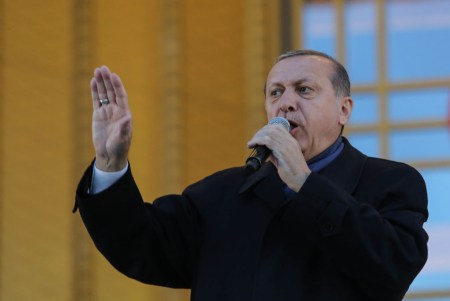
Although U.S. President Donald Trump’s December 6 recognition of Jerusalem as Israel’s capital drew condemnation from much of the Muslim world, one reaction stood out — that of Turkish President Recep Tayyip Erdoğan. (Photo by Elif Sogut/Getty Images)
Radical Turks echoed Erdoğan’s sentiment on social media. Under the hashtag #KudüseSahipÇık (“Safeguard Jerusalem”), which quickly became a trending topic, Turkish Twitter-users expressed a seething Jew-hatred — not hatred of Israelis, but Jews. Here are some examples:
Some Twitter-users praised Hitler for killing Jews, while others condemned him for not doing a sufficient job. Then there are those who suggested persecuting Turkish Jews. Tagging Turkish Interior Minister Süleyman Soylu, one user tweeted:
“Synagogues, the Israeli consulate and Jews… If we burn down, destroy and kill all of these things, will we be considered criminals now?”
Other Tweets in the same vein included:
Erdoğan’s statements — and those of Turks who share his worldview — are further evidence that fundamentalist Muslims oppose Israel’s very existence as a sovereign Jewish state. Their fury over Trump’s Jerusalem declaration has nothing to do with U.S. or Israeli policies. Their fury stems from Jews existing in Israel as a powerful nation – not as dhimmis (second-class and persecuted people). Fanatic Muslims cannot get over the fact that Jews still live in, and are in charge of, supposedly their Muslim holy land.
These reactions are also the most observable examples of Islamist genocidal hatred of Jews and extreme Islamist intolerance of a non-Islamic faith’s religious sensibilities and its national history.
To justify their rage, these radicals rewrite history. Their claims that Jerusalem is a Muslim holy city, for example, are false. While Jerusalem is mentioned 850 times in the Old Testament, it is not mentioned once in the Koran. Ever since King David made Jerusalem the capital of Israel some 3,000 years ago, the city has played a central role in Jewish existence. It only became a focus of Muslim agitation in 1980, when Israel adopted a Basic Law — equivalent to a constitutional provision — declaring united Jerusalem as its capital.
Muslims never declared Jerusalem their capital, even when they controlled the area later called “Palestine,” after their invasion in the seventh century. Instead, in the beginning of the eighth century, they built the city of Ramla and named it their local capital. Jordan also did not declare Jerusalem a Muslim capital when it controlled the city from 1948 to 1967. Moreover, during those 19 years, the only Arab leader who even visited Jerusalem was King Abdullah I of Jordan — who was assassinated there in 1951 by an Arab nationalist associated with the former mufti of the city.
It is true that Al-Aqsa Mosque is located in Jerusalem; the first reference to the mosque appeared in the 12th century. Yet, the common perception that the Temple Mount, where Al-Aqsa is situated, is the “third-holiest site in Islam” is based on a rhetorical ploy: Mecca is Islam’s holiest place; Medina is its second-holiest. For Jews, Jerusalem is the holiest city and the Temple Mount the holiest site; Judaism’s second-holiest site is the Cave of the Patriarchs in Hebron, which Muslims usurped when they conquered the city in the 7th century and re-named it the Ibrahimi Mosque. If Muslims are entitled to have control over the city that hosts their so-called “third-holiest site,” why do they oppose Jewish control over the city that contains Judaism’s first- and second-holiest sites?
Many Muslims also often purposely muddy that Jerusalem’s status as the capital of Israel does not compromise the religious freedom of Muslims and Christians. In fact, the city has never in its history been as open to pilgrims from all religions as it has been under Israeli rule. By contrast, during the 19 years when the Old City and its holy sites were under Jordanian occupation, Jews — regardless of the origin of their passports — were prohibited to visit and pray there. Still today, Jews visiting the Temple Mount are prohibited from praying there.
Since the advent of Islam, Muslim regimes have destroyed — or converted into mosques — synagogues, churches, Buddhist and Hindu temples, and other non-Muslim places of worship. Accusing Israel of engaging in such behavior is both a projection and a propaganda device.
The false narrative about Jerusalem is part of what Moshe Sharon, Professor Emeritus of Islamic and Middle Eastern Studies at the Hebrew University of Jerusalem, calls the “Islamization of History.” The basic attitude, he says,
“is that … all major figures of history basically are Muslim — from Adam down to our own time. So, if the Jews or Christians are demanding something and basing it on the fact that there was a king called Solomon or a king called David, or a prophet called Moses or Jesus, they say something which is not true or, in fact, they don’t know that all these figures were basically Muslim figures.”
He further explains:
“Anywhere which was connected with these people or with these prophets who were all Muslims becomes a Muslim territory. And therefore, when Islam was not in …the Middle East or other parts outside of the Middle East which are now Muslim… any place like this had to be freed, not to be conquered. … Islam appeared in history in the time of Mohammed — or reappeared in history from their point of view — as a liberator…”
…presumably of an Islamic religion that existed since forever and was distorted by religions which came along later: Judaism and Christianity.
That is why the struggle of Israel is also the struggle of the West against sharia-imposed historic revisionism and the slavery of dhimmitude, the second-class, “tolerated” status assigned by Islamists to Jews and other non-Muslims. It is a struggle for freedom in which the Jewish people take back their history and freedom from Islamist and other dictators and preserve them in their own ancient homeland.
The Islamist understanding of history and geography, however, is completely different from scientific and historical facts.
According to Islamists, all prominent figures beginning from Adam and Eve were Muslim, therefore all the lands where they lived were Muslim lands. Judaism, Christianity, Zoroastrianism, Yazidism, and others are not belief systems which could also be respected. The believers of all those religions are occupiers in Muslim lands. They are not natives or honorable residents. They are not even communities whose rights and religious liberty should be respected as much as that of Muslims. They have, in fact, according to this view, abandoned the only true religion; they have therefore been cursed and will be punished by Allah unless they convert to Islam. If they are allowed to live despite that, it is all because of the “mercy” of Islamists — but they are always to remain inferior to Muslims.
This is what Islamists assert and have acted on in the lands they rule. But science — including real history, archeology, and objective theological studies, among others — would disagree with the Islamists’ revisionist understanding of history.
It is natural that a religion claims that it is the only true one. But most do so by still recognizing and respecting other faiths and their histories. What is destructive and intolerant is if one religion denies the authenticity of other religions and dehumanizes and demonizes their believers. This distorted and misleading understanding of world history has also helped to create extremely oppressive and violent Muslim regimes that have never treated non-Muslims as equals.
An ideology that asserts that all of human history is actually its own history, and other faiths are just inventions created by frauds that led their believers astray, and that misled people who will burn in hell forever because they do not believe in the only eternal, true, and perfect religion, is not fit to create a tolerant culture that is respectful to, and accepting of, other faiths. That is why this denialist, supremacist, and totalitarian ideology has not been able to promote religious, cultural, or intellectual diversity at any time in history in the lands that it took over.
This denialist view on history, which recognizes nothing but Islam, is what mainly creates the enormous differences in understanding between the Islamists who falsely claim ownership of Jerusalem and the Jews of Israel who rebuilt their homeland and wish to live there in dignity.
The Islamists attempt falsely to Islamize history, by combining it with the hate-filled teachings in Islamic scripture openly claiming that Jews and other non-Muslims are “cursed by Allah” and “shall be killed off.” This revisionist history is how and why fundamentalists such as Erdoğan — and the Turkish Twitter-users who follow his lead — have no compunction about disseminating genocidal vitriol.
Their lies need to be exposed for what they are: anti-Semitism and falsehoods disguised as legitimate criticism of U.S. and Israeli policy.
Uzay Bulut, a Turkish journalist born and raised a Muslim, is currently based in Washington D.C.
Looks like a Happy New Year for the Forces of Freedom, American Thinker,Clarice Feldman, December 31, 2017
As I leave D.C. for a weekend in frosty New York City, thousands of people are taking to the streets of Iran to protest the corruption and mismanagement of the ruling mullahs.
The White House is not following the last president’s “bearing witness” to the pleas of the oppressed. It has, instead, issued through the Department of State a release strongly supporting the protesters and asking “all nations to publicly support the Iranian people and their demands for basic rights and an end to corruption.”
I have to believe that the protesters are heartened by President Trump’s new view of the Middle East and our role in it and the change of rulers and outlook in Saudi Arabia. While the prior U.S. administration sent pallets of cash to their oppressors, this president has stood firm. And where once they might have feared Saudi intentions on their homeland, I think they see a new Saudi Arabia – desirous of bringing the region into the modern world, stamping out corruption and terrorism, and encouraging capital formation and investment as the collapse in oil revenue ends the days of easy living. Lavish living based on little more than exploitation of oil, which the rise in U.S. production based on new energy policies makes the old Saudi way certain of diminishing returns.
Here, the special counsel and speculation about his operations continue. For an up-to-date review of the publicly available information about Robert Mueller’s work, see Conservative Treehouse’s long, detailed account this week.
As the role of the wives and mistresses of the key players becomes more obvious in the production, dissemination, and use (certainly to get a FISA warrant to spy on Trump and his associates) reveals, a subheading could well be “The Merry Wives of Dossier.” As a reminder, the FBI has stated it was unable to find – despite over a year of searching – any evidence to support the dossier, an unverified political opposition research paper, contrived by Christopher Steele and paid for by Hillary Clinton, the DNC, and probably the lawyers hired by Obama and even the FBI itself.
In the meantime, no reporter seems to have bothered to check whether the wife of Andrew McCabe, deputy director of the FBI, who received a $700,000 campaign contribution for a state senatorial election (which she lost) from Clinton ally Terry McAuliffe, used all that money in her campaign. As I understand it, campaign contributions not used by a candidate in Virginia may be kept by the candidate. McCabe reportedly will retire in mid-March, when his pension kicks in.
The FBI general counsel has been reassigned, along with FBI agent Peter Strzok, an anti-Trump operative in the agency who actively sought to acquire and pay for the dossier. In mid-January, the Department of Justice’s inspector general is expected to issue the first tranche of his two-part report on his investigation.
Here is the key charge to his office overlapping the work of the special counsel:
Review of Allegations Regarding Various Actions by the Department of Justice and the FBI in Advance of the 2016 Election
The OIG, in response to Congressional and other requests, is reviewing allegations regarding various actions by the Department and the FBI in advance of the 2016 election. The review will examine whether the Department and the FBI followed policies or procedures in connection with, or in actions leading up to or related to, the FBI Director’s public announcement on July 5, 2016, and the Director’s letters to Congress on October 28 and November 6, 2016, and whether certain underlying investigative decisions were based on improper considerations. The review also will examine allegations that the FBI Deputy Director should have been recused from participating in certain investigative matters, that the Department’s Assistant Attorney General for Legislative Affairs improperly disclosed non-public information and/or should have been recused from participating in certain matters, that other Department and FBI employees improperly disclosed non-public information, and that decisions regarding the timing of the FBI’s release of certain Freedom of Information Act (FOIA) documents on October 30 and November 1, 2016, and the use of a Twitter account to publicize this release, were influenced by improper considerations. The review will not substitute the OIG’s judgment for the judgments made by the FBI or the Department regarding the substantive merits of investigative or prosecutive decisions. If circumstances warrant, the OIG will consider including other issues that may arise during the course of the review.
My online friend “Rattler Gator” expects that the key figures described in the summary at Conservative Treehouse will all be tagged with wrongdoing and explains why:
[I]t doesn’t really matter if Mueller is directly working for Trump. Either way, he’s essentially working for Trump. So are Peter Strzok & Lisa Page (because of powers and capabilities available to [NSA head] Admiral Rogers; this means… they don’t need to remember – it has been digitized for them).
A reminder: Peter Strzok led the charge to acquire and pay for the Steele dossier. James Baker, Sally Yates, Bill Preistap & Strzok used the dossier in their illegal spying on Trump, their coup attempt, and their targeting of General Flynn. Remember, also, the OIG investigation – encompassing a VERY BROAD review of allegations – dates back to January 12, 2017 and includes the following:
[1] Review of allegations that Department or FBI policies or procedures were not followed in connection with, or in actions leading up to or related to, the FBI Director’s public announcement on July 5, 2016 – implicating Comey, Lynch, Bill Clinton, McCabe, among others, involved in the fraudulent clearance of Hillary Clinton by Comey’s FBI in July, as well as the crazy shut down / cover up of the Huma Abedin email investigation
[2] Review of Comey’s letters to Congress on October 28 and November 6, 2016, and that certain underlying investigative decisions were based on improper considerations
– implicating Comey, Lynch, Bill Clinton, McCabe, among others, involved in the fraudulent clearance of Hillary Clinton by Comey’s FBI in July, as well as the crazy shut down / cover up of the Human Abedin email investigation
[3] Review of allegations that Comey should have been recused from participating in certain investigative matters
– implicating Comey and Andrew McCabe
[4] Review of allegations that the Department’s Assistant Attorney General for Legislative Affairs improperly disclosed non-public information to the Clinton campaign and/or should have been recused from participating in certain matters
– implicating Assistant Attorney General for Legislative Affairs Peter Kadzik’s role investigating & working with Comey / McCabe to shut down the Huma Abedin investigation along with Kadzik’s collusion with the Clinton Foundation and John Podesta, etc.
[5] Review of allegations that Department and FBI employees improperly disclosed non-public information
– implicating the plethora of organized leakers along with the strategy employed by the Trump Administration (the leaks are real, the news is fake) to deal with these criminal violations … and who solicited said leaks.[6] Review of allegations that decisions regarding the timing of the FBI’s release of certain FOIA documents on October 30 and November 1, 2016, and the use of a Twitter account to publicize same, were influenced by improper considerations
– this appears to implicate both Bill and Hillary Clinton but info was also released on Donald Trump’s father; however, the bulk of these records come from a 2001 FBI investigation into the pardon of Marc Rich (1934-2013), aka Marcell David Reich, by President Clinton in 2001; this specifically implicates Bill Clinton, Eric Holder, and Clinton’s then Chief of Staff John Podesta[.] …
Here’s the last sentence from that January announcement: Finally, if circumstances warrant, the OIG will consider including other issues that may arise during the course of the review. …
So… EVERYTHING is in play, including the revolving door between Google, the law firm of Perkins Coie, CrowdStrike, Fusion GPS, the Clintons, Soros and many other players.
Rattler Gator reminds us: “Admiral Rogers has access to most everything incriminating; he has shared that with the OIG, who will now share with Congress; Sessions and the Department of Justice will prosecute from there. General Flynn placed an Army of spooks into the system during his very-planned-to-be-brief tenure as National Security Adviser. They have identified, documented and flushed most of the leakers; others have been left in place to aid continuing investigations. Flynn was the honeypot drawing out the bad actors while the Trump Administration, via Admiral Rogers, was able to identify, track and investigate them.”
I would like to believe this is true, and even if only a great deal of it is, I’d be satisfied that our move toward a banana republic has been scotched, but I’m not sure I’m that optimistic. In any event, the inspector general can only lay out his findings, and then Congress and the attorney general will have to carry through to prosecute wrongdoing.
Many have been suspicious of Mueller. His staffing and his public silence – along with the recent memory of the Ted Stevens and Lewis Libby political warfare – fuel these suspicions. On the other hand, F.H. Buckley, whose judgment I value, offers up a more sympathetic view of Mueller and thinks he will wind down this operation well before November.
All of this is under investigation by Congress and the Justice Department’s inspector general, and a year later, we seem to be left with two possibilities: Either the Trump campaign colluded with the Russians, or the Democrats had connived (and perhaps colluded) with the Russians and used all the tools at the Obama administration’s command to spy on a Republican challenger in the midst of a presidential campaign – and thus far, we’ve seen no evidence of Republican collusion.
Mueller now starts to look less like a flint-eyed Inspector Javert and more like a bumbling Inspector Clouseau, shining his flashlight into empty caverns when the real skullduggery lies in the sunlight behind him.
He’s no fool, however. He has to know this. And he’ll also know that the 2018 midterms look like a match-up between jobs and 3 percent GDP growth for the Republicans versus impeachment for the Democrats. And what’s the evidence to justify an impeachment? Just the ongoing Mueller investigation.
The special prosecutor is supposed to keep politics out of his mission, but it’s too late to do so when the investigation will be the chief campaign issue for one of the parties.
Were Mueller a liberal partisan, that’s just what he’d want. Except I don’t think he’s a partisan. I think he’s honorable. That’s why the White House is confident that he’ll wrap up the investigation shortly, well before next November.
Well, we’ll see soon enough which view proves correct. In the meantime, as Scott Adams notes, the president has demolished the GOP and reconstituted it; the DNC lacks a leader and funds; the Clinton and Bush dynasties are over; the public has learned to distrust the media; the NFL ratings are down; the FBI leadership has lost all credibility, as have the pundits, nearly all of whom “were wrong about Trump’s nomination, election, and successful (by Republican standards) first year”; federal government regulations are far fewer; Hollywood has alienated almost half its audience; North Korea’s economy has gone from pathetic to even worse; ISIS has been largely defeated; and we bade adieu to the Paris Accord and the TPP.
As for the economy, the stock market is up, employment is up, and the upper Midwest economy is growing its fastest in three years.
I don’t think any president in my memory has had such a consequential first year, and certainly none had the pathetic dossier and corrupt FBI and DOJ officials to contend with at the same time.
Of course, not everyone’s happy. Newsweek’s Kurt Eichenwald announced he is selling all of his stocks in his children’s education accounts in anticipation of the stock market tanking.
@kurteichenwald
In preparation for a completely unpredictable Trump presidency, I sold all stocks in my kids’ education accounts today. I urge u to do same.
He missed out on the Dow’s longest winning streak in 60 years and the S&P’s in more than 34 years.
Happy new year to you and your families.
As anti-regime protests spread, Trump tweets support for Iranian people, Israel Hayom, Elliott Abrams, December 31, 2017
Friday’s New York Times coverage. . . is titled “Scattered Protests Erupt in Iran Over Economic Woes.” More remarkably, consider the very first line:
Protests over the Iranian government’s handling of the economy spread to several cities on Friday, including Tehran, in what appeared to be a sign of unrest.
Ya think? “Appeared” to be a sign of unrest? What else was it, a sign of support for the ayatollahs? And note the Times title again, telling you these protests are all about the economy – a conclusion contradicted by the words being shouted by the protesters, as the BBC tells us. In fact, buried down in the Times story, we do find that in Kermanshah “protesters shouted anti-government slogans like ‘Death or freedom,’ ‘Care for us and leave Palestine’ and ‘Political prisoners must be freed.'” Does that sound like a “protest over economic woes”?
***********************************
This piece is reprinted with permission and can be found on Abrams’ blog “Pressure Points.”
In the last few days there have been anti-government protests all over Iran. The BBC reports this as of Friday night, in a story titled “Iranian cities hit by anti-government protests.”
Anti-government demonstrations that began in Iran on Thursday have now spread to several major cities.
Large numbers reportedly turned out in Rasht, in the north, and Kermanshah, in the west, with smaller protests in Isfahan, Hamadan and elsewhere.
The protests began against rising prices but have spiralled into a general outcry against clerical rule and government policies. …
What began as a protest against economic conditions and corruption has turned political. …
Slogans have been chanted against not just Mr. Rouhani but Supreme Leader Ayatollah Ali Khamenei, and clerical rule in general.
Demonstrators were reportedly heard yelling slogans like “The people are begging, the clerics act like God.” Protests have even been held in Qom, a holy city home to powerful clerics.
There is also anger at Iran’s interventions abroad. In Mashhad, some chanted “not Gaza, not Lebanon, my life for Iran”, a reference to what protesters say is the administration’s focus on foreign rather than domestic issues.
Other demonstrators chanted “leave Syria, think about us” in videos posted online.
Videos posted on social media appear to show clashes between security forces and some demonstrators in Kermanshah.
Now compare Friday’s New York Times coverage. It is titled “Scattered Protests Erupt in Iran Over Economic Woes.” More remarkably, consider the very first line:
Protests over the Iranian government’s handling of the economy spread to several cities on Friday, including Tehran, in what appeared to be a sign of unrest.
Ya think? “Appeared” to be a sign of unrest? What else was it, a sign of support for the ayatollahs? And note the Times title again, telling you these protests are all about the economy – a conclusion contradicted by the words being shouted by the protesters, as the BBC tells us. In fact, buried down in the Times story, we do find that in Kermanshah “protesters shouted anti-government slogans like ‘Death or freedom,’ ‘Care for us and leave Palestine’ and ‘Political prisoners must be freed.'” Does that sound like a “protest over economic woes”?
The Times story is written by its bureau chief in Tehran, Thomas Erdbrink, one of the very few Western reporters (he is Dutch) accredited to report for U.S. media. Must he pull punches for fear of being expelled from Iran? After all, this is a regime that has invaded embassies (most recently, for example, the British Embassy in 2011) and in 2009 the entire BBC bureau there was shut down and the BBC’s correspondent expelled. In 2014, Washington Post reporter Jason Rezaian was arrested and then imprisoned for 18 months. He and his wife are now suing the government of Iran for their maltreatment and torture while in captivity.
So perhaps it is wise for reporters in Tehran to watch what they say. But the Times’ report and headline that these are merely economic protests are misleading. Both should be corrected.
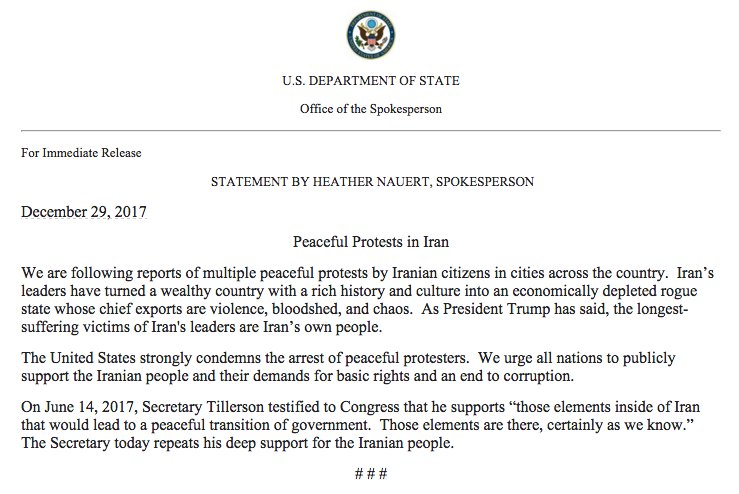
Meanwhile the U.S. State Department issued a very strong statement on these protests – which rightly regards them as political:
We are following reports of multiple peaceful protests by Iranian citizens in cities across the country. Iran’s leaders have turned a wealthy country with a rich history and culture into an economically depleted rogue state whose chief exports are violence, bloodshed, and chaos. As U.S. President Donald Trump has said, the longest-suffering victims of Iran’s leaders are Iran’s own people.
The United States strongly condemns the arrest of peaceful protesters. We urge all nations to publicly support the Iranian people and their demands for basic rights and an end to corruption.
On June 14, 2017, Secretary Tillerson testified to Congress that he supports “those elements inside of Iran that would lead to a peaceful transition of government. Those elements are there, certainly as we know.” The secretary today repeats his deep support for the Iranian people.
The Iranian people rose up against their oppressors in June 2009. Now we are again seeing that this regime rules by brute force, is widely despised, and would be dismissed by the people if ever they got a chance to vote freely.
Elliott Abrams is a senior fellow for Middle East Studies at the Council on Foreign Relations.
2017: Hillary Clinton Celebrates Another Year Not Spent in Prison, The Barbed Wire, E. Williams, December 31, 2017
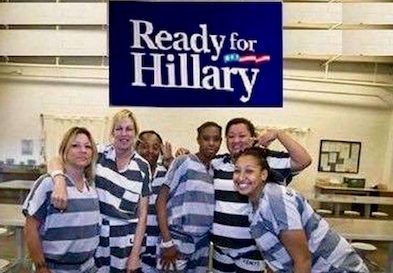
Clinton knows that if the system worked today the way it did 40 years ago, she would have been in prison years ago and never could have even run for president in 2016. As the calendar moved from 2017 to 2018, Hillary, surrounded by her yes men and yes women, raised her glass of champagne and said, “Help me celebrate with a toast to corruption! Without it, I wouldn’t be where I am today.”
***********************************
NEW YORK – “I still don’t know how I did it!” the two-time presidential loser remarked about the fact that she still isn’t in prison as 2018 arrives. “The evidence against me is overwhelming and, after Trump took office, I just knew my luck would run out this year. Thank God for Jeff Sessions, huh?!”
As a new year approaches, most people look back to assess whether the closing year was a good one or a bad one for them personally. For Hillary Clinton, the determining factor every year is whether she was able to stay out of prison.
“Look, everybody knows I’m guilty as hell,” she admitted. “I’m the OJ Simpson, Casey Anthony, and Bonny and Clyde of politics, rolled into one. Even my cat understands I got away with murder. I just don’t know what they’re waiting for. The crimes are there, the FBI’s cover-up for me is there…..you’d have to be a moron not to realize it. Yet, here I am. Still walking free. Somebody pinch me!”
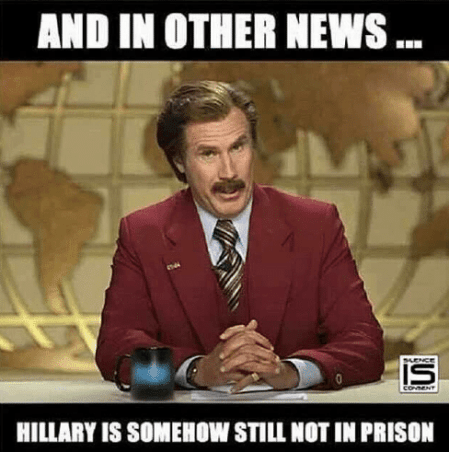
Hillary said she doesn’t know what 2018 will hold for her, but likes her chances of staying out of prison as long as President Trump allows his incompetent attorney general Jeff Sessions to run the Department of Justice.
Clinton knows that if the system worked today the way it did 40 years ago, she would have been in prison years ago and never could have even run for president in 2016. As the calendar moved from 2017 to 2018, Hillary, surrounded by her yes men and yes women, raised her glass of champagne and said, “Help me celebrate with a toast to corruption! Without it, I wouldn’t be where I am today.”
Expect America’s Tensions with China and Russia to Rise in 2018, Gatestone Institute, John Bolton, December 30, 2017
Yesterday’s 2017 review and forecast for 2018 focused on the most urgent challenges the Trump administration faces: the volatile Middle East, international terrorism and the proliferation of nuclear, chemical and biological weapons. Today, we examine the strategic threats posed by China and Russia and one of President Trump’s continuing priorities: preserving and enhancing American sovereignty.
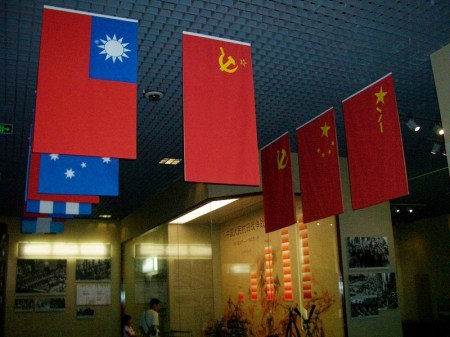 Russia and China will be among the Trump administration’s key strategic challenges in the coming year. Photo: Wikipedia.
China has likely been Trump’s biggest personal disappointment in 2017, one where he thought that major improvements might be possible, especially in international trade. Despite significant investments of time and attention to President Xi Jinping, now empowered in ways unprecedented since Mao Tse Tung, very little has changed in Beijing’s foreign policy, bilaterally or globally. There is no evidence of improved trade relations, or any effort by China to curb its abuses, such as pirating intellectual property, government discrimination against foreign traders and investors, or biased judicial fora.
Even worse, Beijing’s belligerent steps to annex the South China Sea and threaten Japan and Taiwan in the East China Sea continued unabated, or even accelerated in 2017. In all probability, therefore, 2018 will see tensions ratchet up in these critical regions, as America (and hopefully others) defend against thinly veiled Chinese military aggression. Japan in particular has reached its limits as China has increased its capabilities across the full military spectrum, including at sea, in space and cyberwarfare.
Taiwan is not far behind. Even South Korea’s Moon Jae In may be growing disenchanted with Beijing as it seeks to constrain Seoul’s strategic defense options. And make no mistake, what China is doing in its littoral periphery is closely watched in India, where the rise of Chinese economic and military power is increasingly worrying. The Trump administration should closely monitor all these flash points along China’s frontiers, any one of which could provoke a major military confrontation, if not next year, soon thereafter.
North Korea’s nuclear weapons program is where China has most disappointed the White House. Xi Jinping has played the United States just like his predecessors, promising increased pressure on Pyongyang but not delivering nearly enough. The most encouraging news came as 2017 ended, in the revelation that Chinese and American military officers have discussed possible scenarios involving regime collapse or military conflict in North Korea. While unclear how far these talks have progressed, the mere fact that China is engaging in them shows a new level of awareness of how explosive the situation is. So, 2018 will be critical not only regarding North Korea’s nuclear weapons threat but also whether Sino-American relations improve or take a distinct turn for the worse.
On Russia, the president has not given up on Vladimir Putin, at least not yet, but that may well come in 2018. Putin is an old-school, hard-edged, national interest-centered Russian leader, defending the “rodina” (the motherland), not a discredited ideology. Confronted with U.S. strength, Putin knows when to pull back, and he is, when it suits him, even capable of making and keeping deals. But there is no point in romanticizing the Moscow-Washington dynamic. It must be based not on personal relationships but on realpolitik.
No better proof exists than Russia’s reaction to Trump’s recent decision to supply lethal weapons to Ukraine, which is now a war zone entirely because of Russian aggression. To hear Moscow react to Trump’s weapons decision, however, one would think he was responsible for increased hostilities. President Obama should have acted at the first evidence of Russia’s military incursion into Ukraine, and even Trump’s aid is a small step compared to President Bush’s 2008 proposal to move Kiev quickly toward NATO membership. Nonetheless, every independent state that emerged from the Soviet Union, NATO member or not, is obsessed with how America handles Ukraine. They should be, because the Kremlin’s calculus about their futures will almost certainly turn on whether Trump draws a line on Moscow’s adventurism in Ukraine.
Just as troubling as Russia’s menace in Eastern and Central Europe is its reemergence as a great power player in the Middle East. Just weeks ago, the Russian Duma ratified an agreement greatly expanding Russia’s naval station at Tartus, Syria. In 2015, Obama stood dumbfounded as Russia built a significant air base in nearby Latakia, thus cementing the intrusion of Russia’s military presence in the Middle East to an extent not seen since Anwar Sadat expelled Soviet military advisers and brought Egypt into the Western orbit in the 1970s.
This expansion constitutes a significant power projection for the Kremlin. Indeed, it seems clear that Russia’s support (even more than Iran’s) for Syria’s Assad regime has kept the dictatorship in power. Russia’s assertiveness in 2017 also empowered Tehran, even as the ISIS caliphate was destroyed, to create an arc of Shia military power from Iran, through Iraq and Syria, linking up with Hezbollah in Lebanon. This Russian-Iranian axis should rank alongside Iran’s nuclear-weapons program on America’s list of threats emanating from the Middle East.
Finally, the pure folly of both the U.N. Security Council and the General Assembly crossing the United States on the Jerusalem embassy decision was a mistake of potentially devastating consequences for the United Nations. Combined with the International Criminal Court’s November decision to move toward investigating alleged U.S. war crimes in Afghanistan, there is now ample space for the White House to expand on the president’s focus on protecting American sovereignty.
Trump’s first insight into the rage for “global governance” among the high minded came on trade issues, and his concern for the World Trade Organization’s adjudication mechanism. These are substantial and legitimate, but the broader issues of “who governs” and the challenges to constitutional, representative government from international bodies and treaties that expressly seek to advance global governing institutions are real and growing. America has long been an obstacle to these efforts, due to our quaint attachment to our Constitution and the exceptionalist notion that we don’t need international treaties to “improve” it.
No recent president has made the sovereignty point as strongly as Trump, and the United Nations and International Criminal Court actions in 2017 now afford him a chance to make decisive political and financial responses in 2018. If 2017 was a tumultuous year internationally, 2018 could make it seem calm by comparison.
John R. Bolton (@AmbJohnBolton) served as U.S. ambassador to the United Nations and as undersecretary for arms control and international security affairs at the U.S. Department of State under President George W. Bush. He is now a senior fellow at the American Enterprise Institute.
This article first appeared in The Hill and is reprinted here with the kind permission of the author.
Trump’s Energy Success, American Thinker, Jeffrey Folks, December 30, 2017
The president’s accomplishments are many, but energy stands out. America is now the world’s premier producer of fossil fuels. In just one year, we have gone from a dismal future, in which the government planned to shut down fossil fuels almost entirely by mid-century, to a nation on the cusp of total energy independence. “Make America Great Again” was not just a clever campaign slogan; it is a reality in the field of energy production, as in so many other areas under President Trump.
**************************
Just six months ago, the Trump administration was attacked for its “slow start.” It was said to be “in disarray,” in “chaos,” “at war” with itself, and incapable of governing. Now the list of successes has piled up, making it clear that, if the trend continues, President Trump will become one of our more important presidents. Far from being a do-nothing administration, the Trump team is a White House on steroids.
One of the president’s major successes is in the area of energy policy. Along with energy secretary Rick Perry, the president is overseeing the recovery of the American energy sector from the low point it hit under the Obama administration. By a combination of executive orders totally restrictiong drilling on federal lands and EPA assaults on fracking and coal-mining, including a total ban on mountaintop-mining, Obama prosecuted a “war” not just on coal, but on fossil fuels generally.
Now America has become the largest producer of oil and gas and a major exporter of natural gas. The U.S. now produces significantly more hydrocarbons than second-place Russia and twice as much as Saudi Arabia. As coal-mining is restored, pipelines are laid, and new wells are drilled, hundreds of thousands of jobs are being created across the economy, not just in drilling and mining, but in support services.
The effect on the economy is already being felt. According to Monster.com, a leading employment recruitment site, oil jobs are making a “huge comeback,” with “100,000 new jobs by 2018.” And these are high paying jobs: “the average pay of the oil and gas industry is 85% higher than the national average.” Each new job in the energy field creates others in areas like steel production, rig technology, transportation, and general services. And the money earned in these high paying fields circulates through the economy.
With the passage of a provision in the Tax Cuts and Jobs Act allowing oil exploration in ANWR, the president has another success. The Arctic National Wildlife Refuge contains vast reserves of recoverable oil currently estimated at10.4 billion barrels. Development has been blocked by misguided and ill informed opposition from environmental groups. Now, with great care for the environment, oil companies will have the opportunity to produce vast amounts of energy while drilling only 3% of ANWR.
According to a report from the House Committee on Natural Resources, “total governmental revenue” from ANWR drilling will run $440 billion. ANWR alone will create between 55,000 and 130,000 new high paying jobs.
It is not just ANWR. By removing unnecessary restrictions on fracking and by opening other federal lands to drilling, President Trump is promoting energy independence rather than standing in its way. He has opened federal lands for drilling, including land in two national monuments in southern Utah. Vast federal lands in the Western U.S. offer other opportunities.
In April, the president signed an executive order reversing Obama’s ban on new offshore drilling in the Arctic and Atlantic. Current estimates show that almost 90 billion barrels of oil and 327 trillion cubic feet of natural gas lie under the U.S. Outer Continental Shelf. Those estimates have a way of being revised upward, especially for regions such as these that have not been explored with modern technology due to past restrictions. Offshore drilling has the potential to produce ten times the number of jobs and government revenue projected for ANWR. At the high end, that would be 1,300,000 high paying jobs and $4.4 trillion in state and federal revenue.
Under President Obama, American coal-mining suffered a near-death experience. Now, under EPA director Scott Pruitt, the Trump administration is taking steps to restore coal to its rightful place in America’s energy supply mix. Though it will take years to complete, the reversal of Obama’s Clean Power Plan that began back in October will take government out of the frame of “picking winners and losers.” Coal will still have to compete with natural gas, but at least it will be allowed to compete.
The president’s accomplishments in the field of energy policy are not limited to fossil fuels. His Energy Department recently committed $100 million to promoting Transformative Energy Projects intended to spur early-stage innovators. The department continues to promote alternative energy sources and energy conservation, important contributors to energy independence. Energy conservation in particular can go a long way toward making America energy-independent.
With the opening of new lands to fracking and conventional drilling and the restoration of mining in the Appalachian region, the energy sector has gone from moribund to robust practically overnight. One of the president’s first actions wasthe elimination of the Steam Protection Rule, which imposed crippling burdens of regulation on the industry. As a result, production has begun to increase.
As the U.S. Energy Information Agency’s annual “Outlook” makes clear, the future for American energy production is bright. The Outlook models future production across a wide range of different scenarios, and it concludes that the U.S. “is projected to become a net energy exporter by 2026” in its Reference Case projections but that it may do so earlier under three side cases. After 2026, the scale of exports expands rapidly in all cases.
Perhaps the most consequential of the president’s actions in the field of energy is his decision to withdraw from the Paris climate accord. While withdrawal from the accord does not have significant immediate consequences, its long-term effect is great. Its most important effect will be to reduce the possibility of a deluge of environmental lawsuits based largely on the agreement signed by President Obama. These lawsuits would have blocked American energy production to gratify a self-appointed global environmental elite – at the expense of the American people.
The president’s accomplishments are many, but energy stands out. America is now the world’s premiere producer of fossil fuels. In just one year, we have gone from a dismal future, in which the government planned to shut down fossil fuels almost entirely by mid-century, to a nation on the cusp of total energy independence. “Make America Great Again” was not just a clever campaign slogan; it is a reality in the field of energy production, as in so many other areas under President Trump.
Liberal Humiliation: Trump vs. Obama on Iran, PJ Media, Roger L Simon, December 29, 2017
(Please see also, Iranian Officials Inconsistent in Describing Protestors’ Motives and Goals. — DM)
 Hundreds of thousands of supporters of opposition presidential candidate Mir Hossein Mousavi turn out to protest the result of the election at a mass rally in Azadi (Freedom) square in Tehran, Iran in 2009. (AP Photo/Ben Curtis, File)
Back in those pre-9/11 days when I identified as a liberal, the one thing I was sure drew all my then cohort together was opposition to fascism, whether secular or religious.
Boy, was I wrong and never was that more clear than in 2009 when the Green Movement demonstrators were marching through the streets of Tehran and other Iranian cities, demanding freedom from the mullahs. The whole world was watching, as we used to say in the sixties, only their cause was purer than ours was then. The horrifying theocrats who ran the “Islamic Republic” regularly raped women in prison before they killed them, hanged homosexuals in the streets and tortured just about everyone else who didn’t comply with the edicts of their Islamofascist regime.
The students and others marching in the streets to overthrow these tyrants desperately wanted America’s help, specifically the support of our “oh-so-liberal-progressive” president. they shouted, “Obama, Obama, are you with us or are you with them?”
Obama was silent.
I can’t think of a moment I was more disgusted by the acts (inaction actually) of an American president. What did he stand for? What did we stand for?
Well, who knows? What we do know is he wanted to deal with Iran his way — whether to get the glory for himself or for other even less attractive reasons we will never know. He was secretly communicating with Ahmadinejad and Khamenei even before he took office, hinting at accommodation.
He wanted an Iran deal and he got it, the Iranian people and the U.S. Constitution be damned. (I have met several of the student demonstrators from that period who spent years being tortured in Tehran’s Evin Prison. Their faces resembled Picassos of the Cubist Period. They were the lucky ones. Their brothers and sisters just disappeared.)
Obama was silent for those students and millions of other decent Iranians. He wanted his deal so much that, as we know, he sent still more millions to the mullahs in cash, so they could use those dollars in any untraceable manner they wished — such as funding Hezbollah and the Houthis.
And speaking of Hezbollah, we all know now, due to reporting about Project Cassandra by Josh Meyer at Politico, that Obama was so determined to make his creepy deal that he acceded to the mullahs’ demand to pull the FBI off a detailed investigation of the Hezbollah thugs’ extensive involvement in the U.S. drug trade. Are we sick yet?
Now, it is being widely reported, the demonstrators are back in the streets of various cities in Iran. We don’t know the extent of the protests or where they are going. I’m a bit skeptical. The time was probably more ripe in 2009, but we can be hopeful. What we do know is that these demonstrators are complaining that money garnered from the Iran nuclear deal is not going to them, the Iranian people, to make their lives better, as promised, but to carry out the mullahs’ murderous military adventures across the Middle East. Was anything ever more predictable? (For ongoing updates, I recommend the Islamic State of Iran Crime Research Center.)
What we also know is that the Donald J. Trump administration has taken the exact opposite approach from the Obama administration to events in Iran. They are unqualifiedly — and immediately — supporting the demonstrators and democracy. Bravo!
U.S. strongly condemns arrest of peaceful protestors in
#Iran, urges all nations to publicly support Iranian people. As@POTUS said, longest-suffering victims of Iran’s leaders are Iran’s own people.#Iranprotests
To repeat: “As President Trump has said, the longest suffering victims of Iran’s leaders are Iran’s own people.”
Bravo, again!
When somebody asks me — as they have on occasion — why I am not a liberal anymore, I now have a simple answer: what’s that?
UPDATE: Other places to follow the unfolding events are the Twitter feed of the extraordinary Omri Ceren and forthcoming posts — we know they’re coming — from PJM’s Michael Ledeen. Fingers crossed this time.
Iranian Officials Inconsistent in Describing Protestors’ Motives and Goals, Iranian News Update, Edward Carney, December 30, 2017
Please see also, The First Anti-American President, the thrust of which is
Donald Trump is certainly the opposite of an anti-American president, and he has no affection for our enemies. He has enabled the Ukrainians to fight, perhaps effectively, against the Russians. So why can’t he enable the Iranians to fight against the ayatollahs?
In the Ukrainian case we’re talking about military weapons; in the Iranian conflict the weapons are political.
If the Iranians rose up against the regime when Obama entered the White House, you can be sure they are at least equally motivated to do it with Trump in office. There are many protests in Iran today, and the Khamenei/Rouhani regime has responded by executing half as many Iranians as in the past. We should relentlessly expose this mass murder, and we should publicize the ongoing protests.
The target audience for such exposes is the great mass of the population. Paradoxically, Iranians are better informed about events in Jerusalem and Washington than in Iranian Kurdistan, the southern oil regions, and cities like Mashad and Qom.
— DM)
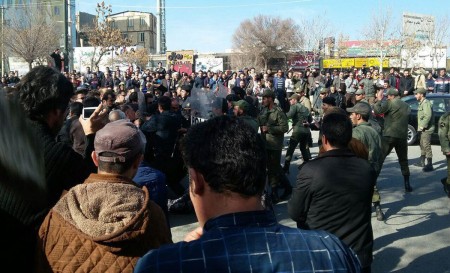
[T]he protest against foreign intervention has taken on a life of its own, with activists chanting such slogans as “forget about Syria; focus on us” and “no Gaza, no Lebanon; I will give my life only for Iran.” Despite the prevalence of these sorts of messages in social media and public accounts of the demonstrations, Iranian officials continue to maintain that the regional military prestige of the Islamic Republic remains broadly popular. For instance, the Huffington Post quotes hardline cleric Ahmad Alamolhoda as claiming that only about 50 protestors had expressed regional concerns within a gathering of several hundred.
**************************************
On Friday, mass protests continued throughout Iran after having started the previous day in reaction to rising rates of inflation and other uncontrolled economic conditions that had contributed, for instance, to a doubling of the price of eggs in just one week’s time.
Deutsche Welle quotes one Iranian lawmaker as blaming these problems on “illegal financial institutions” that had been established under the administration of former President Mahmoud Ahmadinejad. The closure of one such bank, called Mizan, reportedly had a particularly marked impact on Iran’s second most populous city, Mashhad, which has been the focal point of protests that spanned much of central and northern Iran as of Thursday.
The lawmaker’s account of the protests seemingly absolves the current government of responsibility for the conditions that are being protested by victims of a widening income gap in the Islamic Republic. But the DW article also points out that a major target of those protests has been current President Hassan Rouhani’s slow progress in following through on a promise to reimburse citizens whose investments were wiped out by the collapse of state-linked financial institutions.
At the same time, DW and various other outlets have highlighted a trend toward broader focus in those protests, targeting not just rising prices and not just financial indicators as a whole but also the Rouhani administration’s failure to uphold a wide variety of promises regarding domestic reform. Insofar as the abandonment of these promises represents closure of the political gap between Rouhani’s political allies and those of hardline authorities like Supreme Leader Ali Khamenei, the protests seemingly double as an expression of opposition to the clerical system as a whole.
Indeed, the BBC refers to the demonstrations as “anti-government” protests in its reporting on Friday, as well as identifying them as the most serious and widespread such gatherings since the 2009 Green Movement, which emerged out of protests against Ahmadinejad’s disputed reelection. Those protests lasted for eight months and ended with a severe crackdown by government authorities, but many Iran watchers have observed that the resentments voiced by that movement continued to simmer under the surface in anticipation of another mass demonstration.
This is not to say that there have been no major protests in the ensuing year. Indeed, the National Council of Resistance of Iran has identified thousands in the past year alone. But these have tended to be more geographically confined than the current demonstrations, and many have been focused not on politics but on specific demands such as the payment of overdue wages.
The content of Thursday’s and Friday’s protests was evidently broad enough in scope that even some Iranian officials were compelled to acknowledge the “anti-government” nature of chants and slogans, even while downplaying the scope of their appeal. The Associated Press reports that the governor of Tehran, Mohsen Hamedani, had acknowledged the spread of the protests to the Iranian capital, yet insisted that the gathering involved fewer than 50 people, most of whom dispersed after being warned by police.
Hamedani added that those who remained were “temporarily” arrested, and these remarks seemed also to downplay the severity of the government’s response to what might be regarded as a serious threat to its legitimacy. However, social media posts from various cities depicted peaceful protests being met with tear gas and water cannons, and the crowds in each of those gatherings numbered in the hundreds or in the thousands. By the end of Thursday, there had been at least 52 arrests in Mashhad alone, according to the BBC.
This is not to say that there have been no major protests in the ensuing year. Indeed, the National Council of Resistance of Iran has identified thousands in the past year alone. But these have tended to be more geographically confined than the current demonstrations, and many have been focused not on politics but on specific demands such as the payment of overdue wages.
The content of Thursday’s and Friday’s protests was evidently broad enough in scope that even some Iranian officials were compelled to acknowledge the “anti-government” nature of chants and slogans, even while downplaying the scope of their appeal. The Associated Press reports that the governor of Tehran, Mohsen Hamedani, had acknowledged the spread of the protests to the Iranian capital, yet insisted that the gathering involved fewer than 50 people, most of whom dispersed after being warned by police.
Hamedani added that those who remained were “temporarily” arrested, and these remarks seemed also to downplay the severity of the government’s response to what might be regarded as a serious threat to its legitimacy. However, social media posts from various cities depicted peaceful protests being met with tear gas and water cannons, and the crowds in each of those gatherings numbered in the hundreds or in the thousands. By the end of Thursday, there had been at least 52 arrests in Mashhad alone, according to the BBC.
Political imprisonment is rampant in the Islamic Republic, and the BBC report also indicates that this was one of the topics that had been advanced by some protestors. But political focus of any given participant in the demonstrations might be different from those of any other, as evidenced by media reports identifying chants as targeting economic issues, political imprisonment, Iran’s paramilitary interventions in the surrounding region, and so on.
This latter topic is closely related to the economic issues that reportedly sparked the protests, since the Iranian government has spent billions of dollars in recent years on propping up the Syrian dictatorship of Bashar al-Assad, as well as on promoting the growth of the Houthi rebellion in Yemen and the various Shiite militias operating in Iraq. A recent editorial in Forbes points out that the new Iranian national budget, introduced by Rouhani in early December, includes the provision of 76 billion dollars to the Iranian Revolutionary Guard Corps and its foreign special operations Quds Force, at a time when tens of thousands of victims of a November earthquake are still awaiting basic shelter and government services.
But the protest against foreign intervention has taken on a life of its own, with activists chanting such slogans as “forget about Syria; focus on us” and “no Gaza, no Lebanon; I will give my life only for Iran.” Despite the prevalence of these sorts of messages in social media and public accounts of the demonstrations, Iranian officials continue to maintain that the regional military prestige of the Islamic Republic remains broadly popular. For instance, the Huffington Post quotes hardline cleric Ahmad Alamolhoda as claiming that only about 50 protestors had expressed regional concerns within a gathering of several hundred.
Interestingly, the same report also quotes Alamolhoda as advocating for an intensified crackdown on the protestors. In absence of this, he suggested, enemies of the regime would claim that the government had lost its “revolutionary base”. The Huffington Post indicates that Tehran security personnel have promised that any demonstrations in the capital would be “firmly dealt with”. This seems to be at odds with the Tehran governor’s commentary about temporary arrests and also with the initial reaction from Mashhad Governor Mohammad Rahim Norouzian, whom the AP quoted as saying that security forces had shown “great tolerance”
Since that initial reaction, Iranian officials seem to have increasingly justified crackdowns through acceptance of the broader characterizations of the protests’ grievances and goals. Norouzian himself came to describe the protests as having been organized by “counter-revolutionaries”, according to DW. According to other sources, officials have also referred to the organizers as “hypocrites,” a term often applies to members of the leading Iranian opposition group the People’s Mojahedin Organization of Iran.
The PMOI has also been a driving force in a number of activist campaigns within the Islamic Republic, including the push for international attention and independent inquiry into the 1988 mass execution of political prisoners, which primarily targeted that same resistance organization. In a Huffington Post editorial on Friday, former US Ambassador Ken Blackwell sought to connect that massacre, which killed an estimated 30,000 people, to the current protests. He said that Thursday’s and Friday’s chants of “death to the dictator” emerged out of “a political climate punctuated by growing demands for justice for the regime’s massacre.”
But even if the initial economic focus of the latest protests had been voiced in isolation, there is an argument to be made that this also would constitute an expression of opposition to the continued rule of the clerical regime. In fact, this argument was made by historian Ellen Ward on Friday in an editorial published by Forbes. Ward observes that despite some officials’ efforts to blame the previous presidential administration for ongoing problems, it is really the underlying clerical system that is responsible for the economic future of the Iranian people.
This is to say that it is the clerical authorities, and not the elected branches of government, who establish and enforce policies with tremendous economic impact, including the interventionist foreign policy. Ward’s argument is reminiscent of the statement put out on Thursday by the PMOI’s parent coalition the National Council of Resistance of Iran. That statement quoted NCRI President Maryam Rajavi as saying that the economic prospects of the Iranian people cannot be expected to improve until the resistance movement has brought about the emergence of democratic governance in place of the theocratic dictatorship.




 anneinpt
 artaxes
 danmillerinpanama
 davidking1530
 Peter Hofman
 Joseph Wouk
 Peter
Peter Louisiana Steve

 WarSclerotic
Recent Comments